
 Licensed Yacht BrokersYachts for Sale
Crest - CUSTOM KETCH FOR SALE







Basic information
- Builder:
- CUSTOM KETCH
- Category:
- Sail yachts
- Sub Category:
- Cruising Ketch
- Model Year:
- 1974
- Year Built:
- 1974
- Country:
- United States
Dimensions
- LOA:
- 47' (14.33m)
- Beam:
- 13' (4.06m)
- Min Draft:
- 14.76' (4.50m)
- Max Draft:
- 24.06' (7.33m)
Speed, capacities and weight
- Cruise Speed:
- 9 Kts. (9 MPH)
Accommodations
- Total Heads:
- 2
Hull and deck information
- Hull Material:
- Fiberglass and Plastic Yachts
- Deck Material:
- Fiberglass
Engine information
- Engines:
- 1
- Manufacturer:
- Perkins
- Engine Type:
- Inboard
- Fuel Type:
- Diesel
Overview
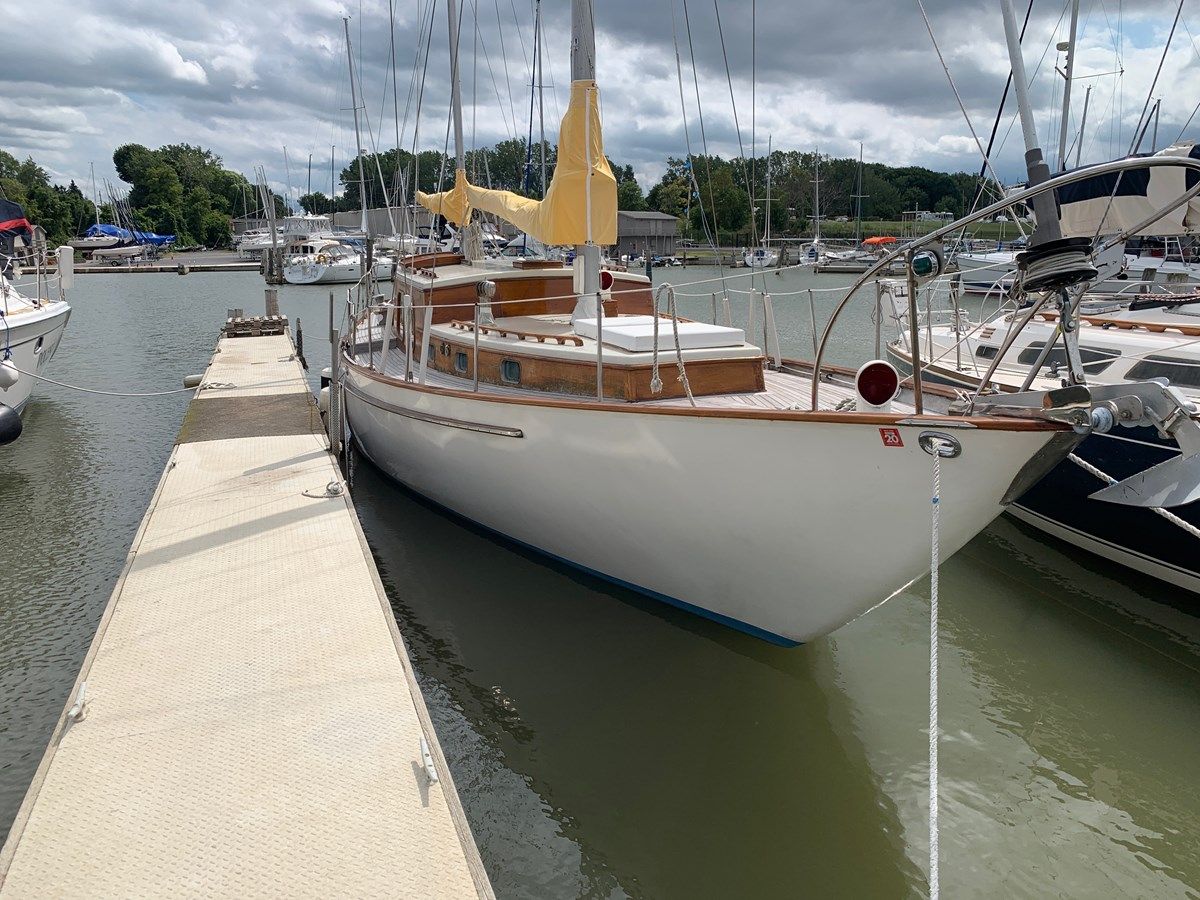
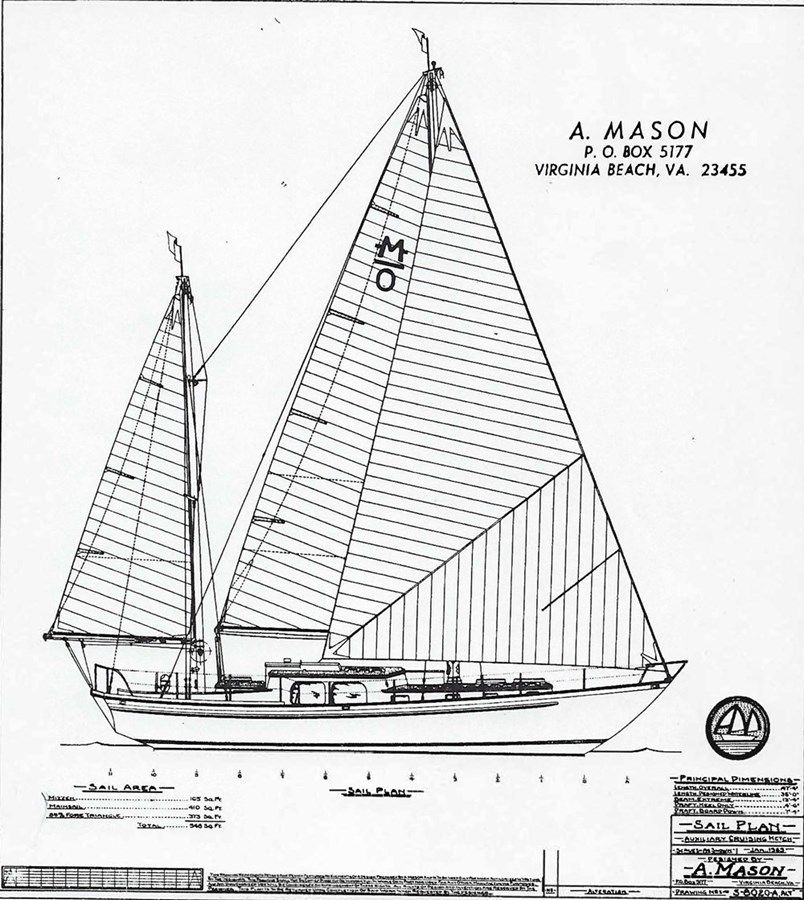
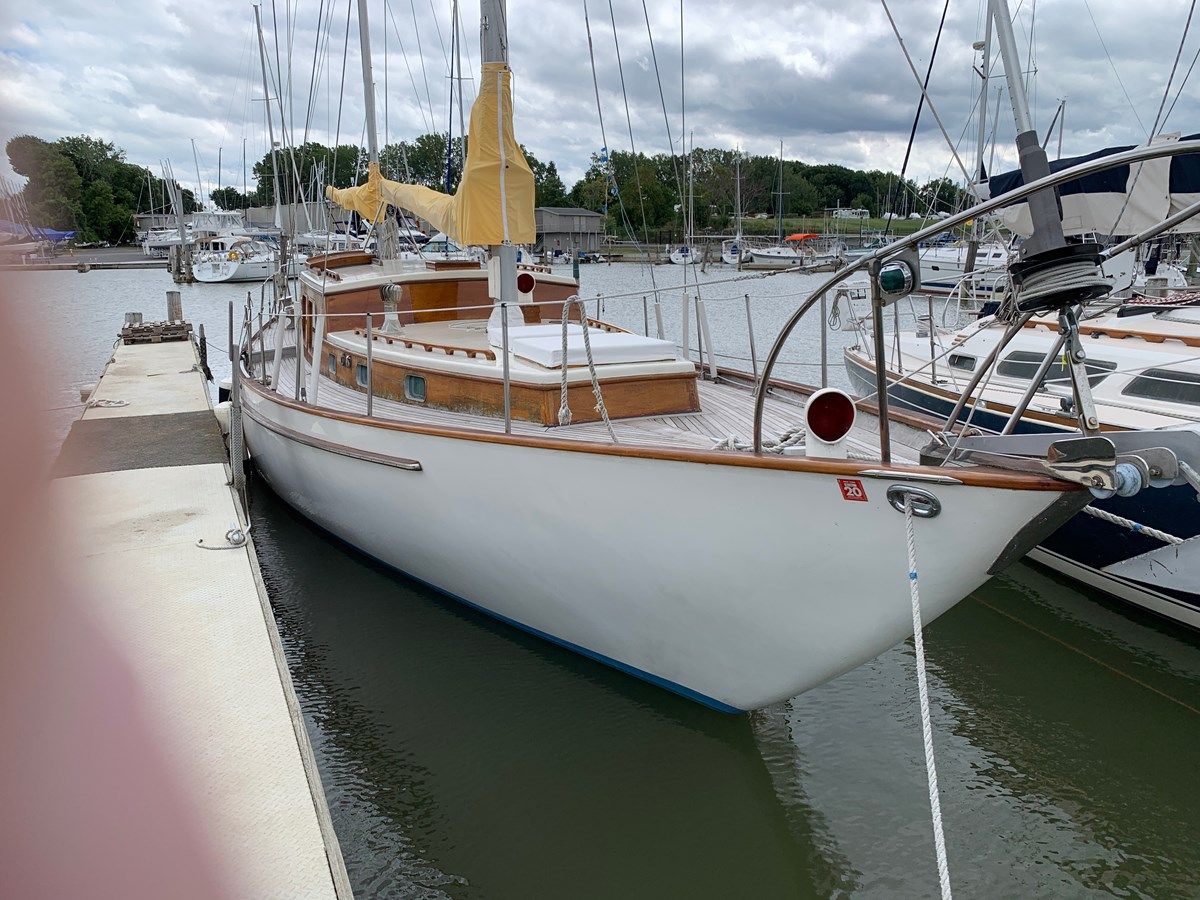
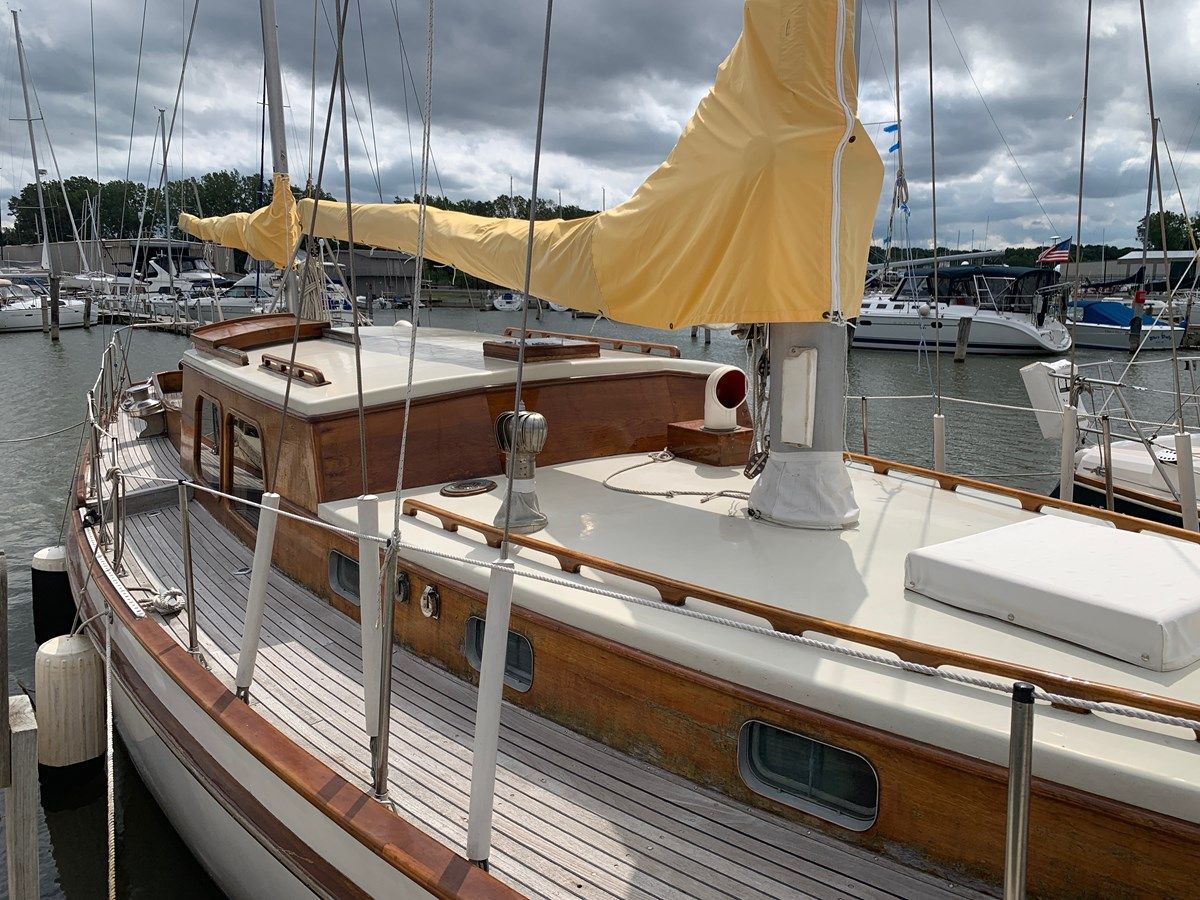
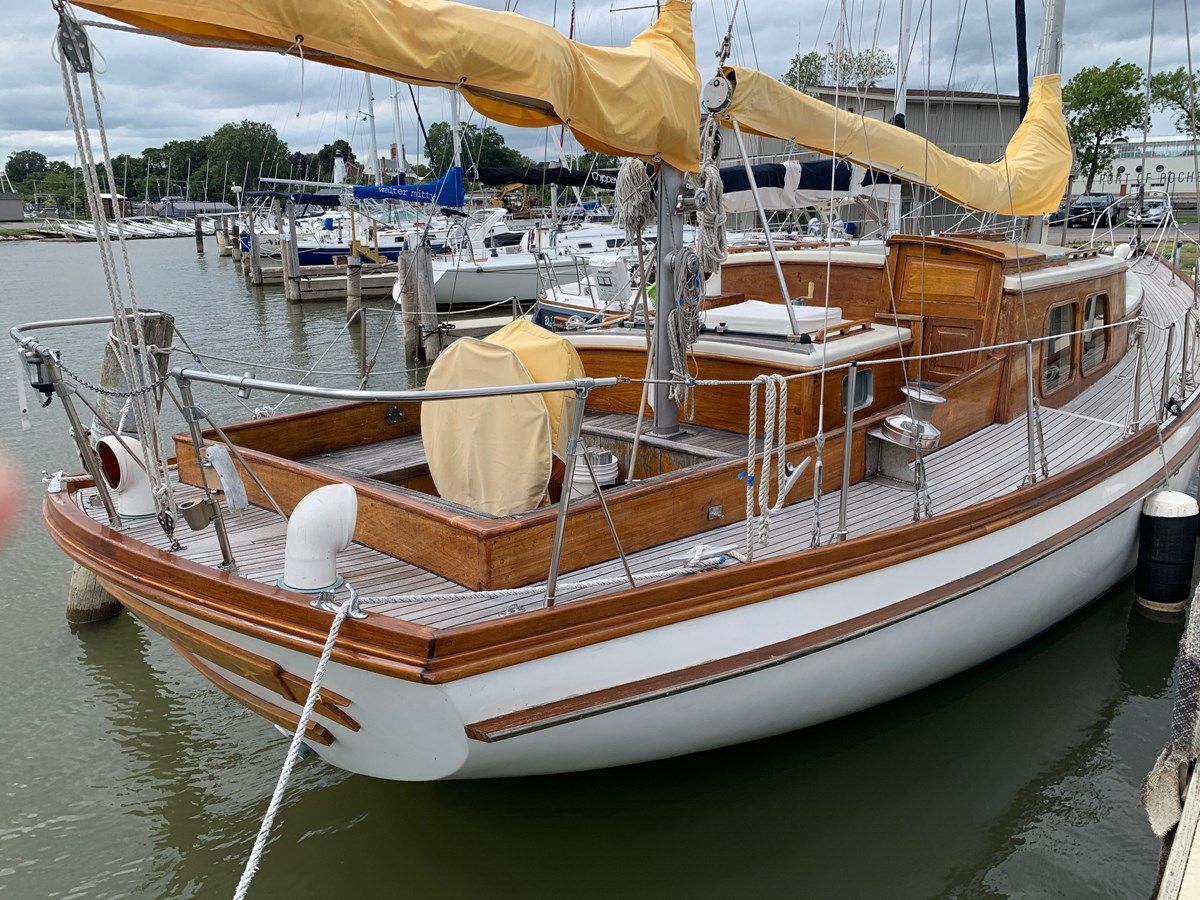
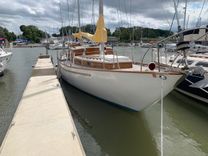
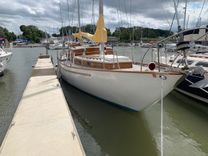
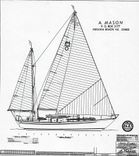
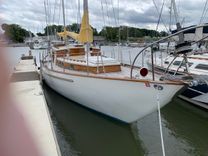
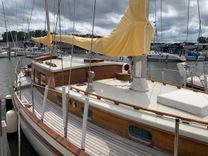
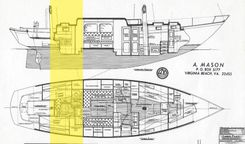
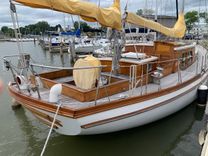
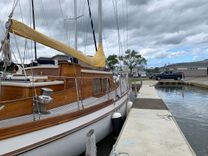
Recent price adjustment. “CREST” is now available—a rare chance to acquire a classic sailing yacht with true pedigree. Drawn by renowned naval architect Al Mason and painstakingly crafted by her original owners, CREST has been far more than a vessel; she has been a beloved home, a place to raise a family on the water, and the centerpiece of a lifelong adventure. Her graceful lines evoke a wooden classic, yet the robust, heavily built fiberglass hull keeps maintenance low while carrying the ketch rig with confidence, delivering the poise and capability that discerning bluewater cruiser and classic yacht enthusiasts prize.
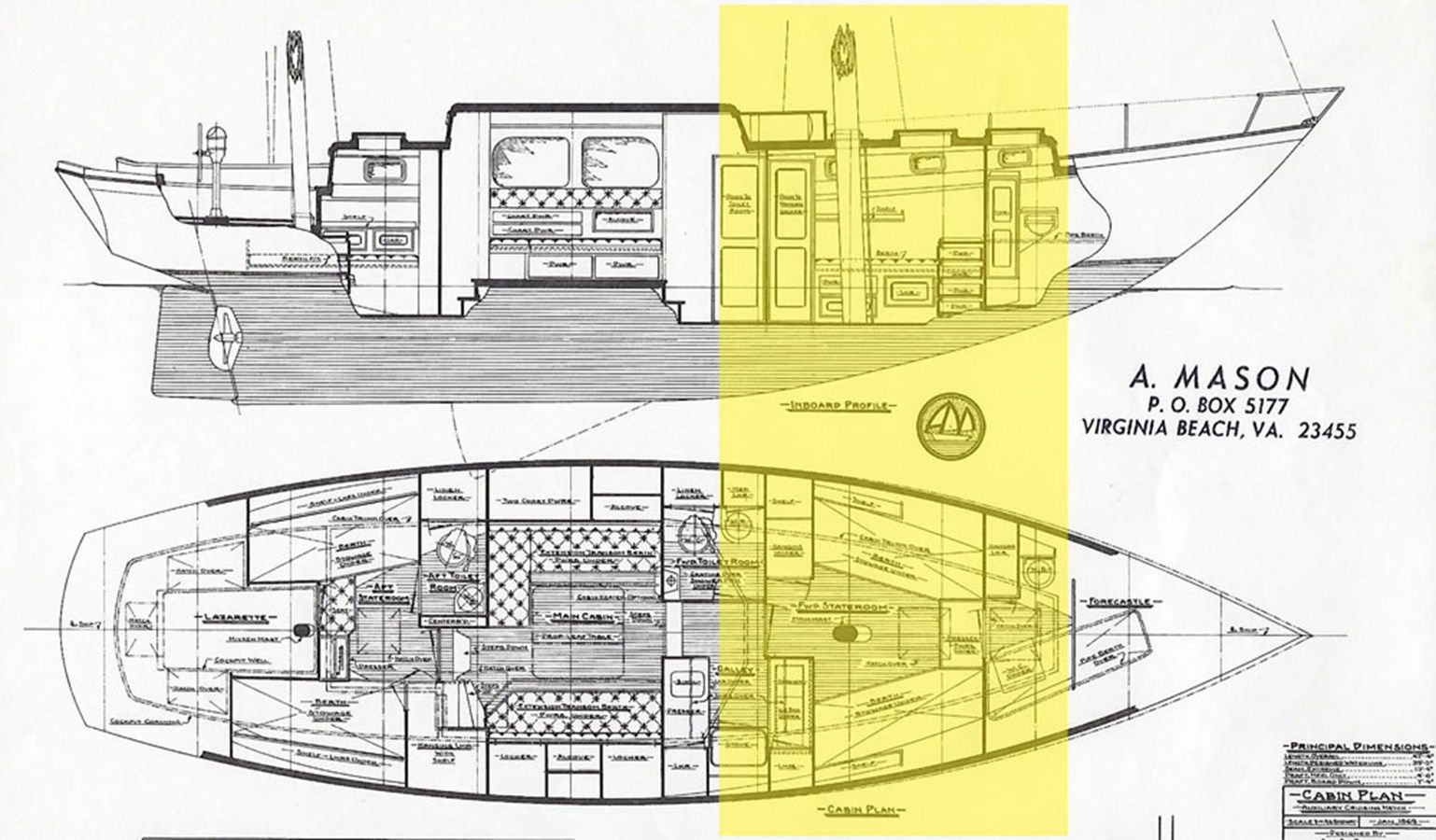
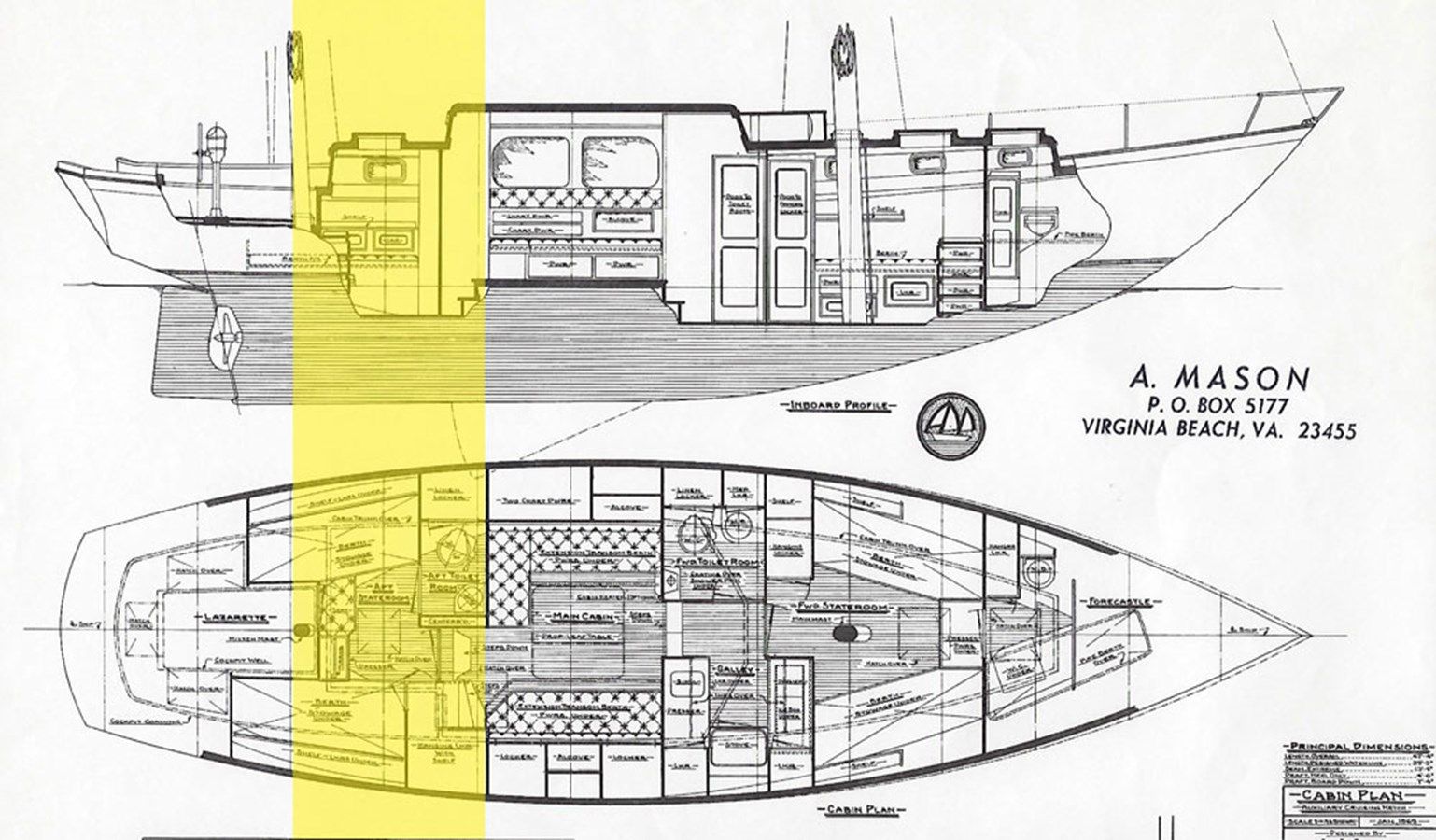
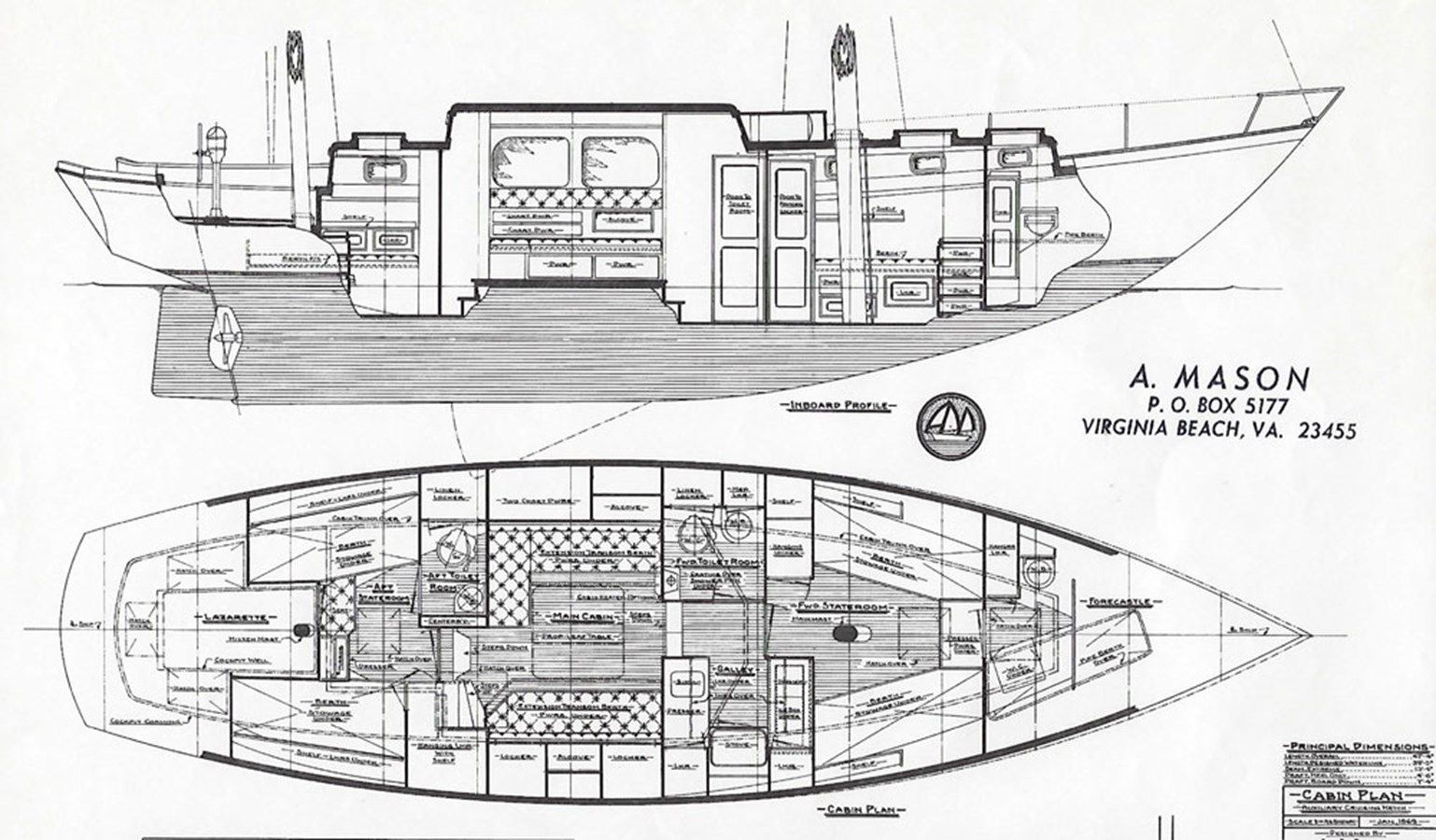
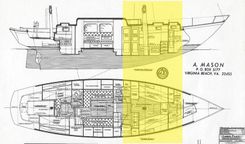
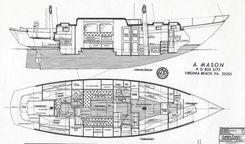
Conceived as an extended-range cruising yacht and offshore passagemaker, CREST offers a three-cabin, two-head layout complemented by a practical bow workshop. Accommodations for seven include three berths forward, two in the main cabin, and two aft, creating a comfortable liveaboard environment for family cruising or long-distance voyaging, with thoughtful spaces that make life at sea effortless.
A minimal shoal draft opens up thin-water anchorages and secluded cruising grounds typically off-limits to yachts of her size. Under power she is notably economical, making about 8 ¾ mph while consuming less than 2 gallons of fuel per hour. For the traditional sailor seeking comfort, character, and presence in every harbor, this bluewater ketch stands out. CREST invites inspection from those pursuing a refined family cruiser with offshore range and timeless elegance. June 2018 survey available with accepted offers.
Detailed Description
Overview
Built with a bluewater ethic and finished with a yachtsman’s eye, this vessel begins with a solid hand‑laid fiberglass hull measuring approximately 1 inch at the sheer, increasing to between 1 5/8 and 1 3/4 inches through the turn of the bilges and keel for reassuring strength. Inside, the hull is blanketed from the sheer down past the waterline with approximately 2 inches of urethane foam insulation for quiet, dry, temperature‑stable passages. The centerboard trunk is hand‑laid fiberglass with nylon chafing strips on the inner walls, carrying a one‑inch solid steel plate that is hot‑galvanized and bushed against electrolysis, hinging on a monel hinge pin within a monel pipe and sealed with monel access covers. Lead inside ballast is fully encapsulated in resin. The mast is founded on a steel sub‑step plate measuring 2 x 4 x 1/2 inches with a stainless steel mast step, while a 2 3/4 in. x 6 in. laminated mahogany shear clamp is through‑bolted to the hull with stainless steel fasteners for uncompromising rigidity.
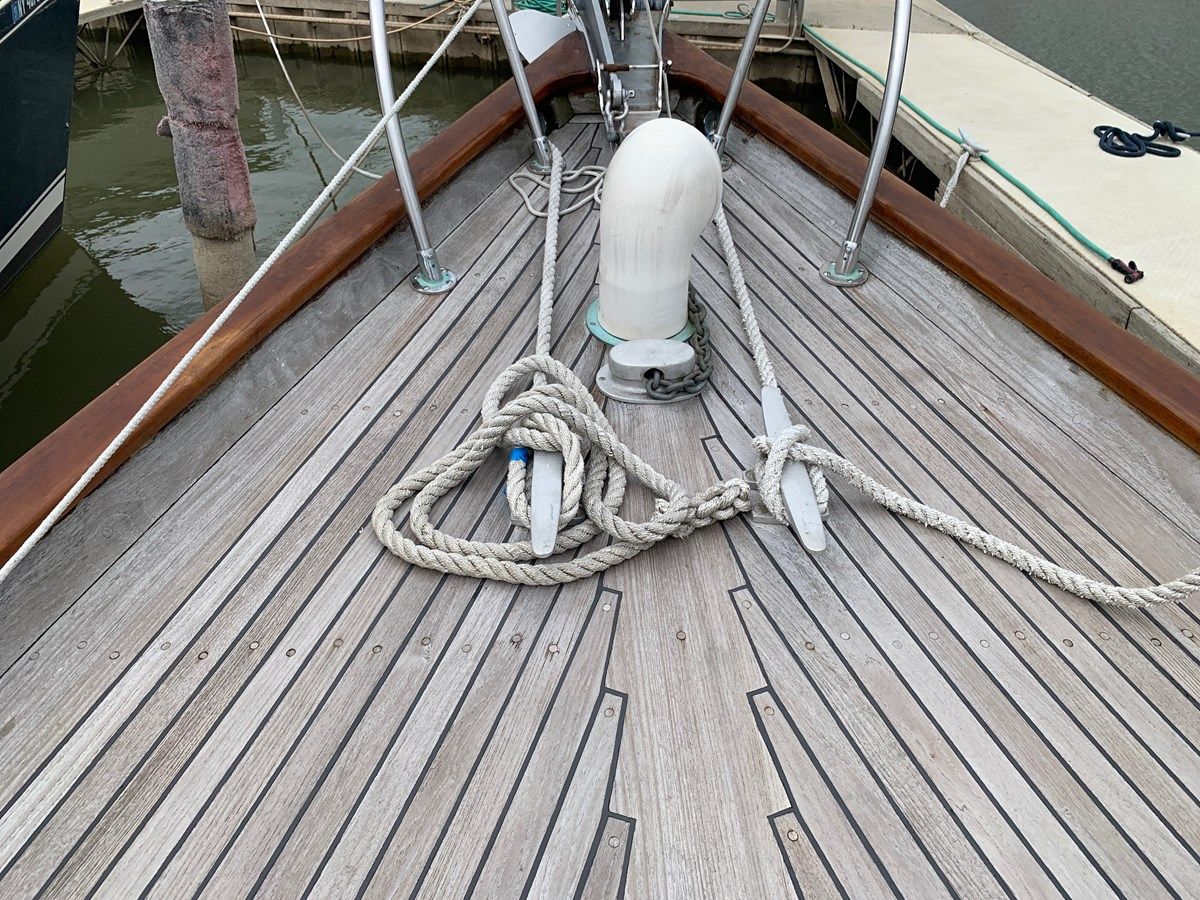
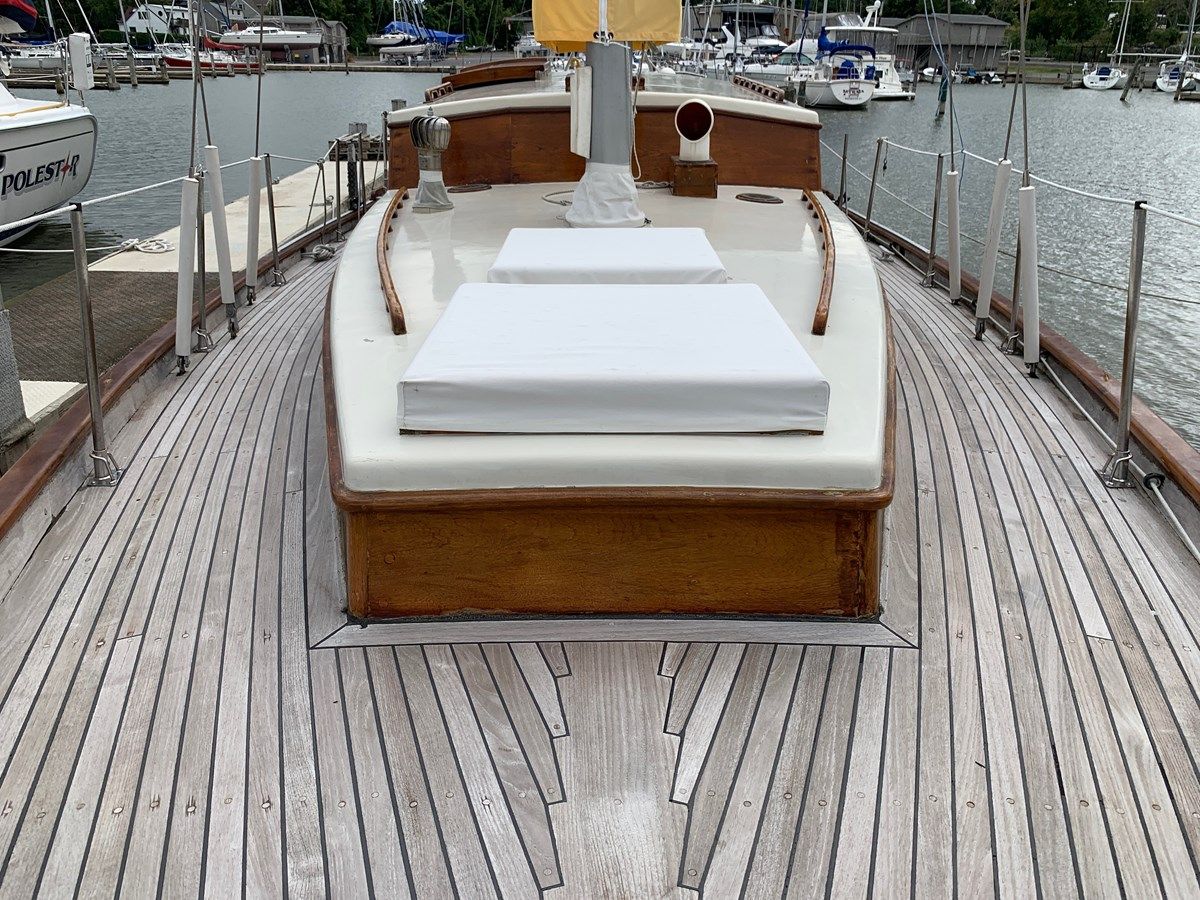
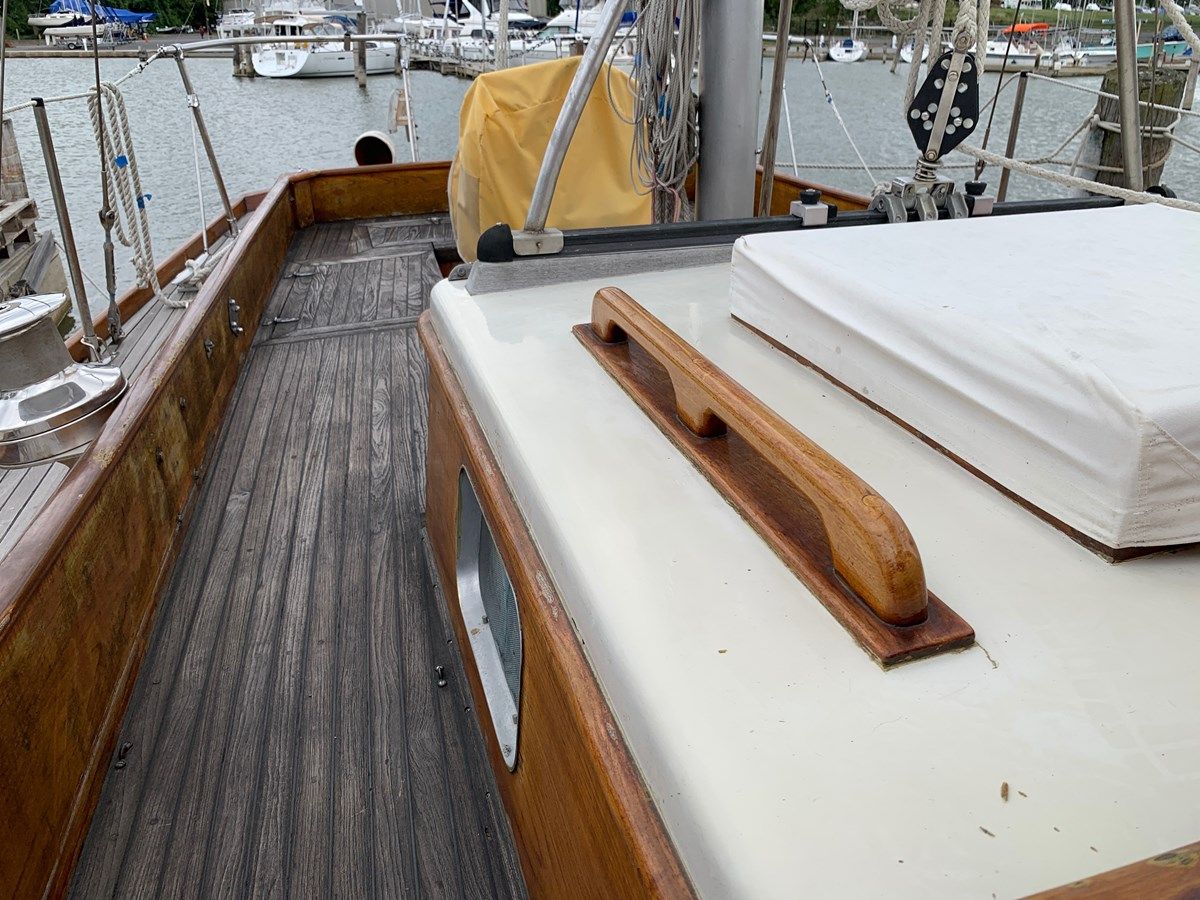
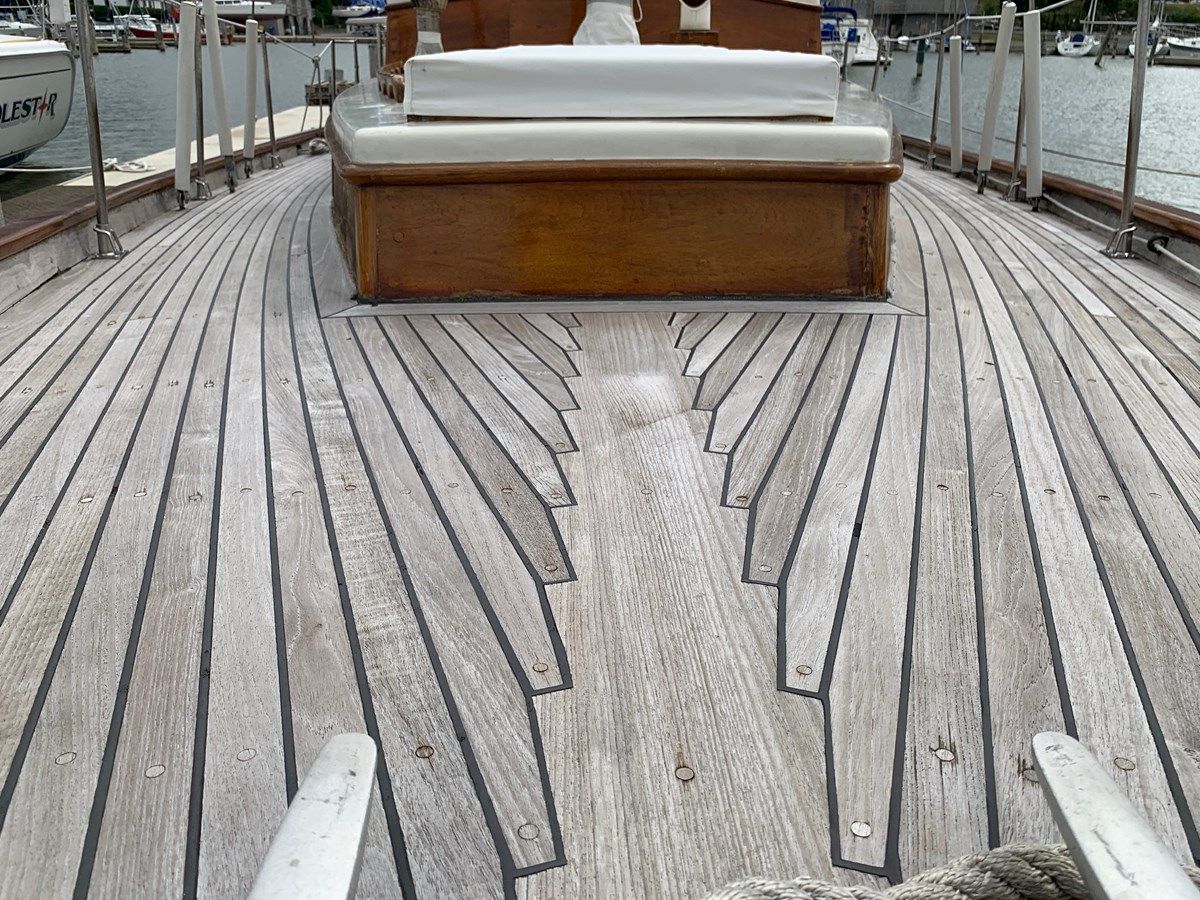
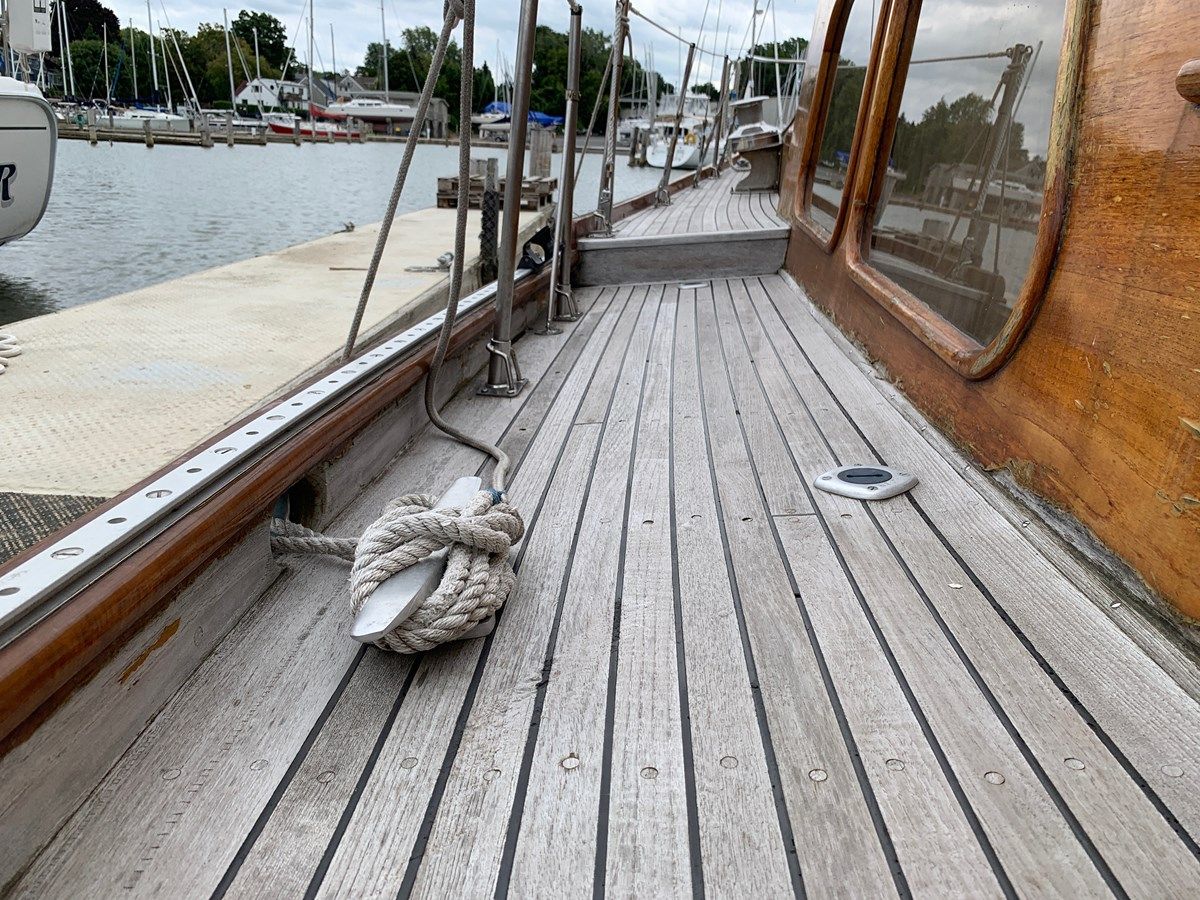
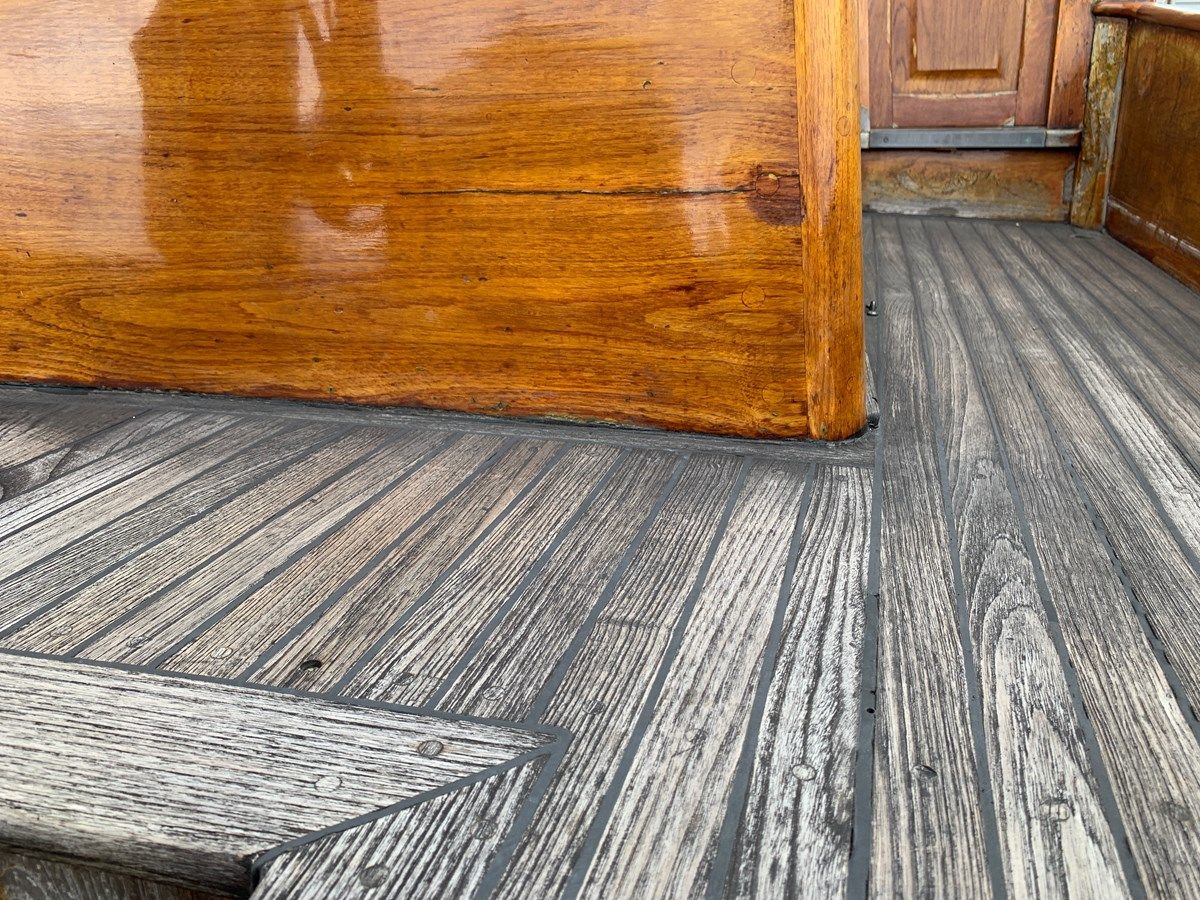
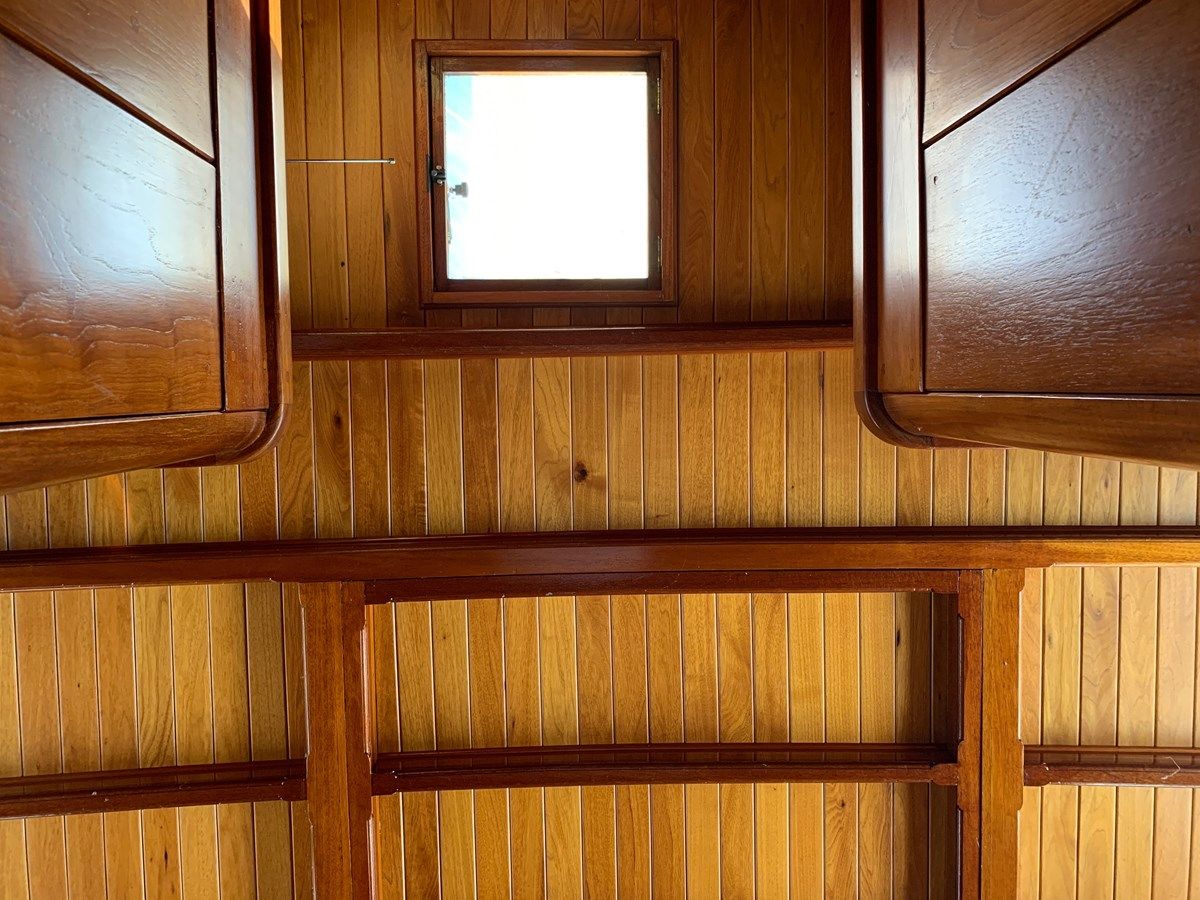
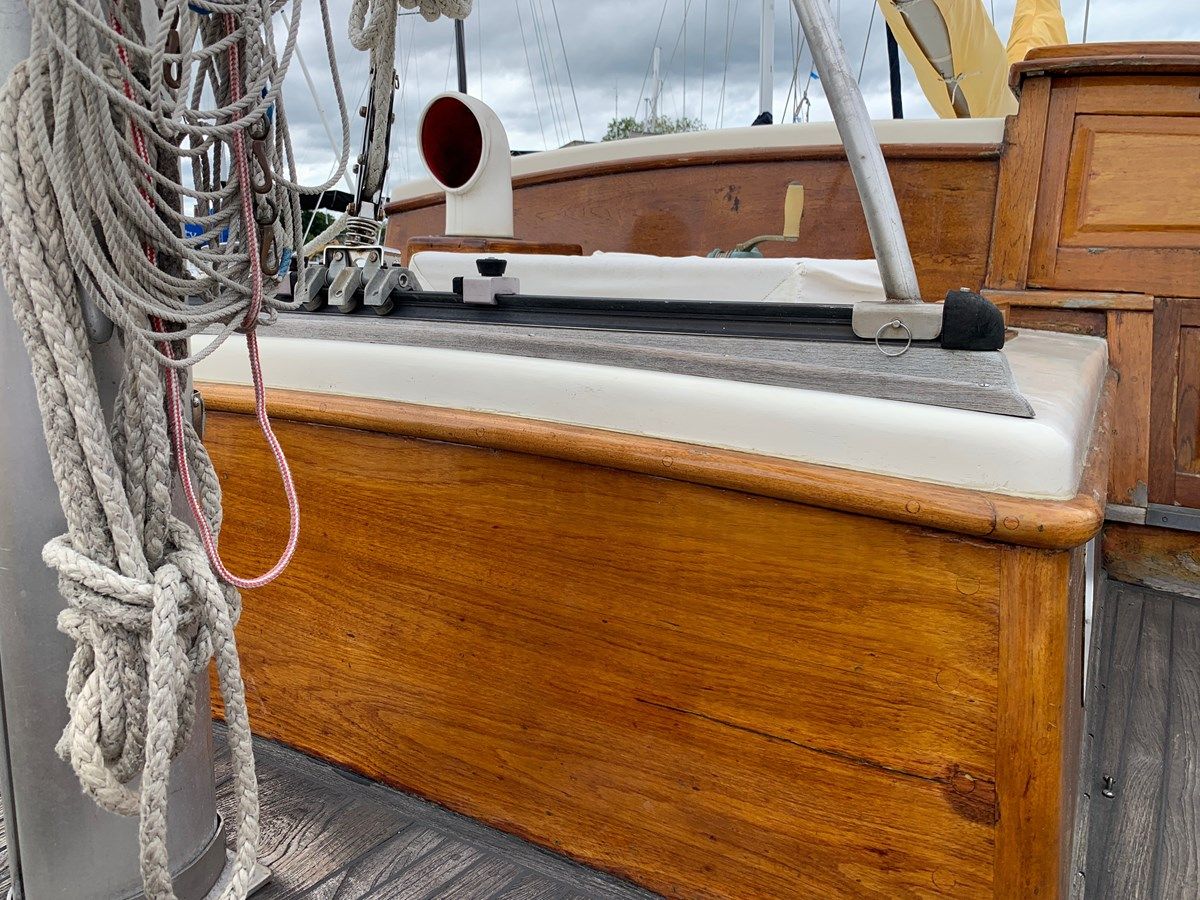
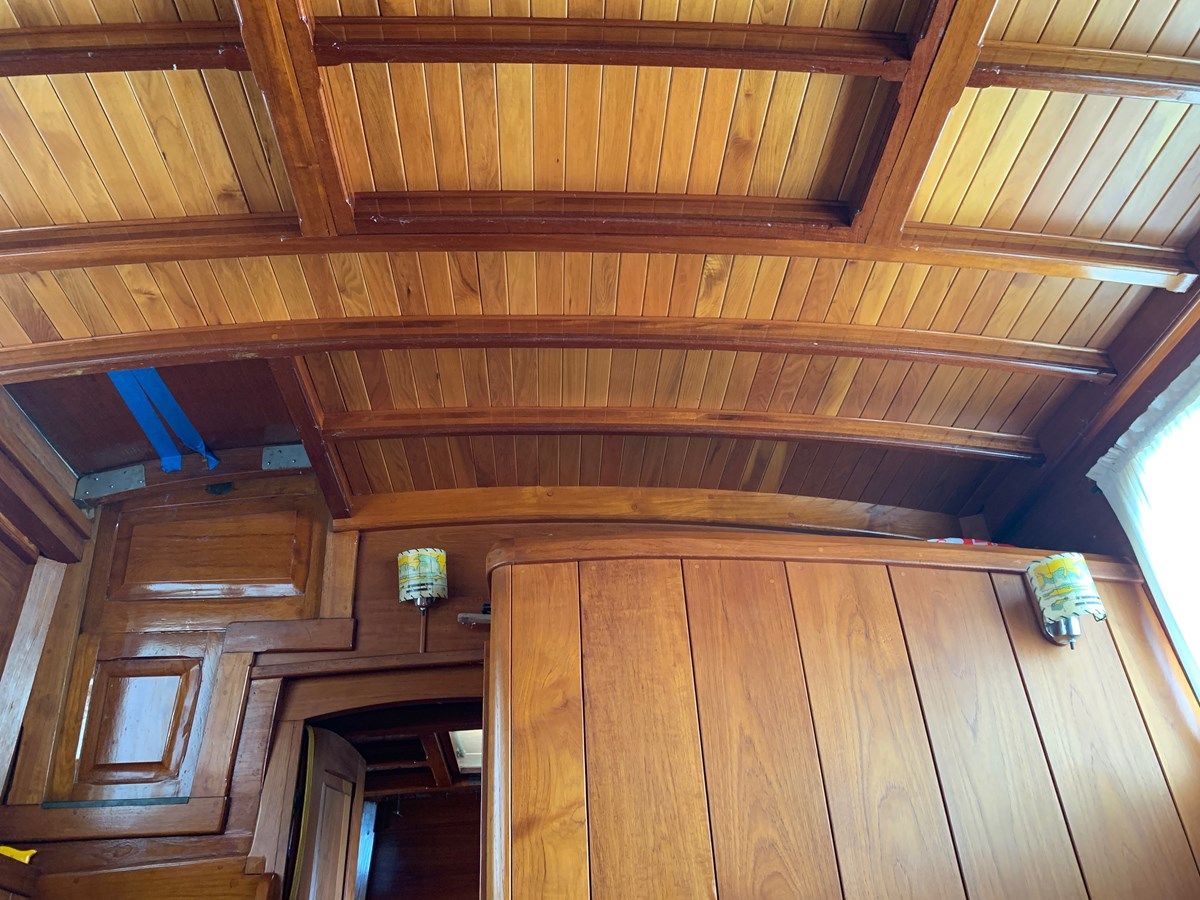
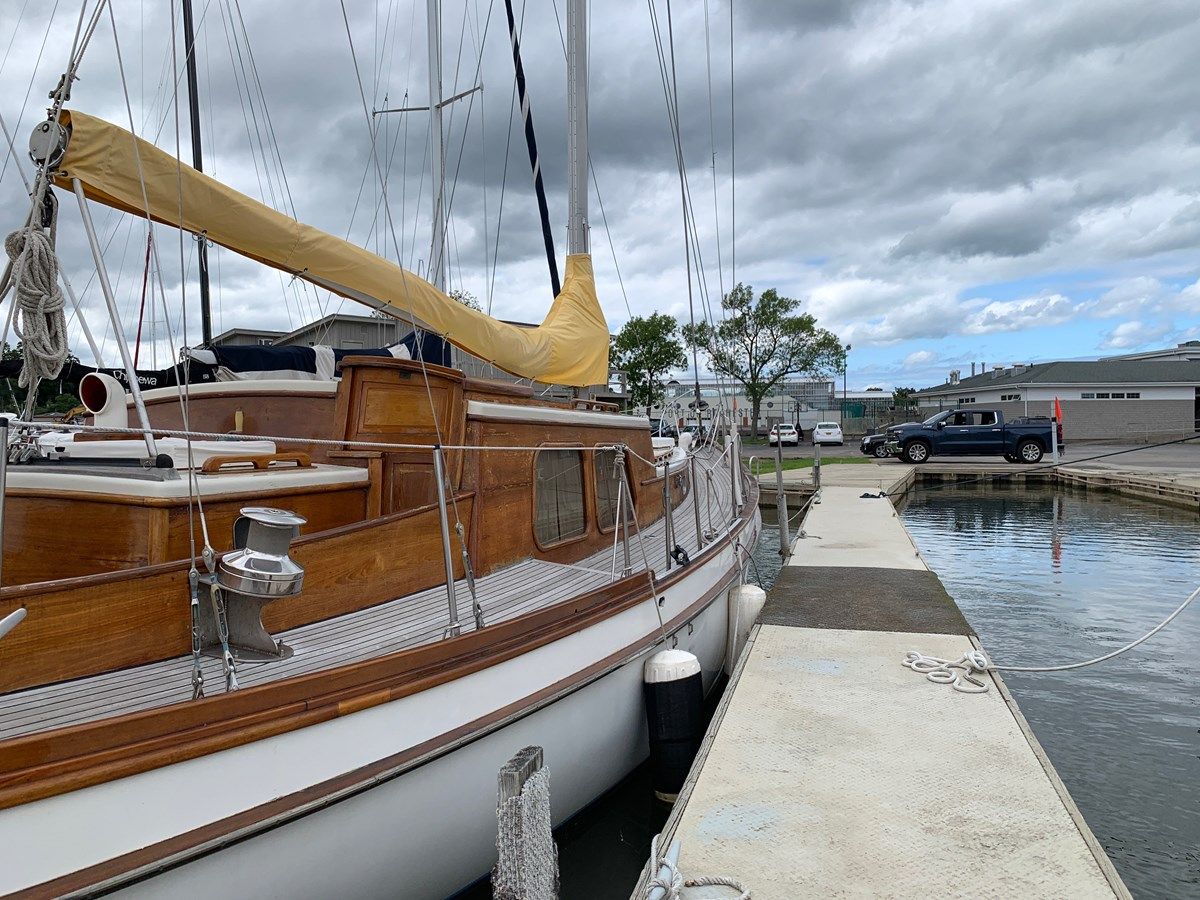
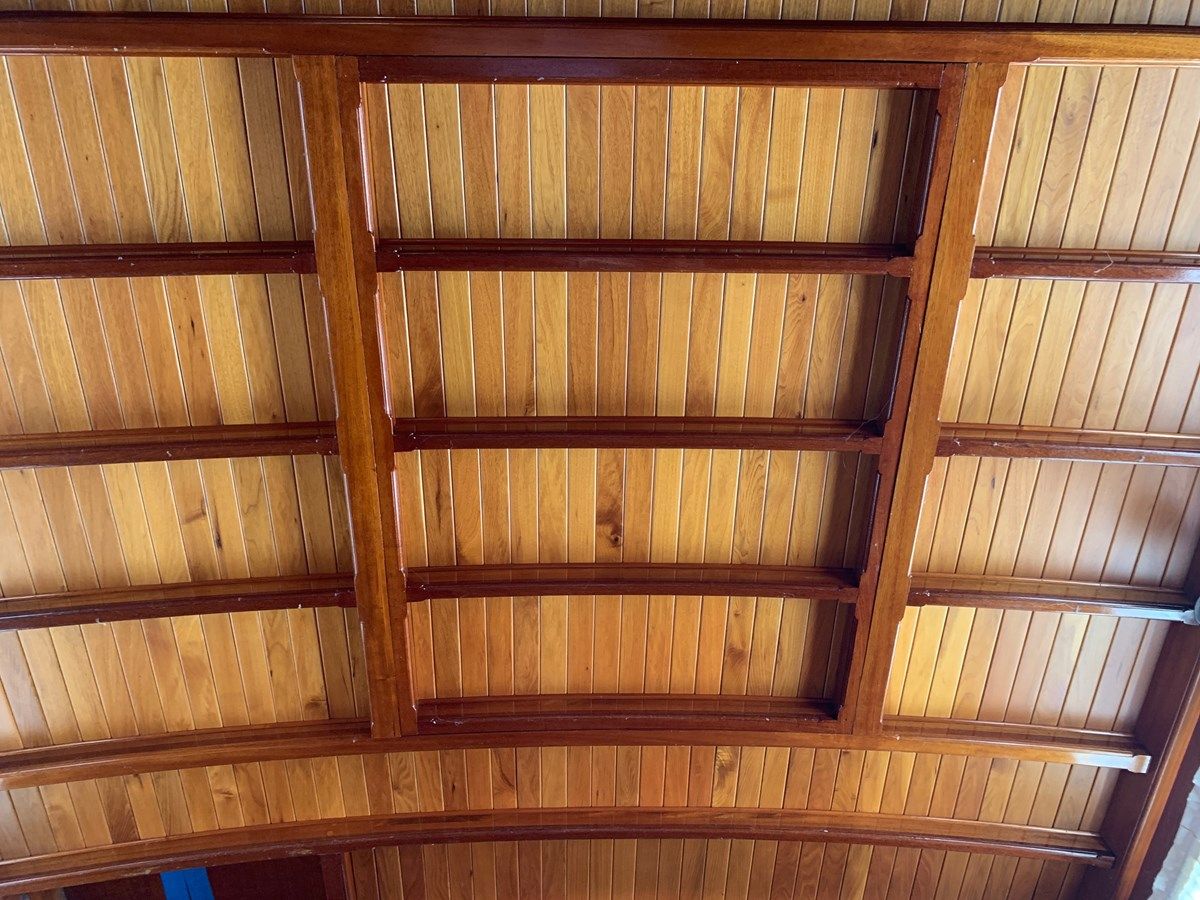
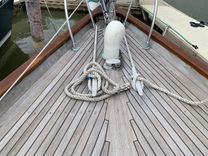
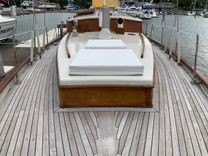
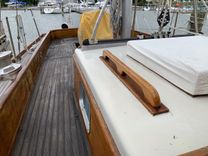
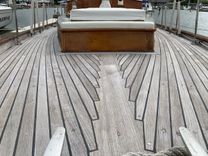
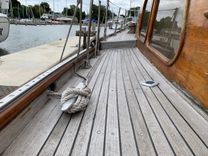
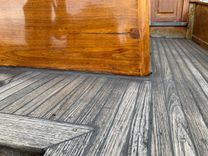
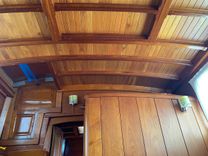
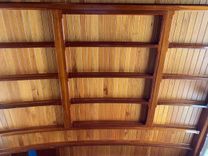
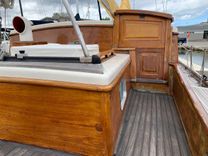
The weather deck is traditional craft and modern protection in one: laminated mahogany deck beams carry two layers of 3/8‑inch marine plywood, glued and screwed, sheathed in fiberglass cloth, then planked with 1 1/8‑inch teak laid in thiokol and silicon‑bronze screw‑fastened to the beams for that warm, grippy, all‑weather footing. The cabin expresses the same commitment to structure and beauty: naturally finished 1 3/8‑inch teak sides are vertically fastened with 3/8‑inch bronze rods bolted to the weather deck; varnished laminated mahogany cabin beams support two layers of 3/8‑inch marine plywood glued and screwed with silicon bronze screws, glass‑clothed on the exterior and lined inside with naturally finished butternut planking. A flush cabin‑top hatch allows clean vertical engine removal, and four fixed main‑cabin side windows in 1/4‑inch tempered glass carry a solar tint and UV shield for clarity and comfort.
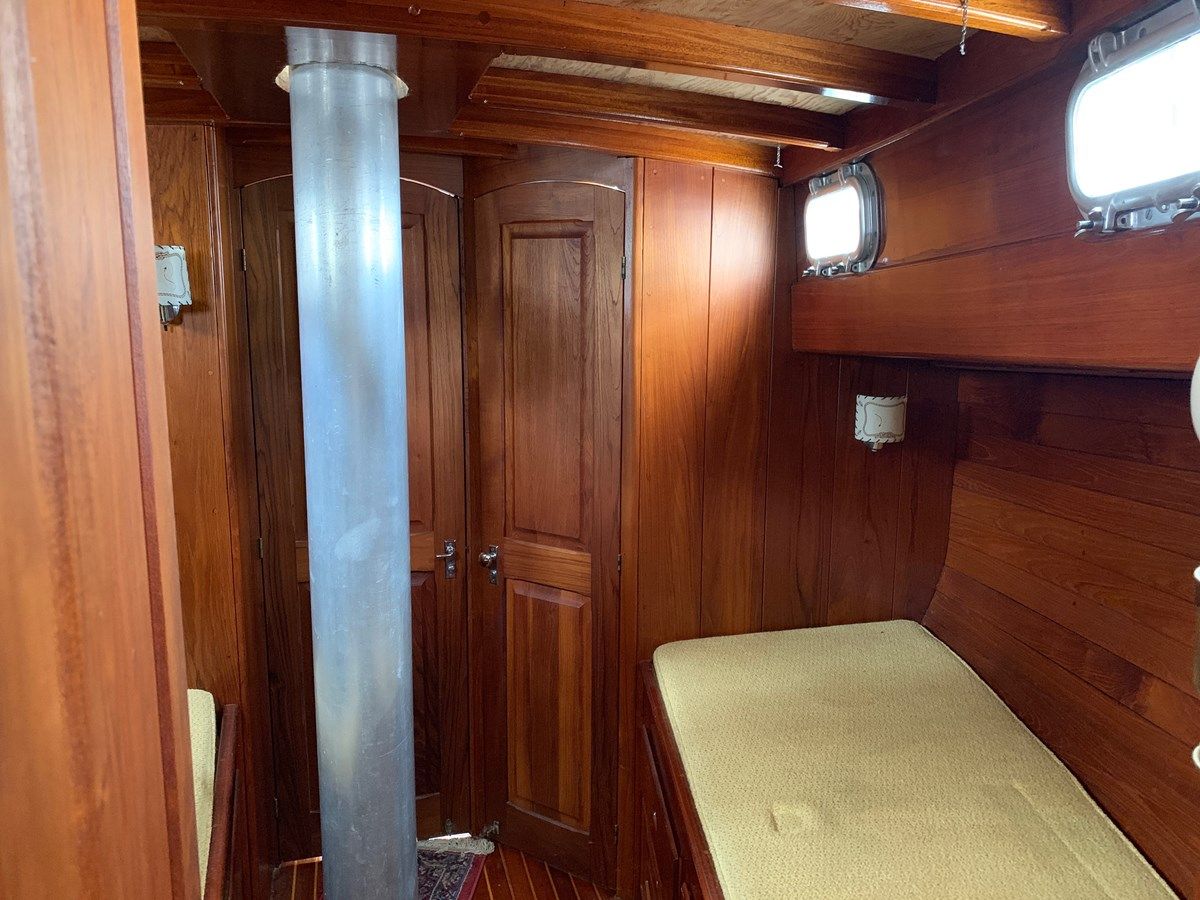
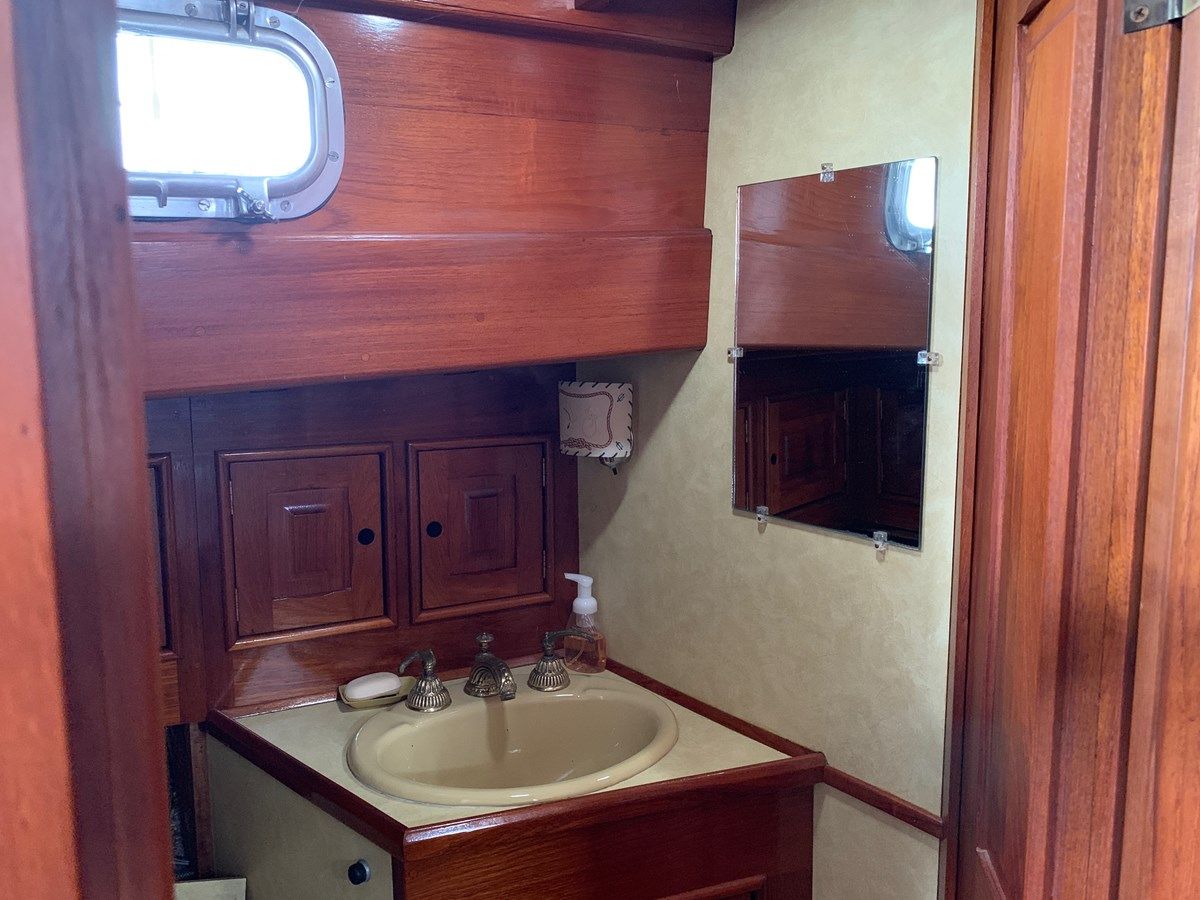
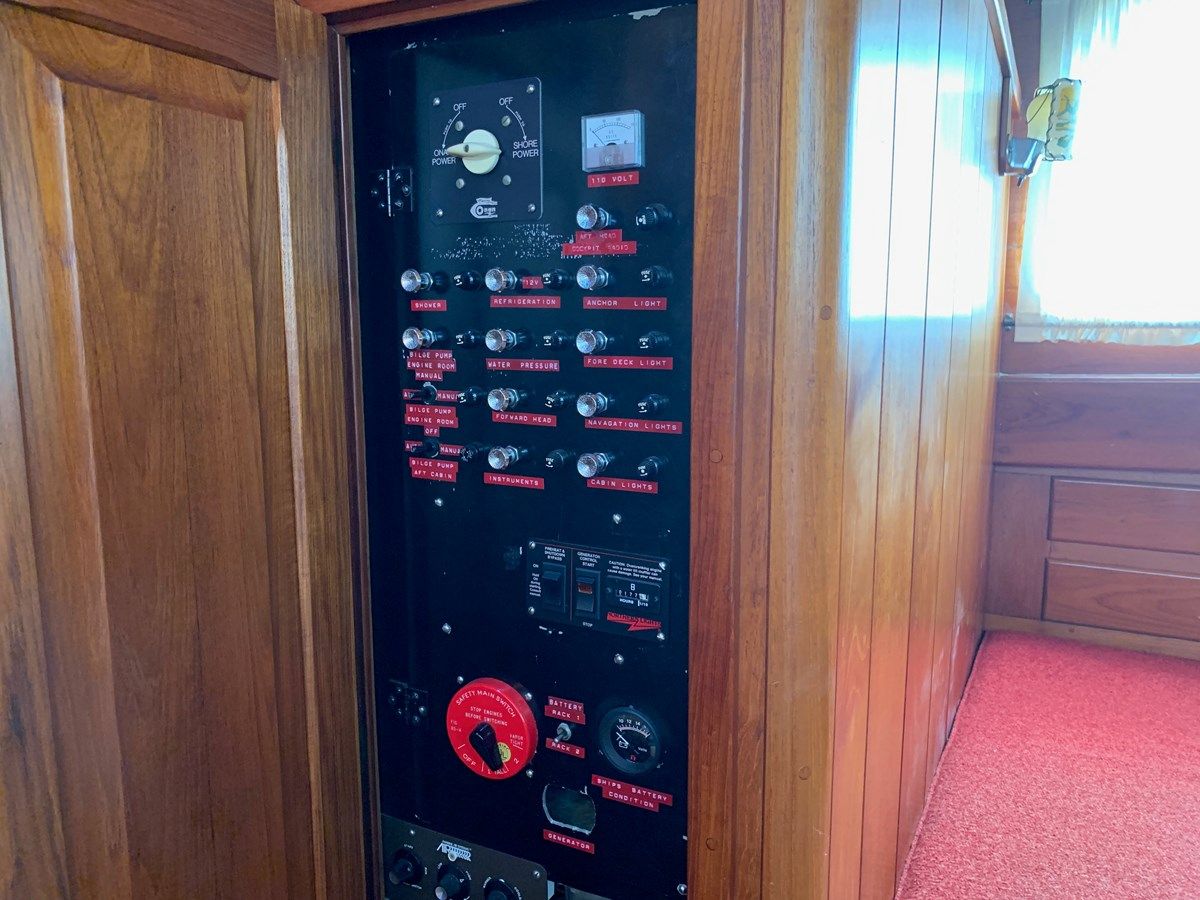
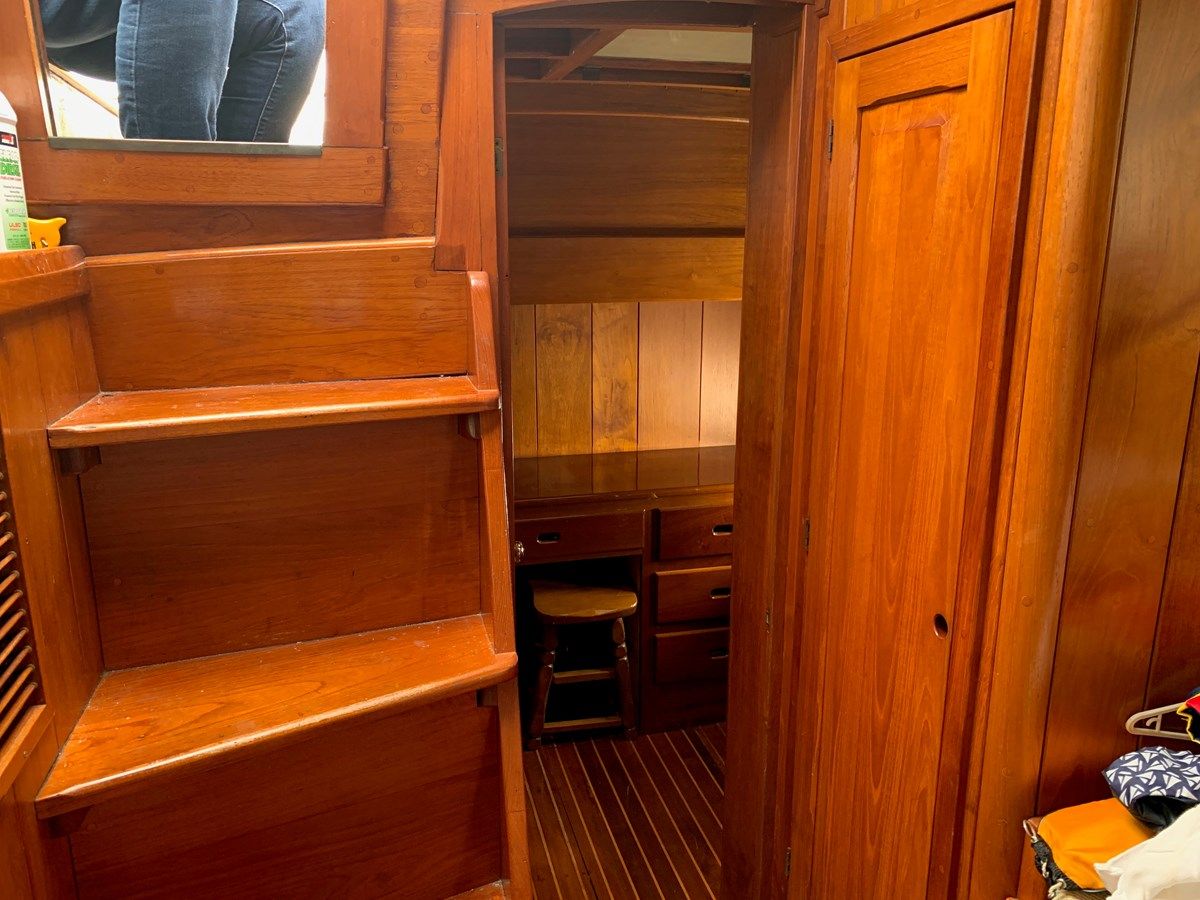
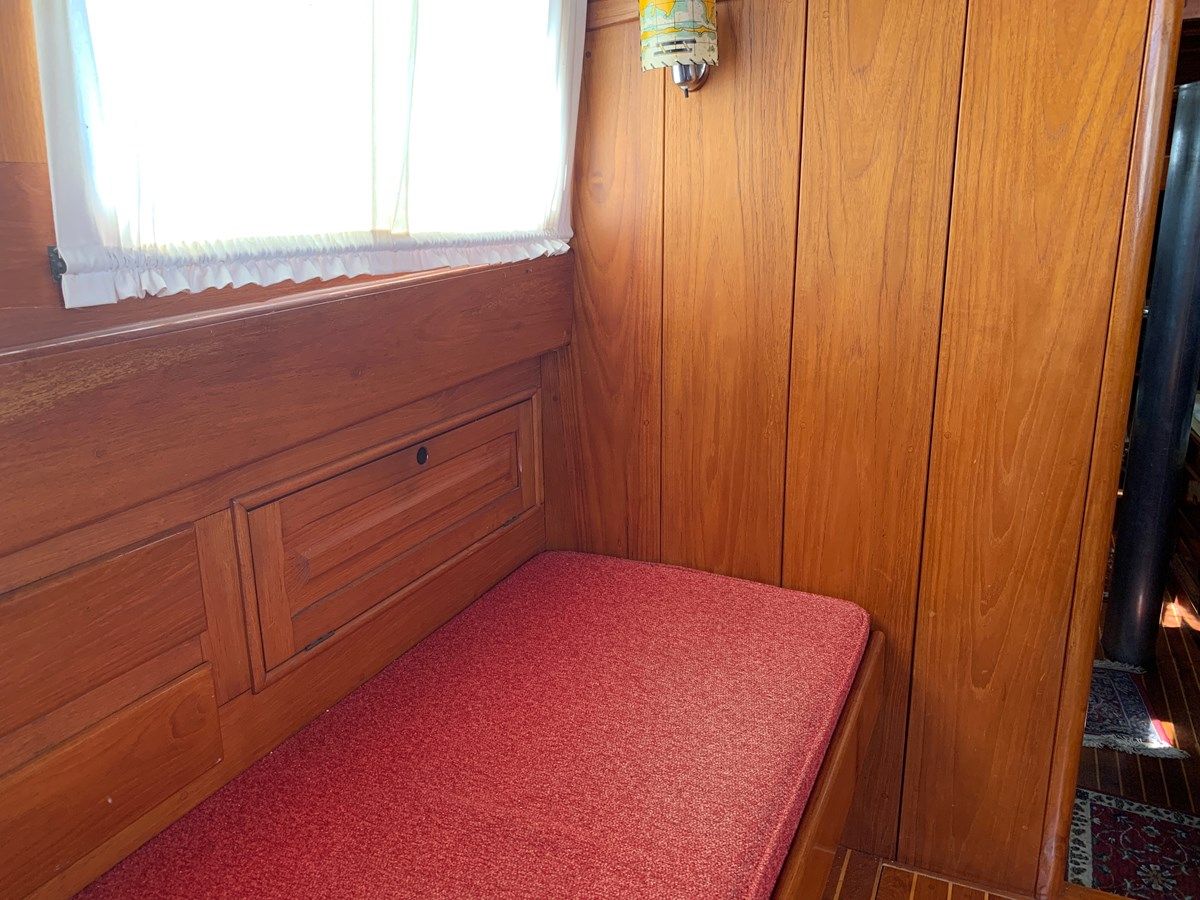
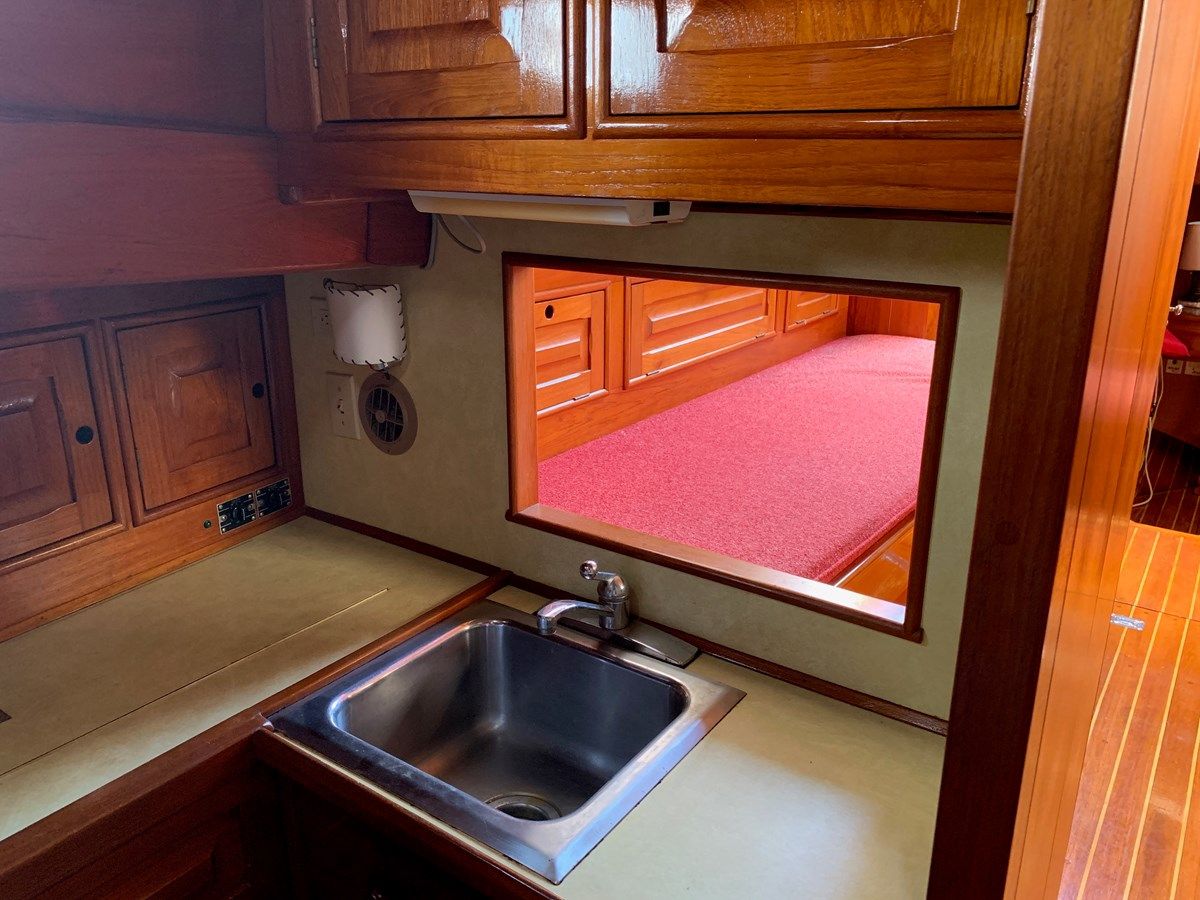
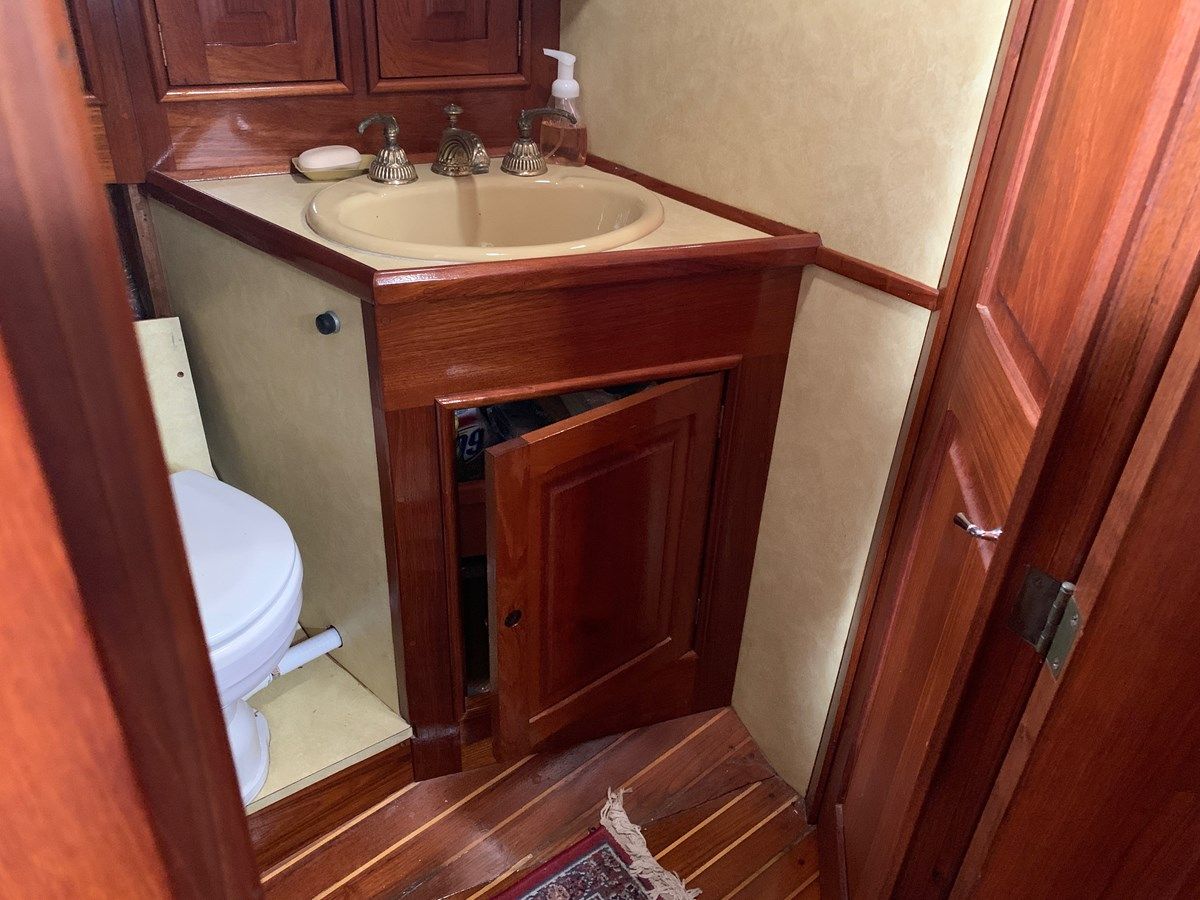
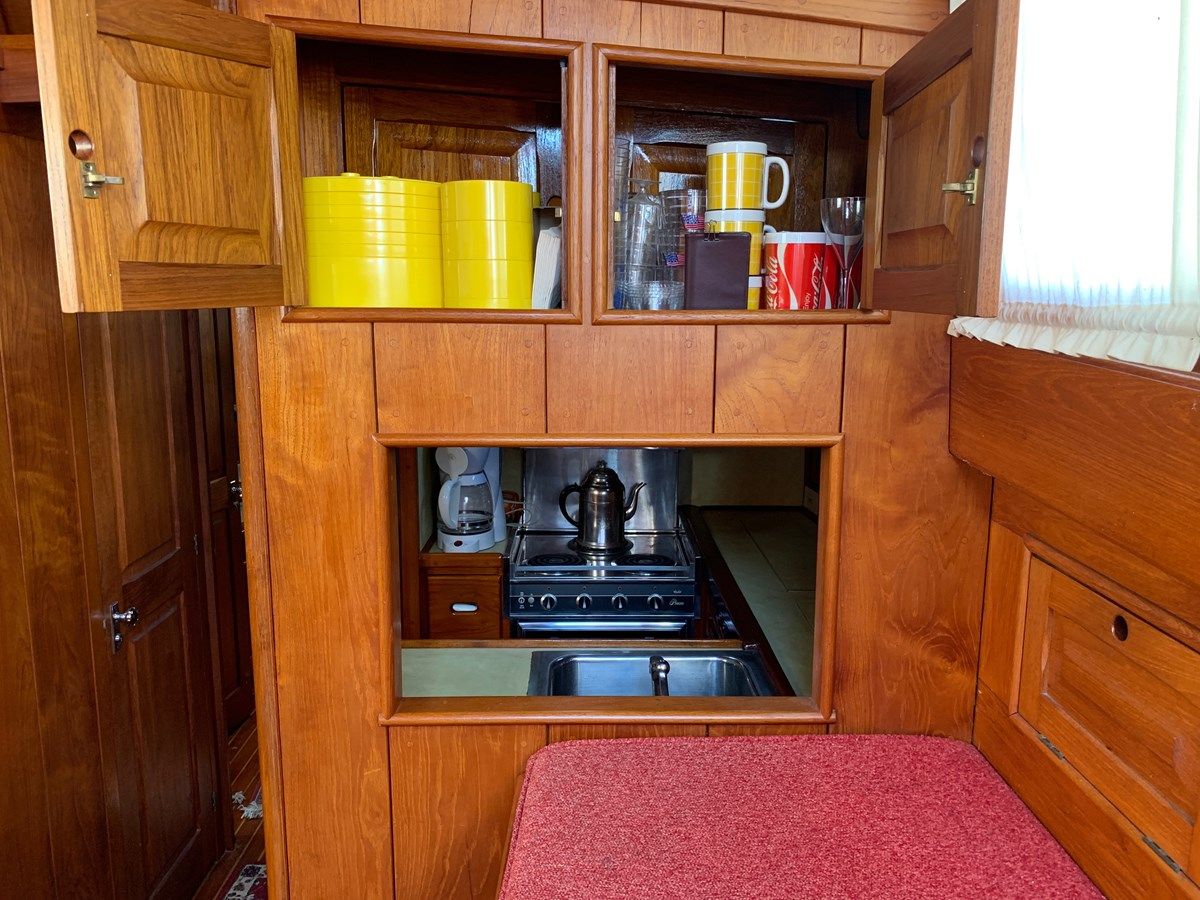
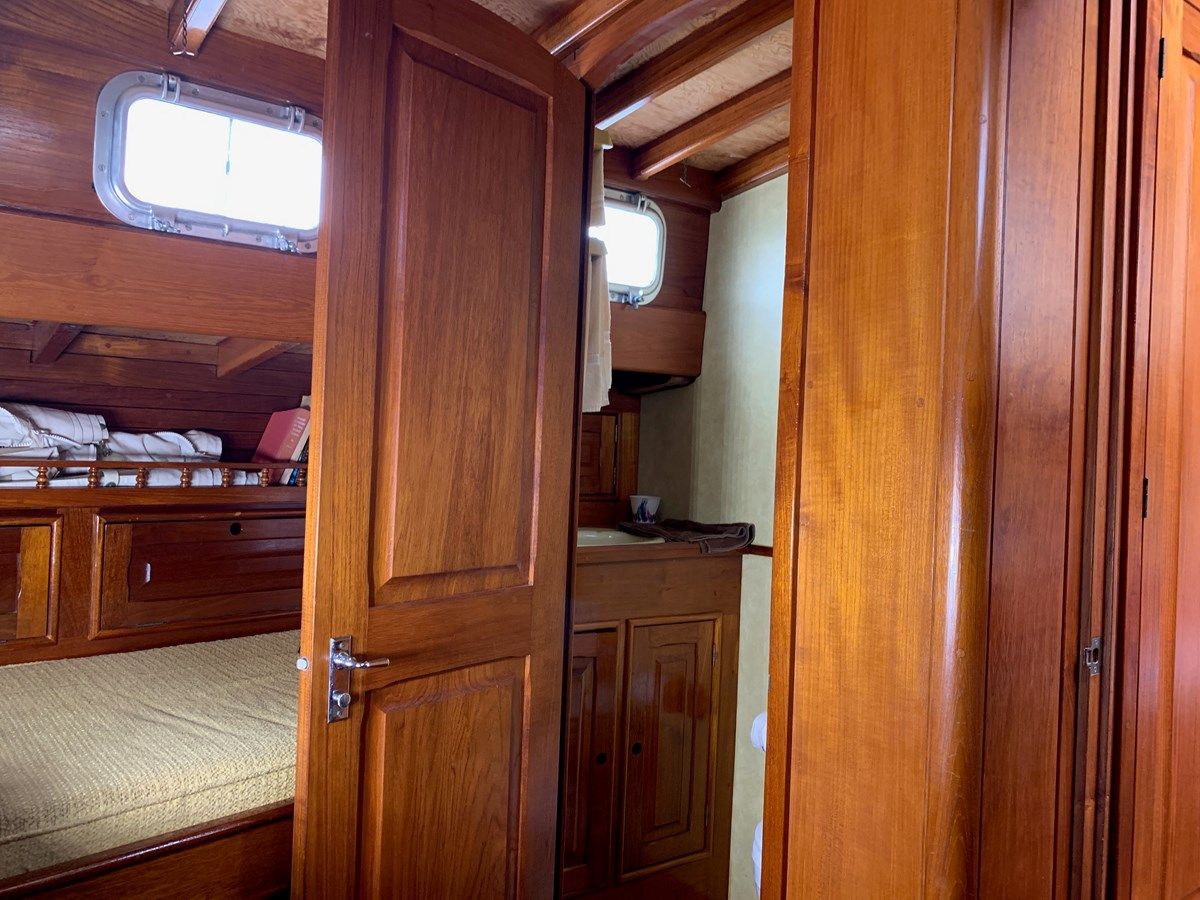
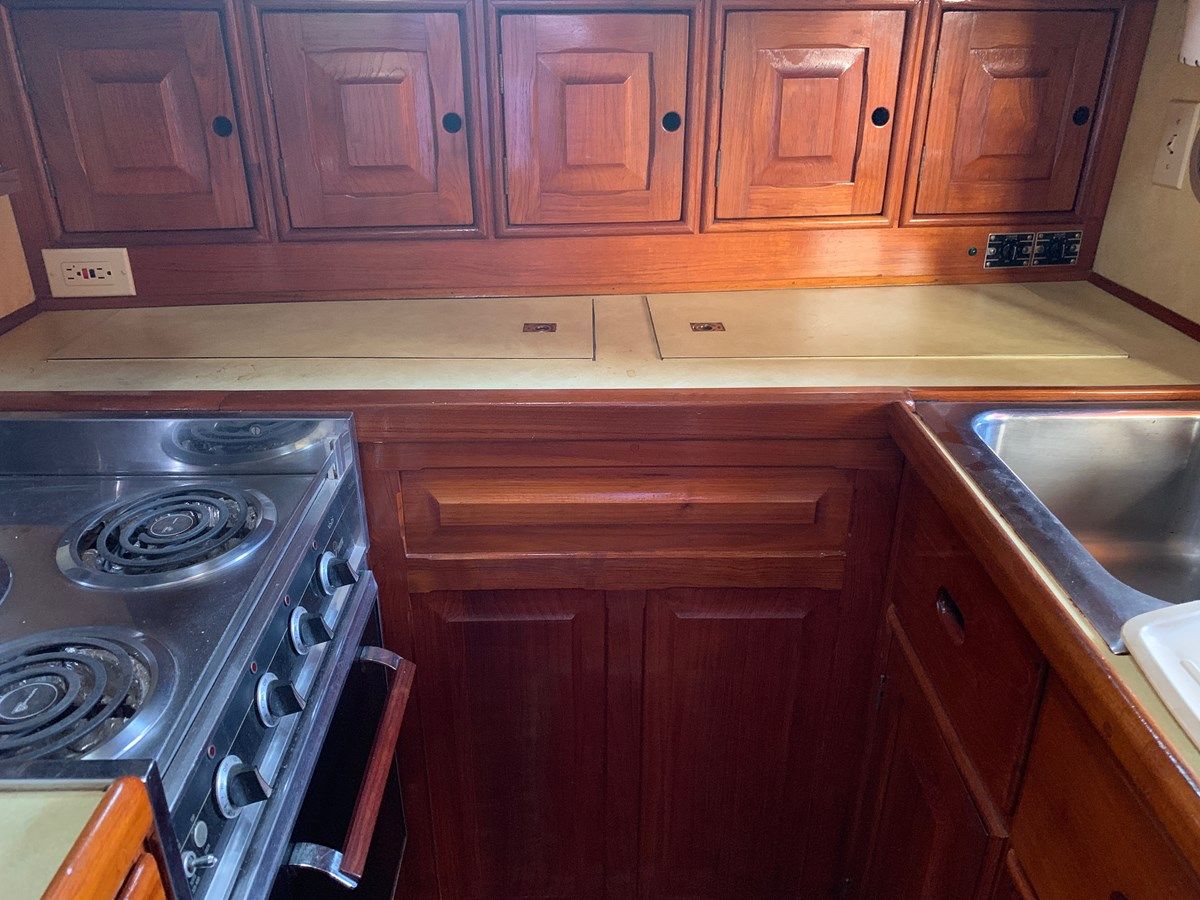
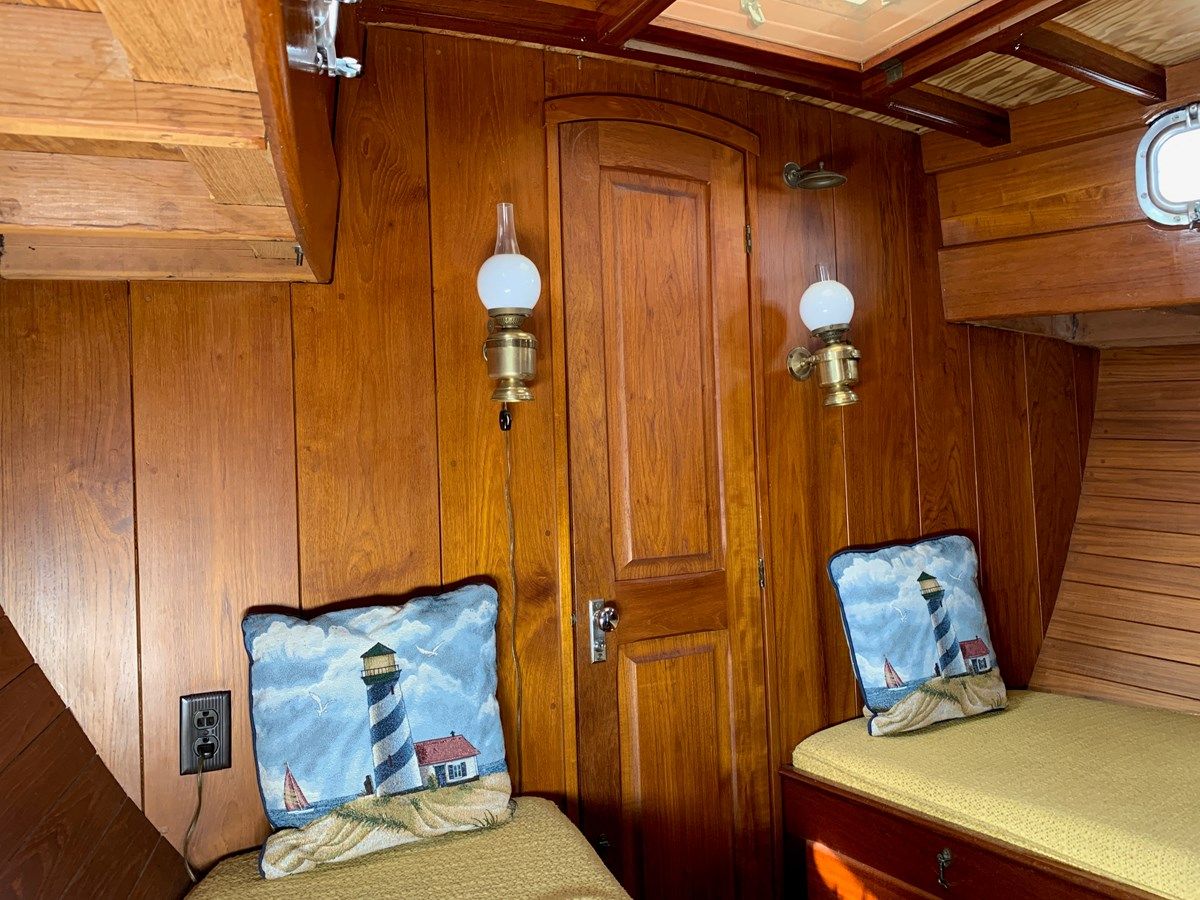
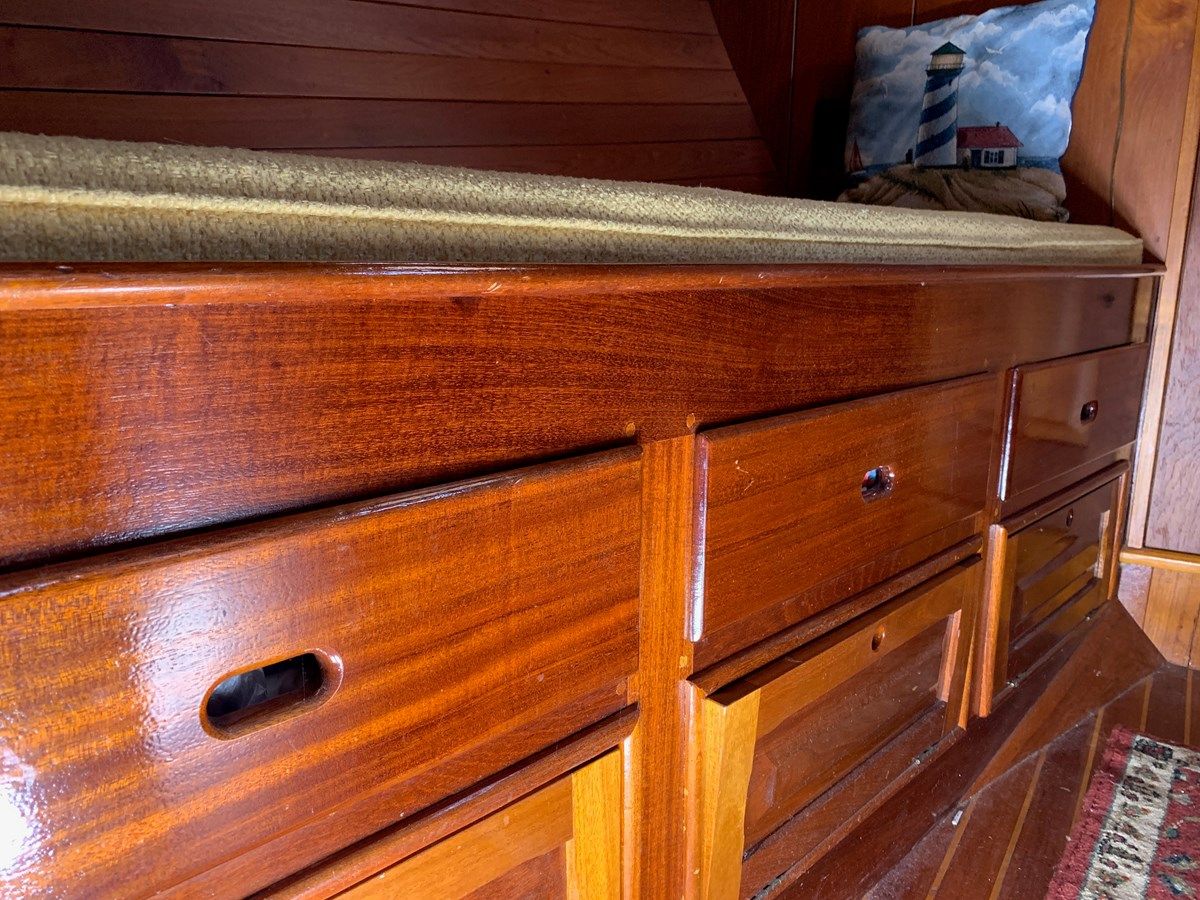
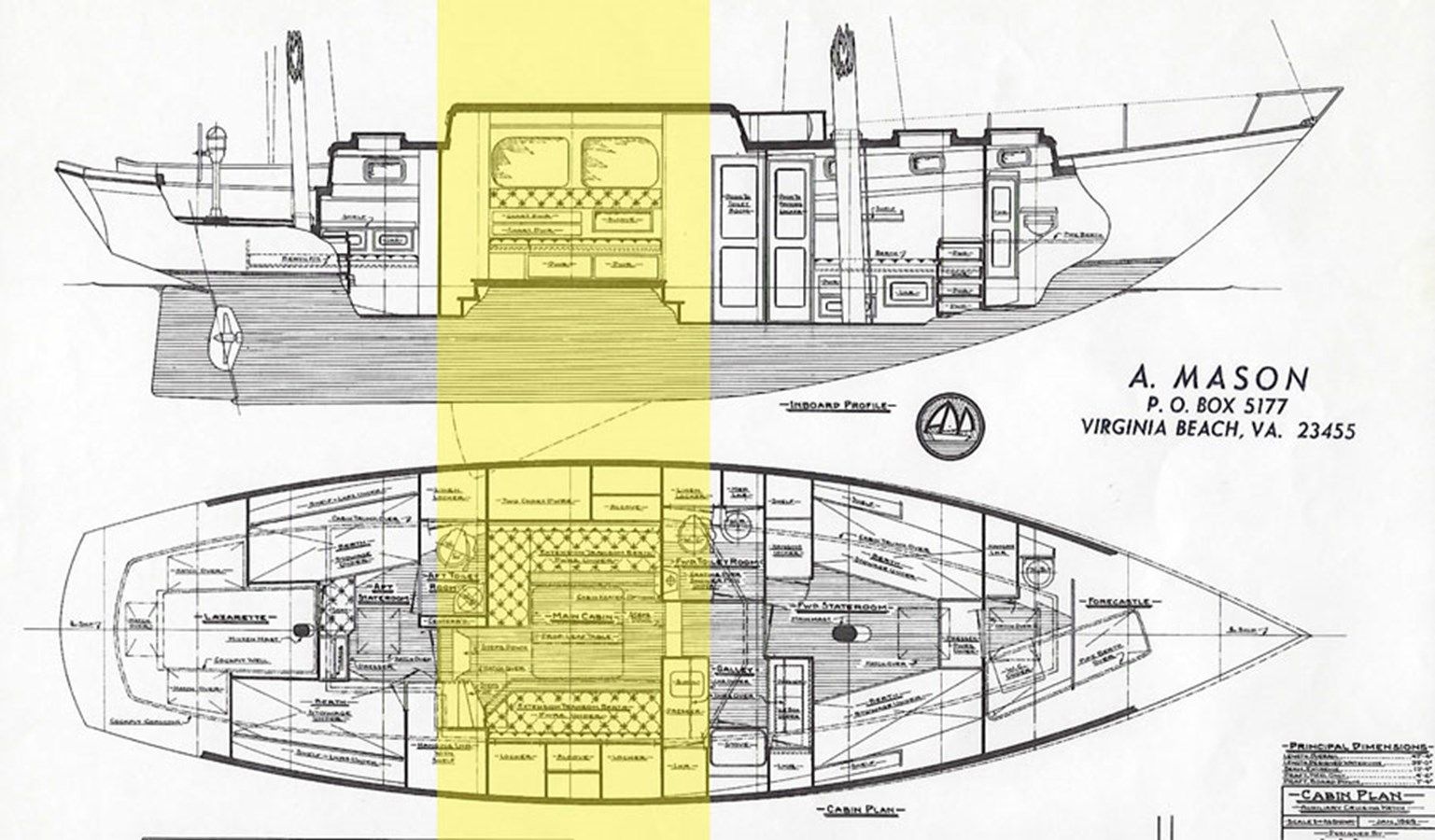
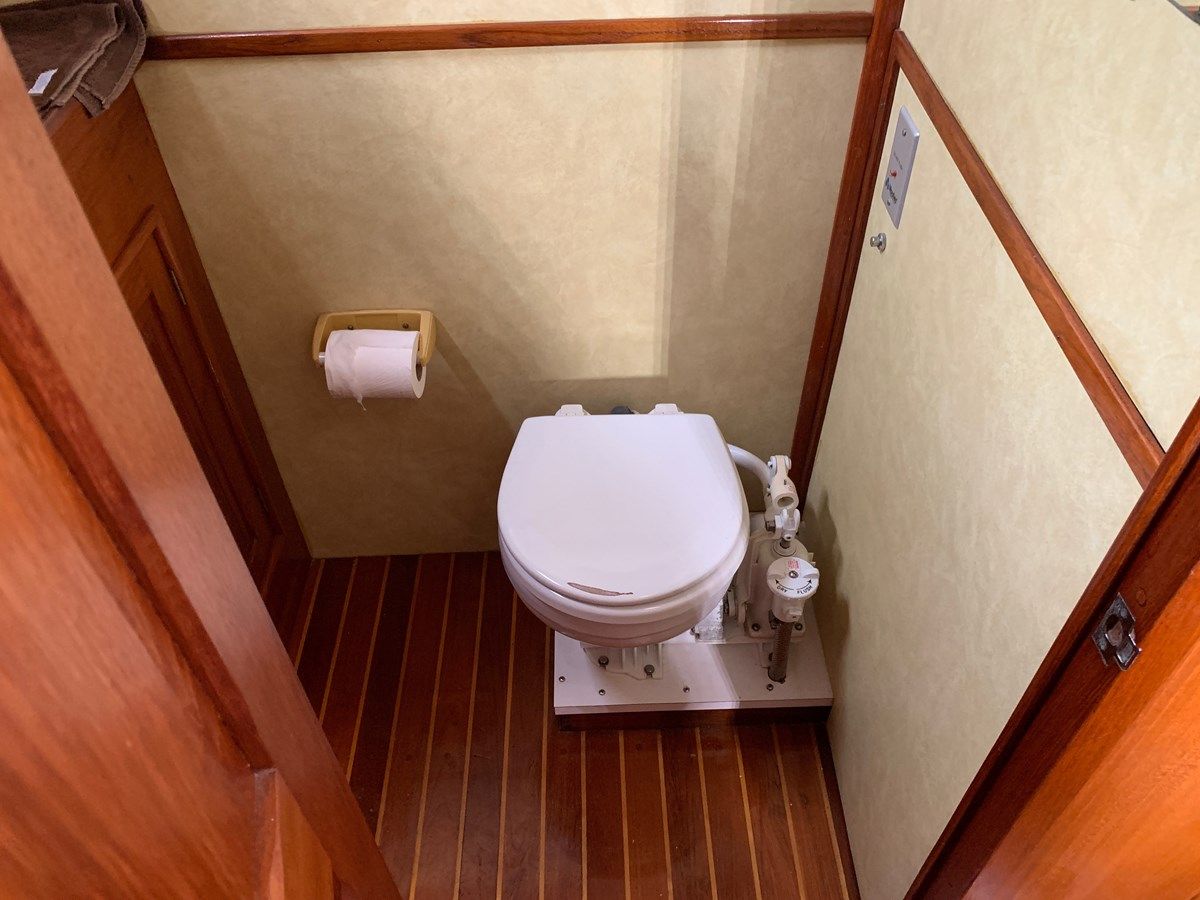
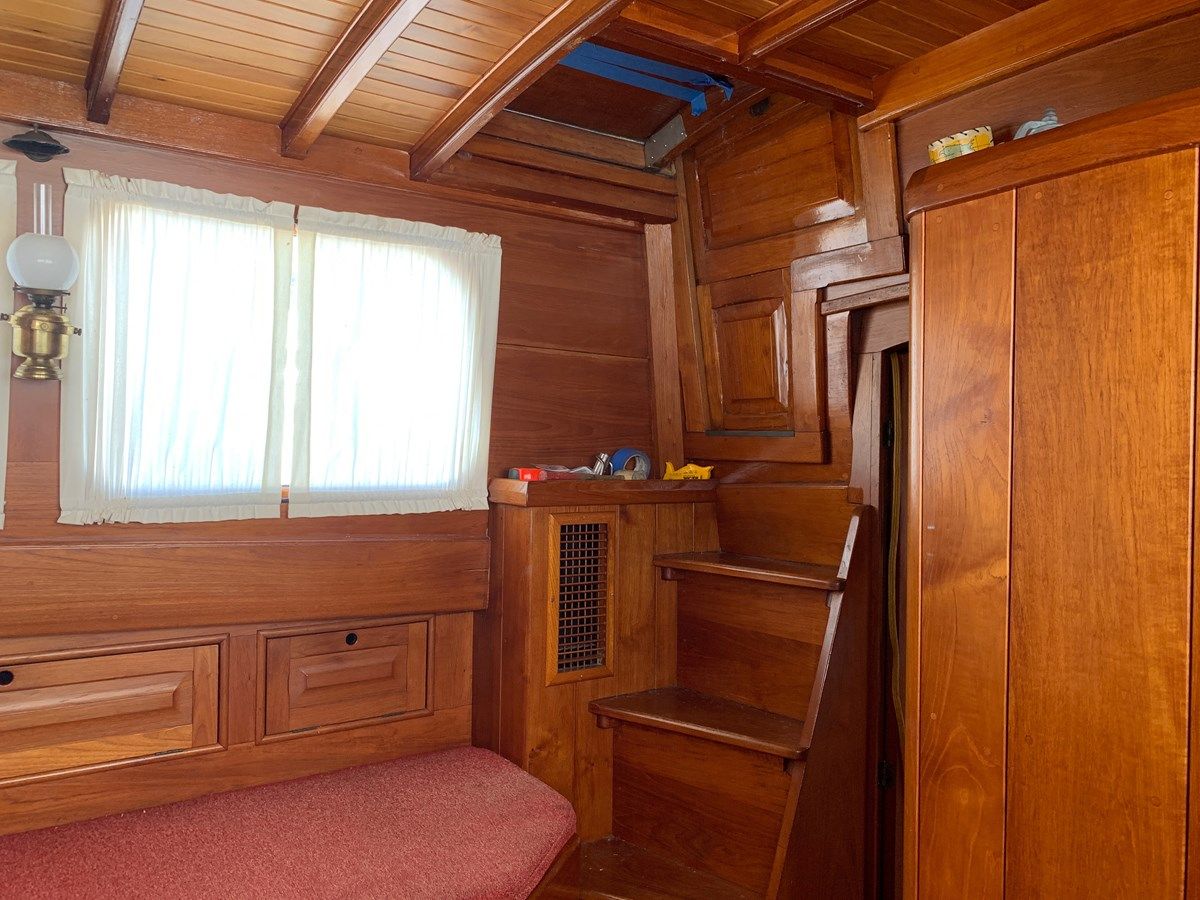
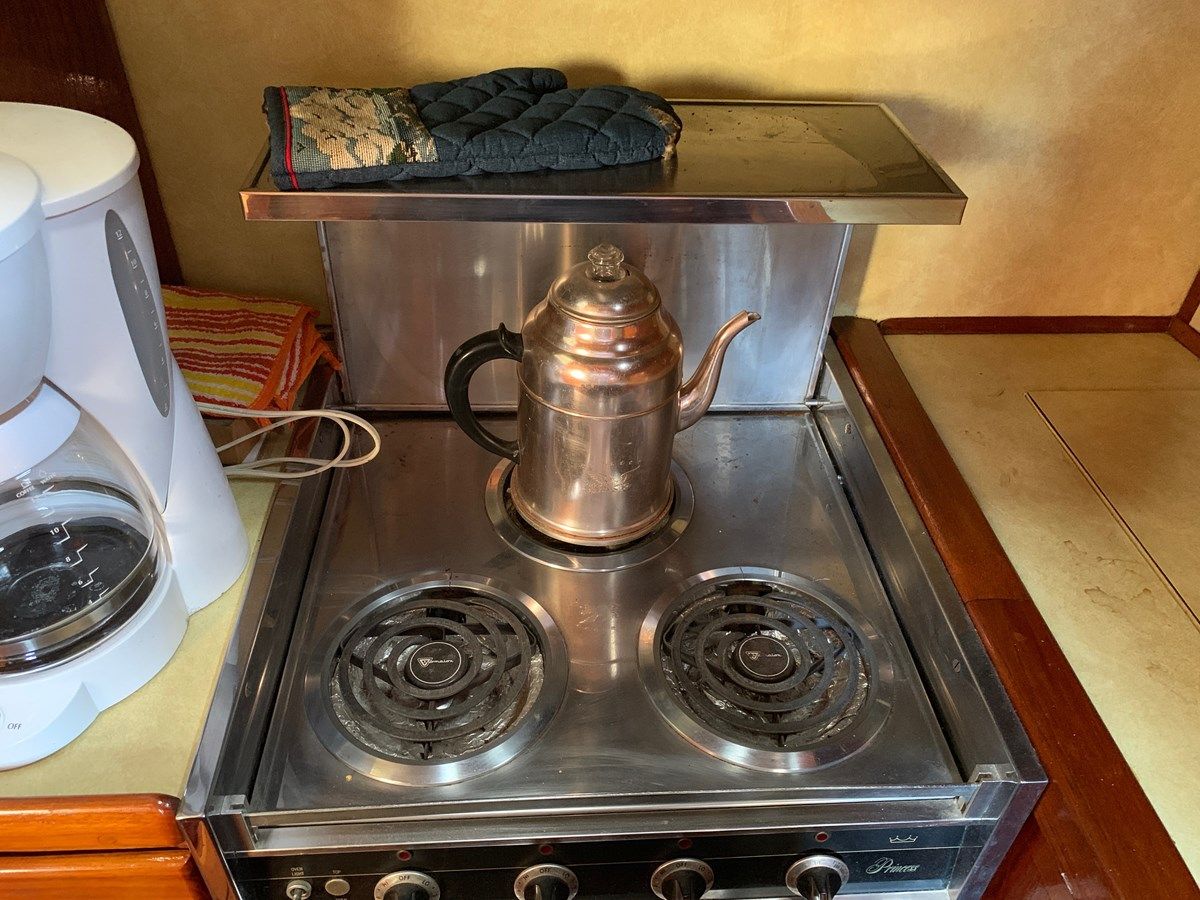
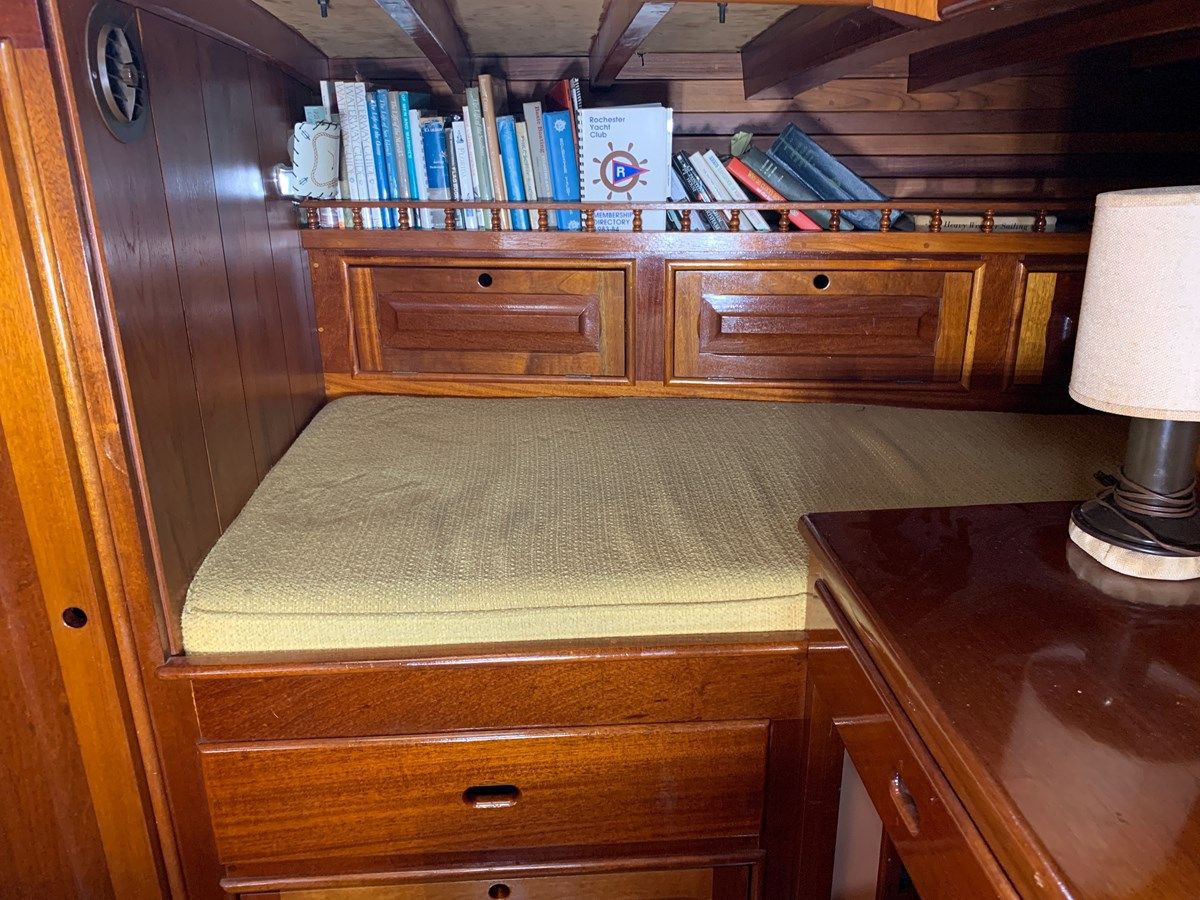
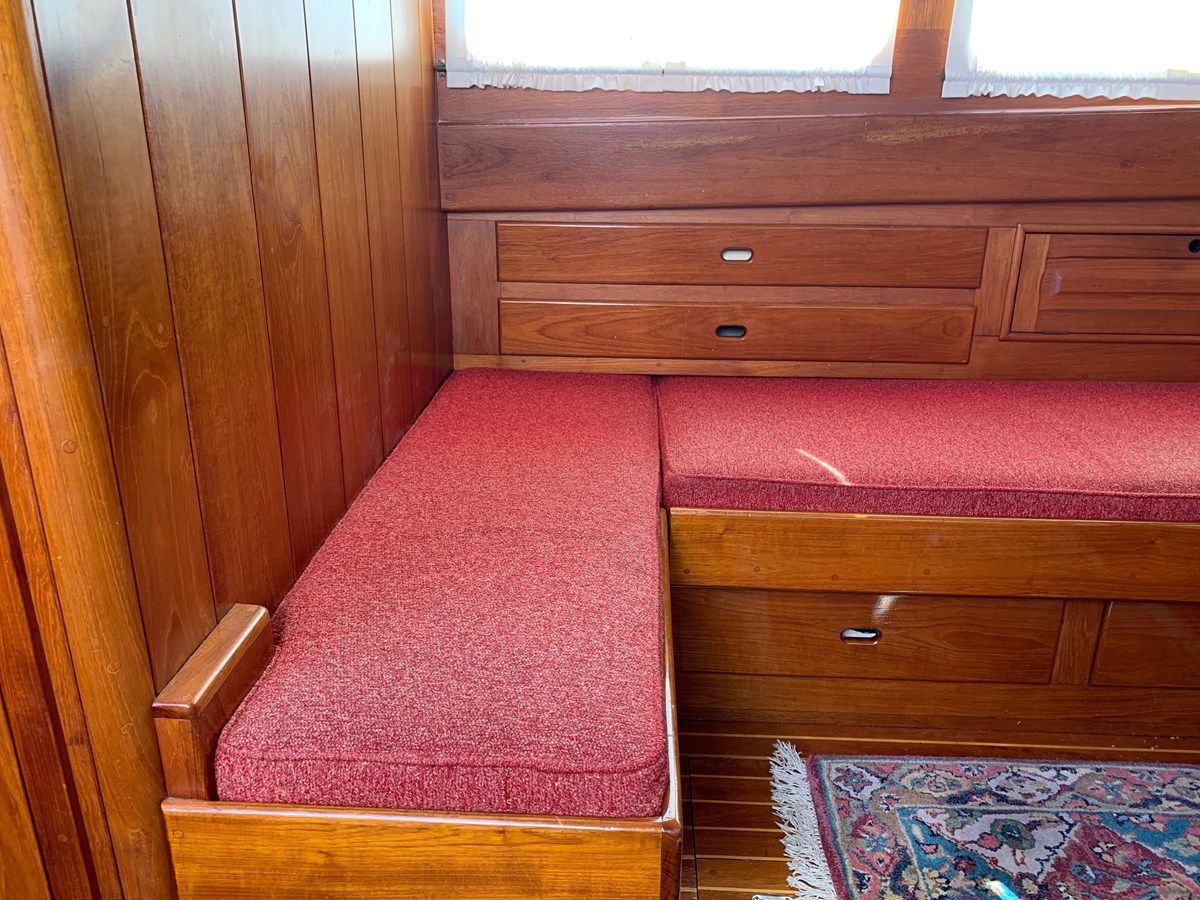
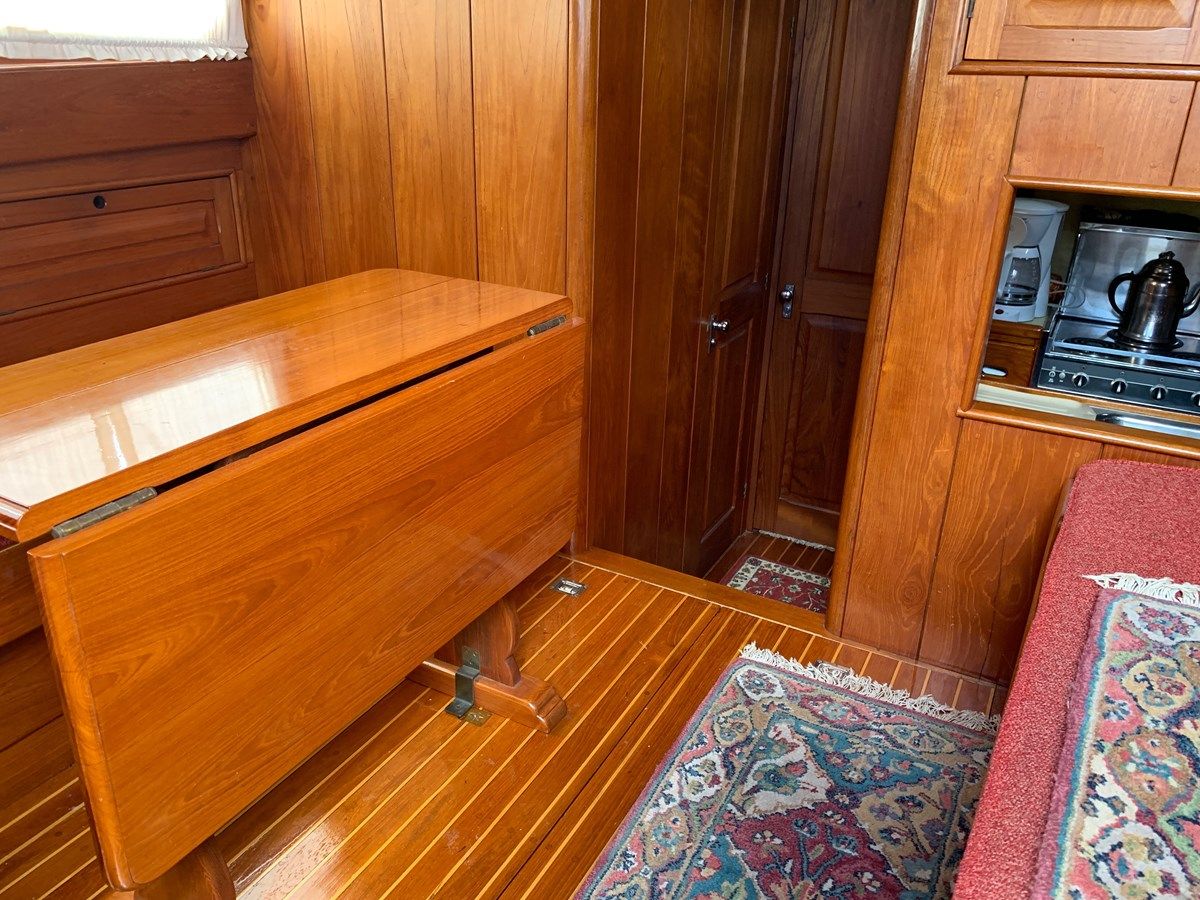
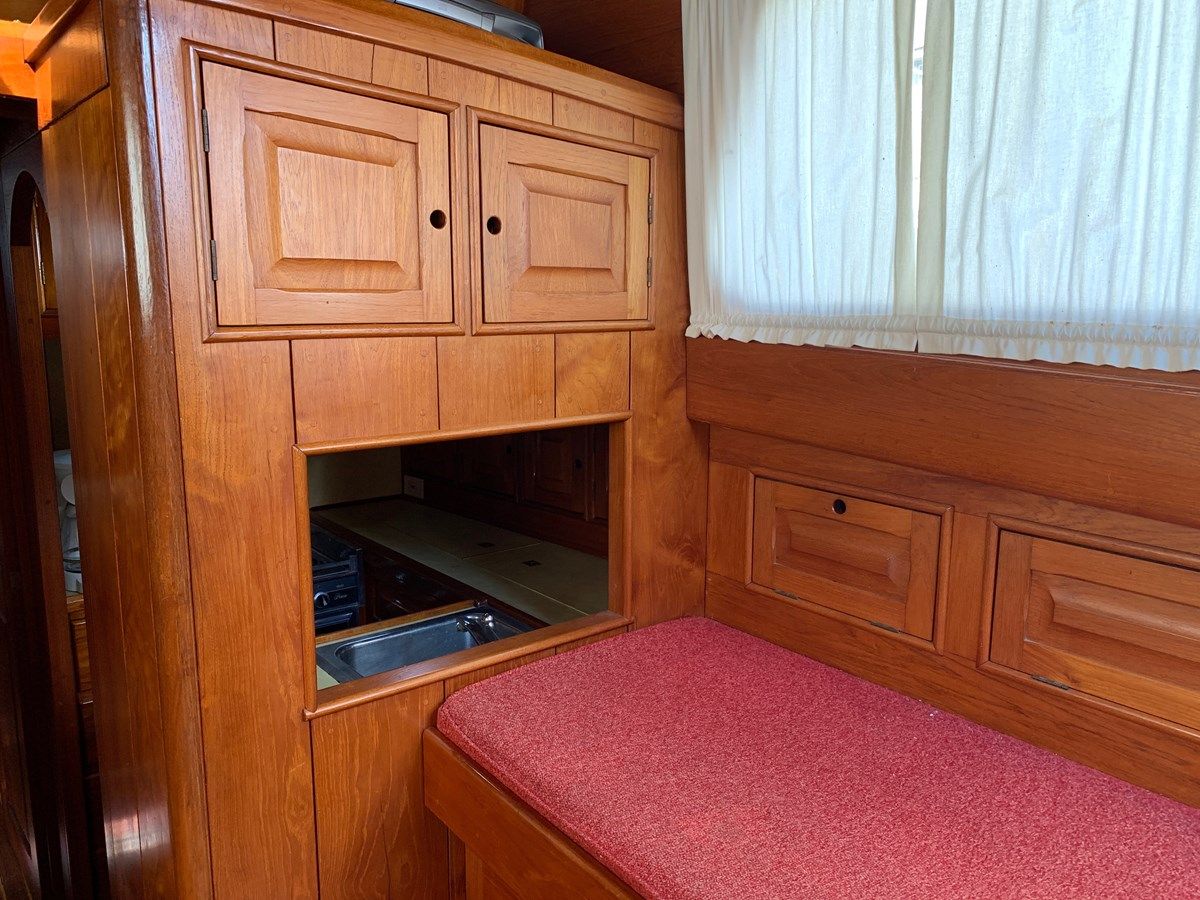
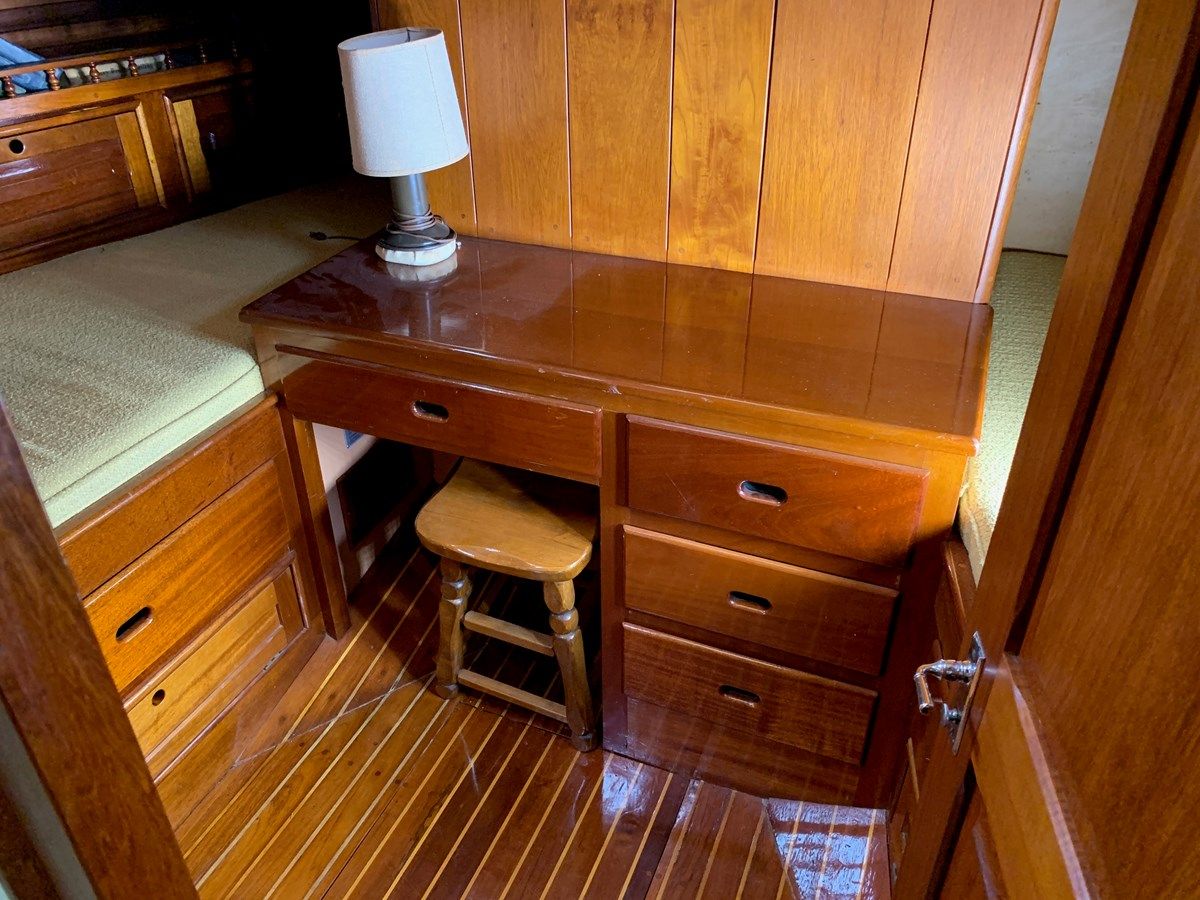
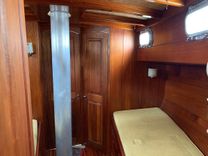
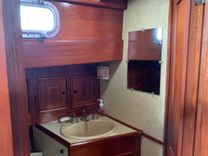
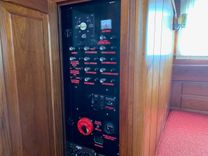
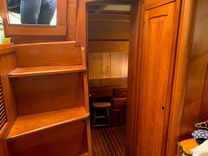
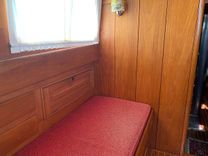
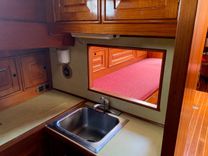
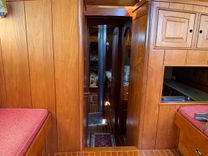
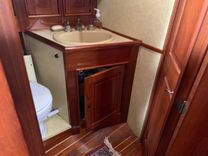
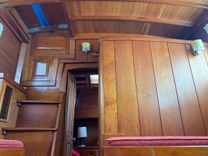
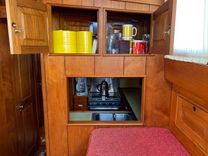
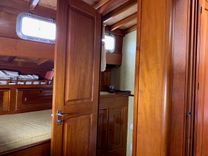
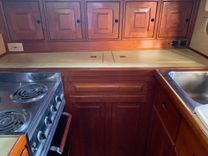
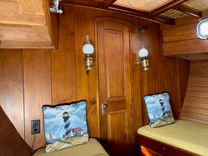
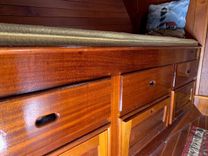
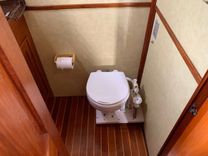
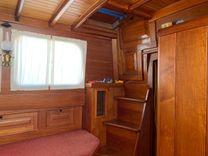
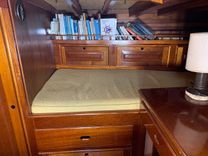
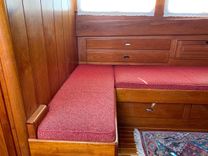
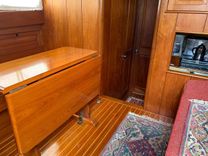
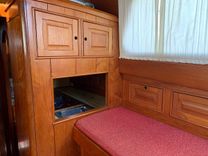
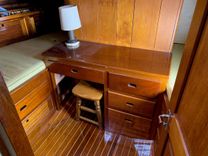
Below, the interior is a rare find: naturally finished solid teak throughout, complemented by select solid mahogany in both the forward and aft cabins; there is no paint and no veneer, and the woodwork remains in near‑perfect condition. Interior doors, cupboard fronts, and locker doors are solid‑teak raised‑panel construction. Bulkheads are laminated marine plywood clad in vertical solid‑teak planking; in the forward and aft cabins, teak ceilings line the hull sides; underfoot, a holly‑inlaid teak‑planked cabin sole runs the length of the yacht in a deep, luminous varnish. The layout is thoroughly seamanlike. In the forepeak, a rope locker leads aft to a 40‑gallon holding tank, followed by a workshop and tool and spare‑parts stowage, then two hanging lockers—one to port and one to starboard—and a bulkhead with a teak raised‑panel door into the forward cabin. The forward cabin offers a single 6’4” berth to port and a double 6’4” berth to starboard, with naturally finished mahogany drawers and lockers beneath, then a bulkhead with two teak raised‑panel doors—one to the forward head and one to the companionway. The forward head, to port of the companionway, includes a shower, head, and lockers both outboard of the lav and below, with a large overhead prism for abundant daylight and a second raised‑panel door providing companionway access. Opposite, to starboard of the companionway, the galley is fitted for serious cruising: a three‑burner Princess electric stove with oven and rotisserie under a range hood with light and a power vent through the cabin top, three drawers alongside and one below the oven, a deep galley sink with storage above and below, pass‑through upper lockers to the galley and main salon, large top‑load refrigerator and freezer compartments with outboard storage, a big overhead prism for daylight, a twelve‑volt fluorescent over the sink and both twelve‑volt and 110‑volt lighting, all with 6’3” headroom. The main cabin features two settees that slide into the cabin about 12’ and convert to 6’4” bunks, each with three drawers below; to starboard, three lockers outboard; to port, a locker and two large chart drawers outboard; at center, a beautifully varnished custom hi‑low drop‑leaf table in solid teak; a twelve‑volt electrical panel, generator control panel, and centerboard access are neatly enclosed behind a raised‑panel teak door. Aft, the private cabin ships a hanging locker to starboard and, to port, a head with lav, storage below and lockers outboard; a mechanical/electric head with a 12‑gallon holding tank is fitted with a Mansfield USCG‑approved MSD and an overboard discharge valve with pump. Two 6’6” bunks—port and starboard—carry lockers below and bookshelves outboard, and a writing desk with four drawers sits between the berths.
Lighting is both practical and evocative: ten twelve‑volt Perko chrome‑brass lights with shades are distributed as two in the forward cabin, one in the forward head, three in the main cabin, one in the aft head, and two in the aft cabin; there is also a twelve‑volt fluorescent above the galley sink and a twelve‑volt fixture in the forepeak working area. Shore‑power illumination includes three 110‑volt lights—one brass wall lantern with chimney and glove in the forward cabin, one over the galley stove, and one lamp in the aft cabin—while three brass oil gimbaled wall lamps with chimneys, globes, and smoke bells—one forward and two in the main cabin—lend warm, classic ambiance.
Bilge and machinery access is excellent, with four bilge hatches—two in the forward cabin, one in the galley‑area companionway, and one in the aft cabin—plus two large engine hatches in the main cabin that open the machinery spaces. Propulsion is by an 80 hp Perkins diesel, Model 4‑236, with heat‑exchanger cooling and a 2:1 reduction gear turning a 21 x 15 three‑blade propeller on a 1 3/8‑inch stainless shaft with a mechanical prop lock. Two rubber cutlass bearings in a monel propeller shaft are pressure‑lubricated with engine cooling water; the engine also ships a raw‑water intake filter, 65‑amp alternator, and water‑trap muffler. An auxiliary Northern Lights diesel 6 kW AC generator is mounted in a sound‑proofing box with dedicated wiring, fuel, exhaust, and raw‑water intake filter. Engine‑room safety is comprehensive: all through‑hulls carry ball valves; a Fireboy haylon fire‑extinguisher system stands ready; and an Aqualarm bell warning system monitors engine overheat, low oil pressure, water in fuel, and high bilge water. Insulation is both fiberglass and lead for heat and sound attenuation.
Tankage is generous and built for reliability. Fuel is carried in two 45‑gallon welded steel tanks, epoxy coated outside and sealed inside with two coats of aircraft fuel‑tank sealer, each fitted with mechanical gauges and condensation drains; a Raycor fuel filter/water separator and water‑alarm system services both tanks. Fresh water rides in two 110‑gallon stainless tanks with water filter, pressure pump, and accumulator. Electrical systems include a fused twelve‑volt panel; four 220‑amp six‑volt batteries wired in series to twelve volts with a two‑bank master control switch, battery‑condition meter, and engine‑ground disconnect knife switch; a LaMarche 60‑amp Constravolt automatic battery charger; and a 110‑volt 30‑amp shore‑power system with reverse‑polarity indicator and main breaker feeding a subcircuit breaker distribution panel.
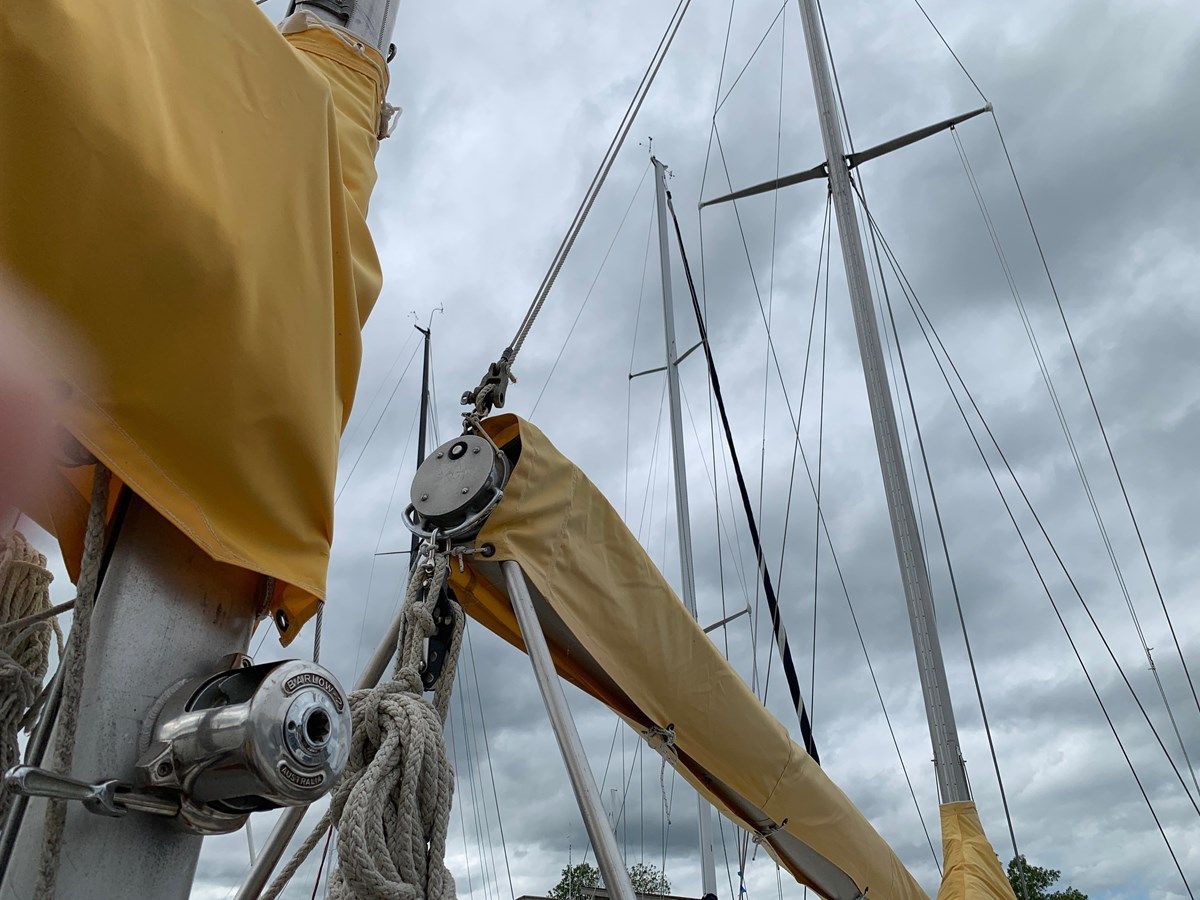
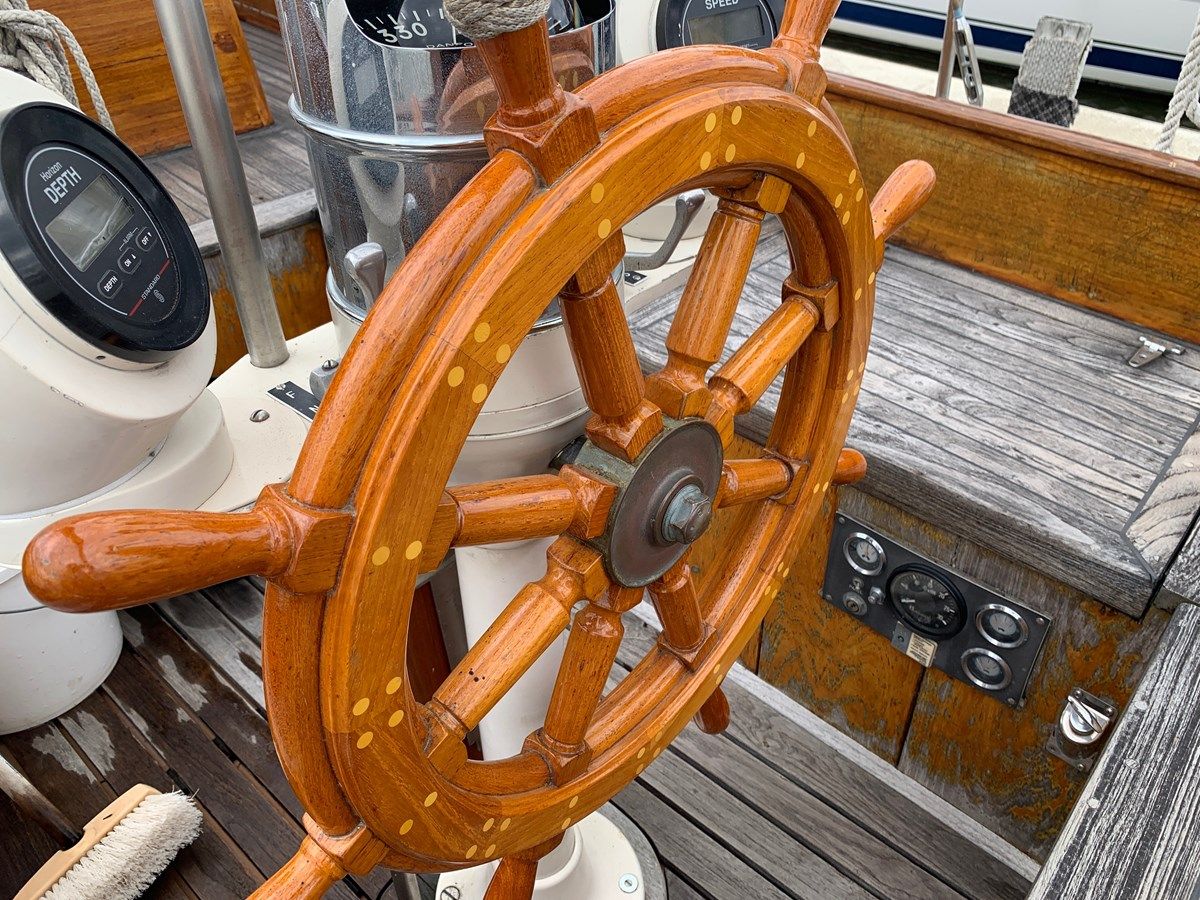
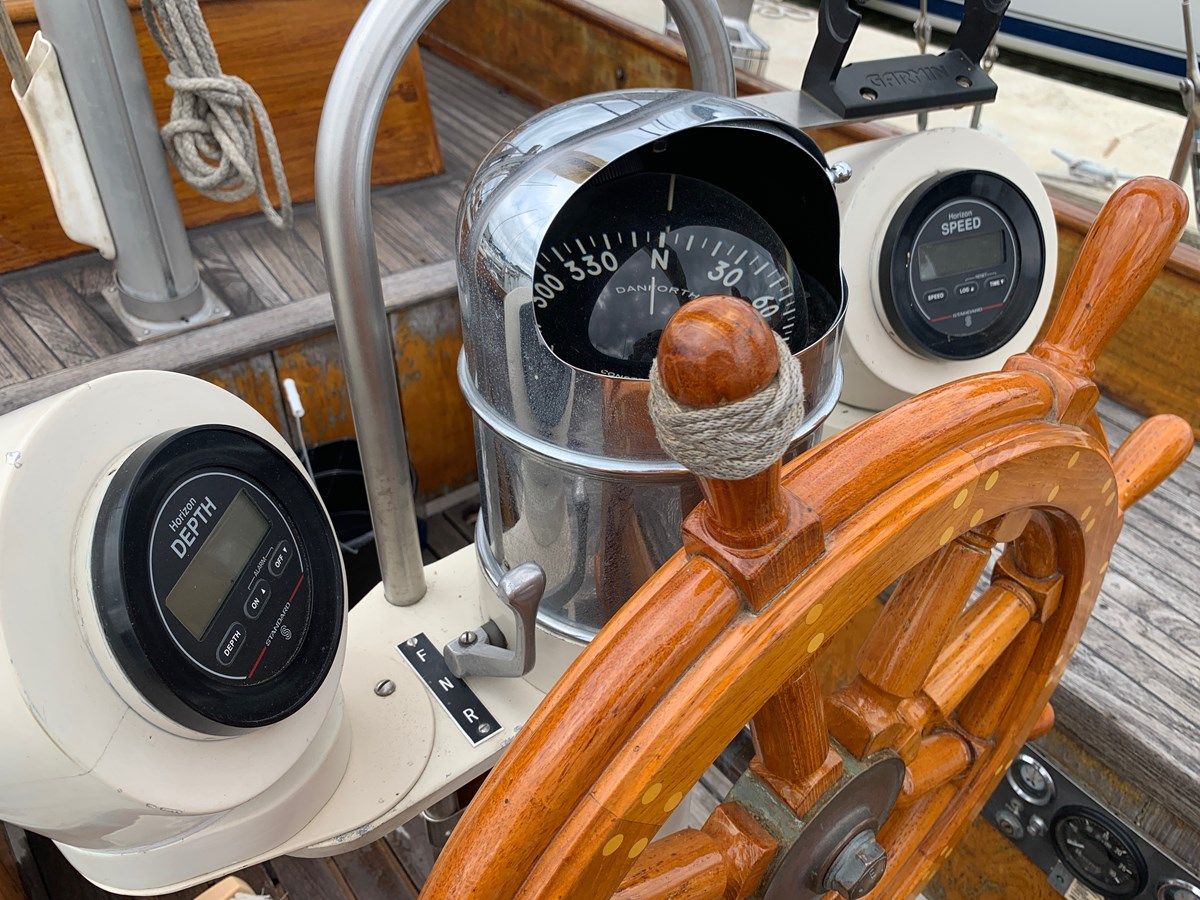
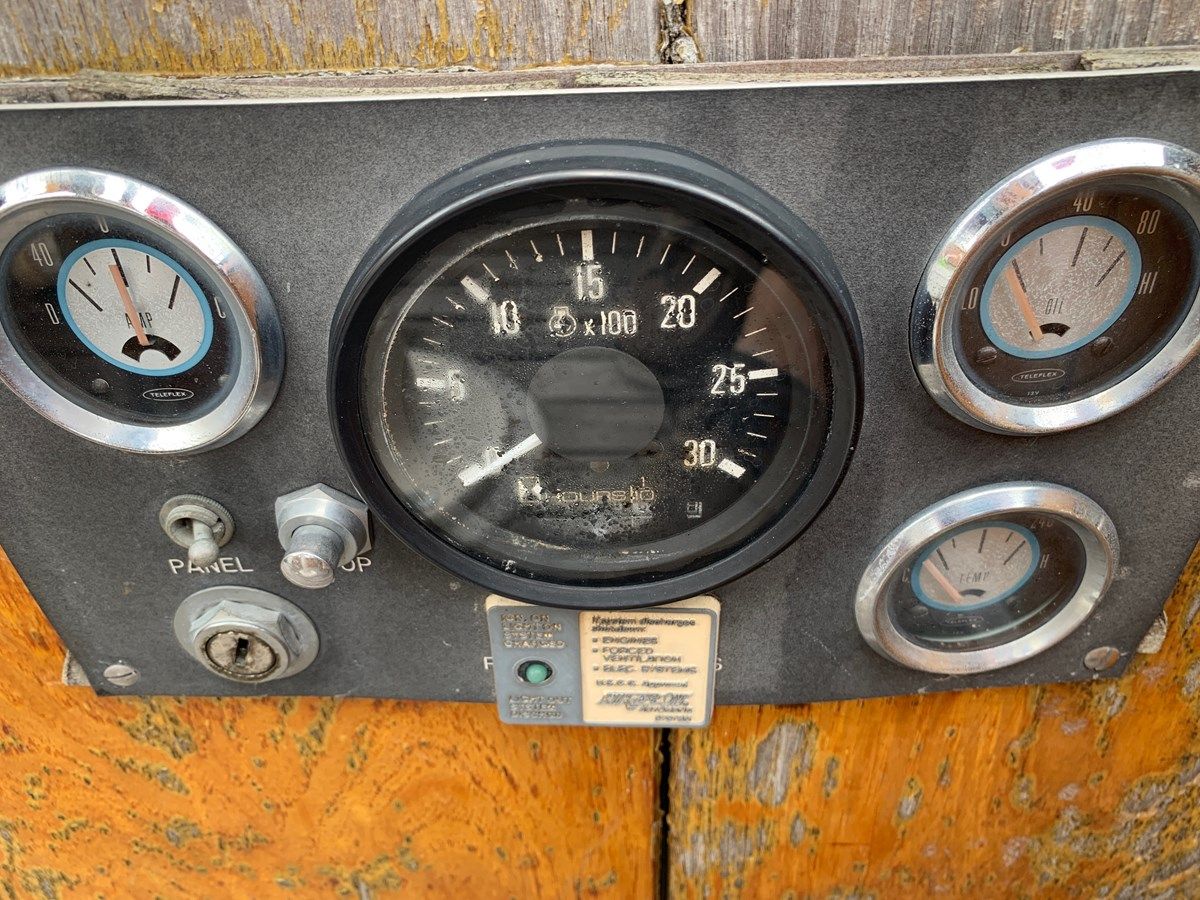
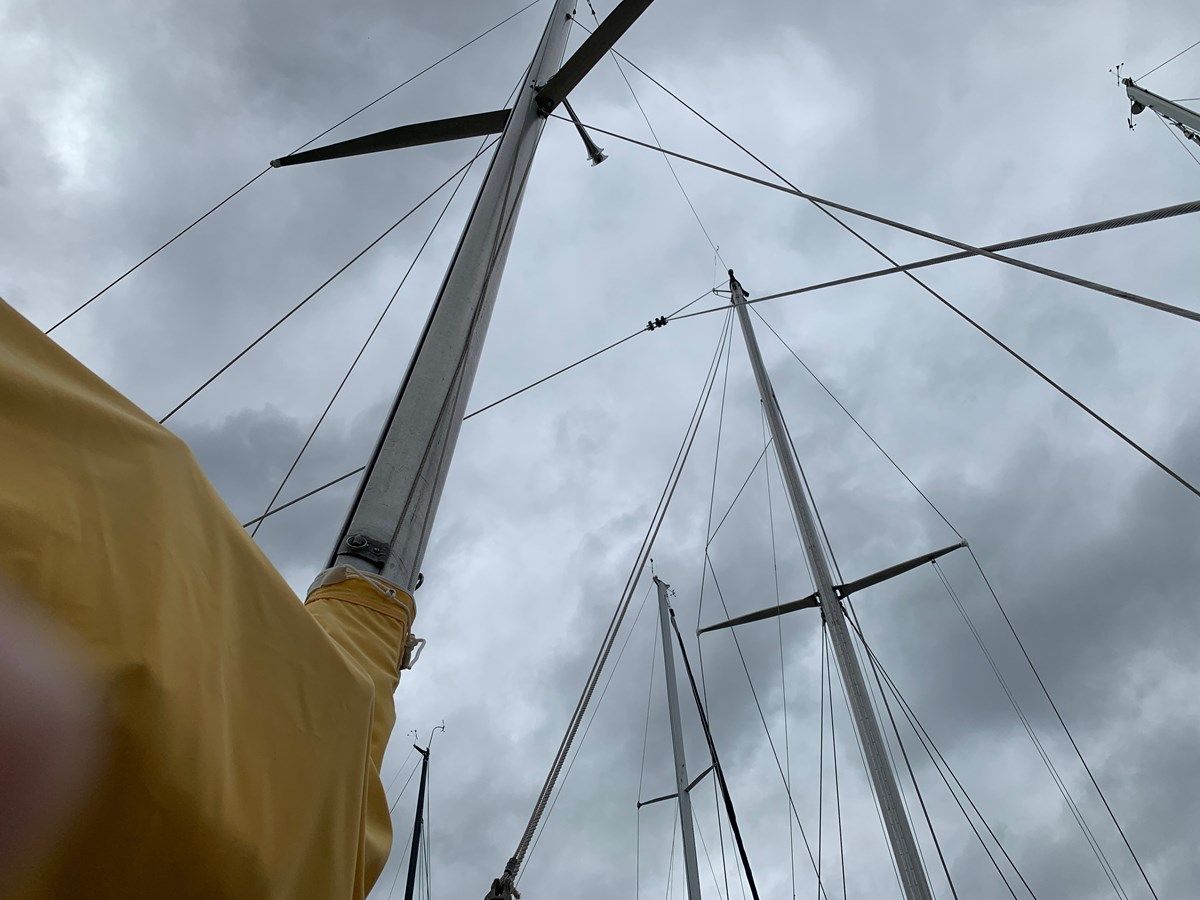
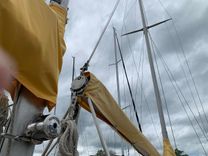
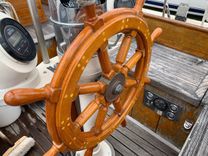
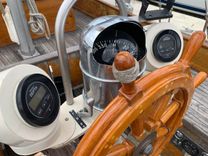
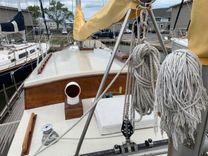
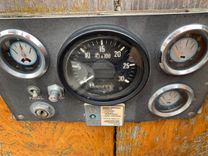
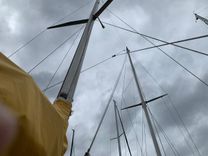
The rig is set up for confident passagemaking and easy sailhandling, with aluminum spars, stainless standing rigging, a roller‑furling full‑batten main, and a Cruising Designs roller‑furling headsail. Helm and navigation are by an Edson pedestal mechanical steering system with a varnished teak‑spoke wheel; a 6‑inch Danforth Constellation compass with six lubber lines sits in a chrome‑brass binnacle; a Horizon knot meter with log and depth indicator and alarm keeps you informed. The steering pedestal carries a stainless safety rail and a custom varnished teak folding table that serves as a cockpit table and folds for stowage within the rail; throttle and shift controls mount on the pedestal. The engine control panel includes a recording tac, temperature gauge, ammeter, oil pressure, and key starter switch, with backlit instruments for night operation; mechanical engine stop and propeller lock controls are at the outboard steering station.
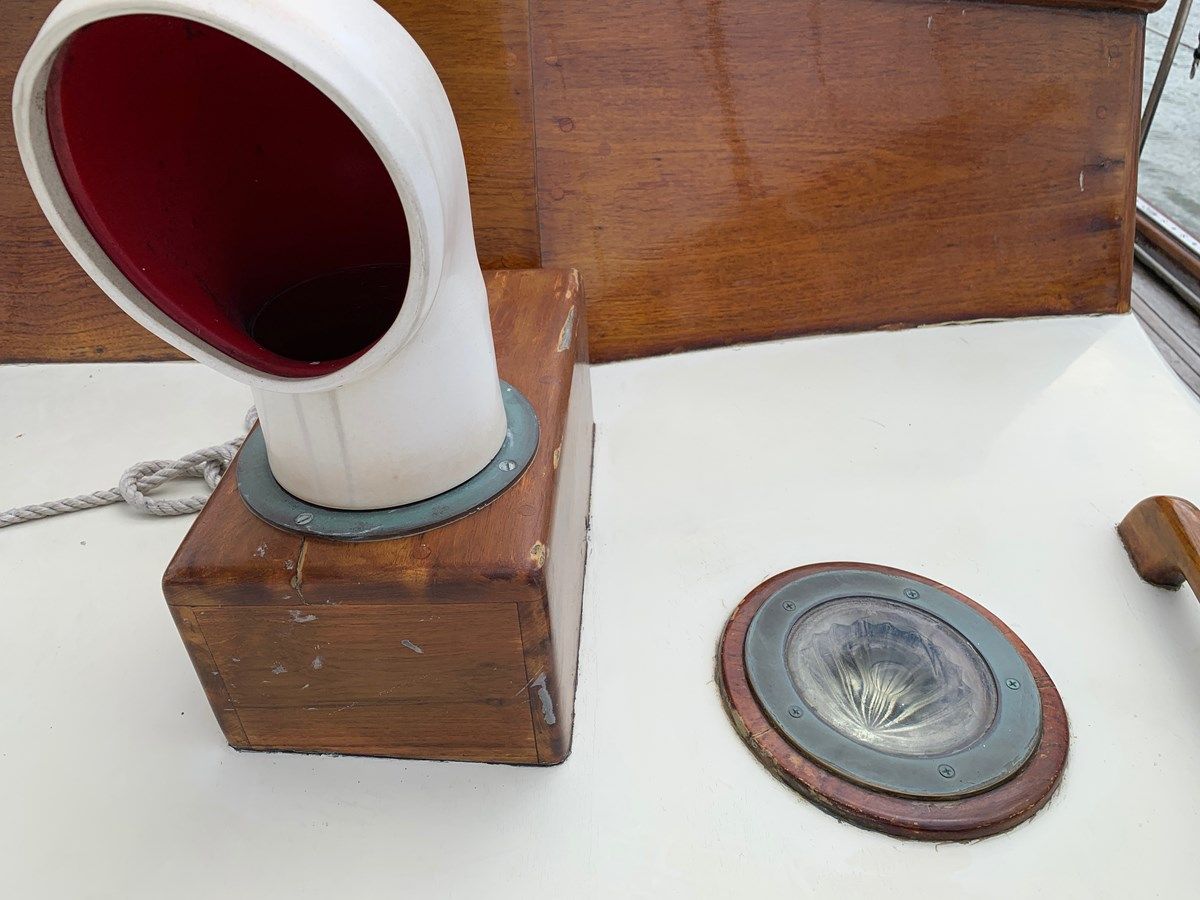
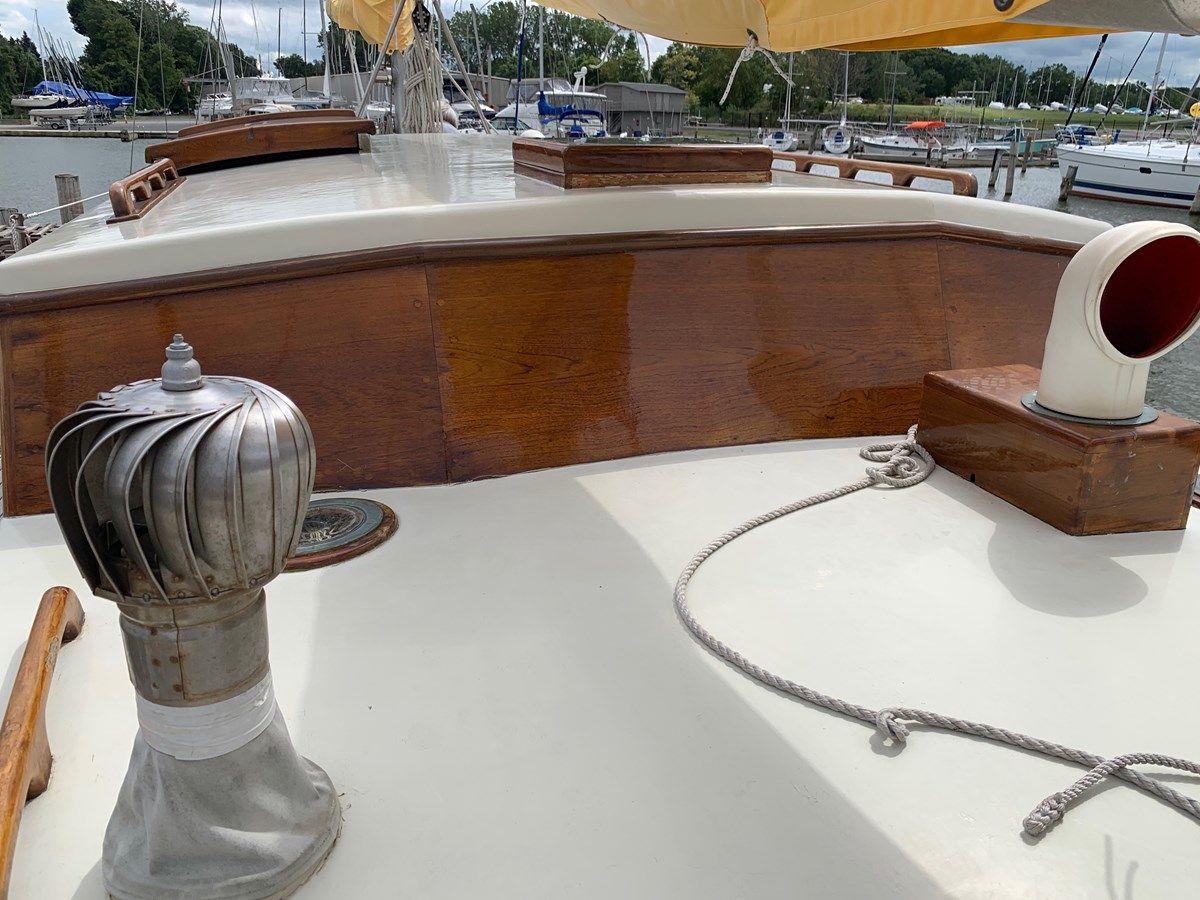
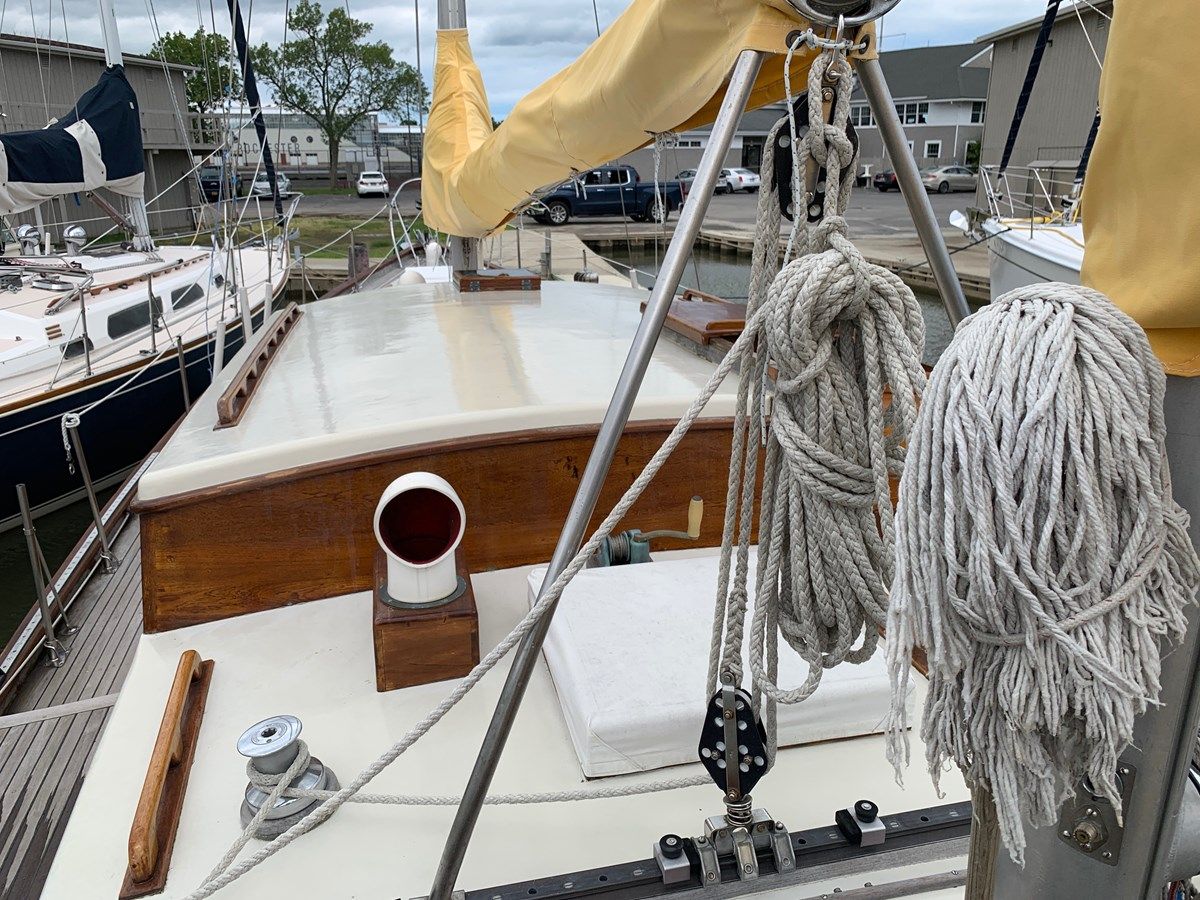
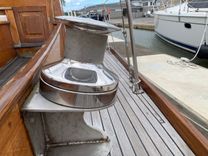
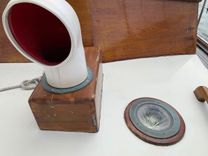
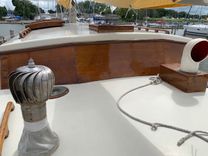
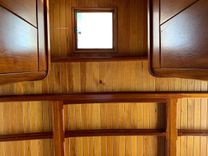
Ventilation is well resolved, with a forward deck vent for the rope locker, dorade‑box vents for both forward and aft heads, and two deck vents for the lazarette. Over the galley stove, a power range‑hood fan and stainless vent “Charlie Noble” exhaust effectively. There are nine opening ports with screens—four in the forward cabin, one in the forward head, one in the galley, one in the aft head, and three in the aft cabin—and four teak cabin hatches with 1/2‑inch solar bronze plexiglass panels, each with screens: one over the forward workshop area, one over the forward cabin, one over the main cabin, and one over the aft cabin. The main‑cabin entrance includes an additional screen insert.
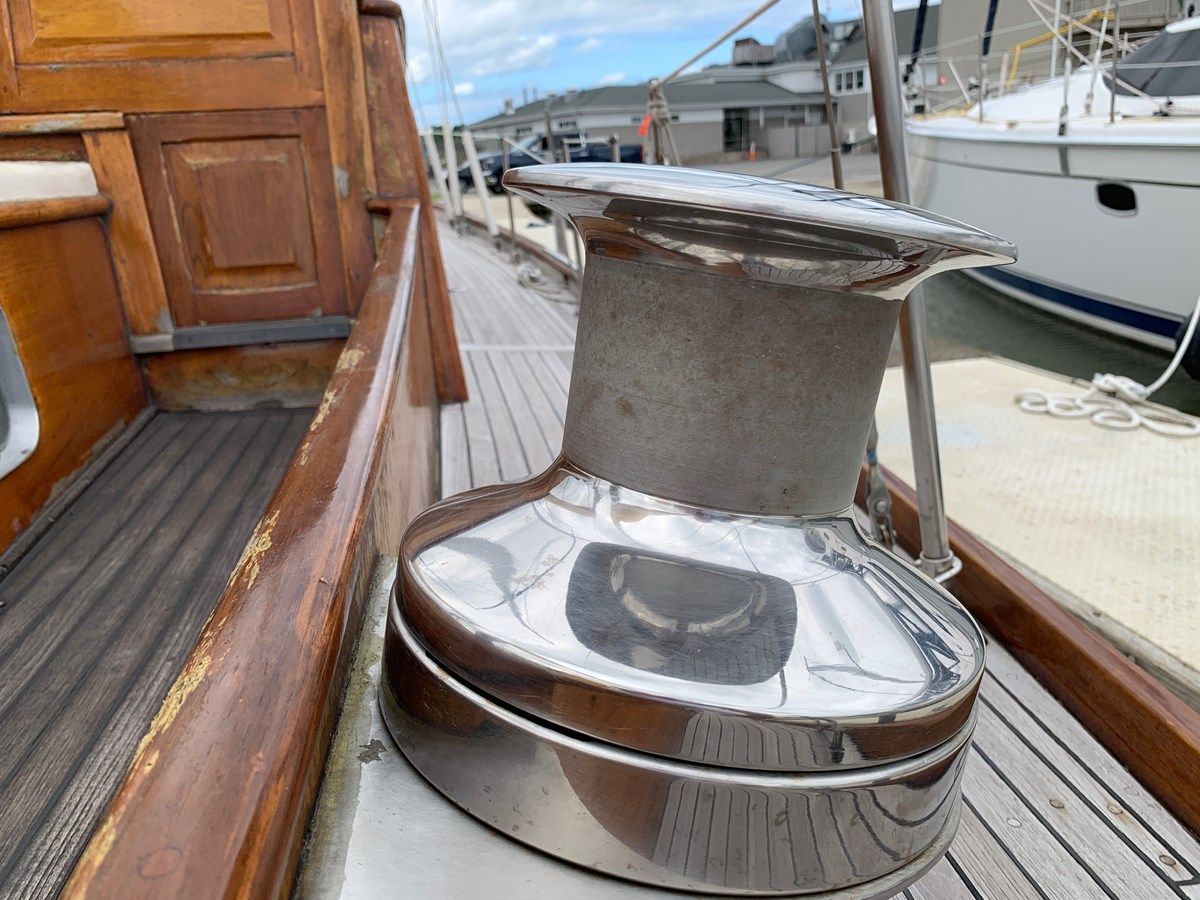
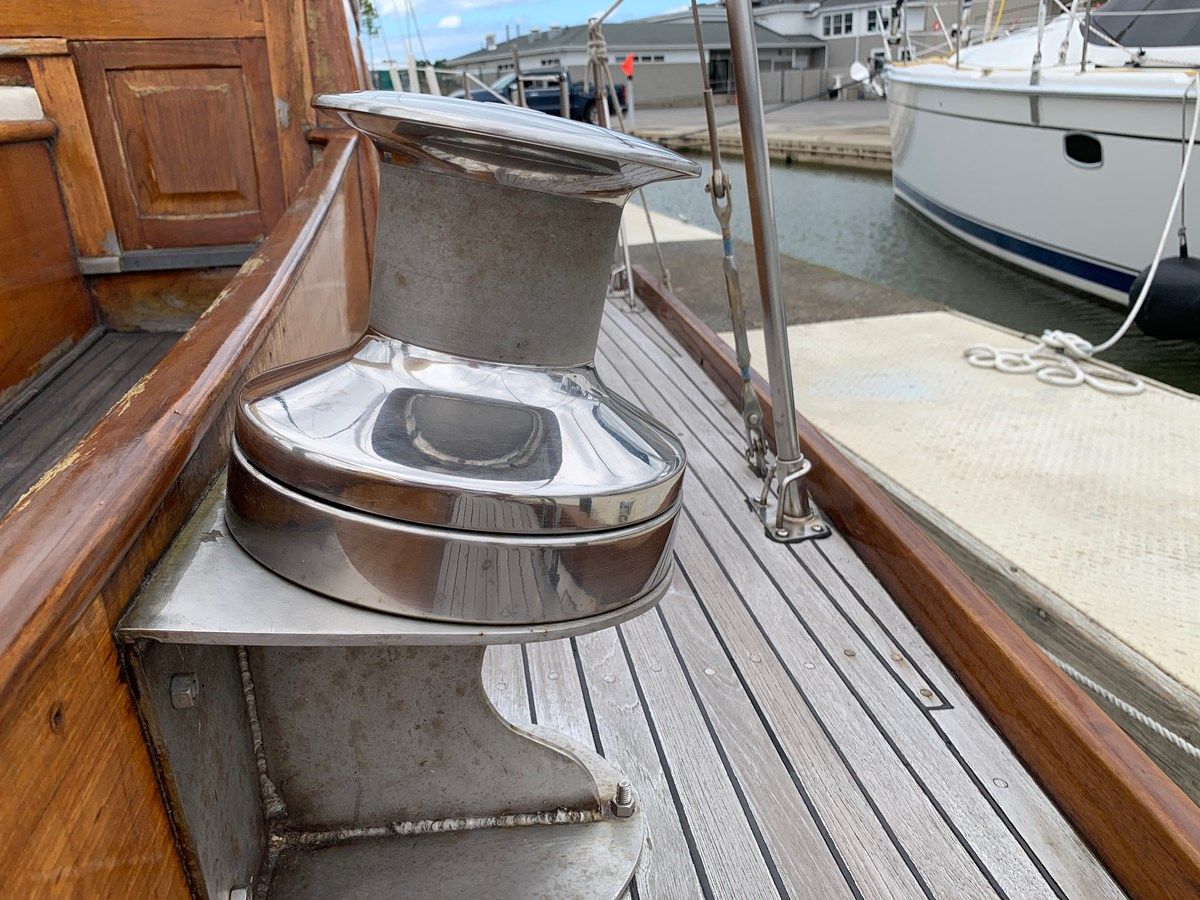
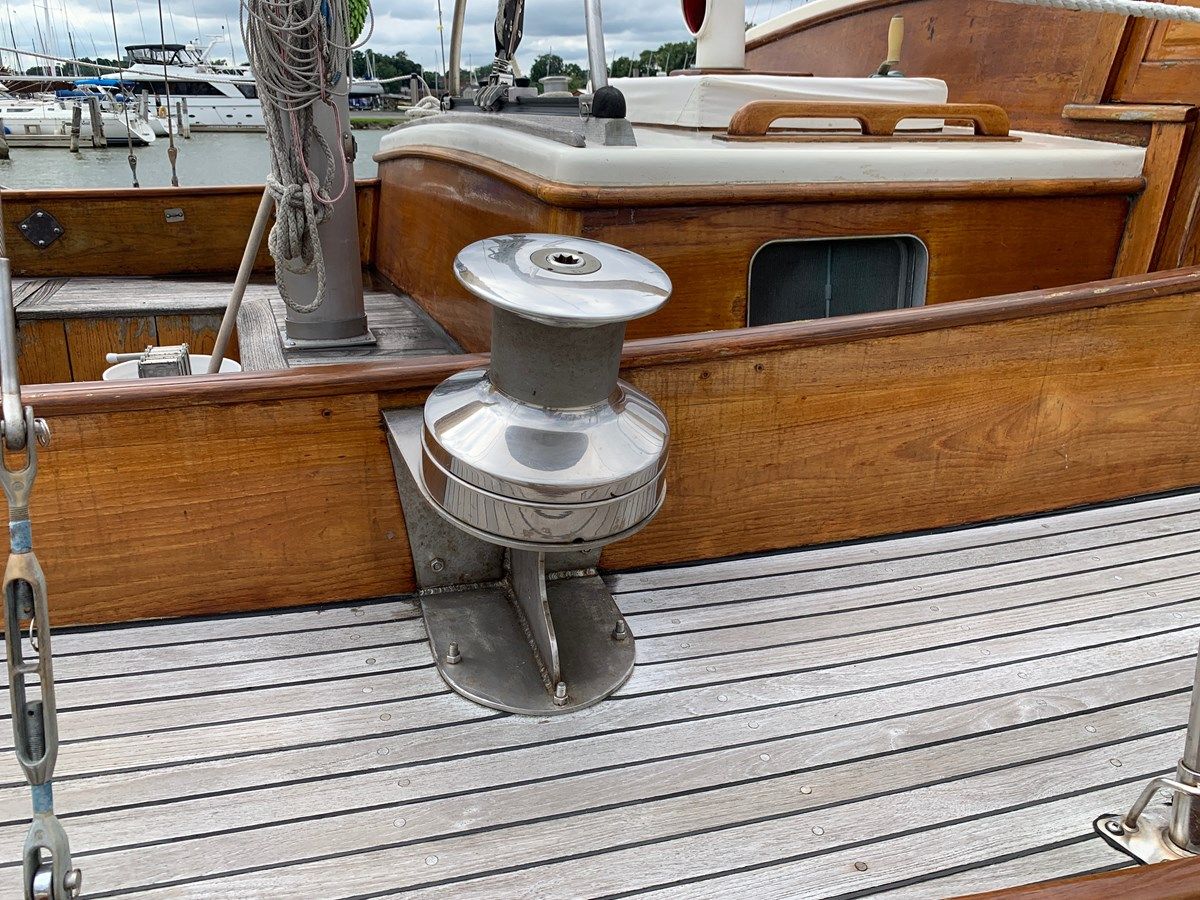
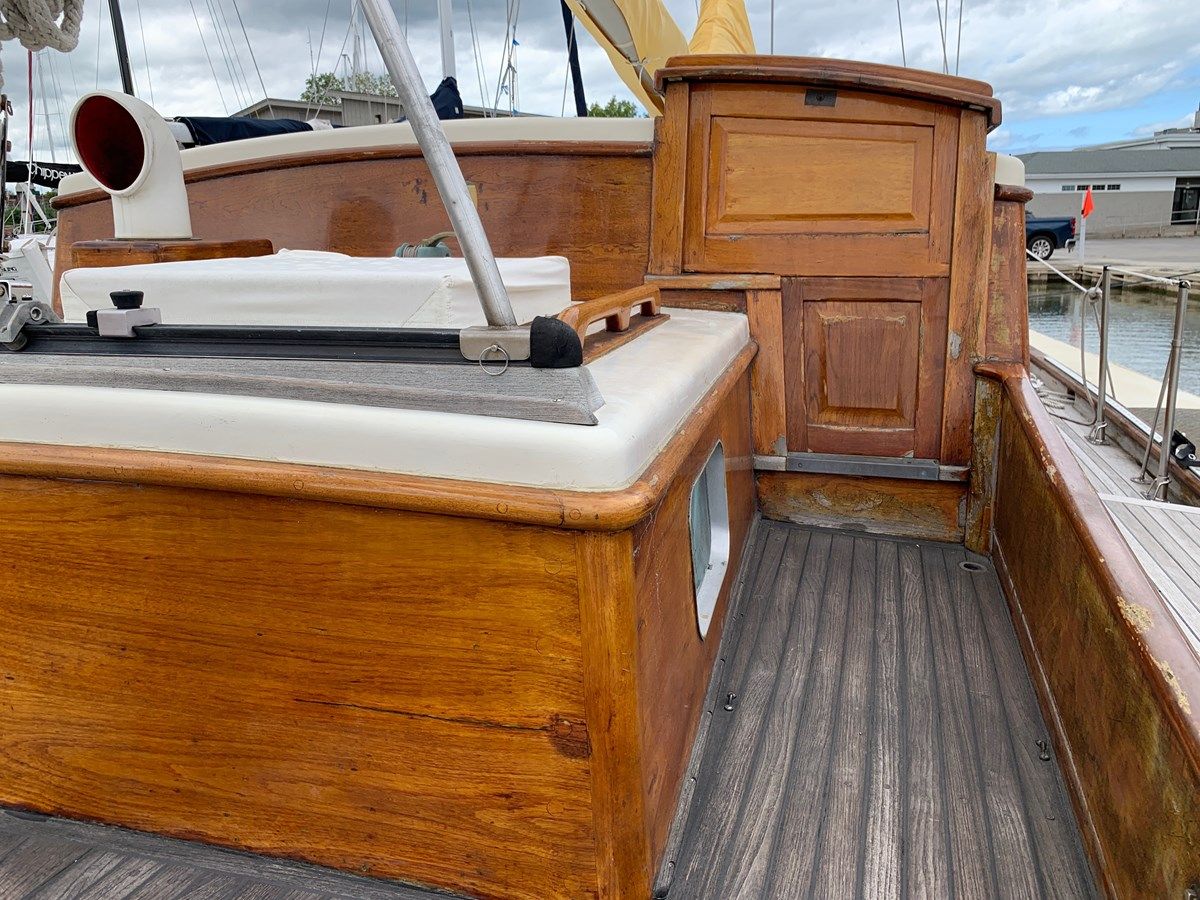
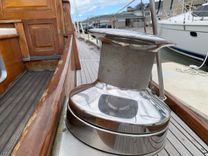
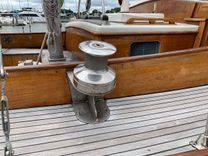
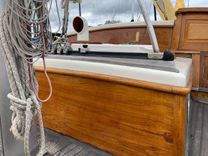
The aft cockpit is deep, secure, and thoughtfully organized, with three dedicated stowage spaces—one outboard of the steering station to port, one outboard to starboard, and a lazarette aft of the steering station. The cockpit sole ships two large scuppers and removable teak floorboards. Winch power is comprehensive: two #32 Barlow headsail winches, one Barlow main‑mast‑mounted winch, and three reel halyard winches—two on the main mast and one on the mizzen—plus an extra winch pad on the mizzen mast, three winch handles with two holders, a main sheet winch, a mizzen sheet winch, and a bronze worm‑drive centerboard winch with stainless cable pennant.
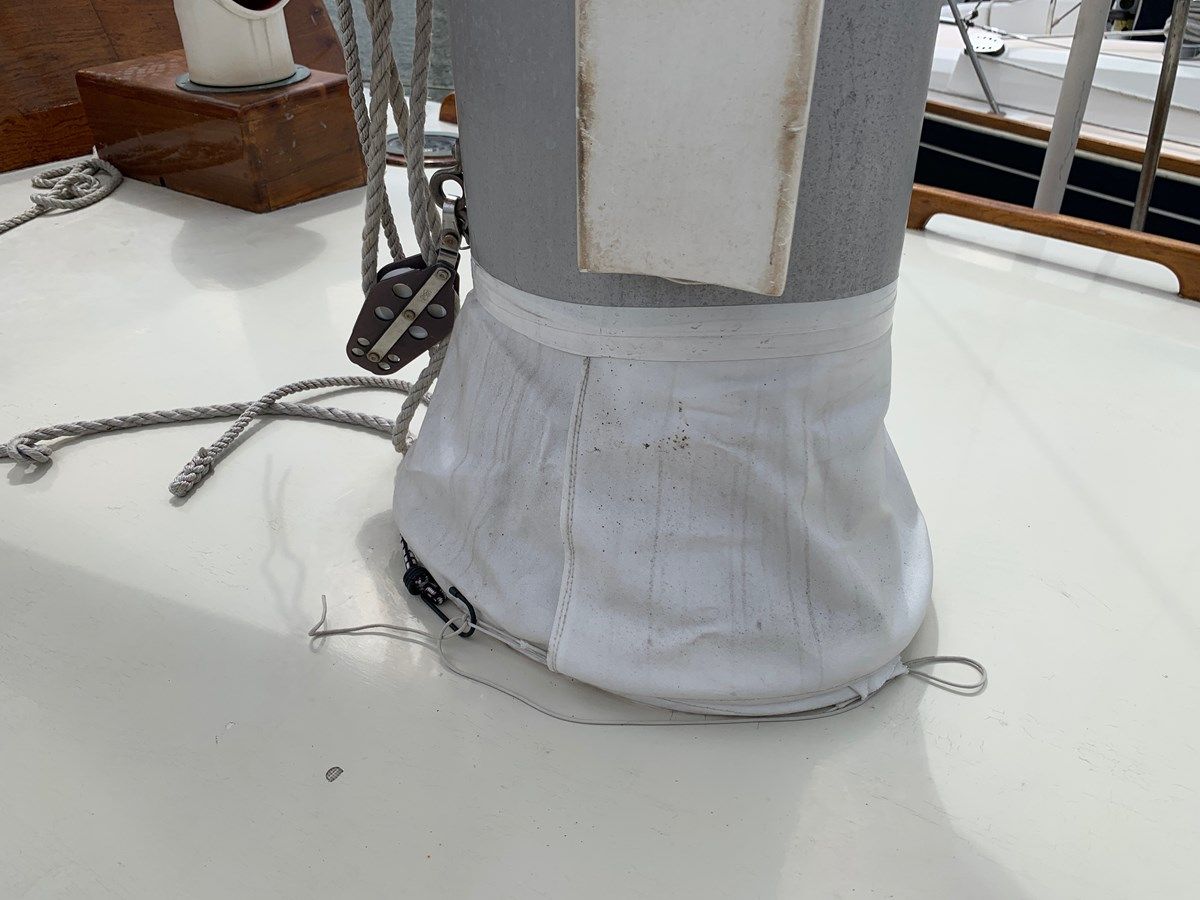
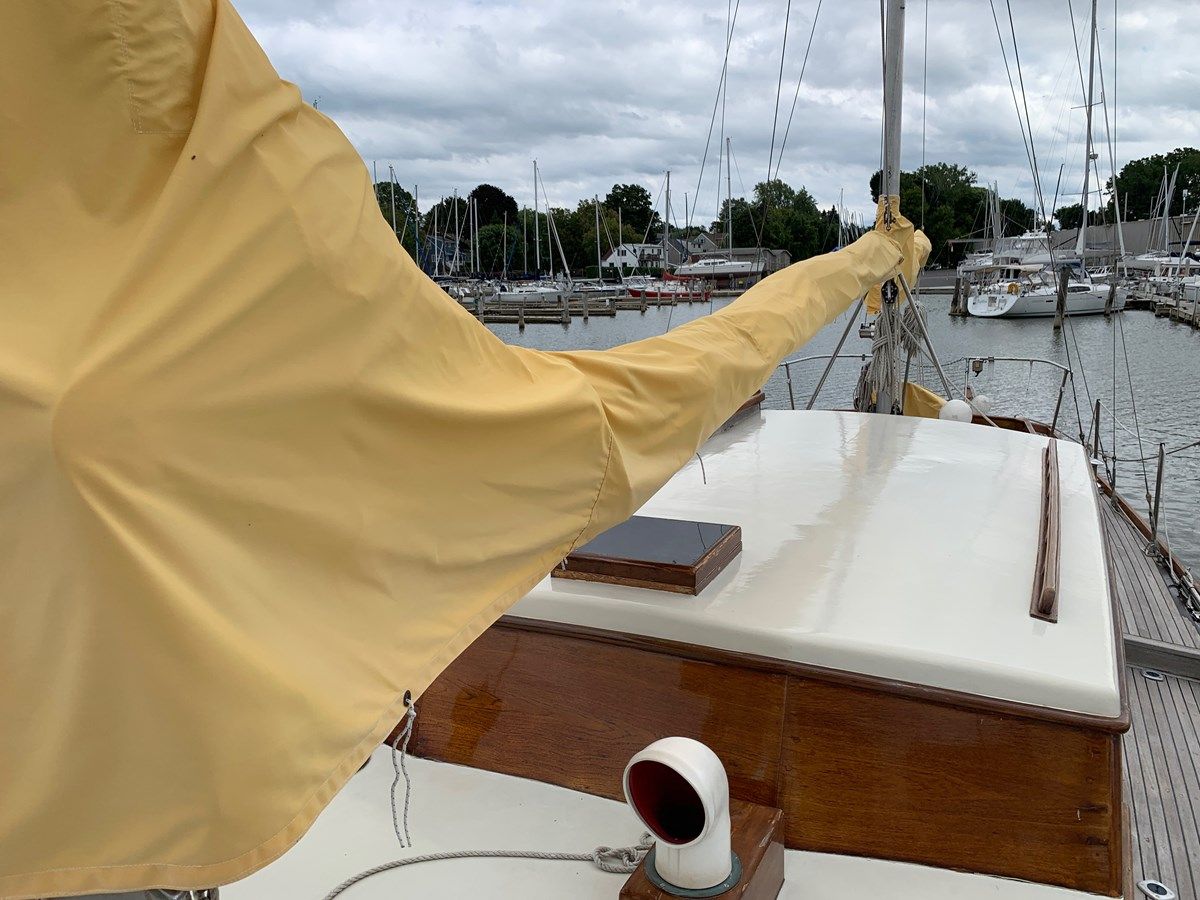
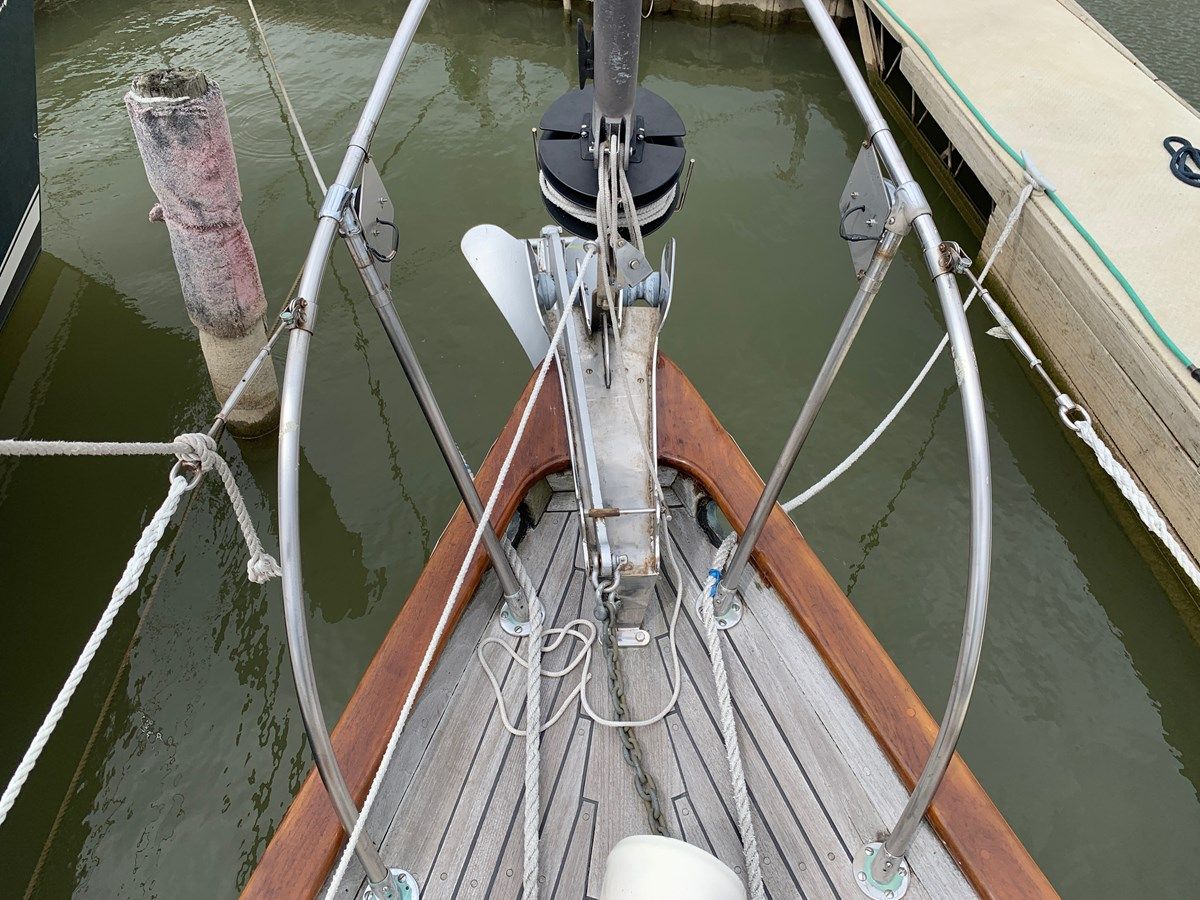
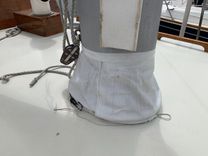
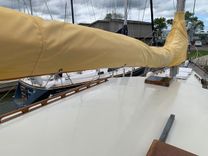
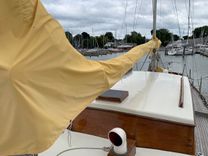
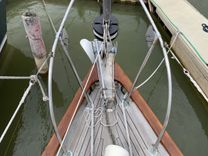
Cruising equipment is equally complete. A 12‑gallon hot‑water tank operates on 110 volts and via the engine heat exchanger; reverse‑cycle air conditioning with a water‑cooled heat exchanger keeps the cabin temperate; a 110‑volt heater warms the aft cabin; and two electric bilge pumps include one on an automatic switch. Refrigeration is redundant, with 110‑volt refrigerator and freezer with holding plates, plus engine‑driven refrigeration and freezer with holding plates; the refrigerator and freezer compartments are wrapped in six inches of insulation. Communications are by a Horizon Standard twelve‑volt radio with emergency antenna, with mounts in both cockpit and main cabin. Ground tackle includes a plow anchor with chain and 3/4‑inch nylon rode, a custom‑built polished stainless roller anchor chock for two anchors, and a folding yachtsman storm anchor. Deck safety and tender handling are assured by stainless bow and stern rails, stainless lifeline stanchions with two gates, a horseshoe life ring in a stainless lifeline rack, a custom stainless main‑boom support, and custom polished stainless removable dinghy davits. Sun and weather protection is by main and mizzen sail covers in Sunbrella and a custom folding bimini sun top on 1‑inch polished stainless bows, with a front windshield panel and side and rear curtains allowing complete cockpit enclosure; all panels are fitted with zippers and snaps for easy removal and stowage. A front‑deck sun cover and three custom‑fitted canvas cabin‑hatch covers add further protection.
Plumbing and pump‑out arrangements include deck pump‑out for the forward holding tank and an overboard macerator pump, along with a shower‑drain water filter and pump led to overboard discharge. For winter storage, a purpose‑built framework supports a cover using wood and pipe framing, and six adjustable pipe stands are included. Thoughtful miscellaneous gear rounds it out: three large fenders and a fender board; a stern mount with an American yacht ensign flag on a varnished mahogany pole; polished stainless air horns on the main mast; two flag halyards; miscellaneous 3/4‑inch nylon dock lines; twelve‑volt navigation lights and anchor light; a folding aluminum boarding ladder; three brass gimbal oil wall lamps with chimneys, globes, and smoke bells; and a selection of engine spare parts. Additional information website available.
Specifications
- Length:
- 47' (14.33m)
- Beam:
- 13' (4.06m)
- Draft:
- 14.764' (4.5m)
- Year Built:
- 1974
- Builder:
- CUSTOM KETCH
- Category:
- Sail yachts
- Engines:
- 1 engines Perkins
- Cruise Speed:
- 9 Kts.
- Location:
- United States



Yacht name «Crest» – CUSTOM KETCHis for sale and located in Rochester, United States
Sail yachts «Crest» built by manufacturer CUSTOM KETCH in 1974— available for sale. Yacht location: United States. If you are looking to buy a yacht «Crest» or need additional information on the purchase price of this CUSTOM KETCH,
please call: +1 (954) 274-4435 USAOnly deal with professionals!