
 Licensed Yacht BrokersYachts for Sale
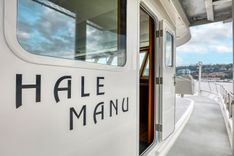
Hale Manu - METALCRAFT MARINE FOR SALE
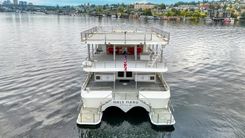
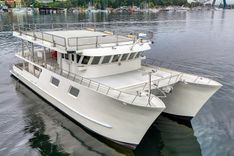
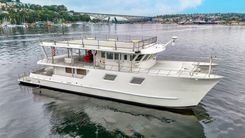
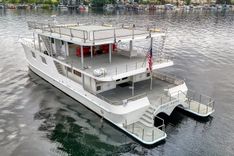
Basic information
- Builder:
- METALCRAFT MARINE
- Category:
- Motor yachts
- Sub Category:
- Cruisers
- Model Year:
- 2007
- Year Built:
- 2007
- Country:
- United States
Dimensions
- LOA:
- 92' (28.04m)
- LWL:
- 83' (25.48m)
- Beam:
- 30' (9.14m)
- Max Draft:
- 21.05' (6.42m)
Speed, capacities and weight
- Cruise Speed:
- 11 Kts. (12.66 MPH)
- Gross Tonnage:
- 212 Pounds
- Water Capacity:
- 750 Gallons
- Fuel Capacity:
- 4000 Gallons
Accommodations
- Total Heads:
- 2
Hull and deck information
- Hull Material:
- Steel Yachts
- Deck Material:
- Steel
- Hull Configuration:
- Catamaran
- Hull Color:
- White
Engine information
- Engines:
- 2
- Manufacturer:
- Caterpillar
- Engine Type:
- Inboard
- Fuel Type:
- Diesel
Overview
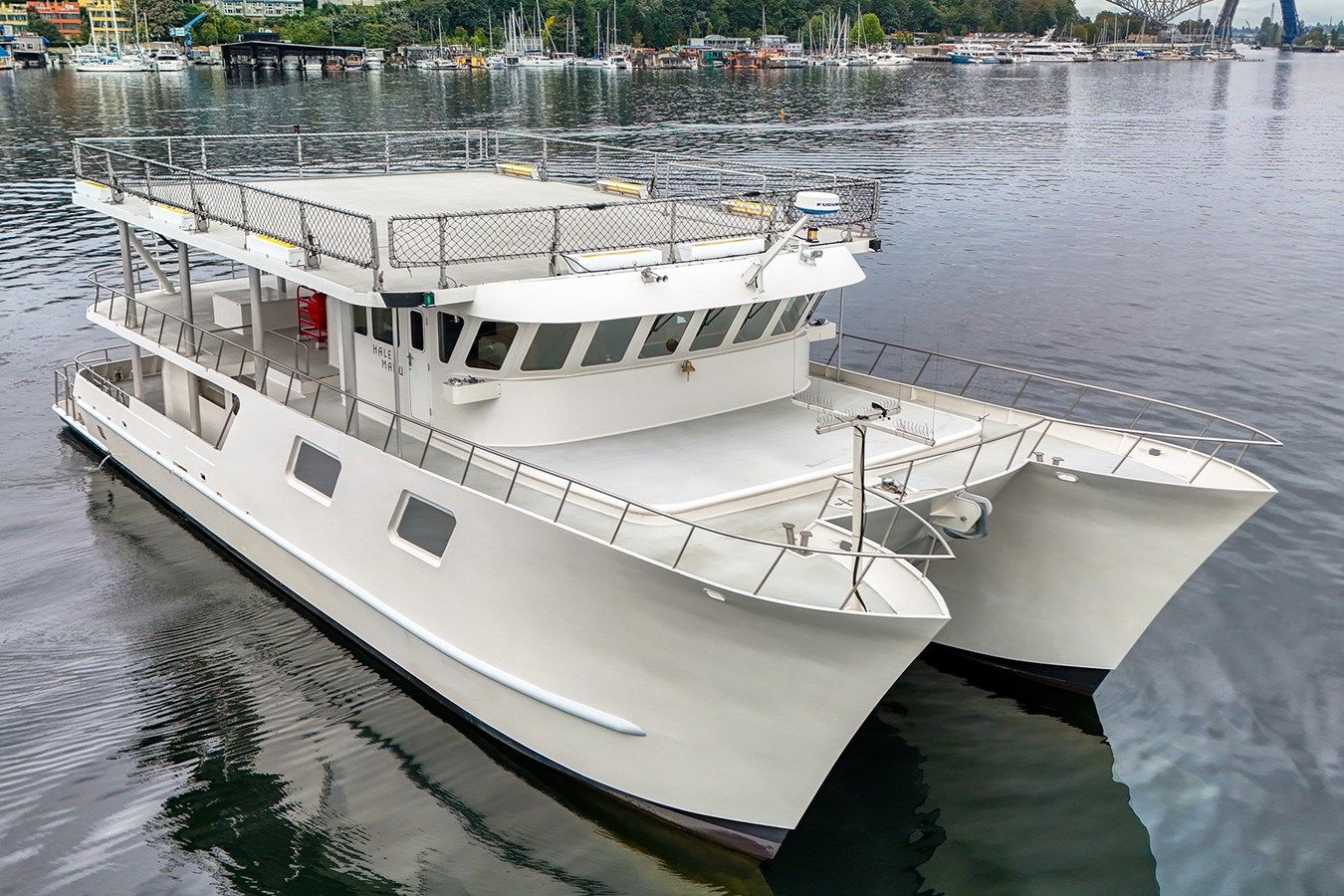
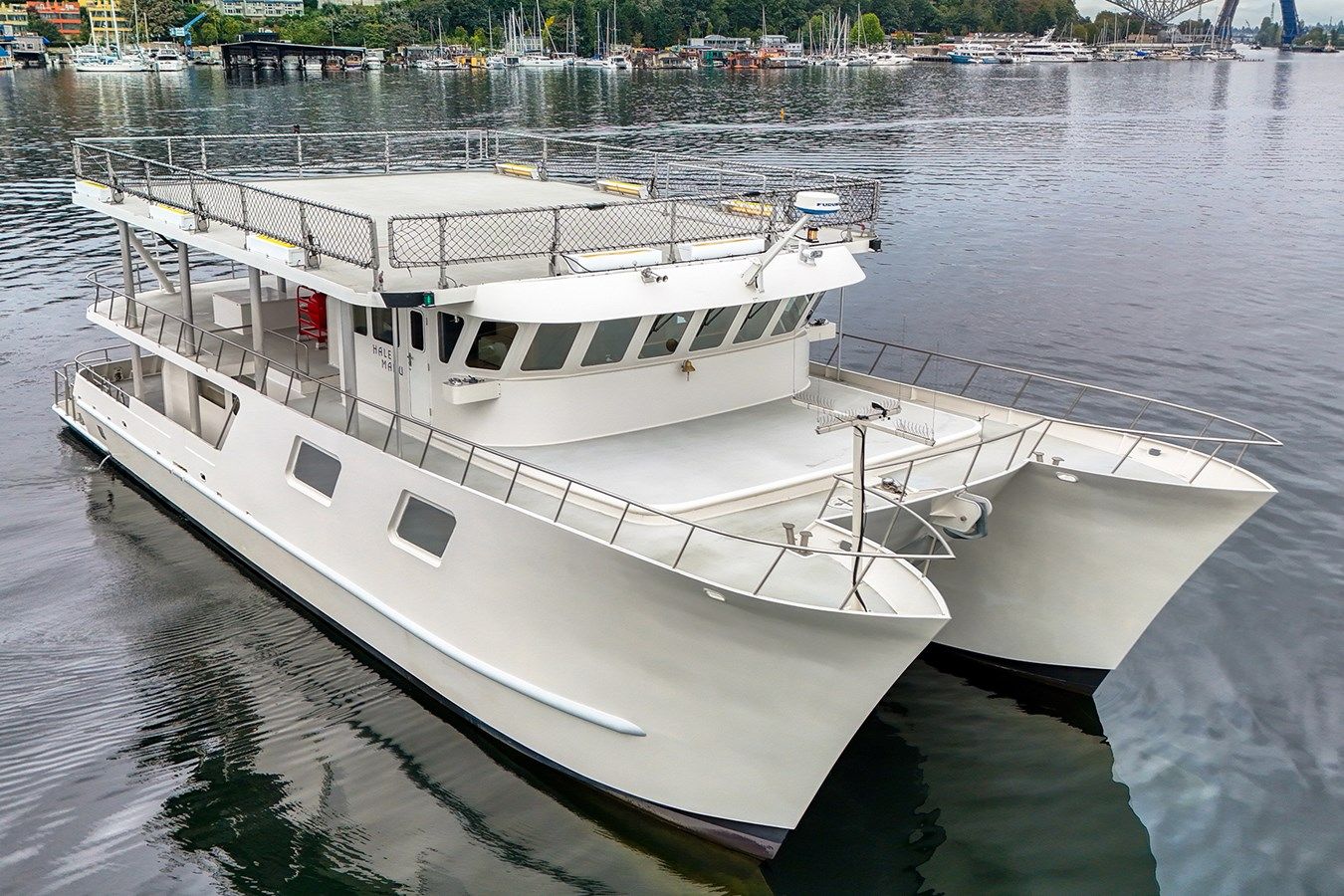
“Hale Manu” has been expertly optimized by a seasoned captain. An elegant cruising motor yacht, she also excels as a superyacht support yacht or shadow boat for a larger yacht.
Detailed Description
Highlights
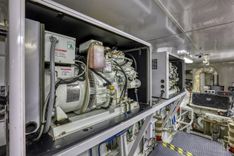
Purpose-built for self-reliance and control, this vessel is equipped with two 14 kW Northern Lights generators to underpin hotel loads, Twin Disc transmissions paired with trolling valves for precise low-speed authority, and a suite of navigation and communication essentials led by a Furuno satellite compass and a Furuno 30 W loudhailer/intercom. Climate comfort is assured by the Ocean Breeze air conditioner, while close-quarters maneuvering is effortless thanks to 25 hp hydraulic bow thrusters and matching 25 hp hydraulic stern thrusters. Ground tackle handling is confident and efficient through a hydraulic Maxwell windlass, passage-making is simplified by a Simrad autopilot, and communications are rounded out by two Furuno VHF radios.
Exterior description
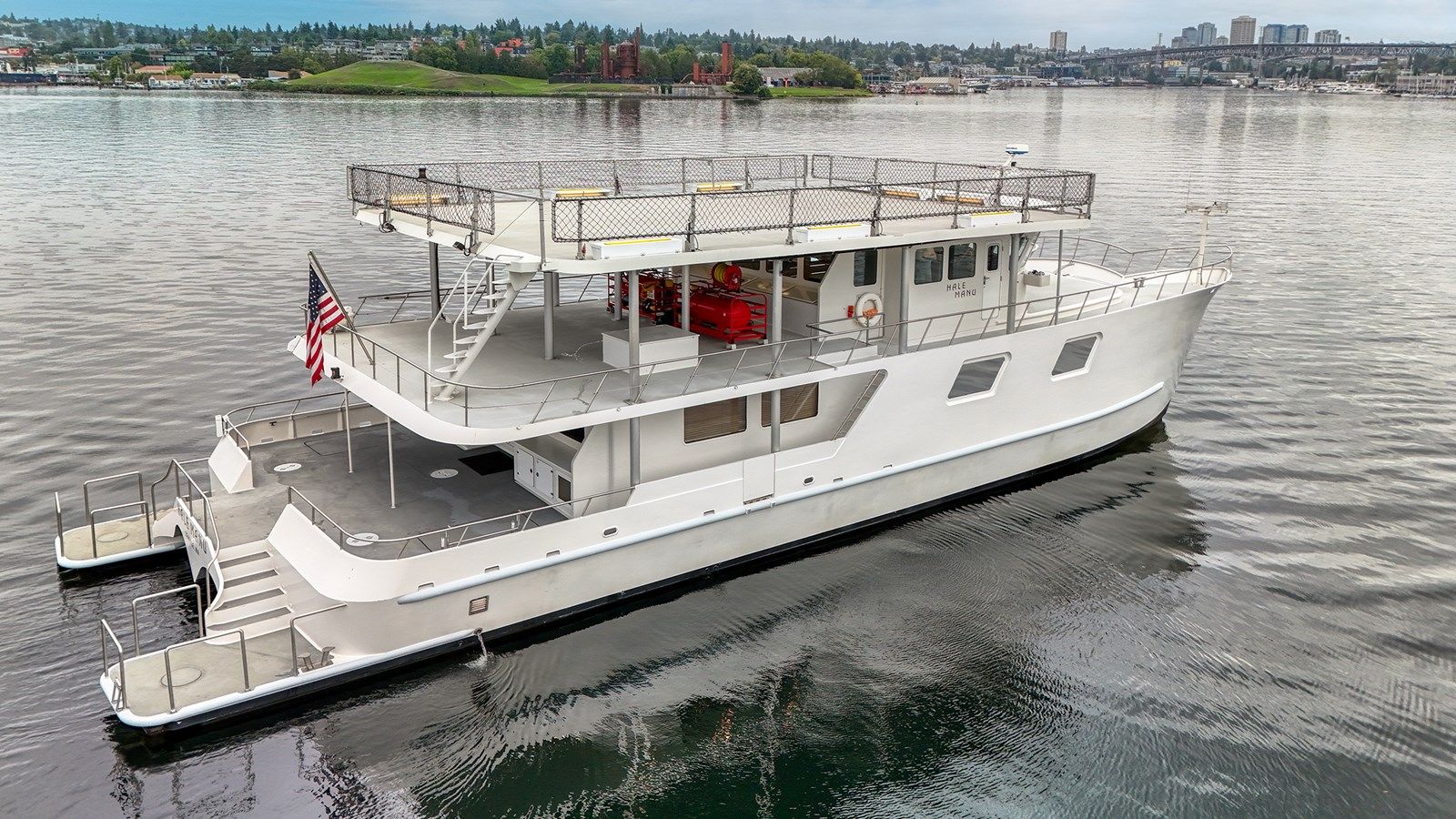
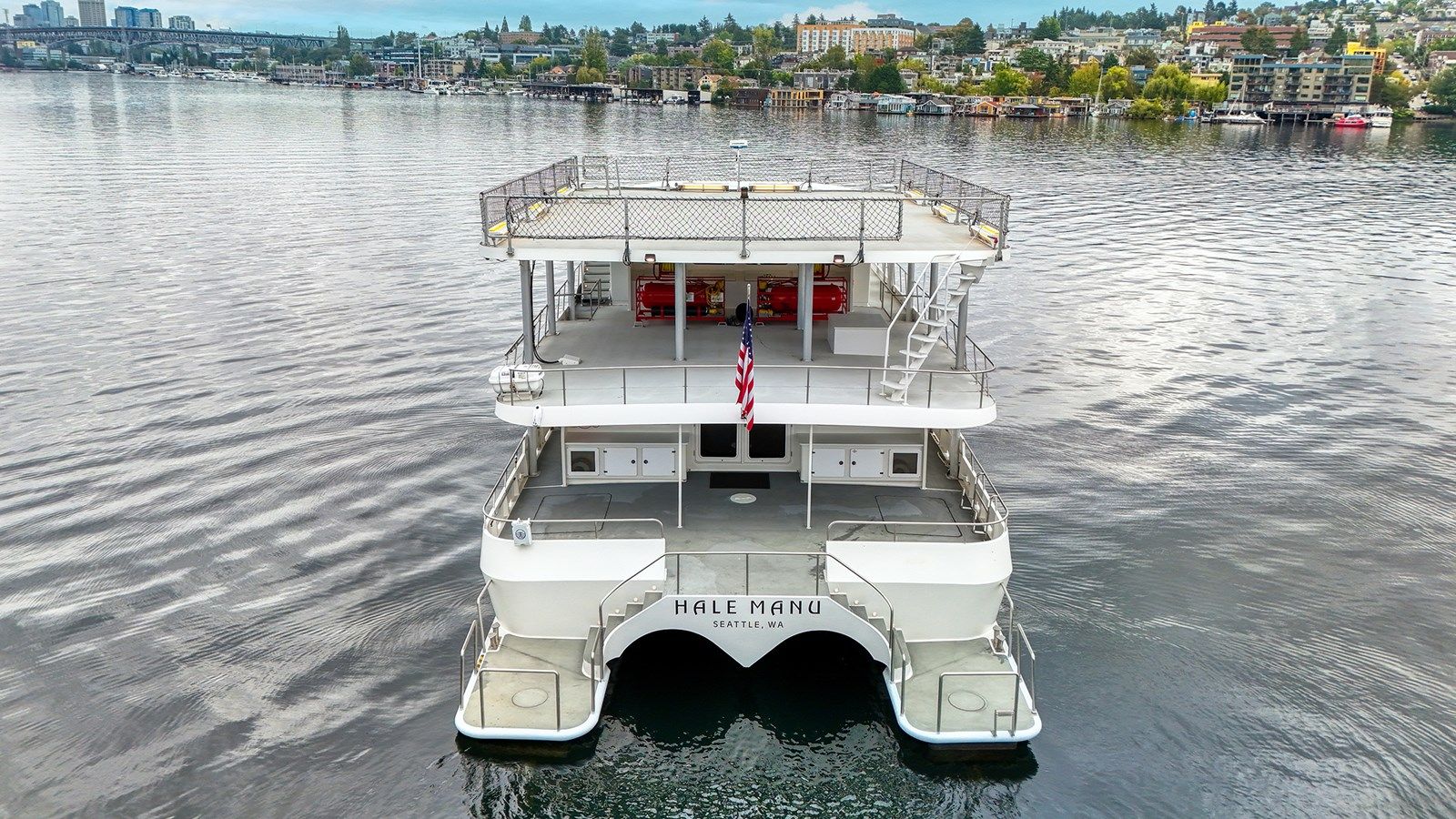
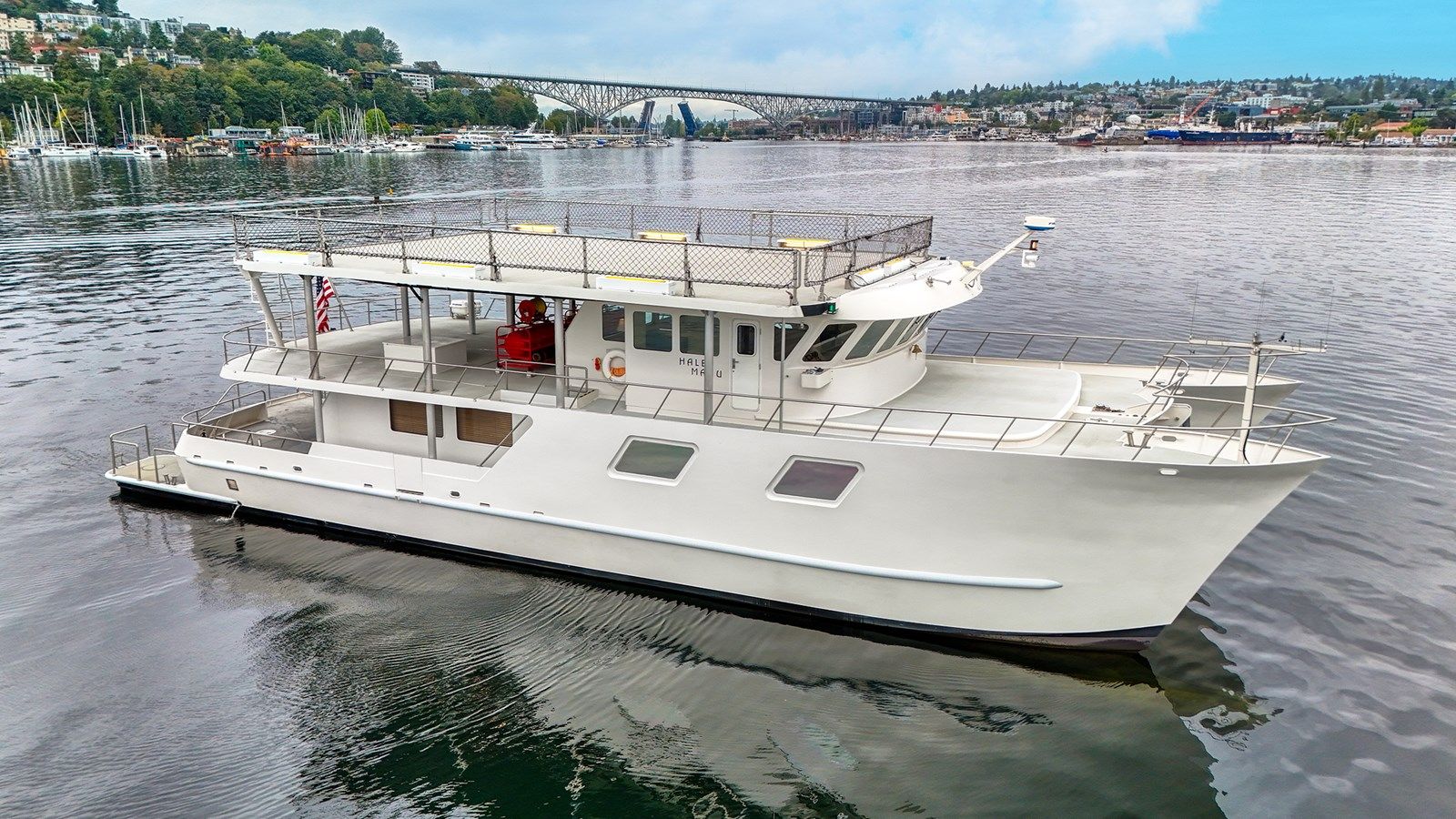
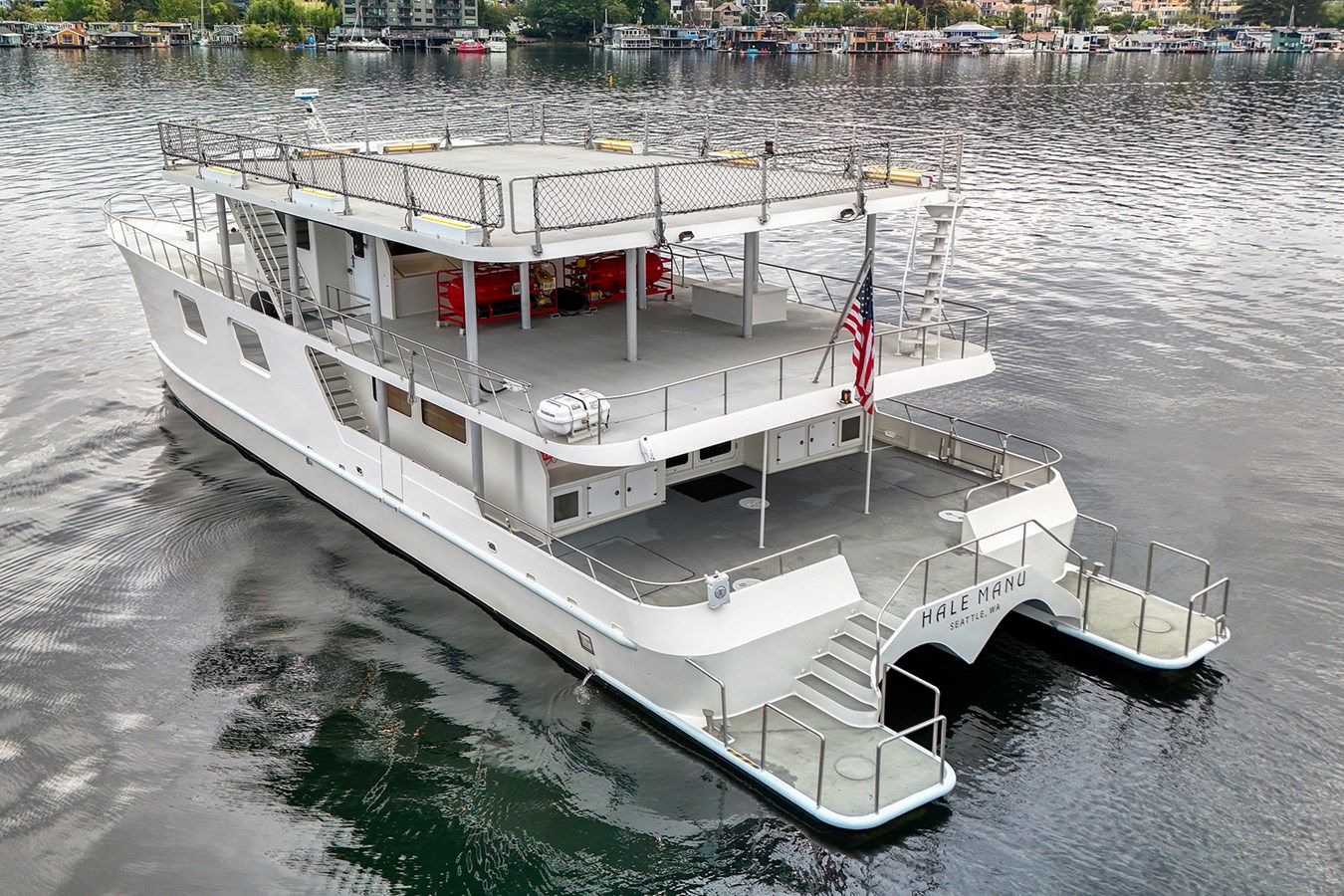
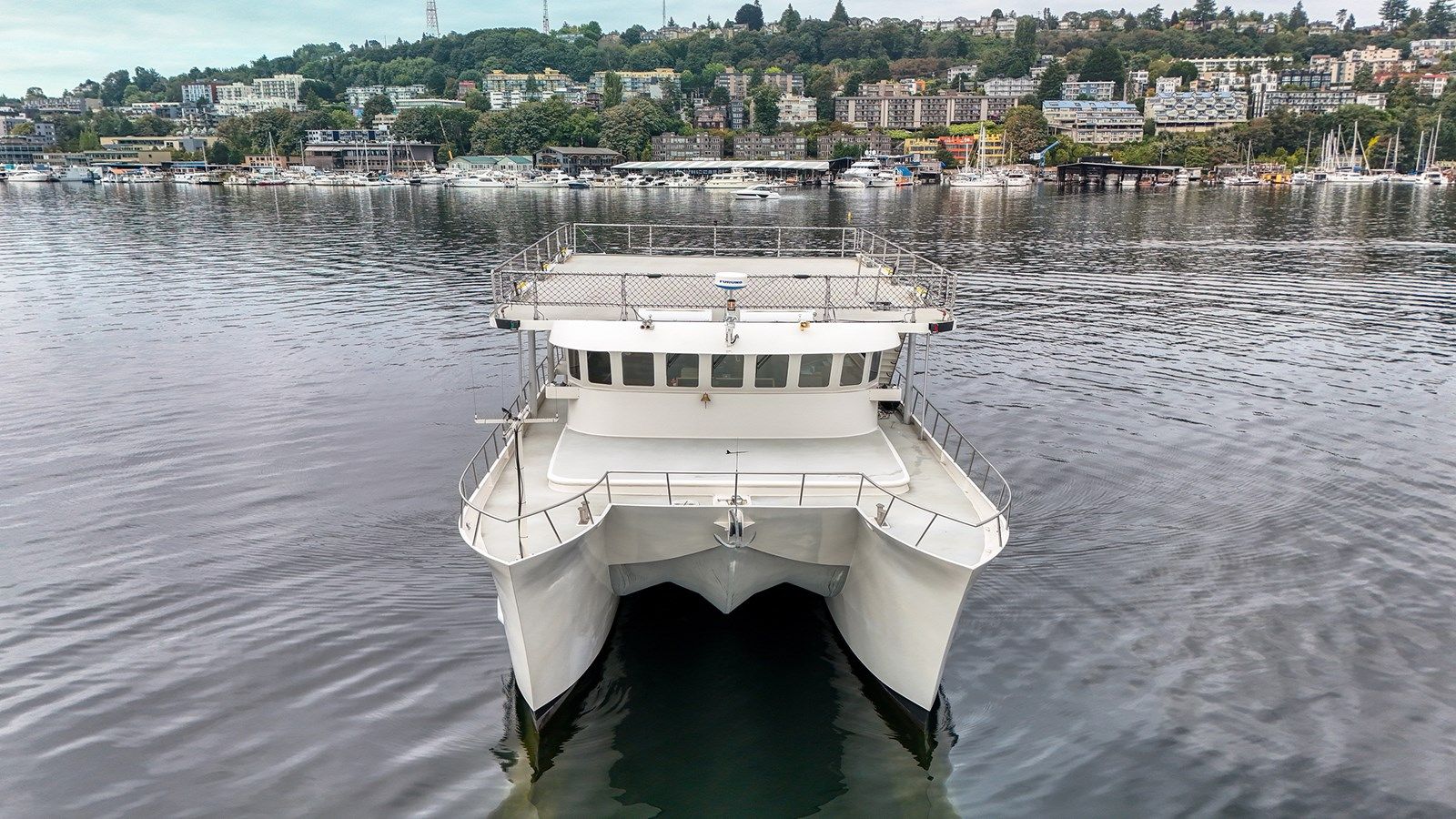
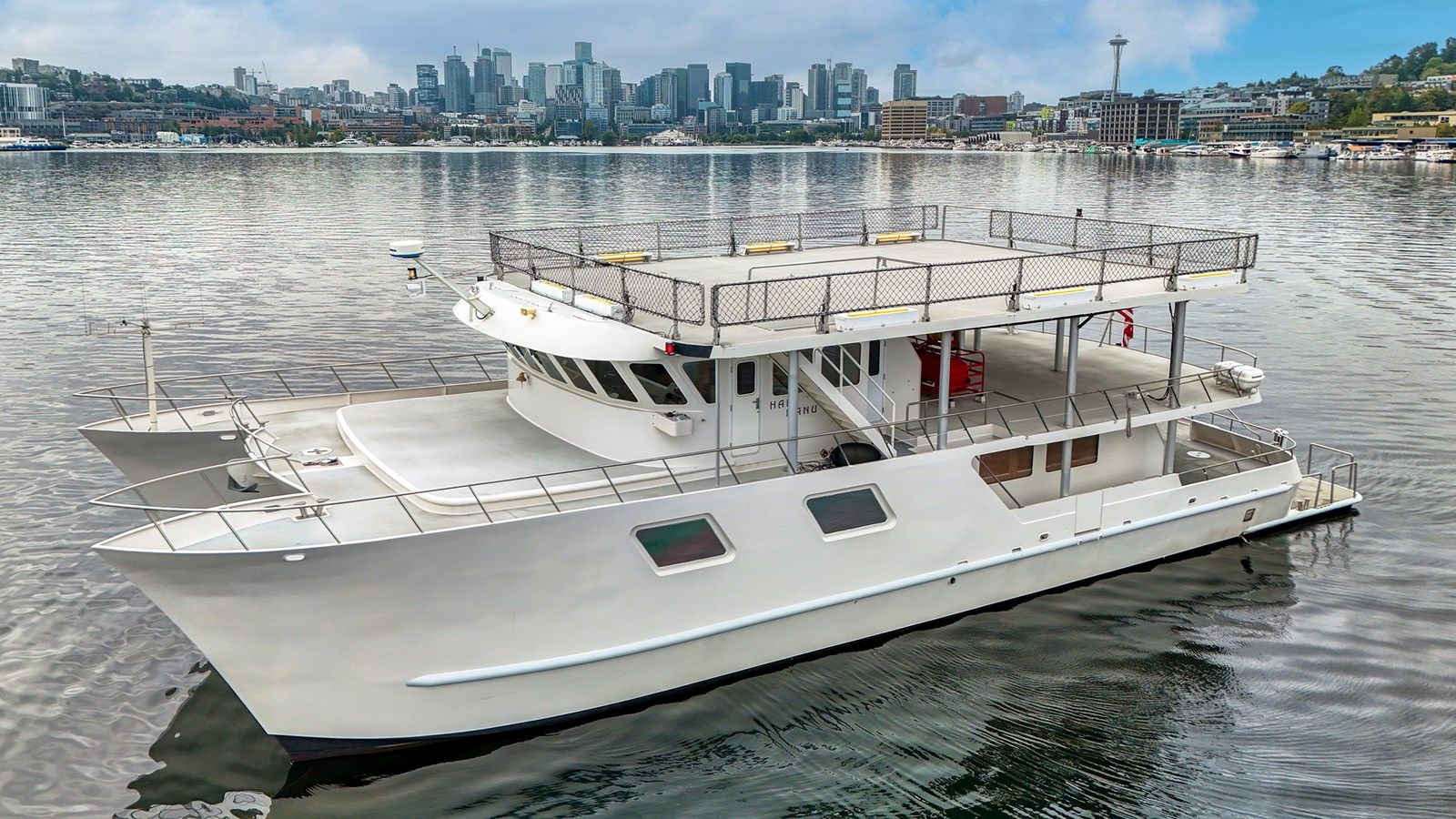
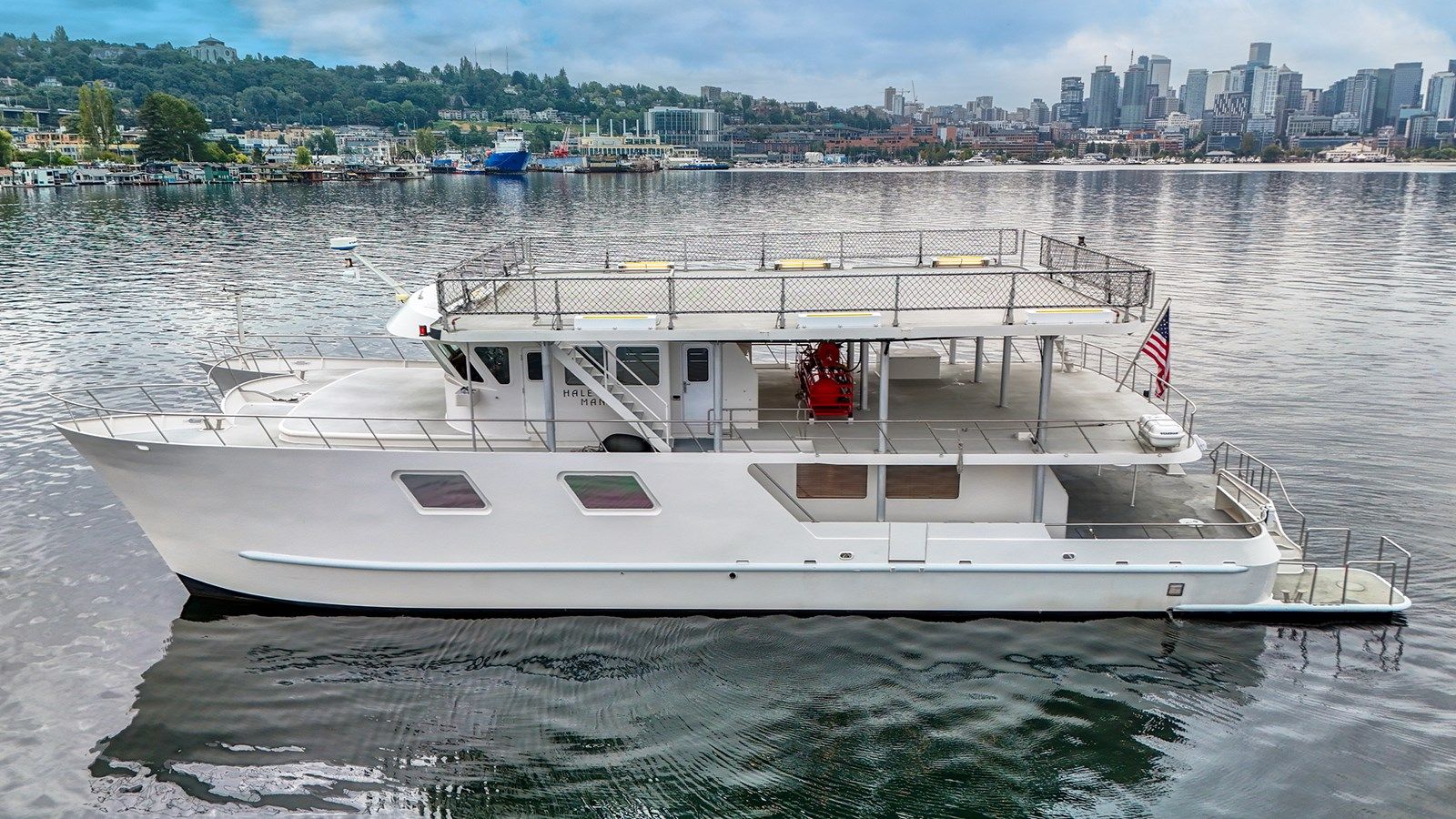
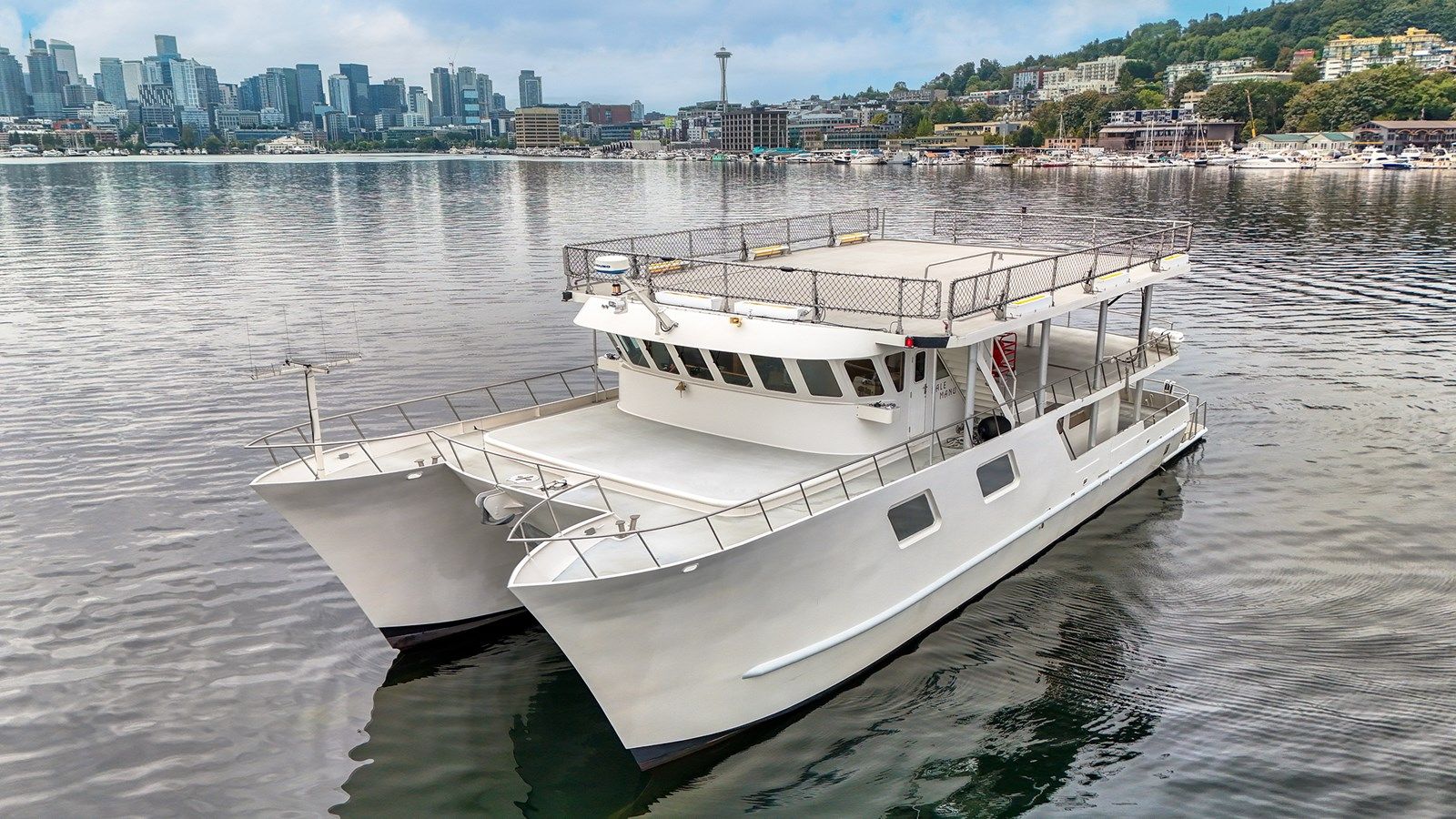
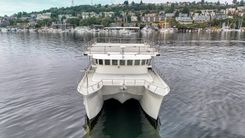
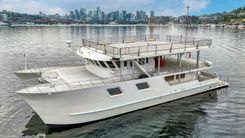
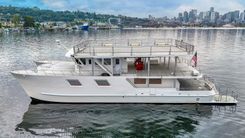
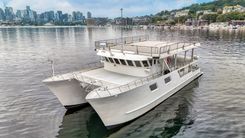
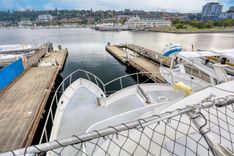
Twin round-bilged, symmetrical steel hulls with bulbous bows carry forward spray steps, hull-widening spray steps just above the waterline, and transom sterns that project into stern platforms with a starboard swim ladder. Half-pipe rubrails shield the hull flanks, continuous aluminum handrails wrap the decks, and a wave‑piercing V‑bottom spans the wing between the hulls for a soft, composed ride. Both the hull and main decks are welded steel for enduring strength.
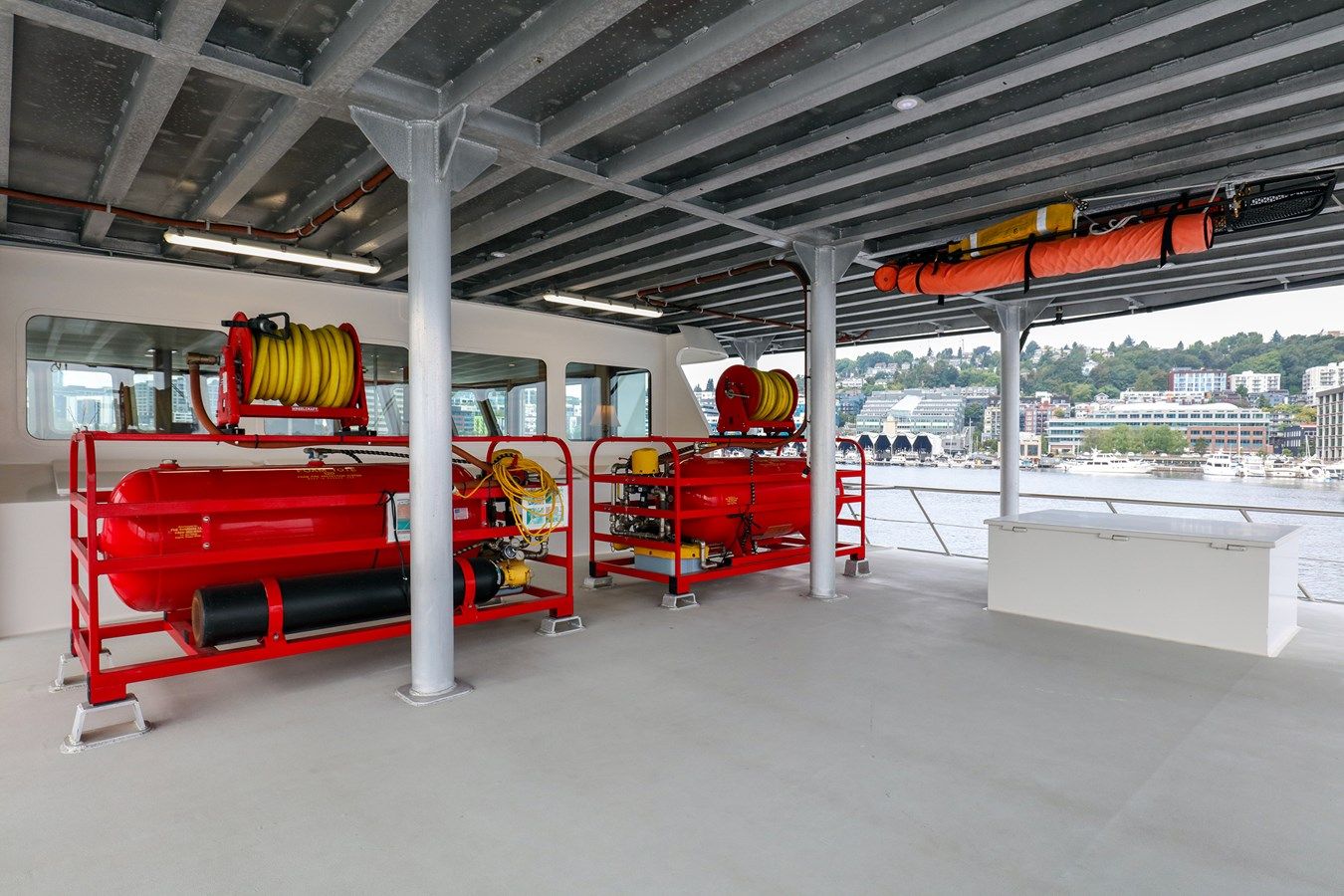
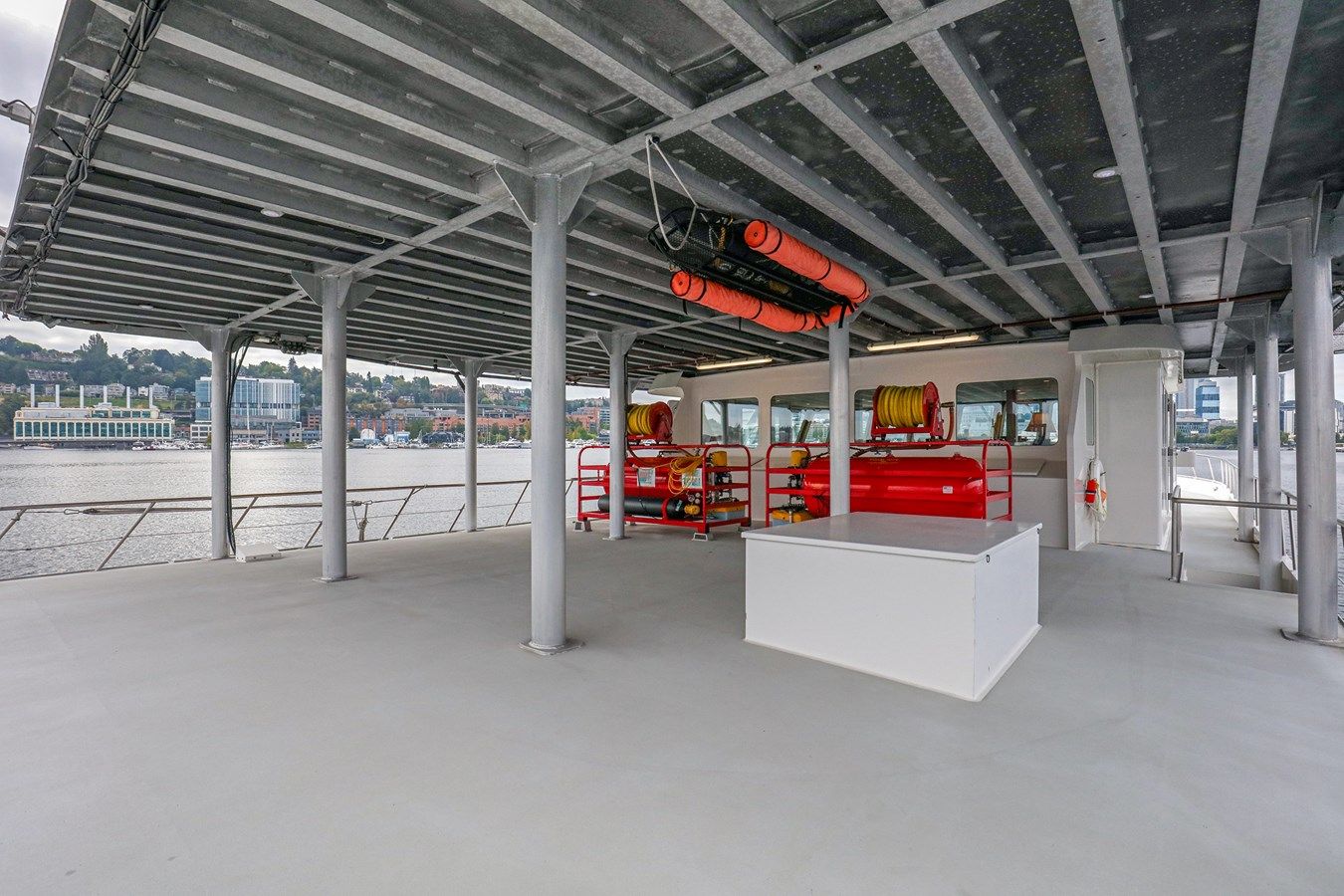
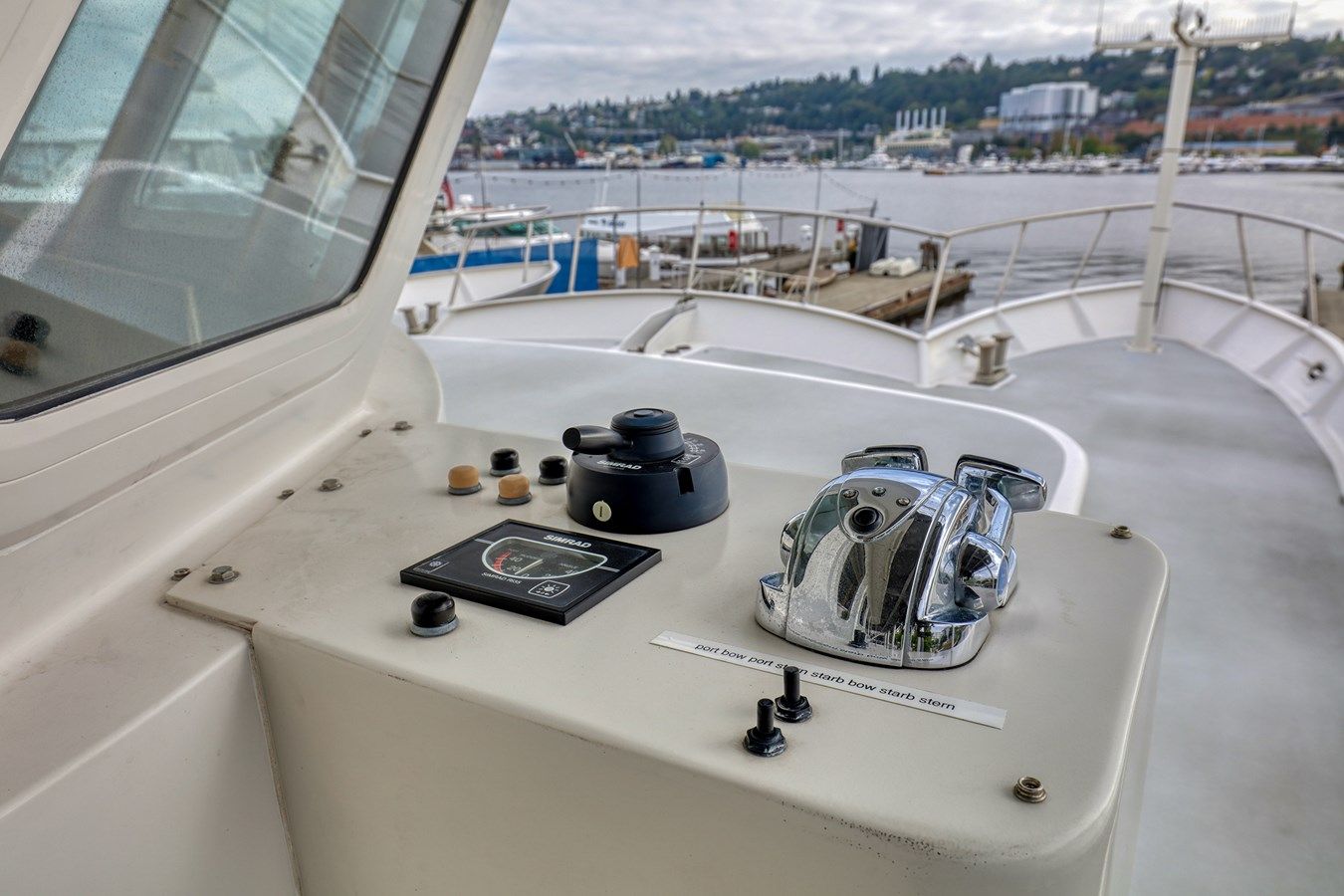
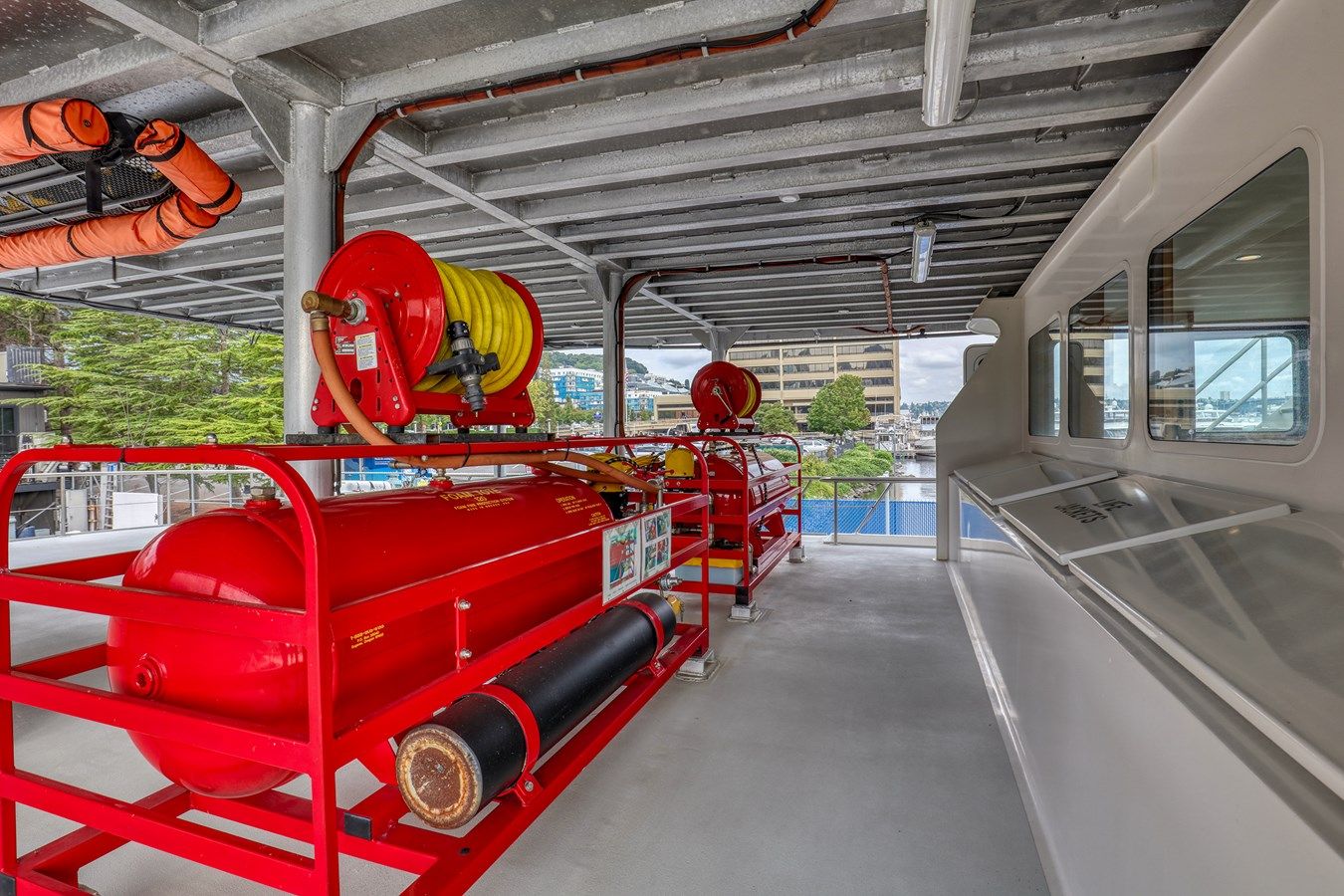
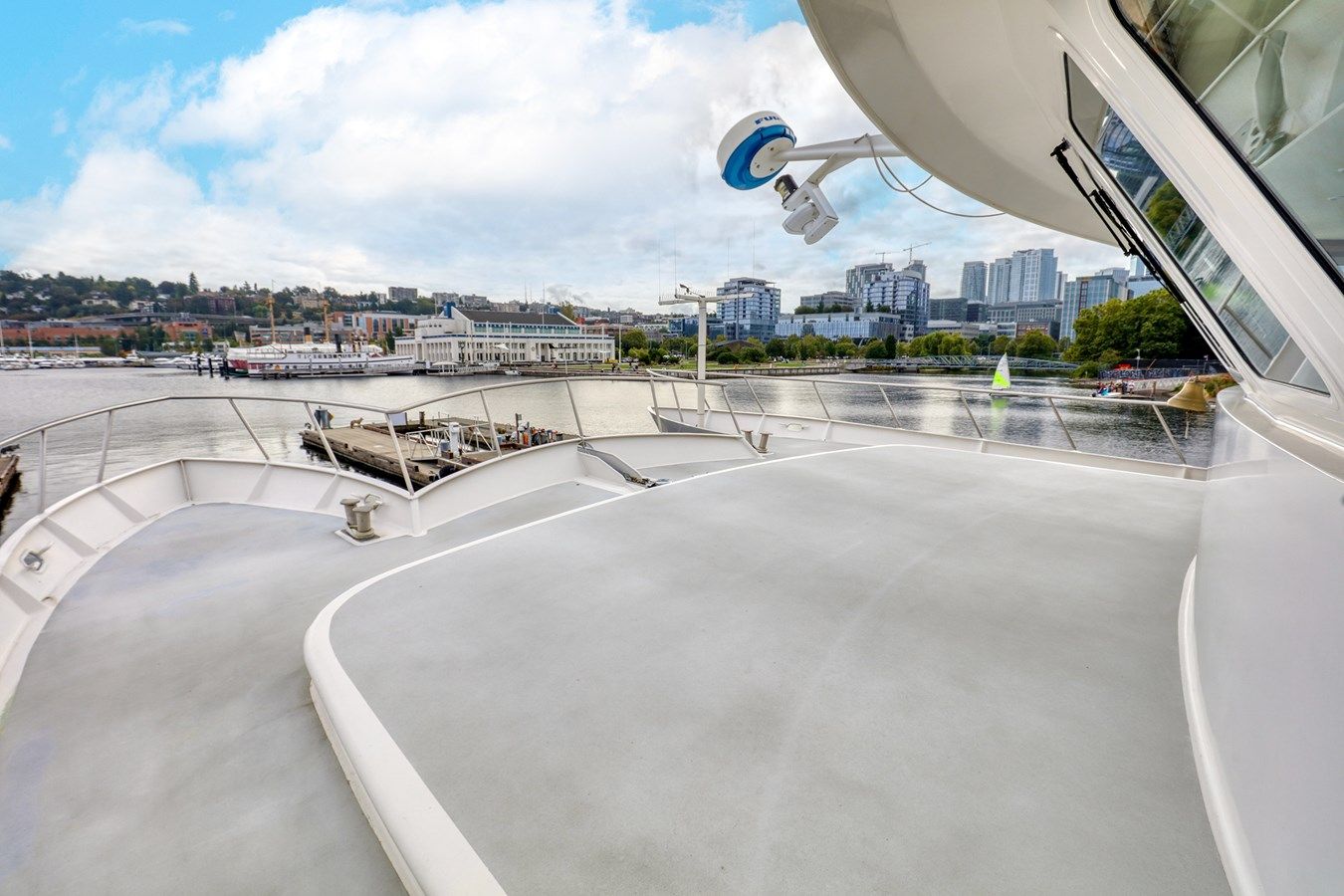
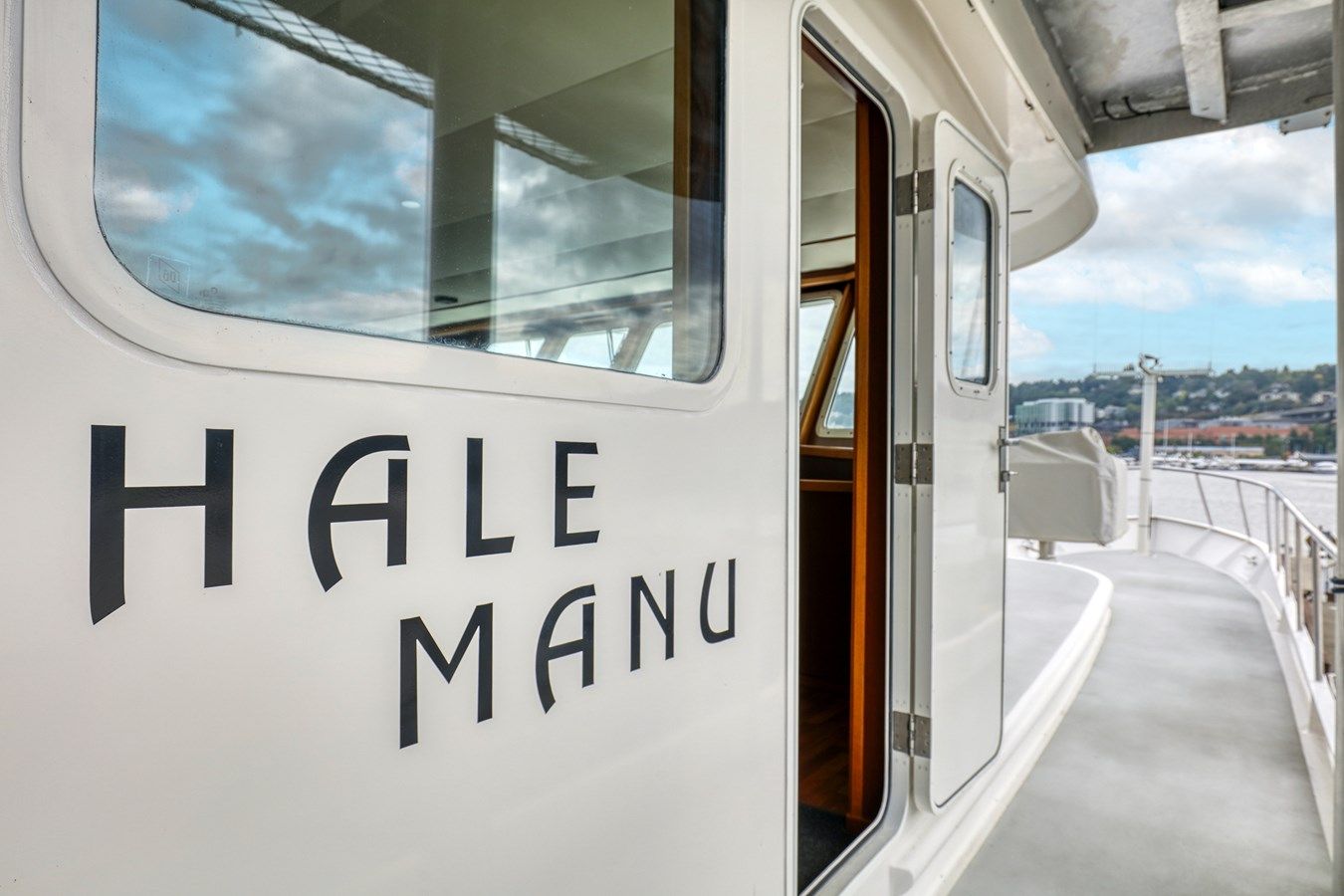
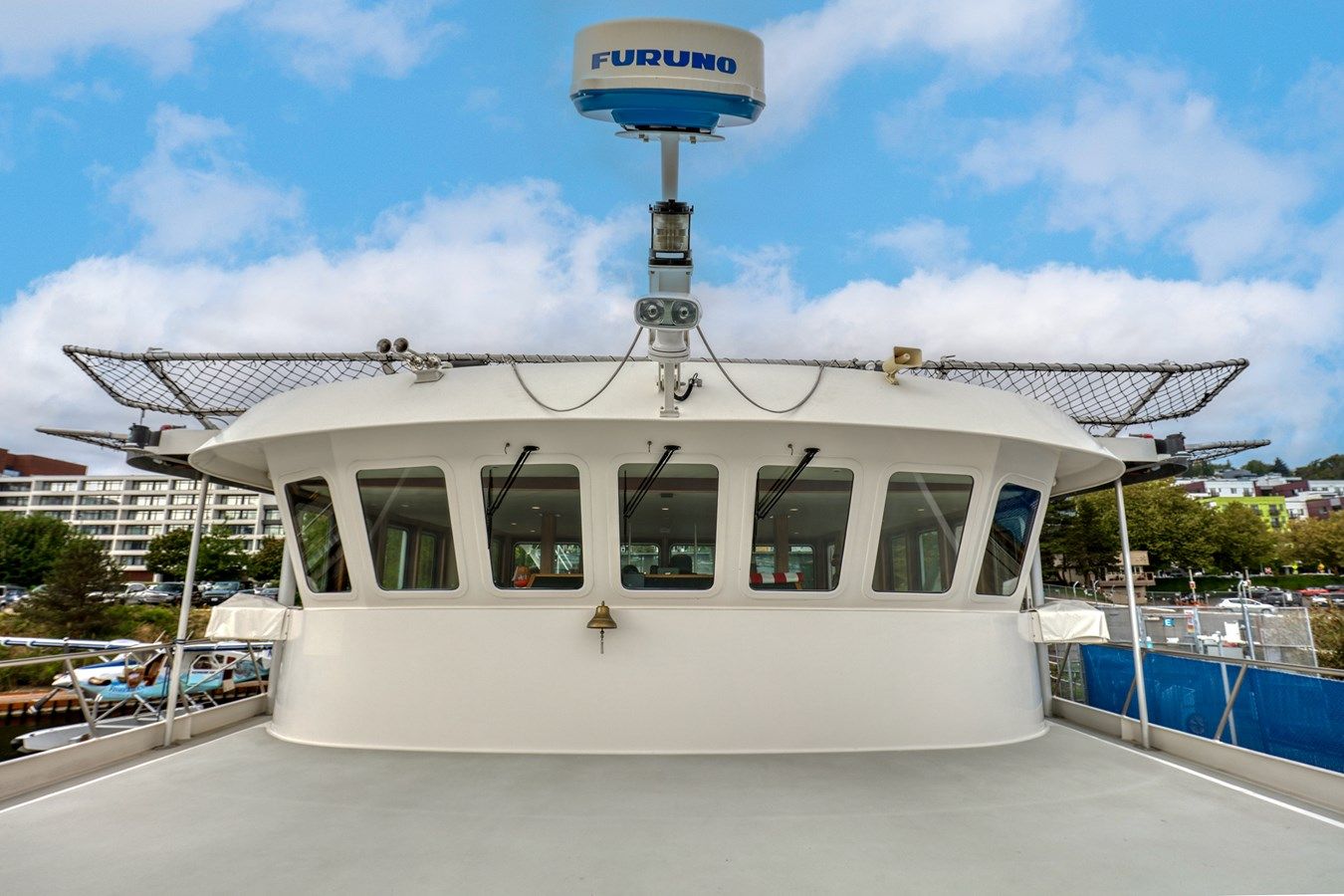
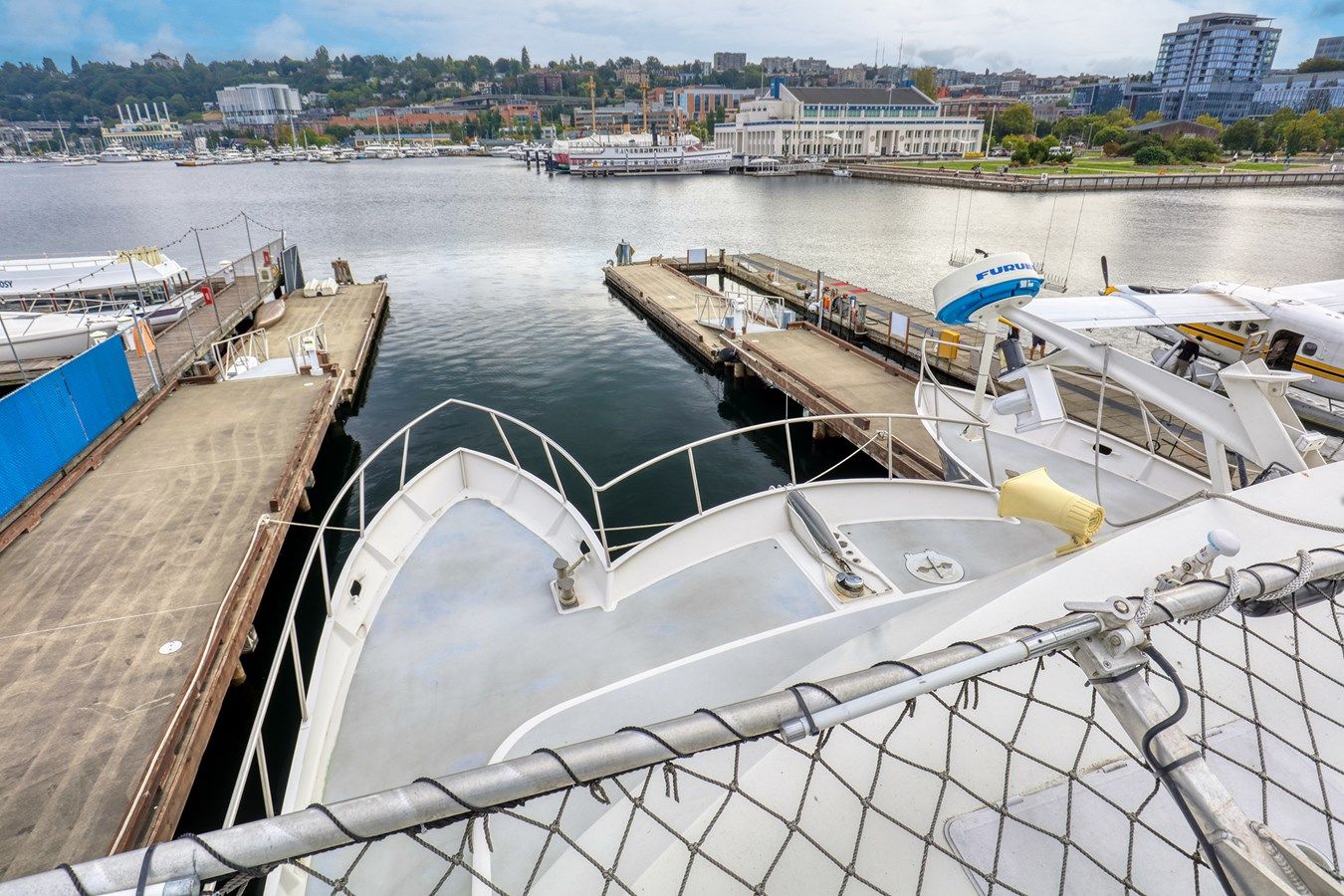
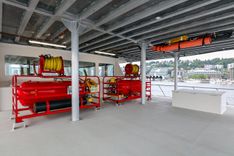
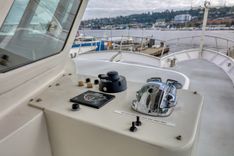
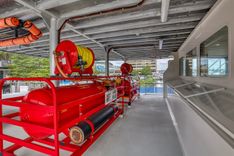
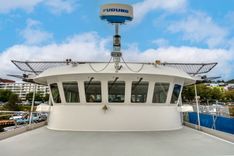
The raised bow decks extend over the wing and concentrate ground tackle with a centerline anchor windlass, an anchor roller, and a watertight hatch to the chainlocker set forward within the wing. A low aluminum trunk cabin follows, then a raised aluminum pilothouse whose reverse‑raked windshield and overhanging visor enhance visibility and weather protection. Port and starboard pilothouse doors open to the forward side decks, and wing engine control stations sit just ahead of these doors for confident docking. The starboard forward side deck carries steps aft down to the lower aft side decks and a chain gate to the slightly raised boat deck over the main cabin. A second pilothouse door to port leads to the port forward side deck with a forward stairway to the aluminum deck above, aft steps to the port aft side deck, and another chain gate to the slightly raised boat deck. The aluminum boat deck itself provides forward lockers for lifejackets and maintenance gear, two foam fire extinguishing systems, a starboard aft deck box and steps to the upper aluminum deck, plus a port aft liferaft and EPIRB.
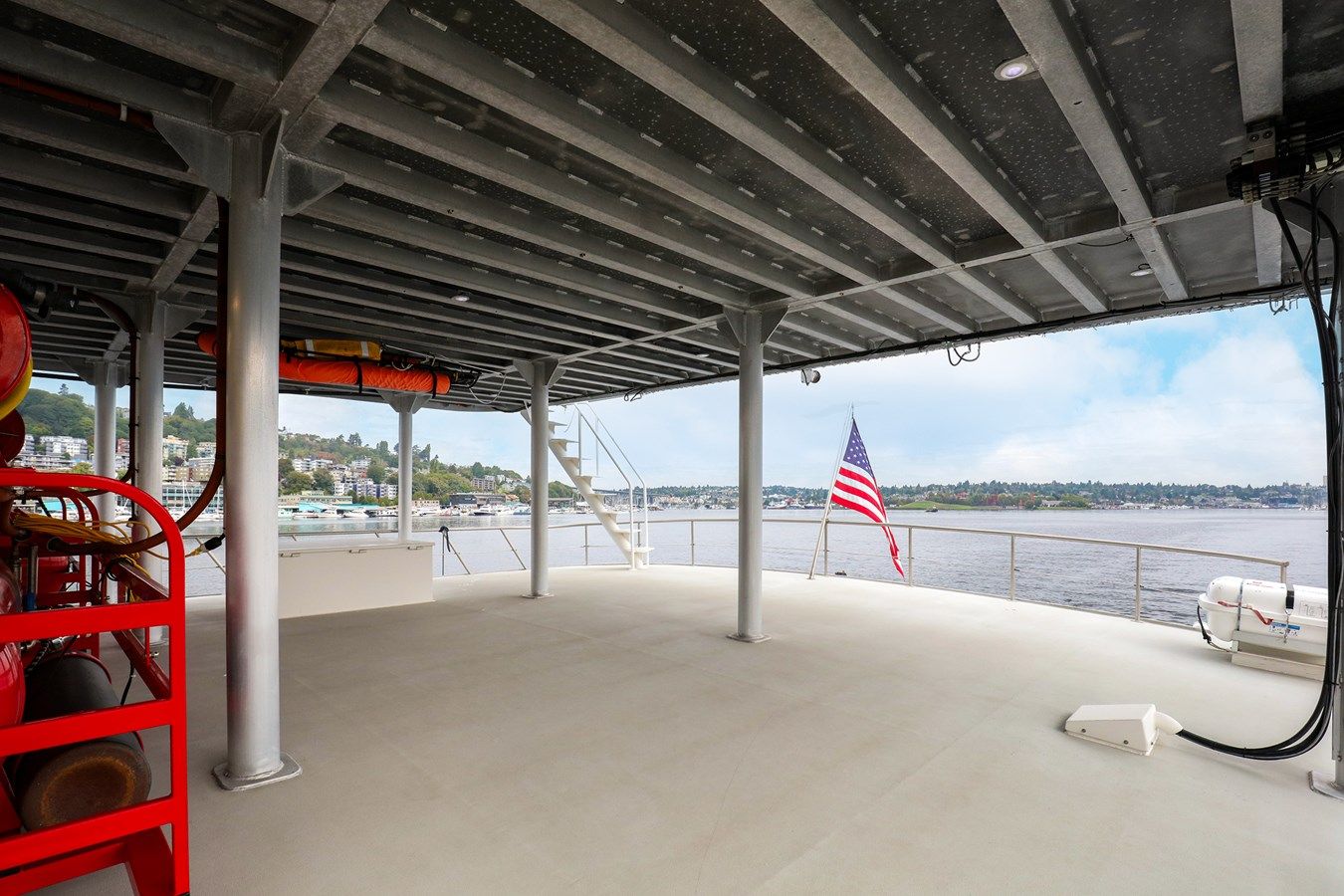
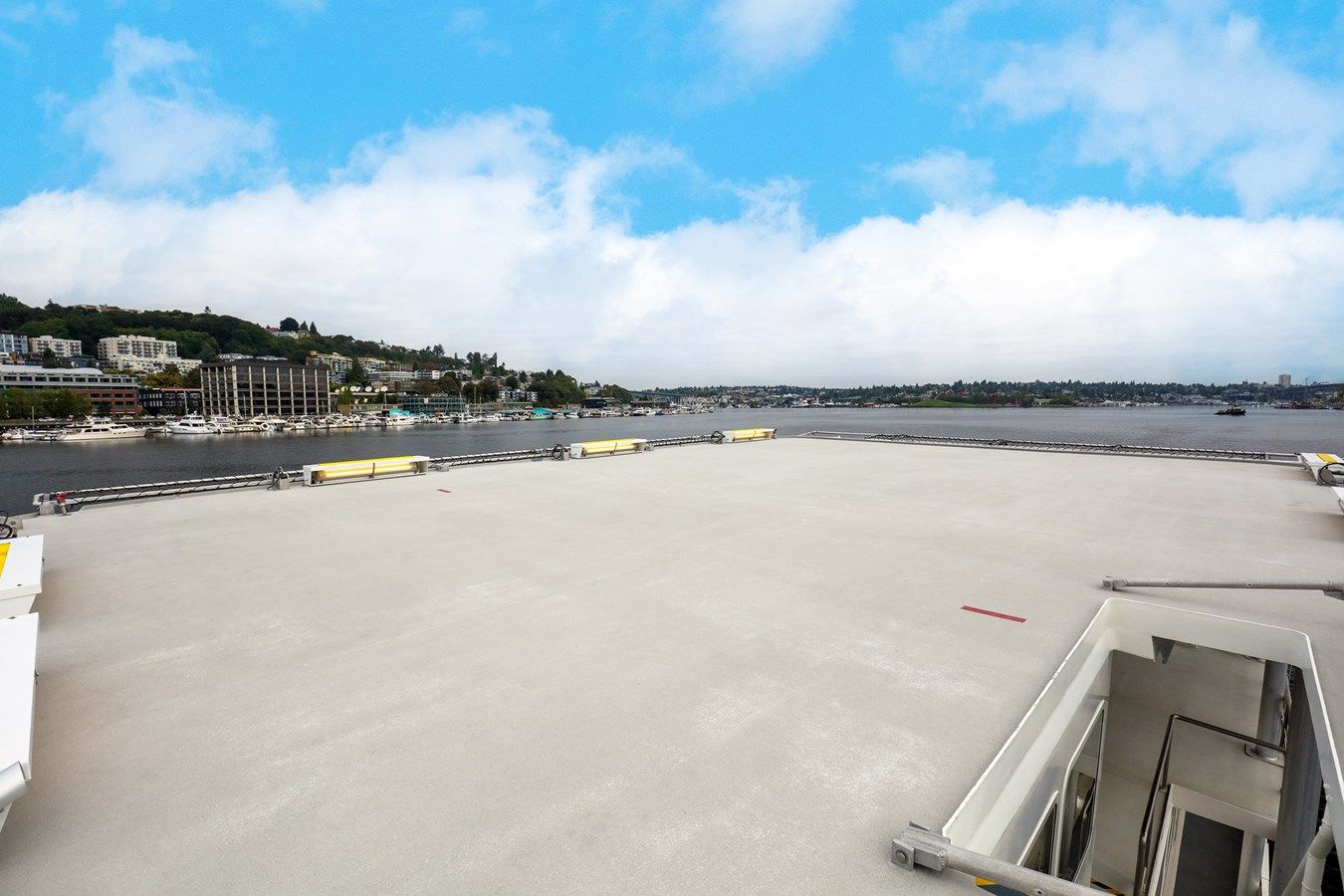
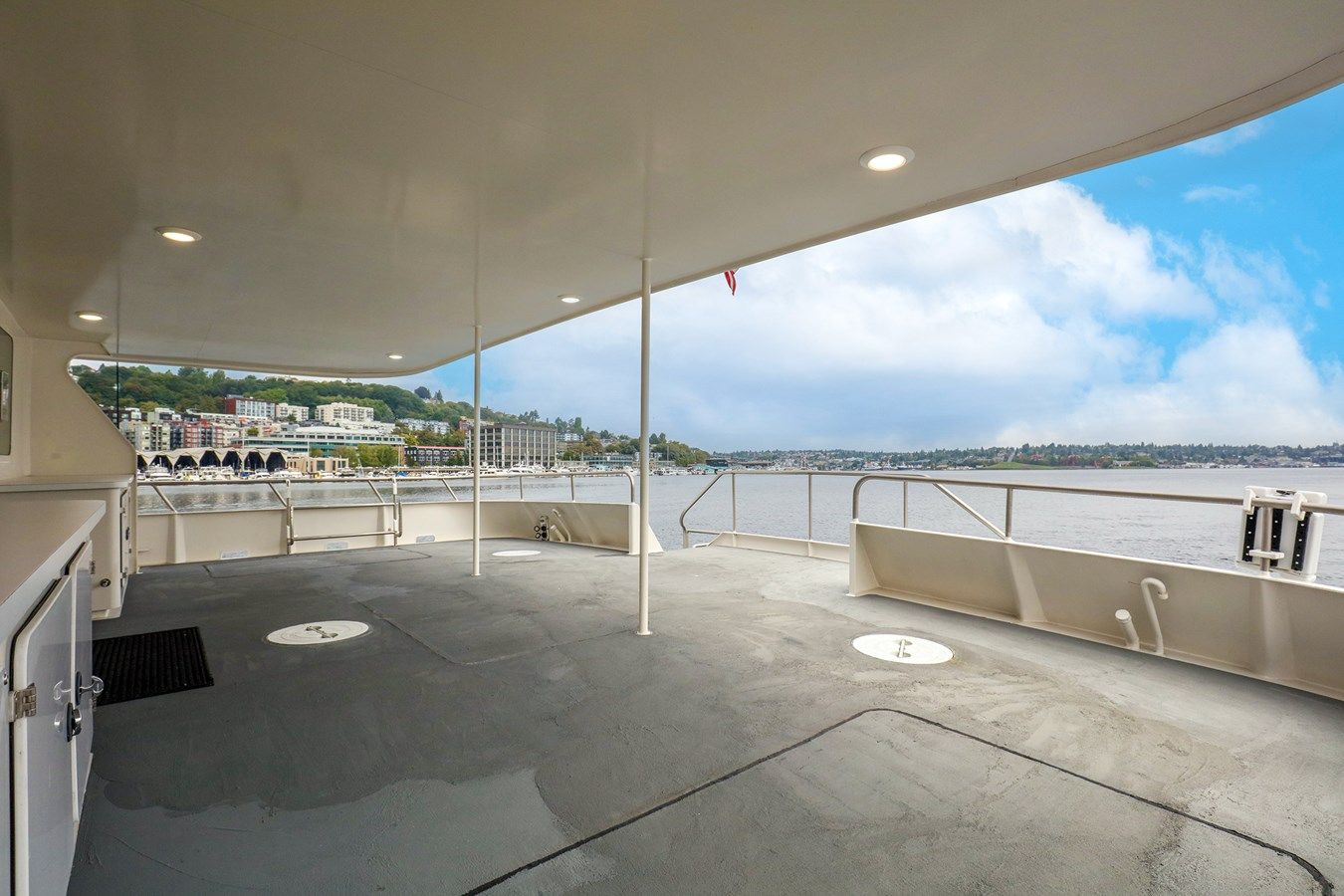
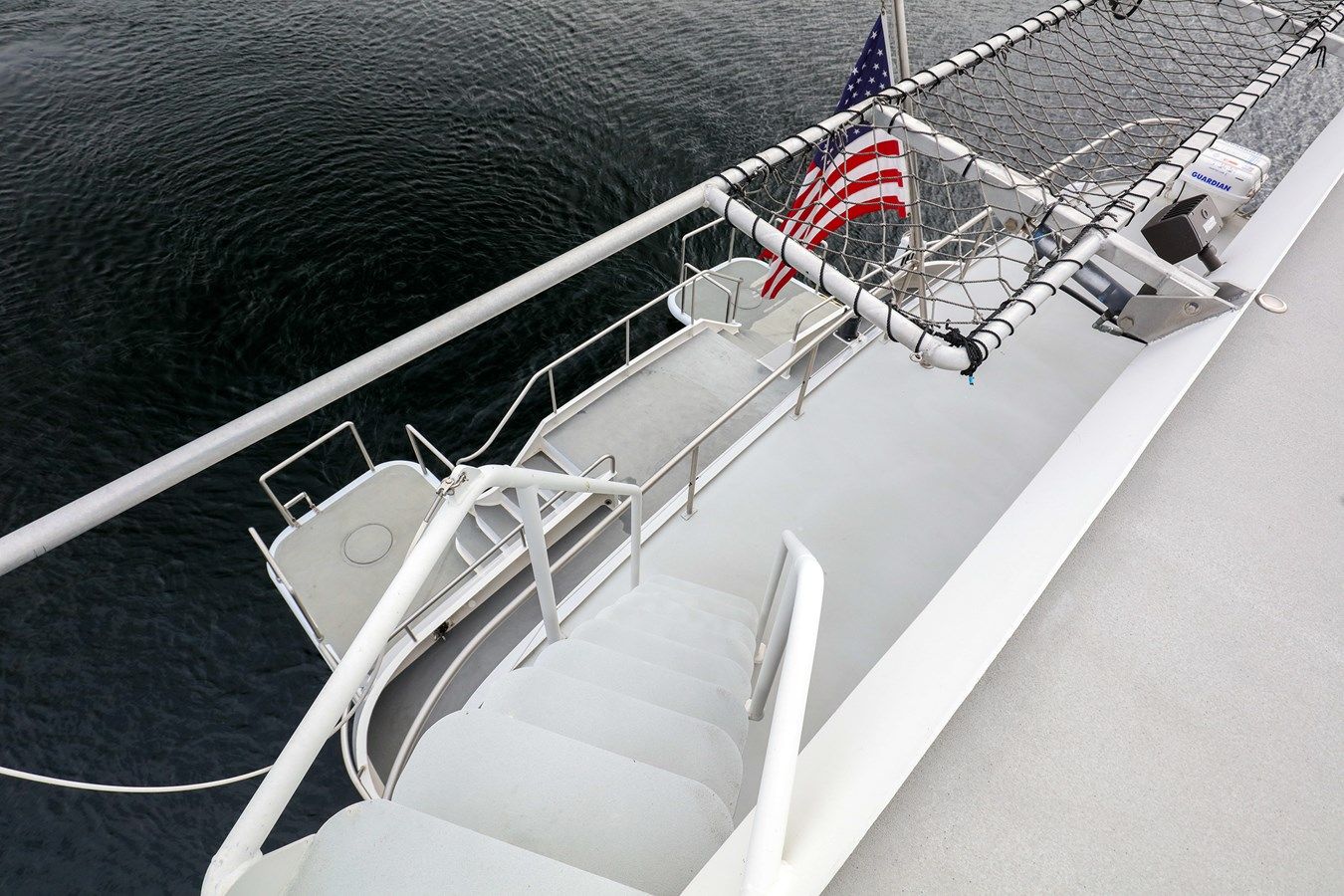
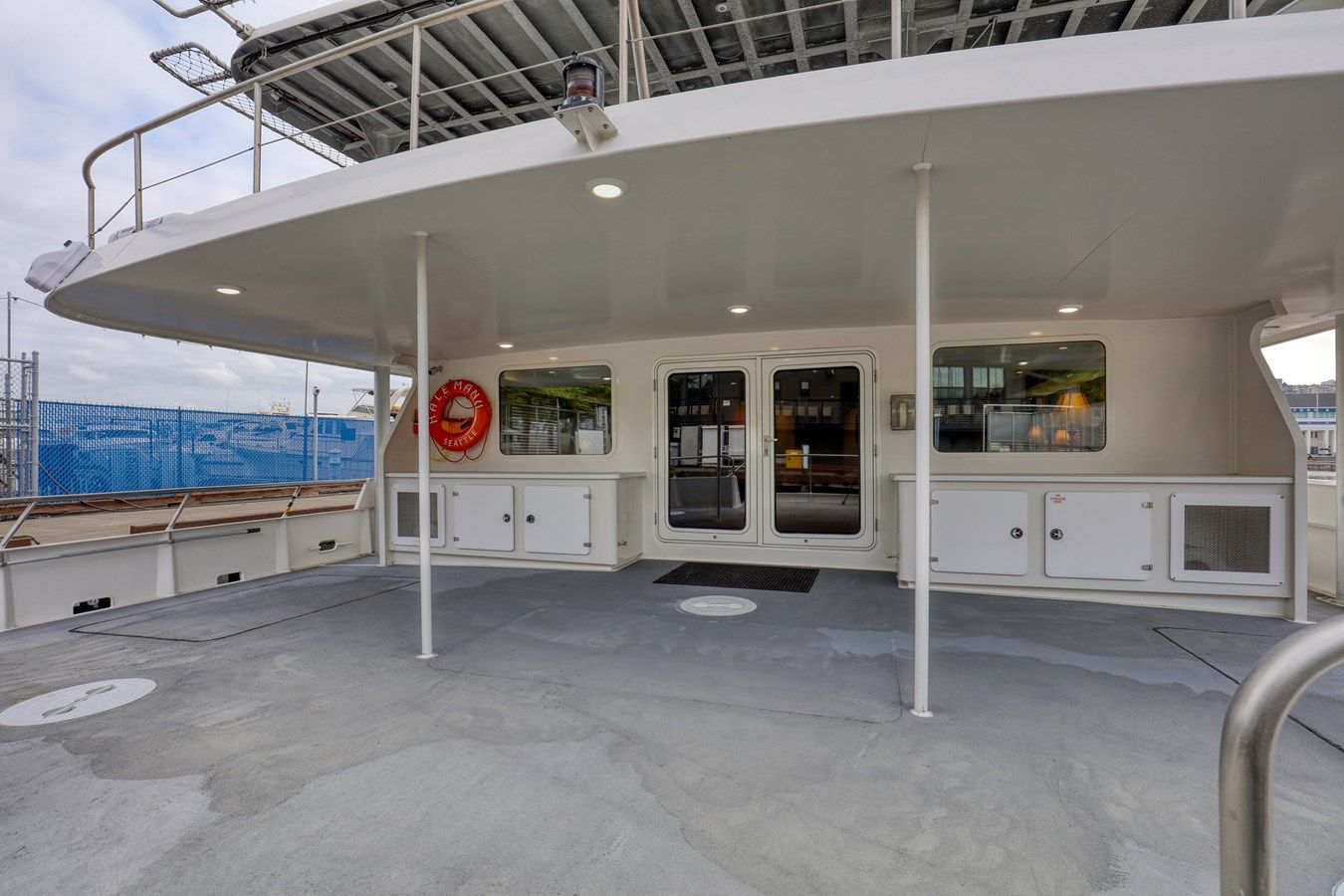
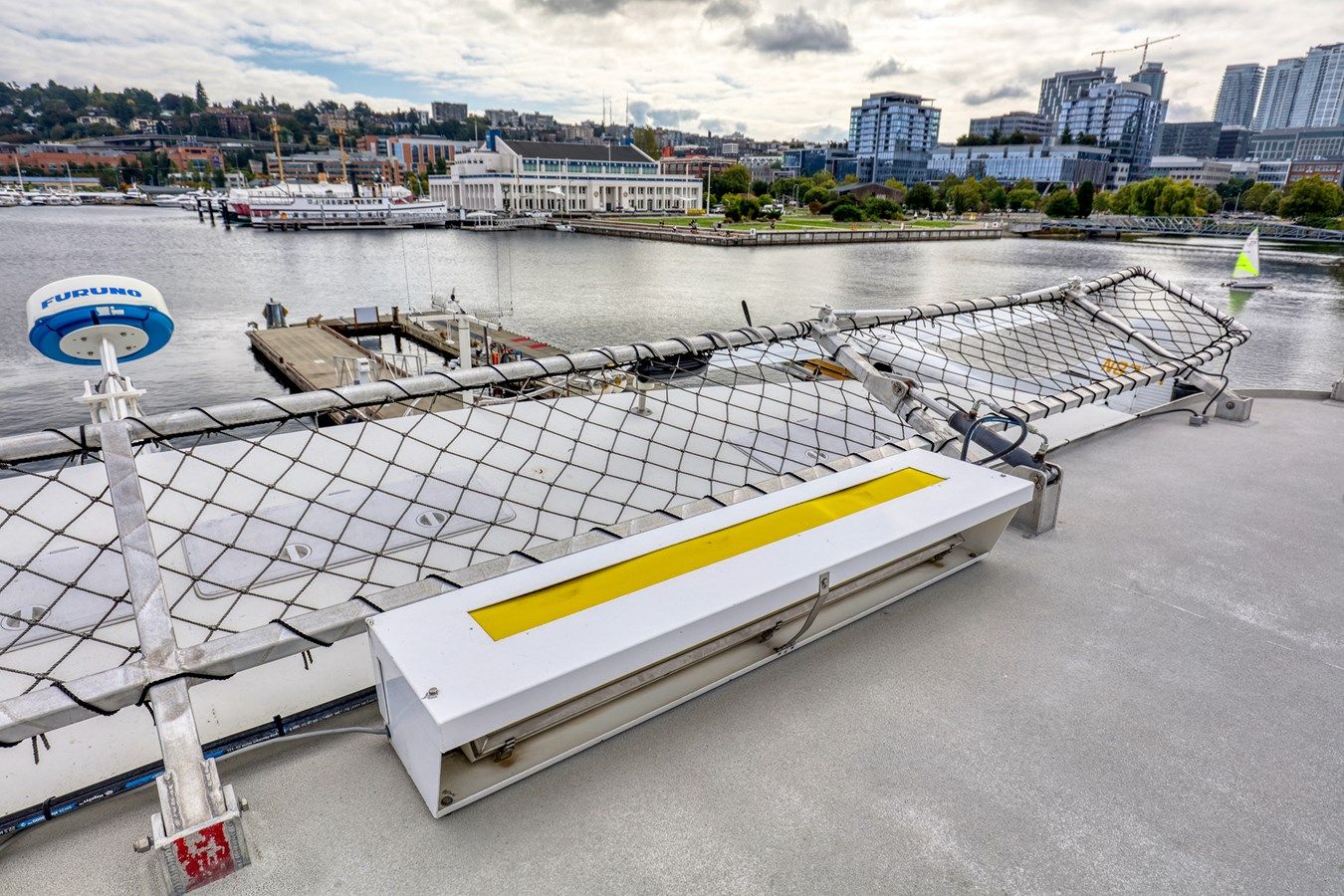
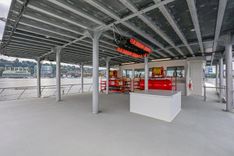
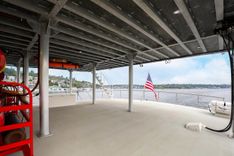
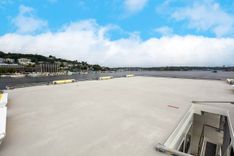
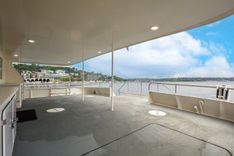
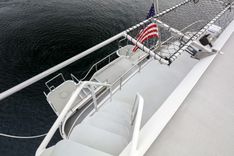
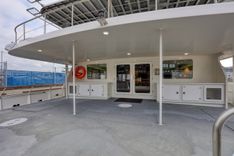
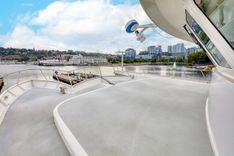
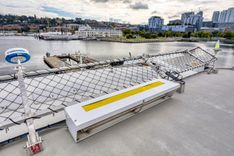
Impressively expansive, the upper deck stretches from well forward over the pilothouse to nearly full aft over the boat deck, measuring 33’ 1” in beam by 44’ 4” in length. It overhangs the hulls’ beam and thus calls for oversized fenders when working locks or lying to a tall bulkhead. Hydraulic actuators raise and lower the railings around the deck perimeter, while cables from these rails adjust both the stairwell railings and the radar mast. Night operations are supported by perimeter lighting all around. Below, the lower aft side decks feature forward stairways to the upper side decks, bulwarks with side boarding gates, and clearly arranged tank fills and vents. They lead aft to a full‑beam aft deck with wide doors into the saloon, forward counters with storage cabinets and outboard engine room fan inlets, watertight hatches to the lazarettes and central wing cavity, and port and starboard stairways descending to the stern platforms. A Marquipt aluminum boarding stairway stows at the starboard rail, ready for elegant shore access.
Interior description
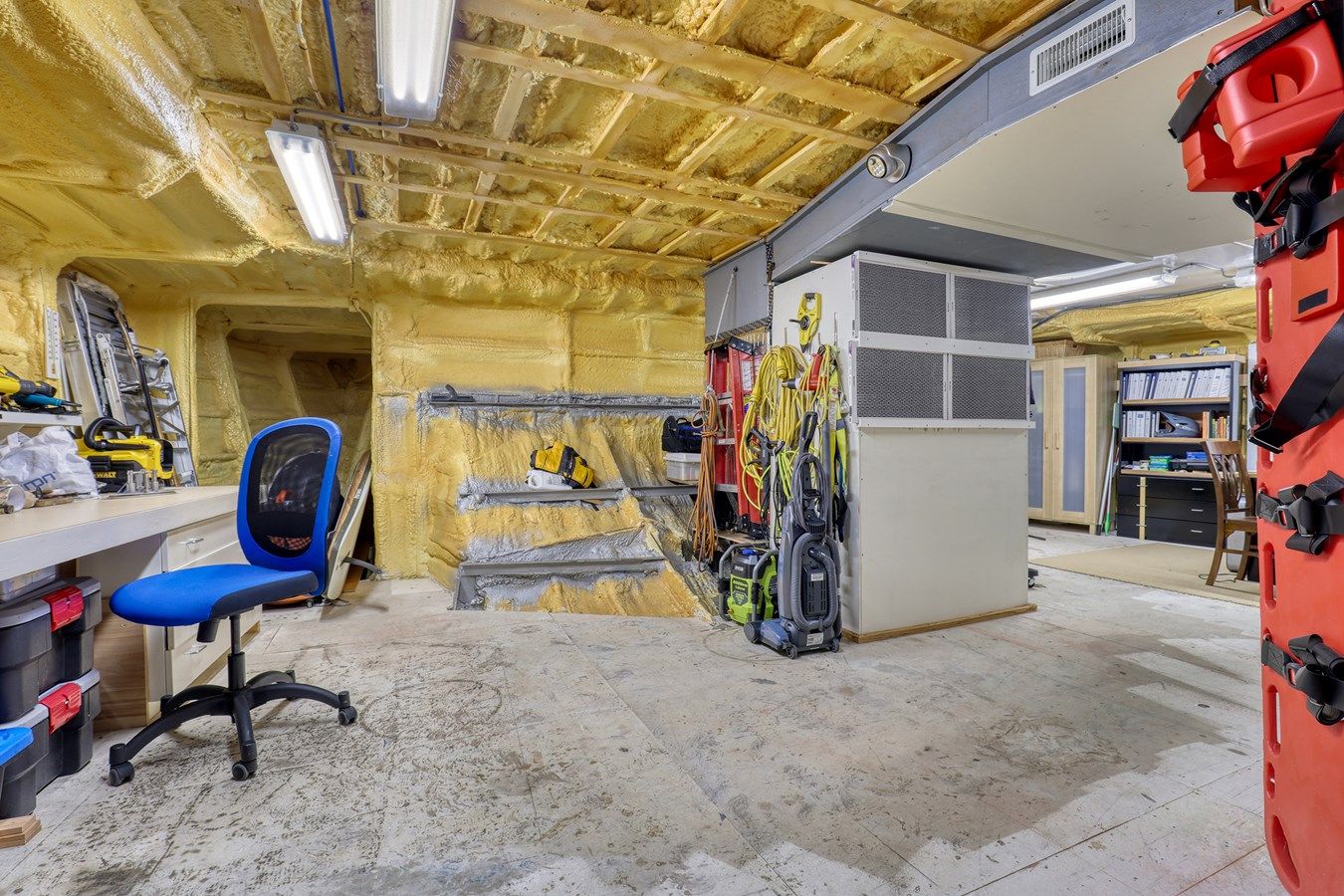
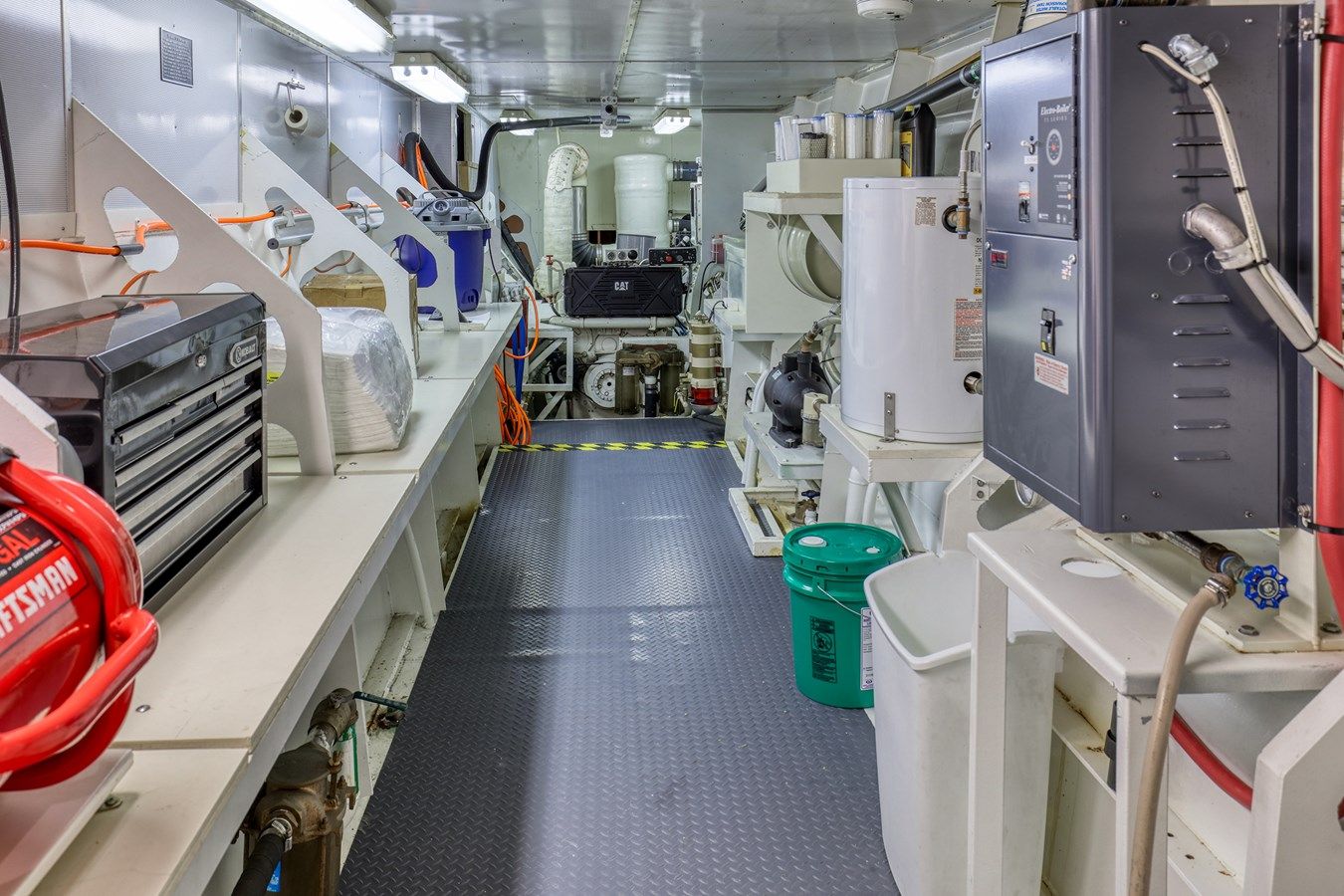
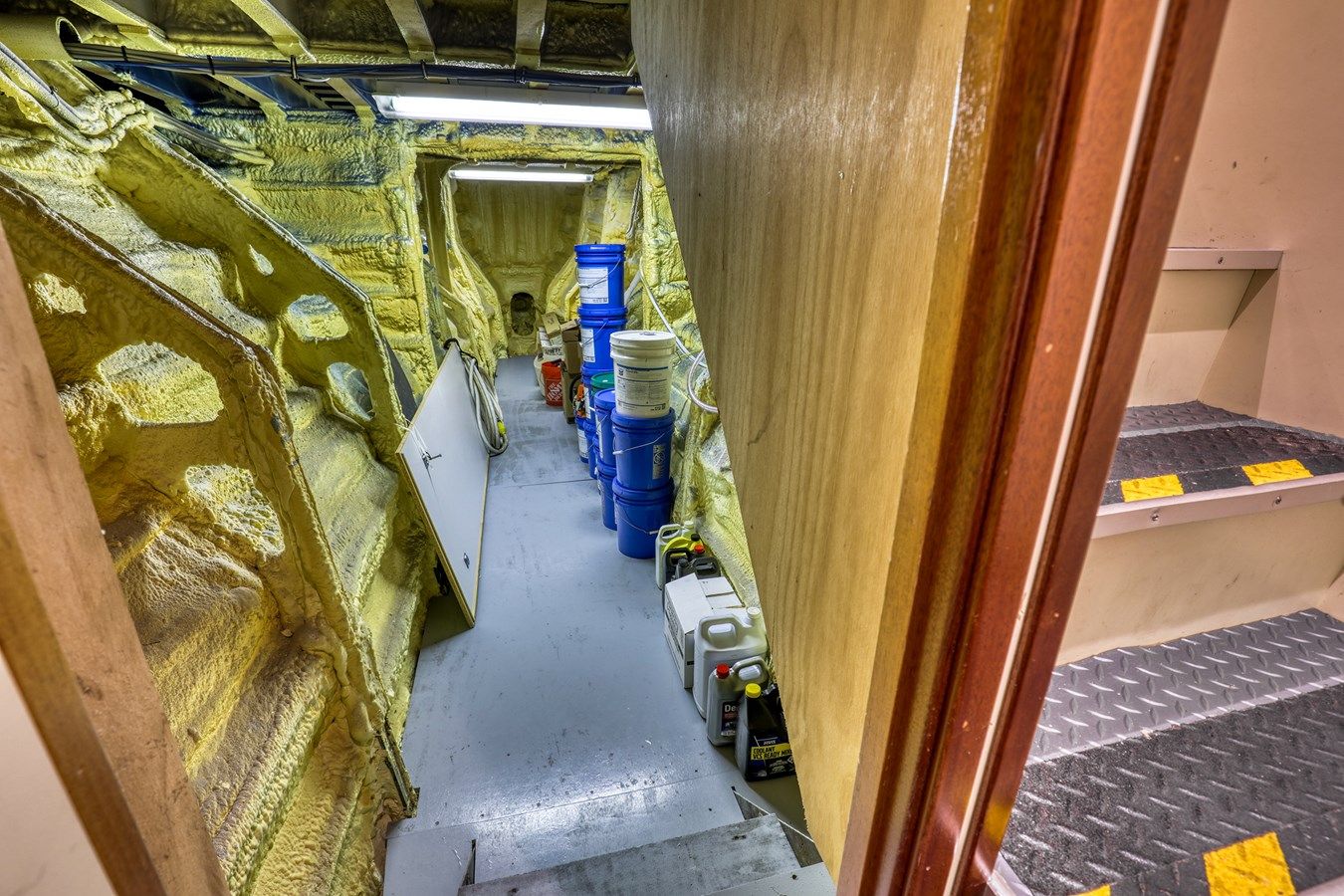
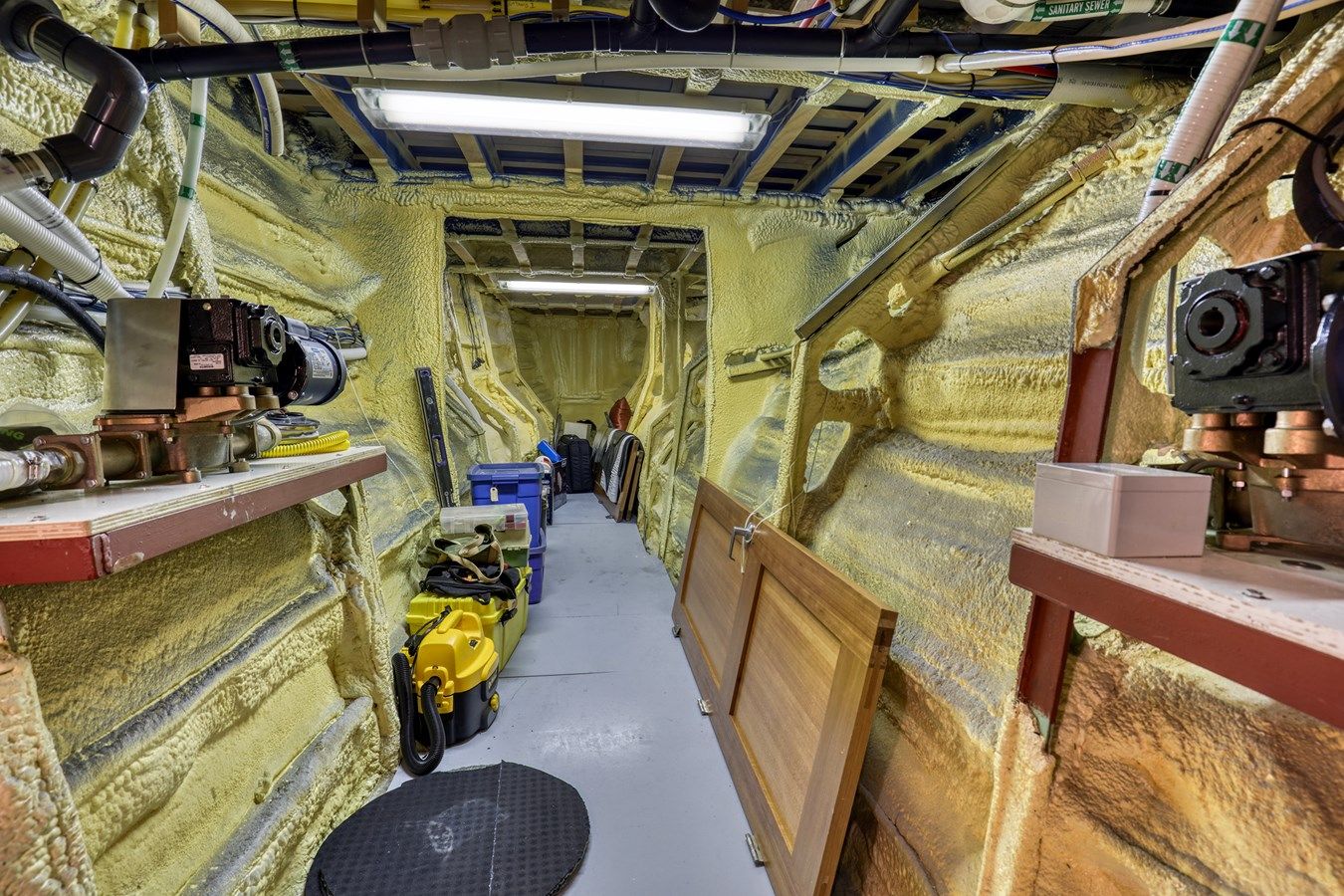
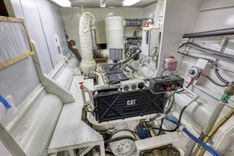
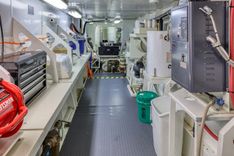
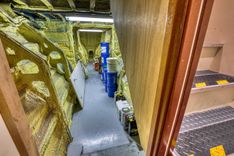
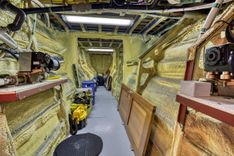
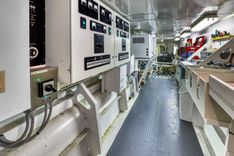
At the forward end of the wing’s V‑cavity, a bulkhead separates the chainlocker beneath a watertight foredeck hatch, while the remainder of the lower V‑cavity is spray‑foam insulated and accessed via hatches from the crew mess and the aft deck. Forward sections of the lower hulls are intentionally left unfinished, with removable plywood panel soles over spray‑foam insulation, and are reached through doors at the stairway landings. These landings also carry aft‑facing watertight doors into the port and starboard engine compartments. Fuel and fresh‑water tanks nest below the engine room soles, with gray and black water tanks situated beneath the port stairway landings. The main engines are set aft within their respective engine rooms. Further aft, watertight deck hatches open into the lazarettes, below which shaft alleys run to fully aft steering gear in each hull.
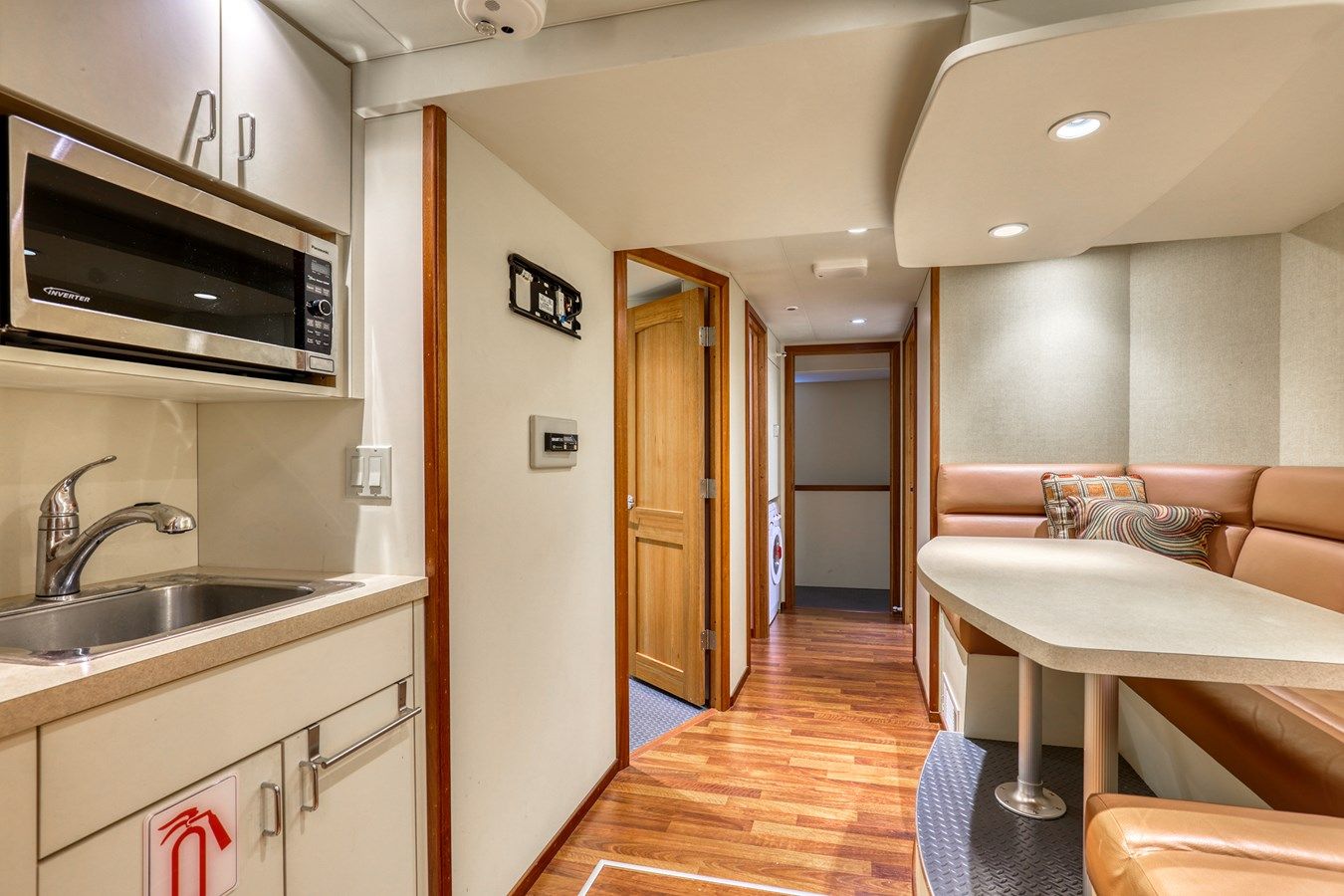
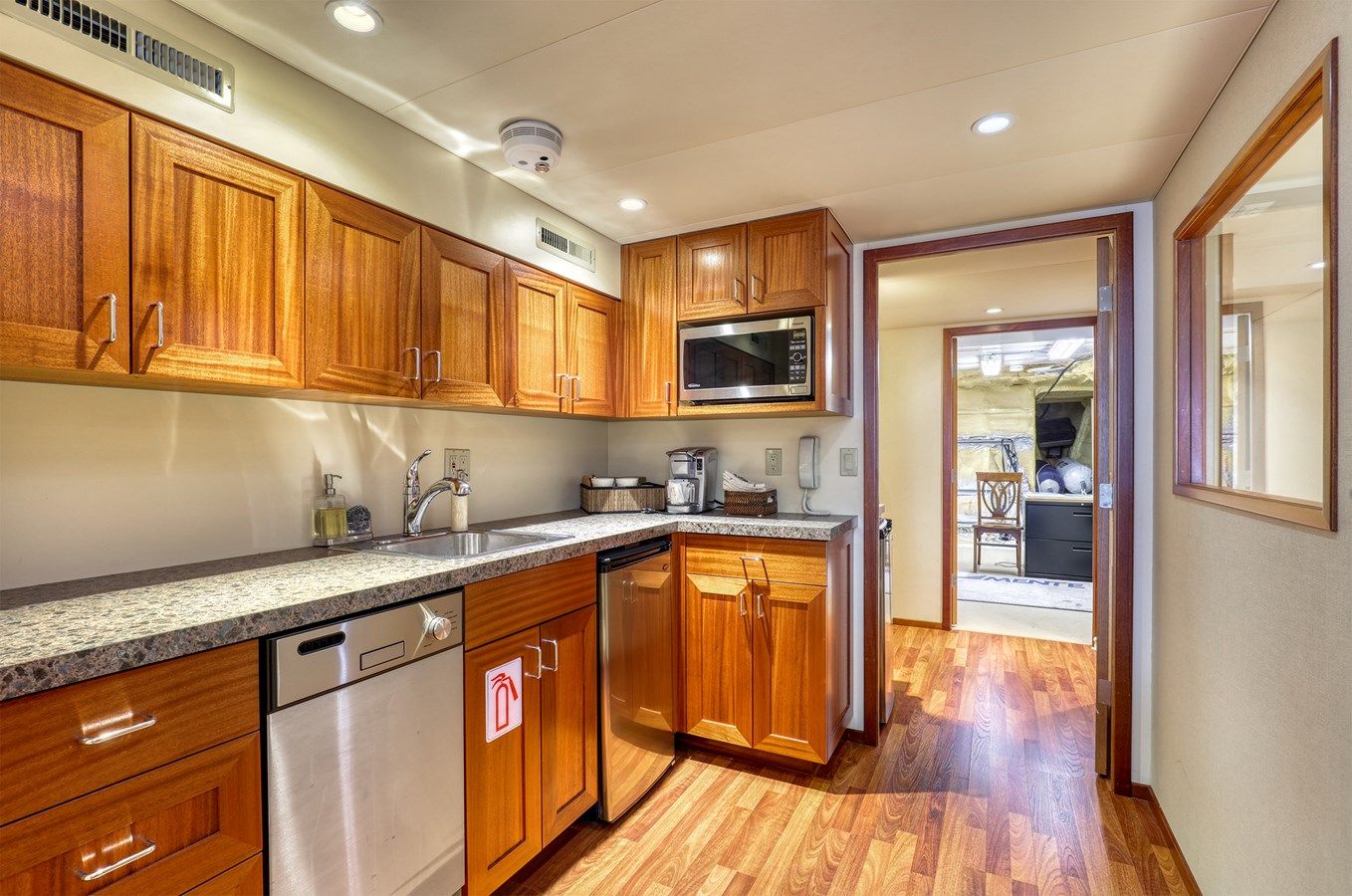
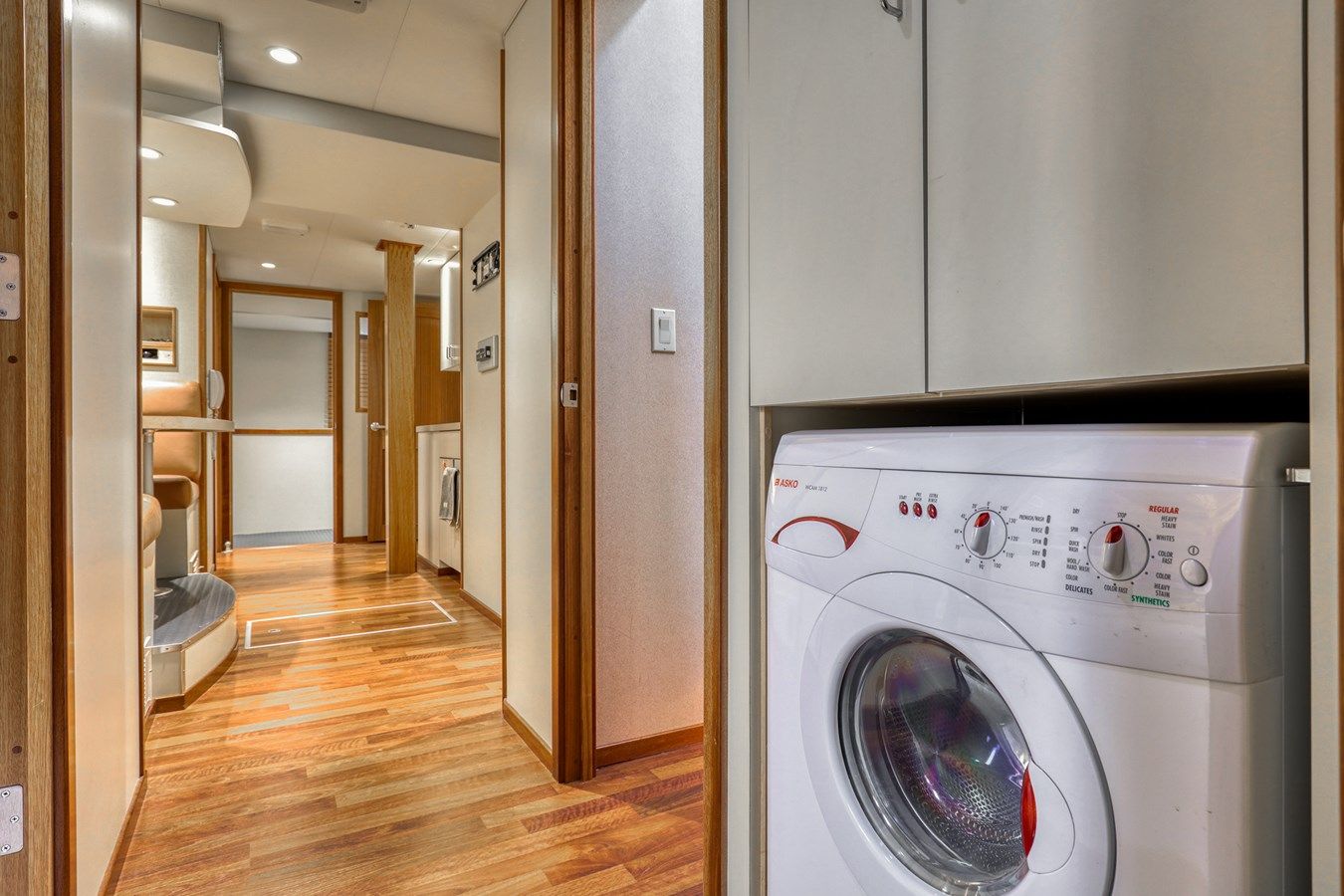
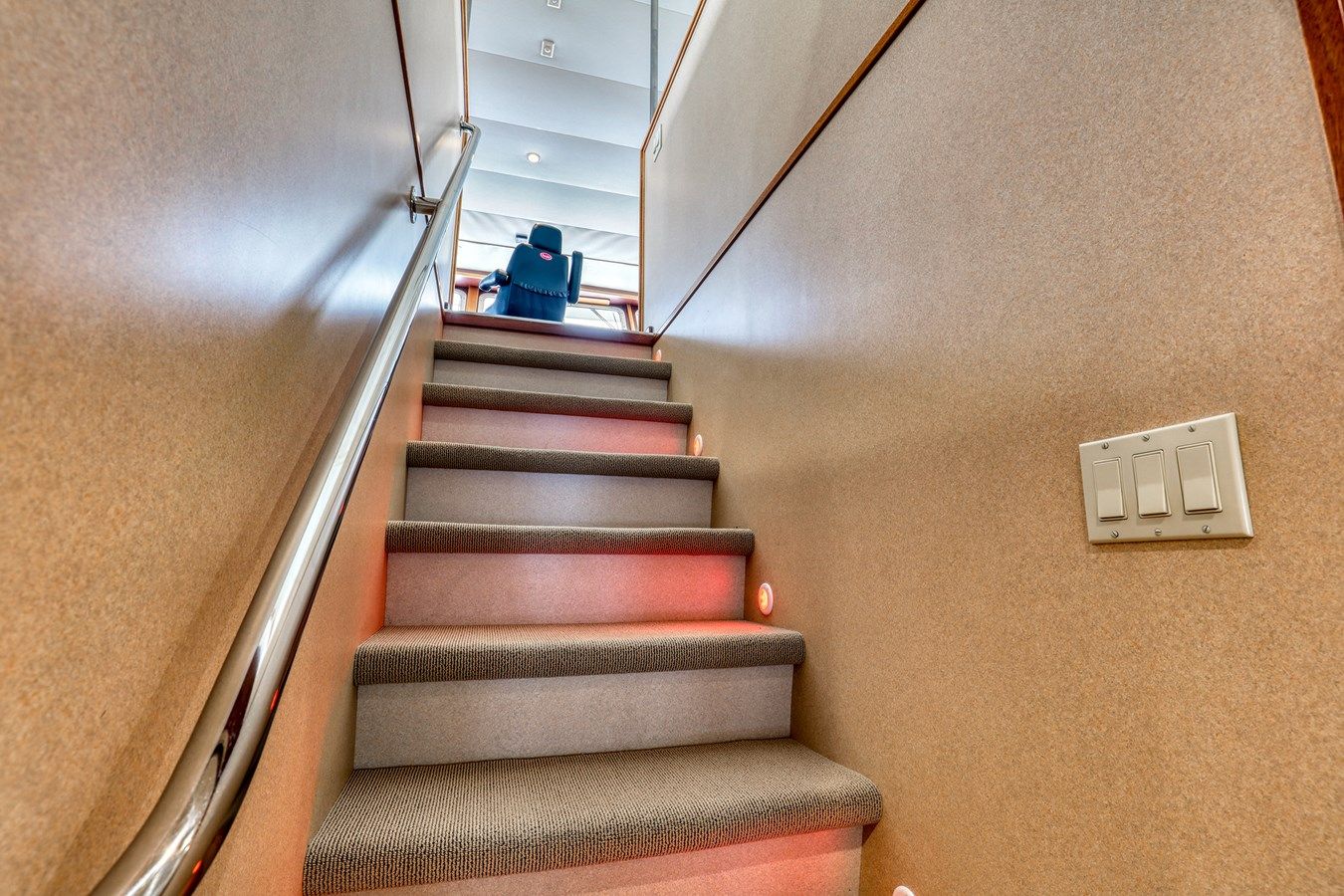
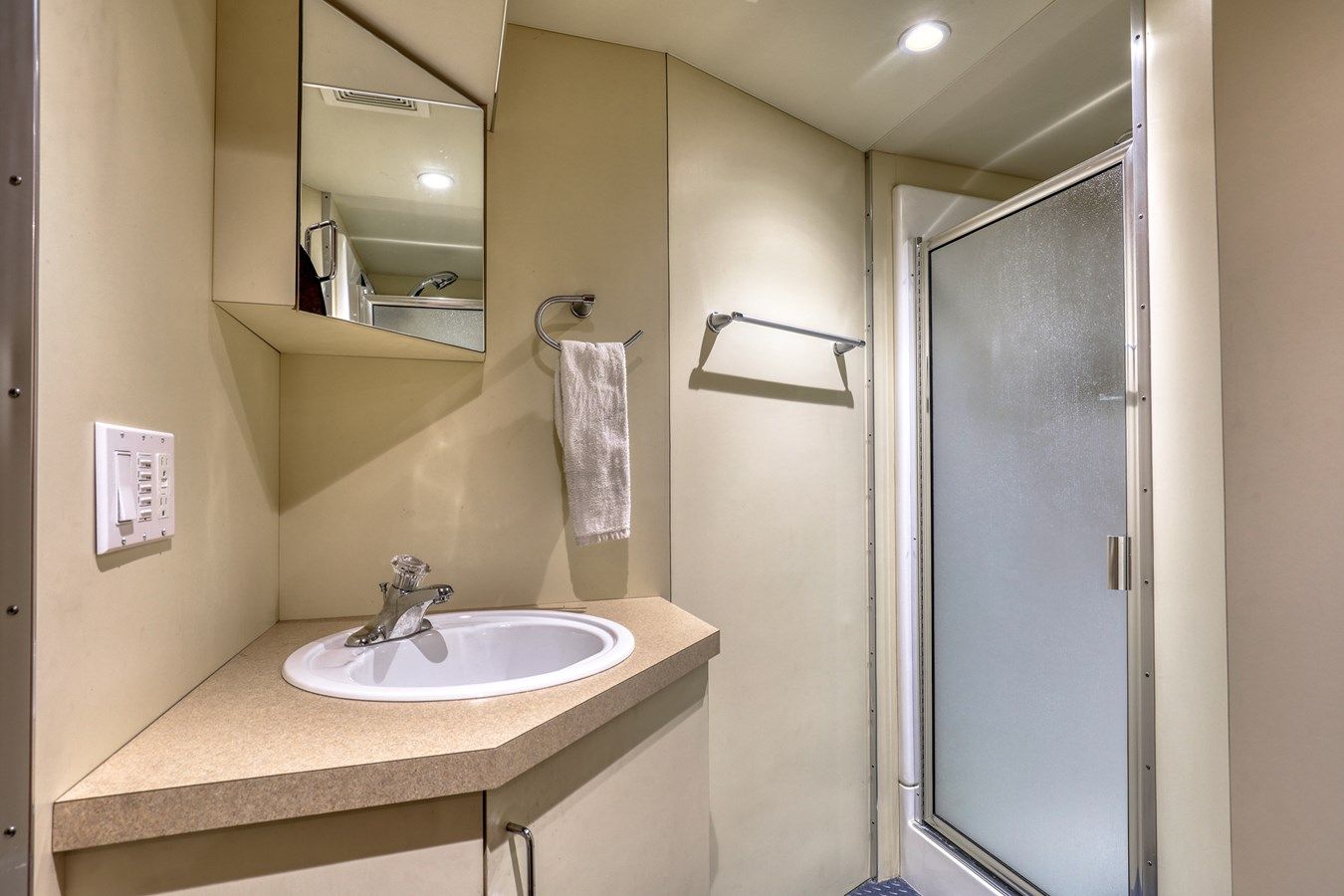
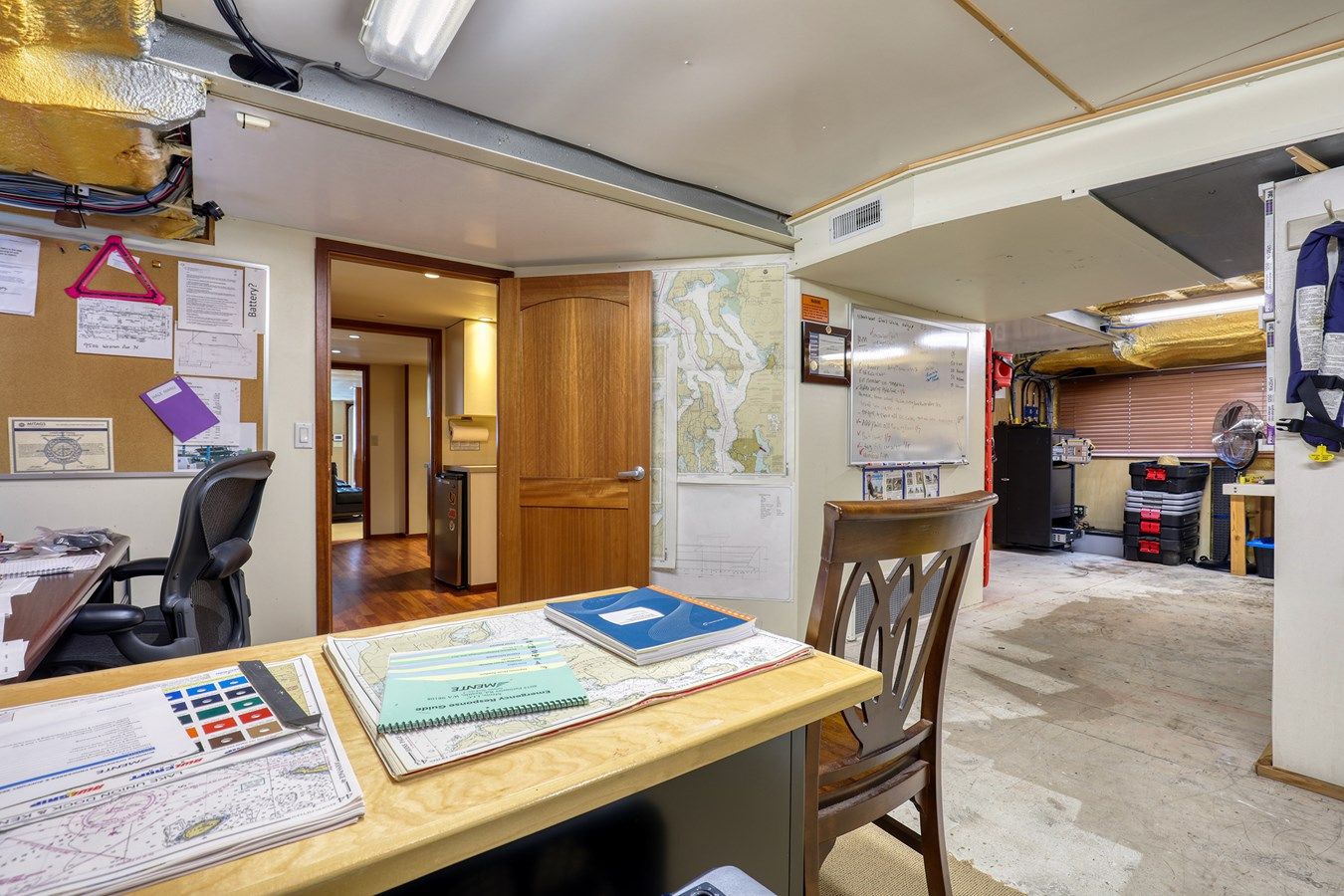
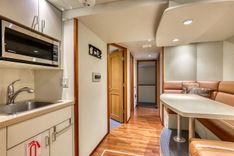
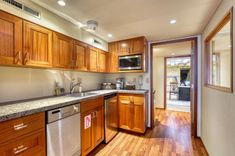
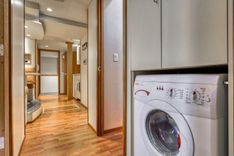
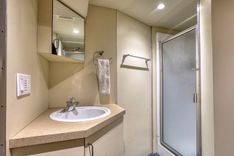
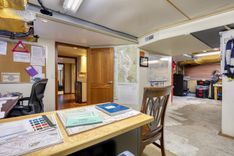
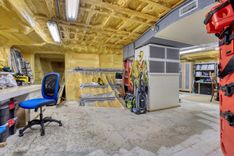
The forward compartment spanning the wing and upper portions of the hulls is a full‑beam, open, unfinished storage space presently arranged as a workroom and office, fitted with port and starboard desks, bookcases, and a central heat‑exchanger and fan array for cabin ventilation and heating. Port and starboard doors lead from here into the crew mess, where a forward dinette welcomes gatherings and a starboard‑aft galley houses a sink, microwave, and refrigerator. To port aft, a door opens to a head with a stall shower, an adjacent locker conceals a washing machine, and a port‑aft stairway rises to the pilothouse. Outboard to port and starboard, doors descend to landings outside the engine room doors. To starboard within the crew mess, an additional door leads into an L‑shaped galley with storage; aft from this galley, a doorway opens into the saloon.
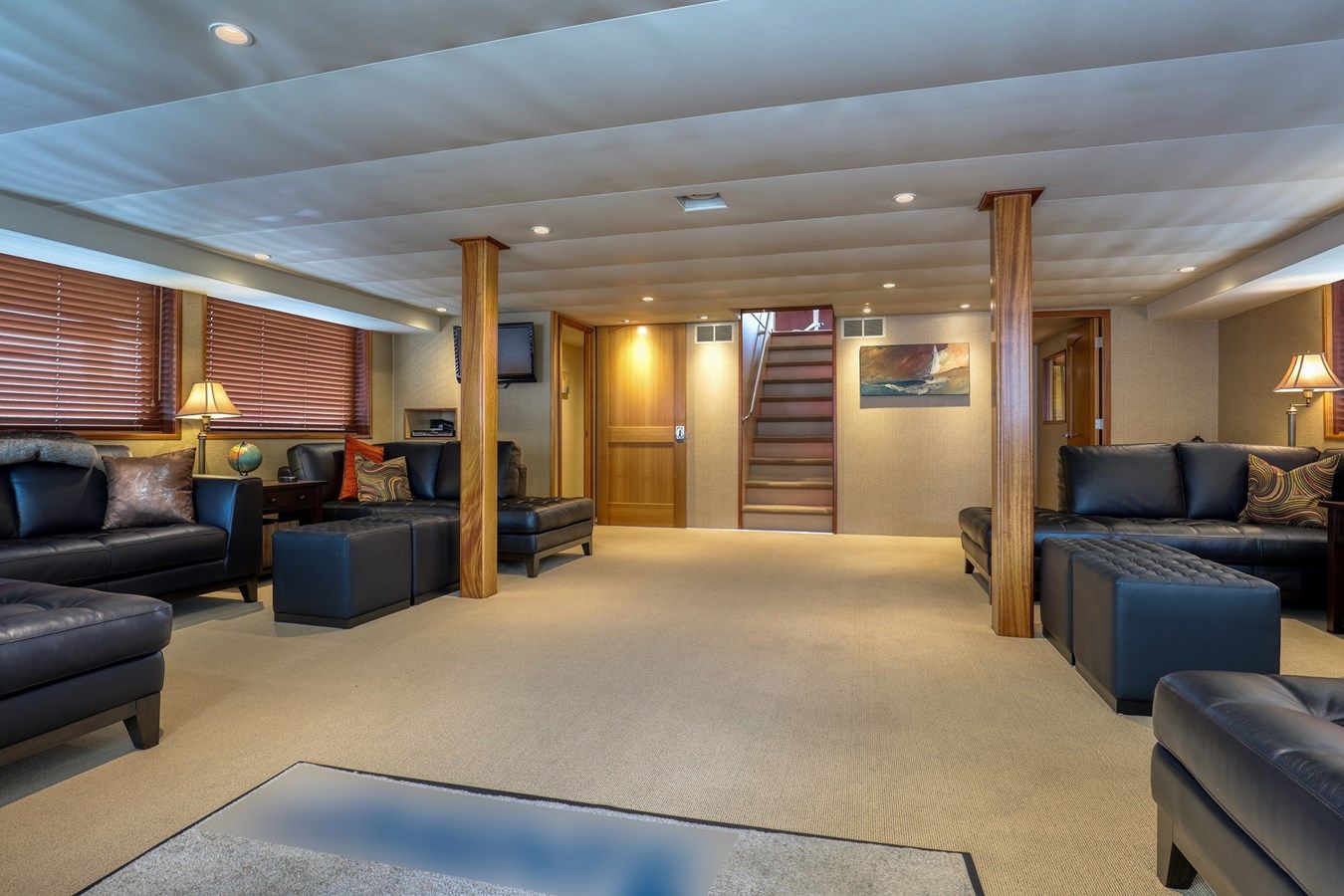
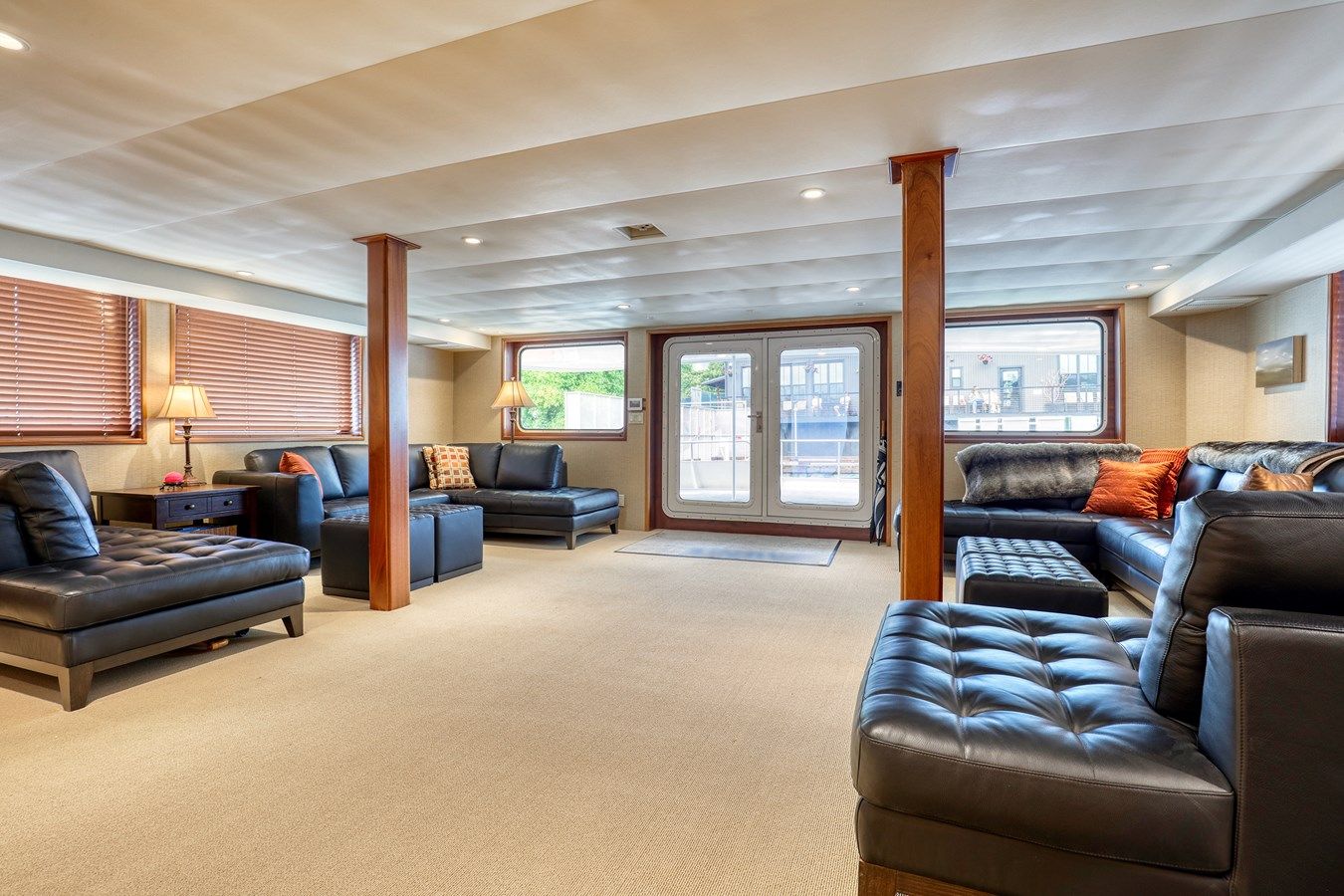
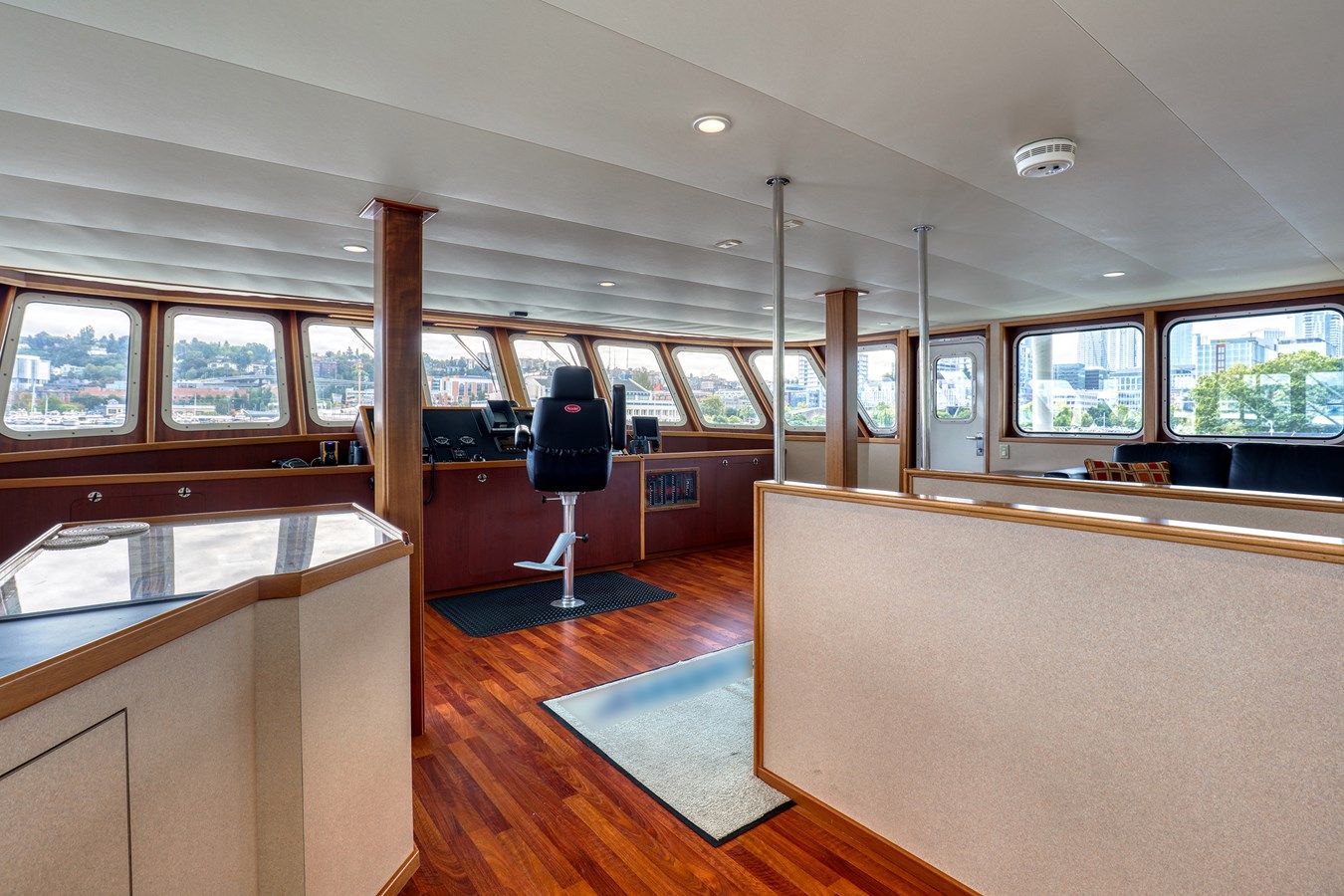
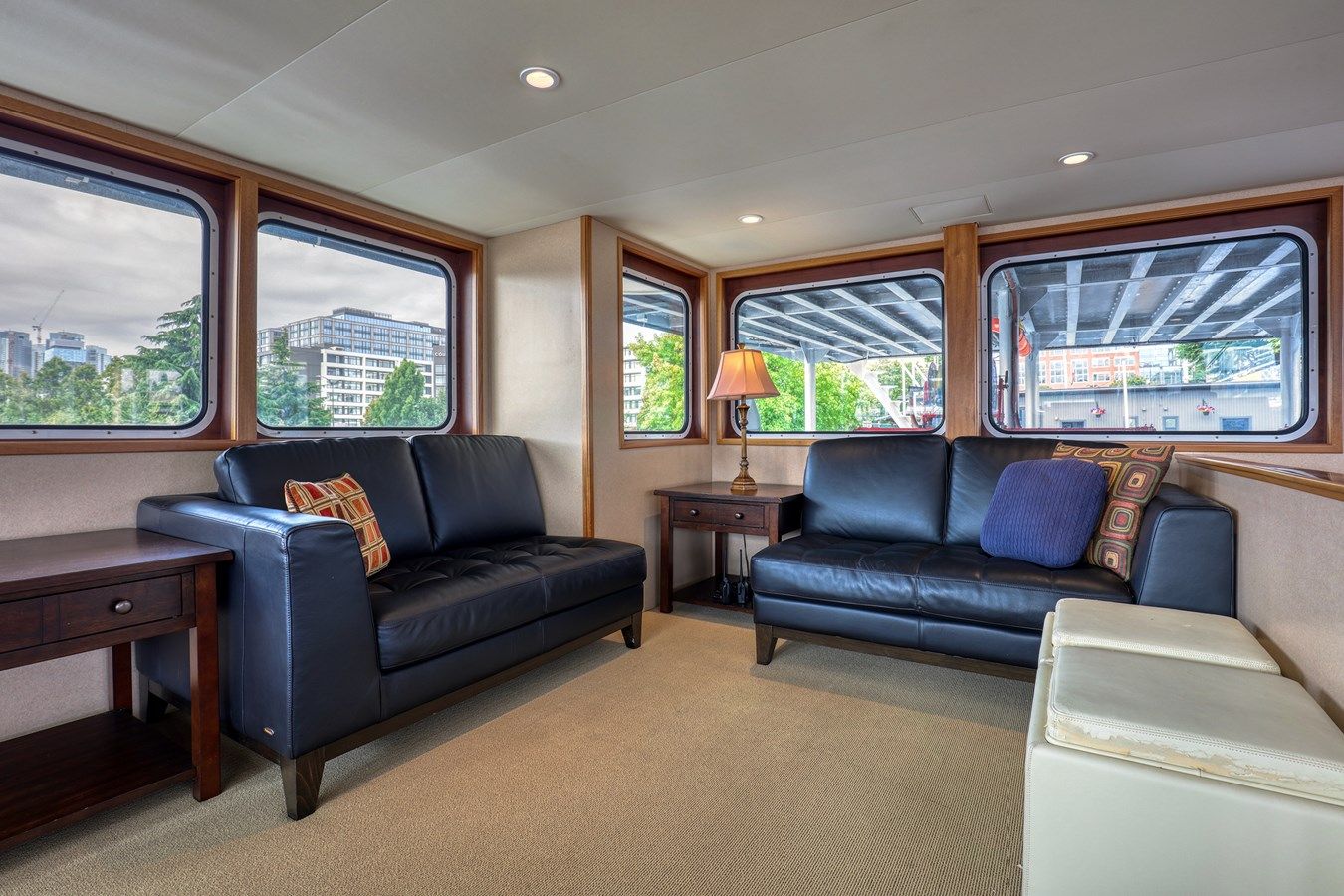
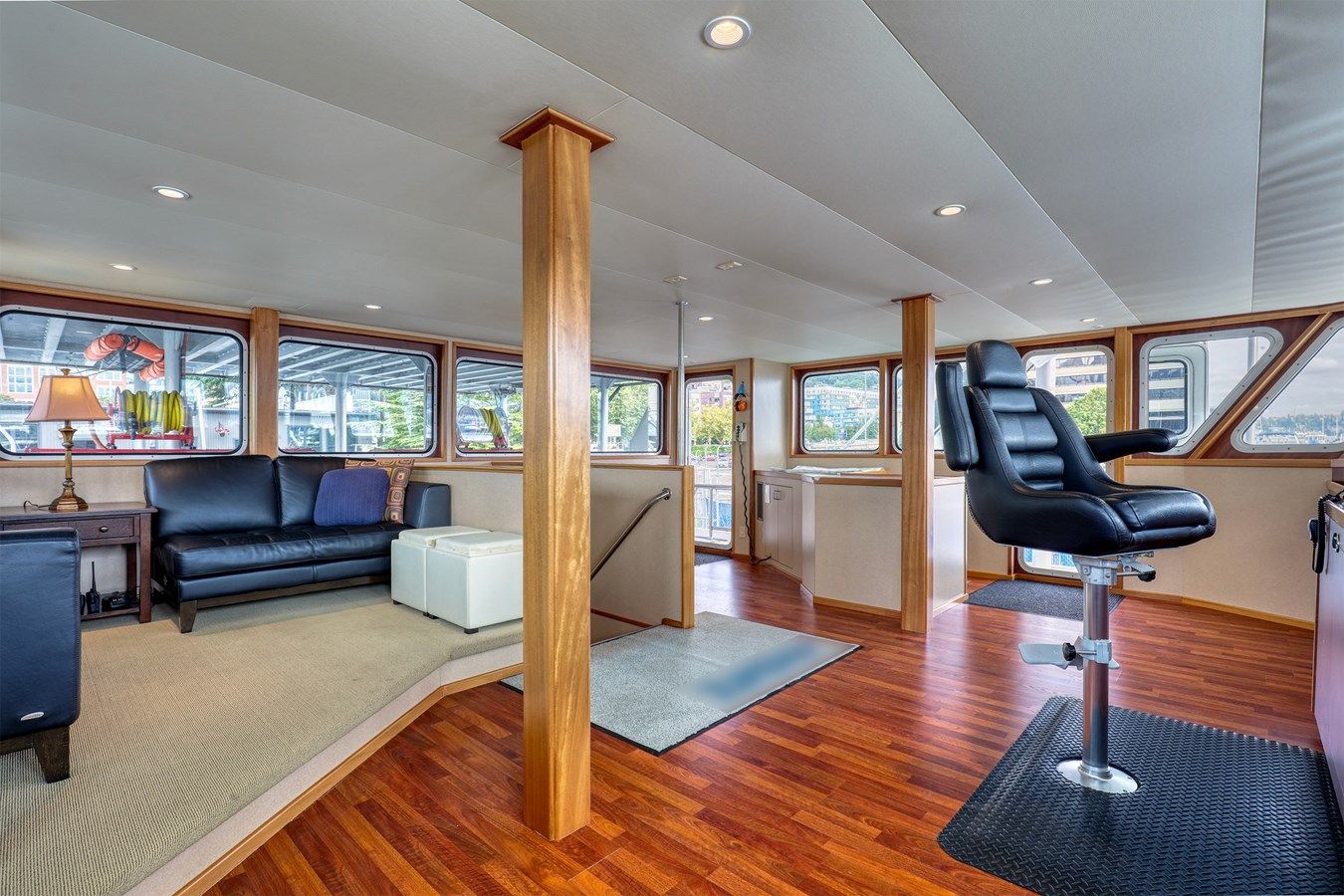
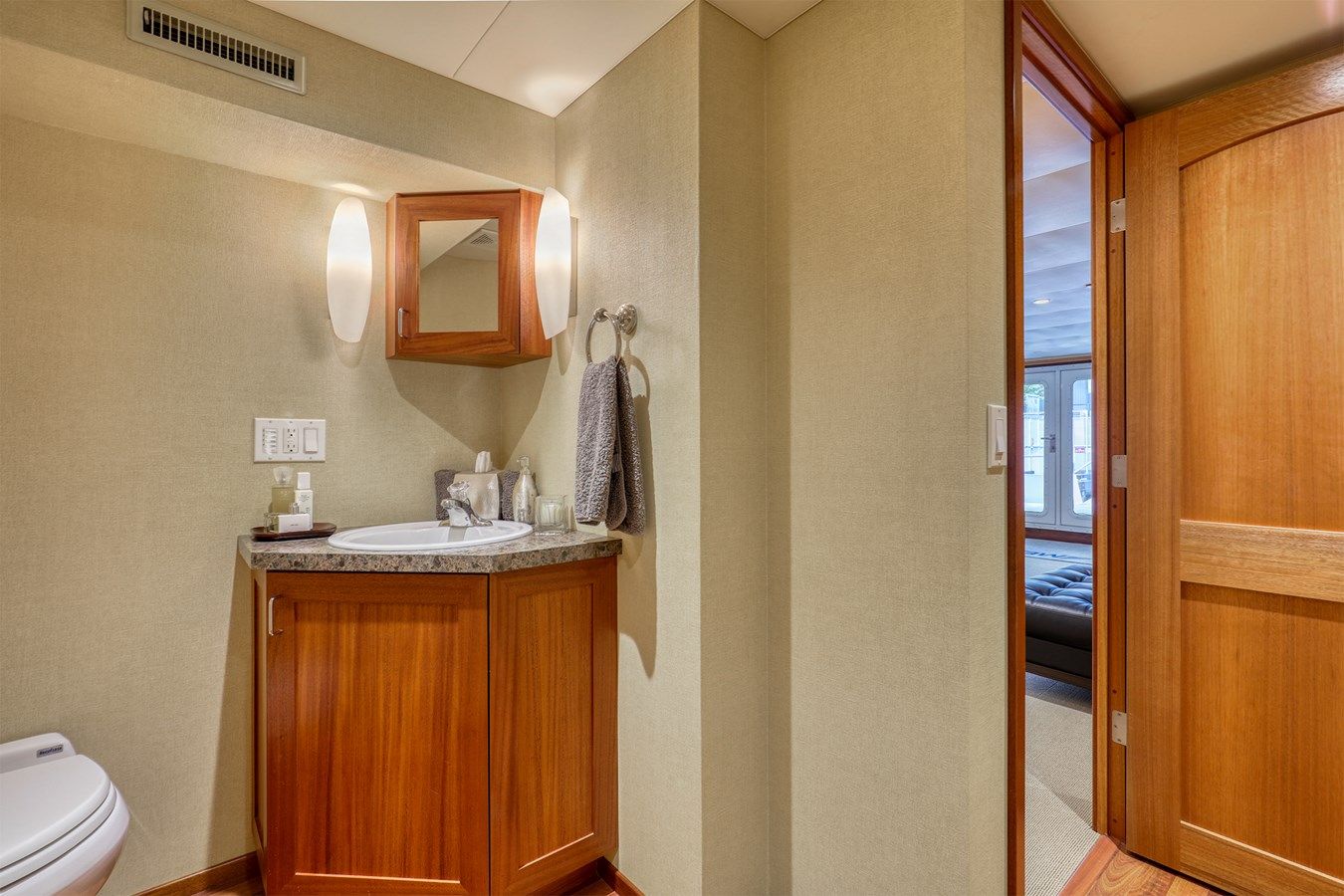
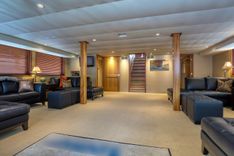
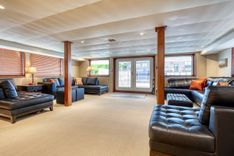
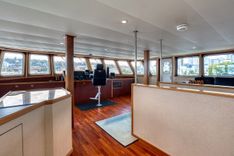
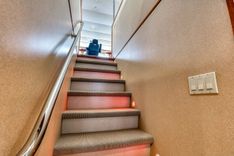
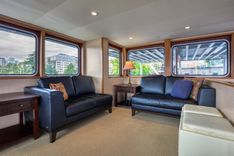
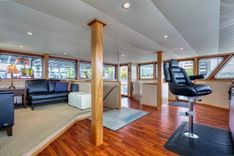
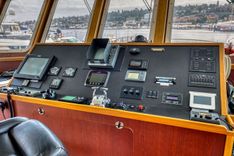
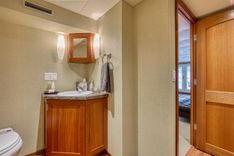
The saloon spans the vessel’s full width, arranged with a central forward staircase to the pilothouse, a port‑forward door to a head, a starboard‑forward desk for ship’s business, and generous port and starboard lounges with side tables, all set before aft doors that open to the aft deck. Above, the pilothouse centers on a pedestal helm seat at the main helm, flanked by port and starboard counters and lockers, a port island chart table with integral storage and a stairwell down to the crew mess, and to starboard aft a raised lounge area with sofas and side tables. Port and starboard doors here give direct access to the upper forward side decks.
Hull
Built by Metalcraft Marine in 2007 as a steel catamaran named Hale Manu, this flybridge vessel measures 92’ in length with a 94’ LOA, carries a waterline length of 83’ 7”, and spans a commanding 30’ beam with a max draft of 6’ 5”. Displacing 240,000 lbs, it is rated at 212 GT ITC gross tonnage and 63 NT ITC net tonnage. The hull structure was fabricated in Tacoma, WA and the completion took place in Seattle, WA. Underway, the design is optimized for an effortless 11–12 knots cruising speed.
Tankage
Long‑range autonomy is ensured by thoughtful capacities, with 4,000 gallons of fuel supporting extended passages, 750 gallons of fresh water for generous onboard living, and a 350‑gallon holding tank to meet environmental requirements.
Engines & propulsion
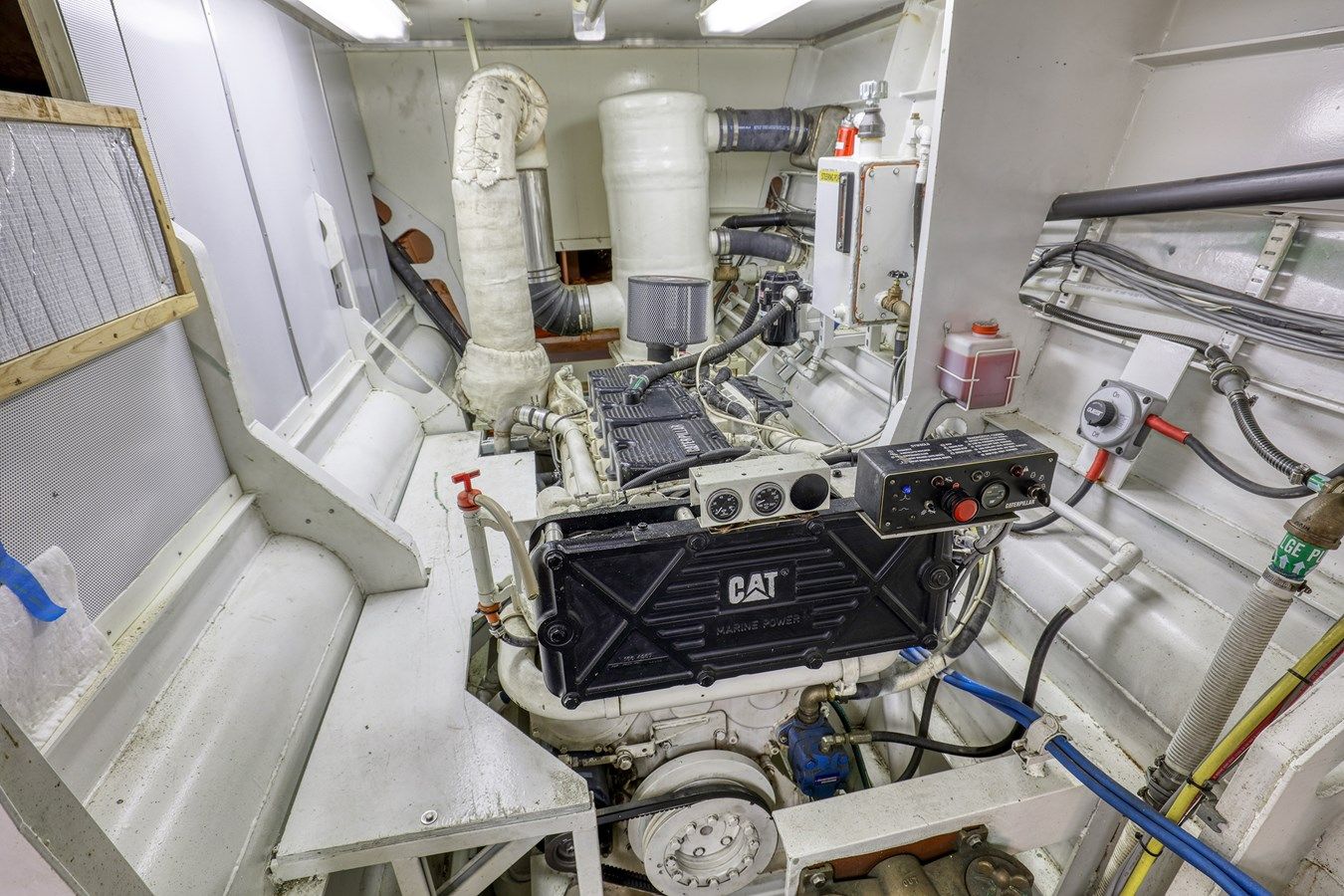
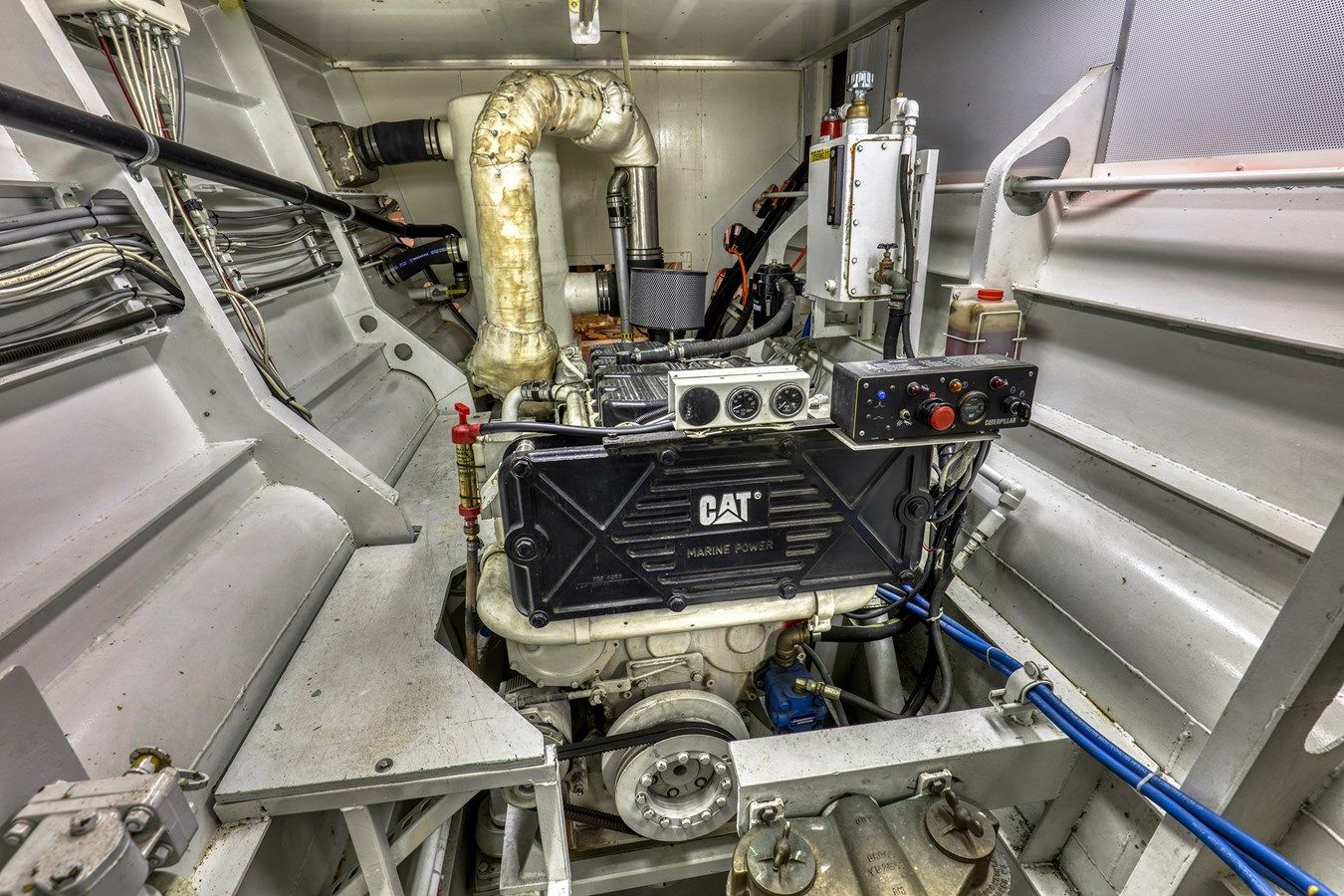
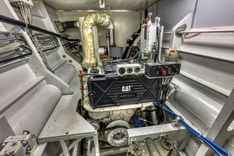
Propulsion is by two Caterpillar 3406E diesel engines, each rated at 600 hp for a combined 1,200 hp, delivering a steady 11–12 knots cruising speed. The engines are fresh‑water cooled via heat exchangers, breathe through dry risers with water injection and separator mufflers for quiet, and are served by AC inlet and outlet blowers for robust compartment ventilation. Power runs through 3” stainless steel shafts, while bronze packing glands in the shaft alleys are serviceable with the vessel afloat, underscoring practical maintainability.
Steering system
Command inputs are crisply managed through a Simrad FU 25 jog lever, with steering available from the pilothouse and wing stations for supreme visibility when maneuvering. Engine‑driven hydraulic power steering actuates two rams on each rudder post tiller arm, and traditional packing glands serve as the stuffing box solution for reliable service.
Exterior equipment
Ground tackle is handled by a Muir vertical hydraulic windlass, while low‑speed precision comes from Key Power bow and stern thrusters installed in each hull, each unit twelve inches in diameter and rated at 25 hp. On deck, hydraulically actuated aluminum upper‑deck railings transform at the touch of a button, and two foam fire systems stand ready for rapid response.
Bilge
Safety below the waterline is reinforced by eight 24 VDC submersible bilge pumps, each switchable for automatic or manual operation, giving redundancy and control across the vessel’s compartments.
Waste system
A thoughtful sanitary layout features two freshwater‑flush Vacuflush heads, a 300‑gallon stainless steel holding tank driven by a one‑half‑horsepower electric vacuum pump and a one‑half‑horsepower pump‑out pump with a deck pump‑out plate, and a stainless steel gray‑water tank that shares the same pump‑out pump and deck plate via Y‑valves for seamless switchover.
Heating & air conditioning
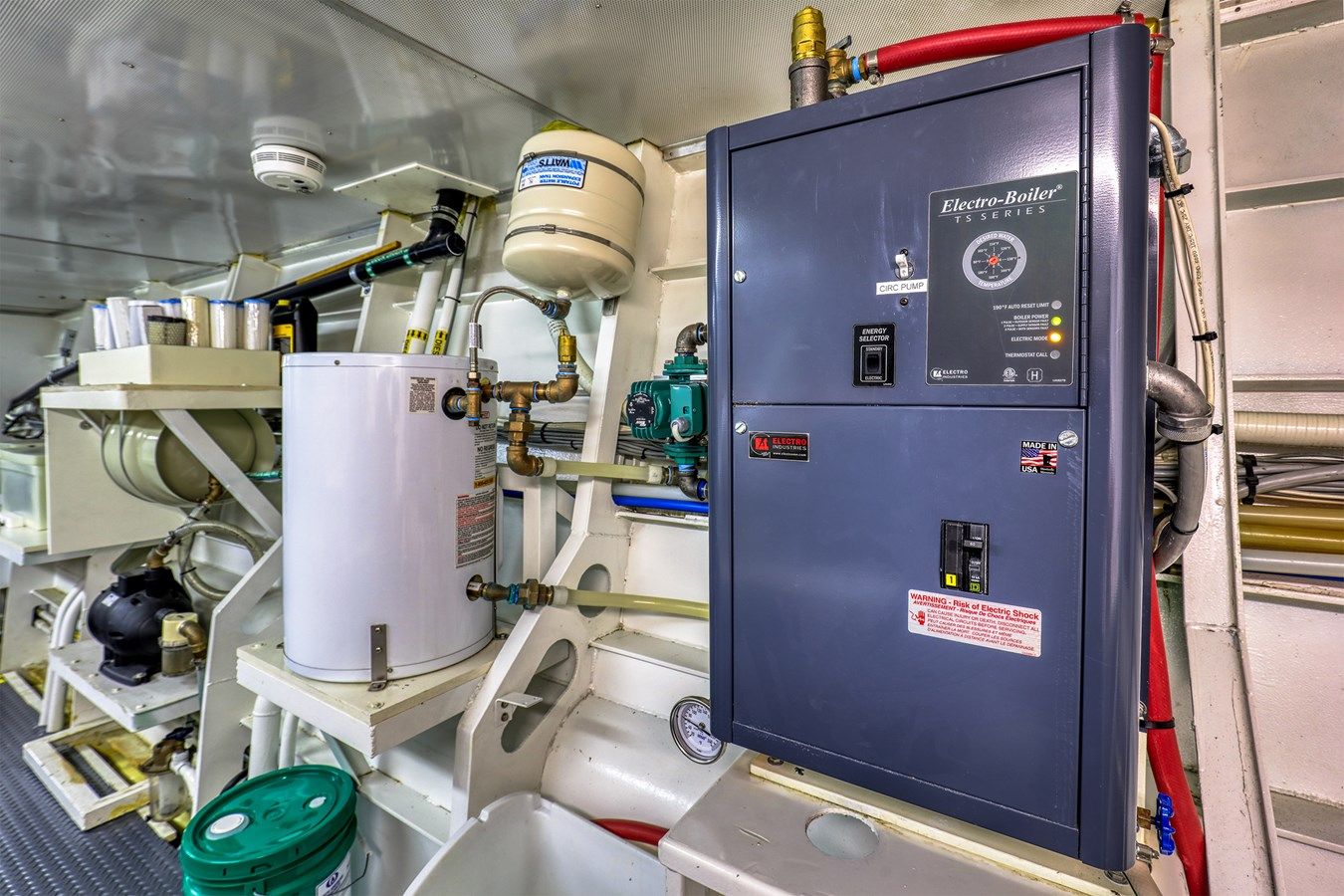
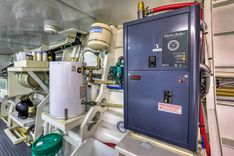
Year‑round comfort is delivered by an Ocean Breeze OB120CH system working in concert with a Kabola B35 diesel‑fired boiler or an AC electric heater to produce hot water for the heat‑exchanger network, balancing efficiency, silence, and dependable thermal performance.
Electrical system
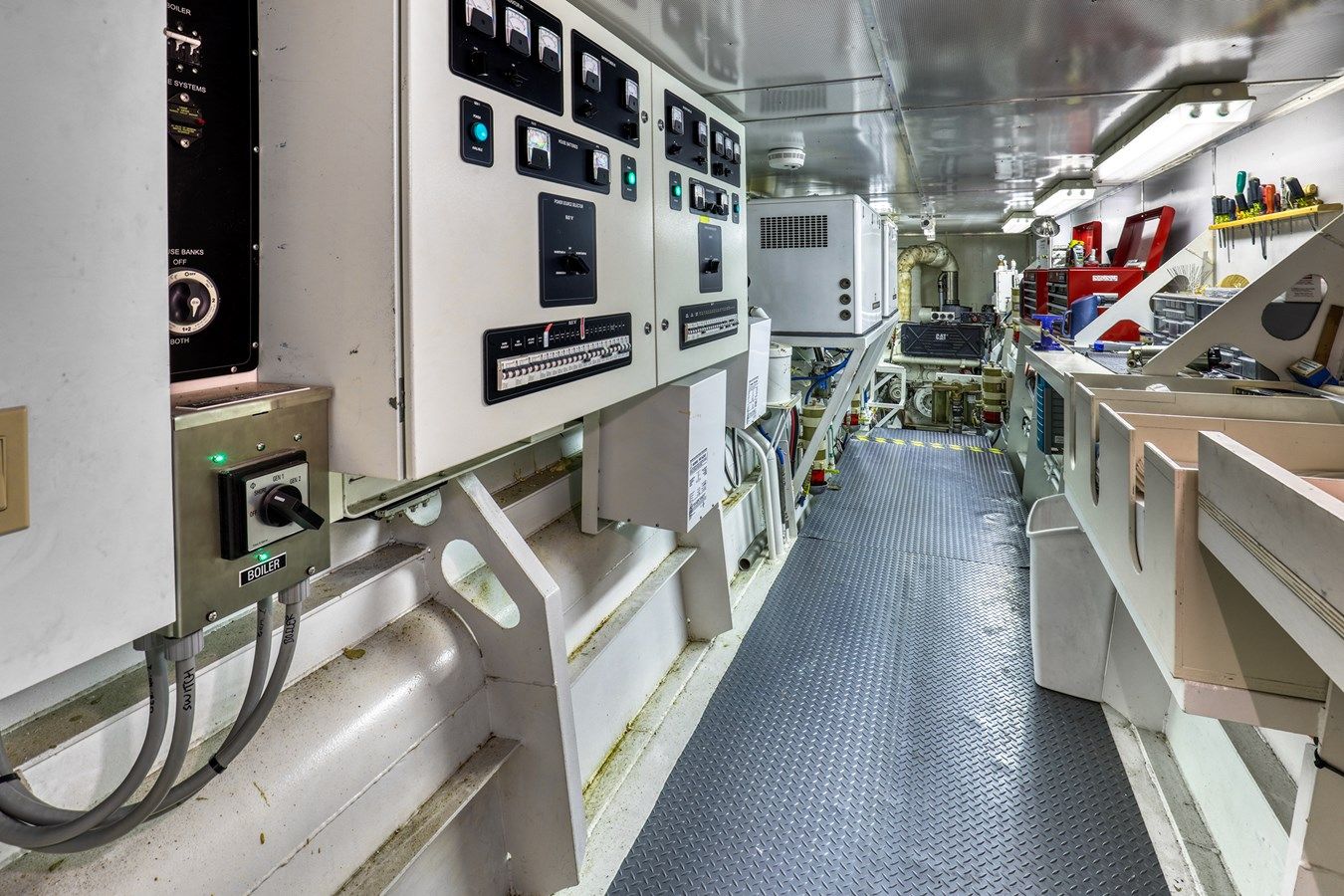
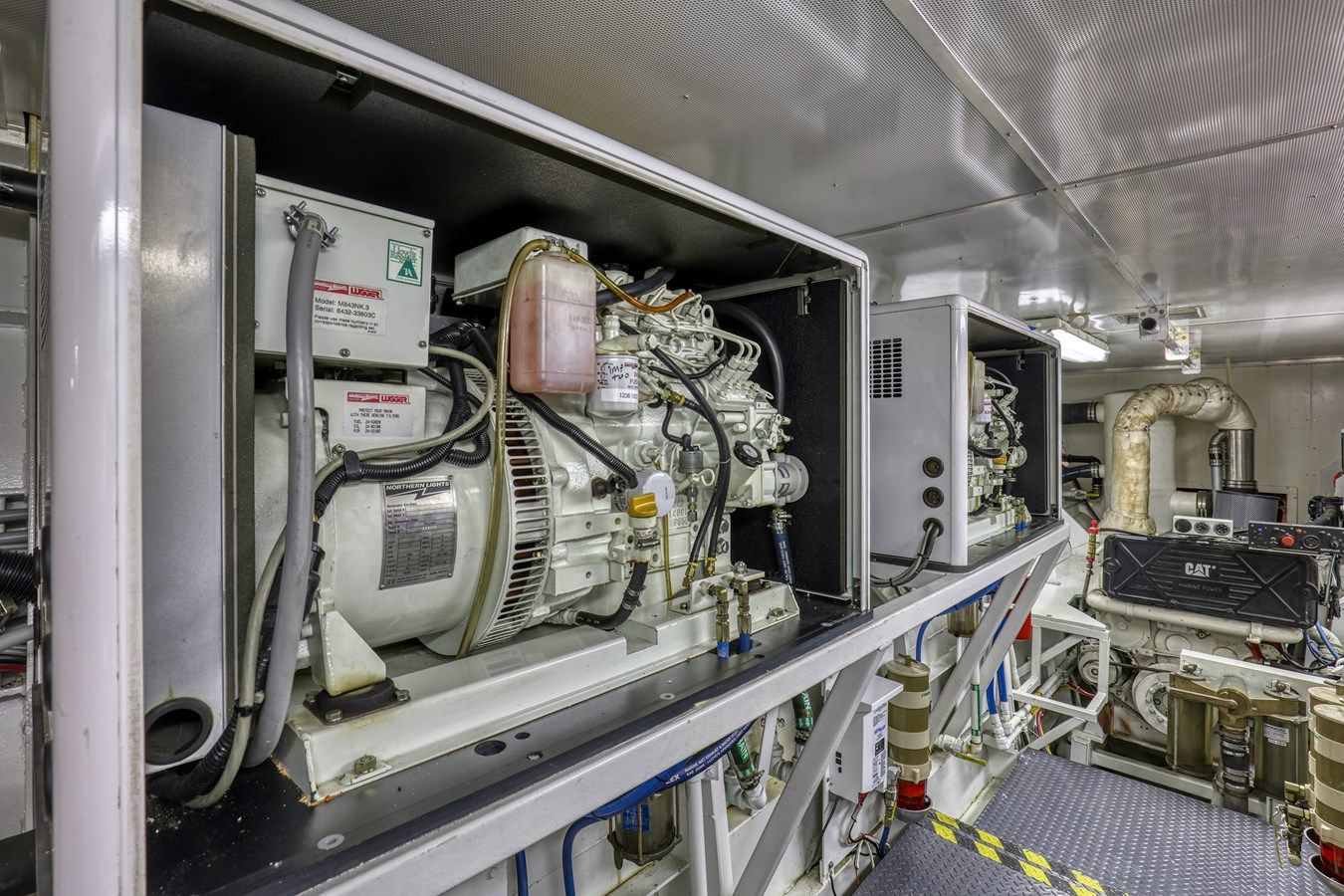
Robust DC architecture begins with two pairs of two wet‑cell 8D batteries dedicated to 24 VDC engine starting, complemented by two Full River DC215‑12 AGM batteries forming the 24 VDC service bank. An additional single 8D wet‑cell battery supports 12 V emergency electronics in the pilothouse, while two Lifeline Group 31 AGM batteries serve the 12 V generator start bank and two West Marine Group 31 AGM batteries power the engine controls. Both 12 V and 24 V systems are fitted with a main disconnect and proper grounding, with DC circuits protected by fuses and breakers and wired in insulated copper. On the AC side, breakers and insulated copper wiring uphold standards, and shore power is accepted via two 50 A 125/250 V connections. Charging is ably managed by two Mastervolt Chargemaster 24/100‑3 units, one Phase Three PT 14W for generator and engine control batteries, and a Newmar ABC 12‑8 for the emergency battery. Additional resilience comes from the engine alternators and Newmar 115‑12‑8 and 32‑12‑24 power supplies. Auxiliary generation is handled by two Northern Lights M843NK/3 diesel generator sets, fresh‑water cooled and silenced by waterlift/waterdrain mufflers.
Fire extinguishers
Handheld protection is comprehensive, with two BII‑rated dry chemical extinguishers and three BI‑rated dry chemical units distributed for rapid access. For large‑area response, two Foam Tote 120 systems are installed on the upper aluminum deck with fixed release nozzles and hose reels for confident handheld application.
Galley equipment
Culinary service is streamlined by two Panasonic microwave ovens—one in each galley—anchored by a GE Monogram dishwasher in the starboard galley and complemented by a pair of Sanyo refrigerators, ensuring generous cold storage and swift meal prep for crew and guests alike.
Navigational equipment & electronics
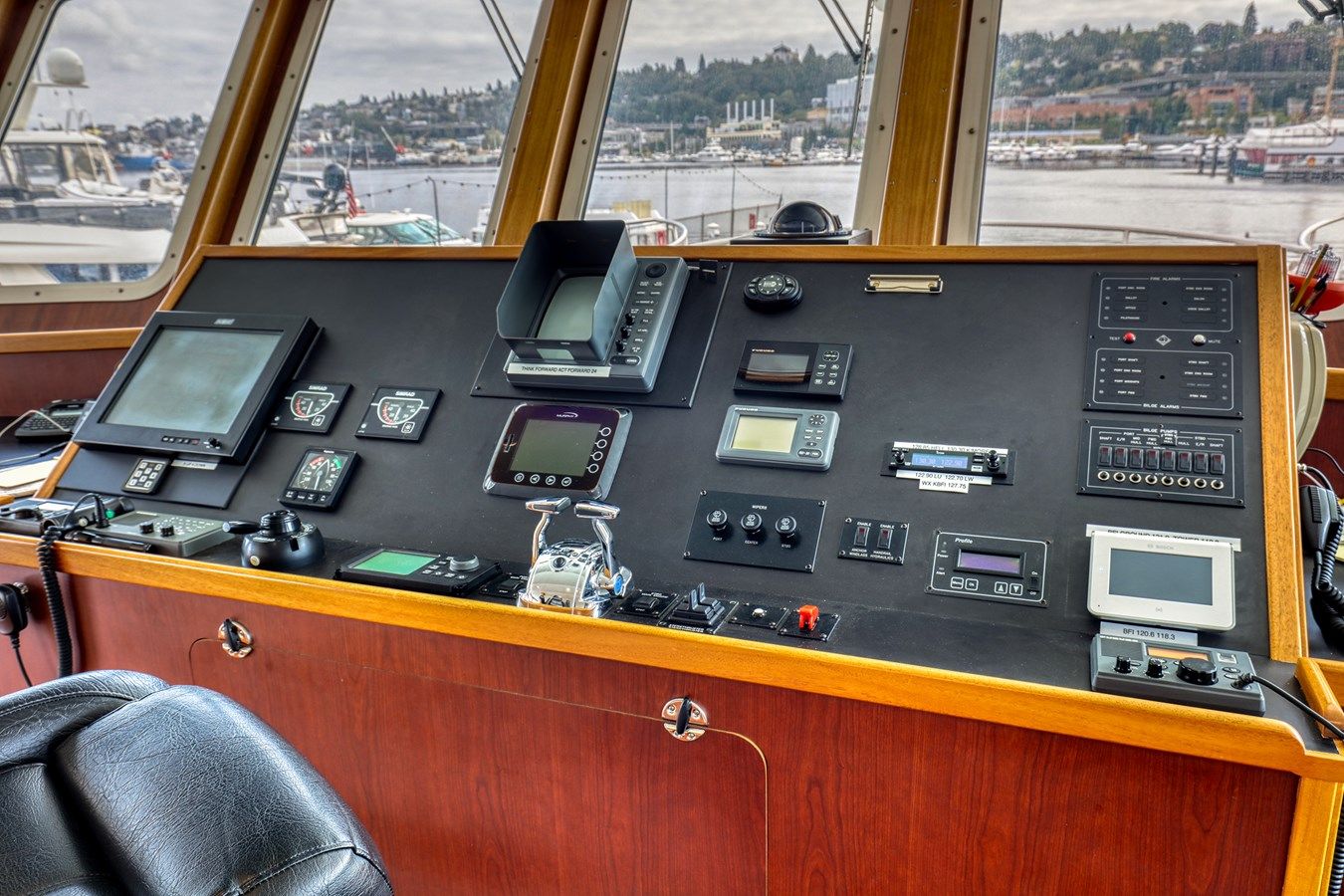
Piloting confidence stems from a Ritchie 5” compass, a Simrad AP25 autopilot, and a Furuno RD‑30 depth sounder, while communications are handled by two Furuno VHF radios augmented by an Icom IC‑A210 aircraft VHF. Traffic awareness comes via a Raymarine AIS250, with a Furuno 1832 radar painting the picture ahead. Speed is tracked by GPS and voyage progress by plotter. An integrated technology suite includes a 15” Big Bay CCTV monitor, Raymarine ST40 Wind, two Simrad R135 rudder angle indicators, a Furuno LH300 loud hailer, and a Helmview video engine instrument panel. CCTV cameras cover both engine rooms, the upper aluminum deck, and port‑side upper and lower aft views for all‑around situational awareness.
Ground tackle
Anchoring assurance is provided by an 80 kg Claw anchor set on a 1/2” G4 galvanized chain rode, with its bitter end secured to the vessel by nylon line for safety and compliance.
Additional equipment
Safety and utility abound, with a Viking eight‑person canister liferaft, two 30” life rings fitted with floating strobes, two fire axes, and twelve Type 1 PFDs. A Switlik MOM 8A man‑overboard module and an ACR 406 EPIRB stand ready alongside current flares, while a starboard stern swim ladder invites the water. Medical preparedness is exemplary with a gurney, comprehensive first‑aid packs including an OSHA 1926.50 unit for up to thirty‑six people, and a defibrillator system. Traditional seamanship details include an 8” brass bell. Fuel management is professional grade with an AC fuel transfer pump and dual 73/1000 Racor fuel filters. Boarding is gracious via a Marquipt Sea Stair aluminum stairway. Entertainment and comfort are enhanced by a 32” Sharp Aquos TV with Sharp BDHP20 disc player in the saloon, a second 32” Sharp Aquos TV in the crew mess, and a Dual MXDMA65 stereo in the crew mess, while laundry is handled by an Asko WCAM 1812 washing machine. Precision docking comes naturally at the port and starboard wing control stations, each fitted with Simrad FU25 jog steering, ZF engine/shift controls, RI35 rudder angle indicators, bow and stern thrusters, and engine start/stop buttons. Security and monitoring are comprehensive with a Bosch intrusion alarm system, a Profile tank‑level monitoring system, and a smoke alarm network with pilothouse display covering the port and starboard engine rooms, galley, crew galley, saloon, and office. High‑bilge alarm systems protect each of the eight bilge pump locations with status displayed in the pilothouse. In the port engine room, a Craftsman air compressor delivers 125 pounds per square inch from a one‑horsepower motor and a five‑gallon tank. Night operations benefit from a Jabsco searchlight with remote control. Engine‑room detailing includes 24 VDC priming pumps for the generator fuel systems, dual sea strainers on each main engine, and an electric boiler system for efficient heat management.
Specifications
- Length:
- 92' (28.04m)
- Beam:
- 30' (9.14m)
- Year Built:
- 2007
- Builder:
- METALCRAFT MARINE
- Category:
- Motor yachts
- Engines:
- 2 engines Caterpillar
- Cruise Speed:
- 11 Kts.
- Location:
- United States



Yacht name «Hale Manu» – METALCRAFT MARINEis for sale and located in Seattle, United States
Motor yachts «Hale Manu» built by manufacturer METALCRAFT MARINE in 2007— available for sale. Yacht location: United States. If you are looking to buy a yacht «Hale Manu» or need additional information on the purchase price of this METALCRAFT MARINE,
please call: +1 (954) 274-4435 USAOnly deal with professionals!