
 Licensed Yacht BrokersYachts for Sale
VESPER - PERSICO MARINE FOR SALE






Basic information
- Builder:
- PERSICO MARINE
- Category:
- Sail yachts
- Sub Category:
- Racing Sailboat
- Model Year:
- 2014
- Year Built:
- 2014
- Country:
- France
Dimensions
- LOA:
- 72' (21.95m)
- LWL:
- 66' (20.32m)
- Beam:
- 18' (5.75m)
- Min Draft:
- 17.55' (5.35m)
- Max Draft:
- 18.05' (5.50m)
Speed, capacities and weight
- Cruise Speed:
- 8.40 Kts. (9.67 MPH)
- Max Speed:
- 30 Kts. (34.52 MPH)
- Gross Tonnage:
- 38.37 Pounds
- Water Capacity:
- 2.64 Gallons
- Fuel Capacity:
- 50.19 Gallons
Hull and deck information
- Hull Material:
- Fiberglass and Plastic Yachts
- Deck Material:
- Carbon Fiber
- Hull Configuration:
- Fin & Bulb
- Hull Color:
- Green
- Hull Designer:
- Judel Vrolijk
- Exterior Designer:
- Judel Vrolijk
- Interior Designer:
- Judel Vrolijk
Engine information
- Engines:
- 1
- Engine Type:
- Inboard
- Fuel Type:
- Diesel
Overview
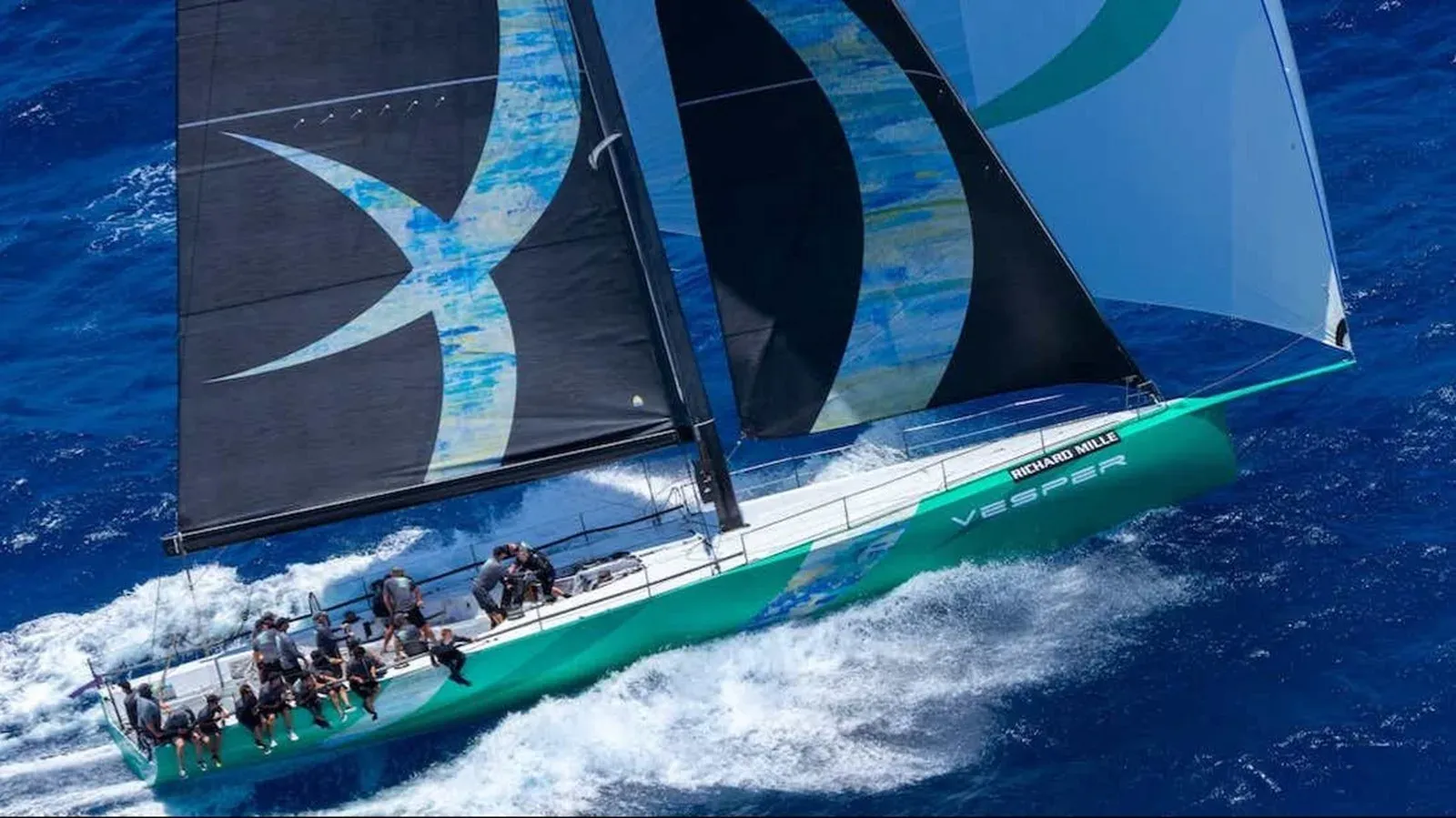
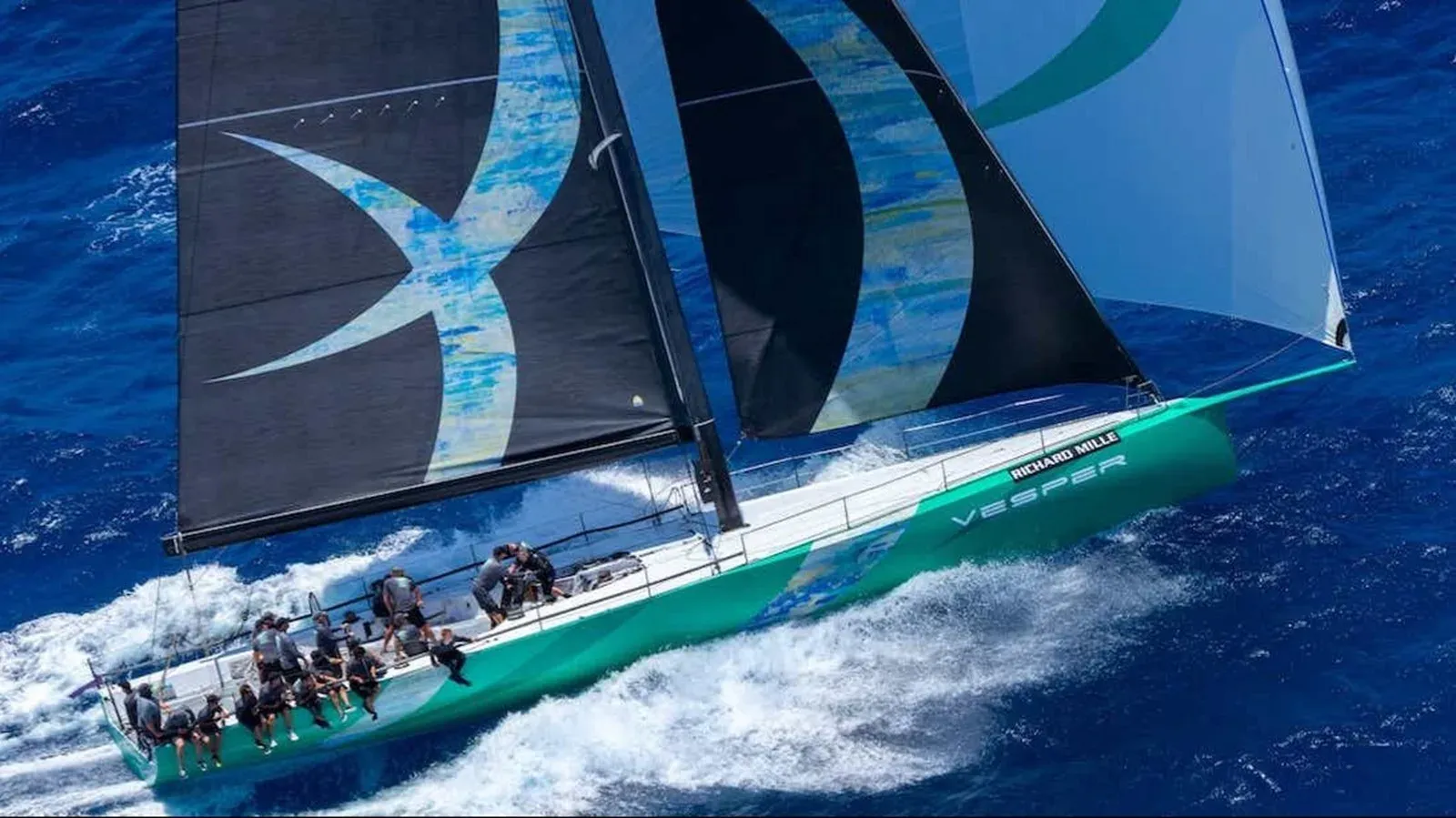
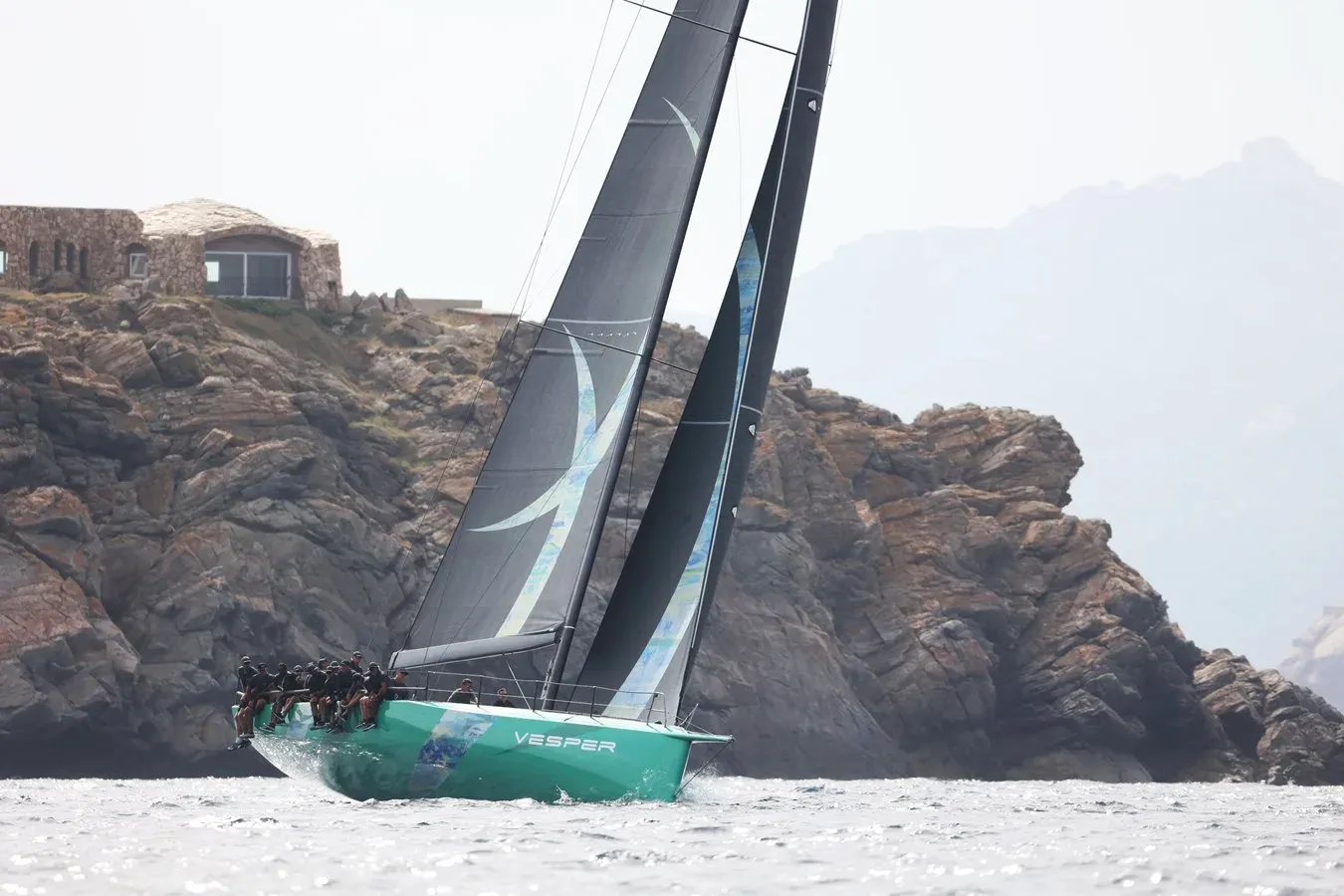
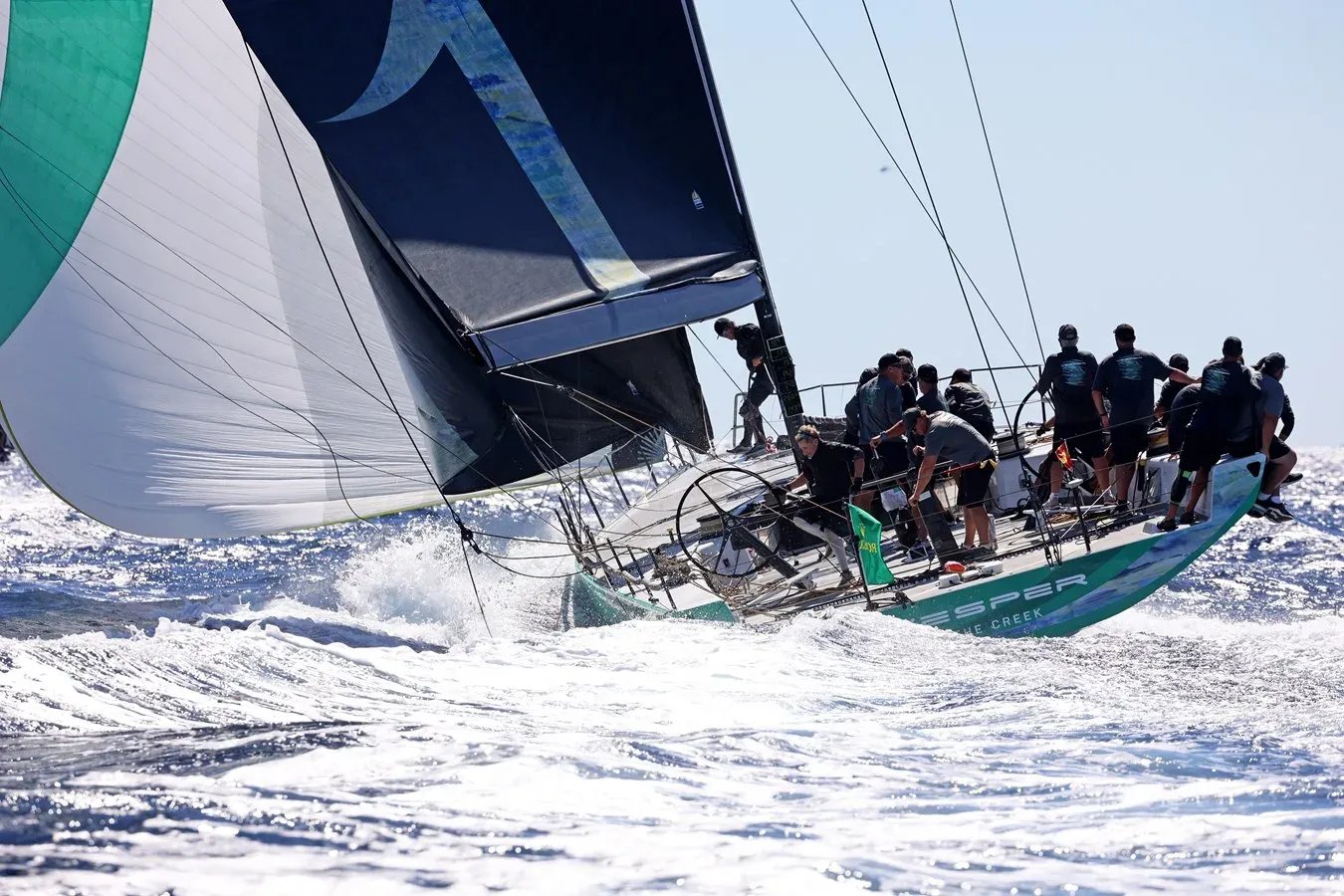
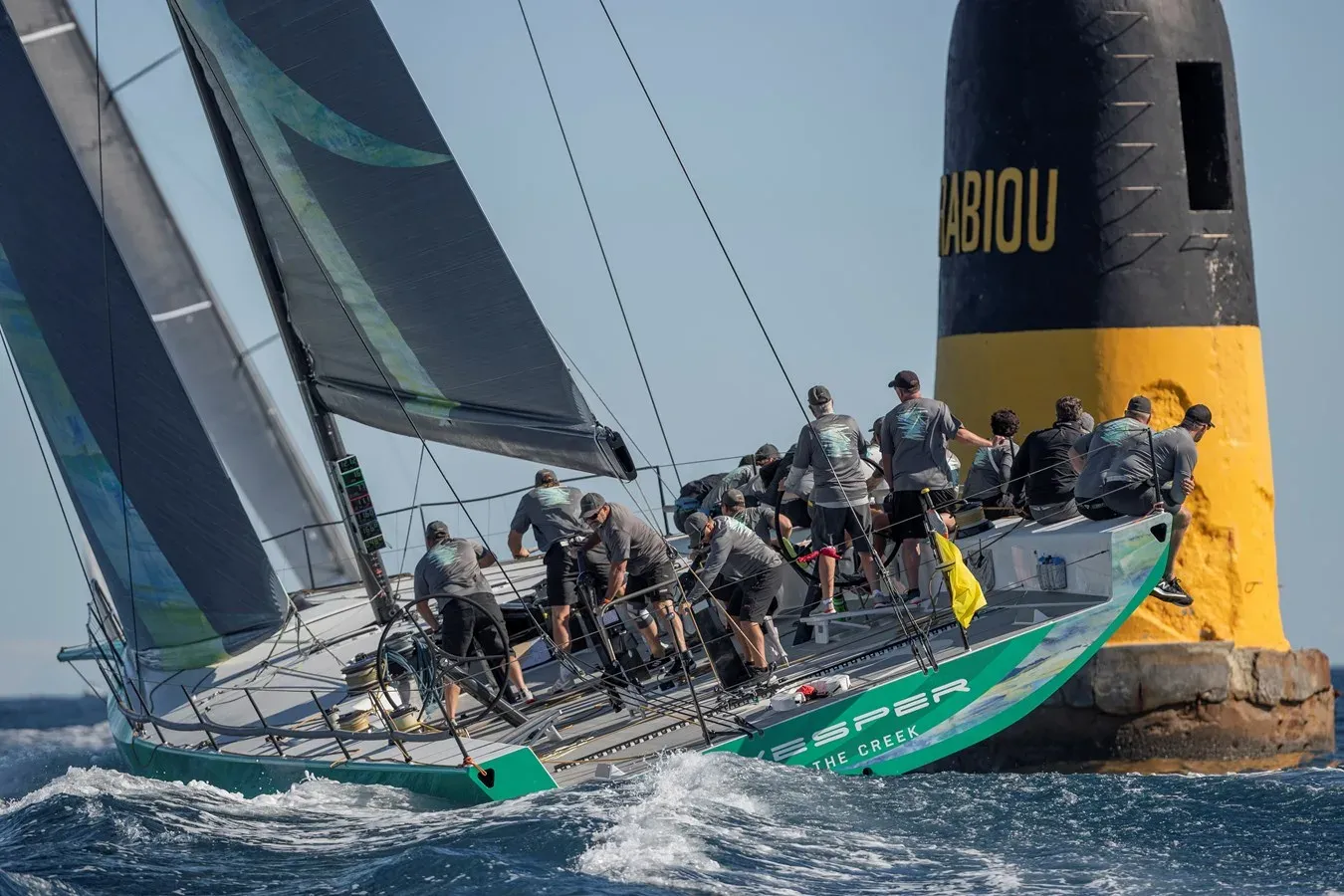
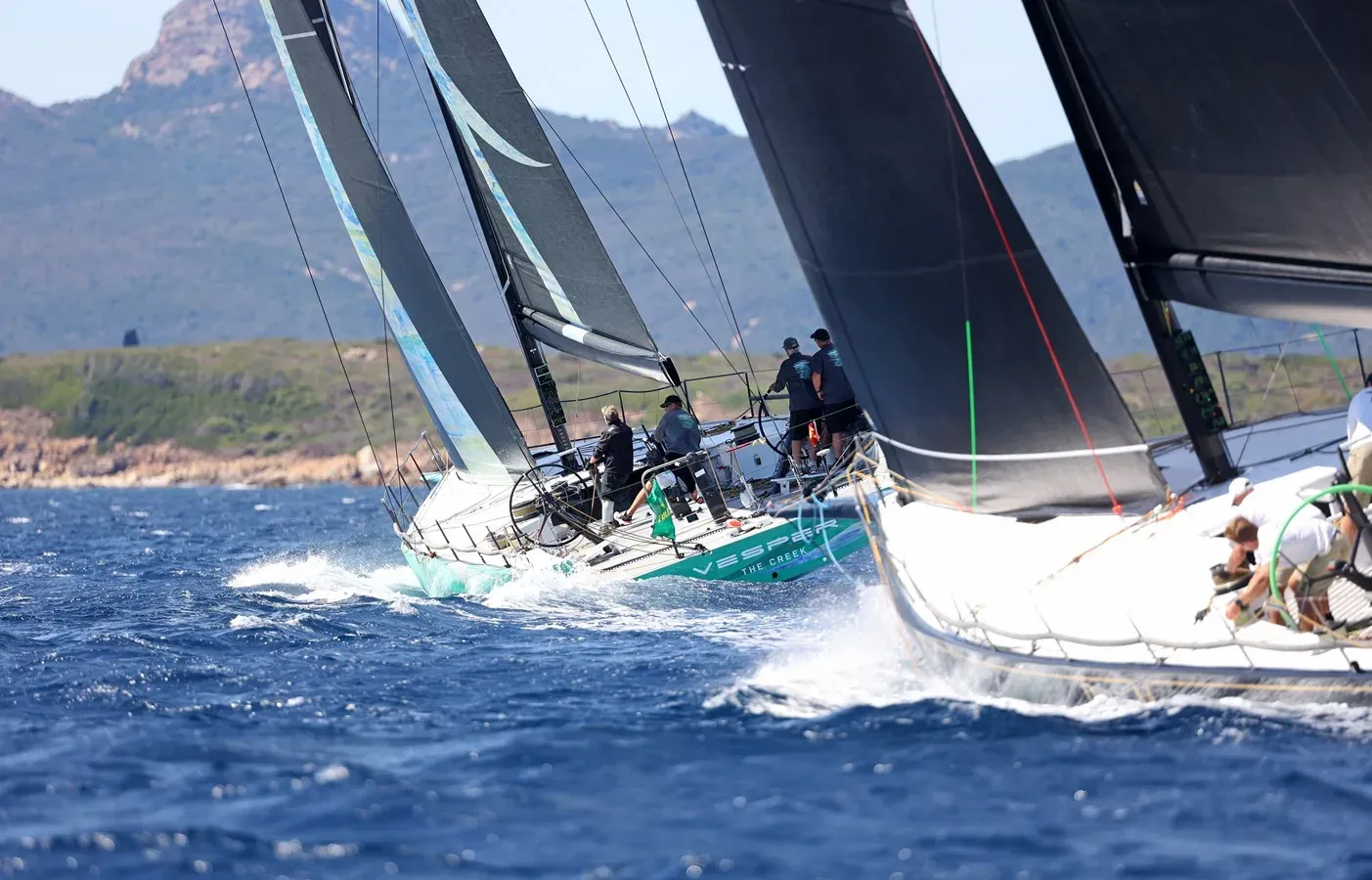
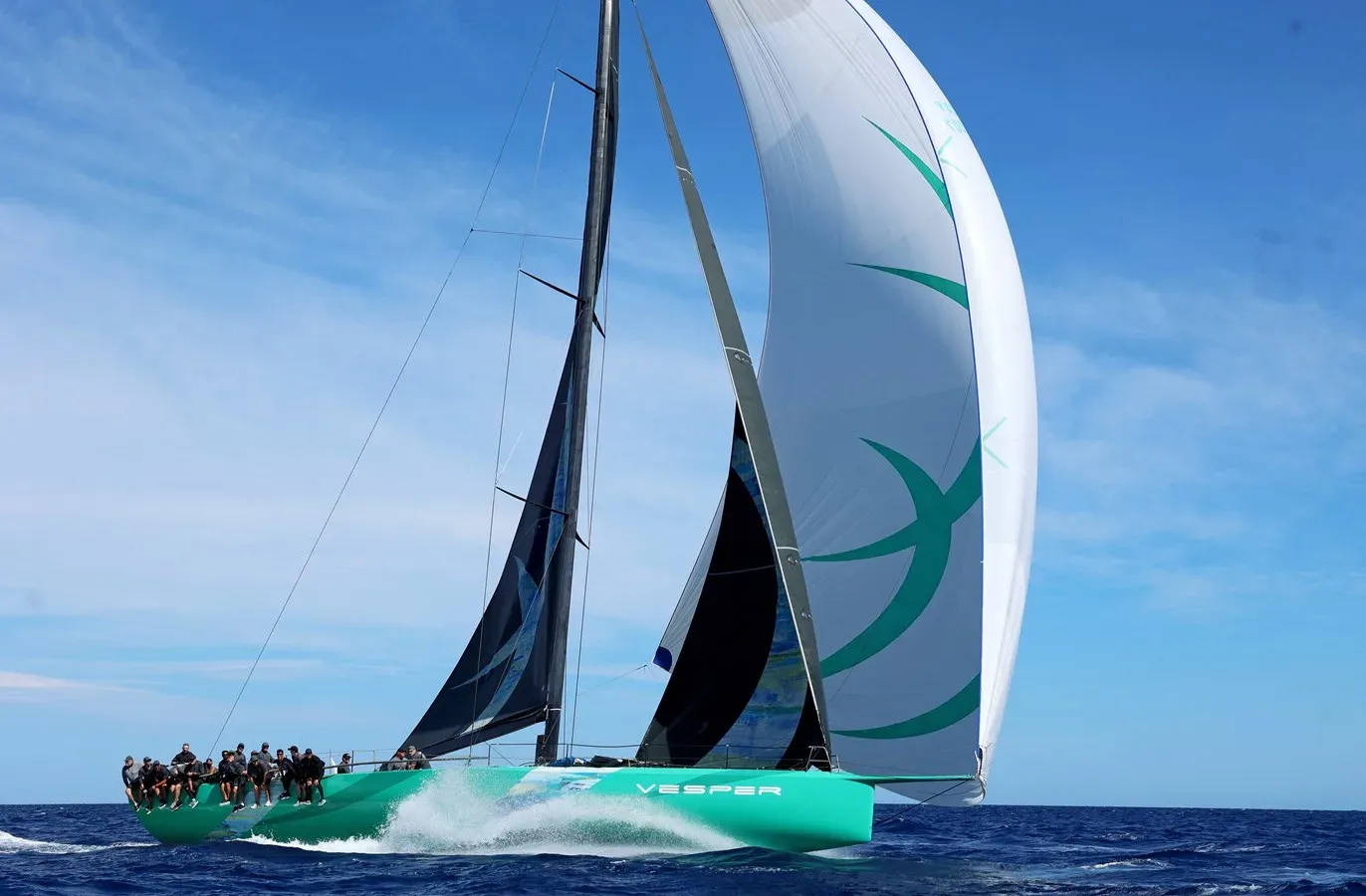
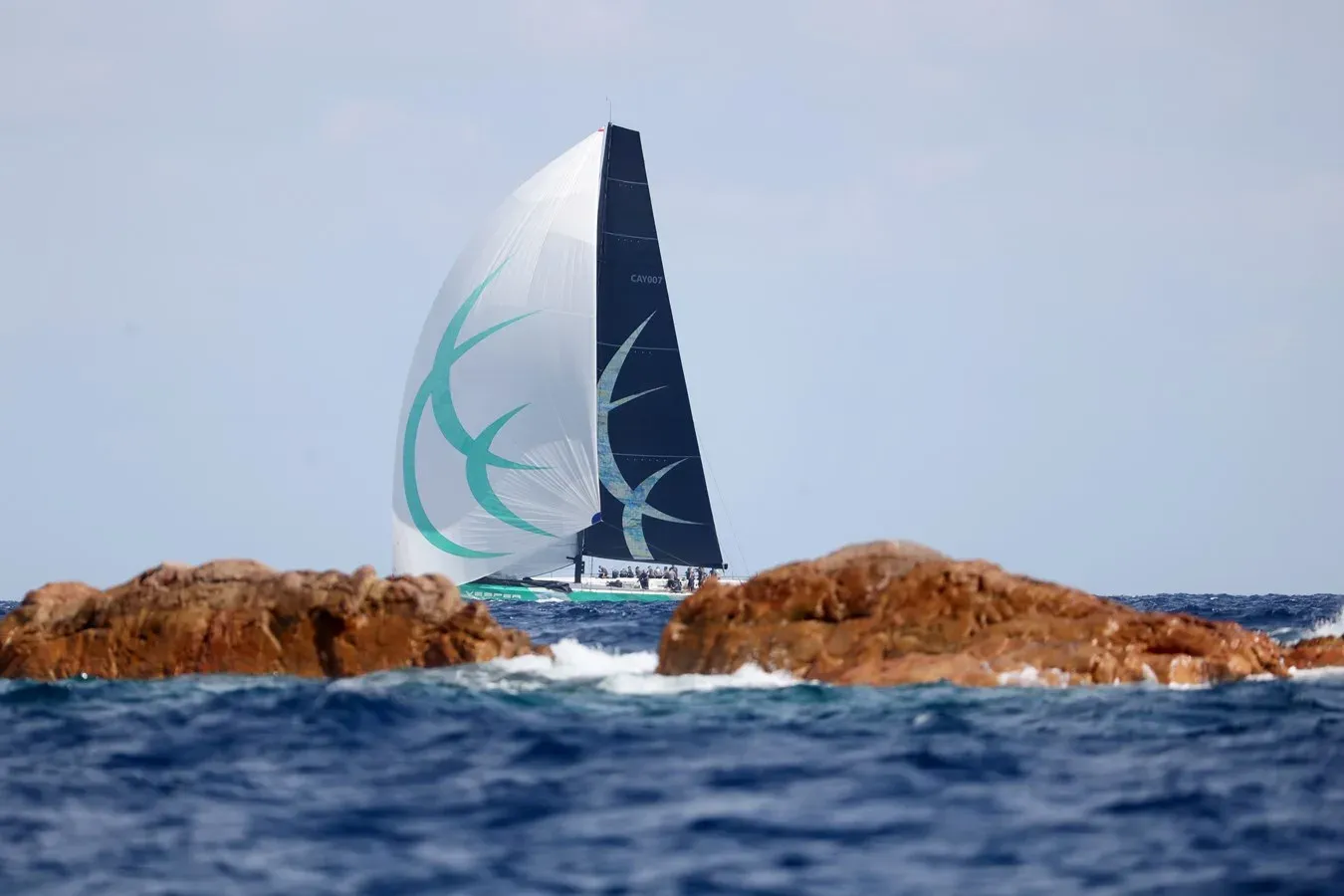
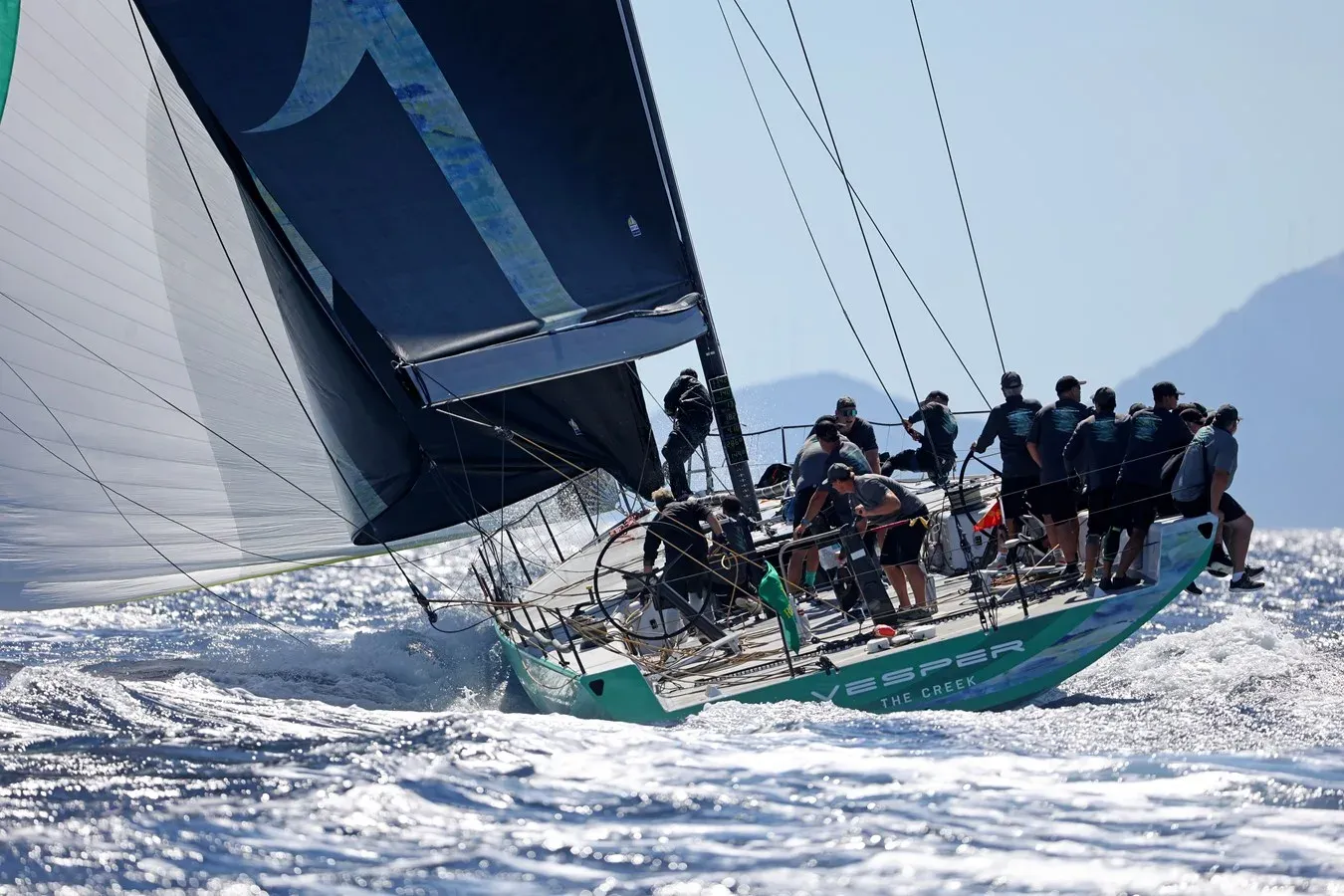
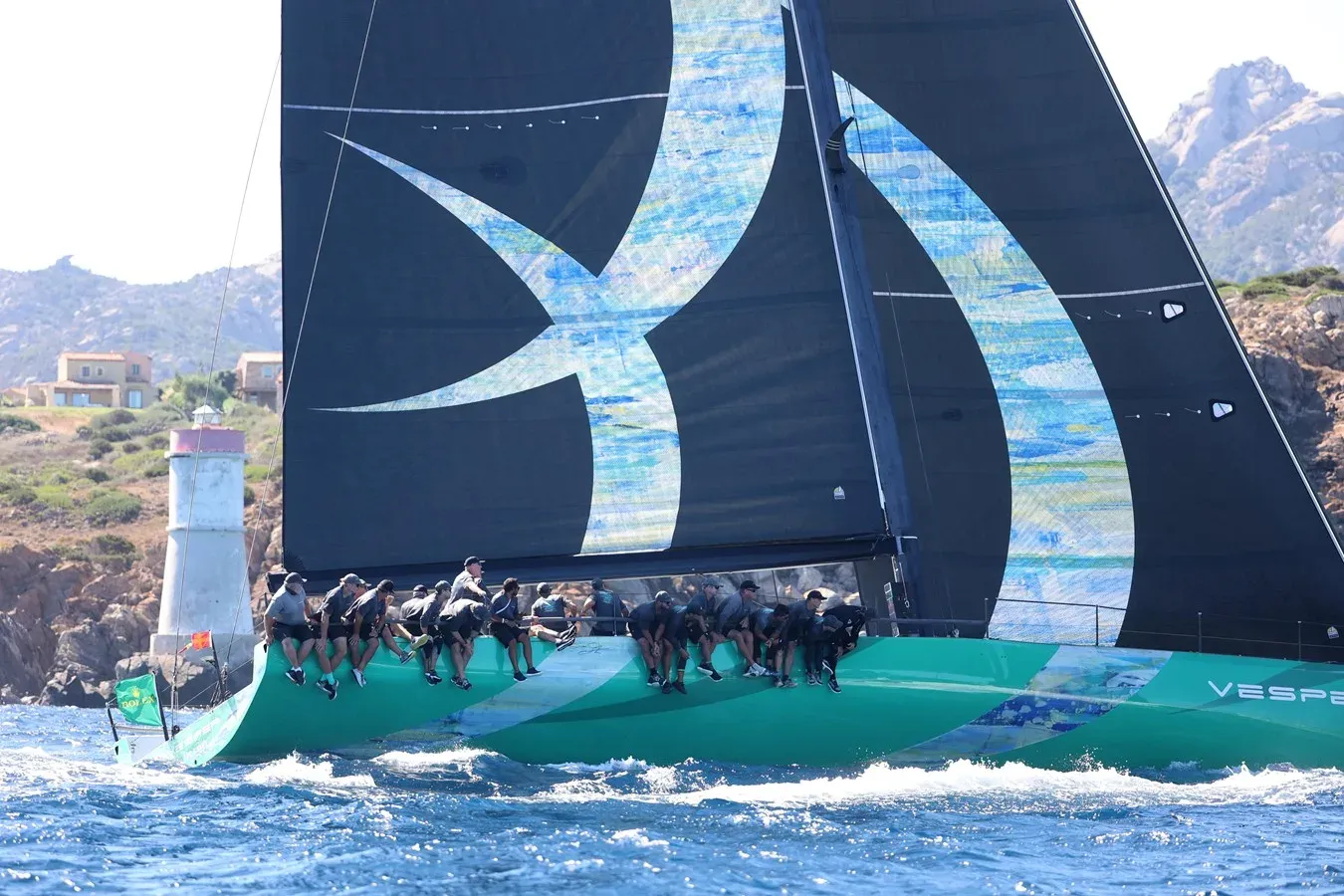
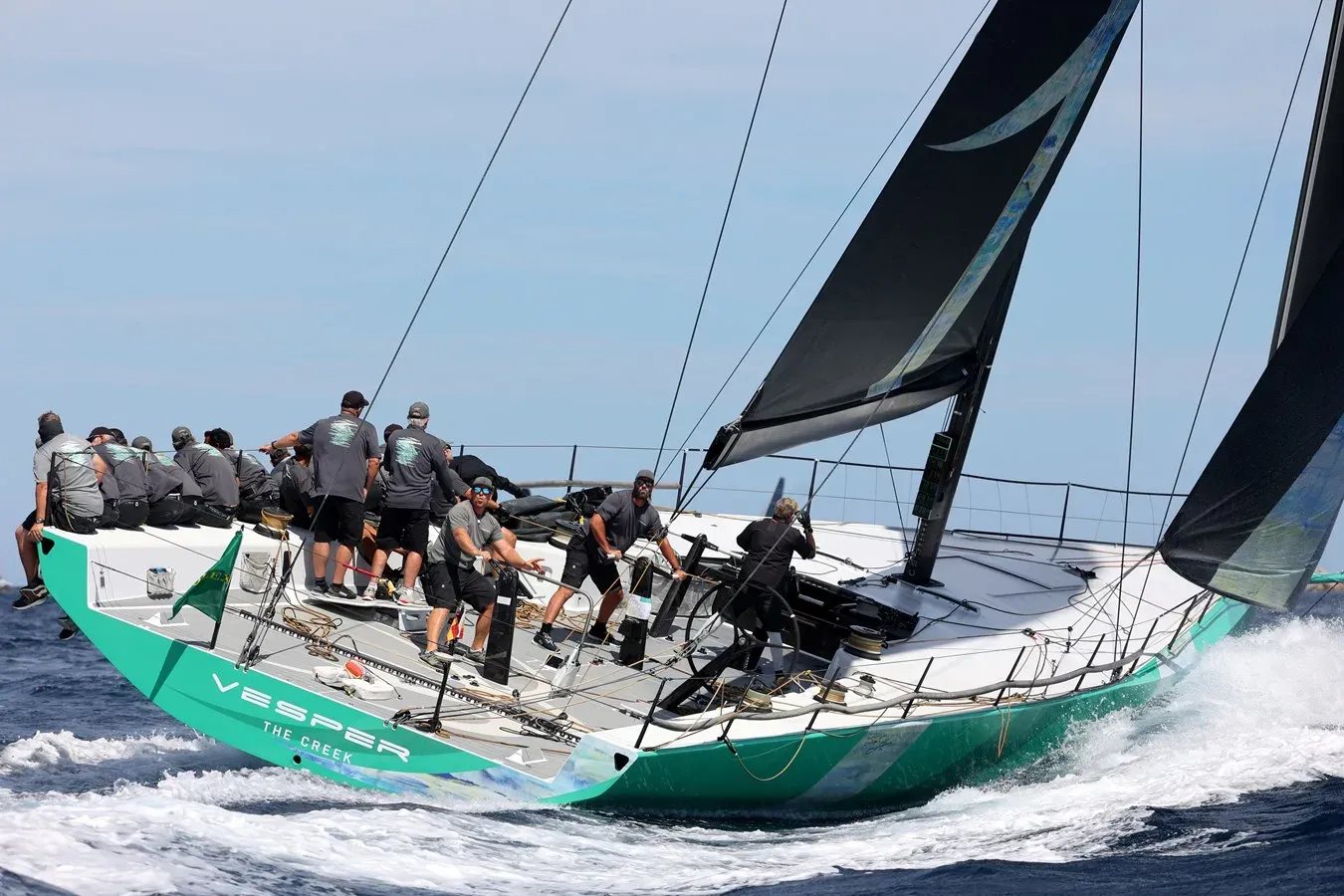
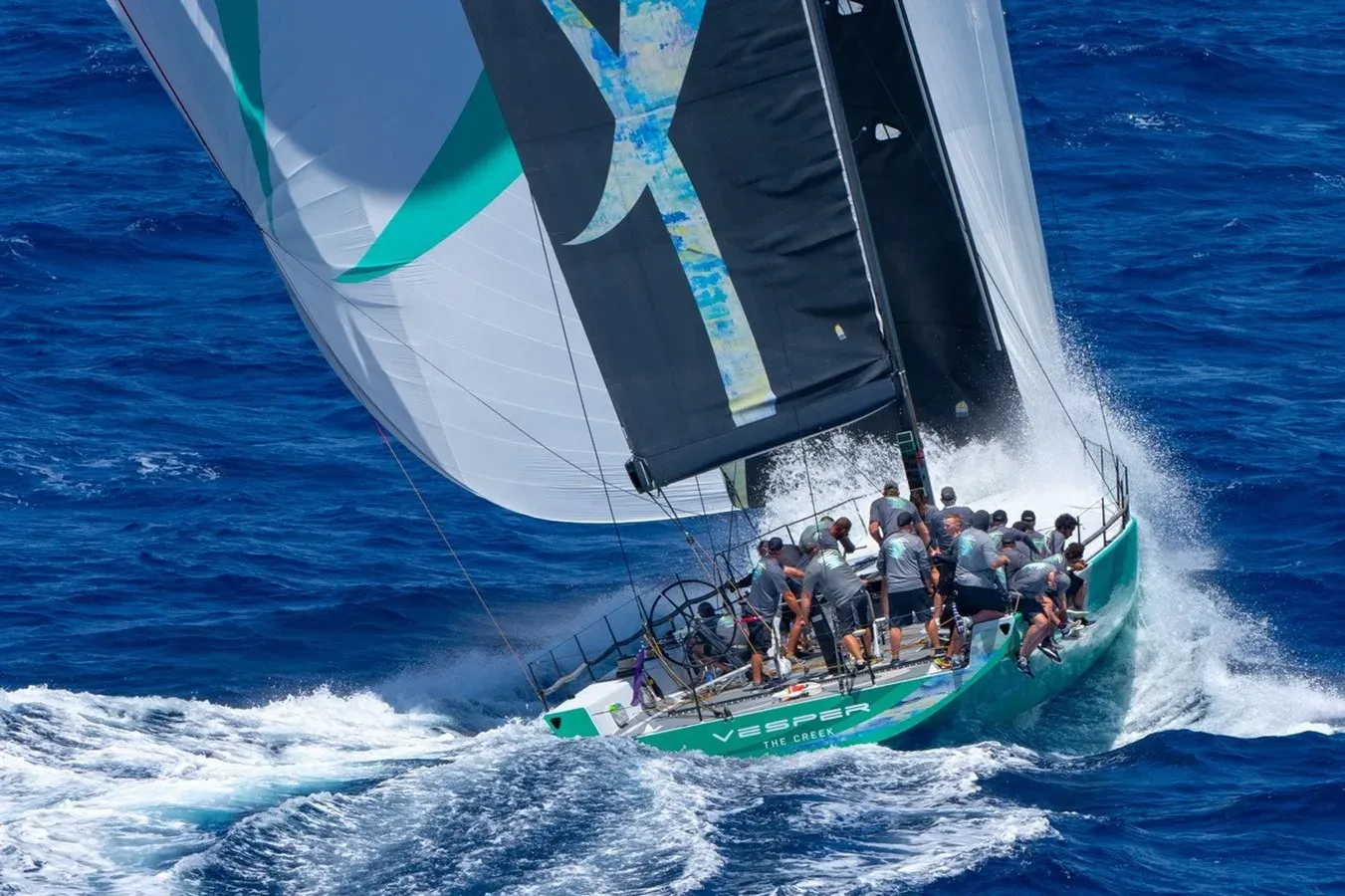
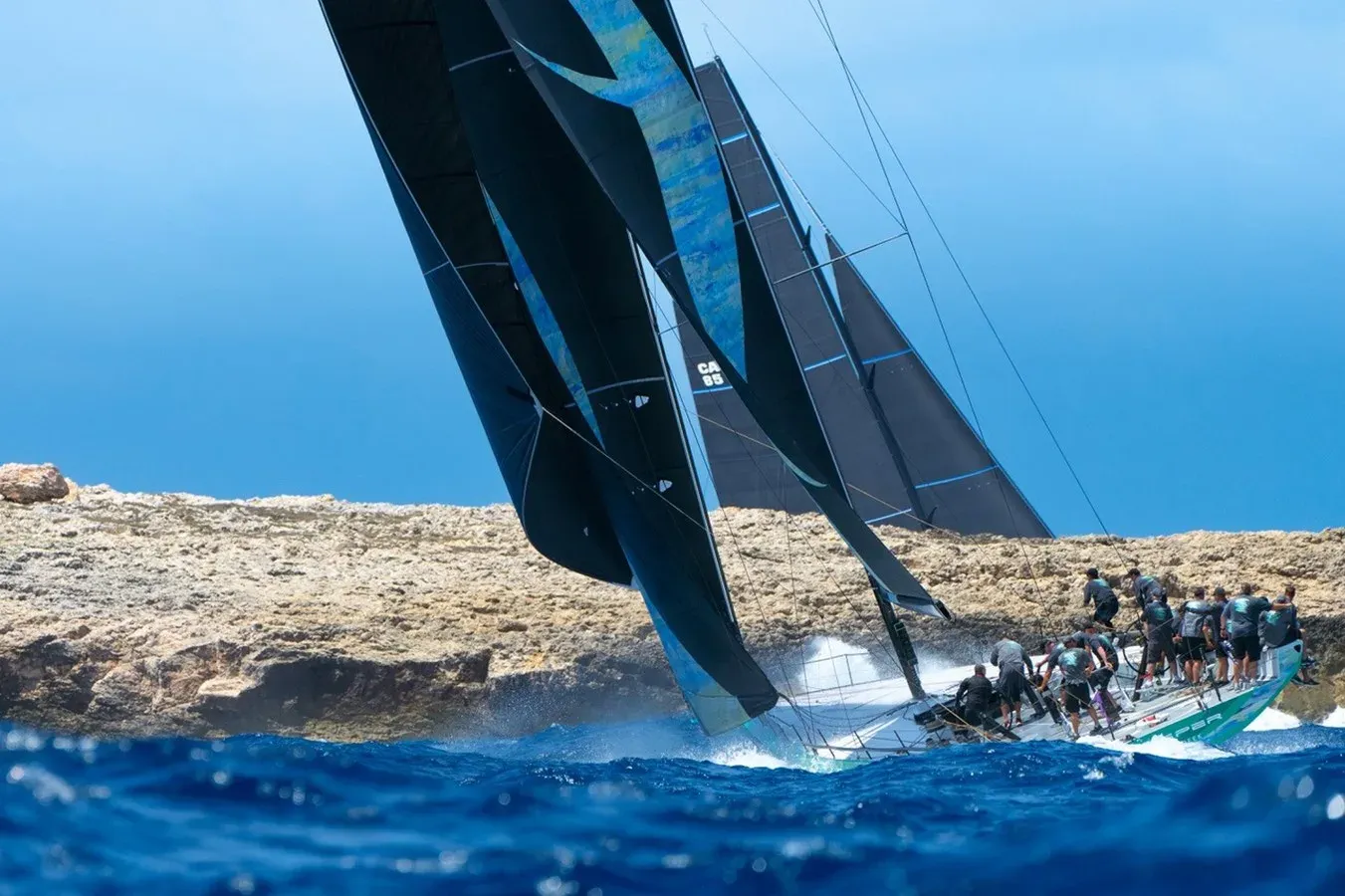
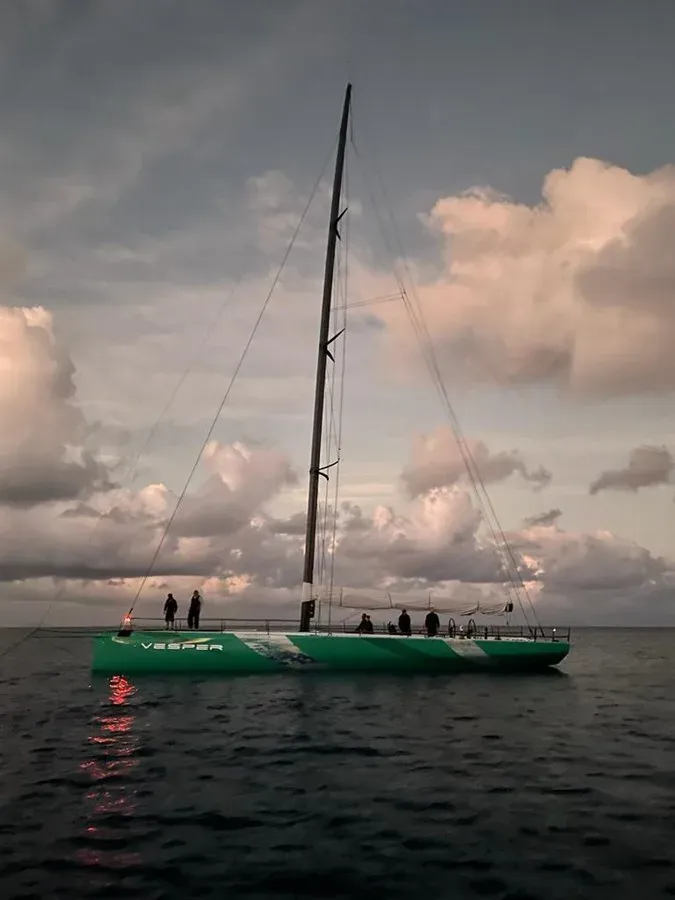
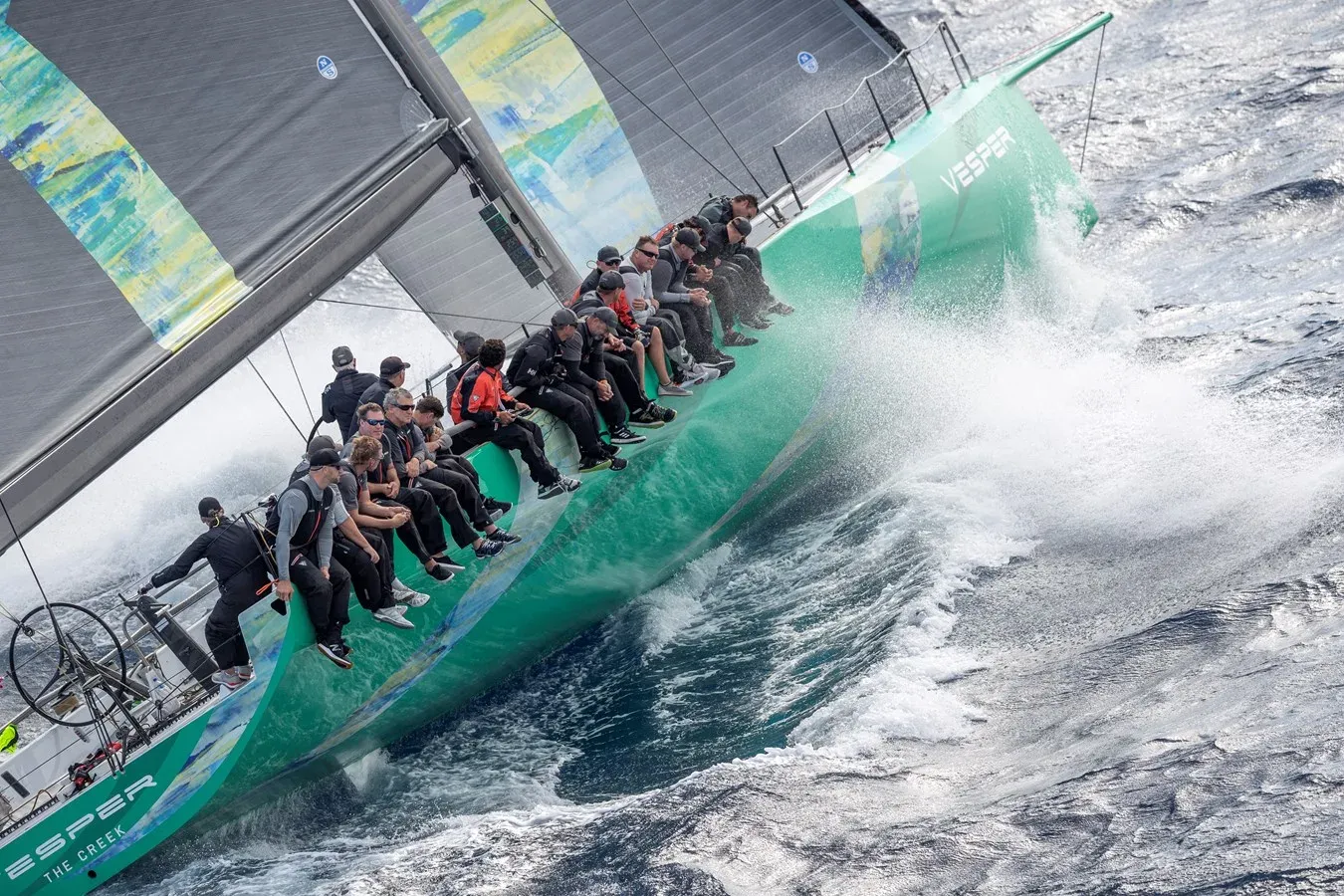
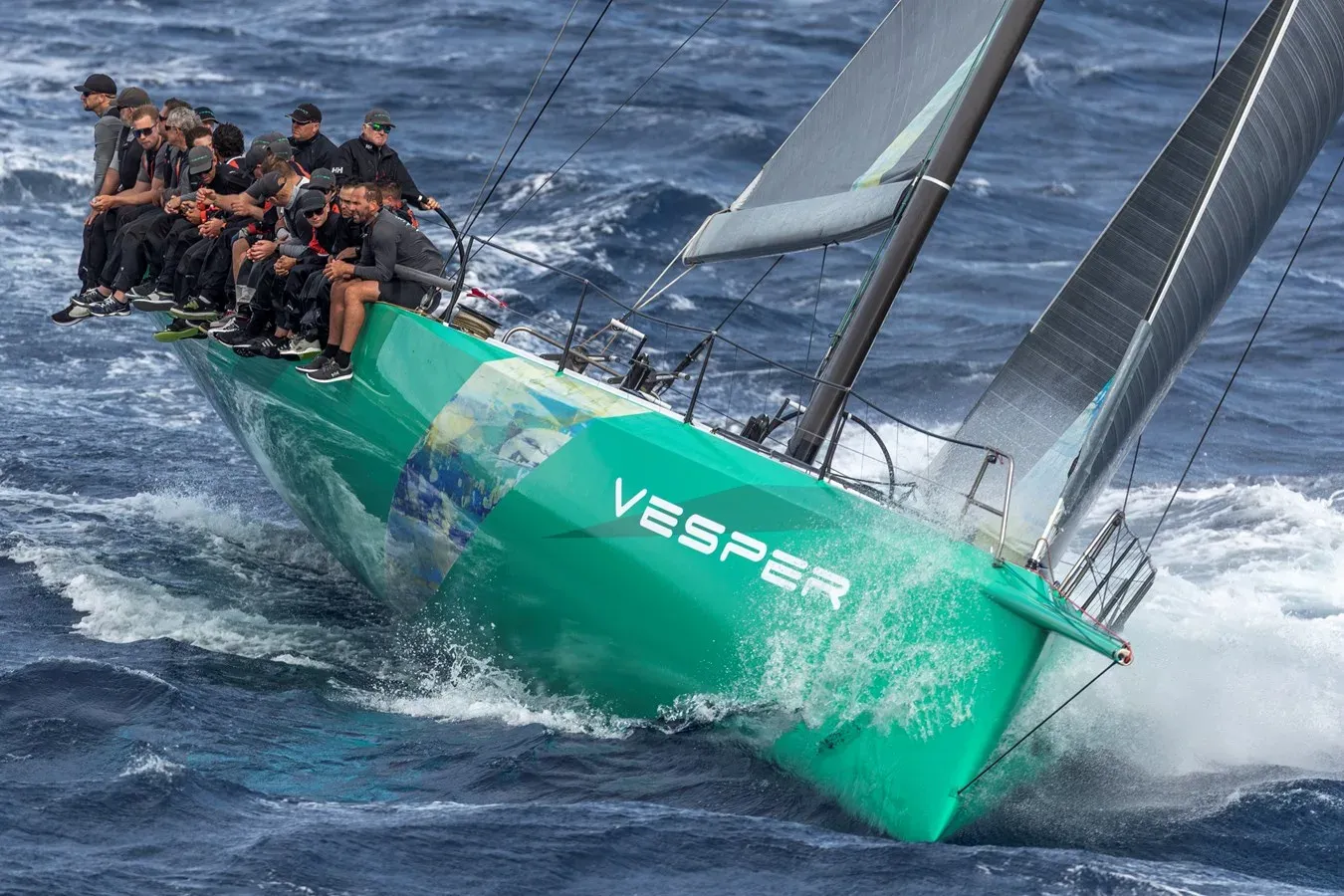
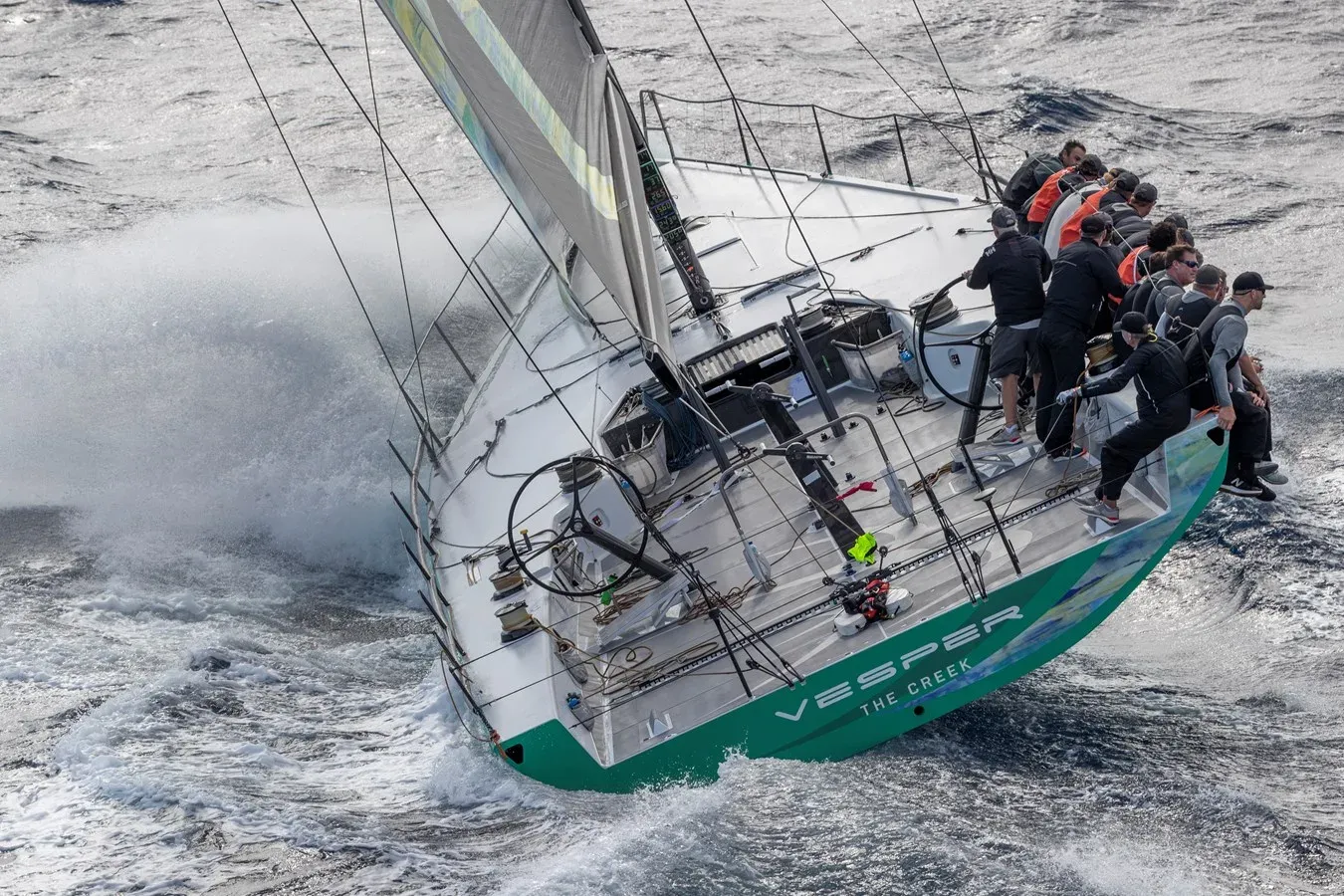
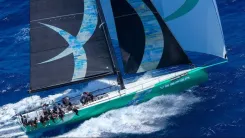
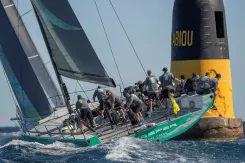
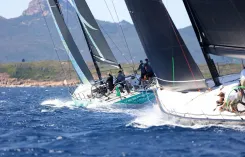
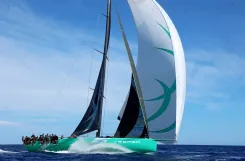
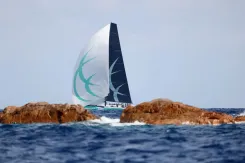
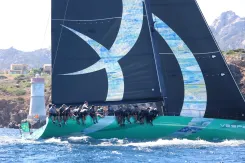
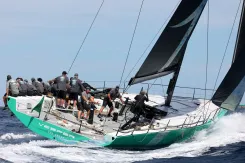
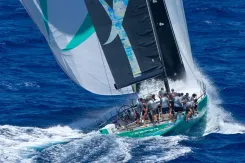
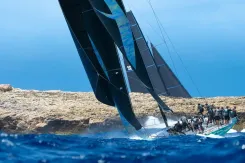
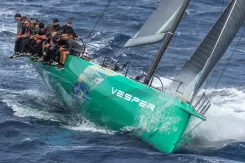
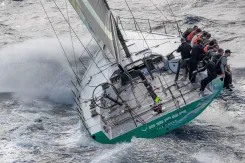
Vesper — An Acclaimed Maxi Racing Champion. Originally launched as Momo in 2014, Vesper was crafted in Italy by Persico Marine to uncompromising grand prix standards. Conceived as a purebred Maxi racer with no concessions, she embodies the apex of performance, innovation, and dependability across the elite competitive sailing arena.
A carefully managed, two-owner yacht, Vesper has enjoyed continuous professional oversight and consistent capital investment, with each custodian refining and upgrading the platform to keep her firmly at the sharp end of Maxi racing yacht performance.
Her results need little introduction: a three-time champion at the Rolex Maxi Worlds, seven podiums from eight appearances at the same pinnacle regatta, and victory at the ORC North American Championship—a record that underlines her standing among the most decorated Maxi yachts of her generation.
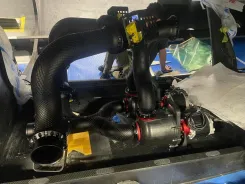
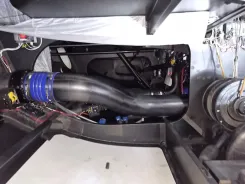
In 2025, a comprehensive optimization program elevated her once again. A new mast, boom, and standing rigging were specified; a next-generation racing sail inventory was developed around the updated rig; and those sails have seen just two events. Power and stability received a decisive boost with the addition of 2,000-liter water ballast tanks to port and starboard, unlocking greater righting moment and pace, while a new engine fitted in 2024 complements the reliability demanded of a top-tier grand-prix racing yacht.
These enhancements position Vesper as a cutting-edge Maxi racer and high-performance sailing yacht, meticulously prepared to contest the front row at the sport’s highest level.
Now lying in La Ciotat, France, Vesper is turnkey and race-ready for the Rolex Maxi Worlds and the world’s premier Maxi and superyacht regattas.
A decorated winner. A thoroughly modernized platform. A rare chance to secure one of the most successful Maxi racing yachts on the planet.
Detailed Description
Winches and hydraulic system
Above deck, a suite of Harken winches delivers race-bred precision, comprising ten drum winches driven through Stayinphase pedestals and drivetrain, an AL Harken AC 2009 Overdrive, and a Stayinphase drop wheel, all complemented by ceramic drums for uncompromising grip and longevity. The above-deck winches are serviced in-house two to three times per year, with full winch and drivetrain overhauls performed by specialists, and a comprehensive inventory of replacement parts is carried onboard, including housings, bases, bearings, and gear sets. Primary power is centered on a Harken 1111.3 ST AC34 (stb side LH) whose drums and gear ring were replaced in 2024, capped with a carbon top self-tailer for smooth, controlled trims. Driven runner winches are 990.3 ST AC34 (port side LH), with bases and gear housing renewed in 2023, while the driven mainsheet winches are 990.3 ST AC34 (port side LH) to ensure consistent, balanced handling under load. Traveler control is entrusted to a driven 65.3 SSTR ACK LKUD (port side LH), installed new in 2023 for crisp, low-friction response. At the pit, a 990.3 ST AC34 (Stb side LH) is starboard-side driven with a step up bevel box, paired with a 990.3 ST AC34 (port side) equipped with a speed ring to accelerate line handling when it matters most.
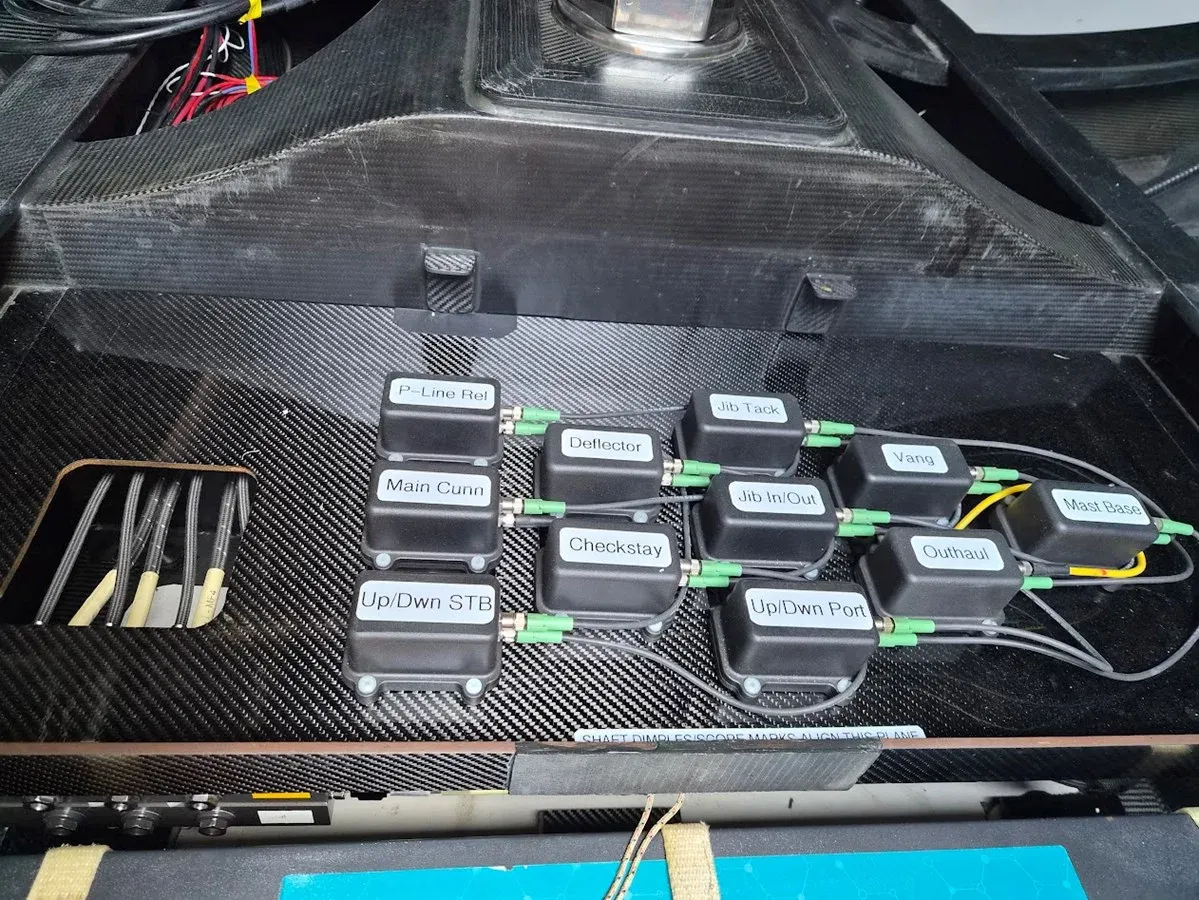
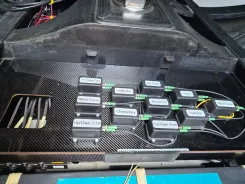
The hydraulic architecture is pure Cariboni, delivering nine functions via a Cariboni PLC and electric push-button control on deck. A seven-speed rotary pump at the aft pedestal, backed by a spare pump, teams with two hand pumps at the trimmers’ stations to provide instant, scalable power. Manual gear selection buttons are integrated with a Cosworth CAN LED gear indicator, and a function manifold with electric valves sits at the mast base; hydraulic line runs are kept as short as possible to minimize losses, with main system pressure at 500 bar. The system drives the deflector, checkstay, outhaul, main cunningham, vang, mast butt, and jib tack, as well as the jib leads (two) and Jib IN/OUT (one), ensuring fingertip authority over all key sail controls. Blink button panels, new in 2025, anchor the interface, with a six-button panel on each side at the trimmers’ station, a ten-button panel on each side at the main trimmer station, and two six-button panels on each side at the runner winch for rapid, intuitive command of every function.
Water ballast system
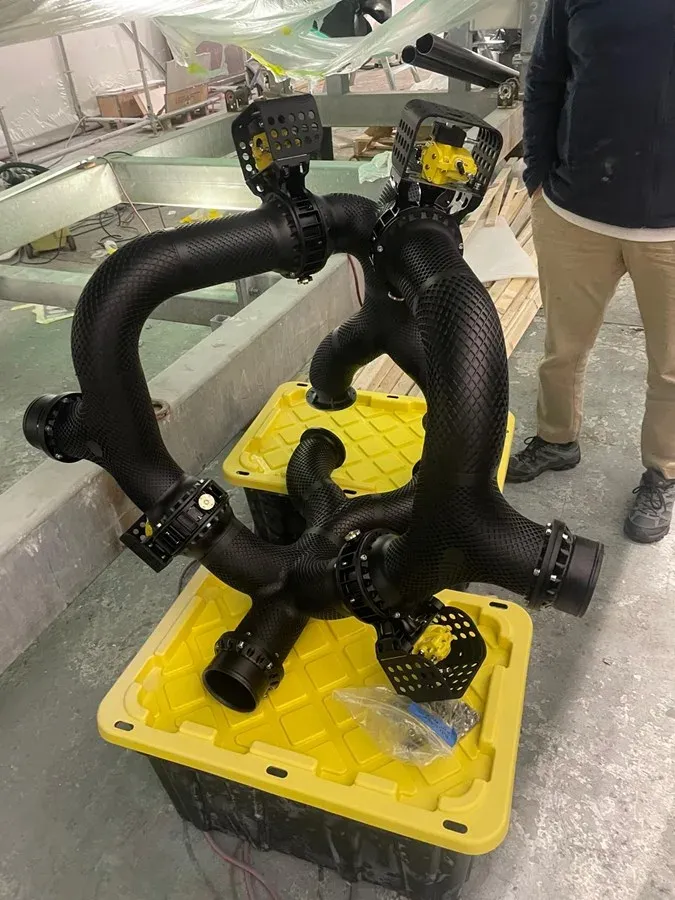
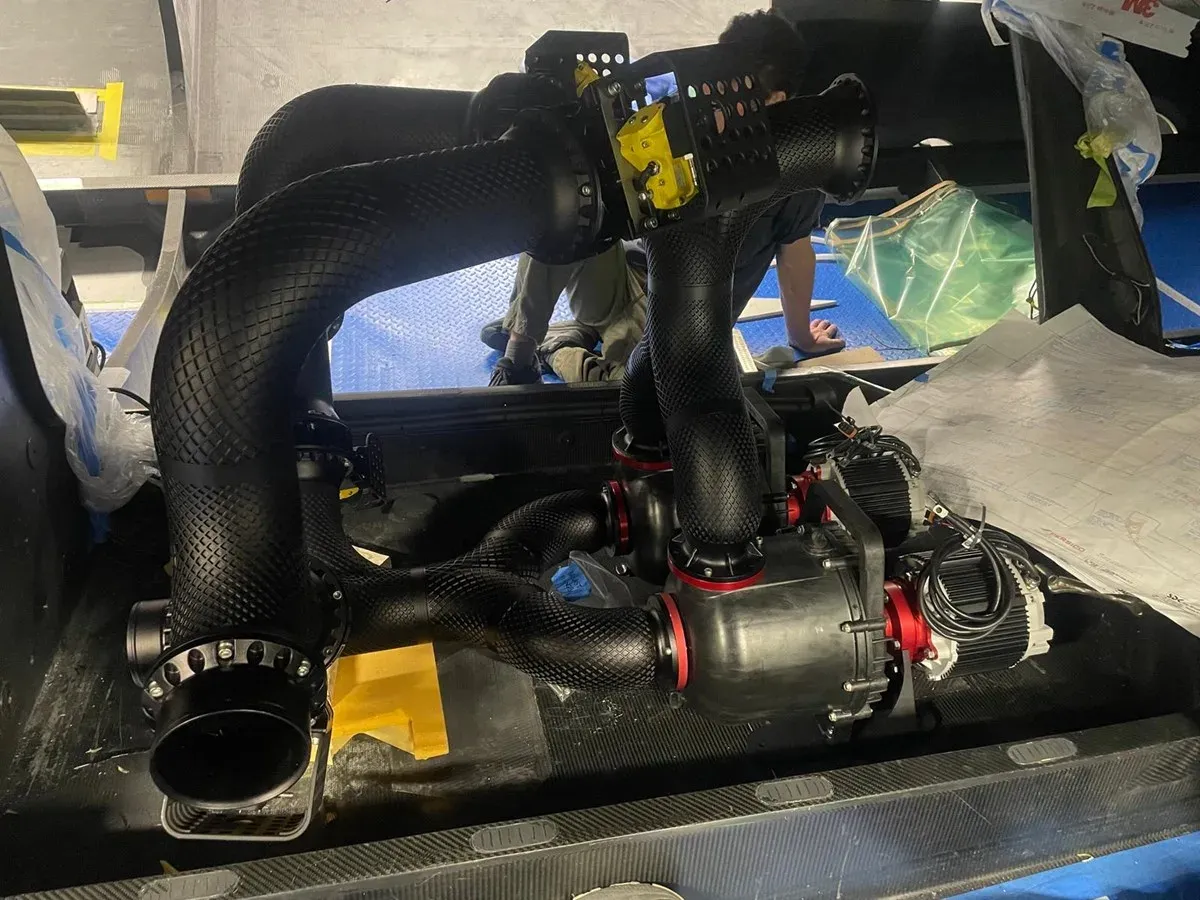
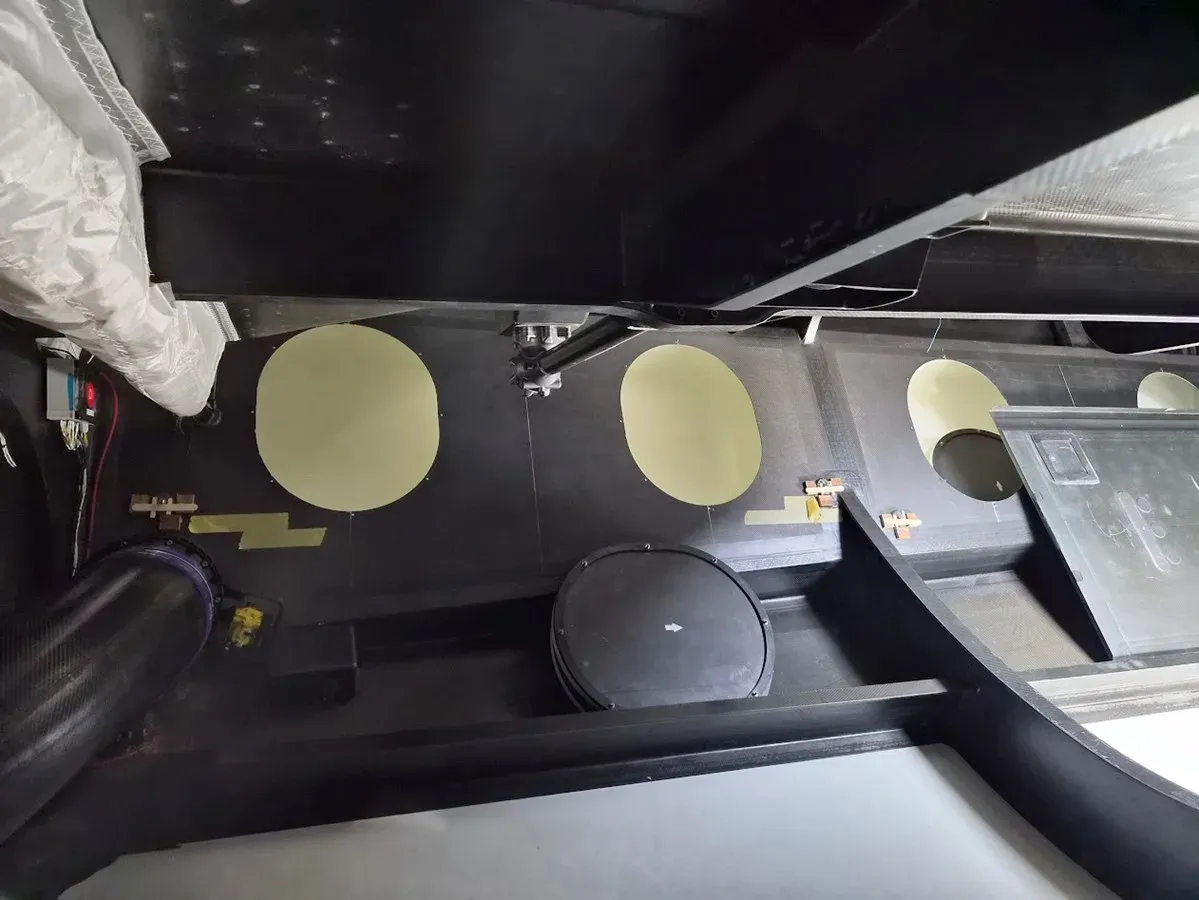
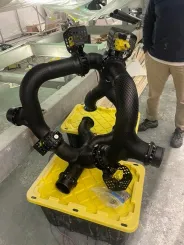
New in 2025, the water ballast system delivers approximately 2,000 liters per side, divided into two tanks per side so each of the four tanks can be filled or emptied independently. This Diverse system is governed by a Diverse PLC, accessed via a webpage on the deck screen or by a Blink ten-button control panel at the main trim station. Pumping power comes from two 100 L/min 48 V pumps feeding a custom Diverse manifold. Transfer capacity is assured by two 10 in transfer pipes, with butterfly valves—4 in on fill and dump and 10 in on the transfer pipes—and dedicated 4 in fill/dump pipes. Intake efficiency is enhanced by two 100 mm intake scoops, while pneumatic butterfly valves operate throughout. A 24 V 330C Viair air compressor with dry air filters provides the pneumatic supply.
Electronics and electrical systems
Engineered for total command, the yacht’s electronics suite is anchored by a Faro processor paired with a Panasonic Toughbook laptop and various deck screen tablets, with CZone control presented on a B and G Vulcan seven-inch display. An instrument bracket on the mast carries seven Garmin displays for immediate readouts, while an IXblue Quadrans fiber optic gyro compass and a NovAtel Flex6-DL2-00G00TR GPS lock in precise heading and position. Communications and connectivity are equally robust, with AIS via the Garmin AIS 800, VHF through the Navico V100, Starlink for high-speed data, a Peplink Router Max BR1 Pro, the YDEN-02, and an AP ZYXEL NWA55AXE ensuring resilient onboard networks. Rig and steering loads are monitored by diverse load pins on the headstay, V’s, and bobstay, backed up by a Synapsis loadcell on the headstay, and complemented by string pots on the deflector, checkstay, shim stack, and rudder angle. Everyday convenience is finished with multiple charging ports, including USB and 12 V outlet access.
The electrical architecture is centered on a 48 V 100 Ah Relion RB48V100 lithium iron phosphate battery, supplied with a spare battery in box, and efficiently replenished by an APS HGI 130-56V IG alternator. Clean voltage distribution is handled by 48-to-24 and 48-to-12 DC/DC converters, with system insight and integration via a Victron Smart Shunt and Victron Cerbo, while shore power is managed by a Meanwell three-stage battery charger.
Mast, boom and rigging
Vesper carries two complete mast, boom, and rigging packages, both built by Southern Spars NZ. The new 2025 M3 is the latest evolution, taller with a longer P and a higher HS intersection, and it features Aero Razr carbon; the second package, M2, is detailed below. The mast is constructed from ultra‑high modulus and high modulus carbon fibre with a variable section up to 450 mm by 190 mm, and fibre modulus values of 377 GPa and 436 GPa. At the masthead, the main halyard sheave, a vertical wind transducer wand socket, and a VHF antenna mounting are integrated, with the wind wand offset to starboard to mirror the existing configuration. An aerodynamic moulded carbon top cap conceals wiring connections and mounting brackets, while remaining open at the top so the upper masthead halyard can pass over the sheave to serve as the main halyard.
The halyard arrangement delivers race‑ready precision: one 1:1 main halyard sheave; two masthead spinnaker/Code Zero halyard sheaves in an over‑under configuration; the upper halyard is unlocked for spinnaker use, while the lower is sized for Code Zero and locked. All sheaves and pins are removable for ease of service, and a flush‑mounted recessed alloy chafe guard is fitted. Backstay cables are lashed to ferrule and slot‑style fittings, with upper and lower deflectors entering the mast through ferrules. Every sheave box is carbon and bonded internally to the spar. The upper masthead halyard sheaves (masthead and below deck) are Winmar low‑friction units, while the remaining sheaves are standard SSNZ alloy with CJ Dixon bushings. Through pins for sheaves and locking systems are titanium where suitable, with hollow construction and flush pin tabs. The mast incorporates a Southern Spars internal headstay attachment, a backstay upper deflector entry, one centerline jib hoist line sheave that is locked, and one 1:1 GS halyard sheave that is locked. A backstay lower deflector entry is provided, with locking via strop and Tylaska clip at the masthead and an internal trip line routed down the mast. A single bullet cassette lock assembly is rated for Code Zero and spinnaker loads up to 6 tons, supplied with two 25 mm bullets, together with an additional one 25 mm bullet, while a separate single bullet cassette lock assembly is rated to 4 tons. All halyard cassette locks incorporate coded trip lines leading to Panel Zero.
The mast features three sets of high‑modulus carbon fibre spreaders, with S1 curved and S2 and S3 straight, their outboard ends designed for a solid carbon standing rigging system. Spreader angle of attack is optimized for minimum windage, with flush inboard spreader end connections on titanium fittings and adjustable inboard end fittings. Shroud attachment is by internal bar tang at D4 and D1, with internal tangs and adjustment for D2–D3. A SSNZ Carbon Maxi 72 track is bonded to the aft face of the mast tube, complemented by a short alloy cunningham track and a cunningham car on track.
In the lower mast section, CNC‑machined alloy boom gooseneck fittings are fastened to the mast wall with bushings and a hollow vertical pin to suit the existing inshore boom inboard end. A floating tack arrangement is provided, with a slot for the outhaul hydraulic hose. An instrument bracket is configured for seven GNX 120 or GNX 130 displays. The vang enters through the aft face of the mast above deck level and is fitted with an SSNZ 6T fuse. The jib halyard exits above deck and is routed through the deck chock on the port side. A carbon deck chock is bonded and taped to the mast tube to match the 3.5‑degree dock‑tune mast rake, with reduced rake at deck level; the chock is fitted with a profiled non‑metallic perimeter to allow specified movement, and the collar allows 10 mm of lateral movement, with waterproofing around the collar and deck clamping ring.
Halyards exit through the mast slot to turning blocks with a clean, efficient lead. One jib halyard exits via the port‑side above‑deck slot, runs down through a tube in the deck chock, and is led below deck to a padeye‑mounted turning block. Three halyards exit through a below‑deck sheave box angled toward the cockpit—upper masthead (Winmar sheave), lower masthead, and GS—and the forward lock trip lines also exit through this below‑deck sheave box.
Below deck, the lower section provides a jib halyard exit, a GS halyard exit, and a main halyard exit through a port‑side slot with mouse line. A padeye below deck is fitted for block attachment, leading the halyard aft (block supplied by SSNZ), and the main halyard trip line exits below deck to port. Lashing blocks for GS and jib are supplied by SSNZ. The electrical exit is located port aft above the mast butt, while the outhaul hydraulic slot is on the aft face above the mast butt. The package includes mast base assembly, shims, and external mast jacking equipment, with a butt plug supplied to interface with the existing tongue and shims. All wiring is routed through a series of short wiring hoops bonded internally within the mast. Electronics installation includes one vertical wind wand with cable and one VHF antenna. The mast is finished in bare carbon with black detailing around secondary bonding areas, fittings, and join locations, with all pins and pin tabs bead‑blasted where possible in stainless steel and titanium, and alloy components finished in SSNZ standard black anodizing.
The standing rigging specification is unequivocally grand‑prix: lateral standing rigging in Aero Razr carbon with an aerofoil profile; EC six backstay and deflectors; a circular‑section RAZR carbon rod headstay with chafe protection and a lower attachment clevis fitting; titanium end fittings throughout unless otherwise specified; V1 and D1 dual‑acting Grand Prix turnbuckles; two pairs of composite backstay deflector tacos; and V1 cables protected by chafe guards.
The boom is a Race Box Section, built in 100% high‑modulus carbon with carbon pre‑preg cured at 120 degrees C and a carbon Nomex sandwich. It features an internal hydraulic outhaul, a “letterbox” OBE with an internally led clew strop to pin, and an internal connection for the vang.
A complete second mast, boom, and rigging set (M2) is stored in a plastic shipping pipe at the shipyard. This three‑spreader mast has adjustable spreaders, deflectors and checkstays, a mast jacking system, an adjustable heel plate, and four halyard locks. The package includes Carbo Link side rigging, a Carbo Link forestay, Carbon Link runners, and a box‑section racing boom.
The running rigging inventory, recorded January 2026 in La Ciotat, is comprehensive. Halyards include one used‑good main halyard; a red masthead halyard with one new, one used‑good, and one used‑backup; a green masthead halyard with one used‑good and one used‑backup; a jib halyard inshore with one new and one used‑good; and one used‑good GS halyard. Sheets include one used‑good and one used‑backup mainsheet; three used‑good and three used‑backup inshore jib sheets at 15 m; two used‑backup offshore jib sheets at 19 m; flying‑sail spinnaker sheets (thin) with two new, three used‑good, and two used‑backup; Code Zero spinnaker sheets (thick) with two used‑good; SS sheets with two used‑good; and jib hobbles with two used‑good. Other lines comprise runner tails with two new and four used‑good; traveller lines with two used‑good; droplines with six used‑good and three used‑backup; Code Zero tweakers with two used‑good; 2:1 tacklines with two used‑good; tackline pennants with two new; 1:1 tacklines with two new and one used‑good; a GS furling line with one used‑good; furling lines with two used‑good and one used‑backup; a vang pennant with one used‑good and one used‑backup; jib leads with two used‑good and one used‑backup; jib in/out with two used‑good and one used‑backup; steering cables with one used‑good set and one used‑backup set; an outboard jib lead tweaker with one used‑good system and one used‑backup system; an SS furling line with one used‑good; a GS tackline with one used‑good; a GS furling line with one used‑good; a top lifeline with one new set and one used‑good set; bow jack stays with two used‑backup; cockpit jack stays with one used‑backup; and headstay pennants with one new and one used‑good. Loops listed include Backstay Lower and Backstay Upper, together with a jib clew provisioned with three used‑good. Deflector and checkstay pennants include deflector pennants with two new and two used‑good, checkstay pennants with two used‑good, a deflector lower leg with one used‑good, and a checkstay lower leg with one used‑good. The inventory also includes Gorilla Foil Extrusion with two new and one used‑good, and a Gorilla Foil Sleave with one new and one used‑good.
Hull Construction
Built in Italy by Persico Marine to the highest race-boat standard, the hull is formed in a single-tool female mold using prepreg carbon fiber over a Kevlar/Nomex honeycomb core, with minimal fairing to preserve weight, stiffness, and precision. The deck is likewise laid up in a female mold. In 2020, the hull and deck were sanded back to bare carbon and then expertly refinished and painted with Awlgrip/Awlcraft 2000 for a flawless, durable sheen.
Keel, bulb and rudder
Precision below the waterline defines this yacht’s performance. The keel fin is CNC‑machined from a single solid steel piece, with machined slots at the top to accommodate the ballast rod, and its heavy fin foot was professionally machined off in 2023 to refine balance and handling. The CNC‑machined keel bulb complements this engineering with a meticulously crafted keel pocket, and in 2025 it was lightened specifically to optimize trim and responsiveness with water ballast. Steering control is equally versatile, with a large heavy‑weather rudder fitted new in 2020 and a smaller “Med” rudder available to suit varying conditions and cruising grounds.
Cradle, containers, safety and spares
A purpose-built galvanized cradle with high and low positions makes haul-outs effortless, featuring a boatyard-friendly keel slot, four outrigger legs, and three boxes on the cradle stocked with shipping equipment. Two custom scaffolding planks, 10 meters long, offer two height positions for secure and efficient access around the hull.
A four-level aluminum stair tower provides safe, direct access to the deck when hauled, complete with proper safety rails. The entire tower collapses for transport and stows neatly inside the yacht’s containers for shipping.
For yard and transport operations, the package includes four mast stands with wheels for easy maneuvering, as well as a keel bulb cradle stand designed for container storage and trucking.
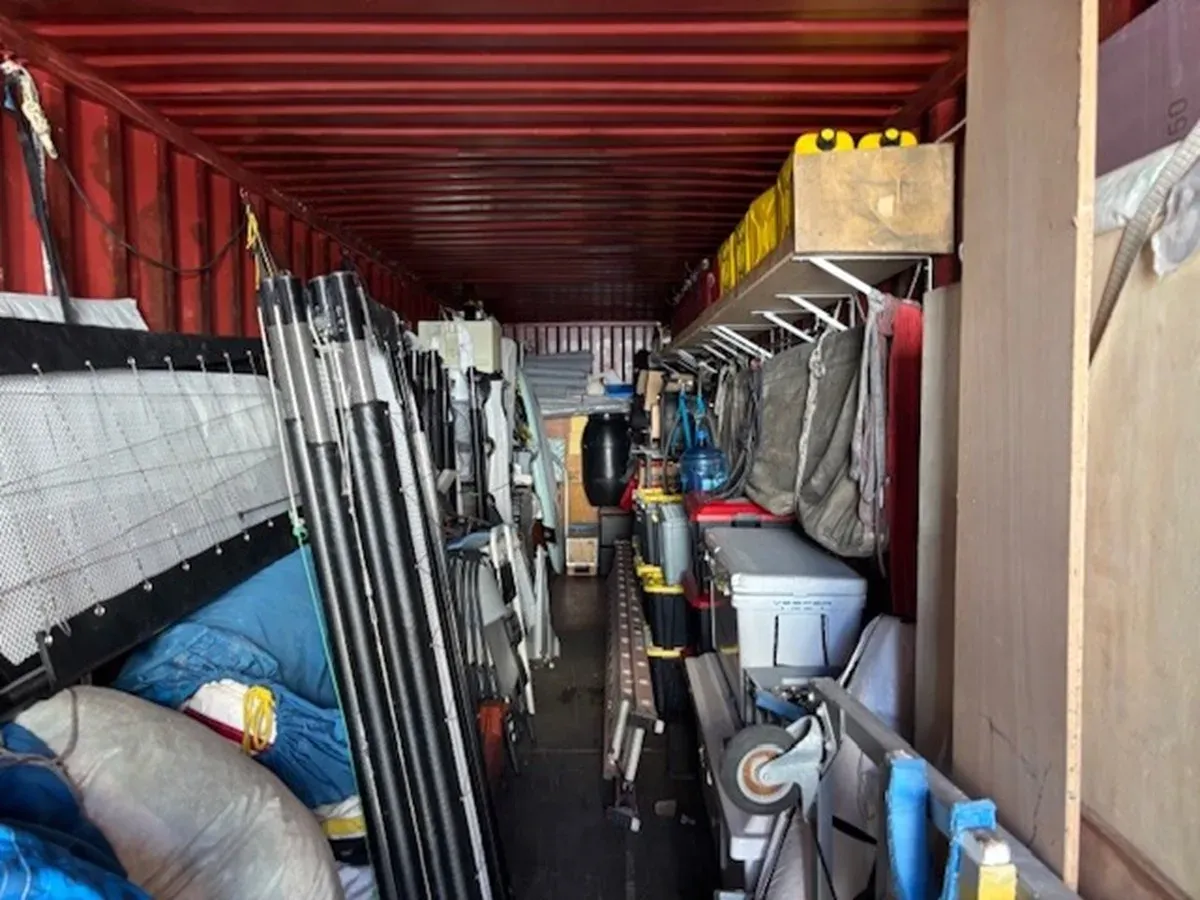
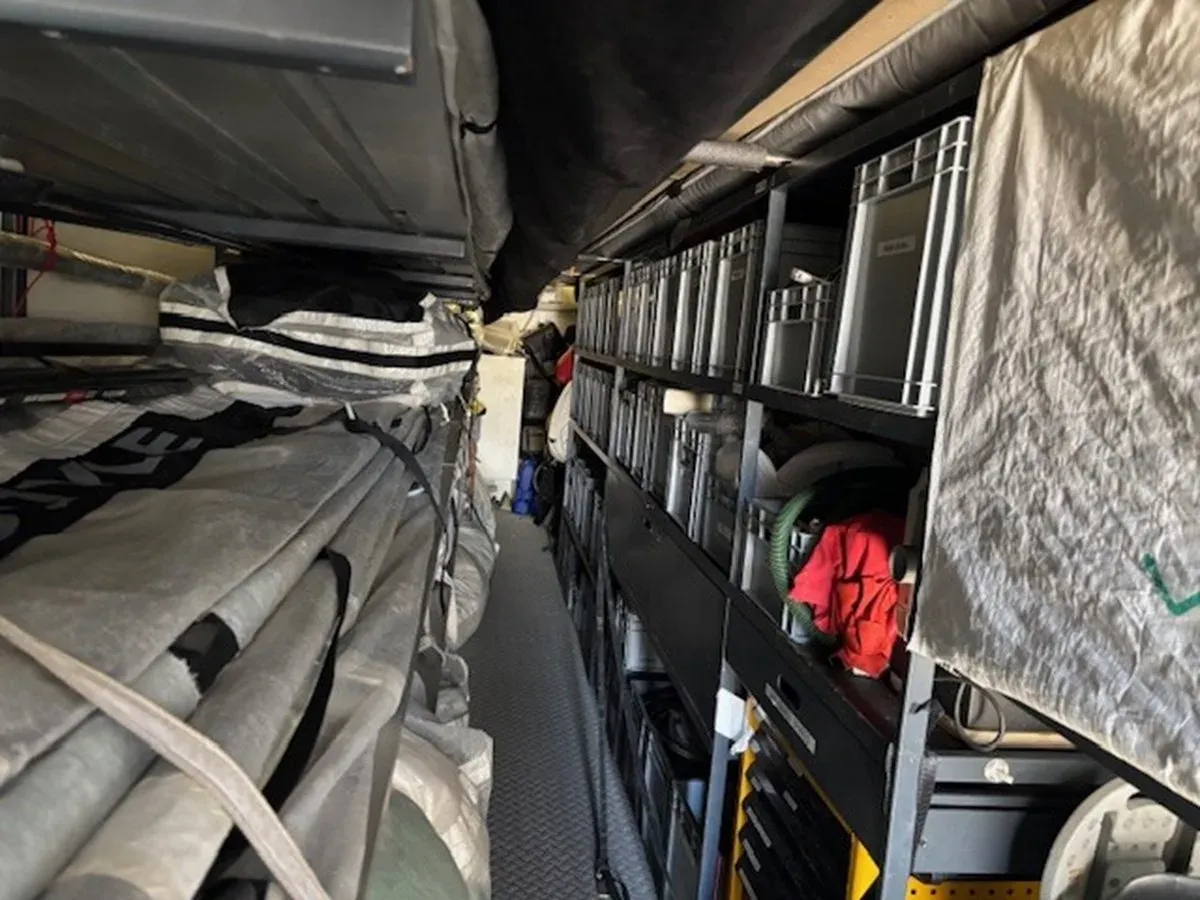
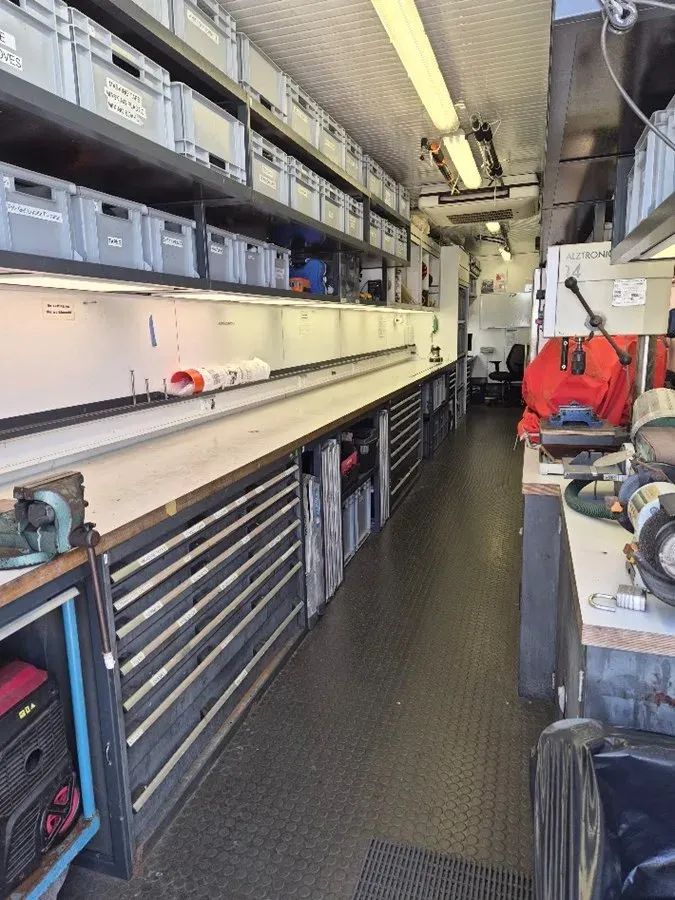
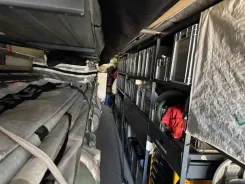
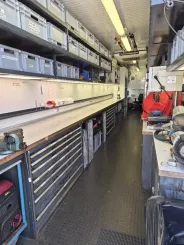
Logistics are streamlined with one 40 ft P CUBE workshop container in High Cube specification, air-conditioned with dual-voltage capabilities and outfitted with a captain’s desk plus a full set of tools and spares; one 40 ft P CUBE sail and storage container in High Cube specification, also air-conditioned with dual-voltage capabilities and fitted with storage racks and spares; and one 40 ft High Cube storage container. Complete inventories of the containers are available upon request.
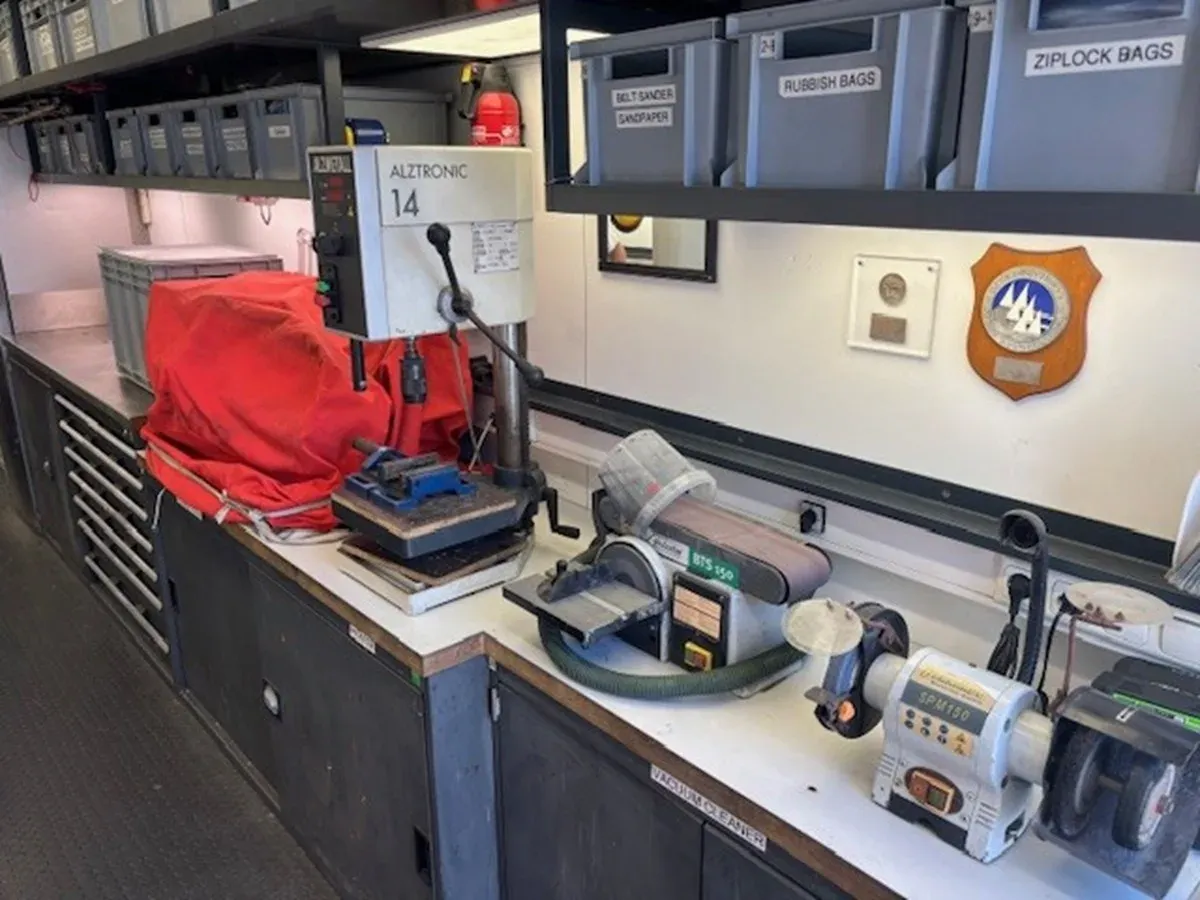
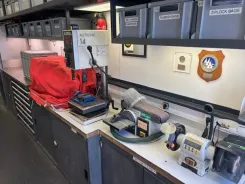
Major tools and repair equipment include a lathe mounted in the shop container, an Alztronic 14 table drilling machine installed in the shop container, a portable air compressor supporting a full set of air tools, and an electrical generator mounted outside the shop container, new in 2023. A small electrical generator supports operations while the boat is on anchor or mooring, and the shop container also houses a mounted grinder and a mounted belt sander.
Safety gear is Category 3 compliant to meet World Sailing regulations and comprises two Ocean Safety twelve-man life rafts, a Jon Buoy, twenty-five Ocean Signal RescueMe MOB1 units, and twenty-five Ocean Signal PLB1 CSTA 310 units. There are two EPIRBs, one with hydrostatic release and one in the grab bag, along with AIS coverage. Personal equipment includes twenty-two inflatable life jackets, plus a few older extras, twenty-two tethers and sprayhoods, and twenty-two bum bags each containing a personal AIS unit, knife, and electronic flare.
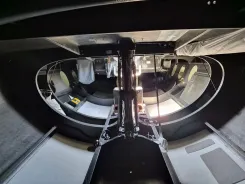
Offshore and delivery gear is thoughtfully curated, with a single-burner stove, a Spectra watermaker pickled since 2020, and a gimbaling carbon toilet mounted forward of the mast using disposal bags. Additional equipment includes a 10-liter water tank, an offshore galley module, ten offshore hinging bunks, an inflatable air gasket system on the foredeck hatch, Ti offshore pit bags, and offshore wheel guards.
A comprehensive suite of spares underpins reliable performance: a spare carbon steering wheel (T1), a spare Ti pulpit with push pulpit, stanchions, and lifeline, and a range of engine spares including an alternator, filters, and hoses. There is also a used spare engine, good for parts and ready for rebuild. Electrical spares include a spare 48-volt battery plus electronic displays, switches, relays, and routers. The water ballast system is supported by a spare pump, an air compressor, four-inch and eight-inch butterfly valves, and a complete set of sensors and relays. Hydraulic spares include a rotary pump, a hand pump, miscellaneous valves and hoses, a spare manifold (used), and a four-inch carbon pipe. Interceptor parts are already machined and ready to be installed on the transom.
Sails
The Vesper sail inventory is curated for uncompromising performance and meticulous readiness, beginning with the M3 suite for mast number three, finalized in June 2025. The mainsails include M1-A by Doyle, delivered in Sardinia 2025, and M2-A by Doyle, delivered in June 2025; both are primed for Maxi Worlds and St Tropez 25. Race jibs, cataloged in the race bag, comprise J1-A by Doyle, delivered in Sardinia 2025; J1.5-A by Doyle, delivered in June 2025; J2-A by Doyle, delivered in June 2025; J3-A by Doyle, delivered in June 2025; and J4-A by Doyle, delivered in Sardinia 2025—each specified for Maxi Worlds and St Tropez 25. The race A sail selection features A1-A by Doyle, delivered in June 2025; A1.5-A by Doyle, delivered in Sardinia 2025; A1.5-B by Doyle, delivered in Sardinia 2025; A2-A by Doyle, delivered in June 2025; A2 Plus - A by Doyle, delivered in June 2025; and A4 - A by Doyle, delivered in Sardinia 2025, all prepared for Maxi Worlds and St Tropez 25. Reaching sails extend the competitive range with JT-A by Doyle, SS-A by Doyle, GS - A by Doyle, and MHCO - A by Doyle, each delivered in June 2025 and targeted for Maxi Worlds and St Tropez 25. For inshore resilience, storm sails include a Storm Trysail by Quantum in lightweight construction, a Storm Jib by Quantum in lightweight construction, and a Storm Jib by North in Spectra.
Complementing this, the M2 sails for mast number two are organized and containerized for swift deployment. The mains comprise M1 - A by Doyle and M2 - B by Doyle, both bricked in the red container. Jibs include J1.5 D by Doyle, bricked in the red container; J2 - C by Doyle, stowed in the sail container; and J4 - B by Doyle, also in the sail container. The A sail suite encompasses A1-0 (ORC) by North in the red container; A1.5 C by Doyle in the sail container; A2-A by Doyle in the red container; A2-B by Doyle in the red container; A2 - C by Doyle in the sail container; and A2+-B by Doyle in the red container. Reaching capability is further covered with GS - A by Doyle in the red container and SS A by Doyle in the red container. For reliable passage-making, delivery sails include a Big Jib - Spectra by North in the red container and a Small Jib by Evolution in the red container.
Vesper
Vesper, originally launched as Momo in 2014, was built by Persico Marine in Italy to the highest standards of grand prix race boat construction. Conceived as a no-compromise Maxi racer, she embodies the pinnacle of performance, technology, and reliability in the competitive sailing arena.
A two-owner yacht, Vesper has enjoyed continuous professional stewardship and significant ongoing investment, with each owner diligently maintaining and upgrading her to keep her at the forefront of Maxi racing performance. Her pedigree is undeniable: a three-time Rolex Maxi Worlds Champion with seven podium finishes in eight Rolex Maxi World Championships, and winner of the ORC North American Championship, she stands as one of the most successful Maxi racing yachts of her generation.
In 2025, Vesper underwent a major performance upgrade program that introduced a new mast, boom, and standing rigging; a new-generation racing sail inventory developed around the new rig, with the racing sails having completed only two events; and the addition of 2,000-liter water ballast tanks per side, markedly increasing power, stability, and overall performance potential. Together, these enhancements have positioned her as a truly modern Maxi racer, ready to compete at the highest level.
Currently located in La Ciotat, France, Vesper is fully prepared and race-ready for the Rolex Maxi Worlds and the world’s premier Maxi racing events. A proven champion and a fully upgraded platform, she presents a rare opportunity to acquire one of the most successful Maxi racers in the world.
Remarks / exclusions / disclaimer
Please note that the vessel name “Vesper” and the hailing port “The Creek” are reserved and will not convey with the sale. Within twelve months of the date of purchase, the Buyer shall repaint the hull and remove all existing hull graphics, vessel name, and hailing port markings. The Company offers the details of this vessel in good faith but makes no representations or warranties, express or implied, regarding the accuracy of the information provided or the condition of the vessel. Prospective buyers are encouraged to conduct their own due diligence and to instruct their appointed representatives, brokers, surveyors, and other qualified professionals to verify any and all details they wish to confirm, including but not limited to vessel specifications, listing information, equipment, inventory, and condition. This vessel is offered subject to prior sale, price change, or withdrawal from the market without notice.
Specifications
- Length:
- 72' (21.95m)
- Beam:
- 18' (5.75m)
- Draft:
- 17.552' (5.35m)
- Year Built:
- 2014
- Builder:
- PERSICO MARINE
- Category:
- Sail yachts
- Cruise Speed:
- 8.4 Kts.
- Max Speed:
- 30 Kts.
- Location:
- France



Yacht name «VESPER» – PERSICO MARINEis for sale and located in La Ciotat, France
Sail yachts «VESPER» built by manufacturer PERSICO MARINE in 2014— available for sale. Yacht location: France. If you are looking to buy a yacht «VESPER» or need additional information on the purchase price of this PERSICO MARINE,
please call: +1 (954) 274-4435 USAOnly deal with professionals!