
 Licensed Yacht BrokersSales and service of yachts and ships
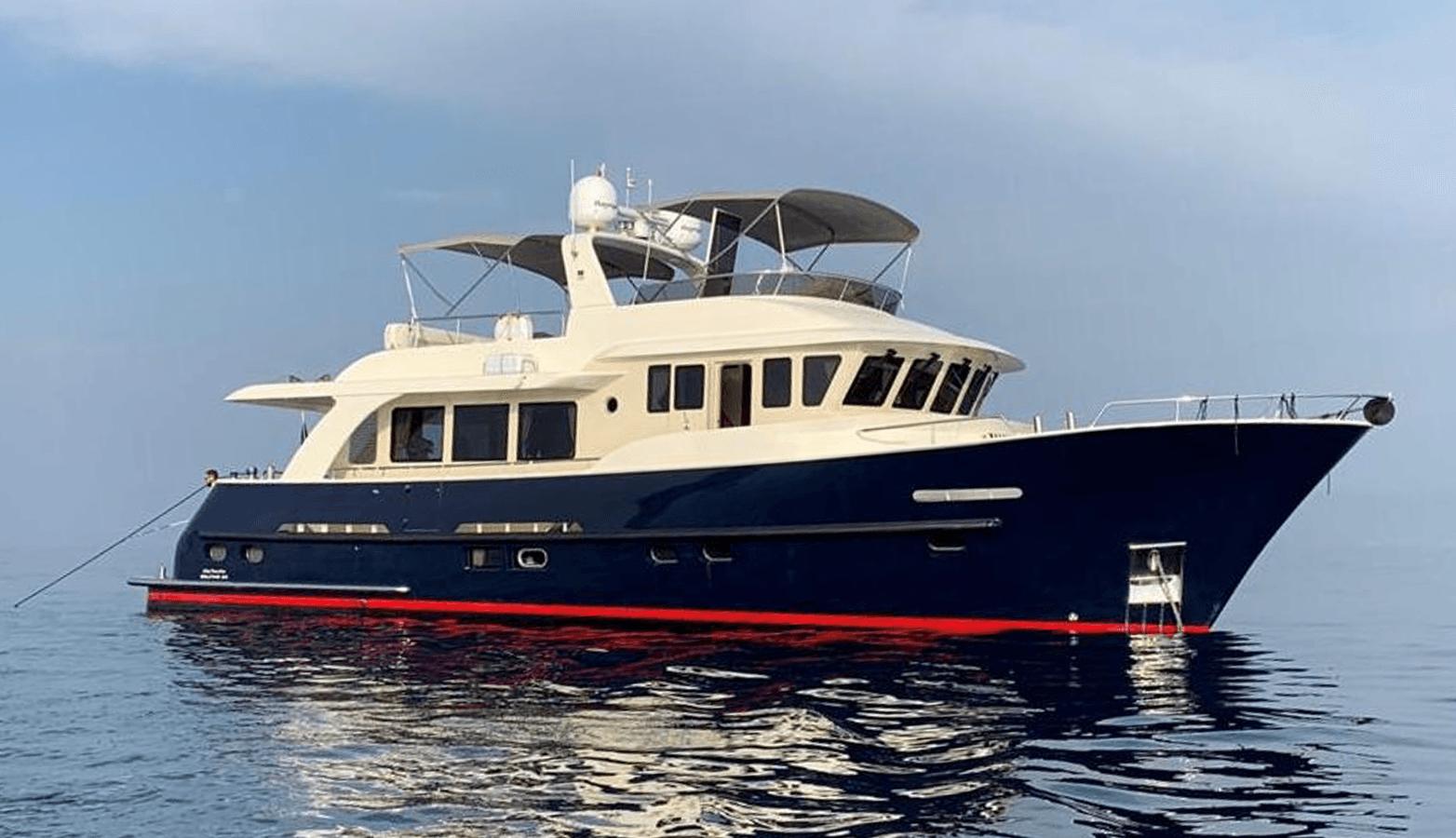
DE ALM - For Sale
Company History
English: De Alm (often styled Jachtwerf De Alm or Alm Jachtbouw) is a Dutch builder best known for robust, steel displacement motor yachts under the Alm Trawler and Almkotter names. Rooted in the Netherlands’ long tradition of inland- and coastal-waterway shipbuilding, the yard has focused for decades on crafting semi-custom yachts for discerning owners who value reliability, safety, and long-distance cruising comfort over fashion trends. Rather than mass production, De Alm has sustained a workshop culture that emphasizes thick-gauge steel work, practical layouts, meticulous systems installation, and hand-finished interiors.
The company’s portfolio evolved from classic “kotter” (cutter-style) steel motor cruisers optimized for the rivers, canals, and coastal passages of Northwest Europe, to the raised-pilothouse trawler yachts that became the hallmark of the brand. These trawlers typically feature wide side decks, deep bulwarks, substantial ground tackle, and the kind of engine-room accessibility that experienced cruisers expect. Over time, De Alm refined hull forms from multi-chine to more sophisticated profiles (including round-bilge variants in certain models), improving efficiency, comfort, and directional stability at displacement speeds.
Many De Alm yachts between roughly 10 and 17 meters have been delivered, and the brand’s presence on brokerage markets in the Netherlands, Germany, the UK, and Scandinavia speaks to its established owner community and to the durability of its steel construction. While the exterior style remains purpose-driven, interiors have increasingly reflected the semi-custom approach: owners select timbers, lighting, and system options to suit cruising profiles, whether that’s year-round living aboard or seasonal passage-making.
Throughout its development, De Alm has kept its focus on Dutch shipbuilding values—purposeful engineering, conservative load margins, abundant tankage, and ease of maintenance—qualities that continue to attract owner-operators who prize self-sufficiency and predictable running costs. The result is a reputation for honest, seaworthy yachts that feel at home on the IJsselmeer, the North Sea coast, and the intricate lattice of European canals and rivers.
Nederlands: De Alm (ook bekend als Jachtwerf De Alm of Alm Jachtbouw) staat bekend om robuuste stalen verplaatsingsjachten onder de namen Alm Trawler en Almkotter. Vanuit de Nederlandse traditie van scheepsbouw voor binnenwateren en kustvaart bouwt de werf al decennialang semi-custom jachten voor eigenaren die betrouwbaarheid, veiligheid en comfort op lange afstand belangrijker vinden dan mode. In plaats van serieproductie kiest De Alm voor ambachtelijkheid: dikwandig staalwerk, praktische indelingen, zorgvuldig aangelegde systemen en met de hand afgewerkte interieurs.
Het portfolio ontwikkelde zich van klassieke kotters—geoptimaliseerd voor rivieren, kanalen en kustwateren—naar verhoogde pilothouse-trawlers, inmiddels het handelsmerk van het merk. Kenmerkend zijn brede gangboorden, hoge verschansing, forse ankeruitrusting en goed toegankelijke machinekamers. In de loop der jaren zijn de rompvormen verfijnd, van multiknik naar meer geavanceerde (waaronder rondspantvarianten bij bepaalde modellen), met betere efficiëntie, comfort en koersvastheid bij verplaatsingssnelheden.
Veel De Alm-jachten tussen circa 10 en 17 meter zijn geleverd. De zichtbaarheid op de makelaarsmarkt in Nederland, Duitsland, het Verenigd Koninkrijk en Scandinavië wijst op een trouwe eigenarengemeenschap en op de duurzaamheid van staalbouw. Hoewel het exterieur doelmatig blijft, zijn de interieurs steeds meer op maat: eigenaren kiezen houtsoorten, verlichting en systeemopties passend bij hun vaarprofiel—van permanent wonen aan boord tot seizoensmatig toeren.
Door de jaren heen bleef de focus op Nederlandse waarden: doordachte engineering, conservatieve veiligheidsmarges, ruime tankinhoud en onderhoudsgemak. Zo bouwde De Alm een reputatie op voor eerlijke, zeewaardige jachten die zich thuis voelen op het IJsselmeer, langs de Noordzeekust en in het fijnmazige netwerk van Europese binnenwateren.
Deutsch: De Alm (auch als Jachtwerf De Alm oder Alm Jachtbouw bekannt) ist eine niederländische Werft, die für robuste Stahl-Verdränger unter den Bezeichnungen Alm Trawler und Almkotter steht. Verwurzelt in der niederländischen Binnen- und Küstenschiffbautradition fertigt die Werft seit Jahrzehnten Semi-Custom-Yachten für Eigner, die Zuverlässigkeit, Sicherheit und Langfahrtkomfort über kurzlebige Trends stellen. Statt Massenproduktion setzt De Alm auf handwerkliche Fertigung: stark dimensionierter Stahlbau, praxisnahe Layouts, sorgfältige Systeminstallation und individuell ausgebaute Interieurs.
Das Angebot entwickelte sich von klassischen „Kottern“ zu Raised-Pilothouse-Trawlern—heute das Markenzeichen. Typisch sind breite Seitendecks, hohe Schanzkleider, kräftige Ankeranlagen und gut zugängliche Maschinenräume. Mit der Zeit wurden die Rumpfformen verfeinert (von Mehrknick- zu rundspantähnlichen Varianten in bestimmten Modellen) für mehr Effizienz, Komfort und Kursstabilität bei Verdrängerfahrt.
Viele De Alm-Yachten zwischen etwa 10 und 17 Metern wurden ausgeliefert. Die starke Präsenz auf dem Gebrauchtmarkt in den Niederlanden, Deutschland, Großbritannien und Skandinavien belegt die beständige Eignerbasis und die Langlebigkeit des Stahlbaus. Interieurs sind semi-custom und spiegeln die jeweiligen Fahrprofile wider, vom ganzjährigen Bordleben bis zur saisonalen Langfahrt.
Konsequent pflegt De Alm niederländische Tugenden: ingenieurmäßige Solidität, großzügige Reserven, große Tankvolumina und Wartungsfreundlichkeit. Das Resultat ist ein Ruf für ehrliche, seetüchtige Yachten, die auf IJsselmeer, Nordseeküste und europäischen Binnenwasserstraßen gleichermaßen überzeugen.
Français: De Alm (souvent nommé Jachtwerf De Alm ou Alm Jachtbouw) est un chantier néerlandais réputé pour ses yachts à déplacement en acier, notamment les gammes Alm Trawler et Almkotter. Héritier de la tradition batave de construction pour la navigation intérieure et côtière, le chantier privilégie depuis des décennies la fabrication semi-custom destinée aux propriétaires recherchant fiabilité, sécurité et confort sur longue distance. Plutôt que la production de masse, De Alm cultive l’artisanat: acier épais, plans de pont pratiques, systèmes soignés et boiseries réalisées à la main.
L’offre est passée des « kotters » classiques aux trawlers à timonerie surélevée, signe distinctif de la marque. Ils se caractérisent par de larges passavants, des pavois élevés, un mouillage dimensionné généreusement et une excellente accessibilité technique. Les carènes ont été optimisées (du multi-bouchain vers des formes plus rondes sur certains modèles), améliorant rendement, confort et stabilité de route à vitesse de déplacement.
De nombreux yachts De Alm de 10 à 17 mètres naviguent aujourd’hui. Leur présence soutenue sur les marchés de courtage des Pays-Bas, d’Allemagne, du Royaume-Uni et de Scandinavie témoigne de la fidélité des propriétaires et de la durabilité de la construction acier. Les aménagements intérieurs, semi-personnalisables, s’adaptent aux programmes de navigation: vie à bord à l’année ou croisière saisonnière.
En conservant les valeurs néerlandaises—ingénierie pragmatique, marges de sécurité, importantes capacités de carburant et de stockage, maintenance facilitée—De Alm s’est forgé une réputation de yachts honnêtes et marins, à l’aise sur l’IJsselmeer, la côte de la mer du Nord et le réseau des voies navigables européennes.
Español: De Alm (también Jachtwerf De Alm o Alm Jachtbouw) es un astillero neerlandés reconocido por sus yates de desplazamiento en acero, en particular las líneas Alm Trawler y Almkotter. Con raíces en la tradición holandesa de construcción para aguas interiores y navegación costera, la empresa se centra desde hace décadas en proyectos semi-custom para armadores que priorizan fiabilidad, seguridad y confort de larga distancia. En lugar de producción en serie, De Alm mantiene una cultura artesanal: acero de gran espesor, cubiertas prácticas, instalación meticulosa de sistemas y ebanistería a medida.
La gama evolucionó de los “kotter” clásicos a los trawlers con timonera elevada, hoy emblema de la marca. Rasgos distintivos: pasillos anchos, altos baos y candeleros, equipos de fondeo sobredimensionados y salas de máquinas accesibles. Con el tiempo, las formas de casco pasaron de multiquilla a variantes más redondeadas en algunos modelos, ganando eficiencia, comodidad y estabilidad direccional a velocidad de desplazamiento.
Numerosas unidades entre 10 y 17 metros se han entregado y navegan por toda Europa. Su presencia constante en los mercados de ocasión de Países Bajos, Alemania, Reino Unido y Escandinavia confirma la durabilidad del acero y la fidelidad de su base de propietarios. Los interiores—semi-personalizados—se adaptan a distintos programas de crucero, desde vivir a bordo todo el año hasta viajar por temporadas.
Fiel a los valores neerlandeses—ingeniería sensata, amplias reservas estructurales, gran capacidad de tanques y facilidad de mantenimiento—De Alm se ha ganado la reputación de yates honestos y marineros, aptos para el IJsselmeer, la costa del Mar del Norte y la densa red de canales y ríos europeos.
Русский: De Alm (Jachtwerf De Alm, Alm Jachtbouw) — нидерландская верфь, известная прочными стальными моторными яхтами водоизмещающего типа под марками Alm Trawler и Almkotter. Опираясь на давние традиции голландского судостроения для внутренних и прибрежных вод, компания десятилетиями строит полукастомные суда для владельцев, ценящих надежность, безопасность и комфорт на дальних переходах. Вместо конвейера — ремесленный подход: толстый стальной корпус, практичные компоновки, аккуратный монтаж систем и индивидуально отделанные интерьеры.
Ассортимент эволюционировал от классических «каттеров» к траулерам с приподнятой рубкой — визитной карточке бренда. Характерны широкие проходы, высокие фальшборта, мощное якорное оборудование и удобный доступ к машинному отделению. Со временем формы корпусов совершенствовались (от многокилеватых к более «круглым» вариантам на ряде моделей), что повысило эффективность, комфорт и курсовую устойчивость на водоизмещающей скорости.
Многие яхты De Alm длиной примерно 10–17 м эксплуатируются по всей Европе. Стабильное присутствие на брокерском рынке Нидерландов, Германии, Великобритании и Скандинавии подтверждает долговечность стальной постройки и лояльность владельцев. Полукастомные интерьеры настраиваются под задачи — от круглогодичного проживания до сезонных переходов.
Сохраняя голландские ценности — инженерную основательность, большие запасы прочности, солидные объемы топливных и водяных танков, удобство обслуживания — De Alm снискала репутацию честных, мореходных яхт, одинаково уверенно чувствующих себя на Эйсселмере, у побережья Северного моря и на европейских реках и каналах.
中文(简体): De Alm(常见名称为 Jachtwerf De Alm 或 Alm Jachtbouw)是荷兰的钢制位移型机动游艇建造商,以 Alm Trawler 与 Almkotter 系列著称。植根于荷兰内河与近海船舶制造传统,船厂长期专注于半定制化产品,面向重视可靠性、安全性与远航舒适性的船东。与流水线生产不同,De Alm 保持工坊式作业:厚规格钢结构、以实用为导向的甲板布局、细致的系统安装以及手工完成的木作内饰。
品牌从经典“渔护式(kotter)”钢艇发展到抬高驾驶楼的远洋拖网风格(trawler)游艇——这已成为其标志。其典型特征包括:宽阔侧甲板、高舷墙、强悍锚泊设备以及易于维护的机舱。随着时间推移,船体线型从多折线发展为更圆润的形式(部分型号),在位移航速下获得更高效率、舒适性与航向稳定性。
目前,长度约 10–17 米的 De Alm 游艇广泛活跃于欧洲水域。其二手游艇在荷兰、德国、英国与斯堪的纳维亚市场的稳健表现,体现了钢制建造的耐久度与用户群体的粘性。室内布局与工艺为半定制,可根据居船或季节性远航需求灵活配置。
坚持荷兰造船价值观——工程严谨、保有充足安全余量、充裕油水舱容以及便于维护——De Alm 赢得了“踏实、耐海”的口碑,适用于艾瑟尔湖、北海沿岸以及欧洲纵横交错的内河与运河。
Country of Origin
English: The Netherlands.
Nederlands: Nederland.
Deutsch: Niederlande.
Français: Pays-Bas.
Español: Países Bajos.
Русский: Нидерланды.
中文(简体): 荷兰。
Manufacturing Locations
English: De Alm builds in the Netherlands, executing hull fabrication and full fit-out domestically. The yard typically partners with established Dutch steel specialists, coatings experts, and marine-systems subcontractors, keeping the supply chain local and craftsmanship standards consistent. Sea trials and commissioning are conducted on Dutch inland waterways and nearby coastal areas, enabling thorough shakedowns before delivery. The concentration of suppliers, painters, joiners, and metalworkers in the Dutch river-delta heartland provides a mature ecosystem that supports repeatable quality, timely refit support, and long-term parts availability.
Nederlands: De Alm bouwt in Nederland, waarbij rompconstructie en complete afbouw lokaal plaatsvinden. De werf werkt doorgaans samen met ervaren Nederlandse staallassers, coaters en systeemleveranciers, zodat de keten kort blijft en de kwaliteit gewaarborgd is. Proefvaarten en oplevering vinden plaats op Nederlandse binnenwateren en nabijgelegen kustgebieden, wat grondige tests vóór overdracht mogelijk maakt. De concentratie van toeleveranciers en vakmensen in het Nederlandse rivierengebied ondersteunt consistente kwaliteit, snelle refits en langdurige beschikbaarheid van onderdelen.
Deutsch: De Alm fertigt in den Niederlanden, mit Rumpfbau und Komplettausbau im Land. Die Werft kooperiert mit etablierten niederländischen Stahlbauern, Beschichtungsspezialisten und Systemlieferanten; die lokale Wertschöpfung sichert gleichbleibende Qualität. Probefahrten erfolgen auf Binnengewässern und nahegelegenen Küstenrevieren. Das enge Netzwerk aus Zulieferern, Lackierern, Tischlern und Metallbauern im niederländischen Rheindelta-Raum ermöglicht verlässliche Qualität, effiziente Refit-Arbeiten und gute Teileverfügbarkeit über Jahre.
Français: De Alm construit aux Pays-Bas, en assurant localement la fabrication des coques et l’aménagement complet. Le chantier collabore avec des spécialistes néerlandais de l’acier, des revêtements et des systèmes marins, ce qui garantit une chaîne d’approvisionnement courte et une qualité homogène. Les essais et la mise en service se déroulent sur les voies intérieures néerlandaises et en zones côtières proches. L’écosystème régional de fournisseurs et d’artisans soutient une qualité reproductible, des refits efficaces et une disponibilité durable des pièces.
Español: De Alm construye en los Países Bajos, con fabricación de casco y armamento integral realizados localmente. El astillero trabaja con especialistas neerlandeses en acero, recubrimientos y sistemas marinos, manteniendo una cadena de suministro cercana y estándares homogéneos. Las pruebas y la puesta en servicio se efectúan en aguas interiores y zonas costeras de los Países Bajos. El ecosistema regional de proveedores y oficios posibilita calidad constante, refits ágiles y disponibilidad de repuestos a largo plazo.
Русский: De Alm строит в Нидерландах: изготовление корпуса и полная достройка выполняются локально. Верфь сотрудничает с голландскими специалистами по стали, защитным покрытиям и судовым системам, что обеспечивает короткую цепочку поставок и стабильное качество. Ходовые испытания проходят на внутренних водных путях и в прибрежных районах Нидерландов. Развитая сеть местных подрядчиков упрощает сервис, модернизацию и снабжение запчастями.
中文(简体): De Alm 在荷兰建造,船体制造与完整舾装均在本土完成。船厂与本地钢结构、涂装及海事系统专家合作,确保供应链紧密与品质一致。试航与交付前调试在荷兰内河及近岸水域进行,便于充分测试。荷兰河网三角洲区域成熟的产业集群,有助于稳定质量、快捷保养与长期零部件供给。
Reputation and Quality
English: Within the European steel-motor-yacht segment, De Alm is regarded as a “builder’s builder”: practical, conservative where it matters, and keenly focused on safety, serviceability, and ride comfort at displacement speeds. Key hallmarks include:
- Construction: Fully welded steel hulls with robust scantlings; multi-chine or round-bilge forms depending on model and year. Superstructures are typically steel as well, integrating sturdy bulwarks and substantial railings. Proper corrosion protection—abrasive blasting, epoxy priming, and two-component polyurethane topcoats—supports longevity when maintained per schedule.
- Deck and exterior design: Wide side decks, tall bulwarks, Portuguese-bridge features on many trawlers, oversized mooring hardware, and serious anchoring arrangements. Practical fendering and rubrails reflect use in locks and quays common to European cruising.
- Systems engineering: Thoughtful machinery spaces with clear access to filters, strainers, shaft seals, and steering gear. Single-screw propulsion with a large, slow-turning diesel is common; twin installations appear on select builds. Generous tankage and heavy-duty mechanical components suit long-range passages. Electrical installations generally follow conservative Dutch standards, with tidy looms, labeled panels, and room for upgrades.
- Comfort underway: Steel hull mass, moderate displacement, and long waterlines yield easy motion and predictable tracking. Passive or fixed bilge keels often reduce roll; active fin stabilization can be integrated on larger builds depending on owner requirements. Sound and thermal insulation, double glazing on some boats, and careful exhaust routing contribute to low-vibration, low-noise cruising.
- Interior craft: Semi-custom joinery—frequently in warm hardwoods—augmented by modern lighting and ventilation. Layouts typically emphasize a safe internal stair between salon and pilothouse, an owner’s stateroom with ample storage, and guest cabins adaptable for family cruising or extended liveaboard life.
Owners and surveyors often remark on straightforward serviceability: wiring runs are accessible, bilges are cleanly finished, and structural members are easy to inspect. Resale values in Benelux and Germany have been resilient, helped by the yard’s reputation and the demand for steel trawlers capable of both canals and coastal passages. While De Alm’s profile is understated—rarely chasing show-floor headlines—the brand’s dependability has been its strongest marketing. In short, De Alm yachts are built to be used, maintained, and kept for the long haul.
Nederlands: Binnen het segment van stalen motorjachten geldt De Alm als “bouwer voor bouwers”: nuchter, conservatief waar het telt, en gericht op veiligheid, onderhoudsgemak en comfort bij verplaatsingssnelheid. Kenmerken:
- Constructie: Volledig gelaste stalen rompen met stevige spanten; multiknik of rondspant afhankelijk van model en bouwjaar. Opbouwen veelal eveneens in staal, met hoge verschansingen en robuuste relingen. Juiste conservering—stralen, epoxy primers en tweecomponenten lakken—zorgt bij goed onderhoud voor lange levensduur.
- Dek en exterieur: Brede gangboorden, hoge verschansing, vaak een Portugese brug op trawlers, zware bolders en een serieuze ankerinstallatie. Doordachte stootranden en stootwillen zijn berekend op sluizen en kades in Europa.
- Systemen: Doordachte machinekamers met goede toegang tot filters, waterzeven, schroefaskokers en stuurinrichting. Veelal een langzaamlopende diesel op één schroef; dubbele installaties komen voor. Royale tankinhoud en zwaar uitgevoerde componenten passen bij lange tochten. Elektrische installaties volgen conservatieve Nederlandse standaarden met overzichtelijke bekabeling en ruimte voor upgrades.
- Comfort onderweg: Massa van de stalen romp, gematigde waterverplaatsing en lange waterlijn geven een rustige beweging en koersvastheid. Passieve of vaste kimkielen helpen rol verminderen; actieve vin-stabilisatie is op grotere schepen mogelijk. Isolatie, dubbel glas op sommige boten en zorgvuldige uitlaatvoering beperken geluid en trillingen.
- Interieur: Semi-custom houtwerk, vaak in warme hardhoutsoorten, met moderne verlichting en ventilatie. Indelingen bieden veilige interne verbindingen, veel bergruimte en flexibele gastenhutten voor familie of lang verblijf aan boord.
Eigenaren en experts waarderen de servicevriendelijkheid: toegankelijke kabelroutes, nette bilges en goed te inspecteren structurele delen. Restwaarde in de Benelux en Duitsland is solide, dankzij reputatie en vraag naar stalen trawlers die zowel kanalen als kust aankunnen. De Alm blijft bescheiden in marketing, maar de betrouwbaarheid spreekt voor zich.
Deutsch: Im europäischen Segment stählerner Motorverdränger genießt De Alm den Ruf eines „ehrlichen“ Bauers, der Sicherheit, Wartungsfreundlichkeit und Komfort an erster Stelle sieht. Wesentliche Merkmale:
- Konstruktion: Durchgeschweißte Stahlrümpfe mit starken Dimensionen; je nach Modell/ Baujahr Mehrknick- oder Rundspantcharakter. Meist stählerne Aufbauten mit hohen Schanzkleidern und massiven Relings. Korrosionsschutz via Strahlen, Epoxy-Primer und 2K-Decklacken.
- Deck/Exterieur: Breite Seitendecks, hohe Schanz, portugiesische Brücke bei vielen Trawlern, großzügige Klampen, ernsthafte Ankerausrüstung; Scheuerleisten für Schleusen-/Kai-Betrieb.
- Systeme: Übersichtlich geplante Maschinenräume; üblicherweise Einmotorisierung mit großvolumigem, langsam laufendem Diesel; Doppelmotorisierung teils möglich. Große Tankvolumina und konservative Auslegung für Langfahrt. Elektrik nach niederländischem Standard, sauber beschriftet und ausbaufähig.
- Fahrkomfort: Stahlmasse und lange Wasserlinie ergeben ruhige Bewegungen und guten Geradeauslauf. Kimkiele helfen gegen Rollen; aktive Stabilisatoren optional bei größeren Einheiten. Schall-/Wärmedämmung, teils Doppelverglasung, vibrationsarme Abgasanlagen.
- Interieur: Semi-Custom-Tischlerei, warme Hölzer, moderne Beleuchtung/Belüftung; sichere interne Wege, viel Stauraum und flexible Gästekabinen.
Eigner loben die einfache Wartung und solide Werftqualität. Wiederverkaufswerte sind insbesondere in Benelux und Deutschland stabil. De Alm tritt wenig laut auf, punktet aber mit Dauerhaltbarkeit.
Français: Dans la catégorie des yachts à déplacement en acier, De Alm est réputé pour une approche pragmatique et fiable. Points clés:
- Construction: Coques acier entièrement soudées, dimensionnées généreusement; carènes à bouchains multiples ou plus rondes selon modèles/époques. Superstructures souvent en acier avec pavois sécurisants. Protection anticorrosion par sablage, apprêts époxy et laques bi-composants.
- Pont/exterieur: Passavants larges, pavois hauts, « passerelle portugaise » sur de nombreux trawlers, accastillage dimensionné, mouillage sérieux; défenses adaptées aux écluses et quais.
- Systèmes: Compartiments machines accessibles; propulsion mono-vis avec diesel à bas régime fréquente; bi-motorisation possible sur certaines unités. Grandes capacités de réservoirs et composants robustes pour la grande croisière. Installations électriques soignées et évolutives.
- Confort en navigation: Masse de l’acier et grande longueur à la flottaison pour un comportement doux et une bonne stabilité de route; réduction du roulis via quilles de roulis, stabilisation active envisageable sur les grandes unités. Isolation phonique/thermique et vitrages adaptés.
- Intérieurs: Menuiseries semi-personnalisées, essences nobles, éclairage moderne; liaisons internes sûres, nombreux rangements, cabines invitées polyvalentes.
Les propriétaires mettent en avant la facilité d’entretien et la durabilité. Les valeurs résiduelles sont solides sur les marchés du Benelux et d’Allemagne. La marque privilégie la substance à l’effet d’annonce.
Español: En el segmento europeo de yates de acero a desplazamiento, De Alm goza de prestigio por su enfoque práctico y fiable. Puntos clave:
- Construcción: Cascos de acero totalmente soldados, con dimensiones generosas; formas multiquilla o más redondeadas según modelo/año. Superestructuras generalmente en acero con altos pantoques. Protección anticorrosiva mediante granallado, imprimaciones epoxi y acabados bicomponentes.
- Cubierta/exterior: Pasillos amplios, bordas altas, puente portugués en muchos trawlers, herrajes y fondeo sobredimensionados; defensas pensadas para esclusas y muelles europeos.
- Sistemas: Acceso claro a los equipos en sala de máquinas; propulsión mono-hélice con diésel de bajo régimen habitual; doble motorización en ciertas unidades. Tanques generosos y componentes robustos para largas travesías. Instalación eléctrica ordenada y ampliable.
- Confort en navegación: Masa del acero y eslora en flotación que proporcionan movimientos suaves y estabilidad direccional; quillas de balanceo pasivas y posibilidad de estabilización activa en esloras mayores. Aislamiento acústico/térmico y gases de escape bien tratados.
- Interiores: Ebanistería semi-custom, maderas nobles y luminotecnia actual; circulación interior segura, abundantes estibas y cabinas versátiles.
Los usuarios destacan el fácil mantenimiento y la solidez general. El valor de reventa es consistente en Benelux y Alemania. Es una marca discreta, centrada en la calidad real.
Русский: В сегменте стальных водоизмещающих яхт De Alm ценят за практичность и надежность. Ключевые особенности:
- Конструкция: Полностью сварные стальные корпуса с солидными размерами набора; многокилеватые или более «круглые» обводы в зависимости от модели/года. Надстройки обычно тоже стальные, с высокими фальшбортами. Антикоррозионная защита: абразивная обработка, эпоксидные праймеры, двухкомпонентные покрытия.
- Палуба/экстерьер: Широкие проходы, высокие фальшборта, «португальский мостик» на многих траулерах, мощные кнехты и якорные устройства; защиты борта с учетом шлюзов и причалов.
- Системы: Удобный доступ к оборудованию; чаще всего один вал с тихоходным дизелем; на отдельных судах — два двигателя. Большие объемы топливных баков, консервативная инженерия для дальнего плавания. Аккуратная электрика с запасом для модернизации.
- Комфорт: Масса стали и длинная ватерлиния обеспечивают мягкую качку и курсовую устойчивость; пассивные кили уменьшают бортовую качку; активные стабилизаторы возможны на крупных корпусах. Шумо- и теплоизоляция, продуманная выхлопная система.
- Интерьер: Полукастомная столярка из ценных пород древесины, современное освещение и вентиляция; безопасные внутренние переходы, много мест хранения, гибкие гостевые каюты.
Судовладельцы отмечают удобство сервиса и долговечность построек. Ликвидность на вторичном рынке Бенилюкса и Германии высокая. Бренд сдержан в рекламе, делая ставку на реальное качество.
中文(简体): 在欧洲钢制位移型机动游艇领域,De Alm 以务实可靠著称。核心要点:
- 结构:全焊接钢制船体,结构尺寸保守有余;依据型号与年代采用多折线或更圆润的线型。上层建筑多为钢制,高舷墙与坚固栏杆一体化。通过喷砂、环氧底漆与双组分面漆实现耐久防腐。
- 甲板/外部:宽侧甲板、高舷墙,许多拖网风格艇配葡式桥;系泊与锚泊设备充足,护舷与防擦装置适应欧洲闸坝与码头环境。
- 系统:机舱布局合理,滤清器、海水滤器、轴封与舵机易于巡检;常见单机推进(大排量低转速柴油机),部分型号可选双机。大油水舱容与重型设备适合长航程;电气系统布置整齐,便于升级。
- 航行舒适性:钢体质量与较长水线带来平稳的航姿与良好循迹性;被动/固定形态的导流或抑摇结构常见,大型艇可选主动稳定。良好隔音隔热与排气路径控制降低噪音与震动。
- 内装:半定制木作,常用温润硬木,结合现代照明与通风;安全的内通道、主舱储物充裕、灵活的客舱配置。
业主与检验人员普遍认可其易维护性与扎实工艺。二手保值在荷兰、德国等市场表现稳定。品牌低调务实,以可靠性立足。
Main Competitors
In the niche De Alm inhabits—robust, steel displacement and semi-displacement motor yachts purpose-built for European canals, rivers, and near-coastal cruising—the competitive set is dominated by Dutch and Northern European yards with long-standing traditions in steel construction. While each competitor has its own design language and business model (from semi-custom craft to efficiently produced series builds), they share core values: practical engineering, conservative naval architecture, and layouts optimized for owner-operators who cruise in variable weather and tight waterways. Below is a detailed map of the principal competitors and close alternatives, with notes on how they overlap with De Alm’s strengths and typical buyer profiles.
- Linssen Yachts
- Positioning: Perhaps the best-known European name in series-built steel motor cruisers.
- Overlap with De Alm: Strong in 30–55 ft (approx. 9–17 m) steel displacement cruisers designed for canals and coastal hops. Linssen’s strength is consistent industrialized quality, a wide dealer network, and refined interior fit-out.
- Why a De Alm buyer might compare: Similar mission profiles (extended European cruising), but Linssen tends to emphasize series standardization and “plug-and-play” ownership, while De Alm historically leaned more toward semi-custom individuality and workboat-inspired trawler styling.
- Aquanaut Yachting
- Positioning: A stalwart of Dutch steel yachtbuilding with a broad model portfolio (inland, coastal, raised-pilothouse variants).
- Overlap: Ranges and layouts that mirror De Alm’s core sweet spot—safe side decks, generous tankage, and practical engine-room access.
- Buyer takeaway: An Aquanaut is often cross-shopped by owners seeking reliable, year-round livability and conservative engineering similar to what De Alm delivers.
- Pedro-Boat
- Positioning: Known for accessible, value-forward steel cruisers with proven layouts and straightforward systems.
- Overlap: Size brackets and owner-operator ethos align closely. Pedro’s styling can be slightly more contemporary in some lines; both brands appeal to cruisers prioritizing maintenance simplicity and ownership cost predictability.
- De Boarnstream (Boarncruiser)
- Positioning: Offers steel and aluminum cruisers with an emphasis on elegant exterior lines and comfortable, contemporary interiors.
- Overlap: Comparable lengths and use-cases—slow, steady, and comfortable touring through European waters, with occasional coastal passages given proper weather windows.
- Buyer takeaway: Those charmed by De Alm’s seamanlike trawler aesthetic might contrast it with Boarncruiser’s more yachty lines and interior flair.
- Smelne Yachts
- Positioning: A respected Dutch builder with deep experience in steel motor yachts and refits.
- Overlap: Similar approach to structural robustness, safe decks, and practical systems. Smelne boats are often praised for sensible layouts and solid craft traditions.
- Buyer takeaway: A frequent alternative for owners who like De Alm’s “no-nonsense” reputation but want to compare finishing details, ergonomics, and pricing.
- Altena Yachting
- Positioning: Strong in bluewater-capable trawler-style steel yachts as well as more modern steel cruisers; known for serious build scantlings.
- Overlap: Altena’s “Blue Water” and expedition-leaning concepts speak directly to the same buyers who admire De Alm Trawlers’ purposeful, seagoing demeanor.
- Buyer takeaway: If you’re drawn to steel trawlers for tougher weather, longer passages, or a higher degree of customization, Altena is a core head-to-head comparison.
- Sturiër Yachts
- Positioning: Premium steel trawler yachts with a focus on seakeeping, raised pilothouses, and longer-range comfort.
- Overlap: Very close in philosophy—raised-pilothouse trawlers, robust foundations, and owner-operator systems access.
- Buyer takeaway: A Sturiër will often be considered by a De Alm admirer who wants offshore-leaning confidence combined with refined interior styling.
- Super Lauwersmeer
- Positioning: Contemporary steel cruisers that blend modern design with the Dutch inland/coastal mission.
- Overlap: Length, materials, and intended waters; often more modern interior presentation than some traditional trawler lines.
- Buyer takeaway: Compare if you favor a newer aesthetic while keeping steel’s benefits (quiet ride, thermal comfort, repairability, and longevity).
- Vri-Jon DSA Yachts
- Positioning: Practical, owner-focused steel motor yachts with emphasis on efficient layouts and sensible engineering.
- Overlap: Direct competitor in the 10–15 m range for inland and near-coastal cruising.
- Buyer takeaway: A solid reference point for value-versus-spec comparison alongside De Alm’s trawler heritage.
- Steeler Yachts
- Positioning: Innovative Dutch yard with steel and aluminum builds, known for design detail and award-winning concepts in several categories.
- Overlap: Steel displacement and semi-displacement cruisers sit in similar size brackets, though Steeler frequently leans into contemporary design cues and custom detailing.
- Buyer takeaway: A comparison for owners who want the tactile benefits of steel but prefer a very modern look and bespoke solutions.
- Zijlmans Jachtbouw
- Positioning: Traditional Dutch steel motor yachts with practical layouts, often seen as durable, family-friendly cruisers.
- Overlap: Similar cruising speeds, comparable hull materials, emphasis on ease of handling.
- Buyer takeaway: Consider if seeking a straightforward steel motor yacht with direct maintenance and service pathways in the Low Countries.
- Pikmeerkruiser
- Positioning: Classic Dutch steel cruisers widely recognized across inland waterways, with layouts prized for liveability.
- Overlap: Similar usage profile (rivers, canals, protected coastal routes); also caters to owner-operators who value simplicity and comfort over speed.
- Buyer takeaway: A baseline comparator for practical interiors, understated styling, and predictable handling.
- Brandsma (Brandsma Vlet and other steel lines)
- Positioning: Associated with traditional Dutch vlet lines—rounded bilges, gentle motion, and timeless looks.
- Overlap: While vlots can be stylistically distinct from raised-pilothouse trawlers, both serve slow, comfortable cruising with seakindly manners.
- Buyer takeaway: For purists who admire classic Dutch workboat DNA—an alternative that trades trawler styling for vlet elegance without sacrificing steel’s virtues.
- Van der Heijden Yachts
- Positioning: Steel and aluminum motor yachts, often a notch more contemporary in styling, with semi-custom flexibility.
- Overlap: Similar size bands and use-cases. Their semi-displacement options tempt owners who want slightly more speed yet maintain cruising comfort.
- Buyer takeaway: Compare if you like De Alm’s build ethos but want a more modern silhouette and potentially different performance envelopes.
- Flevo Ship / Flevo Jachtbouw and similar custom-focused Dutch yards
- Positioning: Bespoke or semi-custom steel yachts, with wide latitude for owner-driven features.
- Overlap: Appeals to buyers who want trawler-like functionality and tough construction, but perhaps with unique layouts or systems.
- Buyer takeaway: If you relish tailoring every detail and accept longer lead times, these yards are logical competitors to a semi-custom De Alm.
Adjacent/Conceptual Alternatives (Non-Steel or Different Scale) While not steel, these brands often appear on the same shopping lists because they fulfill overlapping missions—economical displacement/semi-displacement passagemaking, raised pilothouses, and liveaboard comfort:
- Nordhavn: Resin-infused, ocean-crossing trawlers with transoceanic range. Often larger and more expensive, but conceptual kin to De Alm in philosophy (self-sufficiency, redundancy, range).
- Selene Yachts: GRP trawlers with long-range capability; popular among serious cruisers looking for oceanic readiness without steel’s weight and maintenance profile.
- Bering Yachts: Steel/aluminum expedition yachts typically larger and more oceangoing; relevant if buyers are stretching into true explorer territory.
- Beneteau Swift Trawler: GRP semi-displacement trawlers with faster cruise potential and lightweight efficiencies; an alternative for owners prioritizing speed and a broad dealer service network over steel’s tactile feel and quiet mass.
- Sasga Menorquín (Menorquin Yachts): GRP “lobster” and semi-displacement cruisers with Med-friendly styling, spacious decks, and comfortable accommodations—ideal for protected waters but different aesthetic and material logic than steel kotters/trawlers.
- Hardy/Coffee/Seaward (UK heritage brands, varying statuses through time): GRP expedition-leaning cruisers with pilothouses; valued for seakeeping, albeit typically not steel.
Legacy and Brokerage Comparators A large part of the De Alm conversation happens on the brokerage market, where buyers also weigh:
- Super Van Craft (classic Dutch steel with elegant lines)
- De Groot and various “kotter”-style steel cruisers from the 1970s–1990s
- Ex-working vessels converted for yachting
- Custom one-off steel trawlers by smaller Dutch and German yards
These boats often tempt experienced cruisers who appreciate steel’s repairability and the long service life of a well-protected hull, while understanding the periodic maintenance cadence (coatings, fairing, anodes, window bedding, etc.).
How De Alm Typically Stacks Up
- Construction focus: Like its nearest Dutch peers, De Alm is prized for honest, thick-plate steelwork, careful systems routing, and conservative engineering margins. When buyers compare against Linssen, Aquanaut, Smelne, or Altena, they’re evaluating nuances in hull form (multi-chine vs. round-bilge on some models/years), the accessibility of machinery spaces, and the character of the pilothouse/salon ergonomics.
- Styling and ergonomics: De Alm’s trawlers usually prioritize utility—wide side decks, deep bulwarks, Portuguese bridge features on some models, and workmanlike deck gear. Sturiër or Boarncruiser might present sleeker exteriors or more contemporary interiors; Super Lauwersmeer and Steeler often push modern design language. Preferences tend to be personal and mission-driven.
- Operating domain: All the Dutch steel competitors speak the language of the European Great Loop—Rhine, Meuse, IJsselmeer, Waddenzee weather windows, and the canal networks of France and Germany. Selection often comes down to how much coastal confidence you want (stabilizers, wheelhouse elevation, tankage) and how far you value steel’s motion comfort over lighter, speedier GRP alternatives.
- Ownership model: De Alm is historically semi-custom and lower-volume compared with series-focused brands like Linssen. That benefits buyers who value individuality and systems access tailored to their cruising style. Conversely, series builders can deliver standardized documentation, resale familiarity, and broader dealer networks.
- Resale and community: The Dutch steel ecosystem is mature. Surveyors, painters, metalworkers, and cabinetmakers are plentiful in the Low Countries, which supports both De Alm and its competitors. Resale tends to be healthiest for the well-known names (Linssen, Aquanaut, Boarncruiser, Sturiër, etc.) but De Alm’s trawlers retain a following among experienced cruisers who put seakindly behavior and accessibility above showroom gloss.
Choosing Among Competitors
- If your priority is industrial consistency and a big aftersales footprint: Linssen sets the benchmark for series-built steel cruisers, closely followed by Aquanaut for breadth of offering.
- If you want bluewater-leaning trawler confidence in steel: Compare De Alm closely with Altena and Sturiër.
- If you favor modern aesthetic within steel’s “quiet comfort” paradigm: Shortlist Super Lauwersmeer, Steeler, and Boarncruiser models.
- If budget-to-value and straightforward service are key: Pedro-Boat, Vri-Jon, Zijlmans, and certain Smelne models often deliver excellent practicality per euro.
- If you are open to non-steel in pursuit of speed or broader dealership support: Beneteau Swift Trawler and similar GRP options offer faster passages with simpler exterior maintenance, albeit with a different ride and thermal/acoustic profile than steel.
- If oceanic ambitions loom: Nordhavn or Selene (GRP) and Bering (steel/aluminum) are the next rung up in range and redundancy, though with concomitant increases in size, complexity, and budget.
In summary, De Alm sits in a highly competent field defined by Dutch steelcraft. Its closest competitors share nearly identical mission statements—safe, economical, owner-operated cruising in waters that demand low-speed efficiency, stout construction, and easy maintenance. The final choice tends to revolve less around binary “better/worse” judgments and more around personal sensibilities: how a specific pilothouse feels in sloppy chop, whether the side-deck heights give you confidence in locks, how the engine room is laid out for your reach and eyesight, and whether the yard’s build philosophy resonates with the way you actually cruise. For buyers who connect with De Alm’s trawler DNA, conservative engineering, and workshop ethos, the yard belongs on the same shortlist as Linssen, Aquanaut, Altena, Sturiër, Smelne, and the other Dutch steel specialists who have earned their reputations over decades on Europe’s demanding inland and coastal waters.
Frequently Asked Questions
Question:What type of yachts does De Alm primarily build?
Answer:De Alm is known for robust steel displacement and semi-displacement motor yachts designed for European inland waterways and near-coastal cruising. Two families stand out: traditional “kotter”-style cruisers under the Almkotter name and raised-pilothouse trawlers under the Alm Trawler name. Both emphasize safe side decks, high bulwarks, conservative naval architecture, generous tankage, and straightforward systems suitable for long periods aboard.
Question:How does a De Alm compare to fiberglass trawlers in feel and performance?
Answer:Compared with fiberglass (GRP) trawlers, De Alm’s steel yachts are typically heavier, which often translates to a quieter, more settled motion at displacement speeds and enhanced thermal comfort. Top speeds are modest—generally in the high single digits (knots)—but economy at 6–8 knots and predictable handling in locks and confined waterways are core strengths. Maintenance differs: steel requires diligent coatings management and vigilant corrosion control, offset by the ease of metalwork repairs and the long service life of a well-kept hull.
Question:What are typical hull and superstructure materials?
Answer:The hulls are conventionally built in welded steel with robust scantlings. Superstructures are frequently steel as well, integrating strong bulwarks and guardrails. Certain custom or weight-sensitive builds may incorporate alternative materials for superstructures, but the brand identity is decisively centered on steel craft and the benefits that come with it.
Question:What propulsion and engine arrangements are common?
Answer:The most common configuration is single-screw propulsion with a slow- to mid-speed diesel engine sized for efficient displacement cruising. Horsepower varies with length and displacement, but many yachts fall in the roughly 100–300 hp bracket, with some larger builds offering twin-engine options. Ancillary systems typically include bow thrusters and, on larger boats, optional stern thrusters or stabilization.
Question:Are De Alm yachts suitable for coastal passages, or are they purely inland boats?
Answer:They are optimized for European rivers and canals, but many examples are configured for near-coastal passages given prudent weather windows. Raised-pilothouse trawlers with deep bulwarks, significant ground tackle, and conservative load margins are particularly well-suited to short coastal hops. Exact capability depends on model, equipment, and certification, with numerous examples carrying offshore-oriented CE ratings appropriate to their size and design.
Question:What is the typical cruising speed and range?
Answer:Most De Alm yachts are happiest at 6–8 knots, with top speeds around 8–11 knots depending on length, hull form, and engine choice. Range depends on tankage and loading, but the design ethos favors plentiful fuel and water capacity to support extended time away from the dock. Owners often plan itineraries around efficient, low-stress displacement cruising rather than speed.
Question:How customizable are these yachts?
Answer:Historically, De Alm has pursued a semi-custom approach. Interiors, systems, and deck layouts can be tailored within the constraints of the chosen model and hull. This allows owners to specify storage solutions, cabin arrangements, machinery access details, and equipment packages that reflect their cruising habits, whether seasonal touring or near year-round living aboard.
Question:What are the advantages of the Almkotter versus the Alm Trawler lines?
Answer:Almkotter models embody classic Dutch cutter-inspired motor cruisers and are commonly seen with either aft-cabin (AK) or open-cockpit (OK) arrangements. They excel at inland and protected coastal cruising with practical ergonomics and safe decks. Alm Trawler models add a raised pilothouse, often a Portuguese-bridge style foredeck, and a purposeful trawler aesthetic prized by owner-operators who spend long hours at the helm and value excellent watch-keeping visibility and heavy-weather manners at displacement speeds.
Question:What is the typical draft and air draft of De Alm yachts?
Answer:Draft and air draft vary by model and customization. Many inland-optimized steel cruisers target moderate drafts suitable for European waterways, and numerous builds incorporate hinged masts and folding fixtures to reduce air draft for bridges along canal routes. If navigating specific canal systems, owners usually confirm bridge clearances and controlling drafts for their exact build and configuration.
Question:How are noise and vibration controlled?
Answer:The inherent mass of steel, combined with thoughtful insulation, resilient engine mounts, careful exhaust routing, and conservative shaft speeds, contributes to low noise and vibration inside. Joinery techniques and door seals are typically chosen to control sound transmission, especially in the pilothouse and owner’s cabin.
Question:What stabilization options are available?
Answer:Many steel displacement cruisers, including De Alm models, rely on hull form stability and, at times, passive roll-reduction features such as bilge keels. Larger or offshore-leaning builds can be equipped with active fin stabilizers if specified, and at anchor stabilization (gyros or flopper-stoppers) can be considered where appropriate. Suitability and benefit depend on hull size, speed, and operational profile.
Question:What kind of electrical systems and voltages are typical?
Answer:Installations typically align with conservative European yachting standards. You will often find 12/24 VDC house systems, inverters/chargers, shore-power connections adapted to local norms, and neatly loomed wiring with labeled panels for serviceability. Generator sets are common on larger or liveaboard-focused boats, while smaller yachts may rely on robust alternation, solar supplementation, or smaller gensets based on owner preference.
Question:What is the maintenance profile for a steel De Alm?
Answer:Key maintenance includes vigilant coatings care (topsides and bottom), anode management, periodic hull inspections, and routine checks of scuppers, chain lockers, and deck fittings to prevent water ingress. Interior upkeep, engine services, and systems checks follow standard yacht practice. Properly maintained steel yachts can have very long service lives; many older De Alms continue to cruise reliably due to diligent stewardship.
Question:Are these yachts easy for a couple to handle?
Answer:Yes. Wide side decks, secure handholds, and the predictable low-speed handling of a full-displacement hull make De Alm yachts popular among couples and small crews. Bow (and often stern) thrusters further simplify docking in crosswinds or tight spaces. The raised pilothouse layouts on trawlers provide excellent lines of sight for close-quarters maneuvering.
Question:How many cabins are typical, and what layouts are popular?
Answer:Cabin counts commonly range from one to three, depending on length and whether the model features an aft cabin (AK), an open cockpit (OK) with extended salon, or a raised pilothouse with galley-down or galley-up concepts. Owners often prioritize a spacious master stateroom with abundant storage and a guest cabin that can flex between twin berths and double configurations.
Question:Do De Alm yachts lend themselves to extended liveaboard use?
Answer:Very much so. The combination of steel’s insulating qualities, robust systems, practical storage, and conservative electrical/thermal design supports comfortable, extended living aboard in temperate and cooler climates. Many owners outfit their boats with heaters, upgraded insulation packages, and energy systems sized for independent cruising.
Question:What safety features are characteristic of the brand?
Answer:Hallmarks include deep bulwarks, grippy side decks, substantial pulpits and handrails, serious anchoring gear, and well-thought-out engine-room access for quick attention to filters, seacocks, and belts. Wheelhouses and helms usually prioritize seated visibility and ergonomics for long watches.
Question:What is the resale outlook for De Alm yachts?
Answer:In markets with a deep appreciation for Dutch steel (notably the Low Countries and neighboring regions), well-maintained examples enjoy steady demand. Buyers accustomed to canal and coastal cruising recognize the brand’s practicality and structural integrity, and surveyors familiar with steel boats can assess condition with clarity, helping preserve liquidity on resale.
Question:Can hybrid or alternative propulsion be integrated?
Answer:The semi-custom nature of construction and the ample internal volumes of steel yachts make alternative propulsion concepts theoretically feasible. In practice, most examples are conventional diesel propulsion due to simplicity, reliability, and serviceability across European cruising grounds. Any deviation from standard propulsion warrants careful engineering review for weight, heat management, and service access.
Question:Are there notable differences between multichine and round-bilge hulls in this context?
Answer:Multichine hulls are common in steel yachtbuilding for efficiency of fabrication and predictable tracking at displacement speeds. Round-bilge variants, where offered, can provide a slightly softer ride and different hydrodynamic nuances. Both can be engineered to high standards; choice often reflects build philosophy, yard practices, and owner preference.
Question:Is there a typical equipment set for long-distance European cruising?
Answer:Common selections include dependable diesel heating, robust anchoring systems (primary plus stern or secondary anchors), comprehensive fendering and rubrails for locks, bow and stern thrusters, redundancy in bilge pumps, upgraded navigation electronics optimized for inland/coastal charts, and ample tankage for independent cruising. Many owners also prioritize easily serviced filters and spare-parts storage.
Question:What factors most influence comfort aboard in shoulder seasons and cooler climates?
Answer:Insulation strategy, window glazing, heating system choice, ventilation paths, and the thermal mass of the steel structure all matter. A thoughtfully insulated hull and pilothouse, combined with reliable hydronic or forced-air heat and controlled ventilation, yield quiet cabins and dry, comfortable living spaces when outside temperatures drop.
Available Models
Note: Model names and specifications vary by year and by the semi-custom nature of each build. The information below summarizes representative examples commonly encountered, with indicative characteristics rather than rigid, one-size-fits-all numbers. Prospective owners and researchers should confirm precise specifications for any individual hull.
-
Almkotter 10.80 (OK/AK)
- Length overall: approximately 10.8 m
- Layout: offered as OK (open cockpit) or AK (aft cabin); typically 1–2 cabins
- Hull type: steel displacement, multichine
- Engine: single diesel typical (roughly 80–135 hp range, depending on build)
- Performance: efficient displacement cruising around 6–7 knots; top speed often in the 7–9 knot bracket
- Notes: Compact yet seakindly cruiser for canals and protected coastal waters; valued for easy handling and economical operation.
-
Almkotter 11.40 (OK/AK)
- Length overall: approximately 11.4 m
- Layout: OK or AK; commonly 2 cabins
- Hull type: steel displacement
- Engine: single diesel typical (roughly 100–150 hp range)
- Performance: cruise near 6.5–7.5 knots; top speed typically 8–9 knots
- Notes: A popular size for couples; combines comfortable interior volumes with lock-friendly dimensions.
-
Almkotter 12.80 AK
- Length overall: approximately 12.8 m
- Layout: aft-cabin configuration with 2–3 cabins possible; spacious salon and practical galley arrangements
- Hull type: steel displacement, multichine or, on some builds, rounder bilge treatments
- Engine: single diesel typical (roughly 120–200 hp range); bow thruster standard or common
- Performance: cruise often around 7–8 knots; top speed near 9–10 knots
- Notes: A sweet spot for extended liveaboard cruising with ample storage, larger tankage, and comfortable machinery access.
-
Almkotter 14.00 AK
- Length overall: approximately 14.0 m
- Layout: generous aft-cabin owner’s suite, plus guest cabin(s); 2–3 cabin layouts are common
- Hull type: steel displacement, substantial bulwarks and deck hardware
- Engine: typically single diesel (roughly 150–250 hp), with some builds offering twin options
- Performance: efficient cruise around 7–8 knots; top speed around 9–10 knots depending on load and power
- Notes: Increased volume for tankage and long passages; favored by owners planning mixed canal–coastal itineraries.
-
Alm Trawler 1200
- Length overall: approximately 12.0 m
- Layout: raised pilothouse; usually 2 cabins (owner’s plus guest); safe internal stairs and good watch-keeping sightlines
- Hull type: steel displacement; trawler foredeck with stout ground tackle
- Engine: single diesel typical (roughly 150–200 hp)
- Performance: cruise near 7–8 knots; top speed around 9–10 knots in light ship condition
- Notes: Combines trawler ergonomics with compact overall length, making it attractive for locks and tight moorings.
-
Alm Trawler 1320
- Length overall: approximately 13.2 m
- Layout: raised pilothouse; 2–3 cabins depending on galley-up/galley-down and storage choices
- Hull type: steel displacement; Portuguese-bridge features common
- Engine: single diesel typical (roughly 150–250 hp); thrusters common
- Performance: cruise around 7–8 knots; top speed around 9–10 knots
- Notes: A widely recognized size with comfortable engine-room access and semi-custom interior finish.
-
Alm Trawler 1530
- Length overall: approximately 15.3 m
- Layout: raised pilothouse; 3 cabins often feasible with dedicated owner’s suite and two guest cabins
- Hull type: steel displacement; heavier scantlings and long waterline for easy motion
- Engine: single diesel (roughly 225–300 hp) common; select builds with twins
- Performance: cruise around 7.5–8.5 knots; top speed near 10–11 knots depending on displacement and propeller selection
- Notes: Well-suited to extended liveaboard and near-coastal ventures; optional stabilization may be specified on some hulls.
-
Alm Trawler 1600
- Length overall: approximately 16.0 m
- Layout: raised pilothouse; 3 cabins typical; generous storage and utility spaces
- Hull type: steel displacement; often configured with substantial bulwarks and large-capacity tanks
- Engine: single diesel (roughly 250–400 hp) or twin smaller diesels on certain builds
- Performance: cruise near 8–9 knots; top speed commonly around 10–11 knots
- Notes: A serious owner-operator platform bridging inland and coastal operations with an emphasis on self-sufficiency and comfort.
-
Custom and One-Off Builds
- Scope: Beyond named series, De Alm has delivered bespoke or semi-custom configurations within similar length bands (roughly 10–17 m in many observed cases).
- Layout flexibility: Cabin count, galley placement, machinery space access, and storage strategies are adapted to owner preferences.
- Engineering: Systems are generally installed with service access and long-term upkeep in mind—clean bilge finishes, labeled electrical, and straightforward plumbing runs.
- Performance: In line with steel displacement expectations—economy and comfort over outright speed.
Key Characteristics Across the Range (Indicative and Model-Dependent)
- Construction: Fully welded steel hulls with careful coatings systems (abrasive blasting, epoxy priming, and durable topcoats) to manage corrosion over a multi-decade service life when maintained on schedule.
- Deck design: Wide side decks and high bulwarks for safe movement; robust mooring cleats and fairleads built for the realities of locks and busy quays. Many trawlers feature a Portuguese-bridge arrangement for security on the foredeck.
- Systems: Emphasis on accessibility—filters, through-hulls, shaft seals, and steering gear arranged for inspection and service. Bow thrusters are common; stern thrusters increasingly so as lengths grow and owners seek docking ease.
- Habitability: Warm joinery, efficient heating and ventilation, and considered lighting schemes support extended time aboard. Storage volumes and tankage are prioritized to minimize shore dependency on longer routes.
- Handling: Predictable low-speed control with confident tracking; the long waterline and mass of steel soften motions at displacement speeds. Bilge keels or similar passive features help manage roll; active stabilization may be integrated on larger or offshore-leaning builds if specified.
Selecting Among Models
- For compact couples’ cruising focused on canals and protected waters: Almkotter 10.80 and 11.40 variants balance interior comfort with lock-friendly dimensions.
- For extended touring with a master aft cabin and added storage: Almkotter 12.80 and 14.00 AK models offer greater autonomy and living space.
- For watch-keeping ergonomics, raised sightlines, and trawler-style deck security: Alm Trawler 1200 and 1320 are popular stepping stones.
- For long-range ambitions, multi-cabin flexibility, and options like stabilization or twin engines: Alm Trawler 1530 and 1600 deliver volume and systems capacity suitable for serious owner-operators.
Ownership Considerations
- Maintenance cadence: Routine inspections of coatings, anodes, and deck penetrations support hull longevity. Engine and generator service intervals are set by component manufacturers but are usually straightforward in these accessible machinery spaces.
- Surveying steel: Thickness readings (ultrasonic), coatings assessment, and bilge/structural inspections form the core of due diligence for steel yachts. A clean engine room and tidy wiring are positive indicators of ownership care.
- Operating profile: Expect low-stress, economical progress at displacement speeds, confidence in tight waterways, and comfortable motion in chop. Trip planning tends to be range- and weather-window–focused rather than speed-driven.
This overview captures the essence of De Alm’s frequently encountered models and the practical choices they present to experienced cruisers. While specific dimensions, capacities, and machinery details vary by hull and year, the common thread is a steel-first philosophy: seakindly behavior, safety at the rail, and systems you can understand, service, and trust over decades of cruising.
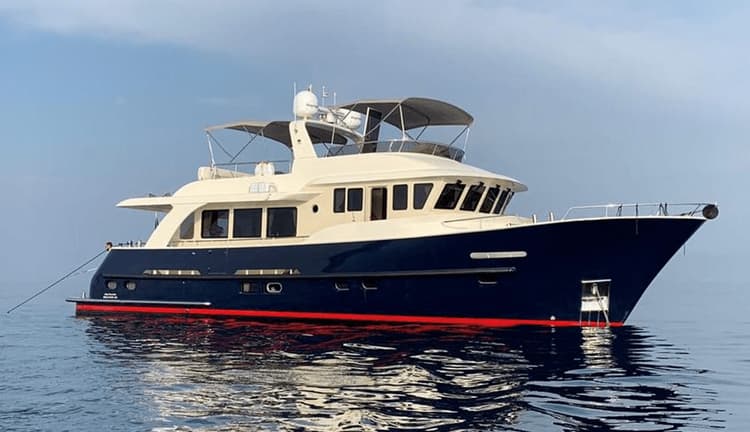

Learn more on the “DE ALM”
To learn more on the “DE ALM” or to get advice on how to buy or sell a yacht or get a great price for a yacht charter
please call +1 (954) 274-4435 USAOnly deal with professionals!