

 Licensed Yacht BrokersSales and service of yachts and ships
N/A - For Sale
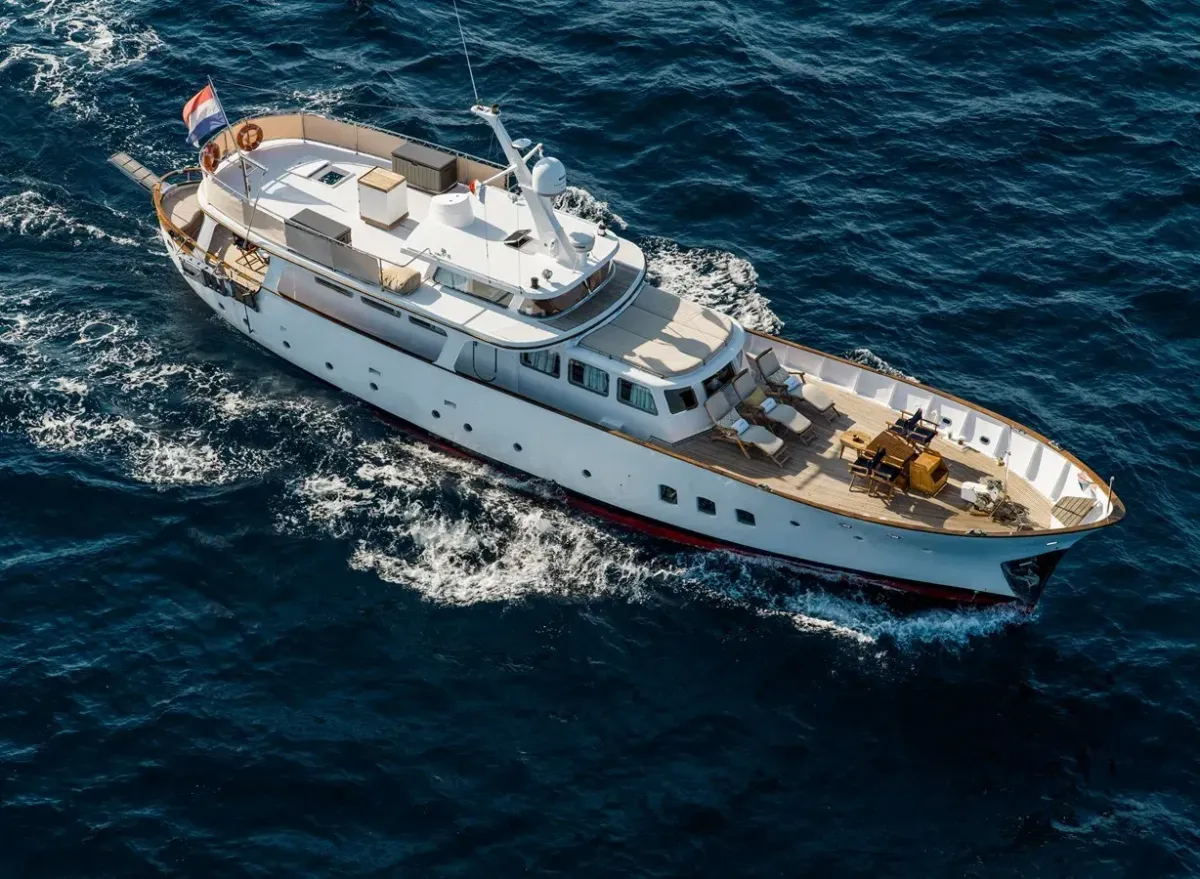
De Vries Lentsch (dutch Built)
Company History
De Vries Lentsch is one of the most storied names in Dutch yachting, with roots that reach back into the late nineteenth and early twentieth centuries in Amsterdam’s maritime quarter of Nieuwendam. The firm grew out of a family of talented shipwrights and competitive sailors led by Gerard de Vries Lentsch, whose blend of hands-on craftsmanship and racing insight shaped an enduring design language for both sailing and motor yachts. From the outset, the family business built and repaired working craft and fine leisure yachts, establishing a reputation for fair hulls, excellent seakeeping, and meticulous joinery that quickly attracted a discerning clientele in the Netherlands and beyond.
By the interwar period, De Vries Lentsch had matured into a recognized design-and-build house capable of producing advanced sailing yachts (including meter-class racers) and elegant motor yachts. The firm’s refined hull shapes—marked by subtle sheerlines, balanced overhangs, and, later, the distinctive canoe stern on motor yachts—were not just aesthetic signatures; they were functional choices, optimized to soften motion, keep decks dry, and make long passages comfortable. The company’s close connection to competitive sailing also fed back into its cruising designs: weight distribution, appendage placement, and rig proportions reflected an intuitive understanding of how small changes affected performance and handling.
After the disruption of the Second World War, De Vries Lentsch embraced the postwar transition from traditional timber construction to welded steel for motor yachts, while continuing to refine wooden and composite methods for smaller craft. Critically, the firm was among the Dutch pioneers who recognized that postwar American clients were starting to look overseas for high-quality custom yachts. In 1949, De Vries Lentsch joined forces with two eminent Dutch yards—De Vries (Aalsmeer) and Van Lent (Kaag)—to co-found the Feadship consortium (First Export Association of Dutch Shipbuilders). Within that alliance, De Vries Lentsch served a pivotal role as a design and naval architecture office, helping to define the lines and engineering of many of the earliest Feadship yachts that were exported to North America. These boats set a new benchmark for quiet, vibration-free running, long-range capability, and consistent craftsmanship—qualities that would come to define the “Dutch built” reputation globally.
Throughout the 1950s and 1960s, De Vries Lentsch’s design office produced a series of semi-custom and fully custom motor yachts whose profiles are still instantly recognizable today: sweeping sheer, moderate freeboard, a gentle clipper or flared bow, and a canoe stern that, besides its beauty, offered gentle departure in a following sea and reduced stern slamming. These boats were frequently built at De Vries and Van Lent yards to De Vries Lentsch’s plans under the Feadship banner, reflecting a uniquely Dutch, highly collaborative way of building where design, engineering, metalwork, and finishing were each handled by specialists. The result was a string of yachts that, even decades later, are prized for their poise and quiet elegance.
As the large yacht sector professionalized and expanded in the latter part of the twentieth century, De Vries Lentsch concentrated increasingly on high-end naval architecture, project development, and brokerage, while some direct construction activity at the original family yard wound down. The name continued to stand for a classic Northern European approach to yacht design: seaworthy, human-scaled, and devoid of excess, yet discreetly luxurious in the execution of details. Many of the firm’s mid-century motor yachts and meter-class sailing yachts have since been carefully restored, repowered, and re-equipped, testifying to the longevity built into the original structures and the timelessness of the aesthetic.
Today, De Vries Lentsch endures primarily as a name associated with naval architecture, design consultation, and a heritage portfolio of classic yachts. The company’s historic contribution to the Dutch yachtbuilding renaissance—particularly its early Feadship-era designs and its refinement of the canoe-stern motor yacht—has secured its place in yachting history. Owners, surveyors, and restorers often reference De Vries Lentsch’s original drawings, lines plans, and scantling philosophies when planning long-term refits, a practical sign of how robust and well-considered those designs remain.
Country of Origin
- Netherlands. De Vries Lentsch was founded and developed in Amsterdam, specifically in the historic shipbuilding district of Nieuwendam in Amsterdam-Noord. The Dutch maritime tradition—trading craft, pilot boats, fishing vessels, and, later, custom leisure yachts—formed the cultural and technical backdrop of the company’s approach to design and construction.
Manufacturing Locations
Historically, De Vries Lentsch’s physical yard operated in Nieuwendam, Amsterdam. The site, often referred to by locals in connection with “Het Fort,” sat among a dense cluster of small to mid-size shipyards that serviced the greater IJ and North Sea region. The location afforded direct access to sheltered inland waterways for fitting out and sea trials, while remaining close to open water for rigorous testing in the chop and tides of the North Sea—conditions that deeply informed the firm’s design sensibilities.
At the family yard, early projects included wooden sailing yachts, meter-class racers, sturdy tenders, and, as the market evolved, steel and composite motor yachts. The in-house craftsmanship combined traditional Dutch planking and joinery methods with a pragmatic embrace of new materials when they proved superior for longevity and maintenance. Welding standards, plating thicknesses, and structural framing in the steel motor yachts were specified conservatively, reflecting a philosophy that accepted a small weight penalty in exchange for longevity, quiet operation, and ease of future refit.
In the postwar decades, as yacht sizes increased and export demand grew, De Vries Lentsch’s role often shifted from complete in-yard builds to comprehensive naval architecture and design for projects executed at larger partner yards. Within the Feadship consortium, many notable De Vries Lentsch designs were constructed at:
-
De Vries Scheepsbouw in Aalsmeer: A yard renowned for precise metalwork and high-quality technical installations, where numerous early Feadships took shape following De Vries Lentsch plans.
-
Van Lent (now Royal Van Lent) on Kaag Island: A counterpart yard with complementary capabilities, also building De Vries Lentsch–designed yachts during the formative years of the Feadship export drive.
This collaborative manufacturing model—design and engineering centered in Amsterdam with construction carried out at Aalsmeer or Kaag—leveraged the Dutch ecosystem of specialist yards and suppliers. The approach emphasized repeatable quality: hull fabrication by expert platers and welders; machinery alignment by engineering teams accustomed to tight tolerances; and carpentry by joiners trained in the exacting Dutch cabinetmaking tradition. The resulting yachts often required minimal adjustment at sea trials, an outcome attributable to the quality of the lines plans and the precision of the build processes.
Over time, as yachtbuilding consolidated into fewer, larger facilities, direct production activity at the original Nieuwendam yard diminished. Nevertheless, the Amsterdam base remained a locus for design, brokerage, and project oversight—close enough to the yards in Aalsmeer, Kaag, and the greater Randstad maritime cluster to enable frequent site visits and hands-on quality control. This proximity, combined with the Dutch culture of open collaboration among naval architects, builders, and suppliers, is central to how De Vries Lentsch projects historically achieved their coherence and finish.
Reputation and Quality
Within the yachtbuilding world, De Vries Lentsch stands for a design ethic that is at once conservative and quietly progressive: conservative in its insistence on seaworthiness, balance, and restraint; progressive in the way it integrated new materials, machinery, and systems without surrendering the core values of a well-found yacht. The brand’s reputation rests on several pillars:
-
Seakindly hulls: Whether drawn for a sailing yacht or a displacement motor yacht, De Vries Lentsch hulls are known for their forgiving motion. On motor yachts, fuller forward sections transition to fine runs aft, with the canoe stern softening the exit wake and improving ride comfort in quartering and following seas. This geometry reduces slamming and helps maintain course stability without overtaxing steering systems.
-
Structural integrity: Scantlings specified by the firm historically tend toward the robust. Frames, stringers, and plate thicknesses on steel yachts often exceed bare minimums, not as a marketing flourish but to achieve longevity, reduce drumming, and maintain fair surfaces over decades of service. Owners undertaking major refits routinely report that original structures are in sound condition even after long service lives, validating the original engineering choices.
-
Quiet, vibration-free running: Early attention to foundations, isolation mounts, shaft alignment, and exhaust routing produced yachts that ran quietly for their era—an attribute that carried straightforwardly into modern repowers. A low noise floor is a quality-of-life hallmark on De Vries Lentsch motor yachts and a major reason they feel contemporary long after launch.
-
Timeless aesthetics: The signature sheerline and canoe stern are more than brand cues; they are timeless shapes that age gracefully. Interiors, traditionally executed in fine hardwoods with understated detailing, maintain a classic feel that adapts easily to modern lighting, soft goods, and technology without visual dissonance.
-
Human-centered ergonomics: Deck layouts emphasize safe movement at sea—generous bulwarks, secure handholds, and companionways tuned to seaway use rather than marina-only life. Helms are positioned for sightlines and communication, and engine rooms are arranged for serviceability, reflecting a professional mariner’s perspective.
-
Restoration value: As the market for classic motor yachts has grown, De Vries Lentsch designs have become sought-after candidates for restoration and modernization. Their underlying hull and structural quality make them efficient canvases for upgrades such as stabilized powertrains, modern electrical systems, new glazing, and contemporary navigation packages. Well-executed restorations of mid-century De Vries Lentsch yachts often achieve results on par with modern custom builds in terms of comfort and reliability, while retaining a heritage profile that cannot be replicated.
-
Influence on Dutch yachtbuilding: De Vries Lentsch’s early and sustained participation in the Feadship story helped crystallize what “Dutch built” came to mean worldwide: disciplined engineering, quiet professionalism, and the preference for substance over spectacle. Many practices now standard in high-end Northern European yachtbuilding—document control in engineering, staged quality gates during fabrication and outfitting, and close, iterative communication among design, build, and owner’s teams—echo the collaborative habits developed during the period when De Vries Lentsch designs were realized at partner yards.
While formal awards have never been the primary yardstick for the firm’s stature—most of its seminal work predates the modern superyacht awards era—the ongoing prominence of its yachts at classic rendezvous and in high-profile restoration projects serves as its own accolade. Surveyors and classification professionals frequently cite the designs’ structural prudence and maintainability as strengths; captains highlight the predictable handling and crew-friendly systems; and owners praise the understated elegance that continues to feel relevant as tastes evolve.
In the broader yachting community, the De Vries Lentsch name also signals design continuity. Many later Dutch and international designers have acknowledged the influence of the firm’s proportioning and seakeeping priorities. The canoe stern, in particular, experienced revivals across decades and markets, often precisely because of its practical virtues rather than nostalgia alone. In this sense, the brand’s legacy is not limited to a catalog of delivered yachts; it is embedded in the shared vocabulary of yacht design and the enduring preference for vessels that travel well, respect their crews, and reward long-term stewardship.
Finally, the durability of reputation shows up in the market lifecycle. A well-kept De Vries Lentsch yacht—whether a mid-century Feadship-built motor yacht to the firm’s plans or an earlier wooden sailing design—tends to command interest from knowledgeable buyers, restorers, and yards. These yachts are understood to be capable of meaningful passages, comfortable living aboard, and sensible maintenance planning. For many owners, that combination—competent passagemaking, classic beauty, and maintainable systems—captures why the De Vries Lentsch name still matters. It represents a particular Northern European synthesis: rigorous engineering expressed through elegant, humane design, all rooted in a maritime culture that prizes reliability at sea above all else.
Main Competitors
Because DE VRIES LENTSCH (DUTCH BUILT) is a historic Dutch yacht-building and naval-architecture name rather than a current high-volume production yard, its “competitors” are best understood in two lenses: (1) the peer group of Northern European custom yards that define the Dutch-built quality standard buyers compare against today, and (2) the classic- and heritage-focused Dutch builders and service yards that attract the same owners who value traditional lines, steel hulls, and artisanal joinery. The following companies are the most relevant comparators across those two lenses.
-
Feadship (Royal Van Lent and De Vries Scheepsbouw)
- Context: Feadship is the modern benchmark for fully custom Northern European motor yachts, with roots in post-war Dutch craftsmanship and the De Voogt Naval Architects design house. While “De Vries Scheepsbouw” within Feadship is a separate lineage from the De Vries Lentsch family name, prospective buyers and collectors often compare the two because they represent the apex of Dutch custom quality from different eras. Feadship’s older small- and mid-size classics (1950s–1970s) often appeal to the same connoisseurs who seek or refit a De Vries Lentsch classic.
- Why it’s relevant: A shared heritage of bespoke steel construction, extreme attention to detail, and a reputation that commands a premium on the brokerage and refit markets.
-
Royal Huisman
- Context: Best known for large custom sailing superyachts, Royal Huisman also undertakes exceptionally high-end refits (Huisfit) and occasional motor projects. Clients drawn to the craftsmanship, project management rigor, and heritage “feel” of historic Dutch yachts frequently evaluate Huisman’s capabilities—especially for refitting or sympathetically modernizing a classic steel yacht with wooden interiors.
- Why it’s relevant: Owners of DE VRIES LENTSCH classics often consider Huisfit for major overhauls, structural renewals, or modern systems integration in a way that preserves period character.
-
Amels (Damen Yachting)
- Context: Amels popularized the semi-custom “Limited Editions” platform in steel/aluminum and, through Damen Yachting, supports large custom and explorer projects.
- Why it’s relevant: For buyers who want Dutch pedigree and robust steel displacement platforms with modern systems and proven naval architecture, Amels/Damen is often the contemporary alternative to hunting down, restoring, or replicating the spirit of a classic De Vries Lentsch.
-
Heesen Yachts
- Context: Focused on fast, often all-aluminum yachts, with increasing hybrid and efficiency innovations.
- Why it’s relevant: Although Heesen emphasizes performance and contemporary styling rather than classic displacement steel, owners comparing “Dutch built” new-build alternatives will include Heesen because of its quality, engineering culture, and strong project delivery—particularly if they lean away from deep-heritage styling toward modern lines and speed.
-
Oceanco
- Context: A leader in very large (80m+) custom yachts, typically at the apex of innovation and scale.
- Why it’s relevant: Not a direct analog to the mid-century De Vries Lentsch oeuvre in size or style, but it sits in the same top echelon of Dutch yachtmaking that sets expectations for engineering excellence, project management, and finish.
-
Royal Hakvoort Shipyard
- Context: Family-owned and strongly associated with custom steel/aluminum displacement yachts in the 40–65m range.
- Why it’s relevant: Among current builders, Hakvoort’s portfolio often resonates with clients who admire classic proportions and robust passagemaking capability—attributes central to many DE VRIES LENTSCH classics.
-
Moonen Yachts
- Context: Boutique Dutch builder specializing in 30–45m steel displacement yachts, known for quiet operation, long-range efficiency, and refined interiors.
- Why it’s relevant: Moonen’s sweet spot overlaps with the “feel” sought by owners who love the timeless grace of a De Vries Lentsch, but prefer a modern new-build with warranty, contemporary systems, and a semi-custom path.
-
Balk Shipyard
- Context: A Dutch custom builder and renowned refit yard with a strong reputation for classic steel yachts and heritage-sensitive restorations.
- Why it’s relevant: While not always a head-to-head competitor for new-builds, Balk is highly relevant for De Vries Lentsch owners undertaking comprehensive refits, structural renewals, and class-compliant upgrades.
-
Dutch classic and heritage peers (historical and boutique)
- Super Van Craft (Klaassen): Known for classic steel motor yachts with elegant sheerlines and brightwork that appeal to traditionalists.
- Lowland Yachts (historical): Produced custom and semi-custom steel/aluminum motor yachts with a Northern European aesthetic; often cross-shopped on the brokerage market by the same clientele that seeks De Vries Lentsch designs.
- Porsius, De Ruiter, and other legacy Dutch custom shops: Though many are no longer active in large-scale newbuilding, their surviving yachts populate the same restoration, refit, and collector niches.
-
Northern European ultra-premium peers outside the Netherlands
- Lürssen, Abeking & Rasmussen, and Blohm+Voss (Germany)
- Nobiskrug (Germany) and Meyer Yachts (successor in part to large-yacht capabilities)
- Benetti and CRN (Italy), with Codecasa, Sanlorenzo, and Baglietto as adjacent choices
- Why they’re relevant: On the global stage, owners who prize Dutch heritage also evaluate German and Italian ultra-premium offerings for engineering capability, capacity, and stylistic options, especially when new-build scope or size preferences make more sense outside the classic Dutch boutique range.
How these competitors compare in practice:
- Build philosophy: DE VRIES LENTSCH’s name is synonymous with tailor-made steel displacement yachts from the early-to-mid 20th century, emphasizing seaworthiness, long-range comfort, and artisanal interiors. The modern Dutch competitors listed above largely continue that ethos in spirit—customization, engineering depth, and hand-finished joinery—albeit with contemporary machinery, hybridization, stabilization, and class/regulatory frameworks.
- Aesthetic: DE VRIES LENTSCH classics typically exhibit timeless proportions and purposeful profiles, with elegant sheerlines and superstructures scaled to human proportions. Among active yards, Royal Hakvoort and Moonen often deliver a similar “quiet elegance,” while Feadship and Amels/Damen can toggle between heritage-inflected and cutting-edge expressions. Heesen leans contemporary and performance; Oceanco operates at the large, innovative end of the spectrum.
- Lifecycle support and refit: Because DE VRIES LENTSCH production in the traditional yard sense is not ongoing, refit-oriented competitors (Balk, Feadship’s refit services, Huisfit, and capable independents across the Netherlands and Germany) are central to owners’ decision-making. An owner considering the stewardship of a DE VRIES LENTSCH classic will often compare not just initial acquisition cost and build pedigree, but the refit ecosystem’s depth of knowledge with classic steel, riveted or early welded platework, and period joinery.
In short, the main competitors to DE VRIES LENTSCH (DUTCH BUILT) in the eyes of today’s buyers are those Dutch and Northern European yards that embody the same values—bespoke craftsmanship, engineering discipline, and enduring aesthetics—whether they’re building new to a heritage brief or restoring classics to modern standards.
Current Production Status
DE VRIES LENTSCH (DUTCH BUILT) is best understood today as a storied Dutch name in yachtbuilding and naval architecture—one whose legacy is expressed through the many classic yachts still cruising worldwide—rather than as a continuously operating high-volume shipyard. Historically, the De Vries Lentsch family operated a respected Amsterdam shipyard and design practice that delivered custom yachts and workboats in the first three quarters of the 20th century, transitioning from traditional wooden construction to steel hulls as materials and methods evolved. Their output spanned robust, oceangoing motor yachts, elegant commuter- and gentleman’s-style vessels, and a range of bespoke projects for private and institutional clients. The hallmarks of these yachts—solid seakeeping, carefully considered weight distribution, and human-scaled detailing—are why the marque continues to command respect on the brokerage and restoration markets.
In the modern era, there is no widely recognized, large-scale newbuild program under the original DE VRIES LENTSCH yard name. Instead, the brand persists primarily in three ways:
-
As a living fleet: Many DE VRIES LENTSCH-built yachts remain active. These vessels are typically steel-hulled displacement yachts (with some later aluminum superstructures), known for their long-range capability and comfortable motion. Owners who value timeless lines and authentic heritage actively seek out these classics to refit and personalize, rather than commissioning a brand-new vessel under the old name.
-
As a design and archival legacy: The De Vries Lentsch name is closely associated with yacht design and naval architecture. The design DNA—proportions, sheerlines, and coherent, purposeful profiles—continues to inform how owners and designers think about “classic Dutch” elegance. In practice, this means project teams often reference original drawings, scantlings, and styling cues when restoring or sympathetically modernizing a DE VRIES LENTSCH classic, or when commissioning a new yacht elsewhere that is explicitly inspired by mid-century Dutch forms.
-
Through the Dutch refit ecosystem: Because these yachts are prized for their heritage, owners typically engage leading Dutch and Northern European yards for refits that balance authenticity with modern reliability. Common scopes include:
- Structural surveys and renewals (ultrasonic gauging, localized steel plate replacement, and modern coatings systems that exceed the protections available when the yachts were first built).
- Machinery and systems modernization (repowering with more efficient engines, adding/refreshing generators, upgrading electrical systems to modern standards, and integrating digital monitoring).
- Comfort and safety upgrades (stabilization—fin or gyro depending on the hull and displacement—acoustic treatments, HVAC optimization, modern navigation suites, LED lighting, and enhanced fire detection/suppression).
- Interior restoration (retaining or recreating period joinery and layouts with updated ergonomics, sound insulation, and discreet integration of contemporary amenities).
Because no ongoing, branded DE VRIES LENTSCH newbuild line is in the market, clients who are drawn to the name usually follow one of two pathways:
-
Acquire and refit a classic: This path preserves the authenticity of the marque. It requires a sophisticated approach to project planning—starting with a thorough condition survey by specialists who understand riveted and early welded steel structures, followed by a carefully staged refit program prioritizing structure, machinery, and systems before cosmetics. The upside is unmatched character and a tangible link to Dutch yachtbuilding history. The trade-off is that refits of this caliber require patience, an experienced owner’s team, and the selection of a yard with proven heritage-sensitive methods.
-
Commission a new yacht inspired by the DE VRIES LENTSCH aesthetic at an active Dutch yard: Owners who love the timeless look but want a clean-sheet platform built to today’s class, environmental, and safety standards often turn to bespoke or semi-custom programs at Royal Hakvoort, Moonen, Feadship, Amels/Damen, or other capable Dutch yards. The result may not carry the original builder’s plate, but it can capture the design language—raised bulwarks, proportionate superstructures, elegant overhangs, and balanced volumes—executed with modern naval architecture (CFD-optimized hulls, advanced stabilization, hybrid-ready machinery spaces, and weight-managed interiors).
Key considerations for prospective stewards of a DE VRIES LENTSCH classic:
-
Structural integrity over cosmetics: Many classics present well but need structural attention. Prioritize hull thickness measurements, fairing condition, and the integrity of longitudinal framing and collision bulkheads over brightwork and upholstery. A well-executed structural renewal dramatically extends service life and resale value.
-
Systems modernization with sensitivity: Modern system integrations should be designed so they are serviceable and discreet, preserving period visuals where desired. Clear documentation and as-built schematics are crucial for future maintenance.
-
Respect the proportions: The enduring appeal of DE VRIES LENTSCH yachts lies in their balance—sheerline, overhangs, freeboard, and superstructure massing. Refit decisions that add weight high up, over-enclose decks, or clutter lines with inconsistent glazing often erode the very qualities that make these yachts special. Owners benefit from working with naval architects and interior designers who are comfortable operating within classic constraints.
-
Choose the right yard and team: A yard experienced with classic steel, teak joinery, and class compliance for legacy vessels will deliver a better result, more predictably. Pair the yard with an owner’s representative well-versed in refit phasing, cost control, and quality assurance.
In summary, while the original DE VRIES LENTSCH yard is not producing new yachts at scale today, the marque remains vibrant through its surviving fleet and the high-caliber European yards that restore and reinterpret its legacy. For buyers prioritizing authentic Dutch heritage, a carefully chosen DE VRIES LENTSCH classic—brought up to modern standards by a skilled refit team—can rival or even surpass the character, comfort, and pride of ownership associated with many contemporary builds.
Frequently Asked Questions
Question: Who is De Vries Lentsch and why are their yachts notable?
Answer: De Vries Lentsch is a storied Dutch name in yacht building and naval architecture, known for crafting and designing classic motor and sailing yachts across much of the 20th century. The name is associated with both a historic Amsterdam shipyard and a naval architecture office whose designs were executed by various Dutch yards. The boats that carry the De Vries Lentsch attribution are celebrated for their elegant proportions, seakindly hulls, fine joinery, and the meticulous workmanship for which Dutch boatbuilding is renowned. Many of these yachts, now considered classics, continue to cruise the world after careful refits, admired for their understated lines—often with a gentle sheer, canoe stern, and purposeful profile—and for interiors rich in teak and mahogany. In short, “De Vries Lentsch” stands as a hallmark of traditional Northern European yachtbuilding quality and thoughtful naval architecture.
Question: Are De Vries Lentsch yachts still being built today?
Answer: The original Amsterdam yard’s classic era has passed, and the name is now most commonly encountered as a designer or builder attribution on existing yachts ranging from the early to late 20th century. Over the decades, De Vries Lentsch produced designs that were built by different Dutch shipyards as well as at its own facilities in earlier periods. Today, the focus for owners and professionals is the stewardship, refit, and sympathetic modernization of these enduring craft. While design work bearing the Lentsch name has appeared in more recent times, the market presence is largely in the fleet of classic and semi-classic custom yachts already afloat.
Question: What defines the design language of a De Vries Lentsch yacht?
Answer: Several cues are frequently seen. Many classic motor yachts attributed to De Vries Lentsch exhibit:
- A round-bilge displacement hull, often with a fine entry for soft wave penetration.
- A graceful sheer line and, in numerous cases, a canoe stern that blends aesthetics with bluewater practicality.
- Balanced superstructure volumes that maintain sightlines and reduce windage.
- Extensive use of high-quality timber joinery and well-proportioned deckhouses evocative of a “gentleman’s yacht.”
- Practical deck arrangements, generous bulwarks, and secure side decks that stem from a seamanlike approach rather than fashion.
Question: What construction methods and materials did De Vries Lentsch use?
Answer: Methods and materials vary with era:
- Early and interwar period: A mix of timber construction and riveted or welded steel, depending on the vessel type and the conventions of the time.
- Post-war to late 20th century: Predominantly welded steel hulls with careful plate shaping and fairing, coupled often with aluminum superstructures to lower the center of gravity and improve stability. Teak weather decks and exceptionally crafted interior joinery were common. Systems engineering tended to be robust and serviceable, prioritizing longevity, access, and repairability.
Question: How do De Vries Lentsch hulls behave at sea?
Answer: The majority of motor yachts in this lineage are round-bilge displacement vessels engineered for comfortable passagemaking rather than planing speeds. Owners value:
- Predictable handling characteristics and a soft, dry ride in a seaway.
- Good directional stability on passage, aided by substantial keel area and skeg protection around the running gear in many examples.
- A hull form and weight distribution designed for economy and endurance at moderate speeds (typically around 9–12 knots). These are boats conceived for real-world weather and long distances, not just calm-water dayboating.
Question: What sizes and typical layouts can buyers expect?
Answer: While every De Vries Lentsch yacht is, in essence, a custom project, typical lengths range from about 12 meters (40 feet) up to 35–40 meters (115–130 feet) in the classic cohort. Layouts vary by period and brief, but commonly seen arrangements include:
- Owner-operator sizes (12–20 m) with two to three cabins and practical galley and saloon spaces.
- Larger motor yachts (20–30+ m) with three to five guest cabins and dedicated crew accommodations forward or aft.
- Ample storage, long-range tankage, walkaround side decks, and a wheelhouse or pilothouse with proper watchkeeping ergonomics. The aesthetic tends toward warm timber interiors combined with seamanlike detailing.
Question: How fast are these yachts, and what engines were used?
Answer: Most classic De Vries Lentsch motor yachts are displacement speed cruisers. Typical service speeds are 9–12 knots, with maximum speeds often in the 10–13 knot range depending on length, displacement, and installed power. Common engines historically included straight-six or V-configuration diesels from Gardner, General Motors/Detroit Diesel, MAN, and later MTU among others. Twin-screw installations dominate on larger vessels for redundancy and maneuverability; single-screw layouts appear on some smaller or explorer-style builds optimized for efficiency. If refitted, repowers often select modern medium-speed diesels tuned for quiet operation and long life at conservative RPM.
Question: What should a survey focus on for a classic De Vries Lentsch yacht?
Answer: A diligent pre-purchase survey should include:
- Ultrasonic thickness gauging of steel plating, particularly at the waterline, engine room bilges, chain locker, tank boundaries, and structural intersections.
- Close inspection of frames, stringers, and doubler plates to assess prior repairs and confirm structural continuity.
- Tank integrity (fuel, water, and waste), including internal coatings and baffle condition.
- Condition of the hull-to-superstructure joint, especially if aluminum and steel are joined with bi-metallic strips—check for crevice corrosion and proper isolation.
- Windows/portlights, deck hardware bedding, and teak deck thickness and fastenings.
- Systems (electrical, plumbing, fuel) for compliance with modern standards, including wiring age, bonding/earthing, and pressure-tested piping.
- Machinery alignment, shaft seals, rudder bearings, and evidence of prior grounding or galvanic issues.
- Paint and fairing condition—coating systems on steel need expert appraisal to estimate remaining service life.
Question: What refit upgrades are common and beneficial?
Answer: Sympathetic modernization often includes:
- Fin or gyro stabilization for enhanced comfort underway and at anchor.
- Updated generators, battery systems, and modern chargers/inverters to optimize hotel loads.
- Navigation, communications, and safety system upgrades to current standards, including AIS, radar, and ECDIS or approved chart plotters.
- HVAC modernization with variable-speed compressors and improved ducting and insulation.
- Bow and/or stern thrusters to ease docking given higher windage compared to contemporary low-profile yachts.
- LED lighting and smart power management to reduce loads and generator runtime.
- Black and grey water treatment in line with current environmental regulations.
Question: Are De Vries Lentsch yachts good for long-range cruising?
Answer: Yes—this is a key part of their DNA. Many boats in the fleet feature substantial tankage and conservative powertrains engineered for efficient passagemaking. Depending on displacement and power, ranges of several thousand nautical miles at 8–10 knots are feasible with correct loading and clean hulls. Engine rooms are typically arranged for serviceability (large sea chests, straightforward fuel polishing, redundant filtration), features that matter on extended passages.
Question: How do these classics compare to modern yachts of similar length?
Answer: Compared to contemporary high-volume yachts, a classic De Vries Lentsch will usually:
- Offer lower top speeds but superior motion comfort at displacement speeds.
- Deliver traditional elegance and proportion, trading some interior volume for secure walkaround decks and seamanlike freeboard.
- Require more attentive coatings maintenance if steel, but reward owners with a tactile, enduring quality of build and a timeless profile that does not date with fashion cycles.
Question: What about ownership costs and maintenance considerations?
Answer: As with any steel classic, maintenance discipline dictates cost. Sensible cycles for haul-outs, coatings inspection, and anode strategy keep budgets predictable. Systems that have been fully updated during a recent refit tend to reduce surprises. Crew requirements vary by size; owner-operator boats in the sub-20 m range are manageable, while vessels above roughly 24 m generally benefit from professional crew. The reward for methodical care is an asset that retains appeal and often improves in reliability and comfort over time.
Question: Are De Vries Lentsch yachts collectible, and how is resale?
Answer: Properly maintained examples with authentic exterior lines, high-quality refits, and documented history attract informed buyers. Resale is helped by originality where appropriate, tasteful modernization where necessary, and impeccable mechanical and coatings condition. Classic motor yachts of this pedigree often appeal to a specific, knowledgeable audience who value craftsmanship and seakeeping over trend-driven styling.
Question: Can interiors be modernized without losing character?
Answer: Yes. Many owners commission interior refreshes that preserve hallmark joinery and architectural elements while discreetly integrating modern fabrics, lighting, and systems. Successful projects emphasize weight control, acoustic treatment, and respect for the original design language—think soft-close hardware behind traditional facings, concealed air returns, and integrated AV that disappears when not in use.
Question: What regulatory issues apply to older yachts of this type?
Answer: Vessels built prior to modern recreational directives may be exempt from certain CE/RCD requirements but must comply with flag-state and port-state safety and environmental rules. For private use, compliance focuses on equipment standards, radio licensing, waste management, and navigation/safety gear. For commercial or charter use, additional codes (e.g., large yacht codes, stability documentation, safety management, crew certification) may apply depending on size and area of operation. A compliance review by a knowledgeable surveyor or consultant is advisable, especially before a refit intended to enable charter.
Question: What distinguishes “Dutch built” quality in this context?
Answer: Hallmarks include:
- Tight fabrication tolerances and careful plate forming in steel work.
- Thoughtful detailing of drains, limbering, and access points that simplify maintenance.
- High standards in joinery fit and finish, with stable, well-seasoned timbers.
- A pragmatic engineering ethos: components laid out for service, robust pipe runs, and conservative machinery choices favoring reliability and parts availability.
Question: Which is better for these yachts—single or twin screw?
Answer: It depends on mission and size. Twin-screw setups dominate on larger motor yachts for redundancy, better low-speed control, and balanced loading. A single-screw configuration can be efficient for certain explorer-style or smaller displacement yachts, often paired with a large slow-turning propeller and sometimes a get-home auxiliary or hydraulic takeoff to provide contingency.
Question: Are aluminum superstructures on steel hulls a concern?
Answer: Not if properly engineered and maintained. The hull-to-house interface relies on bi-metallic transition strips and careful electrical isolation. Regular inspections should verify insulation integrity, bedding compound condition, and the absence of paint blistering or crevice corrosion at fasteners and seams. Correctly specified primer systems and diligent bonding practices ensure longevity.
Question: What about winterization and storage for a steel classic?
Answer: Best practice includes:
- Maintaining stable interior humidity and temperature to protect joinery and systems.
- Thorough fresh-water flushing and appropriate antifreeze in raw-water circuits.
- Battery maintenance with smart chargers and periodic load checks.
- Routine inspection of bilges, limber holes, and dehumidification to prevent condensation.
- Anode assessment and shore-power galvanic protection, particularly if stored afloat in mixed marinas.
Question: Who should consider a De Vries Lentsch yacht?
Answer: These yachts suit owners who value seakindly performance, classical elegance, and the satisfaction of custodianship. If your priorities include quiet, economical passagemaking; warm, human-scaled interiors; and the pride of a genuine Dutch-built classic whose beauty is more about proportion than spectacle, a De Vries Lentsch belongs on your shortlist. They reward methodical care and meticulous refit planning, and in return, they offer enduring character and the confidence to go to sea.
Available Models
Because De Vries Lentsch operated predominantly as a custom yard and naval architecture office, there is no fixed catalogue of standardized “models” in the modern sense. Instead, the market features one-off yachts and small series that share common design DNA. The following representative archetypes summarize what buyers most often encounter, with indicative characteristics that vary by individual build and era:
-
Classic Gentleman’s Motor Yacht (18–24 m)
- Length: approximately 18–24 meters
- Cabins: typically 3 guest cabins; optional crew cabin in the bow or aft
- Maximum speed: usually 10–11 knots; comfortable cruise around 9–10 knots
- Engine type: twin medium-speed diesels (e.g., Gardner or Detroit Diesel on older builds; MAN/MTU on later refits)
- Notes: Often canoe-sterned with warm timber interiors and sheltered side decks; excellent for coastal and moderate offshore passages.
-
Long-Range Displacement Cruiser (24–30 m)
- Length: approximately 24–30 meters
- Cabins: 4–5 guest cabins plus 2–3 crew cabins
- Maximum speed: about 11–12.5 knots; cruise 9–11 knots
- Engine type: twin diesels with conservative output; frequently refitted with modern gensets and stabilization
- Notes: Steel hull with aluminum superstructure common; substantial tankage for extended voyaging; pilothouse layouts optimized for watchkeeping.
-
Pocket Explorer Yacht (20–26 m)
- Length: approximately 20–26 meters
- Cabins: 3–4 guest cabins; 1–2 crew cabins depending on layout
- Maximum speed: typically 9–11 knots; cruise 8–9.5 knots
- Engine type: single large diesel or twin smaller diesels; robust shaft gear with protective skeg
- Notes: Heavier displacement, higher bow, pragmatic deck gear, generous storage; favored by owners planning higher-latitude cruising at modest speeds.
-
Classic Commuter / Fast Displacement Motoryacht (12–18 m)
- Length: approximately 12–18 meters
- Cabins: 2–3 cabins in compact layouts
- Maximum speed: often 12–16 knots depending on power and displacement
- Engine type: twin diesels (e.g., Detroit Diesel or similar) in older examples; modern repowers vary
- Notes: Slender lines, efficient semi-displacement profiles on some boats; ideal for rivers, inland seas, and coastal hops with short-handed crews.
-
Traditional Sailing Yacht (Cutter/Ketch) (12–20 m)
- Length: approximately 12–20 meters
- Cabins: generally 2–3 cabins with classic galleys and cozy saloons
- Maximum speed: under power 7–9 knots; performance under sail varies with rig and displacement
- Engine type: single auxiliary diesel, often naturally aspirated in earlier boats
- Notes: Robust scantlings, seamanlike deck layouts, and conservative rigs suited to passagemaking rather than racing.
-
Large Custom Motor Yacht (30–40 m)
- Length: approximately 30–40 meters (some larger one-offs exist)
- Cabins: typically 5–6 guest cabins with dedicated crew areas for 5–8
- Maximum speed: around 12–14 knots; cruise 10–12 knots
- Engine type: twin commercial-duty diesels; engineered for longevity and quiet operation
- Notes: Fully custom arrangements; steel/aluminum construction; refined classic profiles with enduring curb appeal.
These archetypes are intended as a guide. Each De Vries Lentsch yacht is ultimately a bespoke creation, and individual specifications—cabins, power, speed, and systems—should be verified on a case-by-case basis through plans, logs, and expert survey.

Learn more on the “N/A”
To learn more on the “N/A” or to get advice on how to buy or sell a yacht or get a great price for a yacht charter
please call +1 (954) 274-4435 USAOnly deal with professionals!