
 Licensed Yacht BrokersSales and service of yachts and ships
N/A - For Sale
Gozzard
Company History
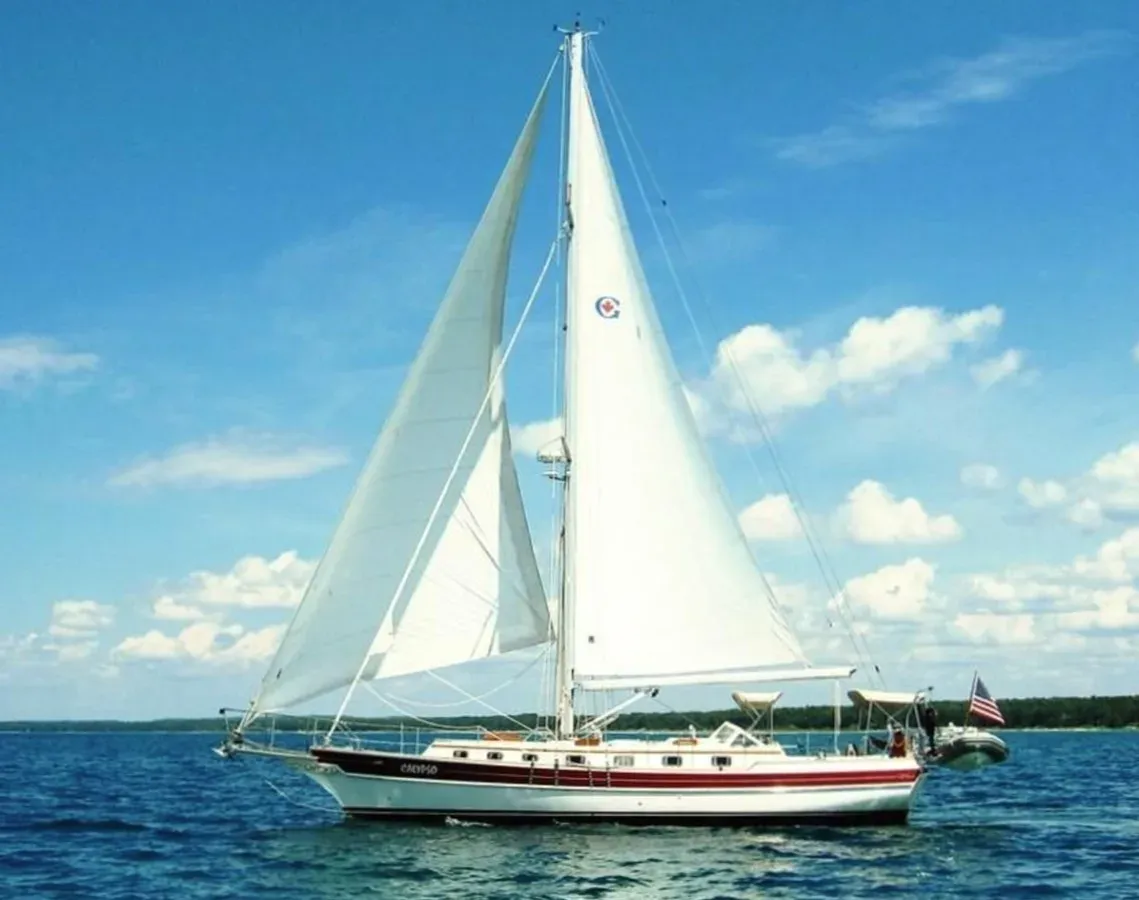
Gozzard Yachts is the brand name of North Castle Marine Ltd., a boutique Canadian boatbuilder founded by yacht designer and craftsman Ted Gozzard in Goderich, Ontario, in the early 1980s. The firm was conceived to build robust, traditionally styled, semi-custom cruising sailboats for serious voyaging couples and families—boats where seakeeping, craftsmanship, and long-term serviceability take precedence over production volume. Although relatively small in output compared to mass-market builders, Gozzard quickly established a global reputation for distinctive cutter-rigged cruising yachts recognized for their clipper bows, long bowsprits, sculpted trailboards, elegant sheerlines, and warm, furniture-grade interiors.
The pedigree of the company traces directly to Ted Gozzard’s earlier success as the designer behind the highly regarded Bayfield series of cutters built in Ontario through the 1970s and early 1980s. Those Bayfield boats proved there was a committed audience for purposeful, handsome, and well-built cruising yachts with a traditional aesthetic and offshore capability. When Ted set up his own yard under the North Castle Marine banner, he refined that design language and production approach, applying even higher levels of customization and finish quality under the Gozzard name.
The company’s first widely recognized model, the Gozzard 36, appeared in the mid-1980s and embodied all the hallmarks that would come to define the marque: a graceful, clipper-bowed hull form with a long cruising keel and an attached rudder for tracking and protection; a cutter rig for balanced sail handling across a wide wind range; a deep, secure cockpit; and an interior arranged around the practical needs of liveaboard cruising. The convertible forward salon—an innovation for its time—allowed the main living space to transform into a private owner’s stateroom using cleverly engineered furniture and joinery, while preserving generous communal space when not in “stateroom mode.” This flexible arrangement became a Gozzard signature and demonstrated the yard’s willingness to innovate thoughtfully within a classic framework.
Building on the success of the Gozzard 36, the company expanded its range with models that retained the core DNA while tailoring scale, range, and accommodation plans to different cruising briefs. Over subsequent years came variations such as the Gozzard 31, 37, 41, and 44, each designed for blue-water capability and each offered with a level of semi-custom tailoring uncommon in production boatbuilding. Owners could specify layout nuances, woods and finishes, systems options, and numerous personalized details. This “build-to-suit” sensibility, combined with rigorous in-house craftsmanship, set Gozzard apart: rather than optimizing for speed of assembly, the yard optimized for longevity, beauty, and maintainability.
A notable chapter in the company’s history came in 2011, when a powerful tornado struck Goderich, causing widespread damage across the town and affecting industrial facilities in the area. North Castle Marine’s yard was impacted, and the event tested the resilience of both the company and the community. Gozzard Yachts responded with the same determination that characterizes its boats, restoring operations and continuing to support its fleet and customers. This episode reinforced owner loyalty and underscored the family-owned yard’s commitment to standing behind its products over the long haul.
As the decades progressed, Gozzard remained intentionally low-volume, focusing on careful build schedules, meticulous handwork, and long-term relationships with owners. That approach allowed the company to maintain consistency in quality and to continue evolving the design and systems integration of its boats without compromising the essential Gozzard ethos. While the market around them cycled through trends—racer-cruisers, beamy production hulls, aggressive planforms—Gozzard held to a design brief centered on safe, comfortable, and elegant passagemaking.
Throughout its history, the company has been guided by the Gozzard family. After Ted’s leadership in founding and defining the brand, the next generation has continued the legacy, maintaining continuity in both design sensibility and customer support culture. This family stewardship has been important for owners who value long-term parts support, institutional memory, and the ability to consult directly with people who understand every facet of the boats from keel to truck.
Today, Gozzard Yachts remains a distinctive presence in the world of serious cruising sailboats—an artisan builder whose name carries weight among sailors who prize traditional beauty, honest materials, and designs that look after their crews when conditions deteriorate. The fleet of Gozzard yachts—seen in marinas, anchorages, and far-flung cruising grounds around the world—continues to validate the founding thesis: that careful design, conservative engineering, and disciplined craftsmanship produce boats that serve their owners faithfully for decades.
Country of Origin
Gozzard Yachts was founded in Canada. The company’s roots and brand identity are Canadian through and through, shaped by the country’s Great Lakes boatbuilding tradition and by the hardy, self-sufficient mindset of sailors who contend with a full spectrum of weather and sea conditions.
Manufacturing Locations
Gozzard Yachts builds and services its boats in Goderich, Ontario, on the eastern shore of Lake Huron. This lakeside location provides direct access to freshwater test sailing and an experienced regional supply chain for composite materials, hardware, and marine systems. The Goderich facility houses design, tooling, composite fabrication, joinery, finishing, and systems installation under one roof, which allows strict oversight of quality at every stage.
A defining feature of the yard’s approach is the concentration of critical processes in-house. Hulls are hand-laminated rather than chopper-gunned, with careful control over laminates, resins, and core materials. Decks and superstructures are typically cored for stiffness, weight control, and insulation, while hulls are solid glass in high-load areas for durability and impact resistance. Structural elements such as floors, bulkheads, and chainplates are integrated with a focus on long-term integrity and service access. The carpentry shop—central to the Gozzard identity—produces the cabinetry and joinery that give the boats their distinctive warmth and bespoke look. The result is a coherent build where systems and structure are designed to live together harmoniously and to be serviced easily by owners and technicians.
In addition to new construction, the Goderich facility supports refits, upgrades, and maintenance for boats in the Gozzard fleet. Owners regularly return to the yard for system modernizations, custom modifications, and significant cosmetic work, trusting the original builder to preserve the design intent and structural standards. This full-lifecycle support has been a backbone of the brand and a practical reason many yachts continue to look and function like well-cared-for classics decades after launch.
Ownership and Management
Gozzard Yachts is a family-owned company. It was founded by designer and boatbuilder Ted Gozzard, whose vision established the design philosophy and quality benchmarks that define the brand. Over time, leadership responsibilities transitioned within the Gozzard family, ensuring continuity in design, construction standards, and customer service practices. The company operates under the corporate name North Castle Marine Ltd., with the Gozzard family actively involved in day-to-day decision-making, product development, and ongoing owner support.
A key aspect of the firm’s management culture is its direct engagement with owners. Rather than channeling communications solely through dealers or intermediaries, Gozzard maintains close, personal relationships with its clientele. Prospective buyers and current owners commonly interact with principal decision-makers at the yard—an arrangement that reflects the company’s semi-custom ethos and its commitment to building boats that fit specific cruising plans. This hands-on approach also ensures that lessons learned in the field flow directly back into design refinements and future builds.
The leadership’s longevity in the business has also contributed to an unusually deep institutional knowledge of the fleet. Whether advising on rig tuning for an ocean passage, recommending system upgrades compatible with the boat’s wiring and structural plans, or crafting a new galley layout during a refit, the management team’s continuity ensures that the original design intent is preserved and enhanced over time.
Reputation and Quality
Within the blue-water cruising community, Gozzard Yachts occupies a respected niche as a builder of handsome, conservative, and exceptionally well-finished sailing vessels. The brand is frequently associated with:
-
Traditional aesthetics with substance: The boats’ clipper-style bows, long bowsprits, and graceful sheerlines are not mere styling; they support practical choices such as easily managed cutter rigs, effective ground tackle handling, and seakindly hull forms that track well in a seaway. Underway, owners value the long-keel directional stability and the comfortable motion that moderate-displacement, well-balanced hulls can deliver on extended passages.
-
Robust construction: Gozzard’s build philosophy prioritizes structural integrity, redundancy, and ease of maintenance. Hulls feature substantial laminates; decks employ coring and careful load-spreading around equipment bases; and critical structures are engineered with conservative safety margins. Systems are installed with service access in mind—fuel and water tanks, wiring runs, and mechanical components can be reached without dismantling the boat—an essential trait for vessels expected to cruise far from shoreside support.
-
Semi-custom craftsmanship: The interiors are a defining strength. Gozzard’s joinery work—routinely highlighted by owners and marine surveyors—delivers yacht-quality cabinetry with carefully matched veneers, robust locker framing, and traditional fiddles and moldings that stand up to life aboard. The celebrated “convertible” forward cabin/salon concept on several models exemplifies the yard’s thoughtful innovation, allowing a couple’s boat to feel open and airy at anchor while transforming into a private stateroom for passagemaking or when guests come aboard.
-
Owner support and lifecycle care: The factory’s direct support, the active owner community, and the enduring availability of technical guidance contribute to strong resale values and long service lives. Many Gozzard yachts have completed extensive coastal and offshore itineraries—Atlantic circuits, Caribbean seasons, Pacific jumps—returning with their reputations enhanced rather than diminished.
-
Balanced performance for cruising reality: While Gozzards are not optimized for inshore club racing, they are respected for miles-made-good in the conditions that actually define passagemaking—reefed down, on the right sail combinations, across varying sea states. The cutter rig and attention to weight distribution allow owners to keep boats in their “groove” without drama, and the cockpit ergonomics are designed for a small crew to handle confidently.
Professional reviewers and experienced surveyors often point to Gozzard’s consistency of execution as a key differentiator. Unlike some builders that vary significantly by model year or subcontractor, Gozzard’s in-house control over tooling, laminates, joinery, and systems has yielded a fleet with few weak cohorts. As a result, even earlier examples typically remain structurally sound and cosmetically restorable to a very high standard, which is both an aesthetic and financial advantage for owners.
The brand also benefits from a design identity that resists becoming dated. While interior fashions and topside geometries come and go, Gozzard’s blend of classic lines with practical deck layouts ages gracefully. The boats look like cruising yachts rather than fashion statements, and that timelessness supports long-term owner satisfaction. In marina settings they attract appreciative comments; offshore they attract confidence.
Owners frequently highlight the following quality-of-life and safety details as emblematic of the build philosophy:
- Proper sea berths with lee cloths and secure handholds that make moving through the cabin safe at sea.
- Thoughtful galley ergonomics for cooking underway, including bracing points and secure stowage.
- Substantial anchor-handling gear supported by reinforced deck structures and accessible chain lockers.
- Rig geometry that keeps loads reasonable and sail changes manageable, with robust standing and running rigging specifications.
- Systems layouts that allow for upgrades—solar, lithium batteries, watermakers—without compromising service access or weight distribution.
While Gozzard Yachts does not chase volume production or mass-market awards, its reputation within the serious cruising fraternity is well established. The company’s boats are often cited in buyer’s guides and blue-water shortlists for sailors seeking to downsize from large, crew-dependent yachts to a manageable couple’s cruiser without sacrificing deep-ocean capability, or for those moving up from production cruisers to a semi-custom build with long-term support. In brokerage markets, well-kept examples command attention for their joinery quality, metalwork, and systems installation—features that hold their value and can be economically renewed as equipment cycles.
In sum, Gozzard Yachts stands for a consistent, family-run approach to building enduring cruising sailboats in Canada. The company’s Goderich facility produces low-volume, high-character boats with a level of fit, finish, and engineering detail that appeals to sailors who value the journey as much as the destination. The longevity of the fleet, the continuity of ownership and management, and the steadfast adherence to a proven design philosophy together sustain the brand’s strong standing in the yacht-building community.
Main Competitors
Gozzard Yachts operates in the niche of bluewater-capable, traditionally styled cruising sailboats—typically cutter-rigged, semi-custom builds with a premium on craftsmanship, seakindliness, and owner-focused ergonomics. Within that specialty, its primary competitive set comprises builders known for robust offshore capability, conservative styling, high-quality joinery, and the willingness to tailor layouts and systems to an owner’s brief. The following companies are the most relevant comparators in terms of mission, market position, and clientele:
-
Island Packet Yachts (United States): Island Packet is one of the best-known North American brands in the full-keel/long-keel bluewater segment, with a long track record of building comfortable, strongly constructed cruising sailboats. Like Gozzard, Island Packet emphasizes seaworthiness, robust layup, and generous tankage. While Island Packet’s signature is the Full Foil Keel and characteristic sheerline rather than the clipper-bow aesthetic Gozzard is known for, both brands appeal to buyers prioritizing offshore safety, interior volume, and long-term livability over pure speed.
-
Pacific Seacraft (United States): A stalwart of the cutter-rigged bluewater category, Pacific Seacraft builds yachts such as the Crealock 31/34/37/40/44/48, renowned for their conservative hull shapes, skeg-hung rudders, bluewater stability, and first-rate build standards. Pacific Seacraft’s customer base and brand ethos align closely with Gozzard’s: small-batch craftsmanship, strong resale appeal, and an emphasis on sea-kindly motion. Owners often cross-shop these two marques when seeking a proven passagemaker in the 30–50 foot range.
-
Hallberg-Rassy (Sweden): Hallberg-Rassy’s semi-custom, center-cockpit cruisers are staples of the world-cruising circuit, known for their meticulous engineering, protected cockpits, and conservative, ocean-ready construction. While Hallberg-Rassy’s Nordic styling and series-production scale differ from Gozzard’s more overtly classic lines and boutique approach, both brands attract sailors willing to invest in premium quality, dependable systems, and robust hull/deck structures designed for ocean mileage rather than marina display.
-
Rustler Yachts (United Kingdom): Rustler focuses on traditionally proportioned, long-legged cruisers like the Rustler 37/42/44/57, executed with artisanal joinery and conservative naval architecture. The positioning is particularly close to Gozzard in spirit: low-volume, high-attention builds that prioritize safety, offshore manners, and timeless lines. Buyers considering a Rustler for offshore voyaging often appreciate the same priorities that define Gozzard’s following.
-
Hylas Yachts (Taiwan/International): Hylas is a semi-custom yard delivering ocean-capable, modernized bluewater cruisers in the 40–60+ foot segment. Although Hylas yachts tend toward sleeker, more contemporary profiles and often larger LOA than classic Gozzard designs, both brands compete for discerning owners who want serious passagemaking capability, high-quality systems integration, and extensive customization from a builder with deep experience.
-
Amel (France): Amel’s bluewater world-cruisers (e.g., the Super Maramu lineage and modern sloop designs) deliver enclosed cockpits, integrated systems, and a reputation for reliability on long passages. Amel is less classically styled than Gozzard and operates at a different scale and philosophy, but overlaps in the customer mindset: an owner seeking an inherently offshore-optimized platform, redundancy, and thoughtful voyaging ergonomics.
-
Contest Yachts and Najad (Netherlands/Sweden): Both European yards produce high-quality, semi-custom offshore cruisers emphasizing engineering integrity and long-distance comfort. Their offerings often feature more contemporary interiors and lines relative to Gozzard, yet the cross-shopping dynamic is similar at the “quality-first, ocean-ready” end of the market.
In North America, historically adjacent brands like Morris, Shannon, Cabo Rico, and Valiant helped define the same bluewater, craftsmanship-driven niche. Many of those builders are no longer producing new yachts, which has the effect of narrowing the competitive landscape and, by extension, supporting the long-term desirability and resale strength of surviving, highly regarded marques like Gozzard. Among active builders today, Island Packet and Pacific Seacraft are arguably the closest analogs in philosophy and size range, while Hallberg-Rassy, Rustler, Hylas, and selected Northern European yards represent the premium, ocean-cruising “peer set” in terms of quality expectations.
Current Production Status
Gozzard Yachts is a boutique, family-run Canadian builder long based in Goderich, Ontario, with a reputation for semi-custom construction, deep after-sale support, and hands-on relationships with owners. Production has never been mass-market; instead, the company has historically operated at artisanal volumes, building boats to individual order and incorporating owner-specified systems, joinery details, and layout elements. This approach aligns with the brand’s hallmark design cues—traditional clipper bows, purposeful cutter rigs, robust skeg-hung rudders, and interiors designed around liveaboard practicality (including Gozzard’s well-known convertible forward cabin concept found on many of its models).
In the wake of broader cyclical pressures in the yacht industry—from the 2008–2009 financial crisis to later supply-chain disruptions—the firm’s emphasis has increasingly encompassed comprehensive refit, service, and brokerage support for the existing Gozzard fleet and for owners transitioning between models. The yard has cultivated a deep knowledge base and a parts/library ecosystem specific to Gozzard (and, historically, to some related Canadian production), enabling it to maintain, upgrade, and customize yachts decades after delivery.
As of the mid-2020s, publicly available information and owner-community reports indicate that:
-
Gozzard Yachts remains active as a specialist yard, with a core focus on service, refit, and technical support tailored to Gozzard models. This includes structural work, systems refits (electrical, plumbing, and HVAC), rig and deck hardware upgrades, and interior joinery modifications consistent with the brand’s original design language.
-
New-build activity, when undertaken, follows the brand’s traditional made-to-order model rather than continuous, multi-hull production lines. The yard’s low-volume, bespoke approach means lead times and scheduling are coordinated closely with prospective owners, and the company does not operate at the scale of serial-production builders.
-
Brokerage support for the marque is an ongoing pillar of the business. The used market for Gozzard yachts remains active, aided by the recognizable styling, bluewater reputation, and the company’s willingness to support older hulls with documentation, technical guidance, and factory-quality upgrades.
In practical terms, this means that while there is not a visible, high-throughput production pipeline, the company continues to serve its owner base and, on a case-by-case basis, has the capability to deliver new yachts or major rebuilds when the scope and timing align with its custom methodology. The net result for prospective buyers is a more intimate, craftsman-driven process rather than a catalog-based production experience.
Production Volumes
Gozzard Yachts has always been a low-volume, semi-custom builder. Exact cumulative hull counts by model are not centrally published by the company in a way that would allow a comprehensive, up-to-date, model-by-model enumeration. What is reliable and clear, however, is the general production profile:
-
Boutique scale: Output has historically been measured in single digits per year rather than in the dozens or hundreds typical of mass-production yards. This limited throughput is a feature, not a bug; it reflects the brand’s insistence on owner-specific customization, deep systems integration, and careful joinery rather than assembly-line efficiency.
-
Model families rather than high runs: The company’s lineup over the decades—most notably the Gozzard 31, 36/37, 41, and 44—evolved around refined bluewater proportions and conservative naval architecture. Each of these families saw enough hulls to establish a strong owner community and robust aftermarket, but production numbers stayed intentionally restrained to protect quality and to pace builds through a small, highly skilled team.
-
Emphasis on longevity: The total installed base of Gozzard yachts is materially meaningful in the brokerage market because owners tend to hold their boats for long periods, and the brand’s construction standards result in long service lives. Consequently, even with modest annual output, the visible fleet remains prominent thanks to high survival rates and the company’s ongoing support of refits and technical upgrades.
-
Recent decades: Industry cycles have influenced cadence—peaks in new orders during buoyant economic periods and slower new-build initiation during downturns. In the last decade-plus, the company’s mix has skewed toward service/refit while keeping new-build opportunities bespoke and limited. For owners, this translates into a careful scoping and scheduling process when commissioning a new yacht or an extensive refit, and an expectation that craftsmanship, not volume, drives timelines.
For decision-making purposes, the essential takeaway is that Gozzard is not and has never been a high-throughput manufacturer. If you are considering a Gozzard, you are engaging with a yard whose culture and processes prioritize personalized execution, meticulous detailing, and after-sale partnership over raw production metrics.
Latest News
The following developments and context points are the most notable, sustained themes and events affecting Gozzard Yachts in recent years, as gathered from publicly available sources and long-standing knowledge within the owner community:
-
Leadership continuity and legacy: Gozzard Yachts is synonymous with the design legacy of its founder, the late Ted Gozzard, whose influence on Canadian cruising yacht design is widely recognized. Following his passing, leadership and design stewardship continued within the family, preserving the brand’s DNA—traditional yet purposeful lines, conservative offshore design choices, and an owner-centric approach to customization. This continuity has helped maintain the marque’s consistency of quality and philosophy.
-
Focused service and refit capability: Through the 2010s and into the 2020s, the yard increasingly emphasized comprehensive refit and technical services for the installed fleet. Owners sought factory-grade updates to electrical systems (including modern charging, solar integration, and lithium-compatible architectures), climate control, tankage renewal, and deck hardware modernization (windlasses, furling systems, robust ground tackle). The yard’s intimate knowledge of each model’s wiring runs, cabinetry dimensions, and structural hardpoints makes these upgrades more predictable and better integrated than third-party yard retrofits.
-
Ongoing brokerage and strong resale market: Gozzard models continue to attract attention on the brokerage market, supported by the brand’s reputation for conservative, ocean-oriented design and the yard’s willingness to document, inspect, and improve older hulls. This “factory shadow” in the used market sustains confidence among both buyers and sellers. Listings that have factory-refit pedigrees or documented upgrade paths often command disproportionate interest, a pattern that has persisted, particularly through the post-2020 surge in demand for cruising-capable yachts.
-
Supply chain and scheduling realities: Like the broader marine industry, Gozzard’s operations in the early- to mid-2020s have been shaped by supply-chain variability in components such as engines, electronics, specialty resins, and deck hardware. The yard’s low-volume, hands-on model has been an advantage in managing bespoke substitutions and carefully phased work, but prospective new-build and refit clients should anticipate collaborative project planning and realistic lead times. The brand’s owner clientele tends to embrace this, viewing it as an extension of custom craftsmanship rather than as a speed-of-delivery exercise.
-
Continued presence in Goderich and community engagement: The company’s long-standing base in Goderich, Ontario, remains part of its identity. Over time, the yard’s presence has contributed to a regional knowledge cluster around traditional yacht building and specialized marine trades. While not “news” in the press-release sense, that continuity matters: Gozzard’s workforce traditions and local vendor relationships support a quality culture that would be difficult to replicate in a purely outsourced model.
-
Technical evolution within a traditional framework: Although Gozzard yachts retain their classic profiles and offshore design choices, the systems palette has evolved to reflect modern expectations. Owners working with the yard have pursued upgrades like high-output alternators, hybrid energy architectures (solar, wind, MPPT-controlled charging), digital switching in select cases, improved sound insulation, and renewed tankage with modern materials. These incremental evolutions keep older hulls competitive with newer market offerings while respecting the structural and aesthetic integrity of the originals.
-
Owner community and knowledge sharing: The Gozzard owner base is notably active in exchanging technical documentation, refit case studies, and passagemaking narratives. Factory engagement with that community—answering technical questions, supplying parts where available, and advising on upgrades—serves as a durable “latest development” in itself, given that many modern builders no longer support legacy models as deeply. This factory-to-fleet dialogue reduces refit risk for buyers considering a pre-owned Gozzard and encourages stewardship that prolongs vessel life.
-
Market positioning amid a consolidating field: As several traditional bluewater brands have wound down new-build operations or shifted focus, Gozzard’s niche—family-run, semi-custom, and classically styled—has, if anything, become more distinct. For sailors who want to commission a yacht that feels tailored and heirloom-grade, or who want to bring an existing hull to a modernized standard under factory guidance, the brand offers a path that larger, series-production yards generally cannot match.
In sum, recent years have reinforced what has always set Gozzard apart: a commitment to conservative, ocean-capable design; a craftsman’s approach to construction and refit; and a durable, personal relationship with owners long after launch. For prospective clients, the practical implication is clear. If your goal is a bespoke, bluewater-ready cruiser with factory-level support across its life cycle, the company’s current operational stance—low-volume, service-rich, and intensely owner-focused—aligns with that mission. While headline “news” about new models or production expansions is not the dominant narrative, the steady continuity of expertise, refit capability, and brokerage stewardship constitutes the brand’s most significant ongoing development.
Frequently Asked Questions
Question:Who is GOZZARD and what do they build?
Answer:Gozzard is a Canadian yacht builder best known for semi-custom, bluewater-capable cruising sailboats that blend traditional styling with thoroughly modern construction and systems. Founded by designer Ted Gozzard, the company established its reputation by crafting robust, comfortable cutters with distinctive clipper bows, bowsprits, and spacious interiors tailored for extended liveaboard cruising. Built in Ontario by a small, highly skilled team, Gozzard yachts are recognized for their seakindly motion, thoughtful ergonomics, and meticulous wood joinery.
Question:Where are Gozzard yachts built?
Answer:Gozzard yachts have been built in Ontario, Canada, with the company’s heritage and operations tied to the Lake Huron region. The builder’s location informs much of its craftsmanship ethos—cold-weather lamination discipline, robust layup schedules, and a focus on reliability and serviceability for long-range cruisers.
Question:What makes a Gozzard different from other cruising boats?
Answer:Several signature elements set Gozzard apart:
- A convertible forward salon/owner’s suite: The forward living area transforms into a private stateroom using ingeniously designed bulkhead panels and a deployable berth, preserving a spacious lounge when at anchor without sacrificing a proper seagoing cabin.
- Cutter rig with a self-tending staysail: Many Gozzard rigs balance power and control, making short-handed sailing practical in a wide range of conditions.
- Traditional lines, modern underbody: While the profile nods to classic cutters (bowsprit, trailboards, high bulwarks), the hulls, foils, ballast, and skeg-hung rudders are optimized for performance, control, and durability.
- Semi-custom interiors: Owners often specify wood species, locker configurations, galley layouts, and systems, resulting in uniquely tailored yachts built to a very high finish standard.
Question:Are Gozzard yachts suitable for bluewater cruising?
Answer:Yes. The marque is widely regarded as bluewater-capable, with conservative scantlings, protective skegs ahead of the rudder, robust chainplate structures, and cockpits designed for safety offshore. Their cutter rigs handle heavy weather well, and the boats typically offer generous tankage, abundant stowage, excellent engine access, and seaberth-ready layouts—attributes favored by ocean-crossing cruisers.
Question:How are the hulls and decks constructed?
Answer:Gozzard hulls are hand-laid fiberglass with an emphasis on strength and durability. Common practice is solid laminate below the waterline and a cored structure in the topsides and deck for stiffness and weight control. Structural bulkheads and furniture elements are bonded to the hull and deck to create a monocoque that resists torsion offshore. Deck hardware is through-bolted with substantial backing, and fittings critical to rig integrity are engineered with conservative safety margins.
Question:What interior layout philosophy does Gozzard follow?
Answer:The hallmark is liveaboard comfort without compromising passagemaking utility. The forward salon/convertible stateroom concept maximizes communal space at anchor, then transforms into a private owner’s cabin at night or underway. Galleys are deep and secure for cooking at sea; navigation stations are designed for seated, braced work; and sea berths are well-sited near the companionway for watchstanders. Wood joinery—often cherry or teak—is hand-finished, with radiused corners, louvered locker doors for ventilation, and ergonomics shaped by real-world cruising experience.
Question:What rigs are typical?
Answer:Most Gozzard sailboats are cutter-rigged sloops. A self-tending staysail on a boom is common, making frequent tacks easy and improving balance as wind increases. Many boats carry roller furling on the headsails, and reefing systems are set up with shorthanded crews in mind. The rig’s conservative aspect ratio and stout spars emphasize reliability and easy depowering rather than chasing marginal top-end performance.
Question:How fast are Gozzard yachts under sail and power?
Answer:As moderate- to heavy-displacement cruisers, Gozzards are designed for steady, predictable passage speeds near hull speed. Typical hull speeds range from around 7 to 9 knots depending on model. Under power, properly propped engines push the boats near hull speed in settled water; under sail, they reward trim and balance, maintaining consistent averages that make for strong daily runs in ocean conditions. Their appeal is less about surfing at double-digit speeds and more about comfort, control, and reliable miles made good.
Question:What engines and systems are usually found aboard?
Answer:Inboard diesel engines—commonly from Yanmar—are typical, sized appropriately to each model for extended motoring and maneuverability. Systems layouts favor easy access: sound-insulated engine rooms, labeled wiring, generous fuel filtration, and conservative plumbing runs. Electrical systems often include sizable house banks suitable for liveaboard cruising, with owner-selected upgrades such as solar, wind generation, or gensets common on many examples.
Question:How do Gozzard yachts handle in heavy weather?
Answer:Their conservative rigs and hull forms yield a predictable, seakindly ride. The cutter setup allows early reefing and fine-tuning the sail plan to manage center of effort. With a skeg-hung rudder and a balanced plan, helms are generally light and controlled, and the boats heave-to reliably when conditions dictate. High coamings, thoughtful companionway geometry, and secure deck hardware contribute to offshore safety.
Question:What are the maintenance considerations for owners?
Answer:The boats are built for longevity, but like any cruising yacht, they benefit from disciplined maintenance. Key items include:
- Deck hardware bedding and periodic re-bedding to protect cored structures.
- Standing rigging replacement on age/usage intervals.
- Attention to exterior wood (caprails, eyebrows) where fitted—either meticulous varnish programs or protective finishes.
- Fuel system hygiene for extended passagemaking.
- Ongoing care of portlights, hatches, and seals to prevent leaks. Many systems were installed with access in mind, simplifying routine service compared with more production-oriented yachts.
Question:Are Gozzard yachts still produced new, or are they mainly found pre-owned?
Answer:Gozzard has historically operated as a boutique builder with limited-volume, semi-custom production. While pre-owned boats form the bulk of the market, the company’s legacy includes ongoing expertise in service, refit, and owner support. Availability of new builds and custom projects has varied over time; many owners pursue comprehensive refits guided by the builder’s original standards.
Question:How customizable are Gozzard interiors and systems?
Answer:High customizability is a brand signature. Within each model’s structural framework, owners have selected interior woods, upholstery, locker layouts, galley formats, electronics suites, and auxiliary power options. System-level flexibility—such as alternative charging sources, watermakers, and heat—has been common, executed to a standard appropriate for long-term liveaboard use.
Question:What is the relationship between Gozzard and Bayfield designs?
Answer:Designer Ted Gozzard’s earlier work helped establish Bayfield’s reputation for traditional, capable cruisers. Gozzard Yachts represents the evolution of that design DNA under the Gozzard family’s own marque, with updated structures, systems, and the distinctive convertible forward salon concept that became a Gozzard hallmark.
Question:What kind of sailors gravitate to a Gozzard?
Answer:Owners typically value self-sufficiency, comfort at sea, and the ability to cruise long distances with a small crew. They favor craftsmanship and long-term serviceability over the lightest displacement or the most aggressive sailing polars. Many are liveaboards or seasonal voyagers who appreciate a warm, quiet interior as much as robust deck gear and dependable systems.
Question:Are there known watchpoints when surveying a pre-owned Gozzard?
Answer:As with any quality cruising yacht, survey diligence matters. Common checklist items include:
- Deck core around high-load fittings and older hardware penetrations.
- Exterior wood condition and bedding around caprails and trim.
- Rig age and mast step details.
- Fuel and water tank condition, hoses, and clamps.
- Electrical upgrades done over the years—quality and documentation. These are prudent checks rather than endemic problems; well-cared-for Gozzards routinely survey strongly.
Question:How comfortable are Gozzard yachts at anchor and in marinas?
Answer:The convertible forward salon makes them feel larger than their length at anchor, with excellent ventilation through opening ports and hatches. Thoughtful galley, head, and shower arrangements add genuine liveaboard comfort. Deep cockpits and substantial dodger/bimini setups commonly found on these boats further enhance everyday usability.
Question:What materials and finishes are typical in the interior?
Answer:Expect hand-finished hardwoods—often cherry or teak—with solid trim, louvered locker doors, and fine joinery that minimizes rattles and wear. Countertops are chosen for durability; soles are often teak-and-holly or equivalent, and upholstery is specified by owners with practical fabrics suited to marine environments. The overall impression is warm, quiet, and purpose-built for life aboard.
Question:How do Gozzard yachts balance tradition with technology?
Answer:While the silhouette is classic, the engineering is grounded in modern composites, conservative laminate schedules, and rigor in structural details. Systems installations reflect contemporary cruising needs—robust power management, integrated navigation electronics, and thoughtful redundancy—delivered within a handcrafted, timeless package.
Question:What is the typical crew size for coastal and offshore passages on a Gozzard?
Answer:Most models are comfortably handled by a cruising couple. Offshore legs are commonly sailed by two to four people, leveraging the self-tending staysail and thoughtful reefing systems. Handholds, secure companionways, and well-placed winches support safe movement and sailhandling by small crews.
Question:Do Gozzard yachts hold their value?
Answer:High-quality construction, semi-custom features, and a reputation for offshore reliability foster strong demand on the pre-owned market. Boats that maintain original craftsmanship standards, with documented maintenance and sensible system upgrades, tend to command premium interest relative to many production cruisers of similar size.
Available Models
Note: Specifications vary by year and individual build choices because Gozzard yachts are semi-custom. The following outlines typical configurations and characteristics; always confirm specifics for a given hull.
-
Gozzard 31
- Length: Approximately 31 feet on deck (longer overall with bowsprit)
- Number of cabins: Typically 1 primary stateroom via the convertible forward salon, plus quarter berth(s)
- Maximum speed: Hull speed roughly 7–7.5 knots; comfortable passagemaking at 5–6.5 knots depending on conditions
- Engine type: Inboard diesel (commonly Yanmar) in the ~20–30 hp range
- Notes: A compact bluewater cruiser with full Gozzard DNA—cutter rig, robust construction, and a surprisingly spacious interior for the length. Suited to couples who want ocean-ready capability in a manageable size.
-
Gozzard 36
- Length: Approximately 36 feet on deck (overall length increases with bowsprit and, on some versions, a boomkin)
- Number of cabins: The forward salon converts into a private owner’s cabin; additional quarter berth(s) aft yield 1–2 usable sleeping cabins depending on configuration
- Maximum speed: Hull speed around 7.5–8 knots; typical cruising averages 6–7 knots offshore
- Engine type: Inboard diesel (commonly Yanmar) typically in the ~40–50 hp range
- Notes: Often considered the quintessential Gozzard, the 36 combines offshore heft with manageable systems and a layout that works as well for weekend gunkholing as it does for ocean crossings. The self-tending staysail is common, and the boat balances easily as wind strength rises.
-
Gozzard 41
- Length: Approximately 41 feet on deck (longer overall with bowsprit)
- Number of cabins: Generally 2 usable sleeping areas—convertible forward owner’s suite plus an aft quarter arrangement—with additional sea berths as part of the saloon settees
- Maximum speed: Hull speed around 8–8.5 knots; steady passagemaking often near 6.5–7.5 knots
- Engine type: Inboard diesel (commonly Yanmar), typically ~56–75 hp depending on the build year and options
- Notes: The 41 extends tankage, storage, and load-carrying capability over the 36 while keeping shorthanded sailhandling front and center. Many examples show refined joinery and systems geared to long-range liveaboard cruising.
-
Gozzard 44
- Length: Approximately 44 feet on deck (overall length increased significantly by bowsprit)
- Number of cabins: Typically 2 cabins in practical use—convertible forward owner’s suite plus an aft cabin/berth—with scope for additional berths in the saloon
- Maximum speed: Hull speed around 8.5–9 knots; capable of consistent ocean-mile averages in the 7–8 knot range in favorable conditions
- Engine type: Inboard diesel (commonly Yanmar) generally ~75 hp class, sized for reliable motoring in adverse seas
- Notes: The 44 is a flagship-level cruiser within the line, offering expansive interior volume, generous tankage, and ocean-proven systems. It retains the trademark cutter rig and skeg-hung rudder, emphasizing control, comfort, and durability over pure speed.
Because Gozzard specialized in semi-custom building, owners will encounter variations in interior arrangements, spar and sail packages, deck hardware, and auxiliary systems across all models. This flexibility is central to the brand’s appeal: each yacht carries the core Gozzard virtues—bluewater structure, convertible living space, and shorthanded sailing efficiency—while reflecting the priorities of the original commissioning owner. When evaluating a specific boat, rely on current sail and rig inventories, engine hours and service history, and the quality of any refits or upgrades (electrical, charging, plumbing, electronics) to understand real-world capability and value.

Learn more on the “N/A”
To learn more on the “N/A” or to get advice on how to buy or sell a yacht or get a great price for a yacht charter
please call +1 (954) 274-4435 USAOnly deal with professionals!