
 Licensed Yacht BrokersYachts for Sale
All Ocean Yachts BC 103 Multi Purpose Explorer Fiberglass - ALL OCEAN YACHTS FOR SALE
Basic information
- Builder:
- ALL OCEAN YACHTS
- Category:
- Motor yachts
- Sub Category:
- Expedition Yachts
- Model Year:
- 2027
- Year Built:
- 2027
- Country:
- China
Dimensions
- LOA:
- 103' (31.39m)
- LWL:
- 91' (27.74m)
- Beam:
- 24' (7.52m)
- Min Draft:
- 24.06' (7.33m)
- Max Draft:
- 26.25' (8m)
Speed, capacities and weight
- Cruise Speed:
- 10 Kts. (11.51 MPH)
- Max Speed:
- 13 Kts. (14.96 MPH)
- Water Capacity:
- 3000 Gallons
- Fuel Capacity:
- 9800 Gallons
Accommodations
- Sleeps:
- 8
- Total Heads:
- 5
- Crew Cabin:
- 3
- Crew Berths:
- 5
Hull and deck information
- Hull Material:
- Fiberglass and Plastic Yachts
- Deck Material:
- Fiberglass
- Hull Configuration:
- Displacement w Bulbous Bow
- Exterior Designer:
- Luiz de Basto Design
- Interior Designer:
- Luiz de Basto Design
Engine information
- Engines:
- 2
- Manufacturer:
- Caterpillar
- Engine Type:
- Inboard
- Fuel Type:
- Diesel
Overview
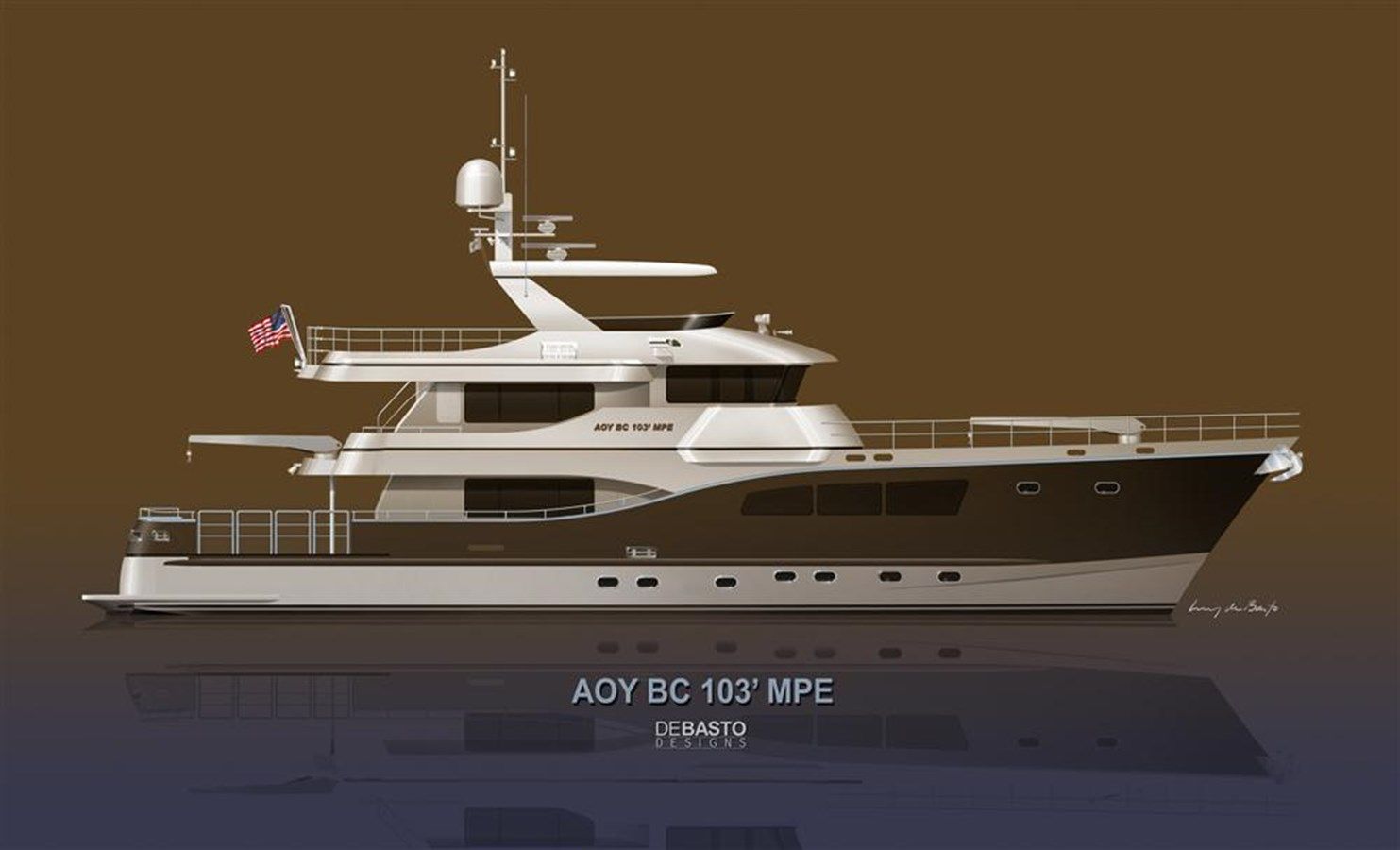
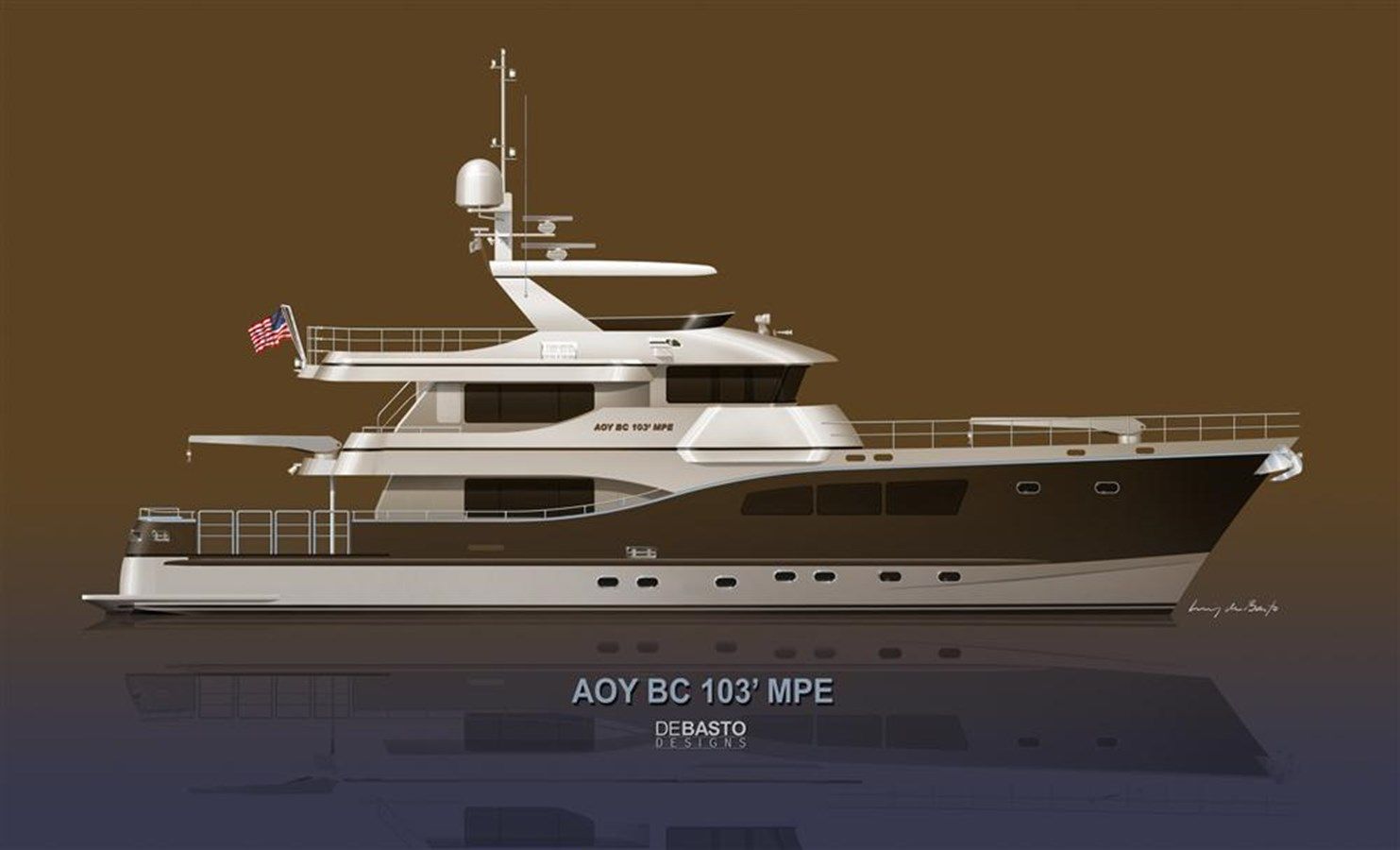
Now available as a bespoke new-build with an elegant 24‑month delivery schedule, this 103‑foot expedition motor yacht unites true bluewater capability with contemporary sophistication. Conceived for ocean‑crossing autonomy, her full displacement hull with a bulbous bow delivers poised seakeeping and long‑range efficiency, whether specified in advanced fiberglass composite or as an optional steel build. Twin Caterpillar inboard diesels provide reassuring redundancy, a serene 10‑knot cruising cadence, and up to 13 knots when the horizon beckons, while approximately 9,800 gallons of fuel and 3,000 gallons of freshwater support extended passages far from the marina. A broad 24‑foot beam underpins stability and volume, inviting the relaxed pace and quiet confidence that define the finest Expedition Yachts.
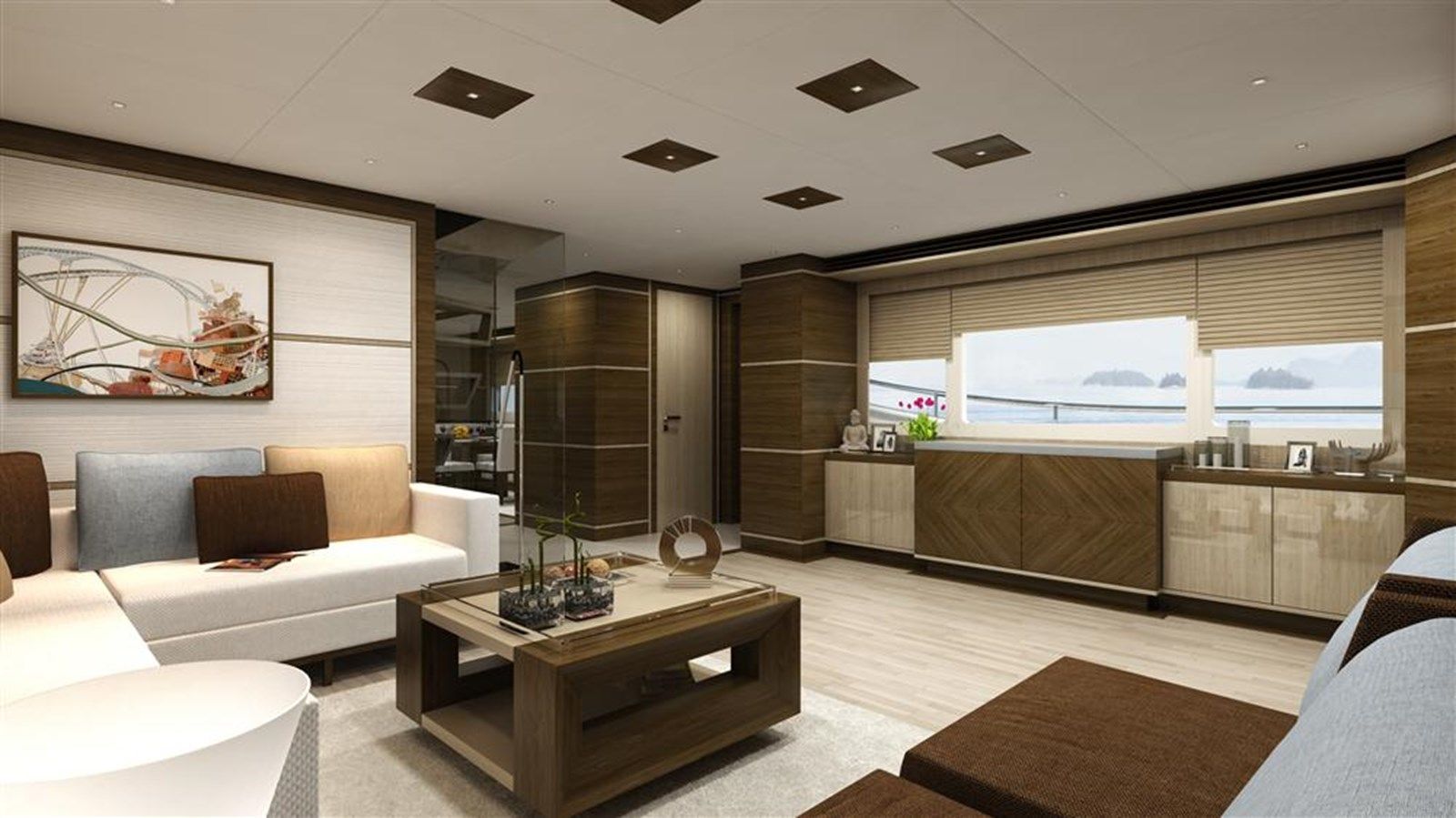
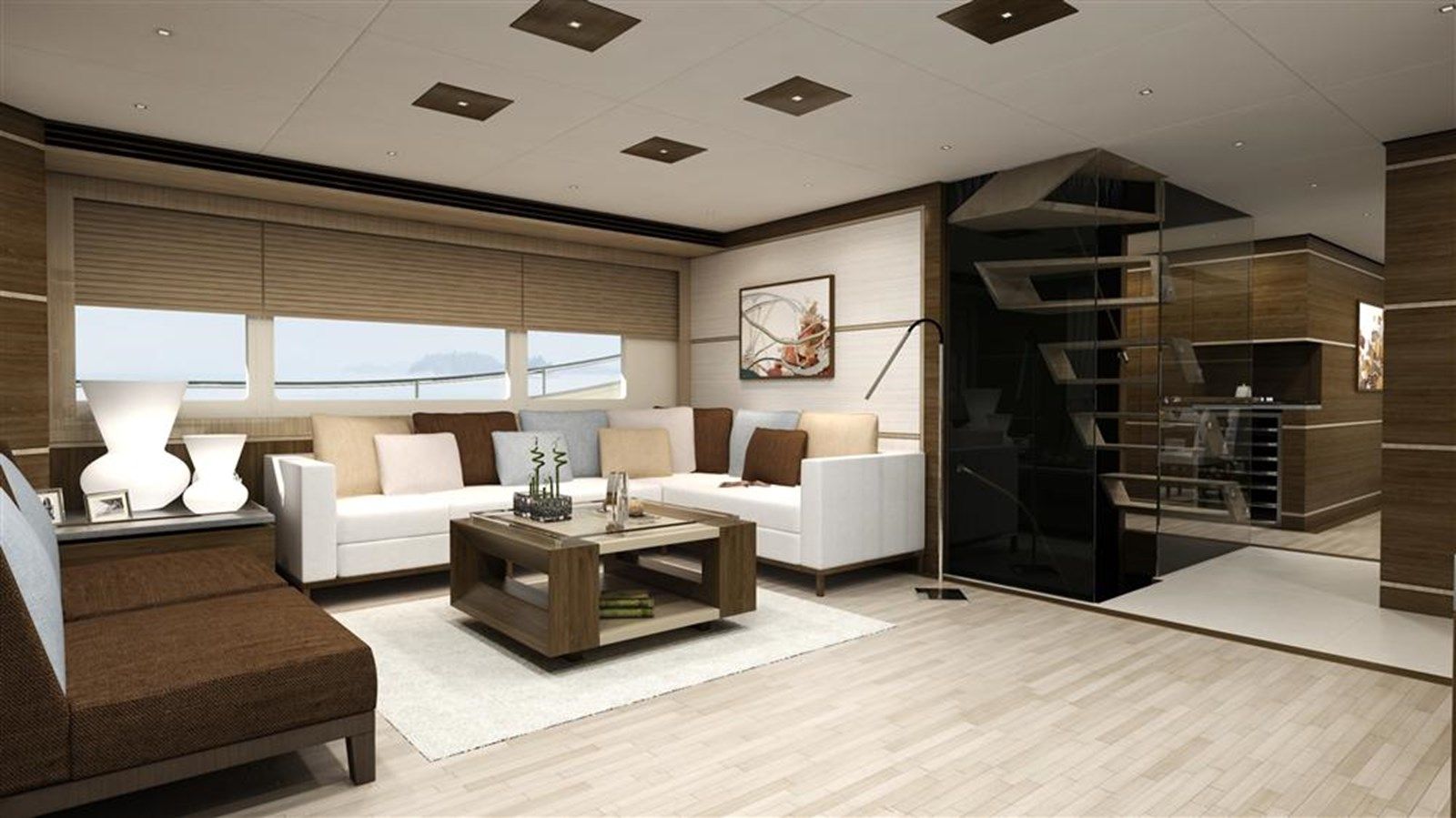
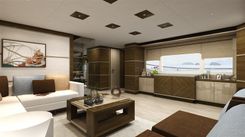
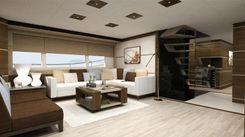
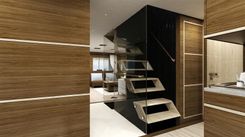
Inside, Luiz de Basto Design crafts a luminous, contemporary sanctuary where panoramic lounges, a convivial dining setting, and a chef‑friendly galley flow effortlessly for life underway. Accommodations for up to eight guests are tranquil and private, complemented by five beautifully finished heads; textures, veneers, stones, and lighting can be tailored to your personal aesthetic, ensuring a yacht that feels distinctly your own. Professional operations are assured by three dedicated crew cabins with berths for five, enabling discreet service and effortless hospitality on every passage.
Built in China for 2027 delivery, this new‑construction opportunity distills the soul of modern Motor Yachts into a purposeful go‑anywhere platform—robust, efficient, and indulgently comfortable. Wide, protected decks invite al‑fresco moments between landfalls; generous stowage welcomes the gear that fuels exploration; and class‑leading engineering instills confidence when the weather writes its own script. With customization at the heart of the project—from hull material and interior mood to systems and finishes—your next horizon is limited only by your imagination.
Detailed Description
Description and layouts for the R.S.E (Regatta Support Explorer), the D.S.E (Dive), the T.S.E (Toy)
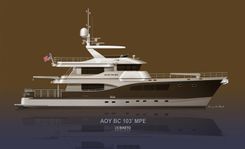
All Ocean Yachts BC 103’ M.P.E (Multi Purpose Explorer) was conceived to deliver a truly versatile explorer platform inspired by the highly innovative AOY 90' and AOY 100' cockpit Explorers. Its mission is to fulfill a spectrum of specialized explorer roles without major redesigns, leveraging a common construction platform shared with other AOY Explorers and preserving their outstanding specifications, sea keeping, long-range capability, and flexible interior arrangements. This approach brings meaningful multi-vessel build efficiencies to niche-design explorers. The BC notation honors Bob Connell, a world-class sailor, top surveyor, yacht builder, and extraordinary individual whose guidance shaped not only the AOY Explorers but every explorer project undertaken over the past twenty years. In his memory, a donation from the sale of each AOY BC 103' M.P.E model will be made to the US SAILING ORGANIZATION. With that spirit of purpose and performance, the M.P.E has been tailored to a series of niche explorer missions, beginning with the R.S.E Regatta Support Vessel.
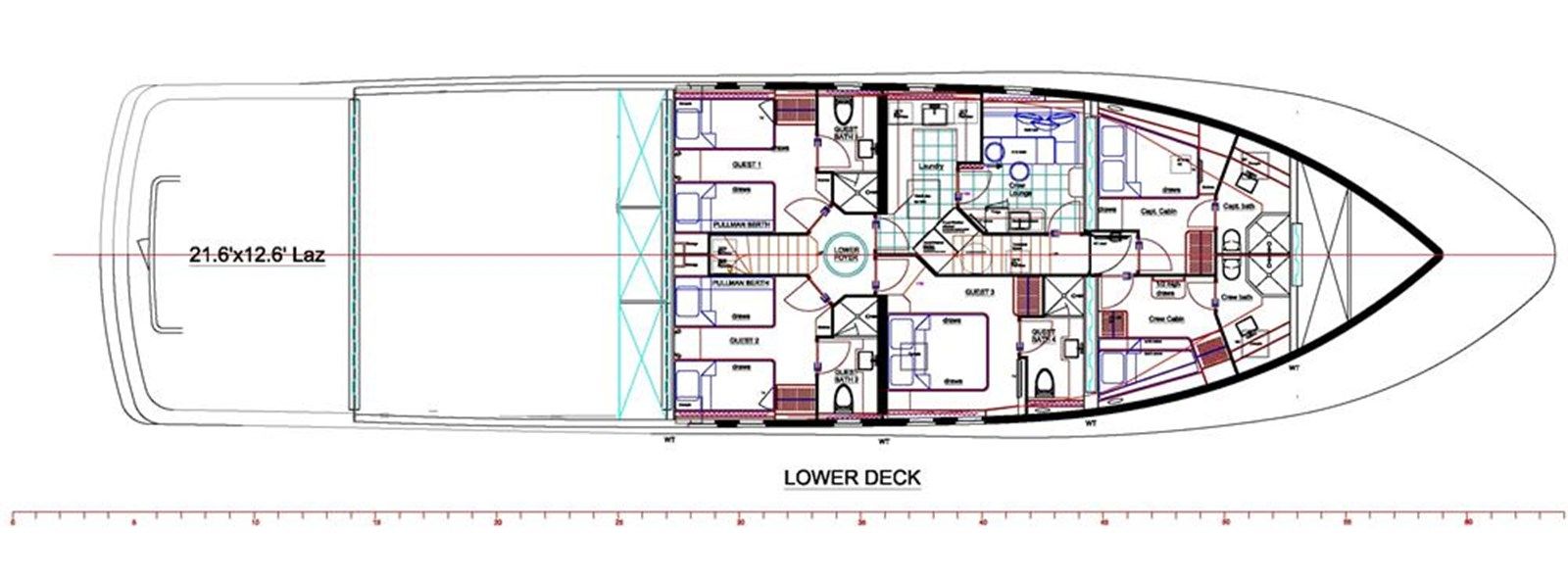
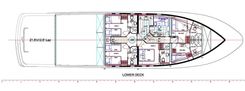
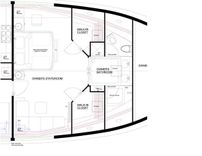
Created to support Ultra Large Sailing Yachts at the world’s premier regattas and to extend the same elevated level of assistance to fleets and sailing programs globally, the R.S.E transforms operational logistics into an elegant, guest-forward experience. Below, the lower deck can mirror the standard AOY arrangement, enhanced with Pullman berths in the twin guest staterooms, or it can be specified with the port crew double bed reconfigured to match the starboard upper-and-lower bunk layout. Starting at the bow, four crew are accommodated in dedicated cabins, each with ensuite head. Immediately aft to port, a large crew mess with sink, fridge, microwave, and settee becomes the social heart of the duty cycle; the settee converts to a full-size bunk for short-term extra crew, dive masters, or fishing guides and offers ample storage beneath. Continuing aft to port, a truly expansive laundry and dry-goods storage area houses two full-size washer and dryers, a cloths press area, a large sink, and a service door directly into the guest corridor to streamline discreet staff access. Generous in scale to handle not only the vessel’s own guests but also the additional laundry generated by racing crews, this space underscores the R.S.E’s professional-service DNA. Transitioning into the guest zone, two aft lower guest cabins feature Pullman berths, while a large queen cabin lies just forward to starboard; each stateroom is finished with an ensuite head and separate shower for complete privacy and comfort.
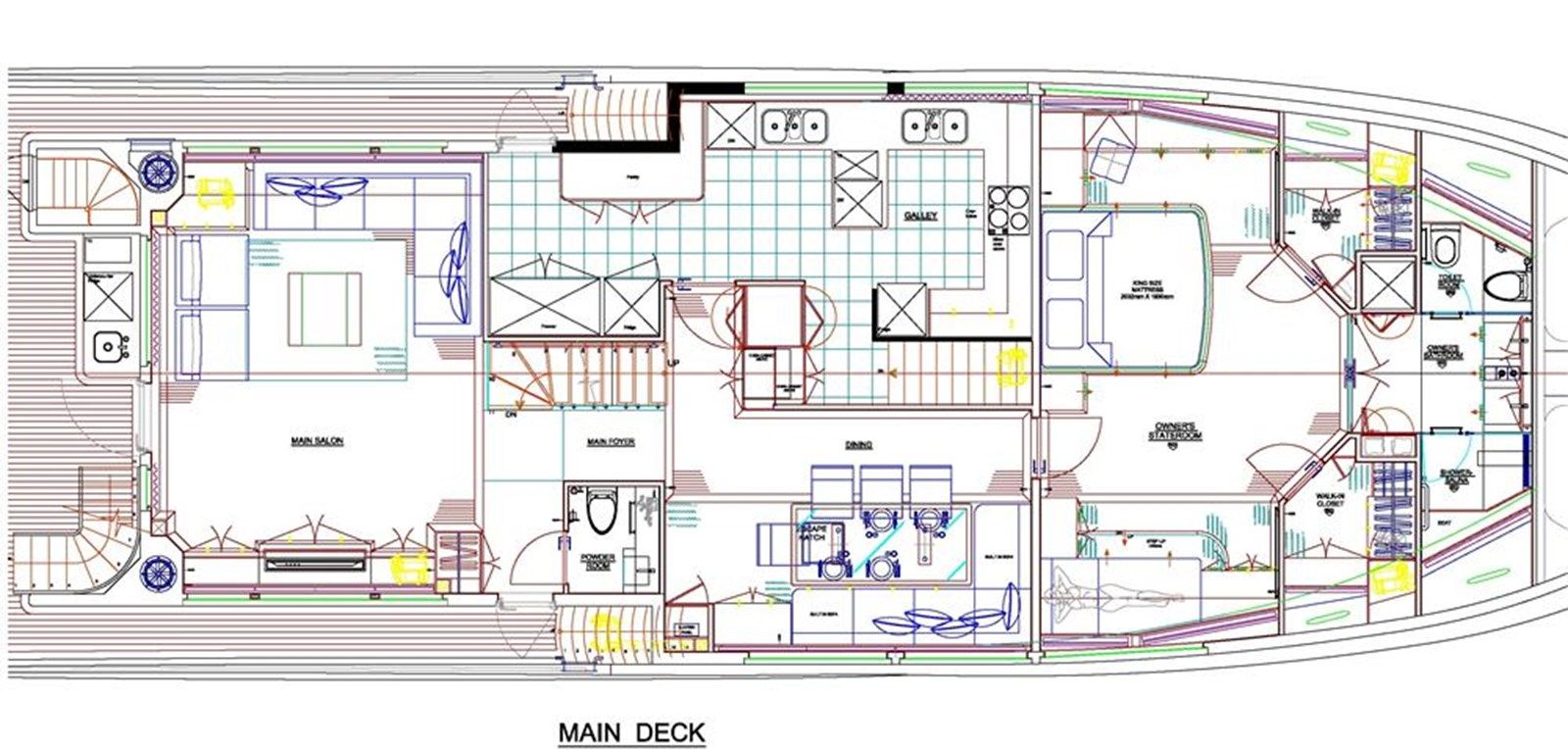
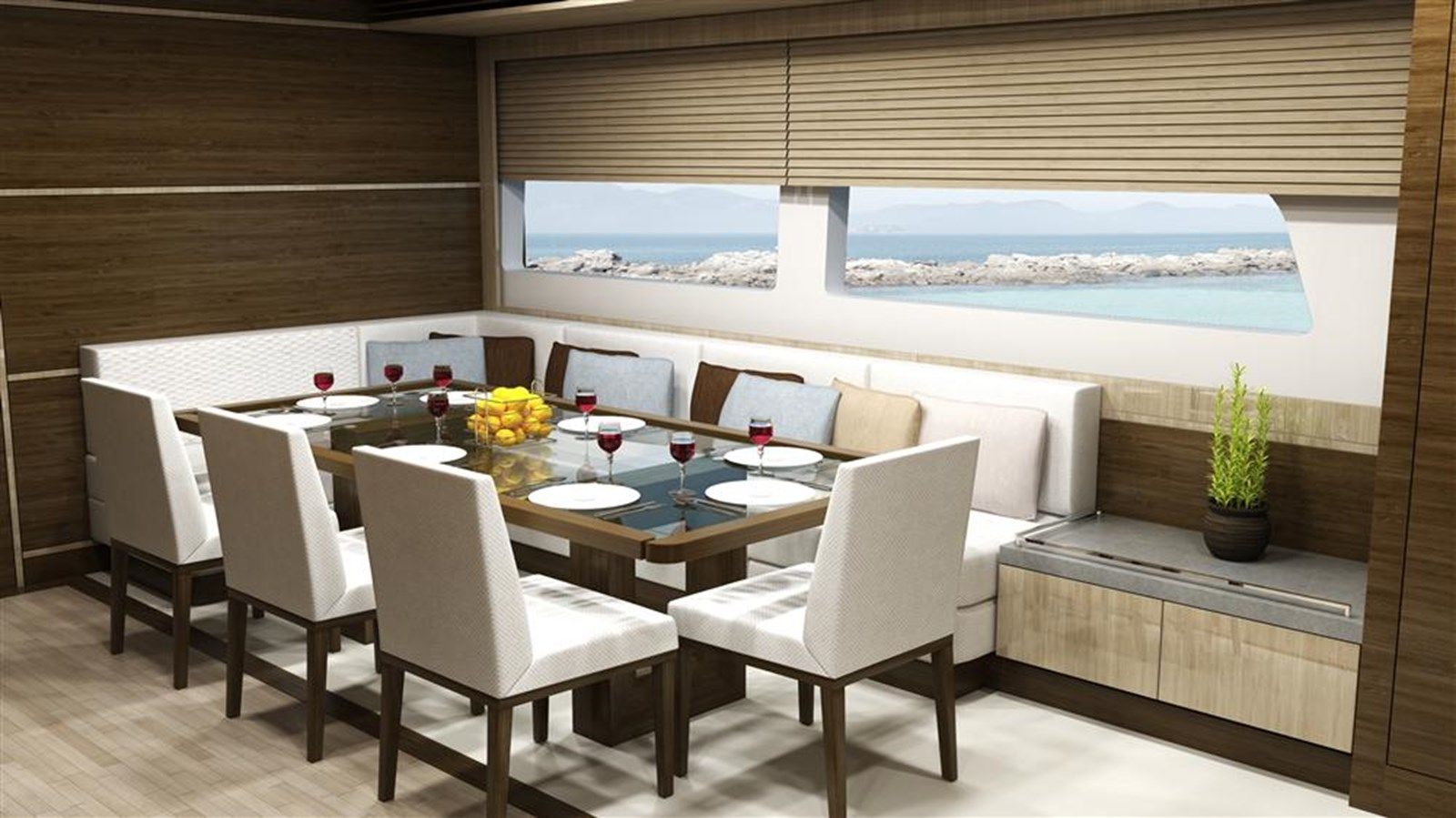
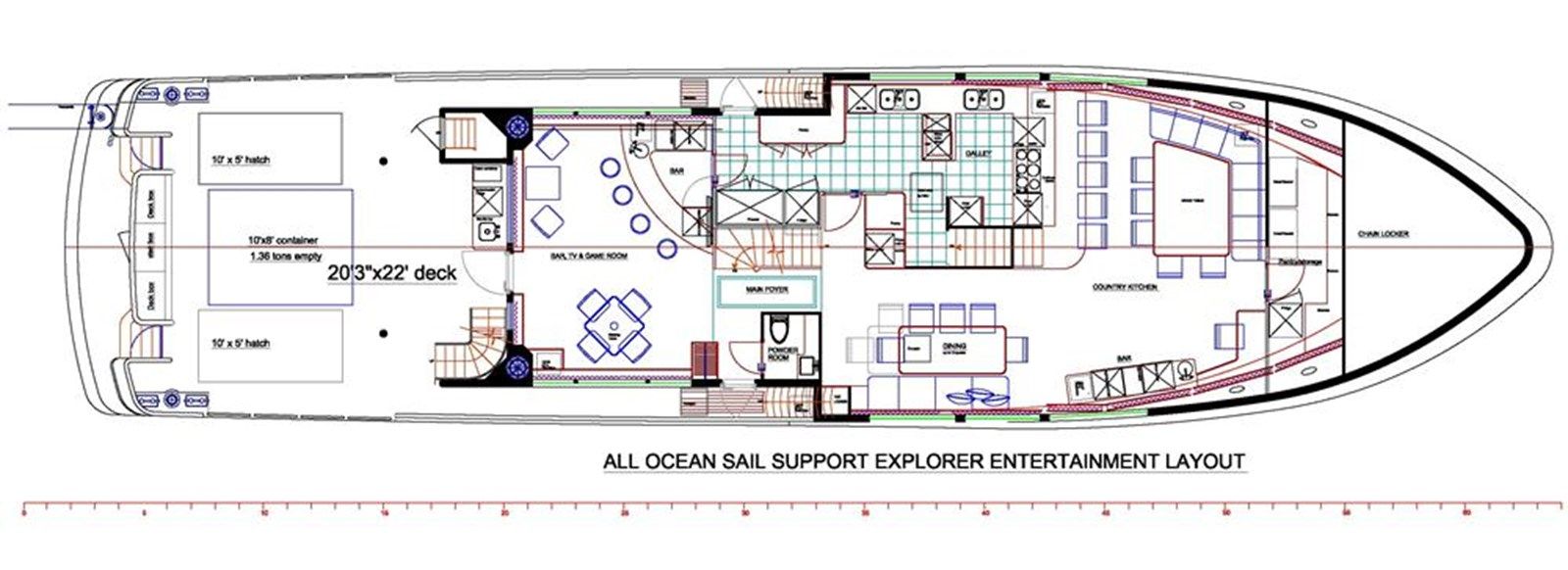
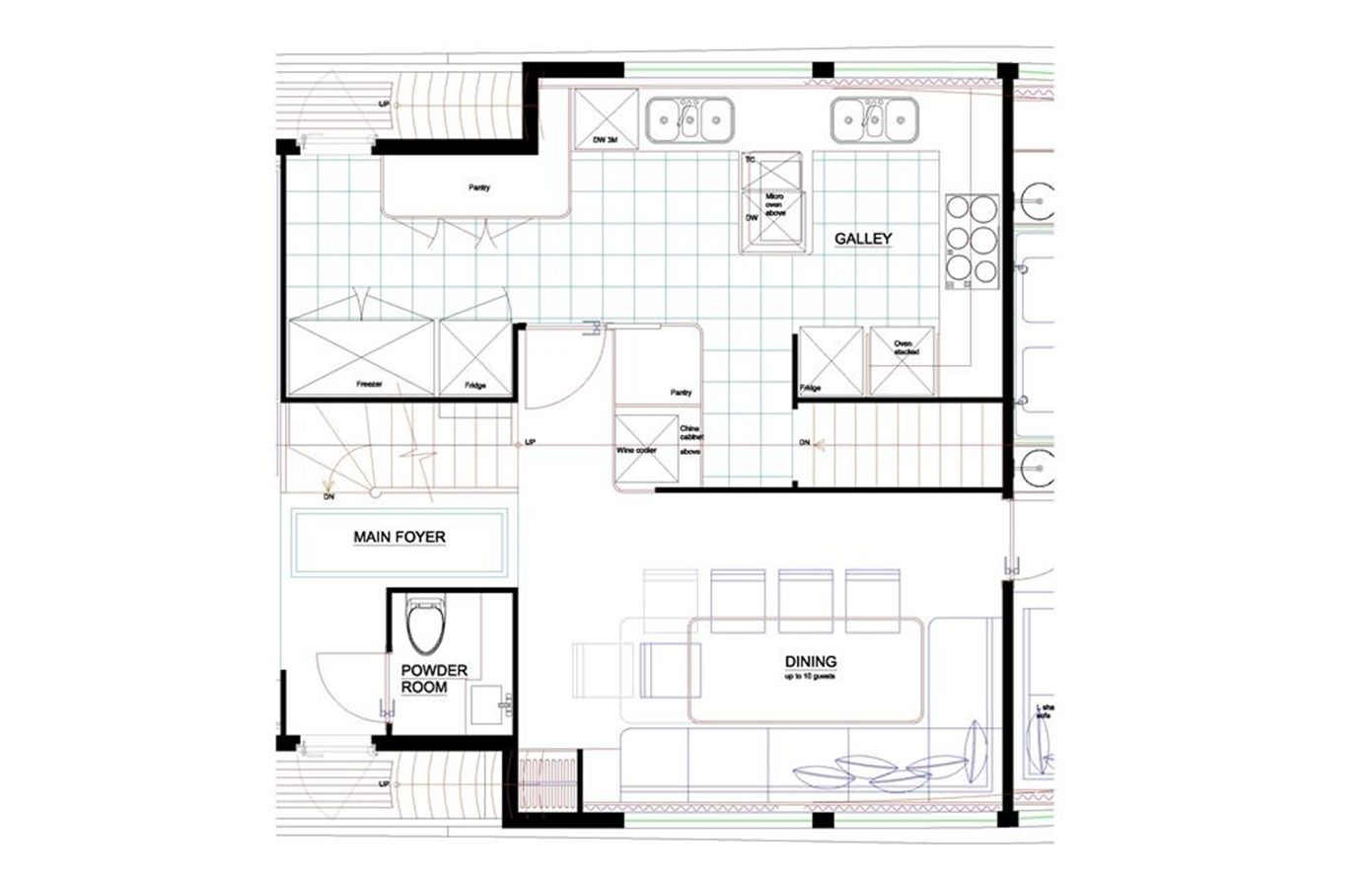
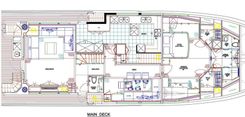
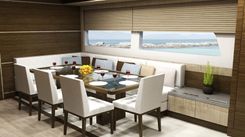
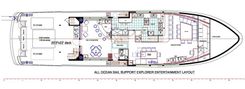
On the main deck, the standard country kitchen concept—offered as an option on the AOY 90 and 100—sets a warm, convivial tone. Forward, a large storage area integrates twin chest freezers, a commercial refrigerator, and a capacious dry store, recognizing that robust provisioning is essential to the R.S.E mission. The vessel offers extensive dry storage along with abundant refrigeration and freezer capacity to support the high number of guests it is designed to serve. Aft to port, an oversize banquette dining table seats up to twelve with generous storage beneath, complemented by a large TV set discreetly behind the seating for movies, regatta-review sessions, or corporate briefings. Continuing aft to port, a counter-dining bar seats five and is open to the galley to encourage an interactive culinary rhythm. To starboard forward, a thoughtfully placed desk and office area adds operational utility, while immediately aft a full wet bar with drink fridge, wine cooler, ice maker, sink, and storage doubles as a service pantry and side bar to elevate hosting. Further aft to starboard, an extendable banquette dining table comfortably seats up to ten, once again with practical storage under the bench. Collectively, the dual dining zones and counter seating accommodate as many as twenty-seven guests in the main dining area alone. Add the ten additional seats in the aft bar lounge and the main deck interior offers a total of thirty-seven dining seats. Include the flybridge and the vessel provides standard seating for fifty at mealtimes, even before any additional tables are set on the aft deck for festive, large-scale events.
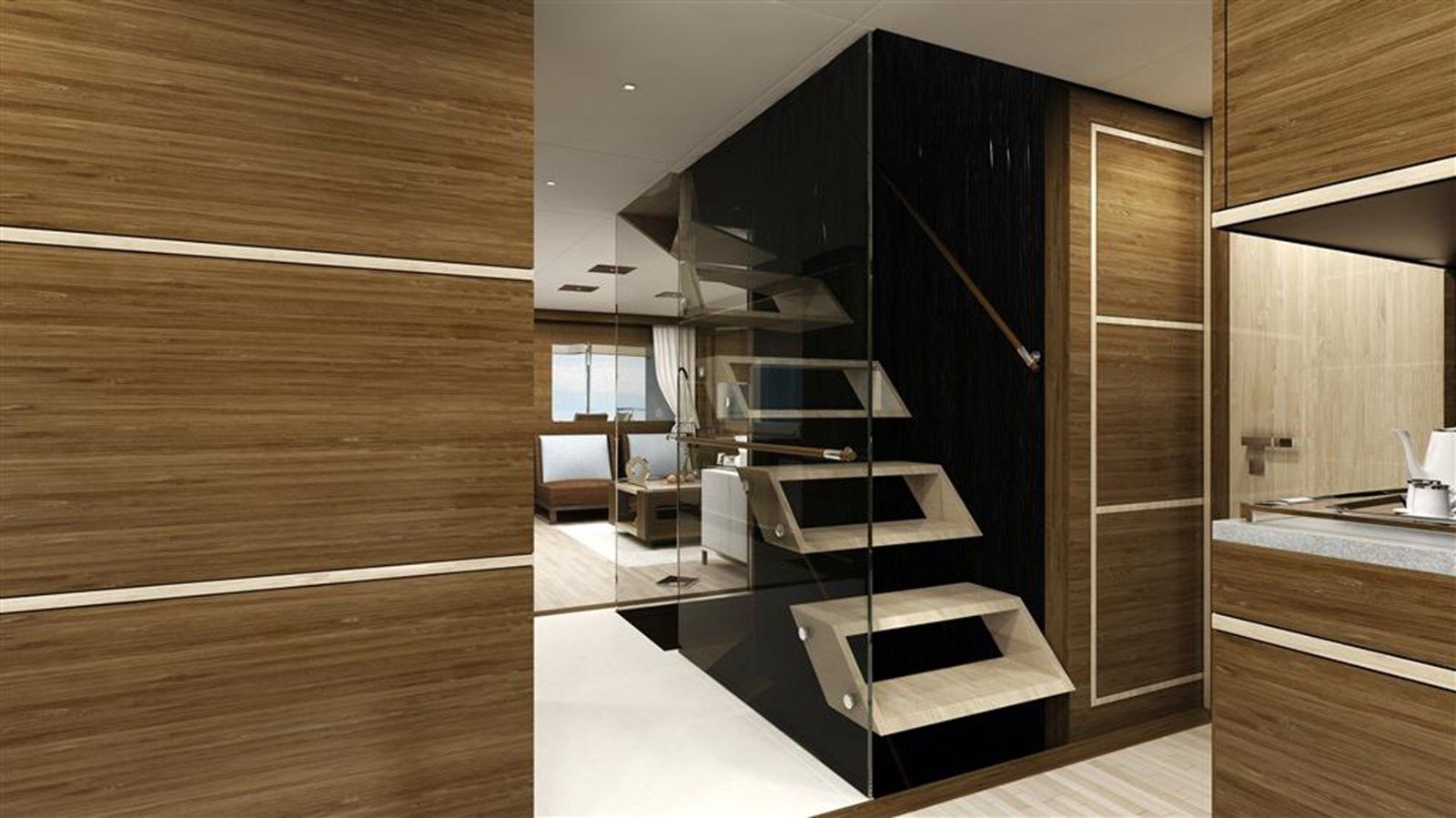
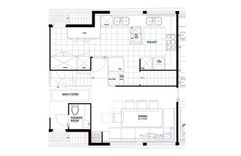
This remarkable hospitality footprint is supported by a true commercial galley located aft and to port of the dining zone. The chef’s area is outfitted with a six-burner cooktop, high-grade ventilation, twin convection ovens, microwave, triple sink with disposal, dishwasher, and a full-size commercial refrigerator dedicated to the chef, all framed by extensive counters and abundant cabinetry. Immediately aft, the stewardess zone adds a triple sink, trash compactor, and a three minute dishwasher, plus deep flatware and china storage accessed by dual-sided doors so that china may be loaded from the galley and retrieved from the dining side—an elegant, high-throughput service solution. A second wine cooler and integrated side bar enrich the service ritual. Aft of the stewardess area lies the second large pantry, followed by a door directly to the side deck for swift crew and supply access. Opposite the pantry, a full-size commercial refrigerator and double-door freezer expand cold storage. In total, the dining and galley zone includes three full-size refrigerators, two wine coolers, a drink refrigerator, and an ice maker, together with two full-size chest freezers and one double-door freezer. The galley connects directly to the lower crew area and to the side deck, and oversized windows bathe both dining and galley spaces in natural light. Aft of the dining area, the main foyer provides stairs to the bridge and lower decks, a head, and a large wet locker. Beyond, the bar, game, and TV room anchors the social core with a full-service bar linked directly to the galley; it includes a sink, drinks fridge, wine cooler, and a large ice maker, plus a convertible game table that seats four or expands to eight, with additional comfortable lounge seating around it.
Through an oversized aft door, the interior opens to the huge SERVICE DECK, measuring 20 x 22' for a total of 440 sqft. Two oversized 10' x 5' deck hatches to port and starboard allow extra-large sails to be transferred from the racing yacht to the sail locker/lazarrete, assisted by the 2 ton crane located at the aft end of the pilothouse deck. Removable handrail sections in the port and starboard bulwarks ease sail handling from the 22' RIB chase boats stored on the bow or directly from the sailing yacht. Between the hatches, space has been reserved for either a 10' x 8' container or a service trailer, with clearances that still permit opening either hatch; the crane can offload the container or trailer straight to shore. The engine room is reached via a port-side aft door on the house, while forward on the aft deck by the entrance, another wet bar with sink, drink fridge, and trash compactor amplifies hospitality. This deck remains intentionally flexible to suit an extraordinary range of tasks, from technical service to celebrations. A large tent awning deploys with crane support to shade the work area, cover sail-repair operations, or provide a stage for bands and banquet tables. Aft, a comfortable swim platform features direct access to the sail locker/lazarrete through an oversized door and a second oversized door to the engine room sized to remove any onboard machinery.
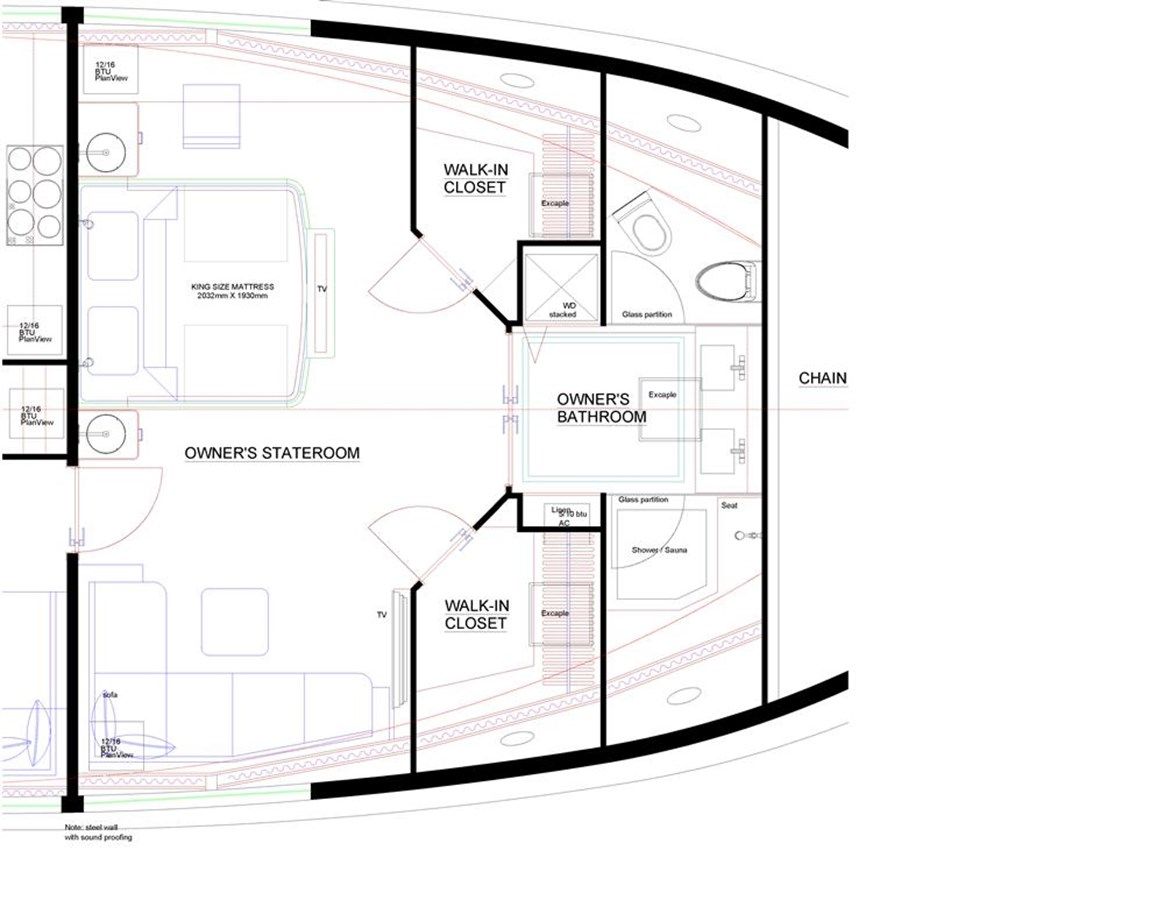
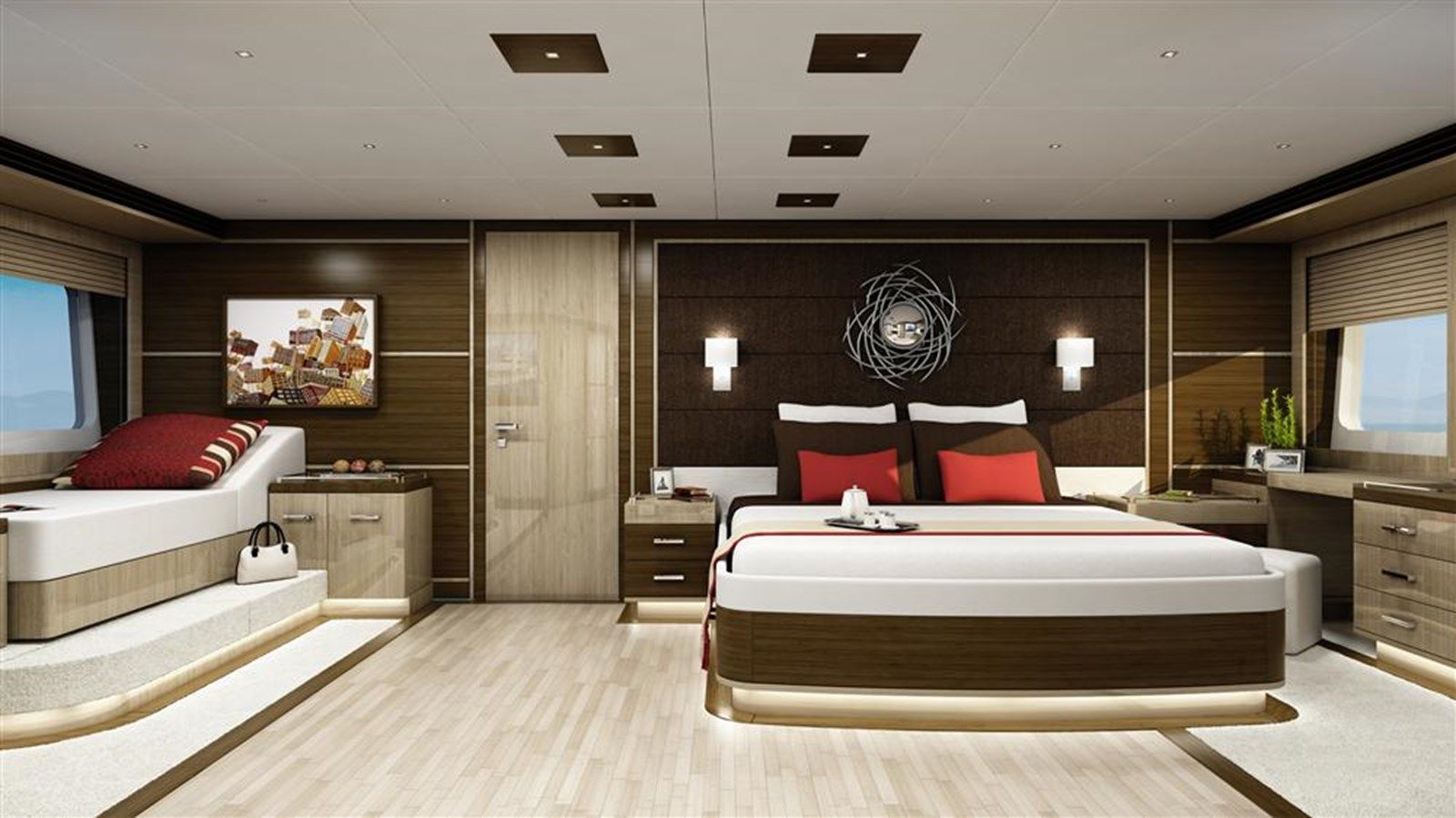
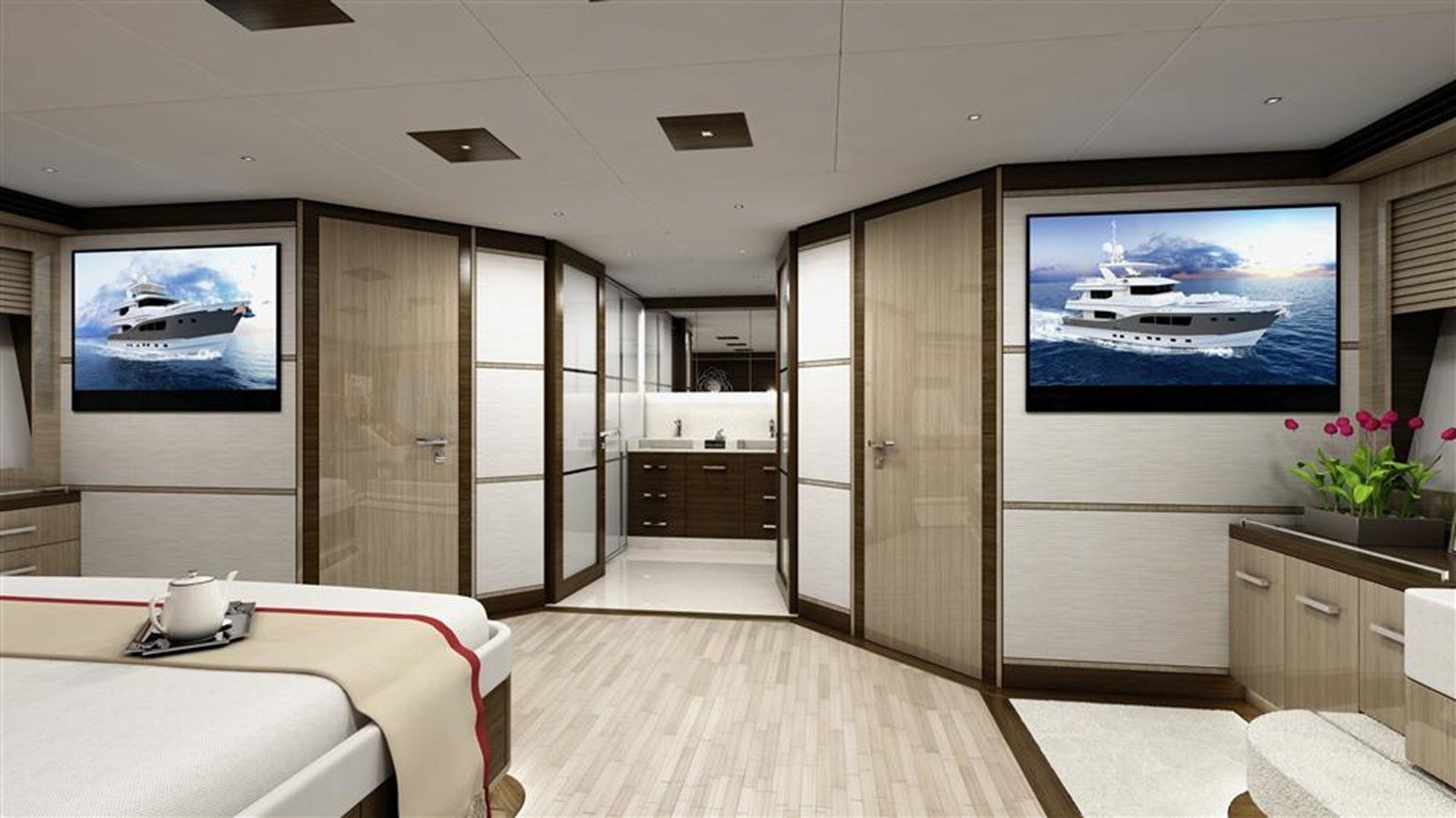
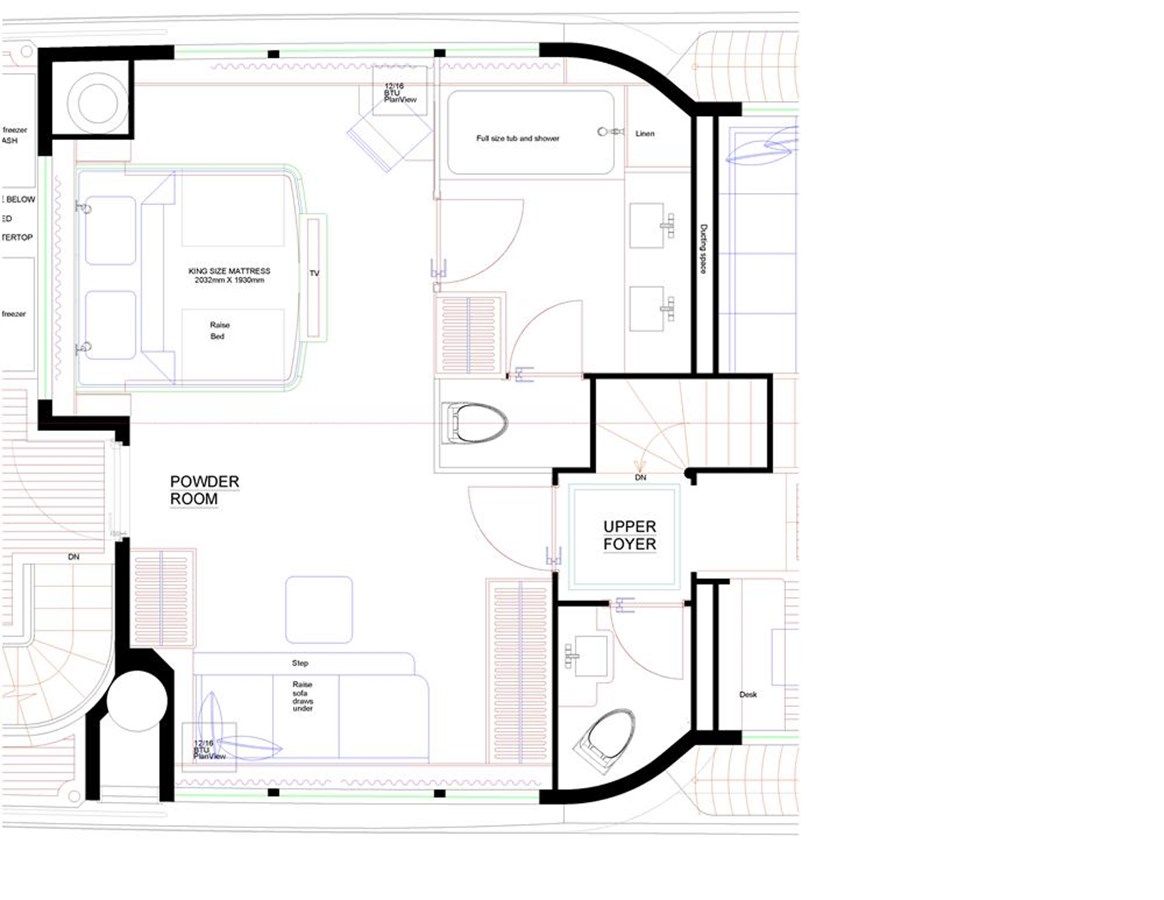
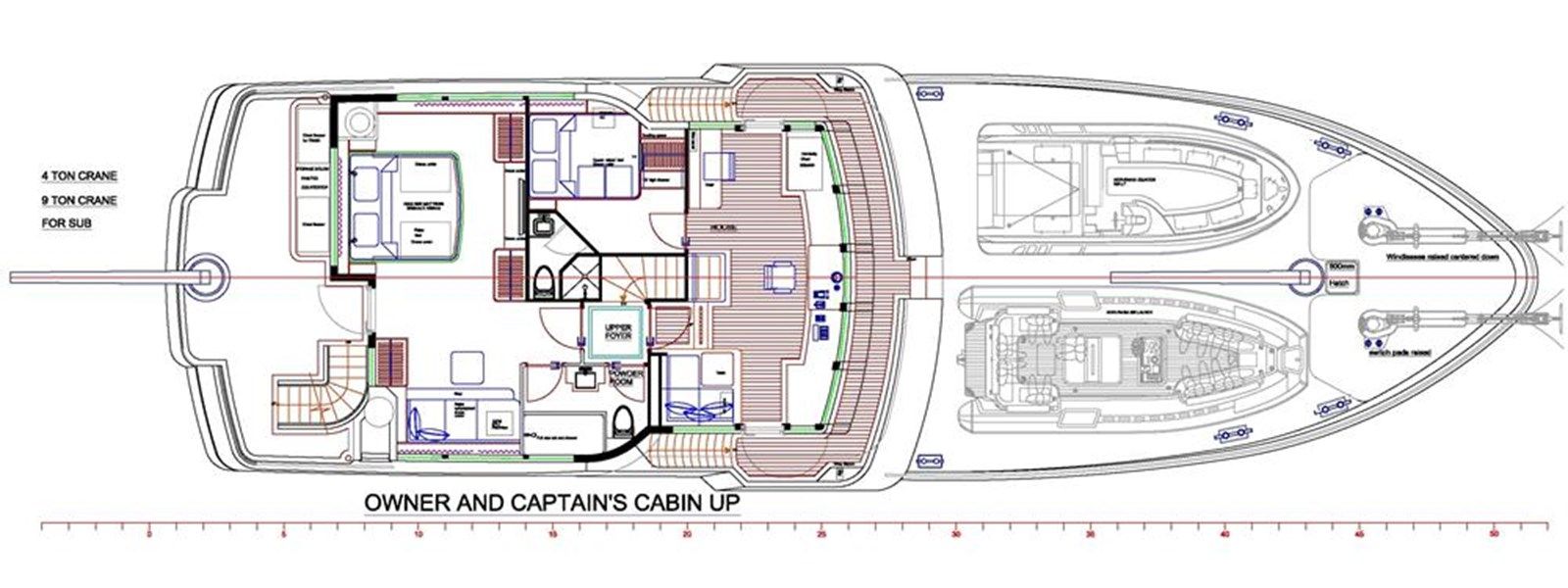
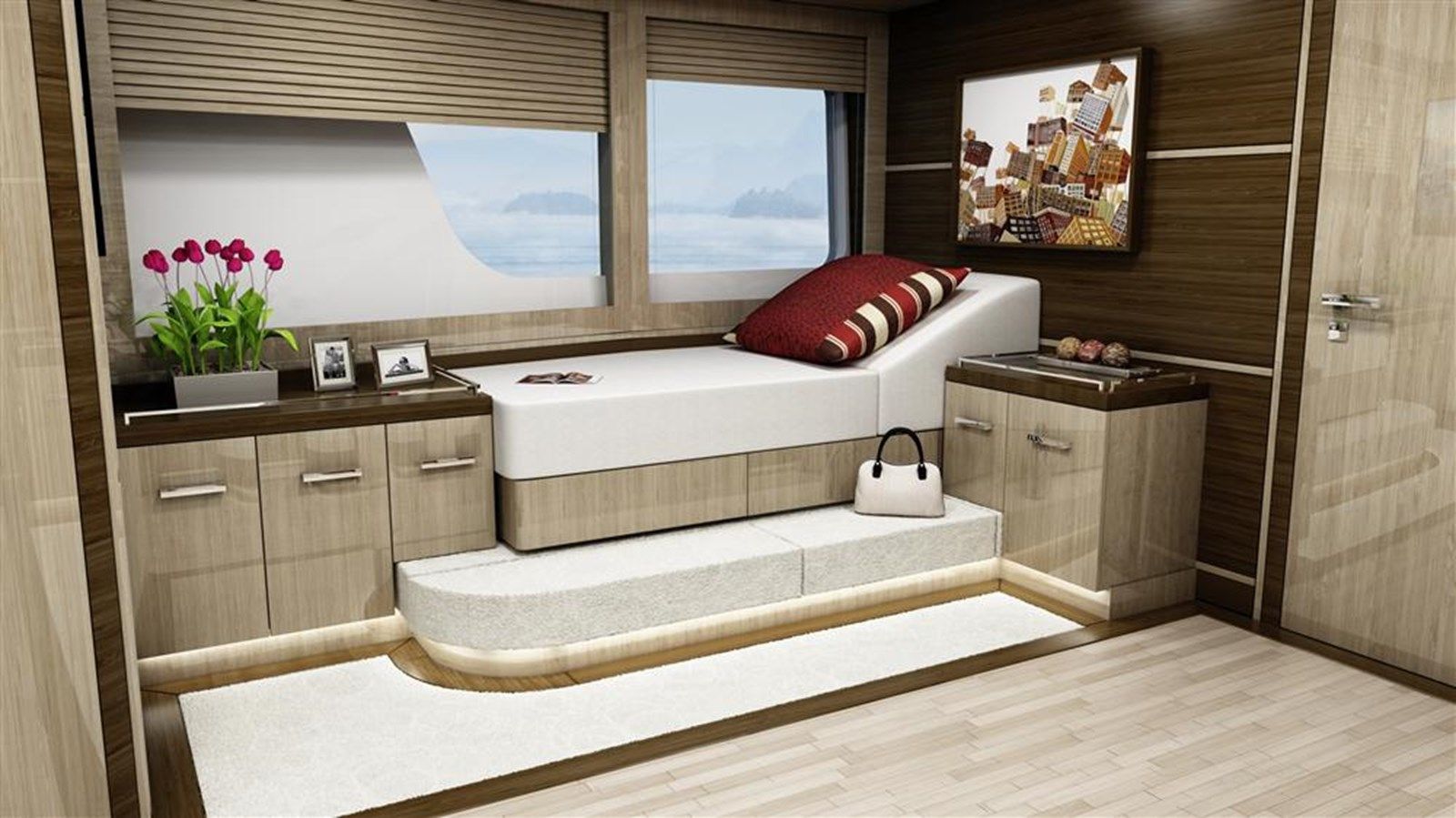
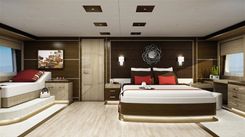
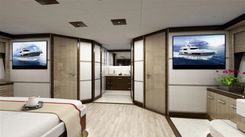
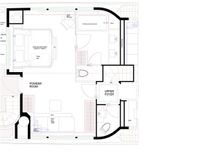
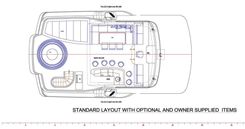
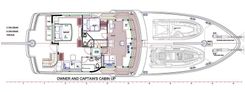
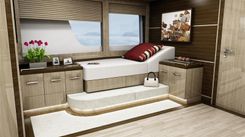
The pilothouse deck may be reached by four routes: external stairs from the starboard aft deck, forward stairs on both the port and starboard side decks, and internal stairs from the main foyer. The standard arrangement places the captain’s cabin directly behind the bridge—an option on other AOY Explorers—within a pilot house sized for serious passagemaking. A raised settee nestles starboard aft, flanking a centerline helm chair and a centerline bench seat, with the captain’s desk and communications center to port. The door to the captain’s cabin sits between the bench and the desk. Forward, a full-size navigation console provides ample space for a comprehensive suite of worldwide navigation electronics, while port and starboard draws and storage keep the bridge immaculate; the port-side draws accept full-size charts, as does the nav counter above. The captain’s cabin features a full-size raised double bed with draws beneath, a hanging locker with integrated draws, and an ensuite head with separate shower. Aft of the bridge, the upper foyer leads to the master stateroom, where a raised king-size bed with storage below maximizes the panoramic window views and expands draw space. To starboard, a raised lounge/day bed is built into the window with additional draws and storage beneath, creating a serene vantage point. Three full-size hanging lockers deliver a total of 9' of closet space, while centerline forward of the bed—between two of the closets—a large chest of draws supports a 52' TV. The spacious ensuite head enjoys excellent private window exposure and a large shower. Altogether, this deck provides space for a total of eleven guests including the day bed. Aft again, the private master deck offers room for chairs and a table and accommodates two additional chest freezers along with the aft crane.
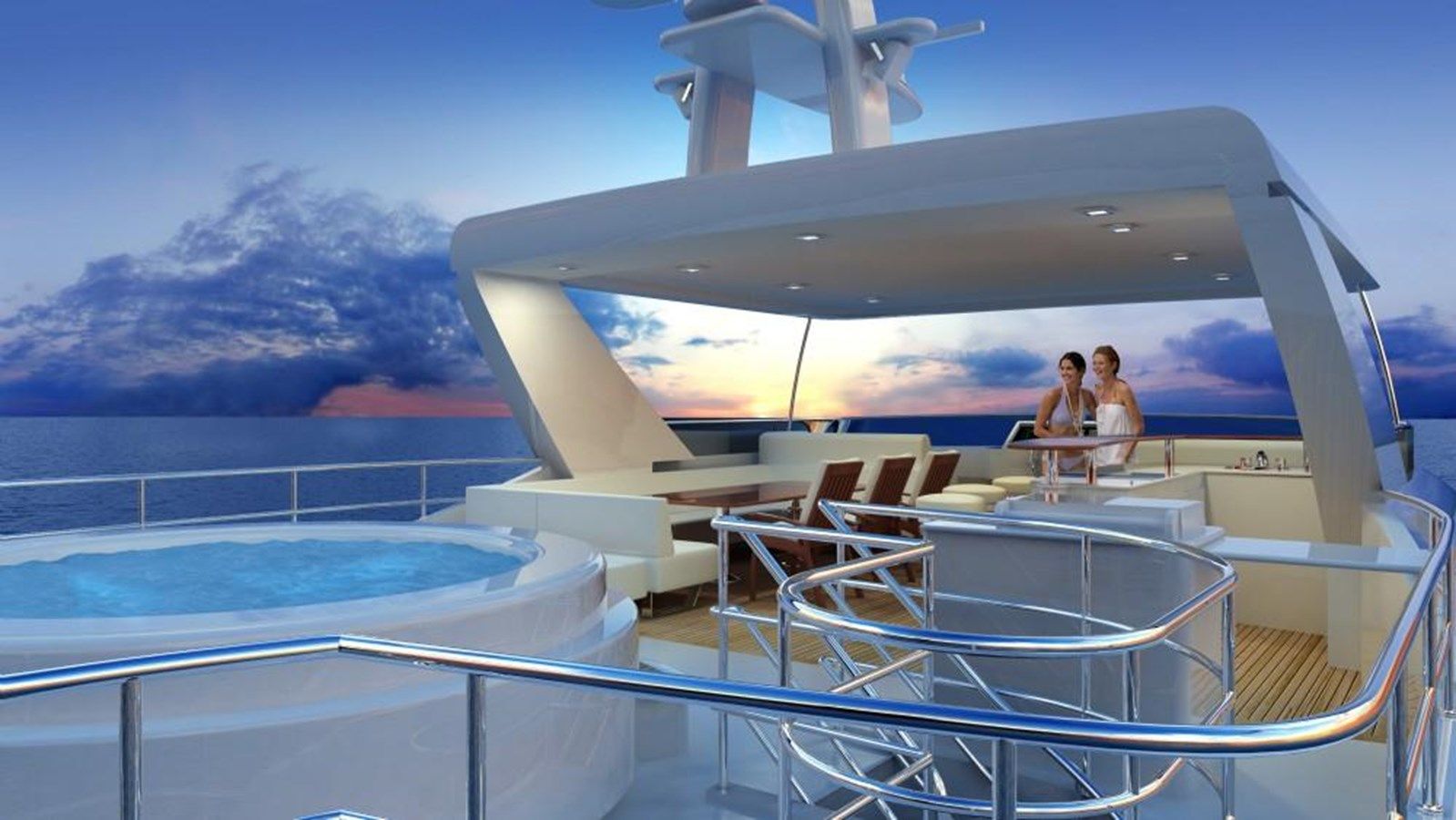
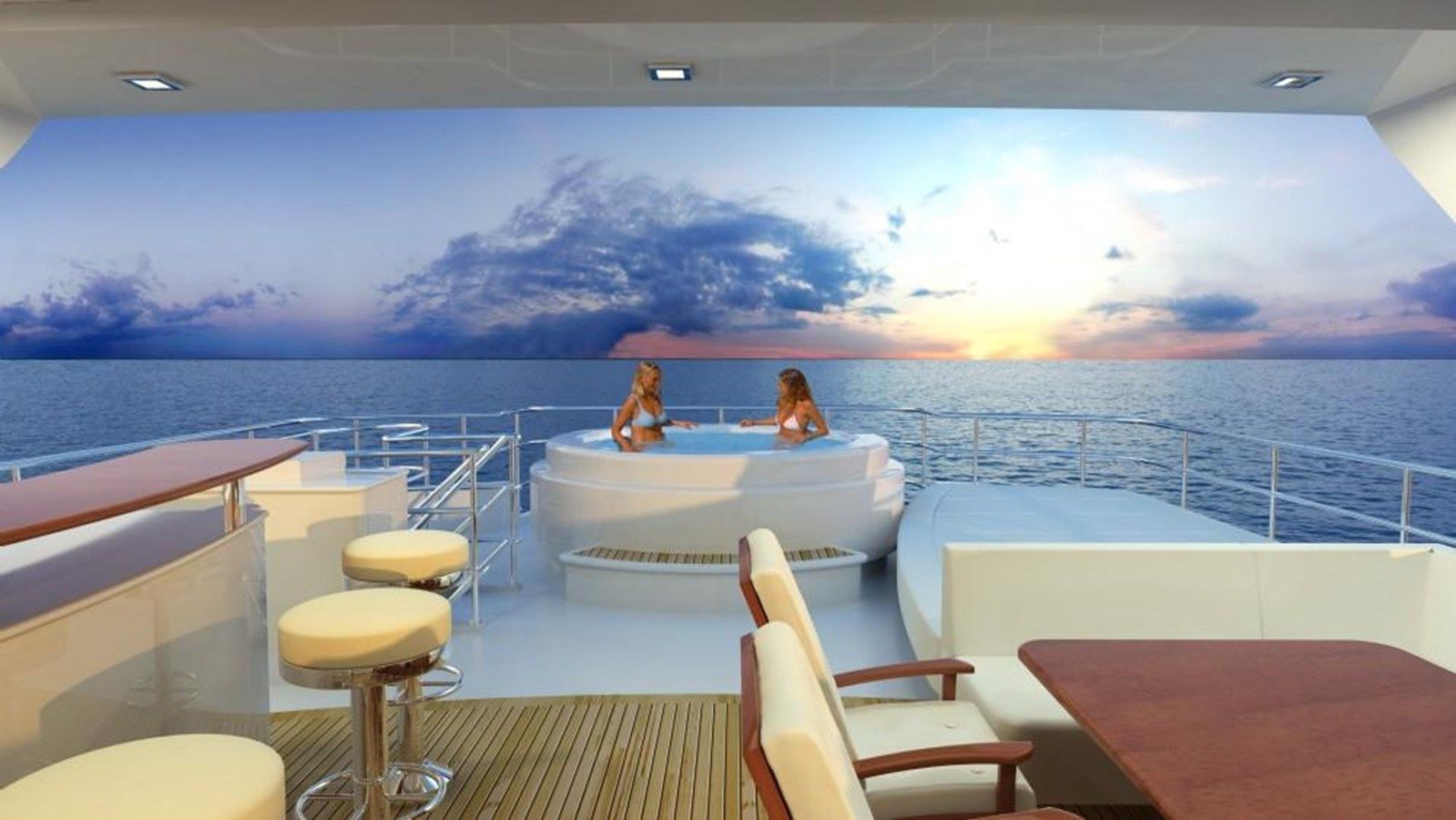
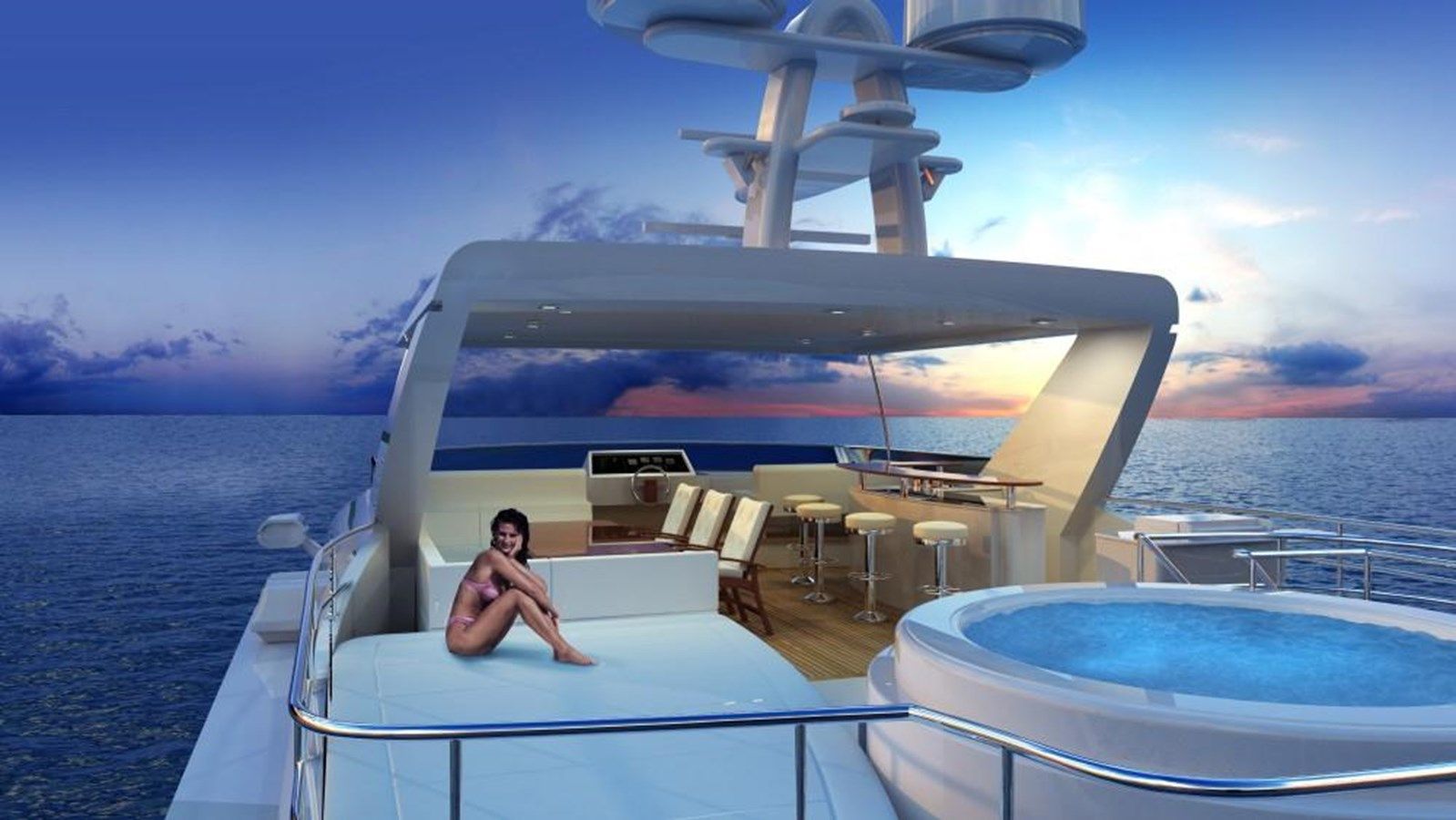
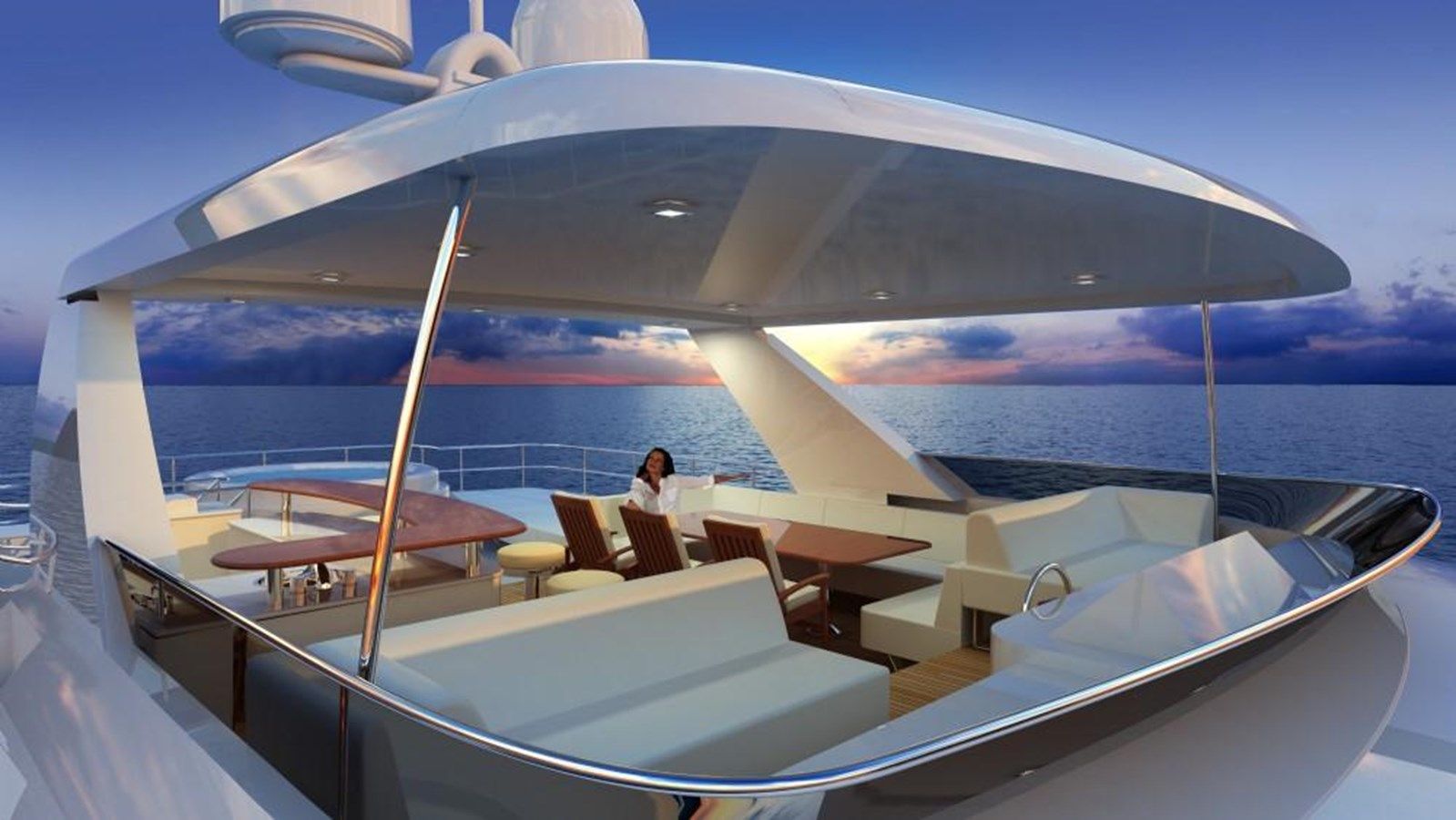
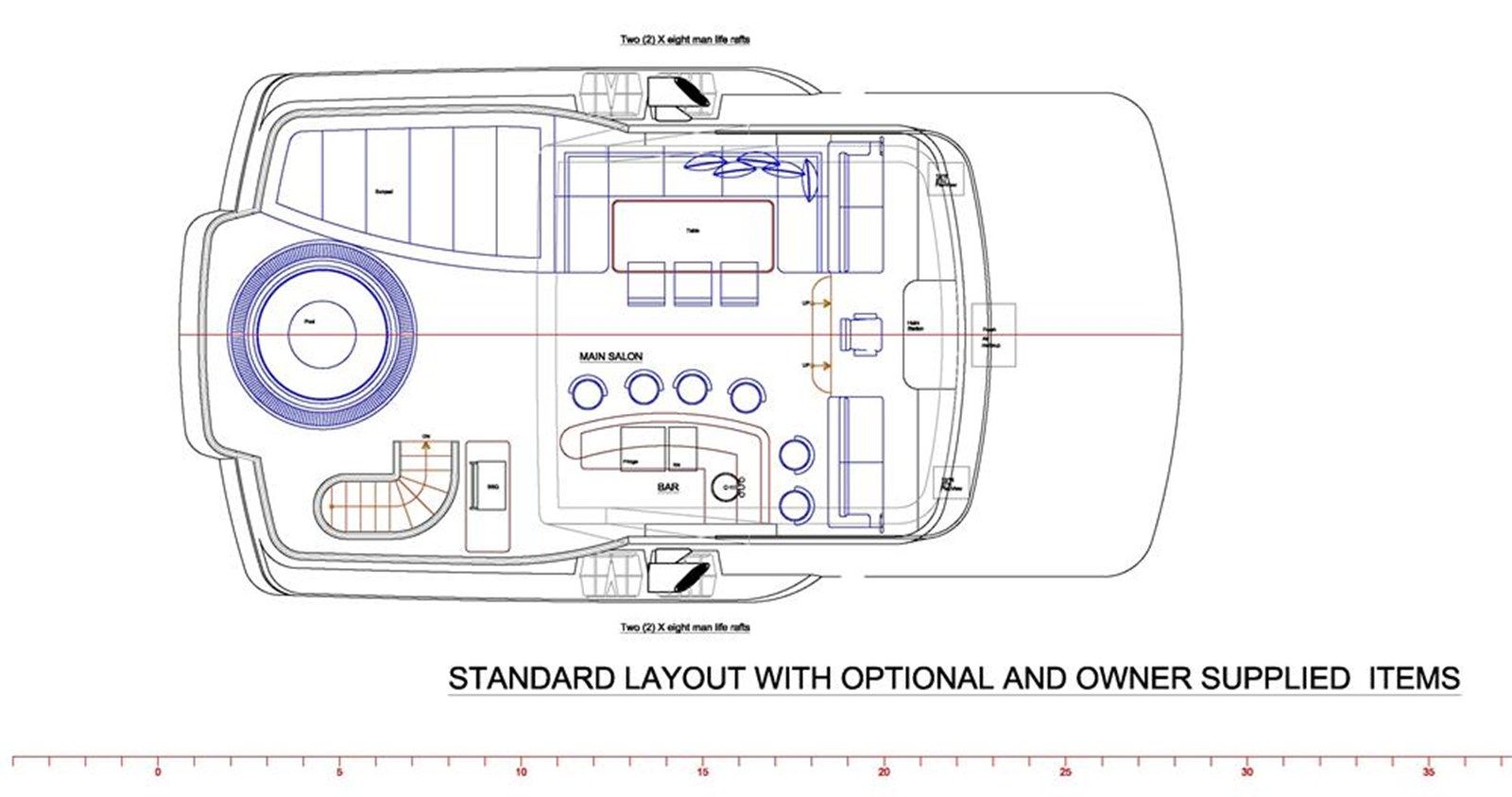
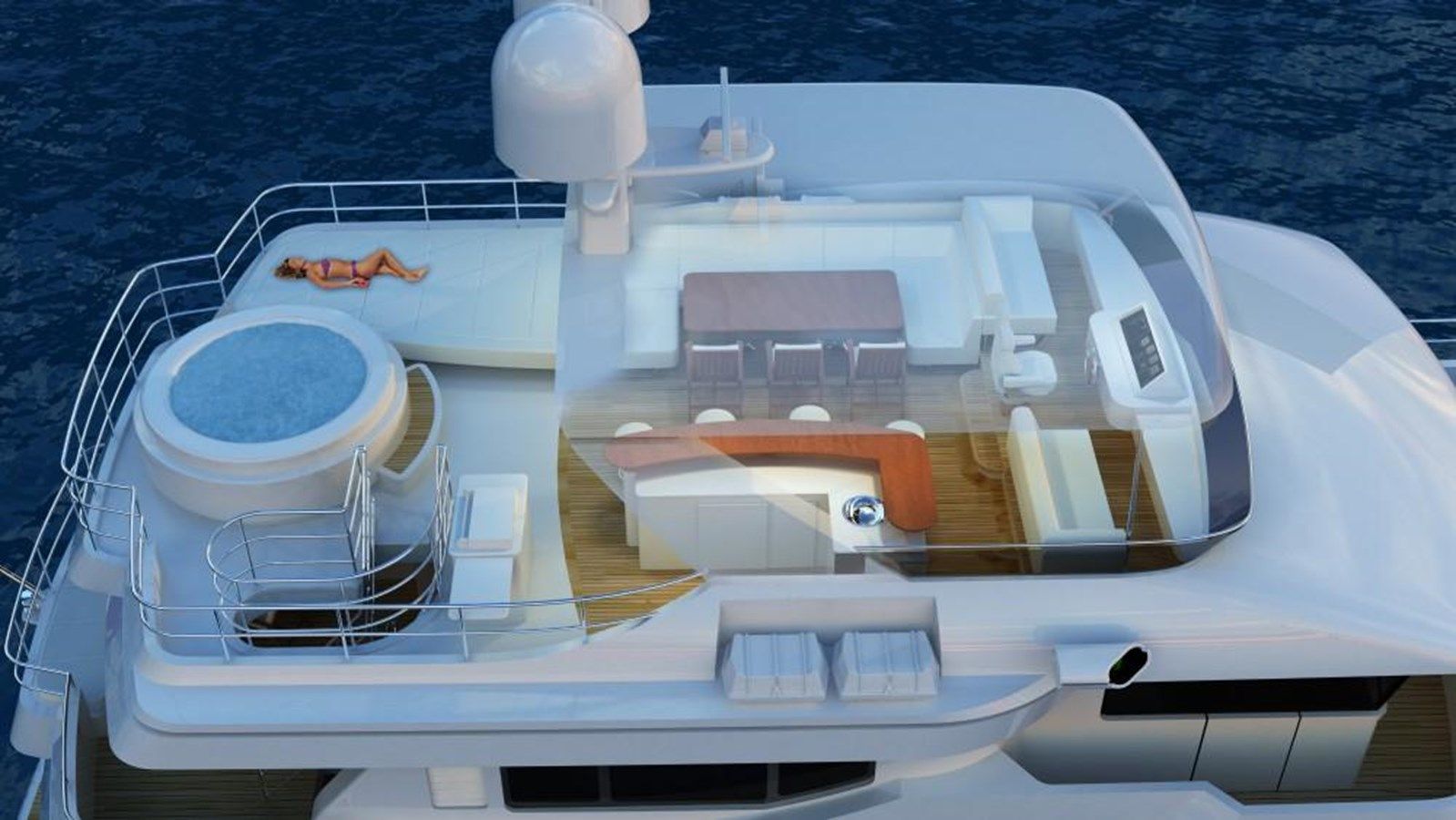
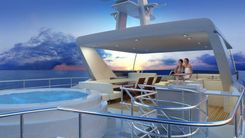
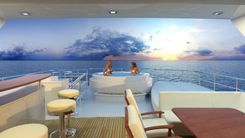
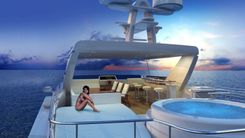
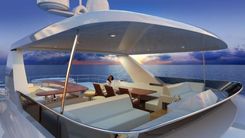
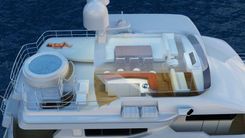
Ascending from the pilothouse deck reveals a vast flybridge more commonly seen on a 130' yacht. At the stairhead, a large Jacuzzi invites a restorative soak after a full day of racing, followed by an extra-large sun pad with storage beneath for towels and gear. Forward to port under cover, an oversize seating and dining area with generous storage becomes a breezy, social retreat, while to starboard a full bar seats six and is complete with drinks fridge, ice maker, sink, and ample storage; aft of the bar, the BBQ center extends the culinary stage. Two steps farther forward, raised stadium seating comprises two 6' plus bench seats to port and starboard facing a center helm, an ideal grandstand for following the action or simply relaxing in the shade on generously sized day beds. Looking forward from this perch, the boat deck carries 2 x 22' chase boats or a tailored combination of tenders, enabling the crew to service race yachts efficiently and to ferry guests to shore or to water activities in dry comfort. When the tenders are launched, the boat deck transforms into yet another spectacular vantage point for spectating. This is one of several combinations of interior layouts available for the AOY BC 103 R.S.E.
For the D.S.V (Dive/Wreck/Research Support Vessel), the mission profile is to meet the exacting needs of dedicated divers, researchers, and wreck hunters who aim to explore and dive in remote locations worldwide. Any of the interchangeable interior layouts will support extensive, far-flung dive operations. The large lazarrete can be configured as a full dive center, including provision for a decompression chamber, while the expansive aft deck remains deliberately flexible. Removable rails facilitate the deployment and retrieval of side sonar, shark cages, floating dive platforms, suction dredges, and specialized gear. The deck can carry an extensive range of underwater toys and/or a 10' x 8' container for research equipment, and it may also be designated to carry a 3rd tender. The 2 standard large tenders are capable of transporting divers to hard-to-reach sites or to shore for exploration. To optimize operations, the captain’s up layout is recommended to create berthing for additional crew to support diving logistics and to host local guides as needed.
For the T.C.V (Toy Carrying Vessel), the mission is simple: carry as many toys, in as many categories—on water and on land—as possible. The large, flexible aft deck, the huge lazarrete with oversize hatches, and the generous forward boat deck combine to create a true blank canvas. From jeeps to small fixed-keel sailboats, standard or folding sailing cats, canoes, kayaks, paddle boards, windsurfers, kite boards, hover craft, water slides, Bladefish dive scooters, scooters of any type, motorcycles, and even a folding-wing airplane, the platform is designed to say “not a problem.” The open-format design lets you decide what to carry and change your mind without compromise, thanks to spaces engineered for total flexibility. In terms of accommodations and crew, the captain’s cabin up layout is again advisable; the more toys you bring, the more crew you will appreciate for maintenance, operations, and guest enjoyment.
For the S.S.V (Submarine Support Vessel), the mission is to carry a submarine to remote locations. Many clients seek to explore the world with a submarine onboard, yet most vessels that can carry a 2 or 3 man sub are very large and/or conversions. The AOY BC 103 SSV is the most compact platform capable of accommodating a submarine up to 18,000 pounds. Any of the standard or optional interior layouts can be applied. Following extensive conversations with submarine manufacturers and crews experienced in submarine operations, one conclusion stands out: launching and recovery are human-intensive evolutions. Accordingly, the standard S.S.V specification places the captain’s cabin up with an option for an additional crew cabin in the lazarrete, yielding capacity for up to 7 crew or a blend of crew and a submarine pilot or guide. The 18000 pound sub represents the maximum size this vessel can carry and deploy, requiring an aft two-point A-frame crane system; smaller subs may utilize a boom crane. Depending on the owner’s objectives, the skylounge may be outfitted as a research lab or as a film lab, while the lazarrete supports a full dive center to complement underwater missions.
Should you envision another specialized explorer mission, the AOY BC 103’ M.P.E platform stands ready to accommodate it with the same thoughtful engineering, flexible spaces, and purpose-built capability.
Hull characteristics
Crafted in marine-grade fiberglass, the hull presents commanding dimensions that balance presence with ocean-going poise, with a length overall of 103 feet, or 31.4 meters, a length on deck of 97 feet, or 29.5 meters, and an approximate length on the waterline of 91 feet, or 27.74 meters. A molded beam of 24 feet 2 inches, or 7.315 meters, pairs with a draft at fifty percent load—comprising 4,580 gallons of fuel and 1,500 gallons of fresh water—of 7 feet 6 inches, or 2.29 meters.
At full service displacement with 100 percent fuel and 100 percent water, the yacht weighs approximately 220 metric tons, while light ship displacement is approximately 183 metric tons. Efficiency and passage-making confidence define performance, with a design speed at cruise at half load of 10 knots and a continuous rating at 100 percent engine load at half load of 10.5 knots, delivering a range at 10 knots of 4,000 nm.
Tankage capacities include approximately 9,800 gallons of fuel oil; approximately 3,000 gallons of portable water, equating to 11.3799 metric tons; 120 gallons of lube oil, or .51 metric tons; 120 gallons of contaminated oil, or .51 metric tons; a black water tank of 427 gallons, or 2.5 metric tons; and a grey water tank of 427 gallons, or 2.47 metric tons.
The vessel’s hull is subdivided by transverse and longitudinal watertight and oil-tight bulkheads, as shown on the contract drawings, and consists of eight compartments including the forepeak, fresh water tanks, crew’s quarters, guest stateroom number three with crew lounge and laundry compartment, guest stateroom number one and number two compartment, fuel oil tanks, engine room, and the steering gear compartment and lazarette. The hull structure is designed and engineered by High Modulus.
Major equipment list and systems
Power comes from two Caterpillar C18 Electronic main engines, A rated at 450 BHP at 1800 RPM, with deep sump oil pans and 24 V electric start, turning through two Twin Disc 3.50:1 Velvet Drive reduction gears onto two 4-inch-diameter Aqualoy 17 stainless-steel shafts. Thrust is delivered by one pair of bronze five-blade propellers—one right-hand and one left-hand—with steering via two wing-shaped semi-balanced rudders. All reciprocating machinery is mounted on resilient vibration-damping mounts, while mains and generators breathe through Centek water-wash exhaust systems. Engine control is by Kobelt with SPA 10590 remote, and hydraulic steering and pumps are by Kobelt. Close-quarters handling is assured by an American Bow Thruster 65 HP unit. Fire protection is by Kidde-Fenwal CO2 or Optec International water-mist extinguishing systems.
At the bow, ground tackle comprises two 200 kg CQR-type anchors shackled to two 137 meters runs of 5/8 stud-link chain, handled by two Maxwell VWC6000 windlass units with foot controls and remote control, safeguarded by a stainless chain guard, with chain counters in the wheelhouse.
Comfort underway and at rest is delivered by Quantum Marine Zero Speed stabilizers and an Aqua Air Series Model A12-2-2 HC air-conditioning plant with soft starts providing a total of twelve tons of cooling, governed by Tempwise 2000 fan controls and served by two raw-water pumps. The engine room is ventilated by two fans with variable speed and reversing controls. All tanks are fitted with self-closing sight glass or dip sticks, supplemented by a Tank Tender or similar electronic gauging system.
Sanitary systems include a Head Hunter black-water system and a Head Hunter toilet system for black and grey water, with two interlinked diaphragm pumps and dedicated holding tanks for both black and gray water. Deck equipment features a Steelhead or Aritex marine crane rated at two tons and an Aritex or similar fully retracting hydraulic passarelle. Signaling is delivered by a Buell quad pneumatic air horn with auto fog system.
Raw-water distribution is organized through two sea chests with a cross-over pipe to feed all sea-water systems. All sea-water piping is CuNi, and every system is protected by individual sea strainers. The bilge arrangement provides both AC and DC power systems, with the AC system backed up by the fire-main system.
The fuel-oil installation includes four tanks, among them a day tank, holding approximately 9,160 US gallons (34,800 liters), polished by an Alfa Laval MiB 303 fuel-cleaning system. Filtration for the main engines is via two Racor Mod 75-1000MA units, with two Racor Mod 1000 single filters serving the generators. Transfer is handled by a Blackmer series model 414-414A electric transfer pump with an additional manual pump. The lube- and dirty-oil system provides one 120 US gallon (456 liter) clean-oil tank, one 120 (456 liter) tank, and two Oberdorfer AC pumps hard-plumbed into the system.
The potable-water system centers on two 800 gpd desalination units with auto back-flush and a sand filter, plus two pressure sets from Water Maker Inc., three-quarter hp AC, with a 36 gallon pressure tank. Domestic hot-water service includes a hot-water circulating pump and two 50 US gallon (190 liter) water heaters. Filtration is by two Aqua-Pure drinking-water filters and one UV filter, with one pressure-reduction valve, four fresh-water deck outlets, and two fresh-water showers. Compressed air is supplied by one 1 1/3 hp model 3 C-2425252D compressor with a 2.5 gallon reserve tank, with outlets in the engine room and on the foredeck.
Shore power and conversion are managed by an Atlas 45 kVA power converter, two 100 amp Glendening cable systems, and two 150' lengths of 100 amp cord, feeding an Atlas main switchboard with seamless transfer and a Trace inverter with Link 4000. As much as practical, all ship’s lighting is LED. The low-voltage architecture includes 24 volt main-engine starting on two banks of 8D batteries with a paralleling system; 12 volt generator starting on two banks of 8D with paralleling system; electronics powered by four 12 volt 8D batteries configured as two banks of 24 volts; and a house bank of two 8D batteries for 24 volts, with charging via one 60 amp and two 40 amp chargers.
Navigation lights are Aqua Signal 55 series LED, corrosion control is monitored by an Engelhard monitor, and underwater ambiance is enhanced by five LED lights. Pilothouse visibility is optimized by five electric windshield wipers, one for each of five center windows—Exalto/Vetus 295M pantograph units with integral washers, or equal, with stainless-steel arms. Directional awareness is by two Danforth five-inch Constellation compasses or similar. Seating comprises two bench-settee seats per designer’s drawings, one with a granite-top table, and one centerline helm seat as specified.
Aft deck and lazarette
The expansive aft deck measures 20' x 22' and features two oversized 10' x 5' hatches opening to the large lazarette. Engineered for versatility, this deck can be arranged to support a wide variety of uses, with numerous integrated hard points for safely securing equipment of all types. It will accommodate a 10' x 8' container between the hatches, and a sun awning can be deployed overhead to create a shaded work or entertainment area. The standard layout includes removable side rails, while an option for manually folding bulwarks, operated with the two-ton aft crane, further enhances functionality; when the bulwarks are folded out 90 degrees, deck space expands by 6'6", creating an impressive 20' by 28'6" platform. Forward, by the door to the main saloon, a full wet bar serves the space with ease.
The lazarette measures 21' x 12'6" and is accessible via the deck hatches or through a door from the swim platform. Highly adaptable, this area can be outfitted as a full dive center or configured to stow toys, sails, and other gear.
Captain's cabin
In the preferred configuration, the captain’s cabin is positioned just behind the wheelhouse, offering immediate proximity to the helm and discreet privacy. It features a full-size double bed with drawers beneath, a hanging locker with additional drawers, and a head with a separate shower, combining practical storage with assured comfort for extended passages.
Crew lounge
A large crew lounge is located aft of the crew cabins on the port side, centered around a 6’6” settee with a lowering table that converts to a bunk, ideal for accommodating an additional short-term crew member or guide, with storage beneath. Opposite, a counter integrates a sink, with a refrigerator and a microwave positioned above. From the lounge, one can proceed via stairs to the galley or continue aft to the full-size laundry, which provides direct access to the guest areas.
Crew quarters
There are two crew quarters forward on the lower deck, each appointed with an en-suite head and a separate shower. The cabins can be configured with single over-and-under berths or a lower double berth. They are accessed via the stairs leading down from the galley, and there is also an option for an engineer’s cabin in the lazarette.
Audio and visual equipment
A dedicated allowance is provided for audio and visual equipment, enabling the owner to specify and install preferred entertainment systems—from premium displays and immersive sound to seamless streaming and smart controls—ensuring the onboard experience is tailored precisely to personal tastes.
Allowances for All Ocean Yachts Explorer
The specification includes refined interior finish allowances with carpet and pad budgeted at $44 per yard, granite flooring and countertops at $110 per square meter, and interior settee fabric and/or leather at $40 per square yard. Window treatments are allocated at $12,000, while wall panels and overhead materials, including Marjilite, are set at $40 per square yard.
Technology and entertainment provisions are equally robust, with an electronics allowance of $180,000, the list of equipment to be provided, and an entertainment allowance of $25,000. Yard mounting of electronics and AV equipment is allocated at $6,000. Lighting allowances are defined as follows: interior light fixtures in the lower accommodations at $30, on the main deck except the galley at $40, in the galley at $30, on the upper deck at $30, and in the crew areas at $30, with exterior fixtures at $42.
For on‑water versatility, two tenders are each budgeted at $55,000. The allowance for all “white goods” aboard is $35,000, as detailed below. Hardware allocations comprise all plumbing and bath fixtures at $36,000 and all interior hardware at $15,000. Owner‑supplied items, to be purchased in the country of the builder, include loose furniture, chinaware, galley loose equipment, artwork, and bed covers and linens.
The appliances and prices described below indicate the caliber of equipment that can be selected within the white‑goods allowance of USD $35,000; all prices are in US dollars, and additional equipment not listed would incur installation costs. The galley and service suite may include one GE dishwasher, model GSD2350R CS in stainless steel at $300; one ENODIS three‑minute dishwasher, model Avenger HT at $3,550; one GE double convection self‑cleaning oven, model PT960SPSS at $3,600; and one 36‑inch Miele induction cooktop, model KM5773 at $3,000. Ventilation is addressed by one 36‑inch stainless Zephyr Power Series vent, model AK7536ASX, featuring a 1,100 CFM dual internal configuration with two blowers (PBI1100A), a heat lamp kit with bulbs, and a telescopic backsplash with warming shelves (AK0716) at $2,130. Waste management is supported by two InSinkErator one‑horsepower garbage disposals, model Excel, at $320 each, and one GE Profile stainless steel trash compactor, model GCG1500RSS at $640.
Cold storage is generous, with two True refrigerators, model T23, at $2,000 each; one Avanti counter‑height refrigerator, 4.5 cu. ft., model BCA4562SS2 at $250; one Frigidaire 8.8 cubic‑foot chest freezer, model FFN09M5HW, at $339 on the aft pilothouse deck; and an additional Frigidaire 8.8 cubic‑foot chest freezer, model FFN09M5HW, also at $339 on the aft pilothouse deck designated as a “trash freezer.” Laundry equipment includes one GE stacked washer/dryer, model WSM2700HWW, located in the master stateroom at $1,200; two LG ventless dryers, model DLE2050W, at $750 each; and two LG washers, model WM2050CW, at $700 each, both positioned in the laundry. Entertaining spaces are provisioned with three GE stainless steel beverage centers, model GVS04BDWSS, 4.10 cu. ft., serving the aft deck, skylounge, and flybridge at $320 each; two GE under‑counter wine coolers, model PCR06WATSS, one in the skylounge and one in the dining area at $1,100 each; and two Hoshizaki 50‑pound‑per‑day ice makers, model AM50BAEAD, for the skylounge and flybridge at $1,500 each. Finishing the suite, one Miele CVA2000 Series built‑in Nespresso coffee system (models CVA2650/2660) is included at $2,400.
Layouts
Thoughtfully composed to elevate life at sea, the layouts orchestrate a seamless flow from alfresco gathering spaces to the refined interior salon and tranquil accommodations. Circulation feels natural and intuitive, with clear sightlines enhancing the sense of openness while allowing each area to retain its own character and purpose. Social zones invite effortless entertaining, and private quarters maintain a soothing calm, all supported by discreetly integrated stowage that keeps every surface clean and composed. Finishes and furnishings are curated to complement the yacht’s architecture, and the overall arrangement balances versatility with elegance, ensuring every journey unfolds with comfort, poise, and ease.
Specifications
- Accommodations:
- 11 staterooms
- Length:
- 103' (31.39m)
- Beam:
- 24' (7.52m)
- Draft:
- 24.059' (7.3333m)
- Year Built:
- 2027
- Builder:
- ALL OCEAN YACHTS
- Category:
- Motor yachts
- Engines:
- 2 engines Caterpillar
- Cruise Speed:
- 10 Kts.
- Max Speed:
- 13 Kts.
- Location:
- China



Yacht name «All Ocean Yachts BC 103 Multi Purpose Explorer Fiberglass» – ALL OCEAN YACHTSis for sale and located in , China
Motor yachts «All Ocean Yachts BC 103 Multi Purpose Explorer Fiberglass» built by manufacturer ALL OCEAN YACHTS in 2027— available for sale. Yacht location: China. If you are looking to buy a yacht «All Ocean Yachts BC 103 Multi Purpose Explorer Fiberglass» or need additional information on the purchase price of this ALL OCEAN YACHTS,
please call: +1 (954) 274-4435 USAOnly deal with professionals!