
 Licensed Yacht BrokersYachts for Sale
Beneteau Oceanis Yacht 62 - Beneteau FOR SALE
Basic information
Dimensions
- LOA:
- 62' (19.10m)
- Beam:
- 17' (5.33m)
- Min Draft:
- 24.88' (7.58m)
- Max Draft:
- 31.99' (9.75m)
Speed, capacities and weight
- Water Capacity:
- 280 Gallons
- Fuel Capacity:
- 264 Gallons
Accommodations
- Total Heads:
- 3
- Crew Cabin:
- 1
Hull and deck information
- Hull Material:
- Fiberglass and Plastic Yachts
- Deck Material:
- Fiberglass
Engine information
- Engines:
- 1
- Manufacturer:
- Yanmar
Overview
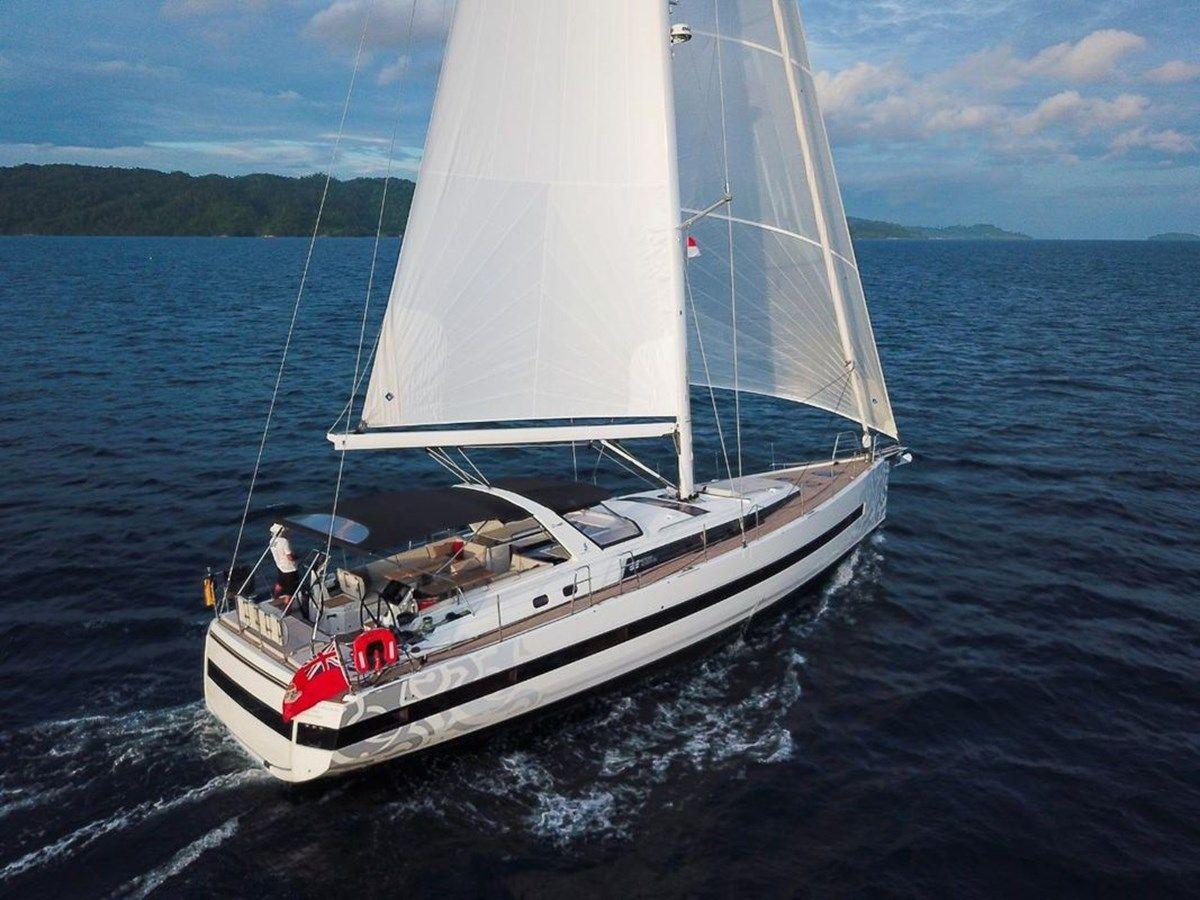
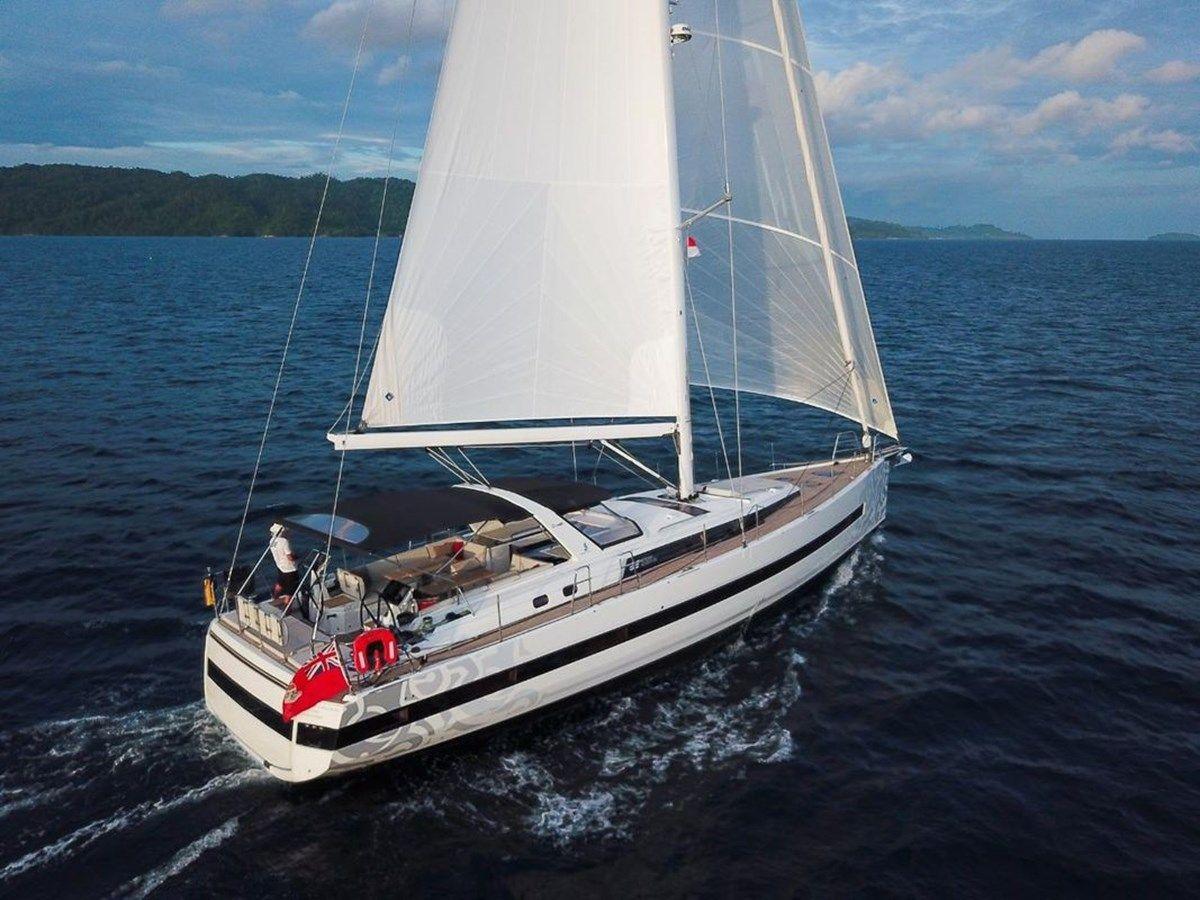
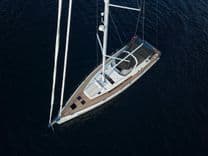
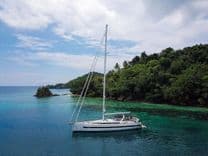
Envisioned by Beneteau and realized through the alliance of Berret Racoupeau Yacht Design and Italian stylist Pierrangelo Andreani, this flagship ushers in a refined era of modern luxury cruising. As the first of the line, the Oceanis Yacht 62 invites a new way to savor shared time under sail.
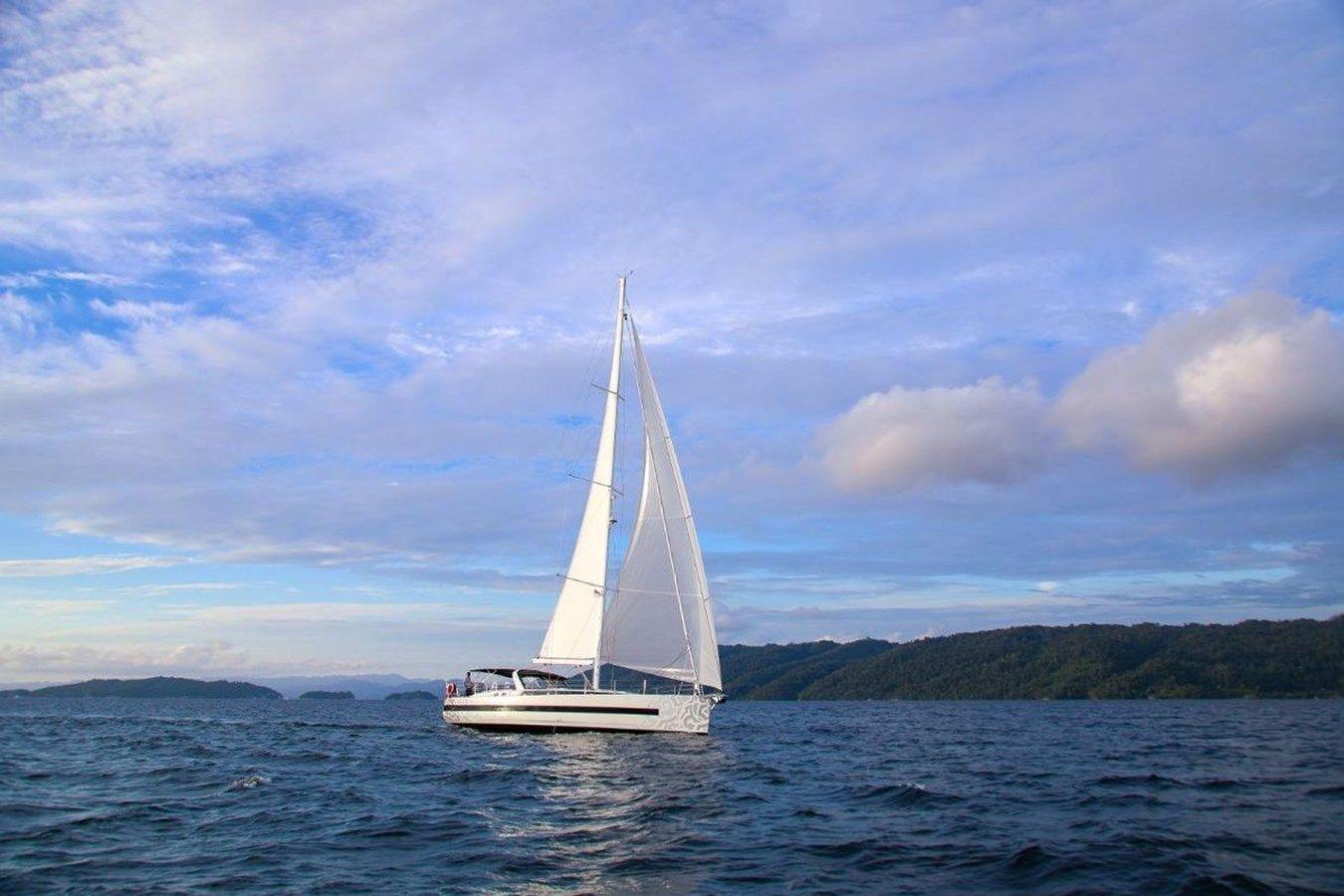
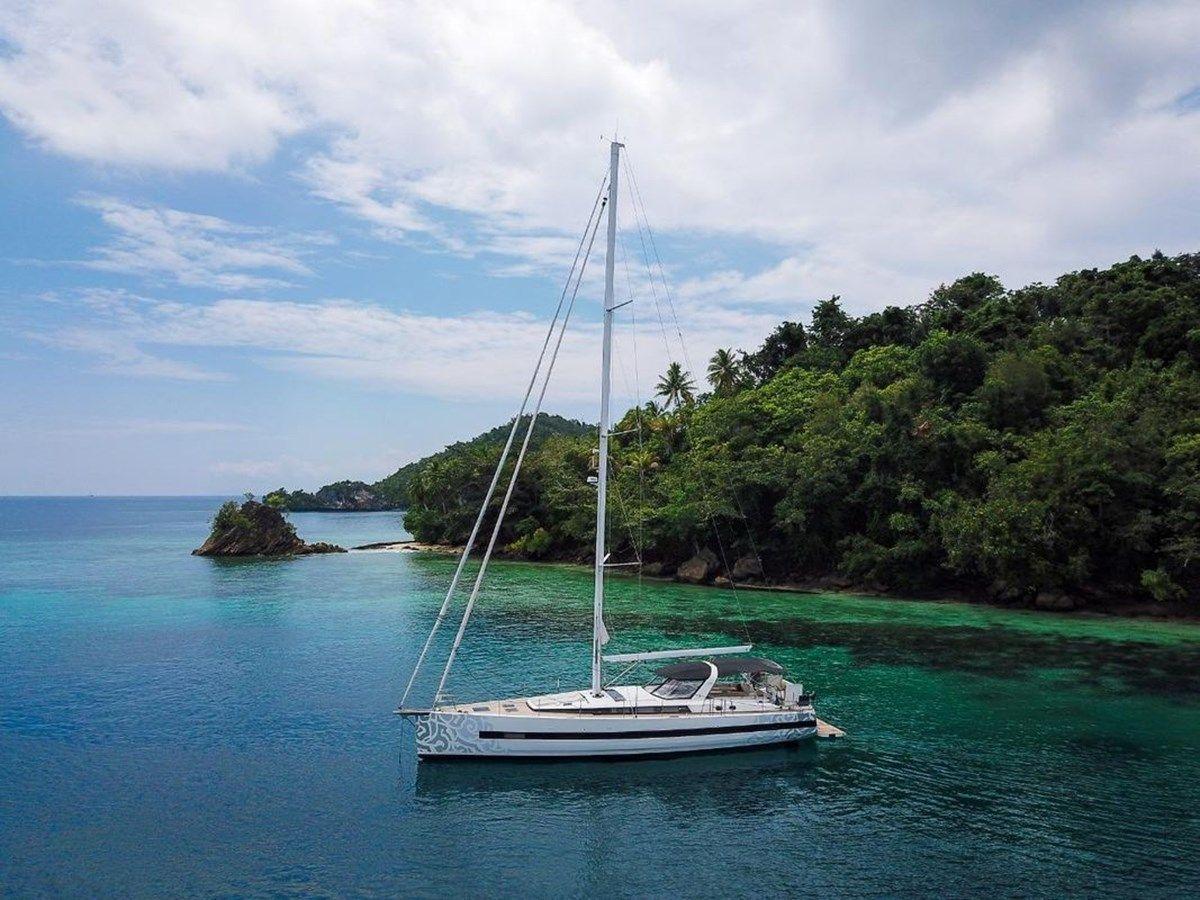
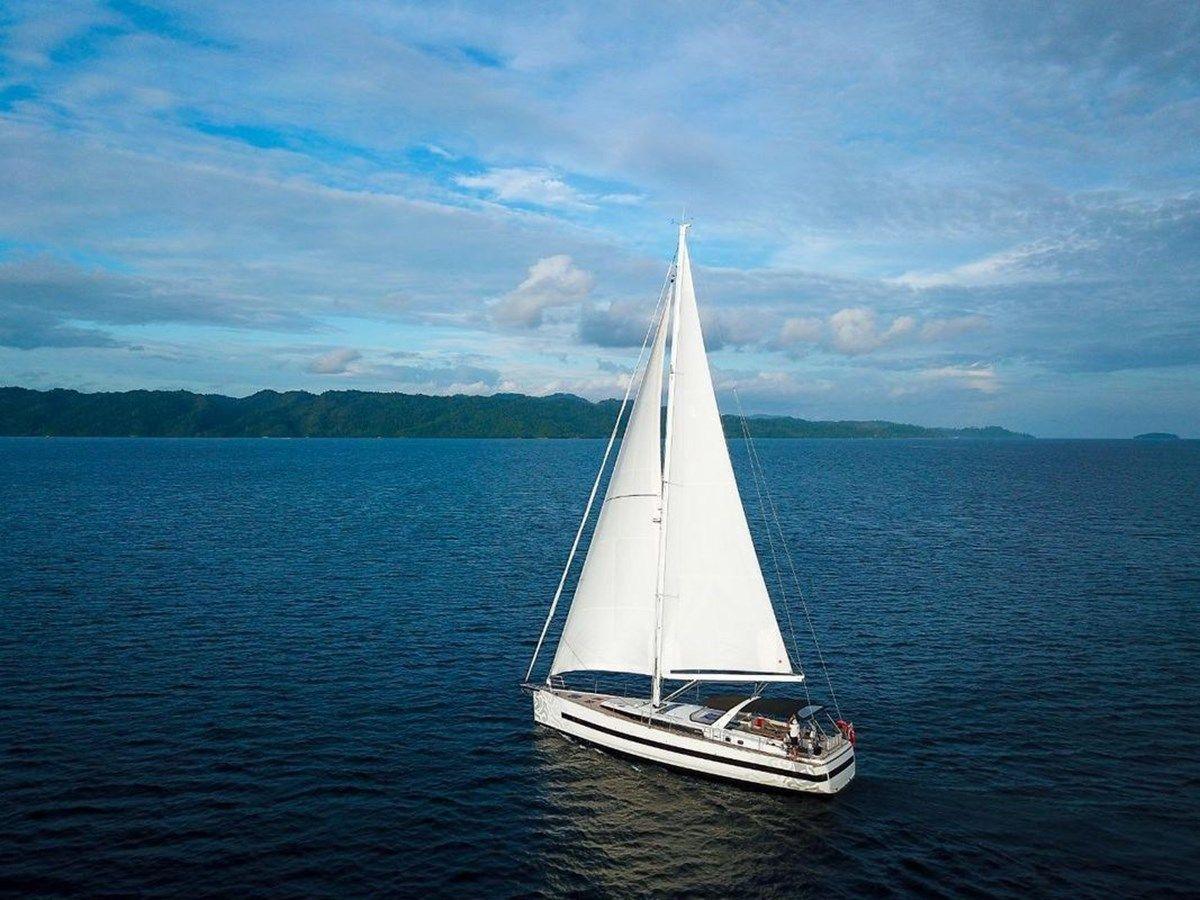
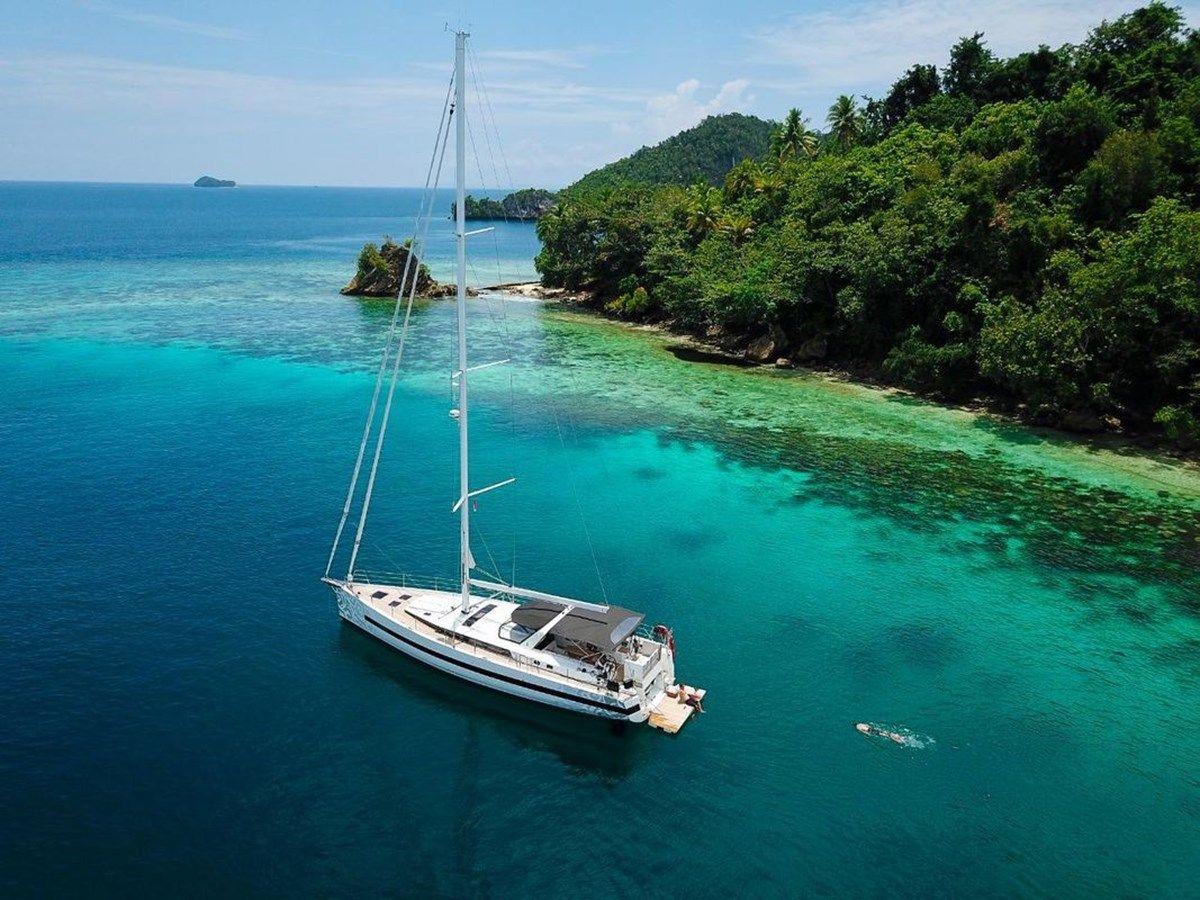
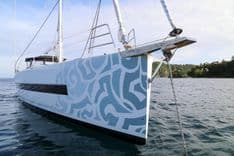
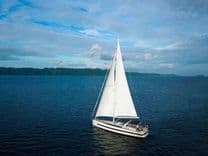
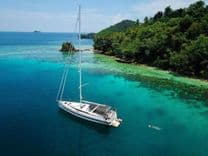
The Oceanis Yacht carries an unmistakable silhouette. Graceful on the water and wrapped in expansive glazing, it exudes everything expected of a luxury sailing yacht and performance cruiser. Poised yet responsive, the 62 inspires confidence with a chined hull, twin rudders, and a beautifully centered, well-balanced sail plan that makes handling effortless.
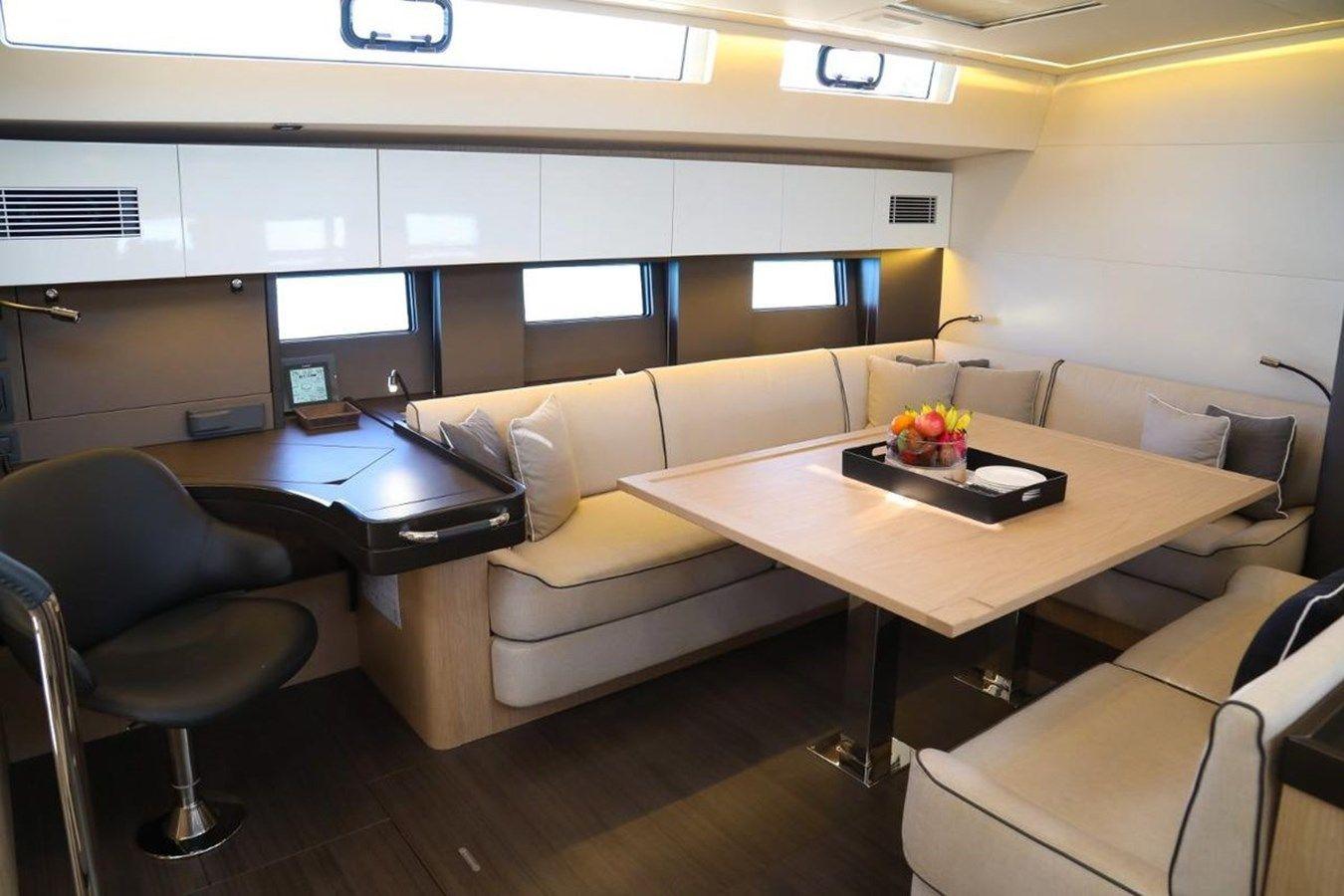
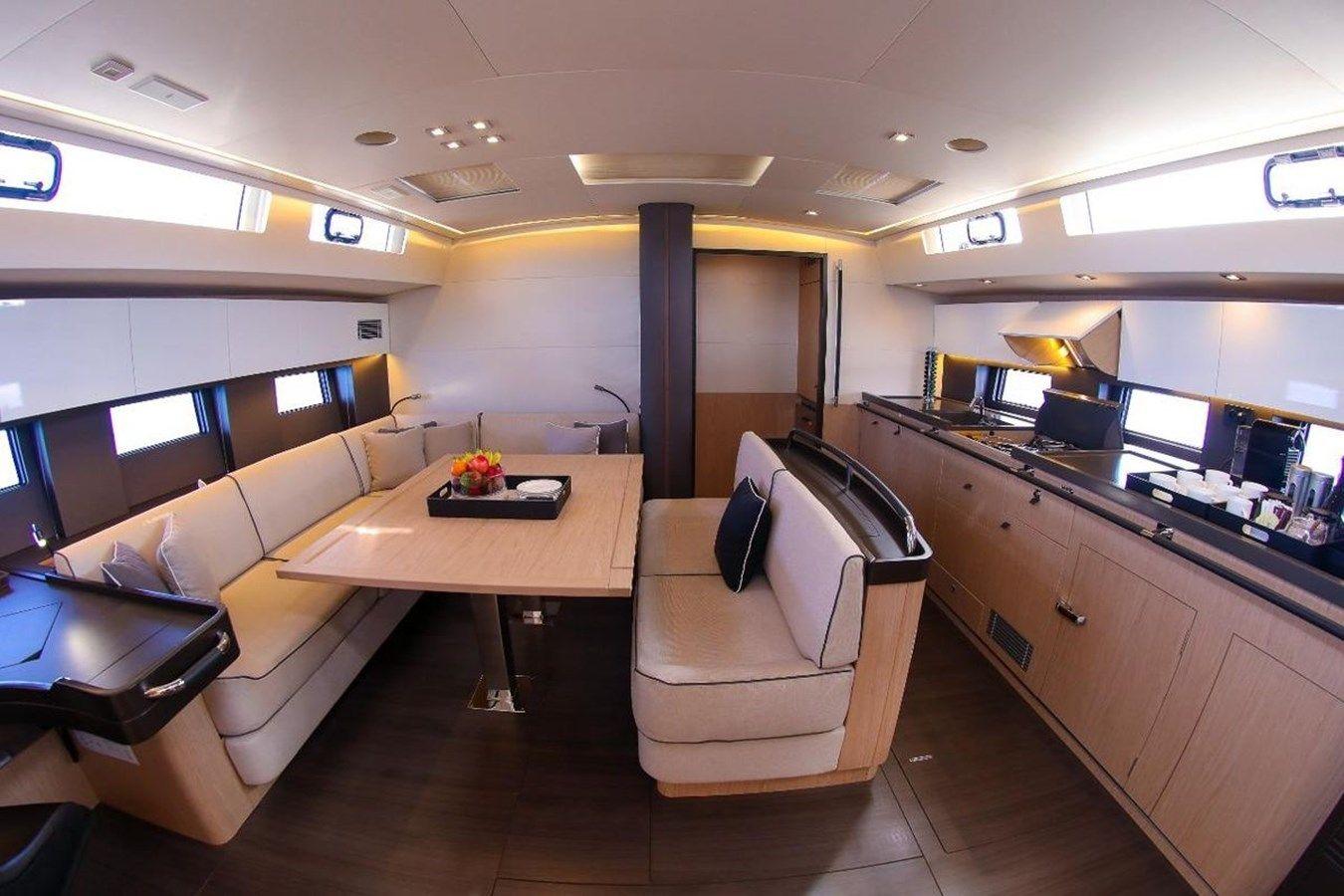
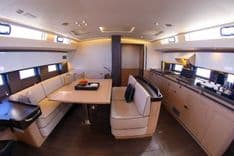
Inside, an inventive arrangement centers on a generous salon with distinct, private domains. Bathed in daylight from broad hull windows, this bluewater performance cruiser and cruising monohull indulges with noble materials, bespoke joinery, and meticulous finishes, elevating every offshore passage with quiet luxury.
Detailed Description
Introduction
Conceived by Beneteau in an inspired collaboration between Berret Racoupeau Yacht Design and Italian stylist Pierrangelo Andreani, the Oceanis Yacht 62 inaugurates a new world of shared pleasure at sea. The first of its range, she carries the unmistakable Oceanis silhouette, her elegant profile wrapped in expansive windows that flood the interior with light, and she delivers precisely what you expect of an exceptional yacht. A reassuringly balanced, highly manoeuvrable design—thanks to a chined hull, twin rudders, and a perfectly centred sail plan—gives her grace under sail and confidence at the helm. Inside, an original layout revolves around a capacious saloon and distinct, private spaces; vast hull portholes bathe the refined interior in daylight, showcasing noble materials and exclusive woodwork finishes.
The Beneteau Oceanis 62 distinguishes herself with thoughtful exterior detailing: her elegant lines and large windows create a striking presence on the water; her chined hull, twin rudders, and perfectly centred sail plan deliver poise and maneuverability; six sun beds are artfully distributed across the stern, cockpit, coachroof, and foredeck to invite relaxation; and an electric transom opens wide to form a spacious swim platform, reached by steps on either side of the dinghy garage. The interior amplifies comfort with an innovative, spacious salon offering separate, private zones, and the abundance of natural light from large hull portholes highlights the exclusive joinery. Outdoor living is elevated by a stern cockpit galley equipped with a griddle and sink that automatically adjusts to the ideal cooking height, while the Bimini hard top shelters guests from sun and weather, integrates LED lighting, and is engineered to support solar panels. Seamless technology underpins every voyage: Seanapps pairs an onboard unit with a mobile app so you can monitor onboard systems, schedule maintenance, and plan routes, while twin superyacht‑style command pods house Carbonautica wheels, thruster toggles, and B&G Zeus multifunction displays for fingertip control.
True to her brief as a fast cruiser, the Oceanis 62 is a light, high‑performing sailboat with the stamina for extended passages, offering excellent fuel and water capacity and the reassuring righting capability that enhances stability and safety. Her chined hull, twin rudders, and centred sail plan combine for precise balance and effortless manoeuvrability, and she is comfortably handled by a couple for relaxed, unhurried cruising. This fabulous one‑owner yacht is in excellent condition and will pass any inspection; complete service records are available, and viewings are welcome in person or via electronic means.
Manufacturer provided description
Built in accordance with European Directive requirements and CE certification, this Oceanis Yacht 62 is crafted in polyester resin with an infused balsa‑sandwich hull and an infused solid‑laminate hull base for strength and integrity. The deck is a balsa and fiberglass sandwich with a “diamond point” non‑slip surface, and the polyester hull‑to‑deck joint is screwed, glued, and bolted for unwavering rigidity. A cast‑iron keel is secured with bolts and stainless‑steel backing plates, while twin rudders hang on stainless‑steel stocks to deliver precise control. The hull is presented in a pristine white finish.
Deck fittings
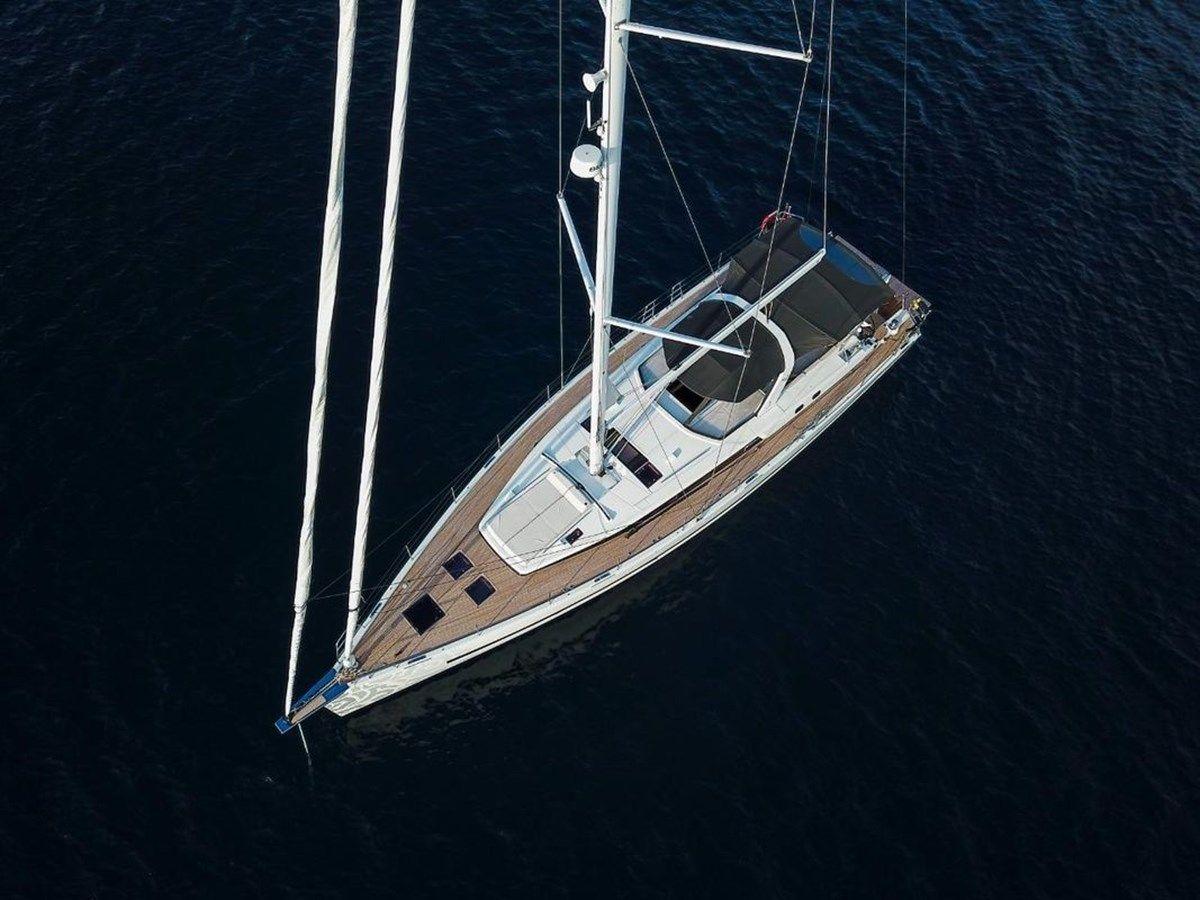
Every sail control on the Oceanis 62 is led aft to the helm stations for confident short‑handed sailing, set against teak decks with refined black caulking. The rig marries tradition with modern engineering: a deck‑stepped, traditional nine‑tenths tapered anodized aluminum mast with three sets of swept‑back spreaders and a steaming light stands over an anodized aluminum boom, supported by stainless‑steel standing rigging and a single backstay split to a bridle, with hydraulic options for both the backstay and the rigid boom vang. A genoa furler is available with electric drive, its drum neatly recessed on deck, while two stand‑up mainsail blocks sit on the fixed composite arch. Two genoa tracks with piston‑adjusted traveler cars and two genoa sheet turning blocks fine‑tune sail shape, and the complete running rigging includes a 2:1 Dyneema mainsail halyard, a Dyneema genoa halyard on a tensioning rail, a boom topping lift, a mainsheet, and two genoa sheets, complemented by two single‑line reefs and one dual‑line reef. Nine jammers keep lines perfectly organized, with two additional optional jammers for the staysail and spinnaker halyards, supported by two rope tail bags and full preparation for downwind sails such as an asymmetrical spinnaker and Code 0.
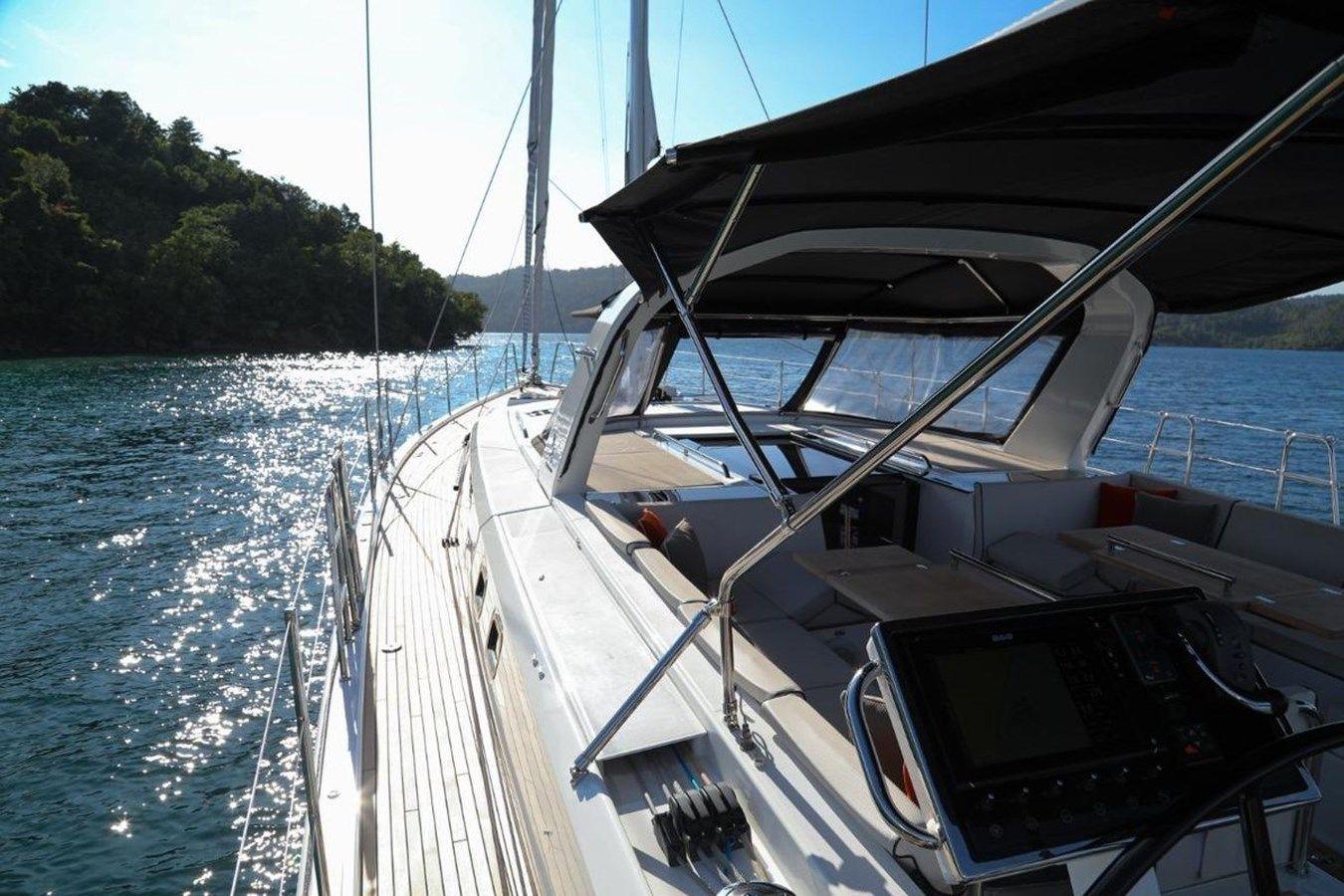
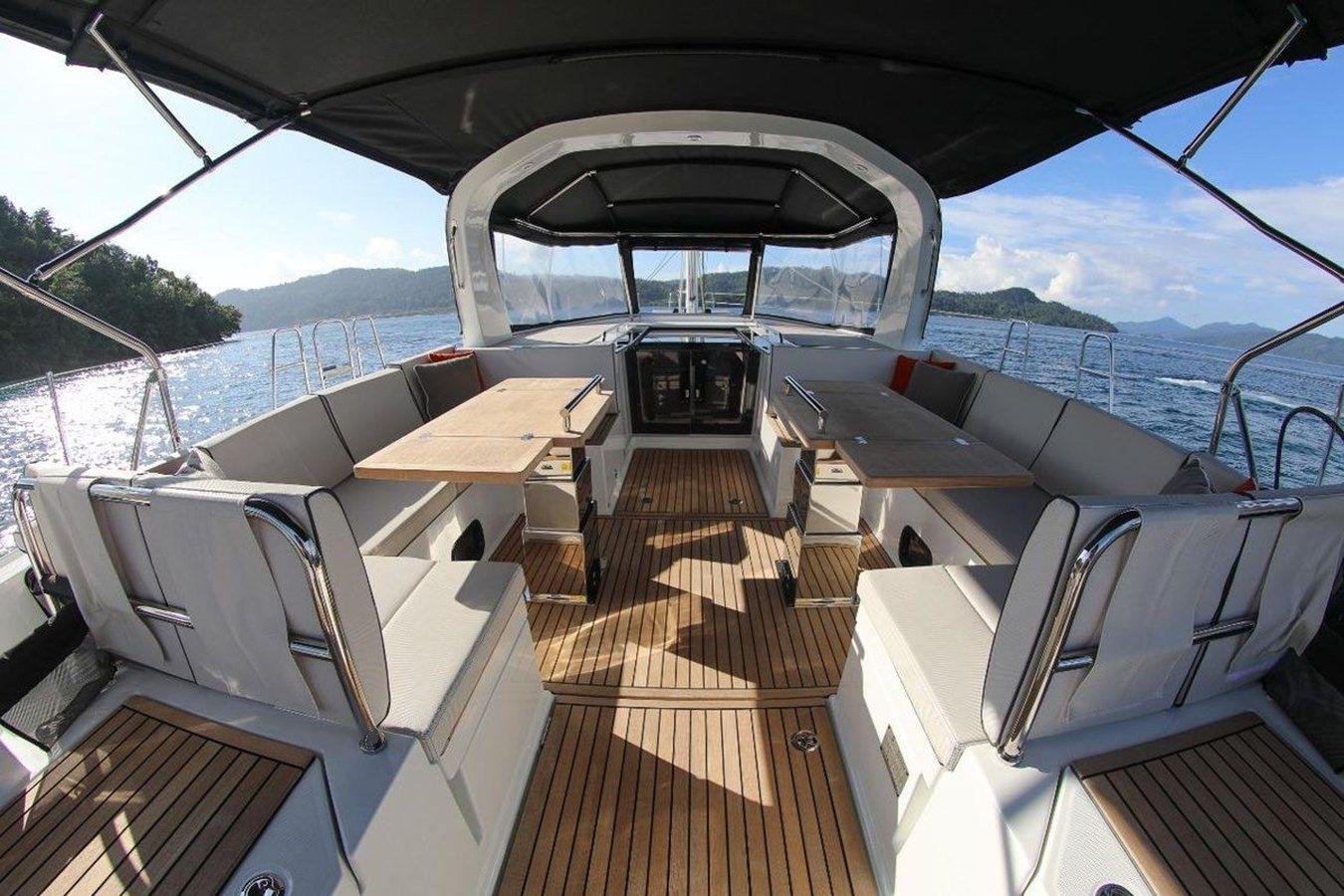
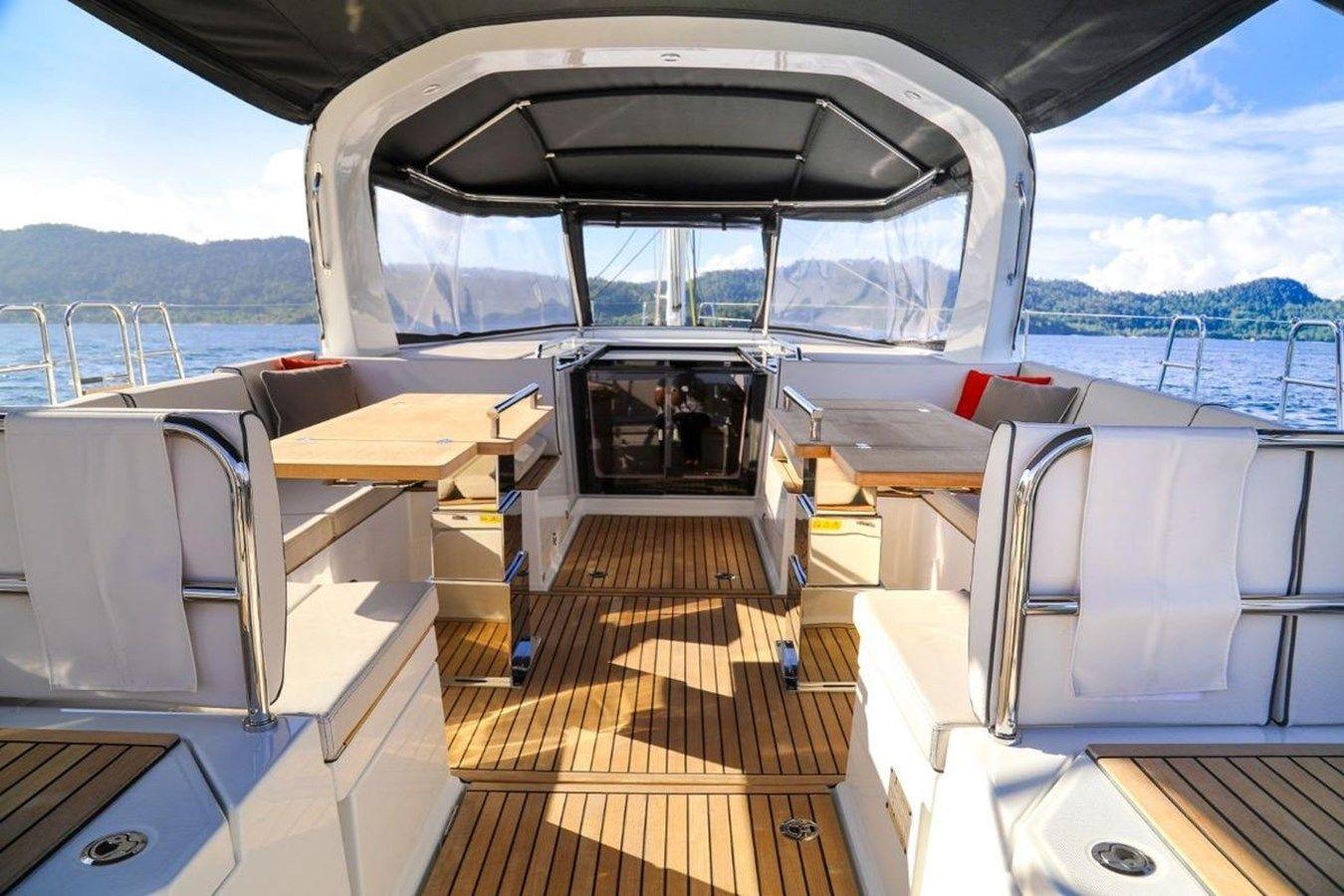
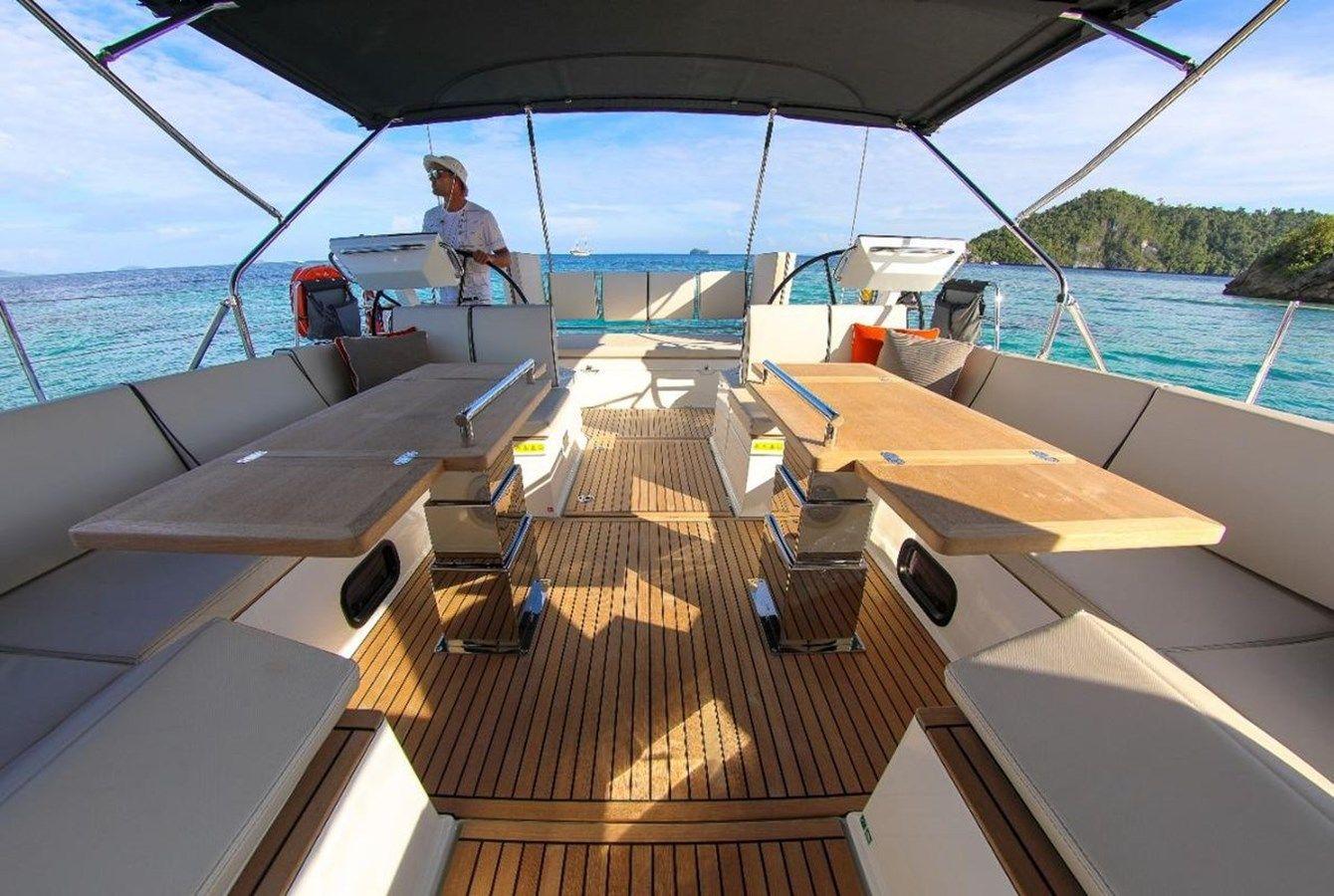
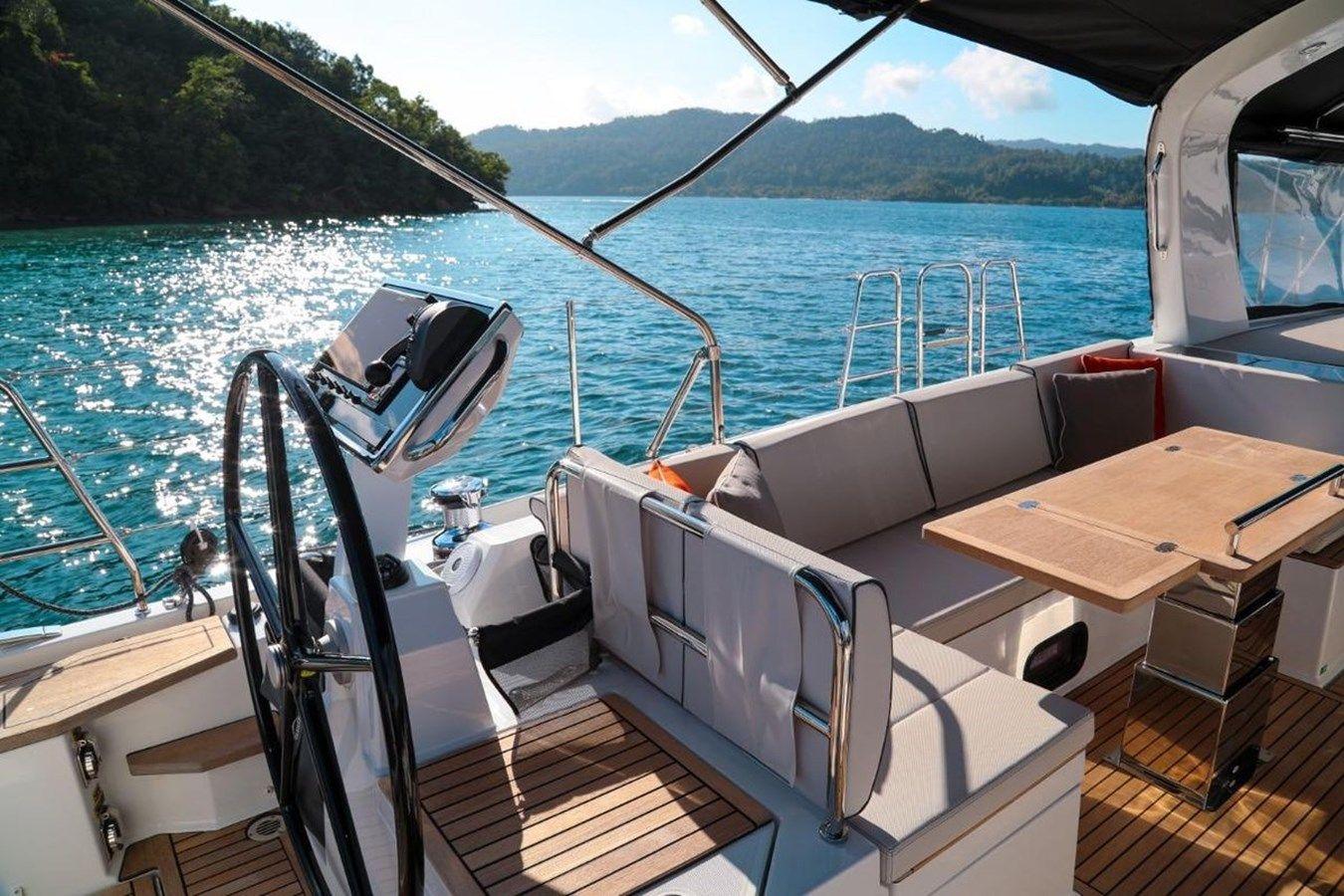
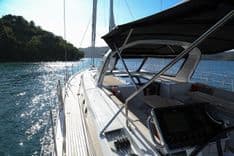
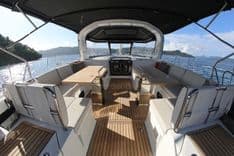
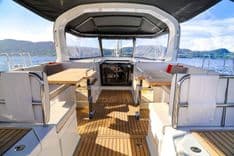
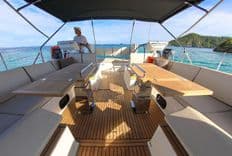
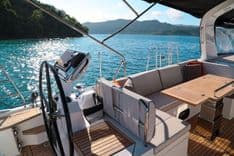
The self‑draining cockpit, laid in natural solid wood, is meticulously arranged for passage‑making and lounging. A liferaft stows in a locker within the cockpit sole, alongside two generous lockers in the return of the cockpit seats with gas‑strut openings, a dedicated locker by the port helm console, and a gas locker by the starboard helm console. Two slatted solid‑wood benches flank the twin helm stations, each appointed with stainless‑steel steering wheels of 1100 mm diameter wrapped in leather, a steering lock, a cable transmission system, a rope‑tail locker, and a cup holder. Deck plates provide for a tiller system and emergency steering, while the engine throttle and control panel are to starboard. Two solid‑wood cockpit tables on fixed legs—convertible to a sunpad as an option—feature two leaves, integrated handrails, and cup holders beneath the leaves. Ambient LED lighting under the arch and in the cockpit, transom, and forward sun pad sets the mood, and PMMA companionway doors with a sliding companionway hatch complete the ensemble.
Aft, the cockpit conceals a large stowage locker beneath the central seat—also the location for an optional exterior galley module—with gas‑strut assistance, as well as two lifting helm seats for easy access to the bathing‑platform steps and a convenient shore‑power socket. The transom itself opens electrically on gas struts to form a broad bathing platform, served by a step behind each helm station and granting direct access to the tender garage; the platform is in solid wood, enhanced by a built‑in stainless‑steel bathing ladder and a hot‑and‑cold cockpit shower. The tender garage is accessible either from an ashore‑facing aft platform or via an access hatch in the cockpit sole between the two helm stations, allowing entry without opening the transom; within, the bay measures 3,49 x 1,70 m (11’5’’ x 5’7’’), illuminated by three lights and secured by a canvas cover for the compartment with textile stowage bags.
Interiors
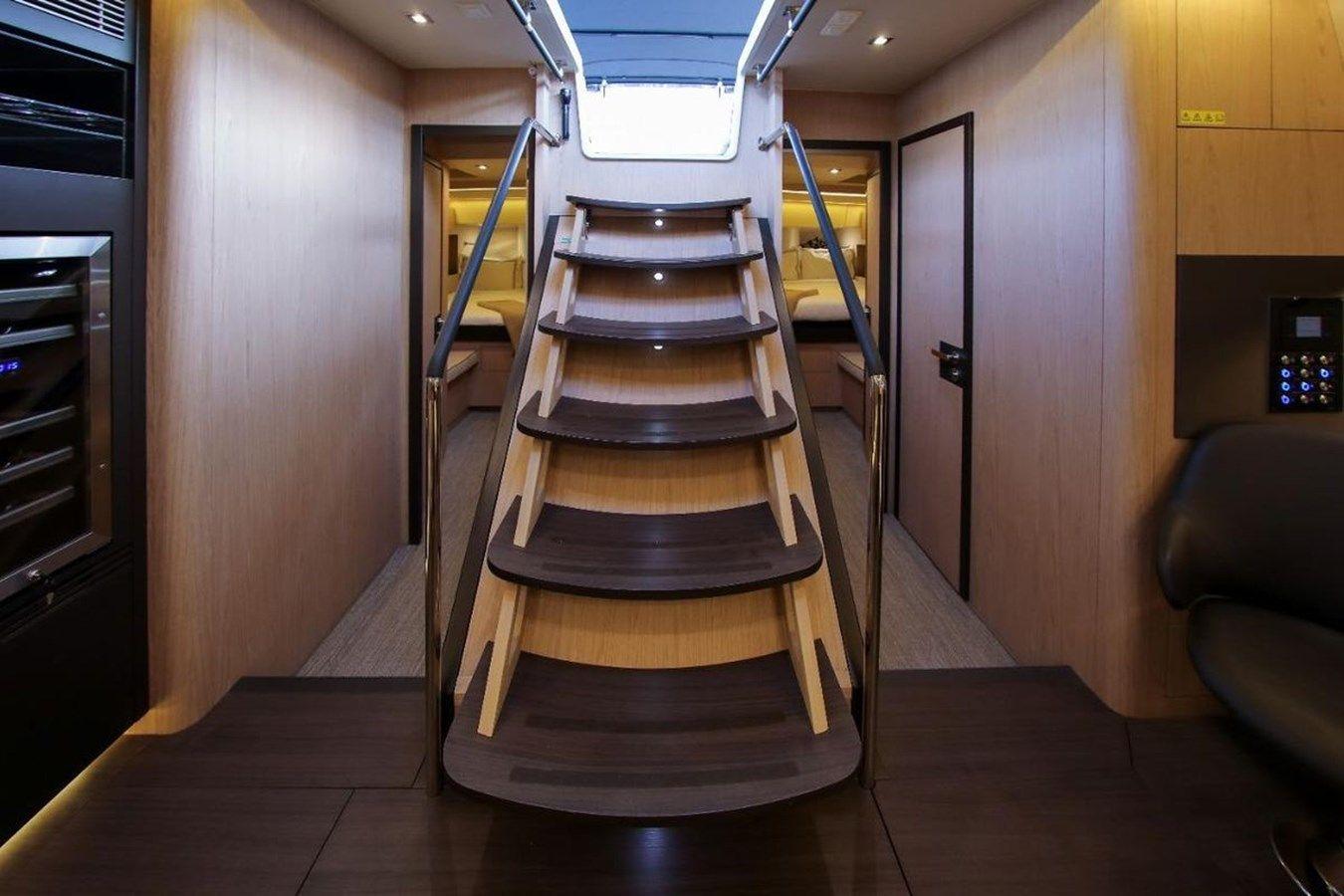
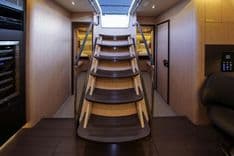
A serene palette and premium finishes define the interior: Alpi Moabi satin woodwork pairs with Milano oak laminated floors, Commando natural upholstery with Meteor grey piping, and ceilings, hull sides, and bulkheads wrapped in Meteor grey and beige fabric linings, all warmly illuminated by LED lighting. The companionway offers 2,08 m (6’10’’) headroom, with six moulded wooden steps and companionway handrails in stainless steel sheathed in Meteor grey leather.
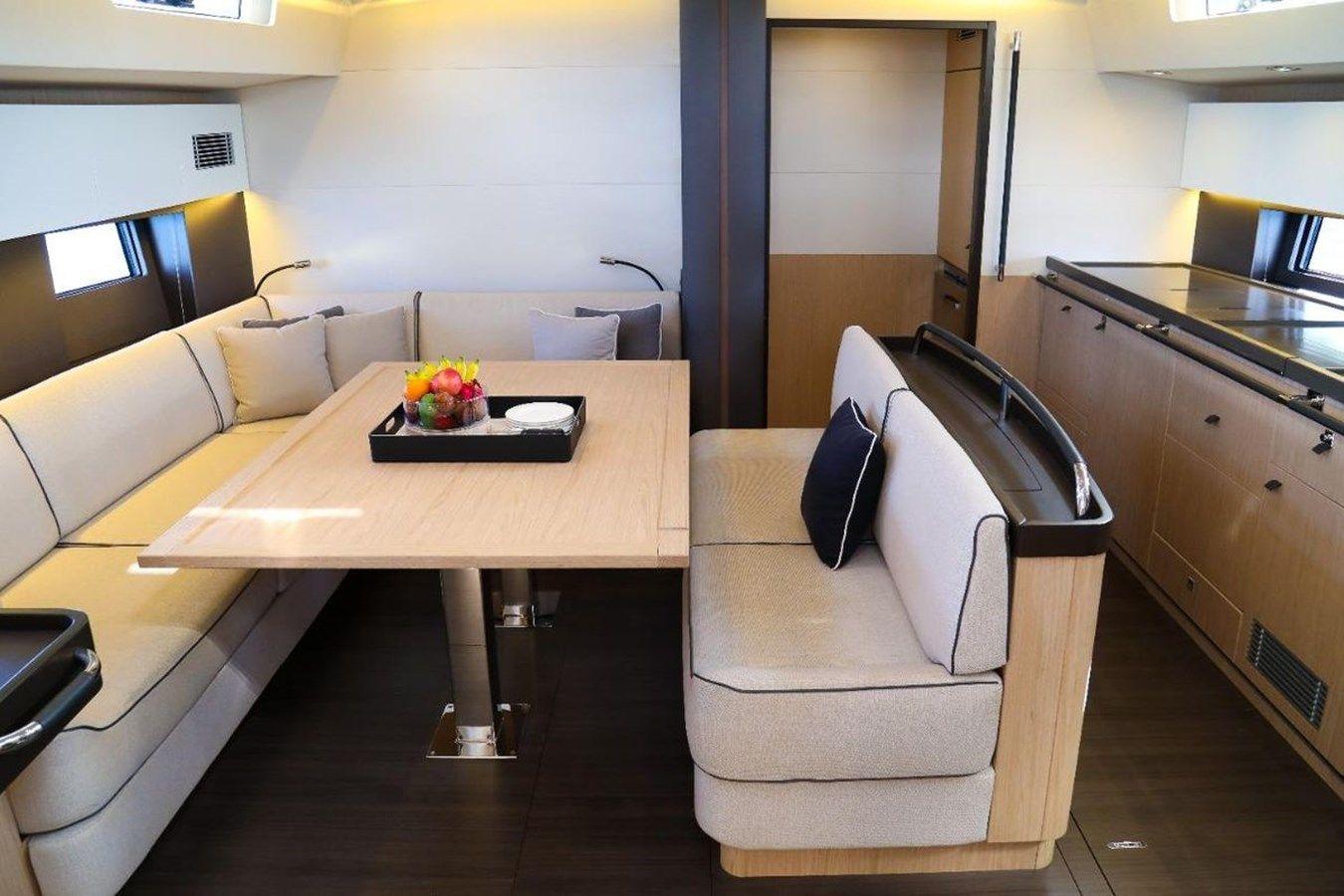
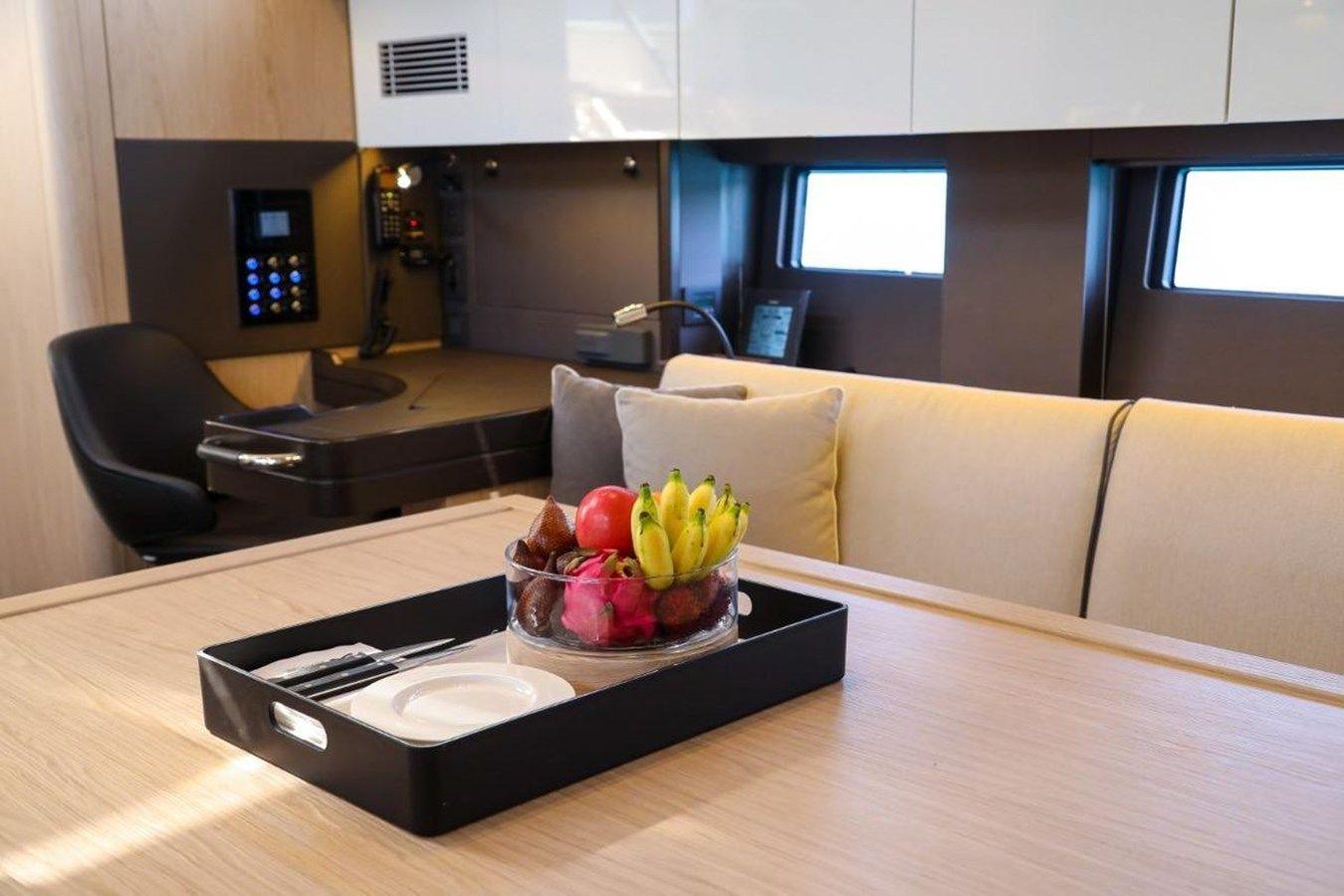
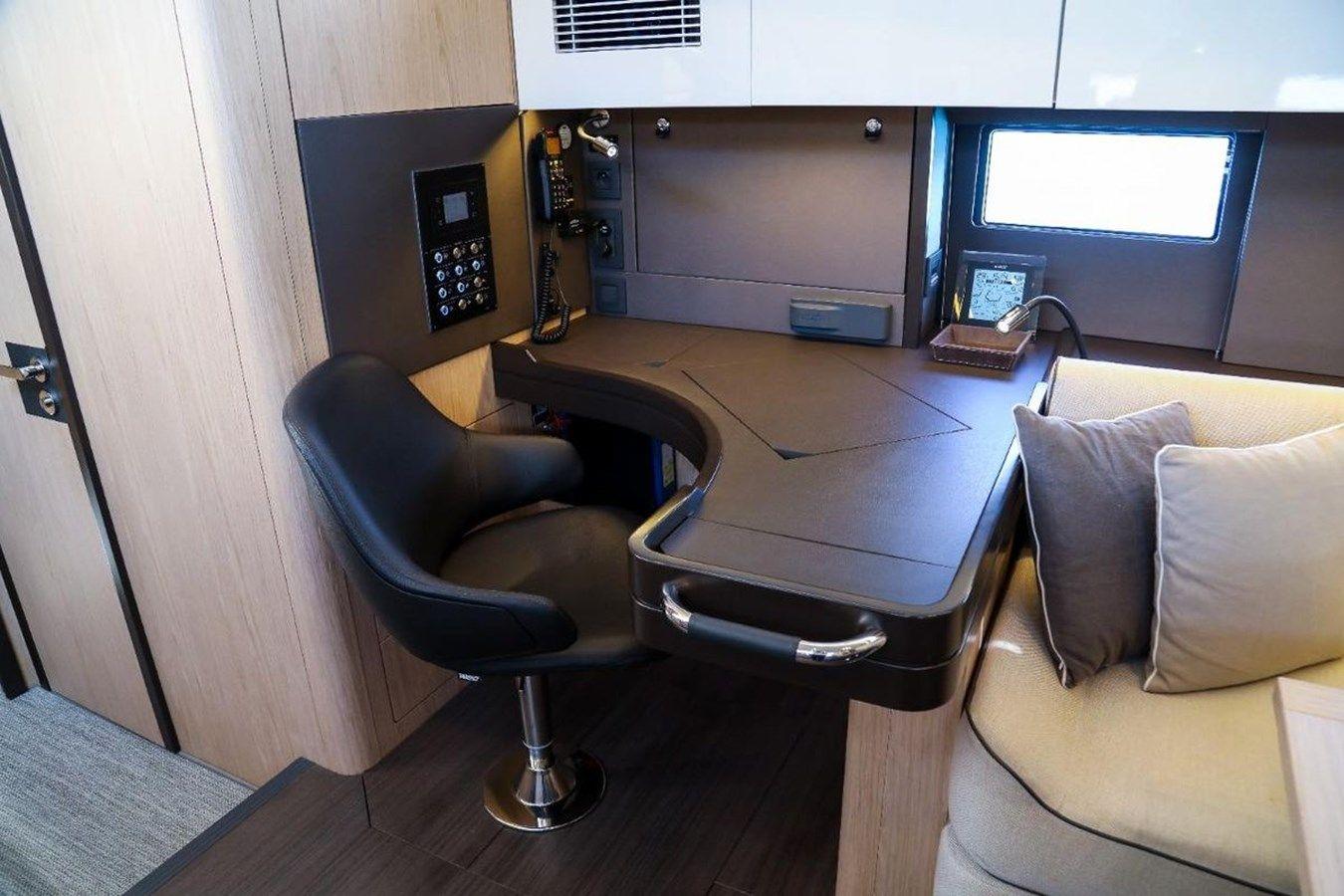
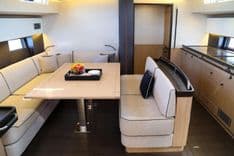
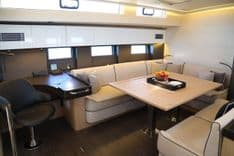
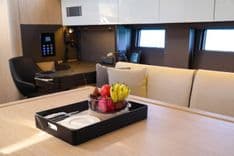
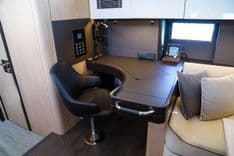
To port, the saloon presents 2,06 m (6’9’’) of headroom with an L‑shaped settee and armrests, a central settee with armrests, and a central unit with a built‑in bar, all gathered around a wooden saloon table with a varnished top and two fixed aluminum legs. Storage runs open along the hull with additional space beneath the seats and sofa, while a forward panoramic skylight with blackout blinds and mosquito nets, three large hull portholes with blackout blinds, a fixed coachroof side window with a pleated blind, and an opening porthole in the side window flood the space with air and light. A Meteor grey mast cover integrates a bookshelf and LED strip; lighting is by three LED reading lights, eleven LED ceiling lights, and an LED strip light under the upper lockers, with a 230 V socket at hand. The port‑side chart table features an opening lid with a miscellaneous locker and moulded wood fiddle, edged by a stainless‑steel rail sheathed in Meteor leather, a swivelling navigator’s seat, a back‑lit electrical panel consolidating all on‑board functions, and a navigation instrument panel ready for optional electronics. Natural light enters via a coachroof window, while two USB charging sockets, an LED reading light, three LED ceiling lights, and a 230 V socket complete the station.
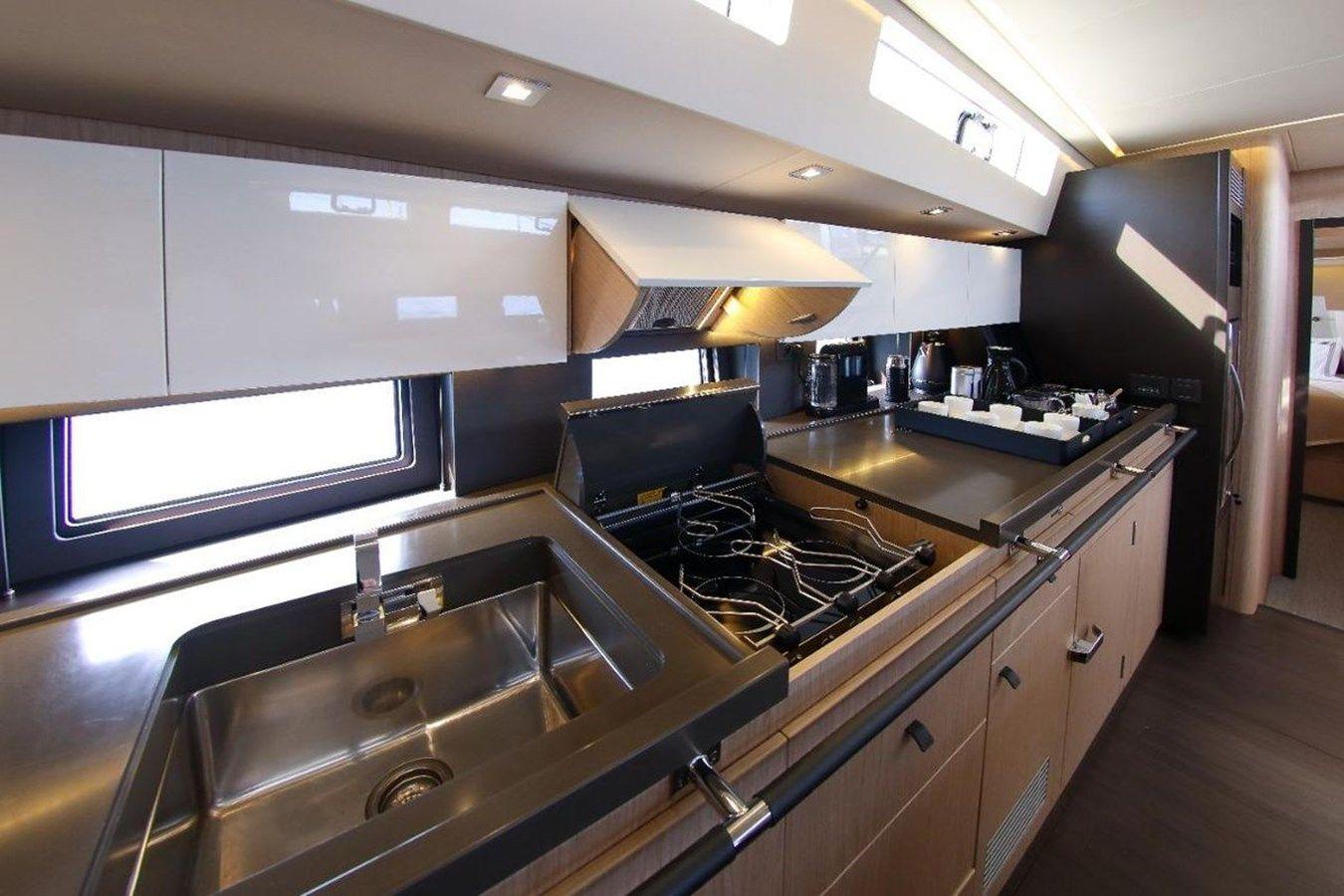
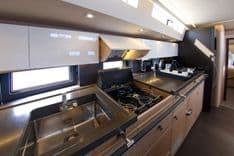
The galley, with 2,06 m (6’9’’) headroom, is secured by two handrails in stainless steel sheathed in Meteor leather and equipped for gourmet passages: an oven/grill/hob with three burners mounted on a stainless‑steel Luxe system with retractable top and front, cupboards and drawers for pans and lids, compartmental bins, and a cooler with cooling unit offering 1 x 300 L of volume with two top openings and one front door. Lacquered upper units are framed by a Corian Deep Mink worktop with built‑in fiddles and a large rectangular stainless‑steel sink with hot/cold mixer tap and two Corian covers. Three hull portholes with blackout blinds and a fixed coachroof side window with blind keep the chef connected to the sea; five LED ceiling lights and an LED strip beneath the upper lockers provide illumination, and two pairs of 230 V sockets power appliances.
Adjacent to the entrance of the starboard aft cabin, a technical locker grants access to all circuit breakers, the electrical panel, and the generator room, lit by three LED ceiling lights. At the base of the companionway to starboard sits an oilskin locker with a fiddled shelf. Forward, the entry to the forecabin includes a large two‑door storage cupboard—replaceable by a washer‑dryer or a refrigerator, depending on options—bottle stowage beneath the floor, and an LED ceiling light.
Accommodations
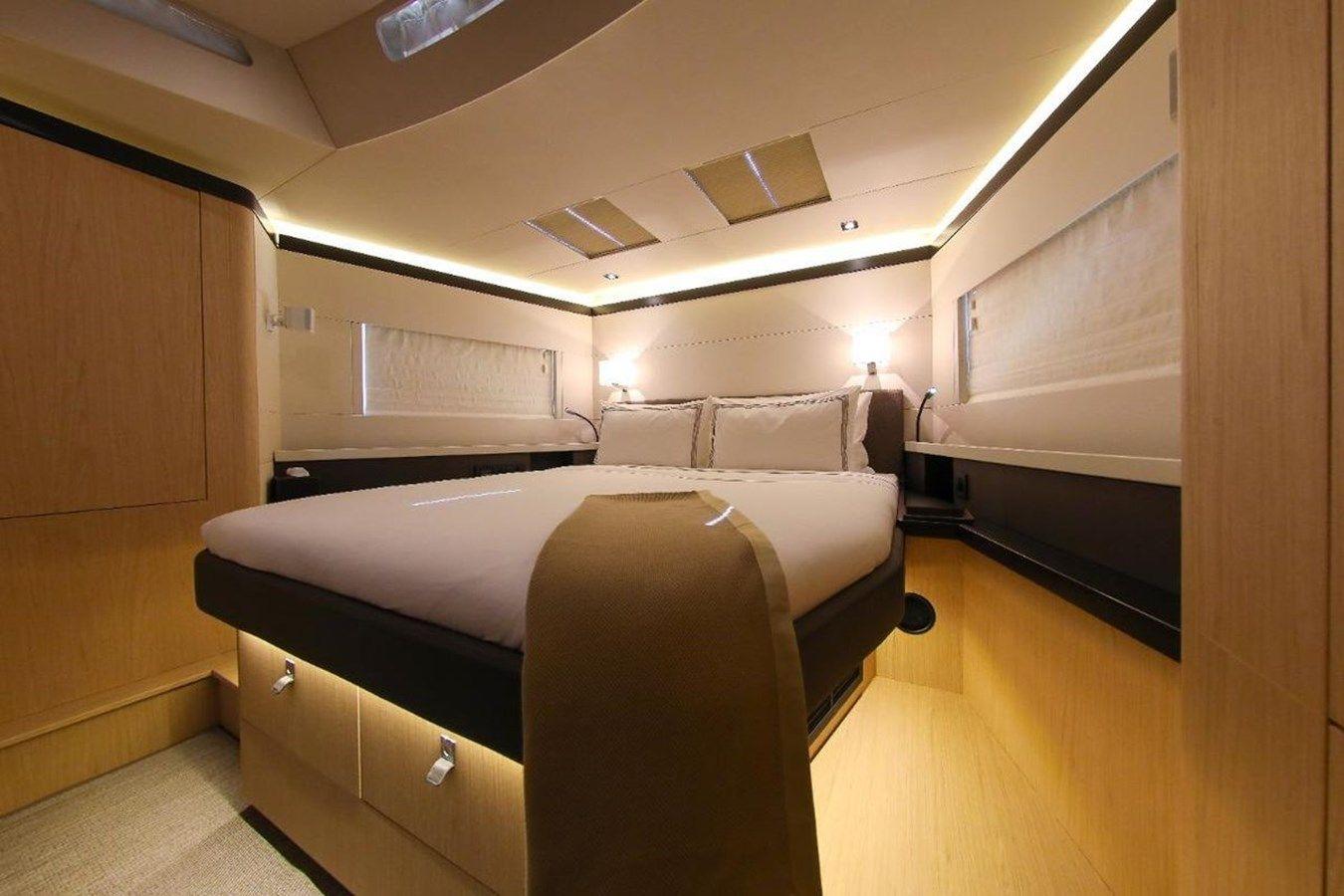
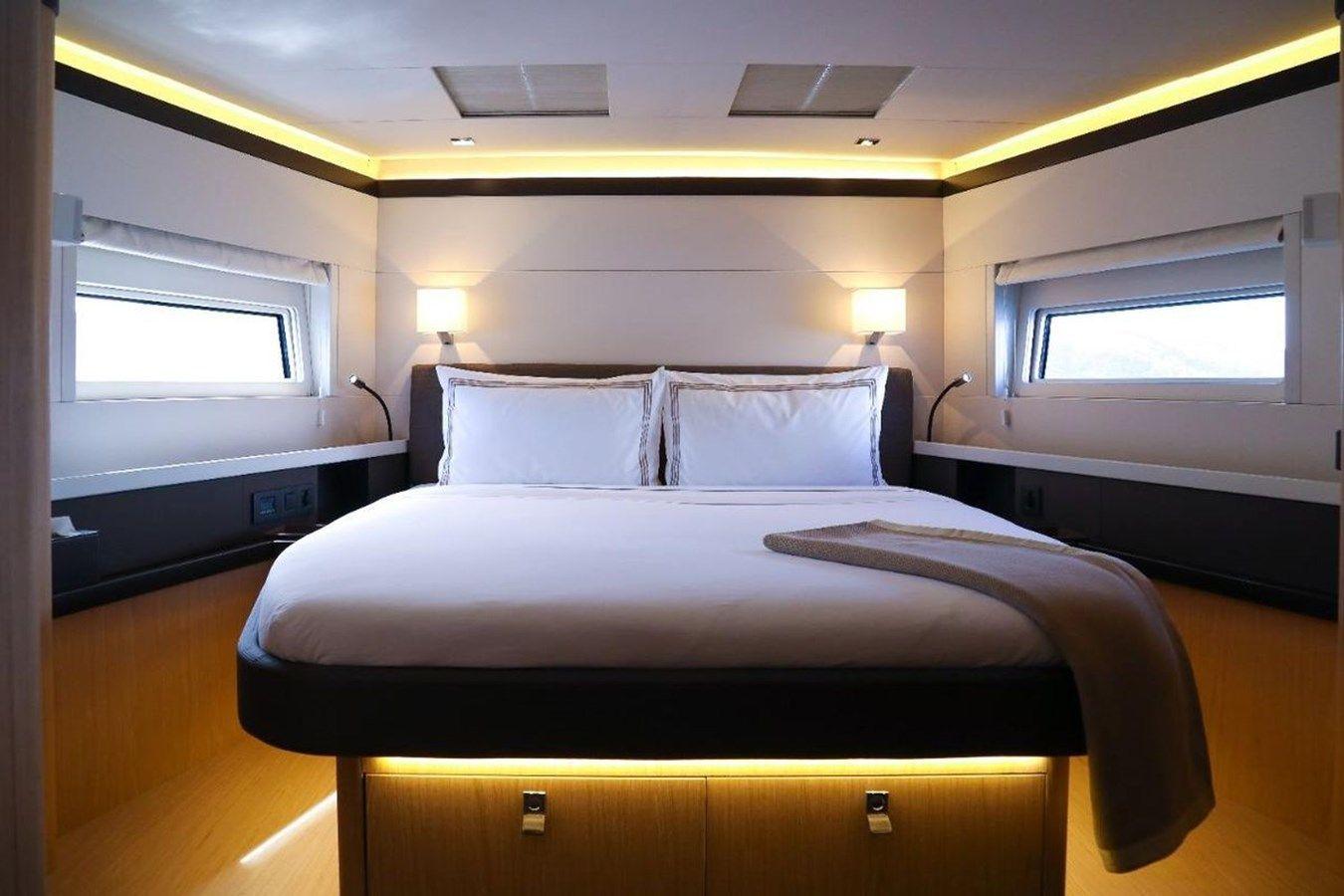
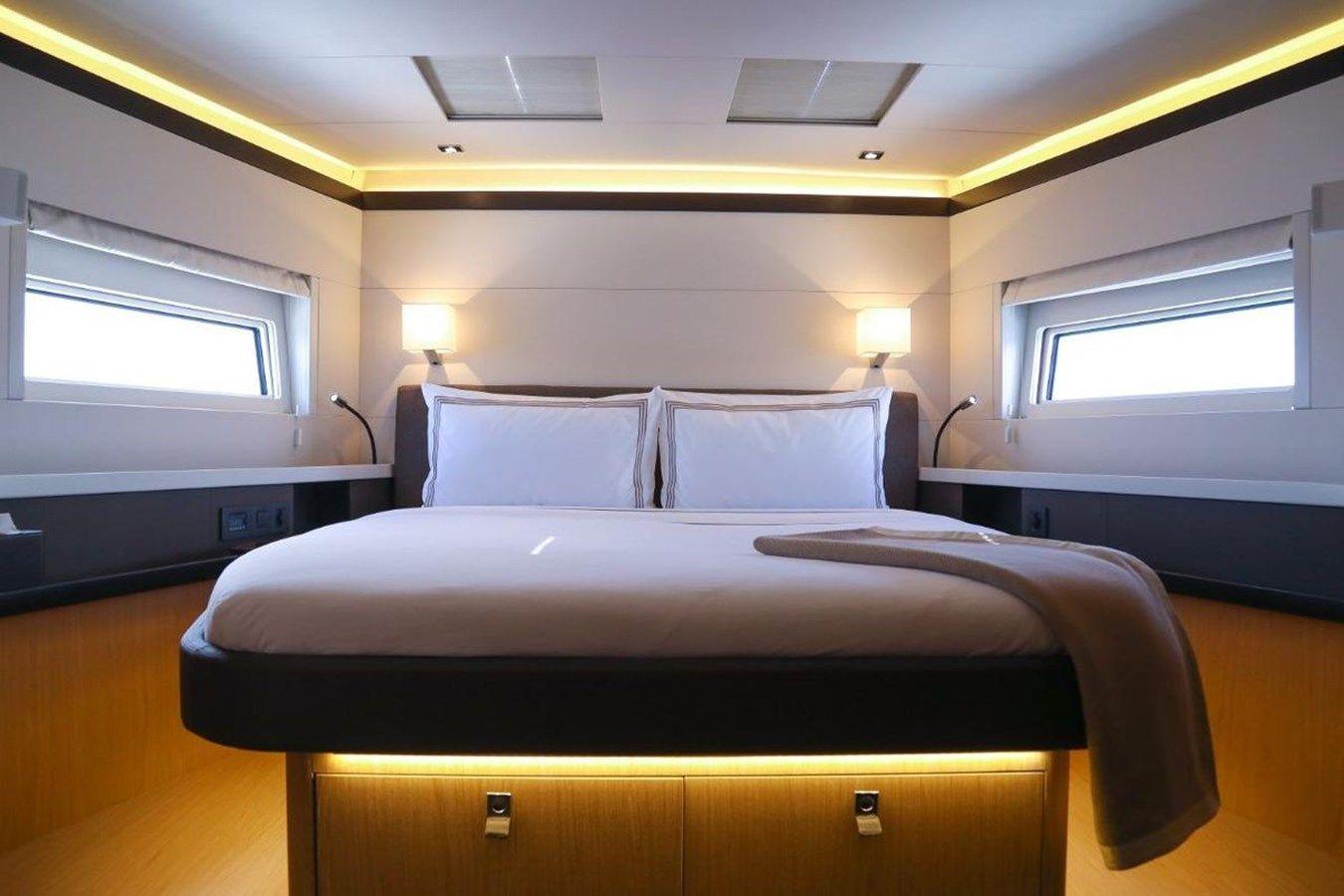
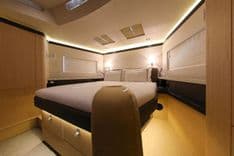
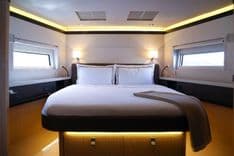
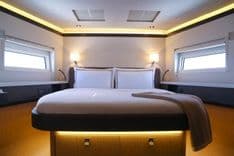
The owner’s cabin is a sanctuary with 2,11 m (6’11’’) headroom and a central forward‑facing double bed measuring 2,05 x 1,72 m on a slatted base with a marine mattress 120 mm thick. Storage abounds with shelving, drawers, a miscellaneous locker, and two drawers beneath the bed, whose gas strut‑assisted lift reveals technical equipment below. To starboard, a wardrobe, cupboard, and shoe cabinet keep apparel in order, while to port a generous hanging locker complements a large entrance‑bulkhead mirror. Natural light filters through two hull portholes with Roman blackout blinds, two opening deck hatches with blackout blinds and mosquito nets, and four fixed coachroof windows with curtains. Indirect lighting, five LED ceiling lights, two LED reading lights, two bedside lights, and an LED strip beneath the upper lockers create a tranquil ambience, aided by a Dorade vent; connectivity is assured with one 230 V socket and four USB ports. Against the entrance bulkhead, you may choose an additional furnishing: a sideboard, a desk with seat, or a sofa.
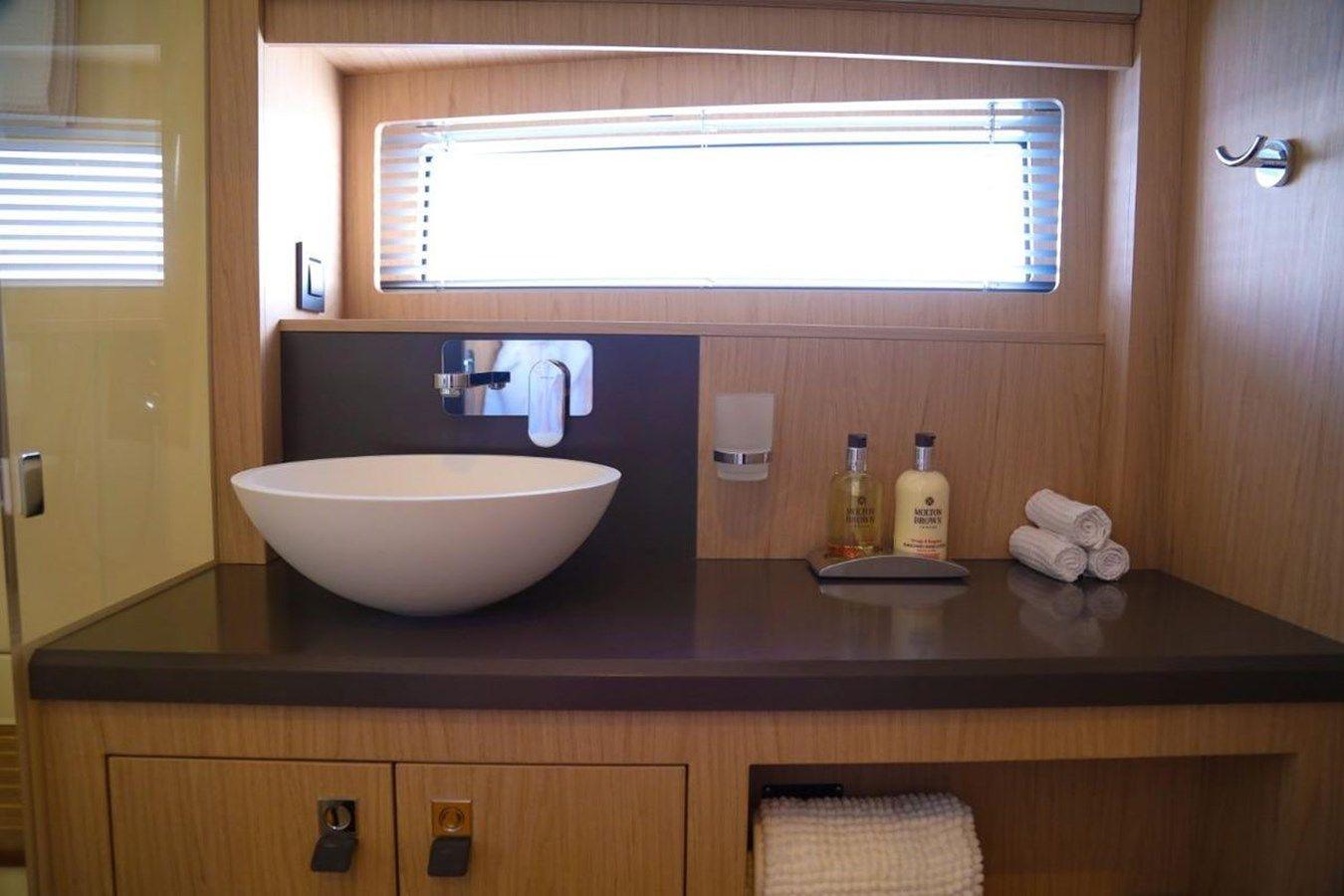
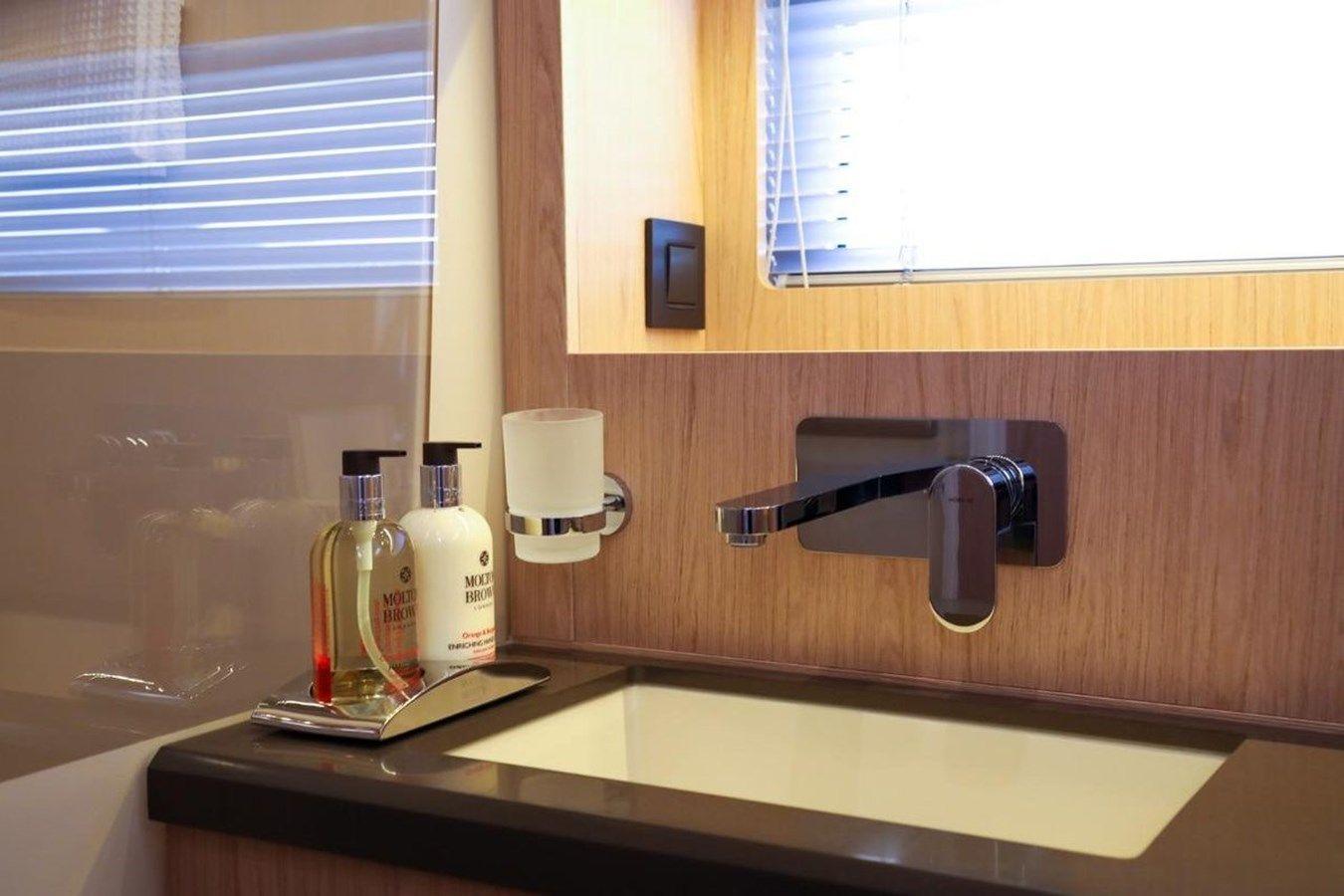
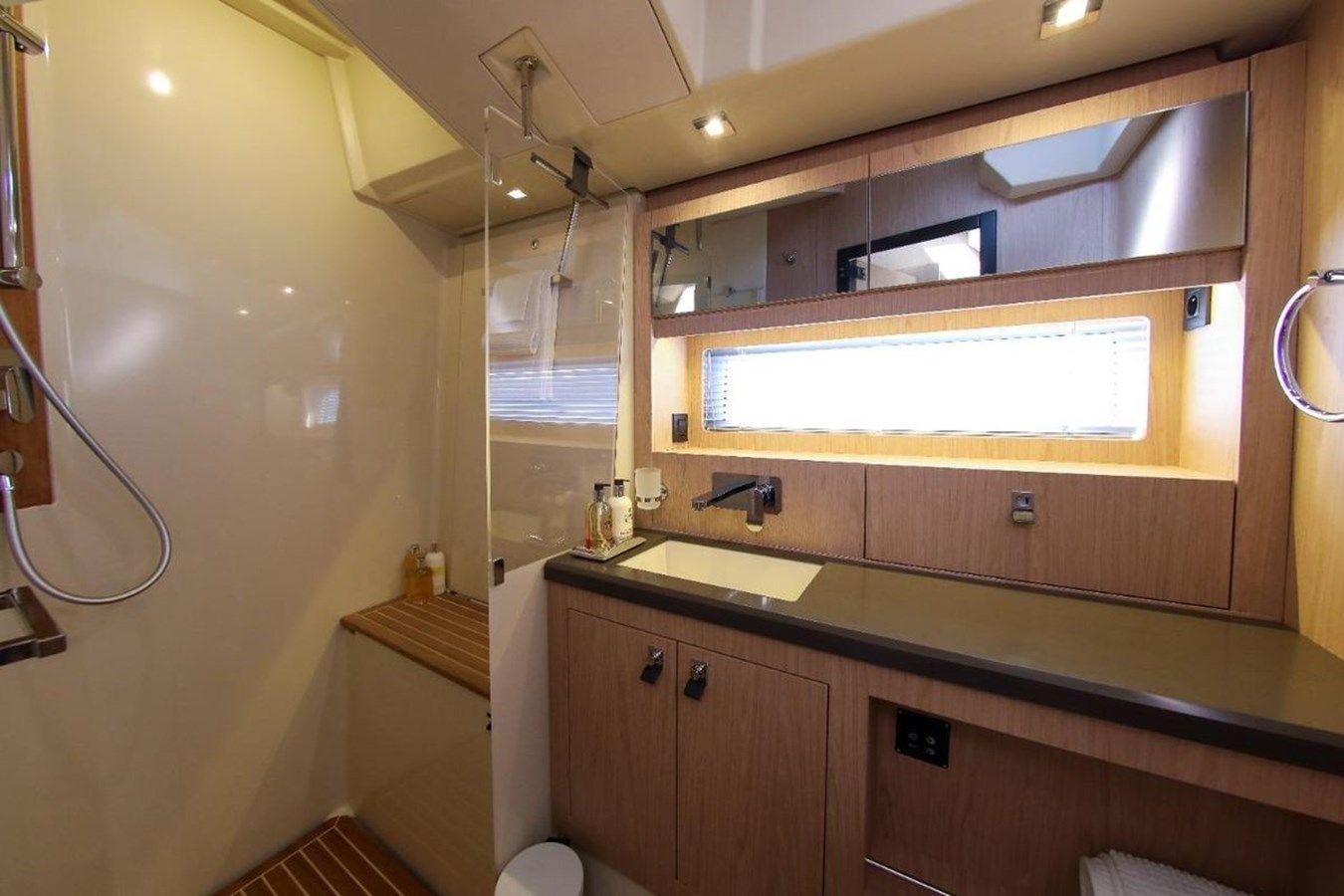
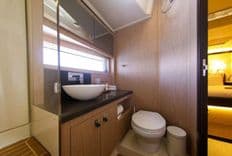
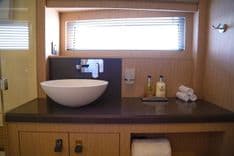
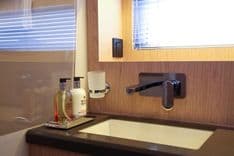
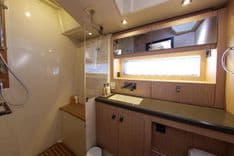
Forward, the owner’s en‑suite head offers 2,21 m (7’3’’) headroom and a separate shower with a moulded tray, hot/cold mixer tap, and shower screen, appointed with a teak‑slatted seat and flooring. A manual toilet sits alongside a basin set into a Corian Deep Mink worktop with hot/cold mixer, flanked by two mirrors, toilet accessories including a towel rail and peg, and ample cupboards and shelving. Ventilation and light come via an opening deck hatch with blackout blind and mosquito net, a fixed translucent coachroof window, and a hull port with blackout blind; illumination is by three LED ceiling lights and an LED strip beneath the mirrors, and a Dorade and a 230 V socket complete the space.
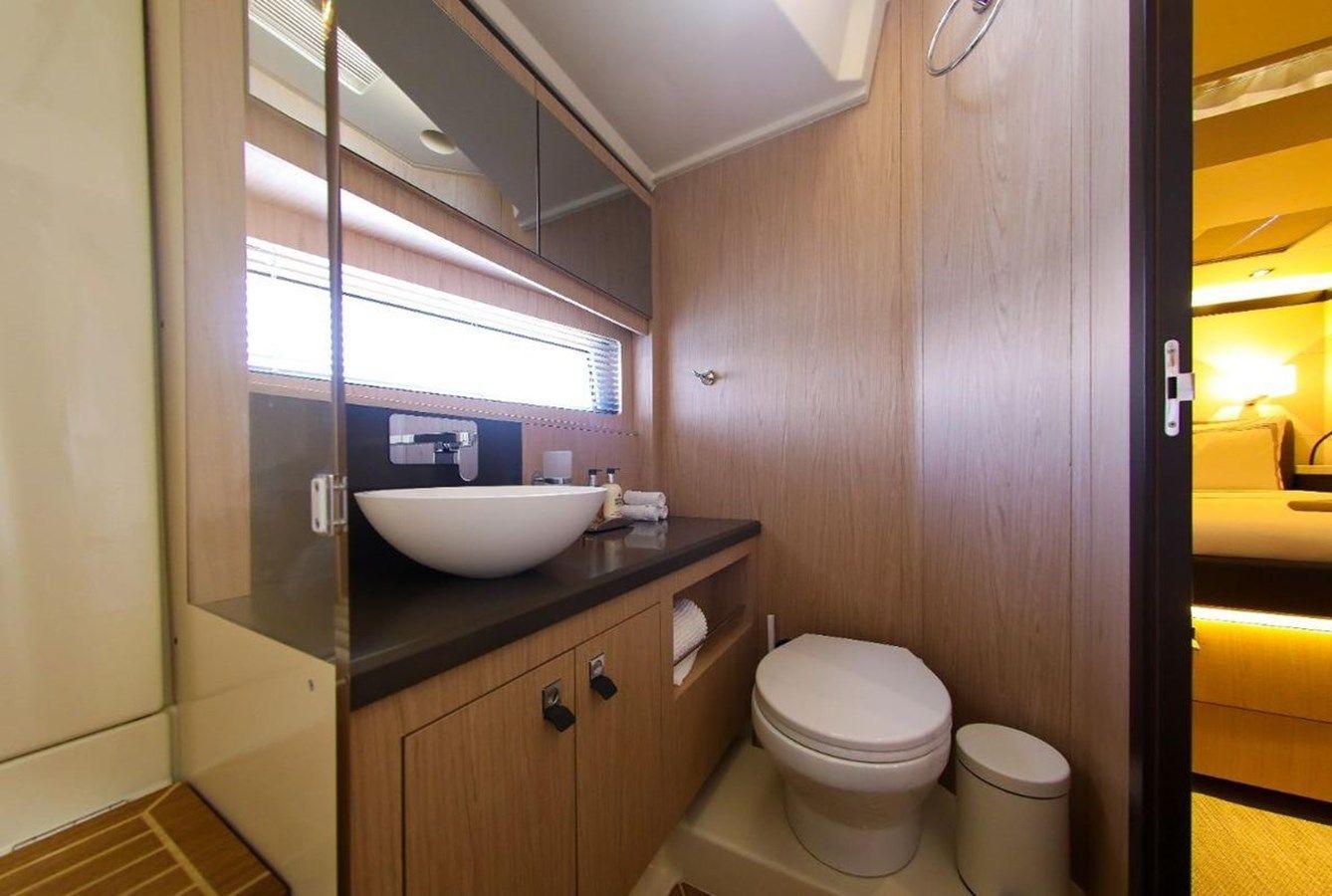
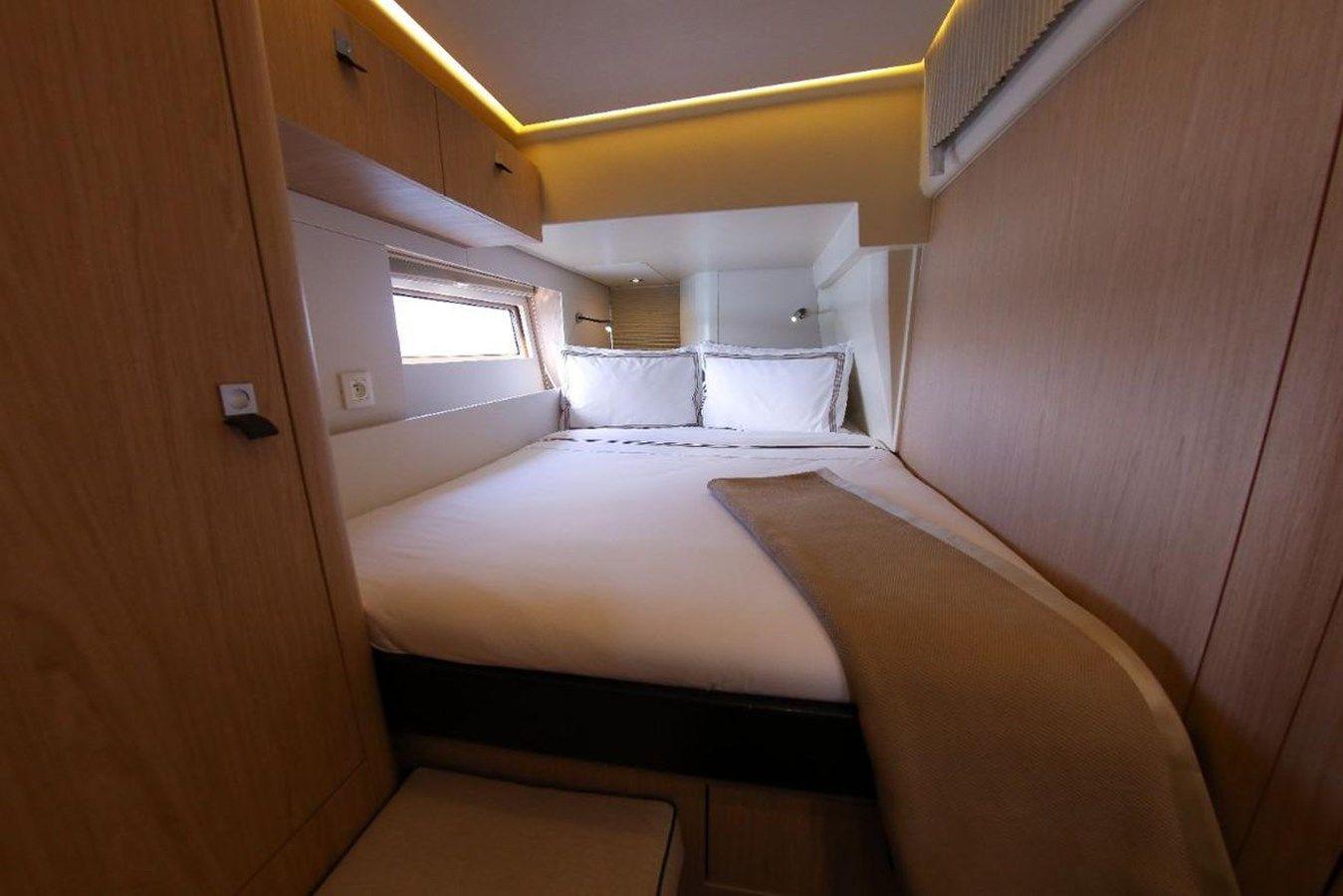
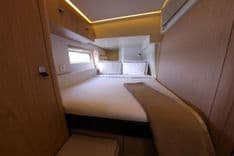
The port aft cabin, with 1,91 m (6’3’’) headroom, features a double bed of 2,42 x 1,40 m on a slatted base with a 120 mm marine mattress, a hanging locker, shelving, and a drawer beneath the bed. Daylight and air are provided by an opening porthole into the cockpit with a blackout curtain, an opening porthole to the coachroof with a blackout blind, and three hull portholes, one with a blackout curtain. A light tunnel with two fixed windows, a stowage compartment, a technical access hatch, and a blackout blind add to the functionality. Lighting is by three LED ceiling lights, two LED reading lights, and a ceiling LED strip, with a 230 V socket and two USB ports for personal devices. The en‑suite aft port head, also accessible from the saloon, has 2,15 m (7’1’’) headroom and a separate shower with moulded tray, hot/cold mixer tap, and shower screen, complete with a teak‑slatted seat and shower flooring. A manual toilet, washbasin on a Corian Deep Mink worktop with hot/cold mixer, two mirrors, toilet accessories with towel rail and peg, cupboards and shelving, an opening coachroof port with blackout blind, a hull port with blind, three LED ceiling lights, an LED strip beneath the mirrors, and a 230 V socket ensure comfort.
The starboard aft cabin mirrors the port with 1,91 m (6’3’’) headroom and a double bed measuring 2,04 x 1,40 m on a slatted base with a 120 mm marine mattress, a hanging locker, shelving, and a drawer beneath. Air and light flow through an opening porthole into the cockpit with blackout curtain, an opening porthole to the coachroof with blackout blind, and three hull portholes, one with a blackout curtain. Its light tunnel incorporates one fixed window, a stowage compartment, a technical access hatch, and a blackout blind. Lighting is by three LED ceiling lights, two LED reading lights, and a ceiling LED strip, with a 230 V socket and two USB ports. The aft starboard head, private to this cabin, provides 2,15 m (7’1’’) headroom and a separate shower with a moulded tray, hot/cold mixer tap, and shower screen, complemented by a teak‑slatted seat and shower flooring. A Tecma electric toilet discharges to a rigid holding tank of 80 L (21 US Gal), while a washbasin on a Corian Deep Mink worktop with hot/cold mixer, two mirrors, toilet accessories with towel rail and peg, cupboards and shelving, an opening coachroof port, a hull port with blind, three LED ceiling lights, an LED strip beneath the mirrors, and a 230 V socket complete the suite.
A versatile bunk cabin with 2,15 m (7’1’’) headroom includes comfortable bunk beds with marine mattresses, shelving, a full‑height hanging locker, and storage beneath the floor. An opening coachroof port with blackout blind and a hull port with blind provide ventilation and light, while three LED ceiling lights, two LED reading lights, and a 230 V socket offer convenience.
Electrical
A tri‑voltage electrical architecture empowers life aboard. The yacht carries 12 V, 24 V, and 230 V circuits, with dedicated ducts and mouse lines pre‑installed for threading optional electrical or navigation electronics cabling. A 230 V electrical panel provides a breaker and voltmeter, while the 24 V panel integrates a breaker, voltmeter, fresh‑water and fuel gauges, and instruments to measure 24 V charging and consumption current. Electrical controls are logically grouped within a starboard technical compartment.
The 12 V engine‑start circuit includes, as standard, one 12 V 140‑amp engine battery, a battery switch accessible from the port aft cabin, and a 12 V 25‑amp battery charger in the starboard technical area. The 24 V service circuit, powering the electric windlass, pumps, navigation lights, interior and exterior lighting, and refrigeration units, is anchored by a 24 V service battery set of 280 amps (configured as 12 V with four 140‑amp batteries), a battery switch in the port aft cabin, a 24 V power distributor in the starboard technical area, and a 24 V 60‑amp battery charger. The 230 V system feeds the sockets and water heater, with outlets thoughtfully placed throughout: one in the forward cabin, one in the forward head, one in the port saloon, four in the galley, one at the chart table, one in the port aft cabin, one in the aft port head compartment, one in the starboard aft cabin, and one in the aft starboard head compartment.
Lighting is entirely LED inside—overhead and reading lights—complemented by LED courtesy lights beneath the companionway steps and within hanging lockers. Outside, three LED fixtures illuminate beneath the fixed arch, with a cockpit courtesy light, and a mid‑mast deck floodlight with a standard bulb provides working brightness. LED navigation lights are controlled from the chart table and include an all‑round masthead light, a mid‑mast automatic top light, and a stern light on the aft starboard pulpit.
Engine
Power comes from a Yanmar 160 HP six‑cylinder engine on a propeller shaft, with engine electrical controls and switchboard at the starboard helm and the option for dual controls to port. Precision close‑quarters handling is aided by a bow thruster. The engine compartment is comprehensively insulated with 40 mm foam soundproofing and ventilated by four air intakes and two air extractors. Charging is robust via a 12 V 150‑amp alternator and a 24 V 90‑amp alternator. Fuel capacity is configured across three tanks—two of 230 L and one of 540 L (2 x 61 US Gal + 1 x 143 US Gal)—monitored by an electronic gauge and serviced by three deck fillers, with tank selection via quarter‑turn by‑pass valves. Filtration covers seawater, diesel, and a water separator to protect the system. Underway efficiency is delivered by a three‑feathering‑blades propeller, and access for maintenance is excellent from the companionway—assisted by gas struts—and the starboard machinery compartment.
Sails
A powerful and practical wardrobe carries you swiftly and surely: a Dacron furling genoa with double thickness and a UV protection strip pairs with a fully‑battened Dacron mainsail of double thickness emblazoned with its logo. Handling is eased by a Natural‑color Lazy Jack and matching Lazy Bag.
Winch power is precisely where you need it—within reach from each helm station. Two self‑tailing 70.2 STC genoa sheet winches (serving Code 0 and spinnaker duties as required) work alongside two 46.2 STC manual maneuvering winches, supported by two Speedgrip winch handles and two dedicated handle boxes.
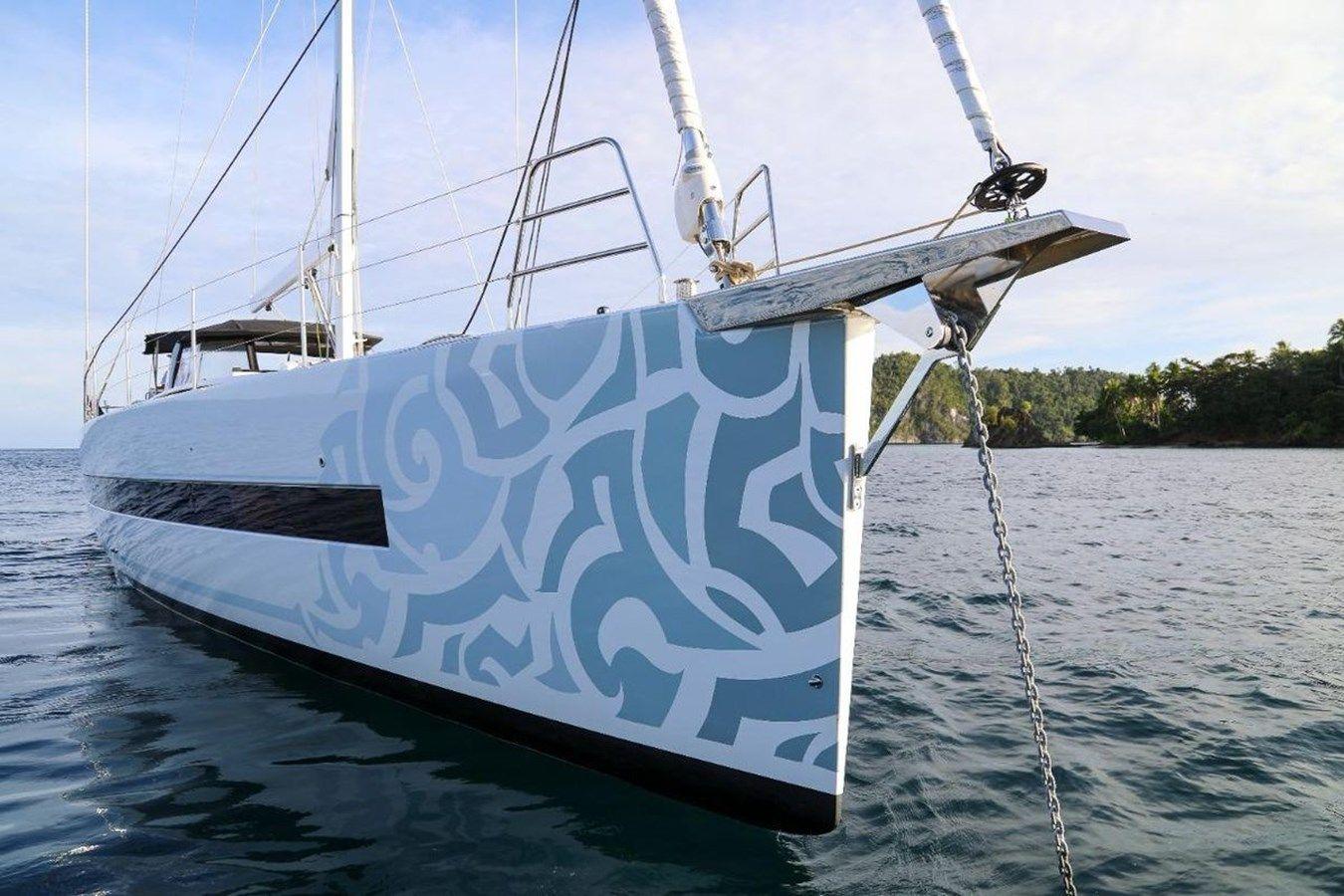
Mooring and ground tackle are engineered for reliability: a stainless‑steel bowsprit with a single stem roller and a tack point for an asymmetrical spinnaker or Code 0 leads the bow, while a self‑draining chain locker is accessed via a lockable panel from within the sail locker. A vertical 24 V 2000 W electric windlass with remote control makes light work of anchor handling, and eight aluminum mooring cleats of 400 mm provide secure ties. The fore sail locker is reached through a T70 deck hatch with a passage width of 62 cm (2’), served by a stainless‑steel ladder and outfitted for orderly stowage of lines, fenders, cushions, sails, and more, with direct access to the anchor well via a T44 panel.
Safety on deck is paramount, with a two‑part stainless‑steel pulpit open at the bow (750 mm height, 28 mm diameter), twin stainless‑steel pushpits of the same dimensions, a lifebuoys support bracket, and an ensign mount. Triple guard wires and stainless‑steel stanchions of 750 mm height include gated openings to port and starboard, and secure handholds are everywhere you need them: four stainless‑steel handrails on deck—two on the coachroof and two flanking the forward sun pad—and four additional stainless‑steel handrails on the fixed arch.
Specifications
- Length:
- 62' (19.1m)
- Beam:
- 17' (5.33m)
- Draft:
- 24.88' (7.5833m)
- Year Built:
- 2017
- Builder:
- Beneteau
- Category:
- Sail yachts
- Engines:
- 1 engines Yanmar
- Location:
- Turkey



Yacht name «Beneteau Oceanis Yacht 62» – Beneteauis for sale and located in Izmir, Turkey
Sail yachts «Beneteau Oceanis Yacht 62» built by manufacturer Beneteau in 2017— available for sale. Yacht location: Turkey. If you are looking to buy a yacht «Beneteau Oceanis Yacht 62» or need additional information on the purchase price of this Beneteau,
please call: +1 (954) 274-4435 USAOnly deal with professionals!