

 Licensed Yacht BrokersYachts for Sale
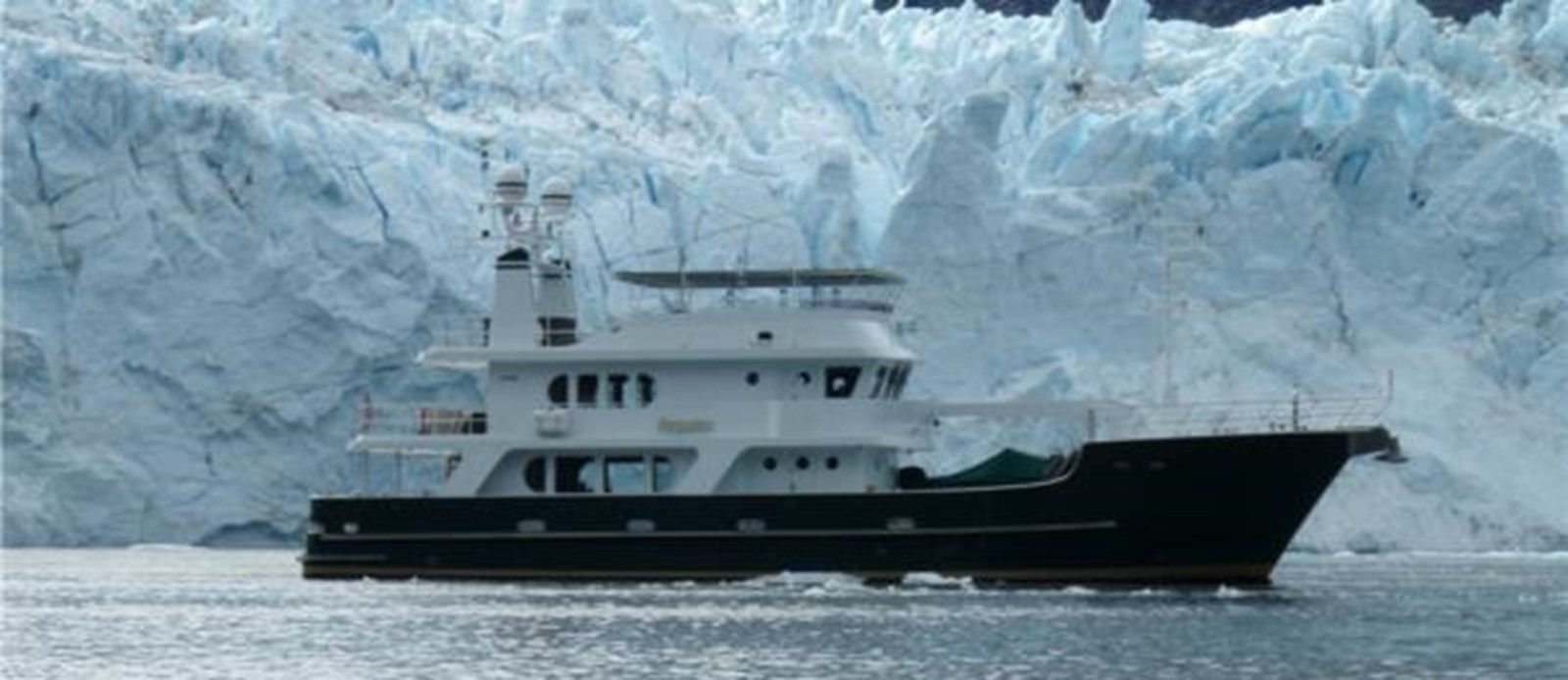
Impetus - INACE FOR SALE




Basic information
- Builder:
- INACE
- Category:
- Motor yachts
- Sub Category:
- Expedition Yachts
- Model Year:
- 2005
- Year Built:
- 2005
- Country:
- United States
Dimensions
- LOA:
- 95' (28.96m)
- LWL:
- 84' (25.76m)
- Beam:
- 24' (7.32m)
- Min Draft:
- 21.87' (6.67m)
- Max Draft:
- 25.15' (7.67m)
Speed, capacities and weight
- Cruise Speed:
- 10 Kts. (11.51 MPH)
- Max Speed:
- 13 Kts. (14.96 MPH)
- Gross Tonnage:
- 186 Pounds
- Water Capacity:
- 3000 Gallons
- Fuel Capacity:
- 15000 Gallons
Accommodations
- Sleeps:
- 5
- Total Heads:
- 7
- Crew Cabin:
- 2
- Crew Berths:
- 3
Hull and deck information
- Hull Material:
- Steel Yachts
- Deck Material:
- Steel
- Hull Configuration:
- Displacement w Bulbous Bow
- Hull Color:
- Green
- Hull Designer:
- Bray
- Exterior Designer:
- Kirschstein Design
- Interior Designer:
- Kirschstein Design
Engine information
- Engines:
- 2
- Manufacturer:
- Caterpillar
- Engine Type:
- Inboard
- Fuel Type:
- Diesel
Overview
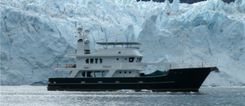
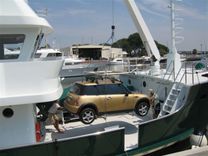
Not available for purchase by U.S. residents while in U.S. waters. Impetus was named among the Top 5 Explorer Yachts built in 2005 by Boat International and earned a premier honor from ISSA. Since launch she has validated every accolade, taking her owners on far‑reaching global passages to secluded corners of the world with reassuring comfort and safety. Frequently called a “mini‑superyacht,” she offers the volume, amenities, and liveaboard spaces more typical of a far larger luxury motor yacht. Her engineering is commercial‑grade and heavy‑duty, laid out for straightforward onboard servicing. Exceptional attention to concept and build yields a smart harmony of sophistication and elegant simplicity—the very embodiment of the KISS principle. Impetus suits an owner seeking a highly capable expedition yacht and true blue‑water passagemaker that can be efficiently operated by a small crew while providing welcoming living areas for everyone aboard. She readily carries multiple tenders, adventure toys and watersports equipment, and can even accommodate a Mini‑Cooper. The horizons are as limitless as the destinations she can deliver you to.
Detailed Description
Remarks
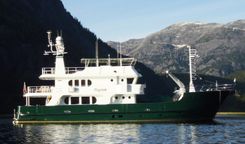
NOT FOR SALE TO US CITIZENS WHILE IN US WATERS. A Top five International Superyacht Design Award winner, “Impetus” was custom built for a very knowledgeable owner and stands as the finest example of the 95-foot Inace Explorer built to date. Conceived to an exacting brief with extensive custom detailing in both layout and storage, she showcases only top-quality equipment and systems throughout.
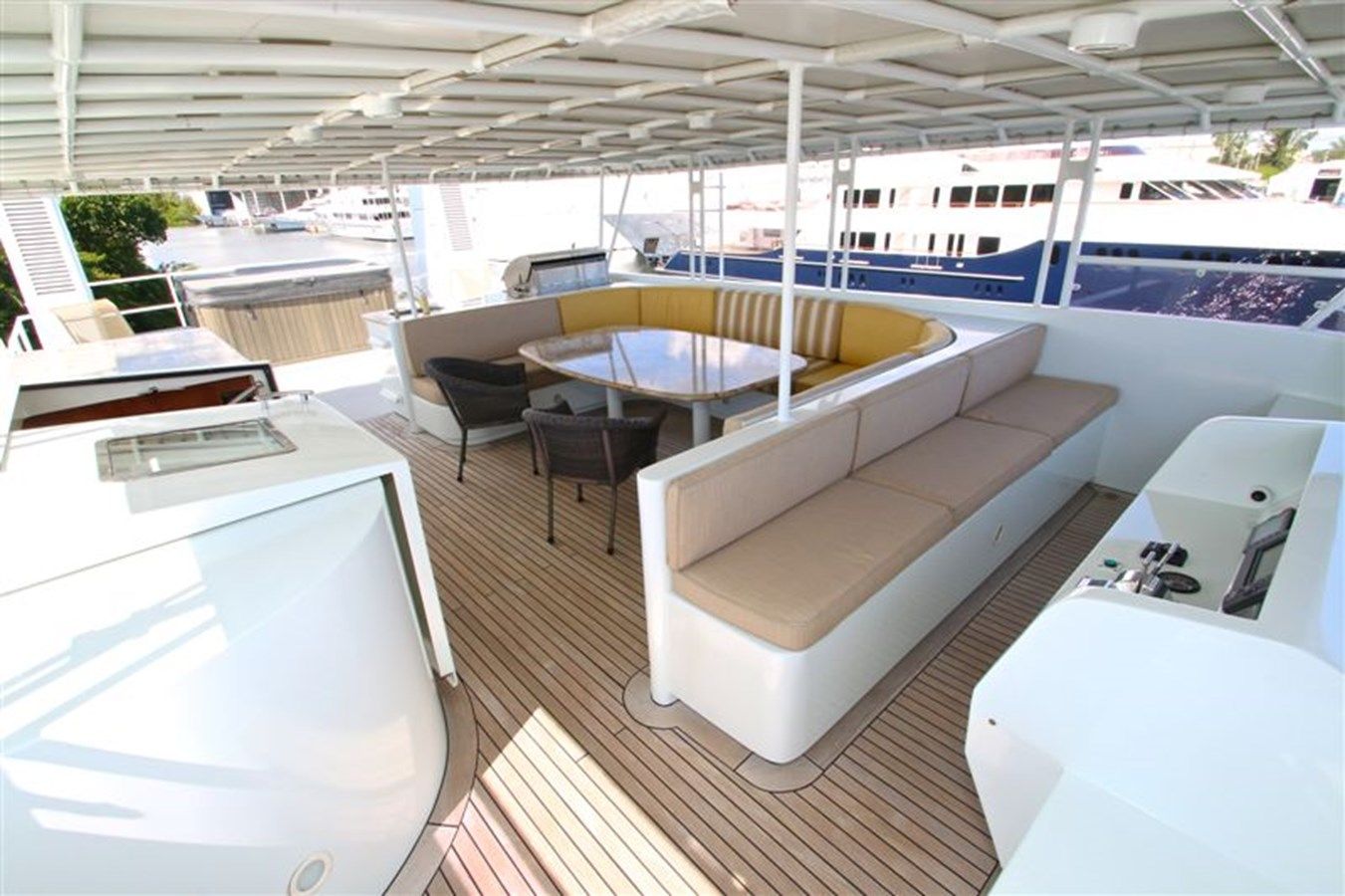
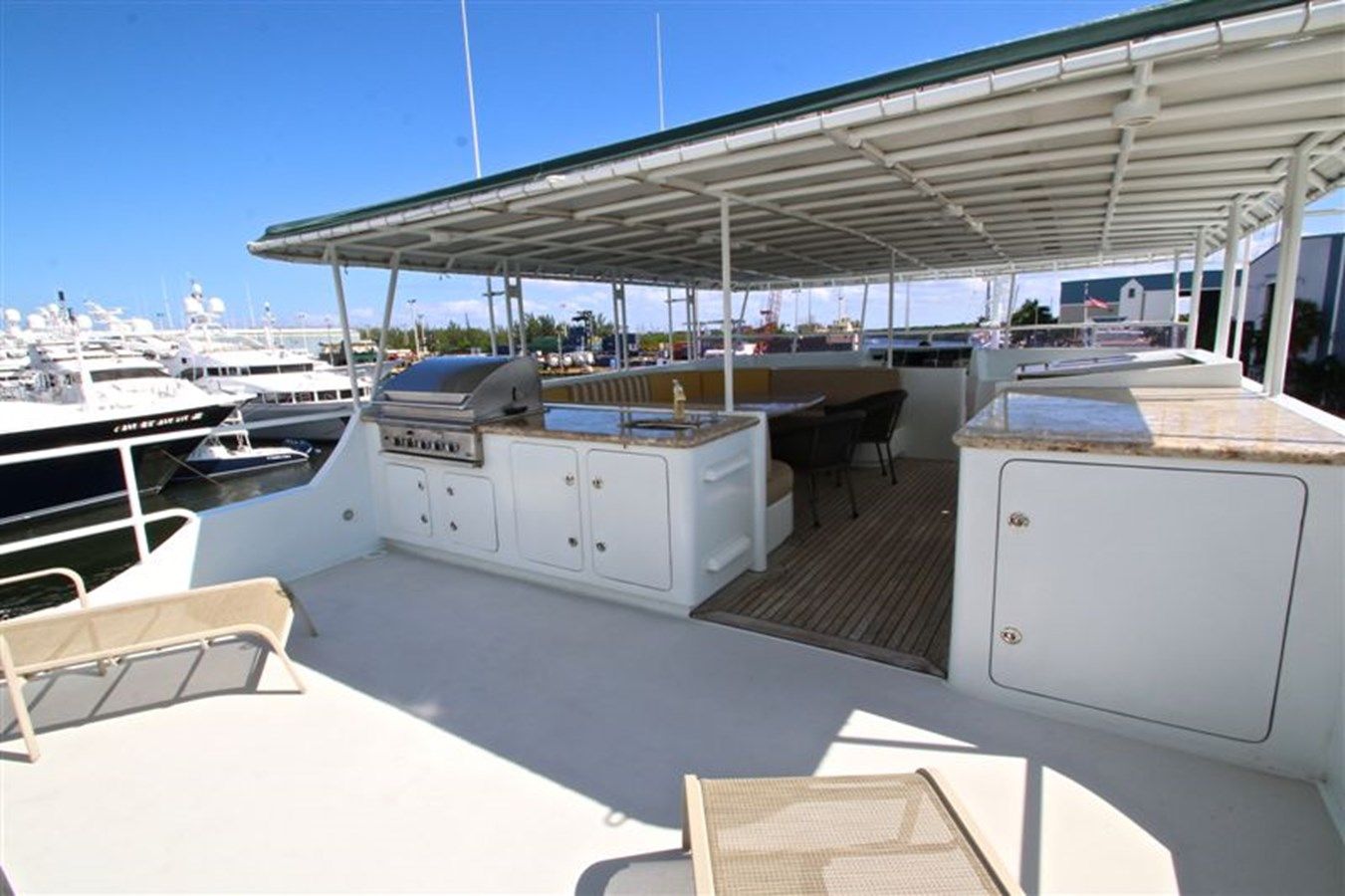
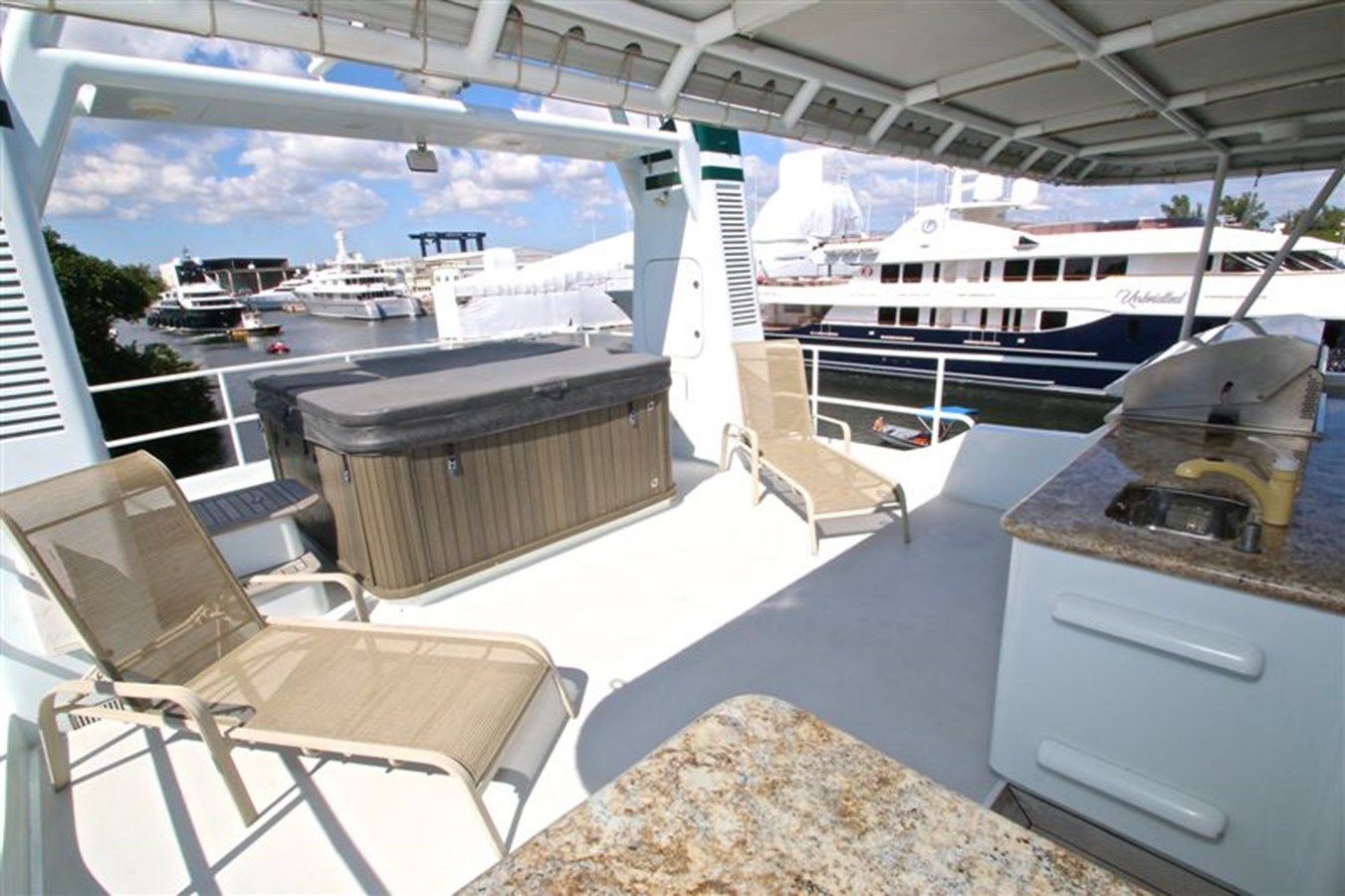
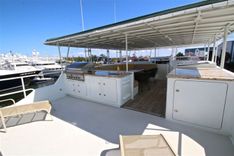
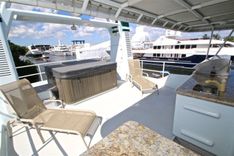
“Impetus” delivers the room and feel of a much larger vessel. Her hull and bulb were conceived by Bray Yacht Design and tank tested for efficiency and sea-kindliness, with more than 80,000 nautical miles under her keel verifying those impressive results. She accommodates eight owners and guests in four staterooms when the skylounge is in VIP stateroom mode, and three crew in the two crew quarters. The large skylounge transforms effortlessly into a fourth queen VIP stateroom, an office, a workout area, or a home theater. A custom cherry interior by Kirschstein Design highlights arched doors, extensive burled wood inlays, and exotic horn accents, while the massive flybridge features a full-size hot tub, a large gas barbecue, a wet bar with U-Line ice maker and refrigerator, a generous dining table, and exceptionally comfortable forward navigation seating.
Designed and built for high reliability, comfort, and low maintenance, she employs extensive stainless steel, granite, and other refined finishes to deliver a true yacht ambiance while minimizing man-hours in brightwork and other non-essential upkeep. She is fully equipped for world cruising with an extensive navigation suite, abundant storage, and capacity for a wealth of toys, including a Mini Cooper.
“Impetus” is the only vessel in her class fitted with a Quantum Marine MAGLift Zero Speed stabilizer system—technology typically reserved for a select few megayachts and military vessels—with a replacement value in excess of $1,000,000.
A proven explorer, she has completed several trans-Atlantic crossings, ventured to Alaska, and achieved a rounding of the Horn of South America. Built to ABS and MCA class and current in both, “Impetus” is a one-owner vessel that has never been chartered.
Hull structure
Engineered for unwavering strength and seakindly performance, the hull is anchored by a 3/4" x 10" keel that runs the full length, with stems at 3/4" x 10" and robust 1/4" plate floors. The skeg is purpose-built with 5/16" sides, a 5/16" cross section, and a 1/2" bottom, while the bottom plating is 5/16" plate carried up to the chines. Side and transom plating are 1/4", complemented by a 1/4" plate main deck. Bulkhead plating is predominantly 1/4", transitioning to 3/16" where corrugated for optimized weight and rigidity, and the tank top plating is 5/16". Structural framing is equally substantial, with transverse deck frames at 3" x 3" x 5/16", side frames at 3" x 3" x 5/16", and deck girders in 3" x 3" x 5/16" beams, all capped by a bulwark cap plate formed from 2 1/2" stainless steel pipe. For lasting protection, the exterior of the hull to the waterline and the bulwarks are zinc coated.
Thoughtful subdivision enhances safety and serviceability, organizing the interior into fuel oil tanks, a guest stateroom compartment, a master stateroom compartment, the forepeak, the engine room, a steering gear compartment, fresh water tanks within the forepeak, and a dedicated bow thruster compartment.
Engine room
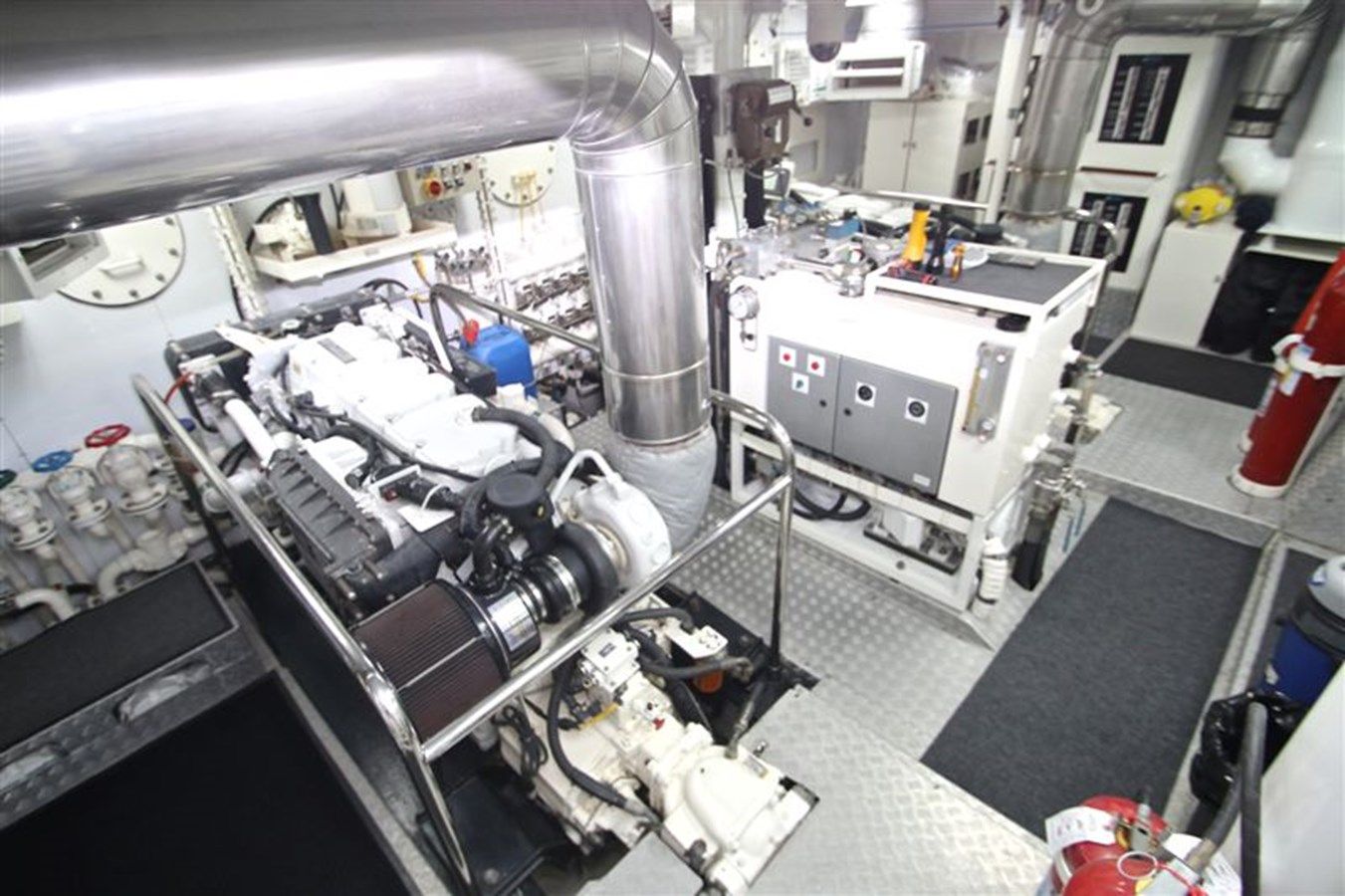
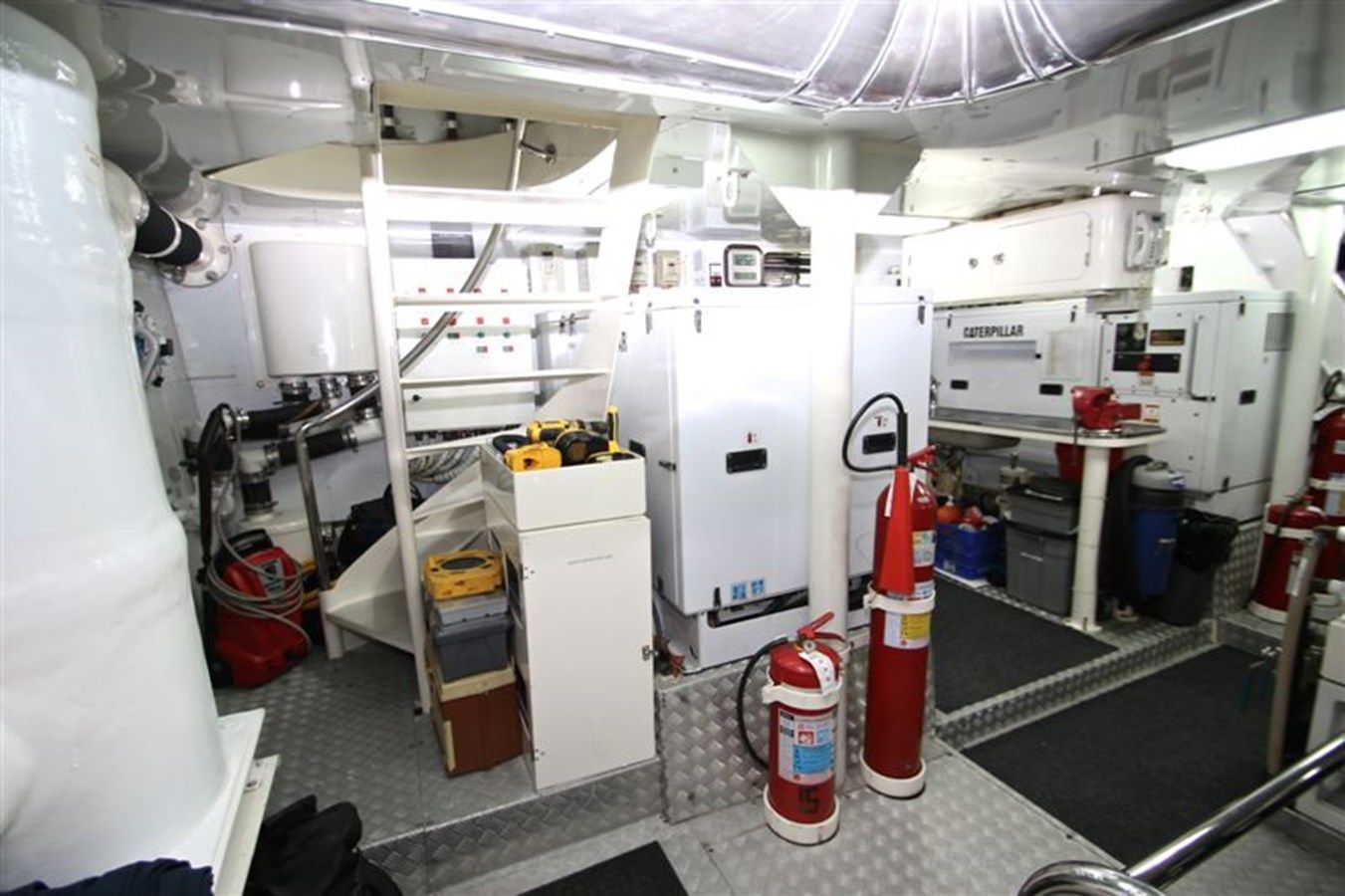
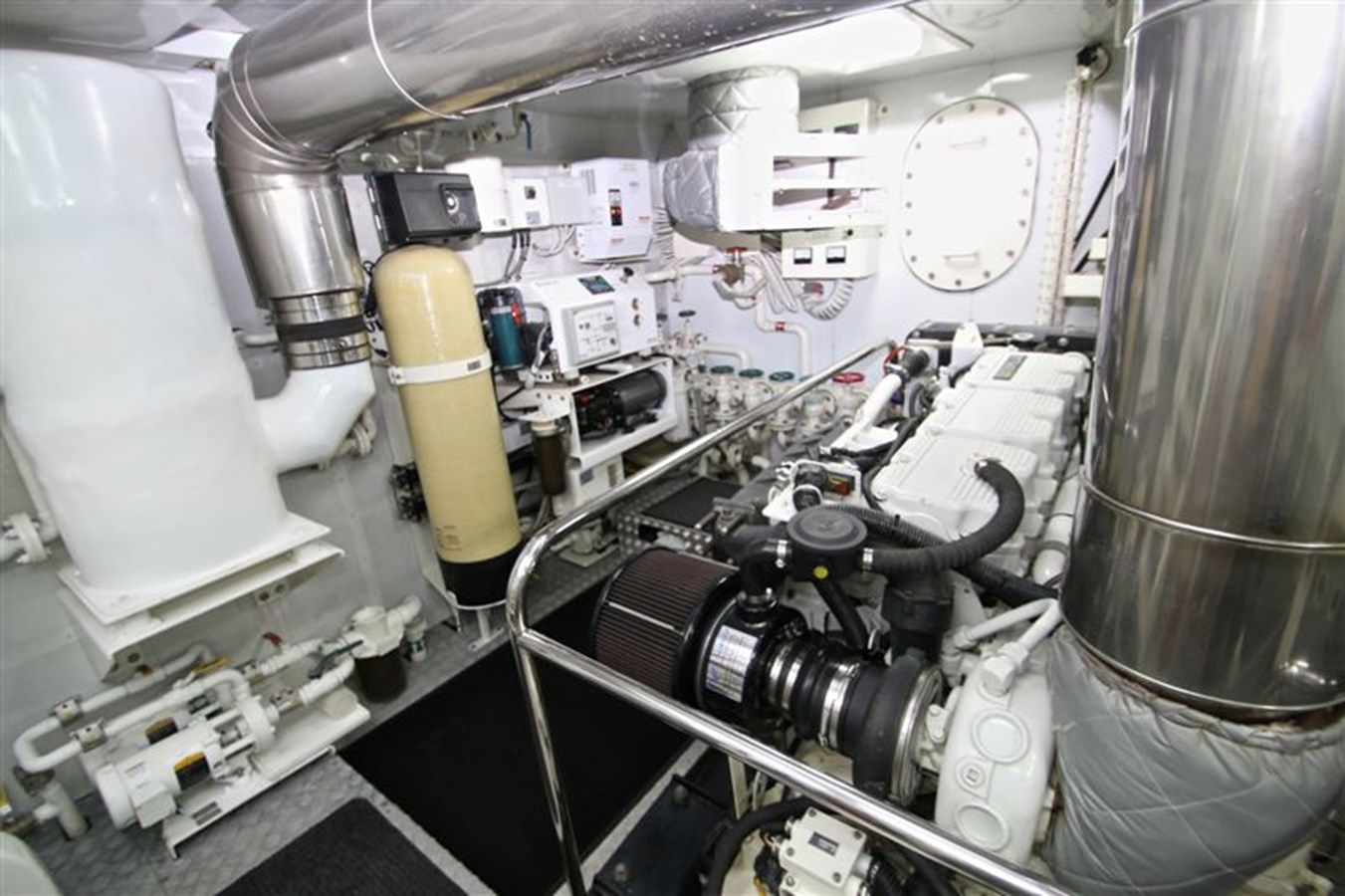
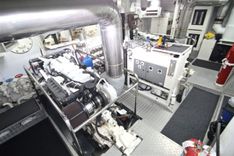
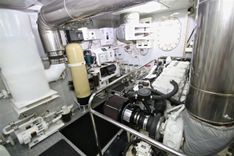
Powering Impetus are two Caterpillar 3406 DITA main engines delivering 450 BHP at 1,800 RPM with 24-volt electric start. Each engine is protected by a Racor 75-900 MA dual fuel filter, with either element capable of running the system so you can switch between filters while underway. Drip trays beneath each filter simplify cleanup and keep inspection points clearly visible. Each engine carries its own starting bank of two 8D batteries, with the main engine start batteries able to be paralleled between the main engines or the generators, and each bank chargeable via either a charger or an alternator. Deep crankcase oil pans support 400-hour oil change intervals and are fully accessible from all sides. Impetus has had oil analyses at every oil change since launch, has always been serviced by Caterpillar, and remains fully up to date on all service requirements. The main engines each show 9,000 hours, and the vessel has covered approximately 80,000 nautical miles. Combined fuel burn for both engines and one generator is 12 gph at 8.5 knots and 1,150 RPM, and 20 gph at 10 knots and 1,450 RPM, with an average per-engine burn equating to a total of 13.6 gallons per hour for both engines. Expect a 0.75-knot increase in speed with the stabilizers off; notably, the stabilizers have been operated for only a fraction of total hours underway, underscoring Impetus’ inherent seaworthiness and comfort at sea.
Power is transmitted through Twin Disc Quickshift MGX 5114 DC reduction gears with a 3:50:1 ratio to four-inch stainless shafts spinning five-blade propellers. Manual shaft brakes are fitted to each shaft, and the Quickshift functionality affords superb low-speed control with smooth, vibration-free shifting. The main engine control system is by Kobelt with stations in the wheelhouse and flybridge, complemented by a Kobelt SPA 10590 remote walk-around with plug-in stations on the foredeck, wheelhouse, and aft deck, enabling control from either wing station, the aft deck, the foredeck, and the crow’s nest. The remote also provides helm, bow, and stern thruster controls, and its cord length allows movement along either wing station and even control from the dock when stern-to—particularly convenient in Mediterranean moorings when neighboring vessels are departing and lifting anchors. There are two remote controls, one with a long cord and one with a short cord, and there are direct manual control takeovers in the engine room. The main engines are 3406E, A-rated with deep sumps for 400-hour oil changes and a 30,000-hour interval before rebuild.
Ship’s power is supplied by two Caterpillar 40 kw generator sets with sound shields, 24-volt starters, and vibration mounts. Each generator carries a single Racor 900 fuel filter that uses the same cartridge as the mains and includes a vacuum gauge, with drip trays installed beneath for cleanliness and clear inspection. Each generator has its own starting bank of two 8D batteries; the genset start batteries can be paralleled with the generators or the main engines, and the banks can be charged via a charger or an alternator. Both gensets are accessible from all sides and feature the deep oil sump option.
The main electrical system is a 240/120 Volt, 60-cycle, three-phase installation fed by two 100-amp shore cords via a Glendinning system and two Caterpillar generators. Shore power runs through a 40 KVA Atlas power conversion system. A split buss main panel allows operation from one or two shore cords, one or two generators, or any combination thereof, and the generators are sized so that a single set supports normal vessel use. A ground monitoring system is integrated into the panel. For redundancy and efficiency, a Xantrex Trace 4000 inverter draws from a house bank of ten 8D batteries and can be charged via the inverter or the main engines. The inverter supports selected house services—including all refrigerators and freezers, selected lighting, and power outlets throughout the vessel—allowing the ship to sit “dead” for over 72 hours while maintaining essential systems and proper food temperatures. Should generator power be lost at sea, the inverter provides an extended window to bring systems back online while keeping selected AC services active. The DC panel is separate from the AC panels, and all pump controls are remotely grouped in their own control panels.
Impetus’ fuel system centers on an Alfa Laval MIB 303 fuel cleaner integrated into the transfer circuit and mounted on a drip tray. All fuel can be transferred through the Alfa Laval to and from all tanks, and on long passages the system can draw from the two main tanks of 4,500 gallons each to feed the 1,000-gallon day tank, which then overflows back to the mains to create a continuous circulation of clean, cool fuel, ensuring the day tank remains full and temperature-stable for maximum engine efficiency. At a cruising speed of 10 knots the day tank supplies approximately 44 hours of running, enabling fuel transfers every 24 hours with roughly 20 hours in reserve. The day tank is positioned between the main tanks and surrounded by fuel on three sides, with the mass of the larger tanks acting as a heat sink to stabilize day tank temperature. A tray above the easy-to-use transfer valve system offers handy storage for small items. The vessel carries a total of five fuel tanks: a forward tank of 1,500 gallons, a midships tank of 2,200 gallons, a port main tank of 4,500 gallons, a starboard main tank of 4,500 gallons, and the 1,000-gallon day tank. Fuel can be transferred using a 120-volt high-speed pump at 68 gpm, the Alfa Laval, or a 24-volt backup pump at 15 gpm, and the vessel can receive fuel from a truck at over 80 gpm. Each tank can be read manually via a sight tube or pull tape, or via the integrated tank monitoring system, and there are no hoses used in this system other than for vibration isolation.
Raw water is managed through two sea chests formed by two six-inch steel standpipes whose transparent tops sit above the waterline for instant inspection. A six-foot CuNi crossover pipe is fed from either or both standpipes, which can be isolated from the crossover. Vents for the standpipes rise to main deck level rather than discharging into the engine room, and each standpipe has a compressed-air blow-down; its top can be removed underway to clean the primary filter. Removable external grates further ease maintenance. All raw water consumers have secondary filters located near their equipment. Each standpipe is sized to meet the vessel’s full demand with 30% blockage, and all seawater piping is CuNi with welded and flanged connections; there are no hoses in the system other than for vibration isolation.
Safety and de-watering are entrusted to two independent bilge and fire systems that are cross-linked for redundancy. Each system features a 120vt five-horsepower pump and a 24vt light de-watering system, with pickups in every watertight compartment. Piping is copper with PVC foot valves, and high-water alarms are fitted at each pickup. The system can be flushed with fresh water after periodic testing, and, consistent with the vessel’s engineering standards, there are no hoses used other than for vibration isolation. Fire hydrant stations are located in the engine room and on deck as required by class.
Waste management is robust and odor-free. The black water system includes a 600-gallon tank and Head Hunter freshwater heads throughout, with schedule 40 PVC 1 1/2-inch pipework designed to prevent odor migration over the life of the vessel. A white sanitary rubber hose is only used to connect each head to the hard piping. Discharge is handled by a 230vt diaphragm pump interlinked to an identical backup, both mounted on the engine room deck for easy service. The tank can discharge overboard or through a deck fitting and includes an integrated washout system for high-standard maintenance without frequent openings. The heads are fed by twin fresh water pumps from the potable water system, and P-traps are fitted on all lines entering the tank. The gray water system employs a 400-gallon tank that receives gravity feeds from all lavatories, showers, and tubs via schedule 40 PVC 1 1/2-inch pipe. The galley sink with garbage disposal can discharge directly overboard or to the tank, which is evacuated by a diaphragm pump interlinked with the black water pump and discharging below the waterline. P-traps are fitted on all lines into the tank, and there are no hoses in the system other than for vibration isolation.
For clean and dirty lube oil, the vessel incorporates two 120-gallon tanks integrated into the hull, with two Overdorfer 24-volt pumps—one dedicated to clean oil and one to dirty oil—allowing both drain and fill of the main engines.
Climate control is provided by an Aqua Air Alpha Series chilled-water system with three four-ton chillers and Temp wise 2000 controllers in each room. No fan coil units are mounted overhead; instead, all air handlers are deck-mounted in individual secondary drip pans that fully cover each unit. Both standard and secondary drip pan drains discharge into the gray water tank, and there is an air handler in the engine room. No fan coils drain into the bilges, and the main chiller in the engine room is also set in a secondary drip pan. A backup raw water feed pump is plumbed into the system, and, true to the yacht’s engineering ethos, there are no hoses employed beyond those necessary for vibration isolation.
The fresh water system features one FCI MaxQ water maker producing 90 gallons per hour with UV light, back-flush capability, a sand and gravel media filter, and a plankton filter that can be used together or independently; one CRO water maker producing 70 gallons per hour; and interchangeable parts between the two water makers. Domestic pressure is delivered by one 220-volt pump at 80 psi with a 36-gallon pressure tank and one 120-volt pump at 60 psi that can run off the inverter, with the second pump set to engage when pressure drops below the first pump’s operating range. Hot water is supplied by two 50-gallon tanks. A secondary drinking water filter serves the galley and bar sink, and fresh water outlets are provided on the foredeck, boat deck, aft deck, and flybridge deck. Fresh water tank levels can be checked via sight glasses or the integrated monitoring system, and each tank can be isolated. An extensive filtration array includes two black light sterilizers—one on the input and one on the output—filtration to as fine as two microns, and an automatic back-flushing system.
The compressed air system uses a one-third-horsepower compressor with a 2.5-gallon reserve tank, distributing via copper tubing to the air horns, engine room, and boat deck. Engine room ventilation employs variable-speed, reversing intake and exhaust fans, with vents positioned at the top aft of the stacks above the arch on the flybridge deck.
Steering, manufactured by KOBELT, utilizes twin oversized pumps and twin oversized rams, with a manual backup pump and wheel in the wheelhouse. There are no hoses used in this system other than for vibration isolation. The steering rams can be isolated by valves, allowing single-ram operation in the unlikely event of a failure. Thruster authority is formidable: the bow thruster delivers 85 hp in a 16-inch tube and the stern thruster 35 hp, both driven off two hydraulic pumps mounted on the transmissions. The system provides full power to both thrusters at idle and offers control from the wheelhouse helm, flybridge helm, the SPA 10590 remote plug-in control for the port and starboard wing stations, and a stern plug-in control station. This hydraulic network also feeds the Quantum Marine integrated power management system, the Quantum Maglift stabilizers, the crane, and the windlasses, with an additional 220vt AC hydraulic pump supplying the Quantum power system.
Fire protection is comprehensive, centered on a Kidde-Fenwal automatic system with audible and visual alarms in the engine room and bridge, plus a manual release on the aft deck. On activation, the system shuts down air and fuel, and it meets both class and US Coast Guard requirements. A 220v AC fire pump, backed up by the AC bilge system, supplies fire stations in the engine room and on the main deck port and starboard, with hose lengths covering all areas of the vessel, and there are twenty-five portable fire extinguishers distributed throughout. A separate emergency diesel fire/bilge pump is located on the boat deck.
Extensive attention has been devoted to sound and vibration control. The forward bulkhead separating the engine room from the master cabin is a dual structure forming a one-meter-deep fuel tank system, creating double sound barriers with fuel acting as an acoustic dampener. All engine room steel, except in the bilge, is coated with “Dum dum” for vibration, sound, and moisture control, then layered with lead-foam insulation and finished with an aluminum sound barrier. Above, the saloon sole carries another layer of “Dum dum,” a sheet of lead, foam, and carpet, while the master stateroom’s aft bulkhead also features a lead-foam barrier. The main engines and all reciprocating equipment are soft-mounted; pumps are soft-mounted in catch trays that are themselves soft-mounted; and flexible connections link equipment to fixed piping.
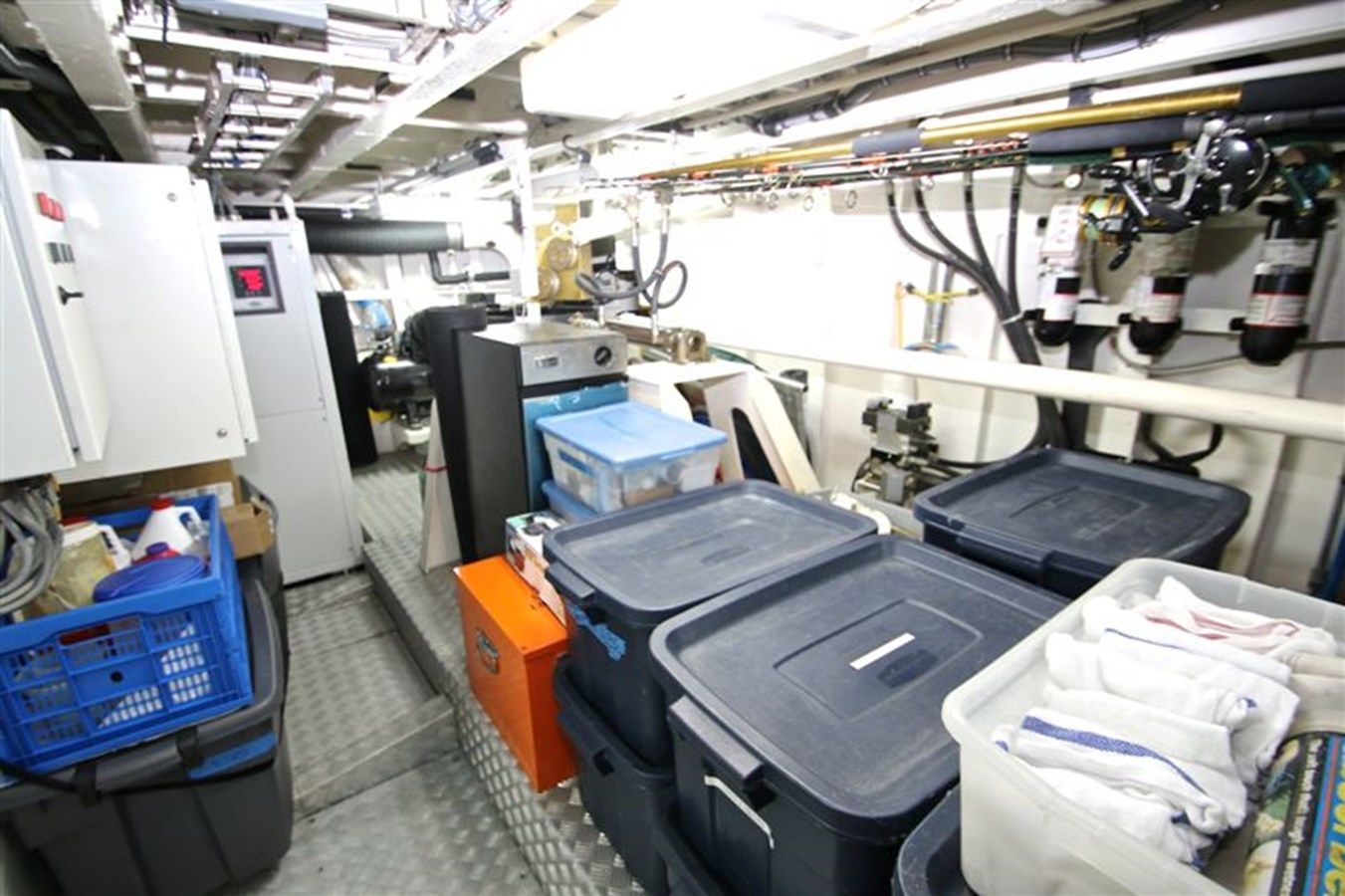
Aft of the engine room, the lazarette is accessed internally or via a deck hatch and houses an additional washing machine, extensive storage, and the Glendening cable master system. The main steering pumps are located here with short runs to the dual rams, and each ram can be valved off to allow single-ram operation if required. Lift points above the rudder posts extend above the waterline to permit rudder removal in the water, and the rudders are offset so the shafts can be withdrawn without dropping them. Additional lift points on the hull above the propellers aid in underwater removal and replacement. A spin washer is provided for engine room rags.
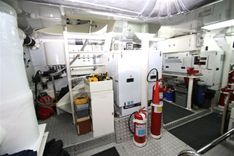
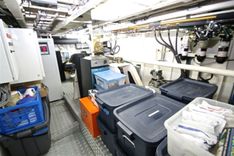
For bluewater self-sufficiency, Impetus carries extensive spare parts for long-distance cruising, including comprehensive spares for ship’s equipment, the main engines, and the generator sets. Between the generators sits a workbench with a fresh water sink that swings aside for full access to the port genset, and the engine room is outfitted with extensive tools in dedicated chests. Complete operational manuals for all equipment and procedures are onboard. Lift points are mounted above all major equipment for in-situ service and rebuilds, and an oversized engine room door from the deck ensures all major machinery can be removed via the stairway.
Deck equipment
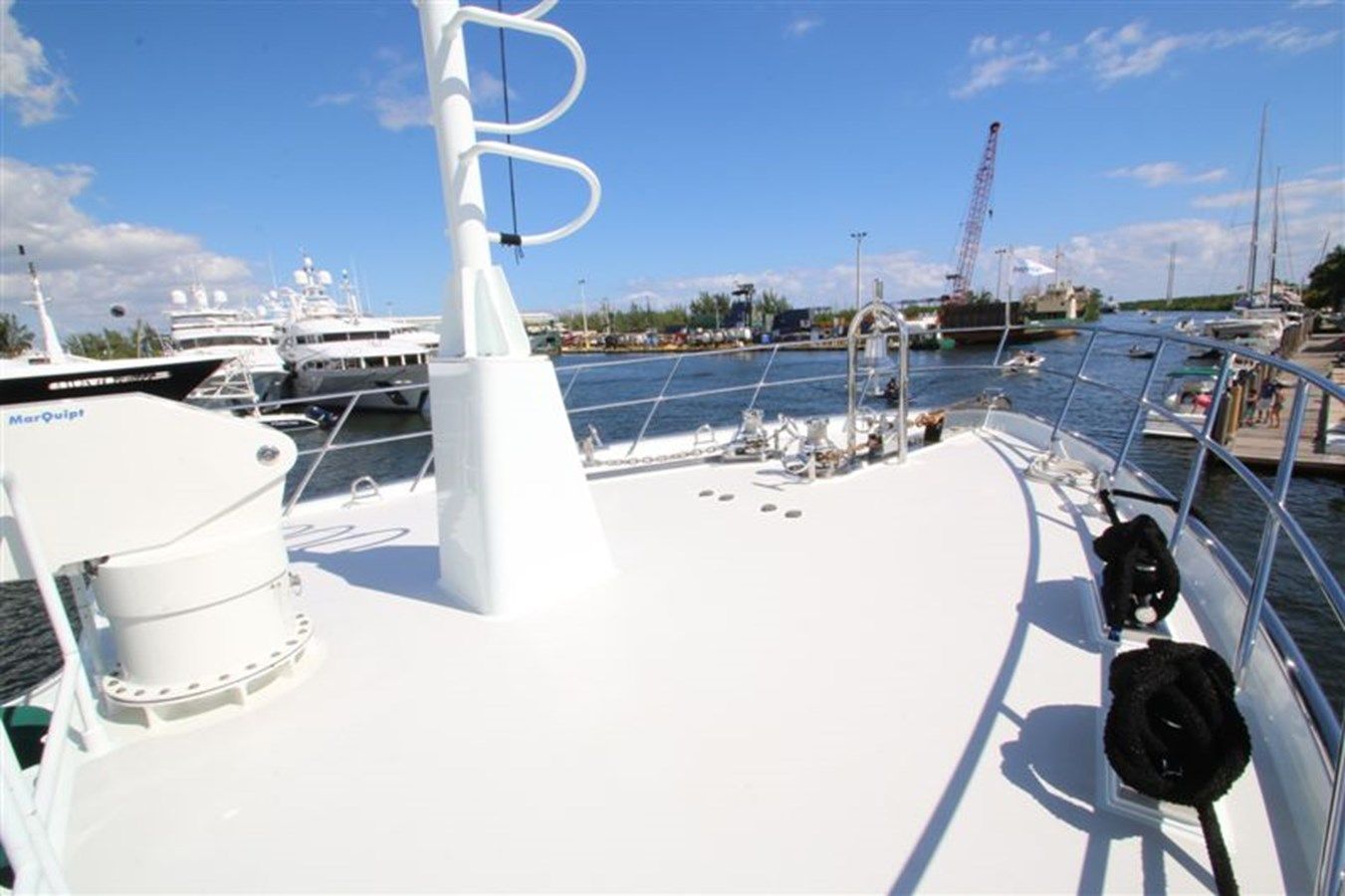
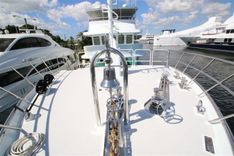
Forward on the main deck, the ground tackle is engineered for effortless authority, beginning with two Muir 6000 hydraulic windlasses serving a 440-pound CQR-type anchor and a 550-pound navy-style anchor, each set on 600 feet of 5/8 stud-link high-test chain. Stainless chain slap guards with integrated drains protect the deck, complemented by a stainless rub guard at the stem. The CQR runs centerline forward and clears the bulb when dropped or retrieved under normal conditions, while the navy anchor nests neatly in a port-side pocket with its chain led through a six-inch stainless tube. Together they offer exceptional holding in a broad spectrum of bottoms, letting you select the ideal primary, with the higher-running CQR reducing the chance of chains rapping and making it easier to rig a snubbing line. Two large stainless cleats, port and starboard, are paired with two stainless line guides per side. Both anchors benefit from an integrated freshwater washdown system, the chains self-stack cleanly down a stainless, bell-shaped spurling tube, and there is a minimum of two feet of drop between deck and chain for smooth stowage. Access to the chain lockers from the forward crew quarters is straightforward, and operation is versatile via deck switches, a plug-in remote on the foredeck, or from the wheelhouse.
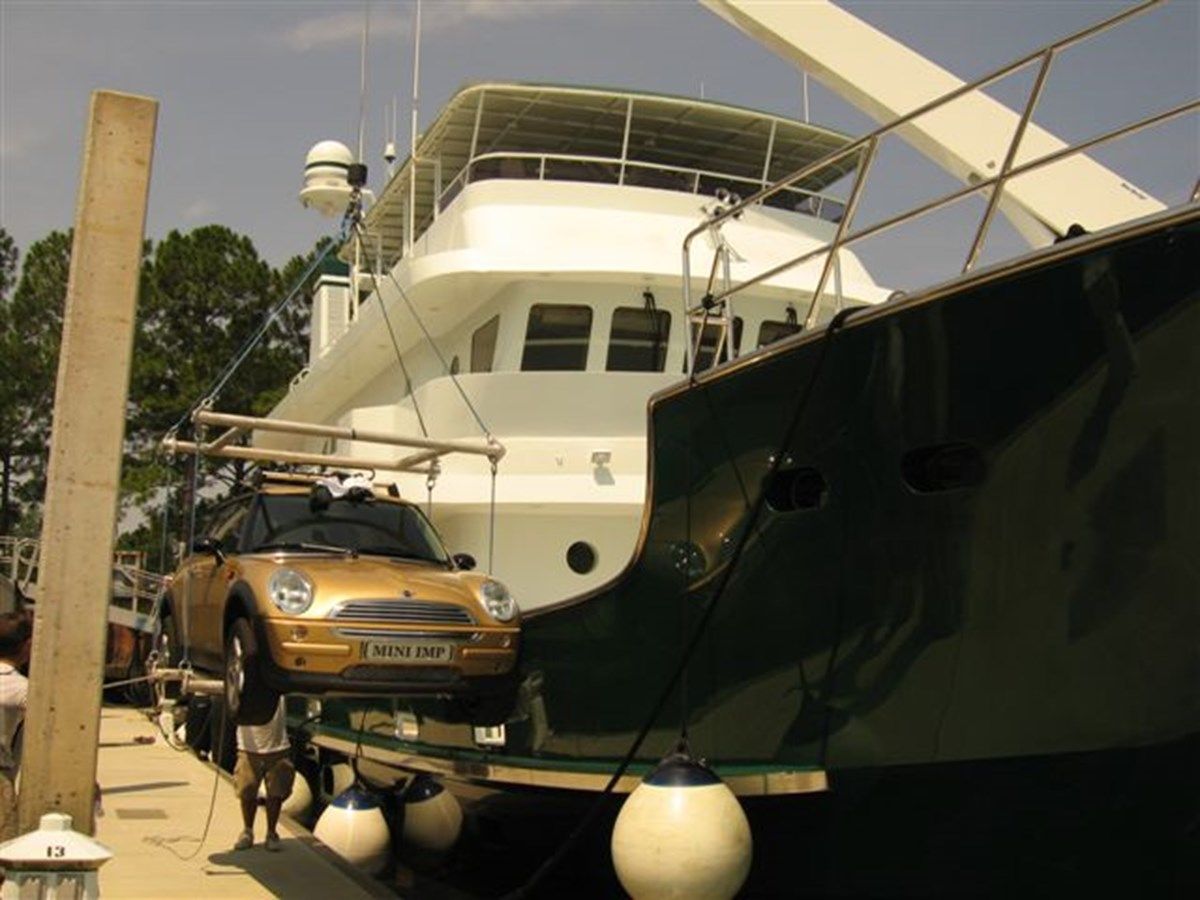
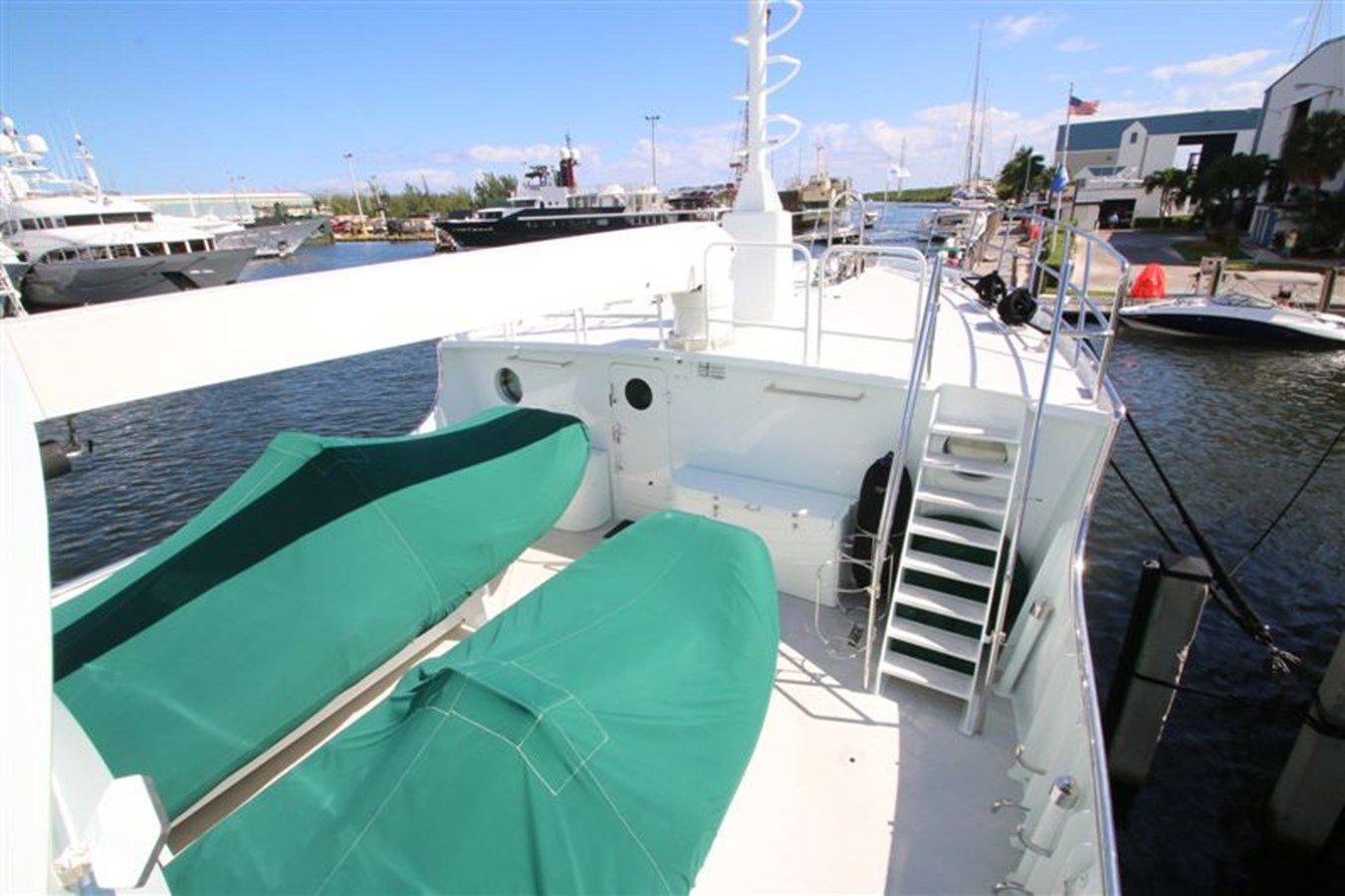
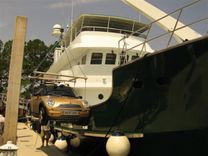
A forward mast with enclosed steps rises to a crow’s nest and can be lowered using the crane to facilitate hauling with a travel lift. The mast carries navigation lights and floodlights to illuminate both foredeck and boat deck, along with a dedicated anchor-handling light set into the bell support. A large 3000-pound Marquip crane with extended reach handles offloading the Mini Cooper on centerline, and stairs on the starboard side lead down to the expansive boat deck. Underfoot, the non-skid finish enhances safety and simplifies upkeep. A raised toe rail, capped with a polished stainless pipe, encircles the foredeck, while the stainless handrail sits inboard so the toe rail can serve as a rub rail without compromising the handhold.
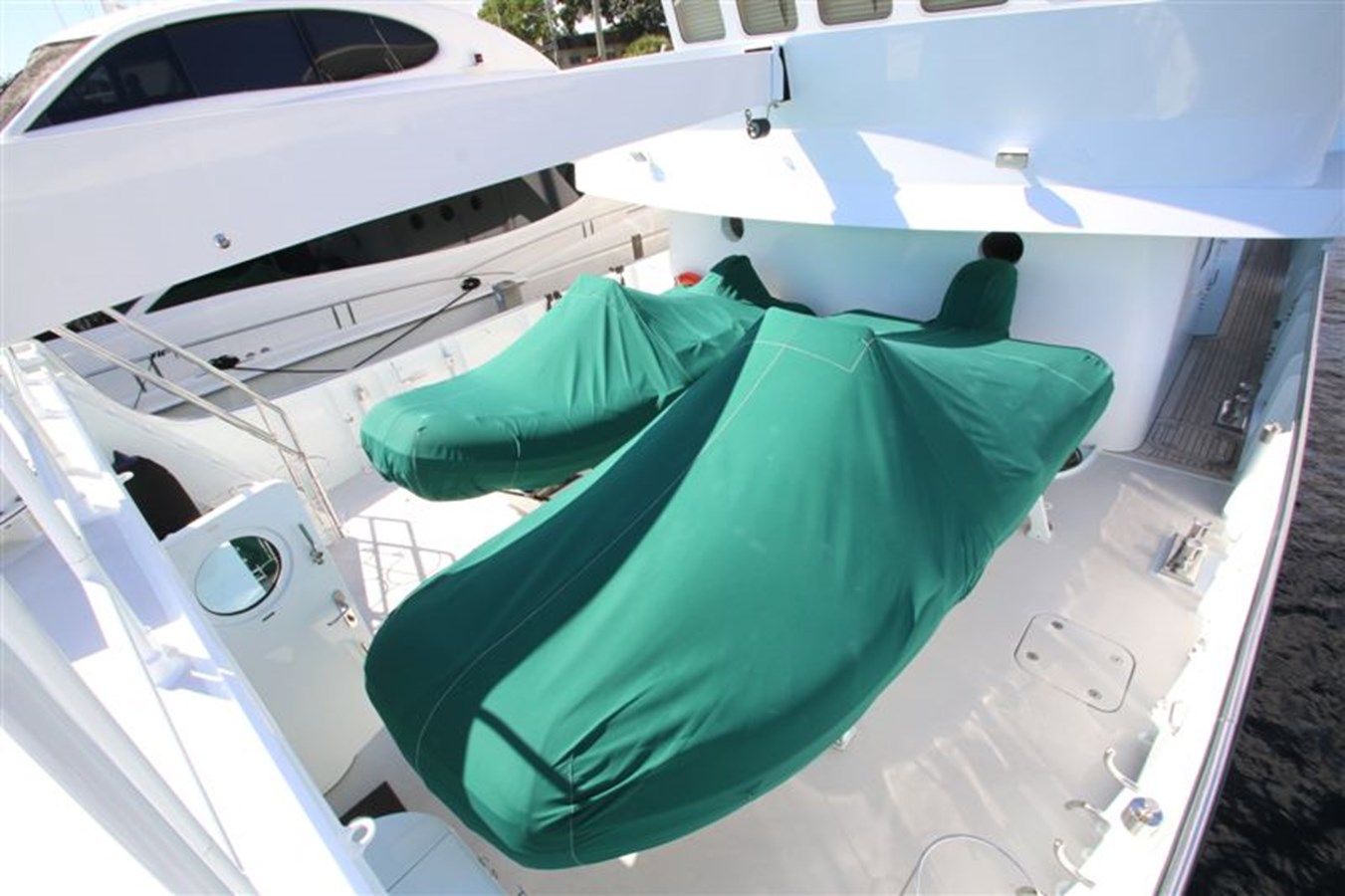
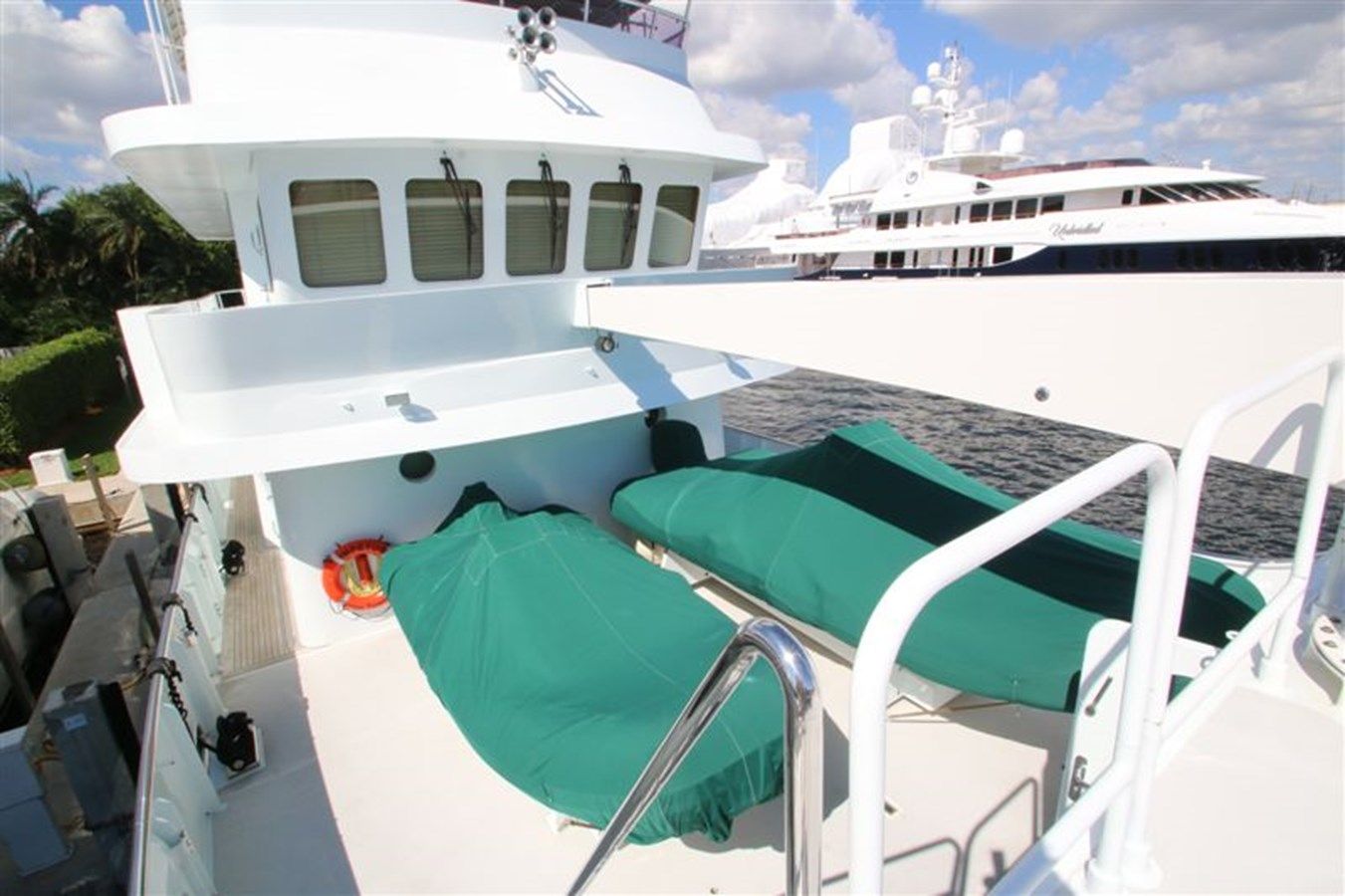
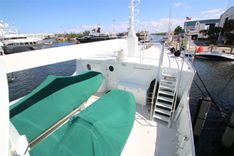
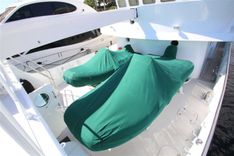
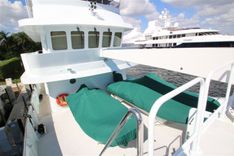
The boat deck measures 19'6" on centerline and 22'9" wide inside the bulwarks. Along the forward bulkhead, two removable aluminum deck boxes flank the centerline access to the crew quarters, and three large round portlights—one each for the captain’s cabin, crew cabin, and crew lounge—bring in natural light. Stainless fender racks sit to port and starboard, with gates and ladder connections for effortless dock or tender access during loading or unloading, and there are two stainless bars for hanging lines and gear. To port rests a 17'6" Flexboat tender powered by a 115 hp Yamaha outboard, while to starboard is the dedicated position for carrying the Mini Cooper, secured by a custom-designed lifting and fastening system; when the Mini is not aboard, a 15' 6" Flexboat with a 60 hp Yamaha occupies this space.
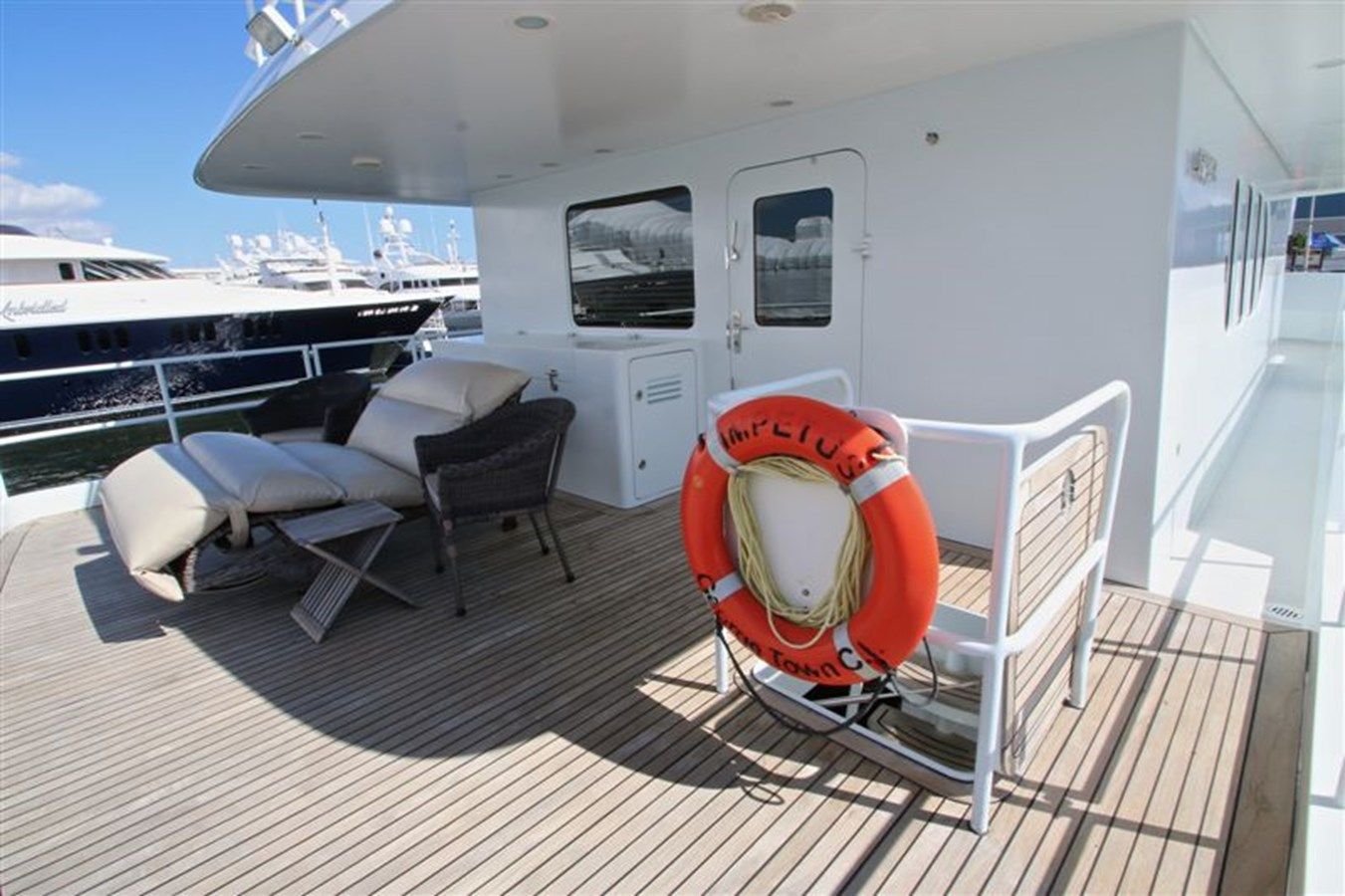
Hold points on the forward bulwarks and the face of the Portuguese bridge allow a full-size awning to be rigged over the boat deck; it may be run over the crane boom or “tented” with the crane to create a vast shaded area for servicing tenders and toys or for relaxed lounging and entertaining. To port aft, just ahead of the deckhouse, an “at sea” pet rest area features a stainless bed with stainless rim and a large oversize drain that leads directly overboard, with a freshwater outlet and a compressed air outlet conveniently positioned above. Four deck prisms, port and starboard of centerline aft, deliver soft daylight into the “hers” tub/shower and “his” shower below. The boat deck continues the non-skid finish for safety and easy upkeep, while the covered side decks are laid in teak over steel. Two oversized cleats, port and starboard, include an aft cleat set dead amidships to simplify docking maneuvers, and a centerline escape hatch provides direct egress from the lower guest cabin corridor.
Audio & visual equipment
Immerse yourself in a refined onboard entertainment experience, beginning with the sky lounge’s dedicated Bose audio system paired with a discreet pop-up TV. A Sony integrated system with four inputs services all other zones of the yacht, excluding the wheelhouse and sky lounge, ensuring seamless enjoyment throughout. In the wheelhouse, a DVD with radio, satellite radio, and iPad and iPhone connectivity delivers versatile control and content, with the ability to play movies on the VEI display. Televisions are installed in the main saloon, sky lounge, guest cabins, and crew quarters, and each crew bunk is thoughtfully equipped with its own TV for personalized viewing.
Electronics wheelhouse equipment
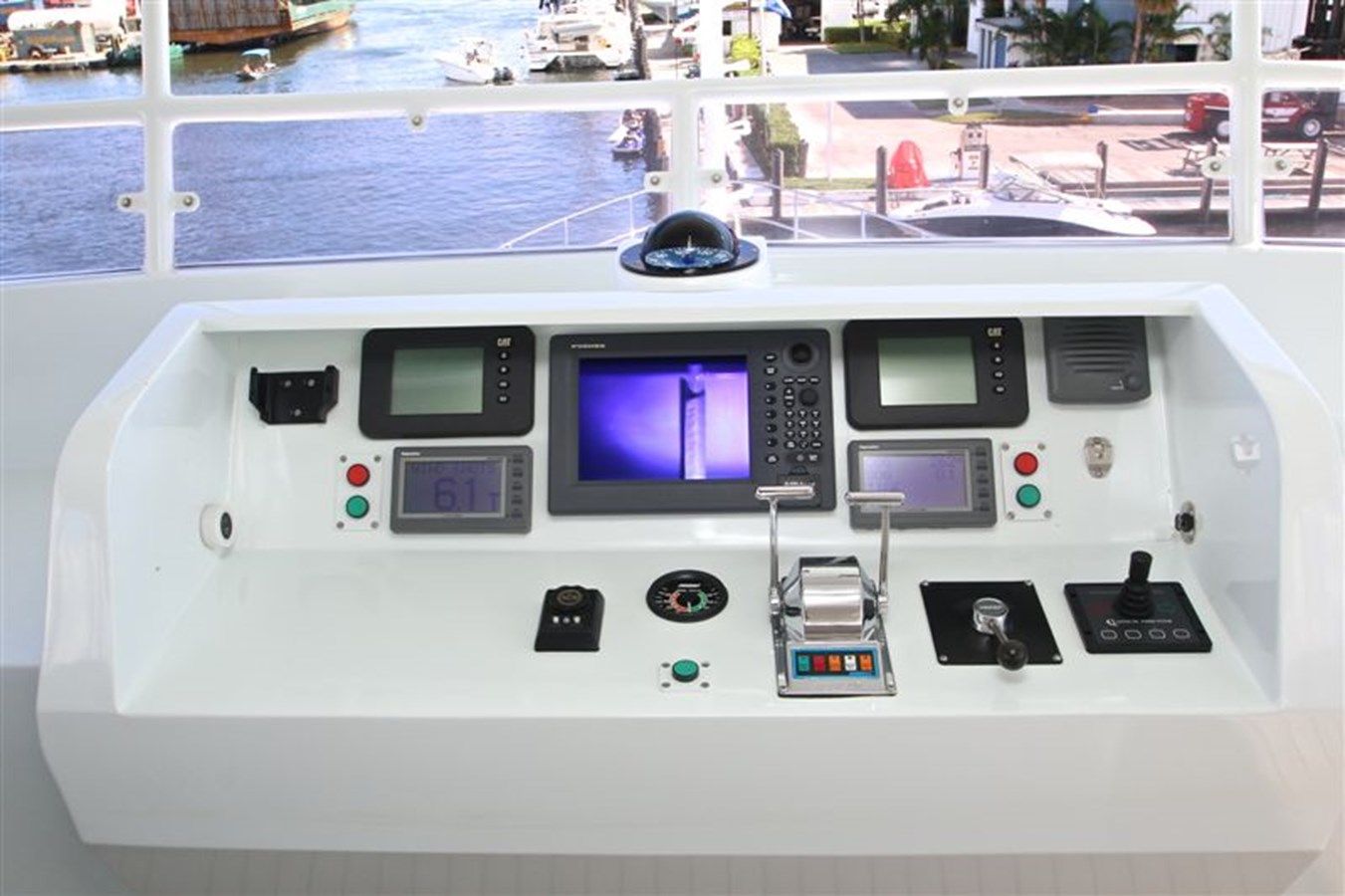
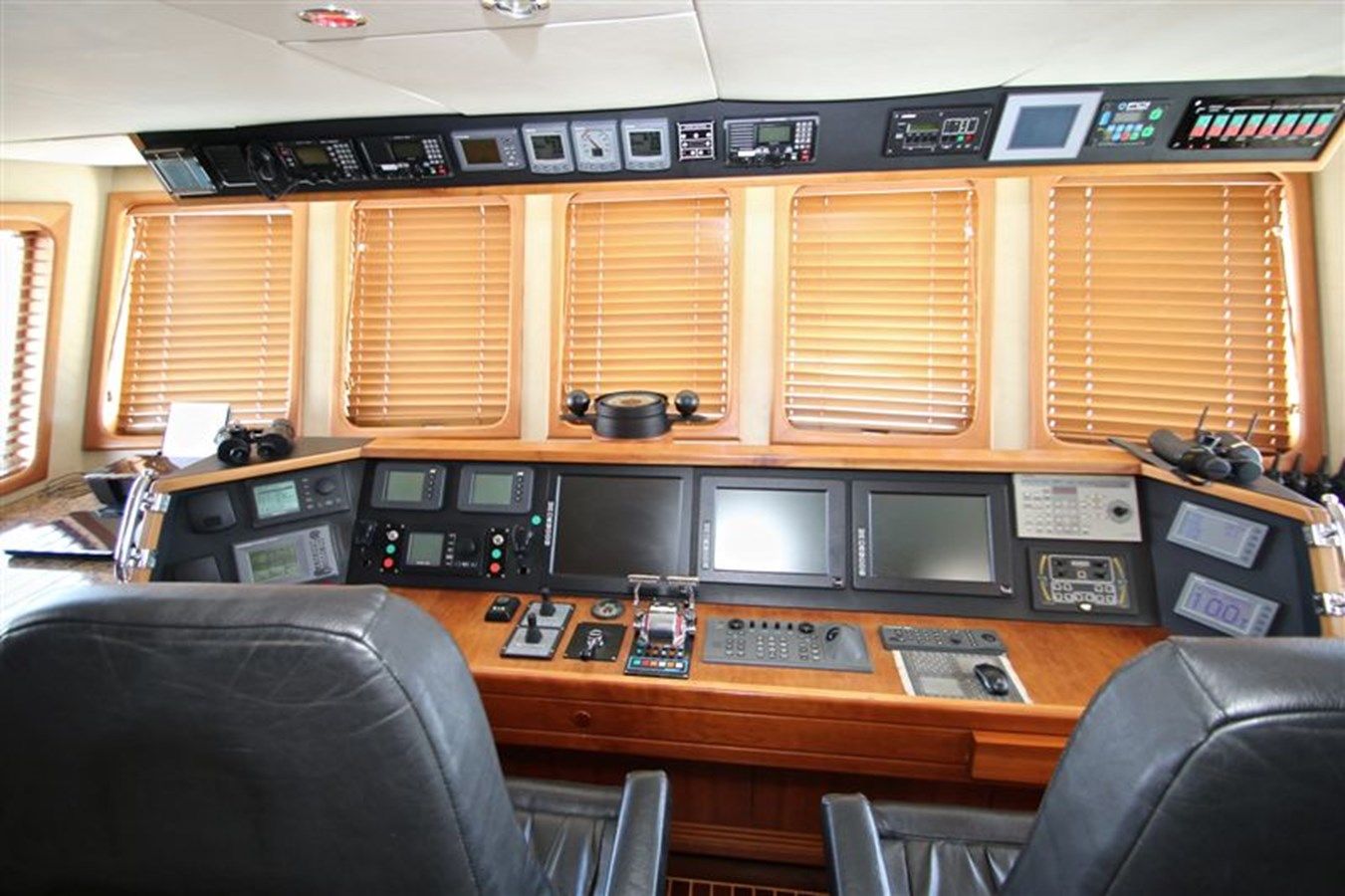
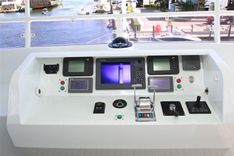
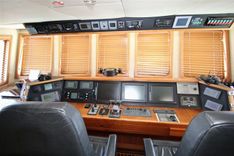
The wheelhouse is comprehensively outfitted with auto drop anchor controls with chain counter, a Simrad A1770 AIS, and a Furuno GP9 GPS, while a Simrad AP50 autopilot is fully integrated with the bow and stern thrusters for precise low-speed handling. Quantum thruster controls deliver confident maneuvering with eighty-five horsepower at the bow and thirty-five horsepower at the stern. Kobelt main engine controls include a remote walk‑around control covering engine, rudder, and both thrusters, with a long cord reaching either wing station, the side decks, and the Portuguese bridge, plus additional control locations on the bow and stern deck; there are two control heads. Steering finesse is further enhanced by a non‑follow‑up joystick steering control and a commercial balanced compass.
A sophisticated display suite centers on three VEI screens with full information selectable on all displays, driven by two VEI marine computers with mirrored hard drives. Long‑range awareness comes from a Furuno 2127 one‑hundred‑twenty‑mile radar with plotter overlay capability and a Furono 1953 seventy‑two‑mile radar, also overlay capable. Visual coverage is excellent with six color cameras, all with zoom, three featuring pan and tilt. Raymarine 3T 60 multifunction displays extend beyond the helm to the Owner’s cabin, Captain’s cabin, aft deck, and the lazarette steering zone. Quantum Marine zero speed Maglift stabilizer controls ensure comfort at anchor and underway, while comprehensive deck light controls, an FCI watermaker control panel, an Atlas power conversion control panel, and a Zantrec 4000 inverter control panel providing seventy-two hours of operation underscore the vessel’s self‑sufficiency. Practical touches include wiper controls, an ACR spotlight, a rudder indicator, two Cat engine monitors, and a horn control with automatic fog signal, supported by a full bilge, navigation lights, and alarm system per class.
Communications and navigation are robust with an Icom MB02 single sideband, an Icom M602 VHF, and an Icom M02 VHF with DSC, with all radios fitted with remote microphones mounted on the lower dash. Global connectivity is delivered by a Furuno Sat Com SC50, Mini C with SSAS, and an Iridium sat phone linked into the ship’s phone system. The navigation backbone comprises two Nobeltec systems with chip and overlay options, and the SSAS can automatically send emails of the ship’s position to the DPA at selectable intervals.
At the flybridge helm station, the suite continues with two Cat monitors, two Raymarine repeaters, Furuno Navnet, a joystick, spotlight control, horn, Kobelt engine control, and main engine start and stop.
Accommodations and deck area
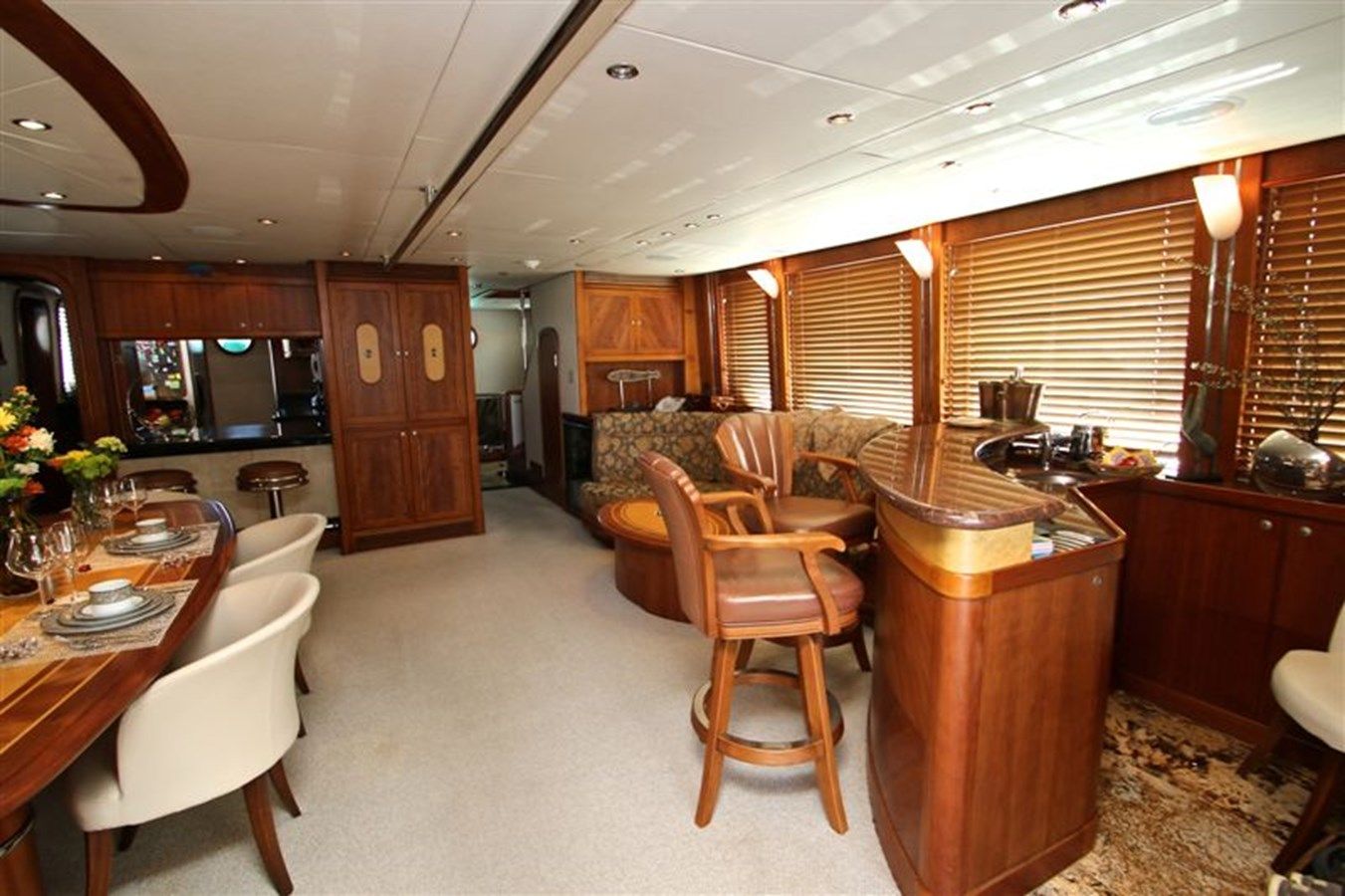
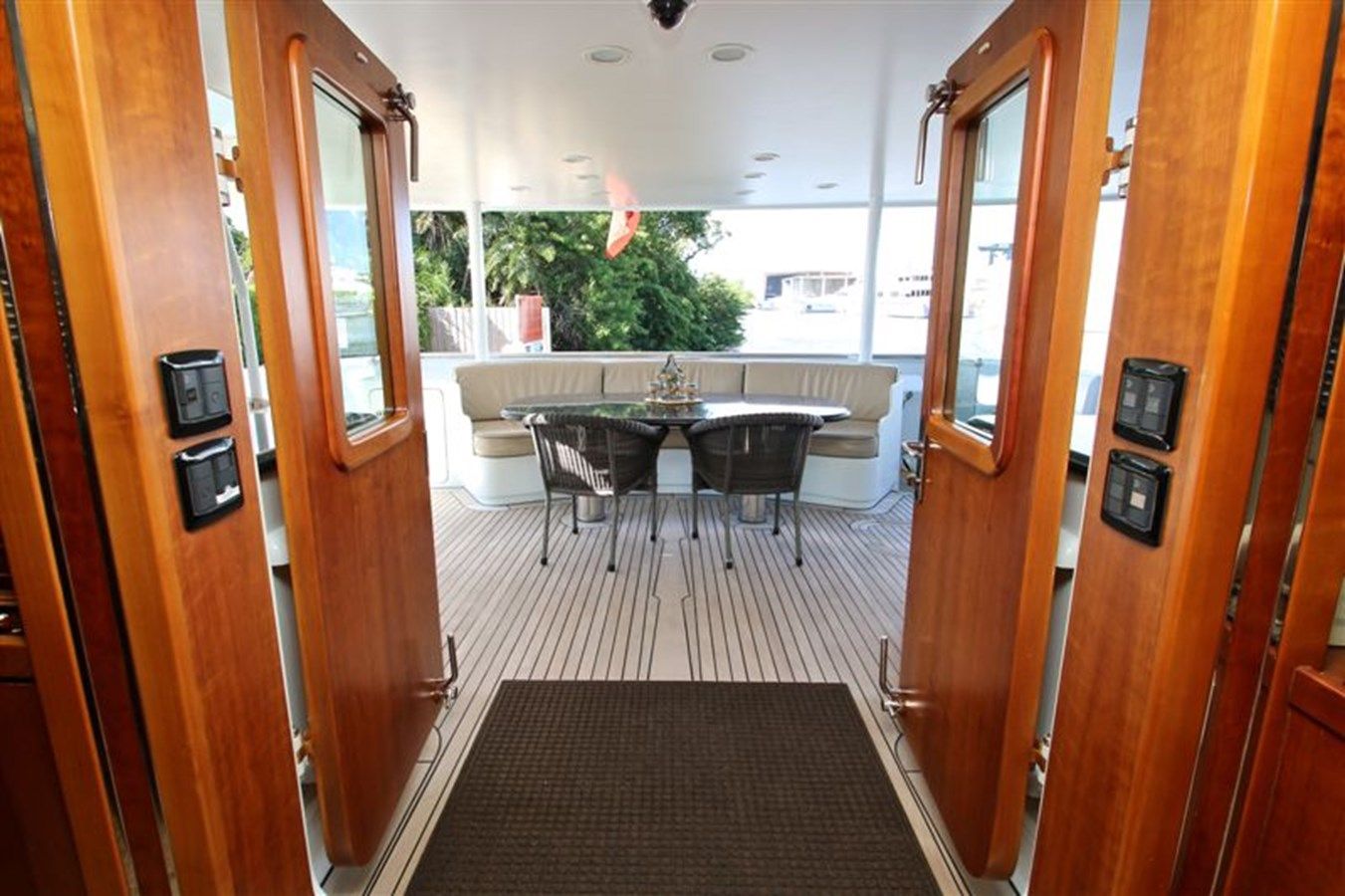
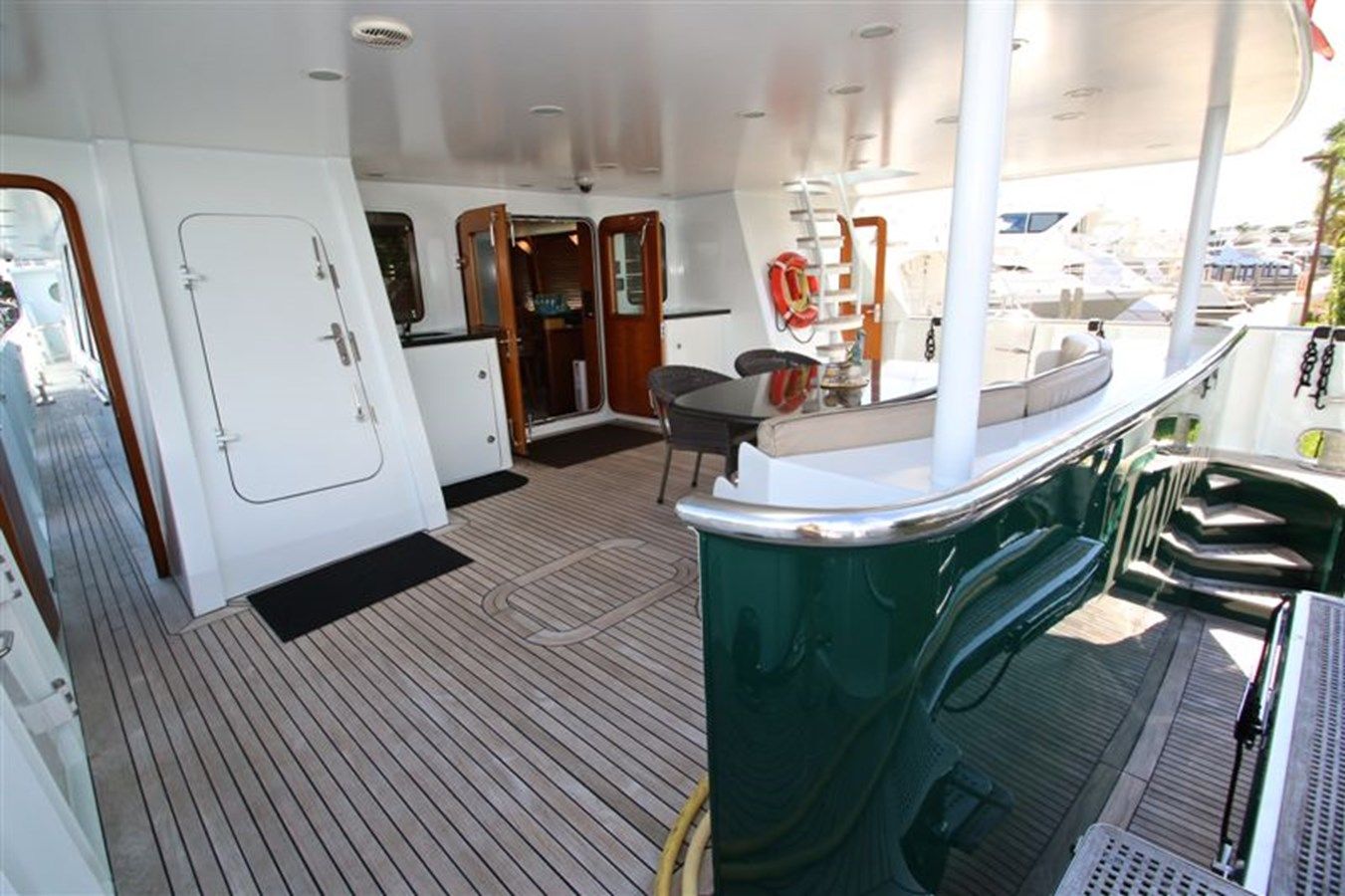
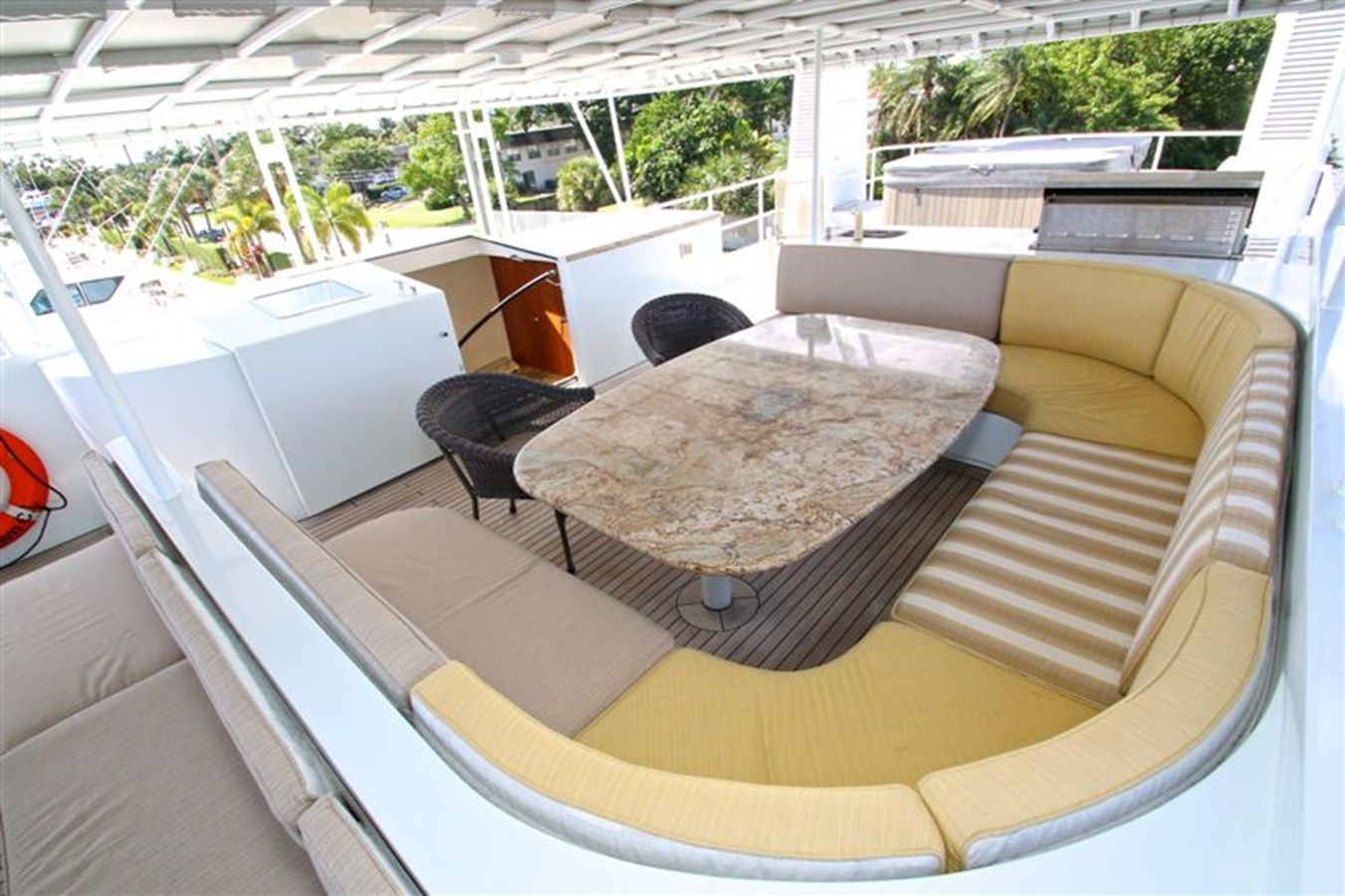
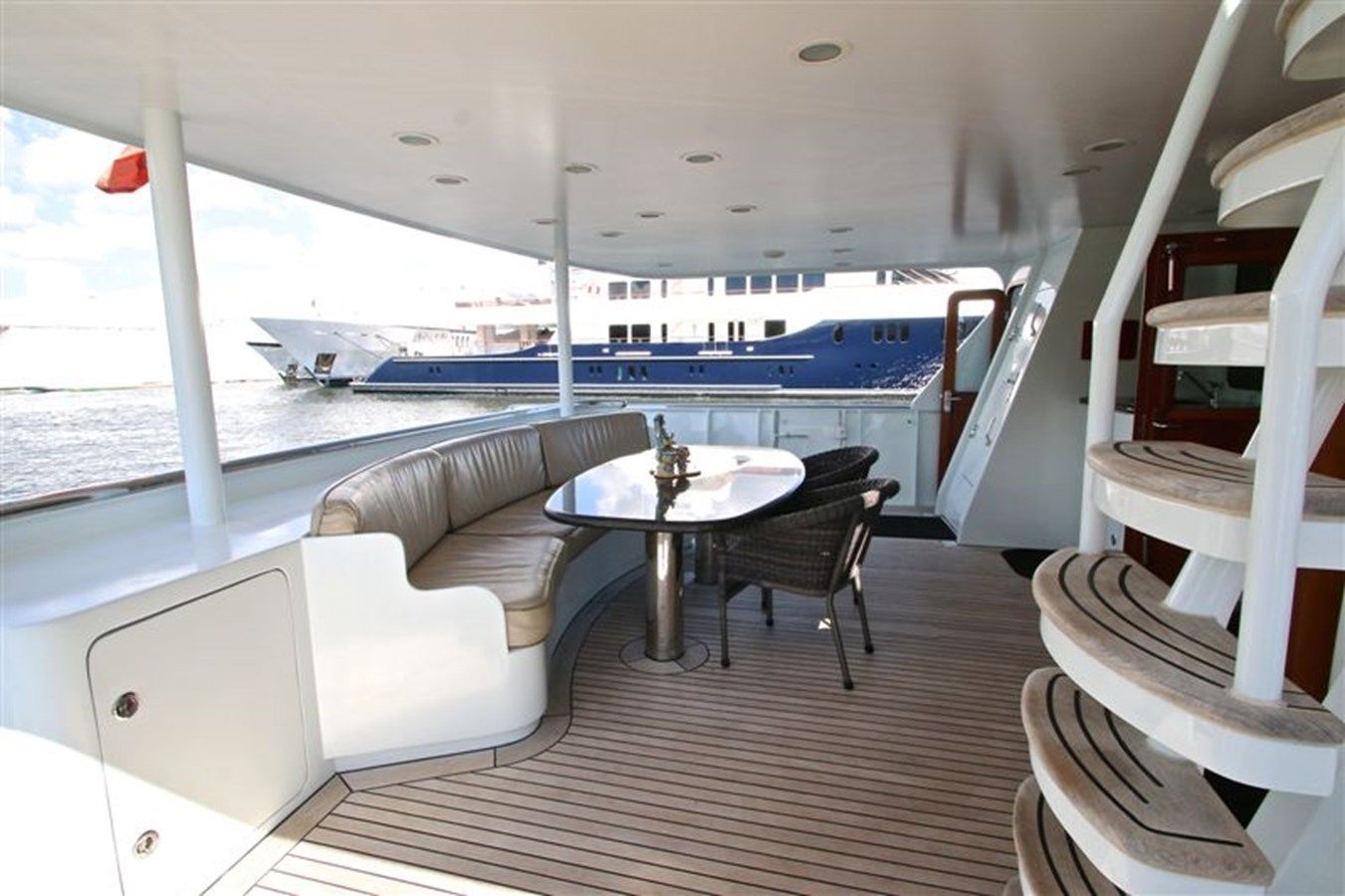
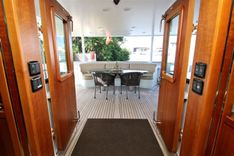
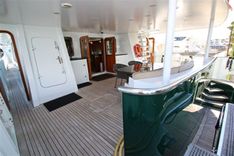
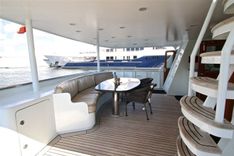
Board via any of the six boarding gates on the main deck, the stern passerelle, or the swim deck, then step from the comfortable aft deck into the main salon. For higher docks, there are also two boarding gates at the aft end of the bridge deck. The aft deck itself invites lingering with a large settee and a granite dining table that easily accommodates eight people. To starboard forward a ladder rises to the sky lounge deck; just to port of it a cabinet houses a refrigerator; to starboard beside the salon entry doors a cabinet incorporates a sink; and on the far port side sits the main engine room entry door.
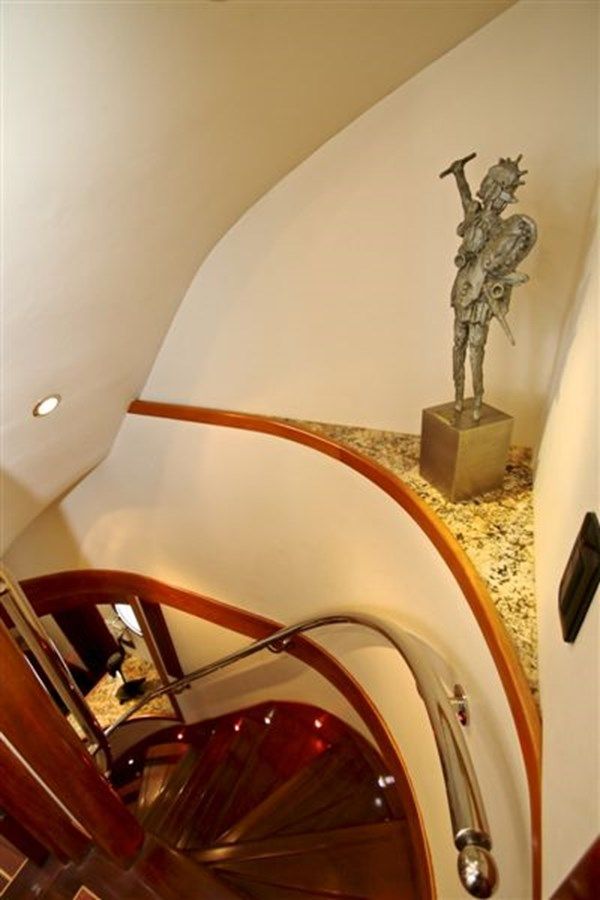
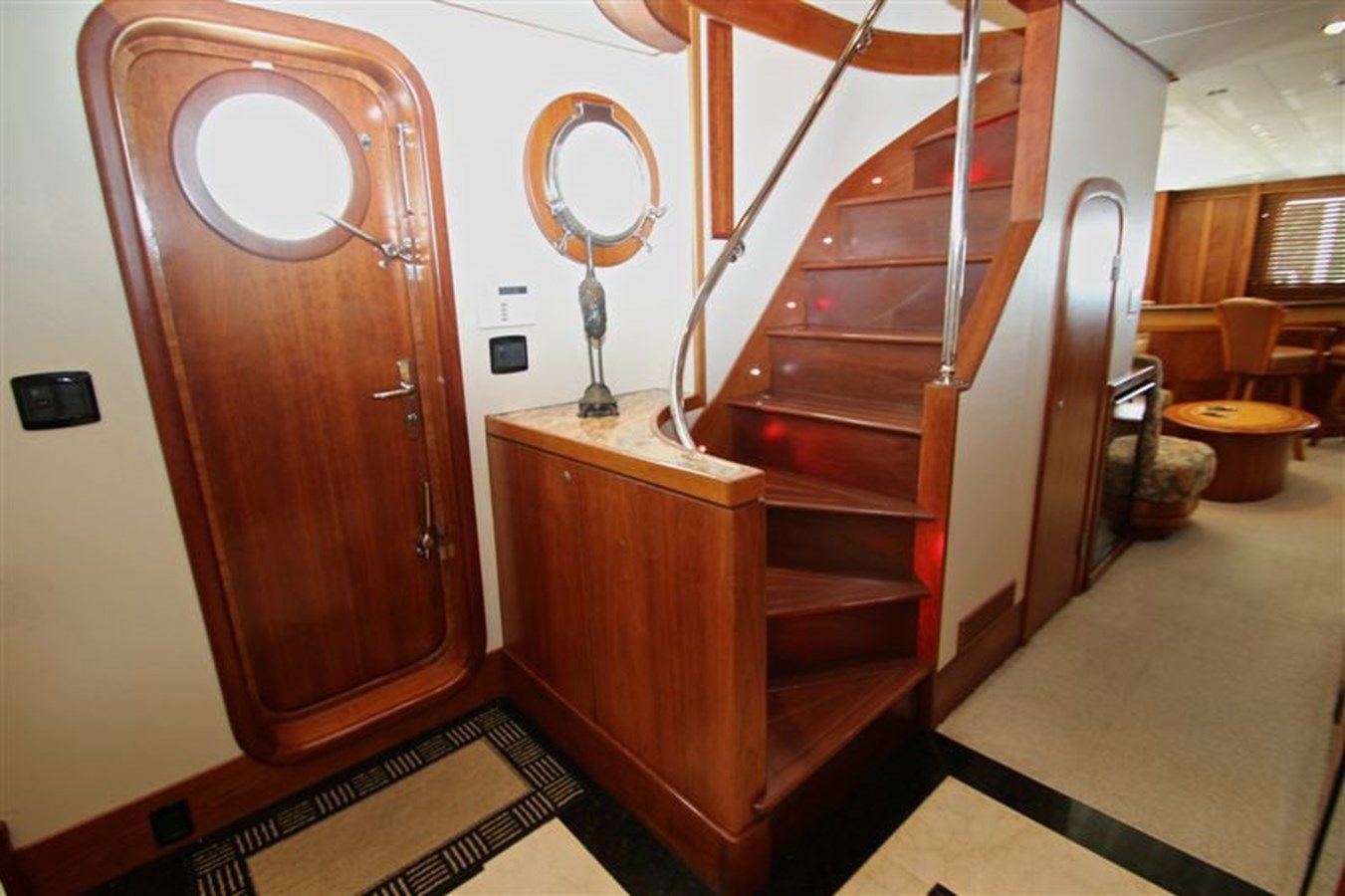
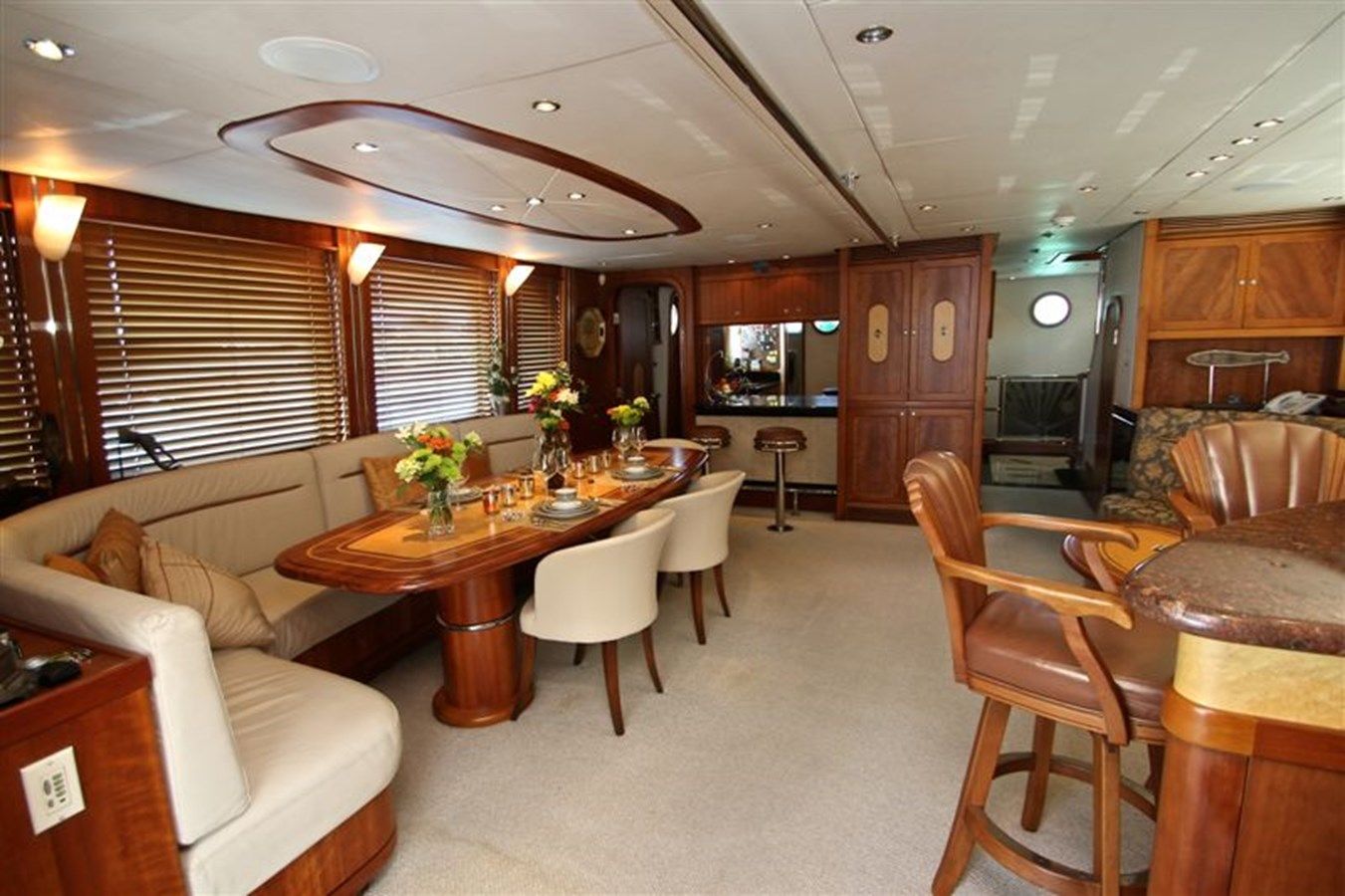
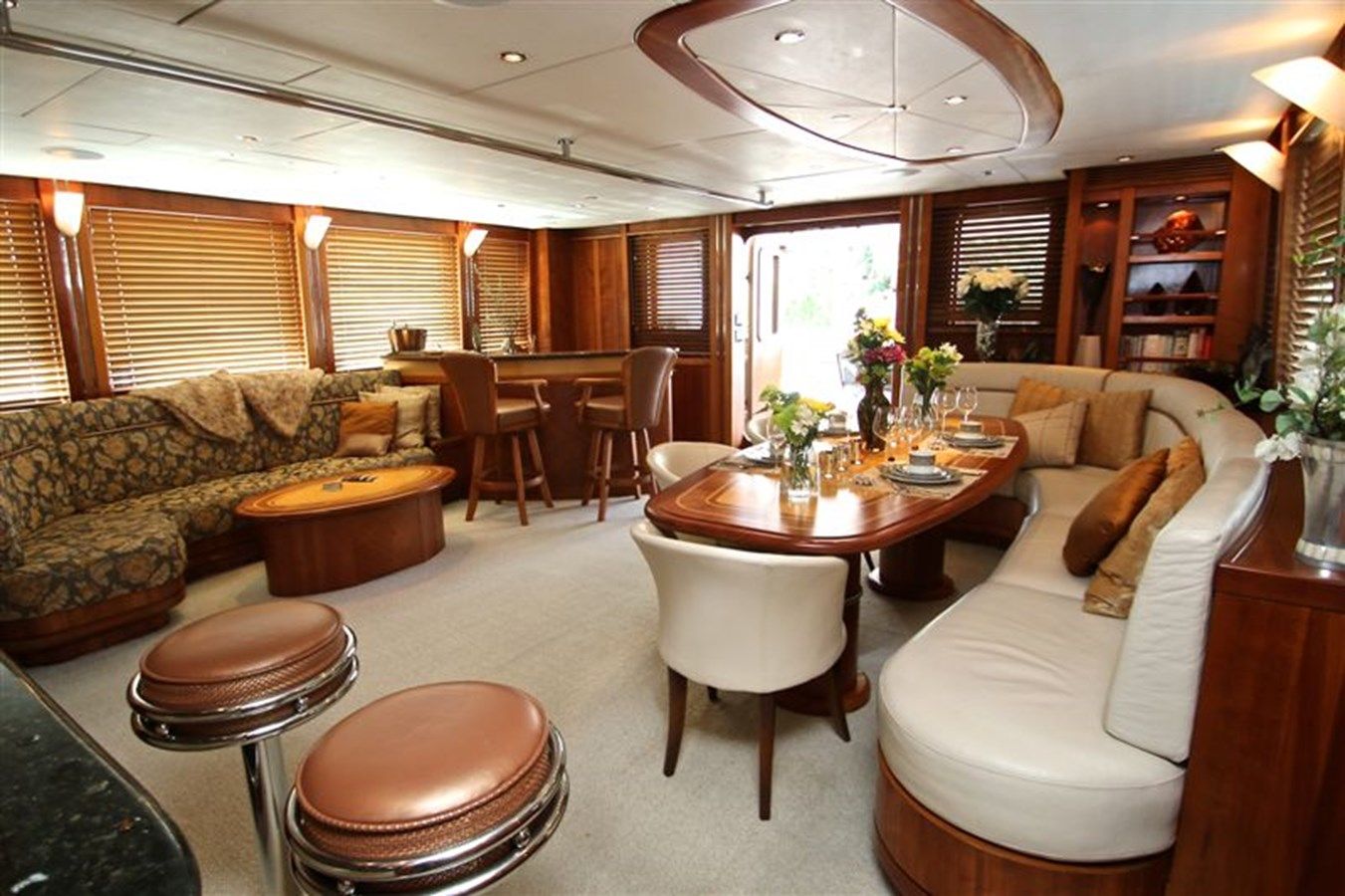
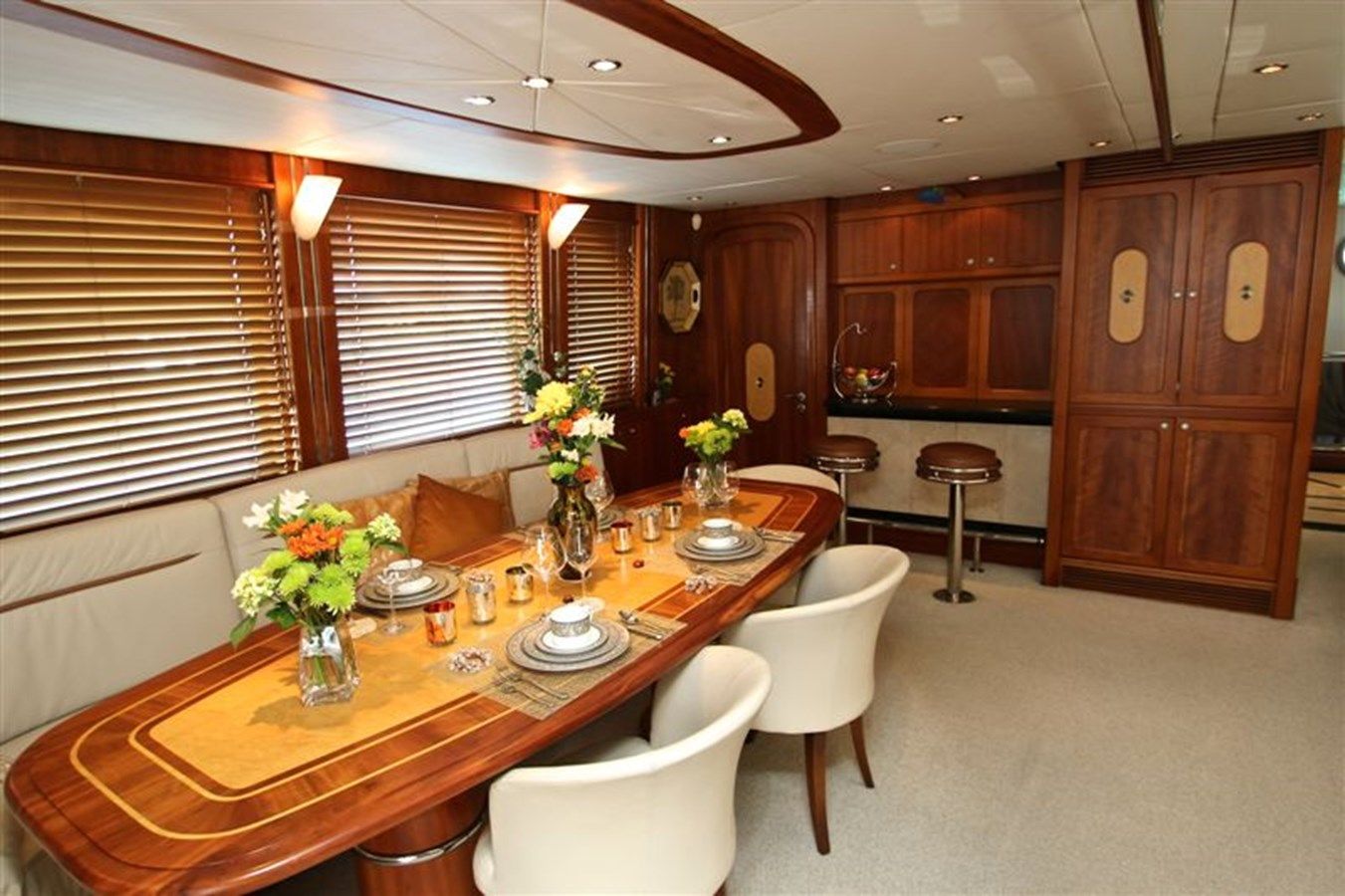
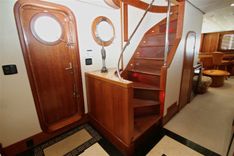
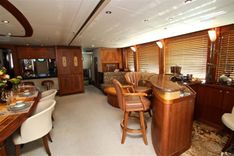
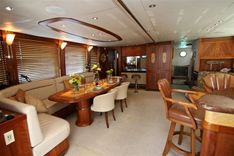
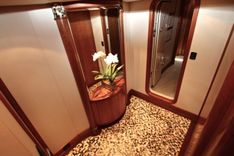
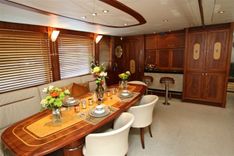
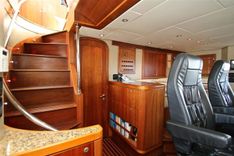
Enter the main salon through twin wood-clad watertight doors and the elegance of Impetus unfolds. Alabaster sconces glow against satin-finish natural American cherry, enriched by burled wood and horn inlays to create an elegant yet comfortable ambiance. A tiled granite threshold echoes the interior finishes while providing practical footing for wet feet and doorway rugs, and all outside doors are backed by non-absorbent deck areas on the inside for added protection.
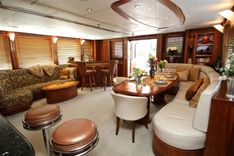
To starboard a full-service wet bar is finished with a select granite top and granite floor, and concealed behind matching wood panels is the sound- and fume-proof underway entrance door to the engine room, ensuring safe access in any sea conditions or in the event of an exterior threat. Forward of the bar a comfortable settee faces a coffee table that cleverly conceals an extra seat, while centerline ahead lies the entertainment area and storage lockers. To port, a large dining table showcases elements of all the distinctive woods found aboard and seats eight in comfort, with extensive storage beneath the settee and within surrounding bookshelves and lockers. Forward of the dining area, the galley presents a day bar that can be opened for sociable service or closed for privacy.
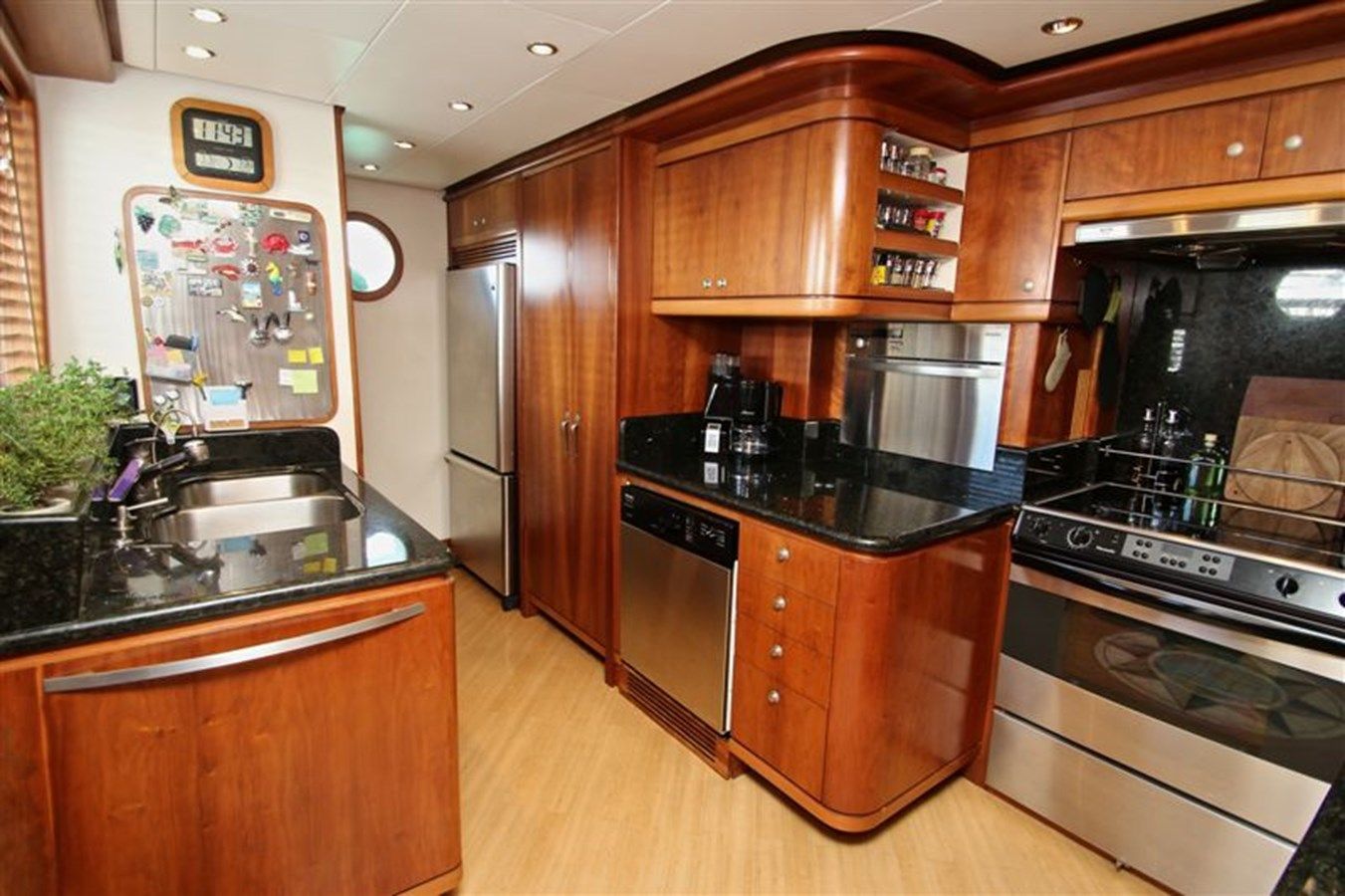
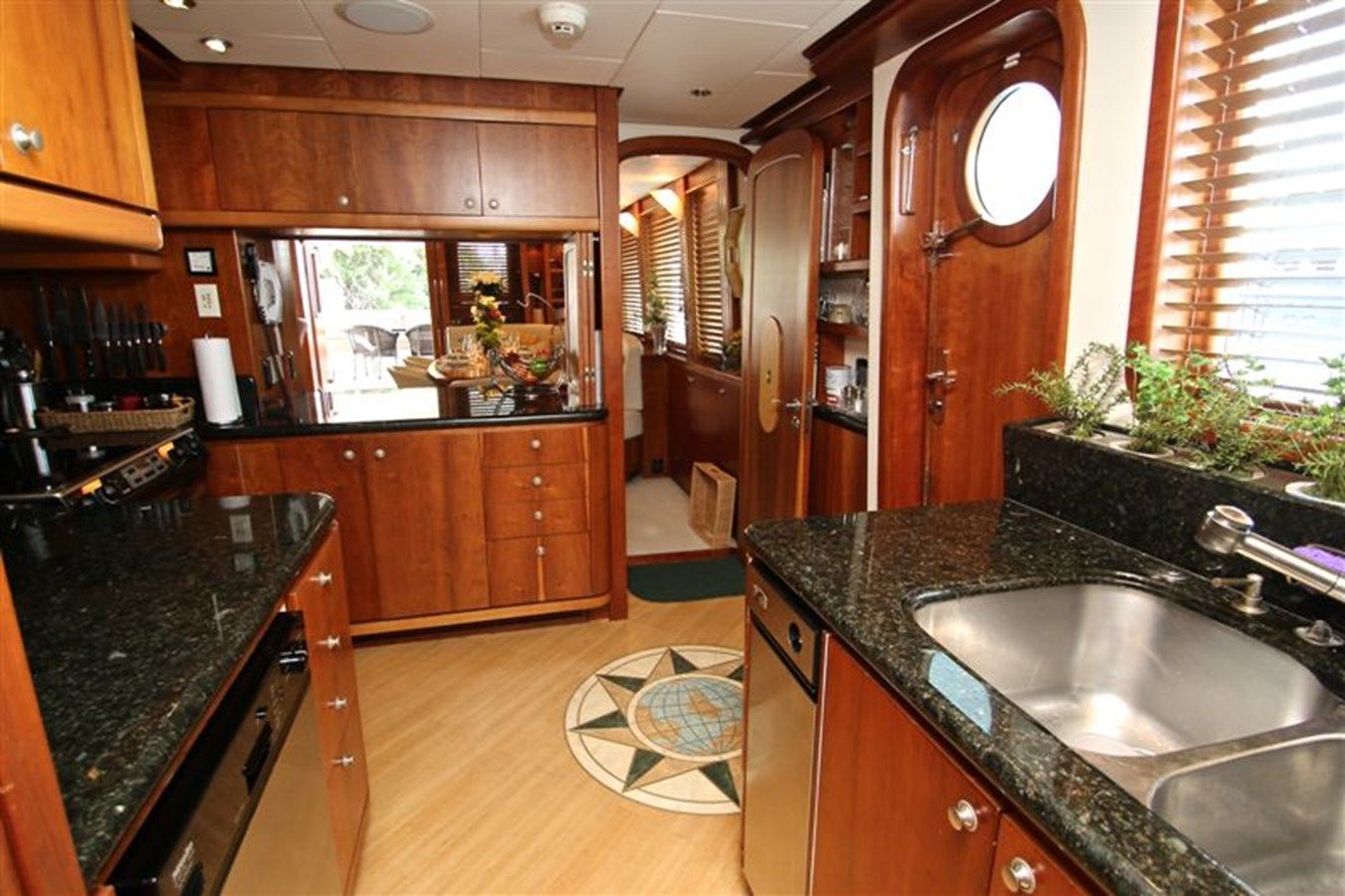
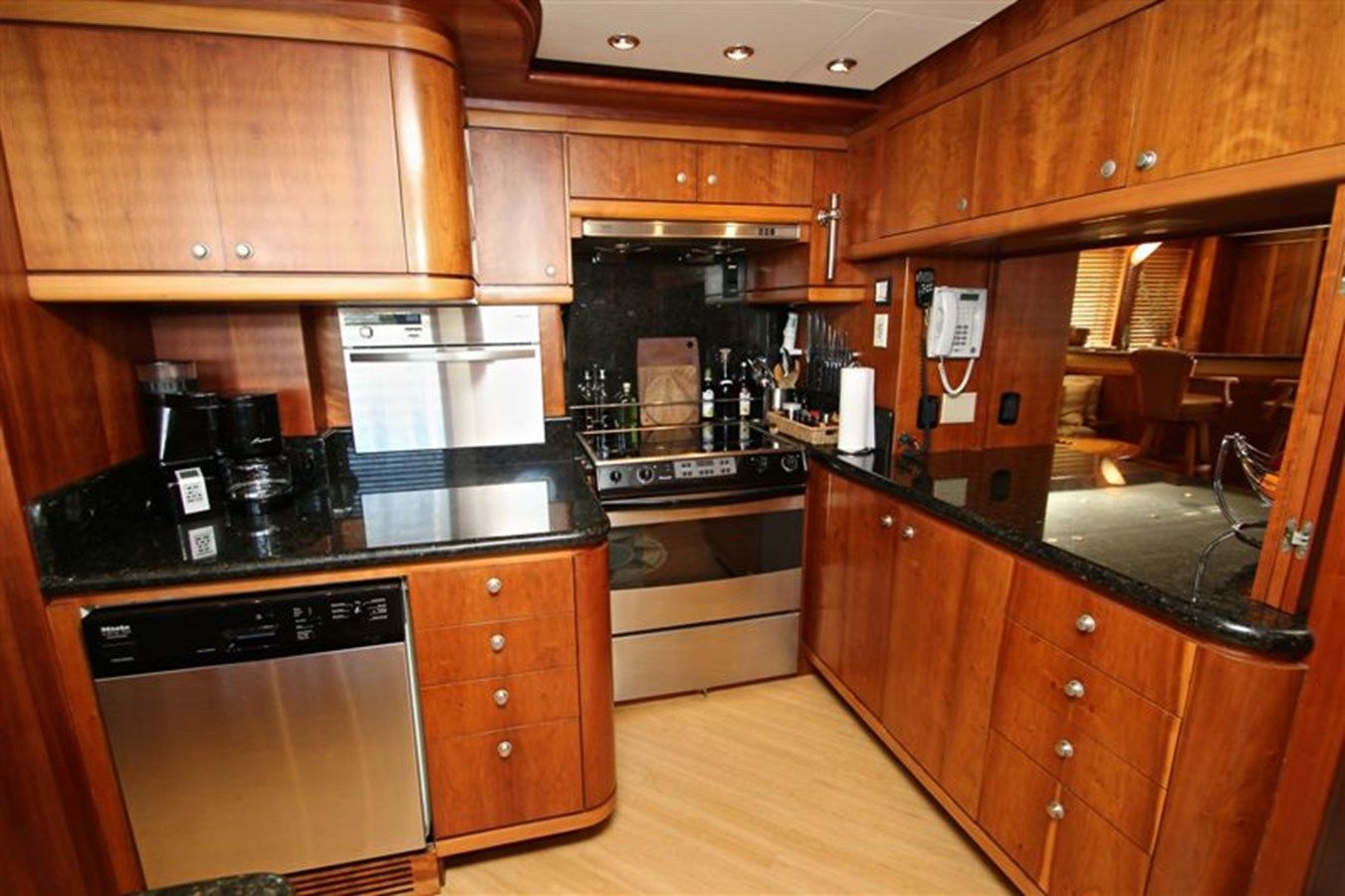
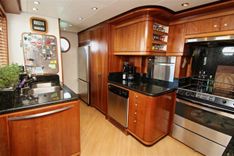
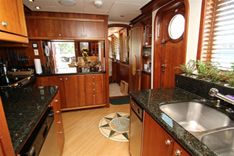
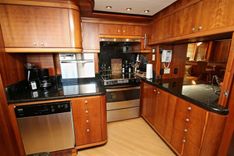
Conceived by a gourmet chef to her exacting specifications, the galley features a fresh herb growing area with drain to the exterior, deep double sinks with disposal, two refrigerator freezers, a steam oven, high volatility extraction fans, a high temp cook top, a pullout pantry, and extensive additional equipment and storage.
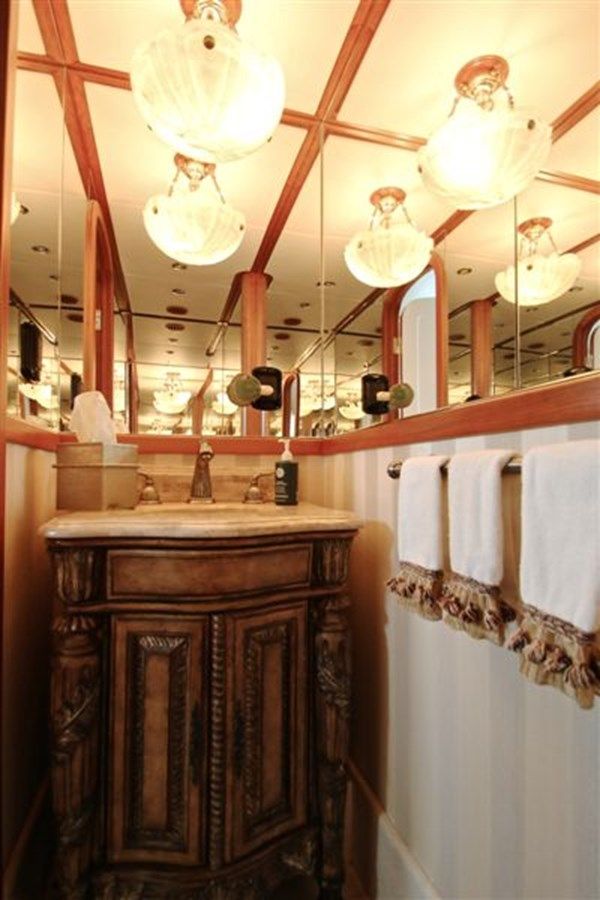
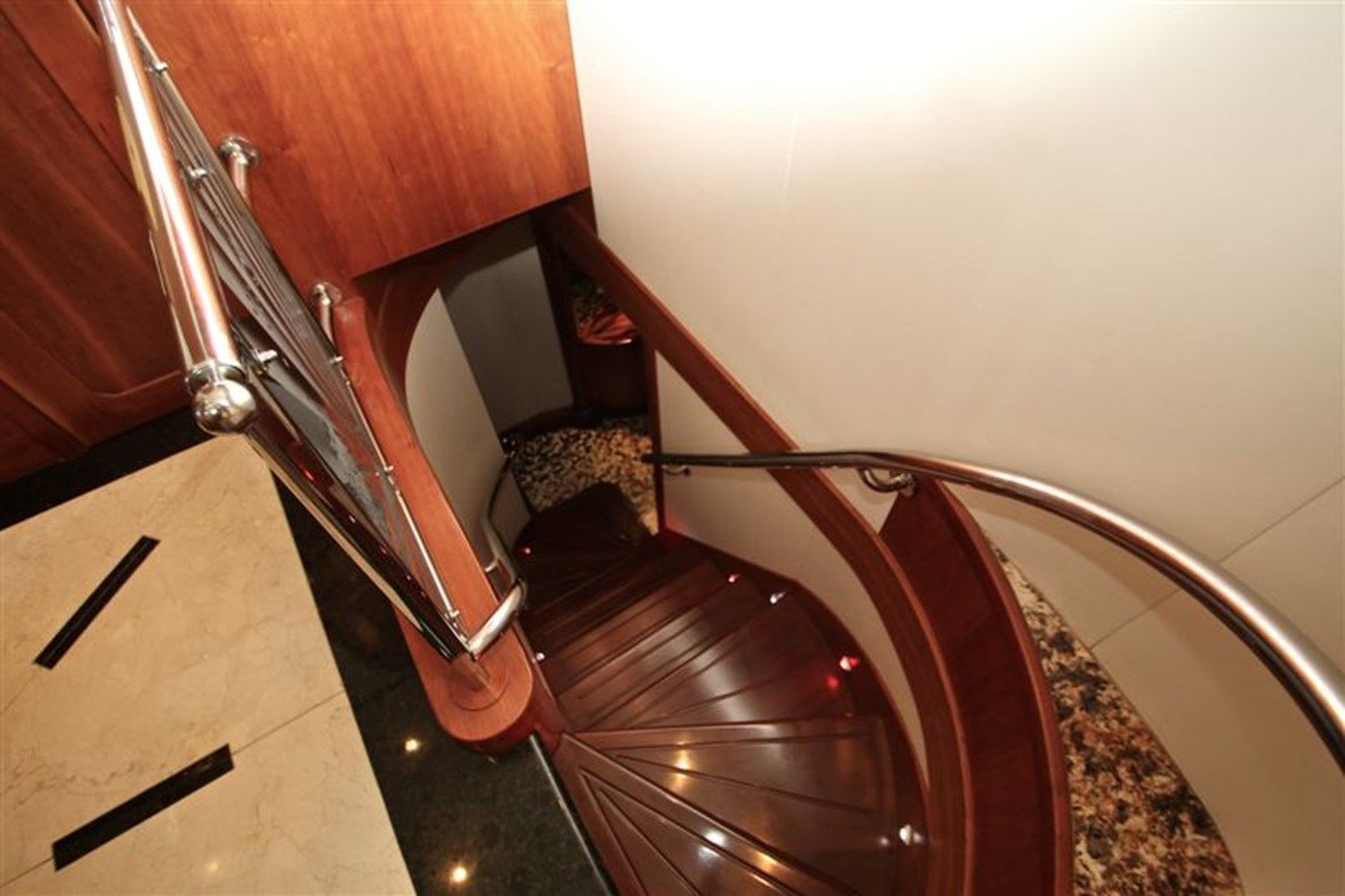
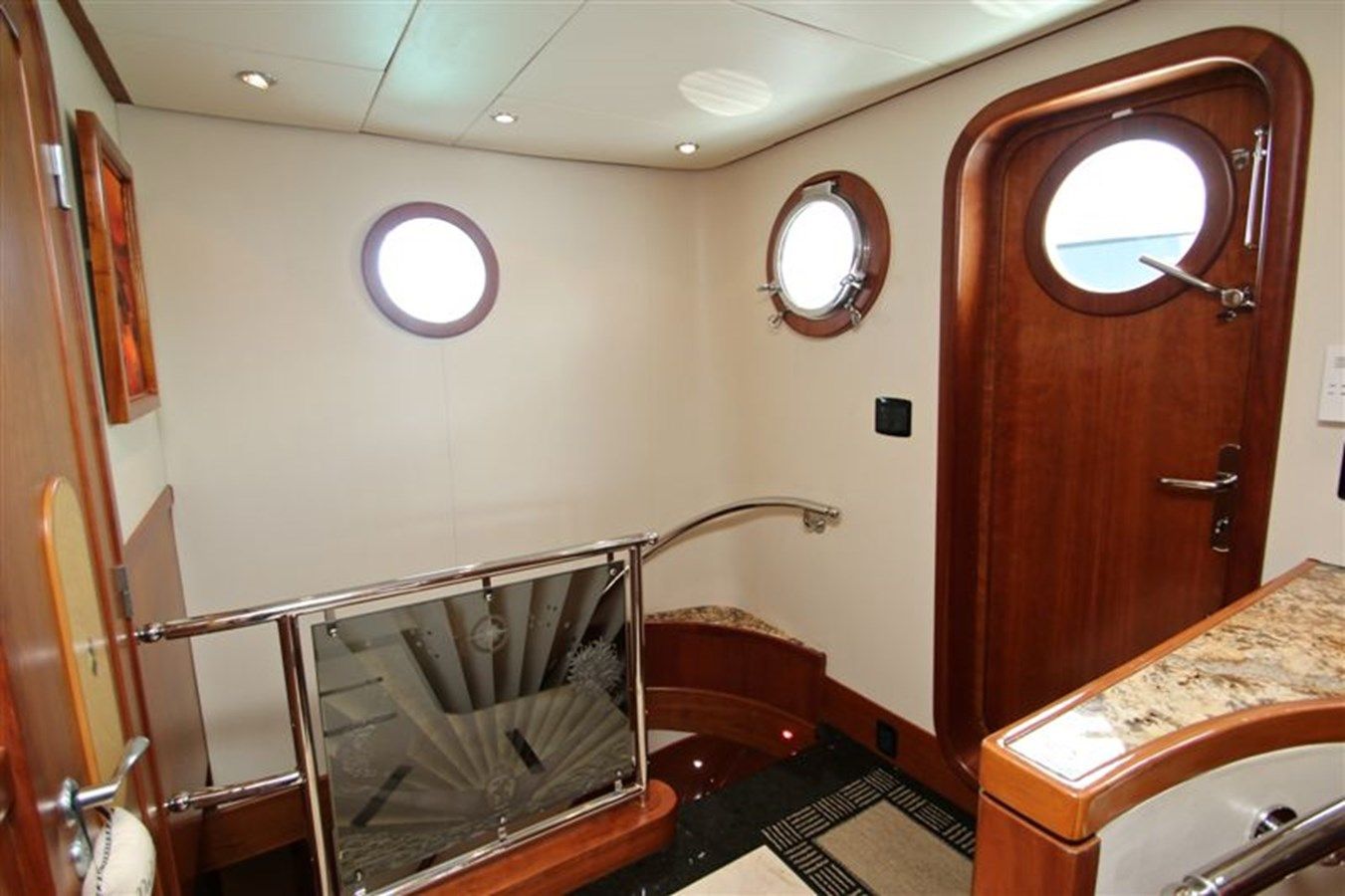
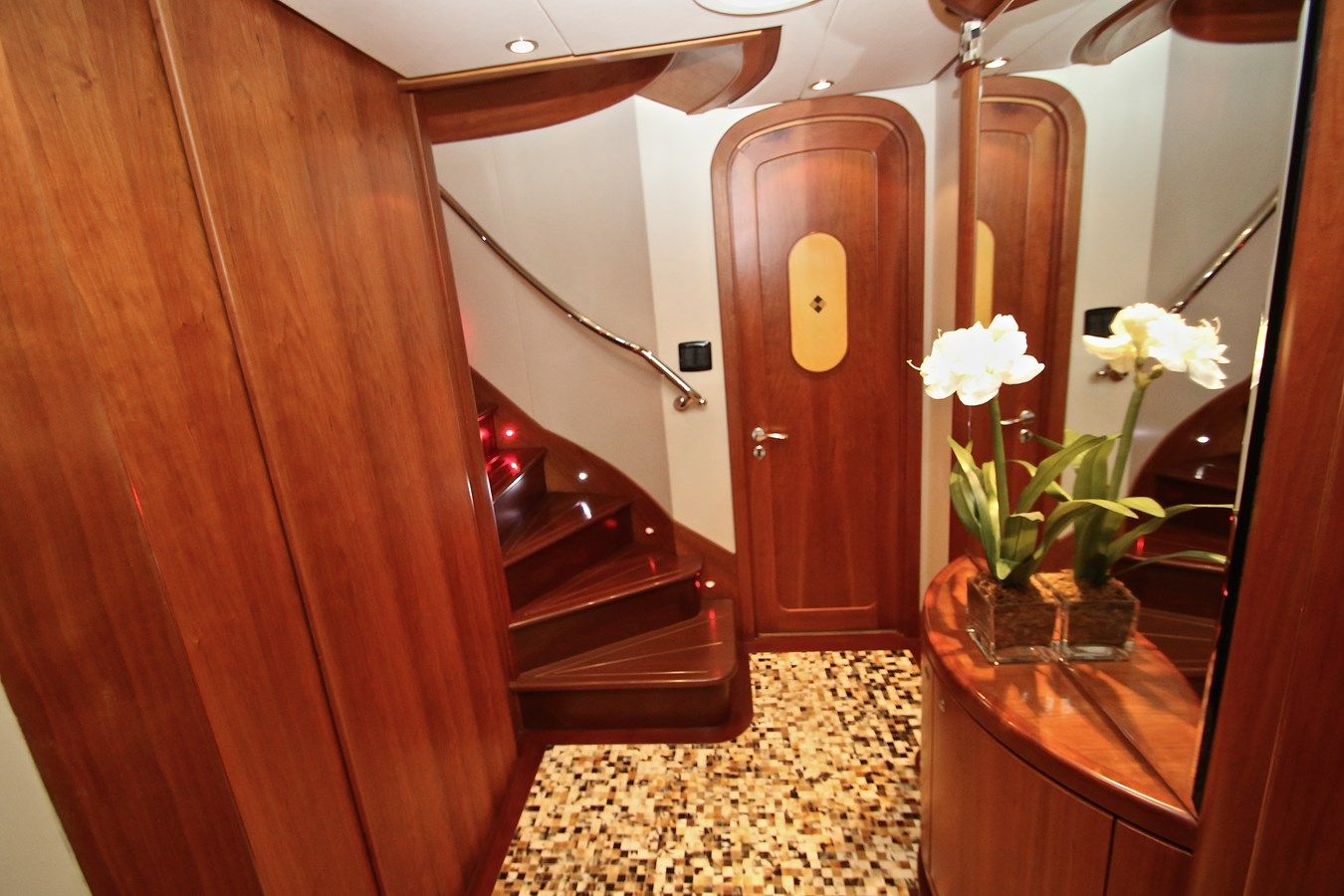
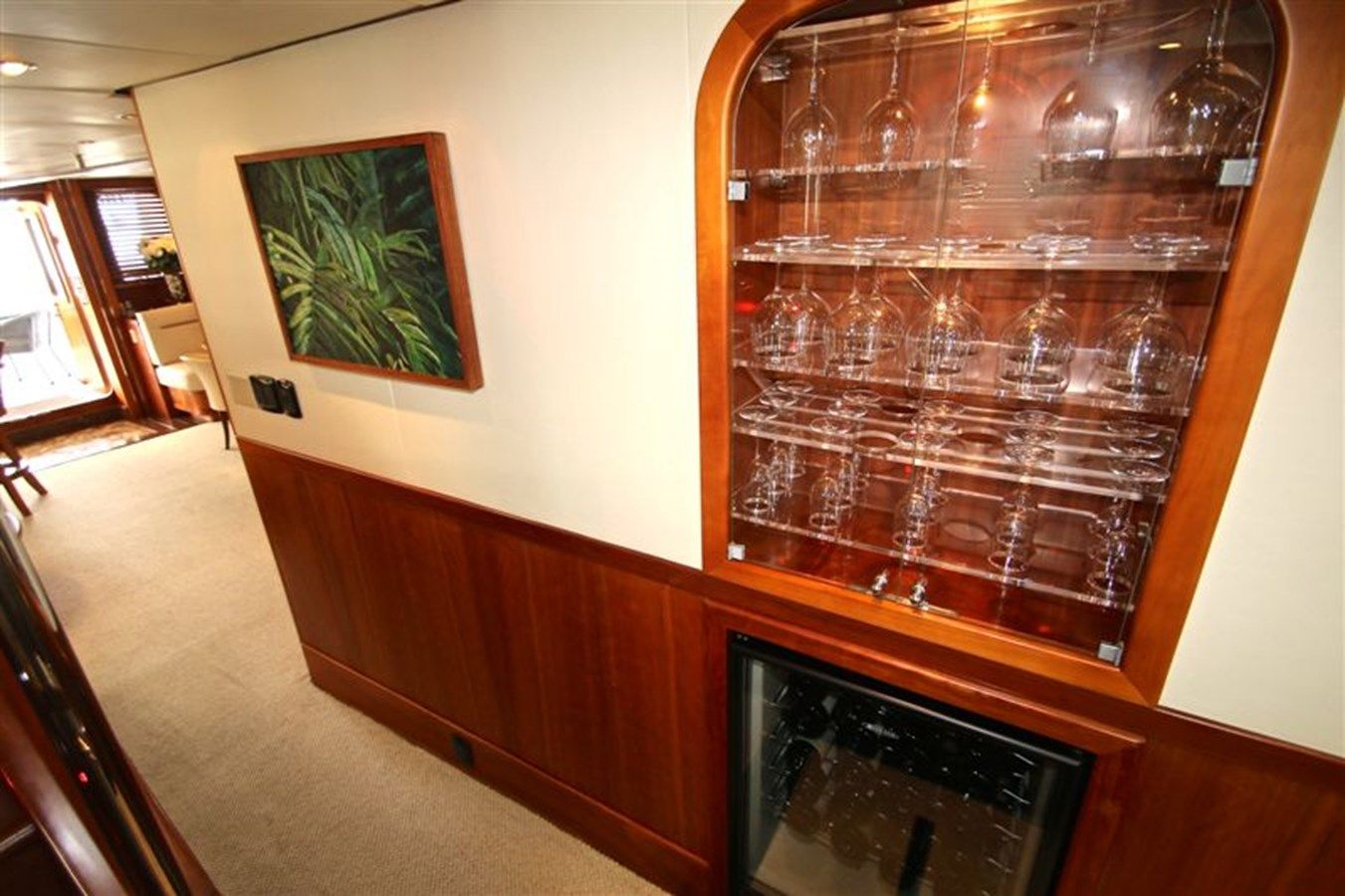
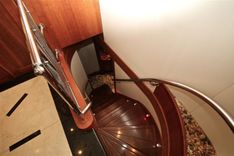
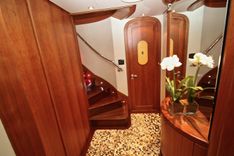
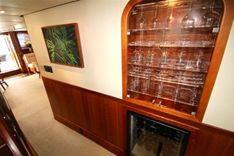
Proceeding forward from the salon, the main deck foyer includes one of several wine fridges and custom glass storage, and elsewhere aboard there is a temperature-controlled five hundred bottle case storage area. Also in the foyer are the day head, direct deck access, and stairs leading up to the bridge deck and down to the accommodations deck.
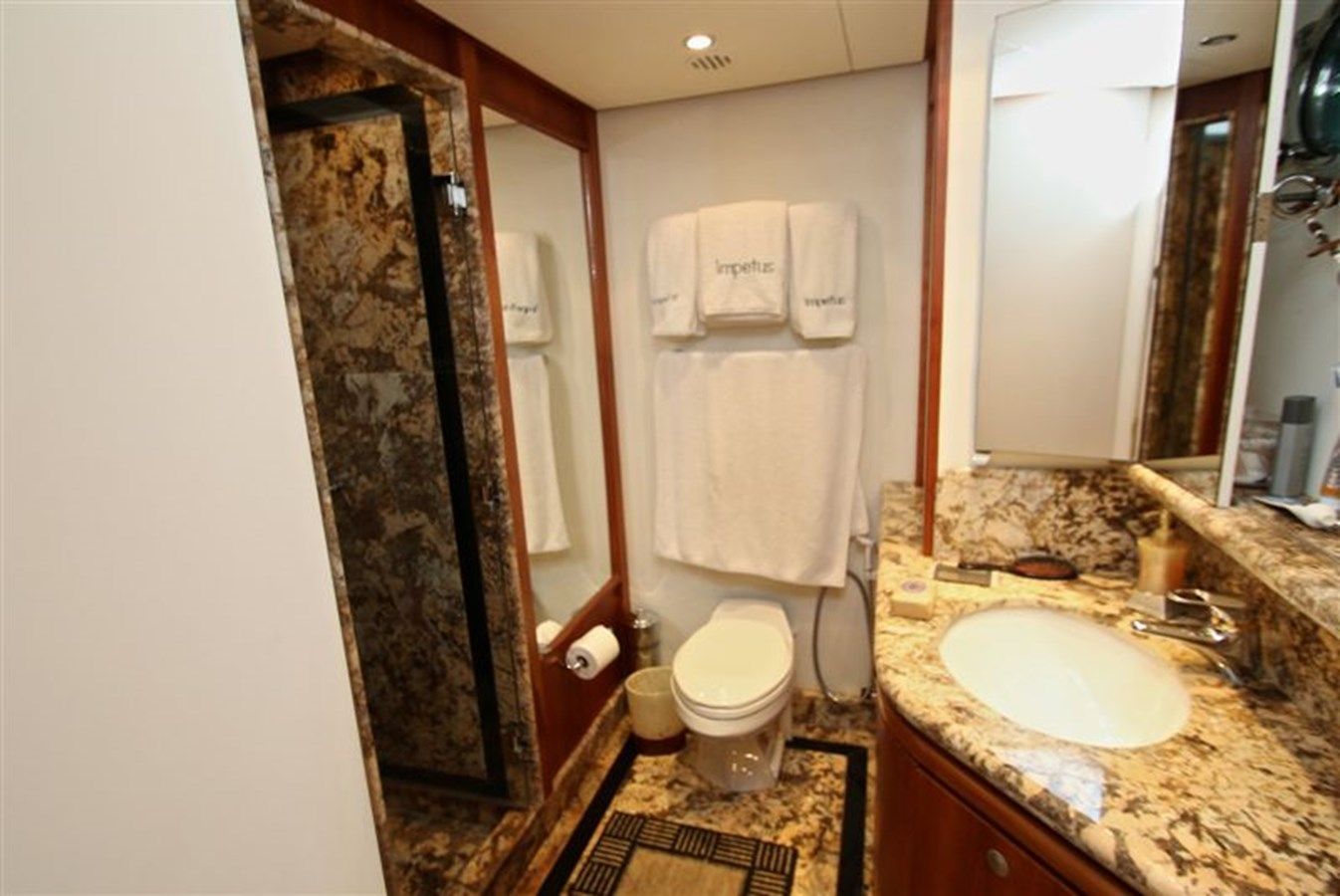
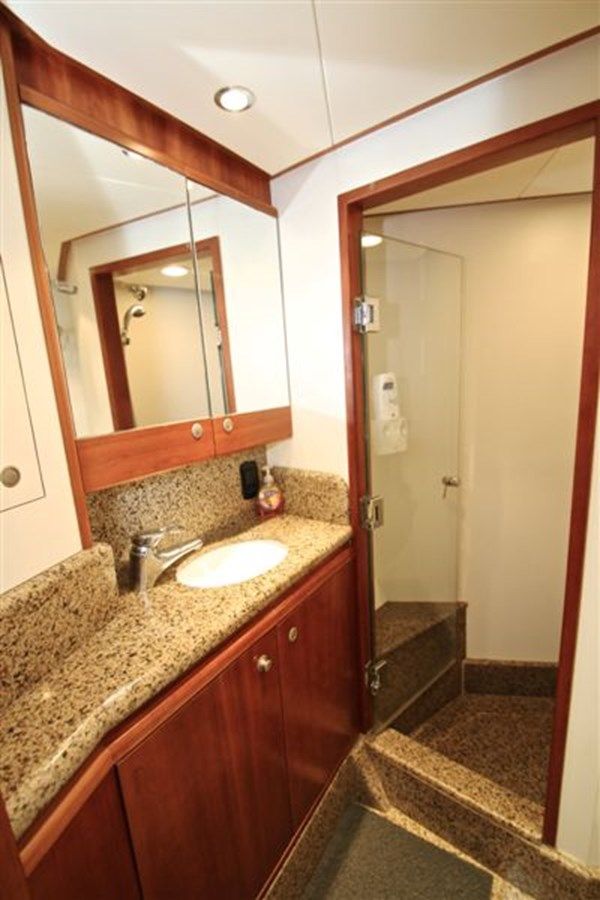
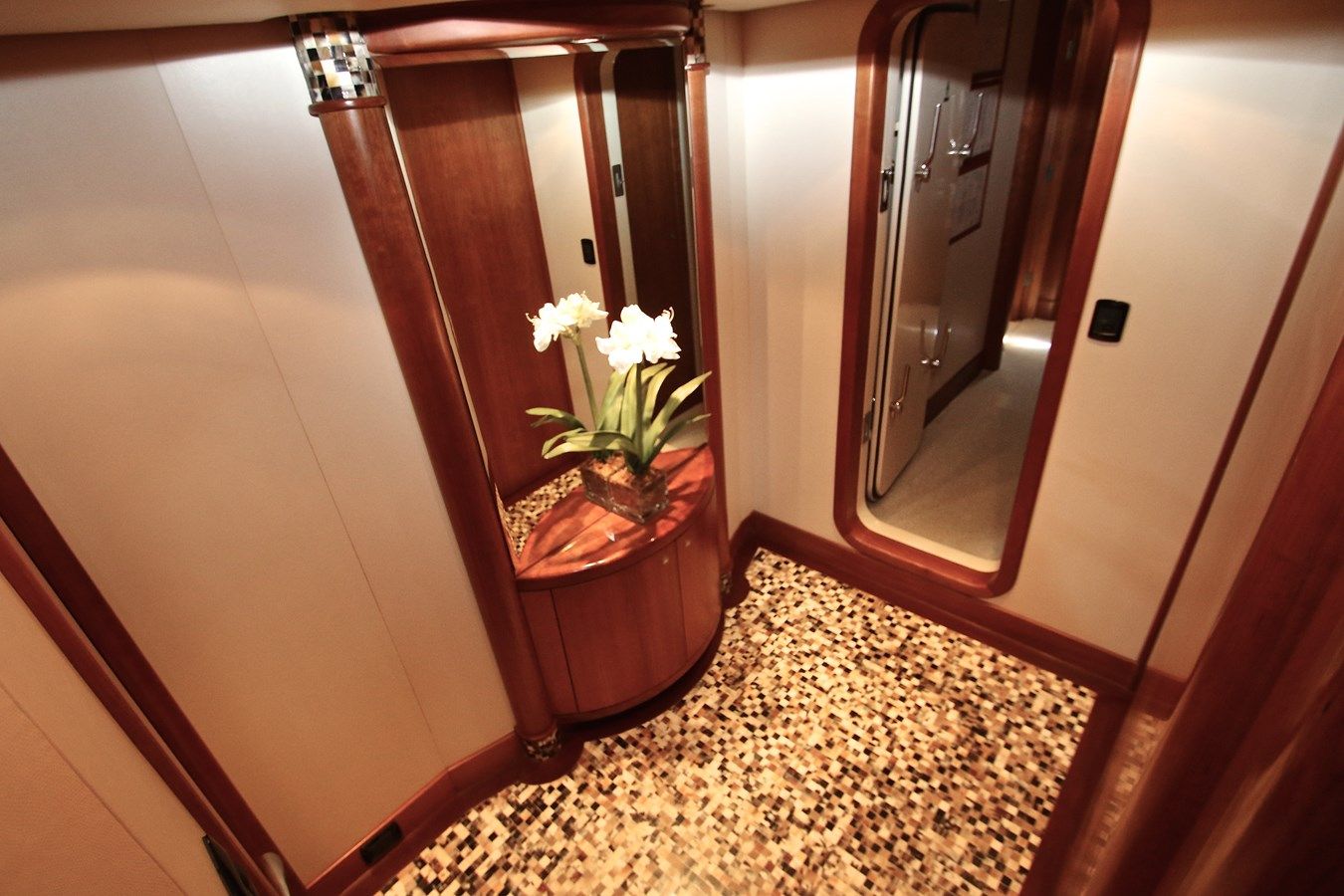
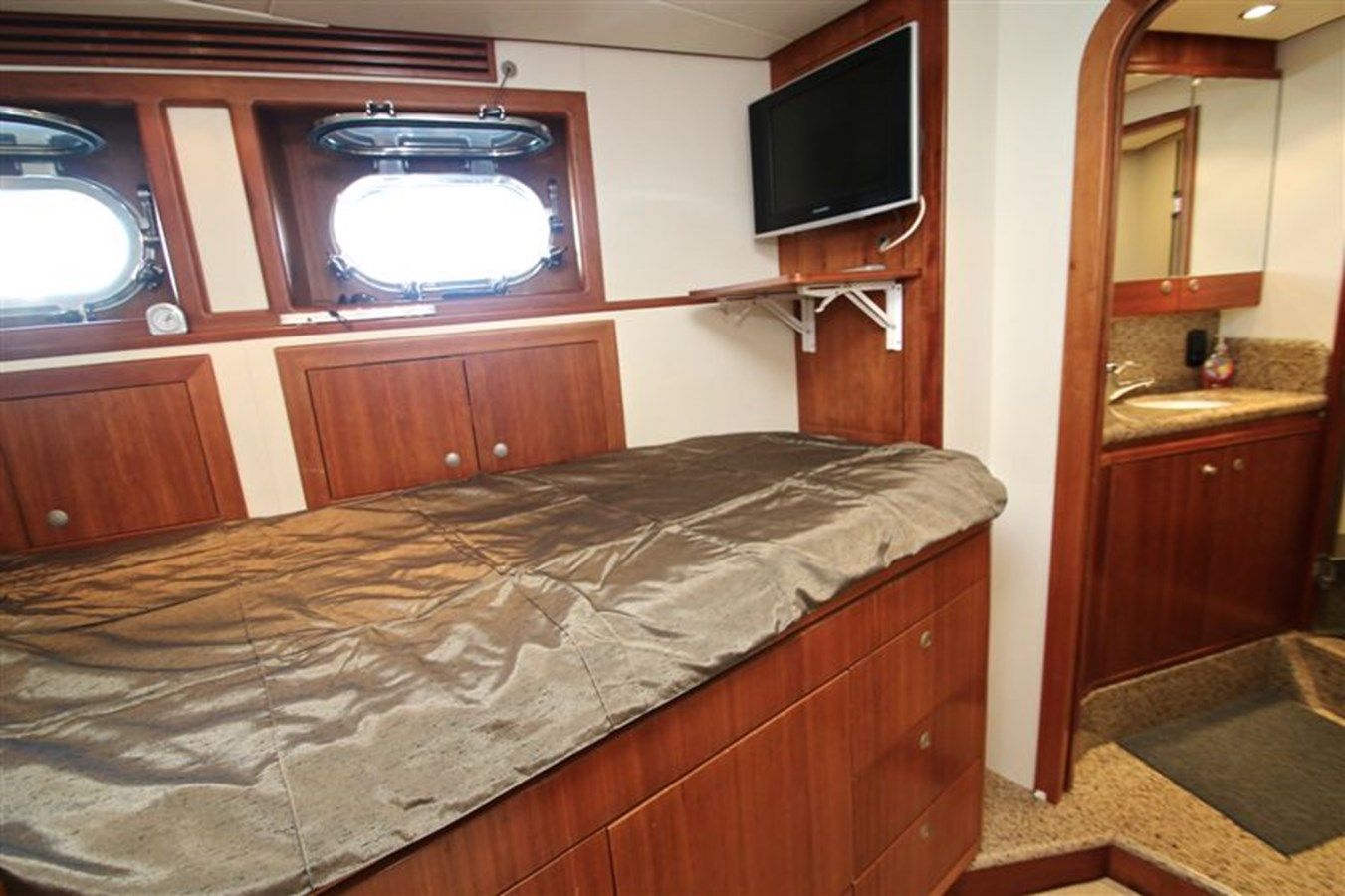
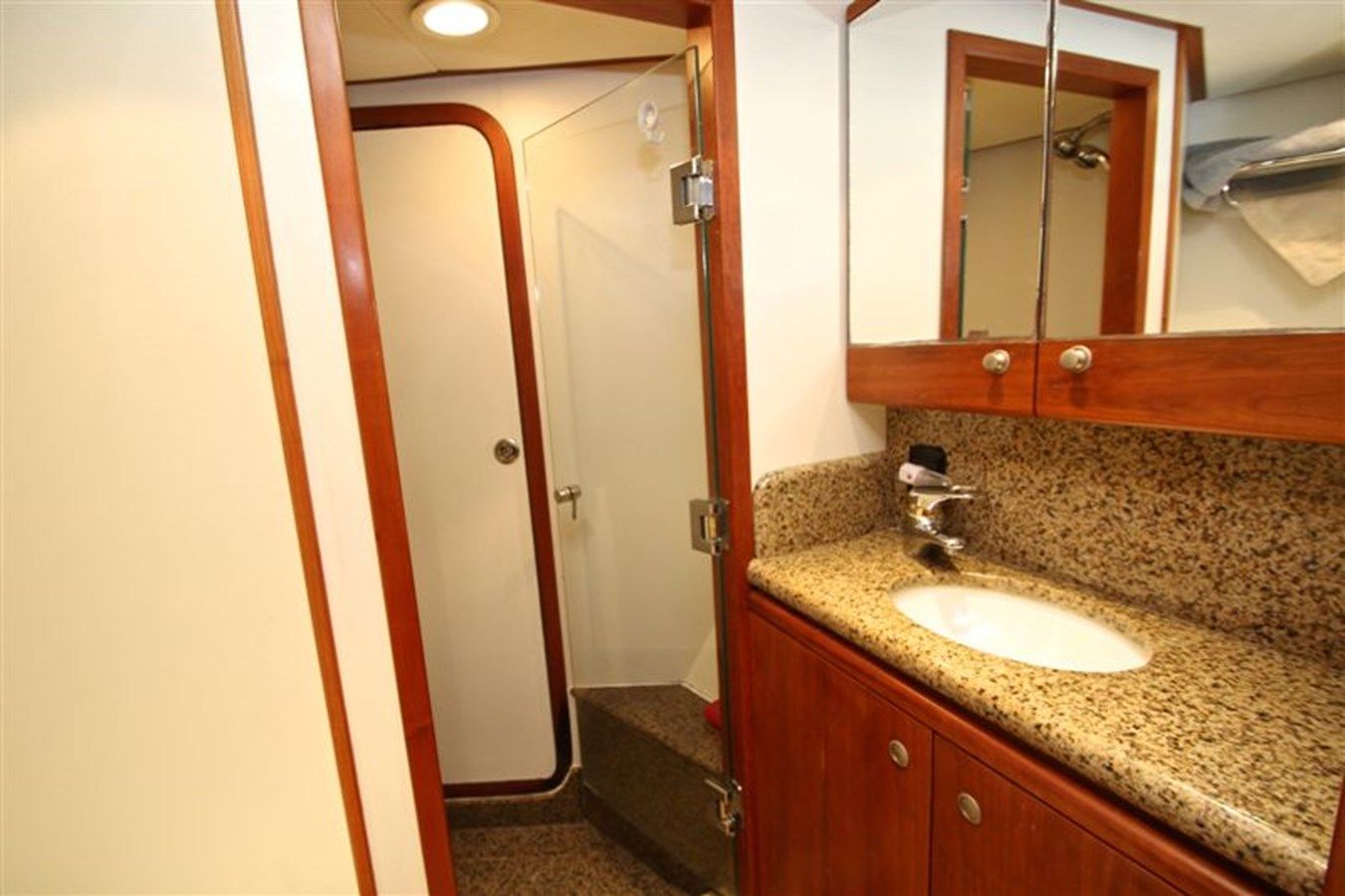
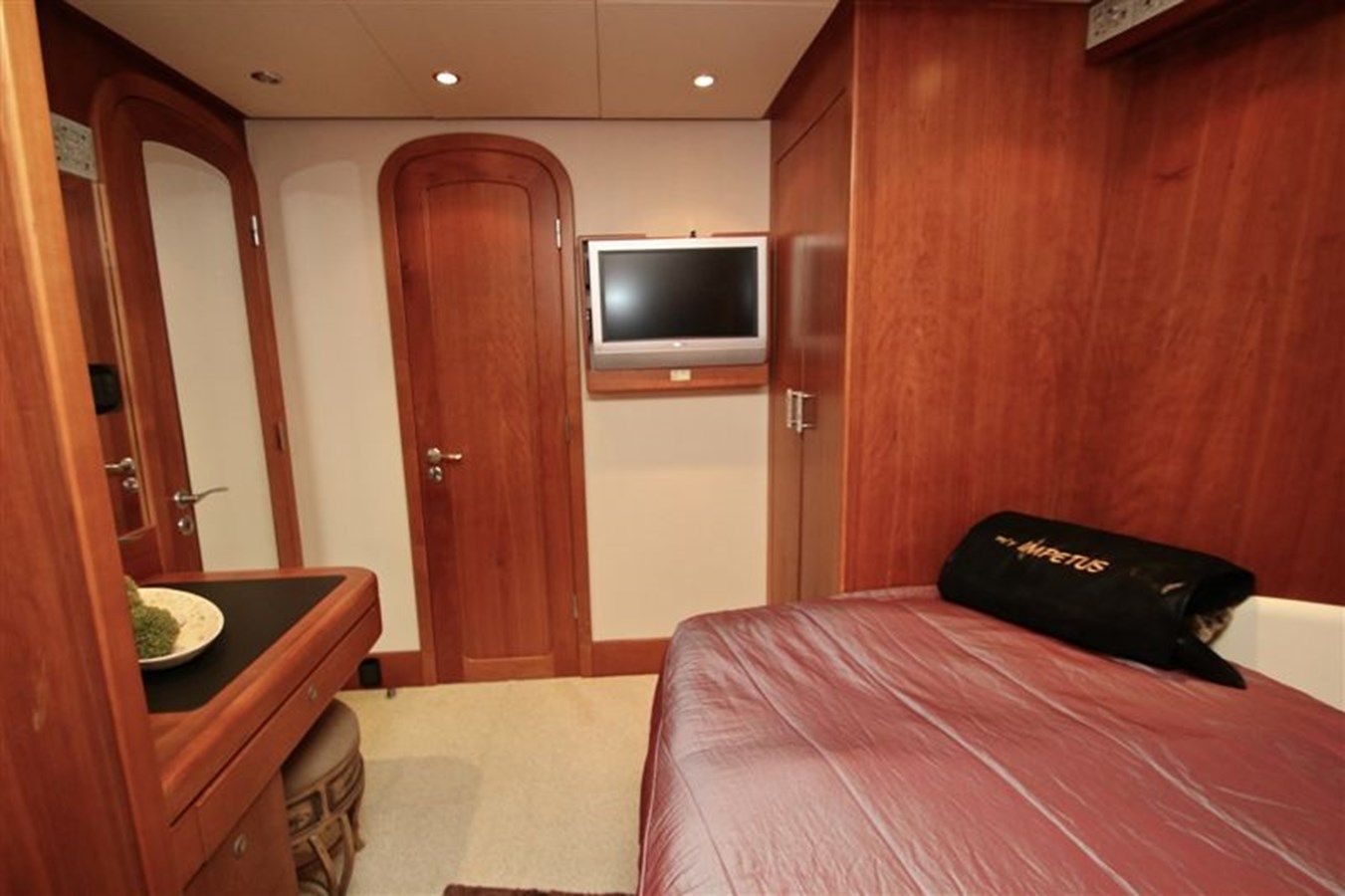
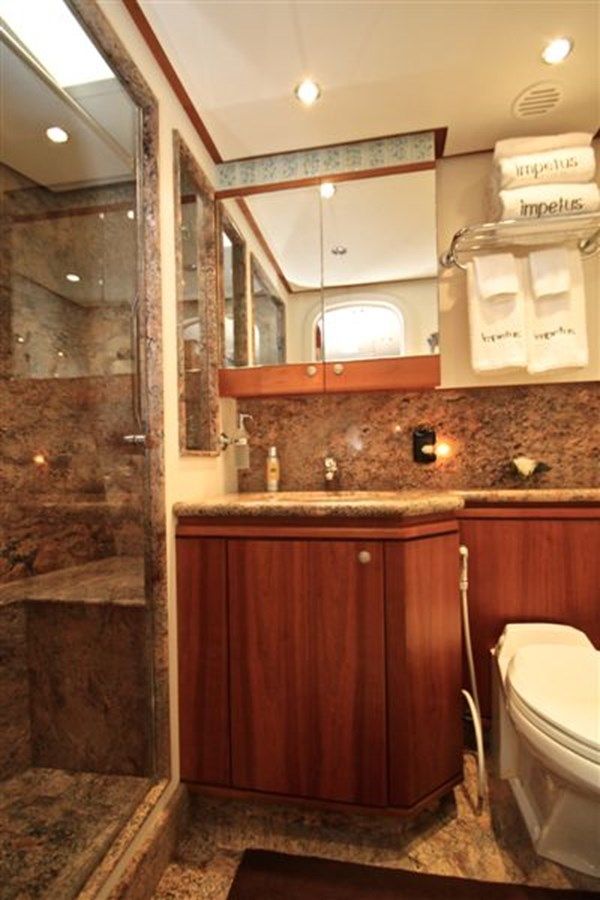
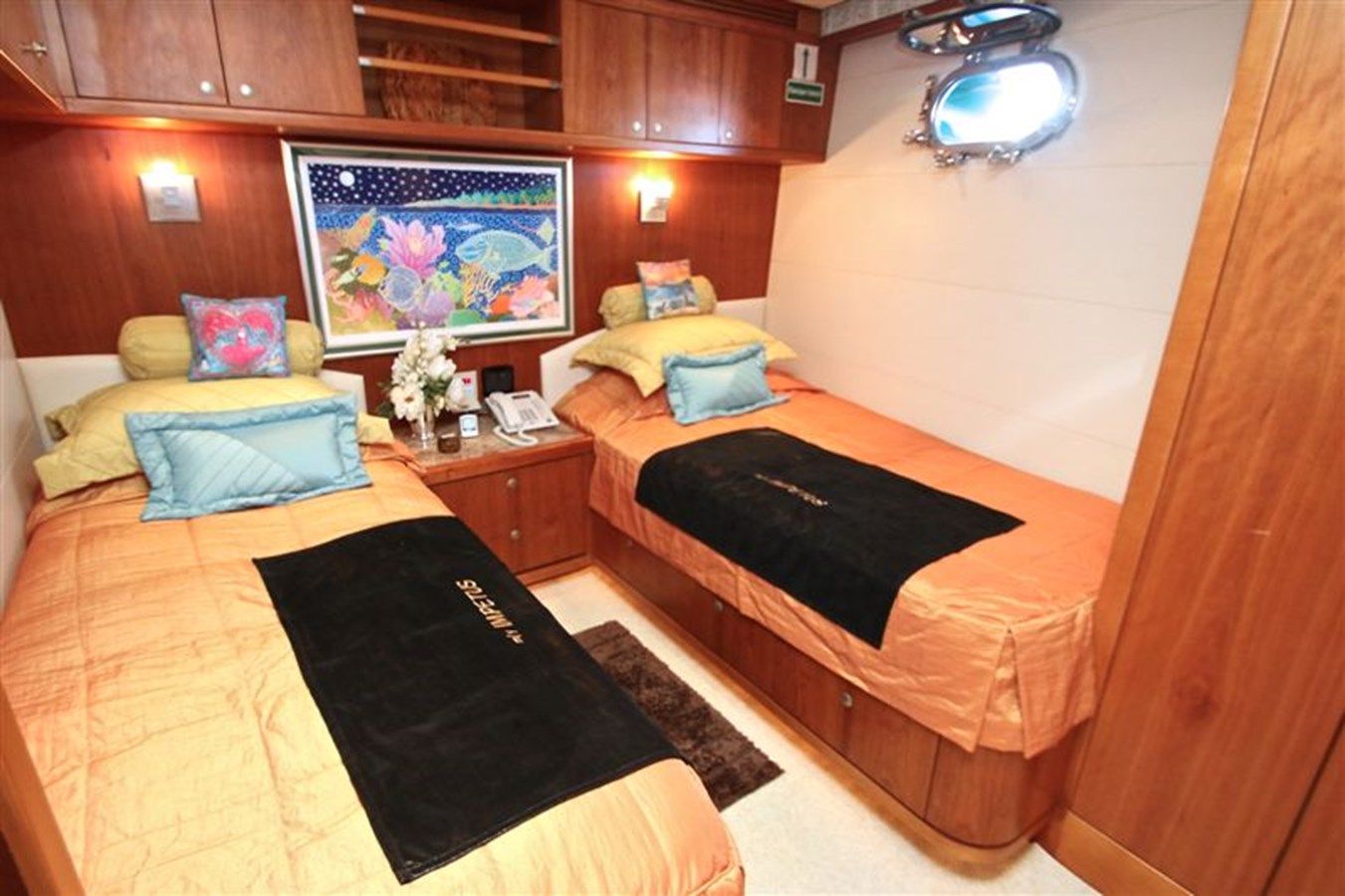
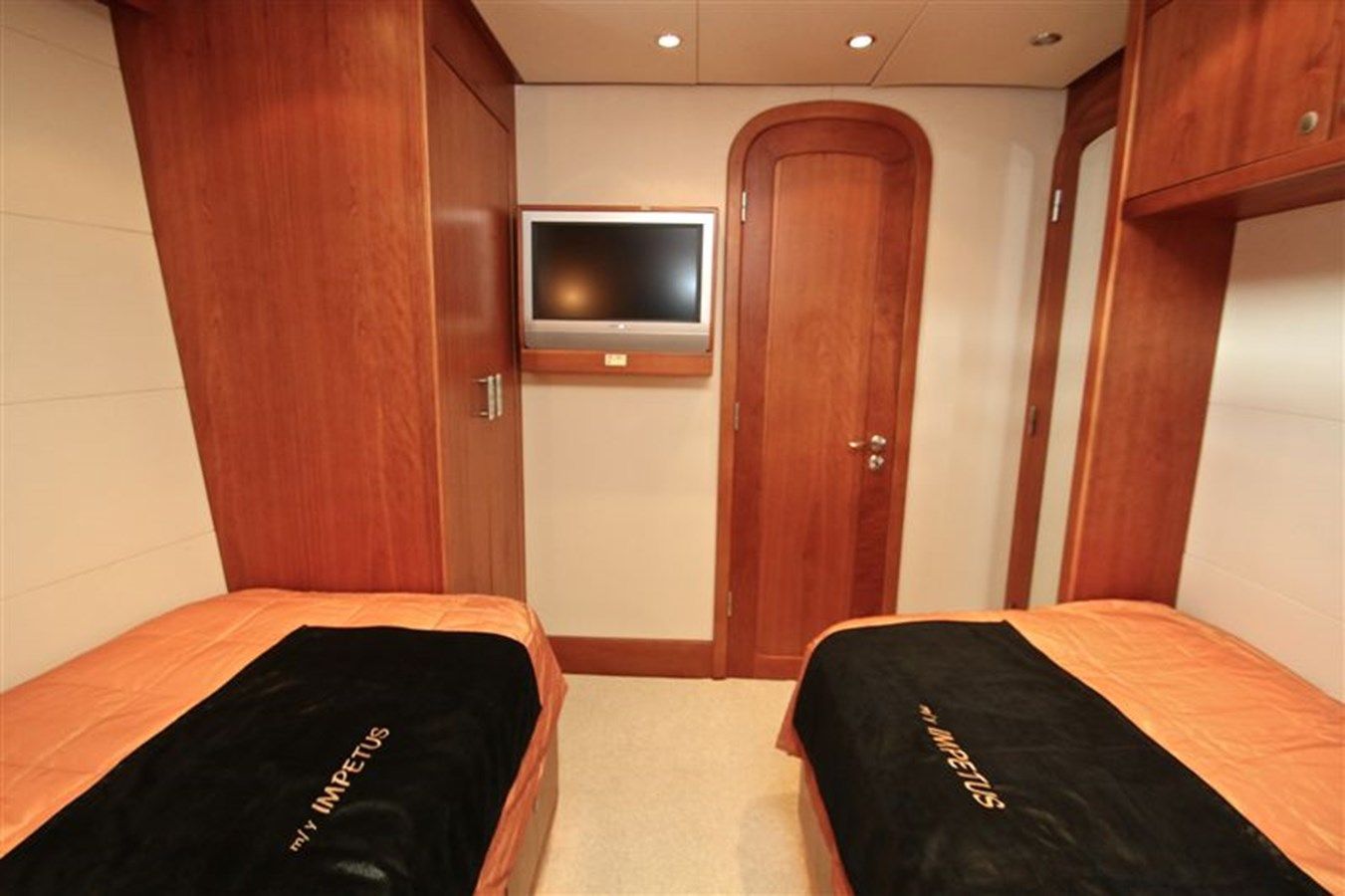
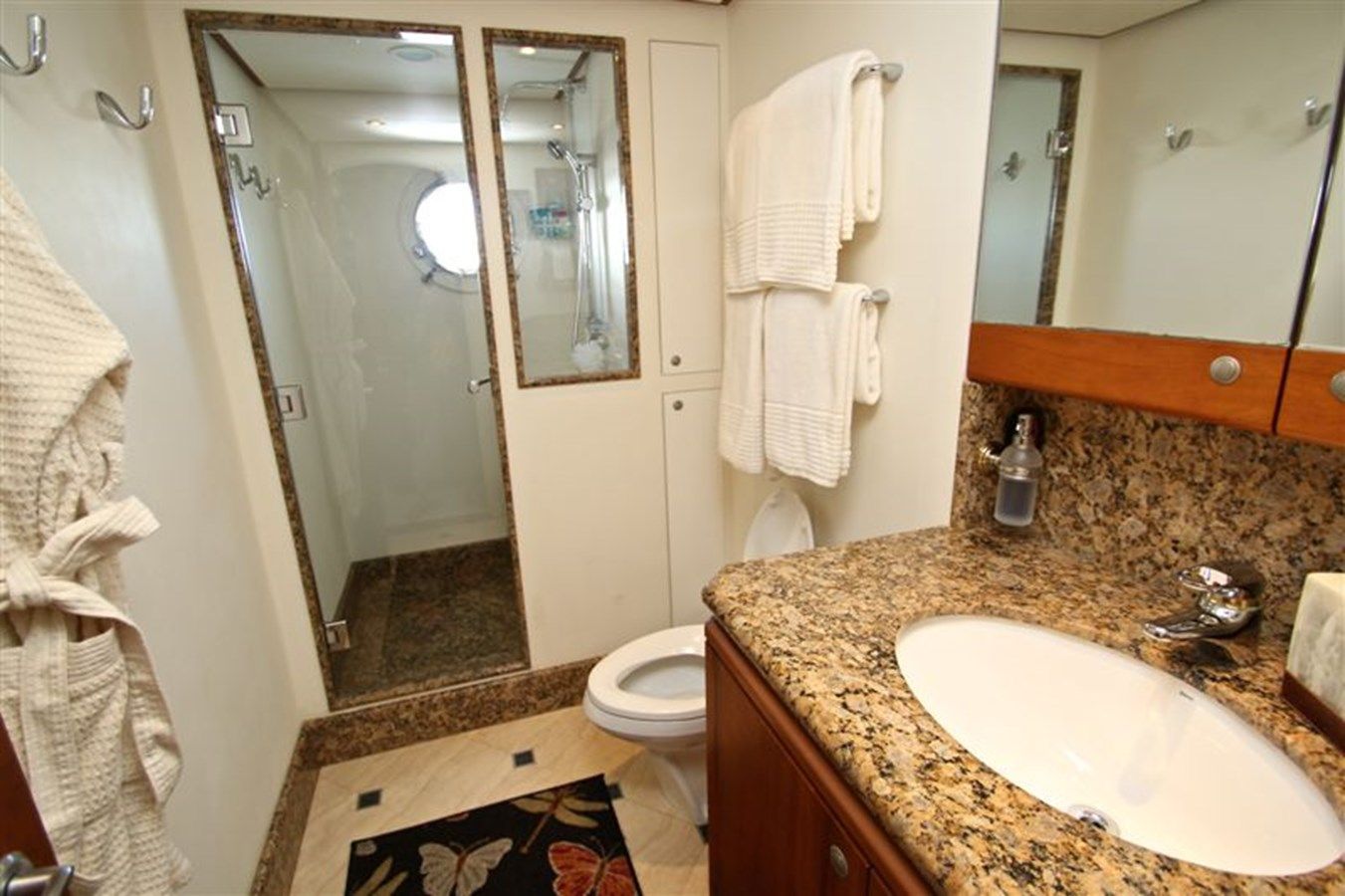
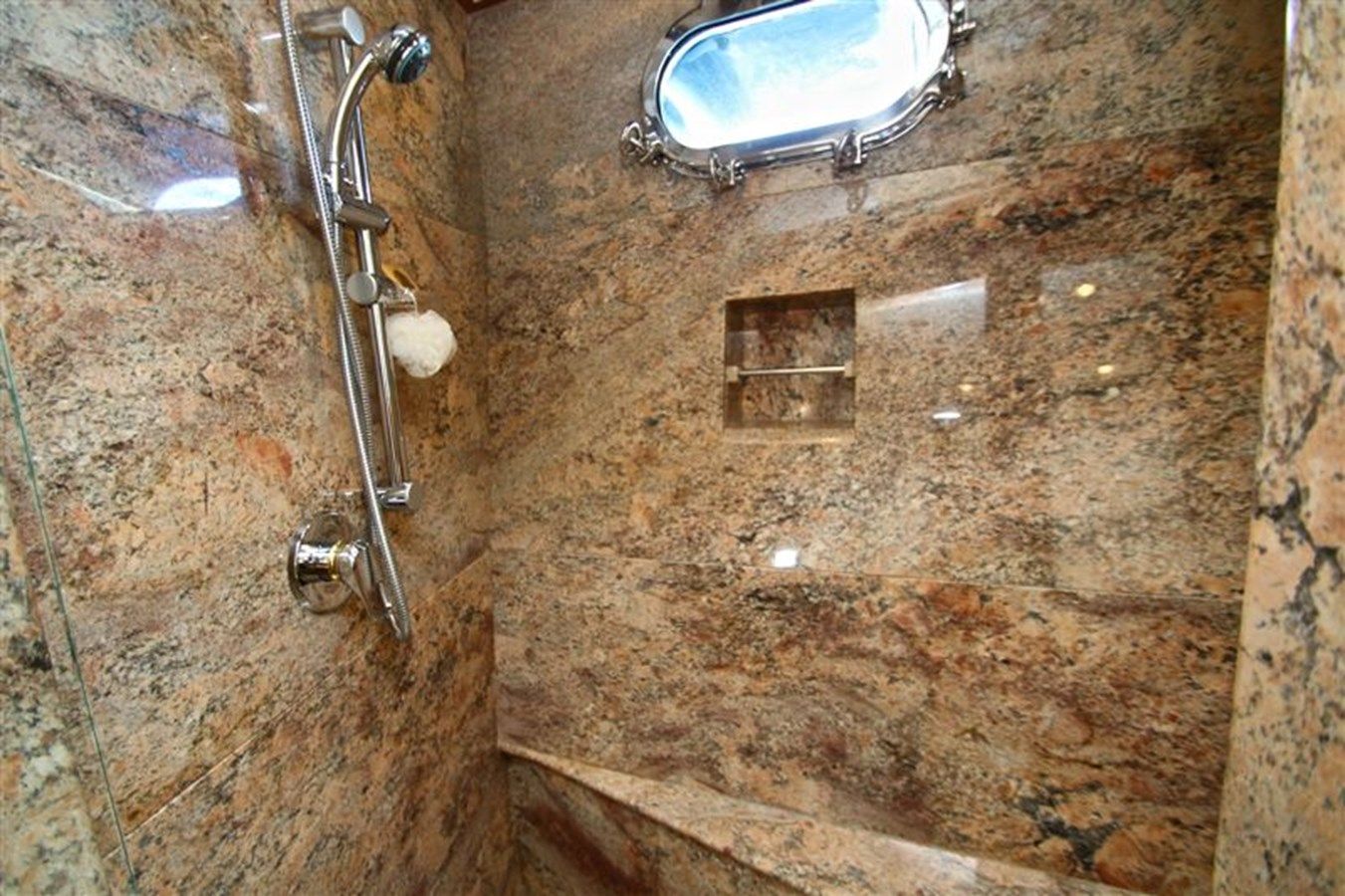
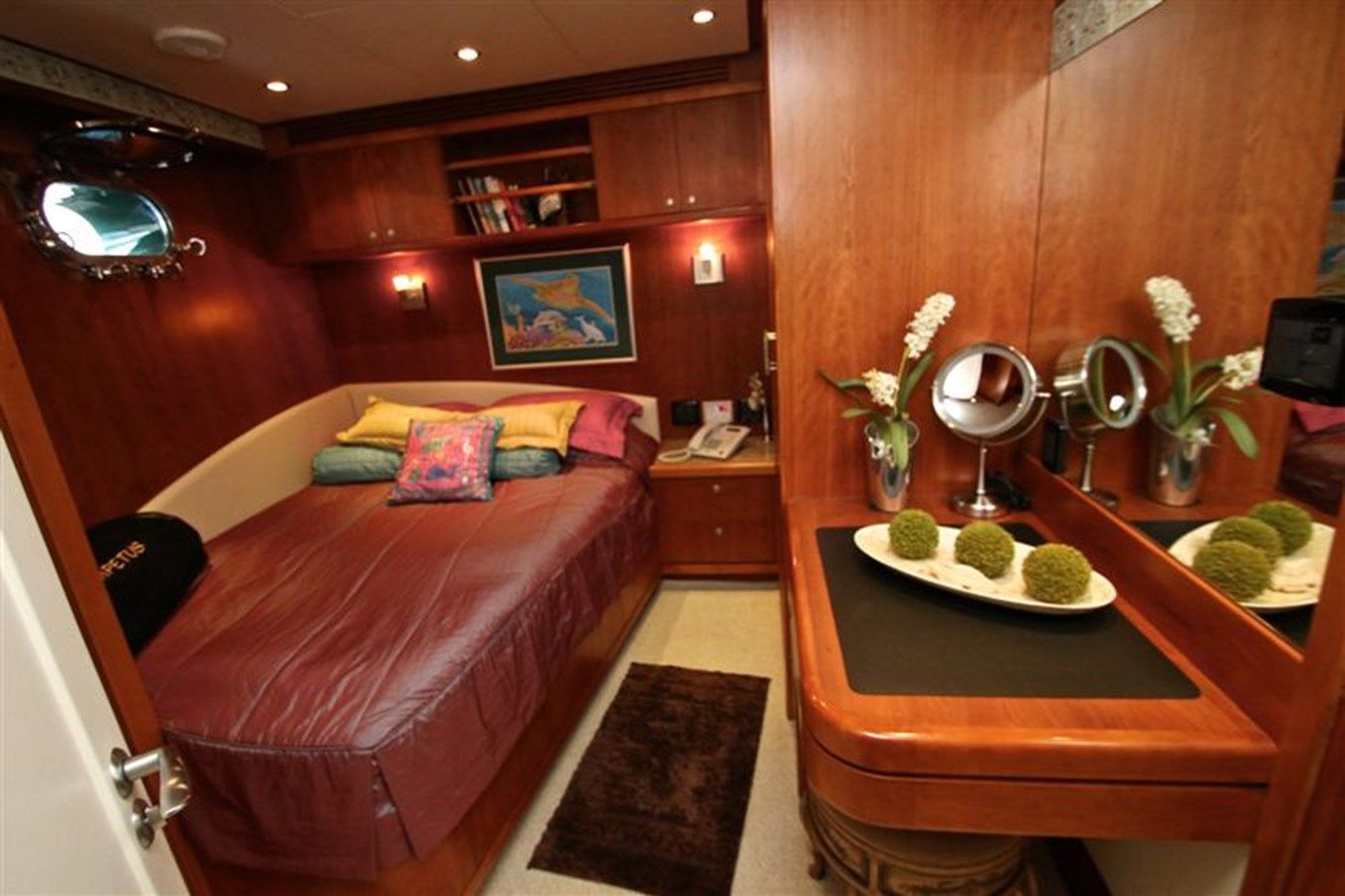
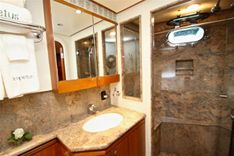
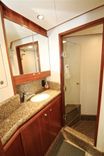
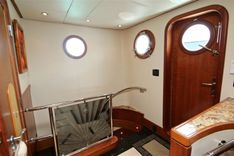
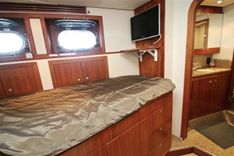
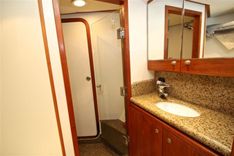
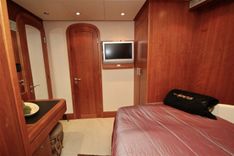
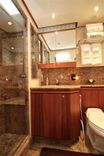
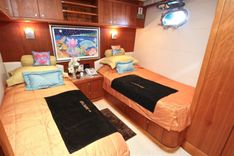
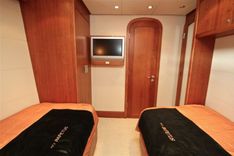
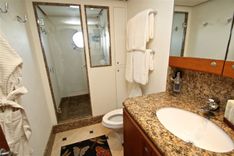
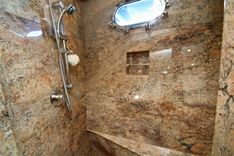
The lower foyer showcases a hand-inlaid horn floor, the owners’ washer and dryer, and an art display. Forward through a watertight door are two guest cabins: to starboard a queen stateroom with desk, two large hanging lockers, and a comfortable head finished in granite with a large granite shower; to port a twin guest cabin with a matching head. Both staterooms feature glass tile accents and inlays. Forward on the centerline is crew service access leading to the service and pump area, where there are two water heaters, water pumps, washers and dryers, and access to the upper forward crew’s quarters. Aft from the foyer lies the master stateroom.
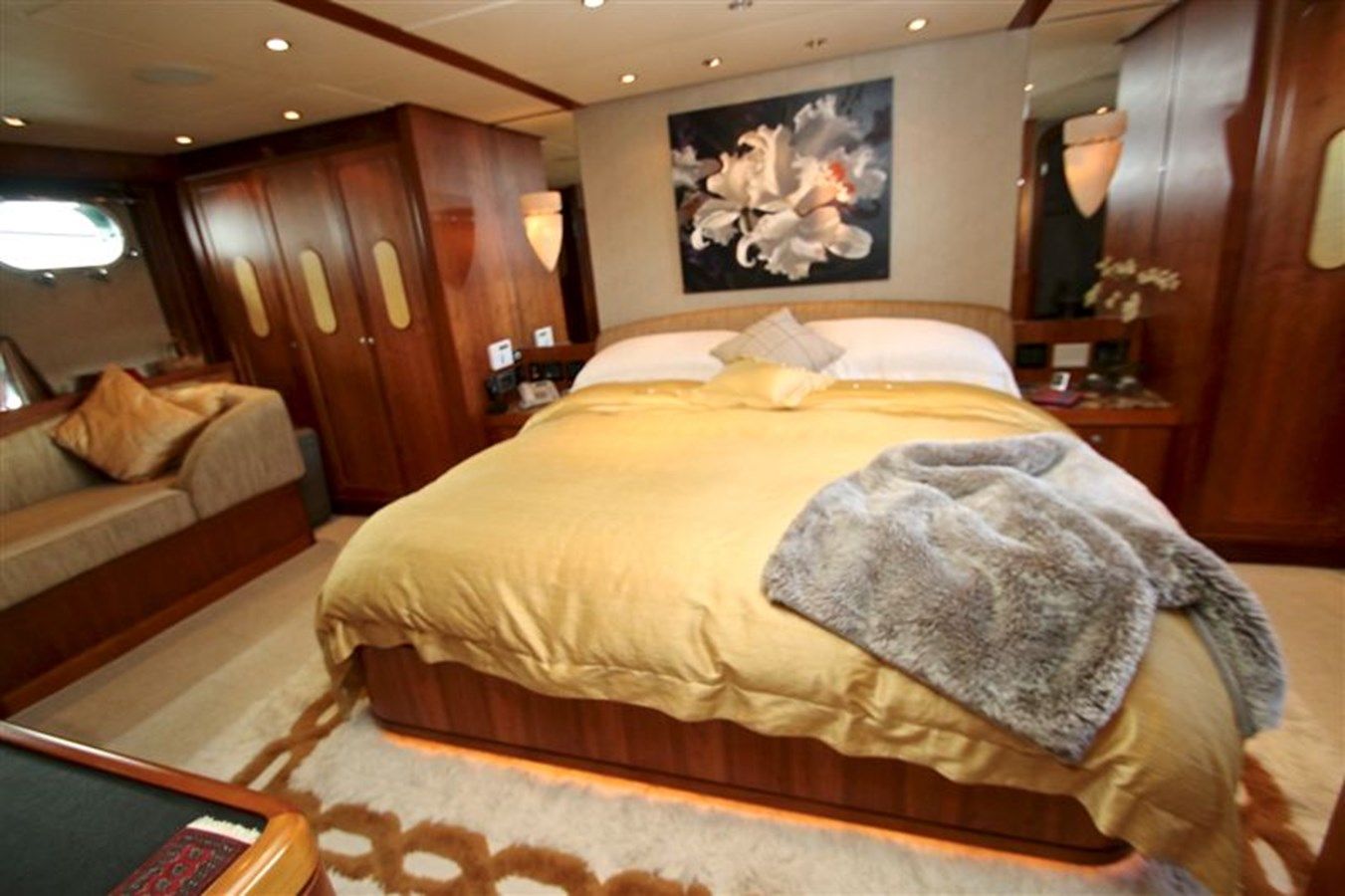
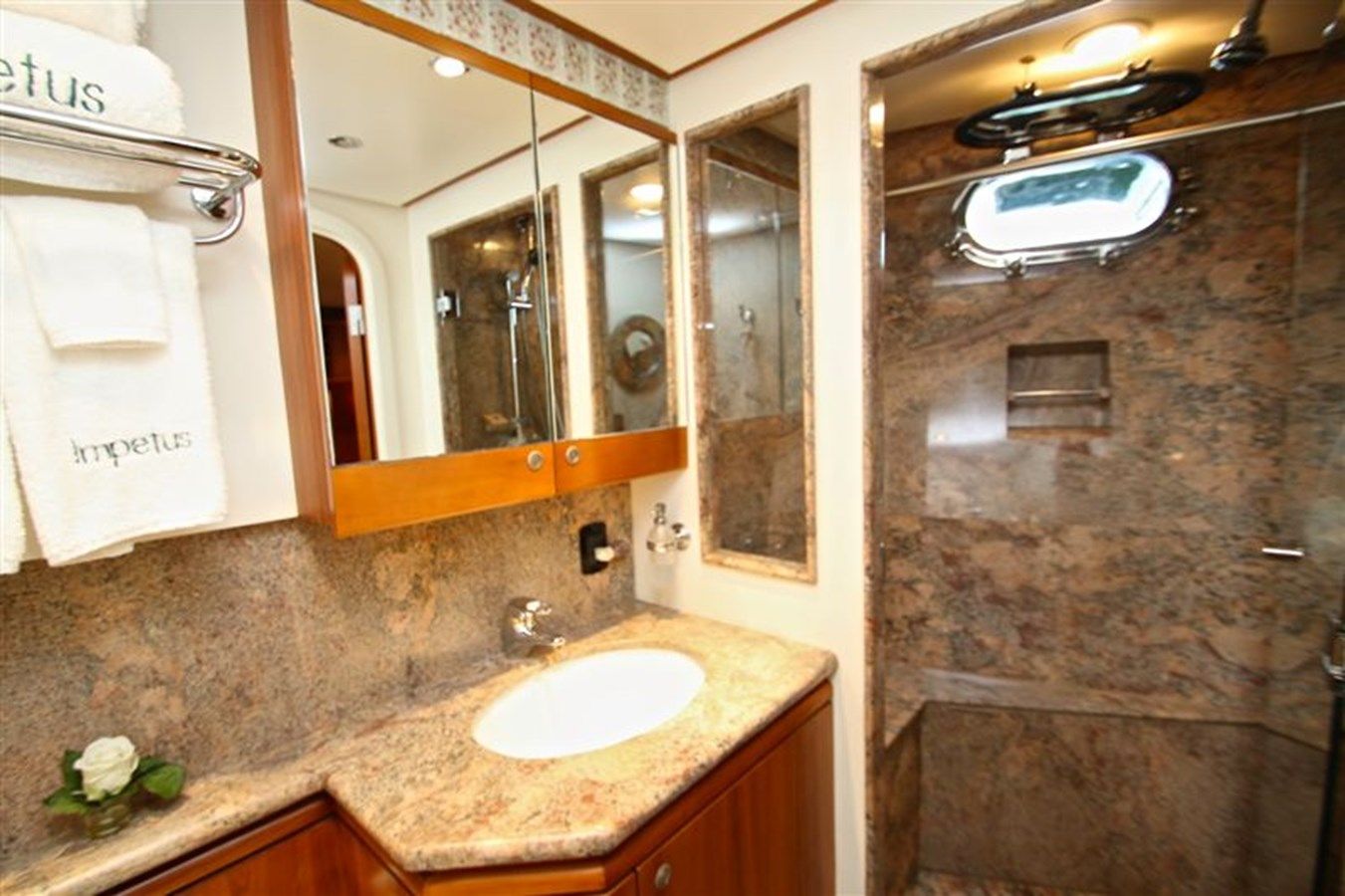
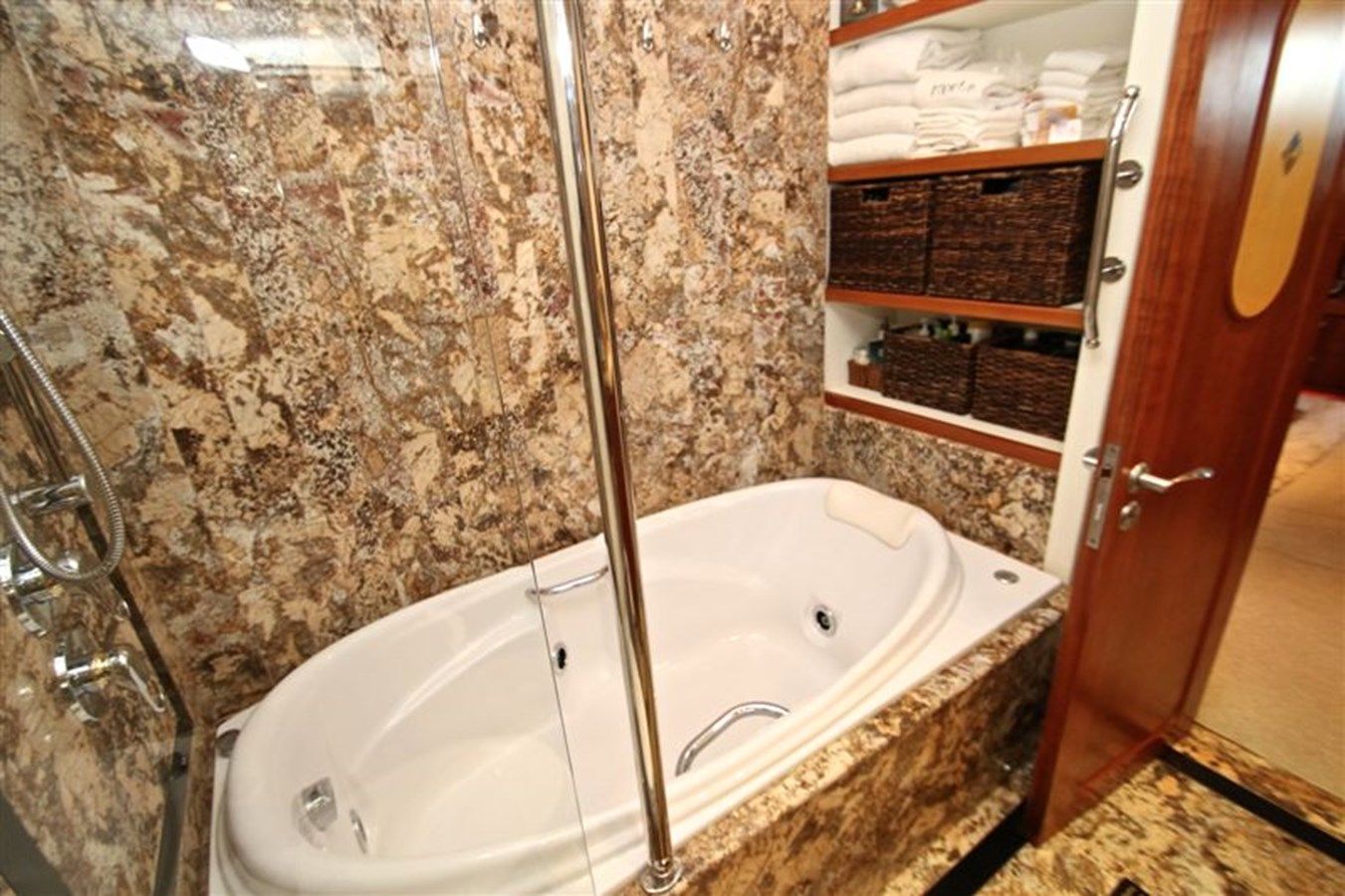
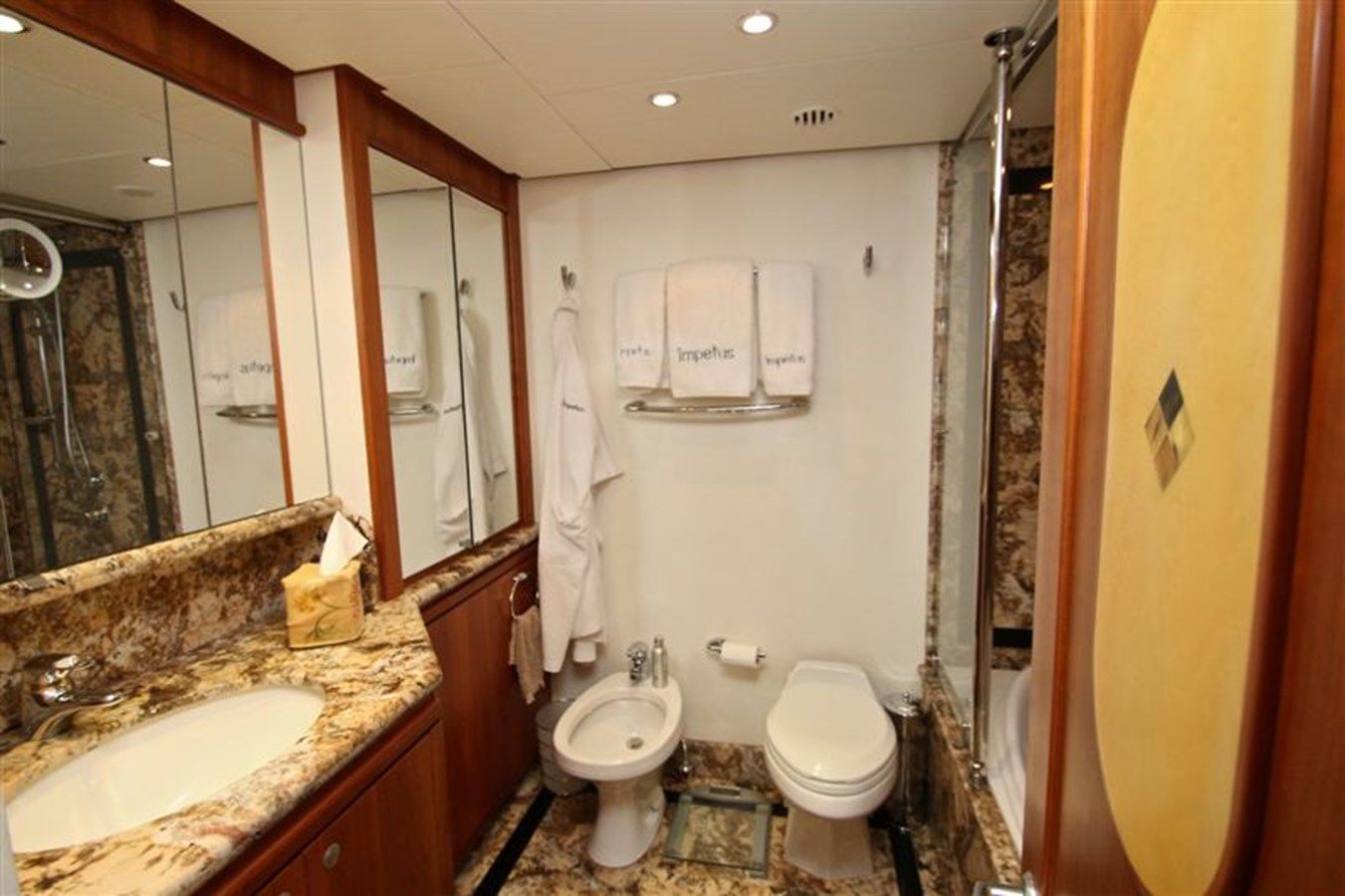
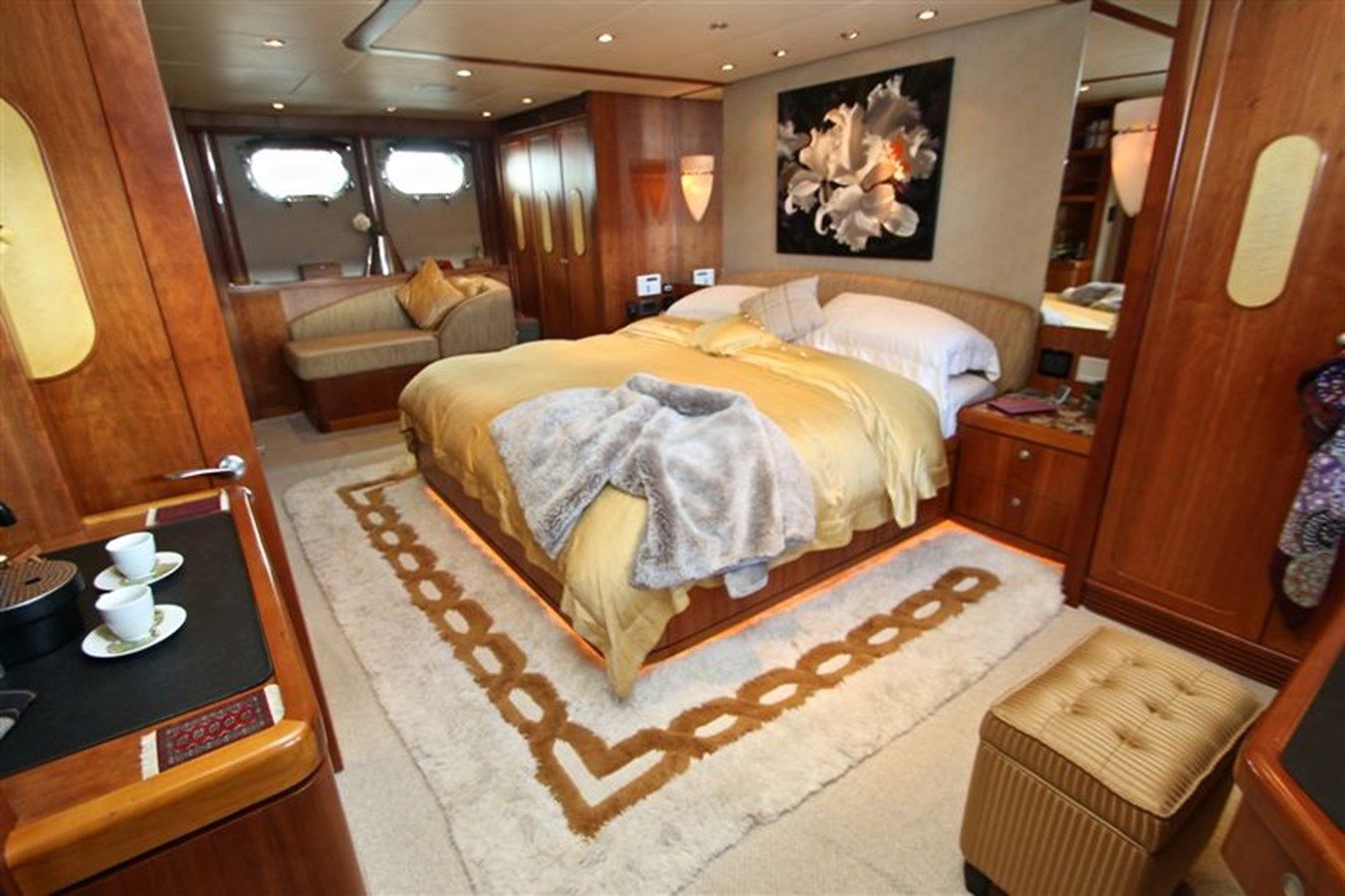
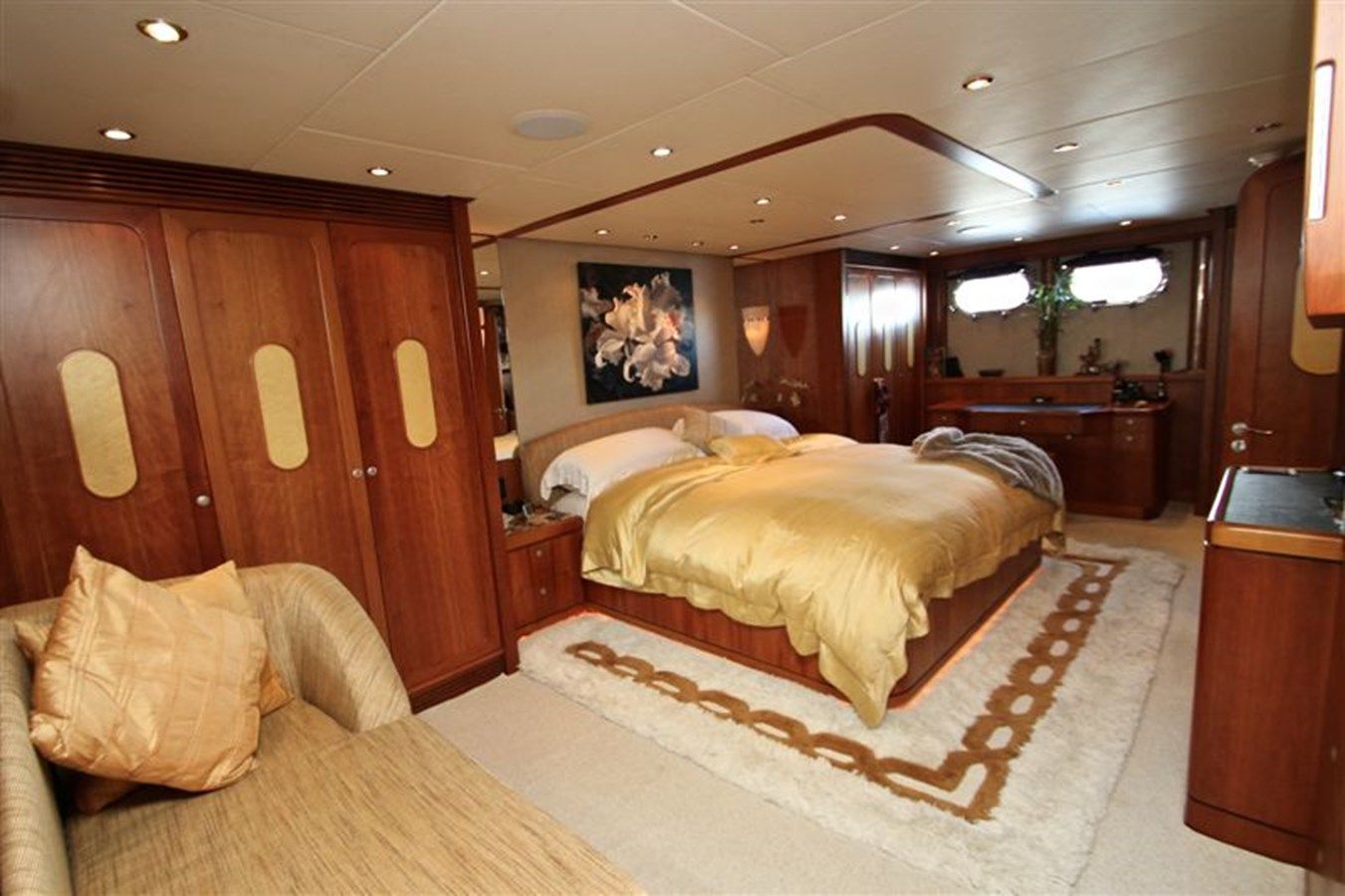
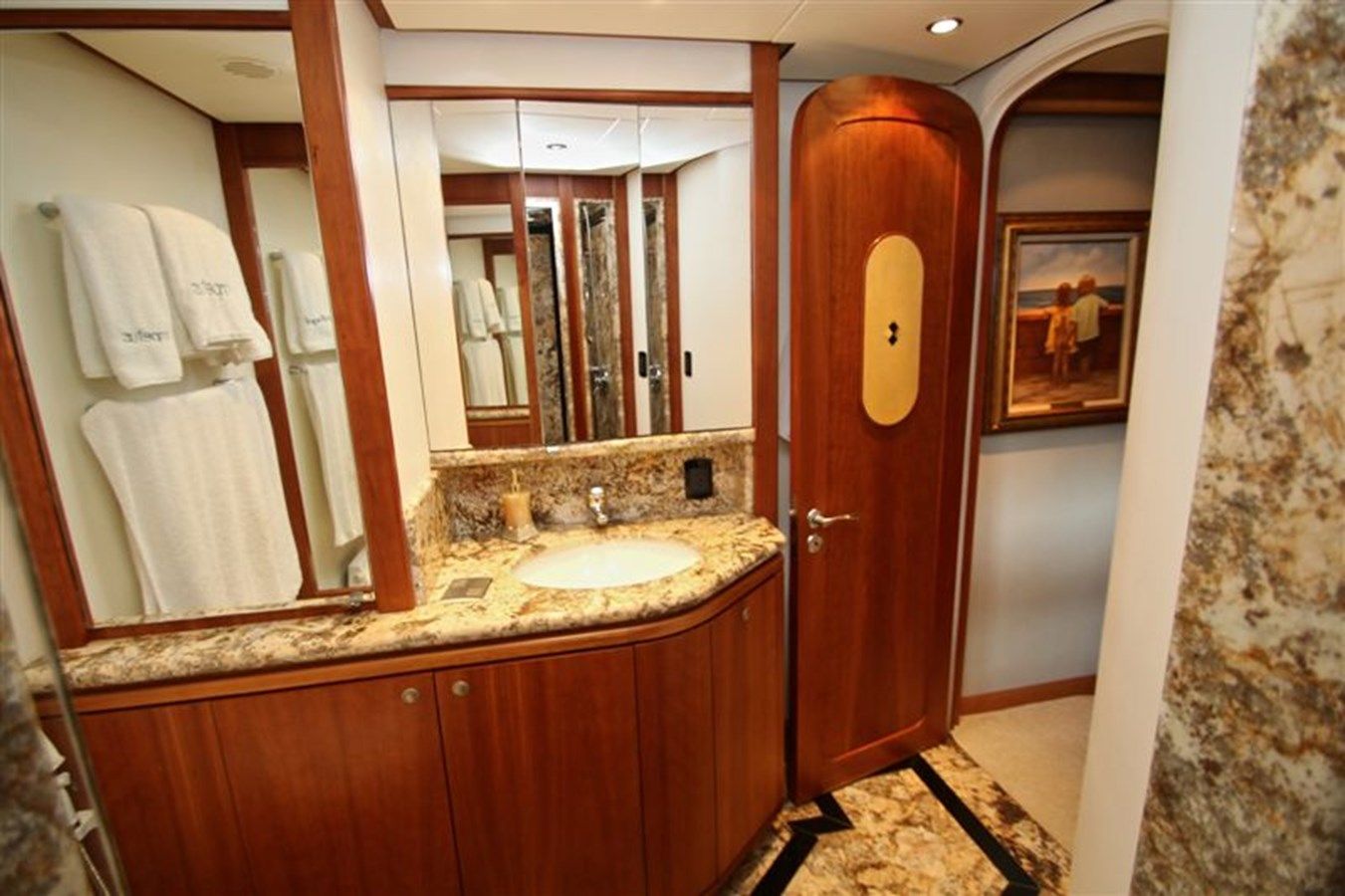
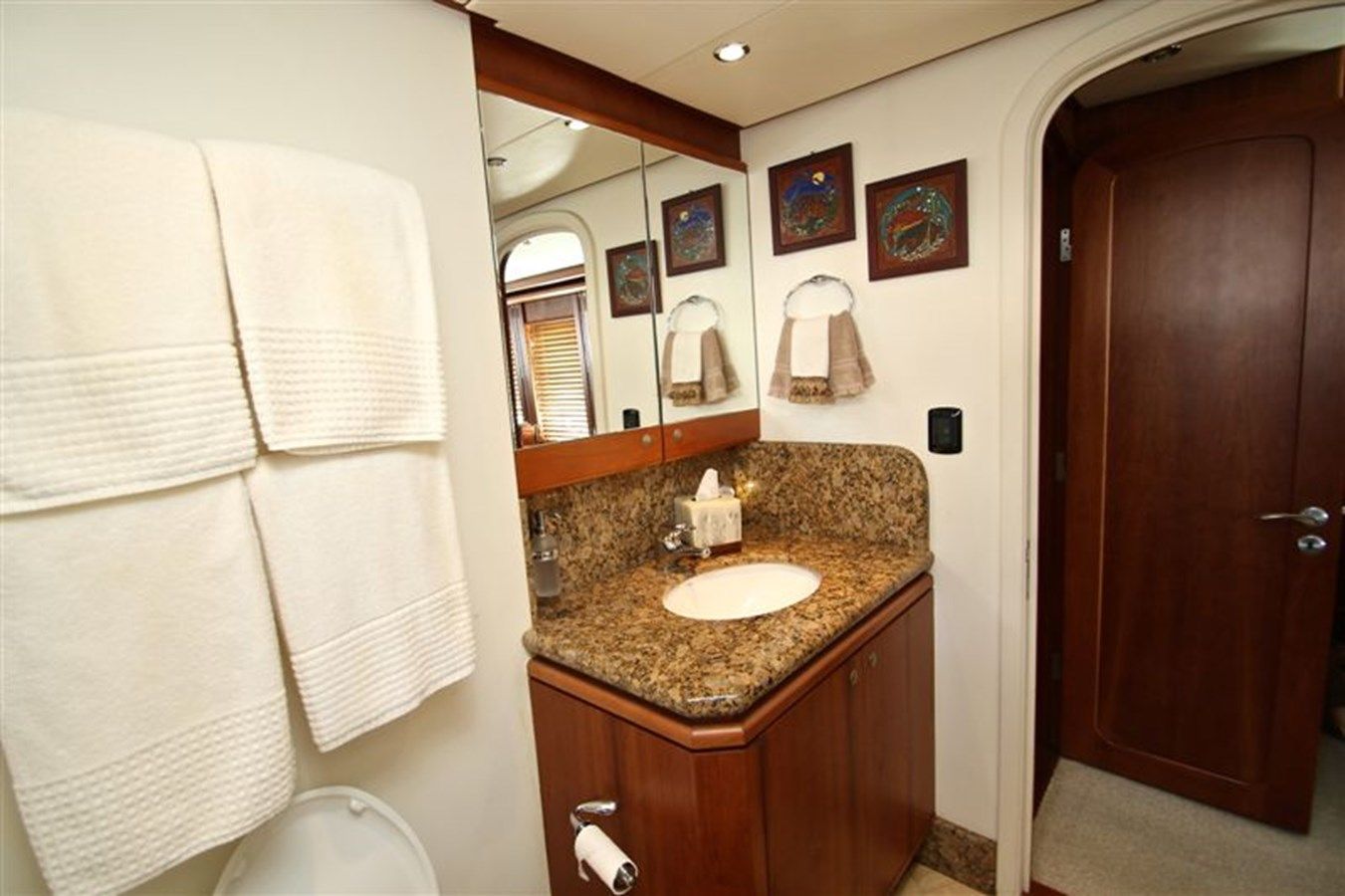
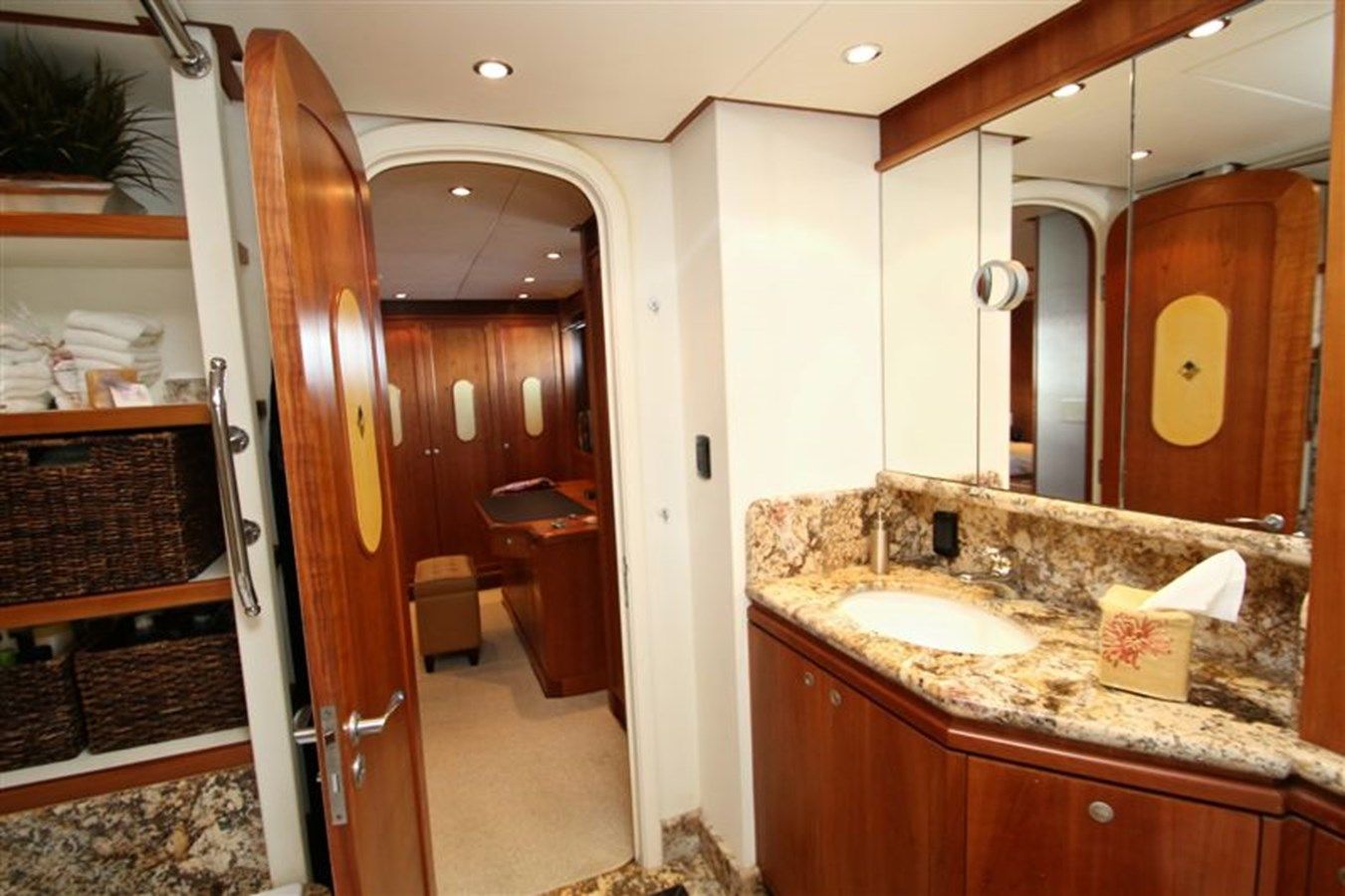
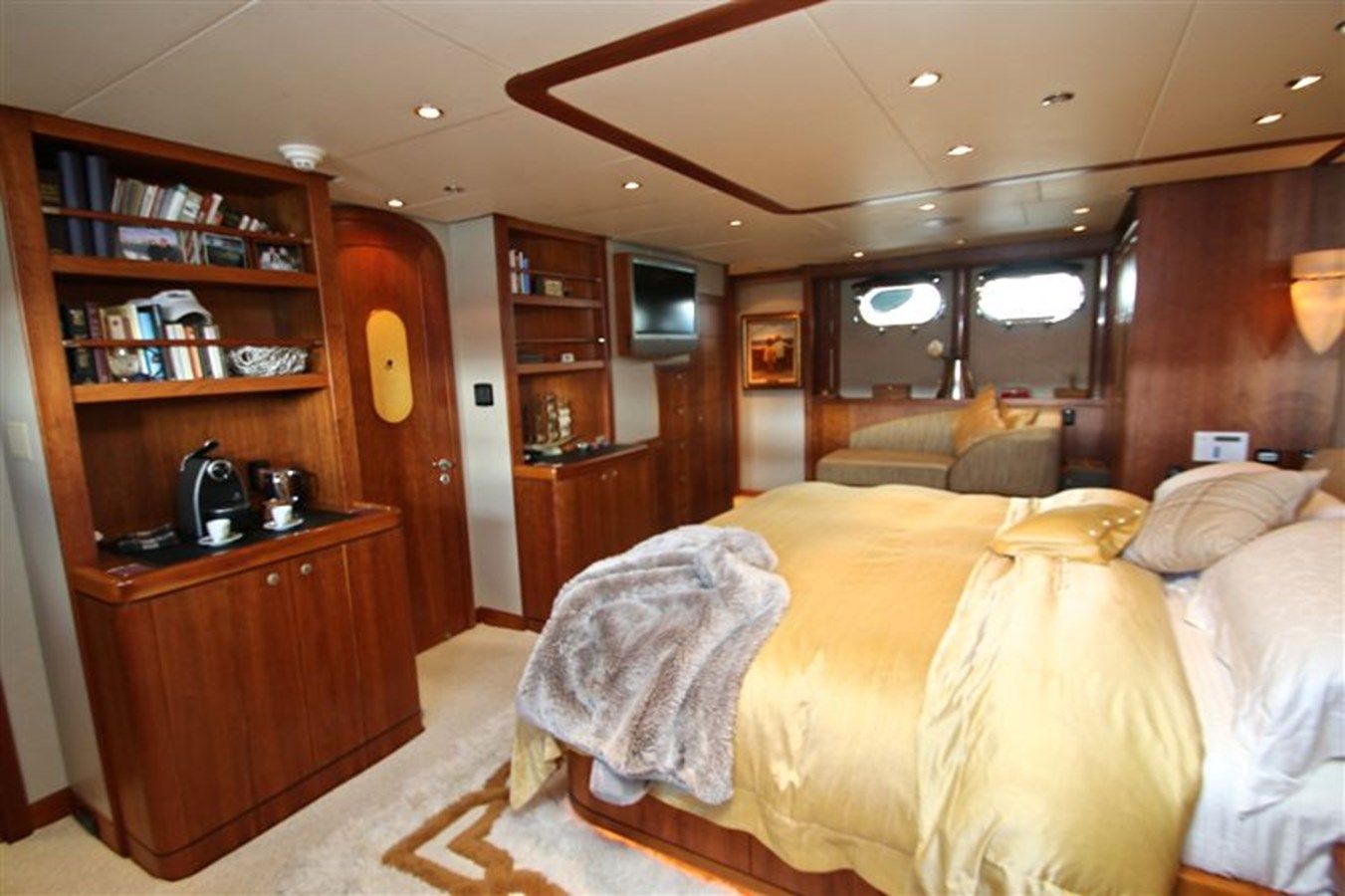
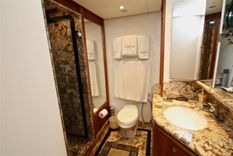
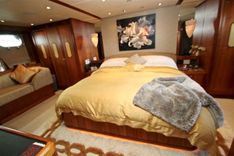
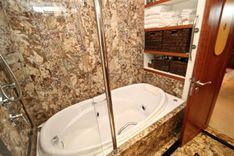
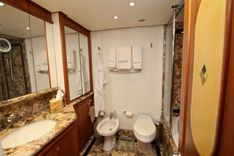
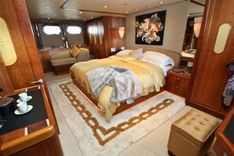
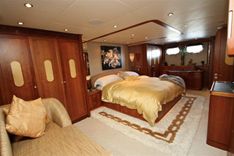
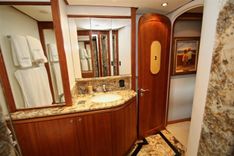
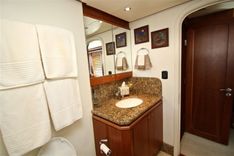
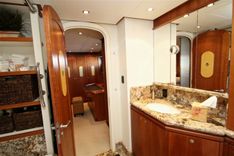
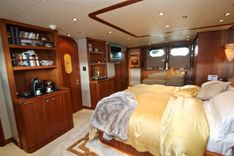
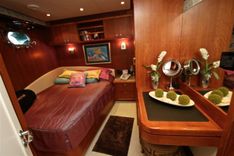
The full-beam master stateroom is akin to what you would expect on a 120' vessel, with his-and-her heads executed in custom granite. Custom fabrics and refined wood details cultivate a rich, comfortable environment ideal for extended time aboard. The suite includes a full-size king-size bed, two his and two her hanging lockers, built-in drawers, a settee, and a dressing table, all illuminated by alabaster sconces and complemented by inlaid wood and extensive bookshelves. Her head features a hot tub shower, bidet, extensive storage, and custom granite work, while his head offers a granite-lined shower and a comfortable sink area. Repeater controls for the navigation equipment, horn, flood light controls, and radio are at hand, together with a coffee zone and a TV with surround sound. The photos convey the elegance and practicality of this stateroom more eloquently than words.
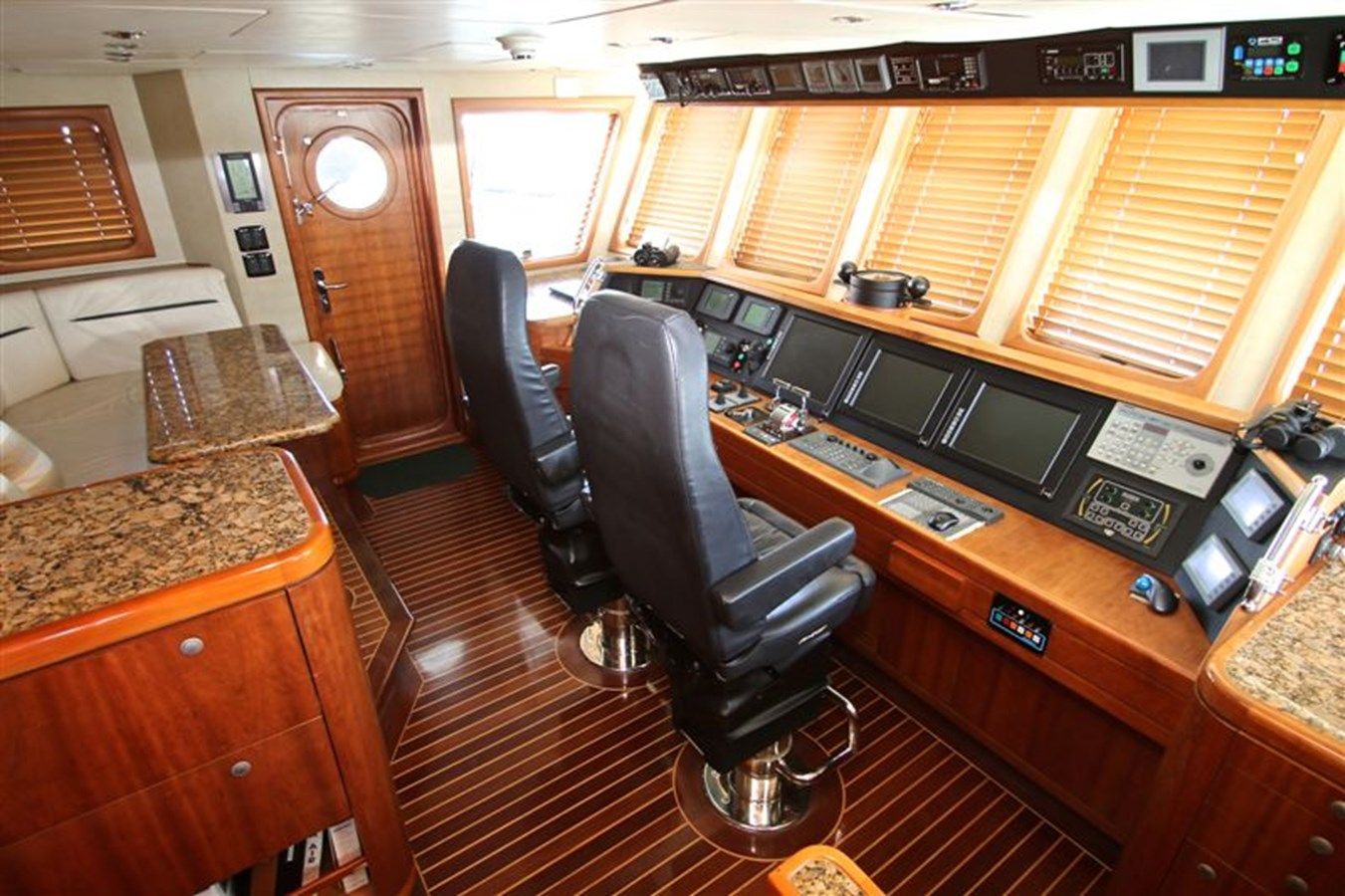
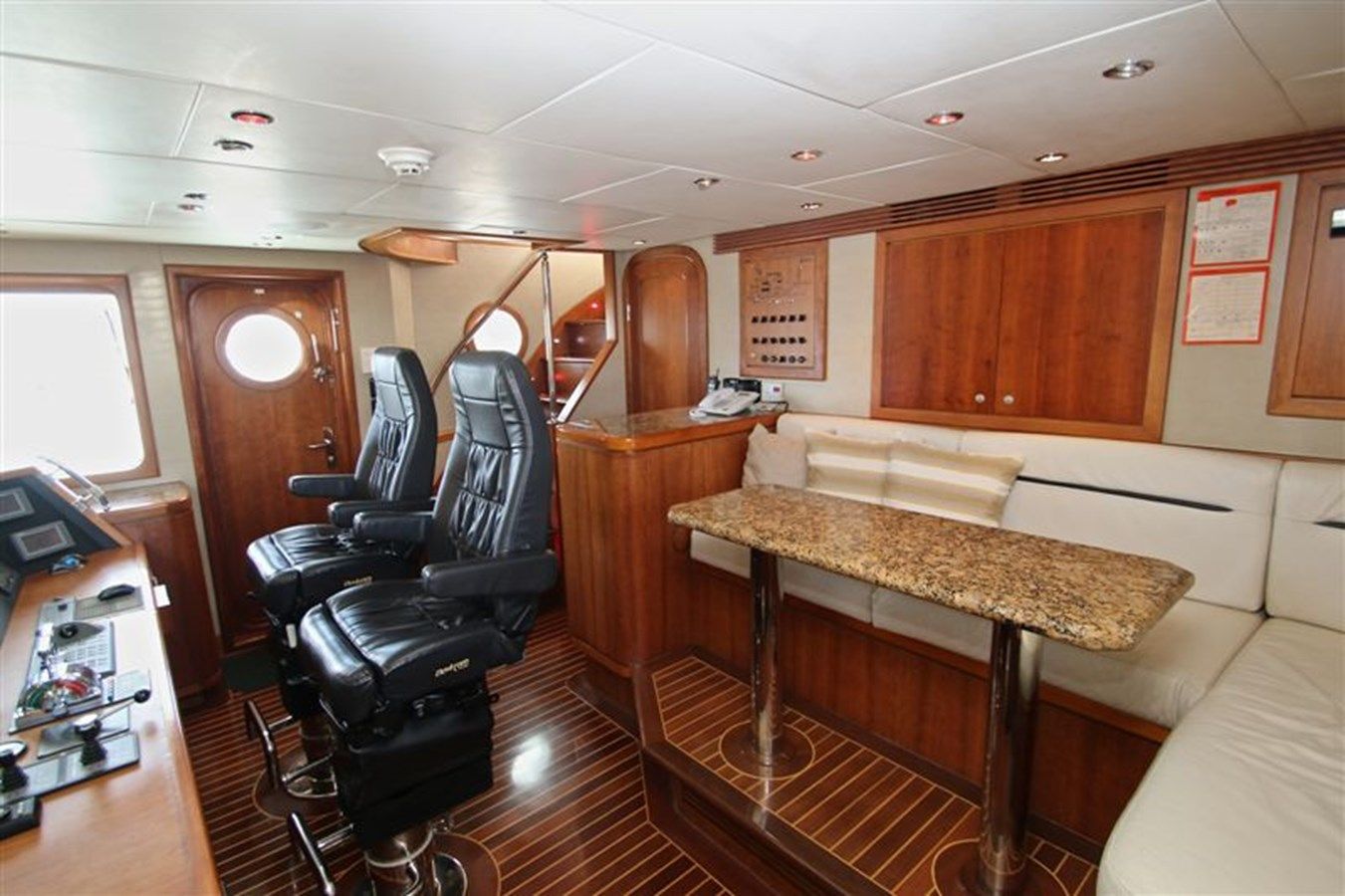
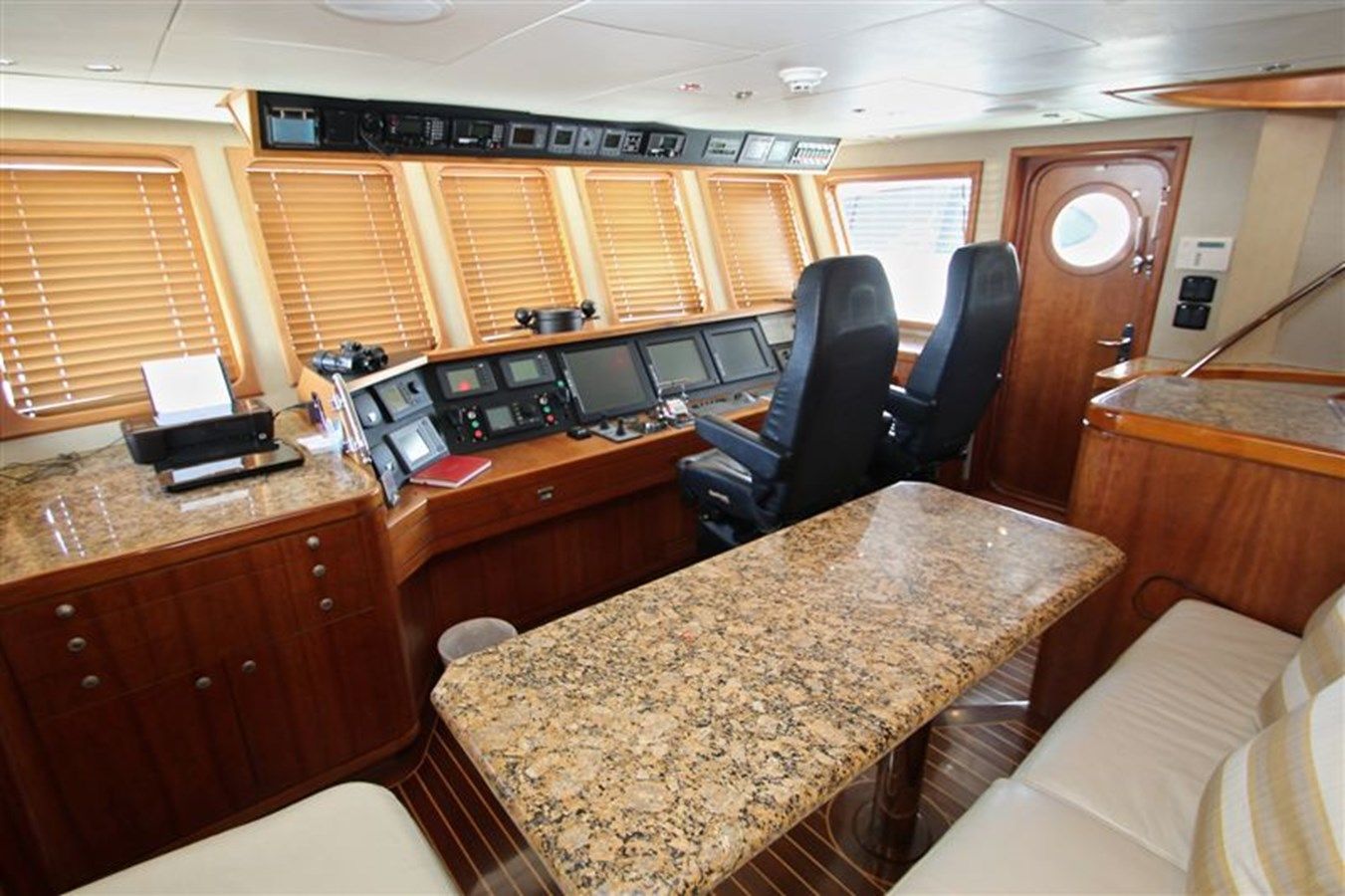
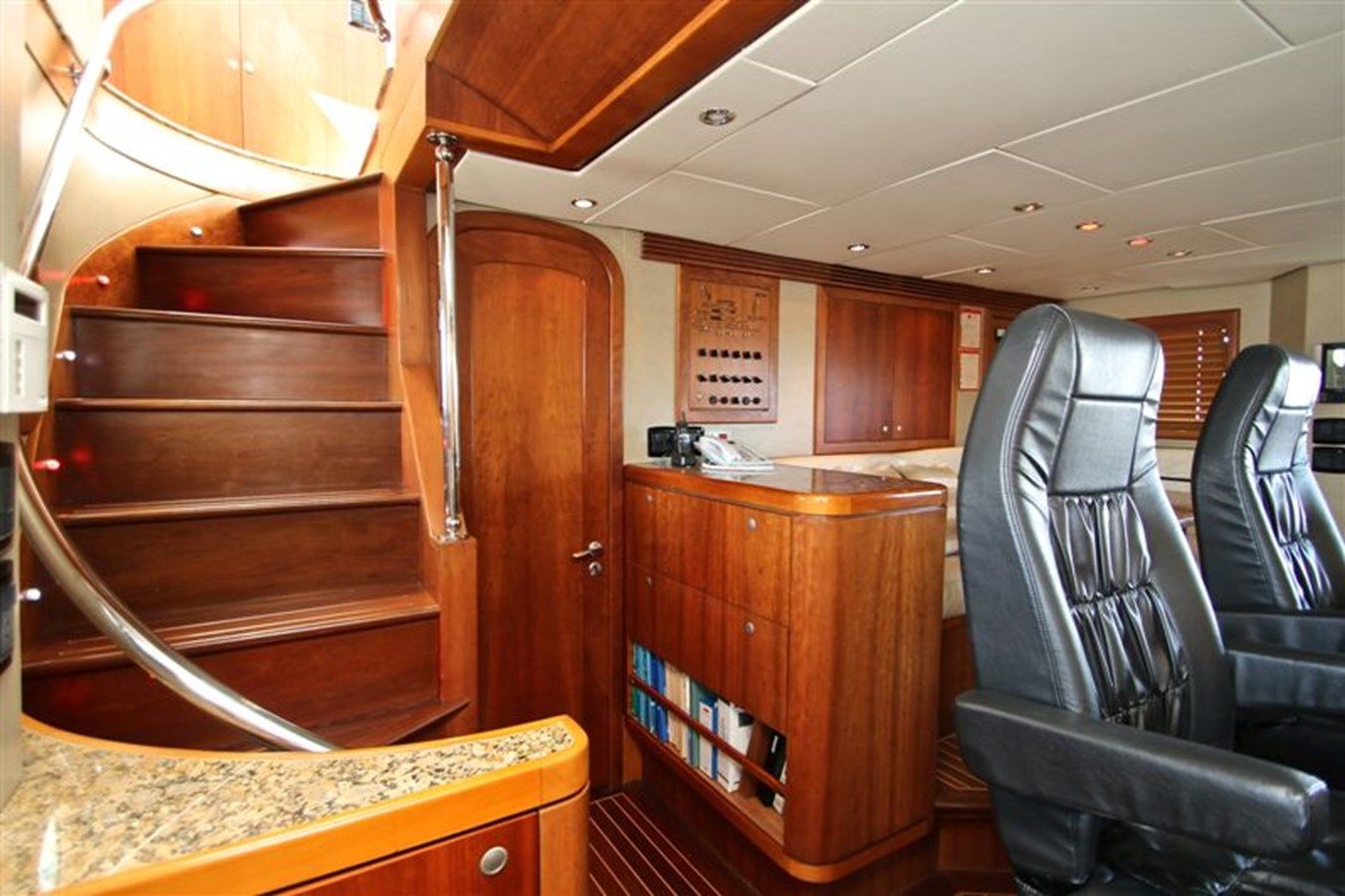
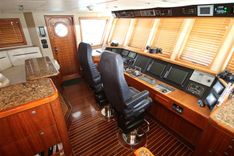
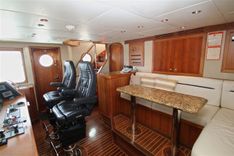
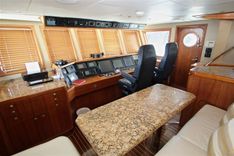
Ascending from the upper foyer brings you to a thoughtfully designed, comprehensively equipped wheelhouse. Twin air-adjustable helm chairs face a helm whose primary equipment the owner positioned for fingertip reach, much as in his airplane. A comfortable settee with granite table sits nearby, large enough to serve as a daybed if desired. Aft of the wheelhouse is the expansive sky lounge, and both the wheelhouse and the sky lounge can be closed off for privacy and to simplify night-passage operations.
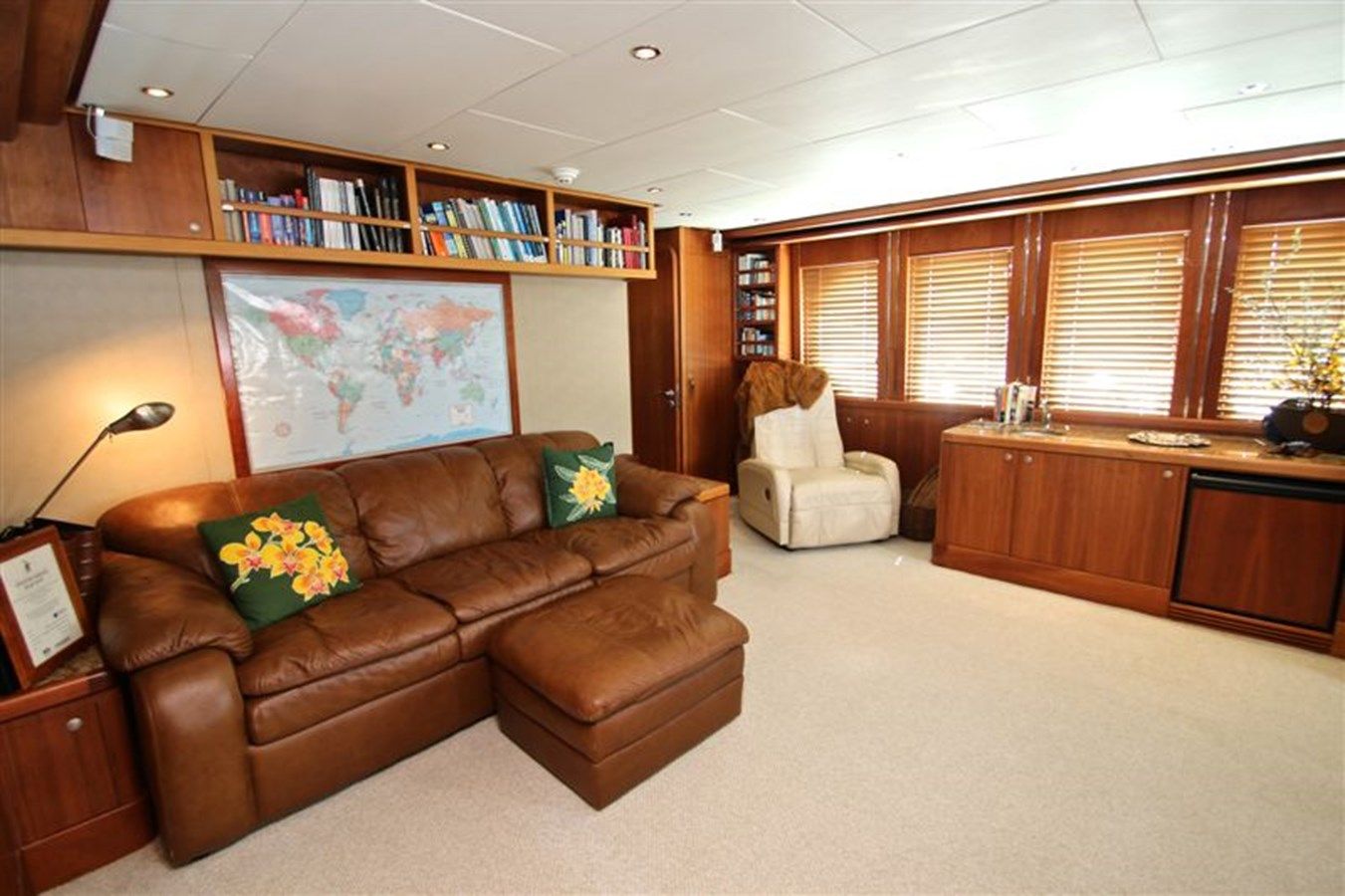
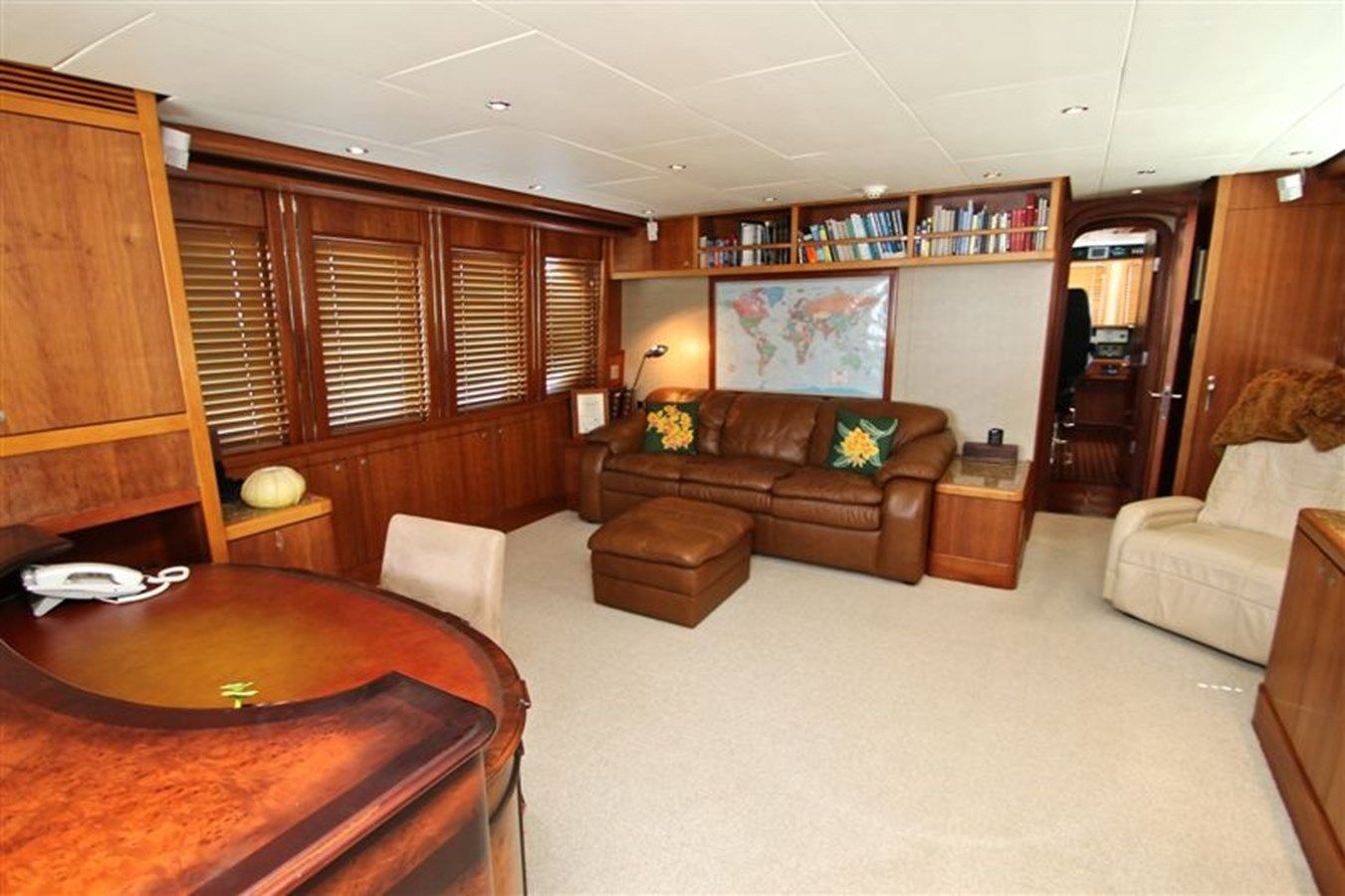
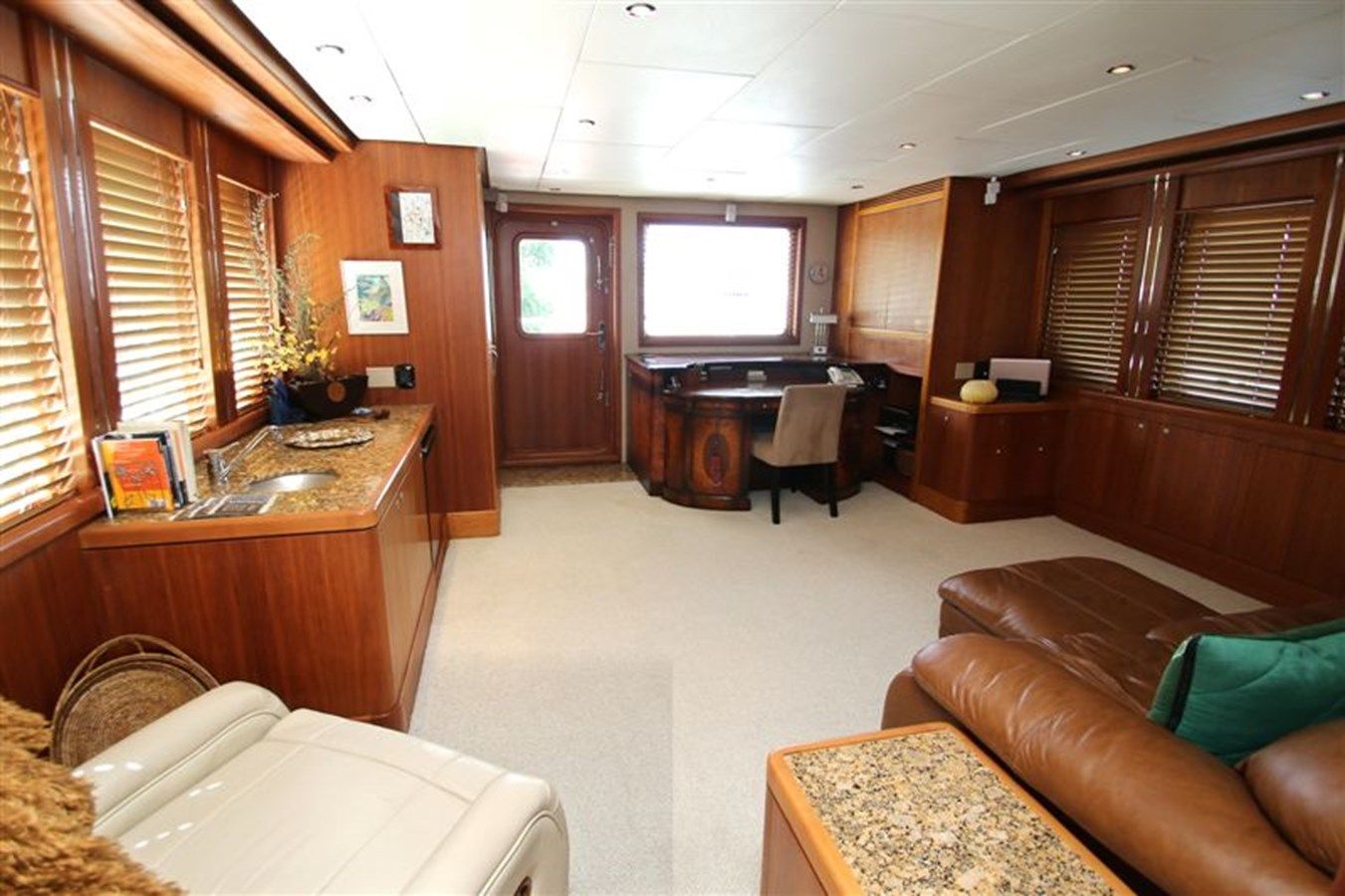
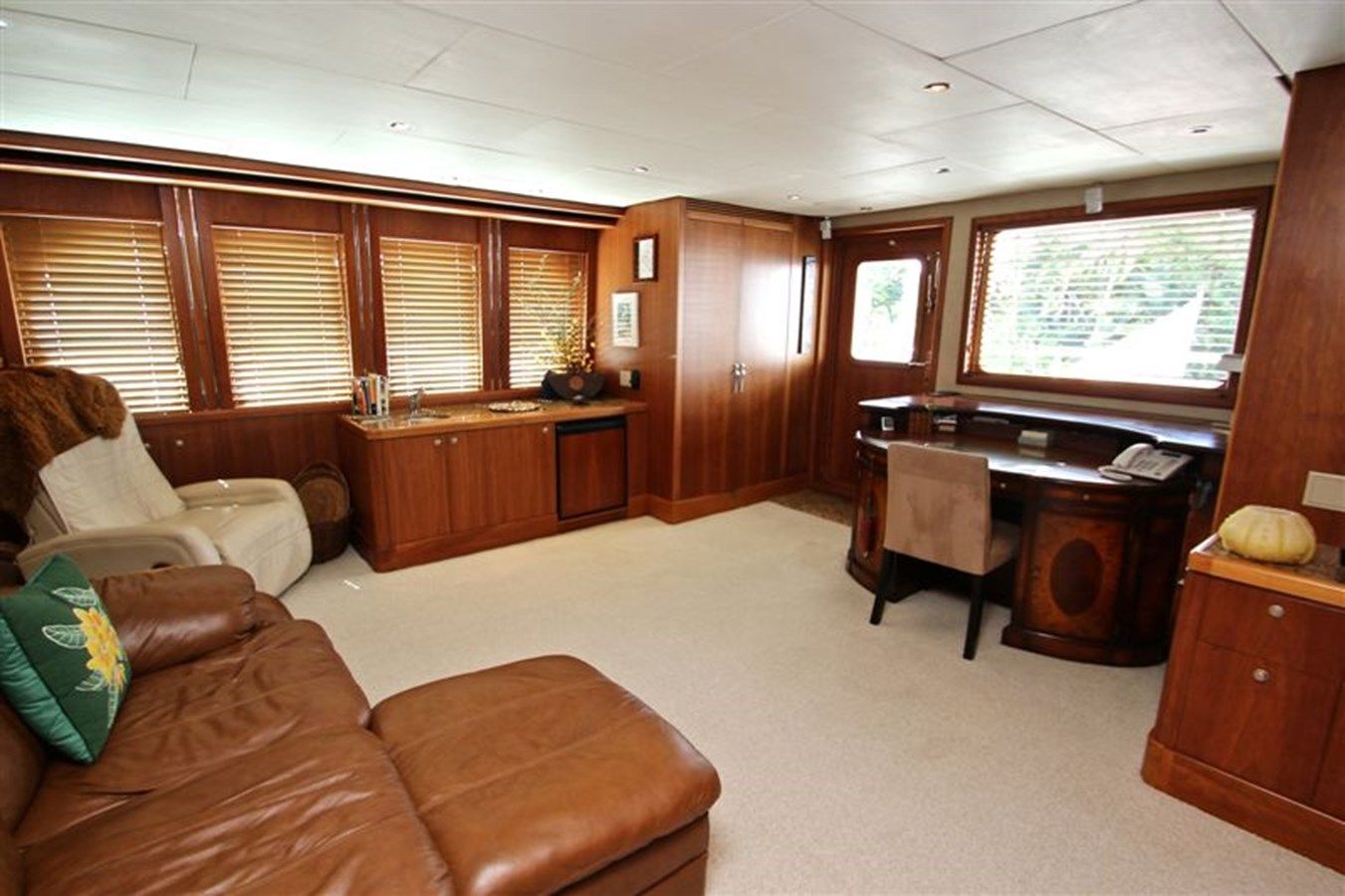
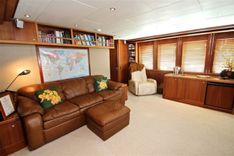
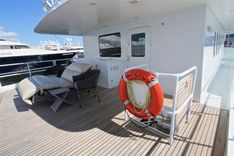
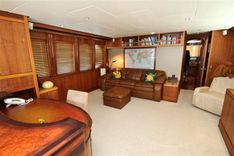
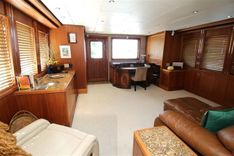
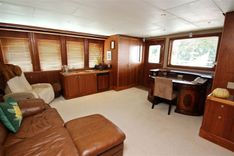
Entering the sky lounge, you first encounter a large head with a full-size shower. This space readily converts to a VIP fourth stateroom by pulling out the queen sofa bed; it includes hanging lockers and extensive storage and could be easily reconfigured into a second master stateroom. Alongside the comfortable pullout leather couch are a massage lounger, an antique desk, a pop-up TV with surround sound, and a bar area, while the desk conceals a dedicated computer and printer zone. Aft, a private deck offers a large double lounge chair, twin freezers housed in cabinetry, and stair access to the lower deck.
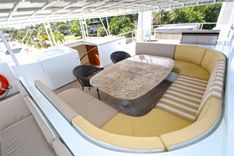
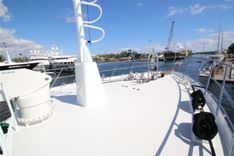
Climb again from the wheelhouse to the flybridge, which features a full helm, a large dining table, two large bench seats sized for lounging, a wet bar, a large gas BBQ, and a comfortable hot tub—a level of outdoor living space usually reserved for yachts over 120'.
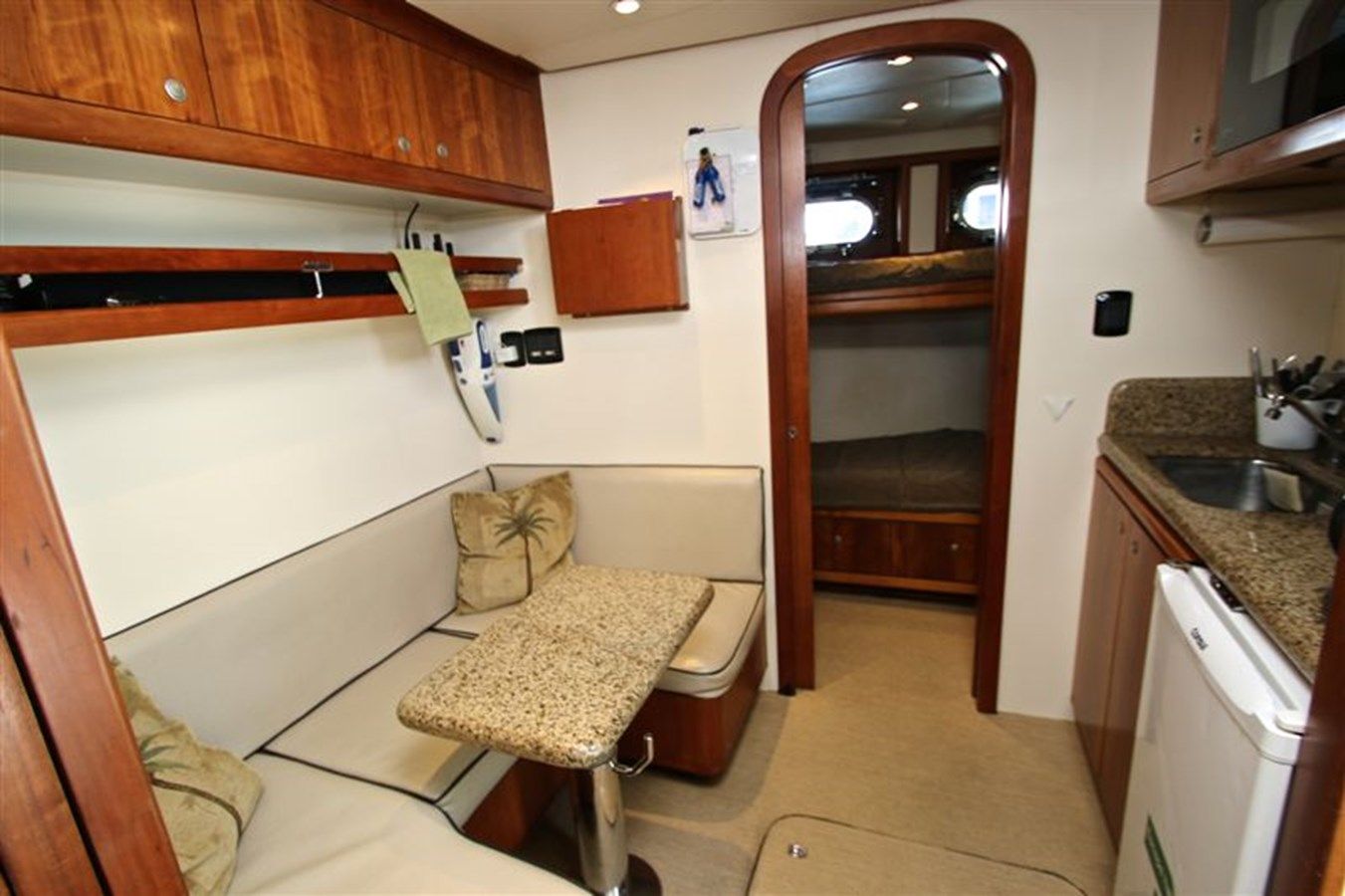
Crew accommodations lie forward off the large boat deck. On the centerline, a crew lounge provides a settee, TV, fridge, microwave, coffee station, and access to the lower service area. The captain’s cabin is to starboard with an oversized single bed, extensive storage, and a large head with an enclosed shower. To port, a crew cabin offers under-and-over bunks with a matching head, and forward of that is the crew garage with access to the chain lockers.
Appliances
Designed for effortless entertaining, the galley is appointed with a Maytag bottom-freezer refrigerator and a Maytag wide side-by-side refrigerator, a Thermador electric range and oven paired with a Zephyr overhead exhaust fan, a Miele dishwasher, and an Insinkerator hot water dispenser. In the lower foyer, a Miele washing machine and Miele condenser dryer provide discreet laundry capability. The crew galley and service area feature a GE Advantium Speedcock oven along with a Miele washing machine and Miele condenser dryer to streamline service. On the flybridge, guests enjoy the convenience of a U line bar fridge, a U line icemaker, and a DCS propane barbecue. For connoisseurs, a custom Wine Cooler cool case wine storage can hold up to 500 wine bottles.
Pilothouse
Impetus’s pilothouse is meticulously conceived, providing excellent, well-organized storage for charts, service manuals, and books. The large settee is proportioned to serve as a pilot berth when needed, and visibility is superb from the settee as well as from the two helm chairs. Extensive backup supports all key equipment, and the layout affords easy, direct access to the wing stations and the fly bridge. Comprehensive operational manuals and detailed inventory lists are included.
2024 remarks
Recent upgrades and work underscore meticulous care: ABS and MCA inspections have just been completed, new main breakers have been installed, the majority of ceiling and wall panels have been replaced, most light switches have been replaced, and service on the main engines has been completed.
Specifications
- Accommodations:
- 8 staterooms
- Length:
- 95' (28.96m)
- Beam:
- 24' (7.32m)
- Draft:
- 21.872' (6.6666m)
- Year Built:
- 2005
- Builder:
- INACE
- Category:
- Motor yachts
- Engines:
- 2 engines Caterpillar
- Cruise Speed:
- 10 Kts.
- Max Speed:
- 13 Kts.
- Location:
- United States



Yacht name «Impetus» – INACEis for sale and located in Fort Lauderdale, United States
Motor yachts «Impetus» built by manufacturer INACE in 2005— available for sale. Yacht location: United States. If you are looking to buy a yacht «Impetus» or need additional information on the purchase price of this INACE,
please call: +1 (954) 274-4435 USAOnly deal with professionals!