
 Licensed Yacht BrokersYachts for Sale
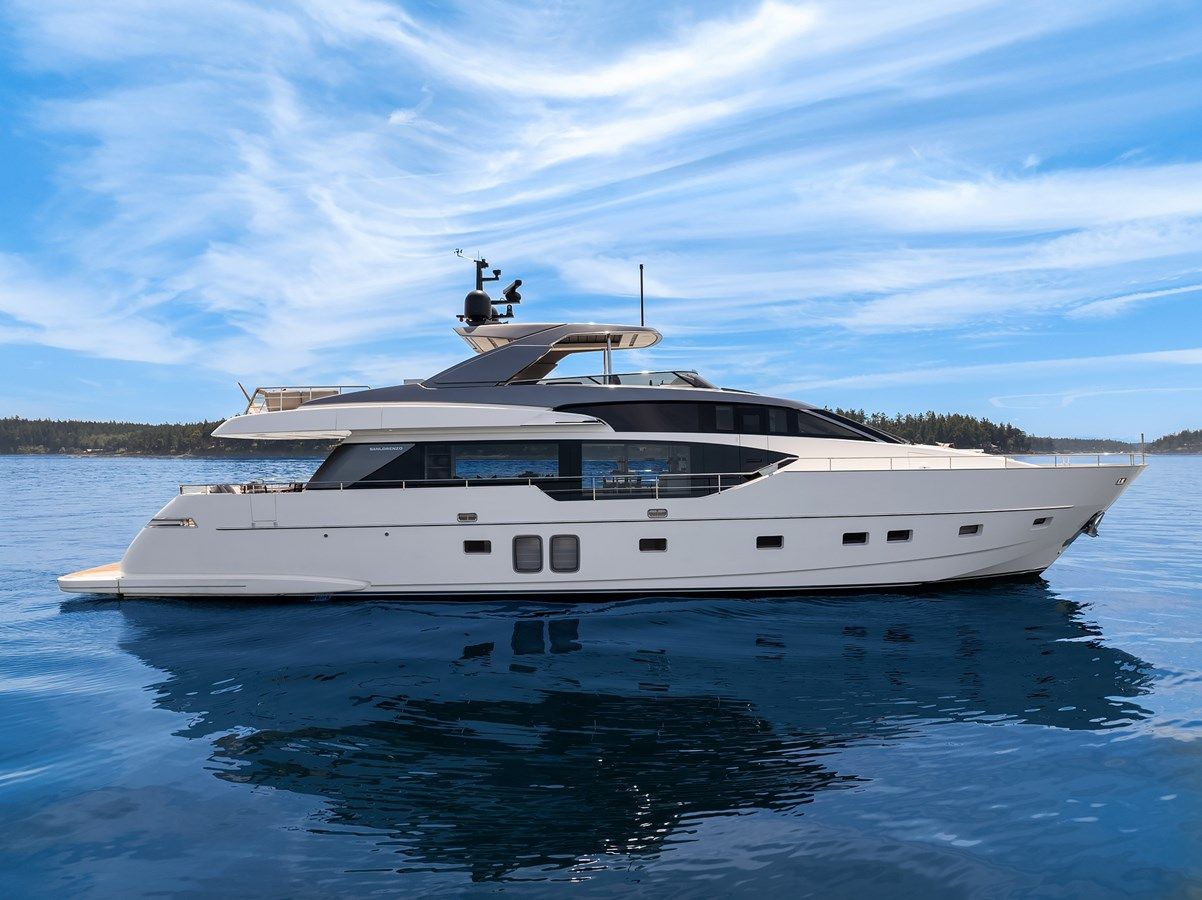
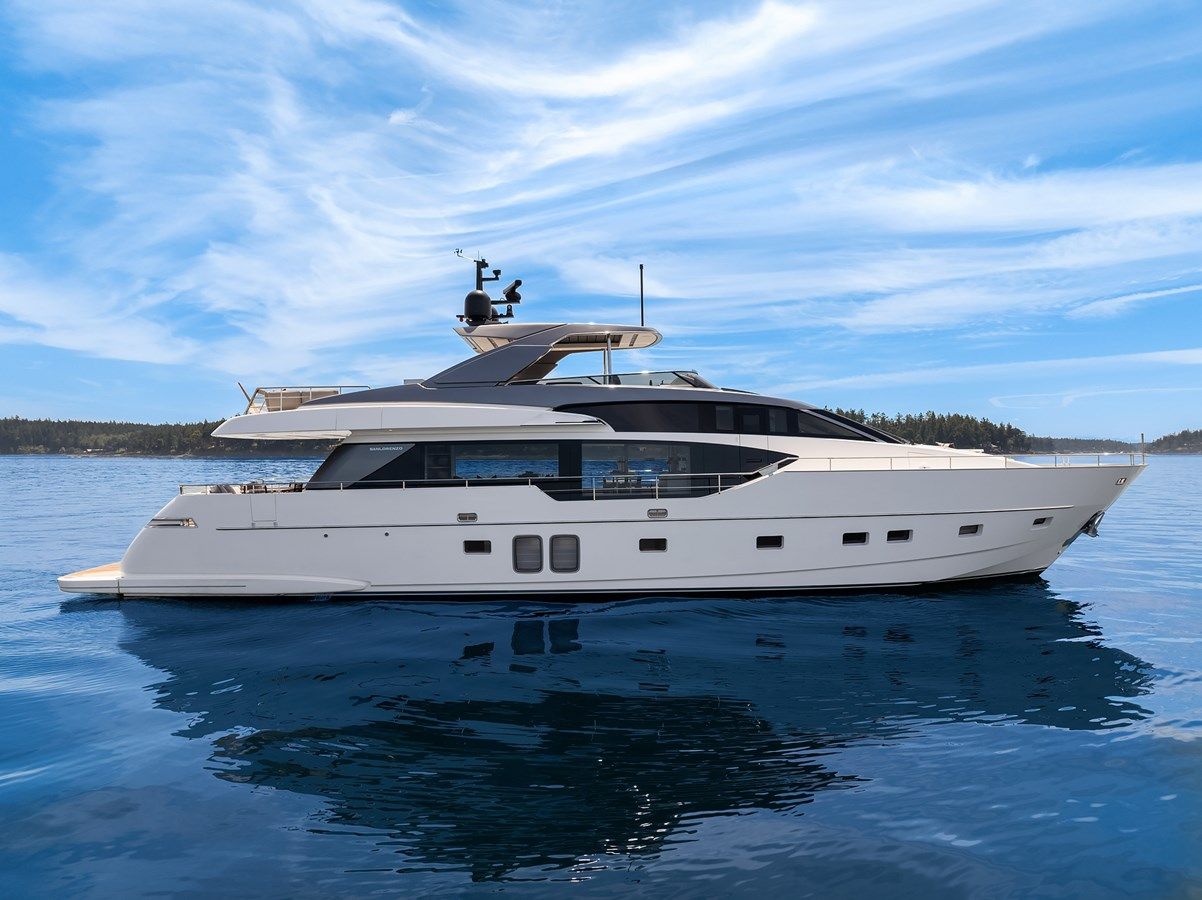
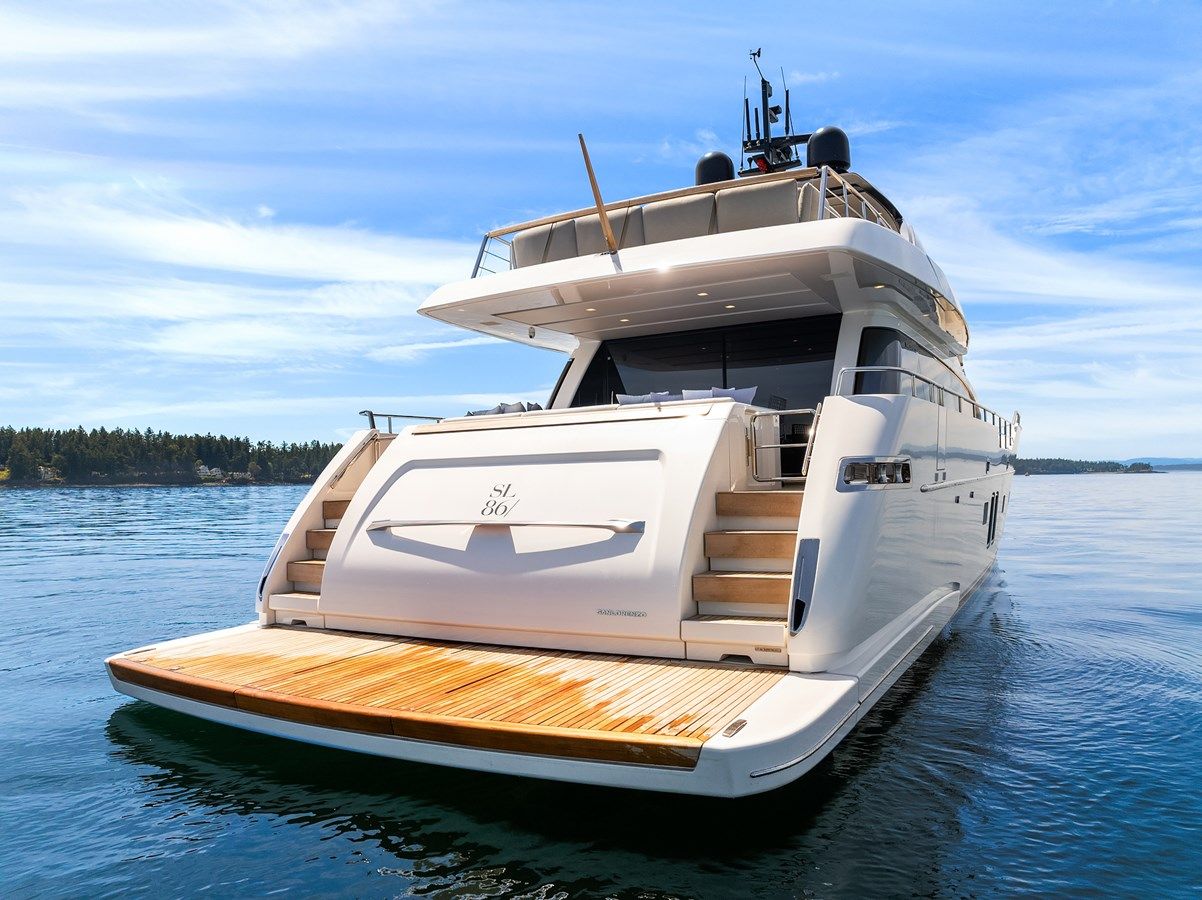
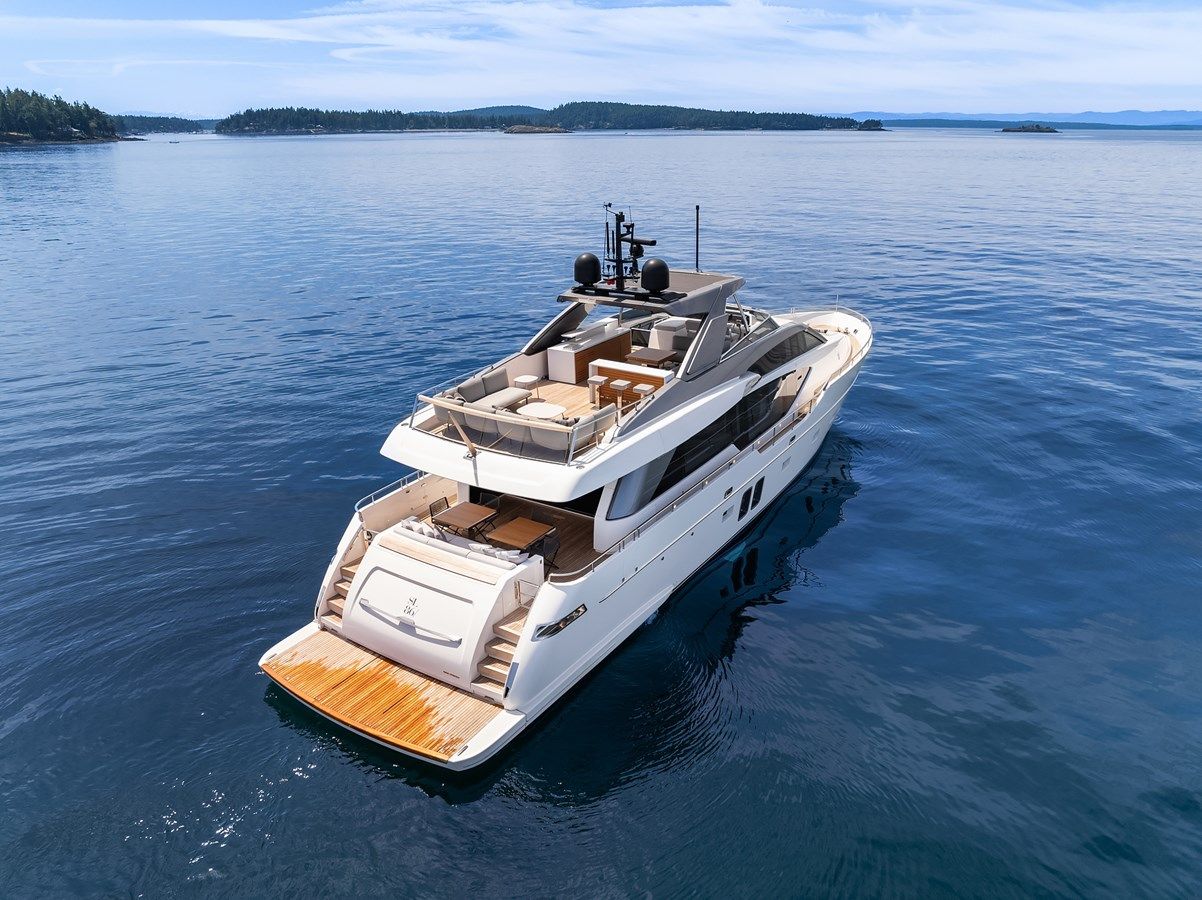
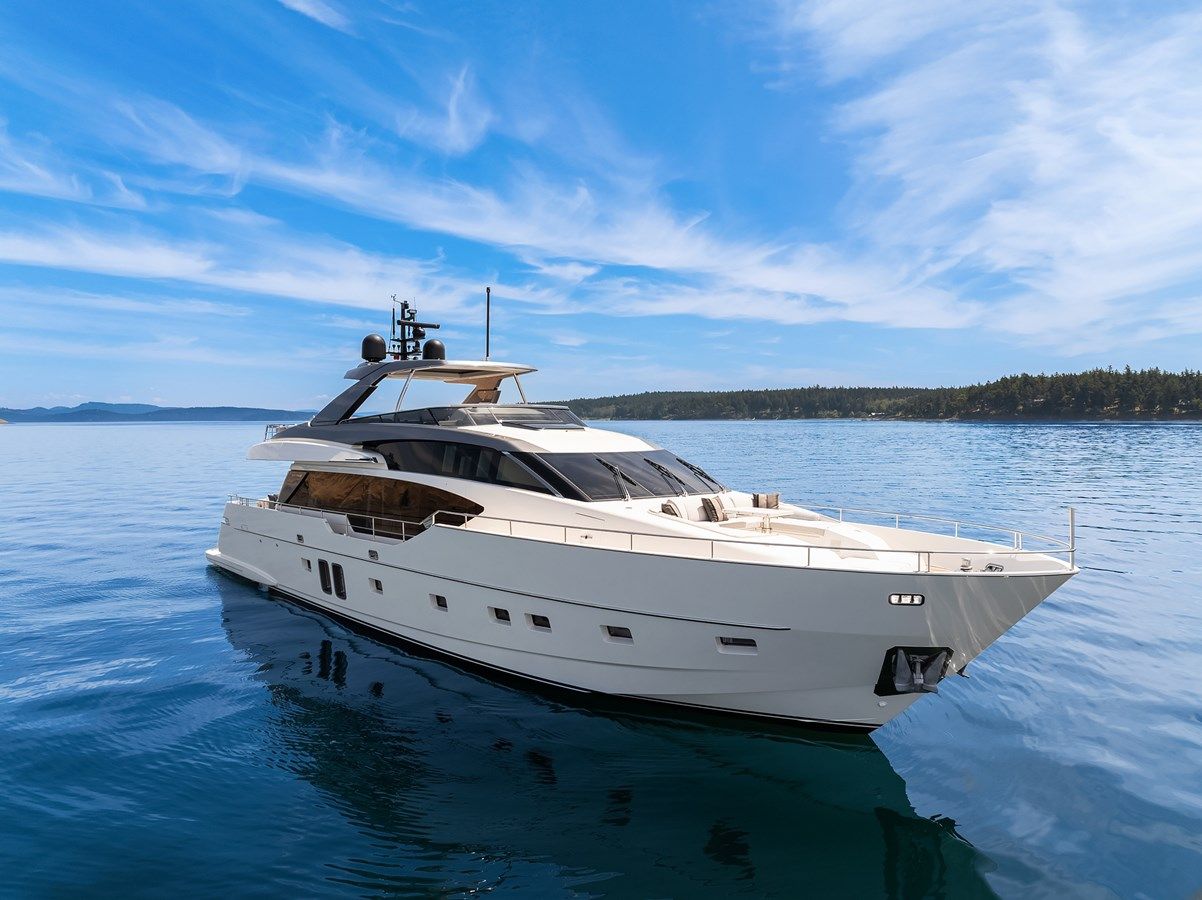
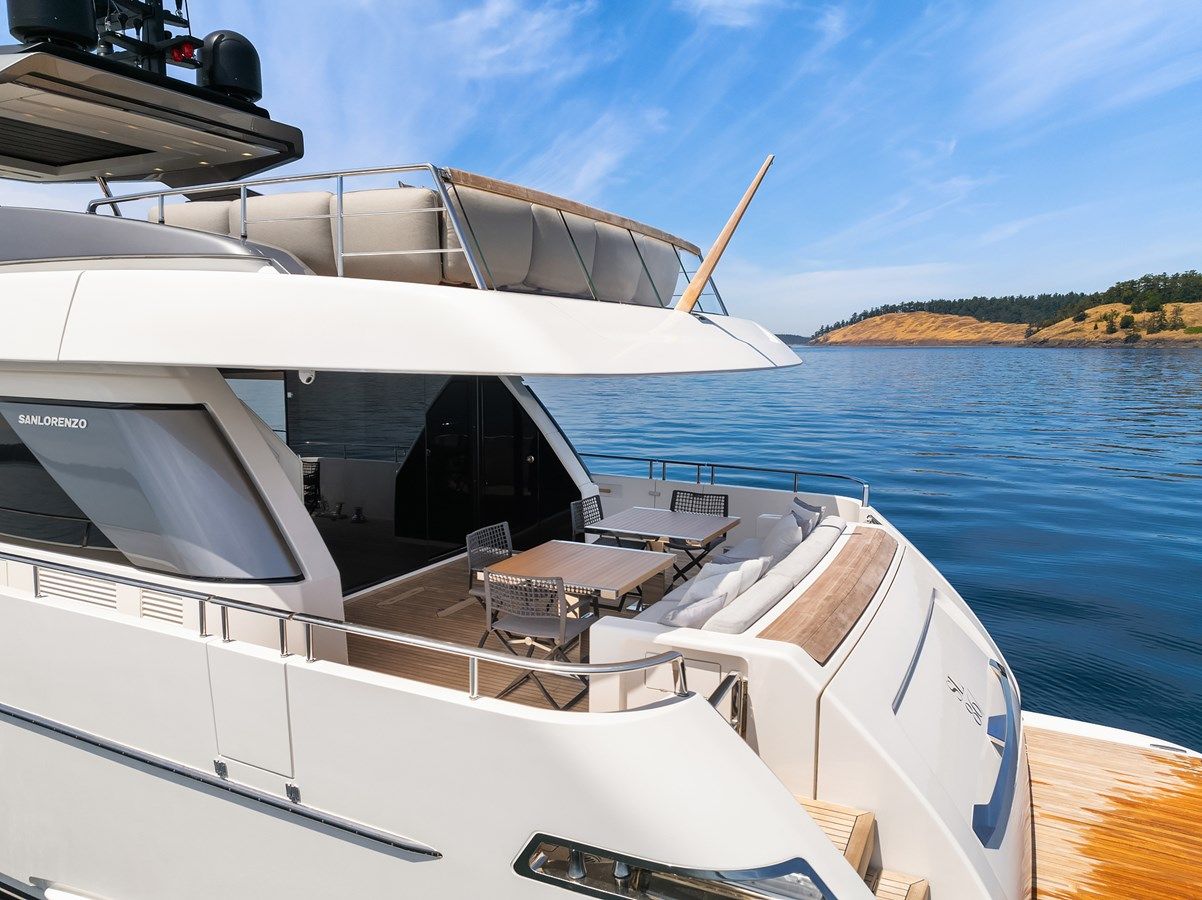
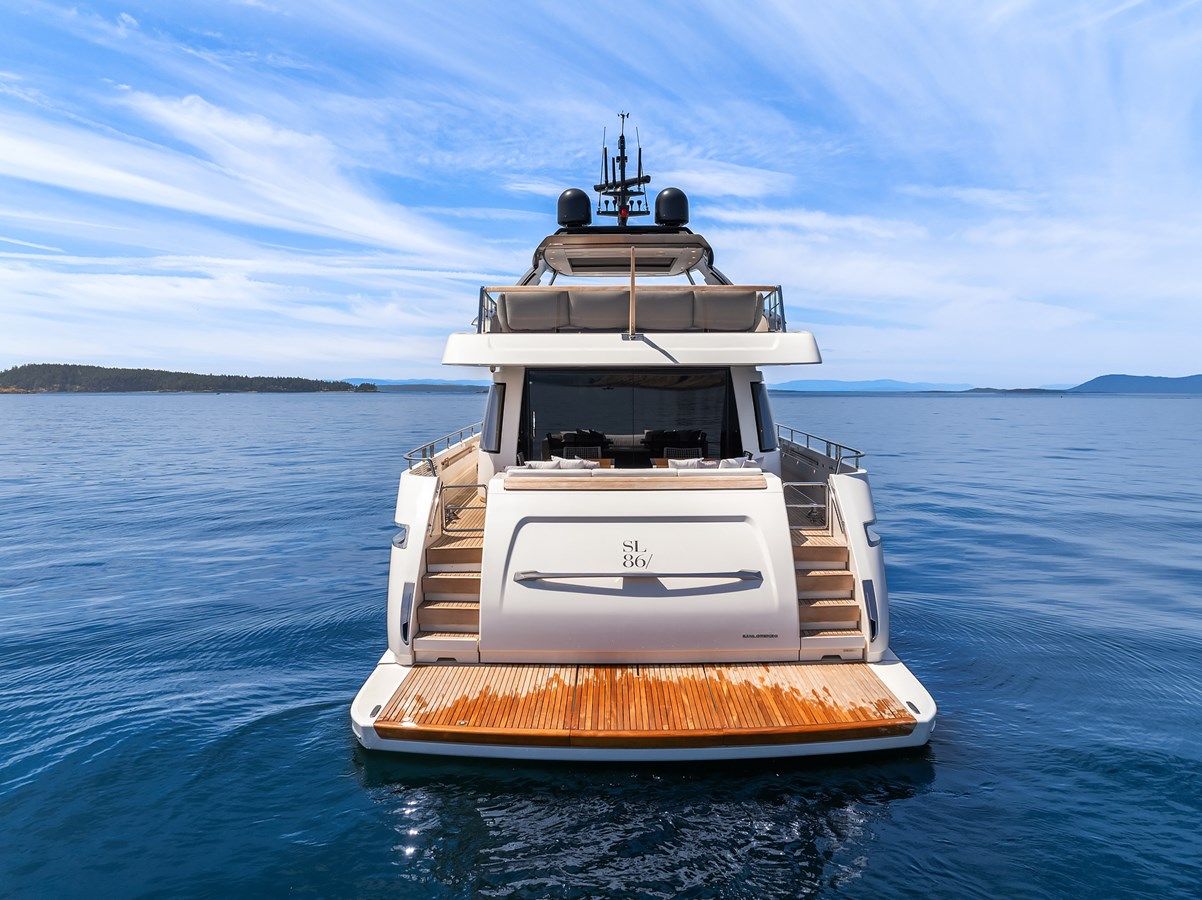
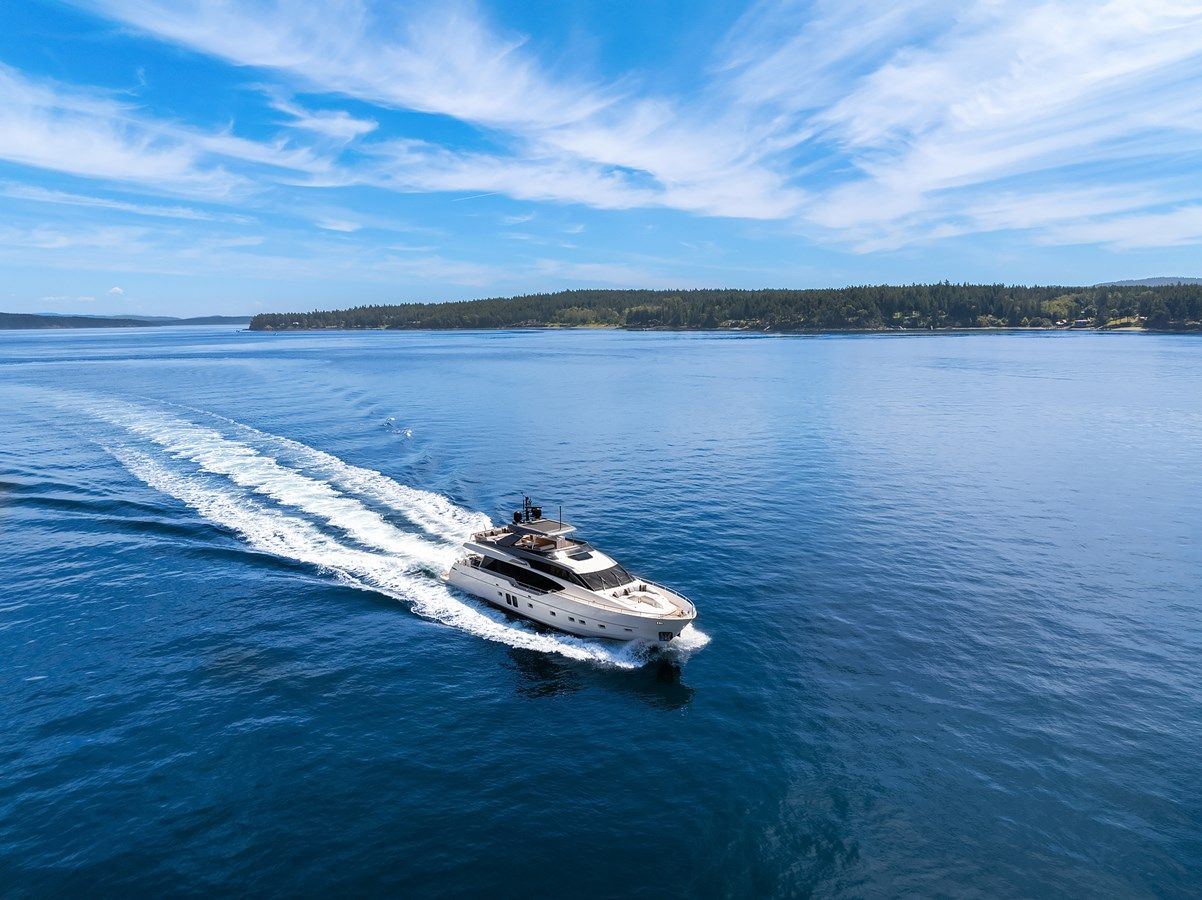
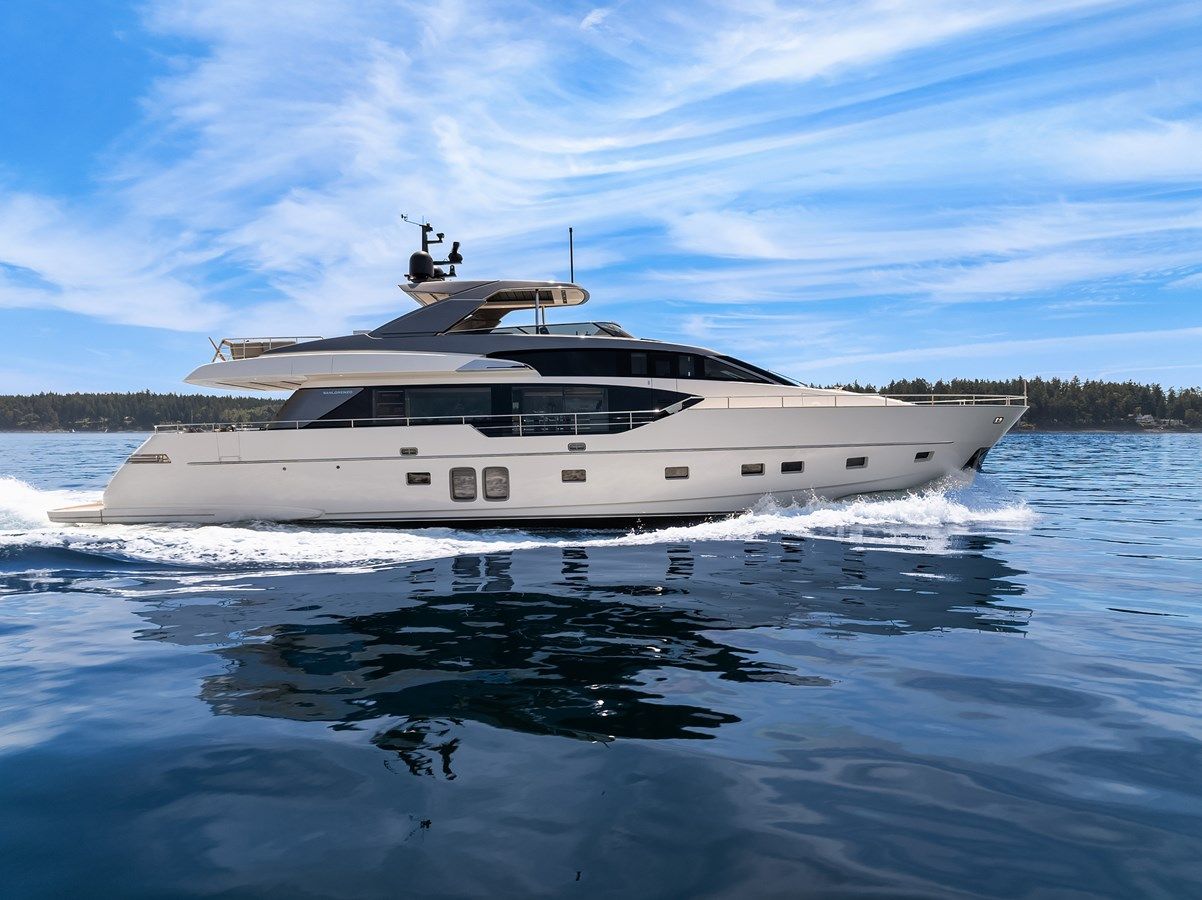
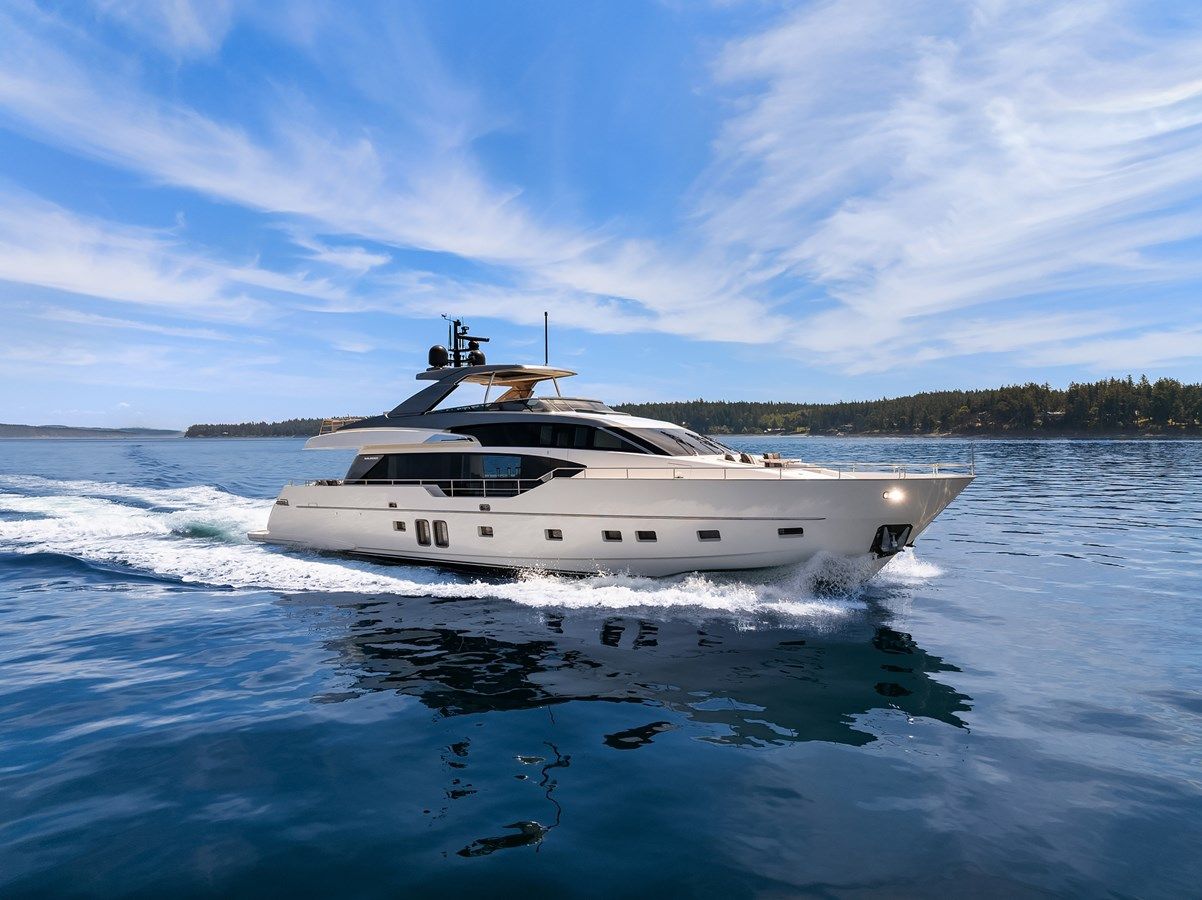
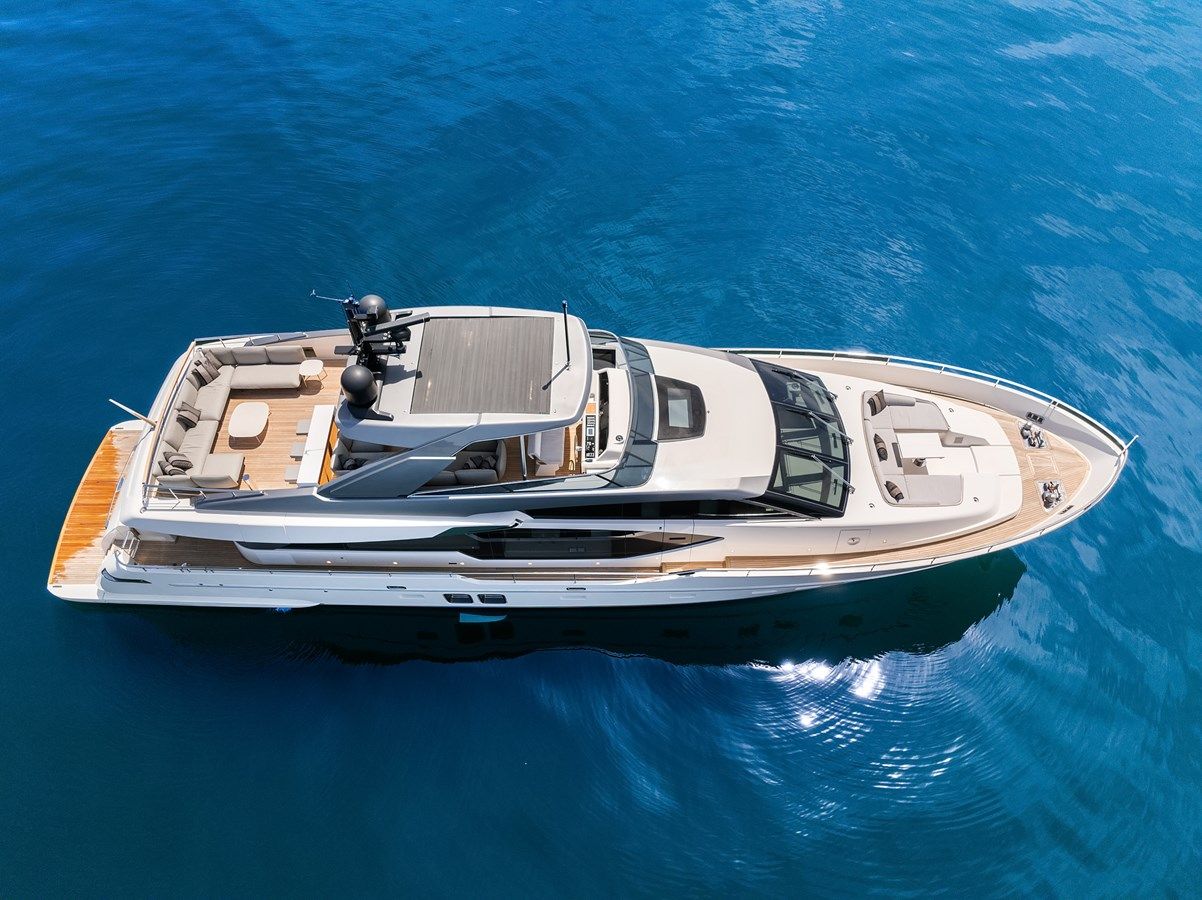
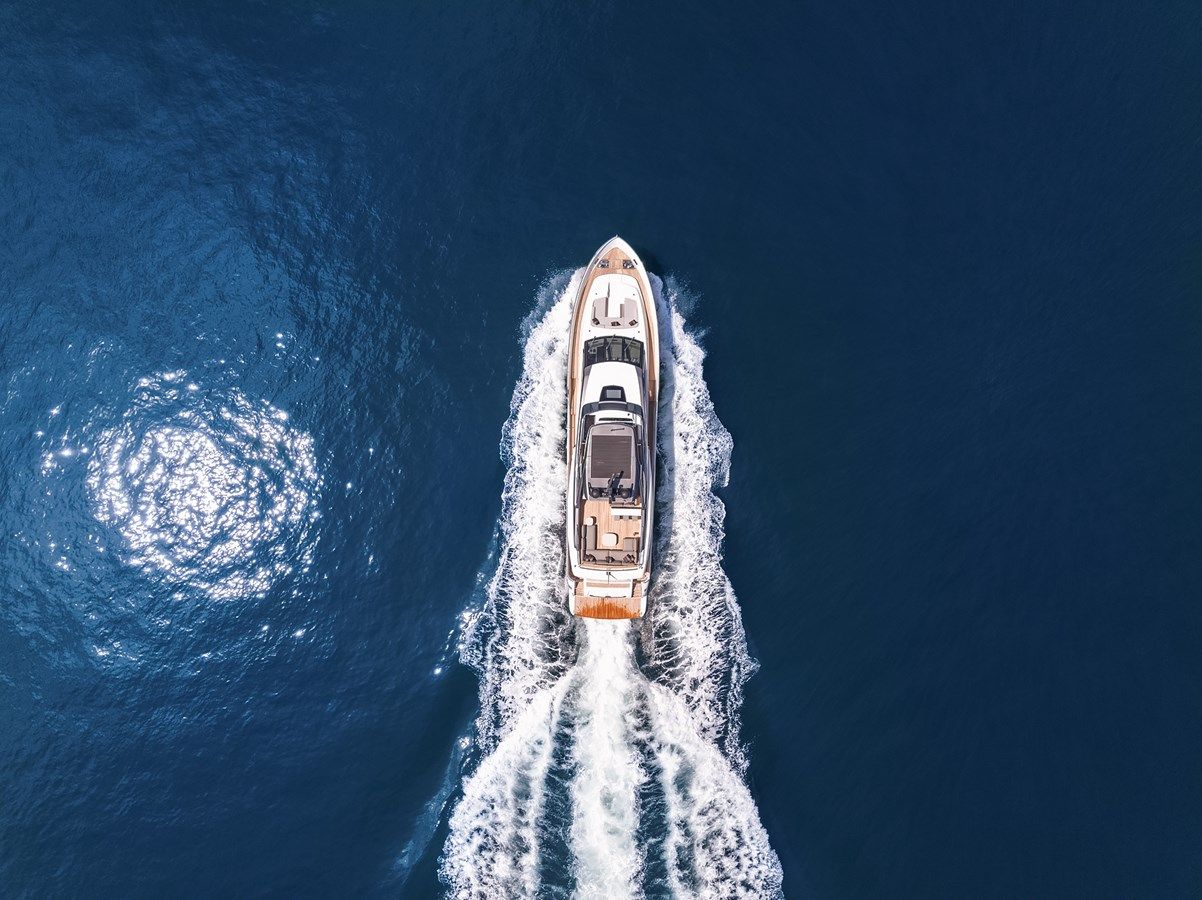
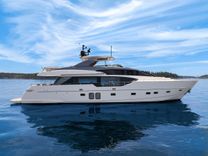
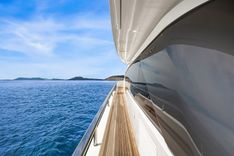
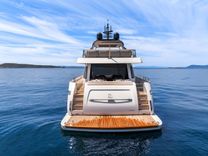
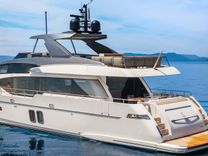
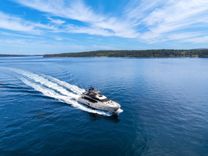
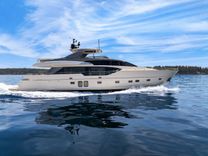
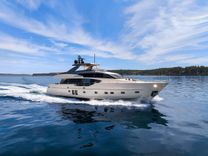
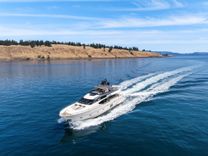
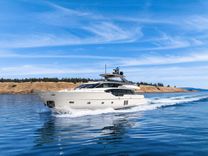
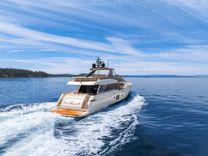
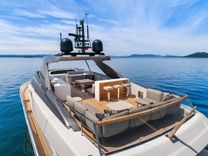
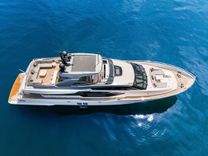
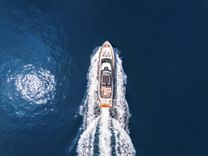
ESSENZA - Sanlorenzo FOR SALE




Basic information
Dimensions
- LOA:
- 86' (26.21m)
- Beam:
- 20' (6.35m)
- Max Draft:
- 20.23' (6.17m)
Speed, capacities and weight
- Cruise Speed:
- 27 Kts. (31.07 MPH)
- Max Speed:
- 32 Kts. (36.83 MPH)
- Water Capacity:
- 449.09 Gallons
- Fuel Capacity:
- 2113.43 Gallons
Accommodations
- Total Heads:
- 6
- Crew Cabin:
- 2
Hull and deck information
- Hull Material:
- Fiberglass and Plastic Yachts
- Deck Material:
- GRP
- Exterior Designer:
- Officina Italiana
- Interior Designer:
- Sanlorenzo
Engine information
- Engines:
- 2
- Manufacturer:
- MTU
- Engine Type:
- Inboard
- Fuel Type:
- Diesel
Overview
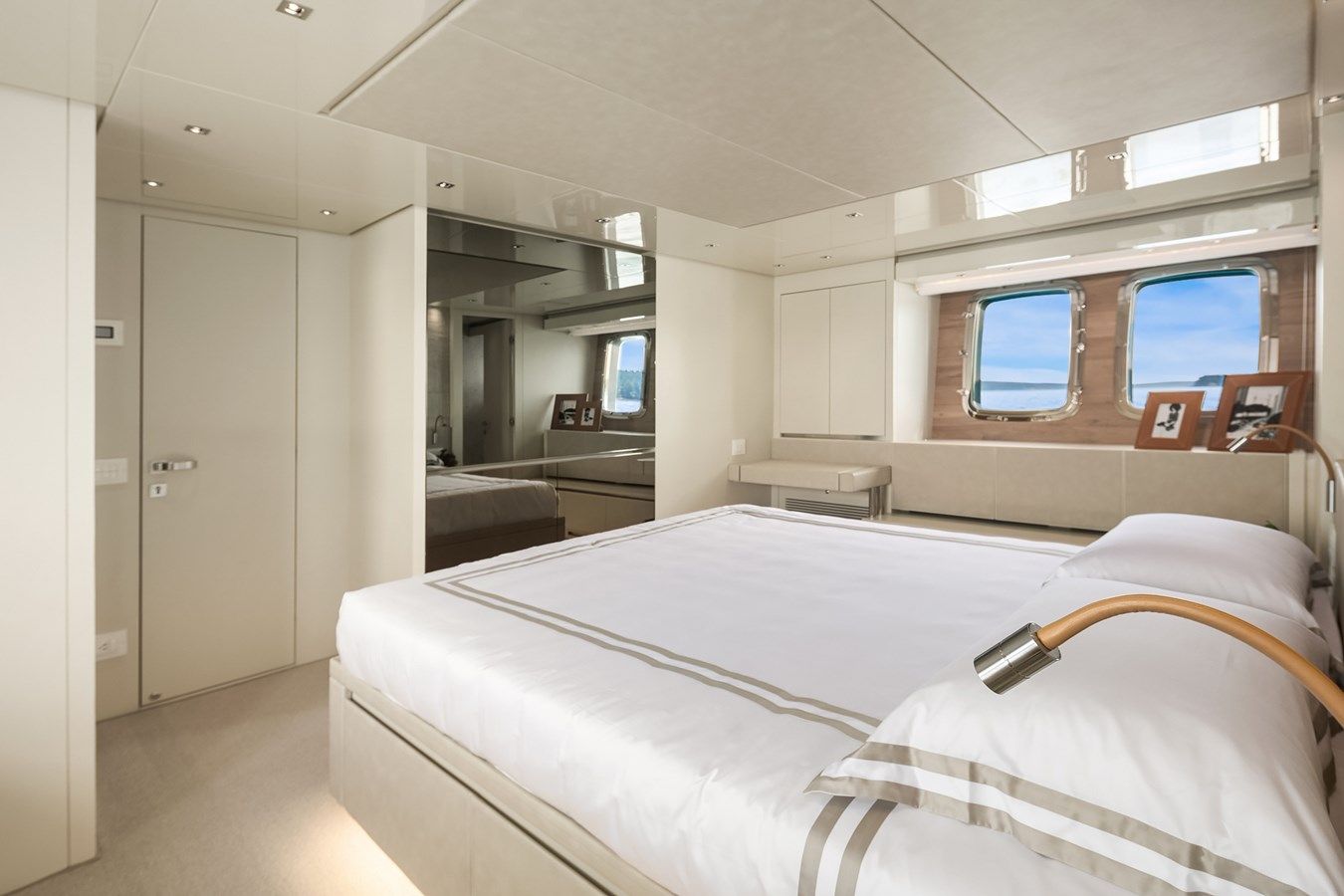
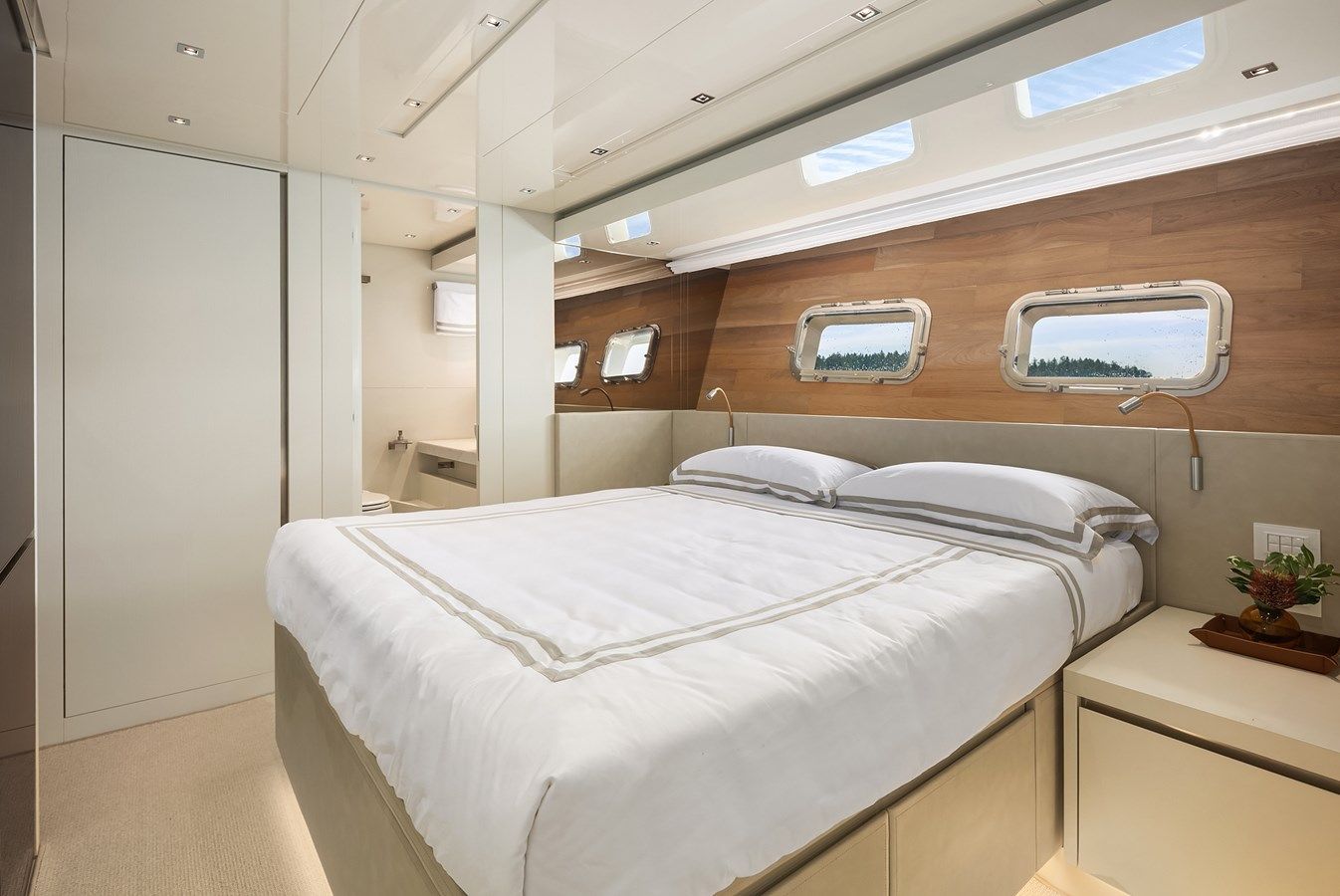
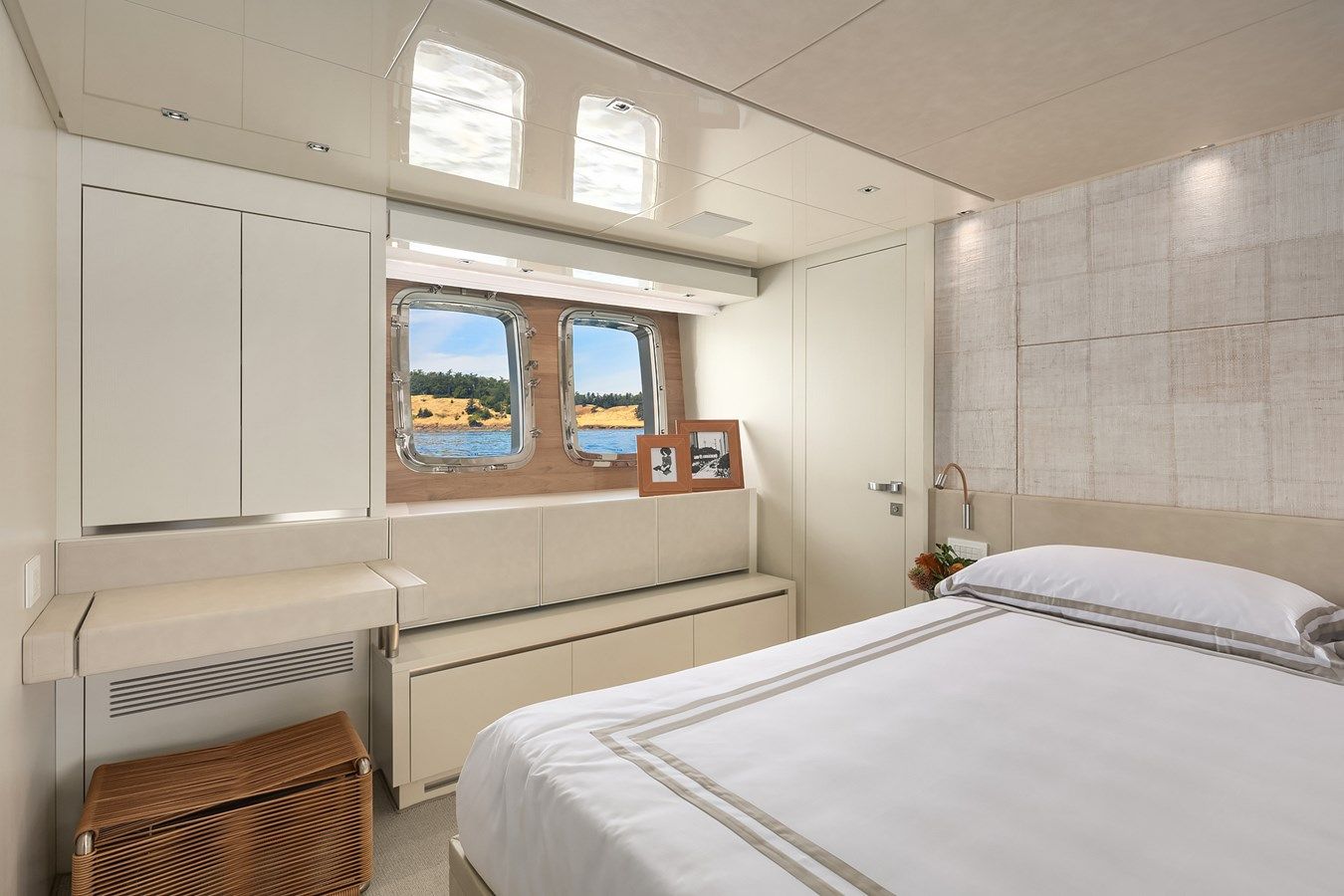
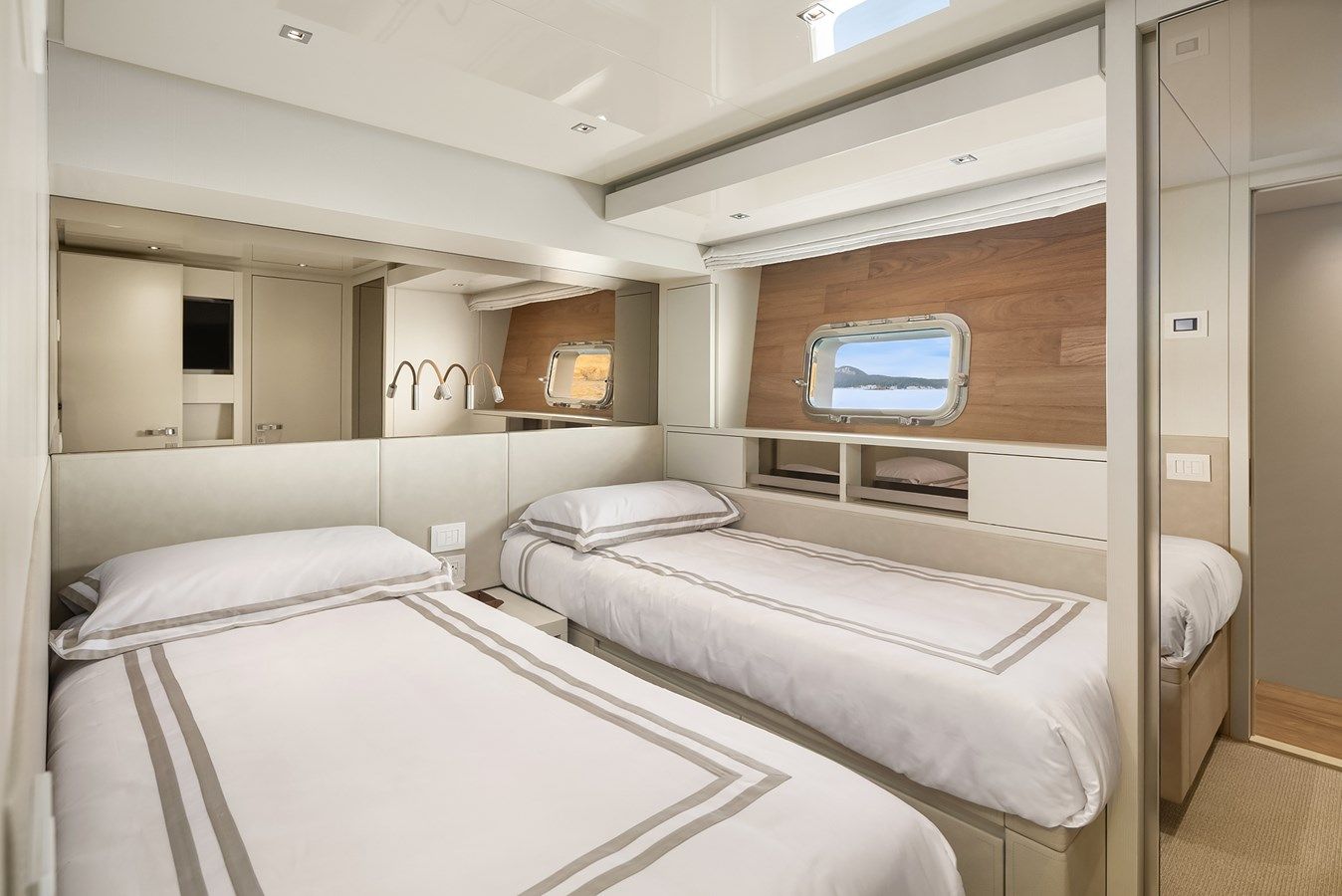
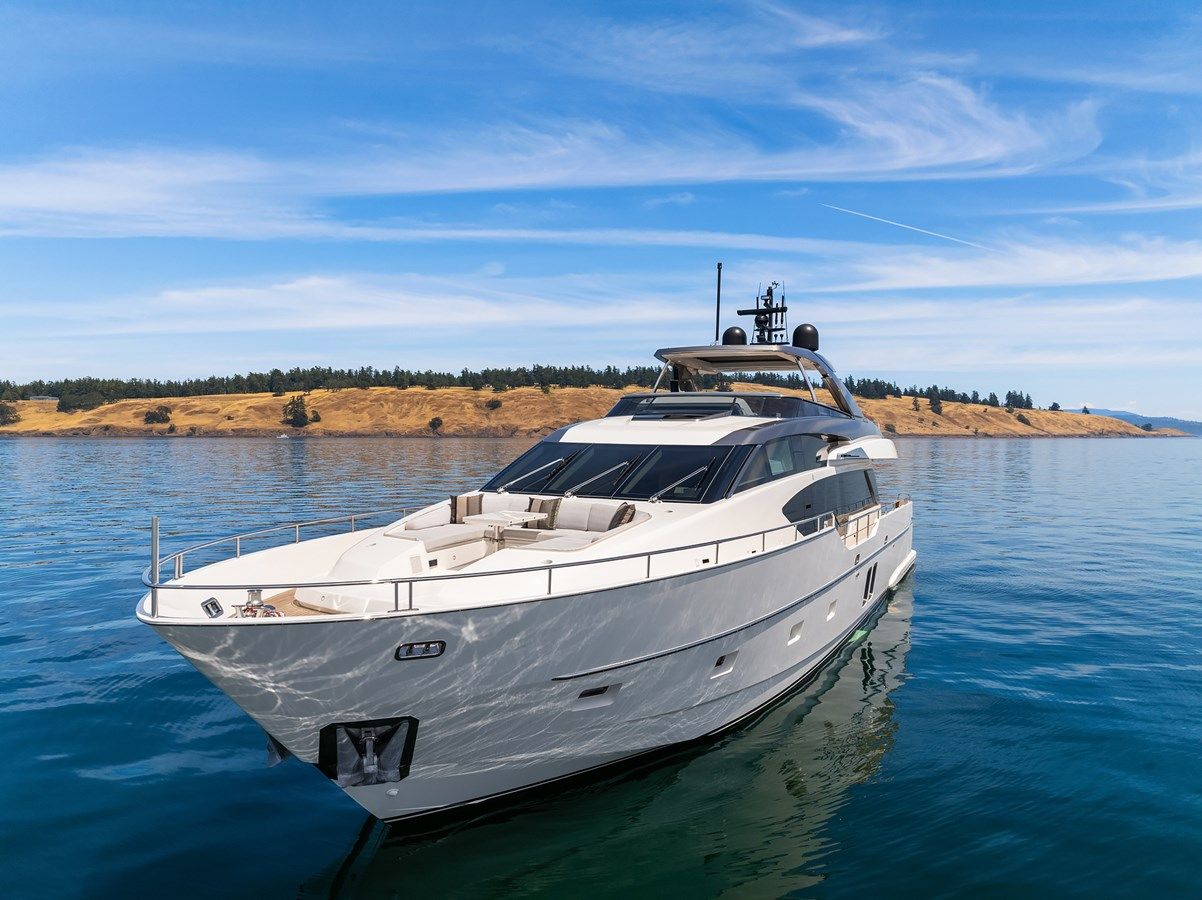
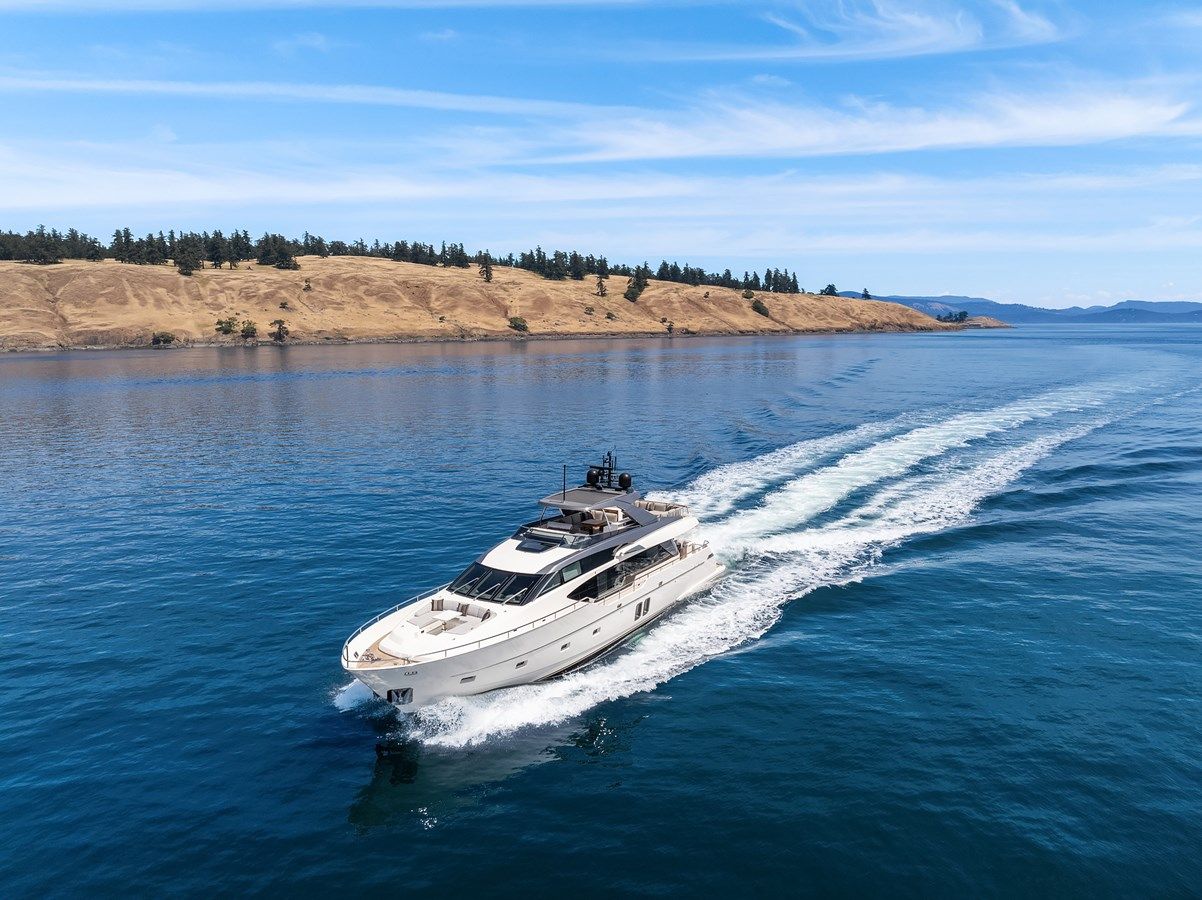
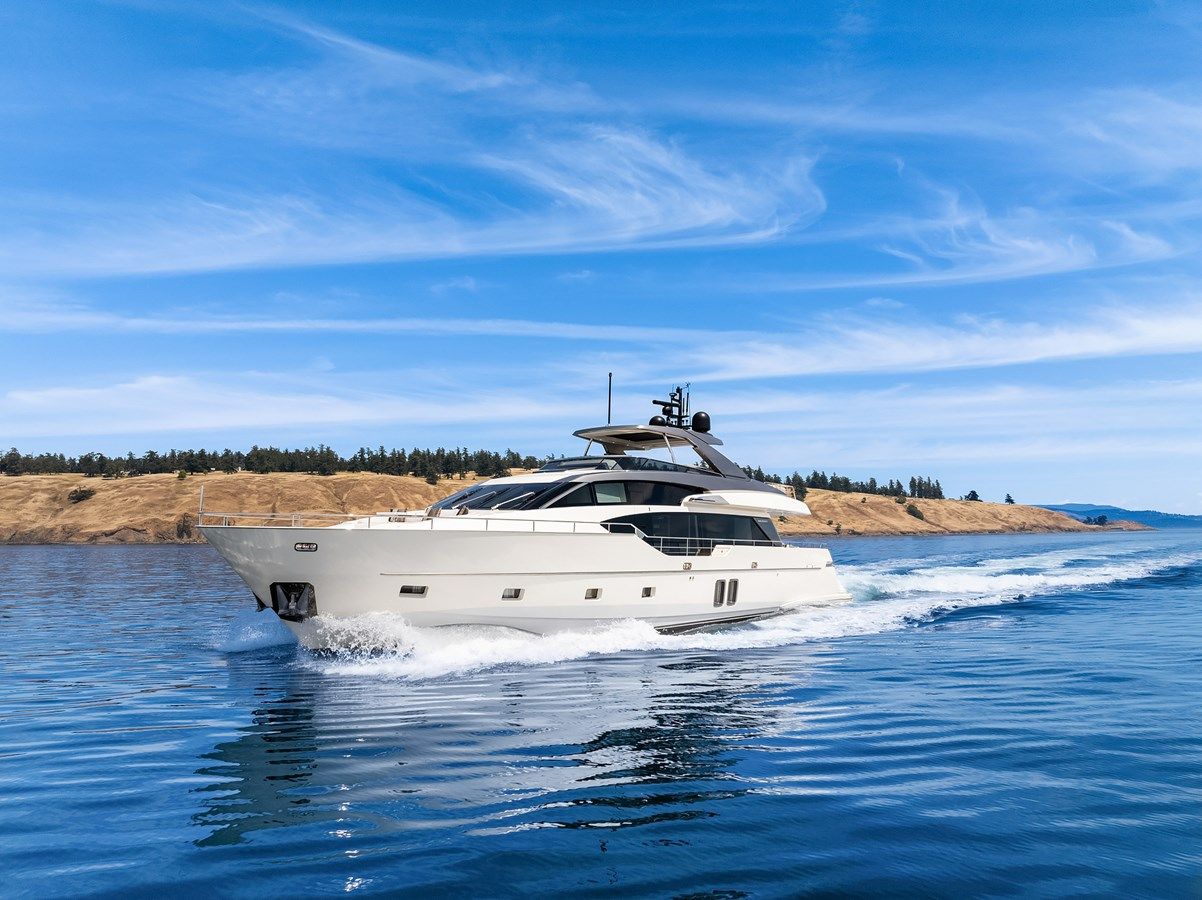
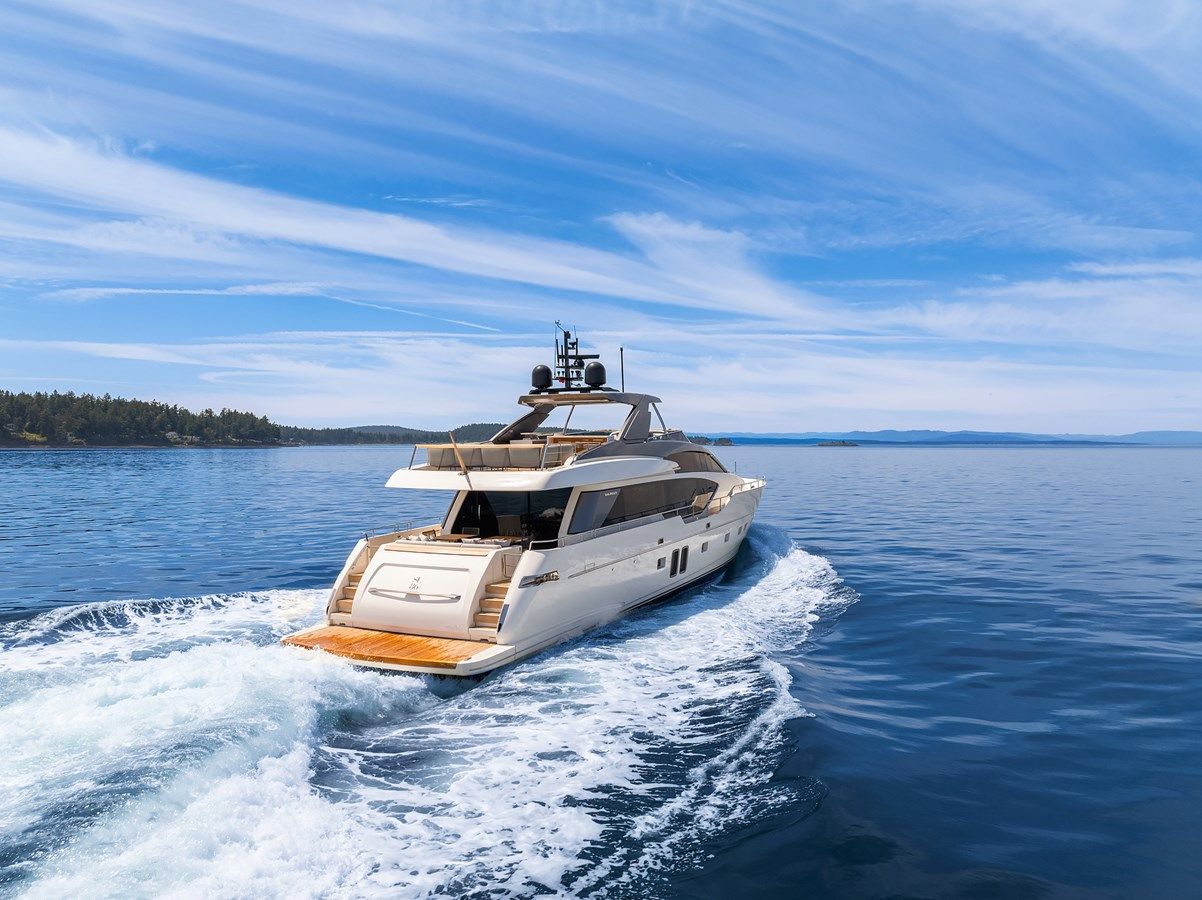
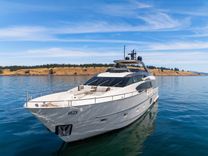
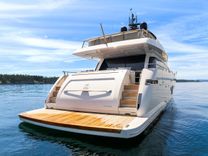
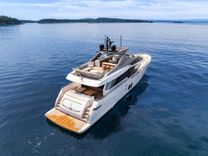
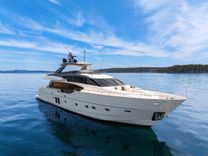
The luxury motor yacht 86L measures 87ft / 26.76m and is offered for sale, crafted and launched by renowned superyacht builder Sanlorenzo. This elegant yacht hosts up to 8 guests in 4 staterooms, with quarters for 3 crew. Please see Other Details below for complete specifications.
Detailed Description
General description
The SANLORENZO 86 is a motor yacht built to the attached General Plans, constructed at the SANLORENZO Ameglia shipyard with naval architecture and engineering by SANLORENZO, an exterior by OFFICINA ITALIANA, and interiors by SANLORENZO. It embodies the marque’s exceptional build quality and a thoughtful layout that prioritizes both elegance and practicality.
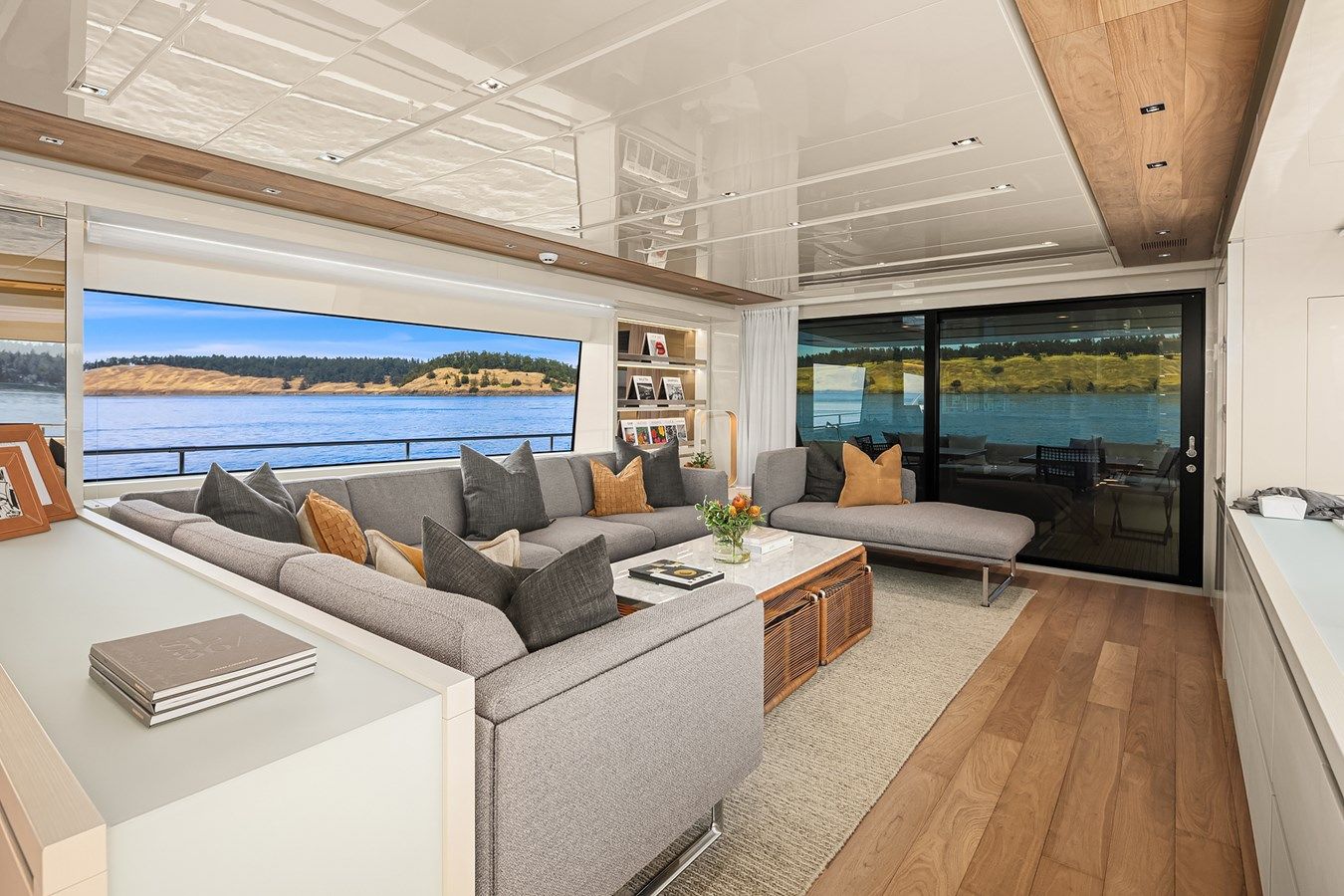
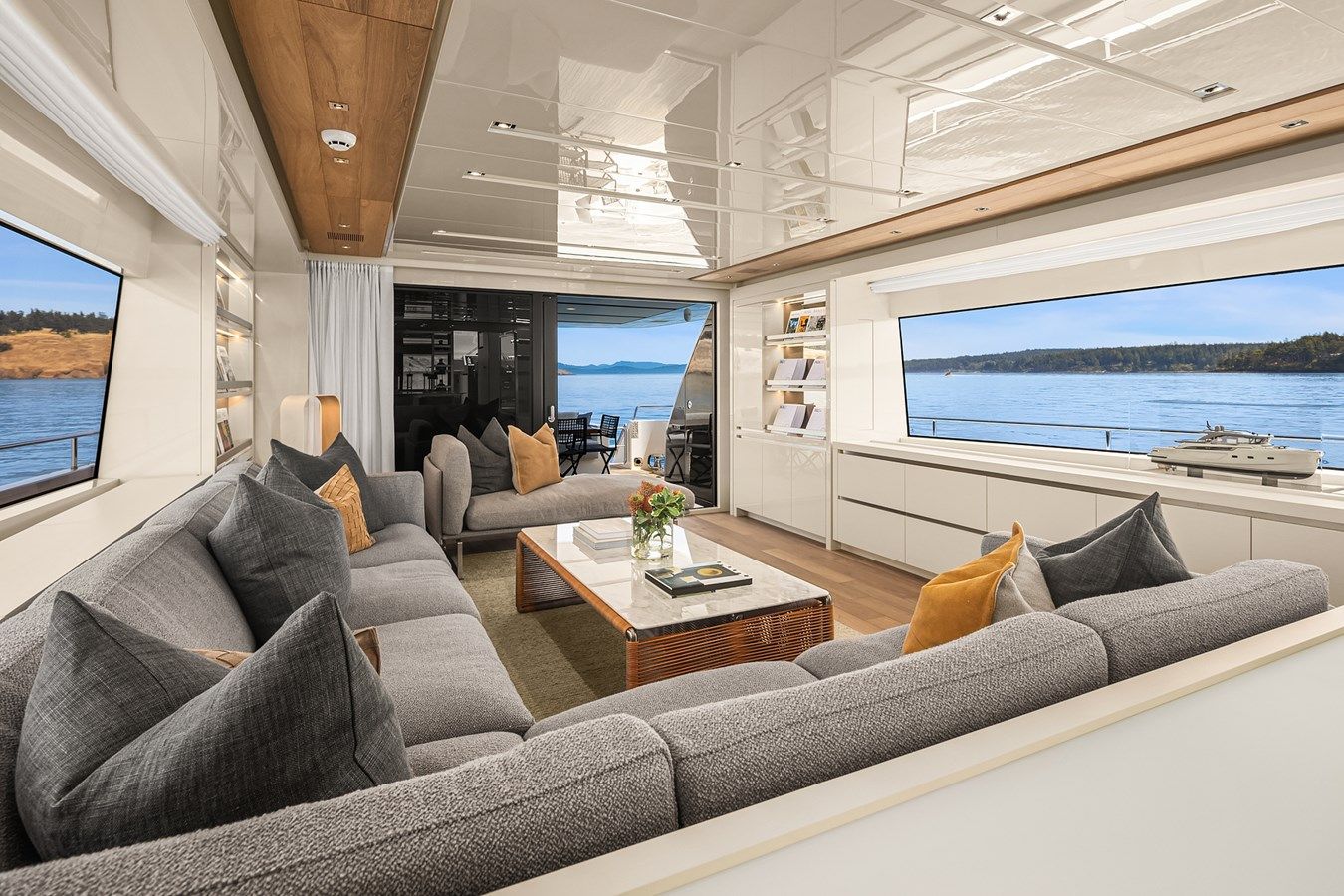
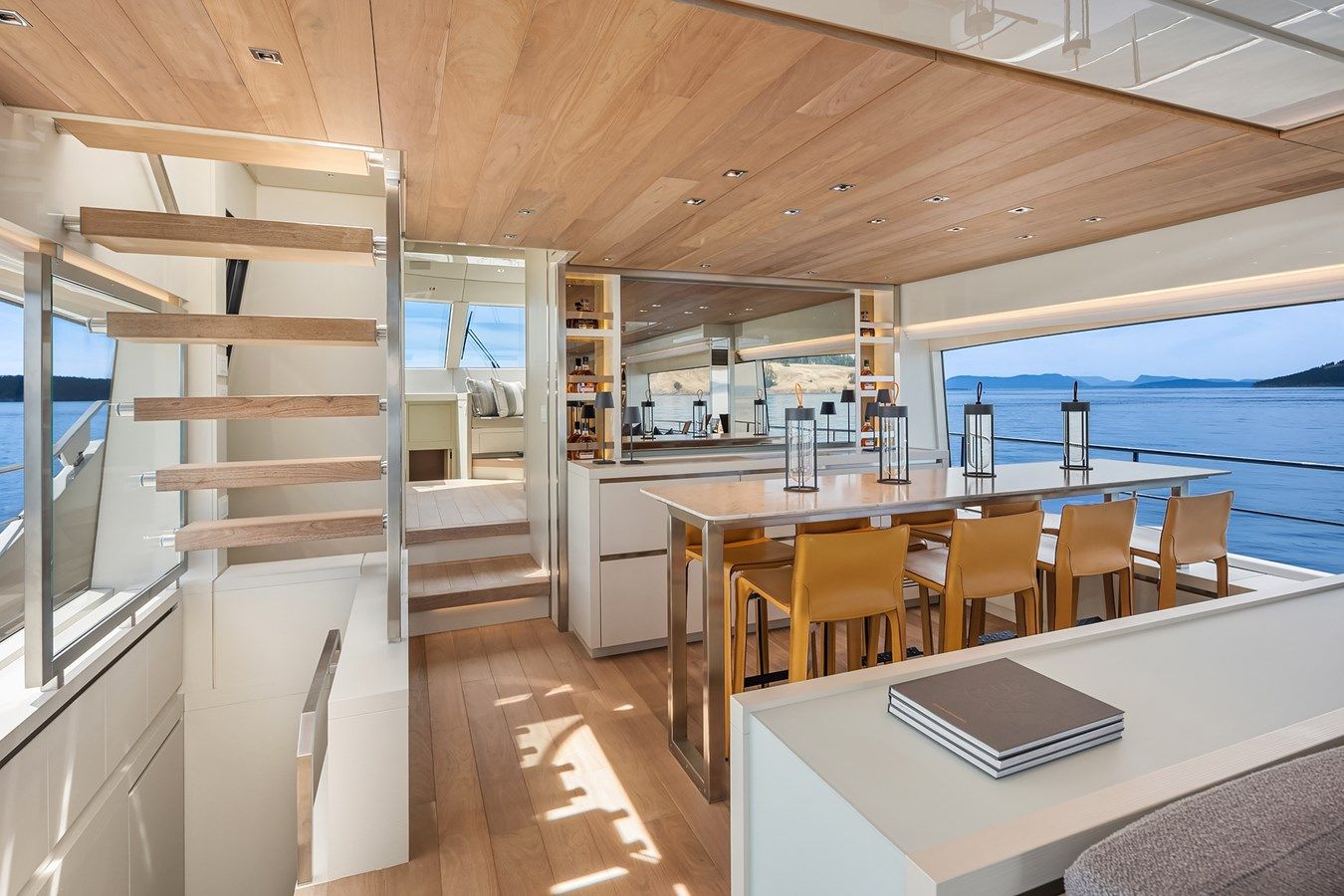
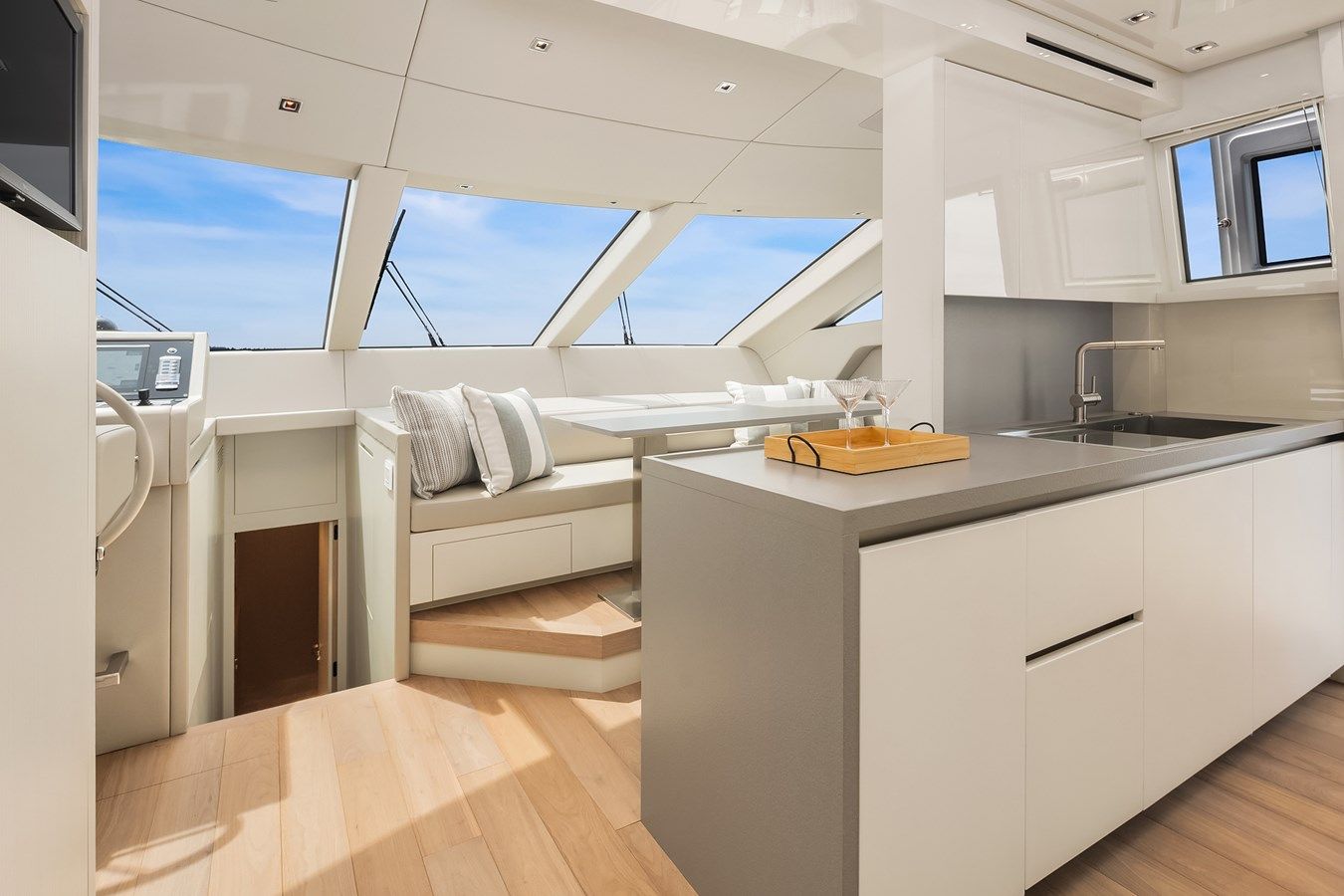
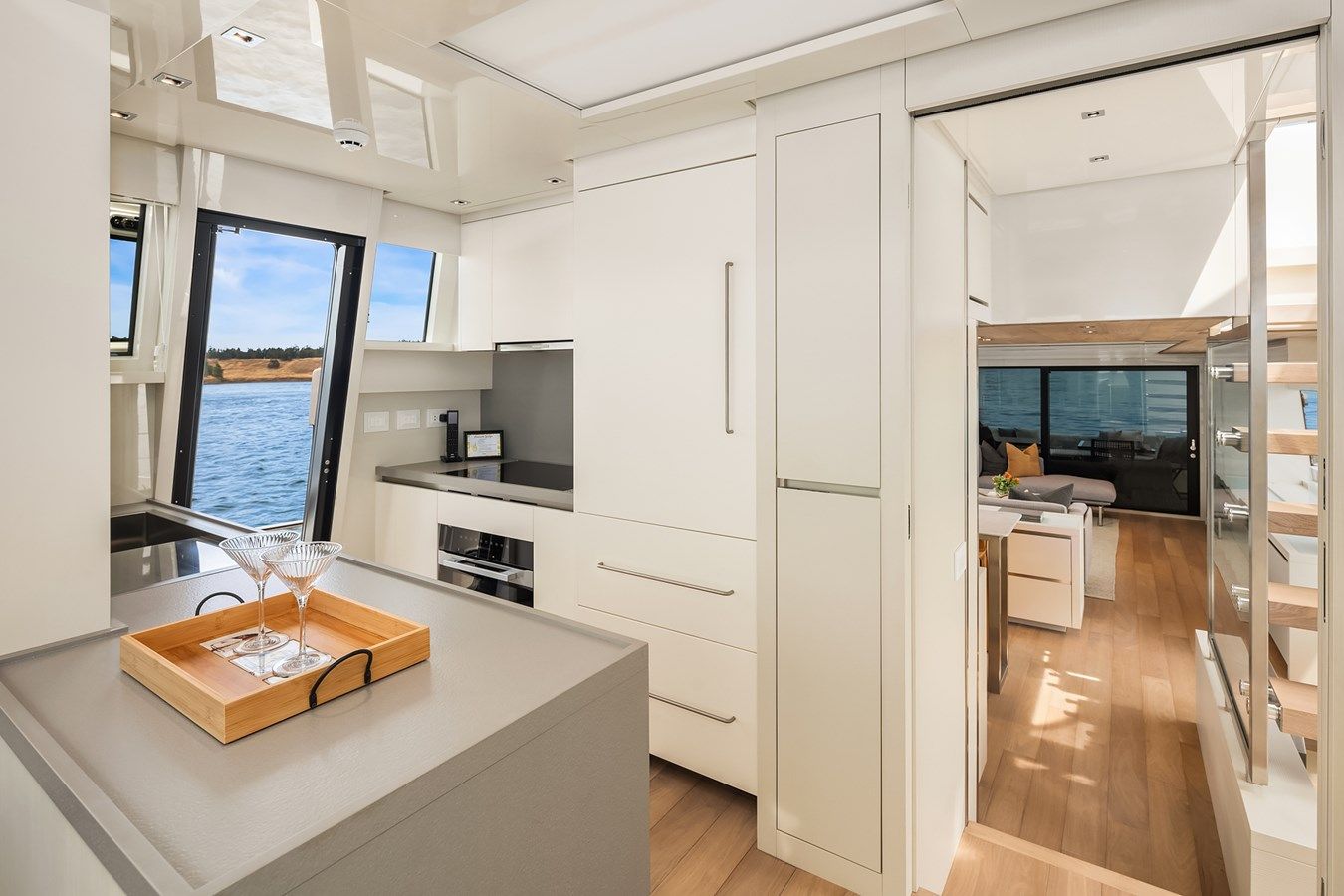
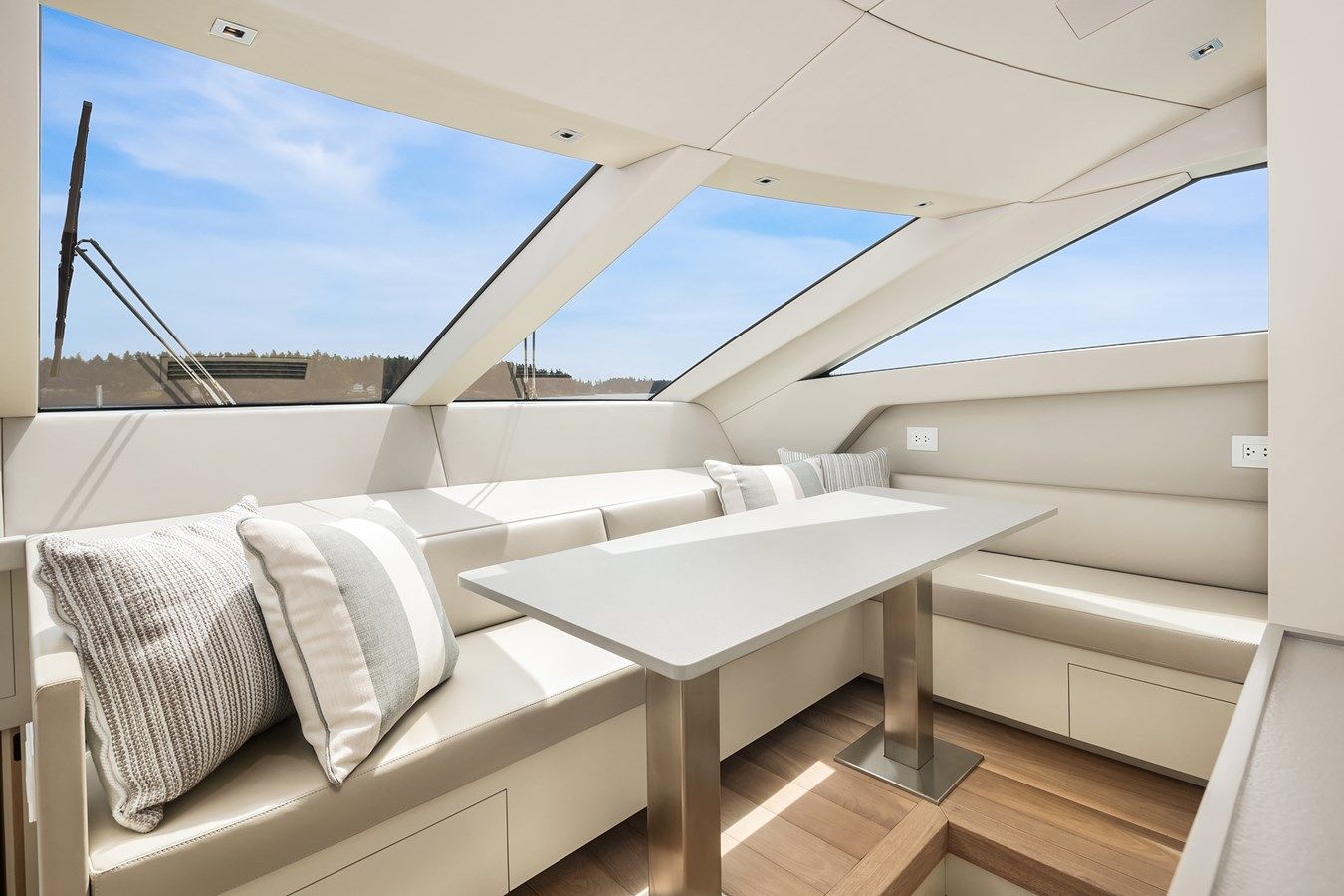
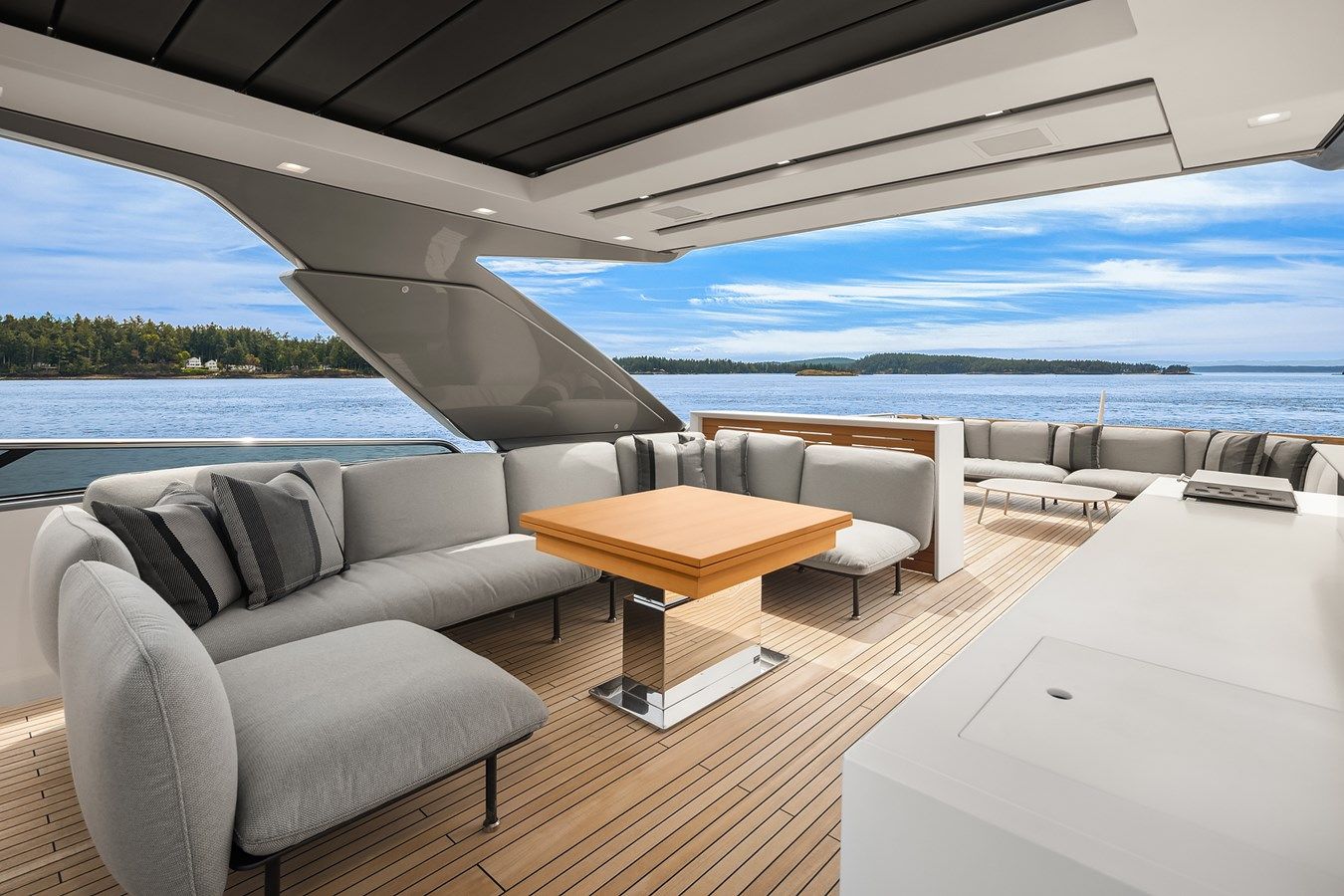
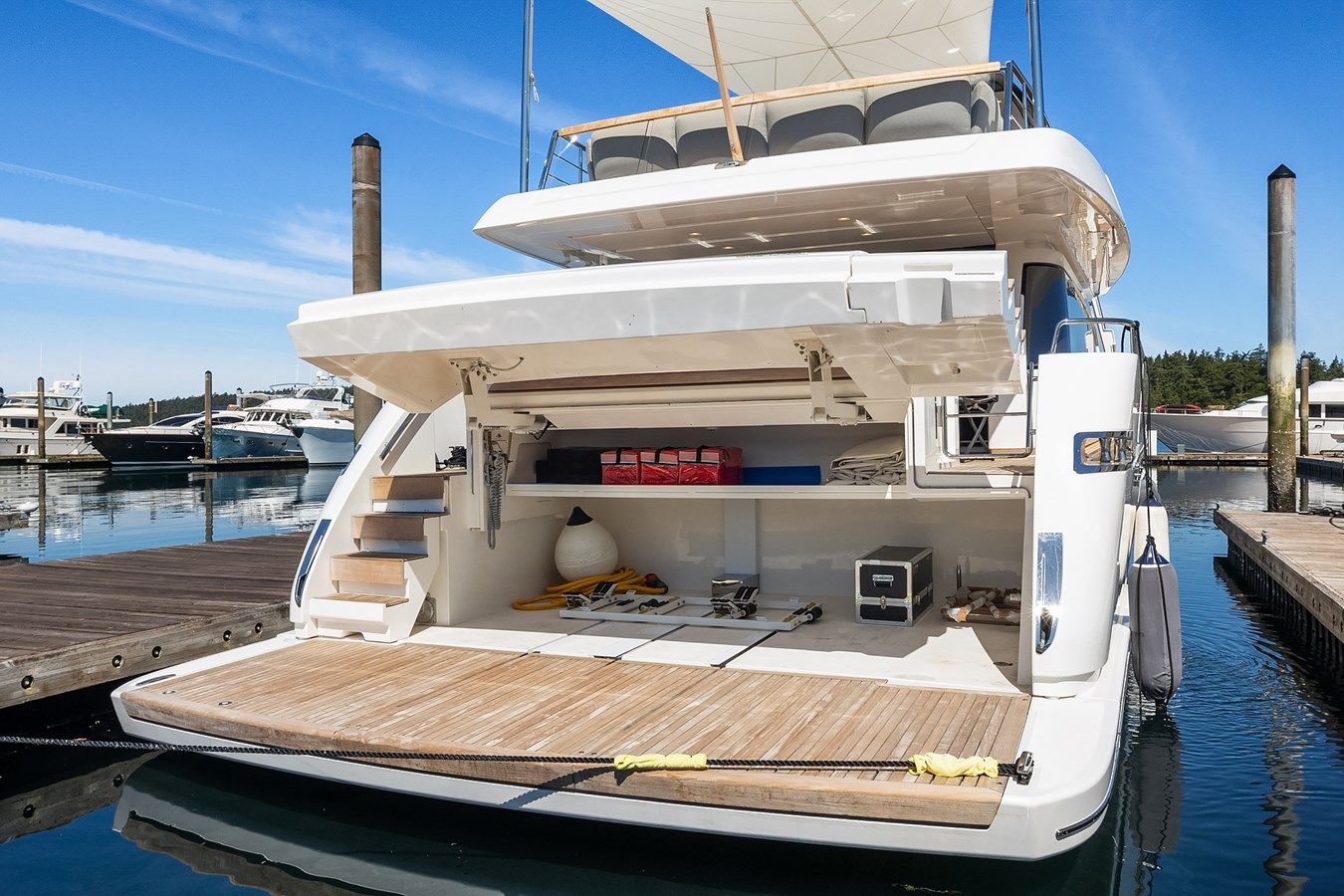
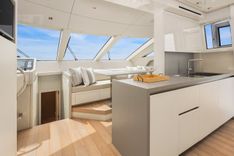
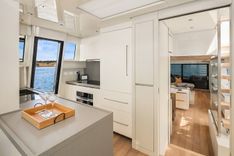
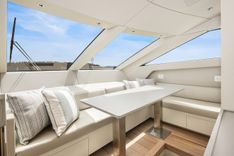
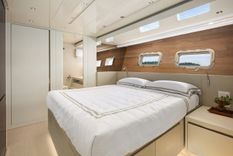
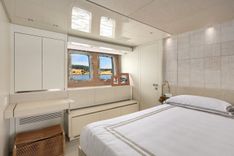
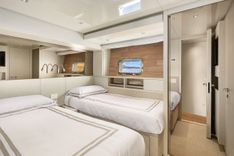
Accommodations are arranged with a well‑considered plan of four ensuite guest cabins complemented by two crew cabins forward, while the spacious salon seamlessly integrates a dining area and a wet bar to create a convivial social hub. Comfort at anchor is assured by zero‑speed stabilization at rest, and day‑to‑day operations are enhanced by a tender garage with motorized deployment, a large fully equipped bridge deck offering an abundance of seating, a water maker, and a Dock mate controller for engines and thrusters.
Built in composite with appropriately spaced transverse frames and longitudinal girders that extend from the engine foundations, the yacht features two watertight bulkheads—one separating the engine room from the accommodation area and another forward dividing accommodations from technical storage. Side‑exhaust housing molding, main engine exhausts, and engine‑room ventilation ducting are integrated into the hull structure. The main deck and superstructure are sandwich‑laminated with a closed‑cell PVC core, and the hull incorporates a partial double bottom containing structural tanks for fresh water, grey water, and black water.
All drawings and construction details are produced by the SANLORENZO technical office or an expert firm commissioned by the shipyard for the design of shipboard systems, interior details, scantling construction, and all other documentation required by RINA for CE classification.
Construction and design criteria
General construction employs composite materials in GRP for the hull, decks, and superstructure, with vinyl-ester resin used for the first three layers of hull lamination and polyester isophaltic resin for hull plating, structures, and GRP accessories. The gel coat is of Neopentilic type, while reinforcement fibers—mat, roving, multi-axial, and unidirectional glass—are specified in structural drawings approved by RINA. The sandwich core PVC is closed cell with a density between 50 and 90 kg/m3. Hull form and scantlings follow the latest design and construction practices for GRP vessels to ensure maximum structural continuity and minimal vibration and noise. The hull bottom is a single skin of varying thicknesses and the sides are sandwich with PVC core; the structure complies with CE regulations and is chiefly longitudinal, with girders and transversal bulkheads as primary elements. Three watertight bulkheads subdivide the yacht into four watertight compartments comprising the engine room, the accommodation area, and the chain locker. All pipe and cable penetrations through these bulkheads are made watertight. All bilges are varnished, with anti-flammable paint applied in the engine room and aft technical area. Exhaust gas pipes and ventilation ducts are GRP, integrated into the structure, with flame-resistant gel and self-extinguishing resins used where required. Special reinforcements are arranged at the foundations of propulsion and maneuvering machinery, generator sets, shaft lines, brackets, rudders, and thruster propellers. The hull is treated with antifouling paint supplied by a recognized manufacturer.
On the main deck, the plating is a sandwich of varying thicknesses in accordance with CE Rules, with a longitudinal structural scheme supported by transversal bulkheads. A watertight hatch above the engine room allows the mounting and disassembly of the main engine and associated machinery. Reinforcements are provided at all maneuvering devices, including windlasses, capstans, hatch hinges, cranes, and gangways, and all pipe and cable penetrations through the main deck are sealed.
Within the superstructure, the fly deck plating is a sandwich of varying thicknesses per CE Rules, and the reinforcement structure is longitudinal, augmented by longitudinal stiffeners, transversal bulkheads, and pillars. A watertight hatch positioned over the engine room facilitates mounting and disassembly of the main engines. Additional reinforcements are provided in primary stress areas, notably around side doors and the bases of the roll-bar.
Structural bulkheads are arranged in accordance with the General Arrangement Plans, with three executed as watertight. They are generally constructed as a marine plywood sandwich with a polyethylene core (“Laricross” or similar) or in marine plywood of suitable thickness. Escape hatches comply with CE Rules.
The tanks—detailed in the capacity plan—are of structural type, integrated into the hull to minimize occupied volume and optimize stowage. All tanks are GRP, executed in monolithic and sandwich laminates, laminated in situ and then assembled on board, with sufficient internal reinforcement to maintain hull stiffness continuity. The main fuel tanks are laid transversally forward of the engine room and shaped to utilize the volume between hull, deck, and sides. Fresh, grey, and black water collection tanks are laminated on the keel following completion of the hull bottom lamination. All tanks are fitted with appropriate vents and fittings and are pressure tested as required by the Classification Society.
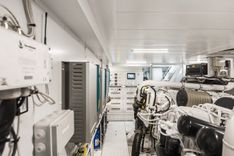
Noise and vibration insulation is engineered to ensure maximum comfort and safety in all conditions. For the engine room, thermal and acoustic protection relative to the rest of the vessel includes ceiling, walls, and the bulkhead between the engine room and accommodation areas, realized as a thermal insulation sandwich fixed by needles and finished with steel plate on aluminum grid supports. On the accommodation side of the engine room/accommodation boundary, the insulation is a thermal sandwich fixed with needles and integrated onto a floating bulkhead on viscous-elastic elements. Extraction and ventilation trunks are insulated with thermal sandwich panels fixed with needles, and gas exhaust piping is wrapped with thermal insulation sandwich to guarantee optimal thermal performance, flame resistance, and self-extinguishing characteristics. In the accommodation areas, each cabin benefits from acoustic insulation via thermal sandwich inserts within bulkheads and flooring; between crew quarters and guest cabins, a thermal/acoustic sandwich fixed with needles is integrated onto a floating bulkhead on viscous-elastic elements; walls and exposed surfaces throughout are finished with thermal/acoustic sandwich fixed with needles.
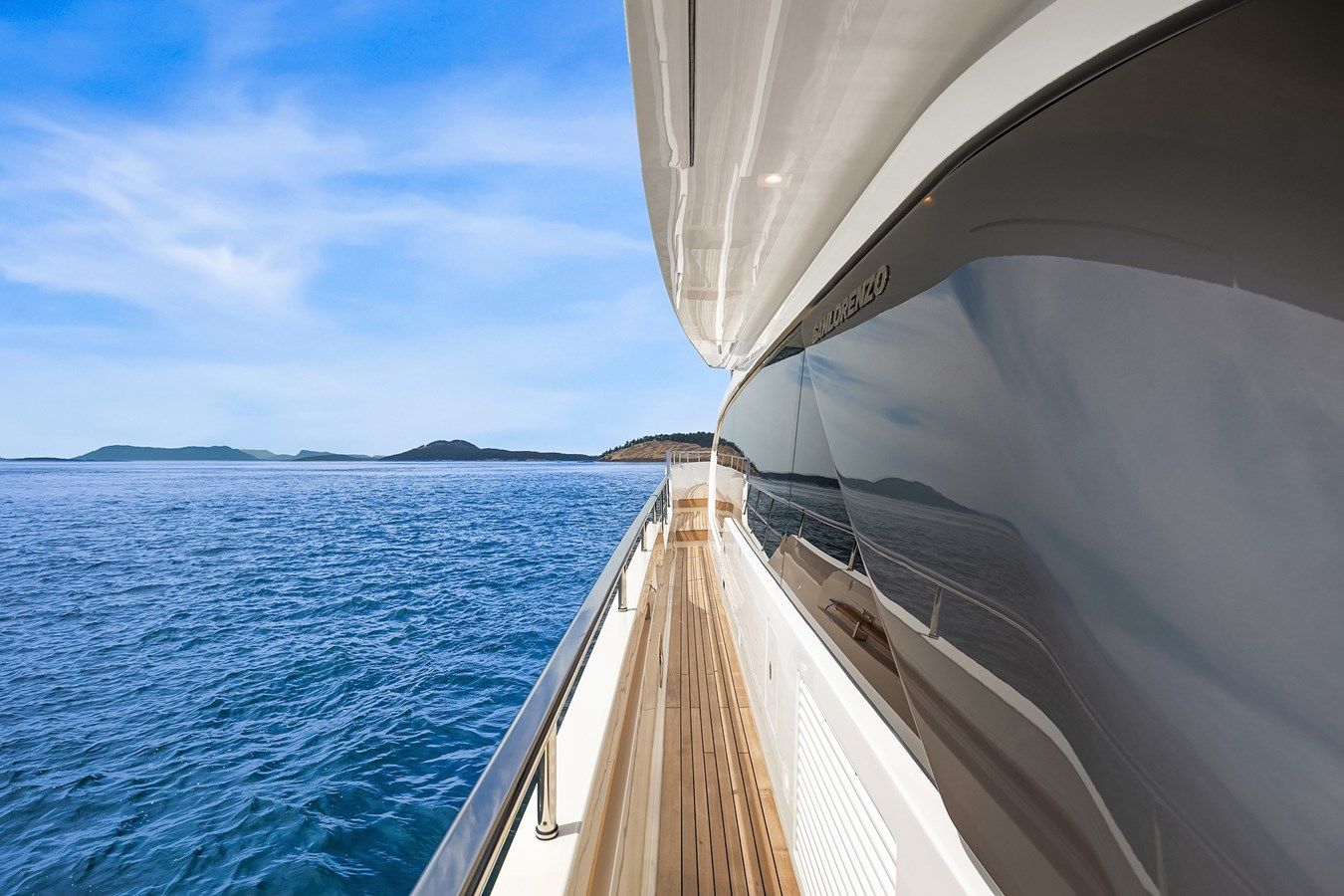
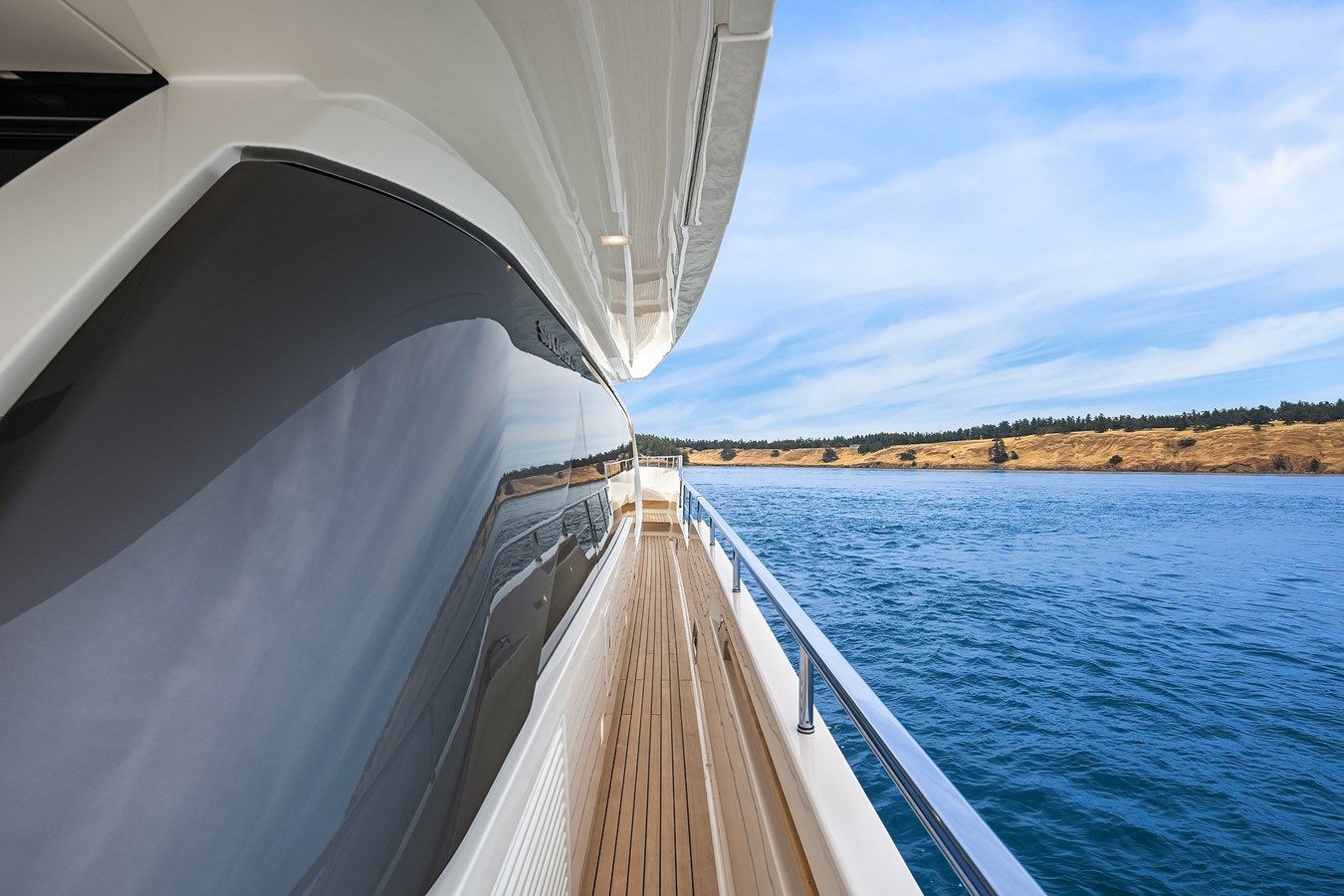
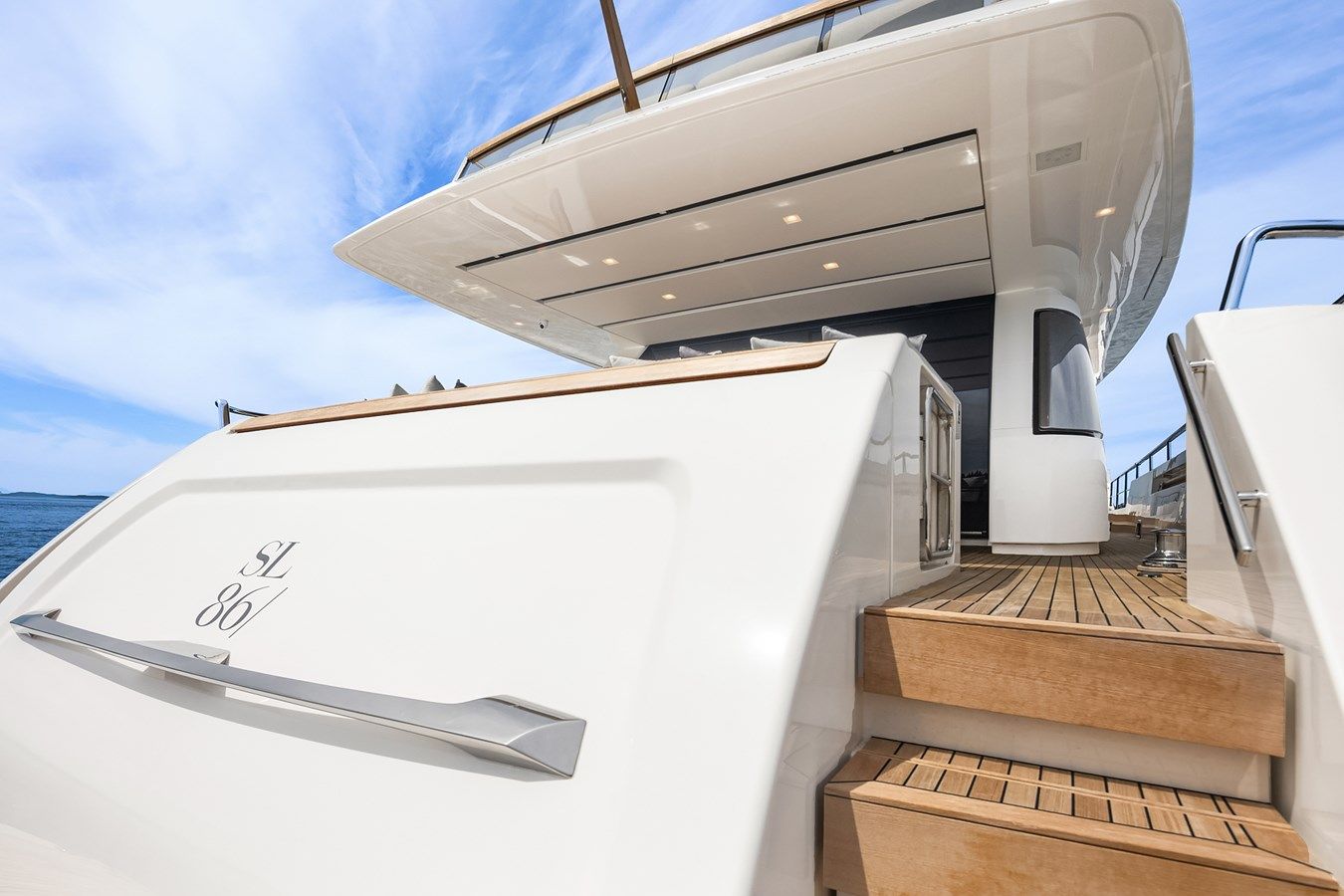
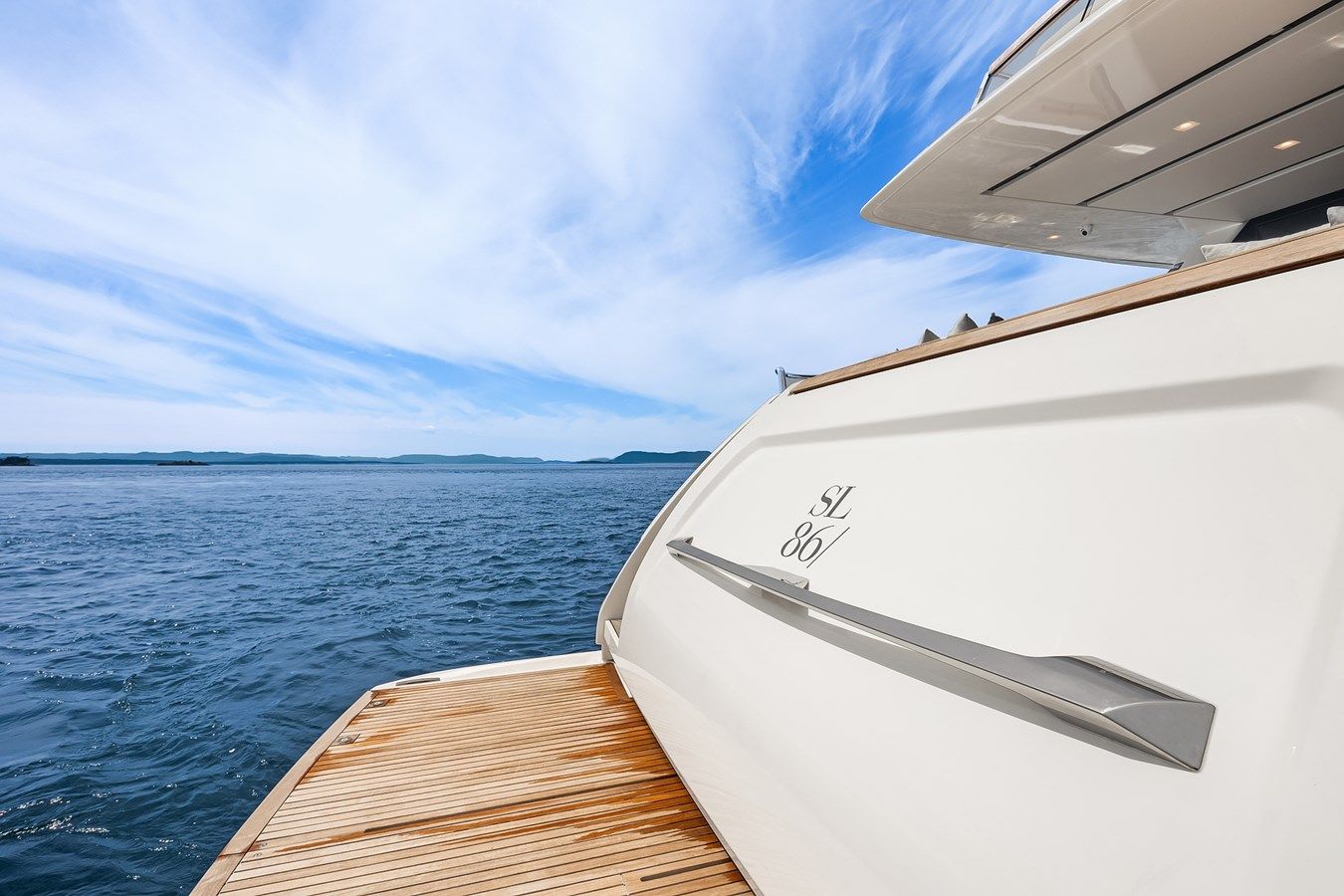
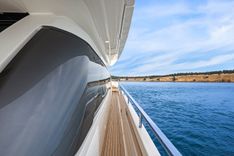
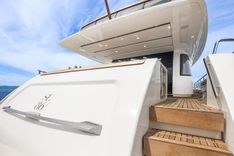
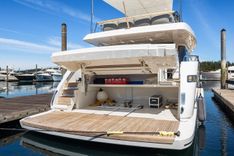
The teak decking is executed in high-quality teak on the main deck, with 12 mm planks glued directly to the substrate. Teak grating promotes easy drainage on the steps to the swimming platform and across the platform itself.
Weathertight side doors are constructed in aluminum and GRP with hand-wheel closing systems, stainless steel hinges and locks, and silicon-type seals. Weathertight deck hatches are in aluminum/reinforced polymer and finished in teak or in steel with tempered glass, featuring manual closing and a positive block in the open position. Portholes are stainless steel AISI 316 with tempered glass.
Windows are crystal panels with black border edges, dimensioned and specified to CE Rules. Wheelhouse windows are stratified and equipped with windscreen wipers, the fly bridge windscreen features a stainless steel frame, and all superstructure windows are flush mounted and bonded directly to the GRP.
Propulsion and maneuvering/mechanical systems
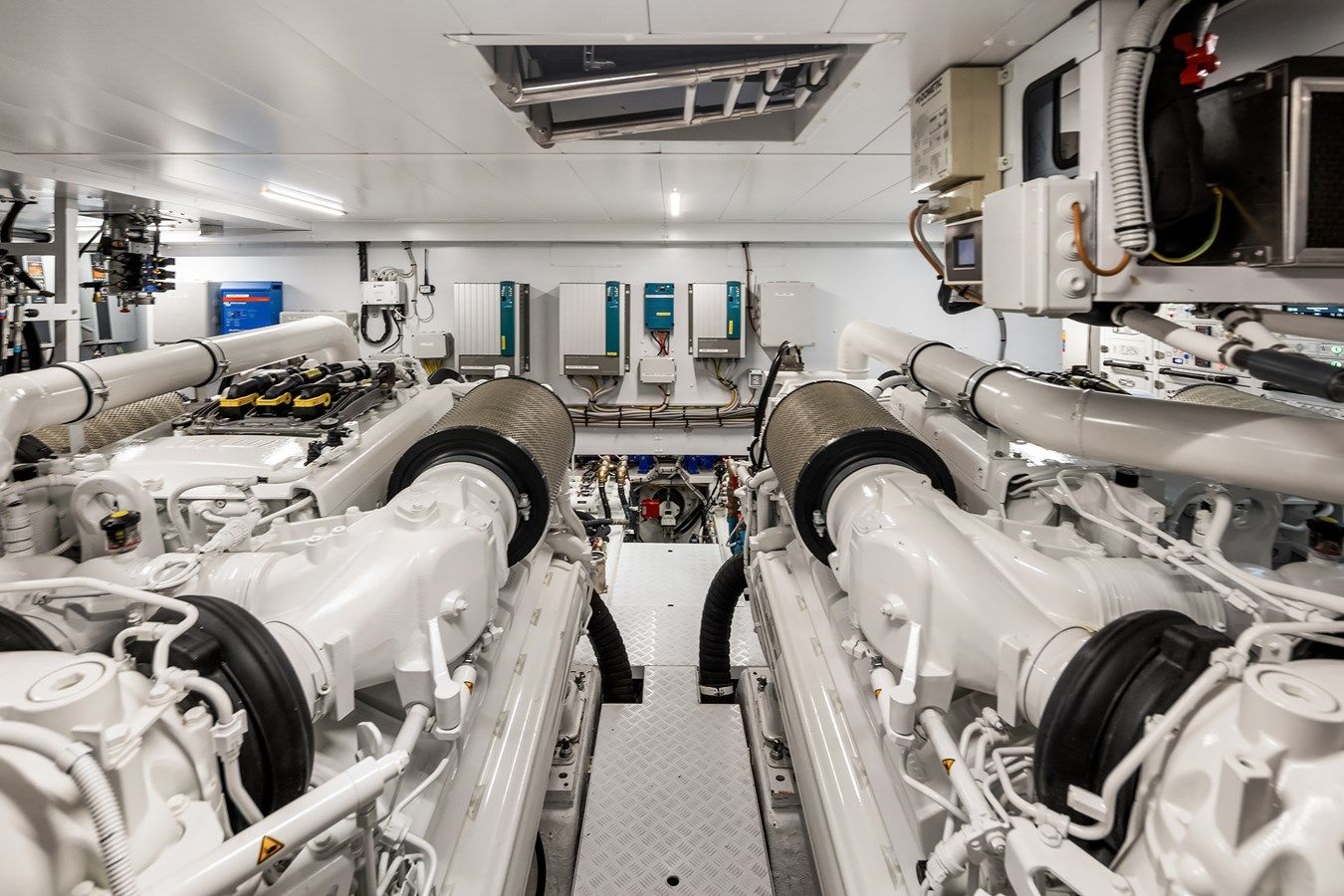
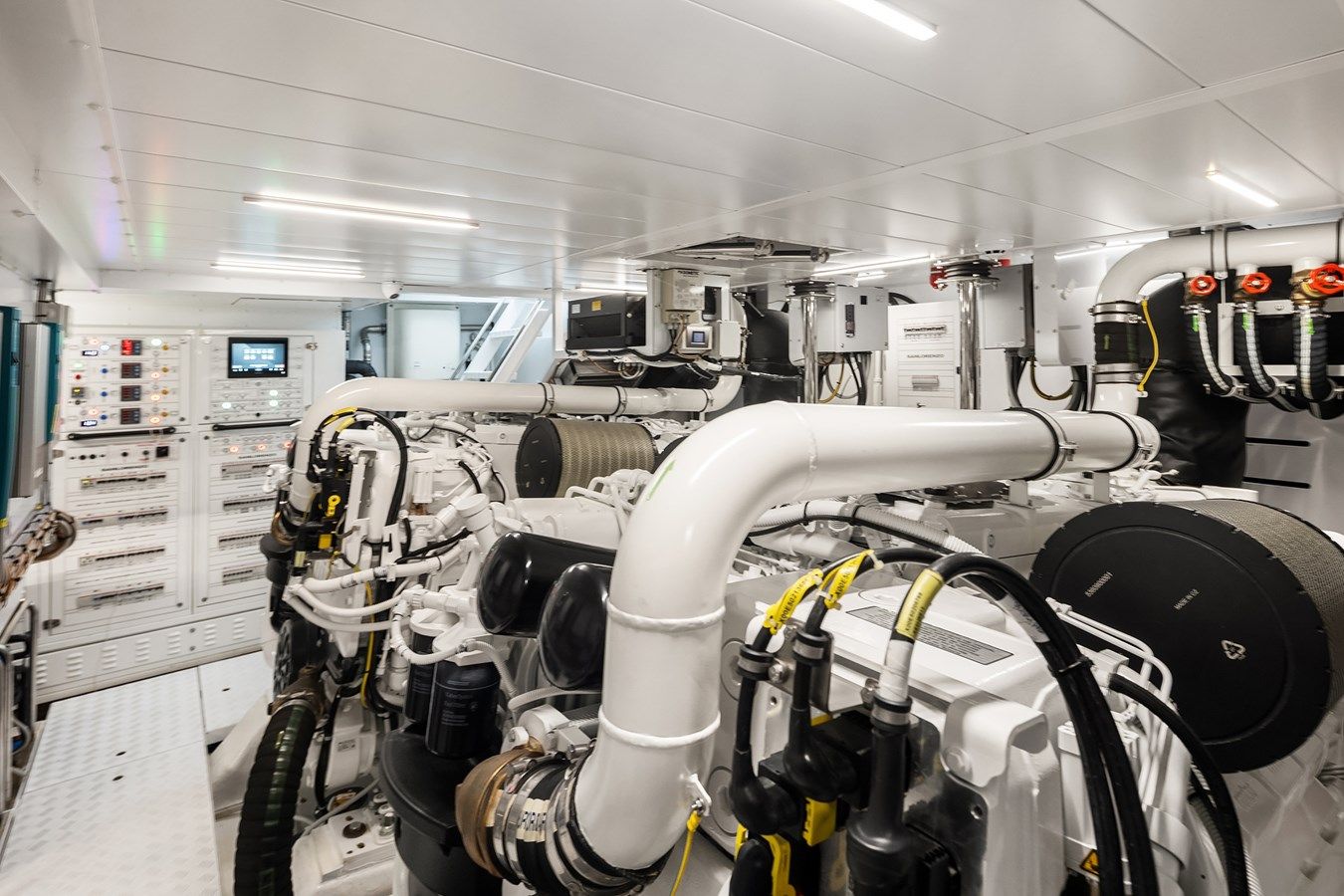
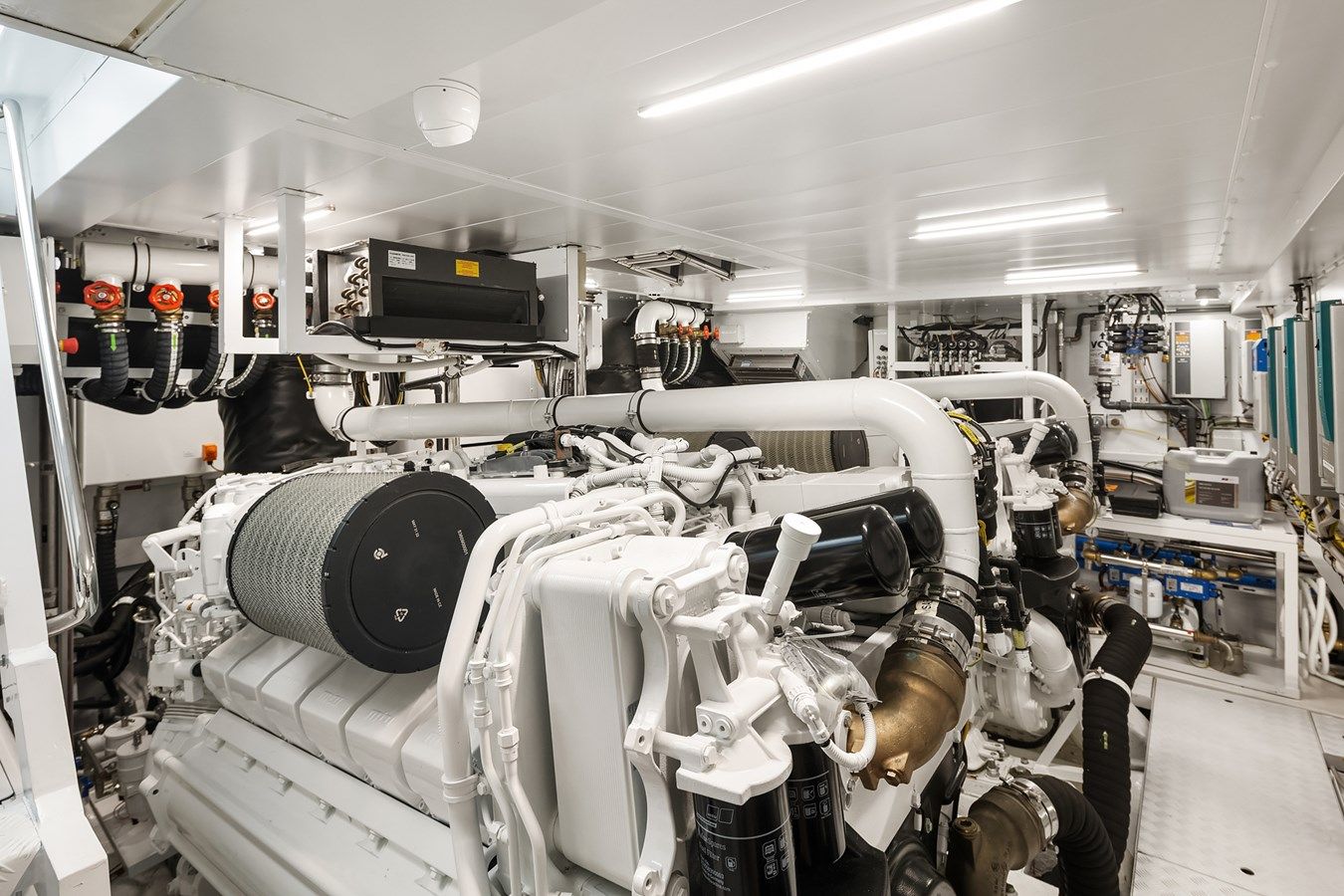
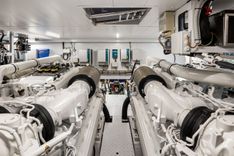
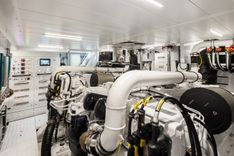
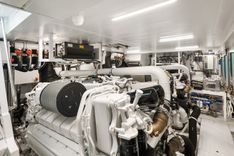
Power comes from two MTU 12V 2000 M96L (1948HP) diesel engines, complemented by an additional fixed MTU engine control station in the cockpit for confident command in all conditions. Drive is handled by two ZF 3055V gearboxes, while NiBrAl alloy propellers are tuned to deliver a refined balance of comfort and performance. Shafts in Aquamet 17 or equivalent run in bronze brackets and stern tubes with mechanical seals at each tube end for long-lasting reliability. The rudder system features AISI 316 stainless steel surfaces and stocks for assured maneuvering precision, with rudder holes in steel tube and bronze flanges and stocks in AQ 17 or equivalent to ensure robust integrity.
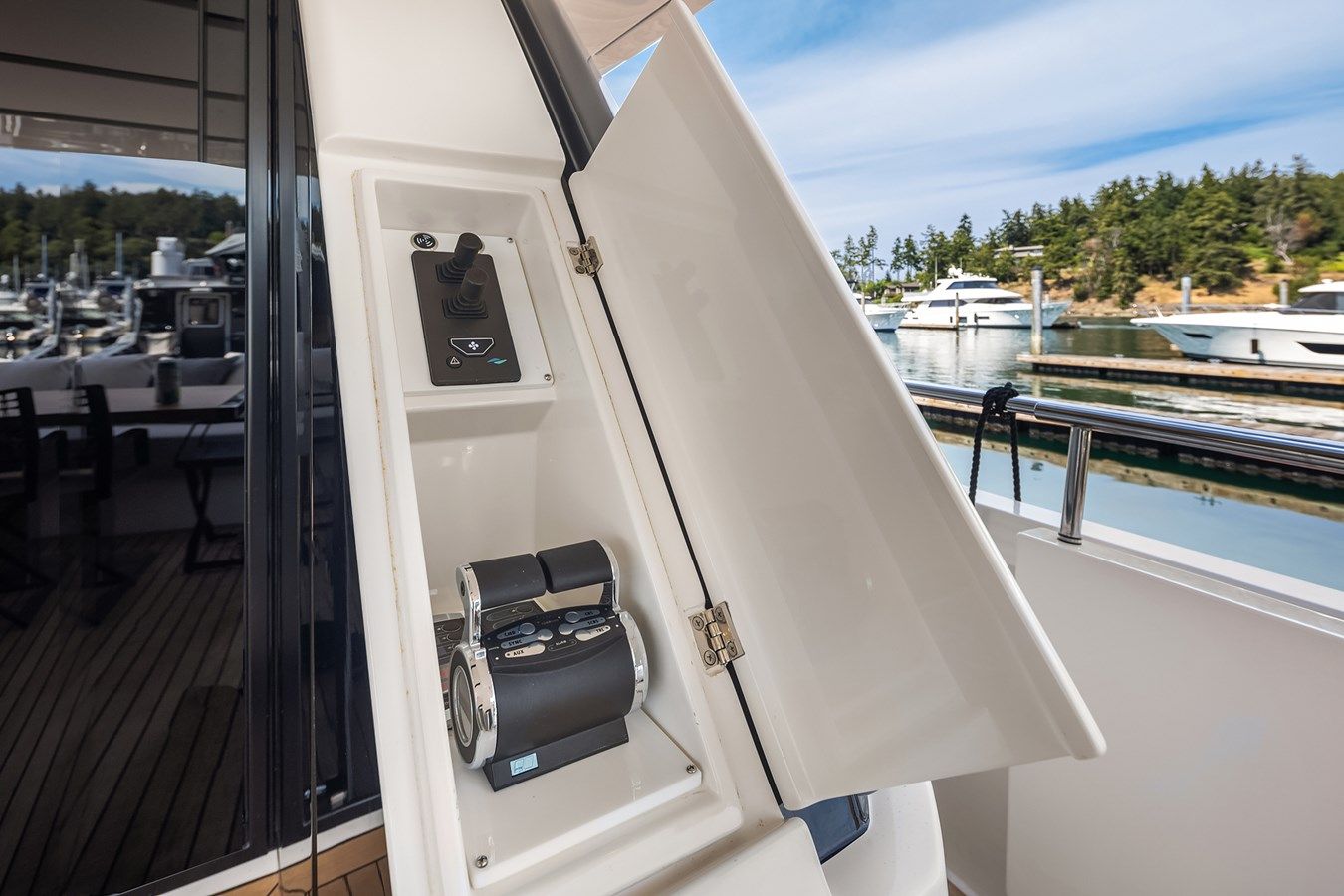
A steer-by-wire system communicates via CANbus to 230V linear actuators, or to 24V through an automatic selector that chooses one of the two actuators, providing responsive, redundant control. For tight-quarters mastery, the hydraulic bow thruster is engine-driven and set within a GRP tunnel integrated into the hull with a 300 mm internal diameter, delivering 350 kgf of thrust, with control levers at the interior and flybridge helm stations; a hydraulic stern thruster adds further authority, and an engine oil change system streamlines maintenance. Zero Speed electric fin stabilizers enhance comfort both at anchor and underway.
Trim and power management are equally refined, with a pair of stainless steel hydraulic trim tabs on the stern transom operating through a dedicated hydraulic system, a Glendenning Cablemaster 100 AMP reel for effortless shore power handling, and a Hubbel Smart Y Splitter for flexible connectivity. Ground tackle is handled by two electric reversible anchor windlasses rated at 2300 W, 24V, with both local and remote control, supported by two electrical capstans at 1700 W, 24V. Climate control is assured by tropicalized air conditioning systems with twin chillers delivering 180,000 BTU of cooling capacity.
Electrical system
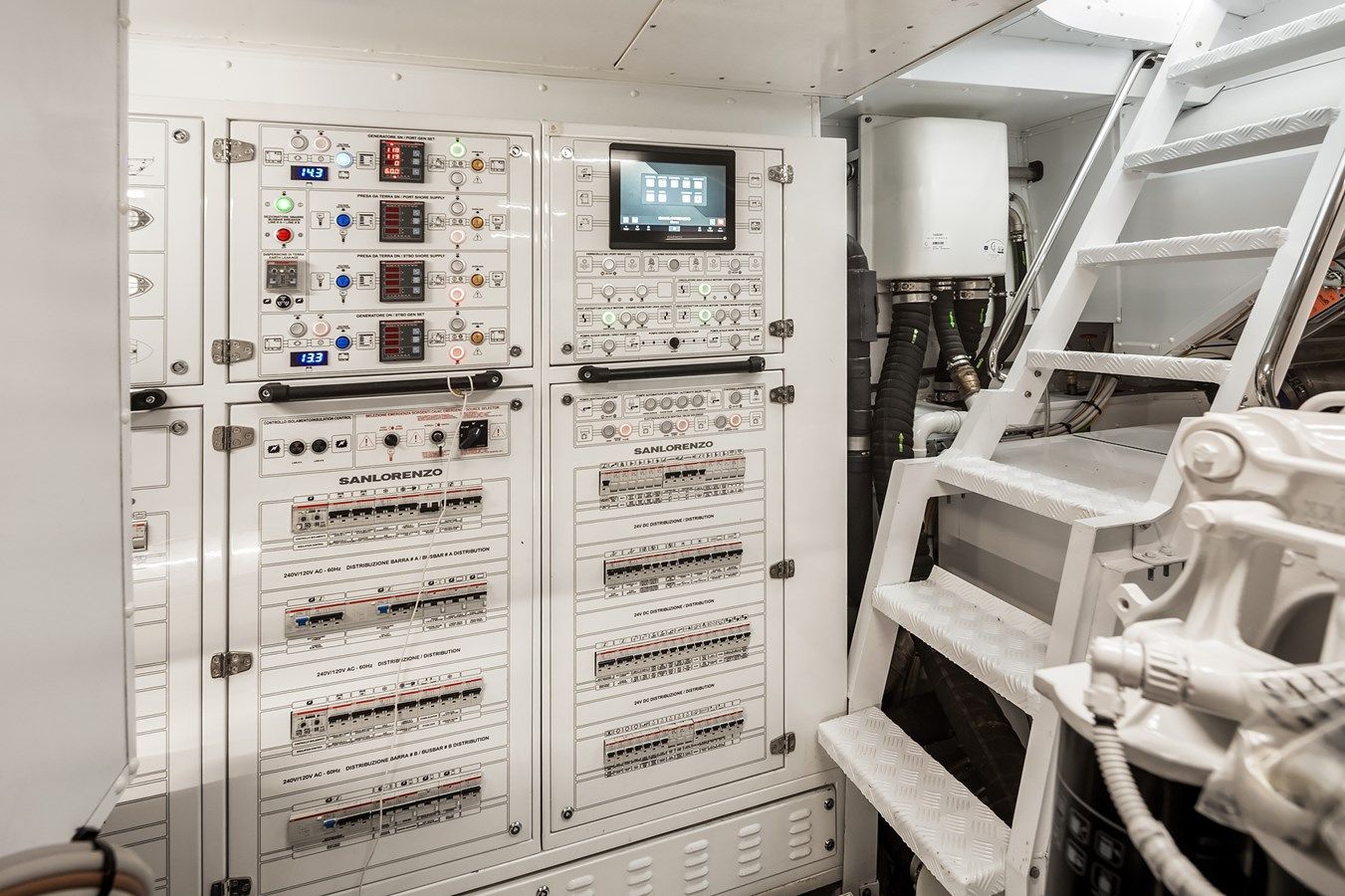
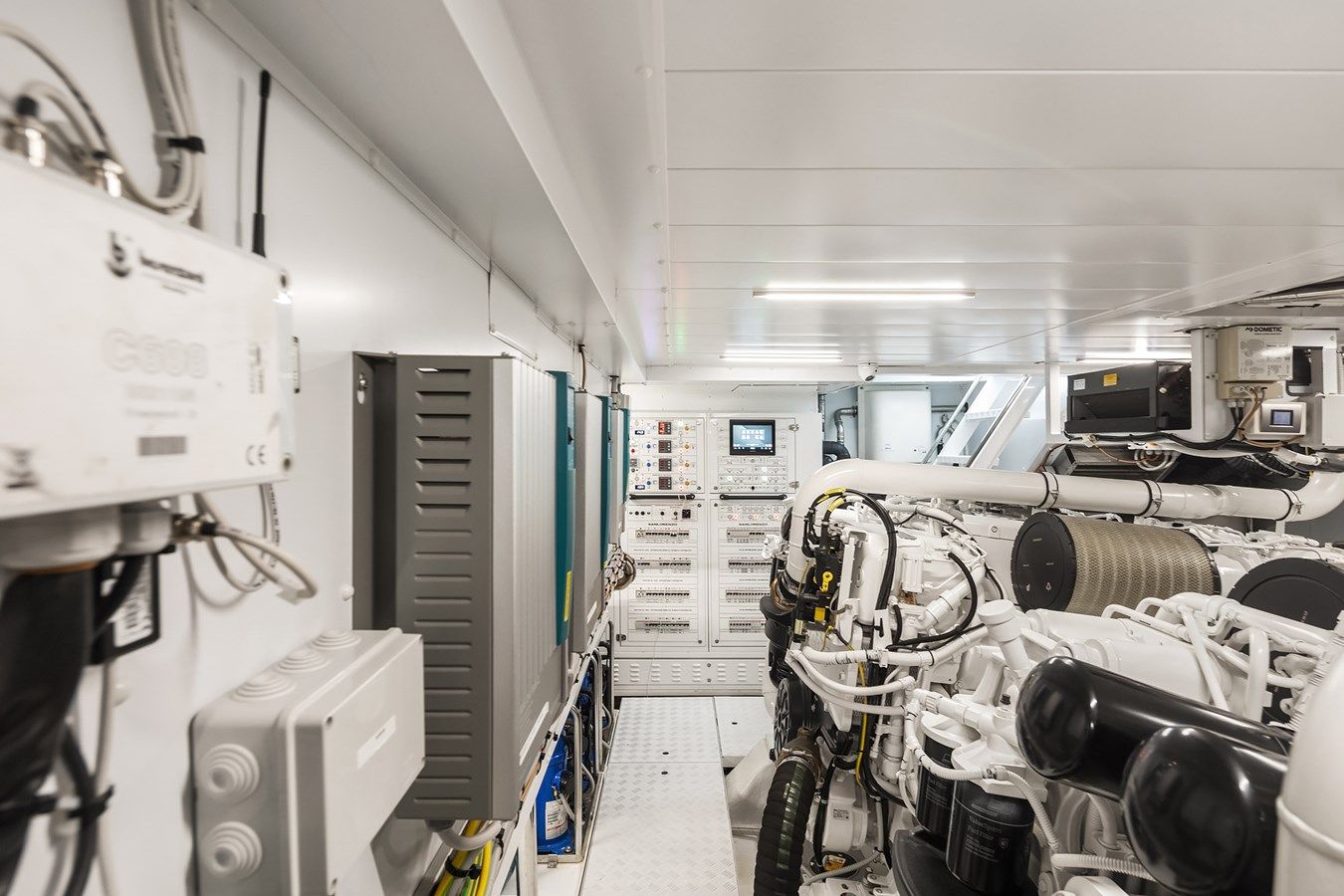
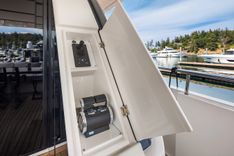
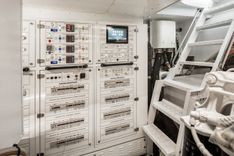
The yacht’s electrical system is defined by three onboard voltages: 115 V AC single phase at 60 Hz for main power circuits; 24 V DC for small power circuits, visual signals, emergency lighting, electronics, communication systems, and main engine start-up; and 12 V DC for main generator start-up and VHF. All cabling is precisely sized to the maximum amperage involved and fabricated from certified materials that prevent flame propagation, with runs housed in metal trays or self-extinguishing PVC closed-type raceways. The main switchboard panel is located in the engine room, while distribution panels are positioned in strategic, clearly identifiable areas for effortless access. The grounding system is carefully segregated: metallic components including sea intakes are bonded by two copper bands laid throughout the yacht and connected to the aft zinc anodes; the linked grounds of the electrical equipment are connected to independent porous plates; and all electronics grounds are connected to an independent porous plate. A spotlight is fitted.
Power sources
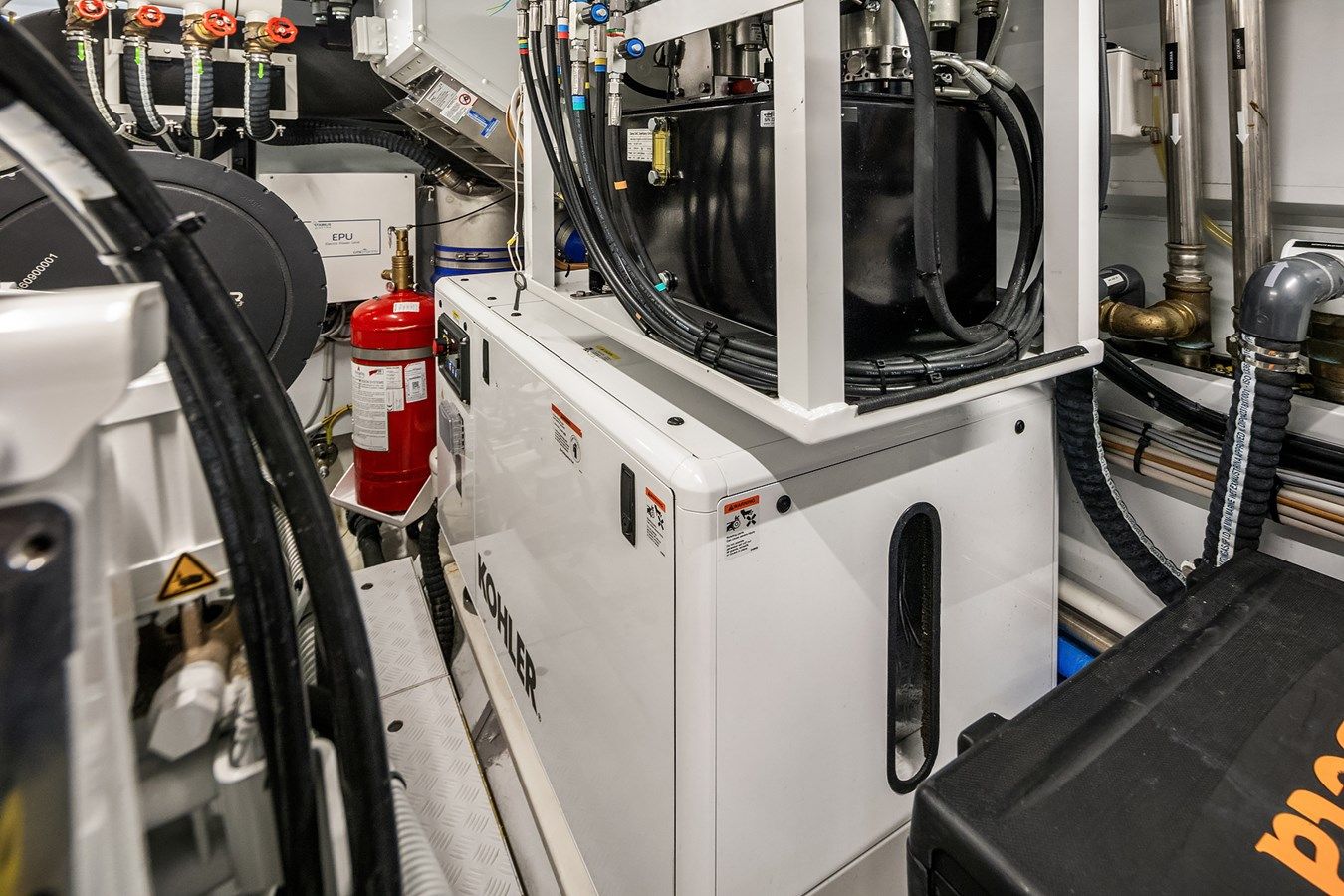
Twin KOHLER generators, each delivering 32 kW at 230 V single phase and 60 Hz, are mounted on silent blocks in the engine room and encased in soundproof housings, with a 12 V DC switchboard for starting control and an hour counter; they can also be started remotely from the wheelhouse touch screen monitor. Shore power is handled by two 230 V, 63 A single-phase connections housed in a dedicated transom locker, with all alternating current sources governed by the main switchboard panel. A voltmeter and frequency meter for the 230 V lines are installed on the switchboard’s front door, while appropriate fuses or circuit breakers safeguard each source and remote-control switches streamline management of the yacht’s electrical supply. The shore system feeds a bar protected by a thermomagnetic switch, from which power is distributed to all users, and each bar is further protected by a switch breaker on the main switchboard panel.
An 800 Ah/24 V DC gel service accumulator bank in the engine room supplies signaling, small power circuits, spare machinery, and lighting. Supporting safety and communications, one emergency 56 Ah/12 V gel battery dedicated to the VHF is installed beneath the wheelhouse. Main engine starting is assured by two sets of gel/AGM batteries rated at 240 Ah @ 24 V DC, specified as high-capacity instant-discharging type at 1200 A. For precision and reliability, a 200 Ah/24 V gel/AGM MTU electronics battery bank in the engine room powers the main engine electronic equipment. Generator starting is managed by two sets of gel/AGM starting batteries, each 140 Ah @ 12 V DC and classified as high-capacity instant-discharging type at 700 A, with each battery pack mounted in a dedicated space adjacent to the generators.
The battery charging suite includes one automatic 100 A/24 V DC charger for the service bank; one combined automatic 100 A/24 V DC charger with a 3 kW inverter to power the electric steering system in 24 V modality while recharging the service batteries; one automatic 50 A/24 V DC charger for the main engine starting batteries in the engine room; and one automatic 10 A/12 V DC charger for the VHF battery located in the technical space under the wheelhouse. The battery chargers listed above operate automatically, without operator intervention. Complementing shore-based charging, the main engine alternators independently charge the main engine starting batteries and the service batteries, while the generator alternators charge their respective starting batteries; a thermomagnetic switch or fuse protects the 24 V DC user lines connected to the main switchboard panel. An additional 24 V/230 V, 1500 W inverter is dedicated to the galley refrigerator/freezer.
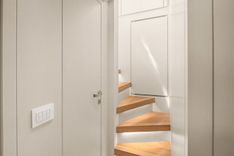
Lighting in the engine room is 24 V through ceiling LED bars, while accommodation areas are illuminated by refined LED spotlights. Each cabin is appointed with ceiling lights controlled by switches at the entrance door and nightstand, a reading light at the bedhead with a nearby control, bathroom ceiling lights with switches near the bathroom door, and 230 V sockets in both the cabin and the bathroom. Throughout the living areas, stairways, and exits, ceiling lights in the dining room and saloon feature control switches positioned in various locations, additional ceiling lights are equipped with switches near each exit, courtesy lighting enhances the stairs, and 230 V AC sockets are thoughtfully placed for convenience. Exterior spaces are illuminated by watertight LED spotlights.
Electrical system oversight is elegant and intuitive: a voltmeter and ammeter monitor the 230 V system and are visible on both the wheelhouse touch screen monitor and the main switchboard panel. Illuminated push buttons enable connection and disconnection of the shoreline power sockets on both interfaces, while generator set overload warning lights are clearly presented on the wheelhouse touch screen control panel. Controls for opening and closing the bars on the main electric panel are mirrored on the wheelhouse touch screen monitor, as are controls for generator start-up and connection/disconnection. Battery health is continuously displayed via ammeters for both charge and discharge on the wheelhouse touch screen monitor and the main switchboard.
A comprehensive alarm suite reinforces onboard safety: engines and gearboxes alarm repeaters are installed in the wheelhouse and on the fly bridge dashboard; fuel and fresh water high/low level alarms are shown on the wheelhouse touch screen monitor; grey and black water high level alarms, bilge water high level alarms, and smoke detection alarms for all living areas are likewise monitored on the wheelhouse touch screen; and the opening position of the garage hatch and gangway is alarmed on the same interface, complemented by dedicated fire alarms. For vigilant security, two camera CCTV IP systems are installed, one fixed in the cockpit and one fixed in the engine room.
Navigation electronics, communication systems and audio/video system
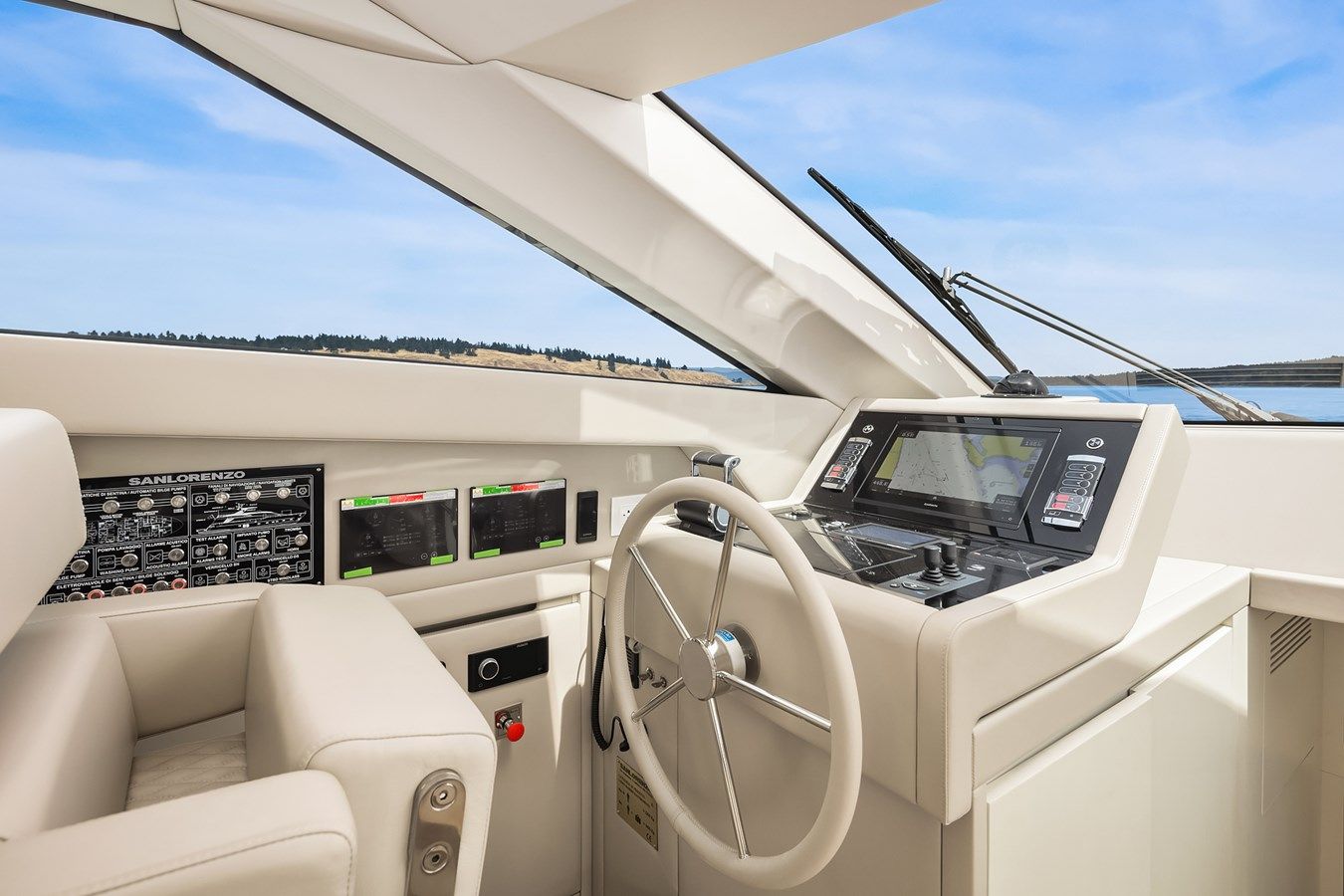
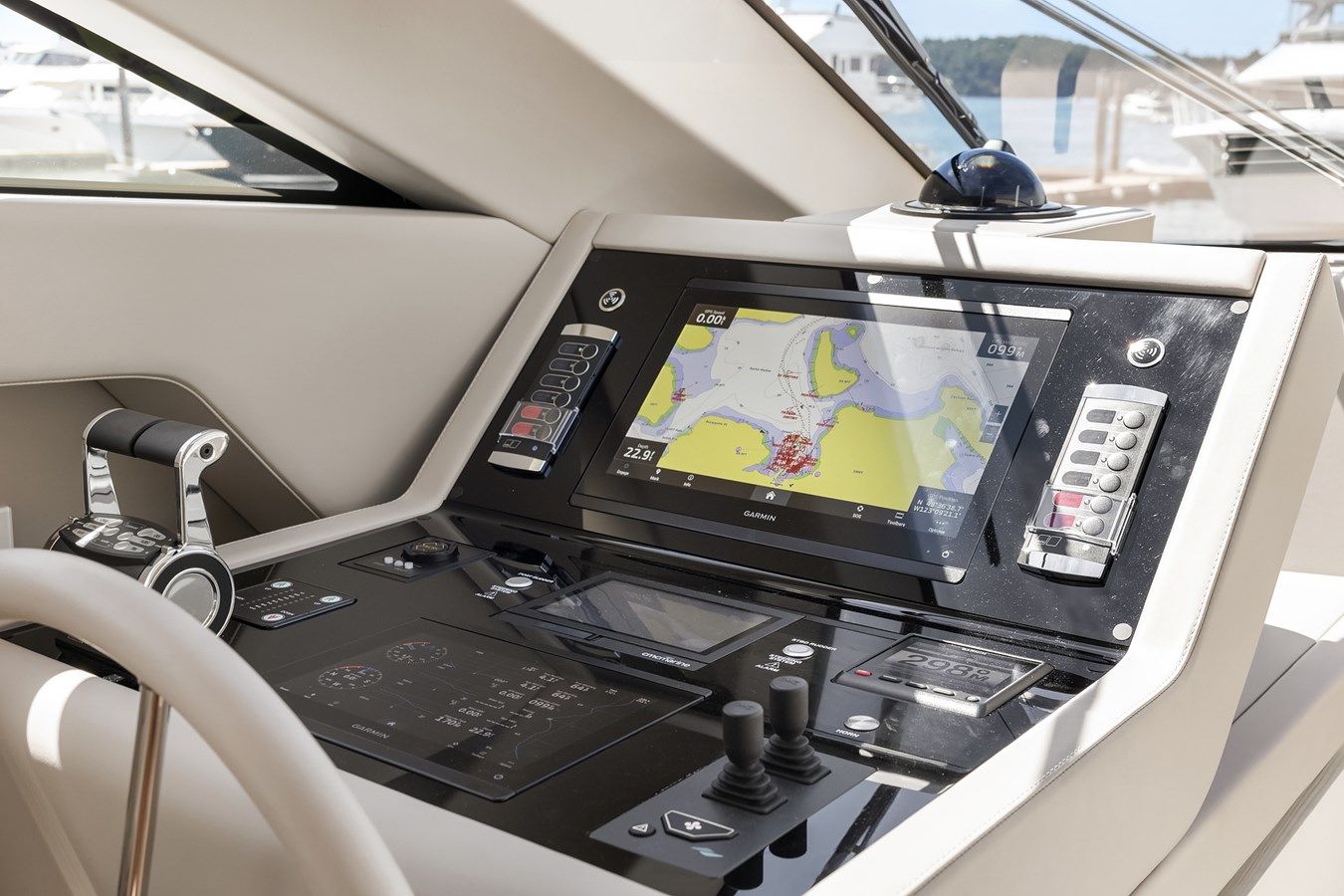
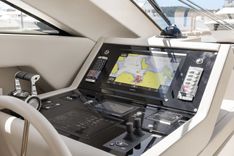
An upgraded A/V package anchors the yacht’s entertainment and connectivity, complemented by satellite and communications provisions that include predisposition for SAT TV HD7 and two empty radomes for SAT phone. Navigation is elevated by the Garmin Diamond package, distinct from the standard SILVER package, and the Garmin Atmosphere package, an integrated dashboard system that brings seamless control to the helm.
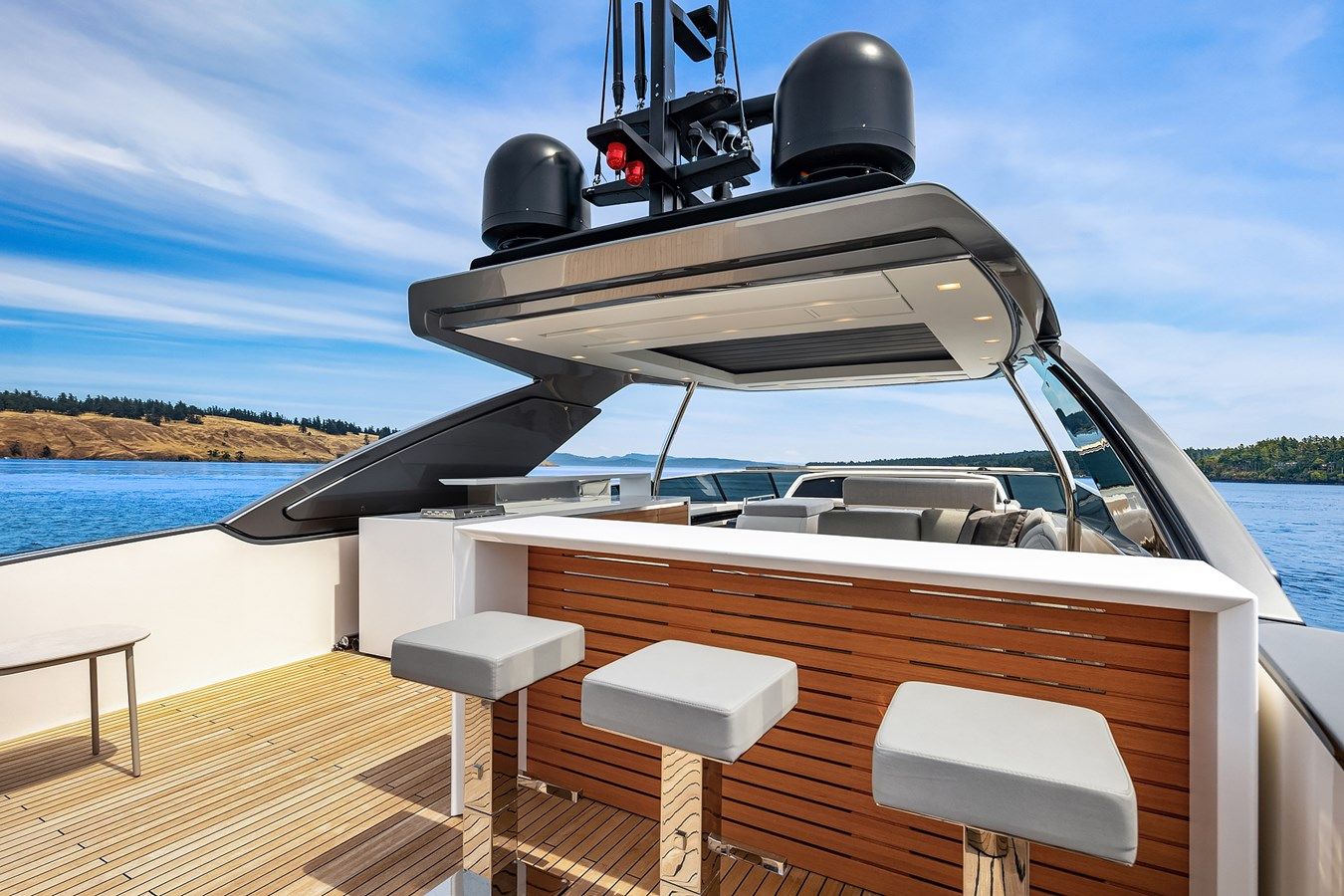
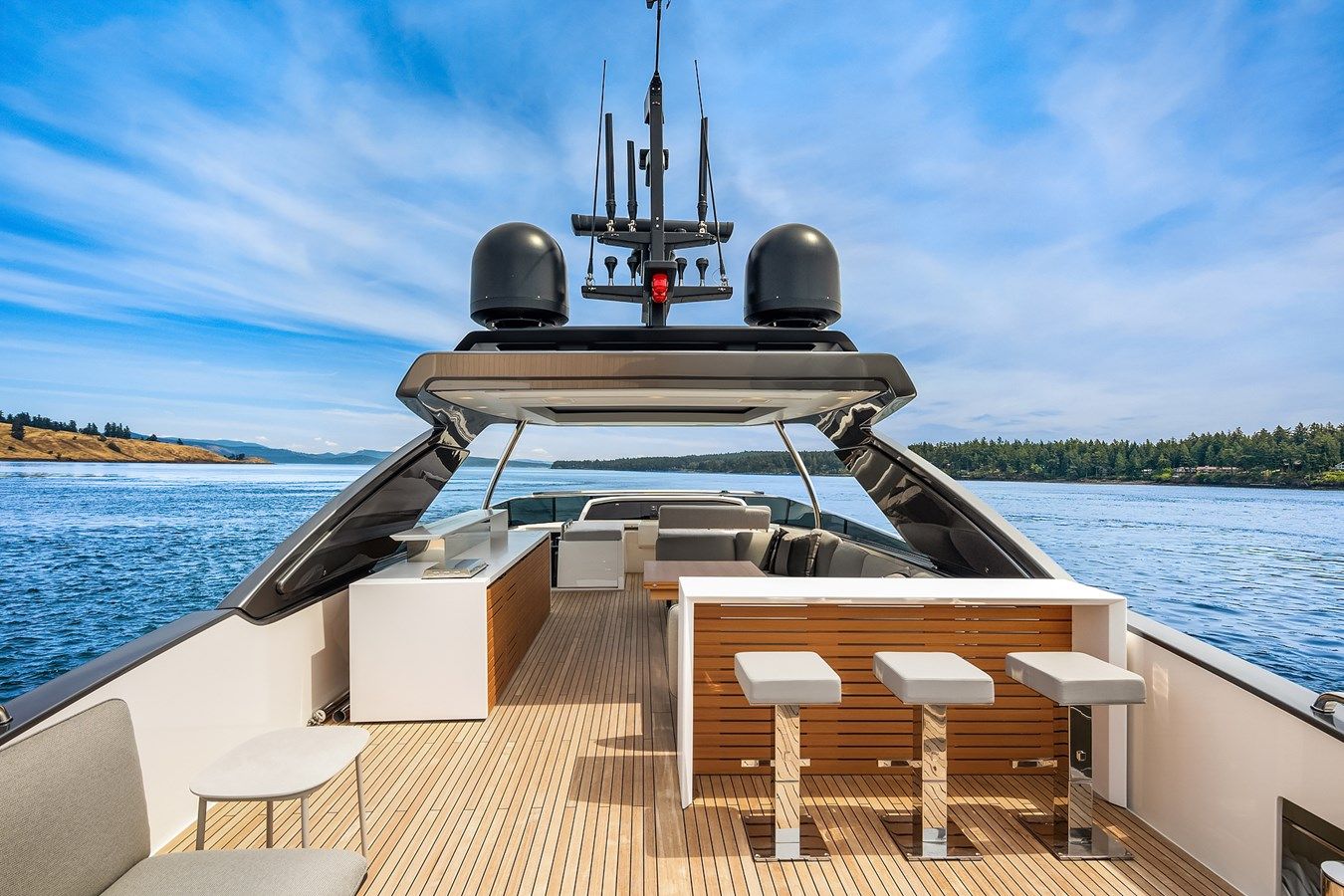
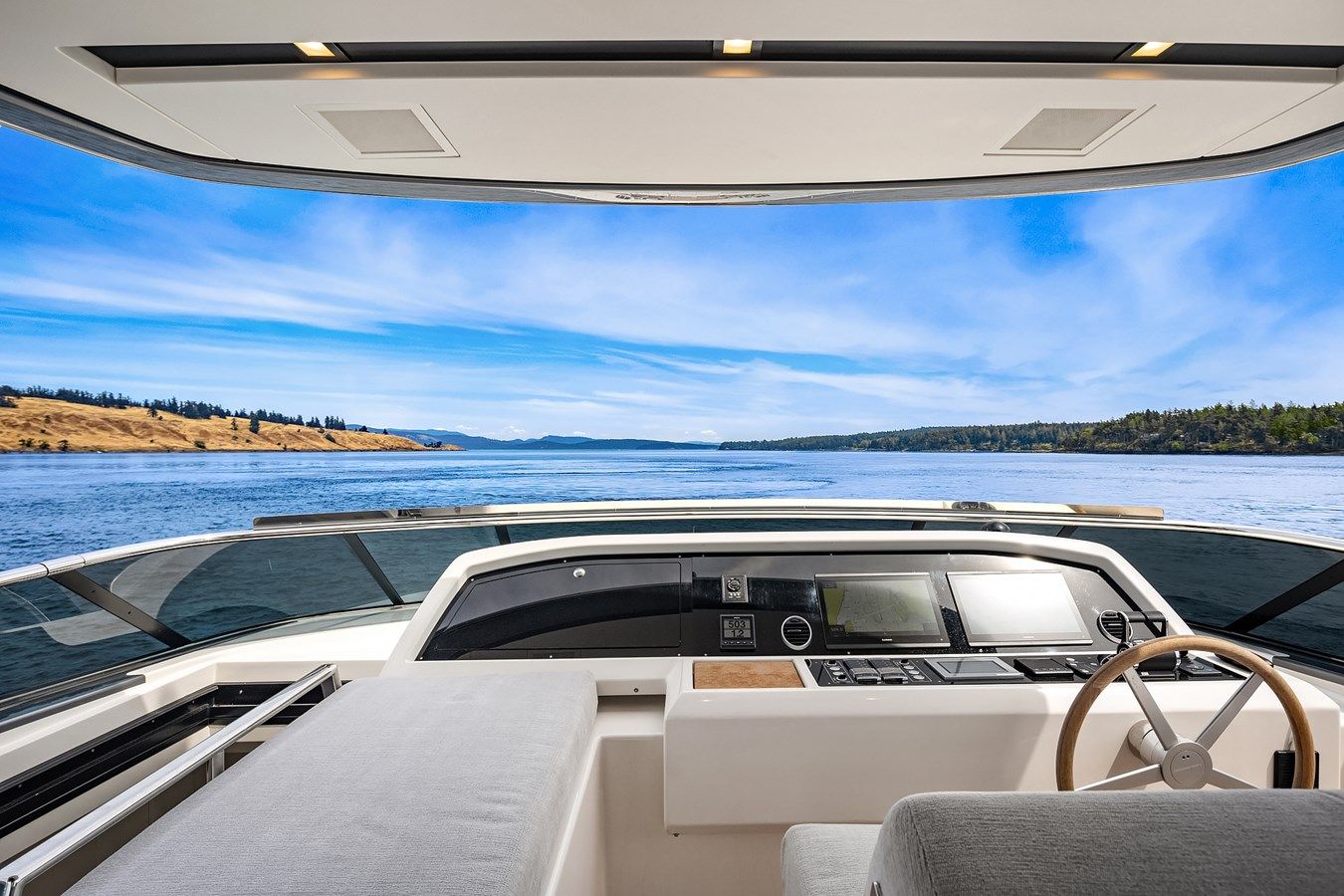
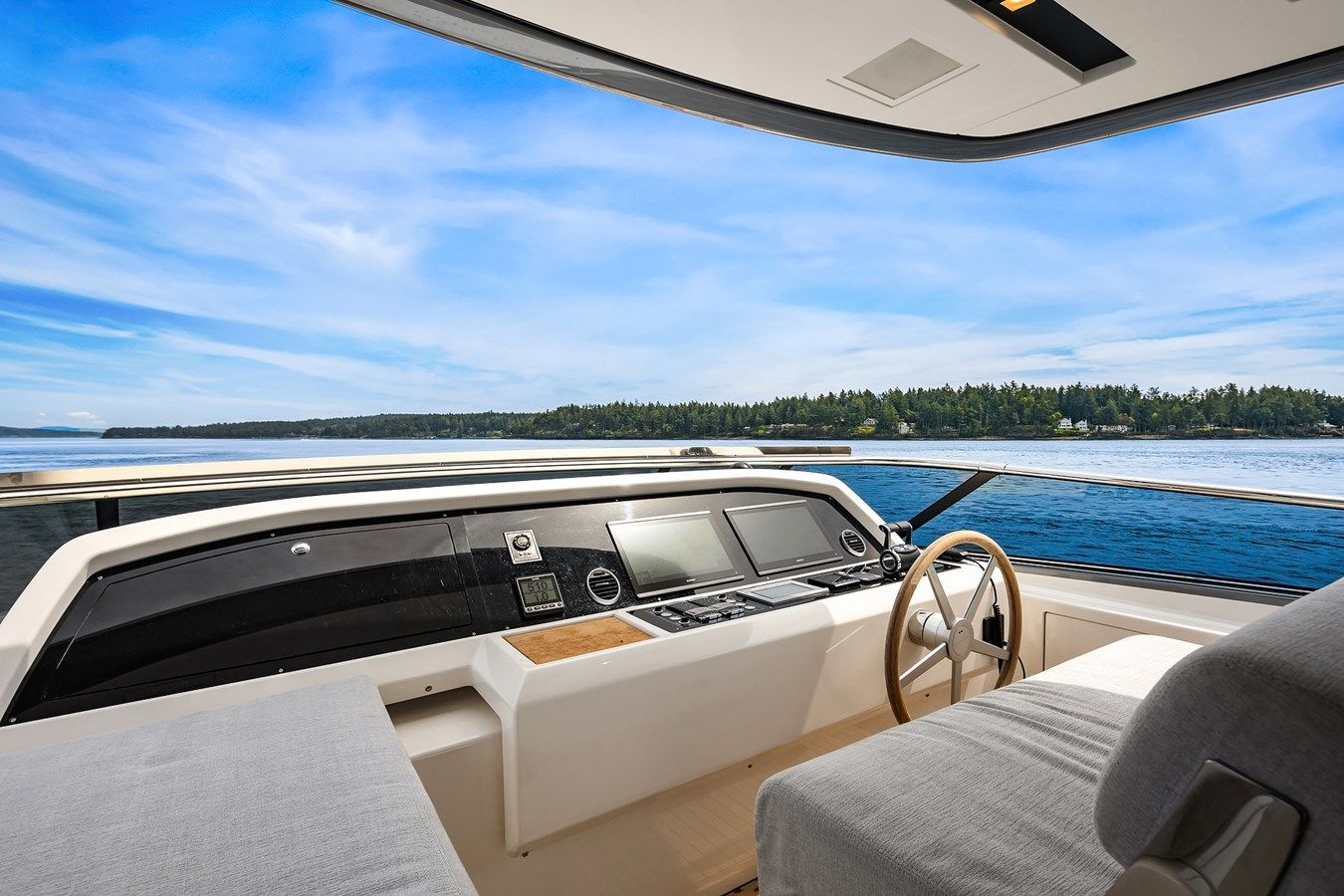
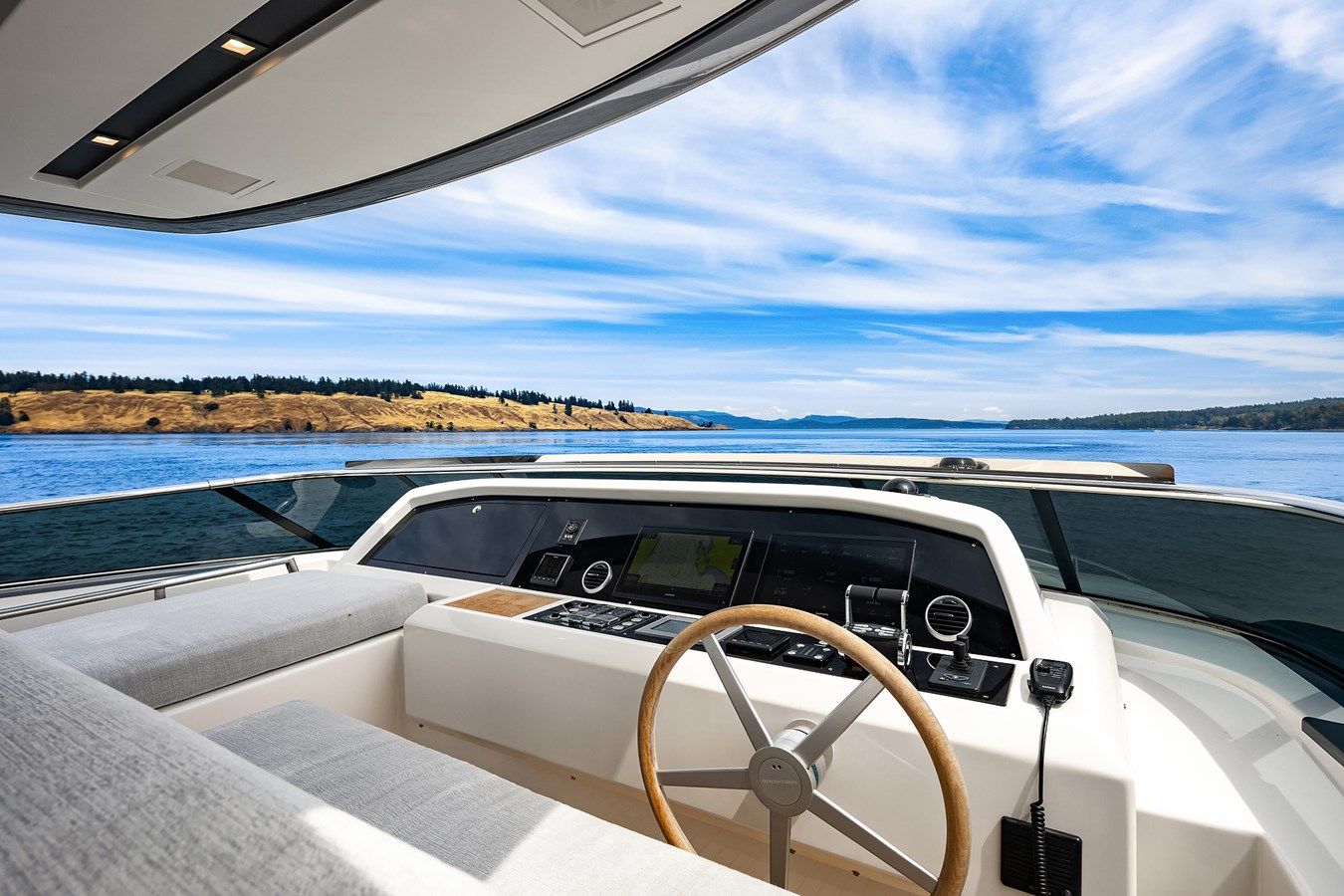
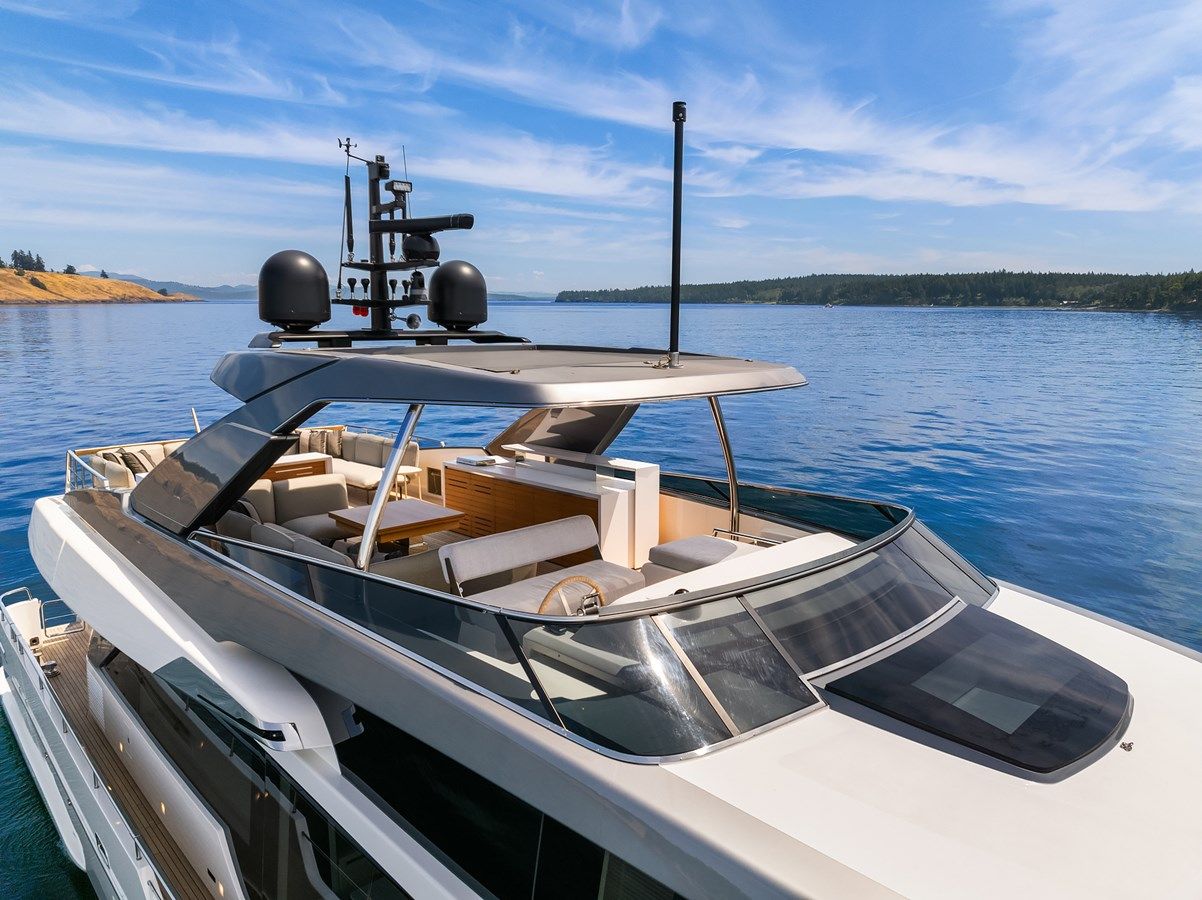
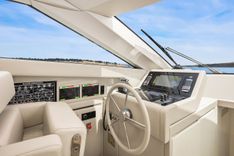
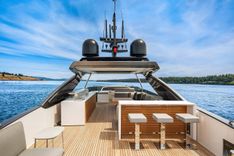
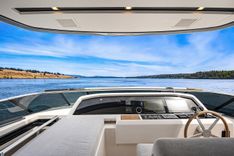
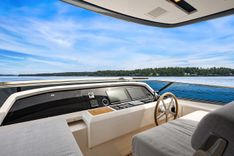
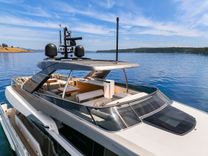
At the wheelhouse control station, the captain commands two twelve-inch multi-function displays, a rudder angle indicator, an autopilot, and both VHF and AIS for confident passage-making. On the fly bridge, a twelve-inch multi-function display is paired with a speed, depth, wind, and temperature indicator, a rudder angle indicator, an autopilot, and VHF, ensuring comprehensive oversight in open-air comfort. The roll bar carries a GPS antenna, a radar open-array antenna measuring 48 inches with a 72 Nm range, a VHF antenna, an AIS antenna, a signaling horn, and a wind transducer, delivering robust situational awareness and safety.
Internal communication is future-ready with predisposition for a PABX communication system provided in the technical area beneath the wheelhouse, while a centralized antenna system underpins the audio/video network throughout.
The saloon hosts a 40-inch LED TV and a HI/FI system with tuning amplifier multimedia system, a CD/DVD/BluRay player, two speakers, and a subwoofer with a connection to the aft cockpit for effortless indoor-outdoor ambiance. The owner’s cabin features a 32-inch LED TV and a HI/FI system with tuning amplifier multimedia system, a CD/DVD/BluRay player, two speakers, and a subwoofer for private cinema-grade enjoyment. Guest cabins are equipped with a TV outlet and a compact stereo with two speakers, while the VIP cabin adds a 32-inch LED TV alongside a compact stereo with two speakers. In the crew quarters, a TV prearrangement is in place together with a compact stereo and two speakers to enhance day-to-day life on board. Entertainment extends to the fly deck with a marine stereo and two speakers, and to the wheelhouse with a stereo and two speakers, while in the cockpit two speakers are recessed into the ceiling and connected to the saloon HI/FI system for a cohesive soundscape across the yacht.
Exterior options
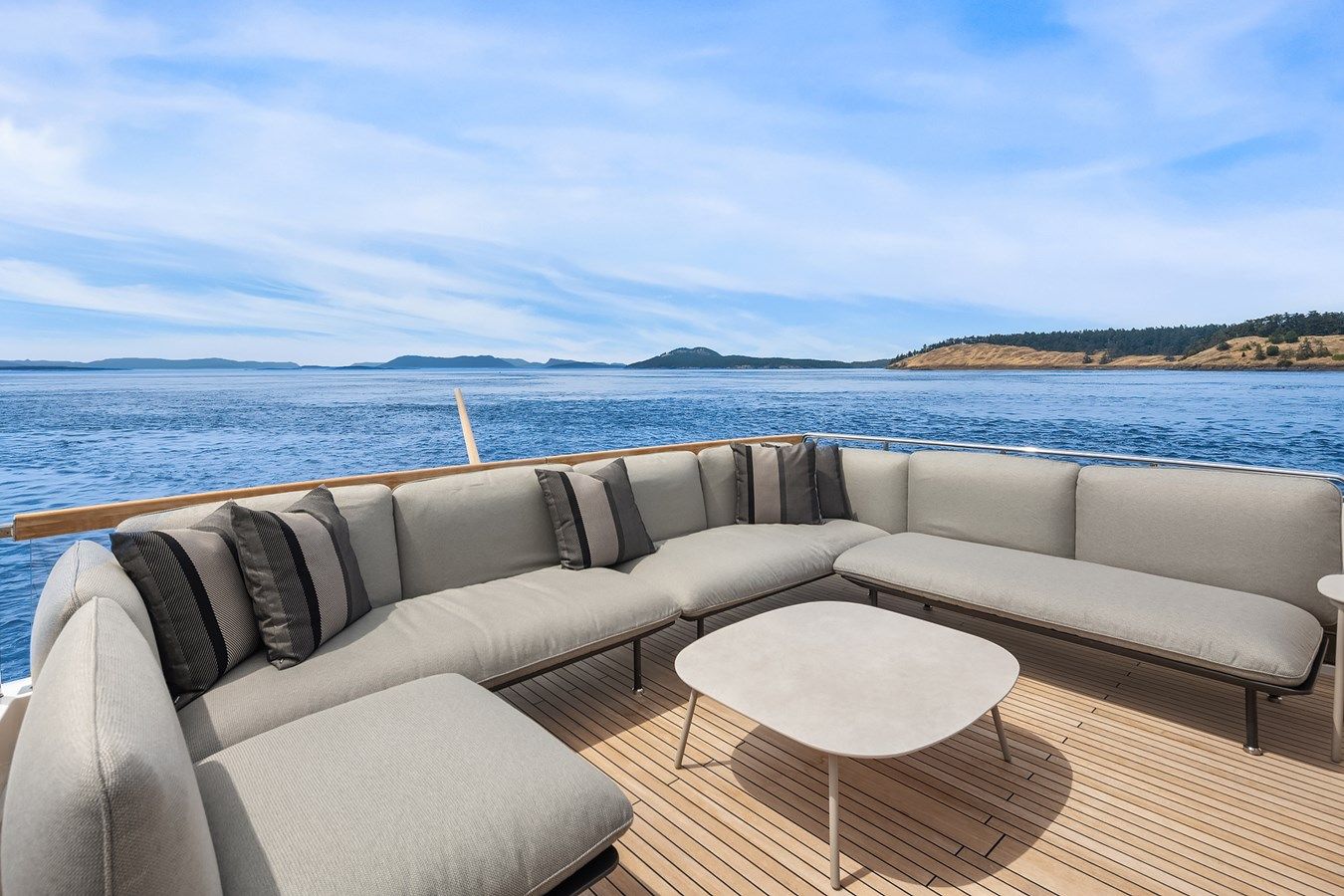
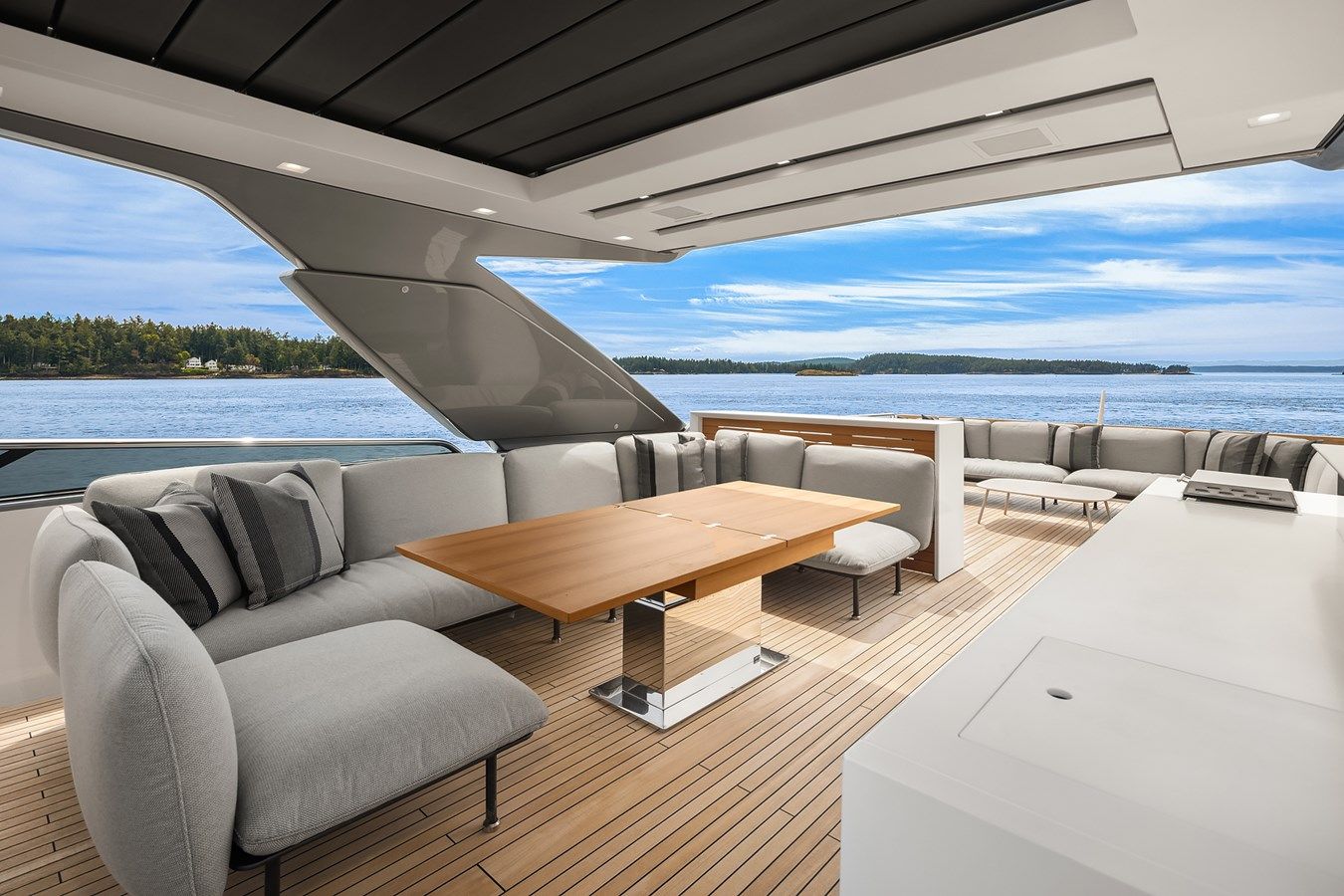
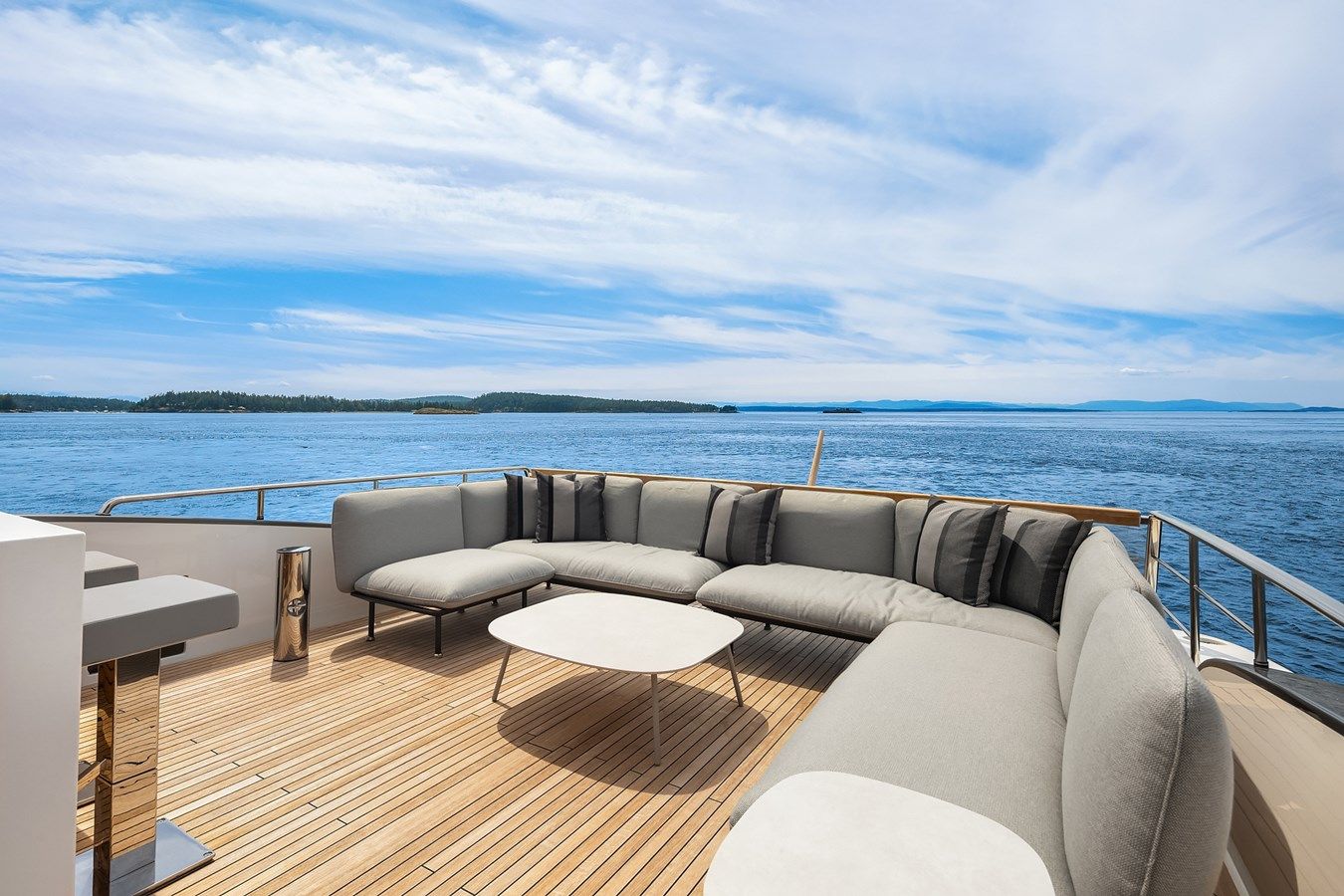
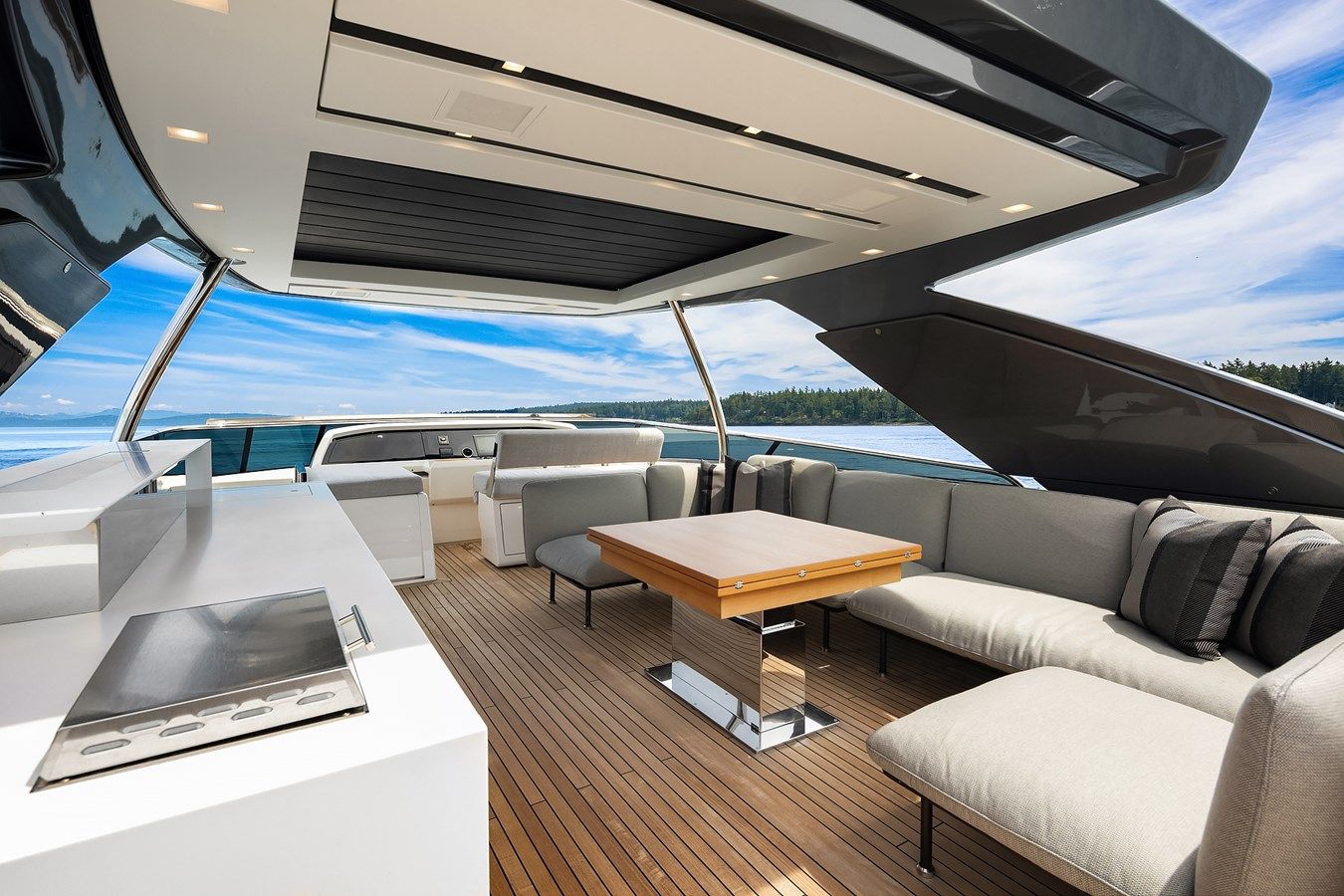
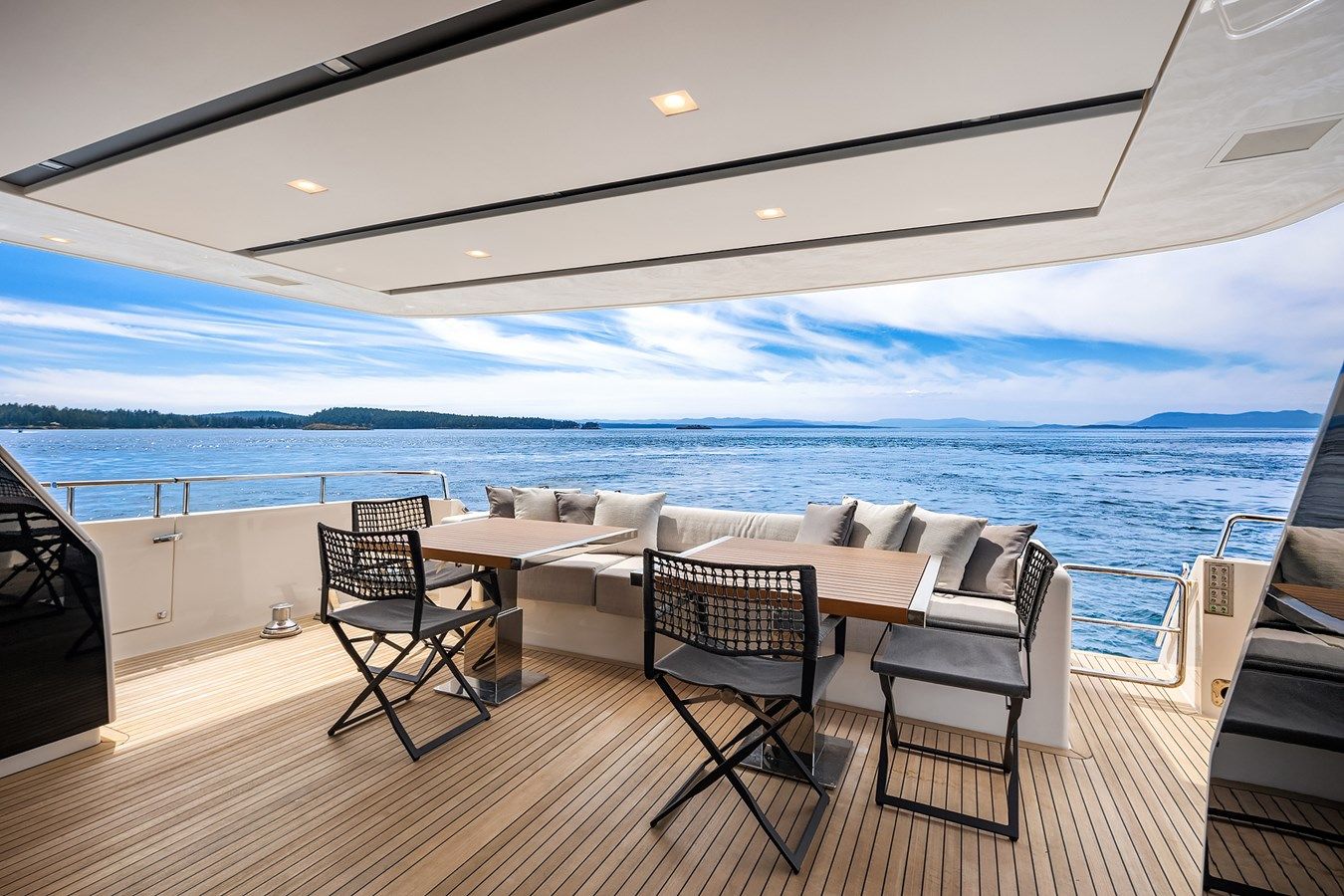
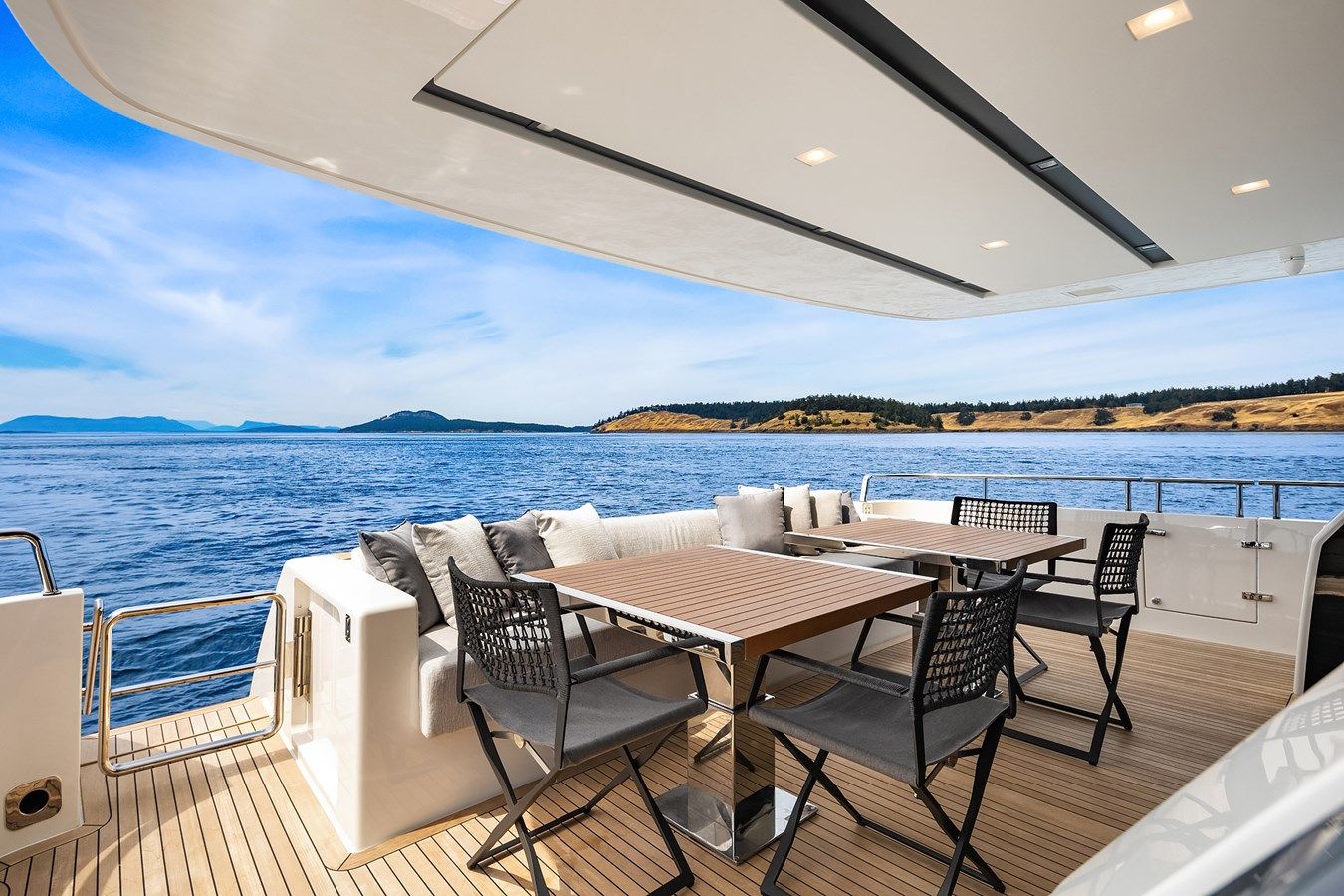
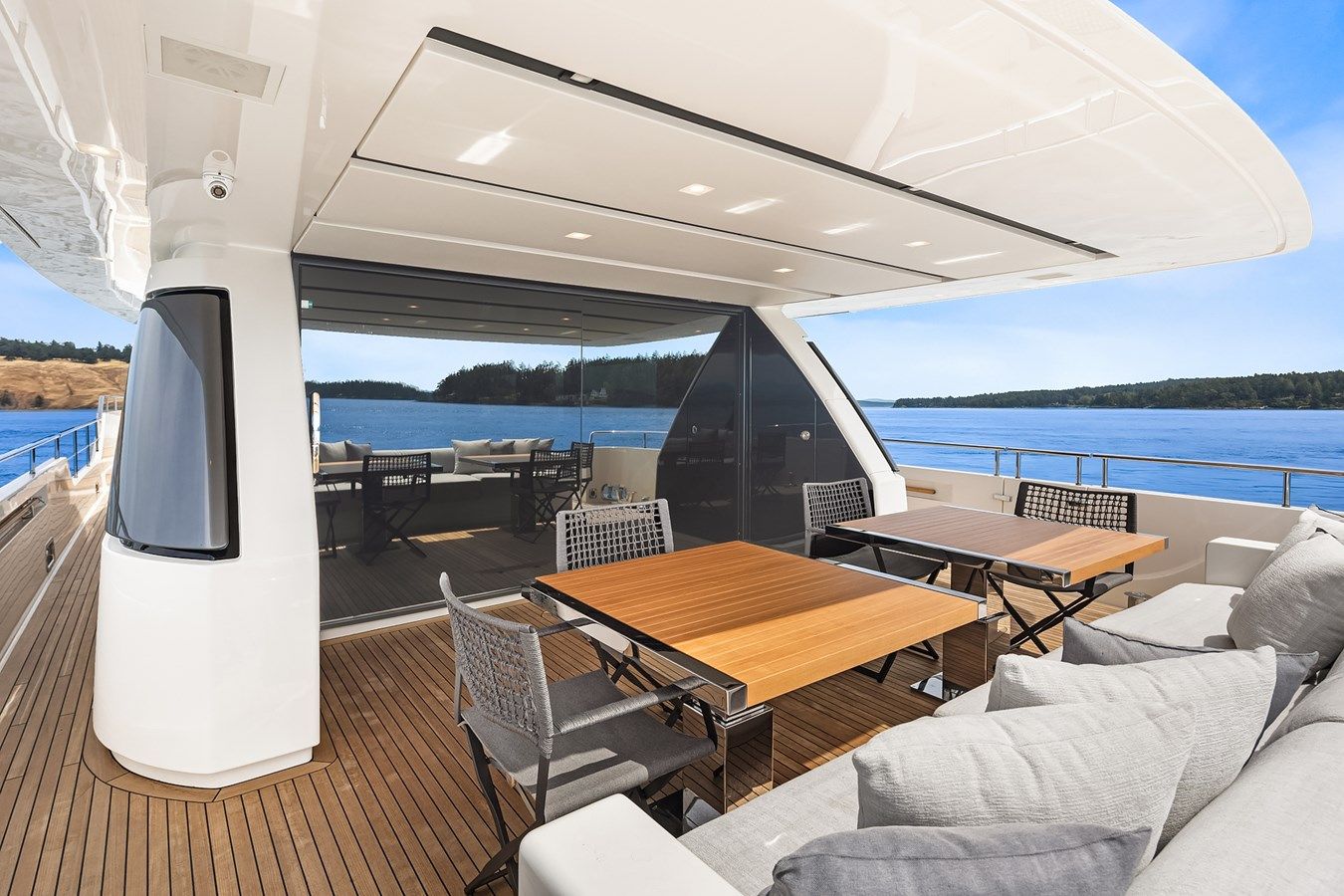
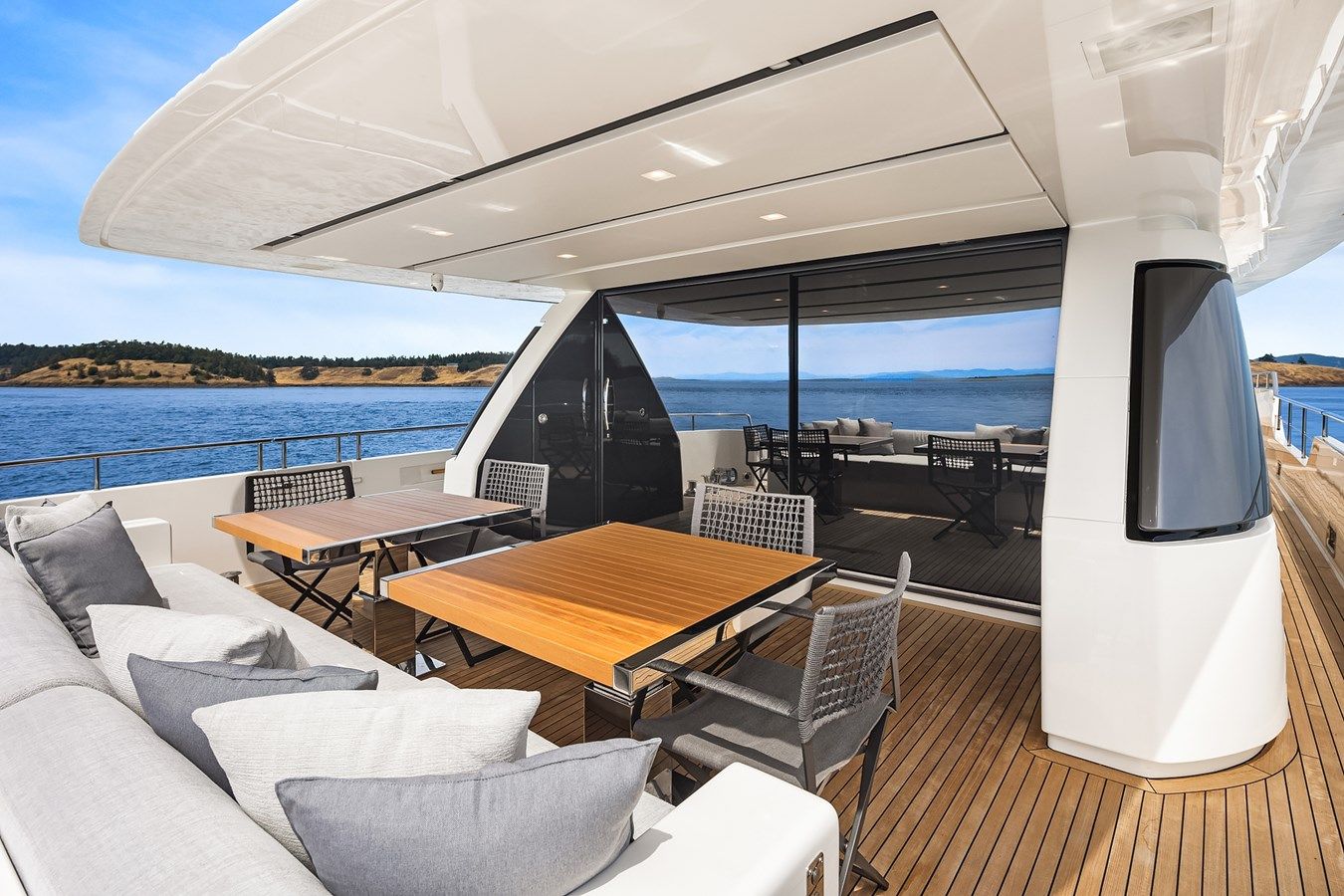
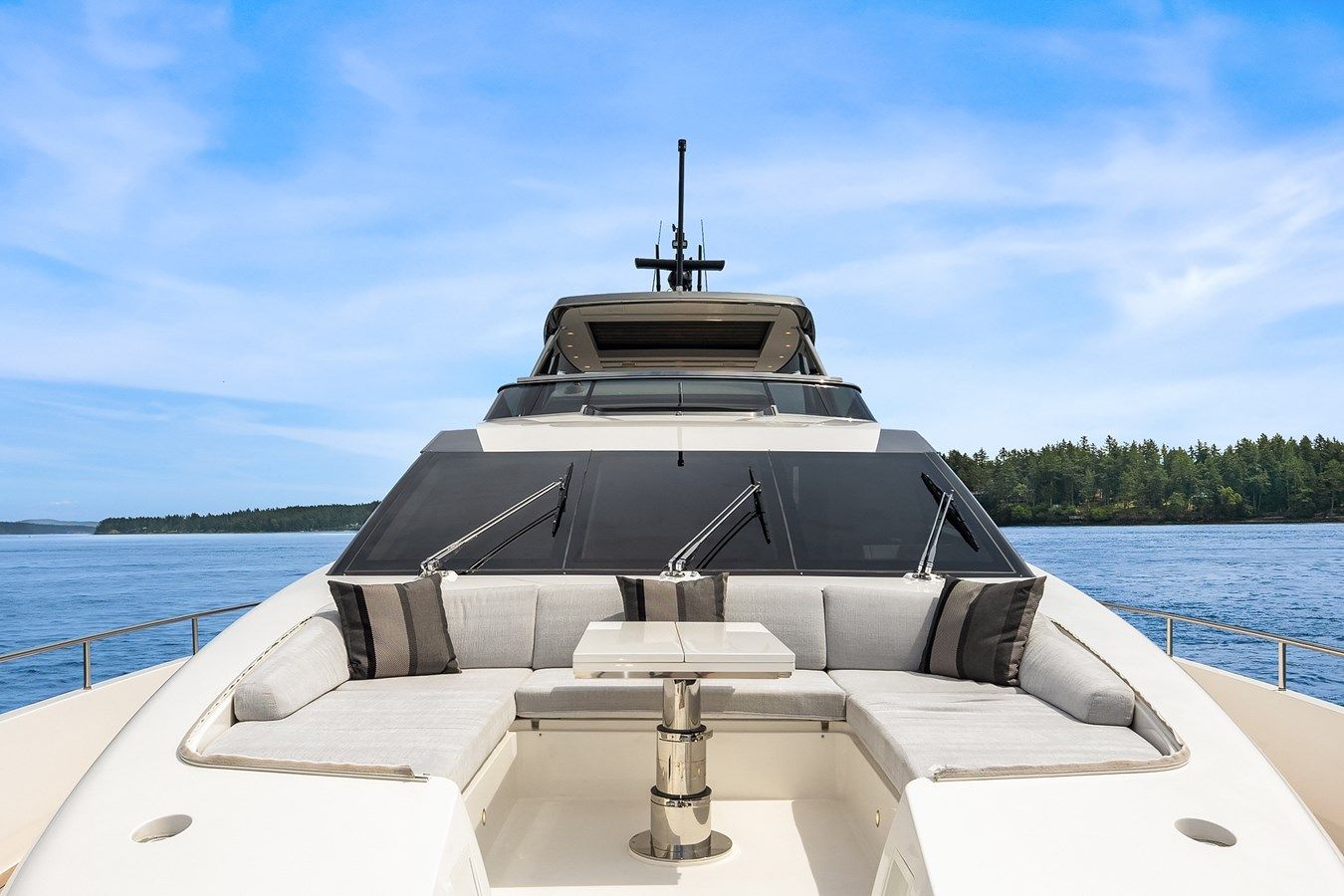
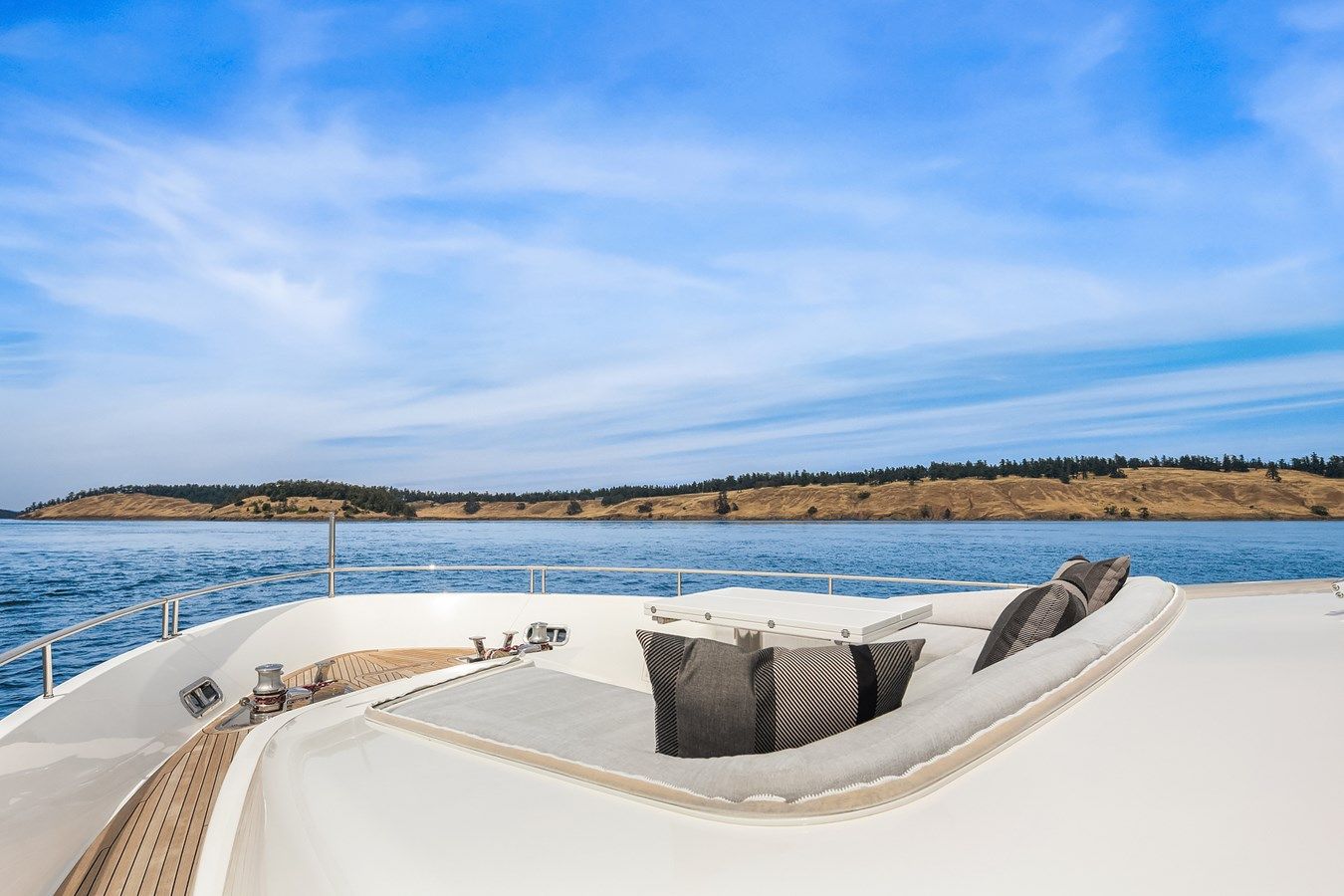
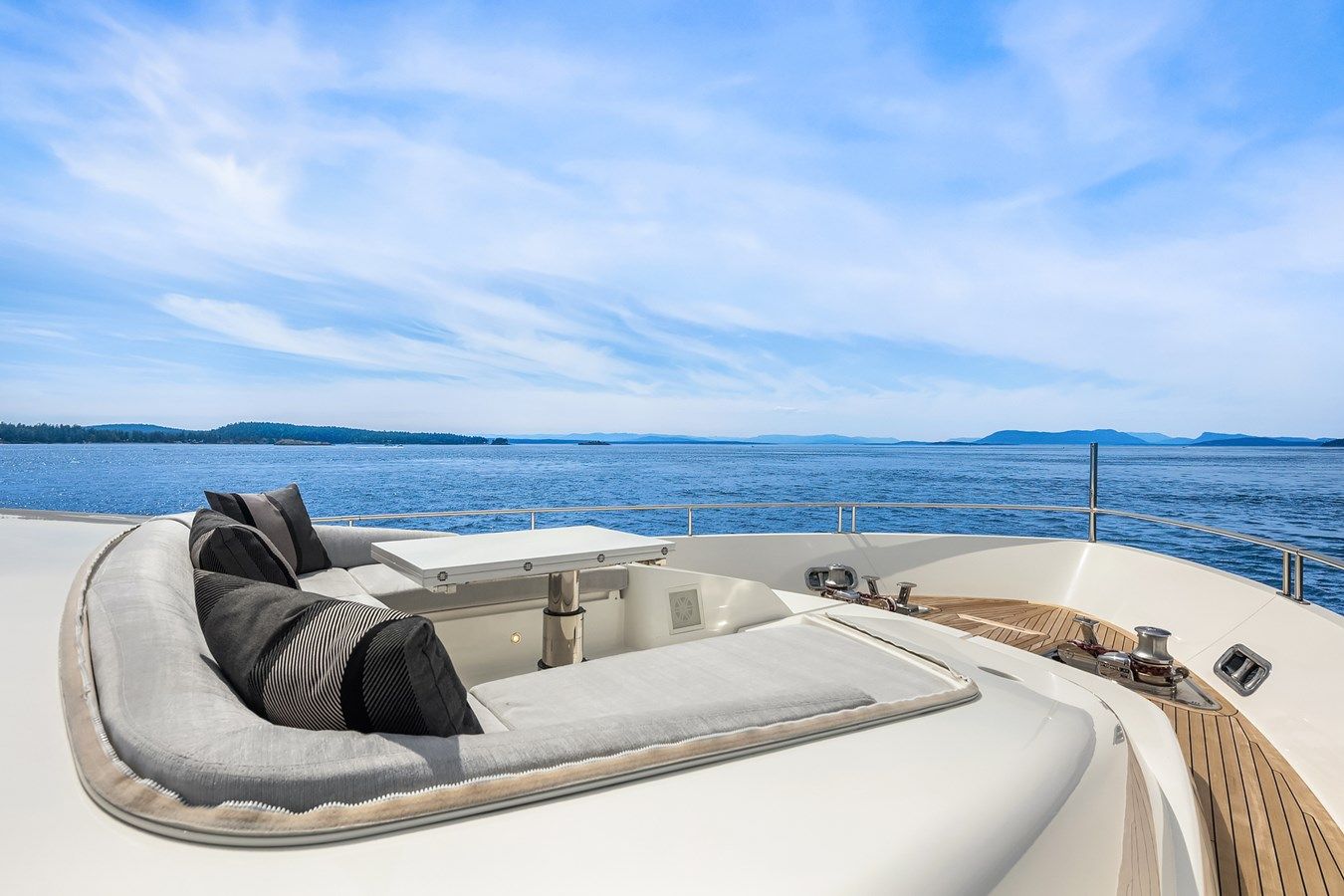
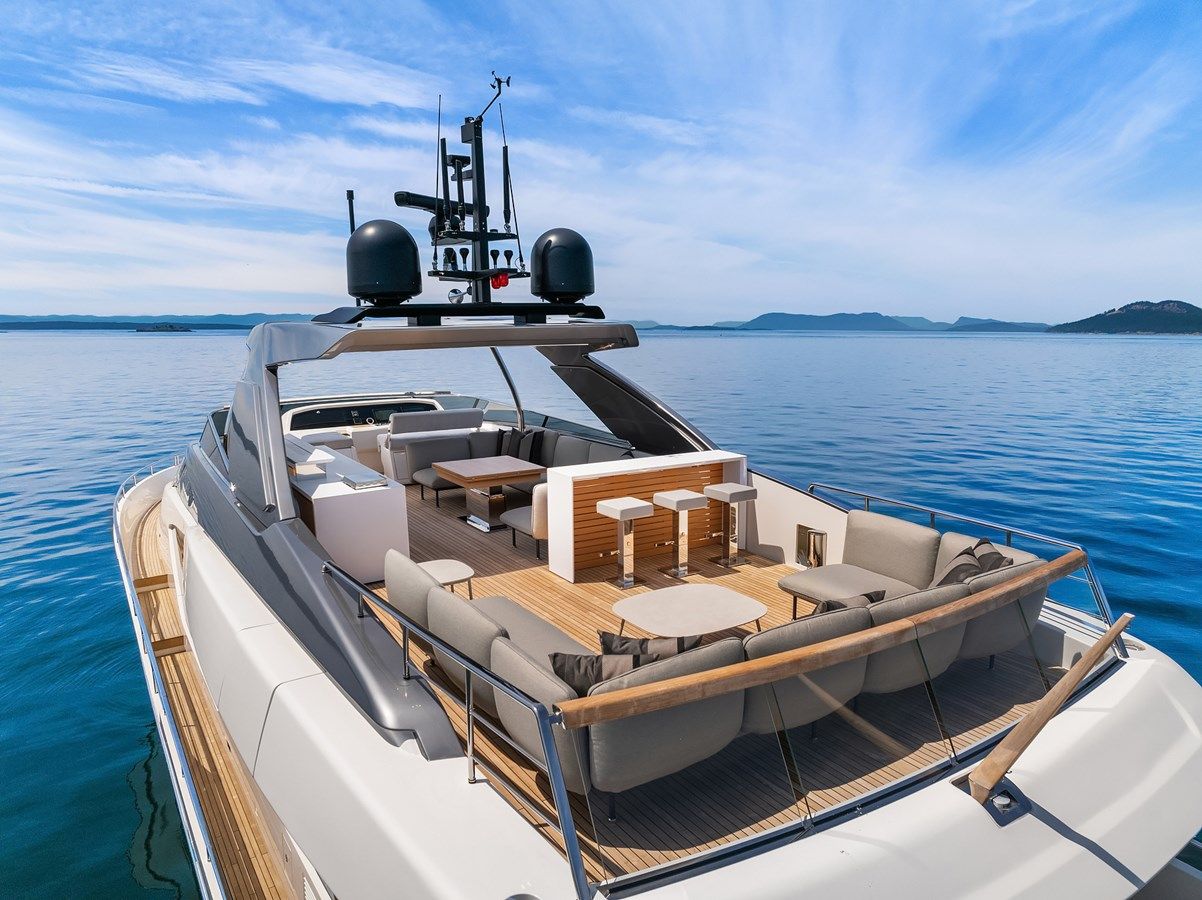
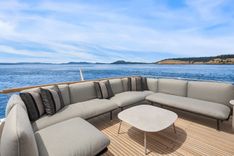
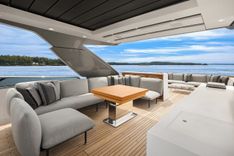
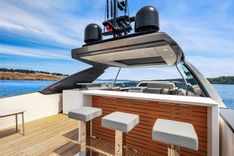
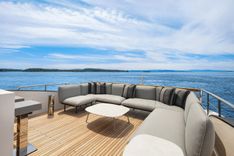
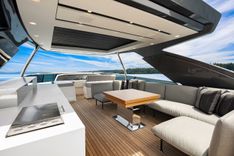
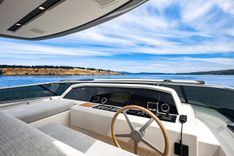
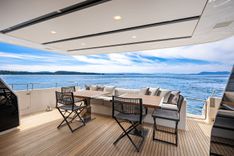
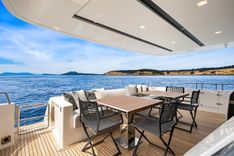
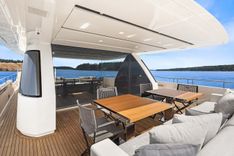
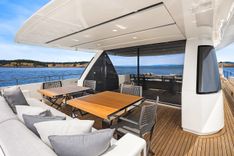
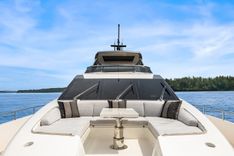
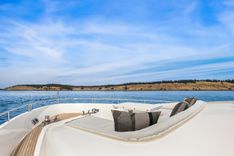
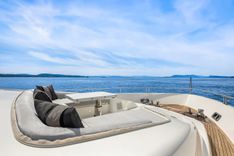
Thoughtful exterior enhancements elevate life on deck, beginning with an additional stainless steel handrail close to the staircase paired with an additional cushion for comfort and security. The hardtop features an electrically actuated blade-opening roof and a striking bicolor superstructure, refined by a tailored paint scheme—grey for the hardtop and wings, with the mast and antennas in matte black—while the flybridge dashboard is finished in crisp white. On the flybridge, teak flooring sets a warm tone, complemented by a column shower and a custom bar cabinet with a Corian Glacier White top and side, slatted varnished teak doors, and an integrated TV lifting system; generous shade is provided by sun awnings at the bow and on the flybridge, each supported by stainless steel poles. Nighttime ambiance and safety are enhanced by four underwater lights rated at 7000 lumens, with two at the aft transom and two along the hull sides. Natural light pours through the dark fixed skylight for the superstructure—an enlarged version with external dimensions of 600 x 1150 mm dedicated to the country kitchen. Versatility in the aft cockpit comes via two electric up/down tables with slatted varnished teak tops, stainless steel profiles, and stainless steel bases, plus an additional central section in varnished teak, and seamless access is ensured by a side boarding ladder.
Interior options
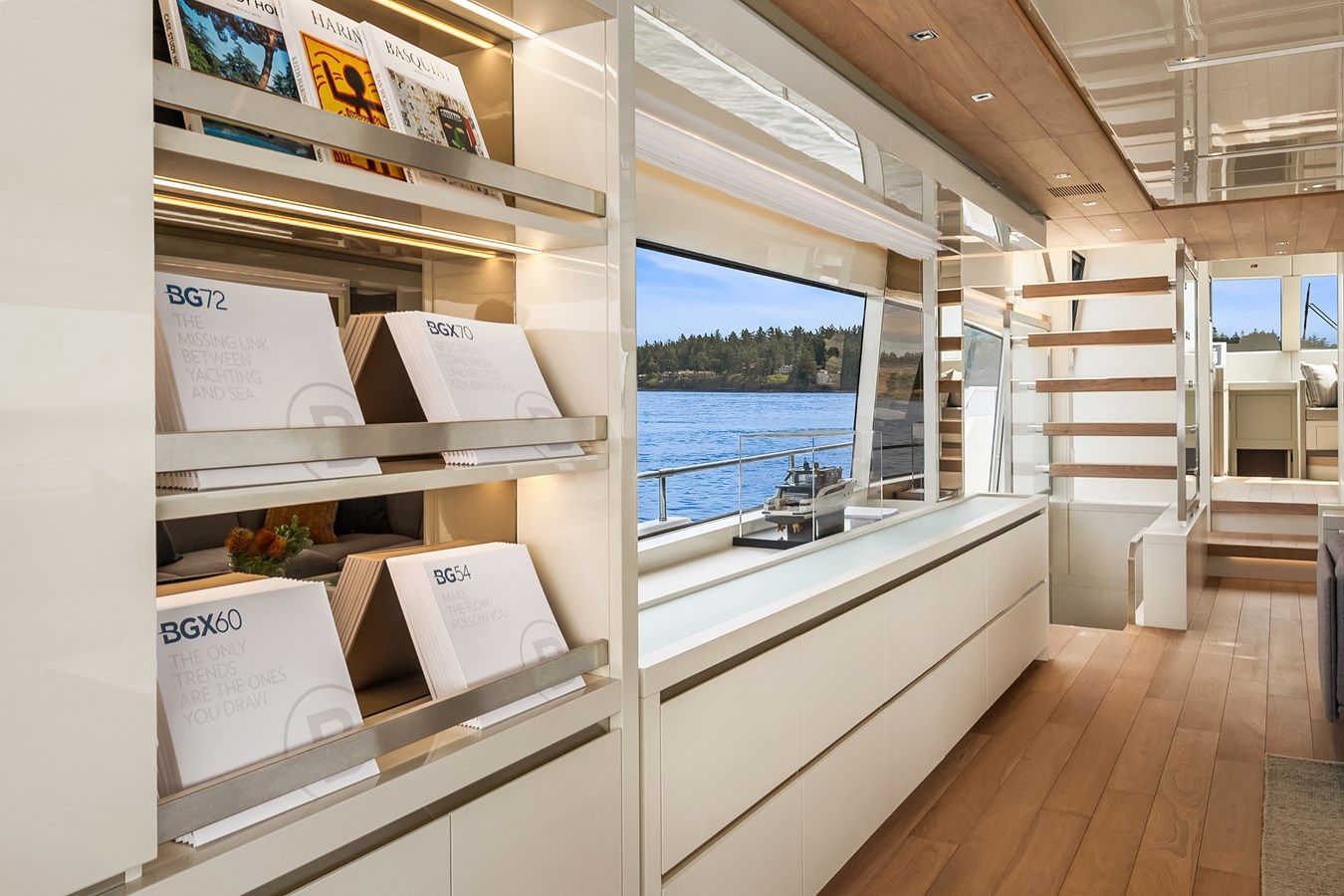
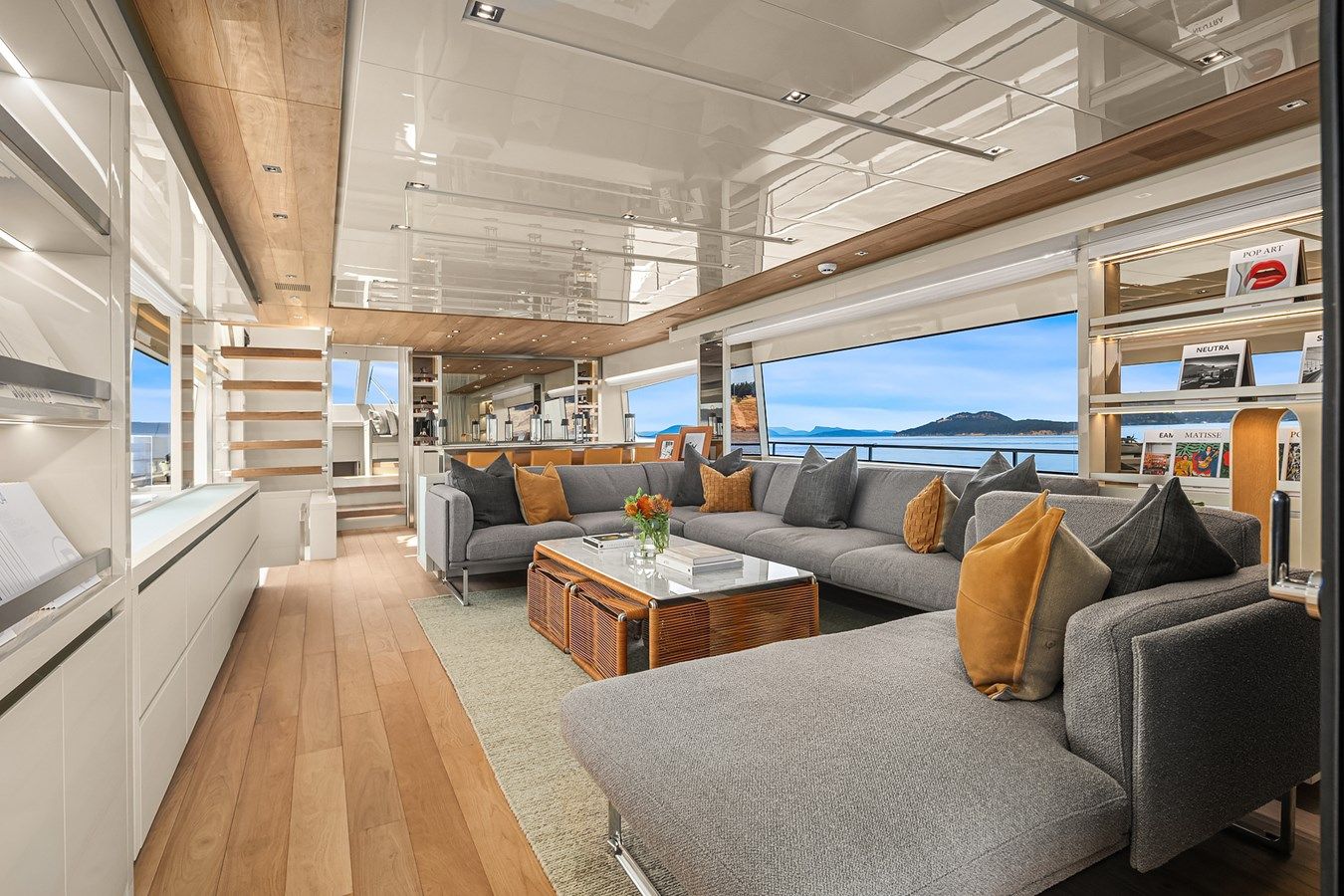
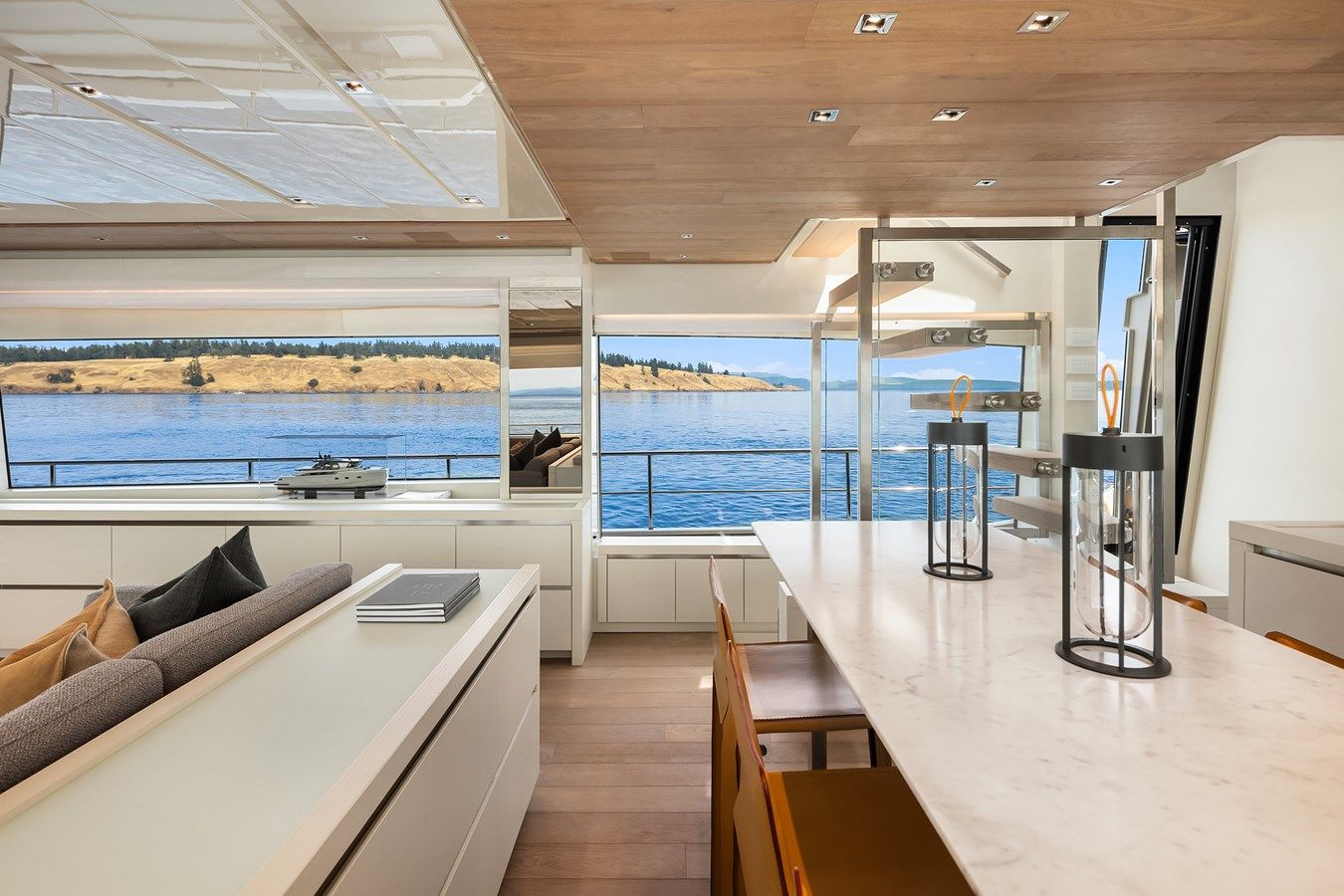
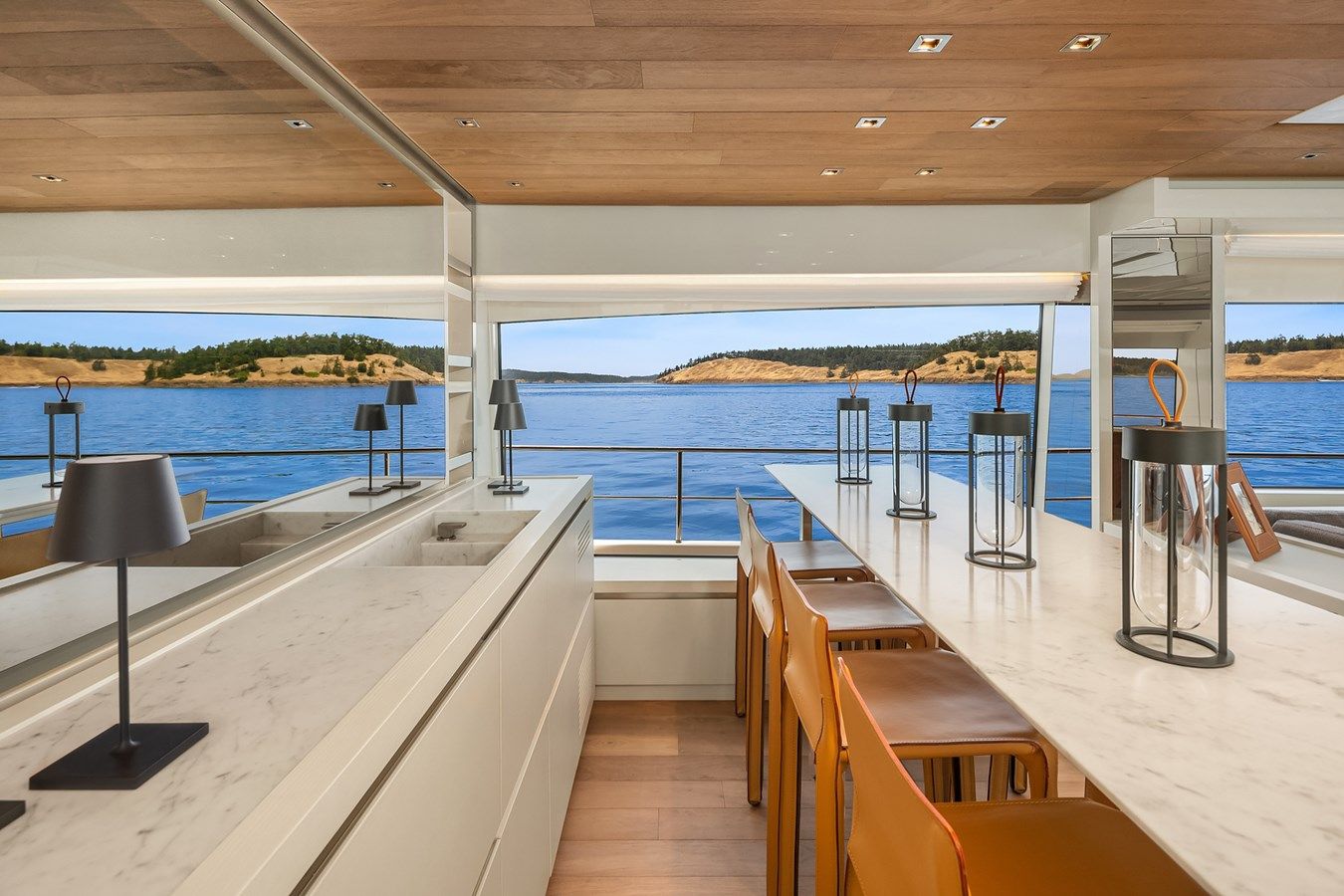
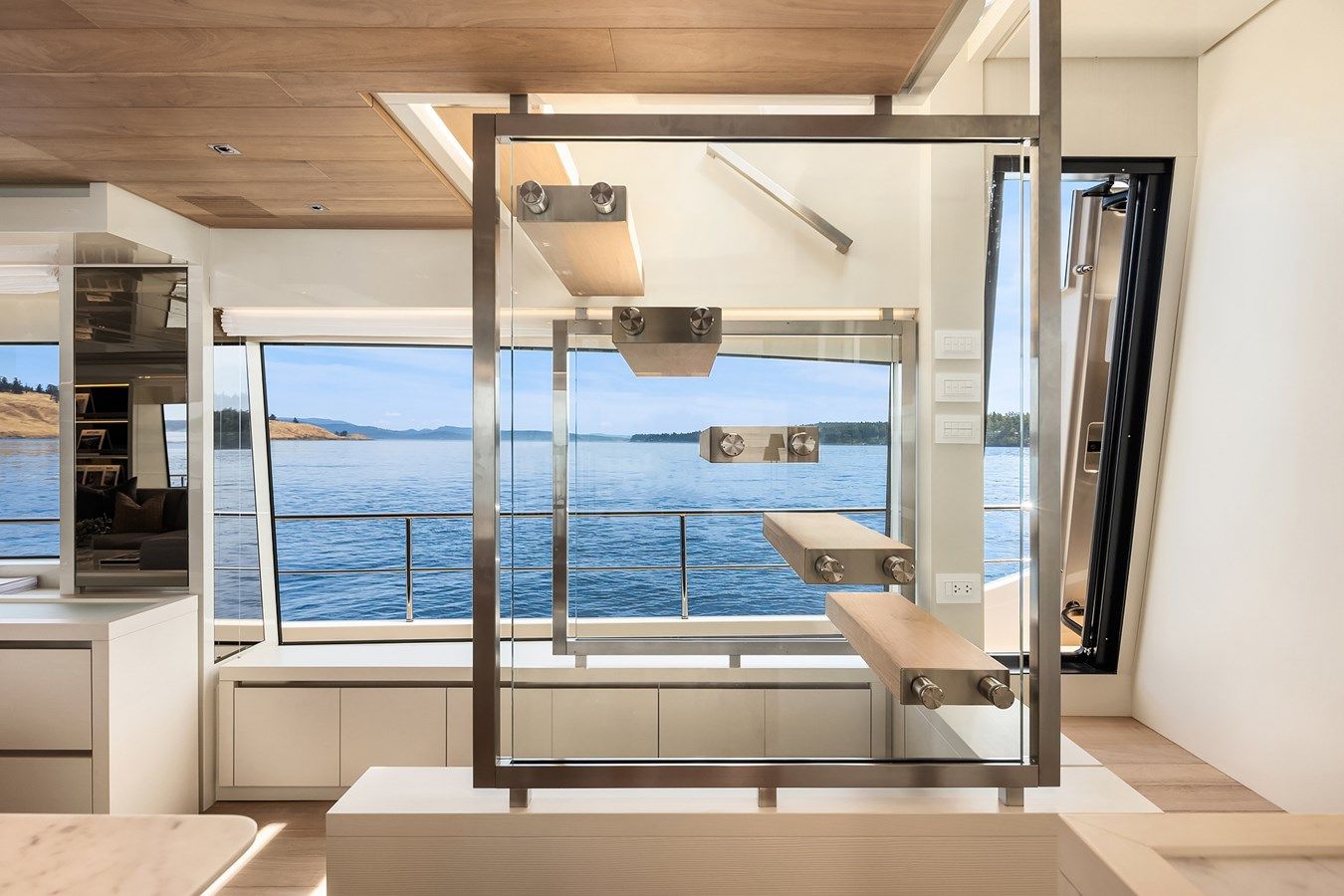
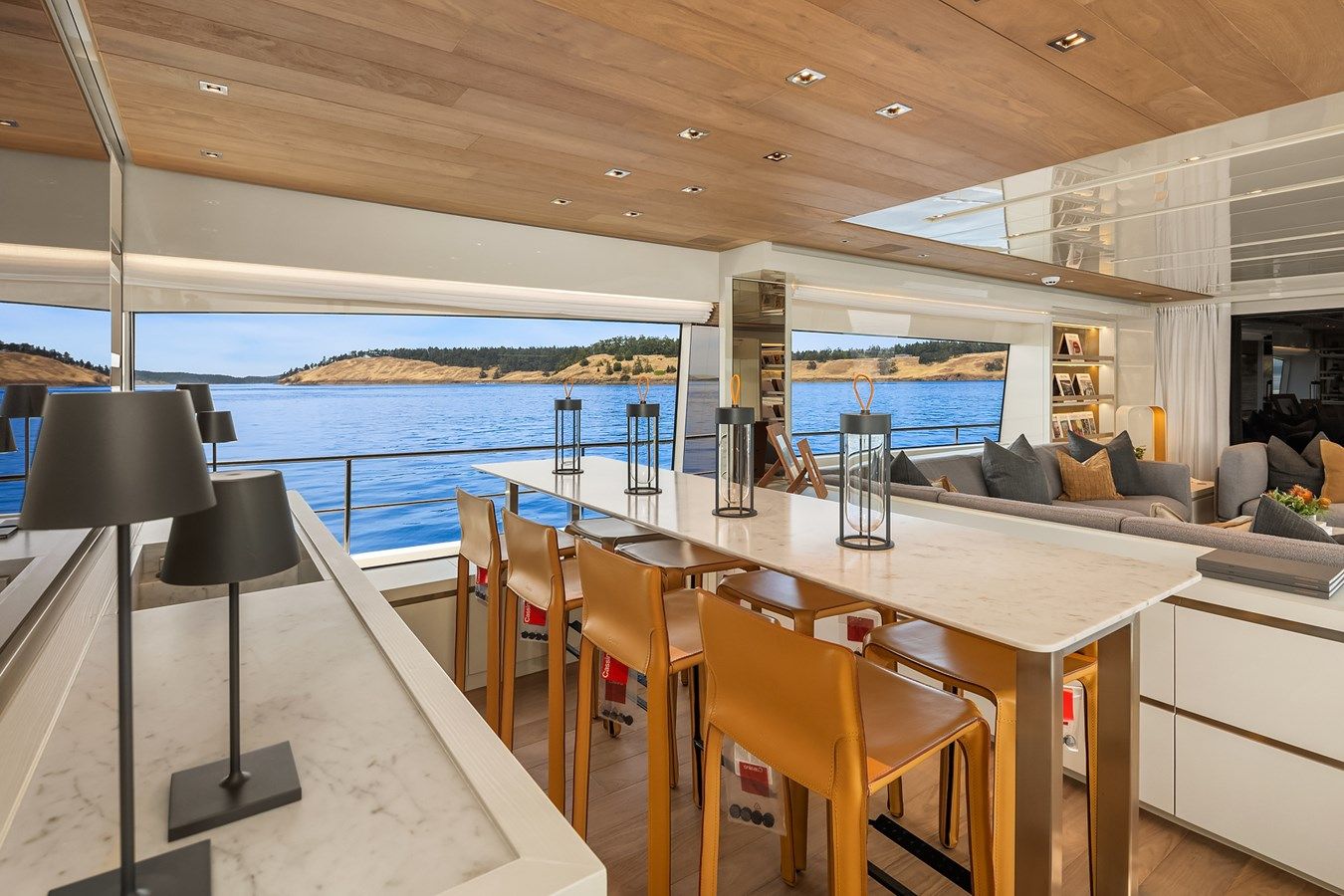
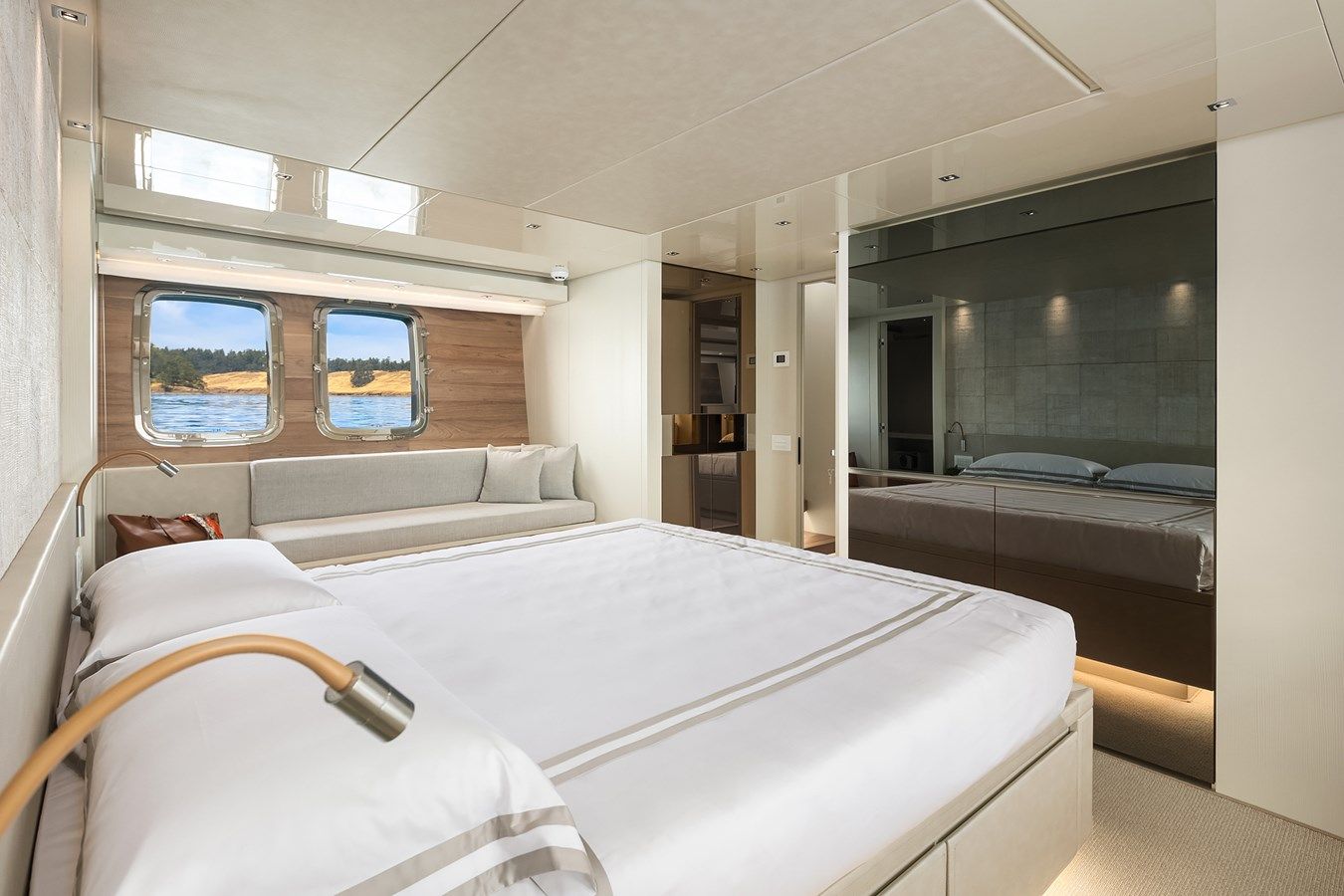
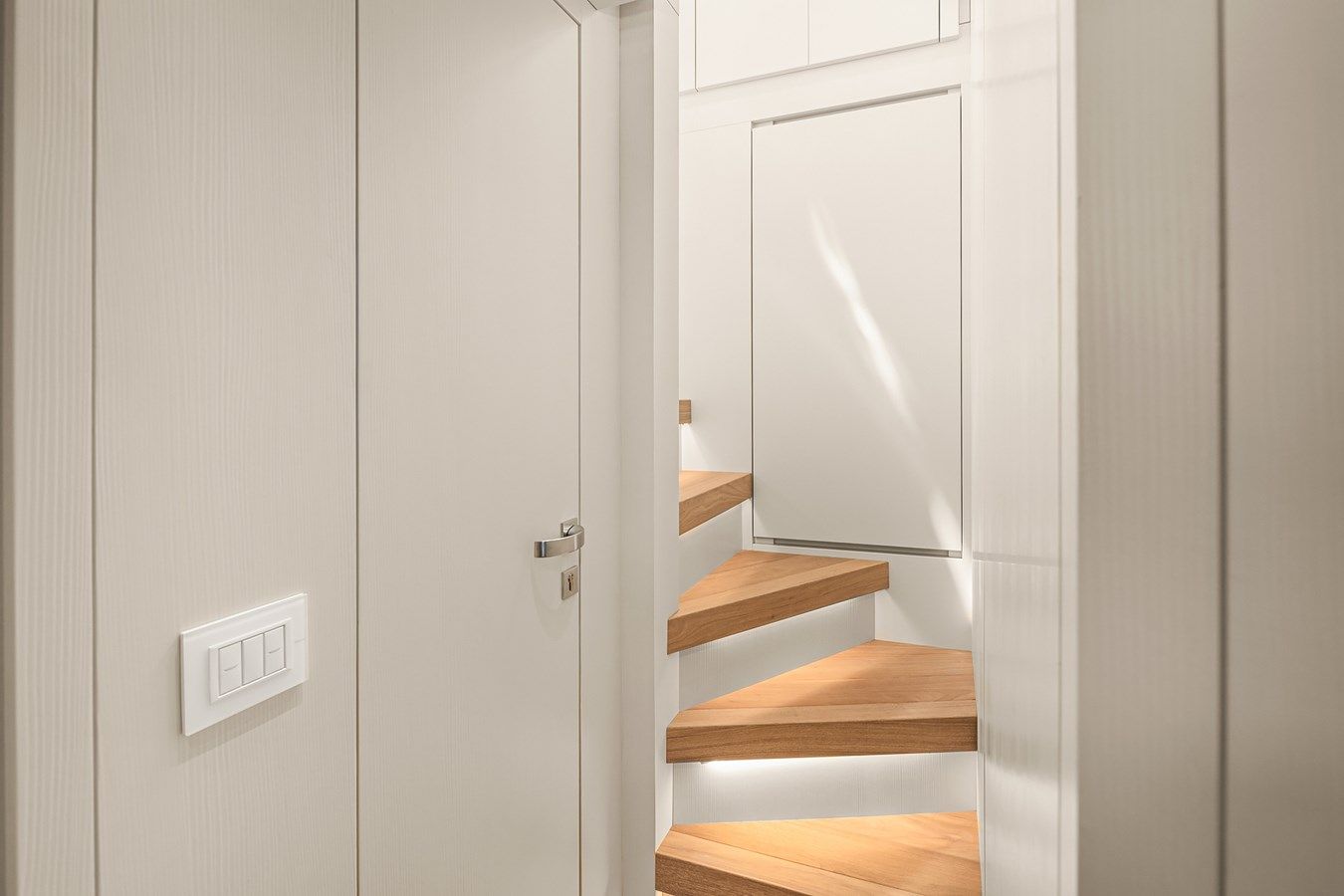
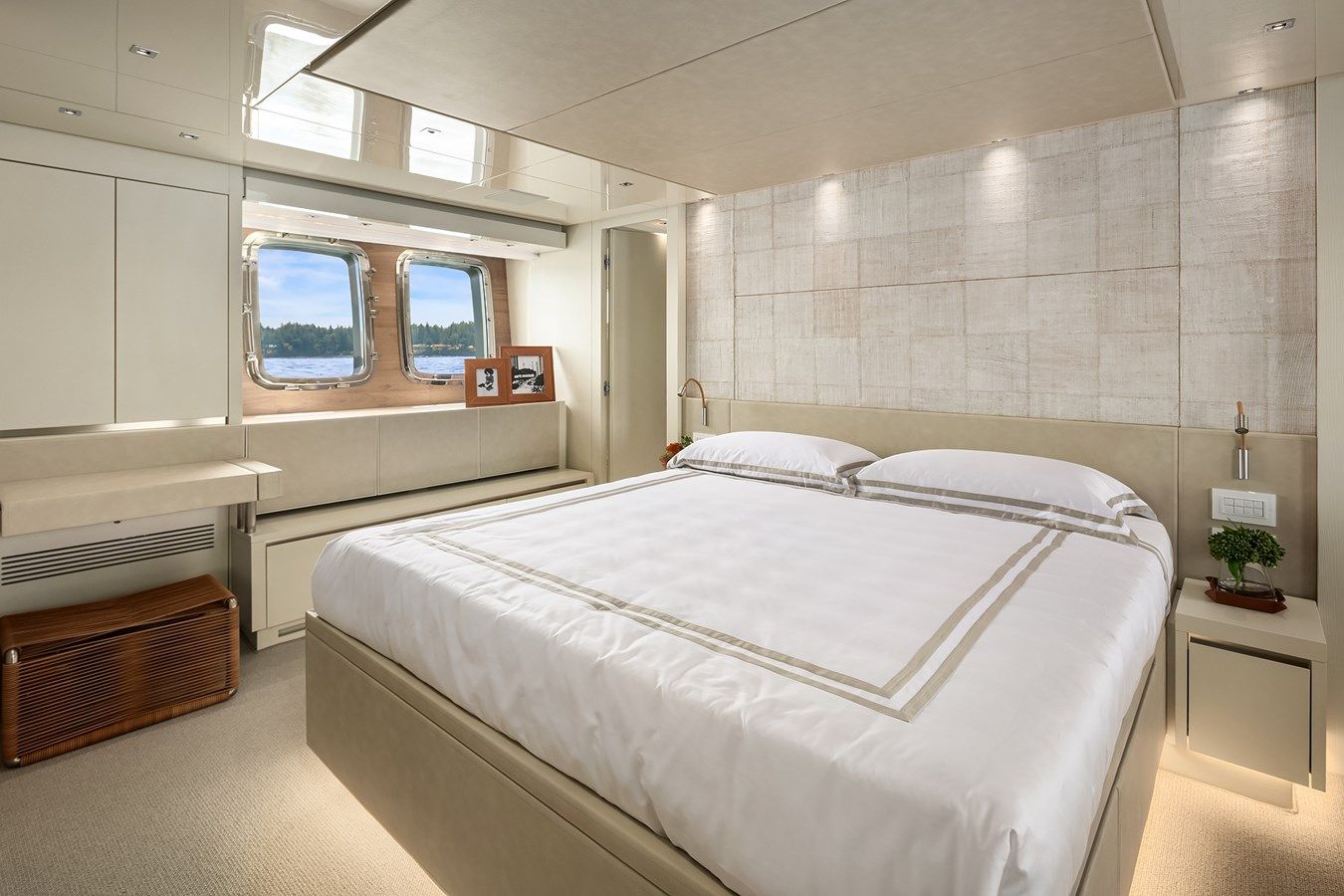
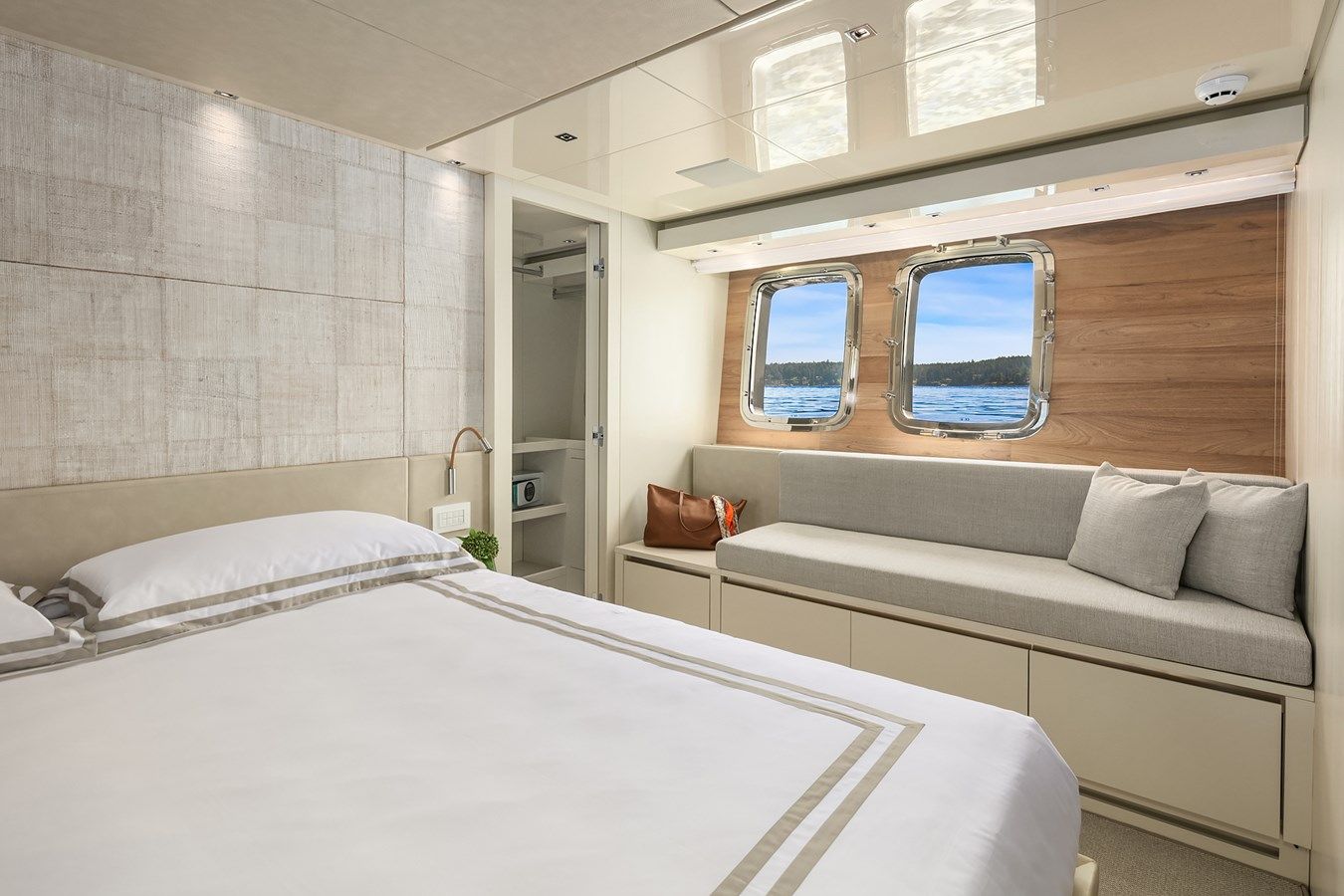
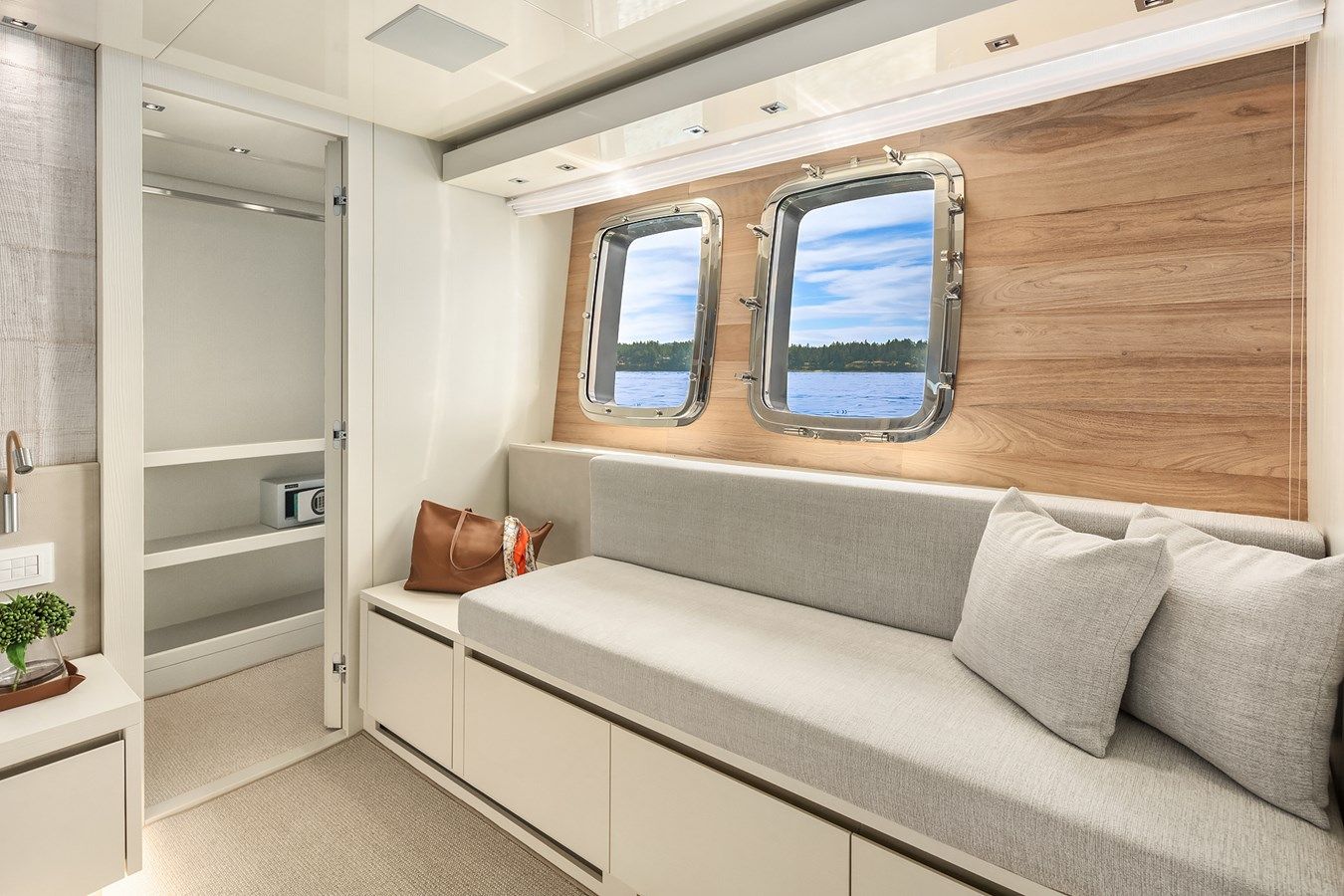
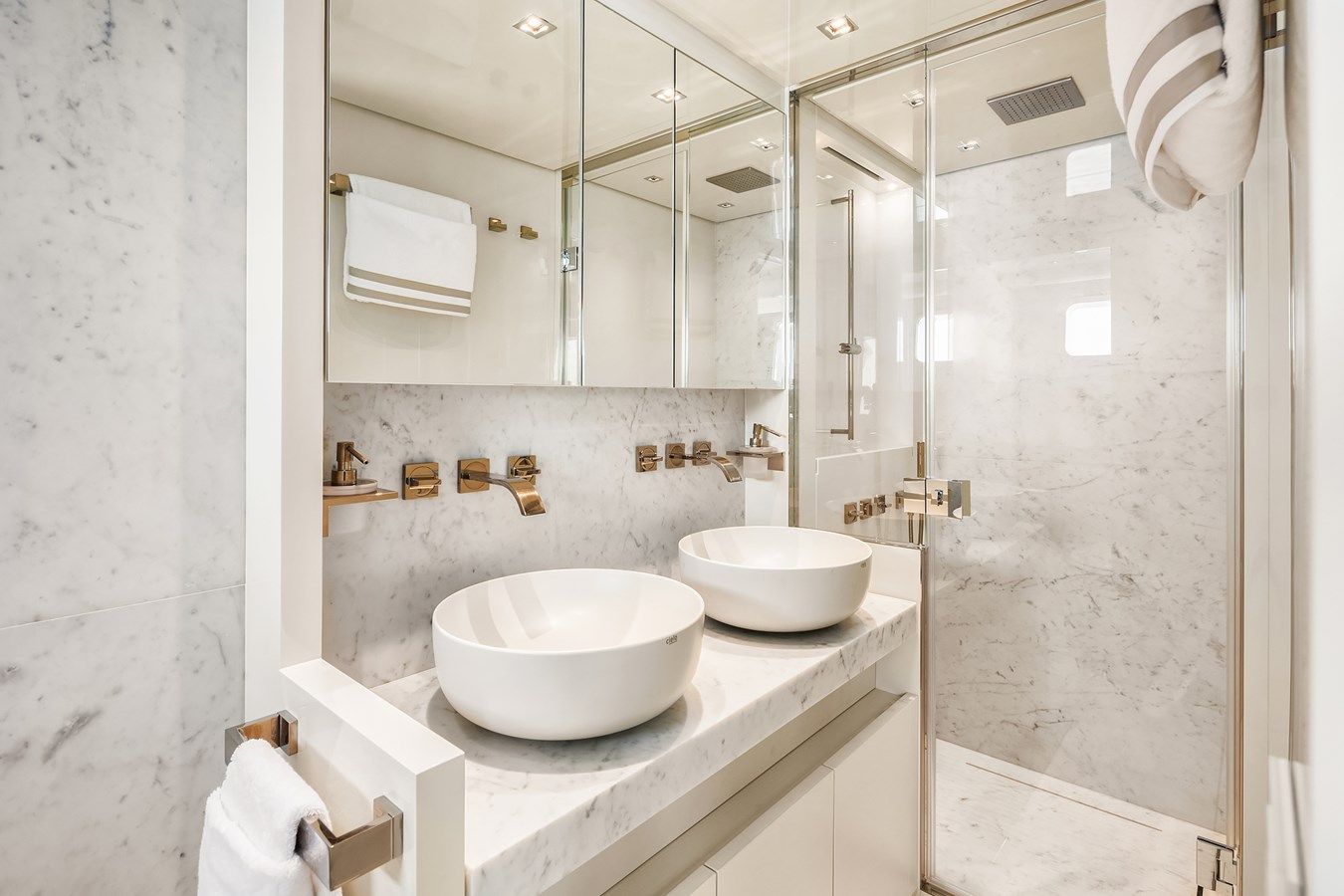
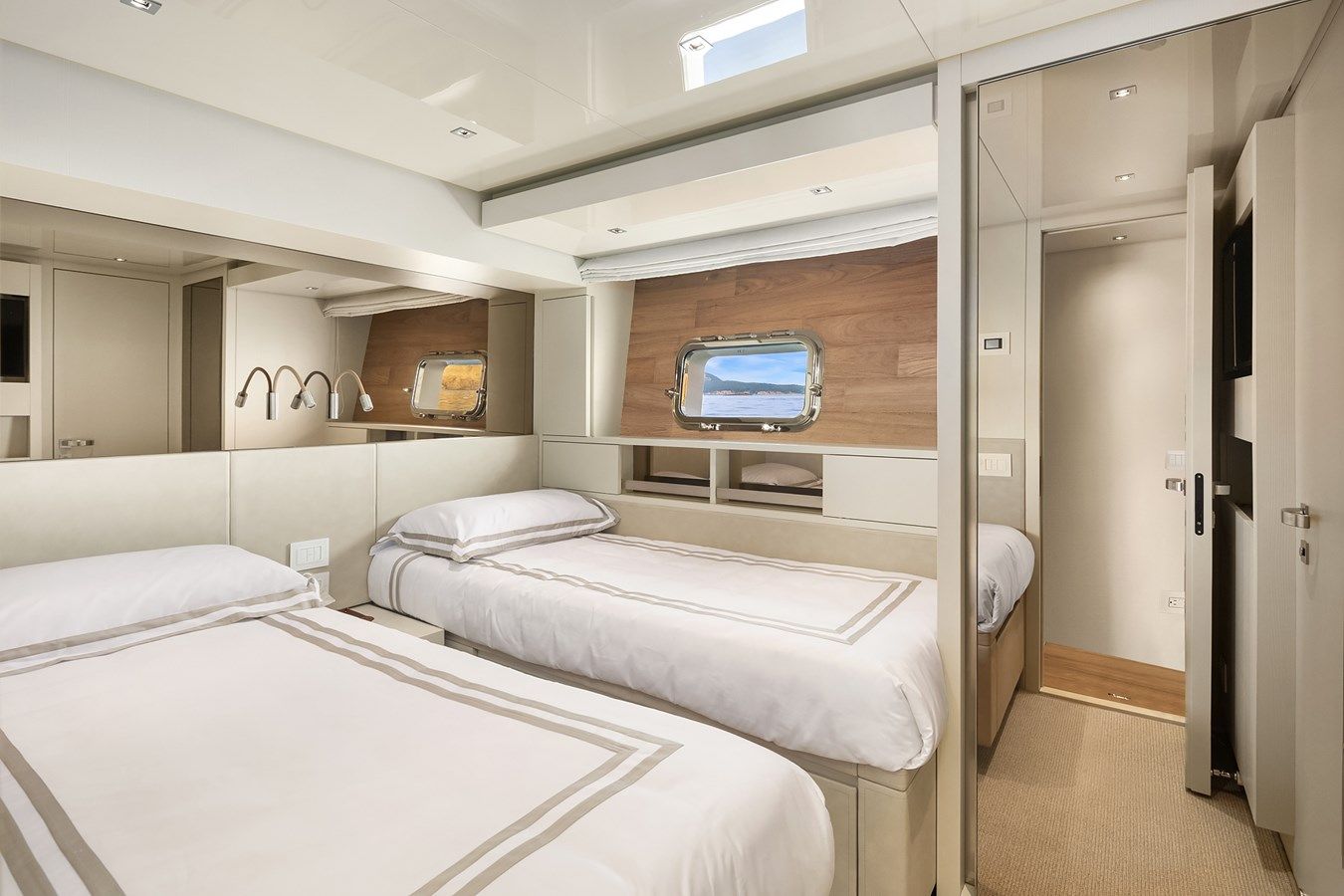
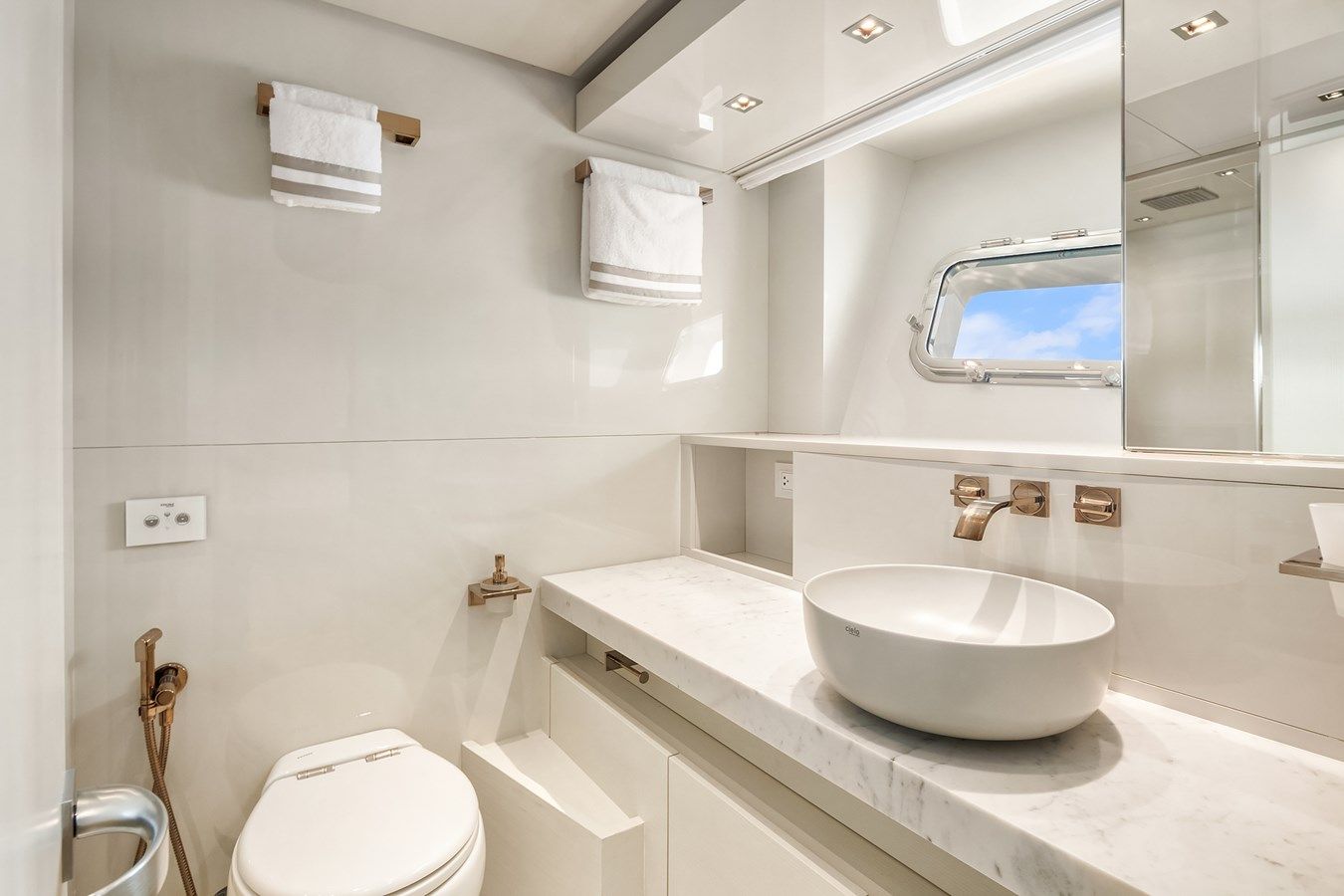
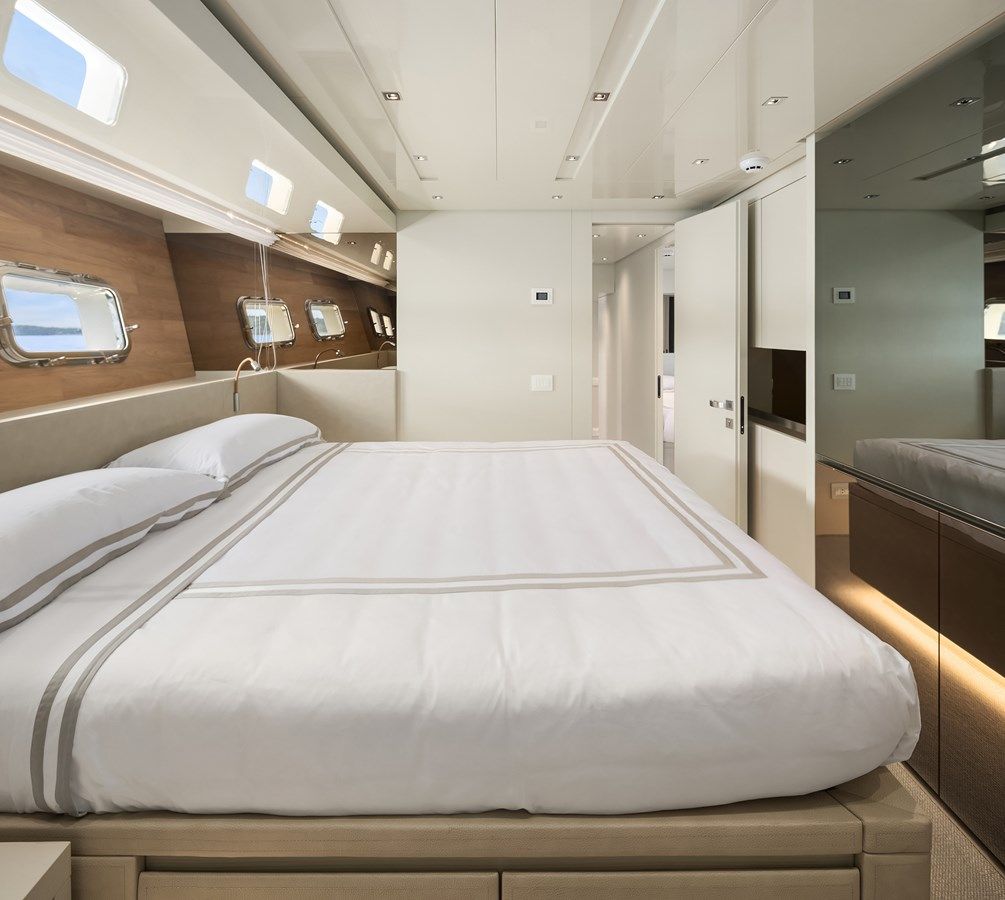
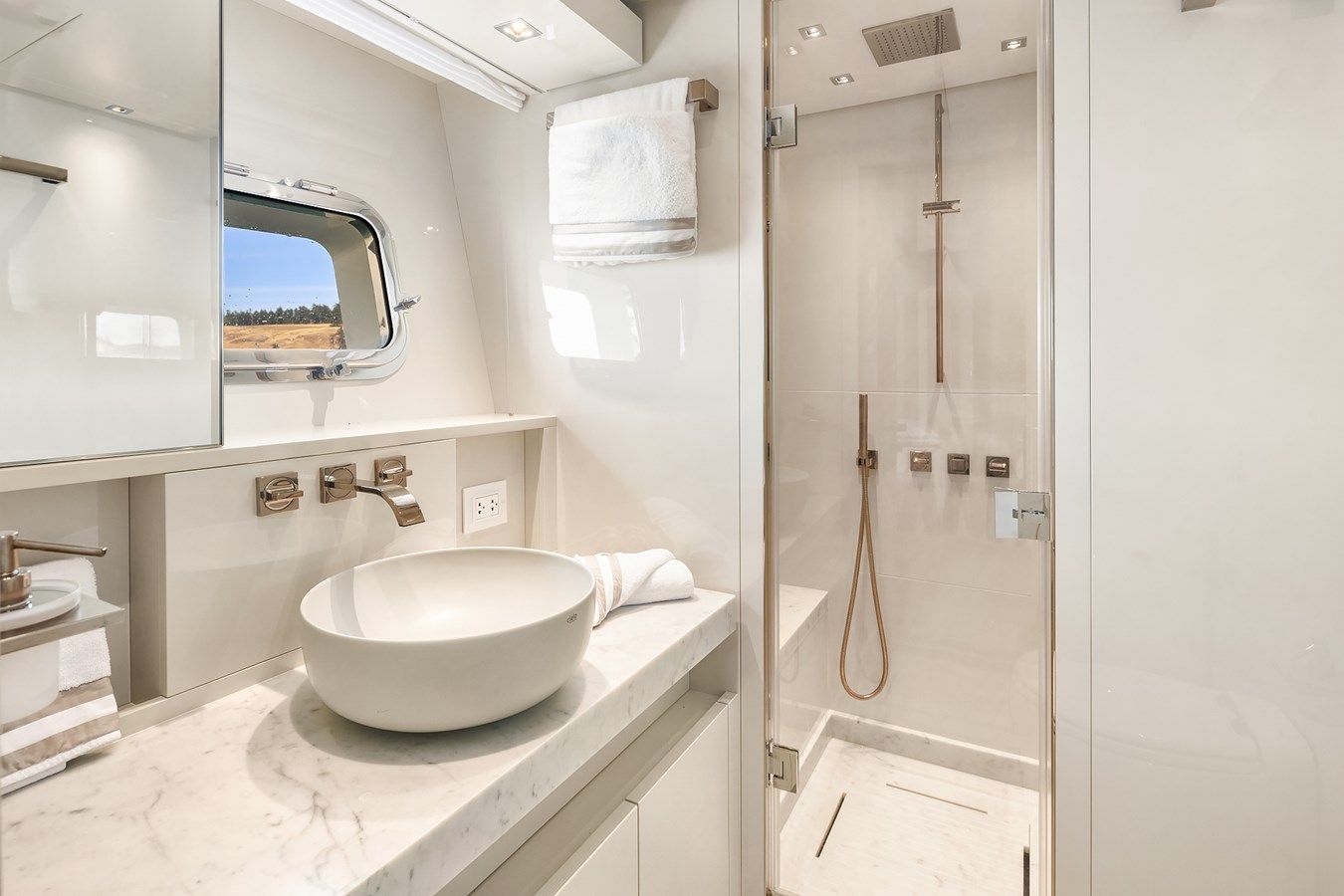
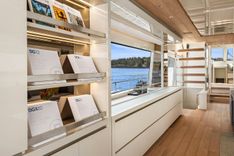
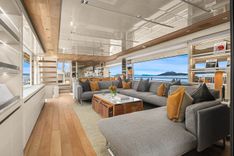
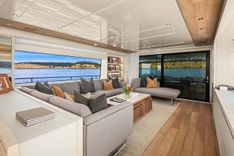
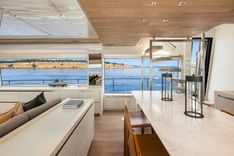
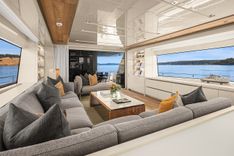
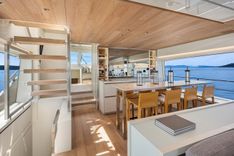
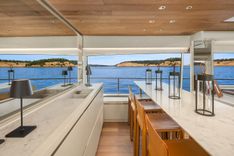
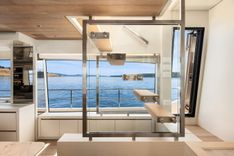
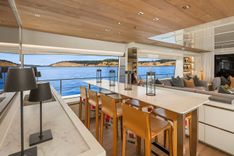
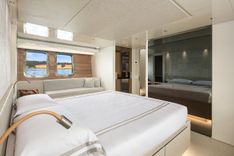
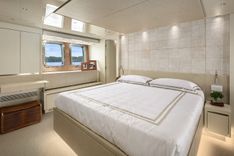
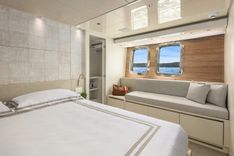
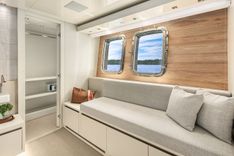
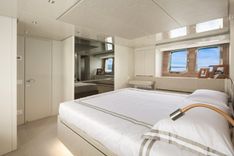
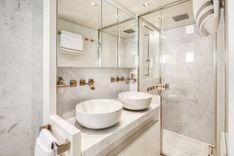
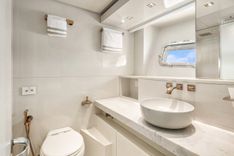
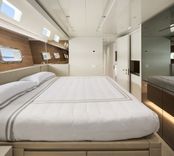
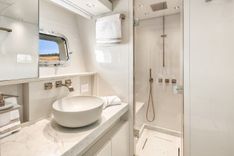
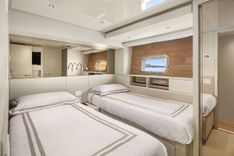
The interior specification elevates life on board with a sliding bed in the port guest cabin and beds with a lifting system in both the Owner's cabin and the VIP cabin, complemented by a refined rug in the salon. The dining area is anchored by eight Cassina stools upholstered in natural leather and a bow bar cabinet with a wood structure, integrated metal sink, foldable faucets, generous storage, and appliances. In the salon, a TV is concealed behind a bronze stepstool on the bow wall, flanked on the two sides by shelves for bottles with a mirror on the back, metal antirolls, and an LED strip for each niche. Upgraded interior furnishings and décor include wood ceilings throughout the boat, mirror cabinet doors, a leather bed surround, FLOS lights, Italian marbles in the Owner's heads, Flexform poufs and tables, Zucchetti faucets, custom stainless steel strips for furniture, and Italian loose furniture, with leather around bed frames and headboards. Finishing touches comprise cutlery and glassware for twelve people, along with custom Italian-crafted bed linens and towels.
Appliances
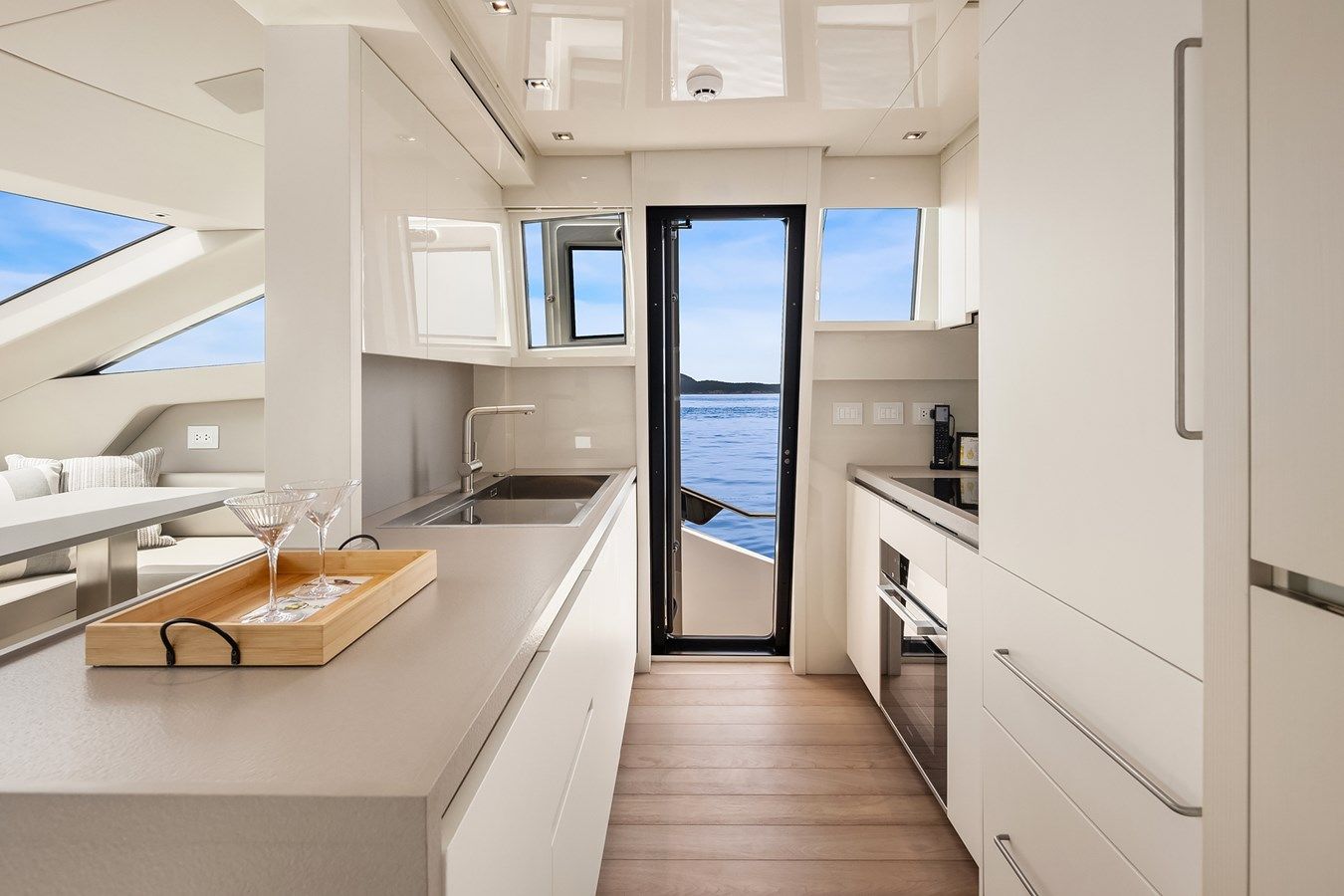
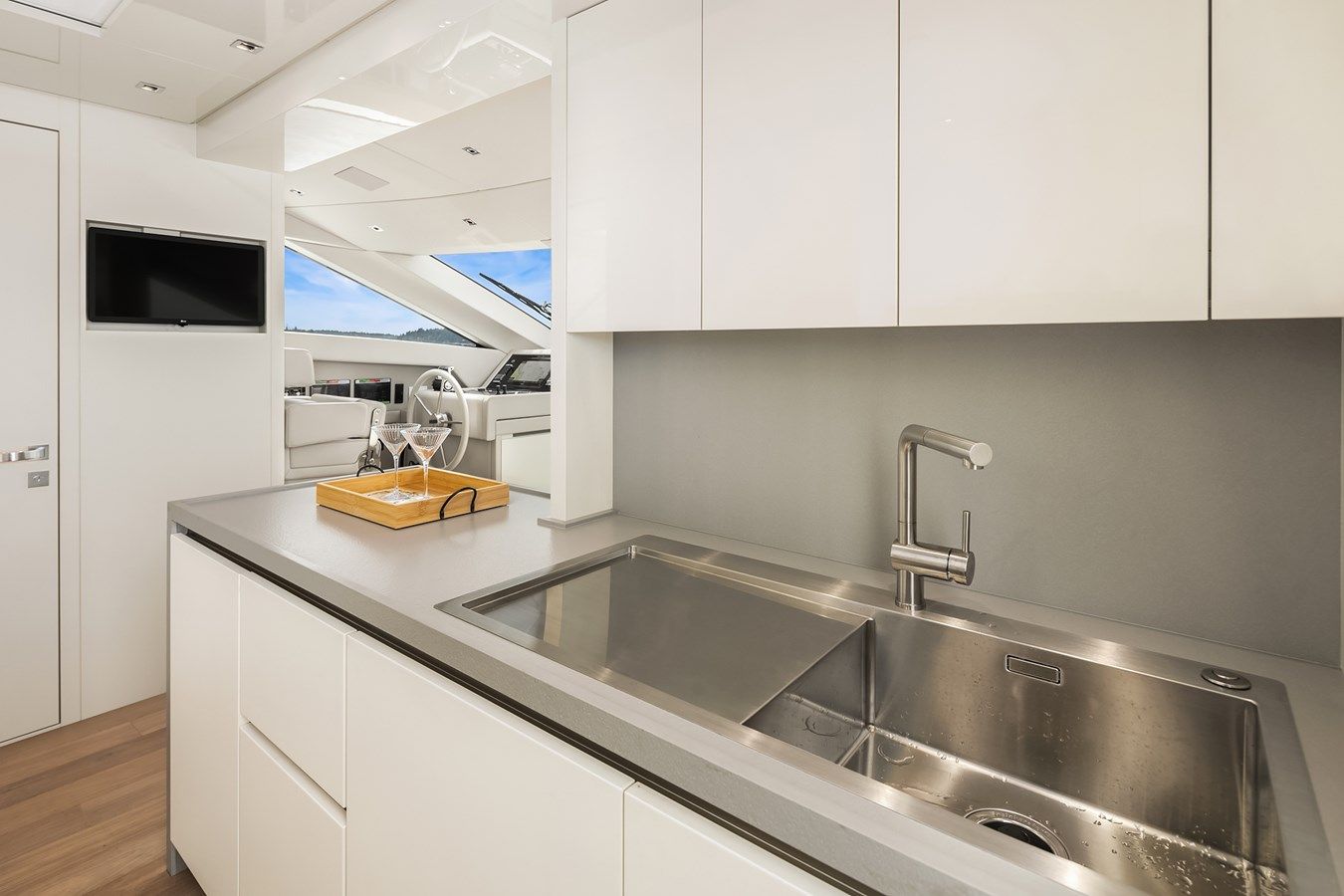
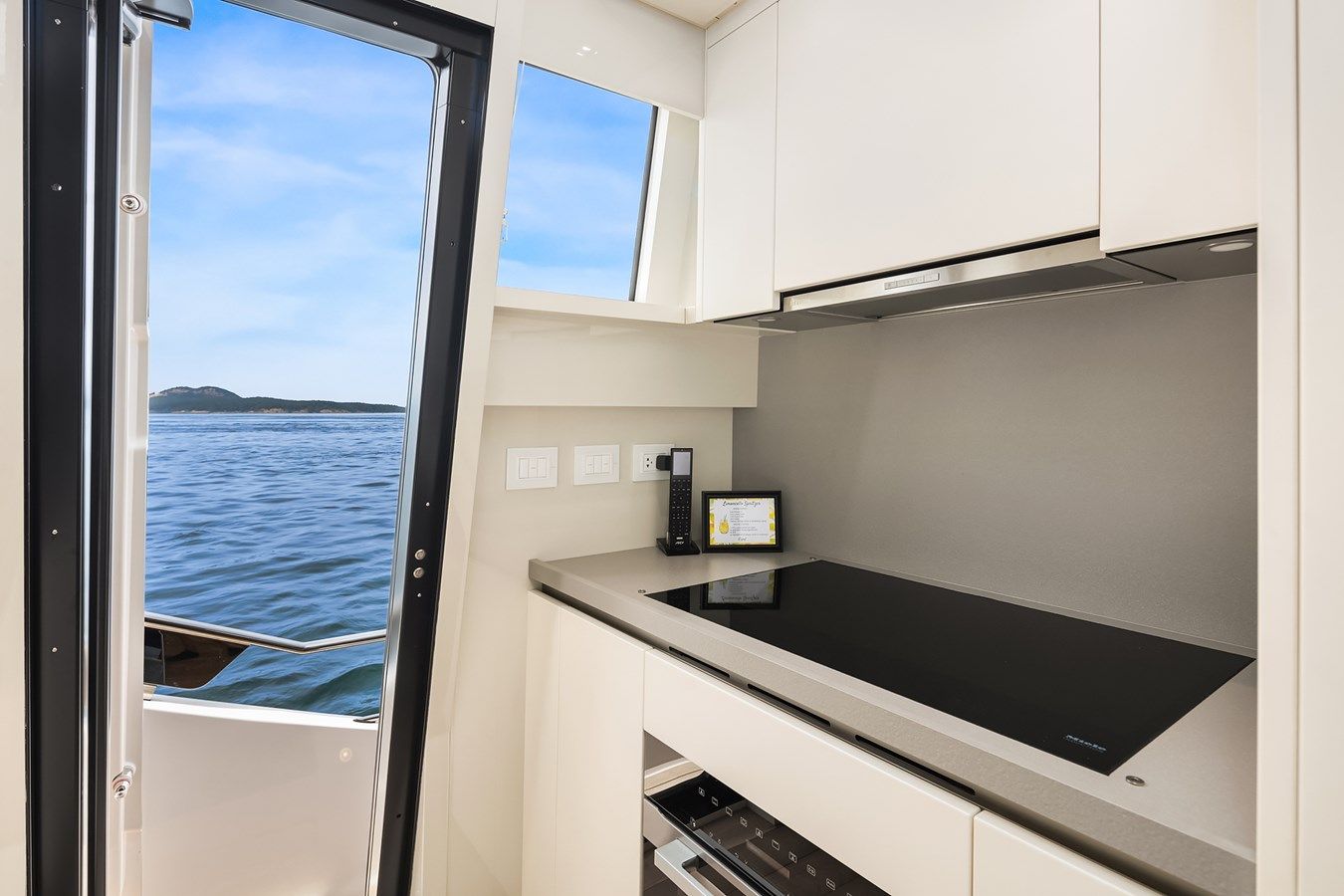
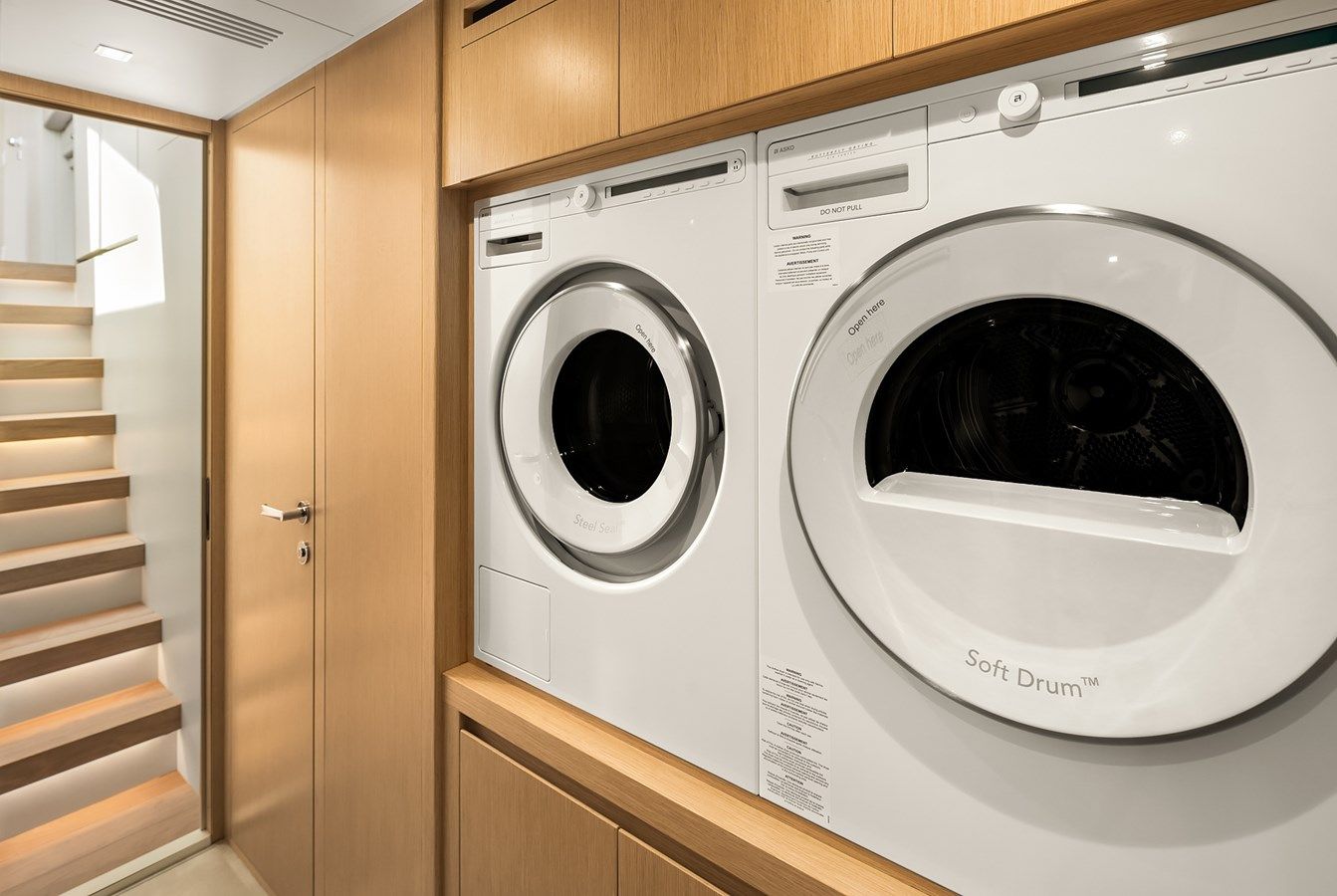
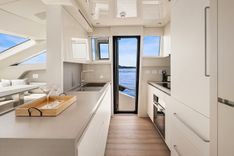
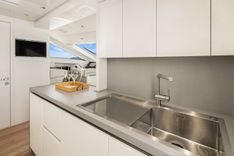
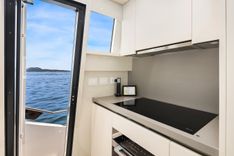
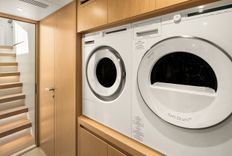
The yacht is equipped with premium appliances throughout, beginning with an Asko washing machine paired with an Asko dryer featuring overboard venting in lieu of self-contained ventilation. In the galley, a Miele 30-inch cooktop works in concert with a Miele 24-inch oven, a Miele 24-inch dishwasher, and a Miele 24-inch ventilation fan, complemented by a GE microwave with integrated hood and an Insinkerator compact 3/4 HP sink and food-waste disposal. Cold storage and refreshment are expertly managed by a Subzero ICBT - 30 CIID upright refrigerator/freezer in the galley (no ice maker integrated), a Subzero salon bar refrigerator with two drawers, an Indel Webasto clear-cube ice maker in the salon, and a Frigonautica refrigerator on the flybridge.
Disclaimer
The company presents the particulars of this vessel in good faith; however, it does not guarantee or warrant the accuracy of the information provided and makes no representation regarding the vessel’s condition. Prospective buyers are advised to instruct their own agents or surveyors to verify any details they deem important. This vessel is offered subject to prior sale, price change, or withdrawal without notice.

Yacht name «ESSENZA» – Sanlorenzois for sale and located in Seattle, United States
Motor yachts «ESSENZA» built by manufacturer Sanlorenzo in 2023— available for sale. Yacht location: United States. If you are looking to buy a yacht «ESSENZA» or need additional information on the purchase price of this Sanlorenzo,
please call: +1 (954) 274-4435 USAOnly deal with professionals!

