
 Licensed Yacht BrokersYachts for Sale
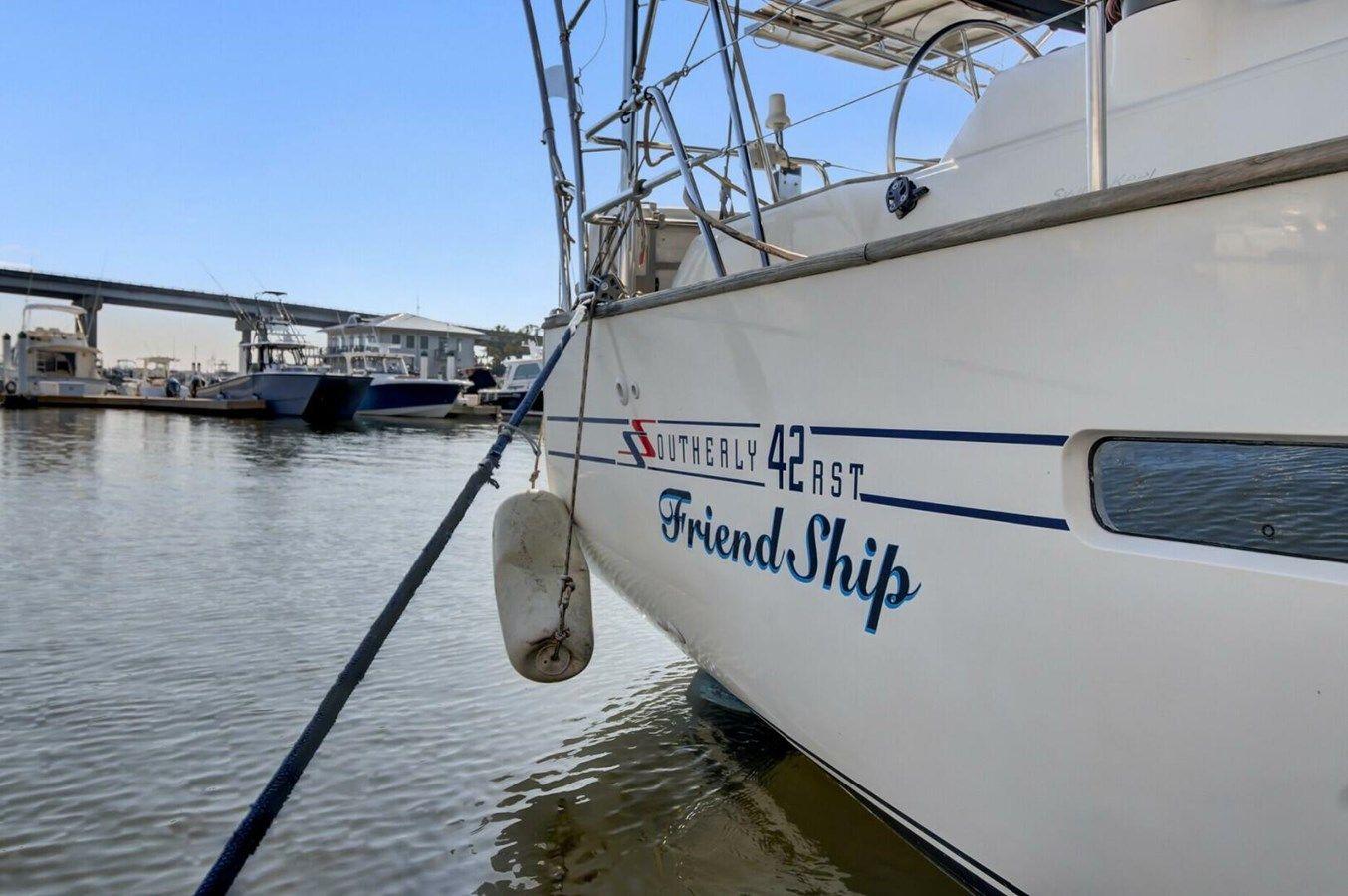
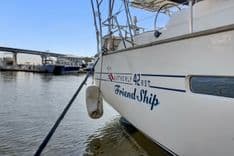
FriendShip - SOUTHERLY FOR SALE



Basic information
- Builder:
- SOUTHERLY
- Category:
- Sail yachts
- Sub Category:
- Cruising Sailboats for Sale
- Model Year:
- 2007
- Year Built:
- 2007
- Country:
- United States
Dimensions
- LOA:
- 42' (12.85m)
- LWL:
- 36' (11.10m)
- Beam:
- 13' (4.04m)
- Min Draft:
- 9.02' (2.75m)
- Max Draft:
- 29.25' (8.92m)
Speed, capacities and weight
- Water Capacity:
- 71.85 Gallons
- Fuel Capacity:
- 81.63 Gallons
Accommodations
- Total Heads:
- 2
Hull and deck information
- Hull Material:
- Fiberglass and Plastic Yachts
- Deck Material:
- Fiberglass
Engine information
- Engines:
- 1
- Manufacturer:
- Yanmar
- Engine Type:
- Inboard
- Fuel Type:
- Diesel
Overview
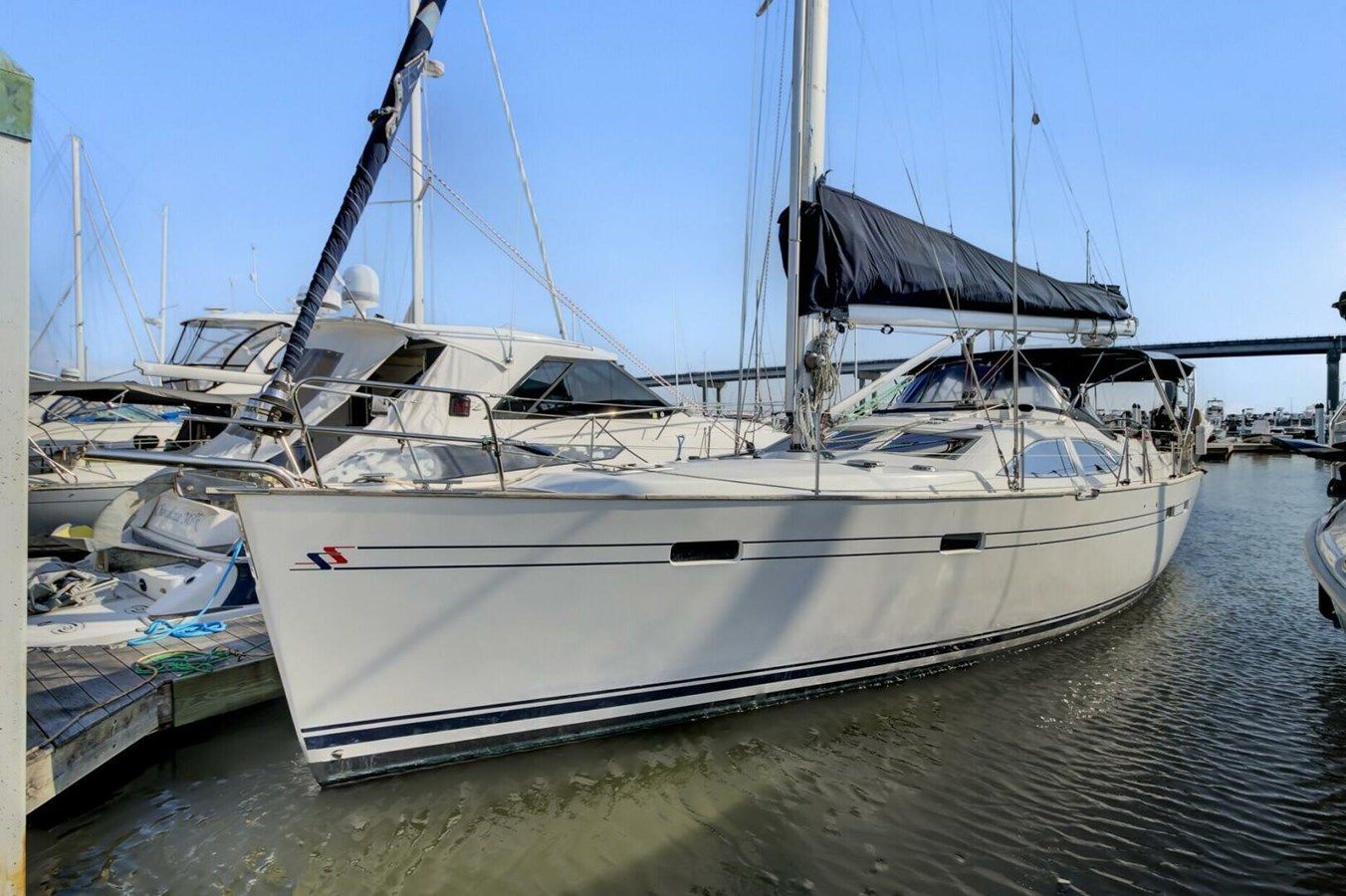
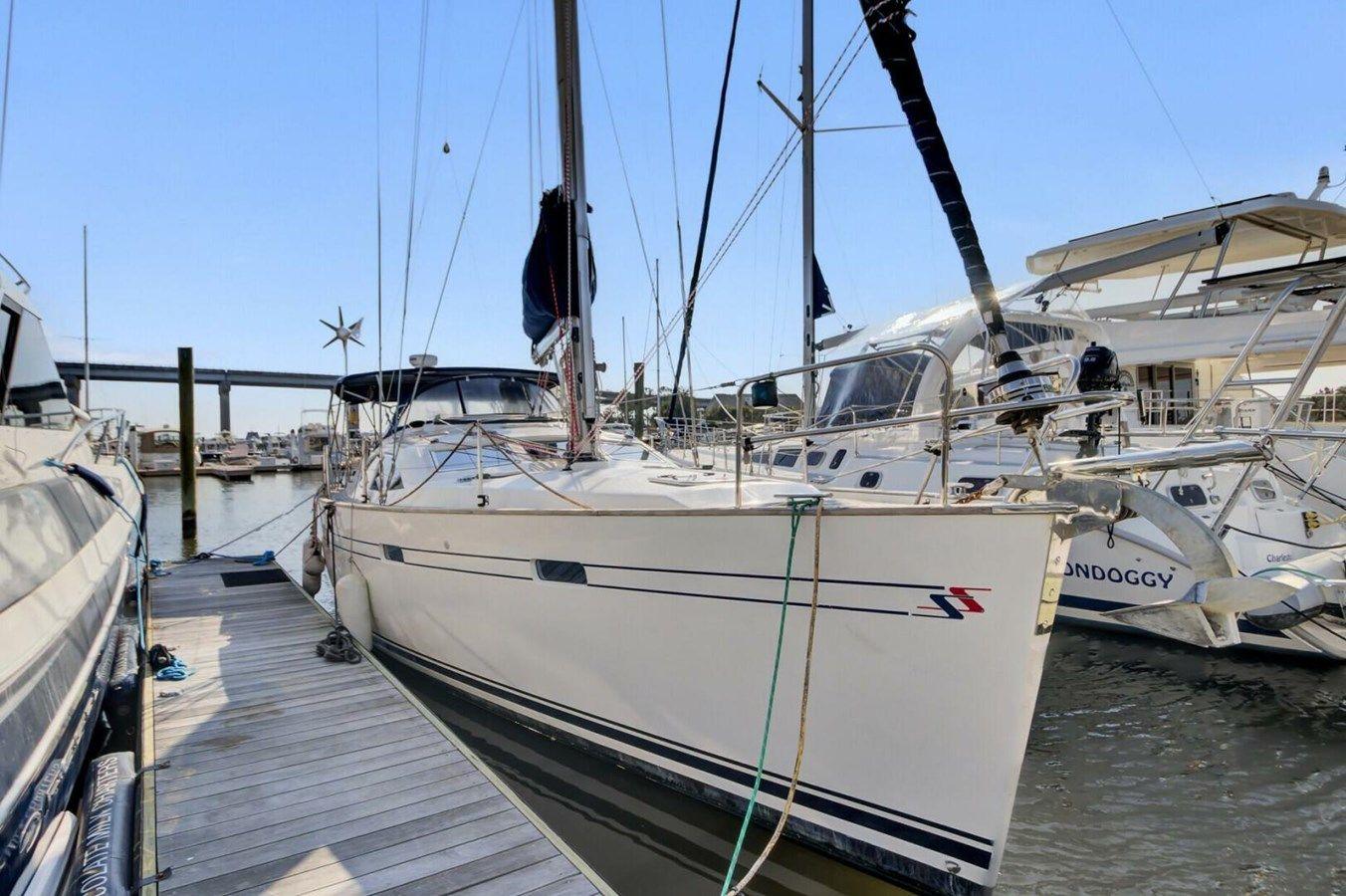
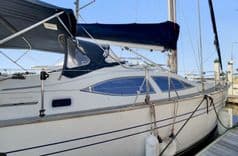
2007 Southerly 42 RST with three staterooms and two heads, a variable‑draft swing keel, twin rudders with dual wheels, a bright raised saloon and nav station, and a spacious owner’s aft cabin. Conceived by Rob Humphreys and crafted in England by Northshore Yachts for confident ocean crossings, this sailing yacht blends bluewater capability with elegant comfort. A powerful, efficient sail plan delivers impressive upwind pace, while the robust swing keel provides the freedom to roam almost anywhere.
With the keel down, the draft extends to 8' 11" for serious offshore cruising performance. Tap a button and the draft lifts to just 2' 9", opening up shallow bays, idyllic coves, and skinny‑water passages with ease. This performance cruiser/deck‑saloon monohull is a true go‑anywhere cruising yacht—equally at home passagemaking offshore or gunkholing along the coast—ideal as a liveaboard, offshore cruiser, or family cruising sailboat.
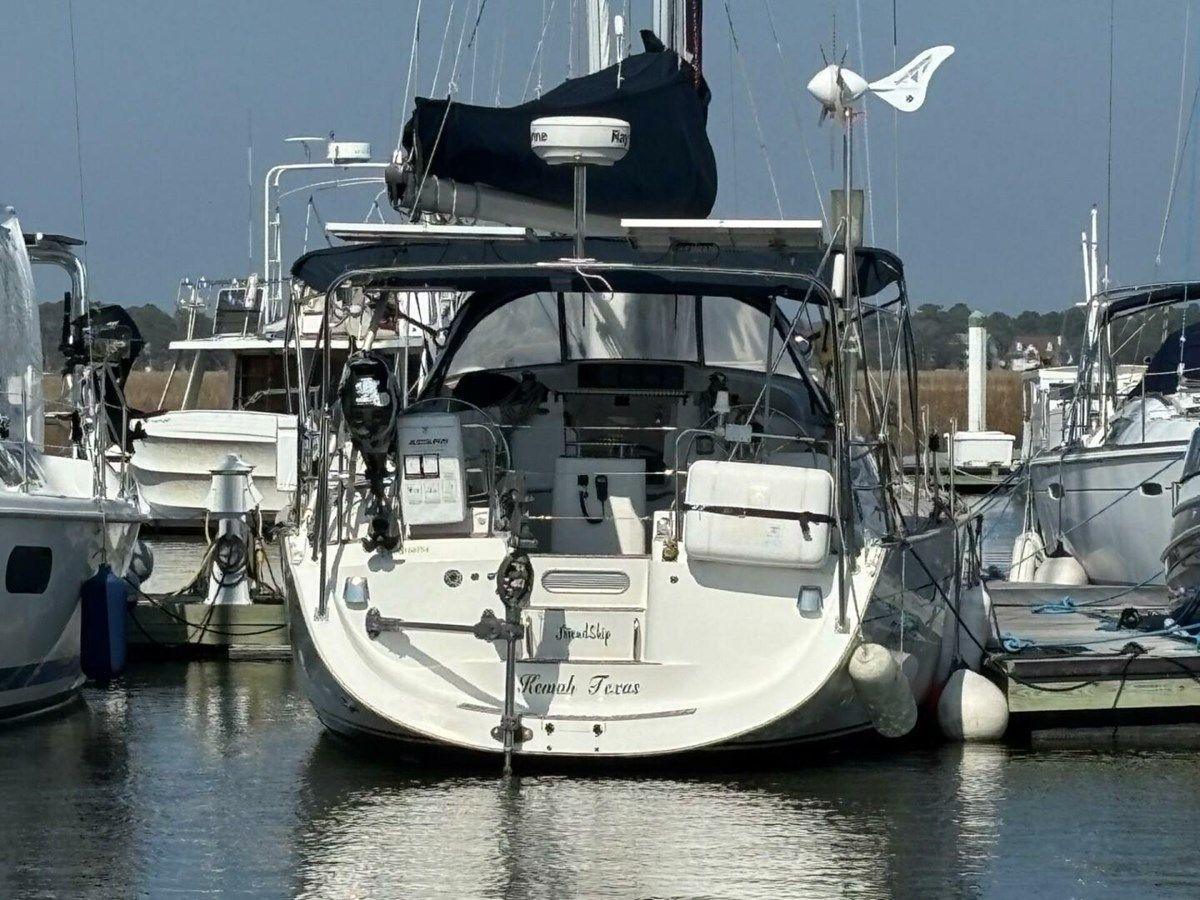
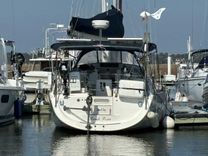
“FriendShip” is currently afloat at St. Johns Yacht Harbor on Johns Island, SC.
Highlights include:
- Fresh 2024 antifouling and new zinc anodes
- Watermaker/desalinator
- Bow thruster for precise handling
- Power windlass
- Solar panels
- Wind generator
- Windvane self‑steering
- Inverter
- Two air‑conditioning units
- Tender with outboard
Category keywords: bluewater cruiser, performance cruising sailboat, sailing yacht, offshore cruiser, deck saloon, monohull, swing‑keel sailboat, liveaboard yacht, passagemaker.
Detailed Description
Description
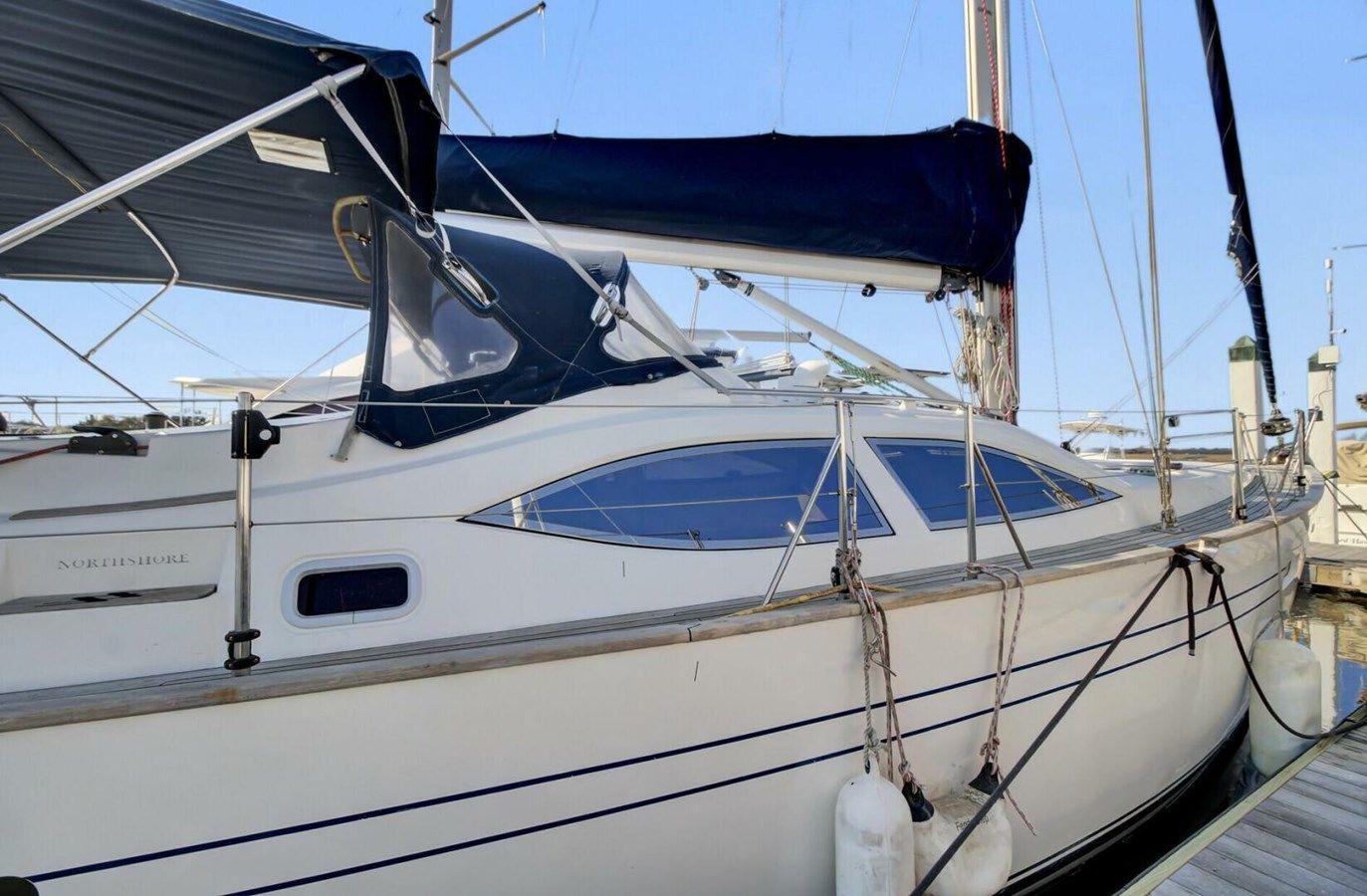
The 2007 Southerly 42 RST is a true go‑anywhere bluewater cruiser, presenting three cabins and two heads, a variable‑draft swing keel, twin rudders and twin wheels, a raised deck‑salon with elevated nav station, and a notably generous aft cabin. Conceived by Rob Humphreys and built in England by Northshore Yachts to cross oceans with poise and pace, she carries an impressive sail plan for powerful windward performance while her robust swing keel unlocks freedom and versatility to explore almost any waters. With the keel lowered, the variable draft reaches 8' 11" for fast, confident passagemaking; with a touch of a button the keel lifts to just 2' 9", perfect for skinny‑water sailing and quietly nosing into unspoiled coastlines. FriendShip is in the water at St. Johns Yacht Harbor on Johns Island, South Carolina.
Fresh, thoughtful upgrades and cruising essentials make this yacht immediately compelling: bottom paint and new zincs in 2024, a watermaker for true independence, a bow thruster and electric windlass for effortless close‑quarters handling, solar and a wind generator to charge on the move, a windvane for silent self‑steering offshore, an inverter to power household comforts, two air‑conditioning units to keep the interior serene, and a dinghy with outboard to take you ashore at will.
Overview
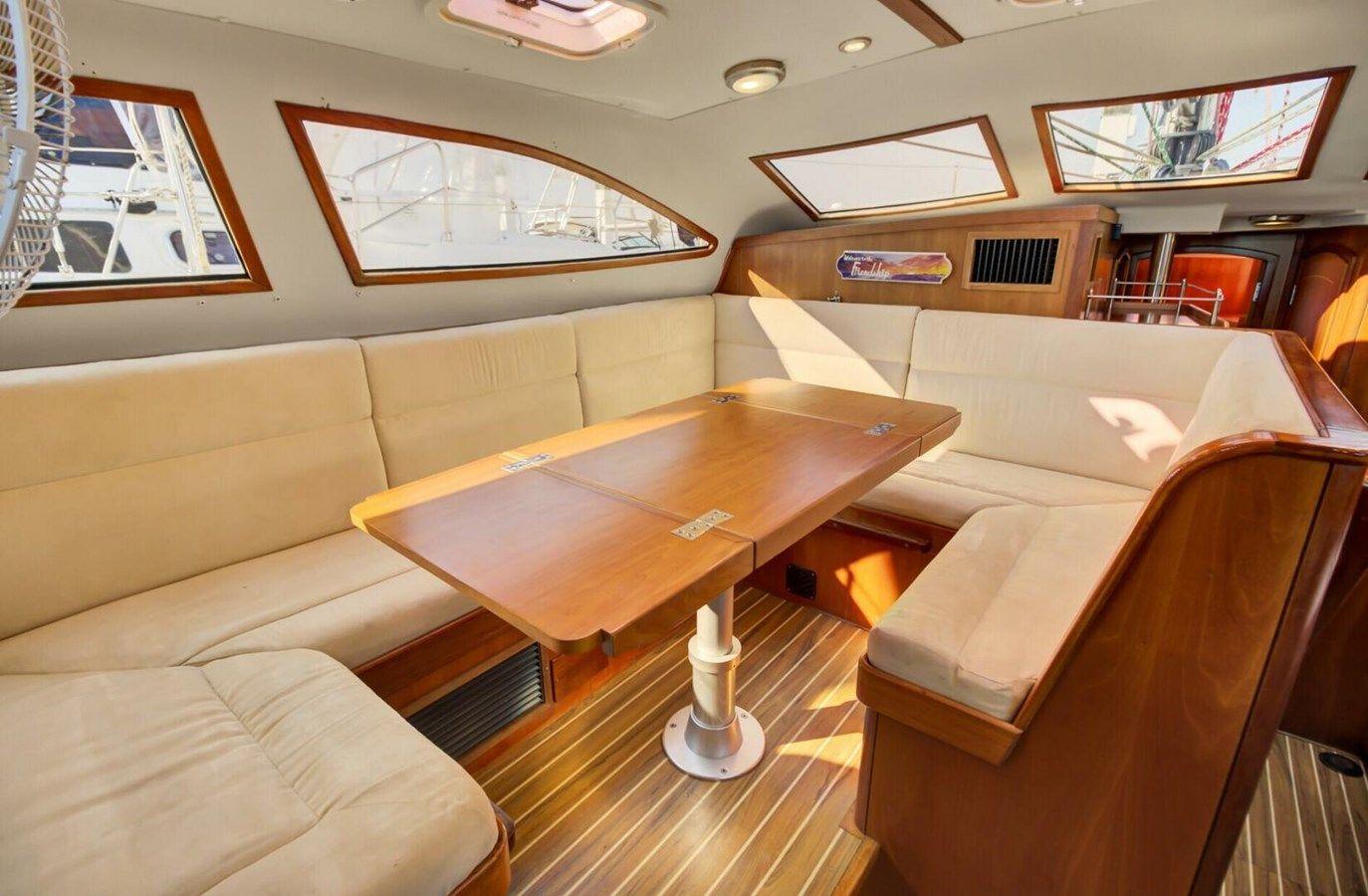
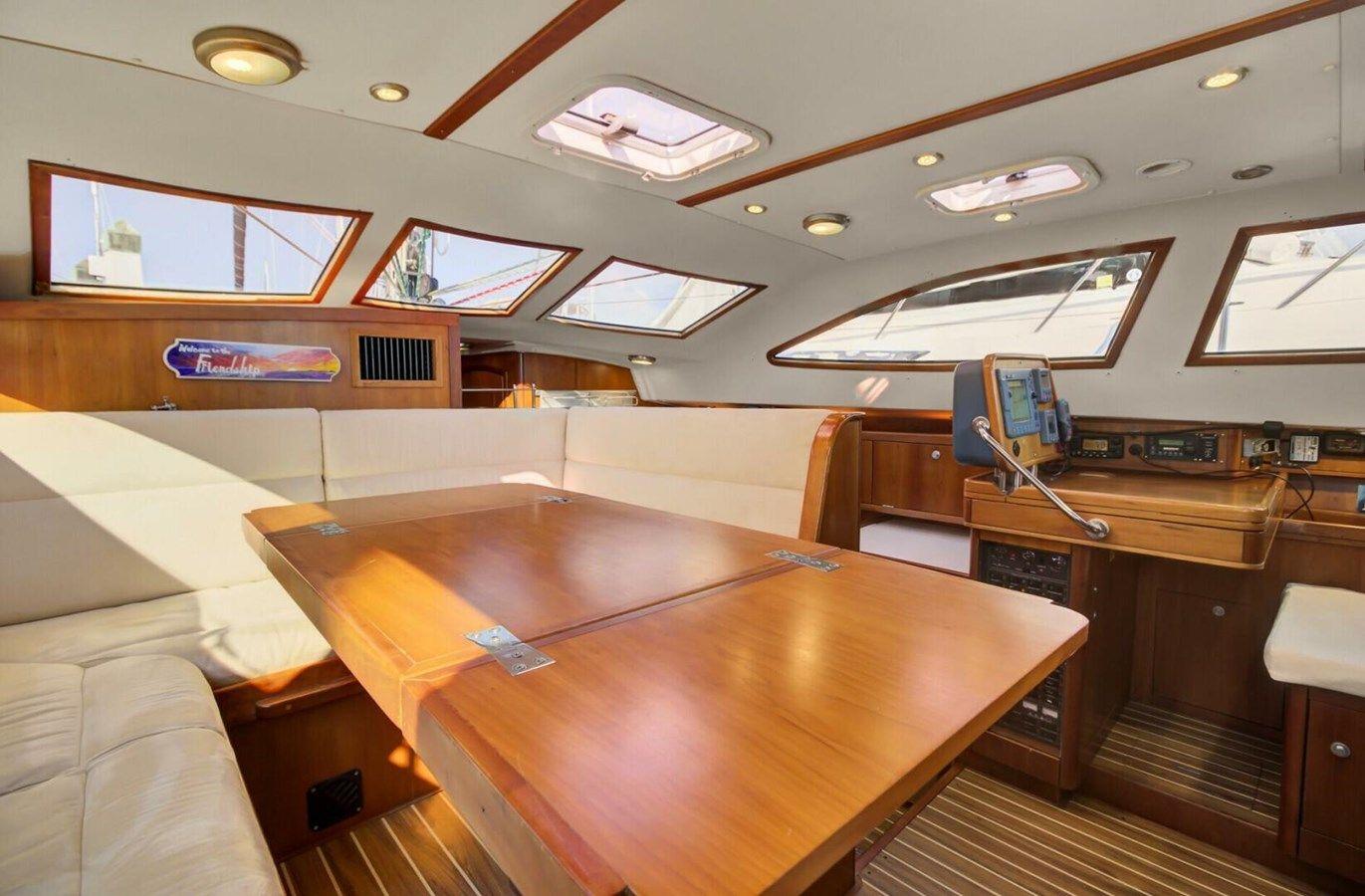
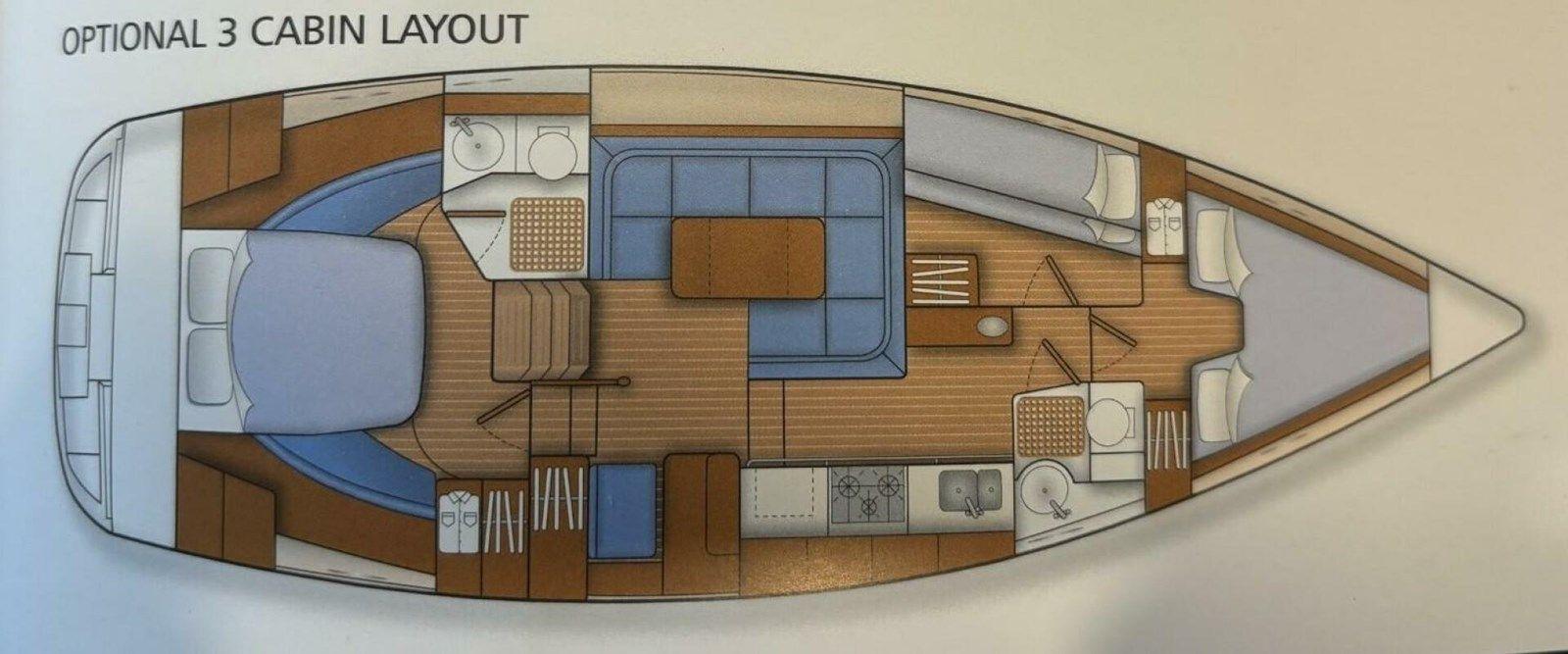
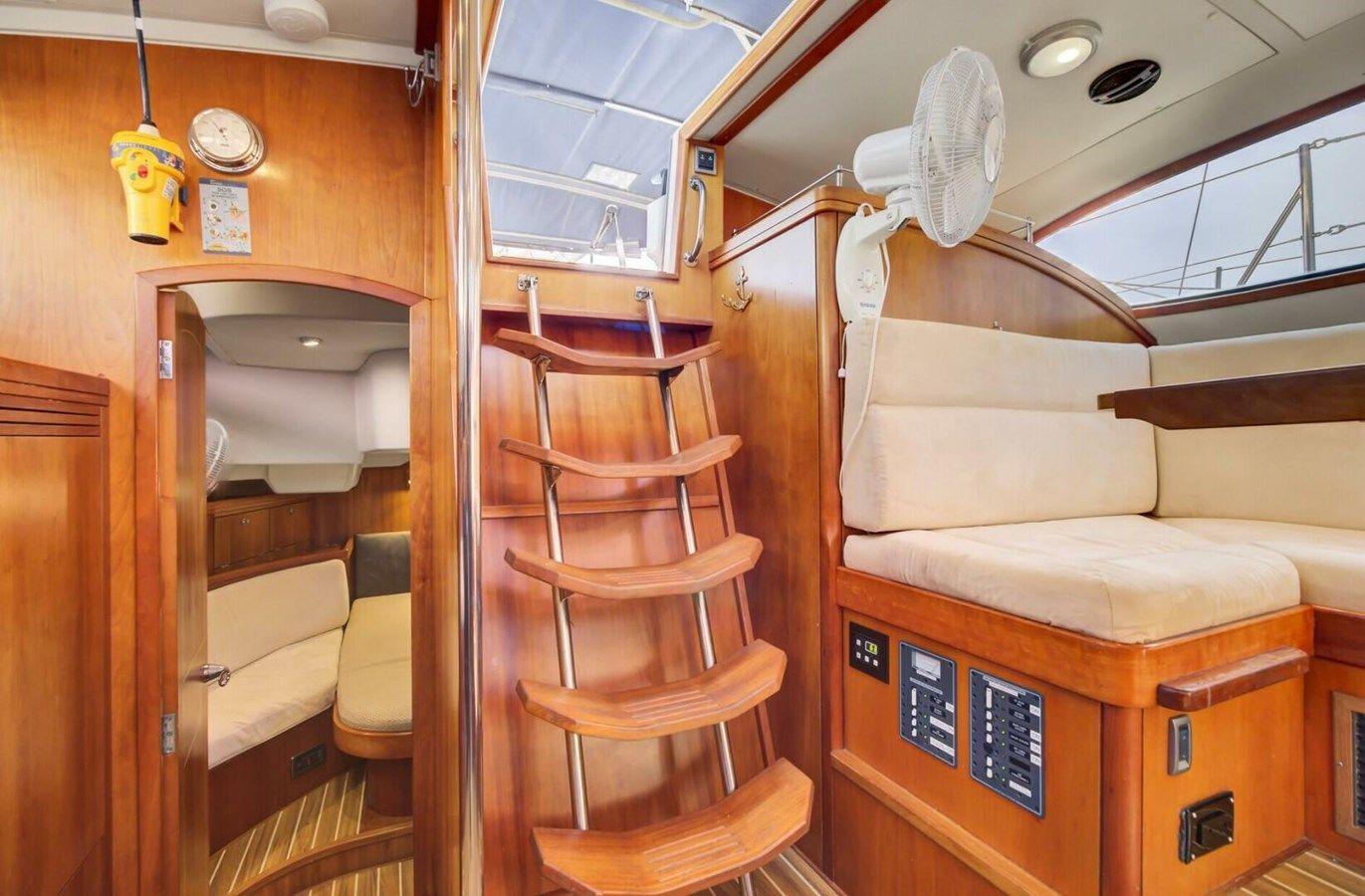
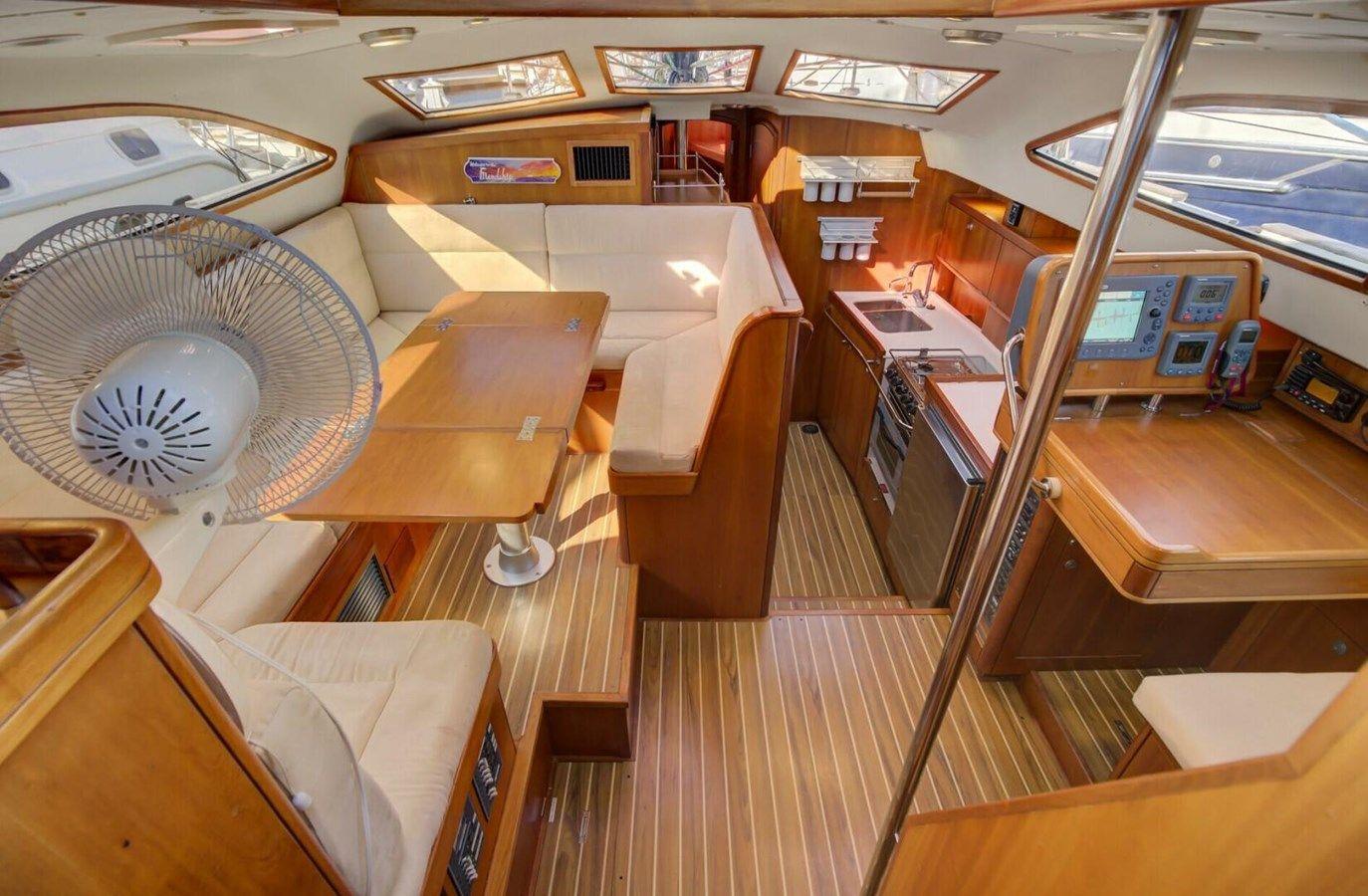
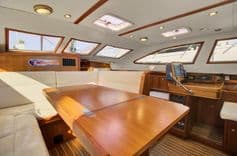
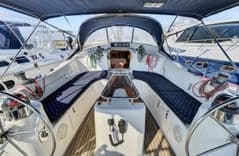
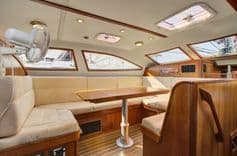
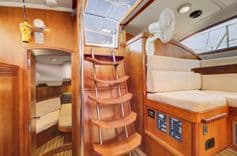
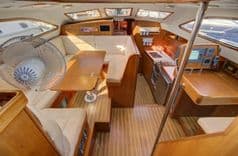
Step below via easy companionway steps into a large, open, raised salon that immediately expands your horizons with panoramic deck‑salon windows. Partially reflective tinted glass adds privacy while deflecting heat, and concertina blinds draw across for extra shade and seclusion. With three cabins, up to eight guests sleep in genuine comfort, surrounded by warm cherry joinery underfooted by classic teak‑and‑holly soles.
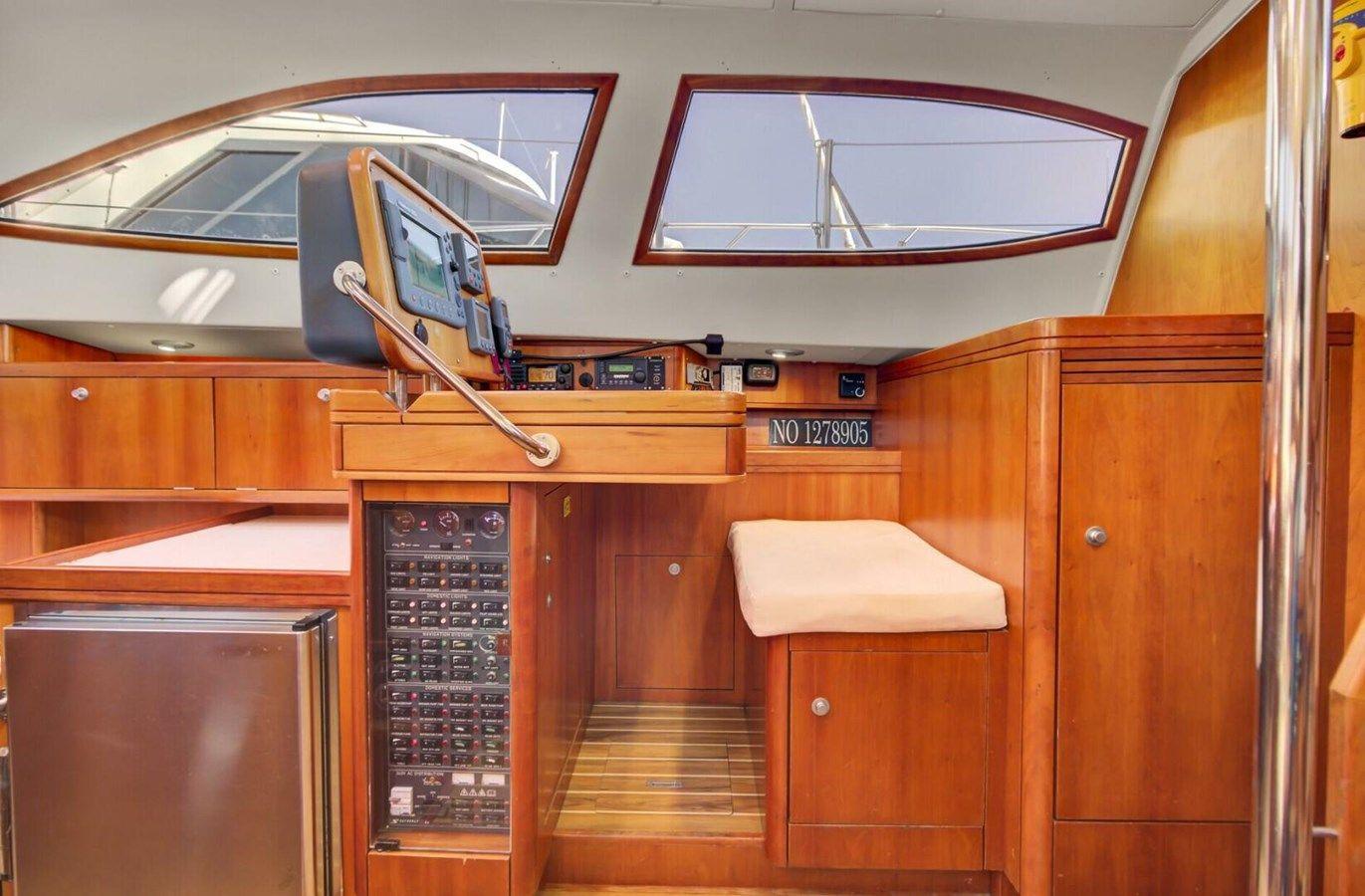
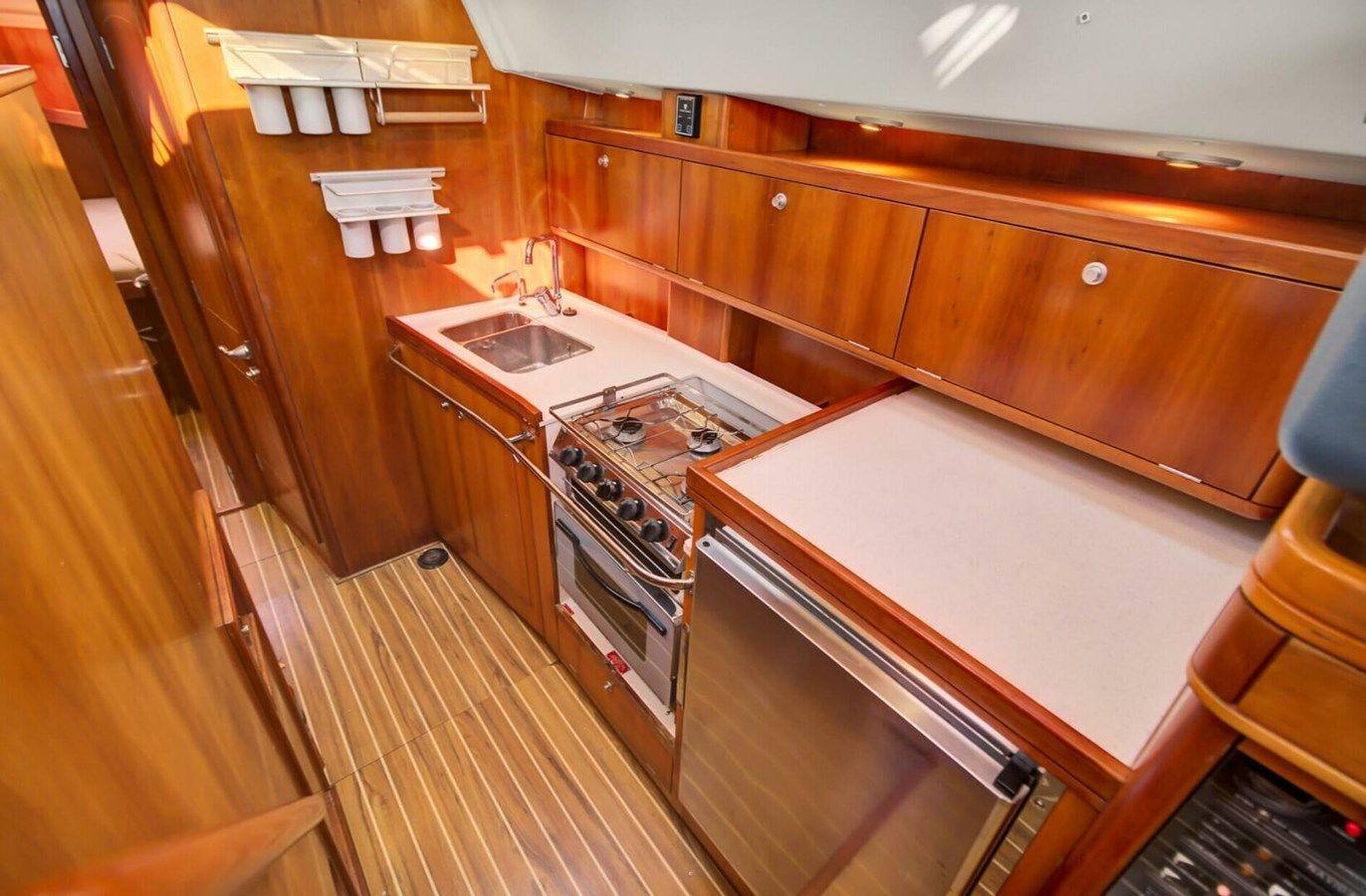
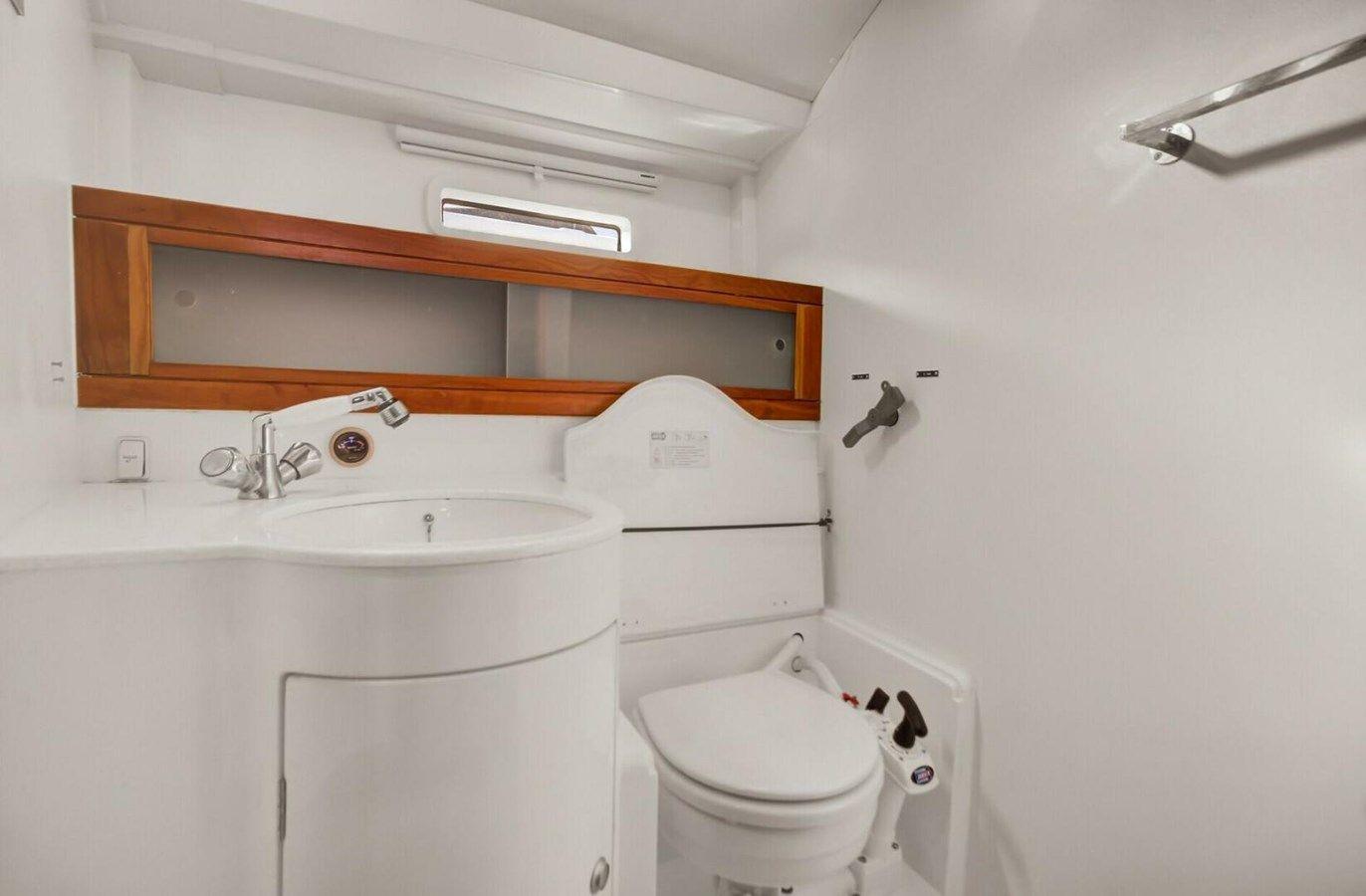
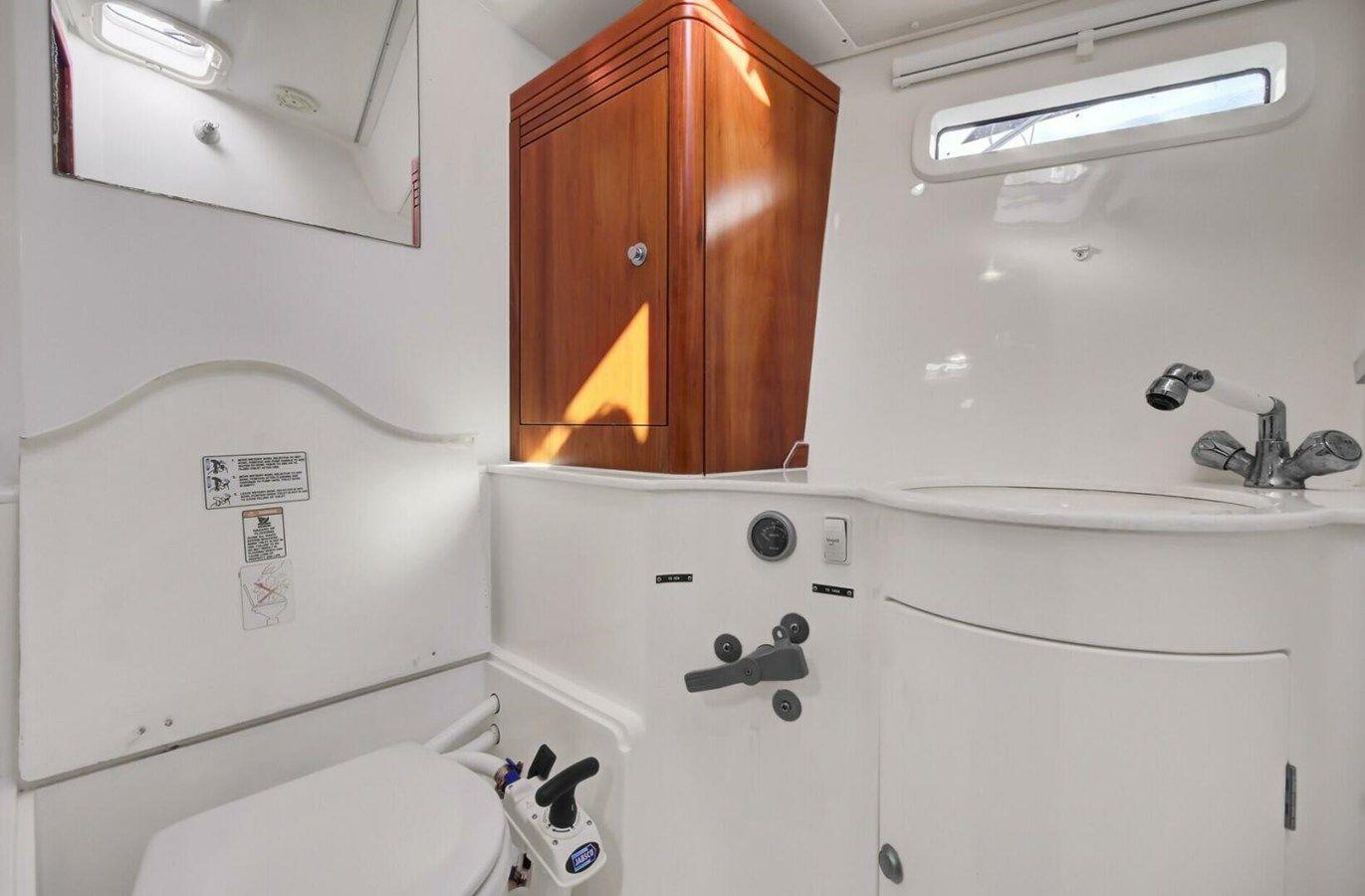
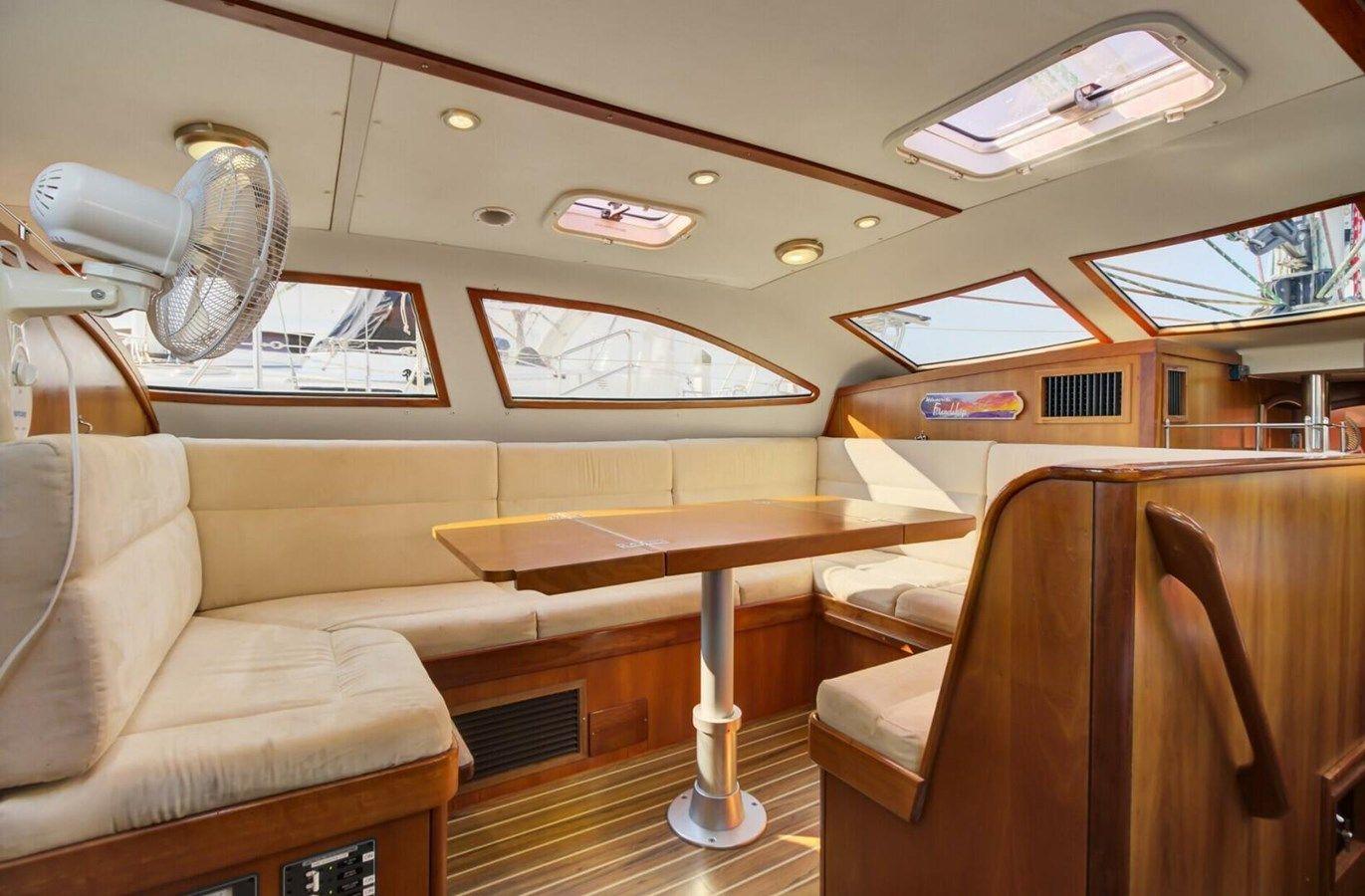
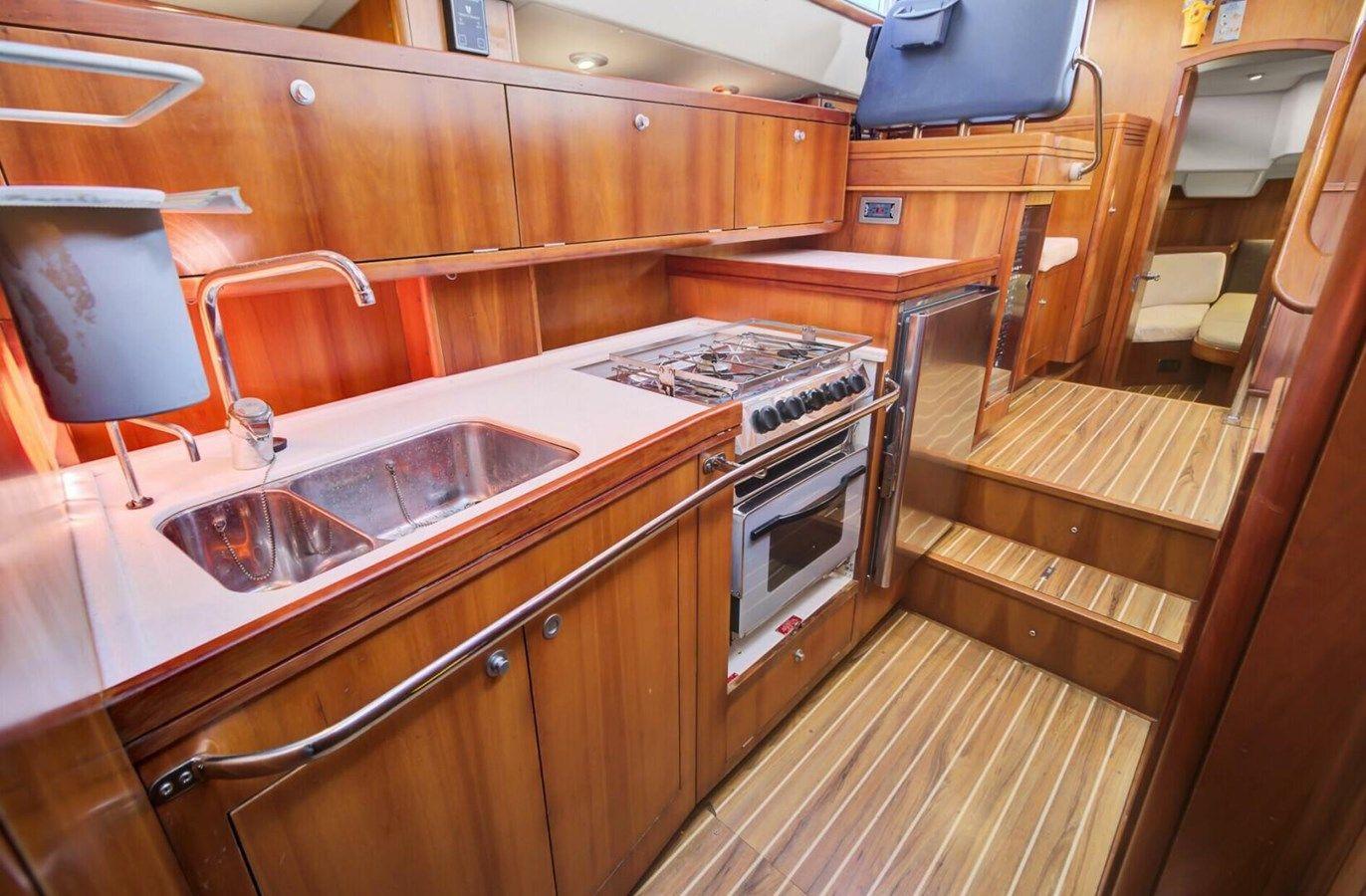
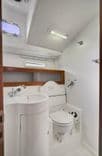
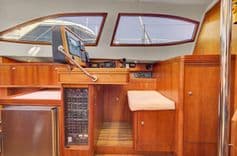
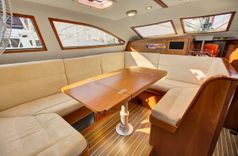
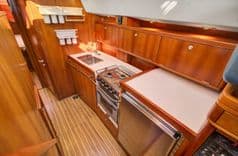
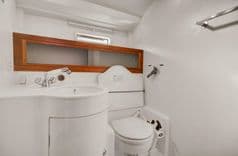
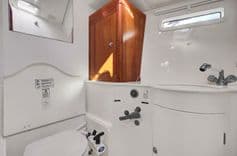
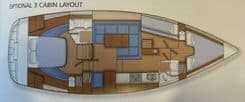
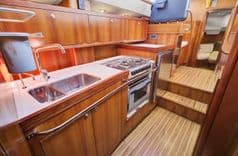
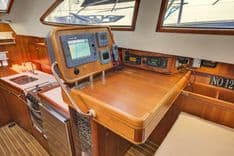
The main salon is a wonderfully social, seakindly space with generous seating for six to eight; the salon table folds down to become a coffee table or opens into a full dining table. At the push of a button the table lowers, transforming the lounge into a broad double berth, while abundant storage hides beneath the settees and outboard in lockers. To starboard the raised chart table exploits the panoramic view; the nav seat and table lift for practical stowage, and the main electrical switch panel sits inboard at the base of the table for at‑a‑glance access day or night, with a large hanging locker just aft for foul‑weather gear. The galley is intelligently placed amidships to starboard and a step lower for maximum stability at sea, with twin stainless‑steel sinks, a front‑loading refrigerator/freezer with a new compressor in 2025, an additional Waeco 12V refrigerator/freezer in the third cabin, a three‑burner stove with oven, a raw‑water manual foot pump, a dedicated spigot plumbed to the watermaker, a watermaker control panel at hand, and a stainless‑steel grab rail. Two well‑designed heads keep life aboard civilized: one lies to starboard forward of the galley, the other ensuite to the aft cabin; each includes an extractor fan and a seat that covers the bowl to let you sit while showering, with easy‑care minimal wood, good storage under the sink and in outboard cupboards and lockers, a manual Jabsco head, a large basin, shower sump pump, hot‑and‑cold pressurized water with a mixer tap, and a waste‑tank gauge.
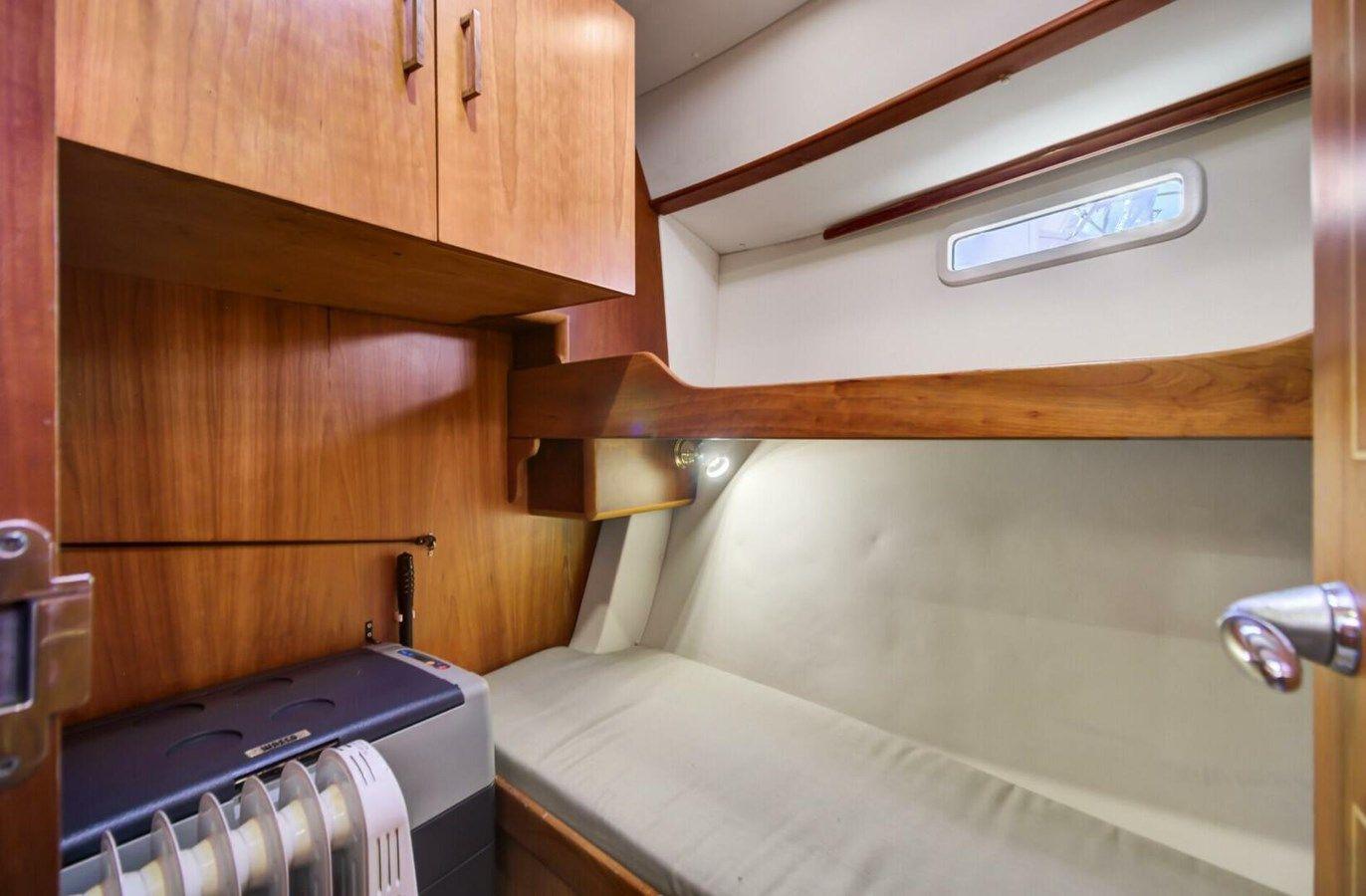
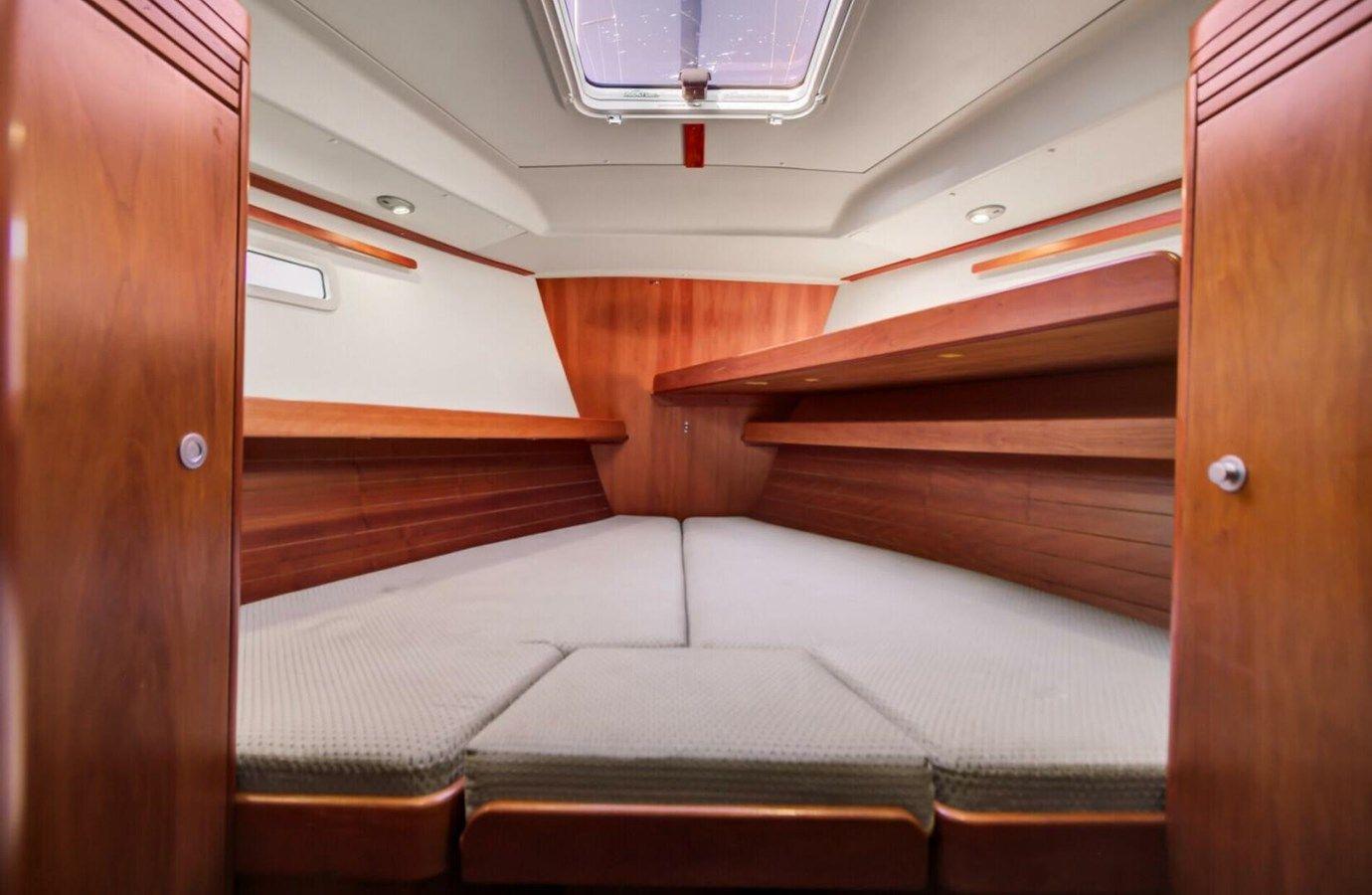
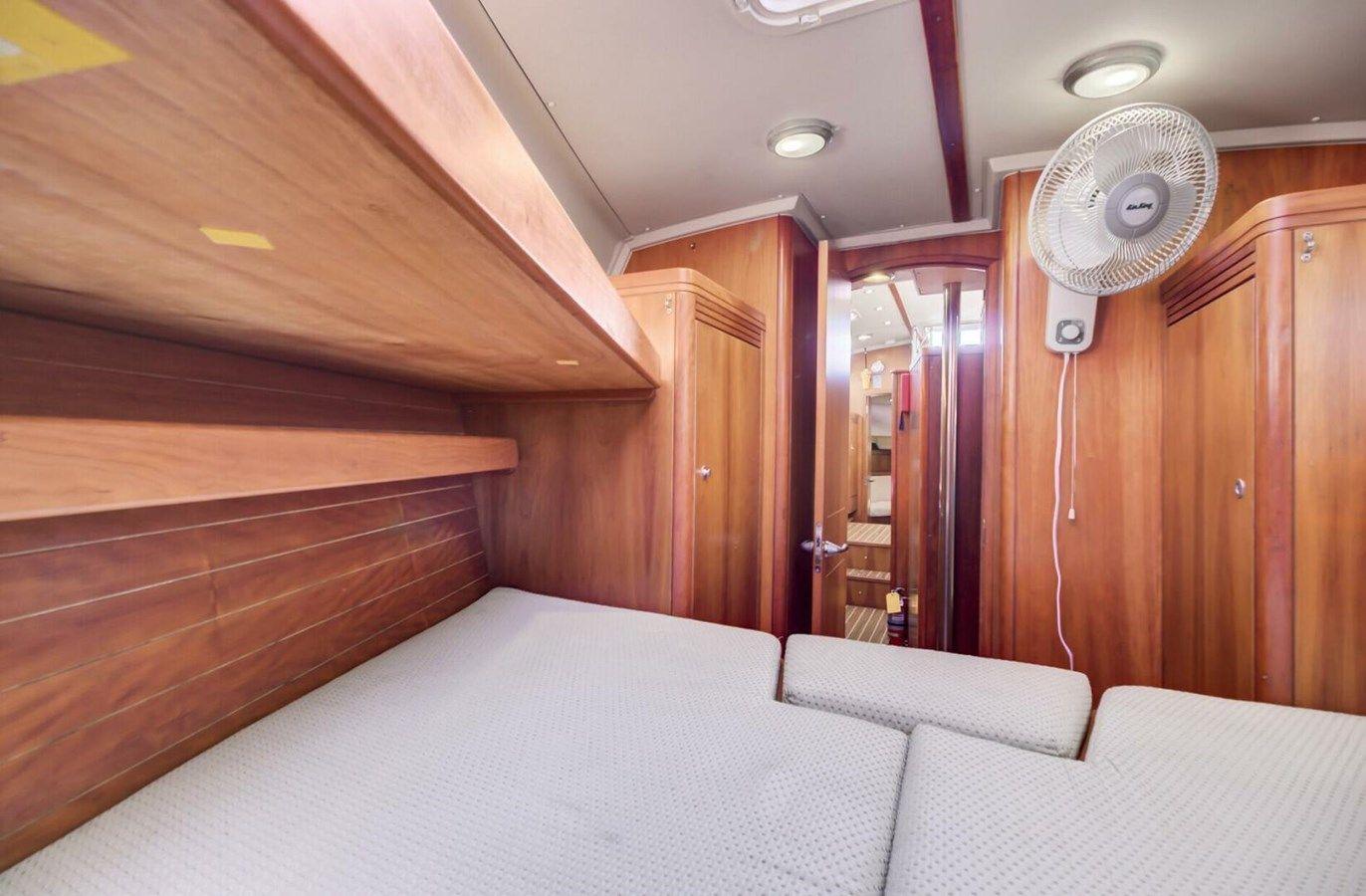
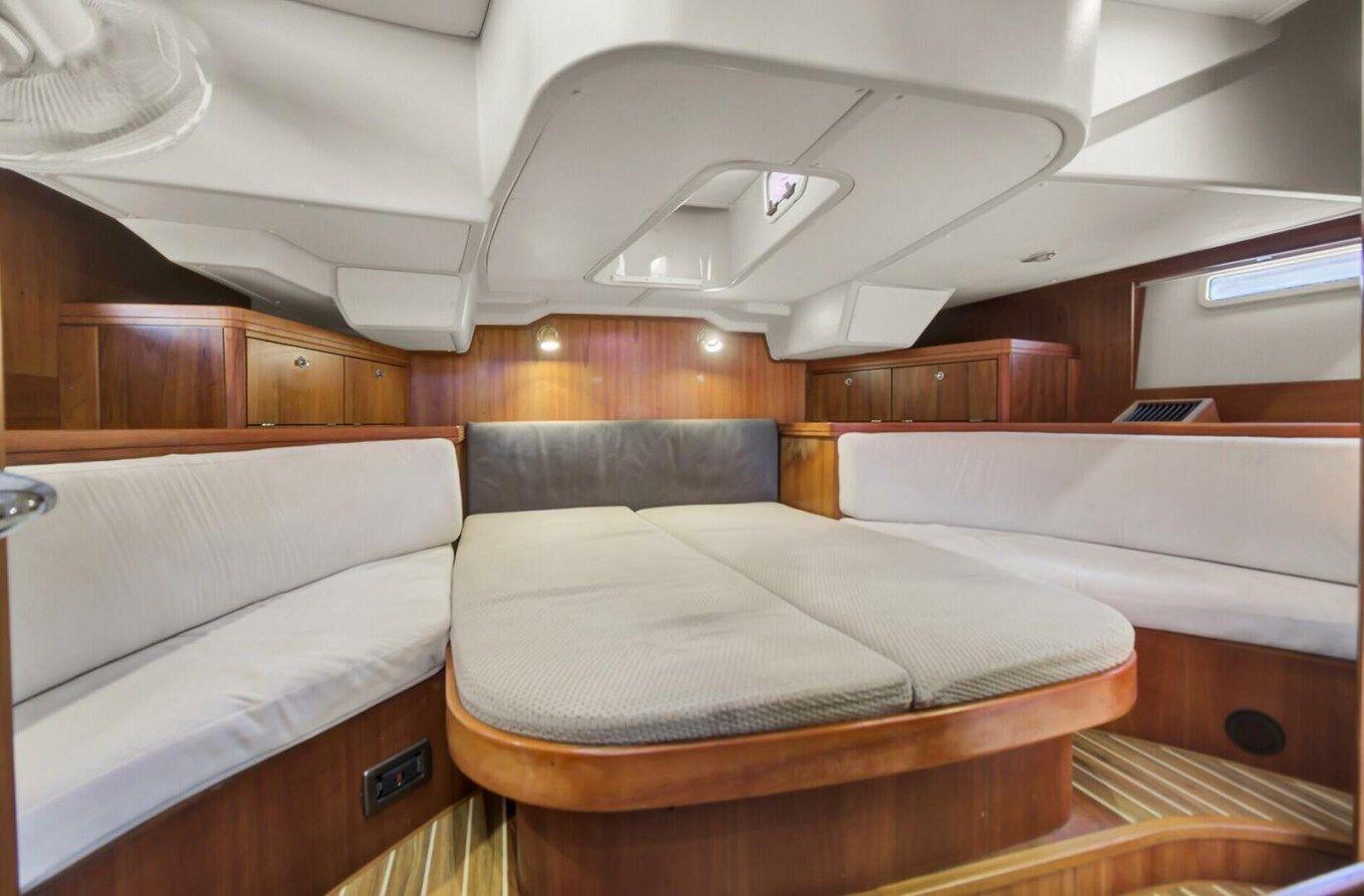
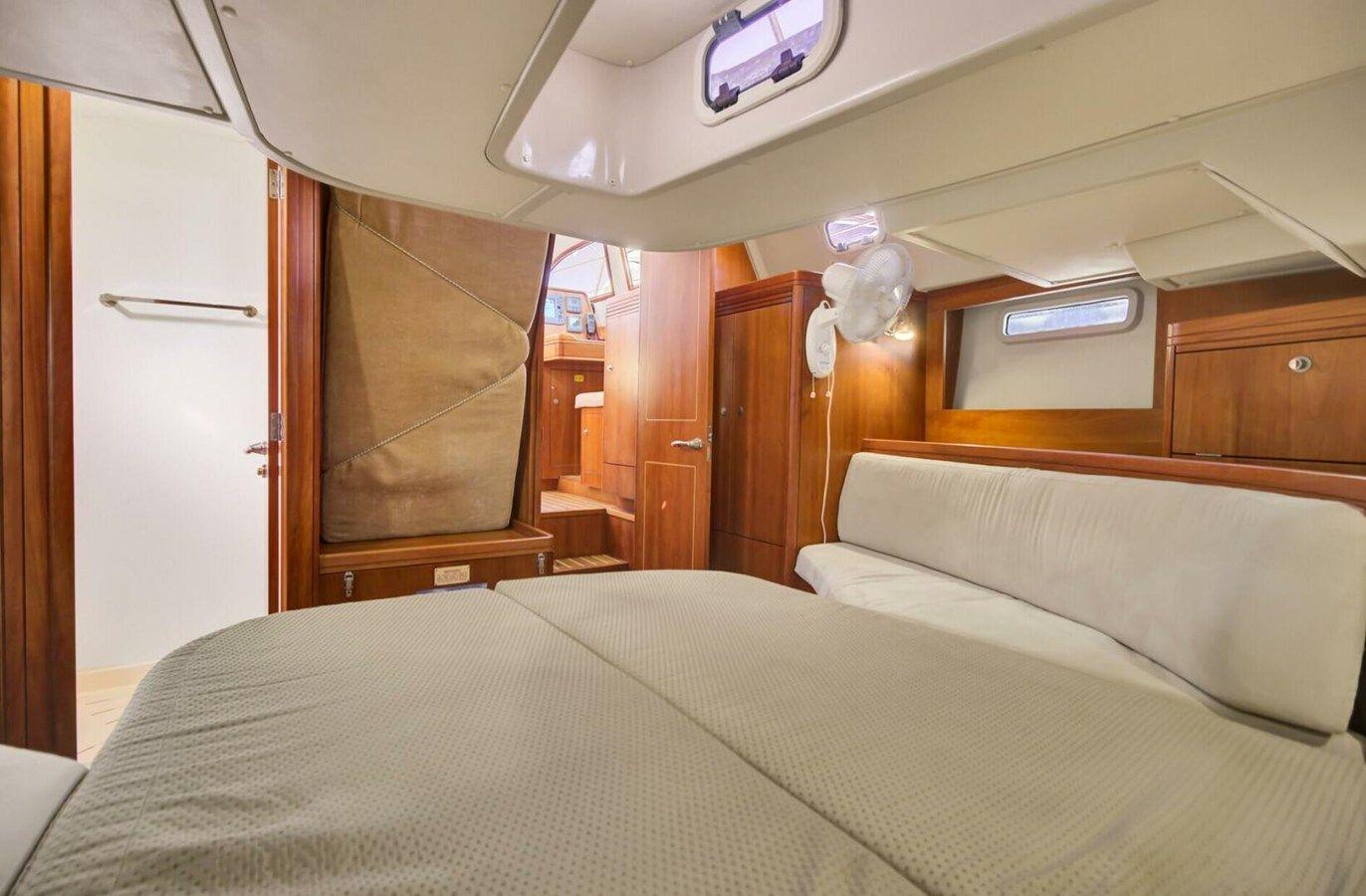
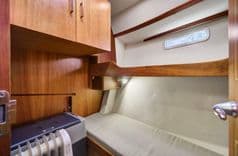
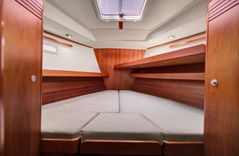
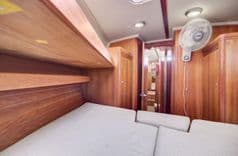
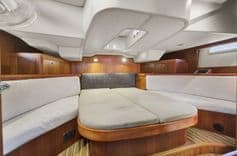
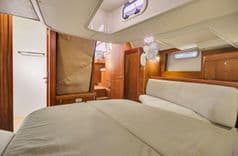
The owner’s aft cabin delights with a large centerline berth split for lee‑cloths and flanked by seating, plus three opening ports, an opening hatch, and two fixed hull ports; a large hanging locker, outboard lockers, and shelves keep clothing perfectly organized. Forward, a long V‑berth with filler is complemented by a clever third berth above the starboard side that doubles as quick‑access stowage; an overhead hatch and two fixed hull ports flood the space with light, while to port a large locker with shelves and a long outboard shelf handle extended‑cruise provisions, and deep stowage beneath the berth swallows bulky gear. The third cabin, opposite the forward head to port, offers two single bunks with neatly arranged cabinets and lockers. Comfort systems throughout include Espar diesel heating, two Dometic 16,000 BTU reverse‑cycle air‑conditioning units (2017), LED interior lighting (2017), 110‑volt outlets throughout, 12‑volt outlets throughout, and a large 110‑volt fan in the forward cabin.
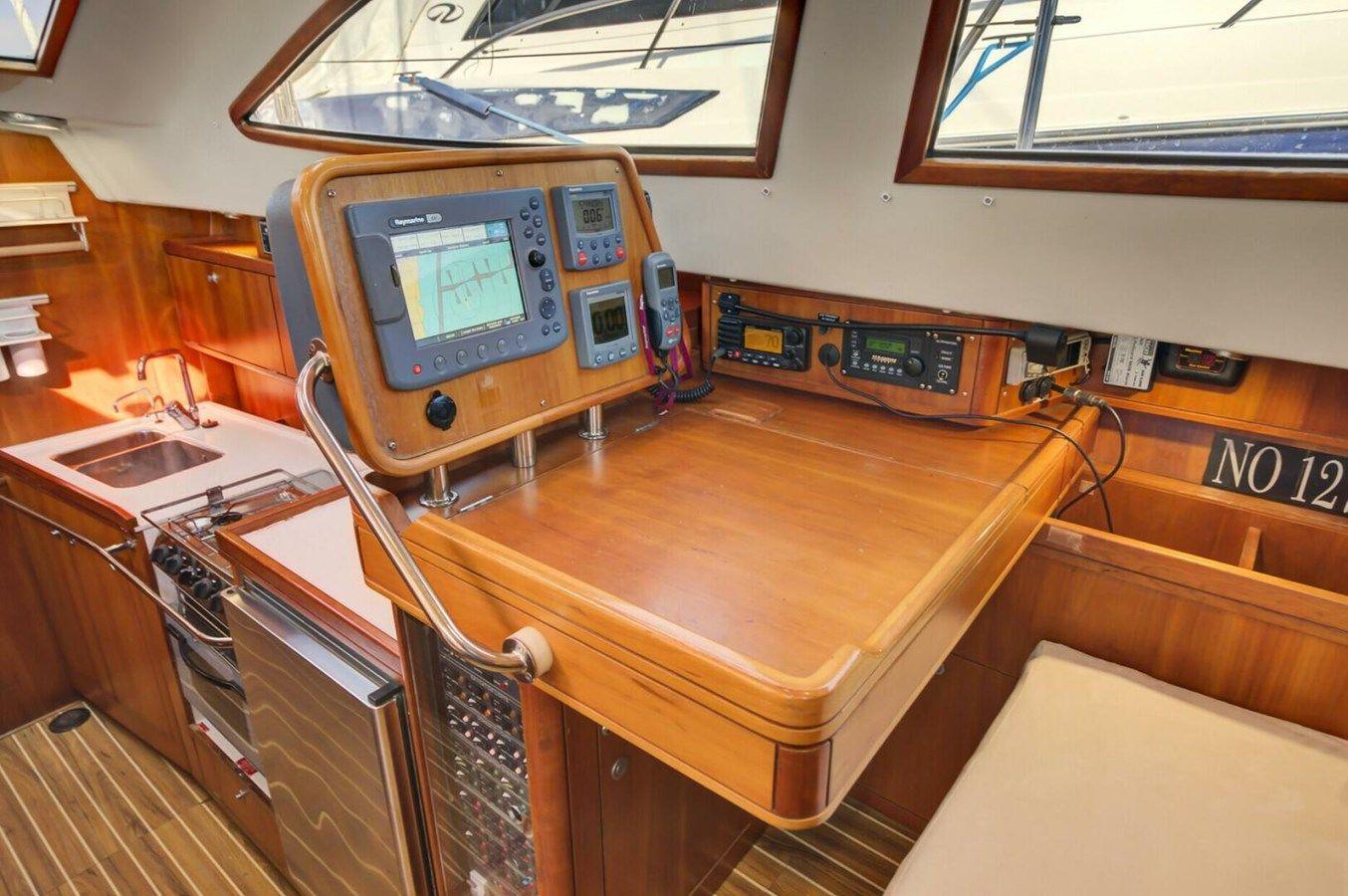
The nav station and electronics suite are comprehensive and ocean‑ready. A Raymarine C80 radar/chartplotter at the nav with remote pairs with a Raymarine ST6002 autopilot control and a Raymarine ST60+ at the nav. Communications and awareness are bolstered by a Standard Horizon GX2000 DSC VHF with AIS at the nav and a hand mic in the cockpit (2015), a Digital Yachts 3000 AIS transceiver (2015), an external aerial for a satphone (2015), a Wirepro external Wifi booster with a data SIM option (2015), and a West Marine radio at the nav. For radar and positioning there is a Raymarine 18" Raydome RD12 and a Raystar 125 satellite differential. Redundancy and clarity at the helm are assured with Raymarine autopilot displays both at the helm and the companionway, a graphic ST60 Speed/Depth/Wind/Autopilot cluster above the companionway and at the wheel, and an autopilot motor replaced in 2018. Safety is enhanced by an Echomax radar reflector (2015) and an EPIRB from 2015 with a battery that has expired.
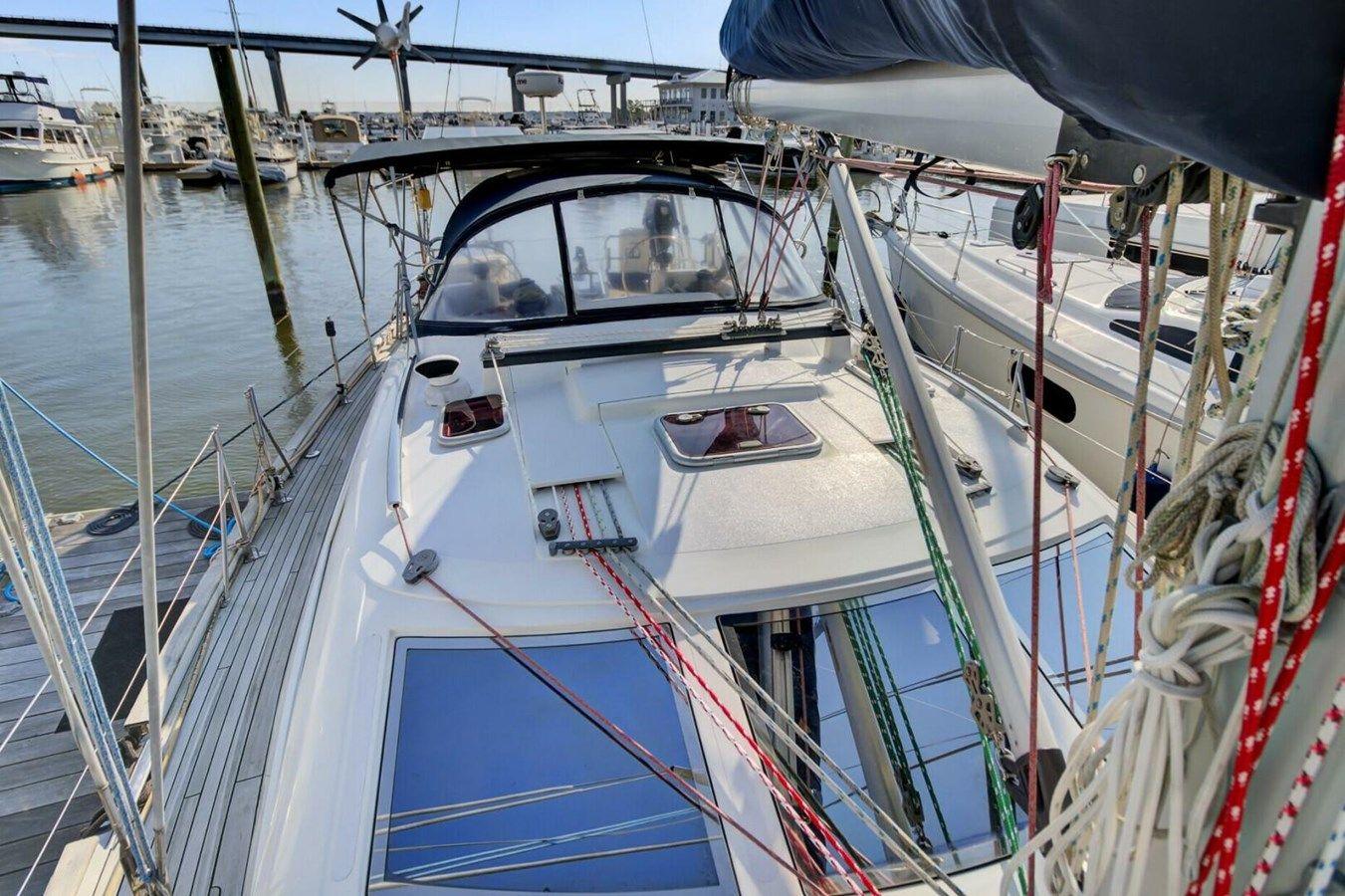
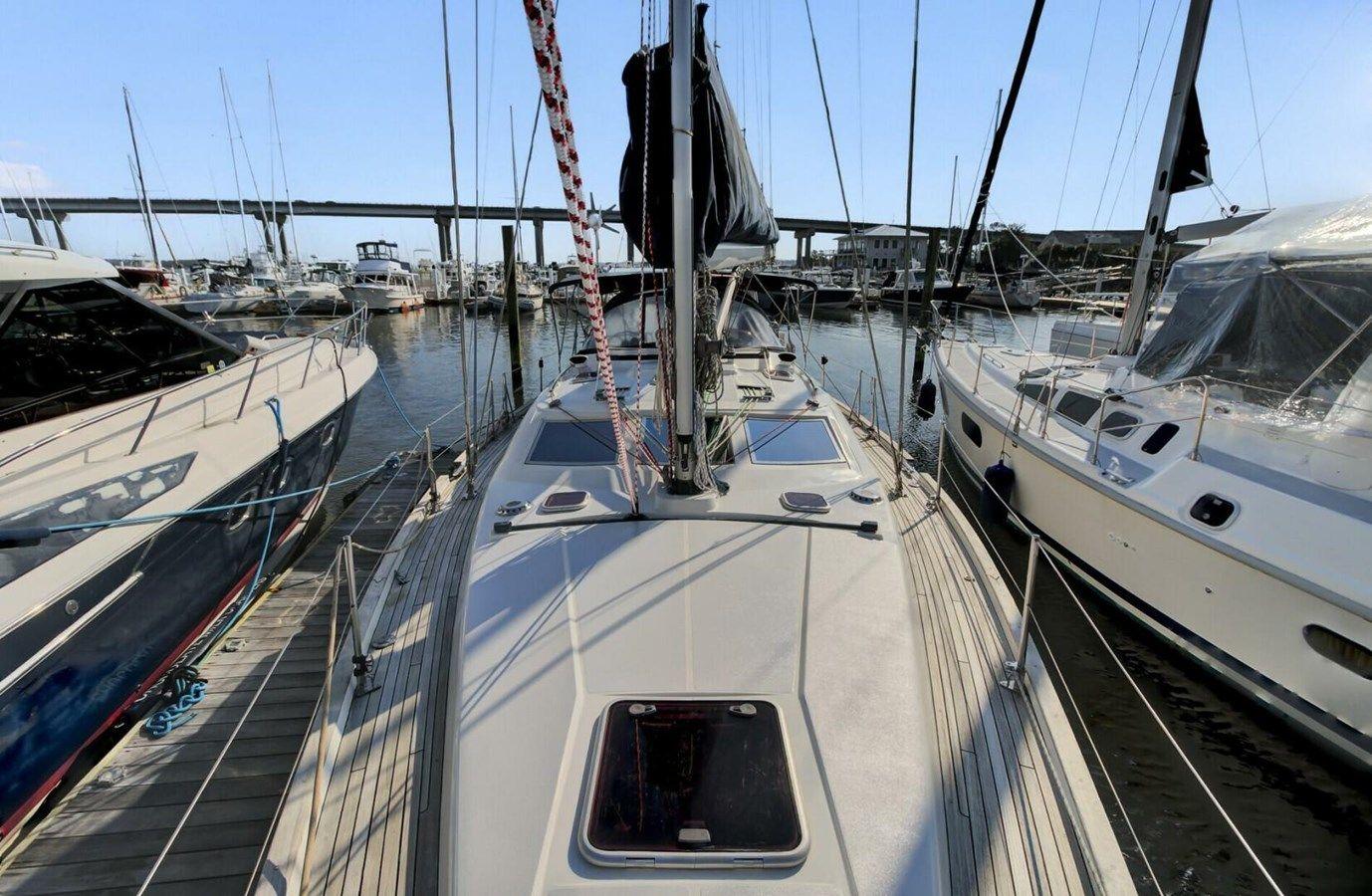
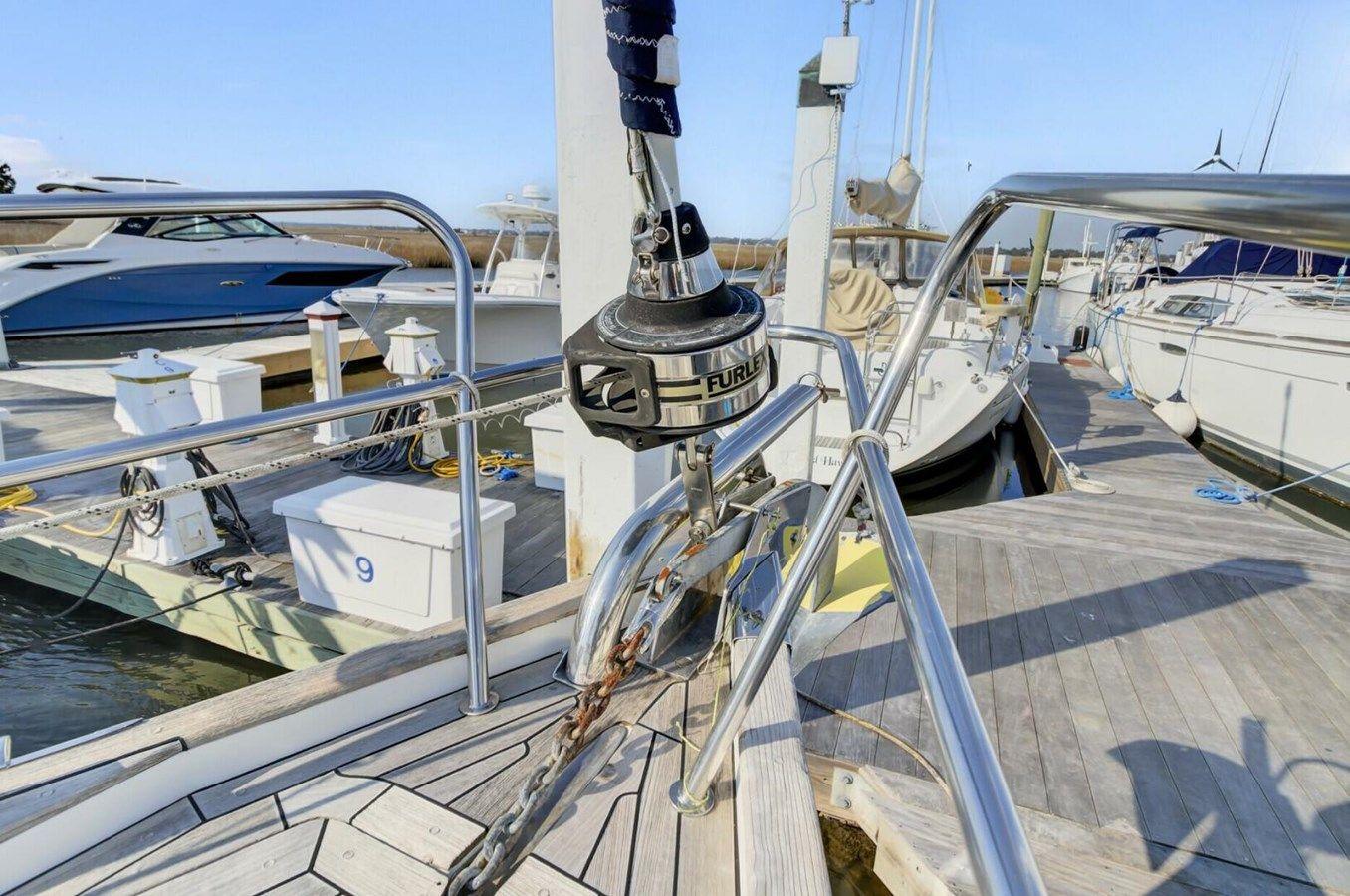
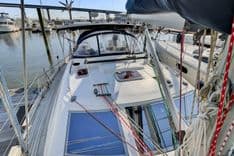
Underfoot, the hull is hand‑laid heavy‑duty GRP with multi‑axial and unidirectional reinforcements for strength and impact resistance; the topsides are cored above the waterline for insulation and weight reduction, with solid laminate below, and thickness increases toward the keel area. The keel box is integral to the hull lay‑up, and a substantial centerline skeg protects propeller and rudders when dried out. The variable‑draft swing keel system marries stout engineering with day‑to‑day practicality: fixed ballast in an iron casting doubles as a grounding plate and transverse stiffener bolted into a recess around the keel box; the aerofoil swing keel in cast iron pivots on a stainless pin at the leading edge and raises/lowers via a hydraulic ram powered by an electric pump with a hand‑operated backup, with all hydraulics easily accessible. On deck, teak decks and raised teak‑capped bulwarks add security and comfort; forward, a stainless stemhead fitting carries anchor rollers, a removable stainless bowsprit, and an electric windlass. The specification continues with six cleats, an anchor windlass (2024), a foredeck anchor locker, a Mantus 65 lb anchor with 300' of 10 mm chain (2015), a Mantus anchor bridle (2015), a Brake second anchor (similar to a Delta), a Fortress kedge anchor, and a transom deck shower with hot and cold water, plus a pad for an outboard on the stern rail; the deck was waxed and the teak cleaned in December 2024.
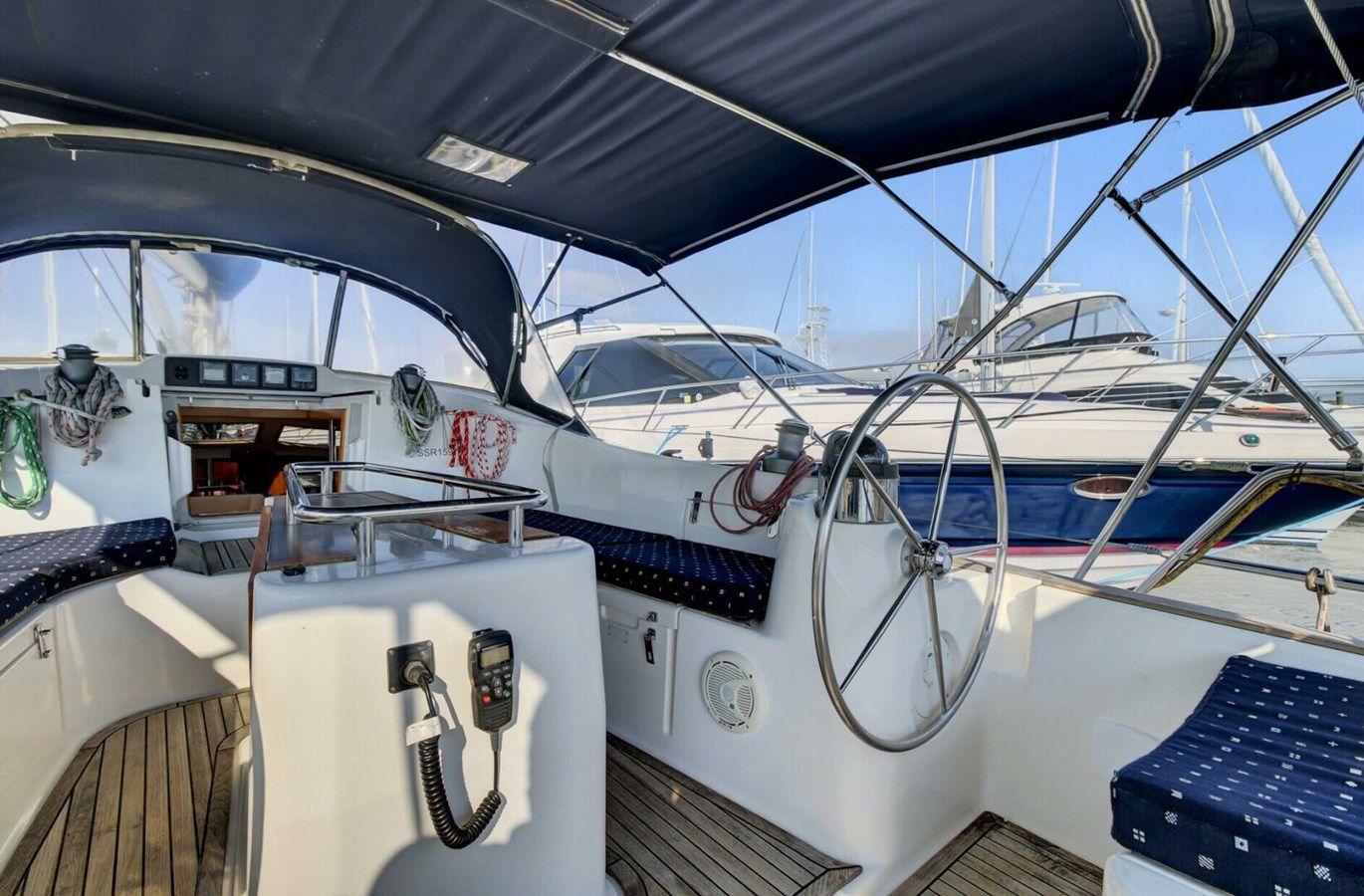
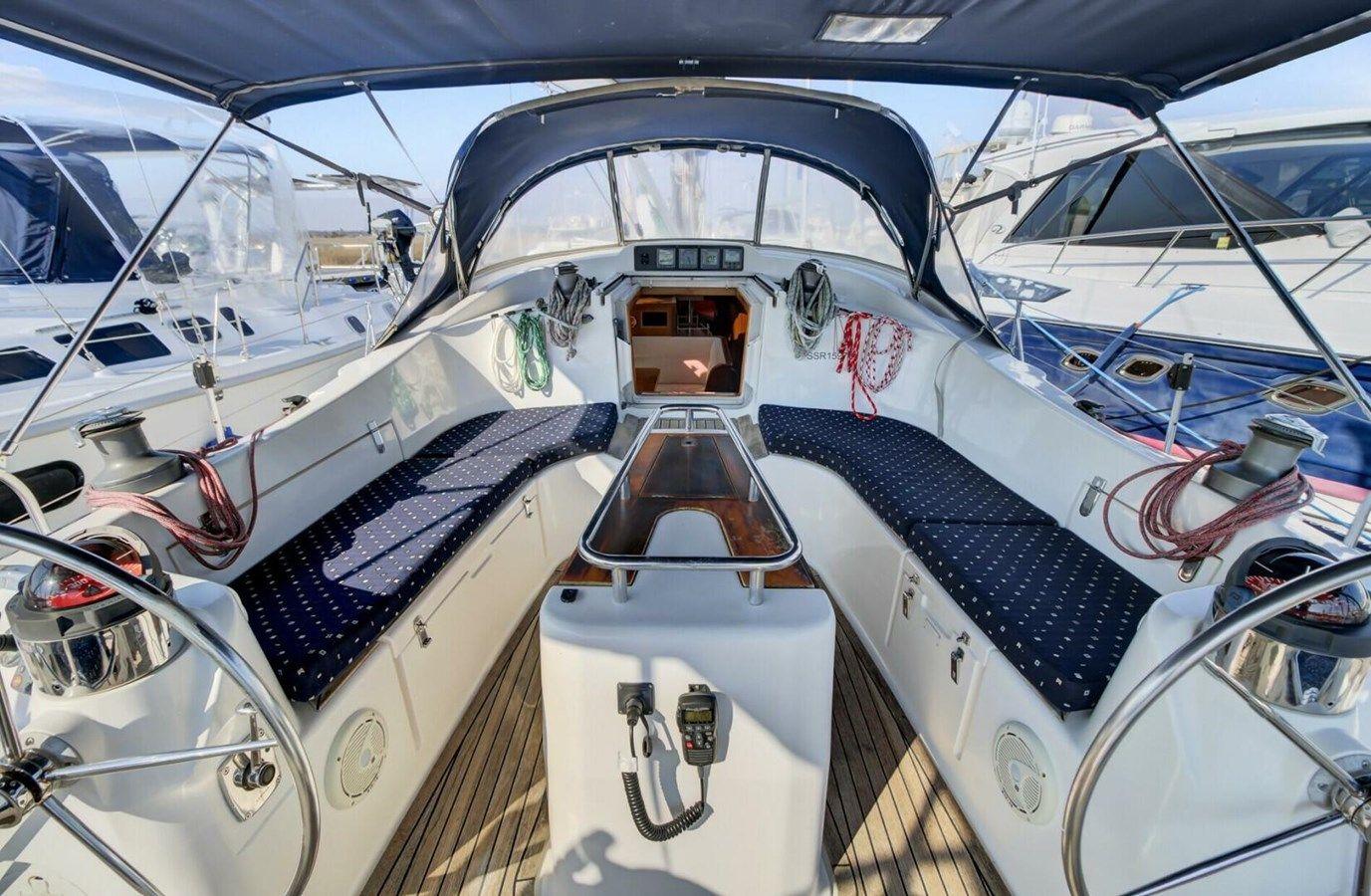
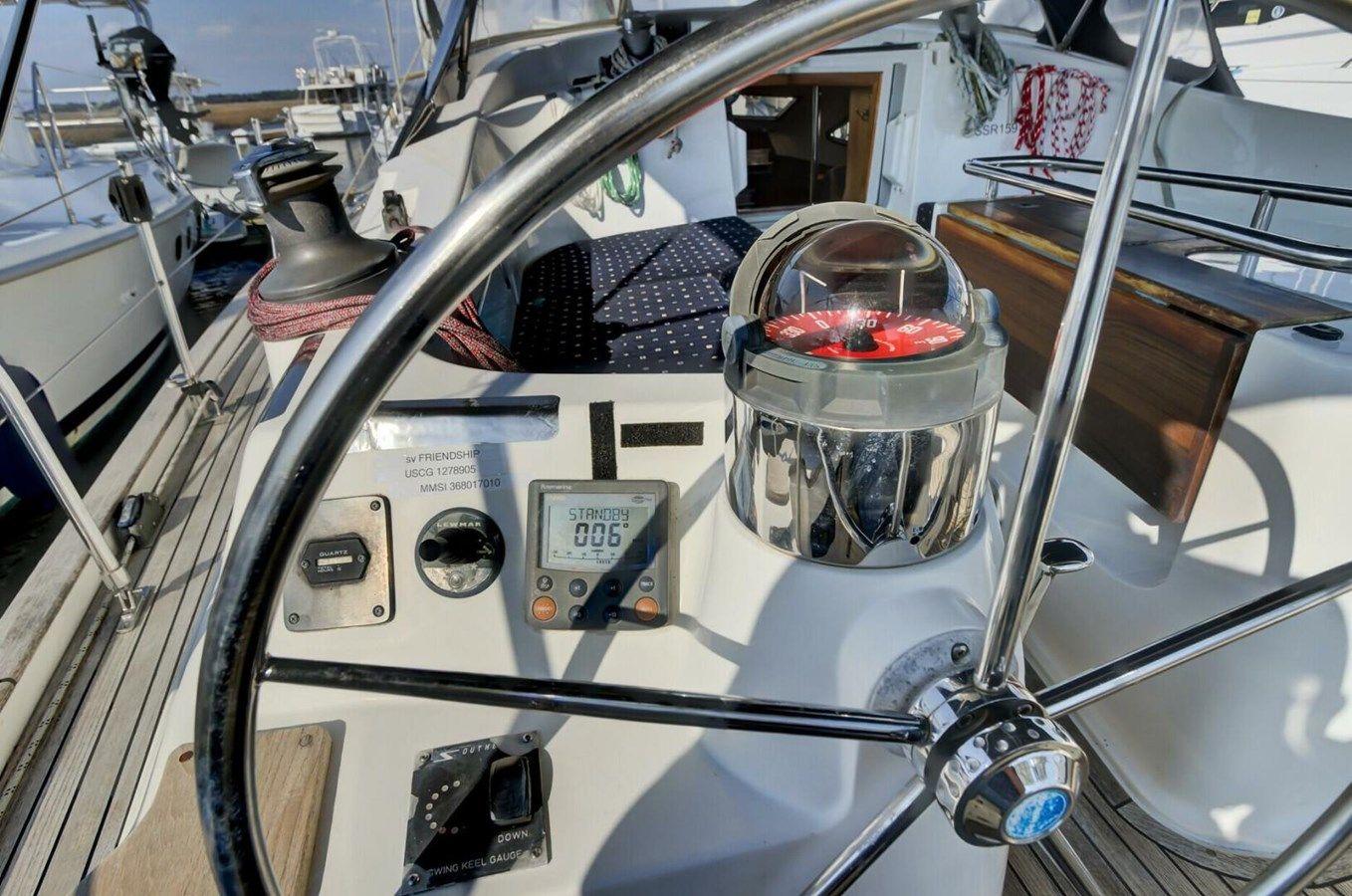
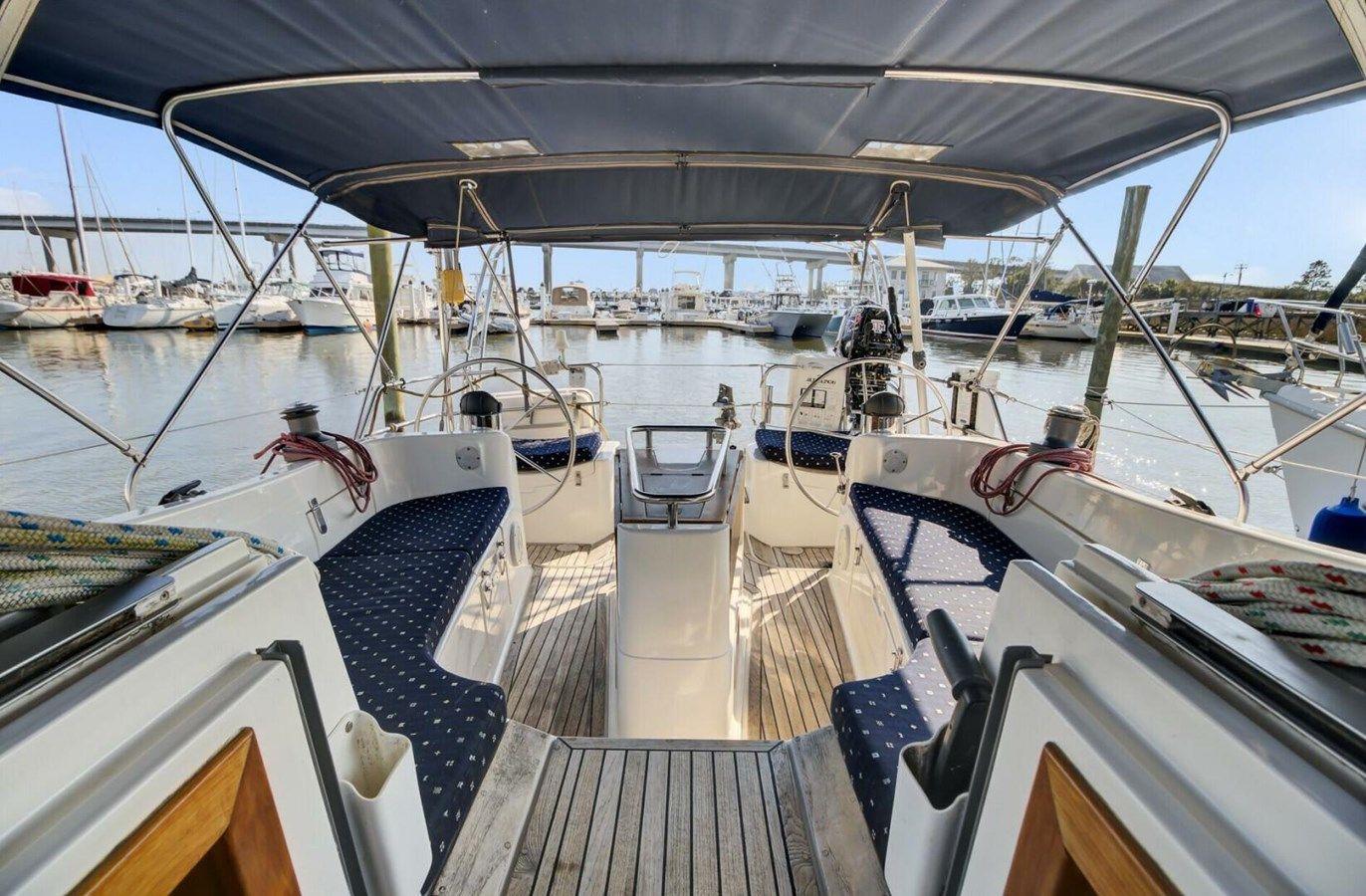
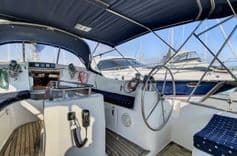
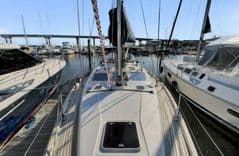
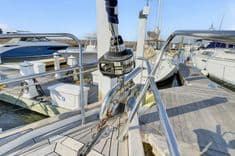
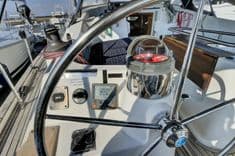
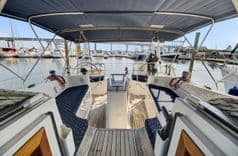
The cockpit is large and sociable, with comfortable seating and a table whose folding leaves, integral storage, handholds, and footrest make passagemaking and harbor dinners equally appealing. Twin 30" stainless‑steel wheels sit behind twin compass guards and a 6" main steering compass; aft access through the transom is excellent, and a sugarscoop with a telescopic stern swim ladder invites a quick dip. Stowage is generous in large port and starboard cockpit lockers, with dedicated propane tank storage in the starboard locker. An instrument panel sits above the companionway hatch, which is Perspex, and comfort is topped off by cockpit cushions (2018), a sprayhood, and a bimini.
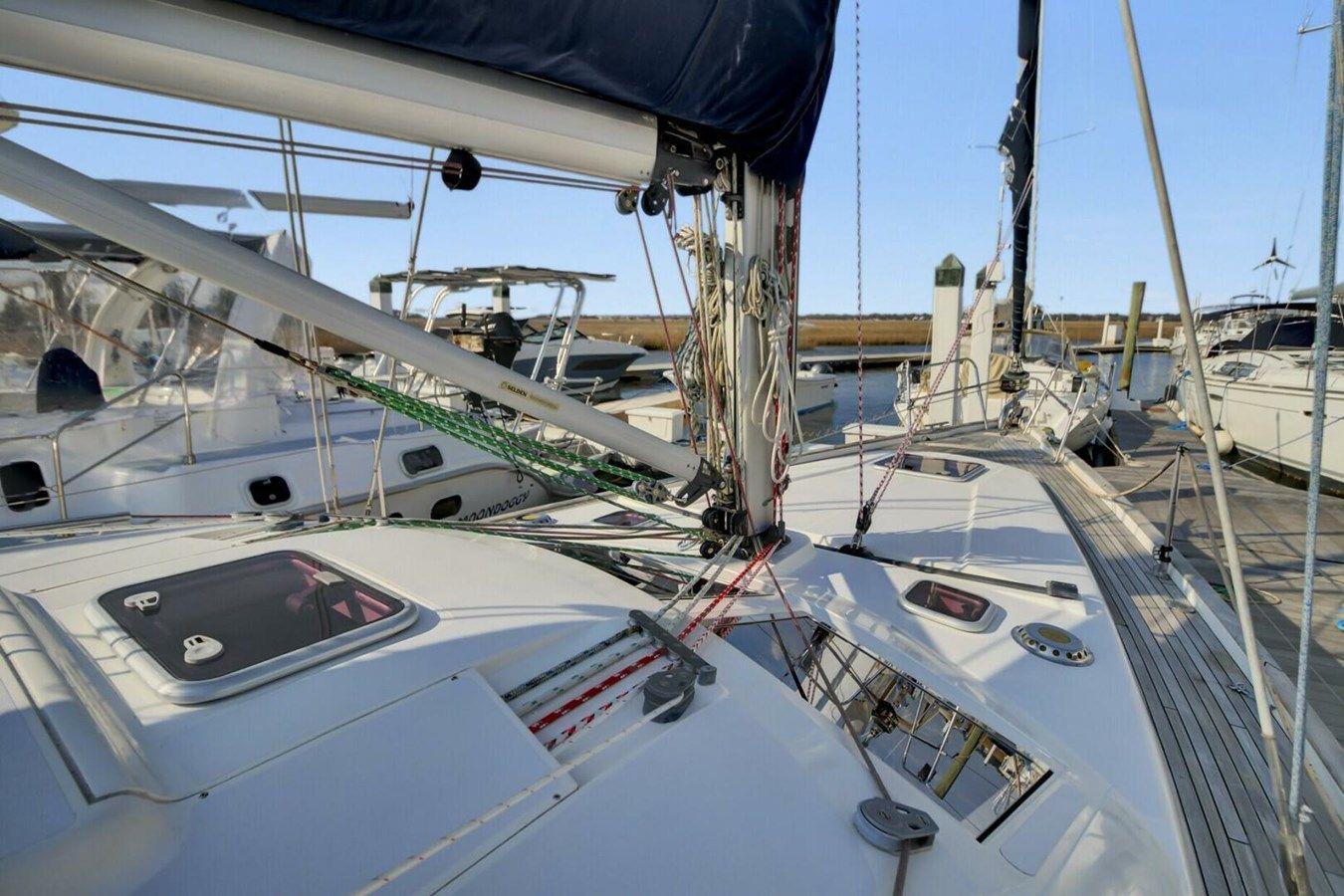
The Southerly 42RST’s rig is optimized for easy power to windward: a tall fractional rig with swept‑back double spreaders combines a self‑tacking furling jib for fingertip tacks with a large mainsail and single‑line reefing, while a Code Zero or gennaker flies from the removable stainless bowsprit for off‑wind speed. Sails and running gear include a Quantum full‑batten mainsail (2019) with Seldén MDS cars and a stack pack system, a self‑tacking furling jib by Quantum (2019), North Sails removal and cleaning of jib, main, and main stack pack in December 2024, a Code Zero by Sanders (2015), a gennaker (2011), new lines in 2025 for vang, traveler, main, and jib, a removable stainless‑steel bowsprit, a Main Stac Pac (2016), control lines led aft to the cockpit, a self‑tacking jib track with sheet to the cockpit, a mainsheet track with control lines, a Seldén twin‑spreader mast, a Facnor FX2500 continuous‑line furler for Code Zero and gennaker (2011), a Lewmar 46 electric winch on the coachroof, a Lewmar winch on the mast, a Seldén spinnaker pole that stows on the mast (2015), a Hyrdovane wind‑steering system (2015), a solid kicker vang, a spare halyard, and three climbing steps on the mast.
Mechanical and plumbing systems are equally cruise‑ready: a 56 HP Yanmar 4JH4‑E shows 2,522 hours and benefits from new engine mounts (2025), a new oil pan (2025), a new starter (2025), and a fresh oil change (2025), with removable panels at both ends of the engine box for superb access. A dripless shaft seal was fitted in 2017; fuel delivery features a dual‑filter setup with the original filter and a Balmar fuel filter (2017), plus a FRA2 Wilber fuel pump (2018). Underway efficiency comes from a three‑blade feathering prop (2015) with a rope cutter. The variable‑draft swing keel operates via a hydraulic ram and pump, with the hydraulic pump replaced in 2026. Close‑quarters handling is easy with a Lewmar bow thruster controlled at the helm, and anchoring is a breeze with the 2024 windlass. The tender’s propulsion is a 2018 Suzuki 15 HP outboard. Water autonomy comes from an ECHOTec DML‑260‑1 12‑volt watermaker producing 13 gallons per hour (2020), while shower sump pumps and a propane system with electronic shut‑off round out the essentials.
Electrical systems bring robust redundancy: circuit breakers live on the main nav‑panel; there is a 12‑volt system and a 110‑volt system (2017), with 12‑volt and 110‑volt outlets throughout the boat (the inverter powers the 110‑volt outlets). A Magnum inverter/charger with a display at the nav (2017) partners with a K.E.I. alternator, a Balmar MC‑614 regulator, a battery monitor, and a ProMariner ProSafe galvanic isolator. Renewable energy is delivered by a Rutland 944 wind generator with regulator (2015) and four 100 W Solarland panels with a charge controller (2019). The house bank comprises four Lifeline GPL‑L16T deep‑cycle AGM batteries rated at 6 volts and 400 amp‑hours each (2017), complemented by one engine start battery (2019). House batteries—four Lifeline 6‑volt GPL‑L16T units—charge from the large alternator, shore power via the inverter/charger, and solar panels, which can top either the aft or the house bank. Dedicated bow‑thruster and windlass power comes from two Lifeline GPL‑31T batteries; watermaker and electric winch power comes from two Concorde Lifeline 105 AH batteries (2019) that can be tied into the house bank; and a Blue Seas charger charges the engine and forward batteries. Notes for the record: the EPIRB’s battery expired in 2020; North Sails cleaned the mainsail and jib in December 2024; and the bottom was painted in late‑2024.

Yacht name «FriendShip» – SOUTHERLYis for sale and located in Charleston, United States
Sail yachts «FriendShip» built by manufacturer SOUTHERLY in 2007— available for sale. Yacht location: United States. If you are looking to buy a yacht «FriendShip» or need additional information on the purchase price of this SOUTHERLY,
please call: +1 (954) 274-4435 USAOnly deal with professionals!

