
 Licensed Yacht BrokersYachts for Sale
Soul Kitchen - SOUTHERLY FOR SALE


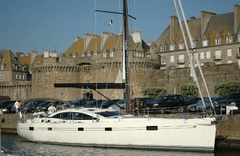
Basic information
- Builder:
- SOUTHERLY
- Category:
- Sail yachts
- Sub Category:
- Performance Sailboat
- Model Year:
- 2010
- Year Built:
- 2010
- Country:
- United States
Dimensions
- LOA:
- 58' (17.73m)
- LWL:
- 51' (15.75m)
- Beam:
- 17' (5.21m)
- Min Draft:
- 11.48' (3.50m)
- Max Draft:
- 34.45' (10.50m)
Speed, capacities and weight
- Water Capacity:
- 220 Gallons
- Fuel Capacity:
- 220 Gallons
Accommodations
- Sleeps:
- 4
- Total Heads:
- 2
Hull and deck information
- Hull Material:
- Fiberglass and Plastic Yachts
- Deck Material:
- Fiberglass
Engine information
- Engines:
- 1
- Manufacturer:
- Yanmar
- Engine Type:
- Inboard
- Fuel Type:
- Diesel
Overview
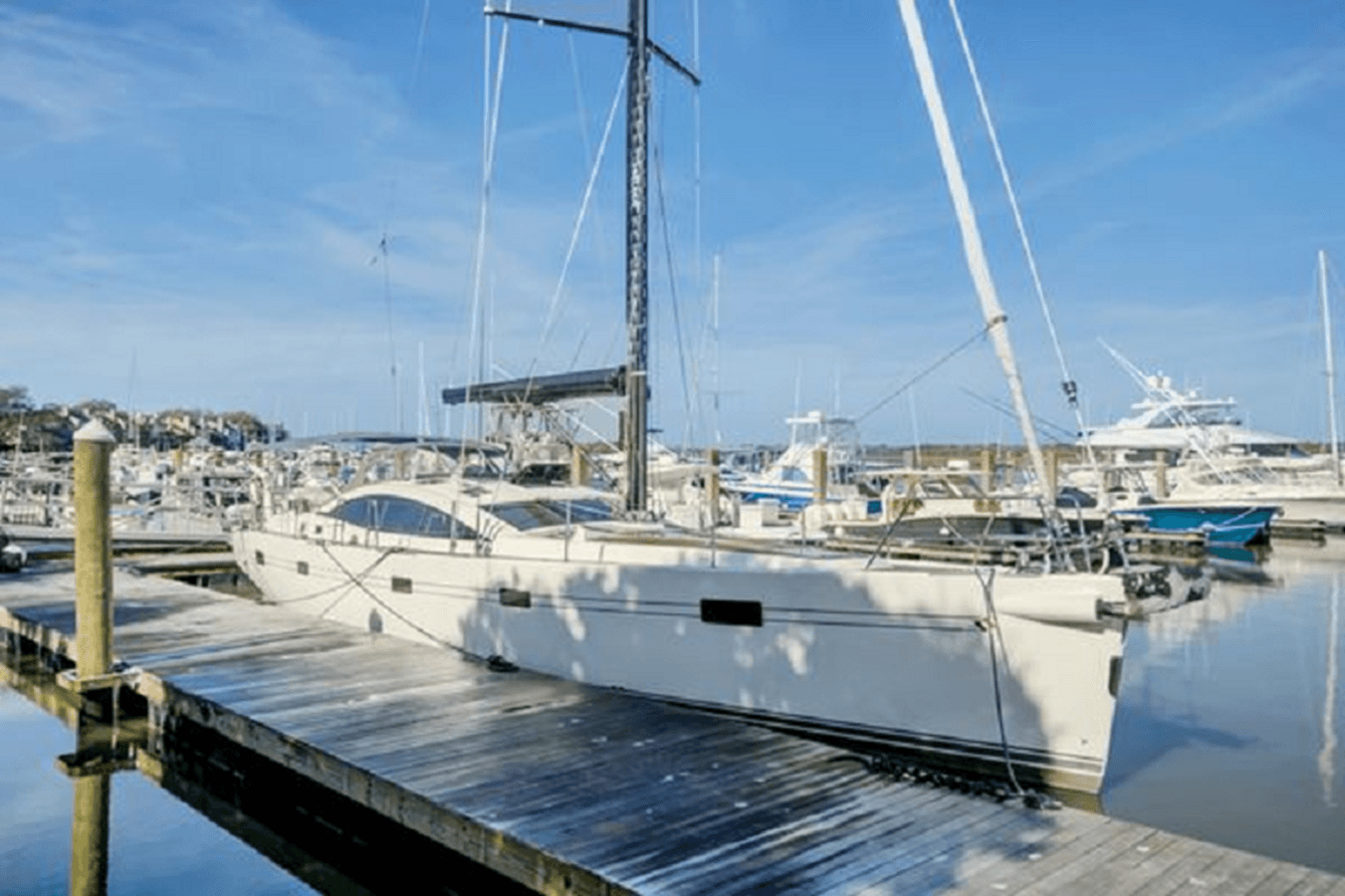
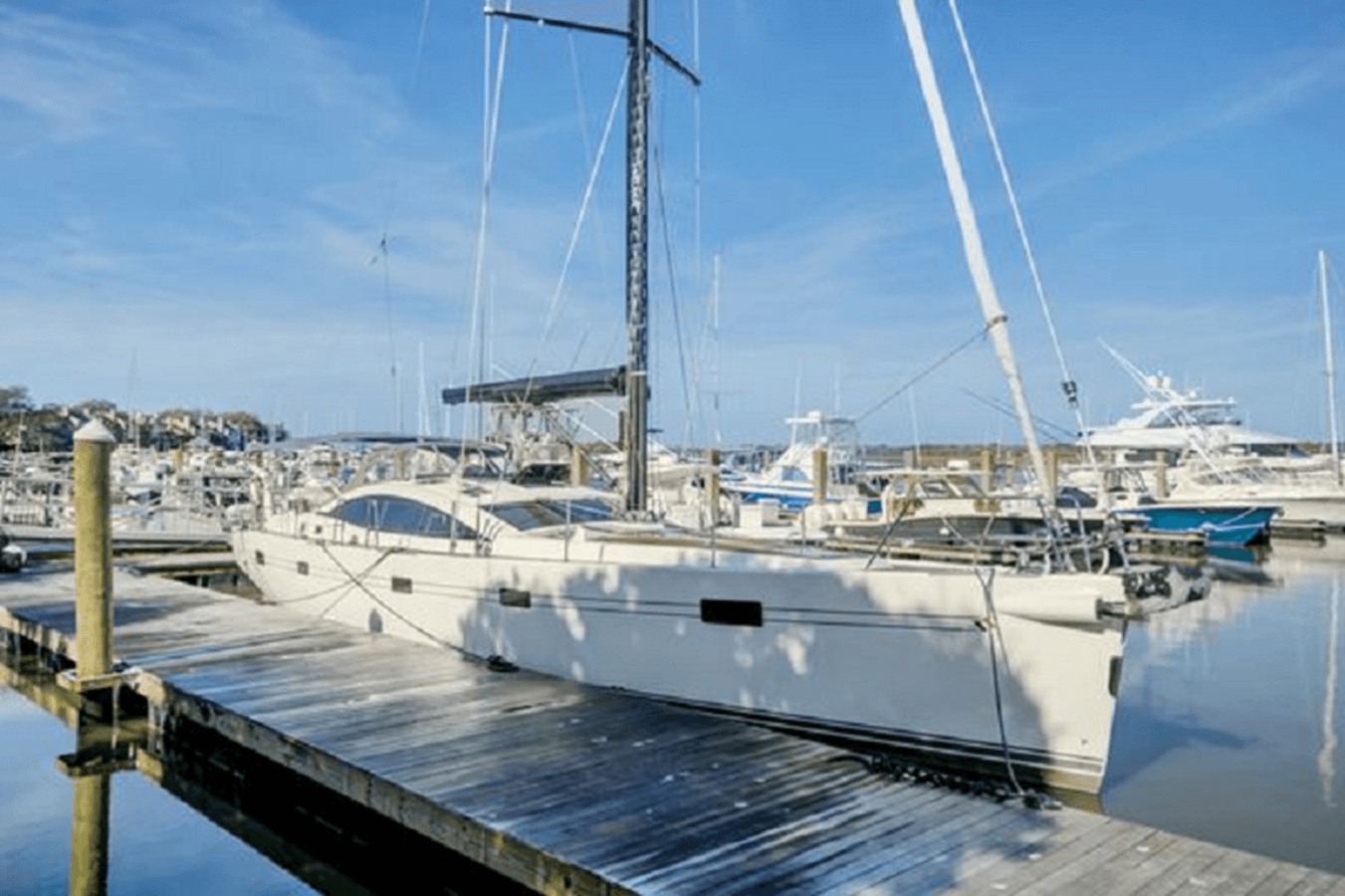
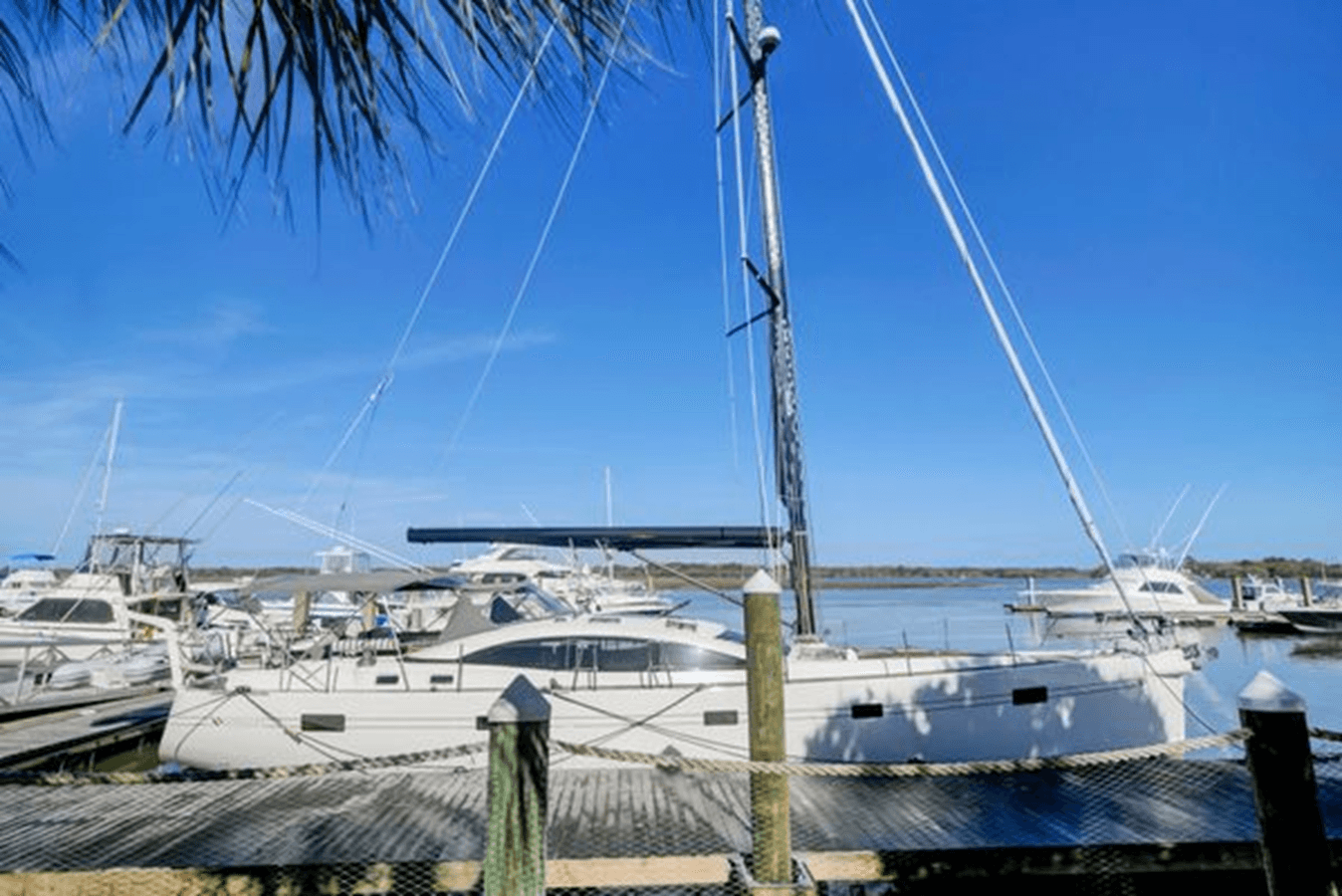
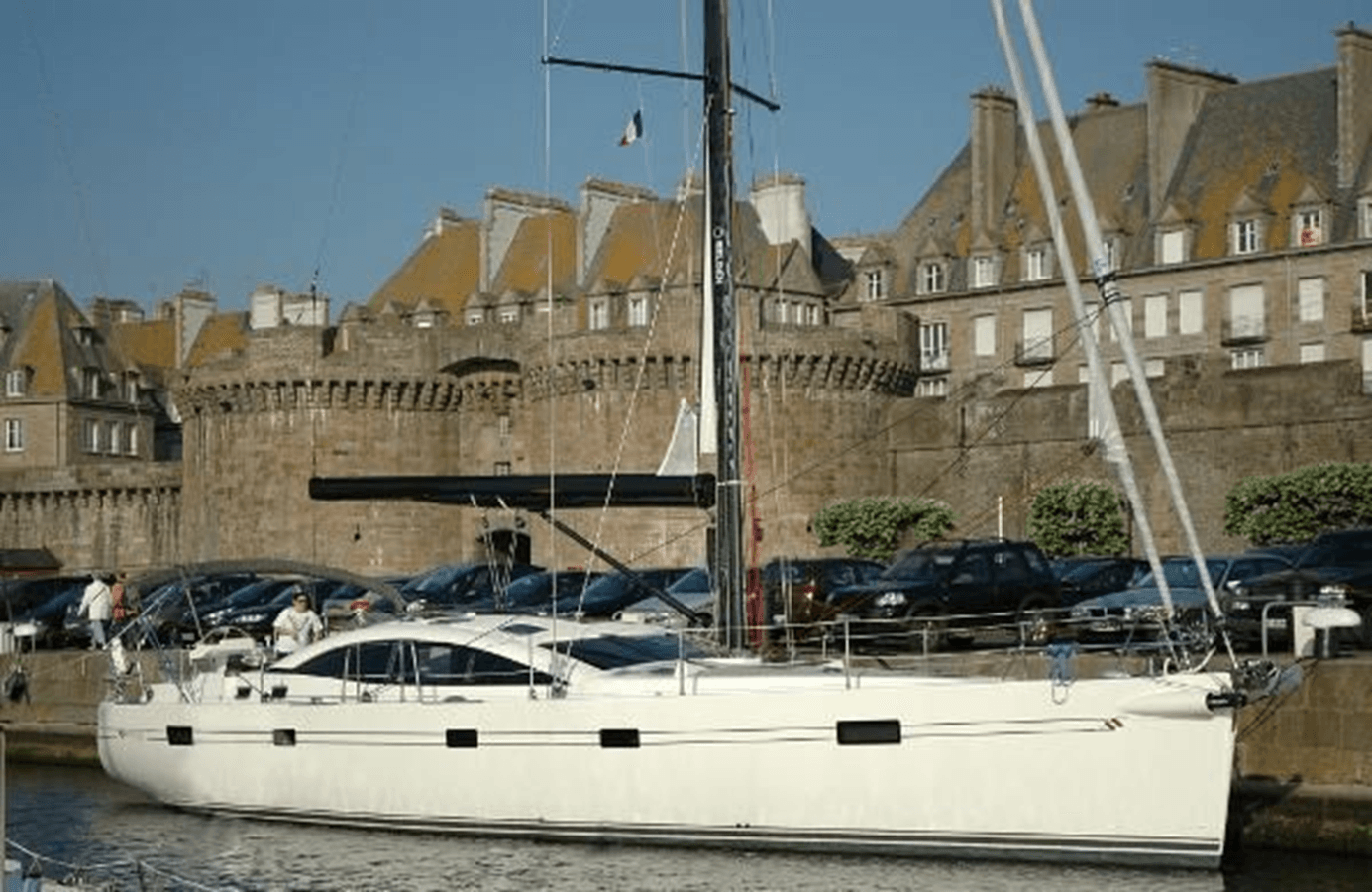
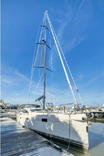
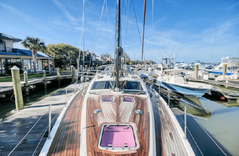
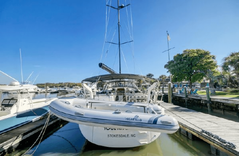
Cutting‑edge architecture, sleek modern lines, spirited sailing ability, exemplary craftsmanship, and indulgent living spaces define the Southerly 57RS. Conceived by Ed Dubois alongside the Southerly Yachts studio, this bluewater cruiser was drawn as a graceful, go‑anywhere, world‑voyaging luxury sailing yacht manageable by a couple. Substantial and mighty, it shrugs off heavy weather and exploits the renowned Southerly variable‑draft swing keel to the fullest. With a deep draft (10’ 6”) for punchy performance and laser‑true tracking, and a shoal draft (3’ 6”) to wander into remote coves and inland waterways, it blends performance cruiser agility with expedition versatility.
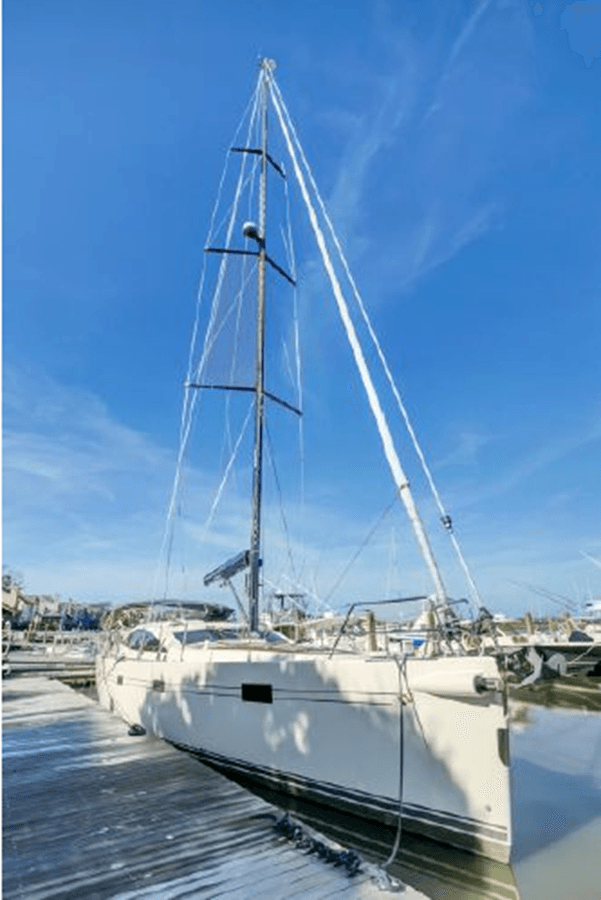
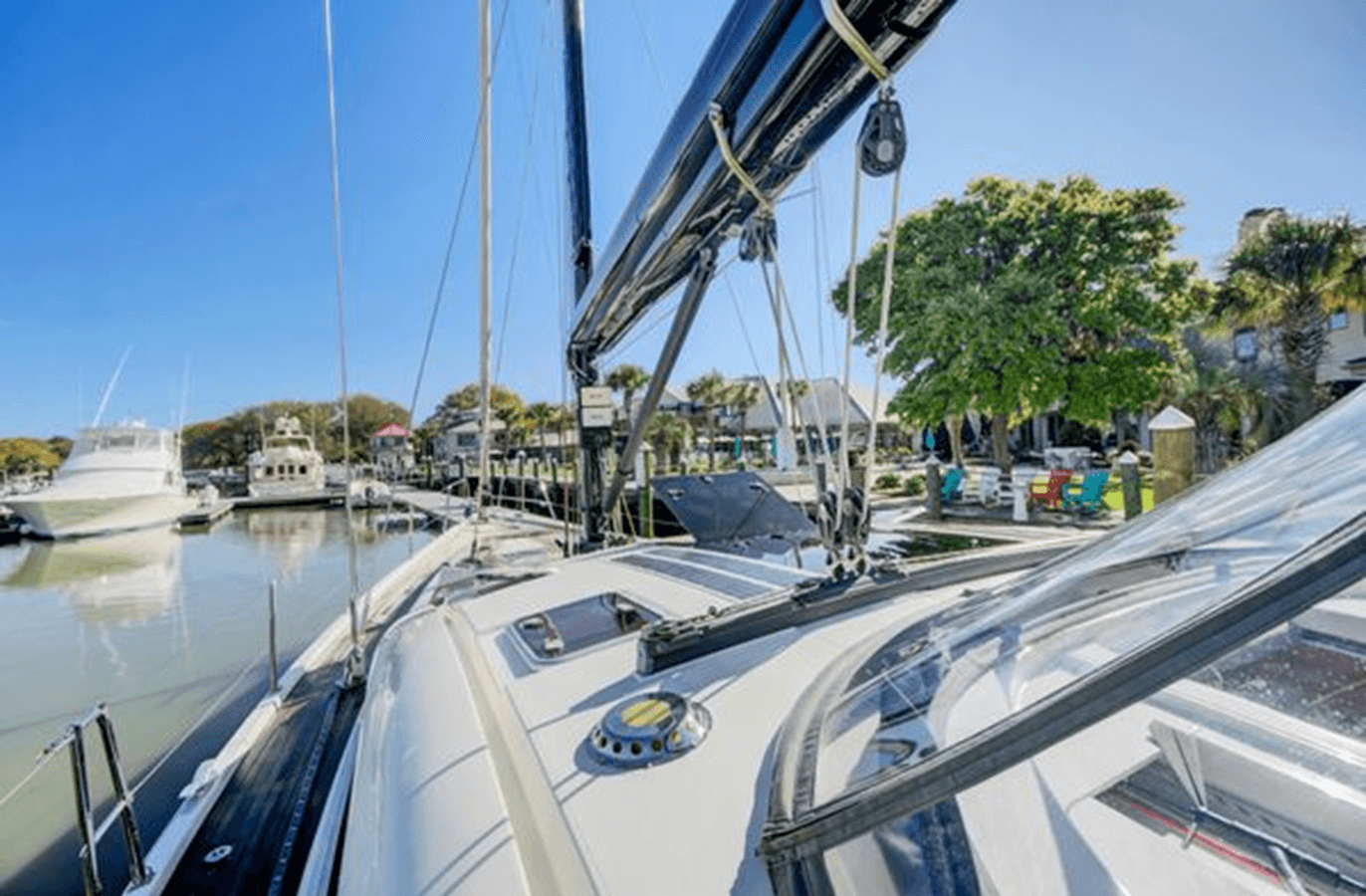
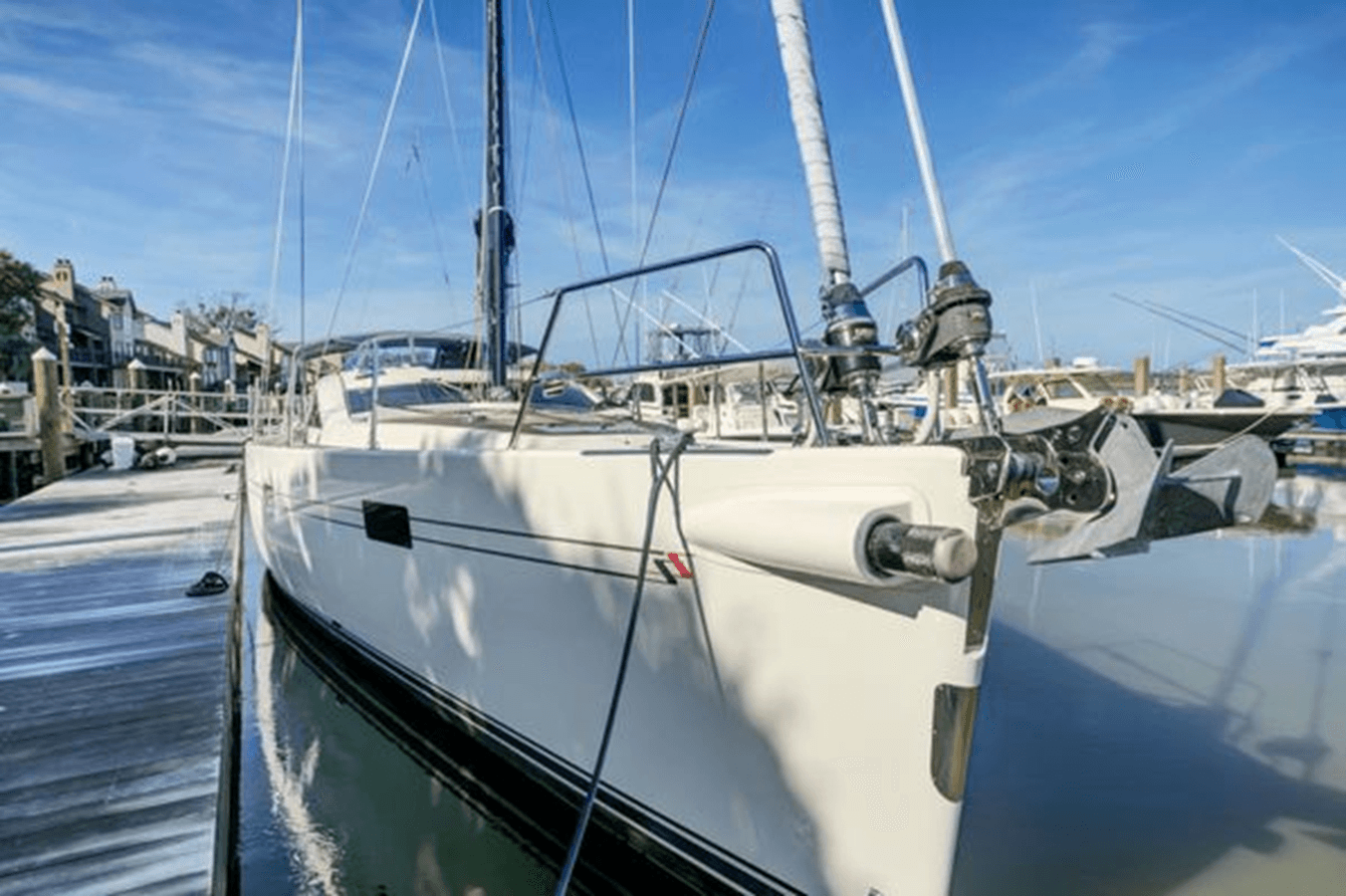
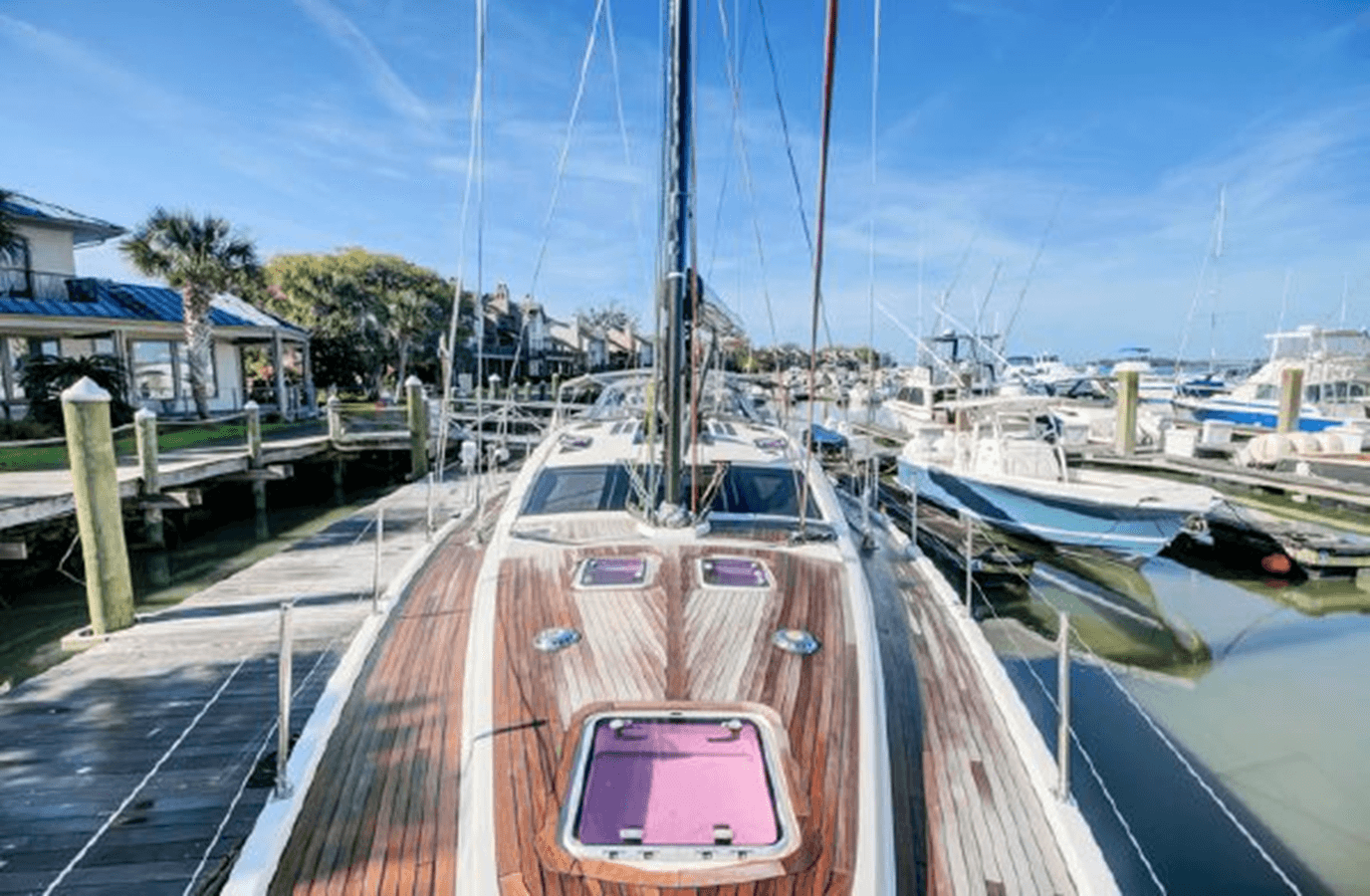
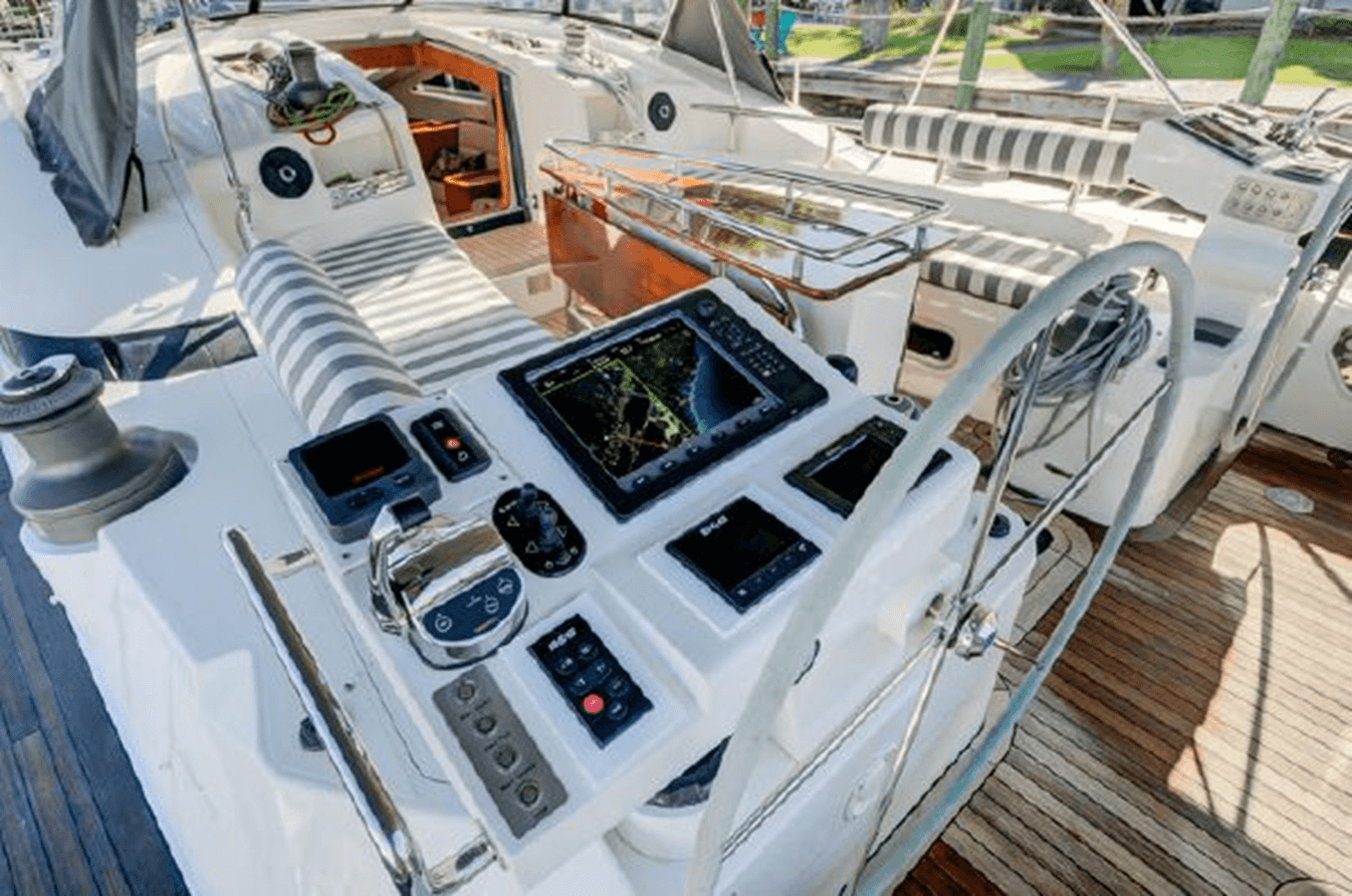
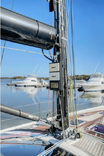
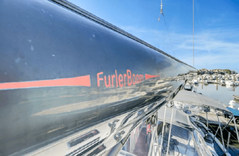
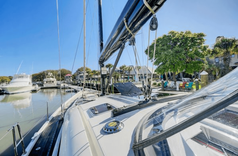
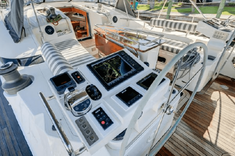
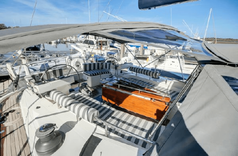
On deck: twin helms, dual rudders, a heavy cast‑iron grounding plate, the lifting swing keel, a Seldon carbon mast with rod rigging, FurlerBoom electric in‑boom mainsail furling, twin headsails on electric furlers, a retractable bowsprit, and powerful cockpit winches in a secure offshore layout.
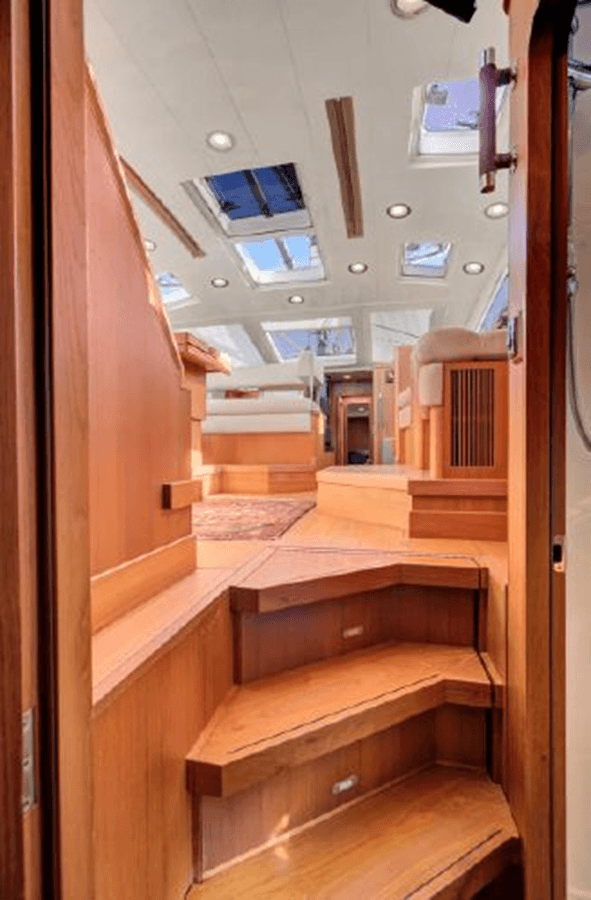
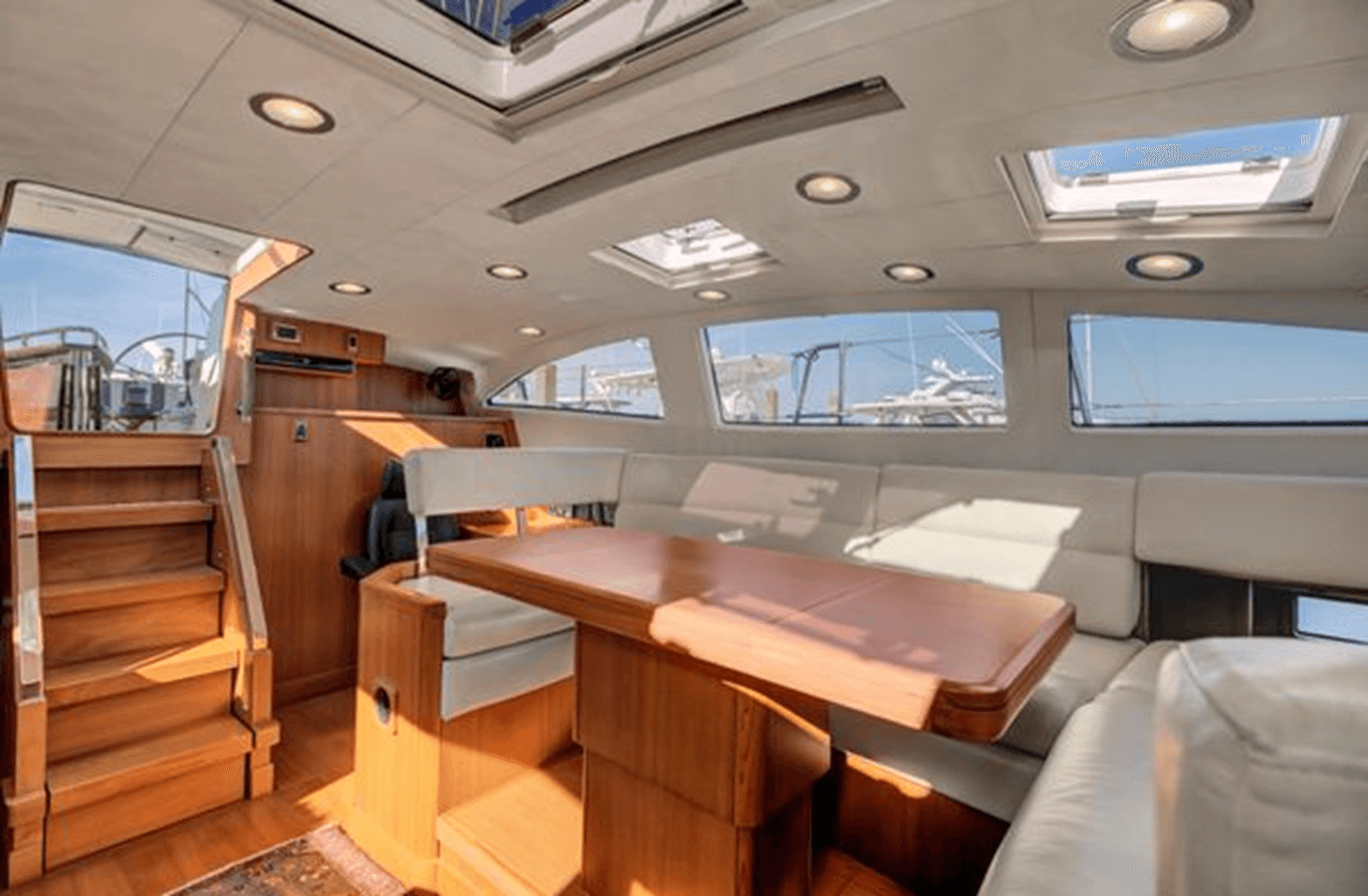
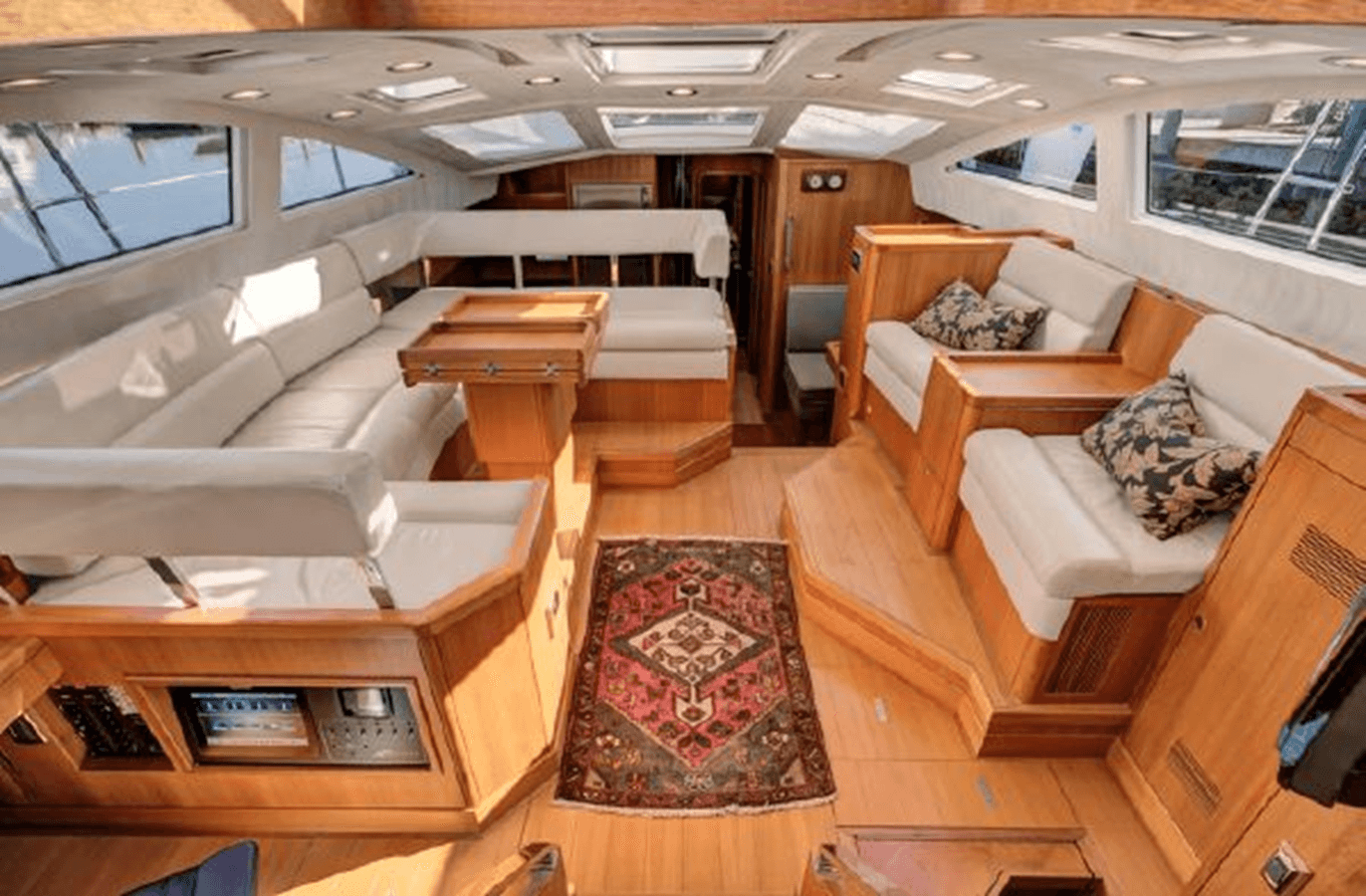
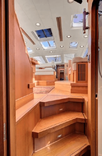
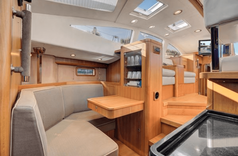
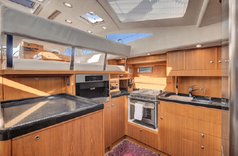
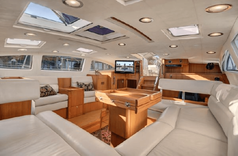
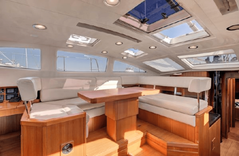
Below, the light, inviting deck‑saloon interior showcases warm teak joinery awash with daylight. The layout offers three cabins, two heads, a raised saloon, elevated nav station, seagoing galley, and a cozy breakfast nook—an ideal liveaboard arrangement for extended passagemaking.
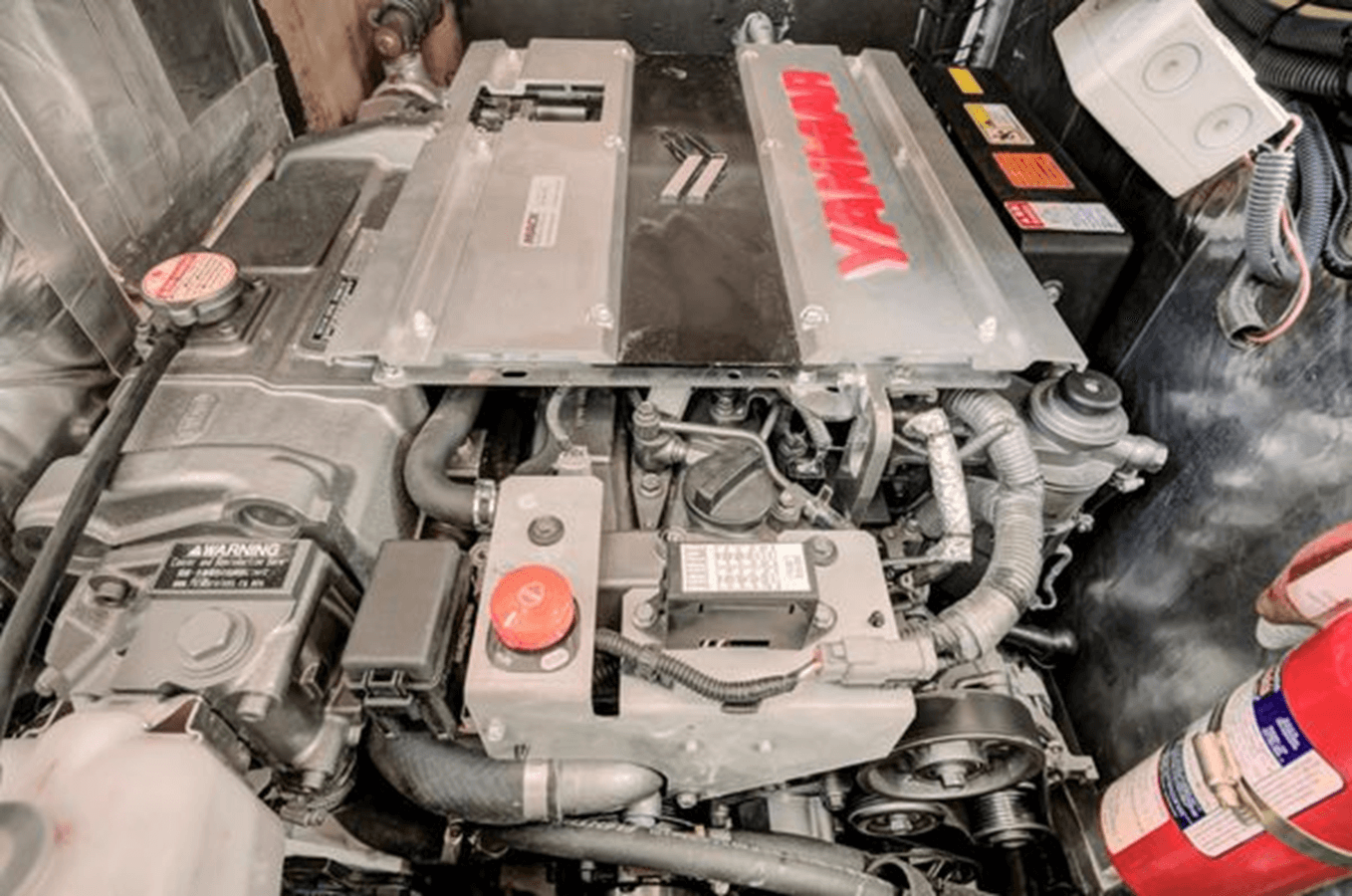
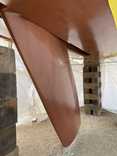
Recent upgrades include a fresh 150 HP Yanmar and a comprehensive bottom refit: soda‑blasted hull, grounding plate and keel serviced, grounding plate re‑caulked, fairing as needed, and long‑lasting Coppercoat antifouling applied for efficiency and low maintenance.
Crafted by master boatbuilders at Northshore Shipyard, Itchenor, West Sussex, England, Soul Kitchen was finished to uncompromising standards.
Detailed Description
Overview
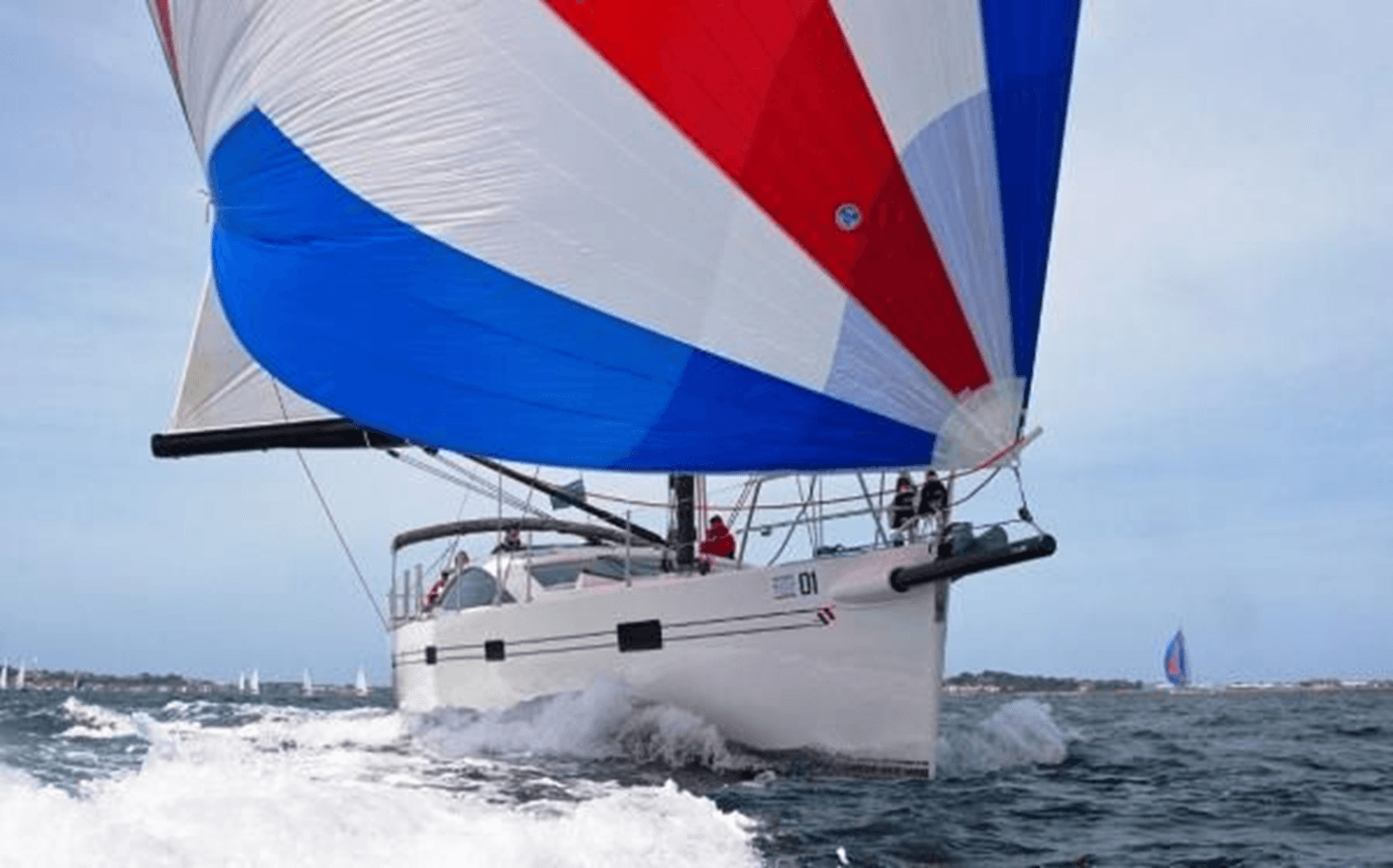
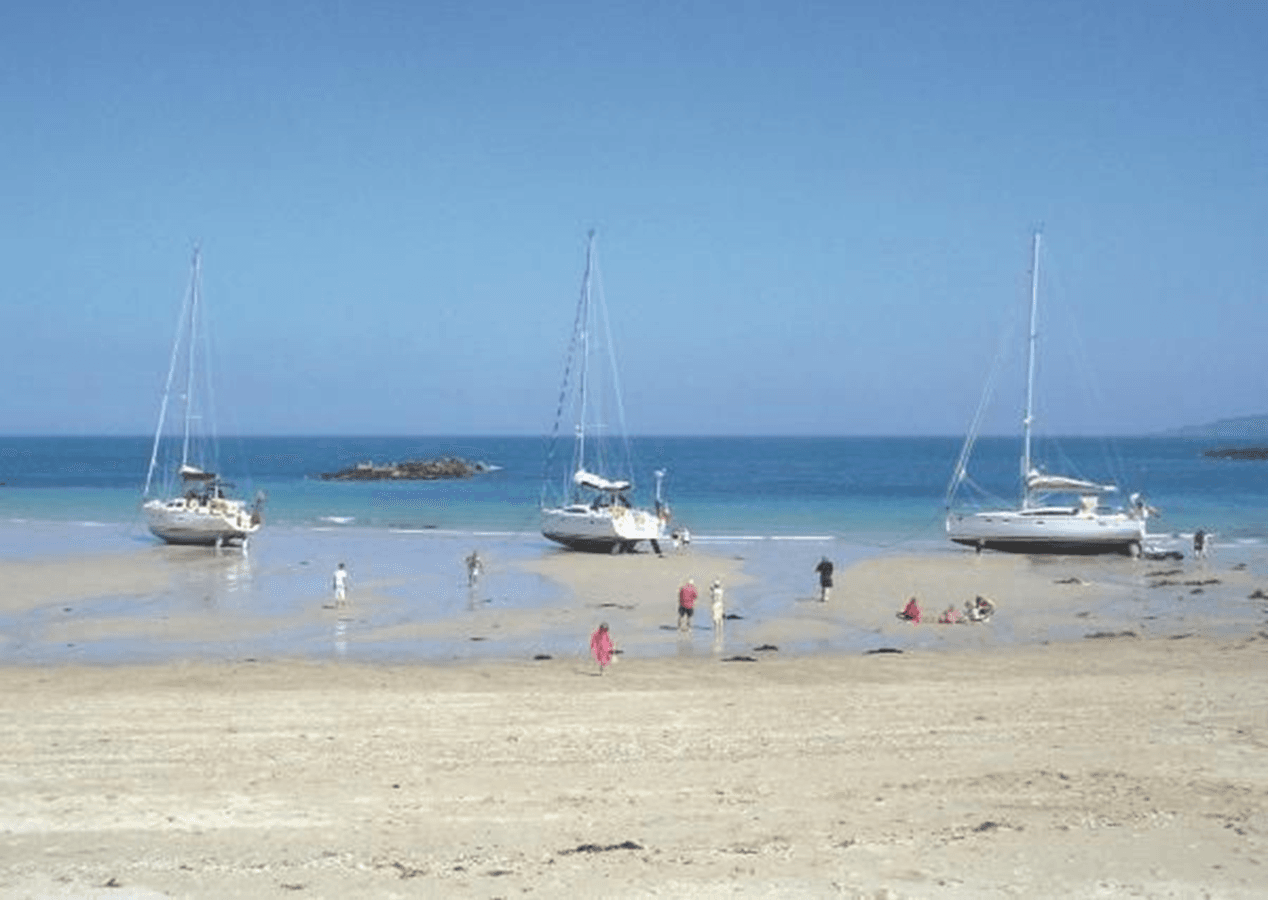
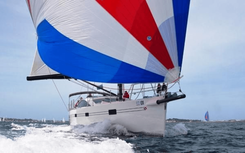
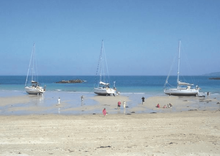
Imagine the pace and freedom of a true bluewater performance cruiser and luxury sailing yacht with a deck‑saloon: one day power‑reaching offshore at double‑digit speeds under a big A‑sail flying from a retractable bowsprit; another day short‑tacking up a tight channel with the self‑tacking blade jib gliding across its track and the deep‑draft bite keeping the helm precise; or easing right up to a beach and letting the tide fall away while the boat sits upright on her grounding plate—swing‑keel yacht versatility at its best. That is the Southerly 57RS. Drawn by Ed Dubois and built in Britain by Northshore Yachts, it is the flagship variable‑draft, ocean‑going sailing yacht in the range: a well‑crafted, seaworthy world‑cruising passagemaker with a difference, equally at home as a liveaboard or a refined cruiser‑racer for ambitious passages.
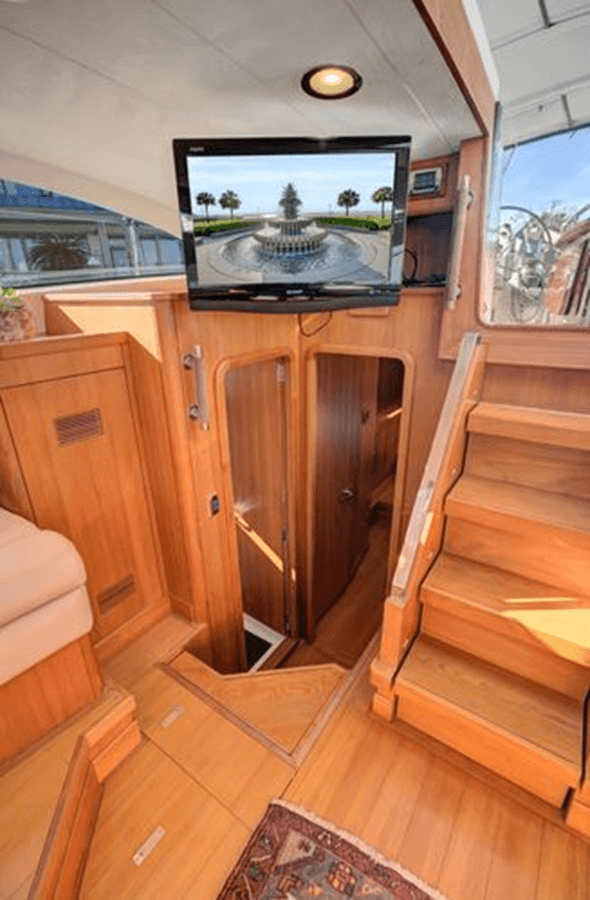
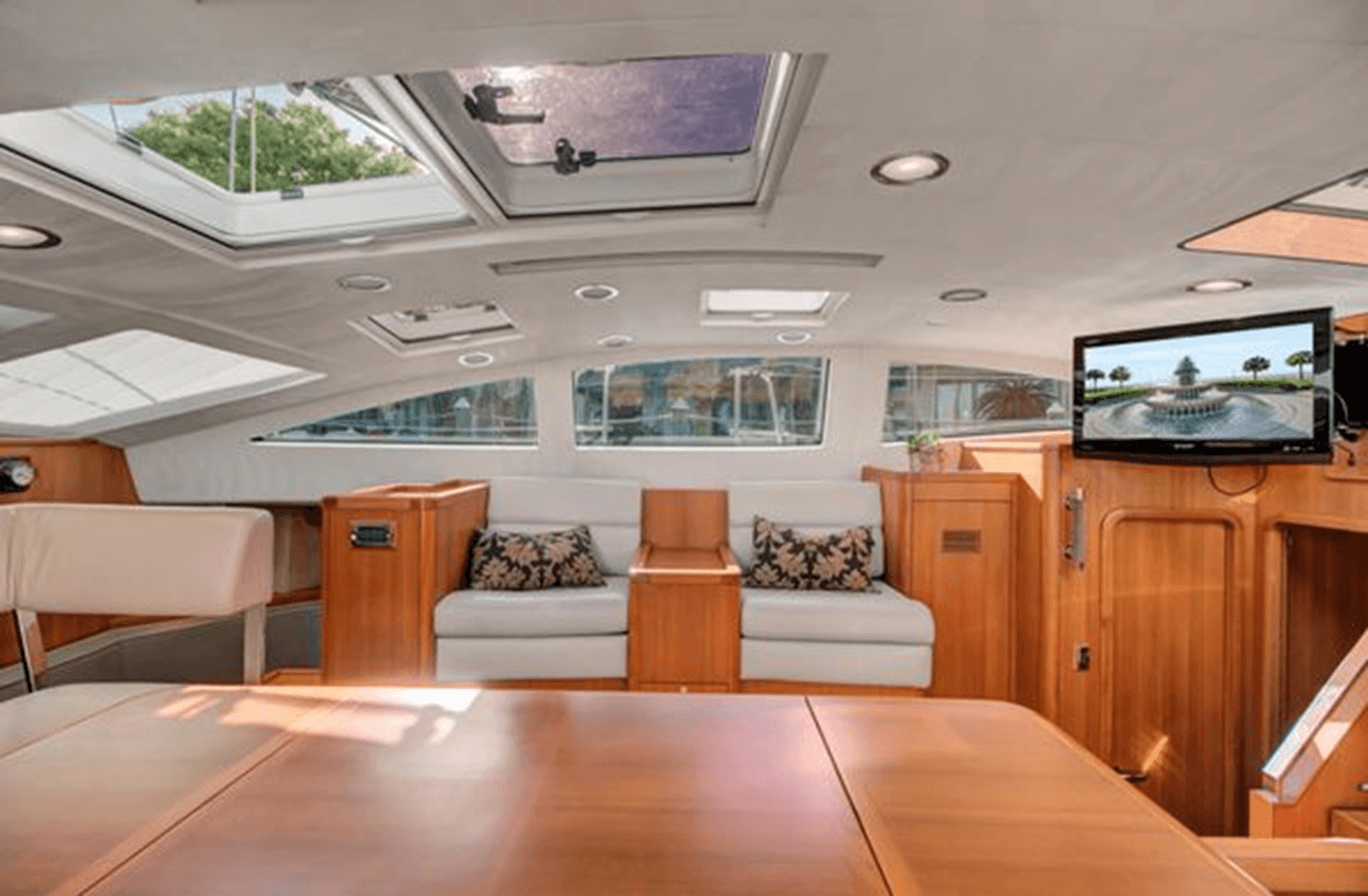
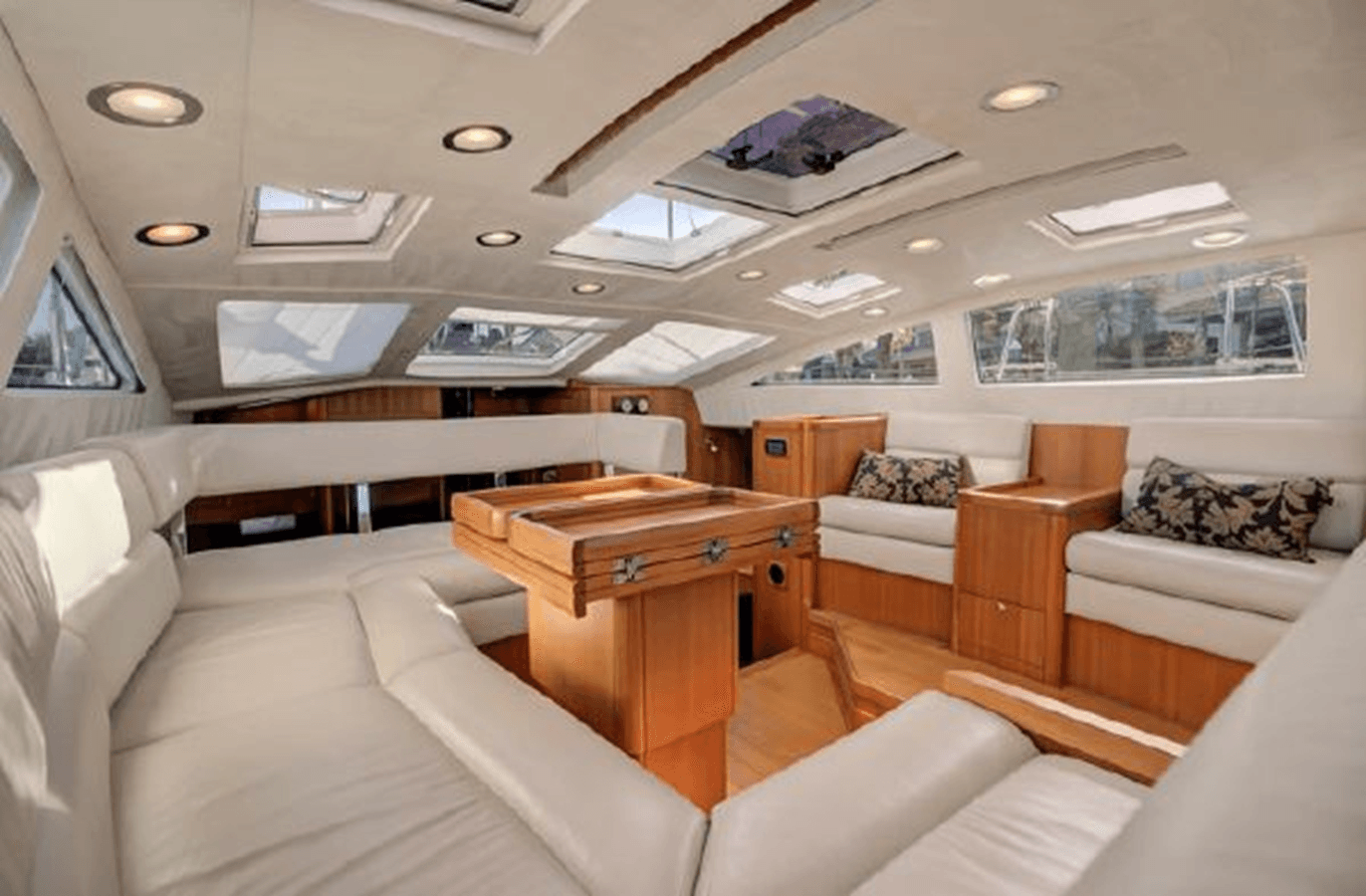
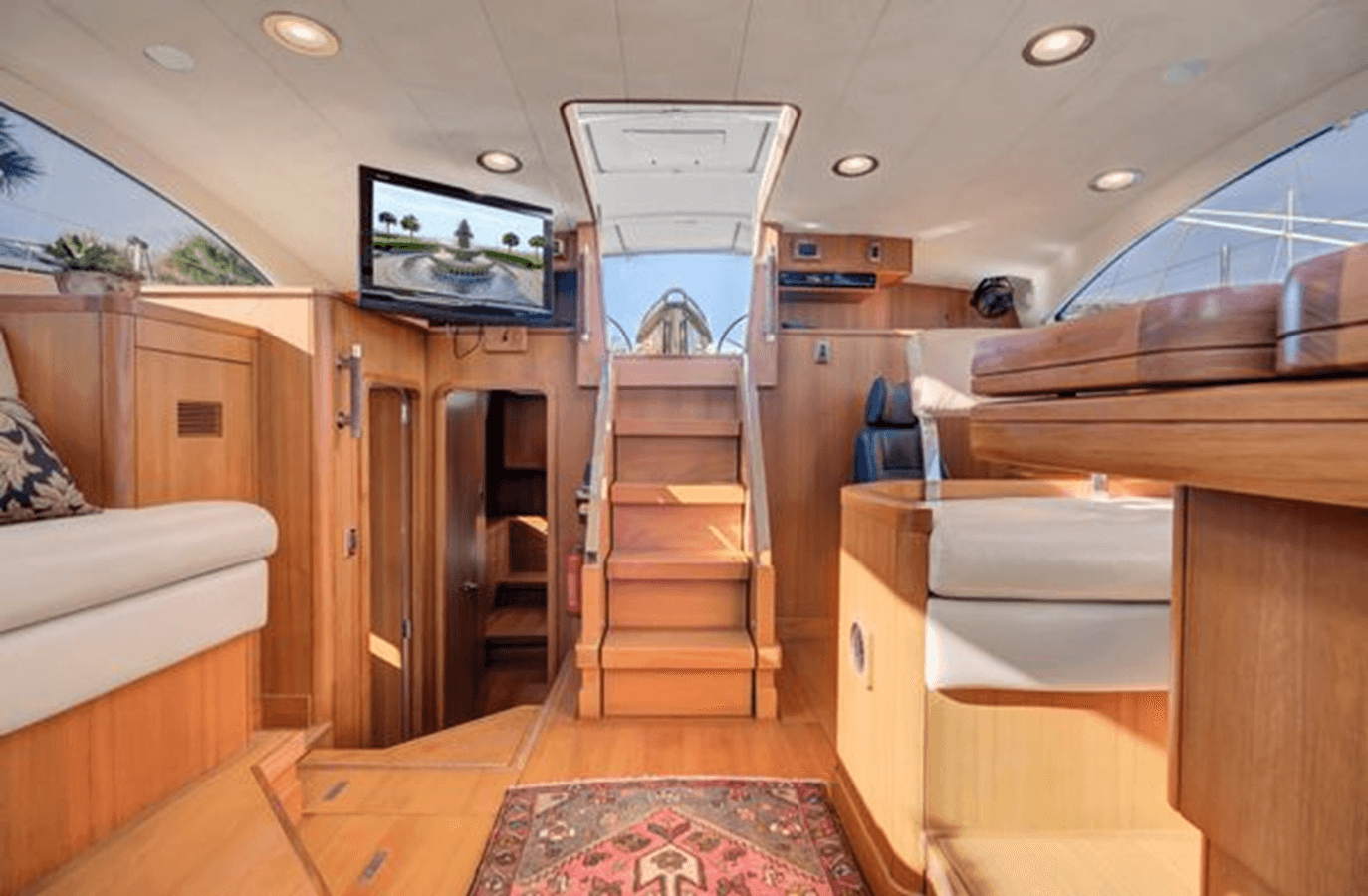
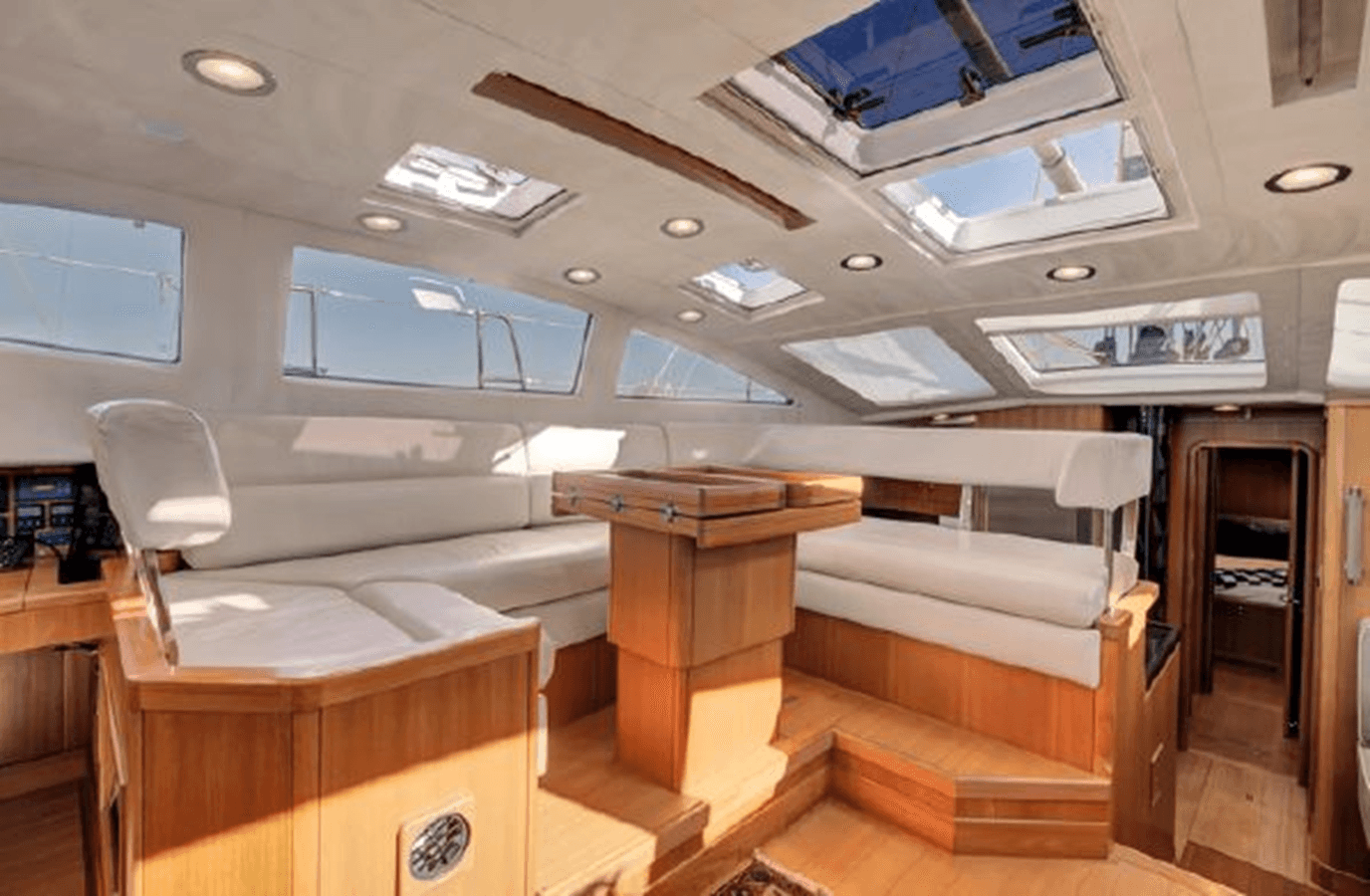
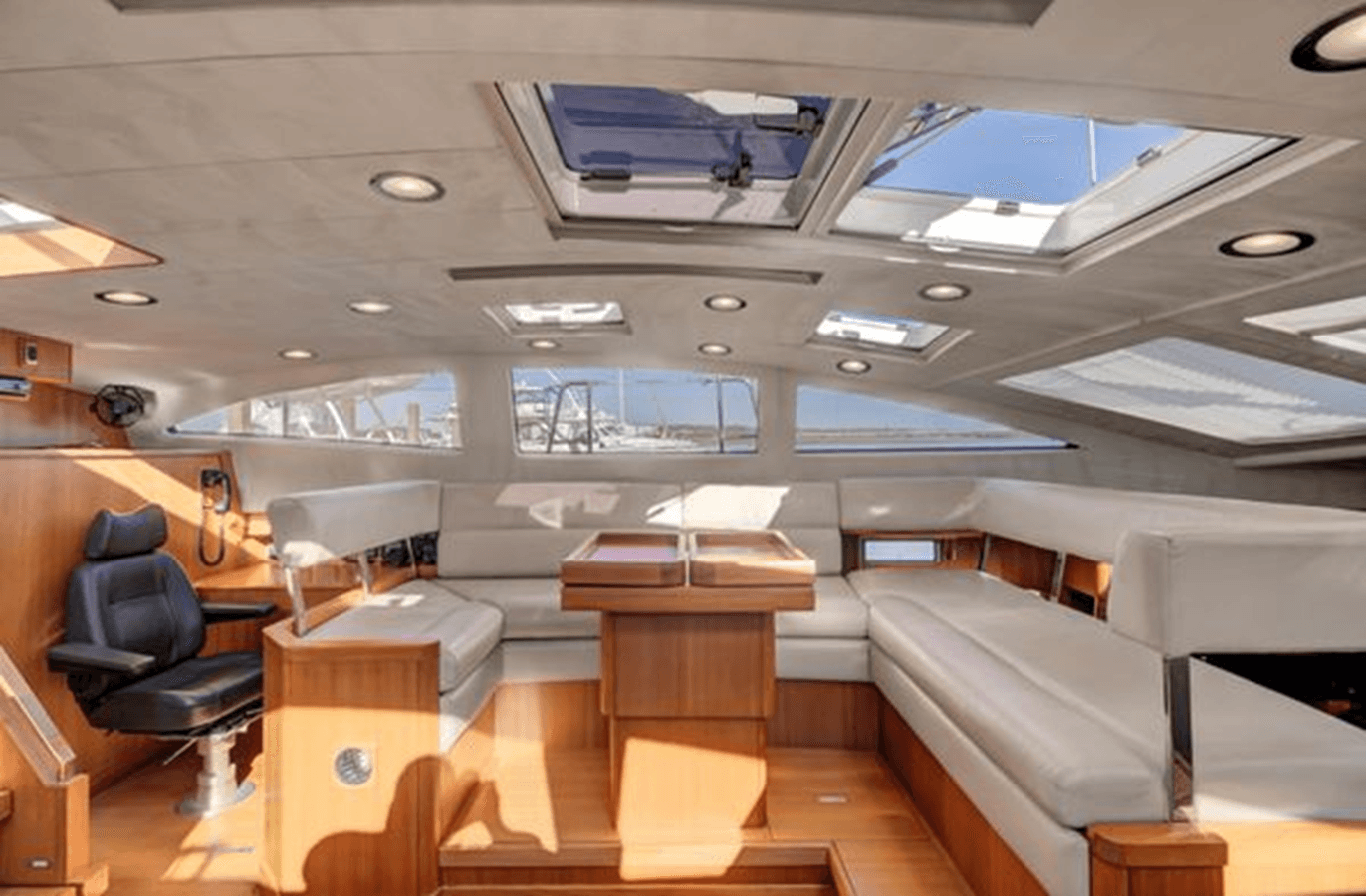
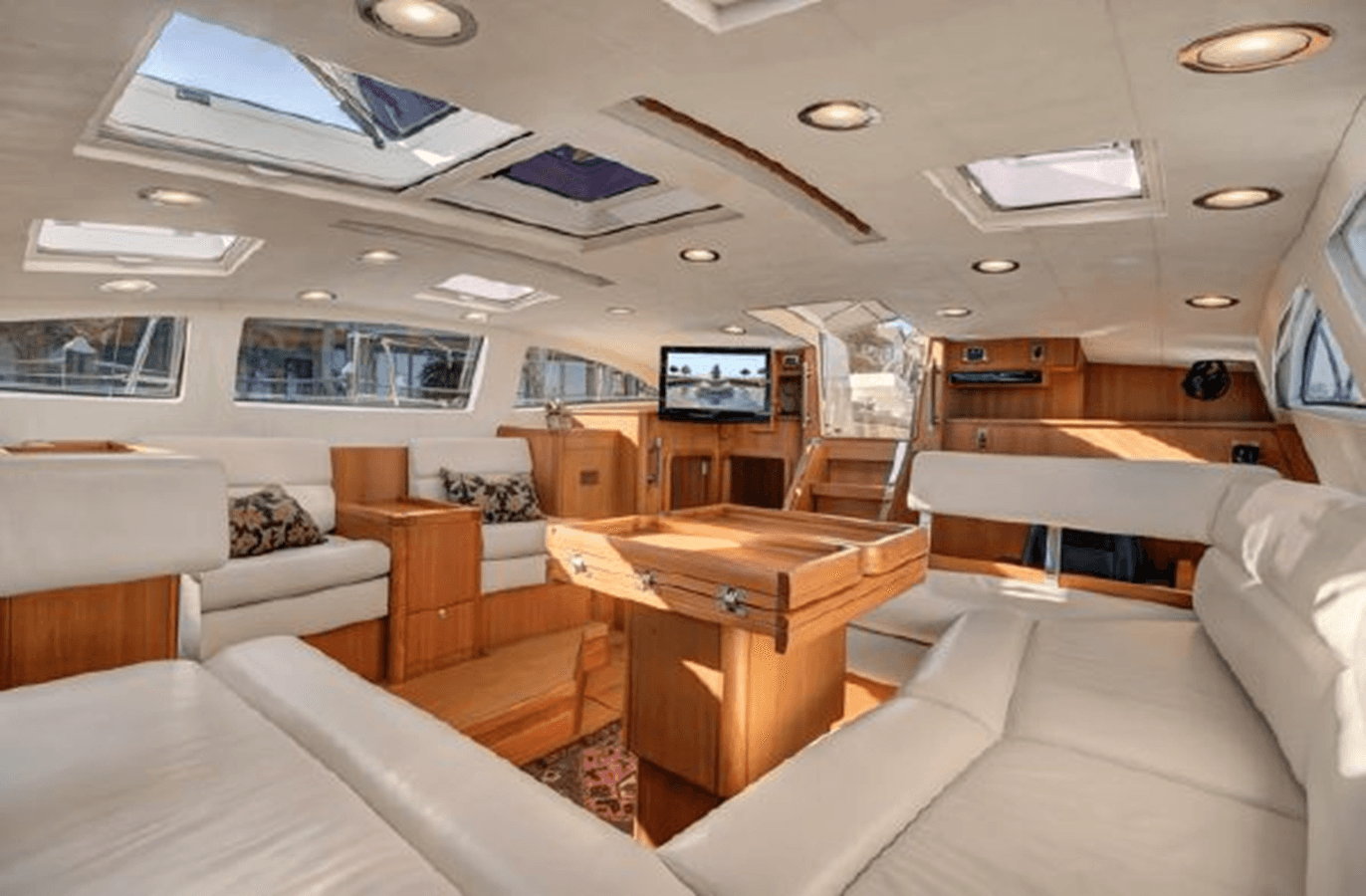
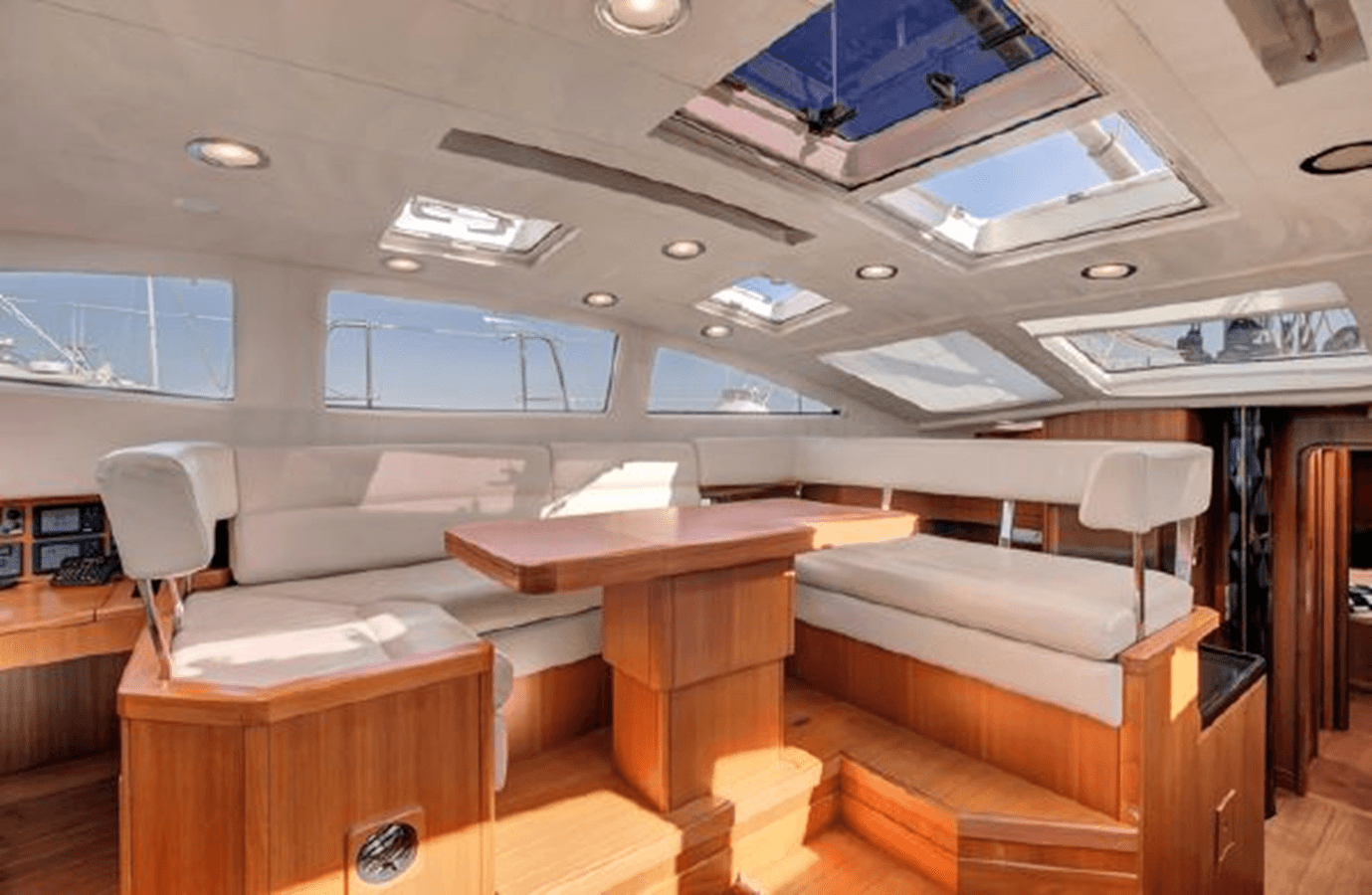
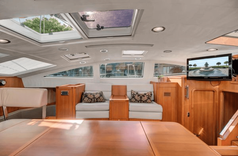
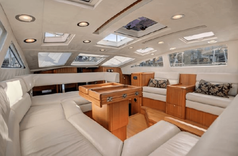
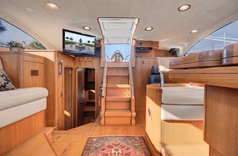
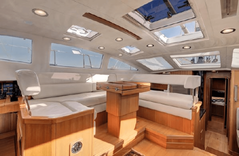
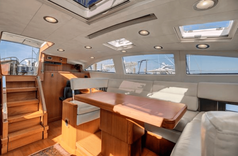
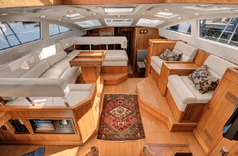
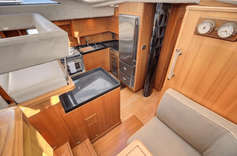
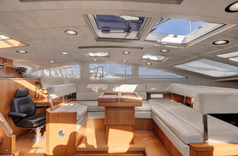
Step inside Soul Kitchen and you find an open, light, and elegant deck‑saloon interior with warm teak joinery and polished stainless accents. The raised saloon, framed by large deck‑saloon windows, expands your horizons with panoramic views normally only possible on deck. To port, a comfortable dining area wraps around a table with two folding leaves; with the push of a button the table lowers so the settee converts into a generous berth. To starboard, two inviting chairs share a side table. Shades fit the saloon windows, while overhead deck hatches include rollershade screens and blinds to manage light and airflow with ease.
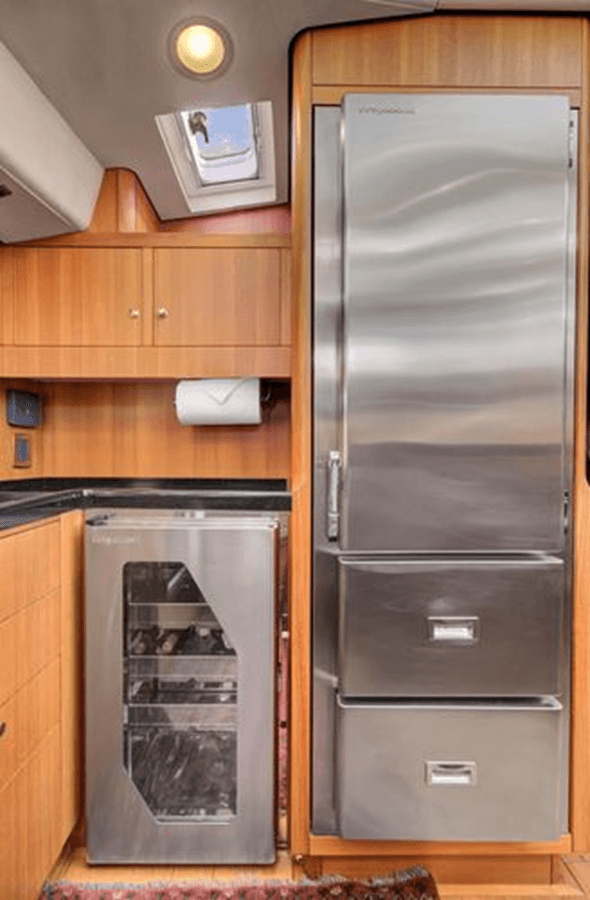
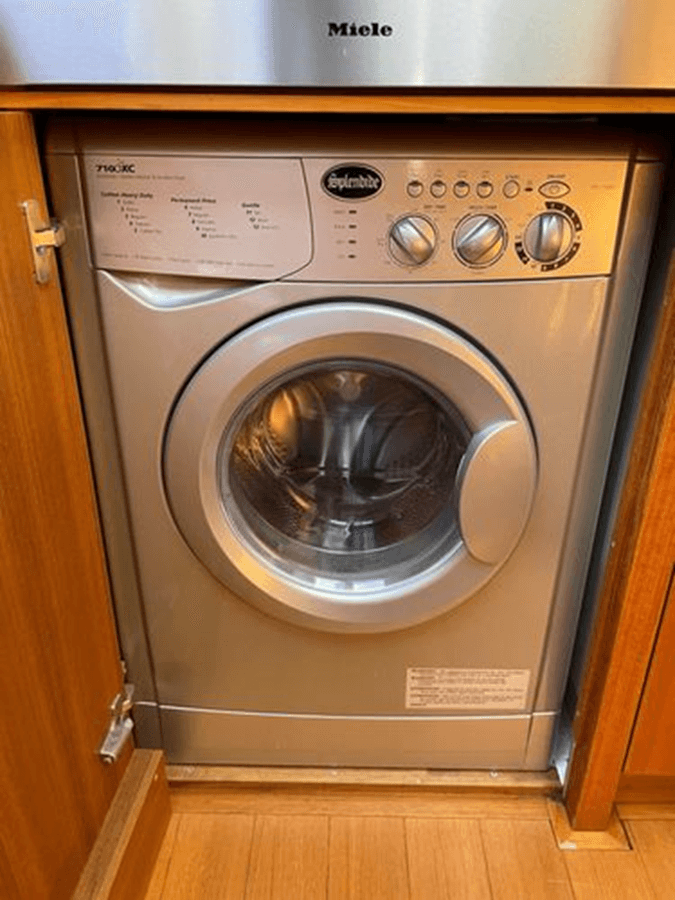
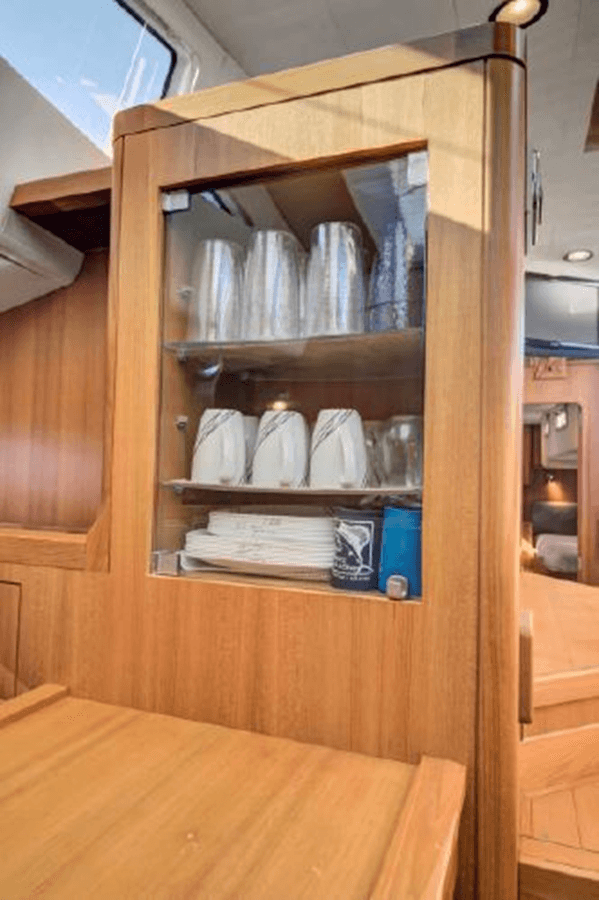
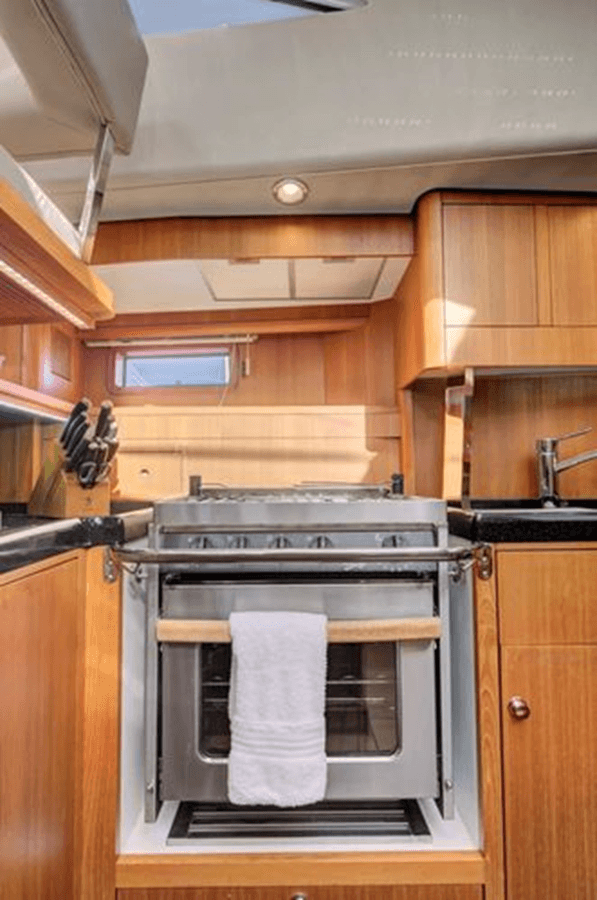
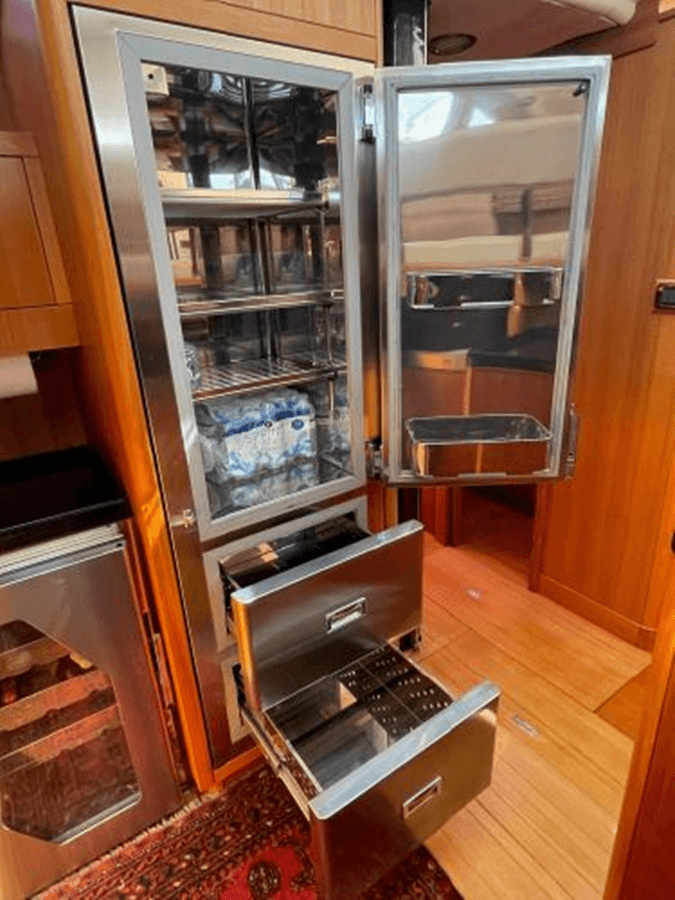
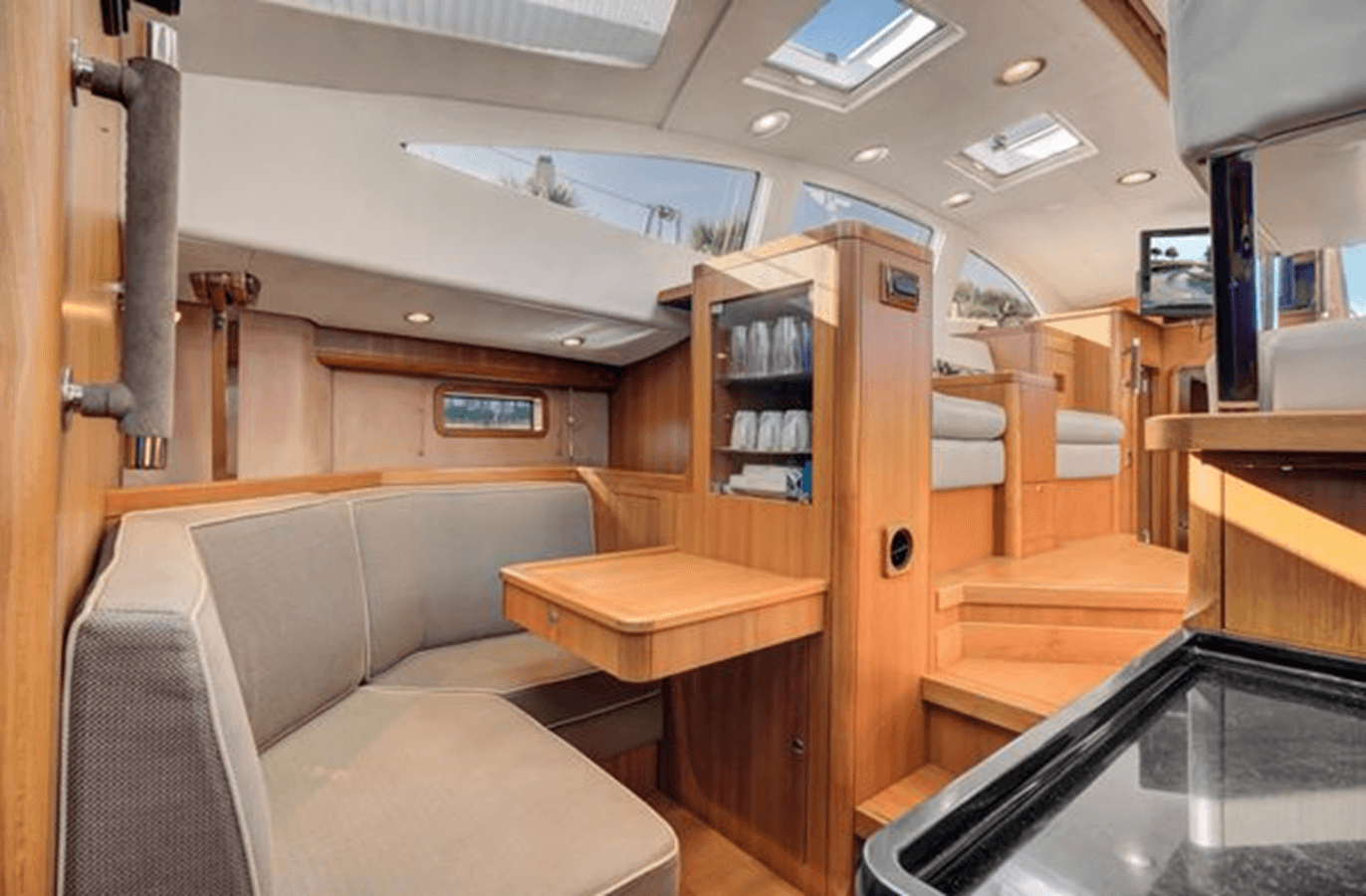
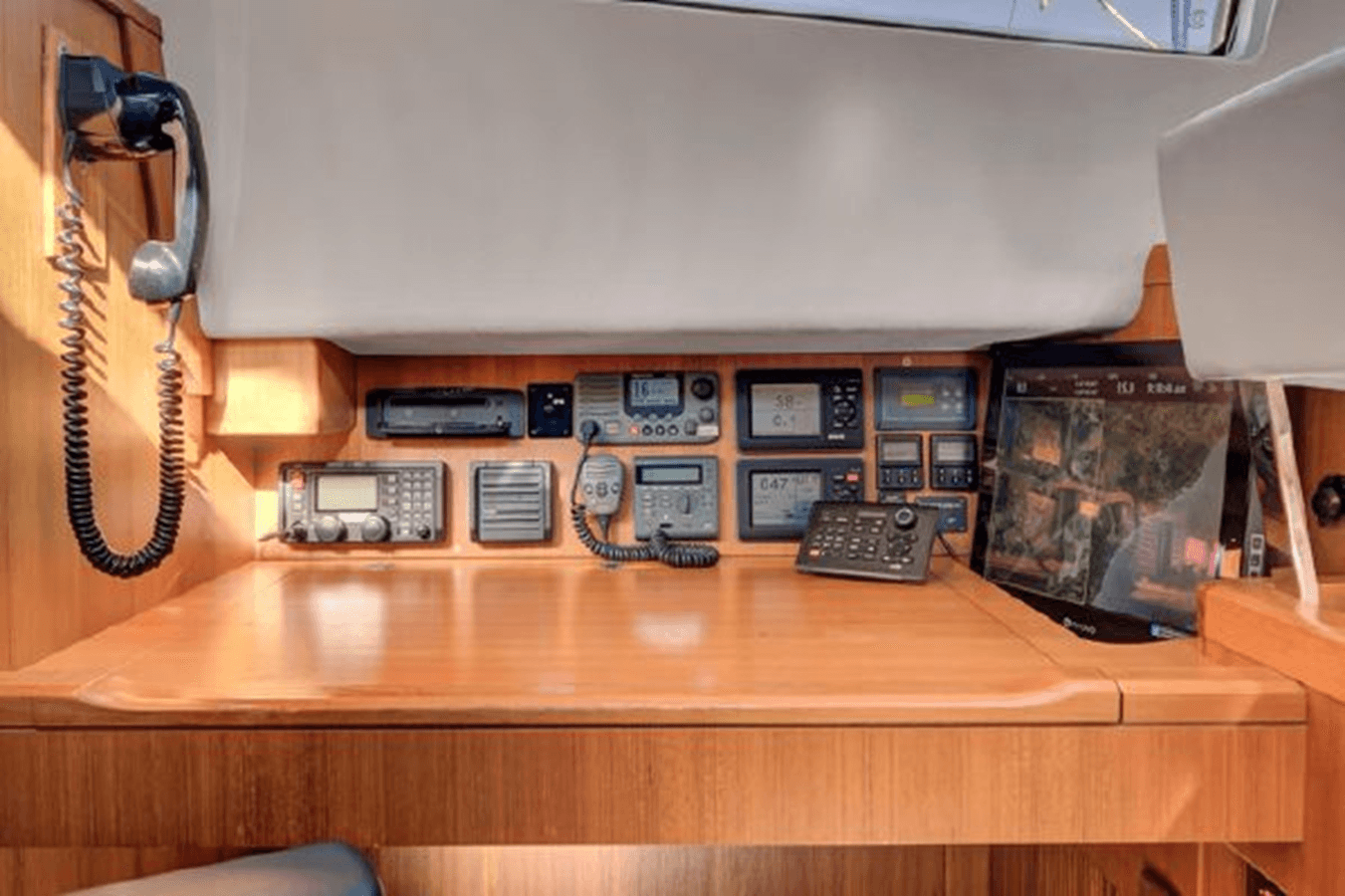
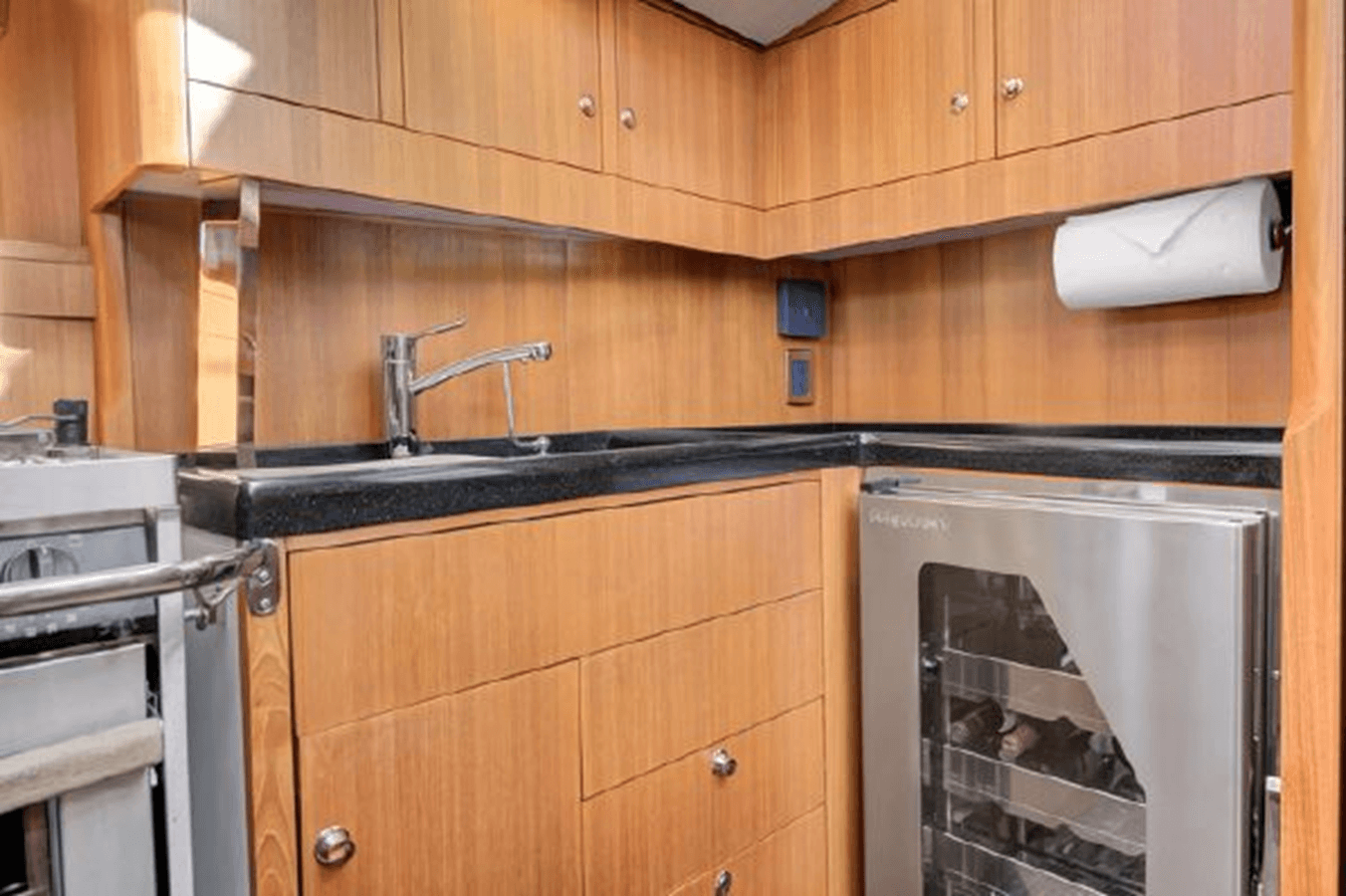
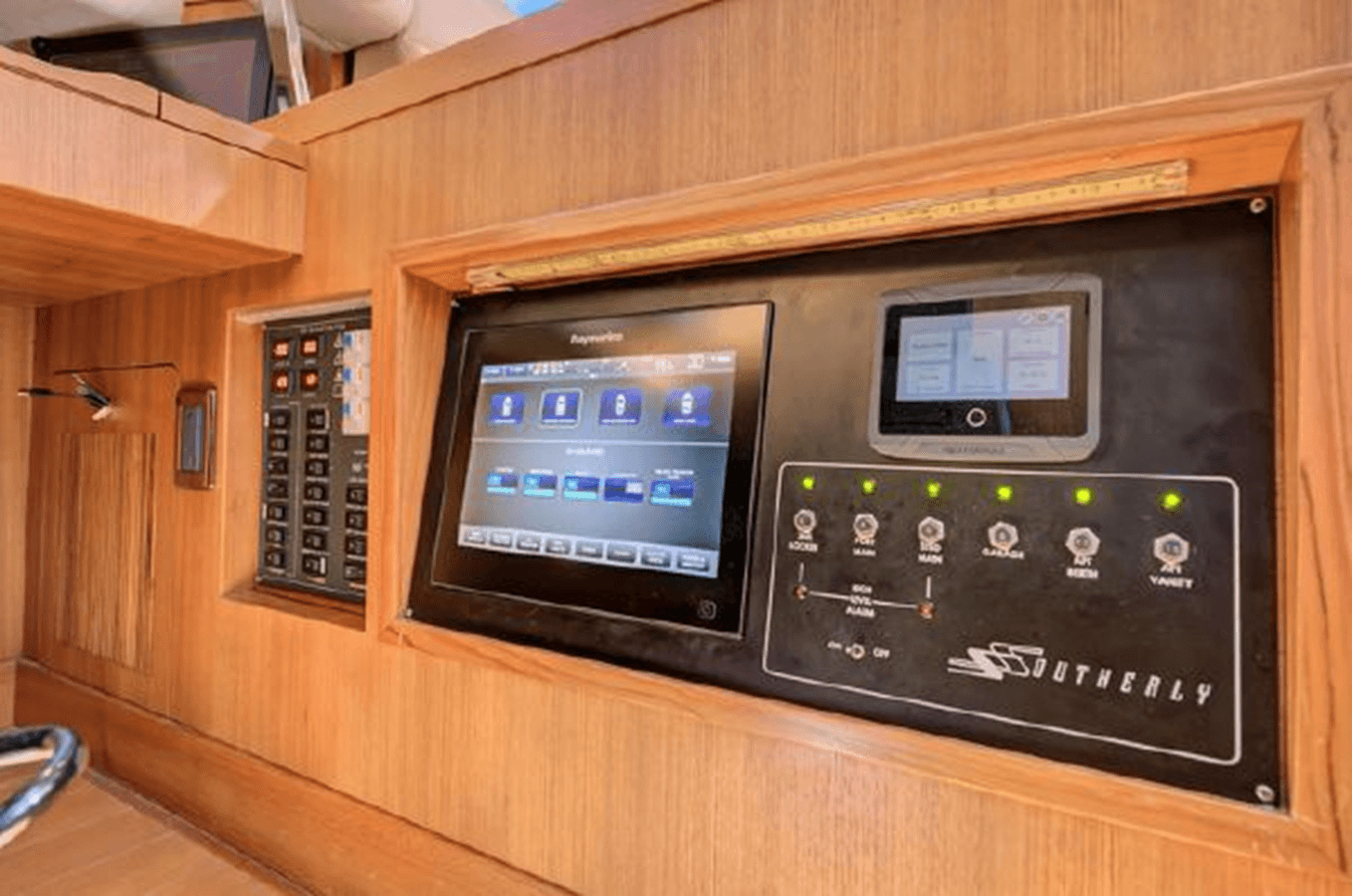
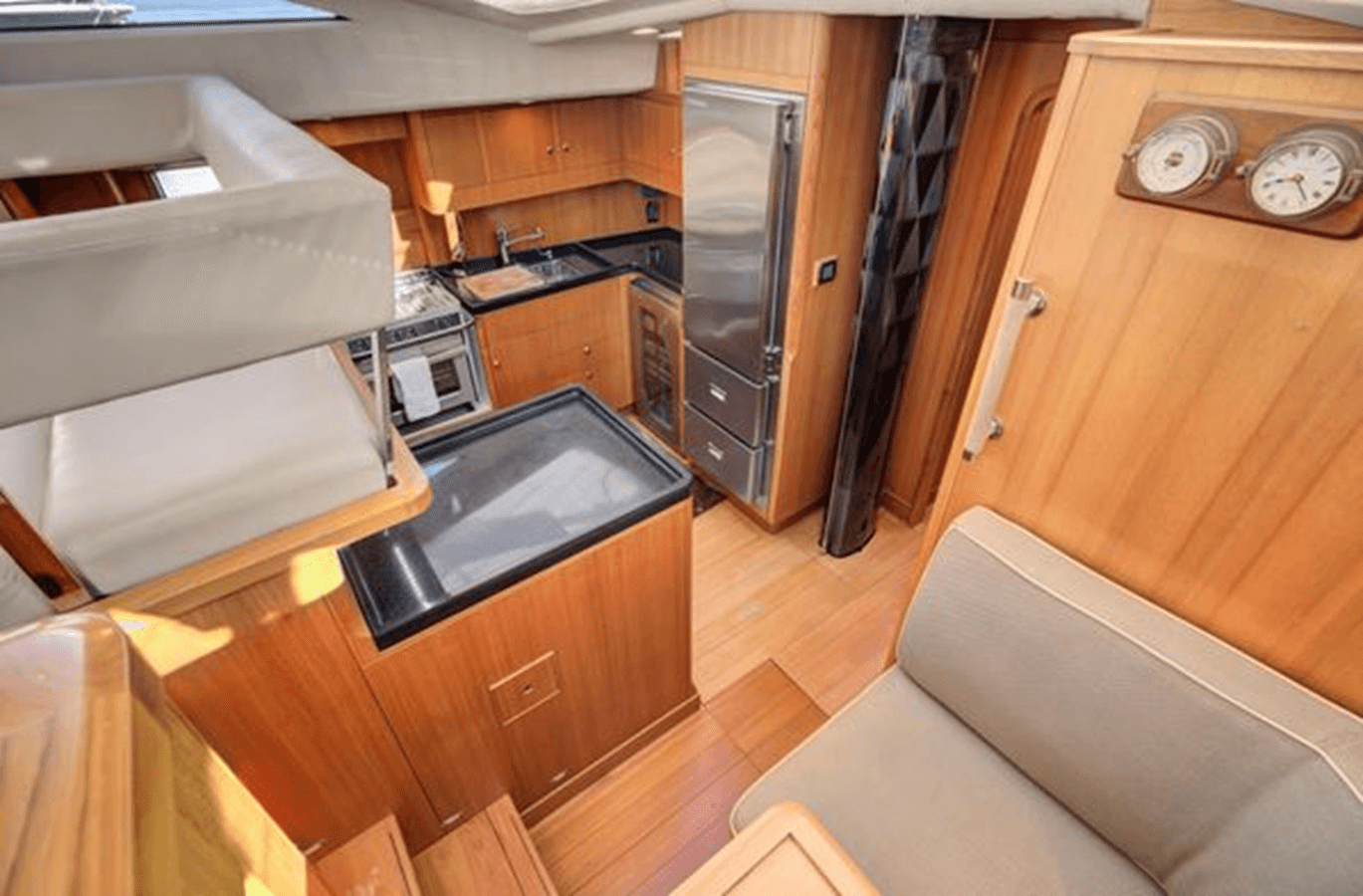
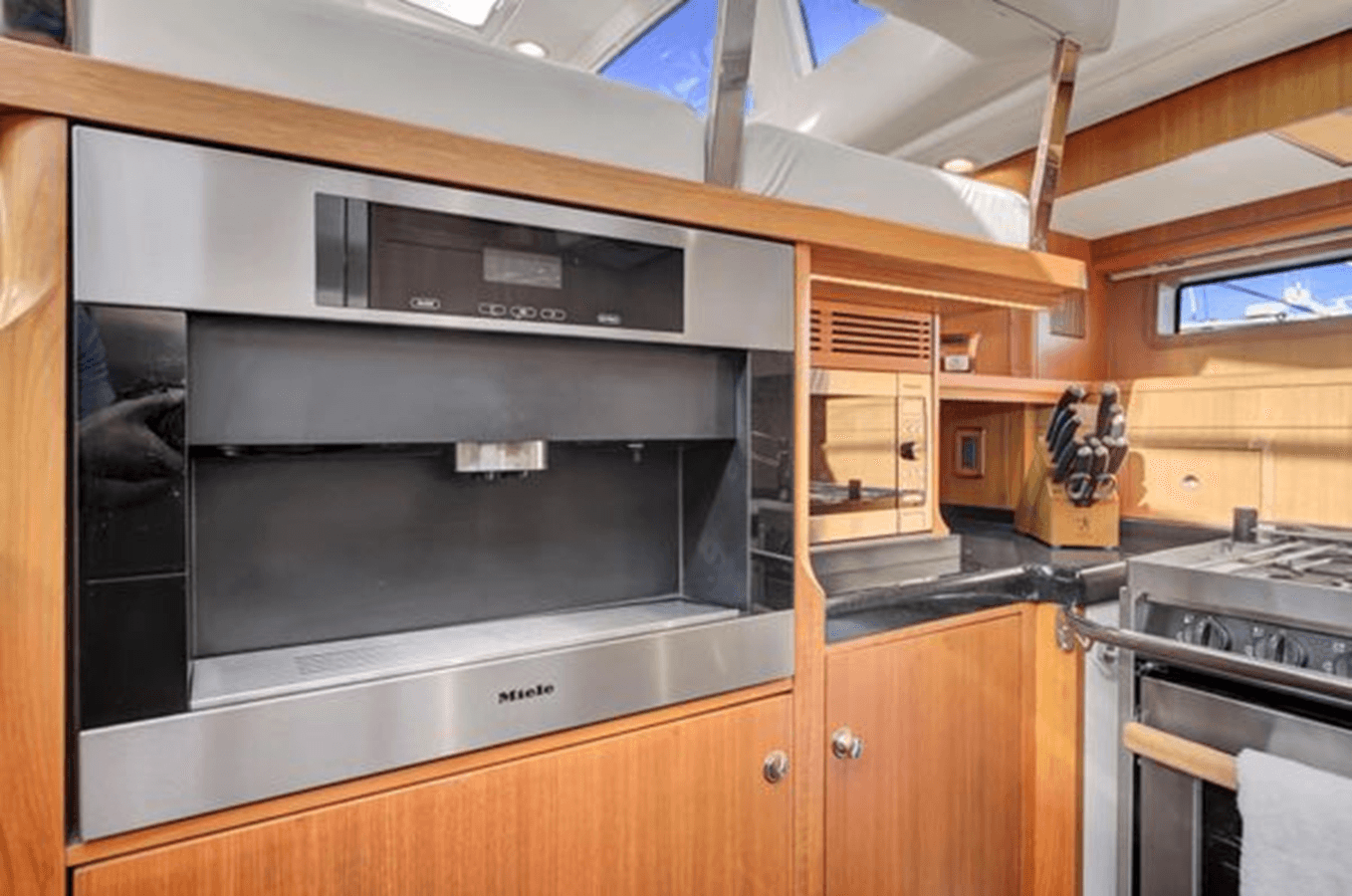
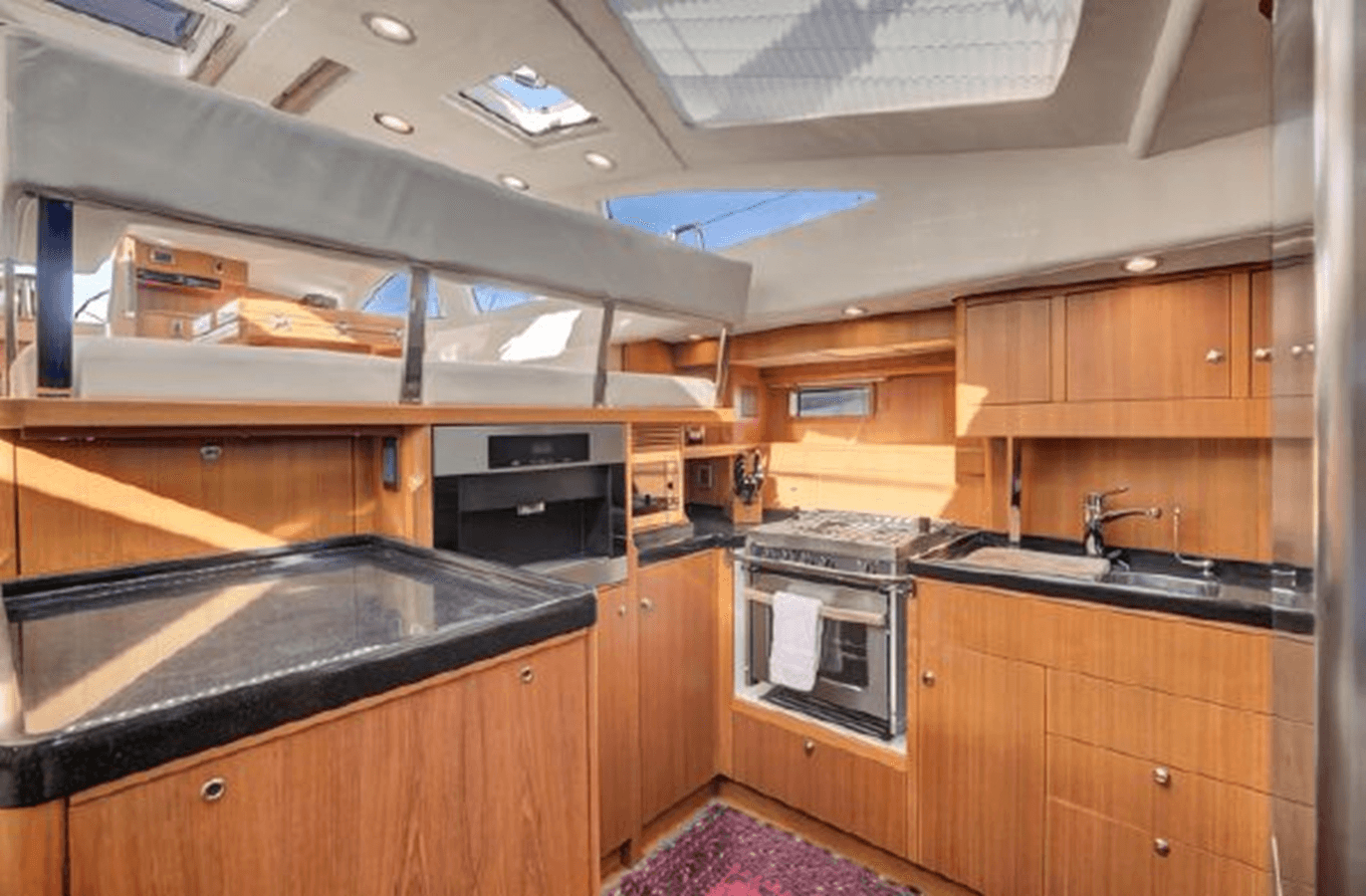
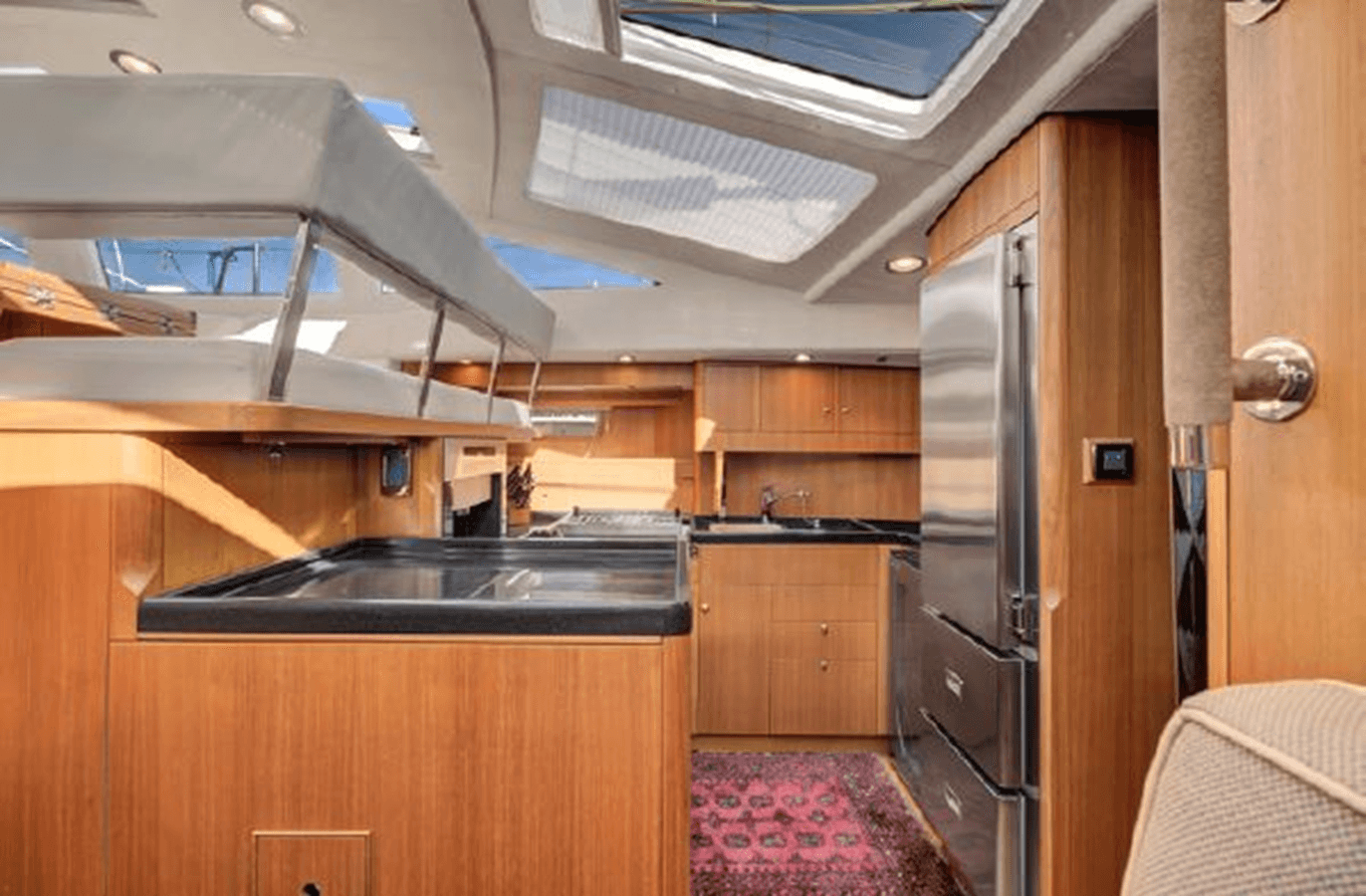
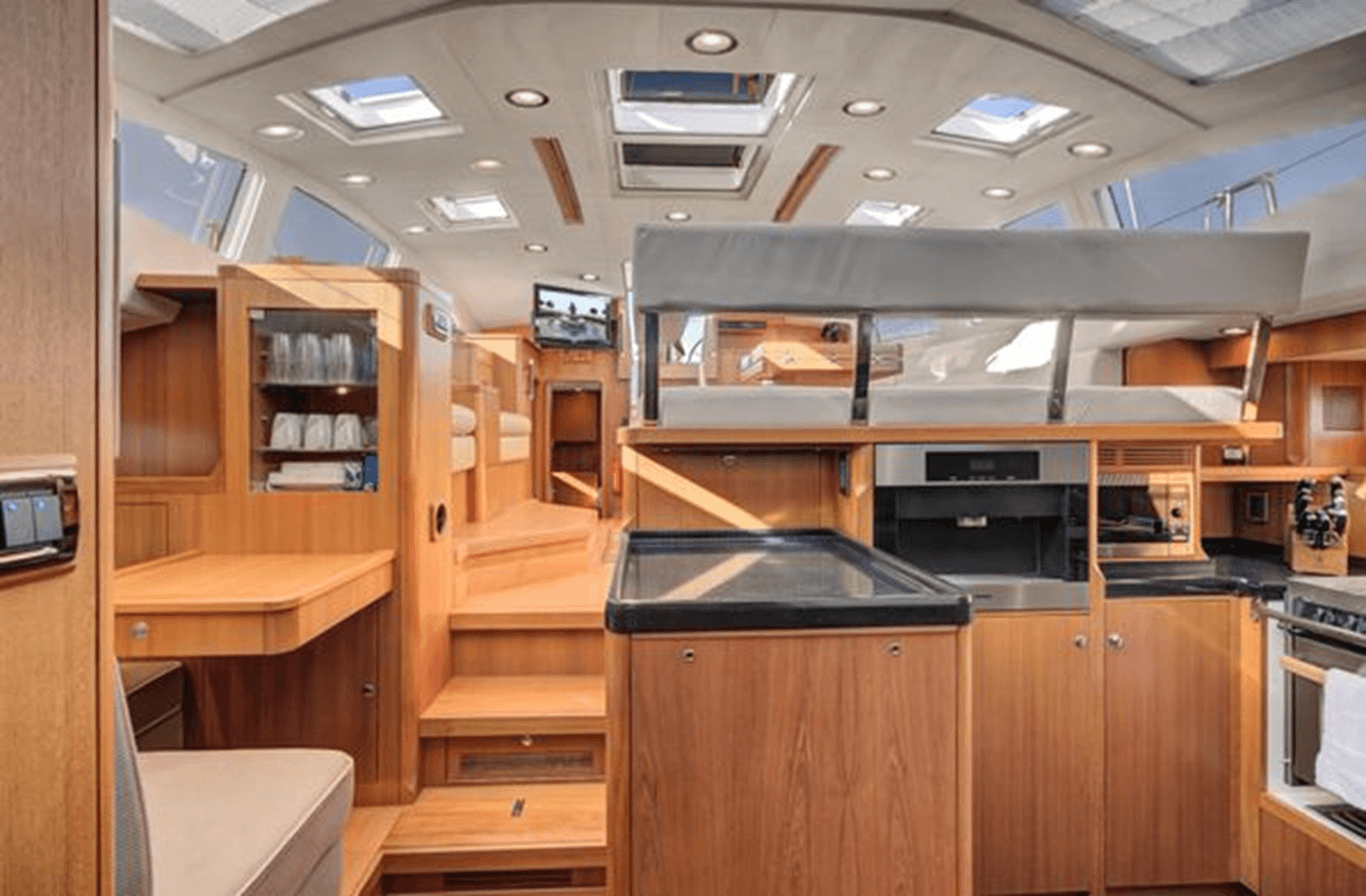
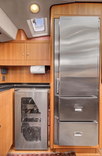
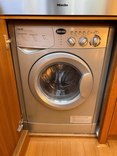
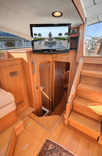
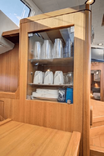
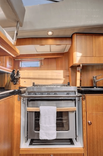
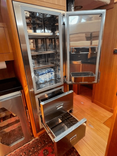
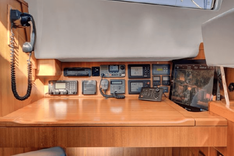
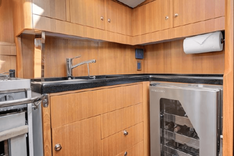
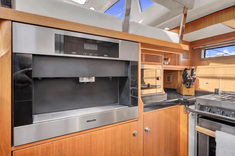
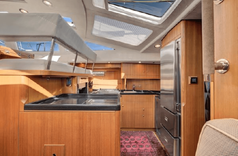
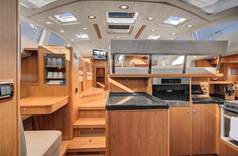
The raised navigation station sits conveniently at the base of the companionway to port, so you can look straight out through the saloon windows while seated in the comfortable captain’s chair. A proper desk integrates the primary electrical panel and electronics, right where a serious skipper wants them. Forward, just a couple of steps down, the galley becomes a highlight: abundant stowage, generous counter space, and premium stainless‑steel appliances including a Frigoboat front‑loading refrigerator with two freezer drawers, a Frigoboat eighteen‑bottle wine cooler, keel‑cooled refrigeration/freezer units, a four‑burner stove with oven, a microwave, a built‑in Miele espresso/coffee machine, and a Splendide 7100XC automatic washer and ventless dryer. Twin stainless sinks include a fitted chopping board, LPG gas and carbon‑monoxide detection add safety, an Aquafilta water filter polishes your drinking water, and the watermaker controls are sensibly located here. Adjacent to the galley, a cozy nook with seating, a table, and a glass cabinet creates a second social area that connects naturally to the saloon, adding space and encouraging conversation.
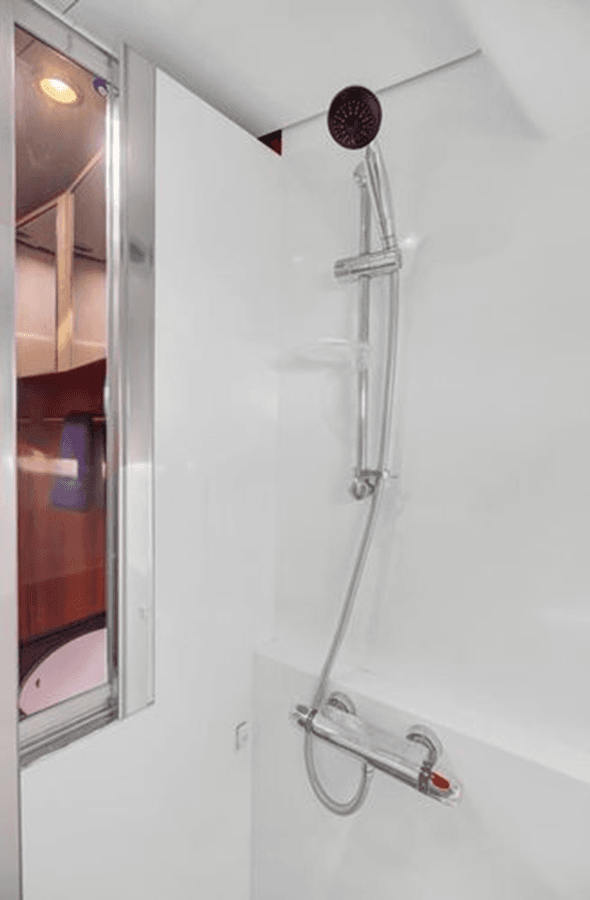
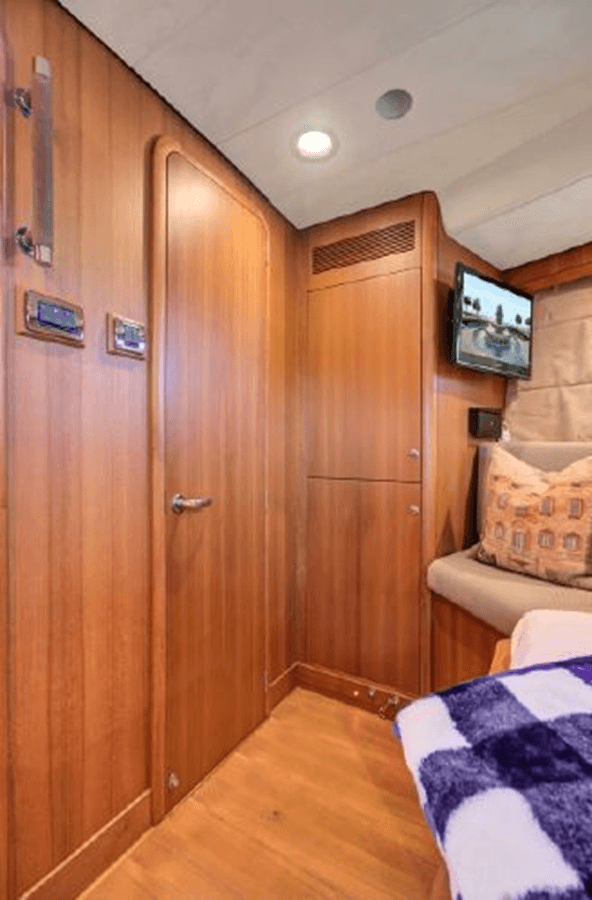
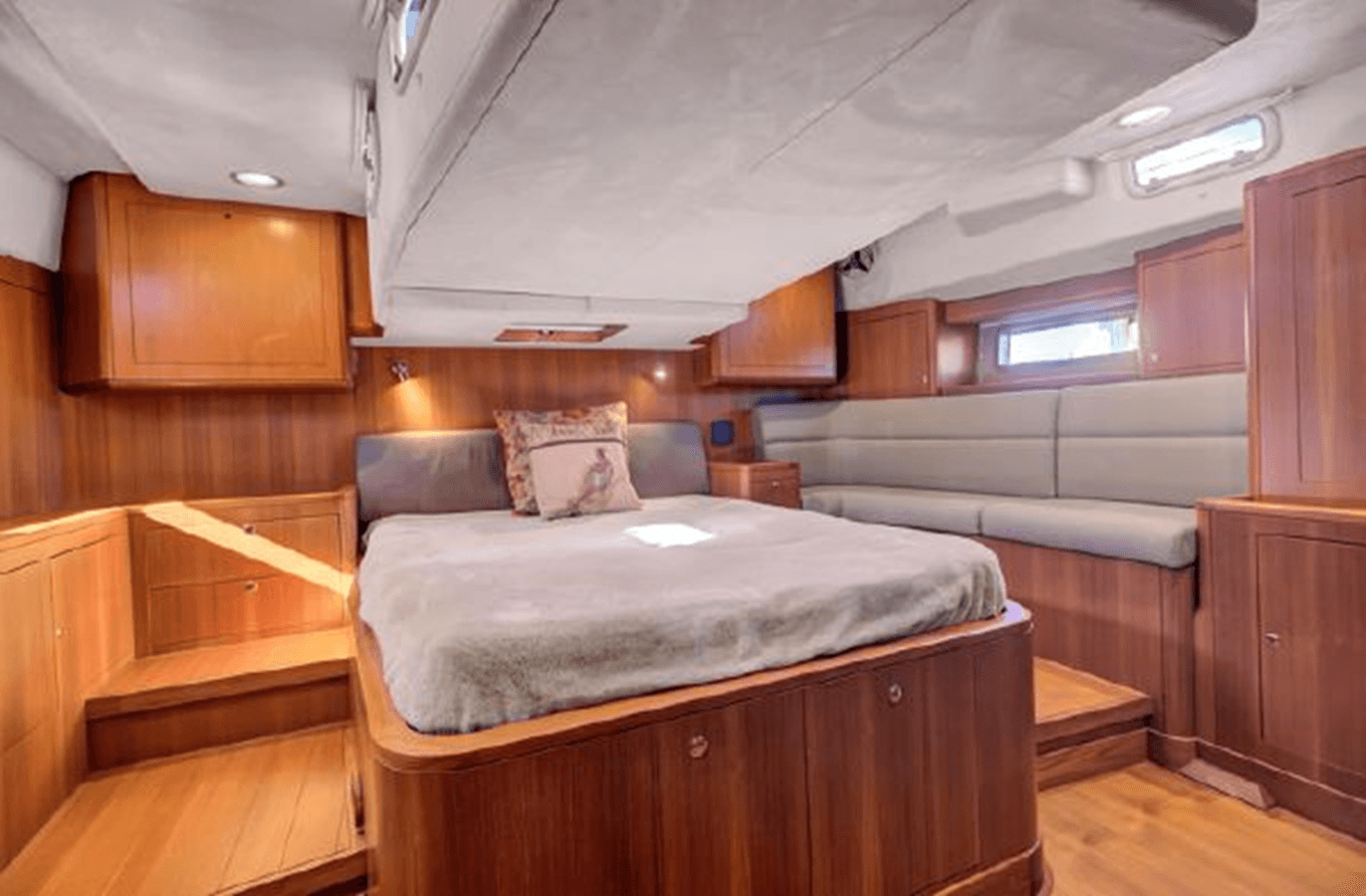
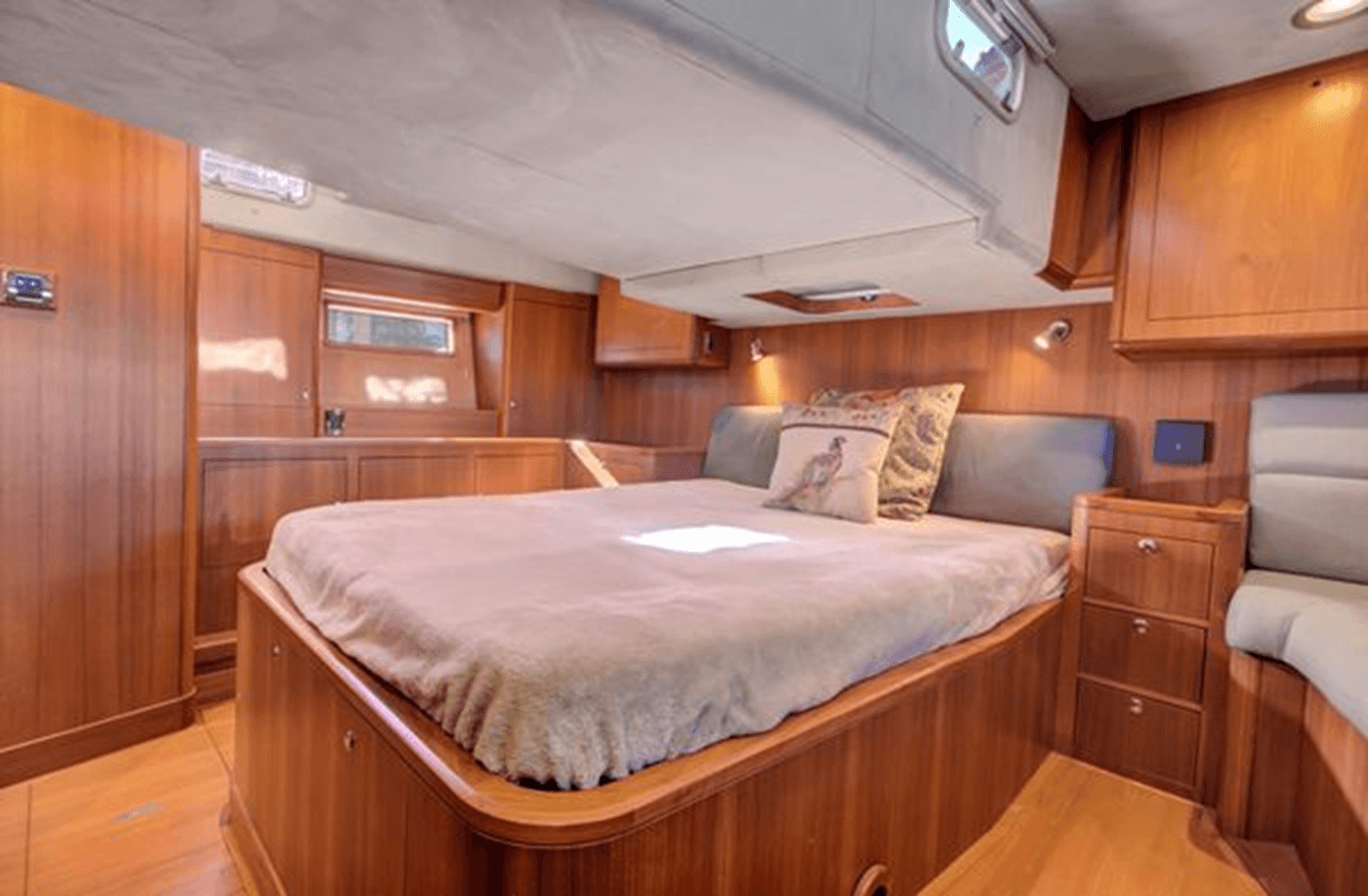
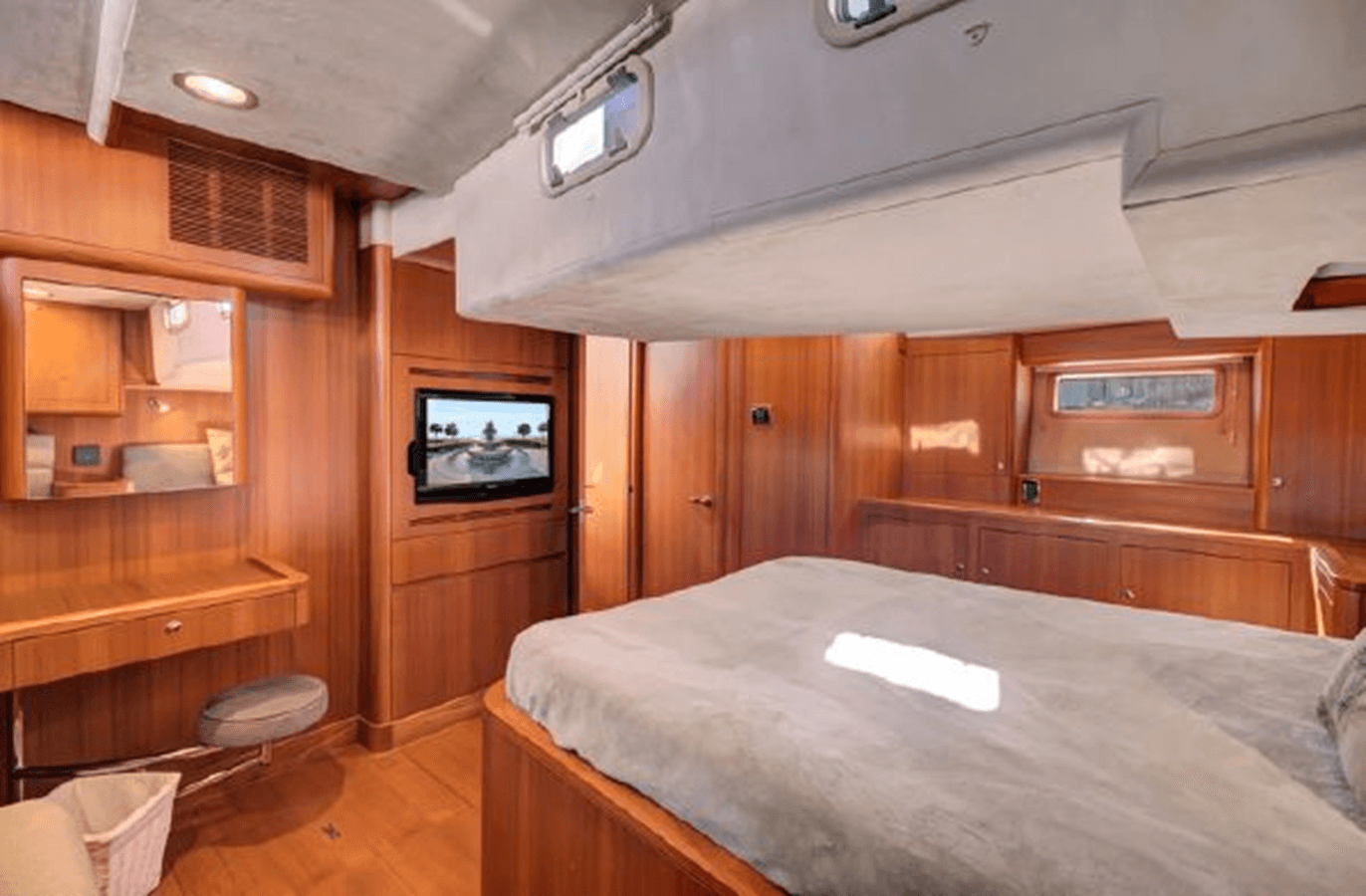
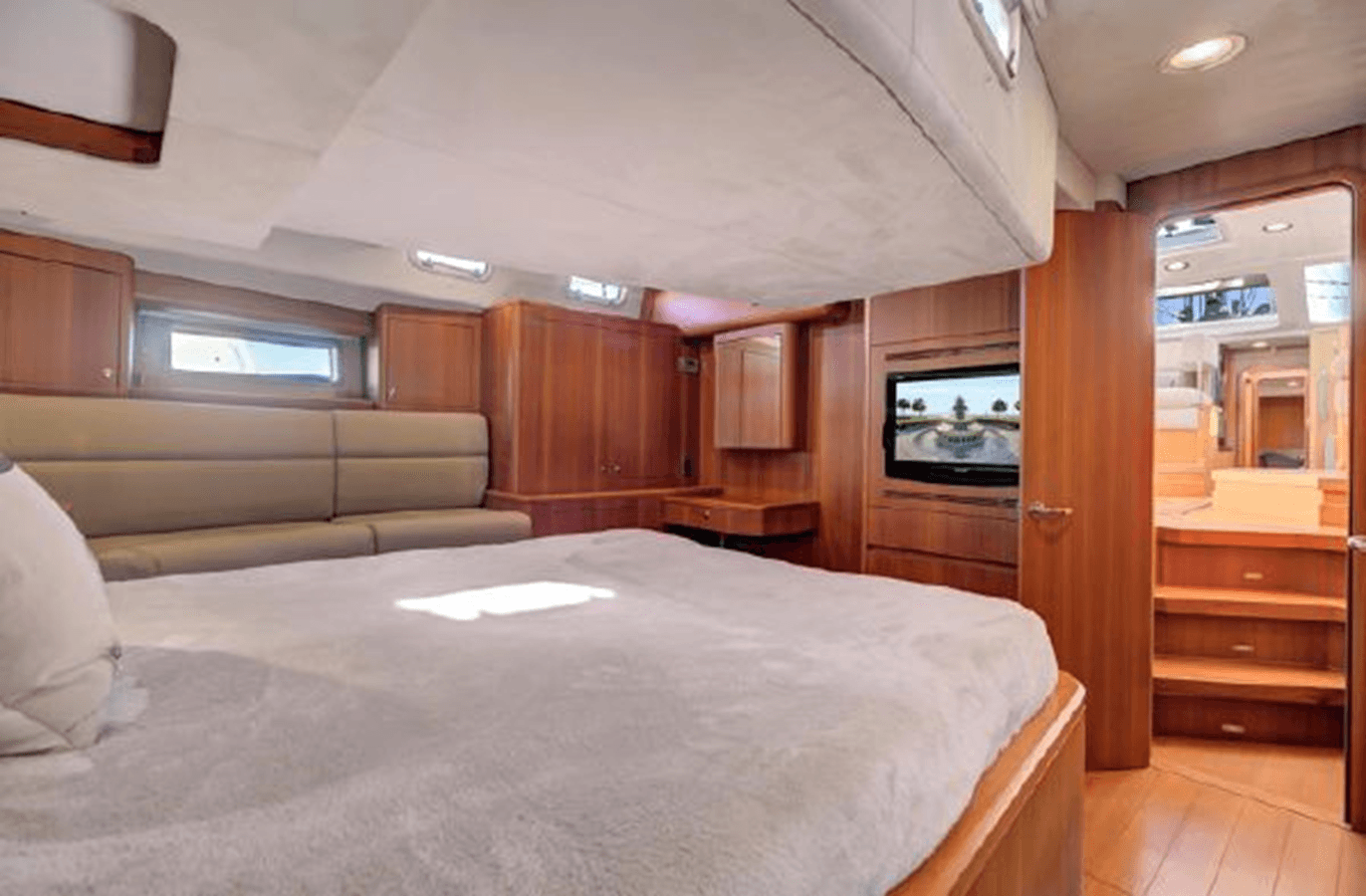
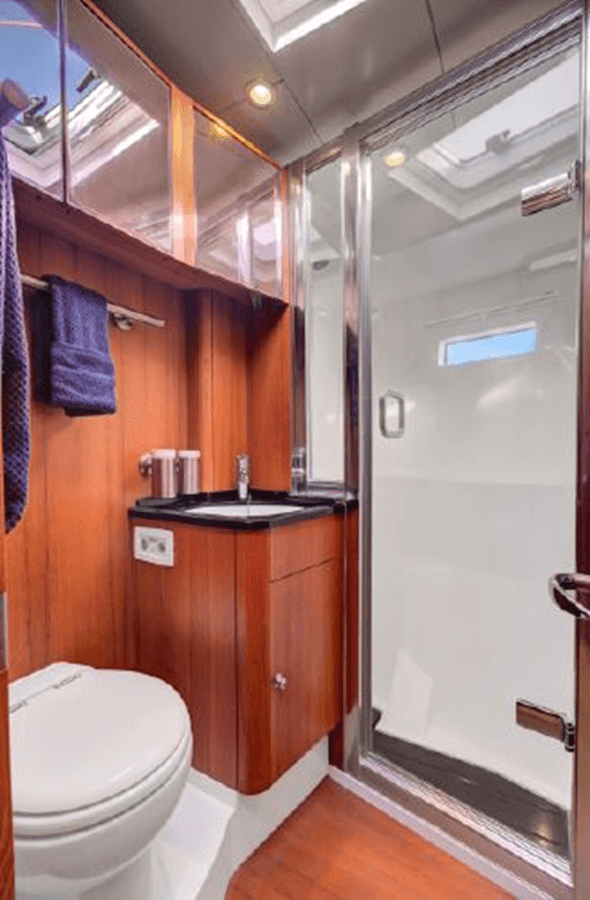
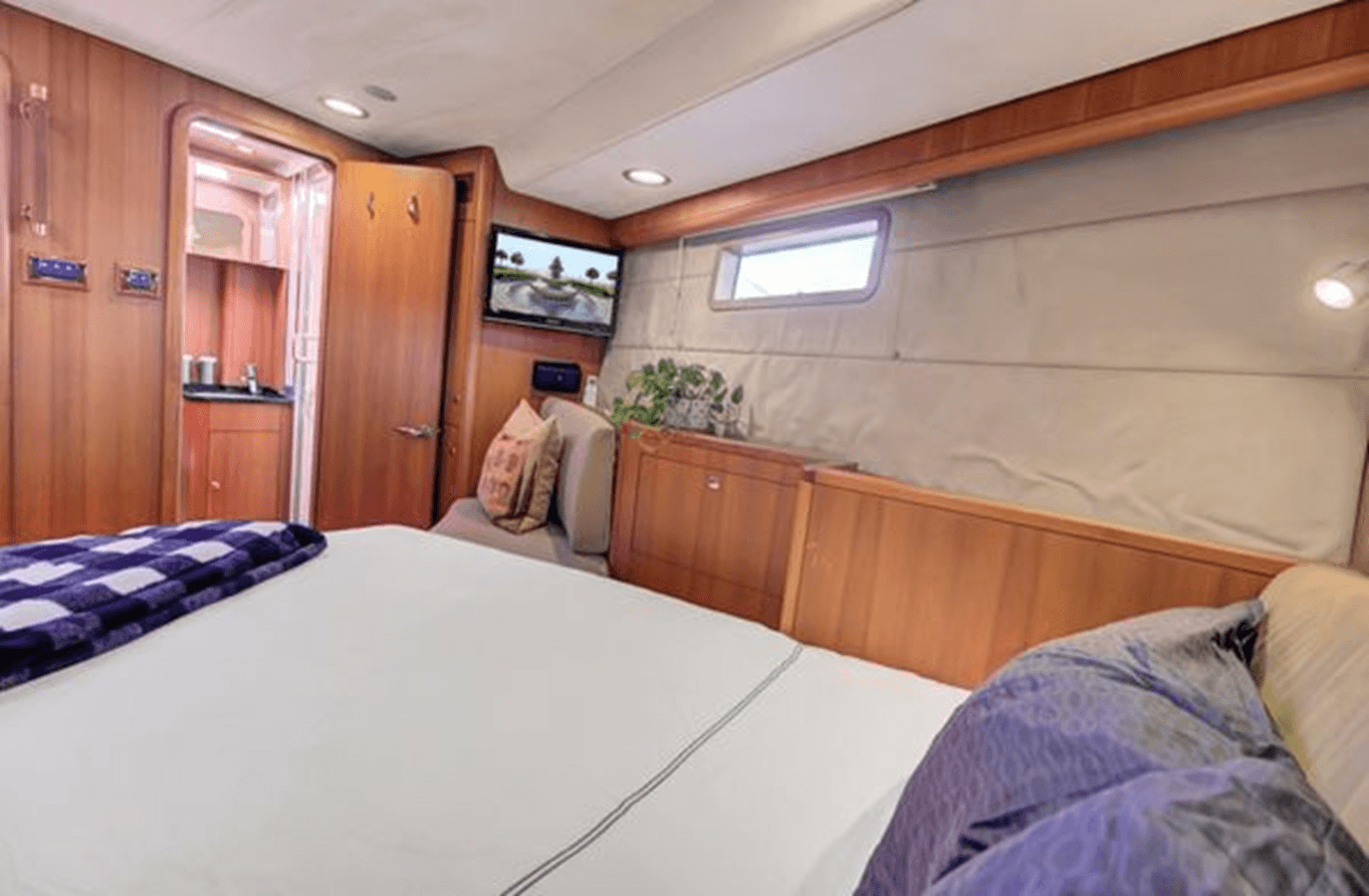
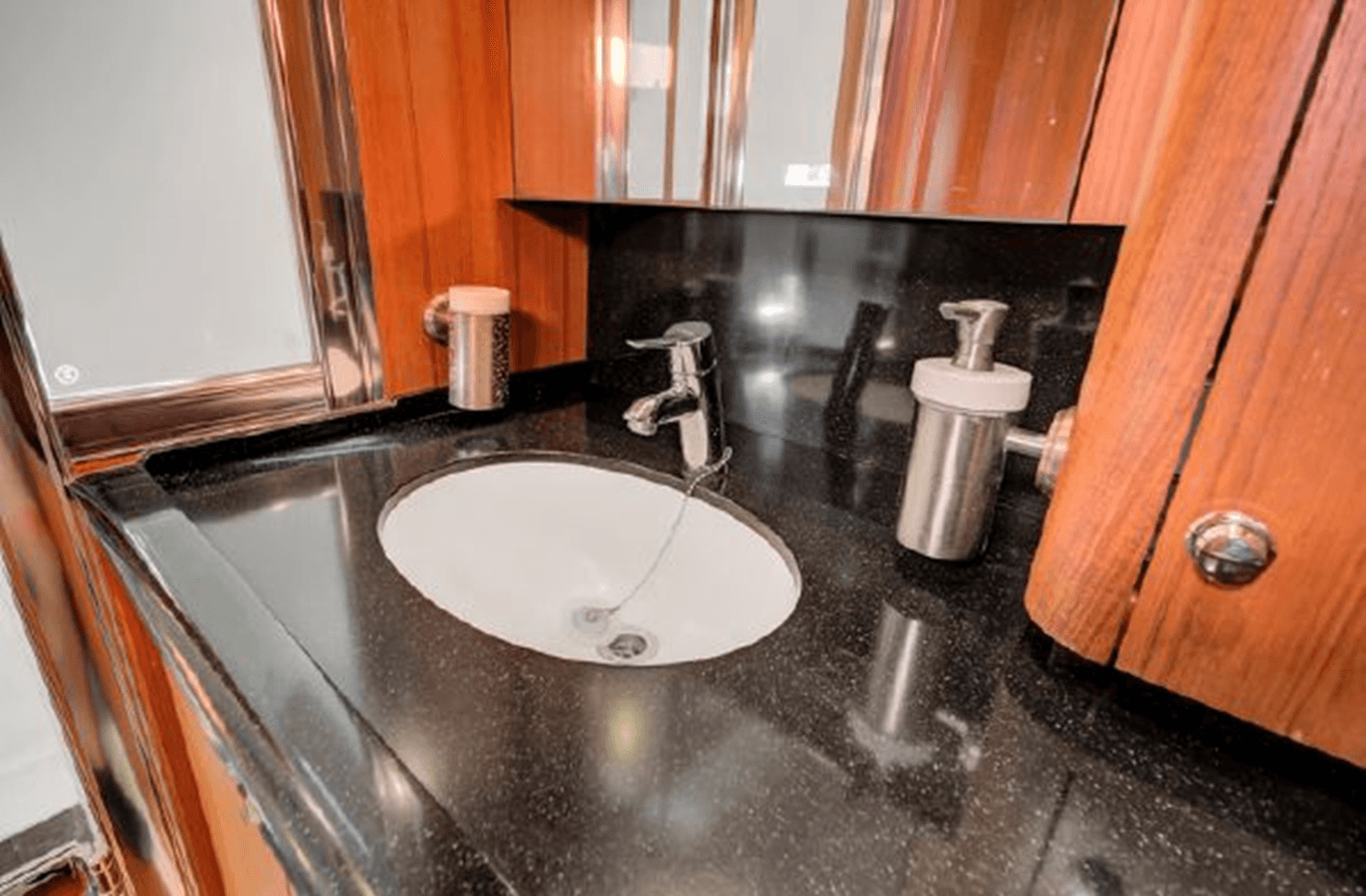
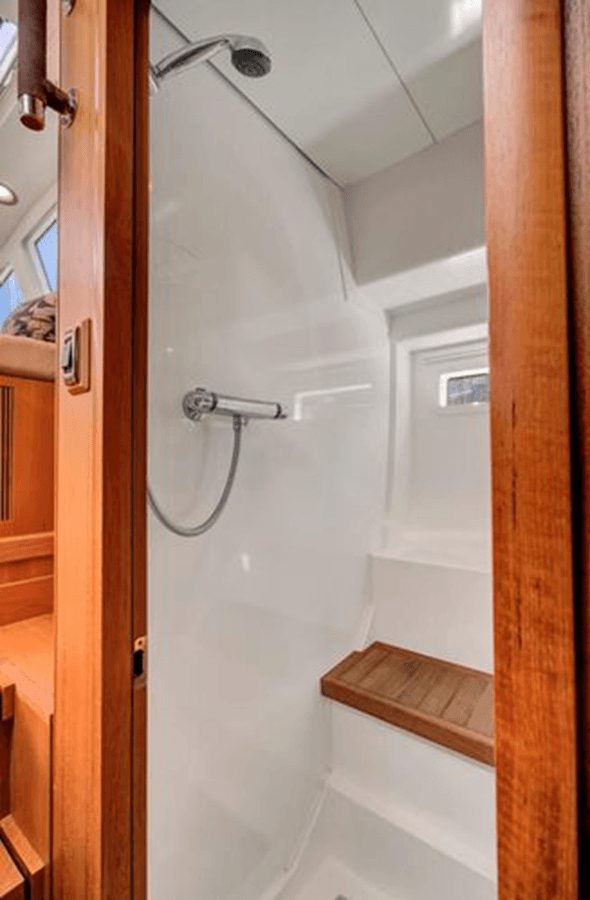
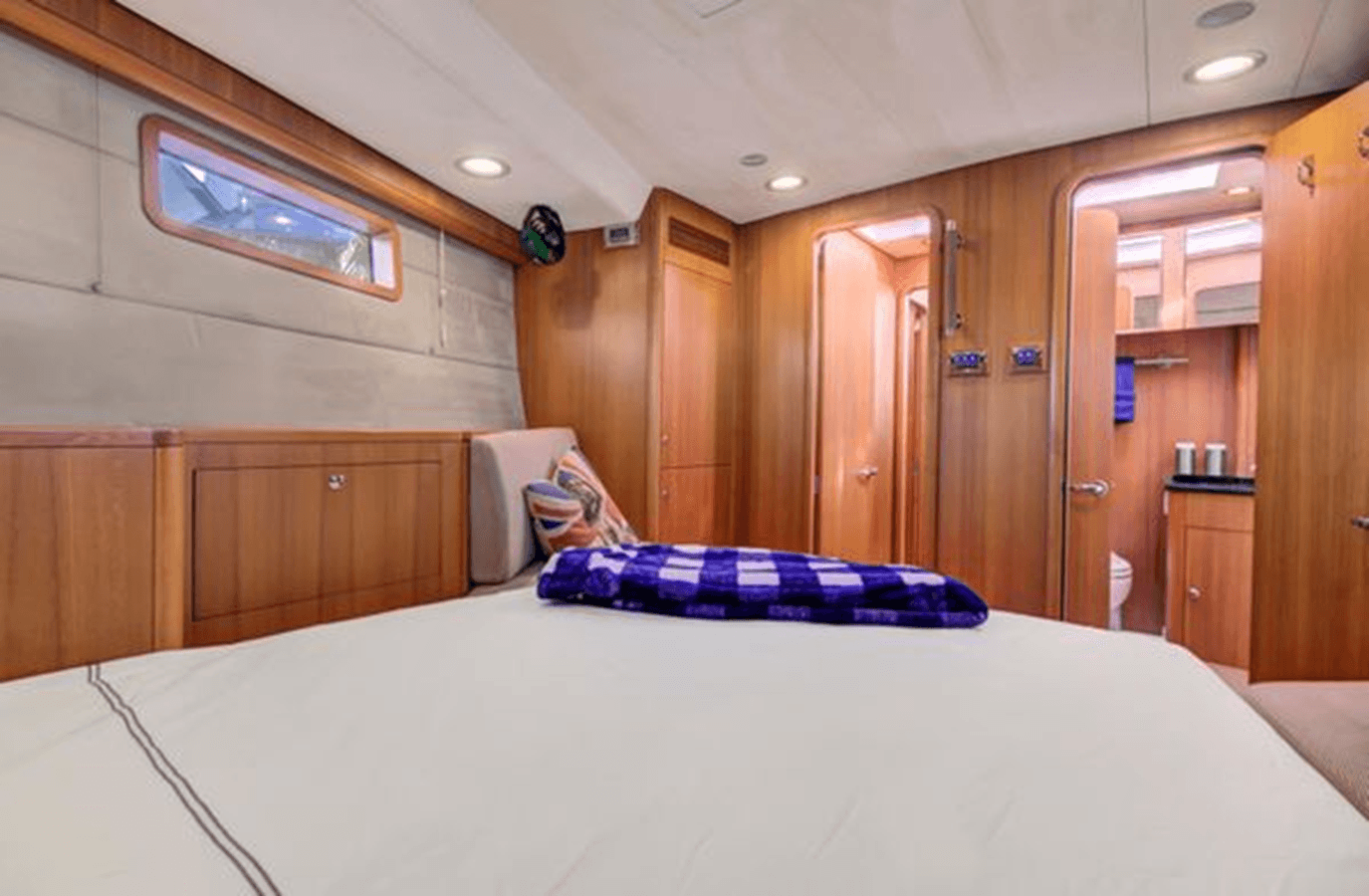
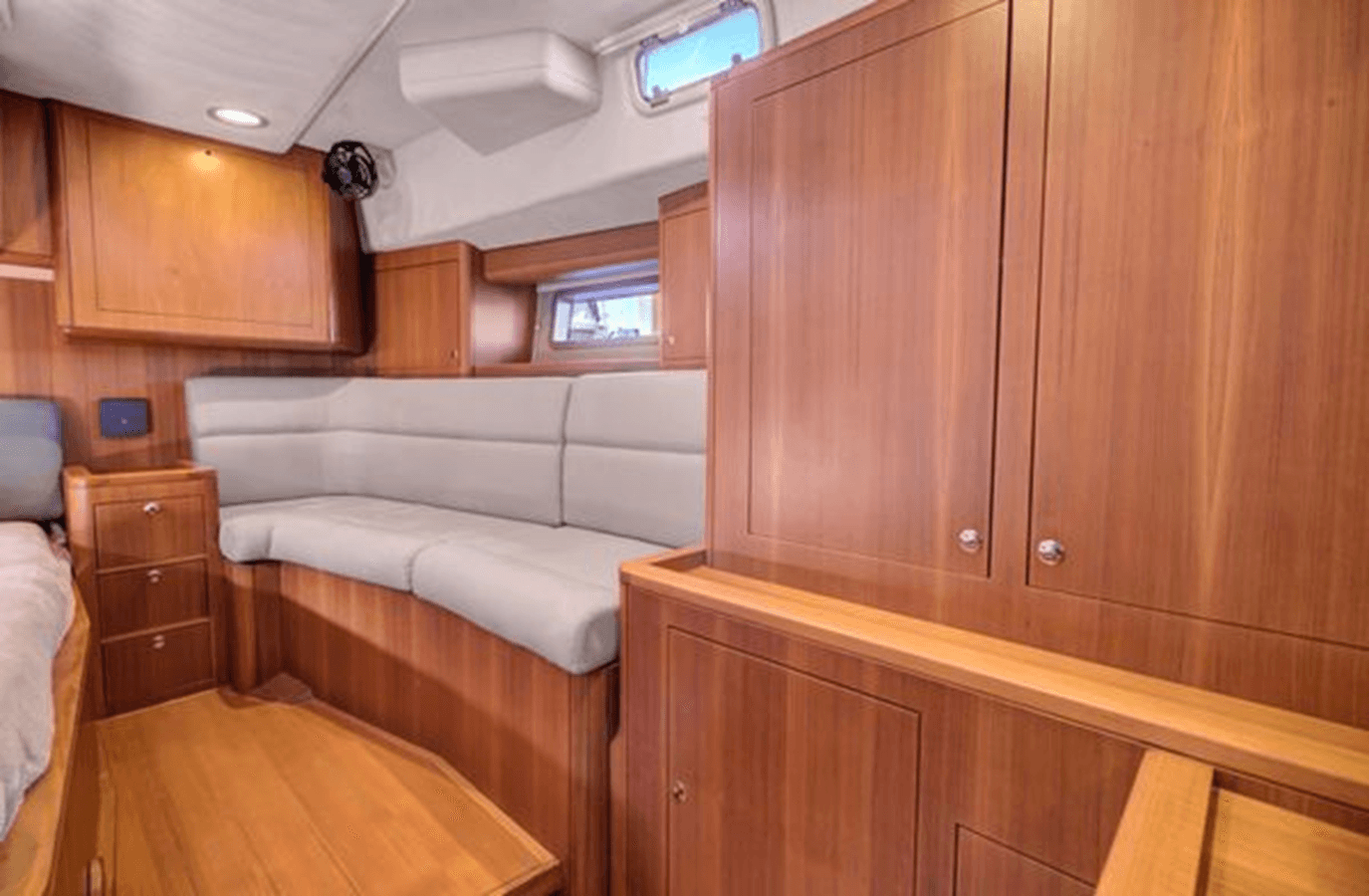
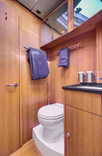
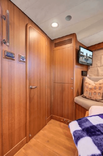
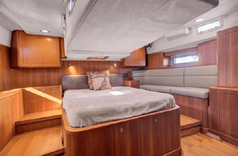
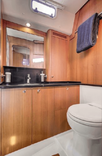
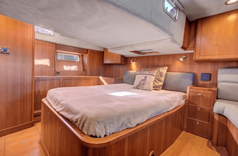
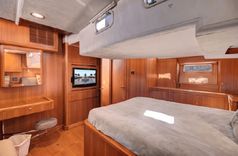
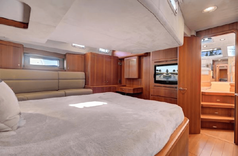
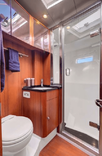
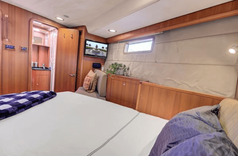
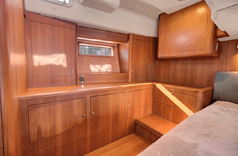
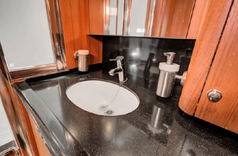
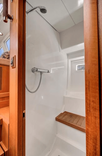
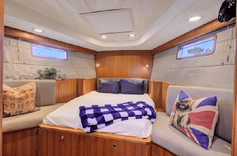
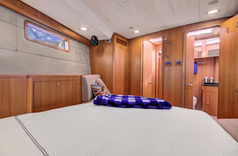
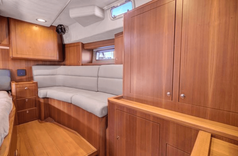
Aft of the saloon to starboard, the primary owner’s suite welcomes you with a centerline queen berth flanked by nightstands, a full‑size settee to port with back cushions, plentiful natural light from windows to port and starboard, opening ports, and a large overhead hatch above the berth. Stowage is generous, with cabinets, shelves, hanging lockers, and drawers; a vanity with mirror and seating sits just forward of the settee, and a TV faces the bed. The dedicated aft head feels spacious and well finished, with attractive joinery, Corian counters, and a separate shower with a teak seat behind a handsome stainless‑and‑glass door. Access is smartly arranged: one door leads between the saloon and shower—ideal when shedding wet foul‑weather gear—and another door connects the aft cabin to the head.
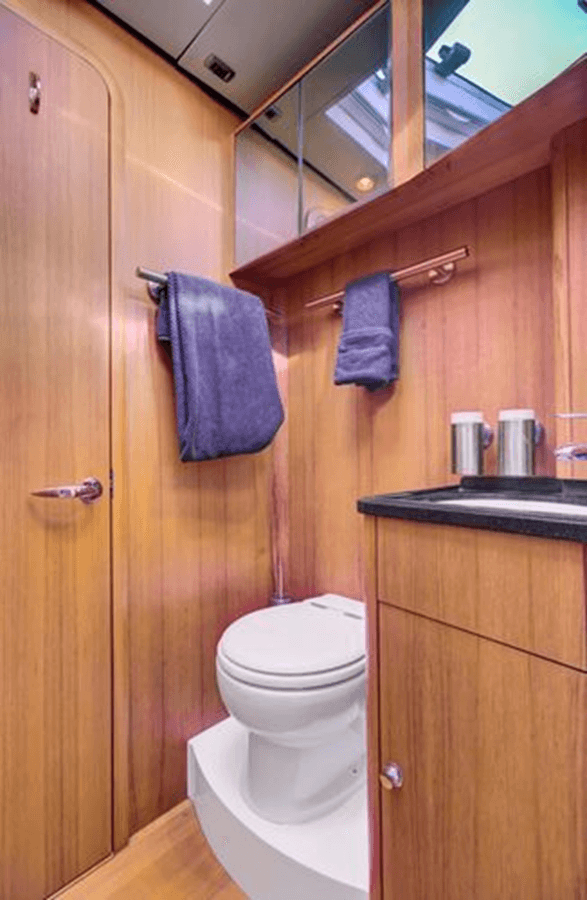
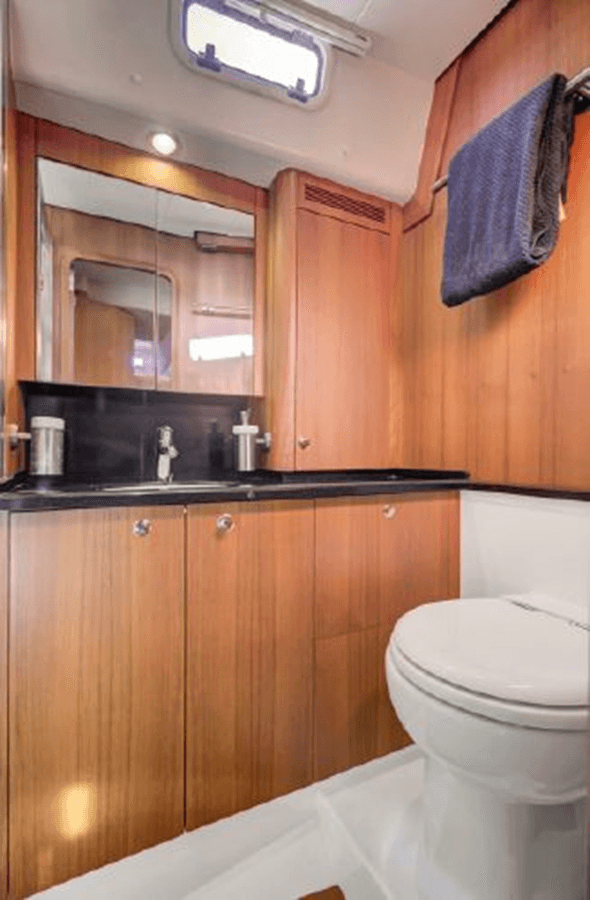
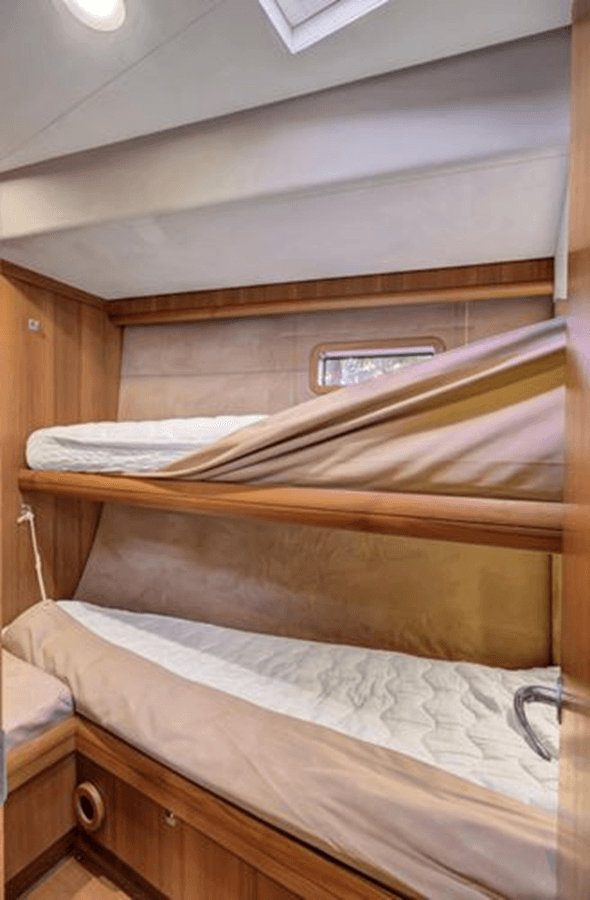
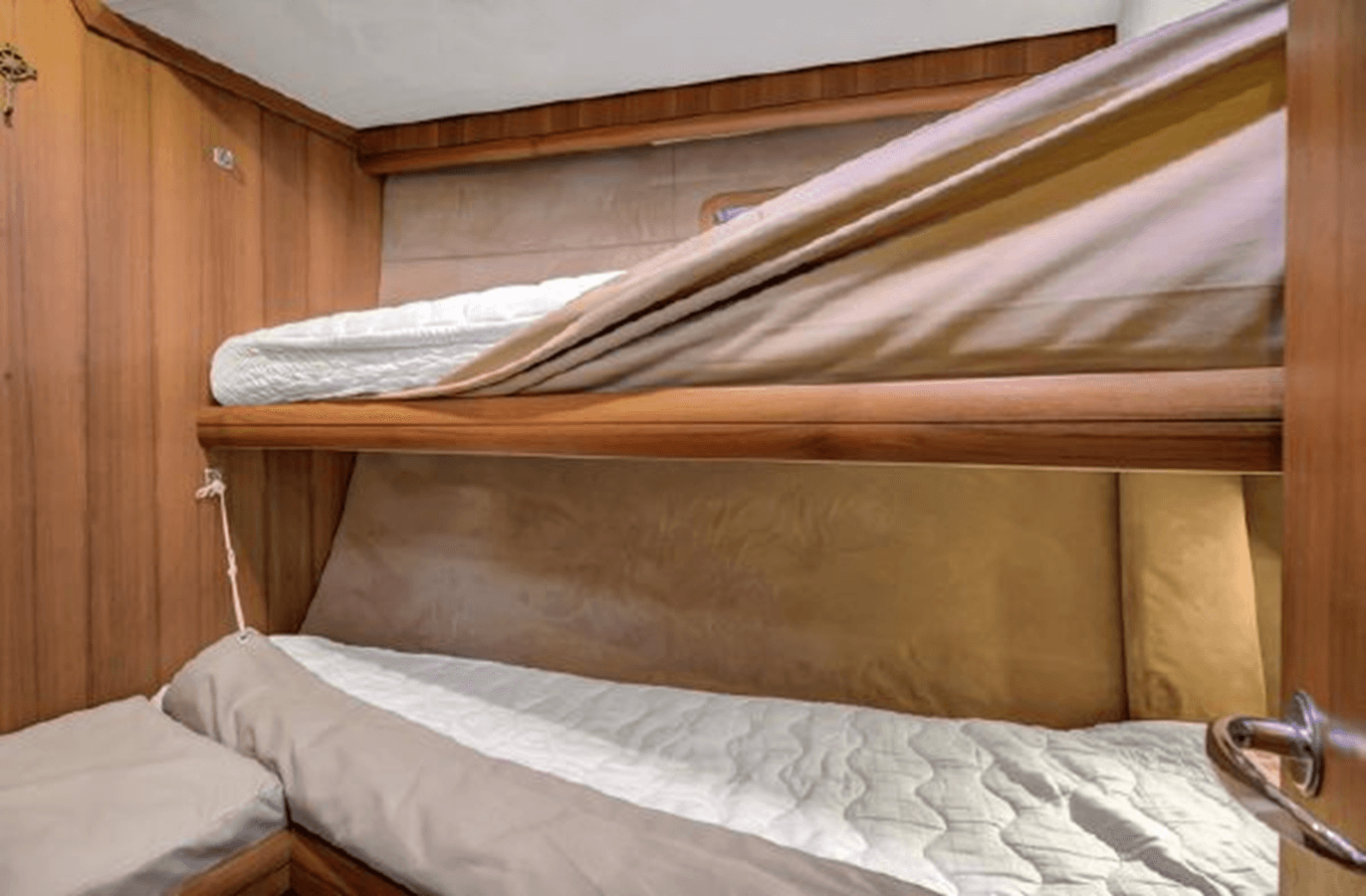
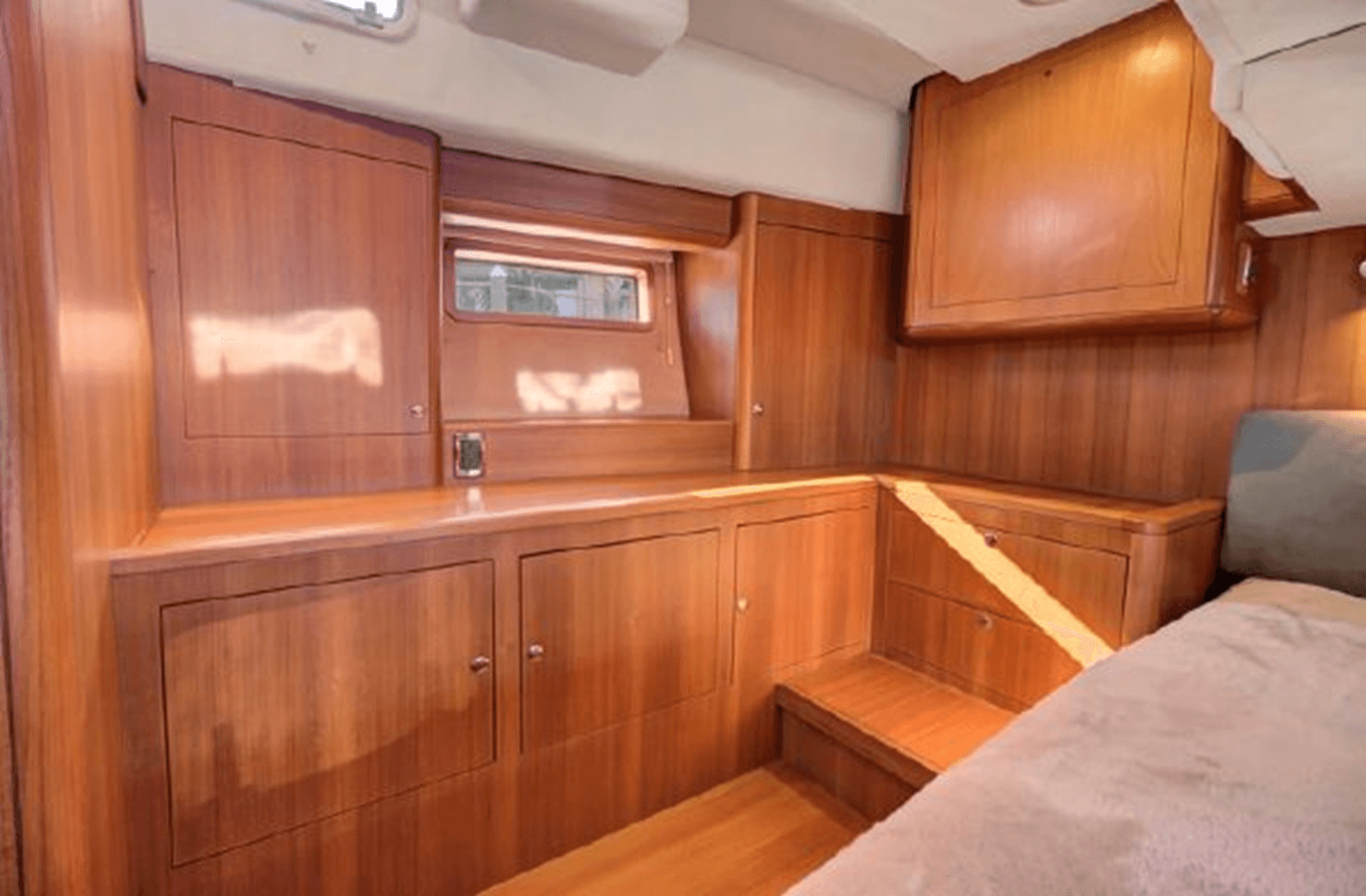
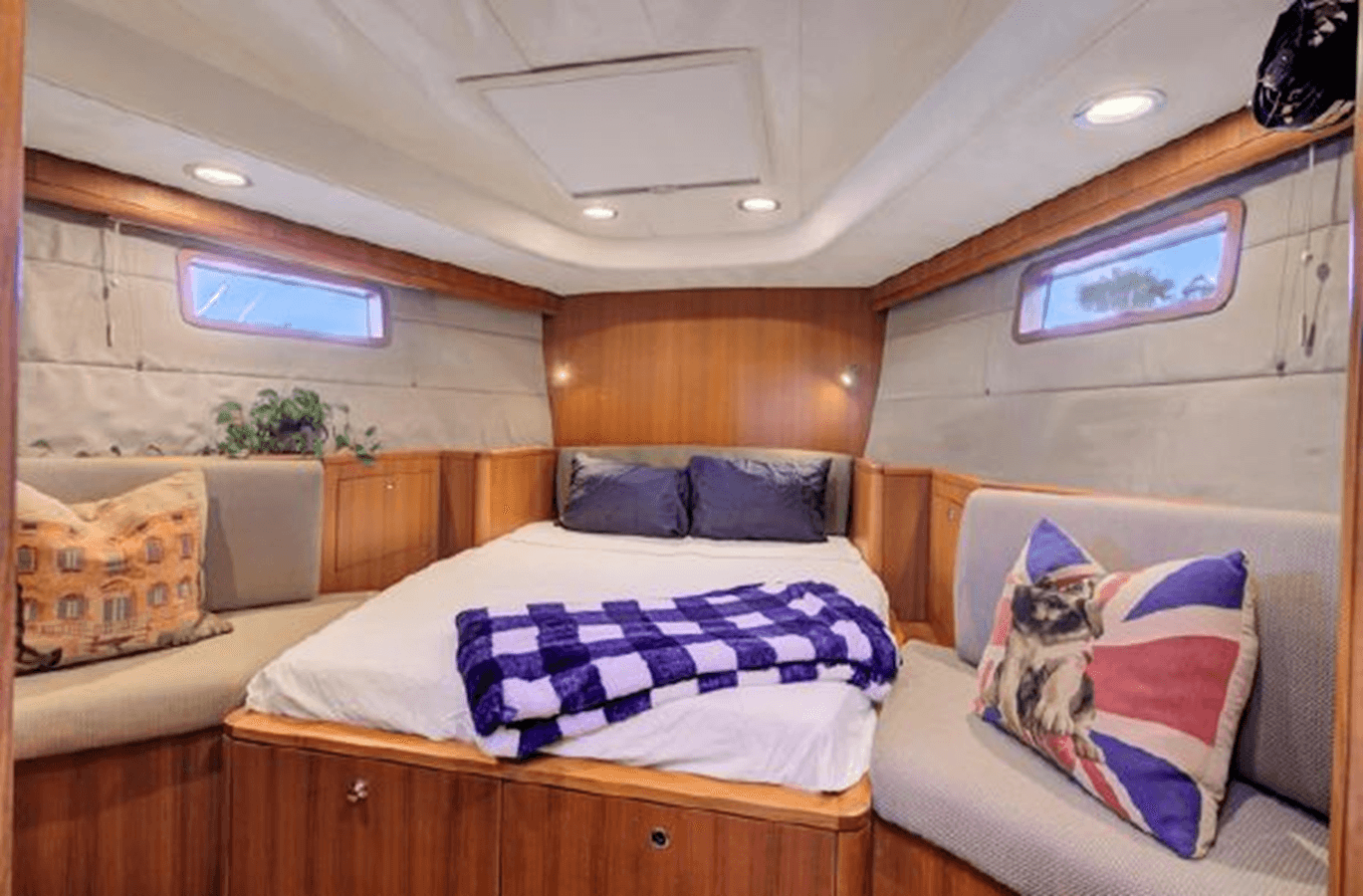
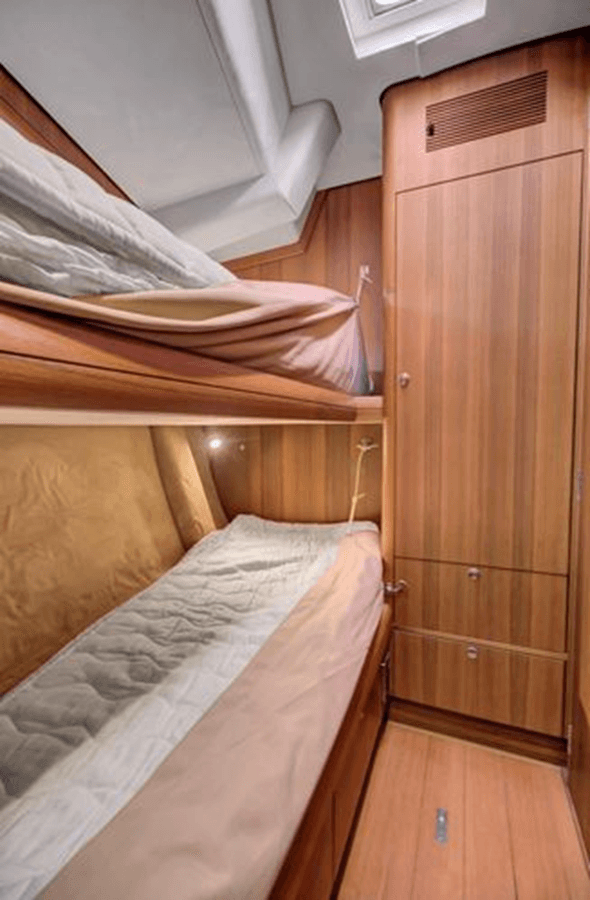
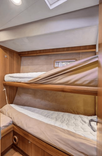
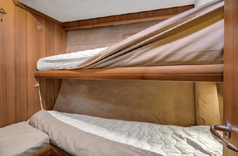
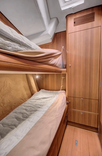
Forward of the galley are two guest cabins and a guest head. To starboard, a practical cabin offers two single bunks, each with a lee cloth and reading light, plus a seat, two drawers, and a large hanging locker. The primary forward cabin feels bright and inviting, with a comfortable centerline berth, two seats, large drawers beneath the bed, outboard cabinets, and capacious lockers to either side. The forward head, to port, is shared by both guest cabins via two doors, one opening directly into the forward cabin. Corian counters, mirrored cabinet doors, and a separate shower with a stainless‑and‑glass door bring comfort you’ll appreciate on long passages.
Interior systems support both performance cruising and liveaboard comfort. Four‑zone reverse‑cycle air conditioning totals forty‑six thousand BTU, including a Marinaire nine‑thousand BTU unit in the aft cabin replaced in twenty‑twenty‑three. A hot‑air heating system with six outlets extends the season. Twelve‑volt fans, concertina blinds in the raised coachroof area, remote‑control operation for the forward window blinds, and rollershade screens on every deck hatch refine the climate. Teak‑and‑holly flooring and LED interior lighting set the tone. Entertainment and connectivity include a TV in the saloon with DVD player, a TV in the aft cabin linked to the Furuno system, a TV in the primary guest cabin, a Polyplanar MRD80 CD/MP3/WMA radio with RD‑44 remote heads at both the nav and helm positions, a Wi‑Fi amplifier antenna, and a Glomex TV antenna. Cedar‑lined hanging lockers with automatic lights, Tecma electric toilets, extractor/fan blowers in both heads with two‑way switches, and a watermaker rated at ninety‑five liters per hour round out a thoughtful specification.
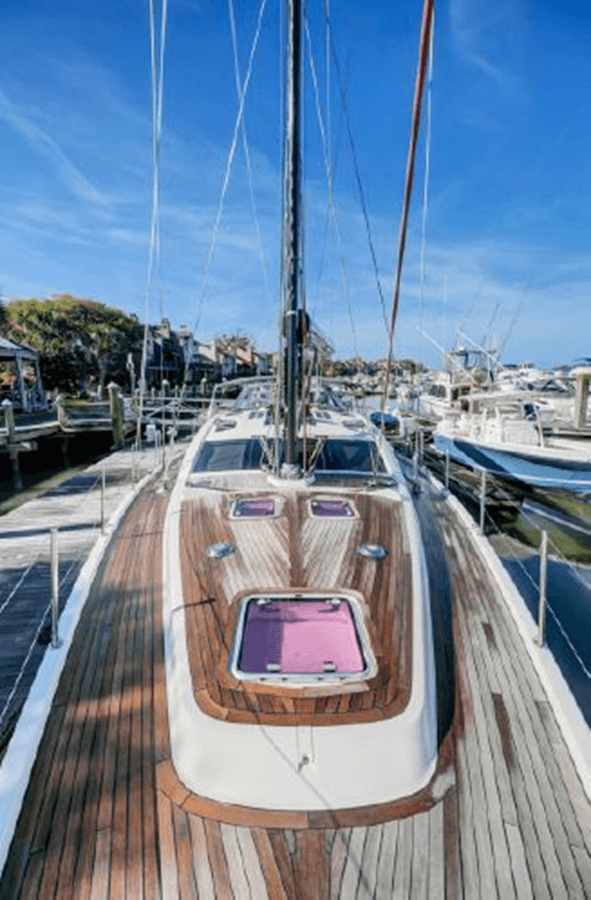
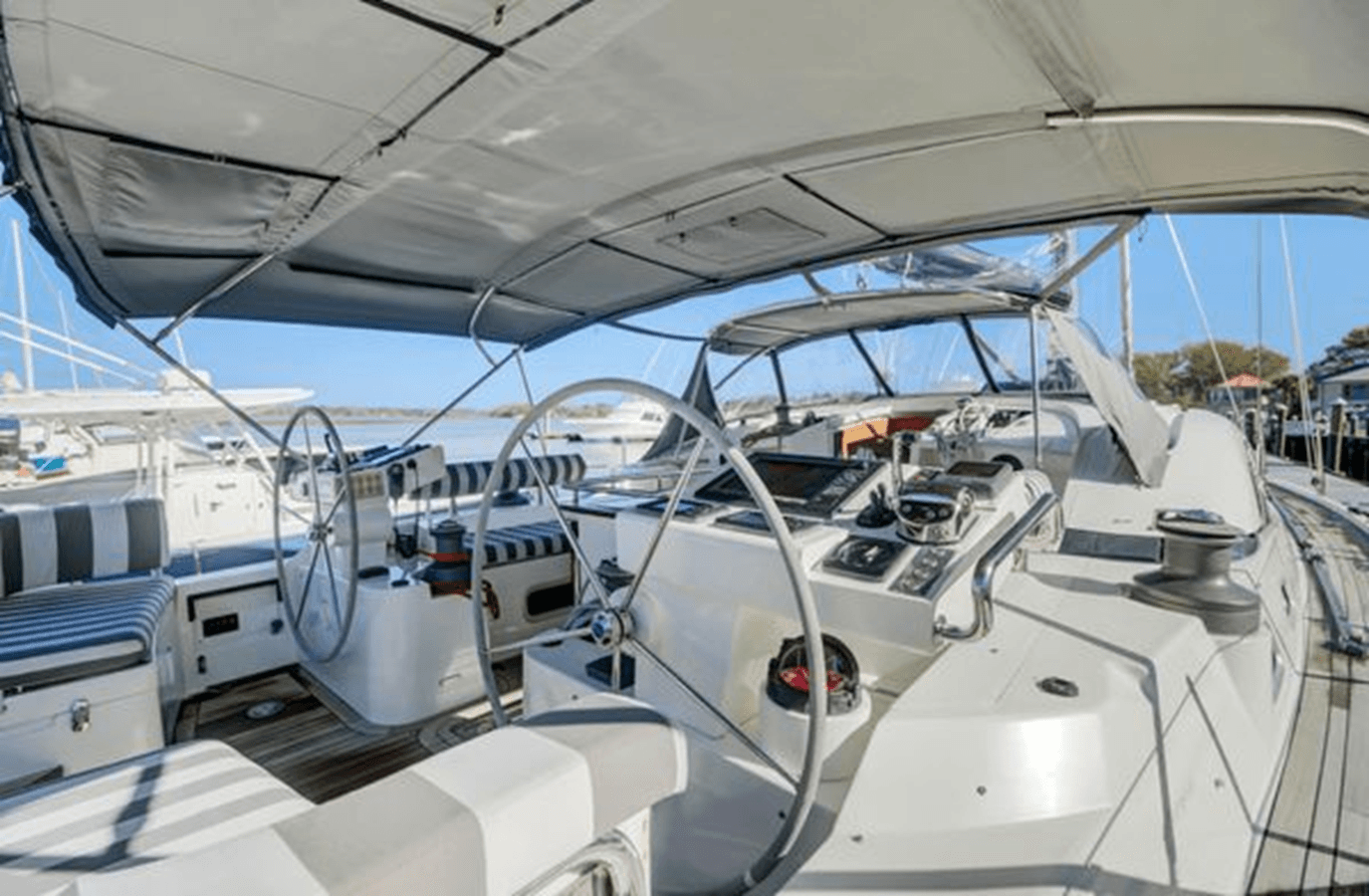
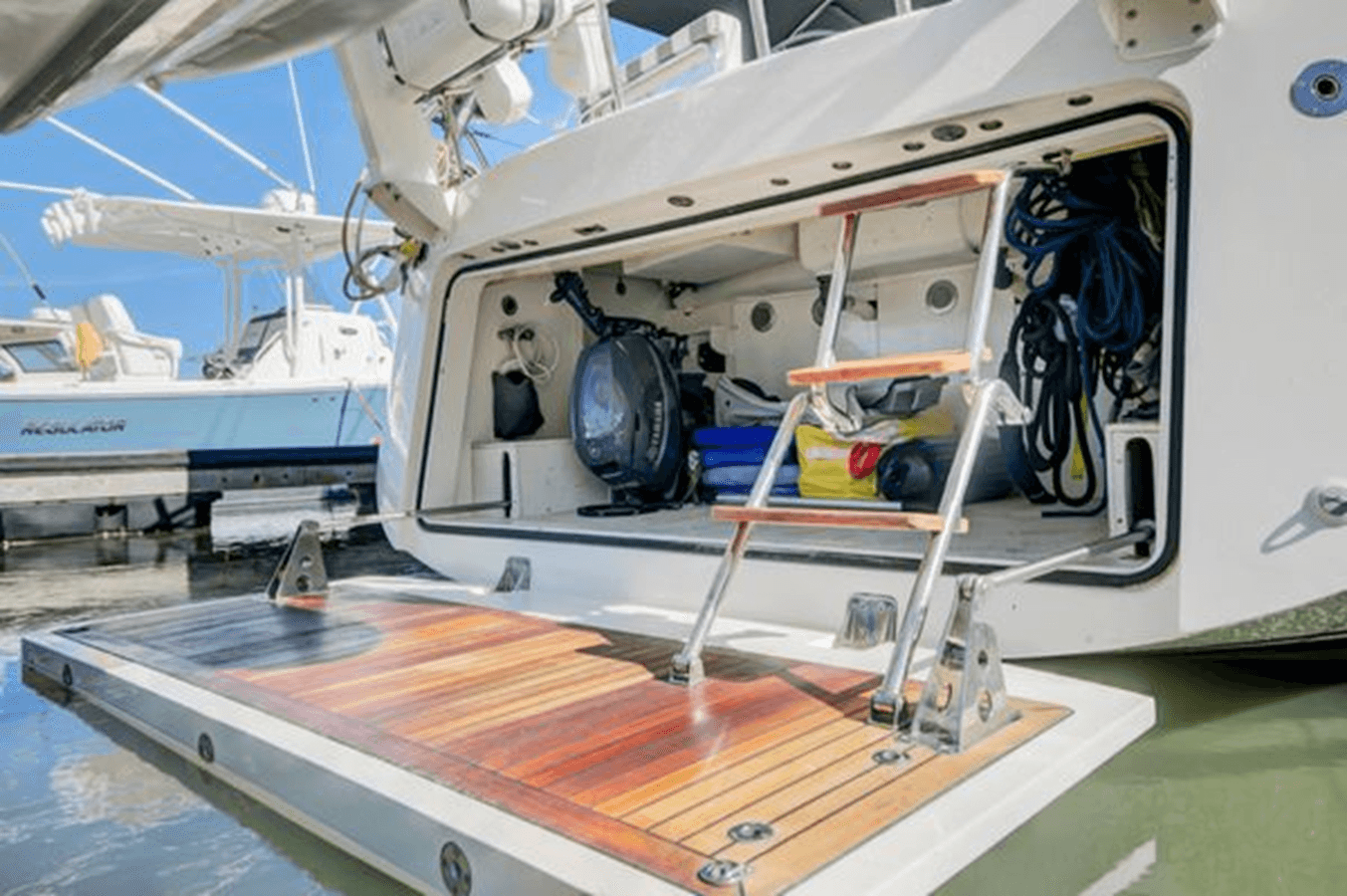
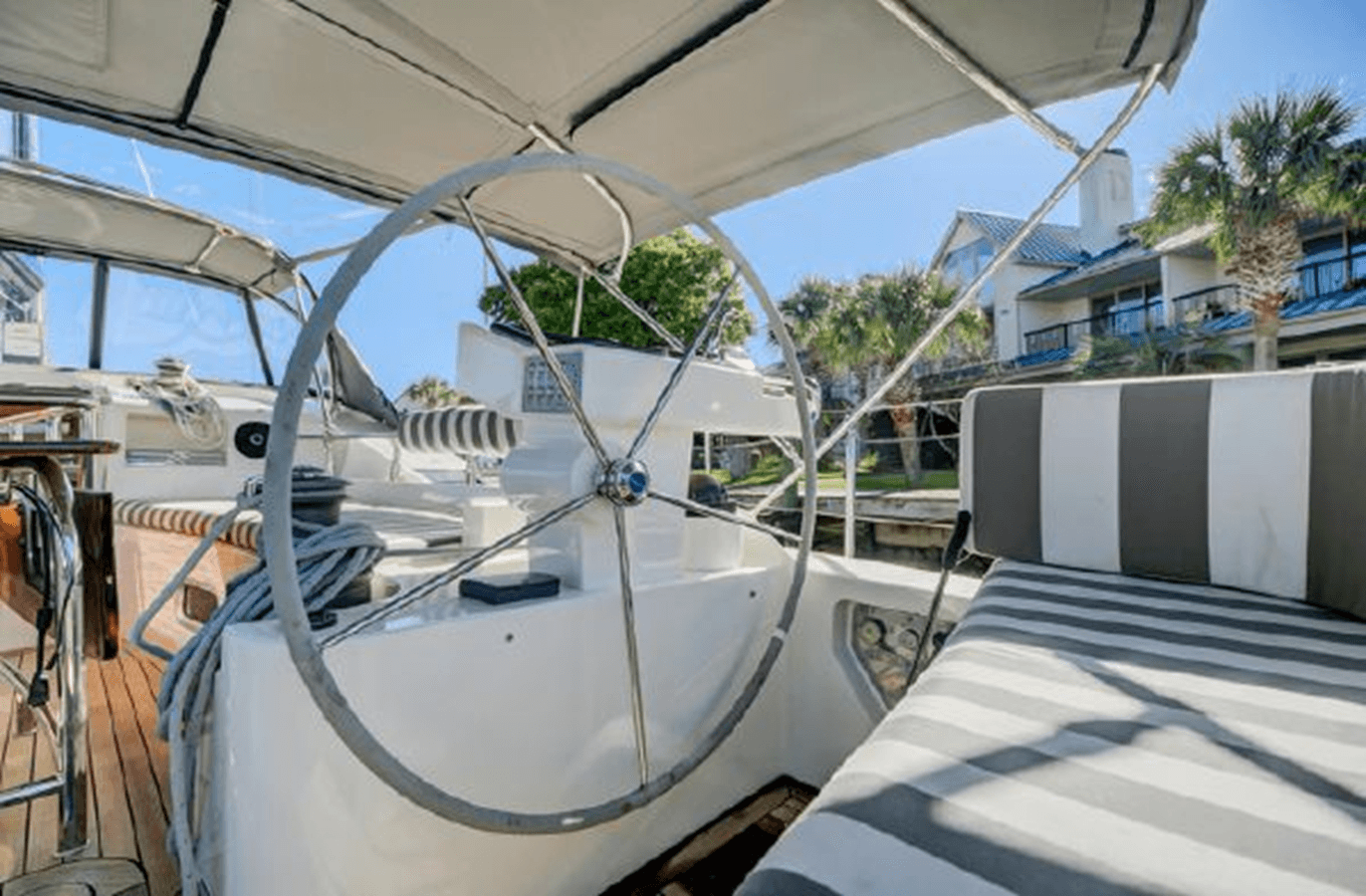
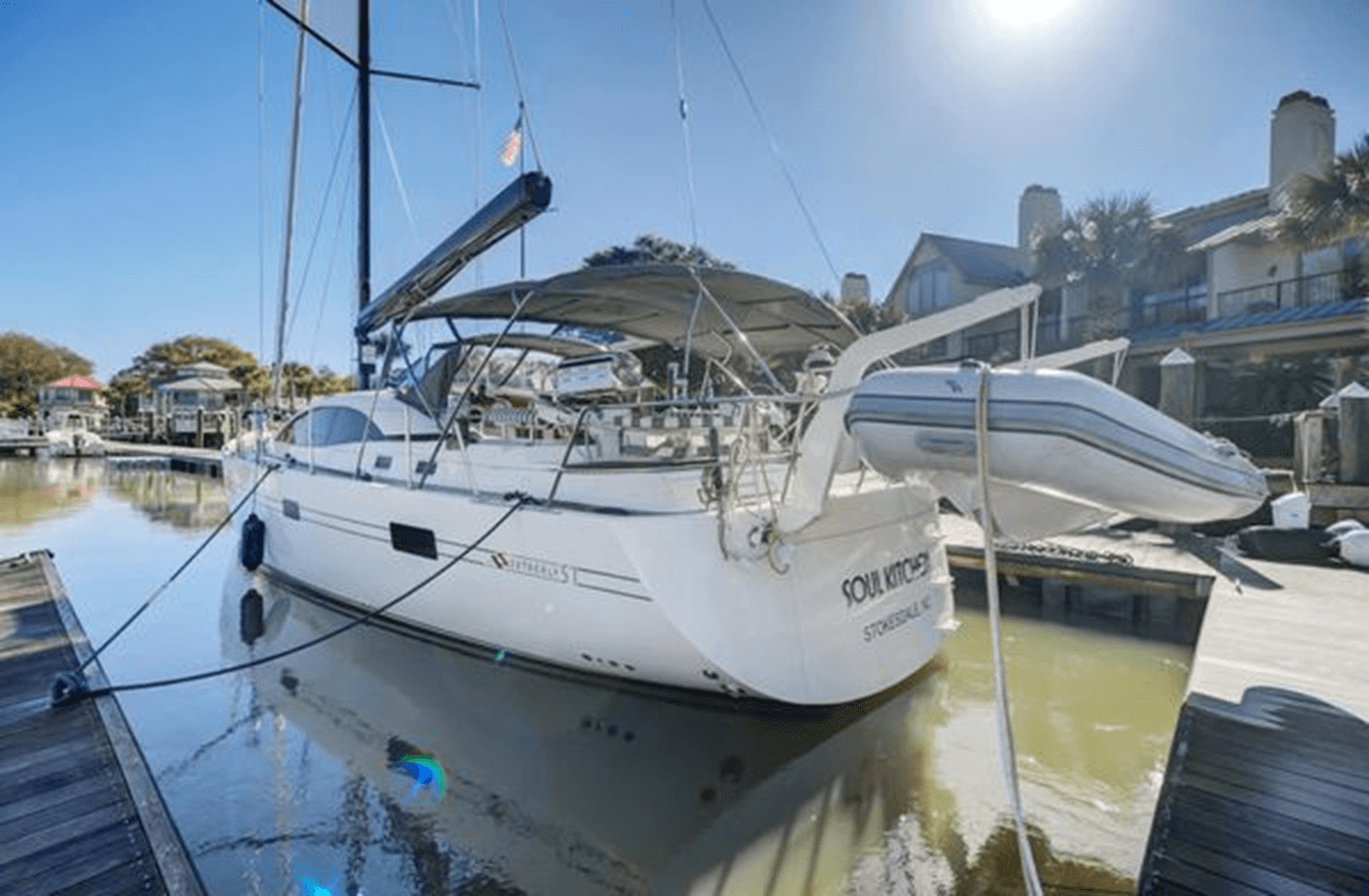
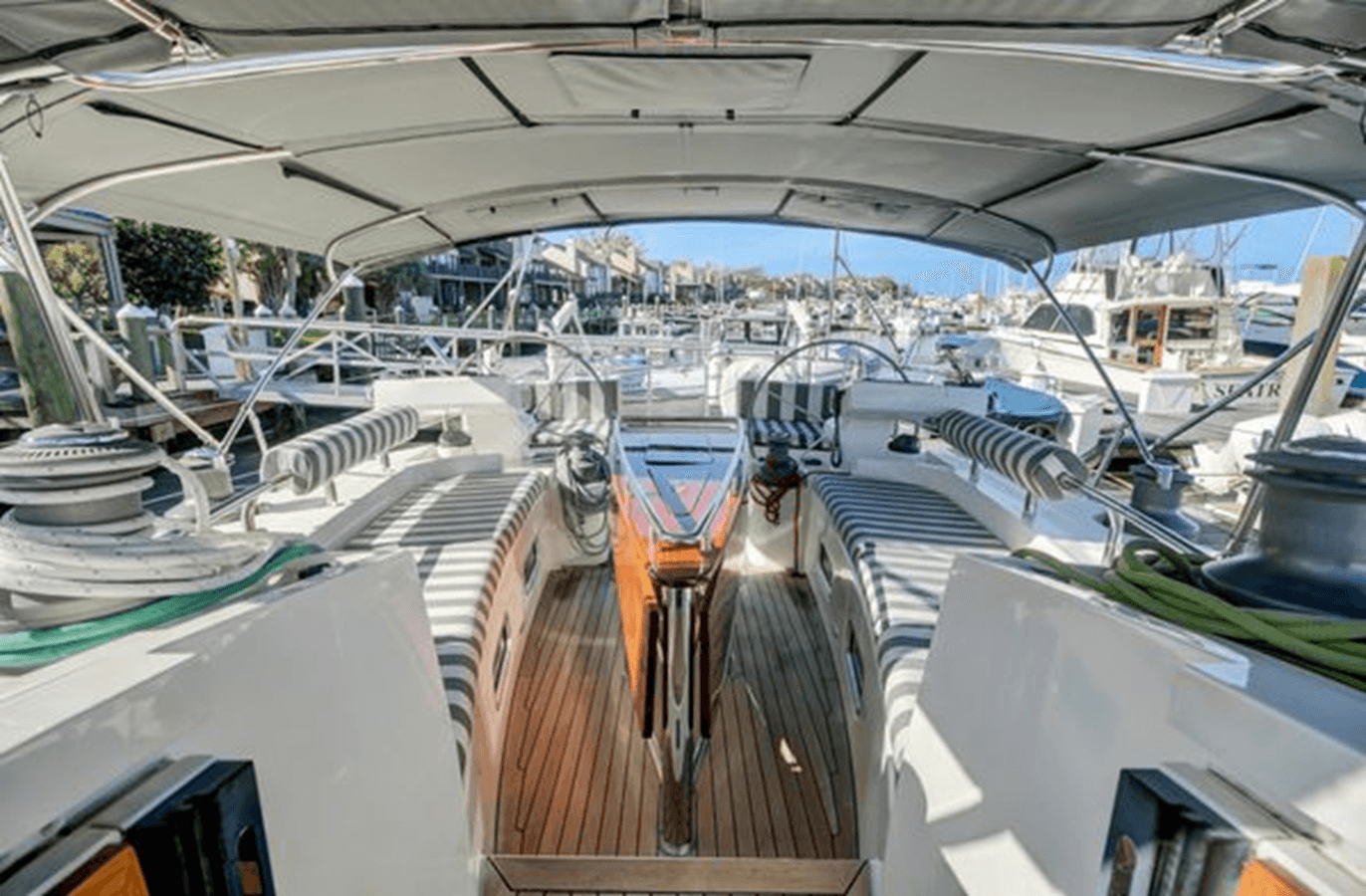
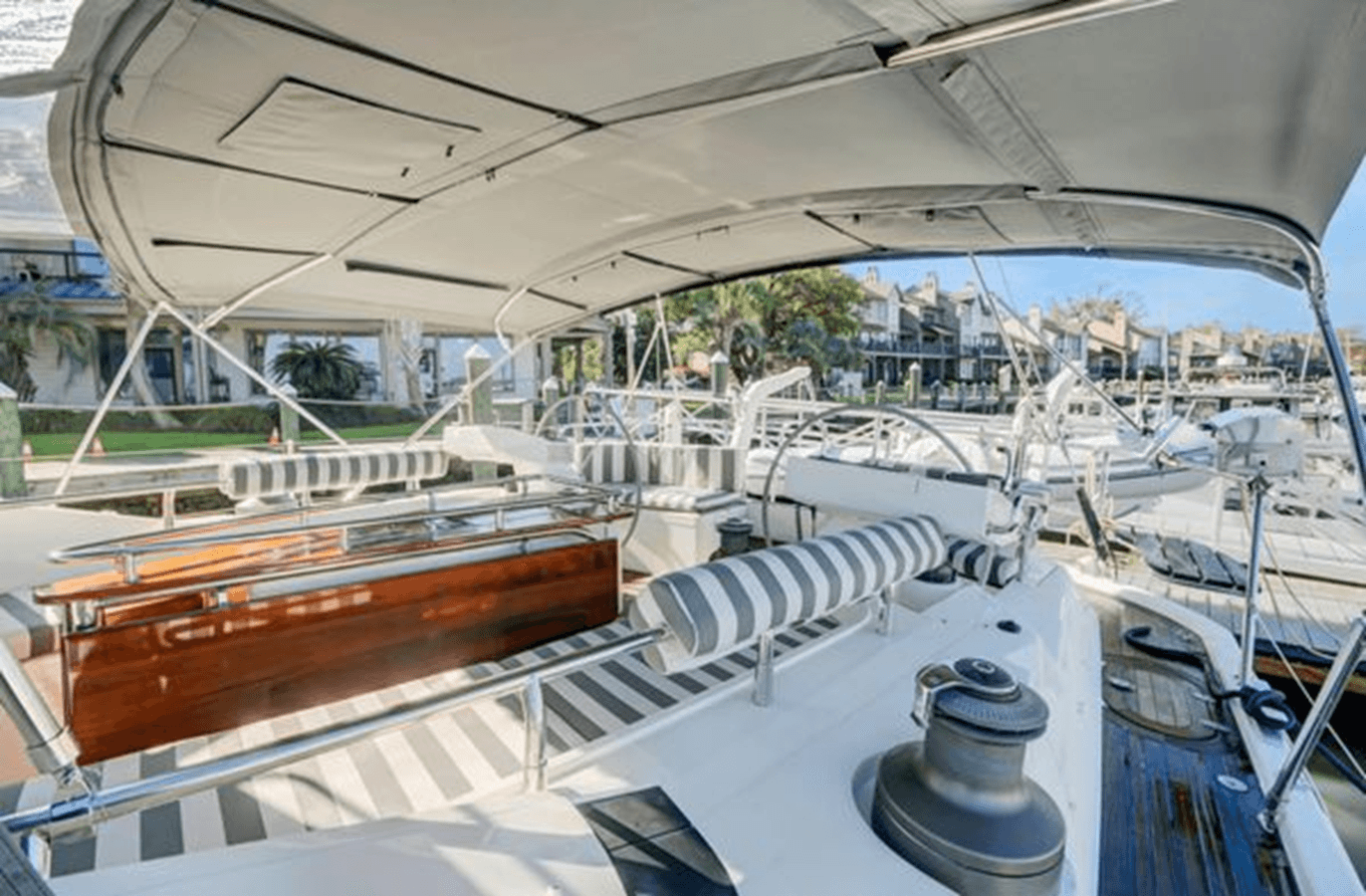
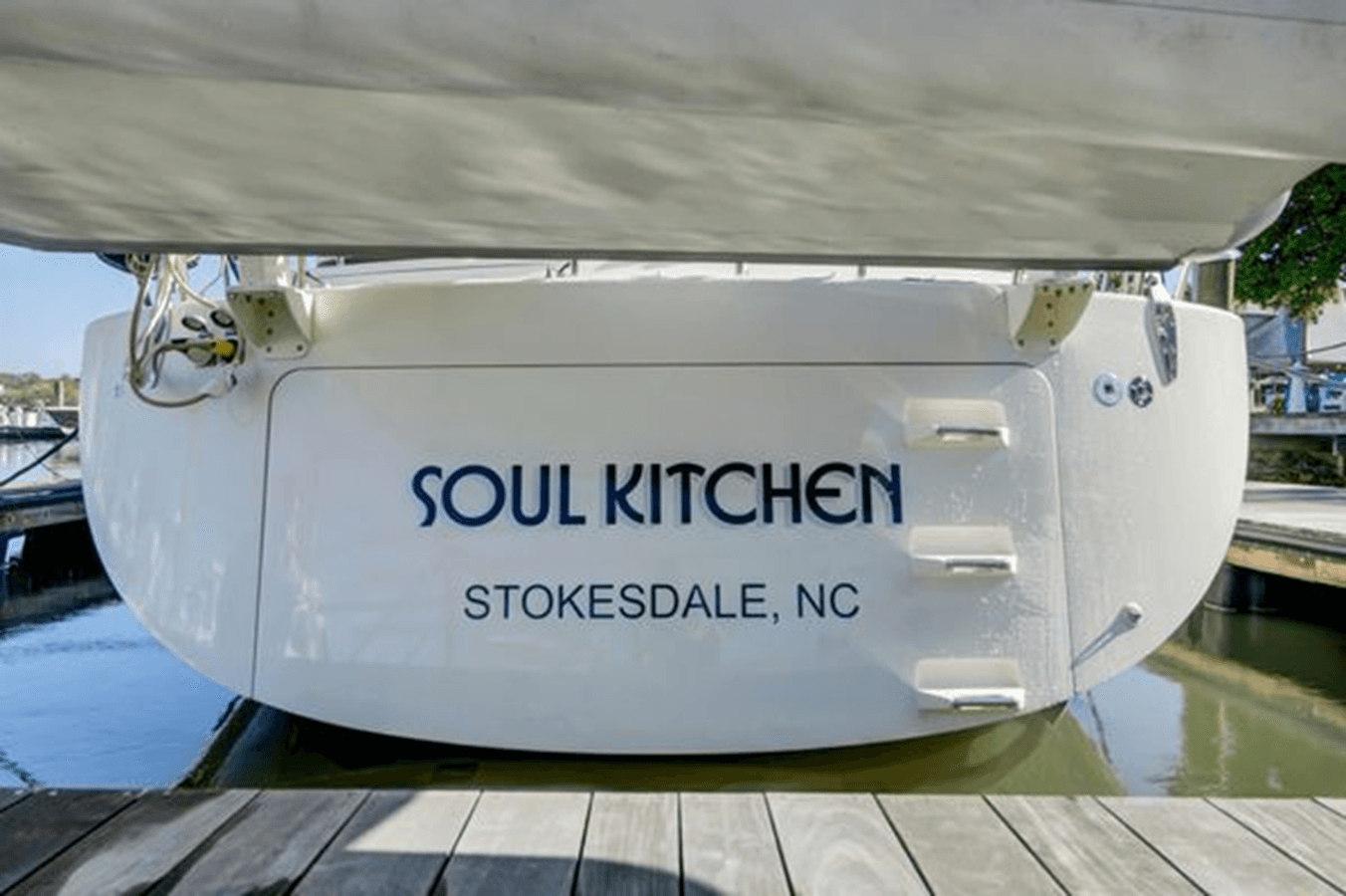
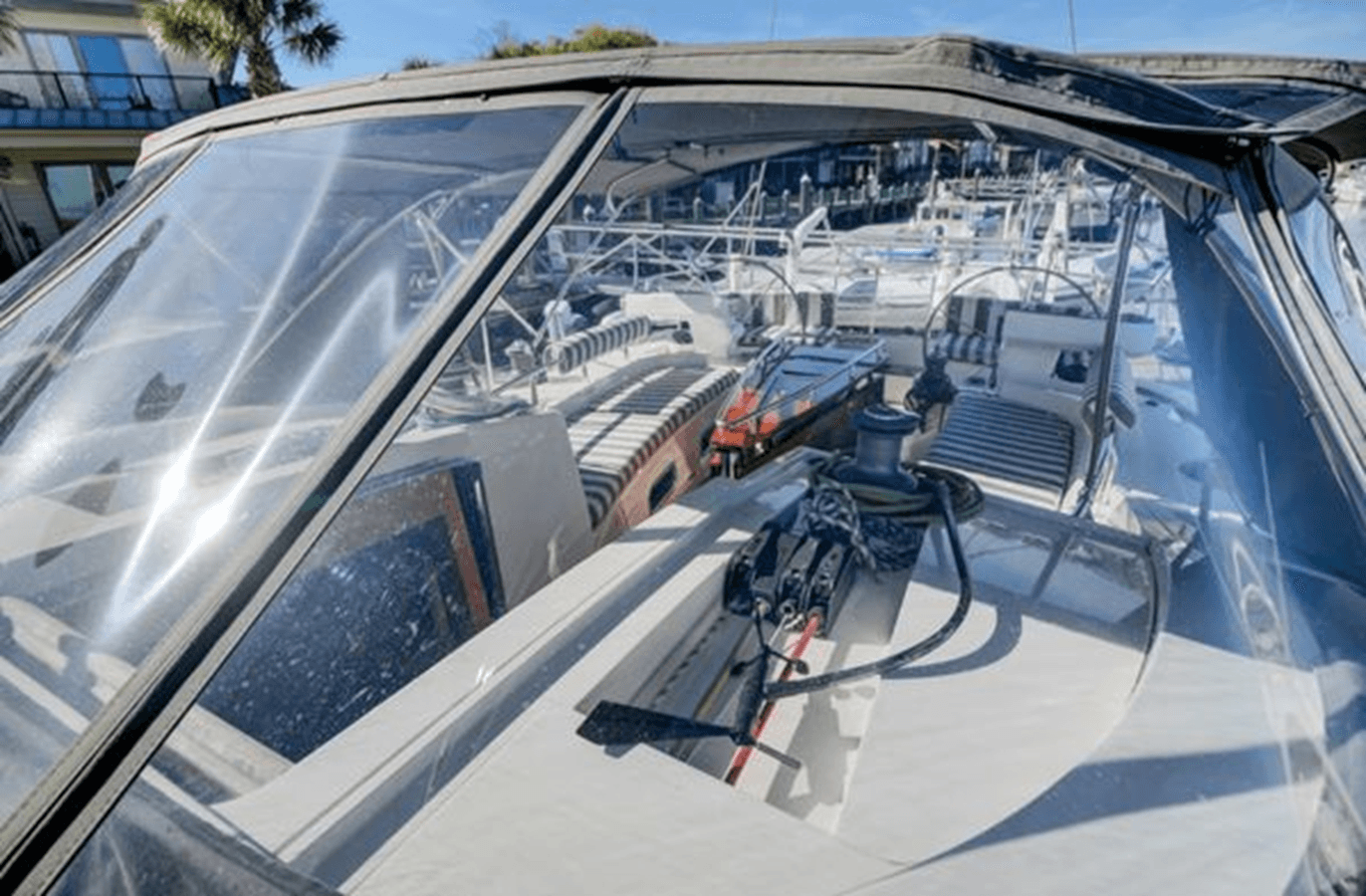
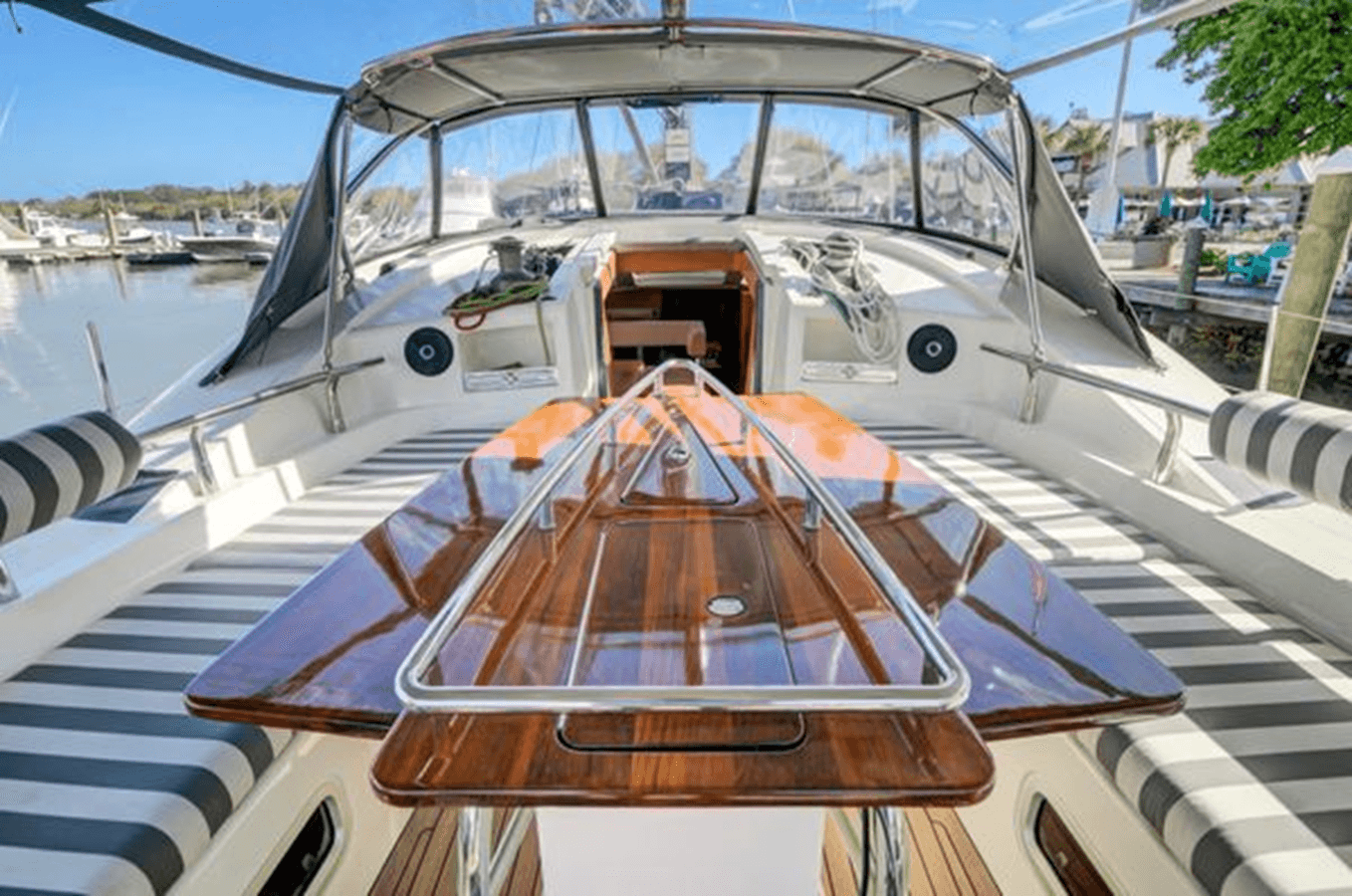
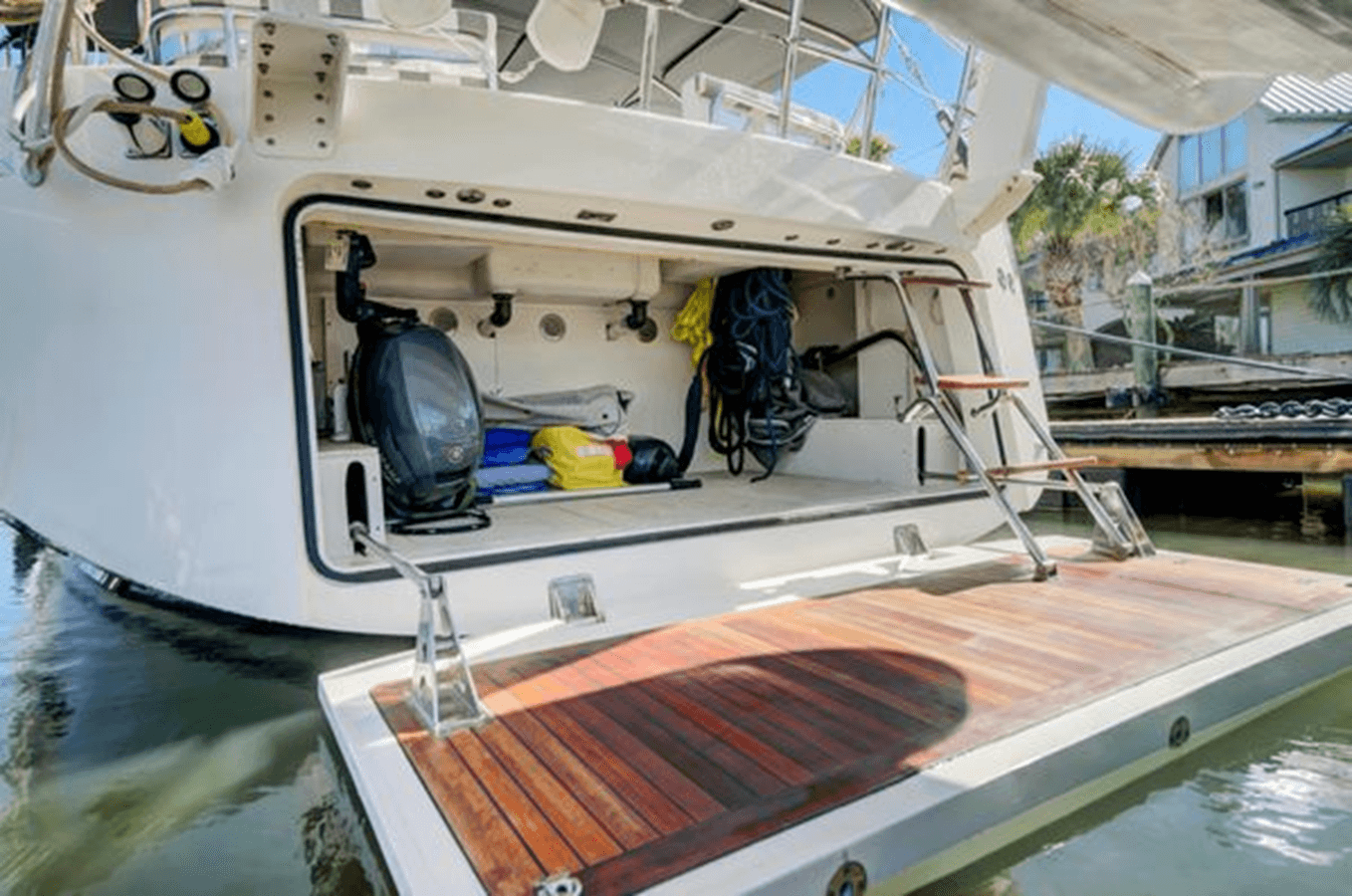
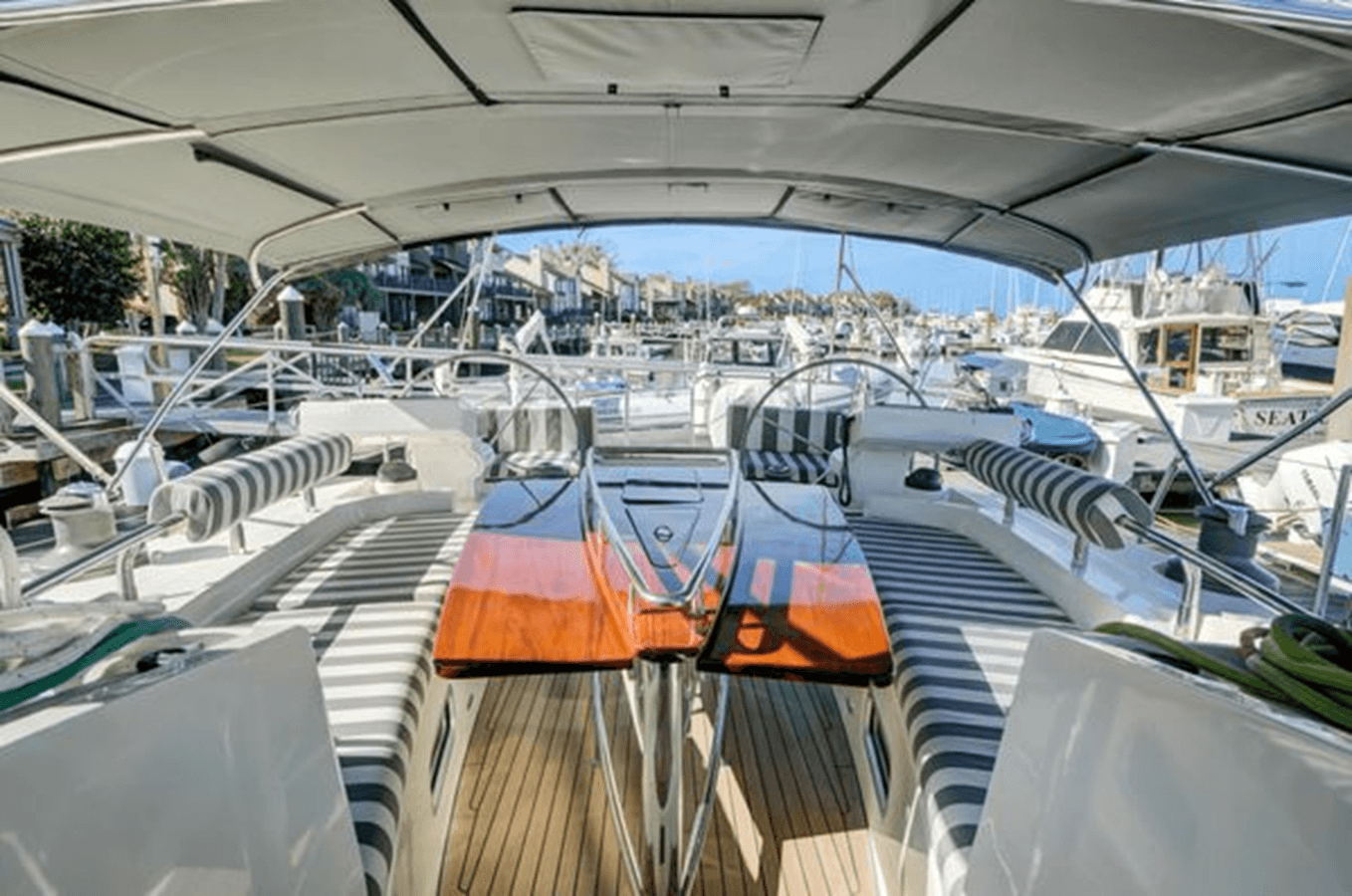
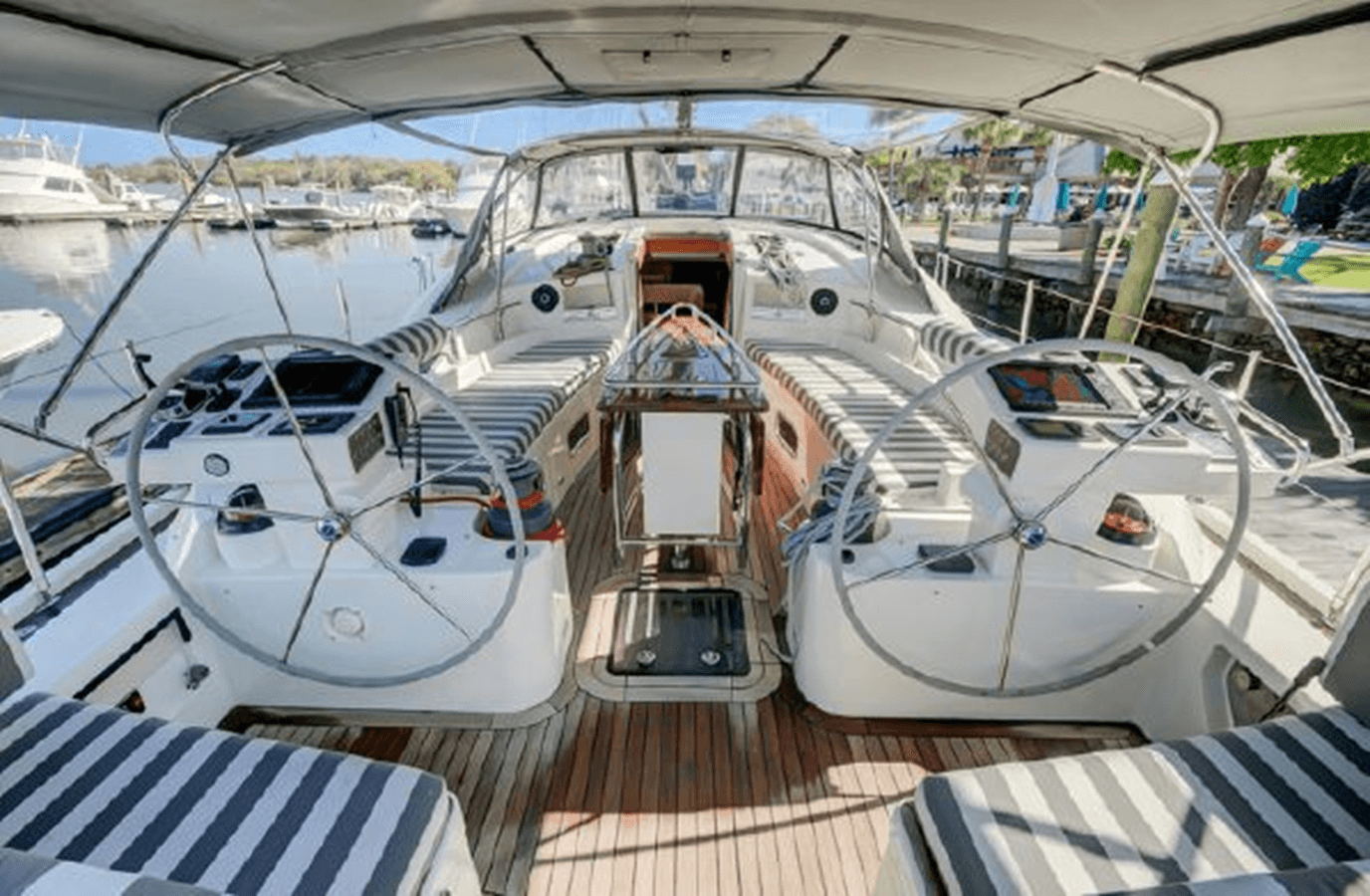
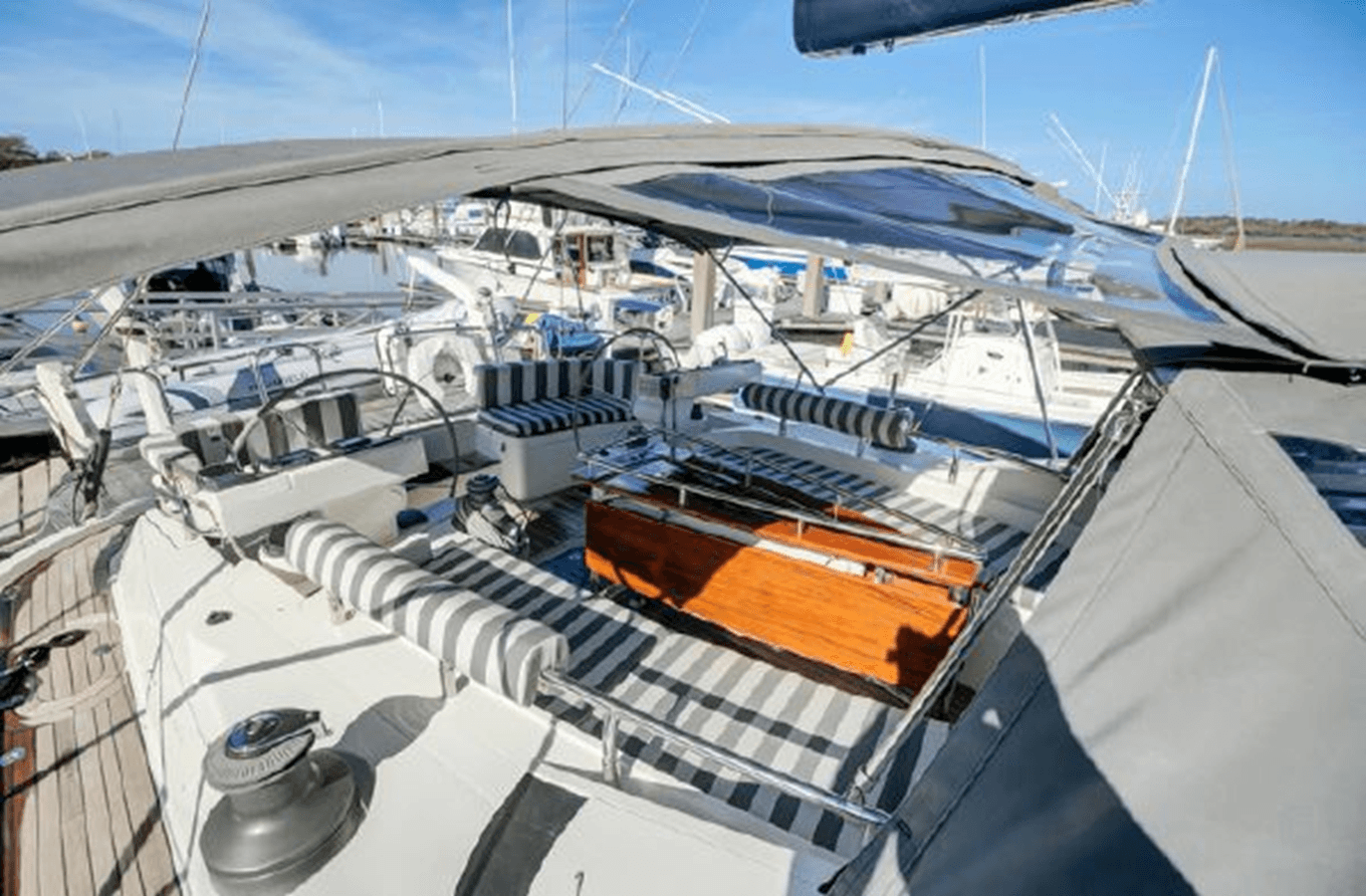
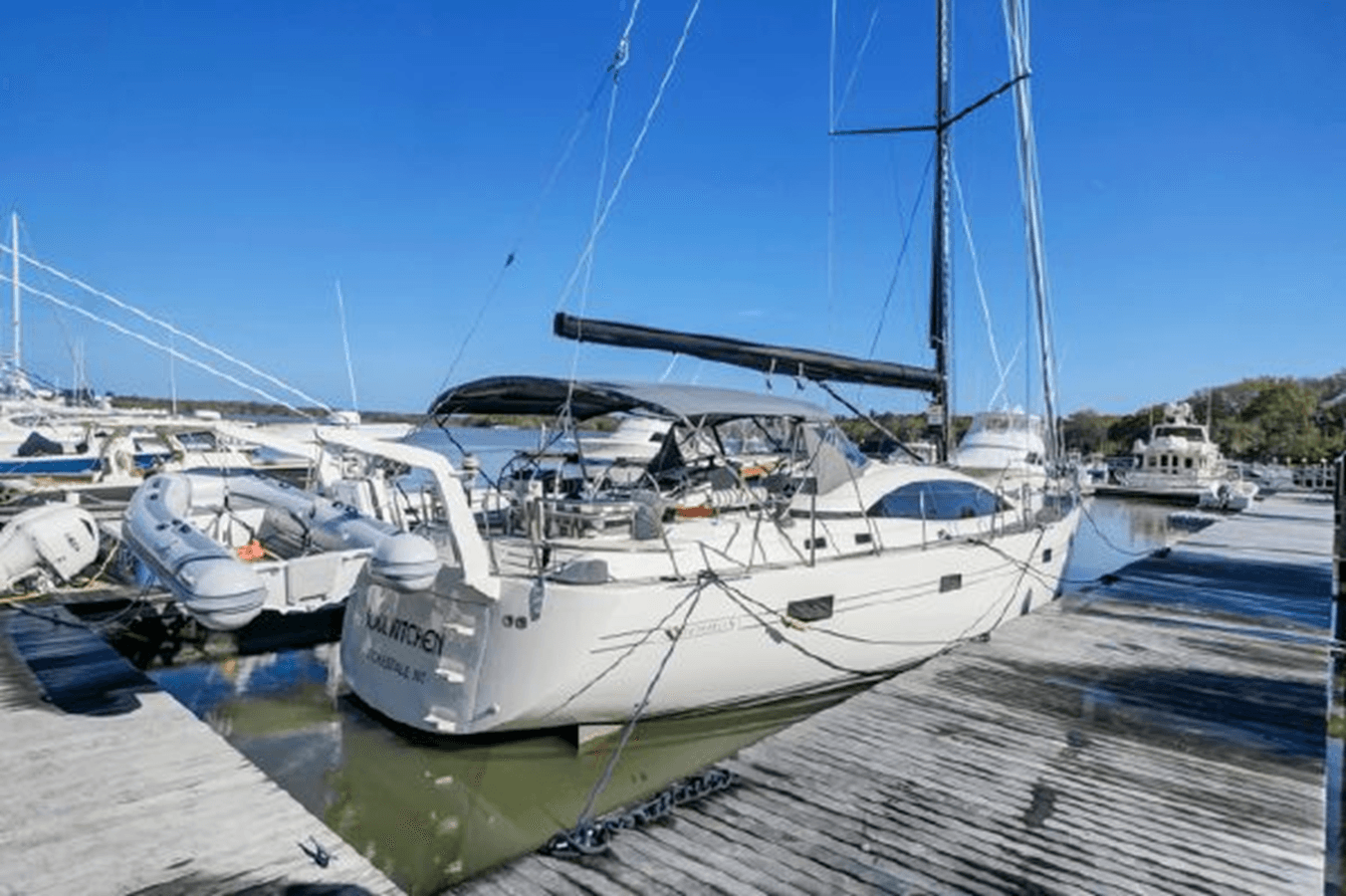
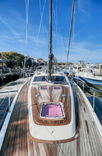
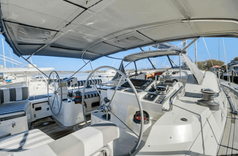
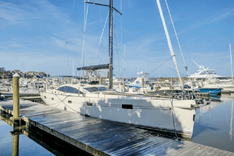
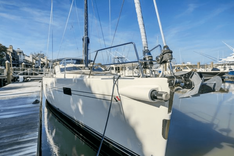
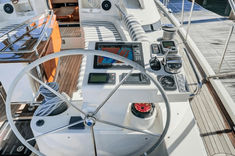
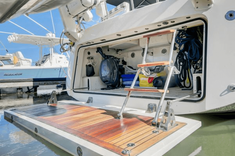
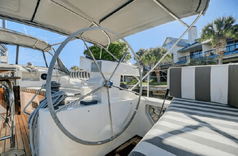
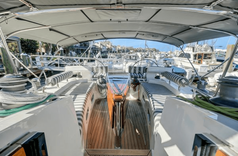
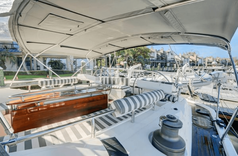
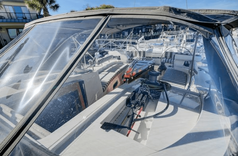
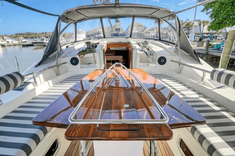
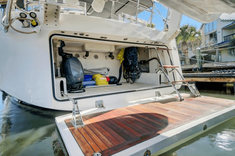
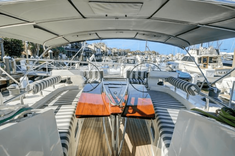
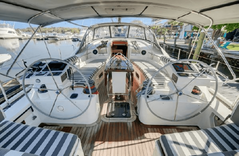
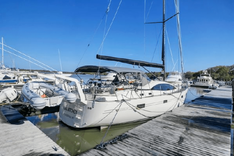
The hull carries a long waterline, a fine entry, and generous beam carried aft for performance, comfort, stability, and safety, while the sleek raised pilothouse coachroof brings large‑yacht sophistication to this size class. A large fold‑down transom door opens to a roomy storage garage also accessible from the deck; when lowered, it forms an excellent bathing platform and simplifies boarding. The aft cockpit is spacious yet secure, with comfortable seating and a large teak cockpit table fitted with folding leaves, stainless safety railing, and a refrigerated box to keep refreshments close. Protection comes from a dodger and a large bimini, and sightlines from the twin wheels are excellent. Sail controls are organized for short‑handed sailing, so a couple can manage the yacht with confidence, and additional aft seating lets guests relax and enjoy the view.
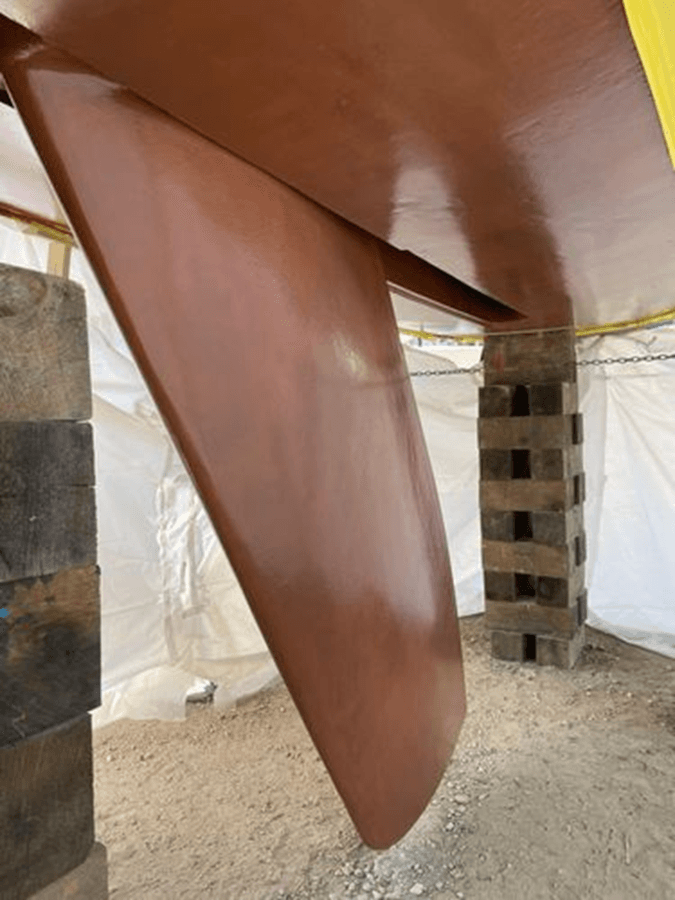
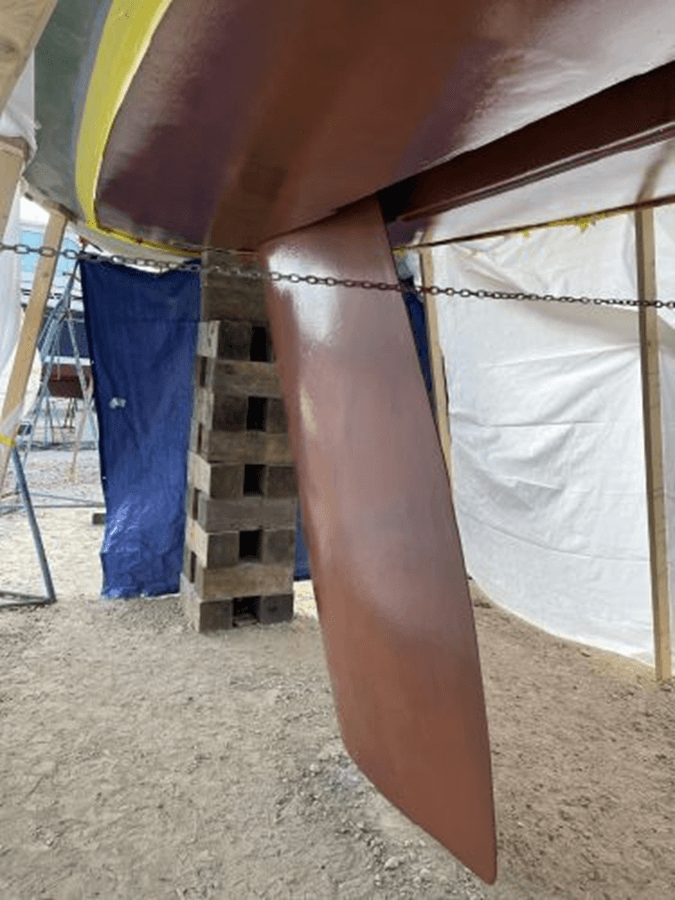
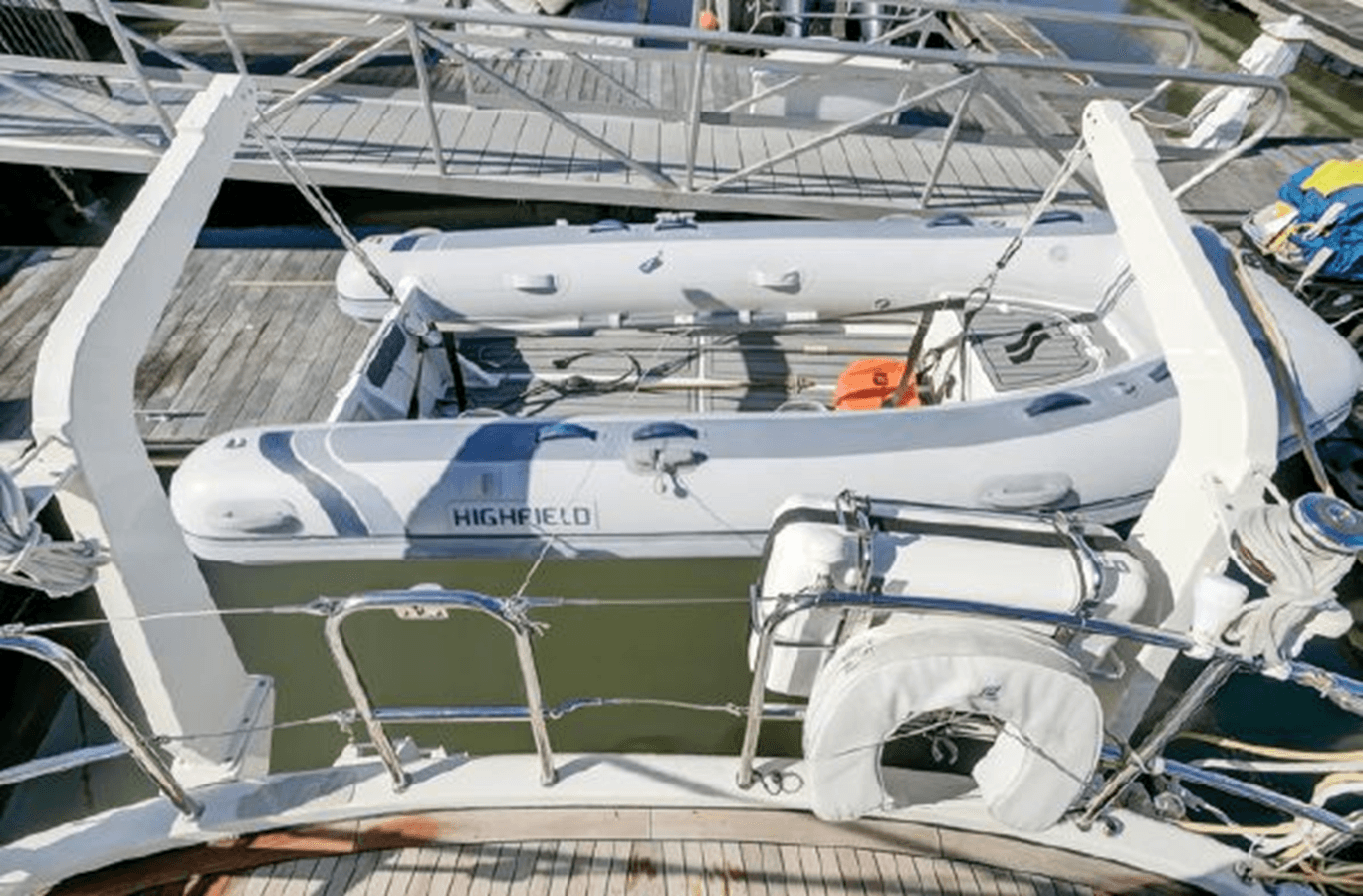
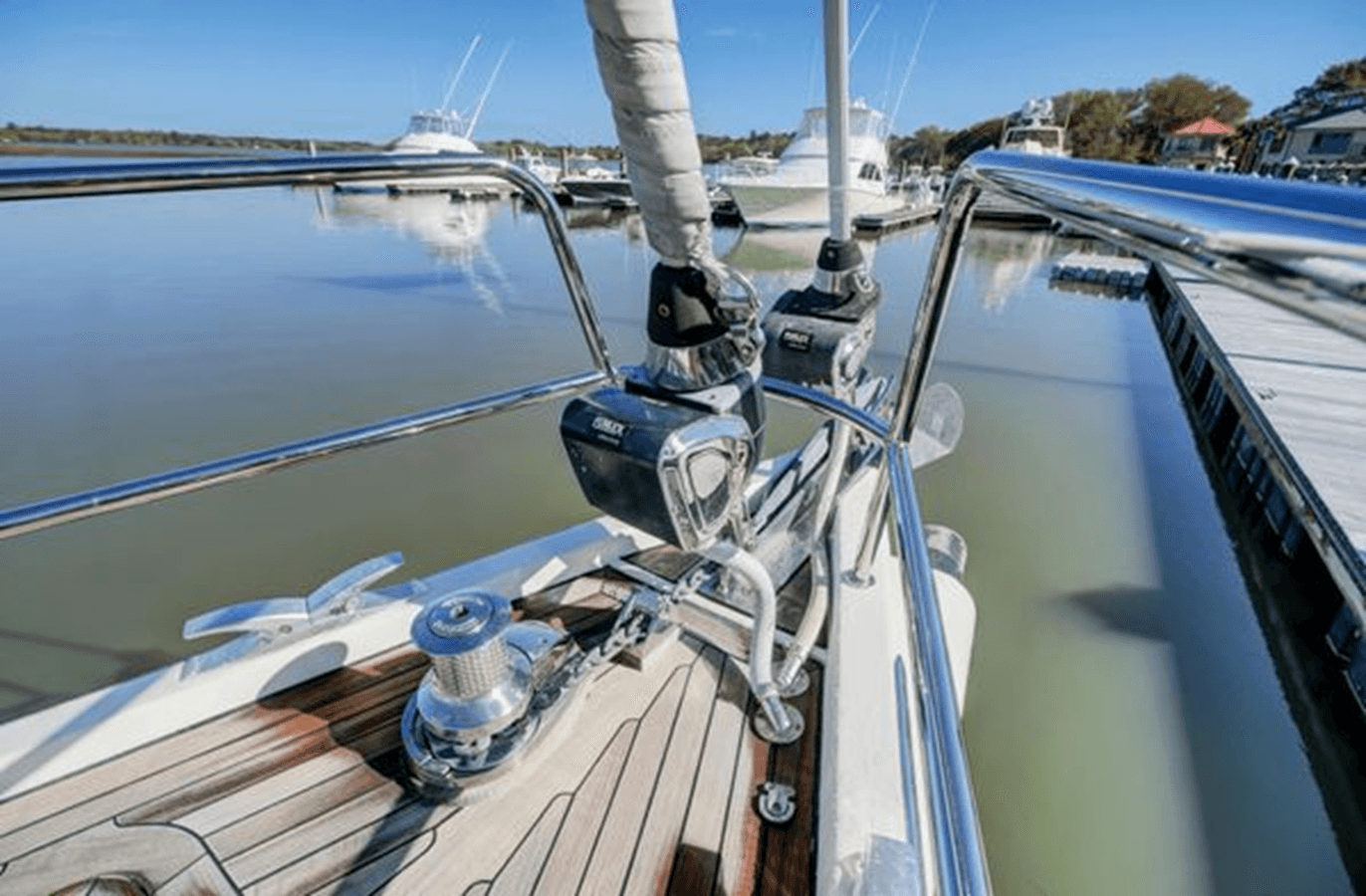
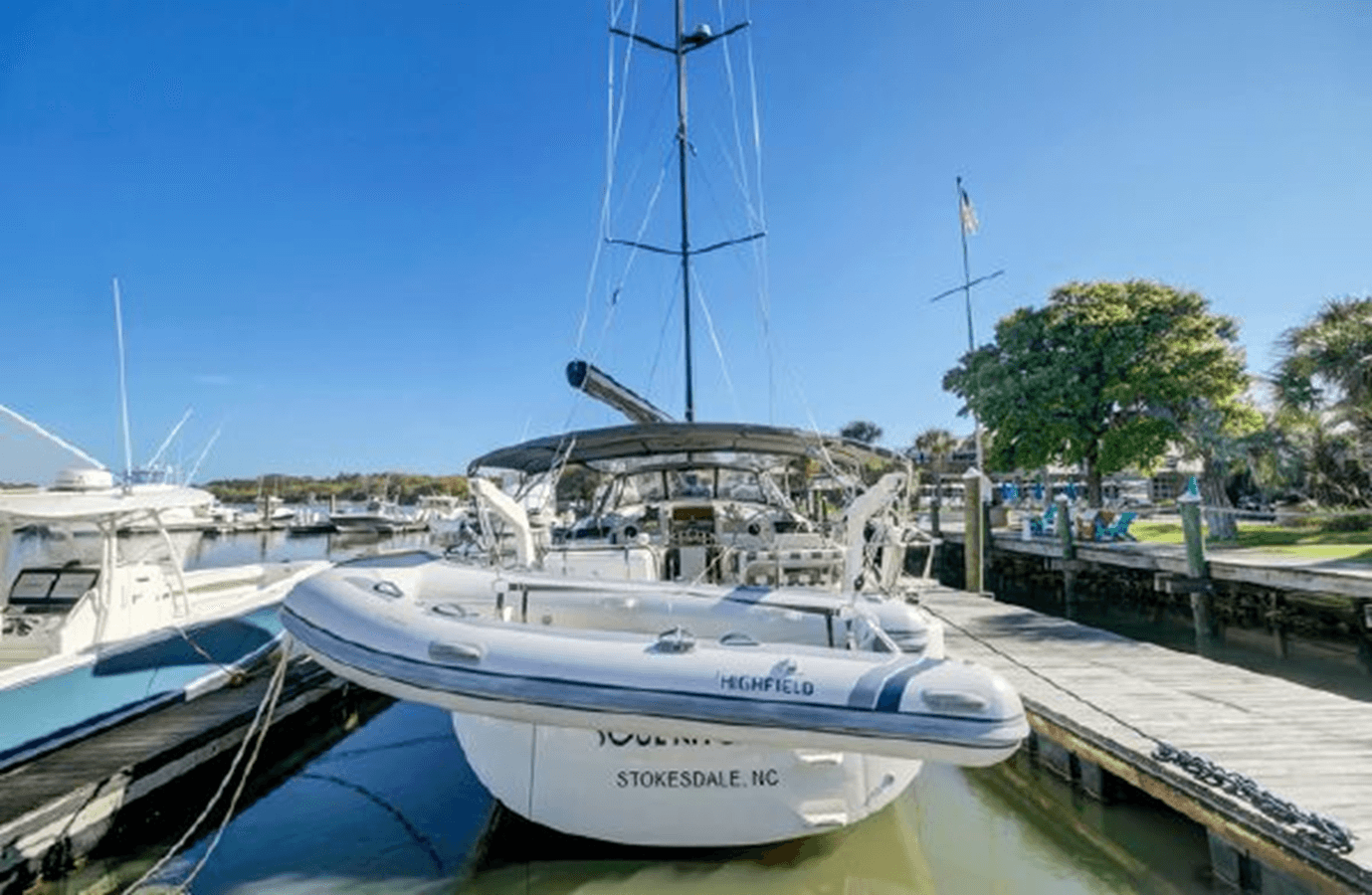
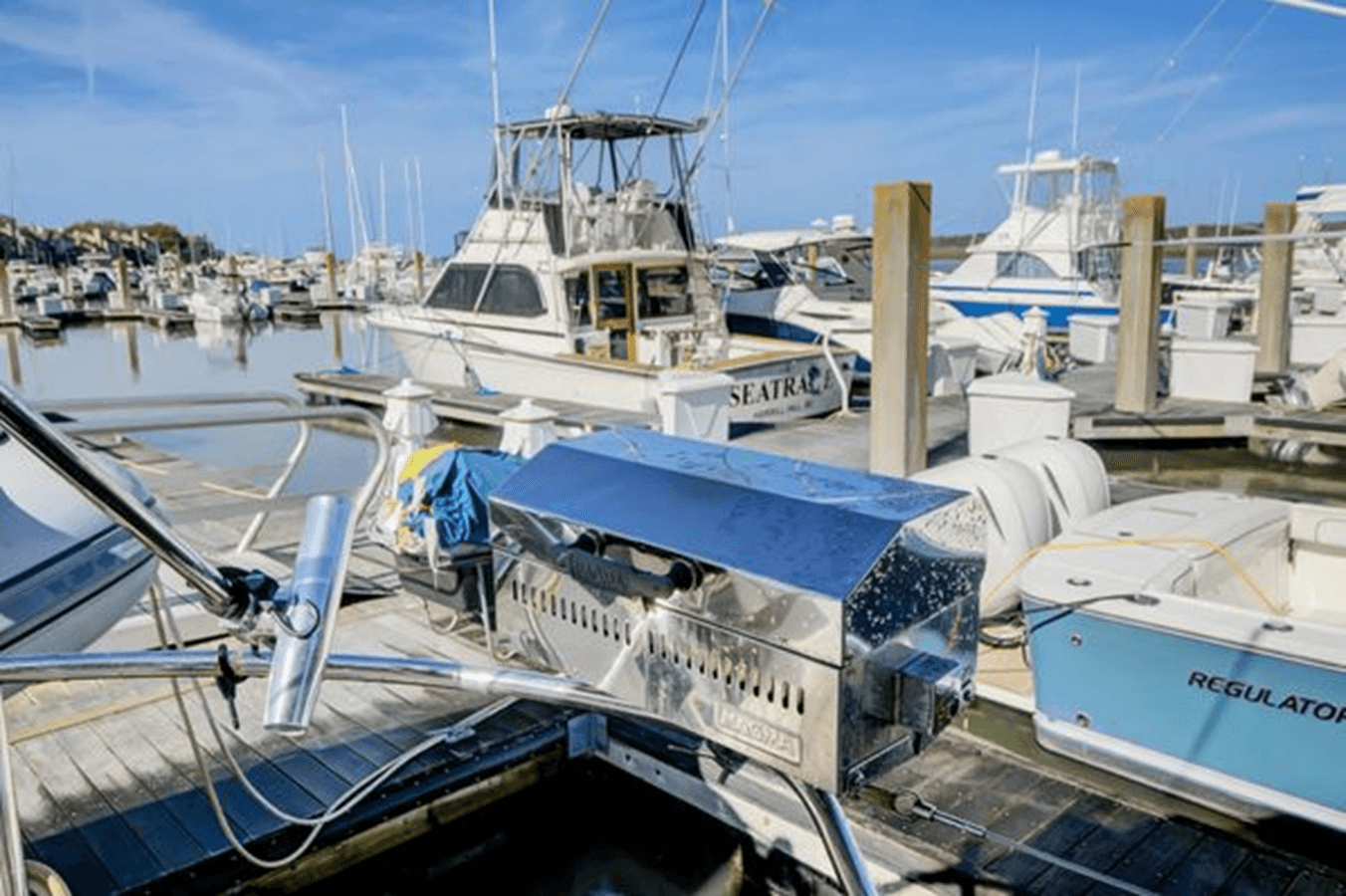
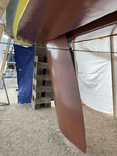
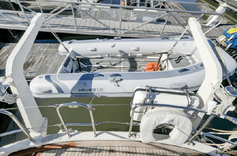
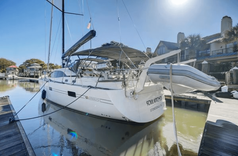
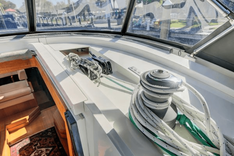
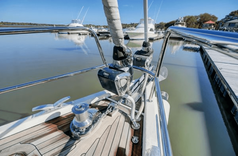
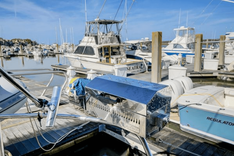
Deck and cockpit equipment befit a luxury cruising yacht. New canvas—dodger, bimini, and connector—arrived in twenty‑twenty‑three. Bow and stern thrusters simplify close‑quarters work. A Lewmar V4 windlass is operated from both deck and helm. A large sail locker swallows gear, and dinghy davits ease tender handling. Carbon‑composite rudders, eight Nomen folding cleats, stainless lifelines with two side gates, and a large bimini with an aft extension add security and shade. Cockpit cushions with seat backs raise comfort, while low‑level LED lighting, down‑lighting, and a light under the boom extend evenings. Cockpit speakers and spreader lights on the underside of the lower spreaders set the ambiance. Double teak seats on the pushpit, a Magma grill mounted aft, and the hydraulic transom door to the storage garage and swim platform reinforce the “weekend‑to‑world” mission. A hot‑and‑cold deck shower in the lazarette serves swimmers, and deck‑wash outlets at both bow and stern keep the yacht clean. Canvas covers protect the helm stations and cockpit table. An Ocean Safety Ocean ISO 9650 eight‑person life raft is mounted on the stern pushpit (the certificate expired in February twenty‑twenty‑three). A propane locker sits to port. Maintenance in twenty‑twenty‑three included replacement of the port‑side rudder bearings; bottom and keel work comprising media blasting of the swing keel and grounding plate, fairing of both, removal and replacement of the caulk/foam between grounding plate and hull, renewal of the swing‑keel rubber seal/flap, sanding of the bottom, barrier coat where needed, full prep for Coppercoat, tenting and application of three coats of Coppercoat in a single day, forty‑eight hours of cure, and final sanding with three‑hundred‑and‑twenty‑grit; new zincs; exterior detailing; and teak‑deck cleaning. The RIB and outboard pictured do not convey with the vessel.
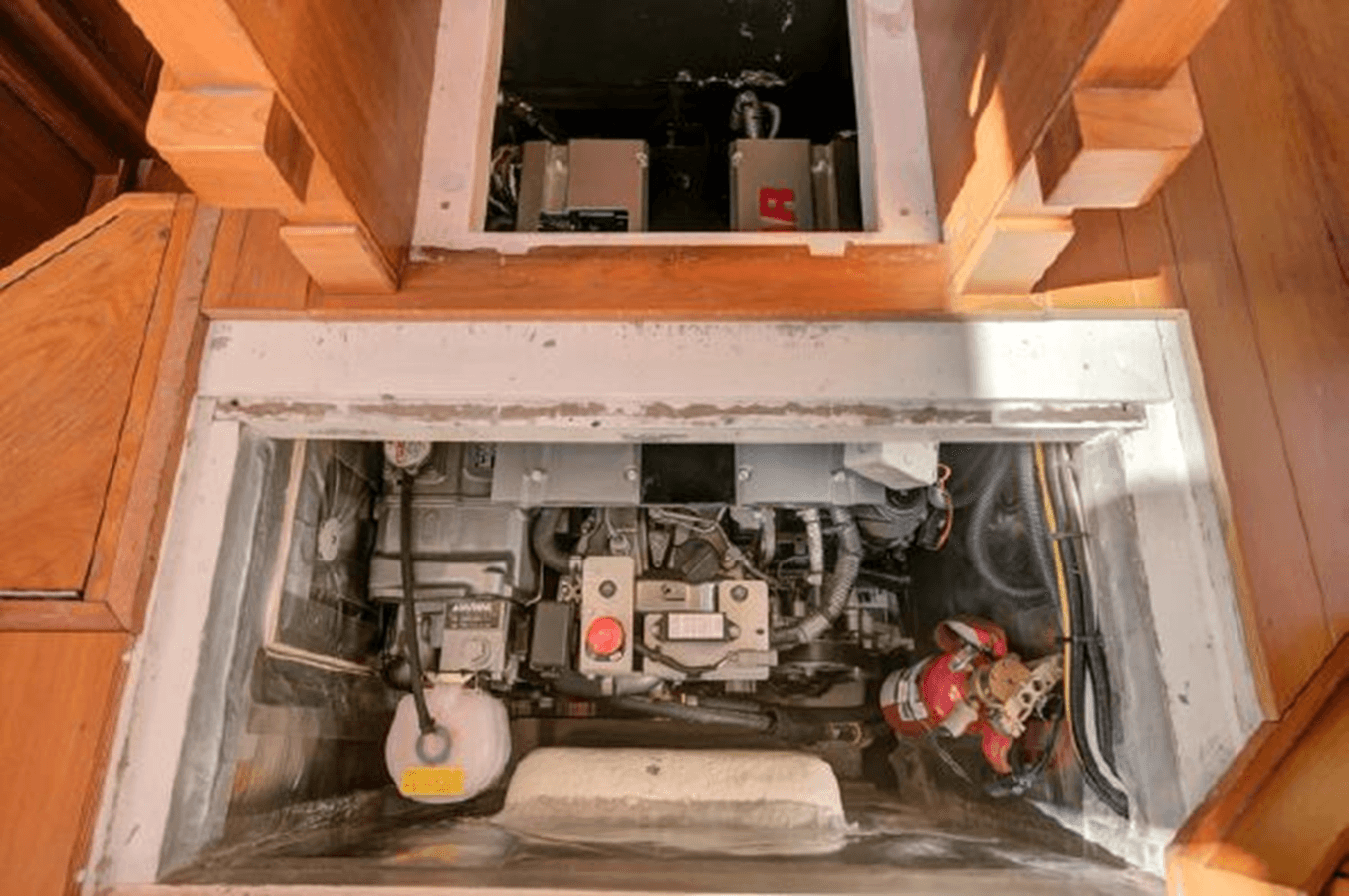
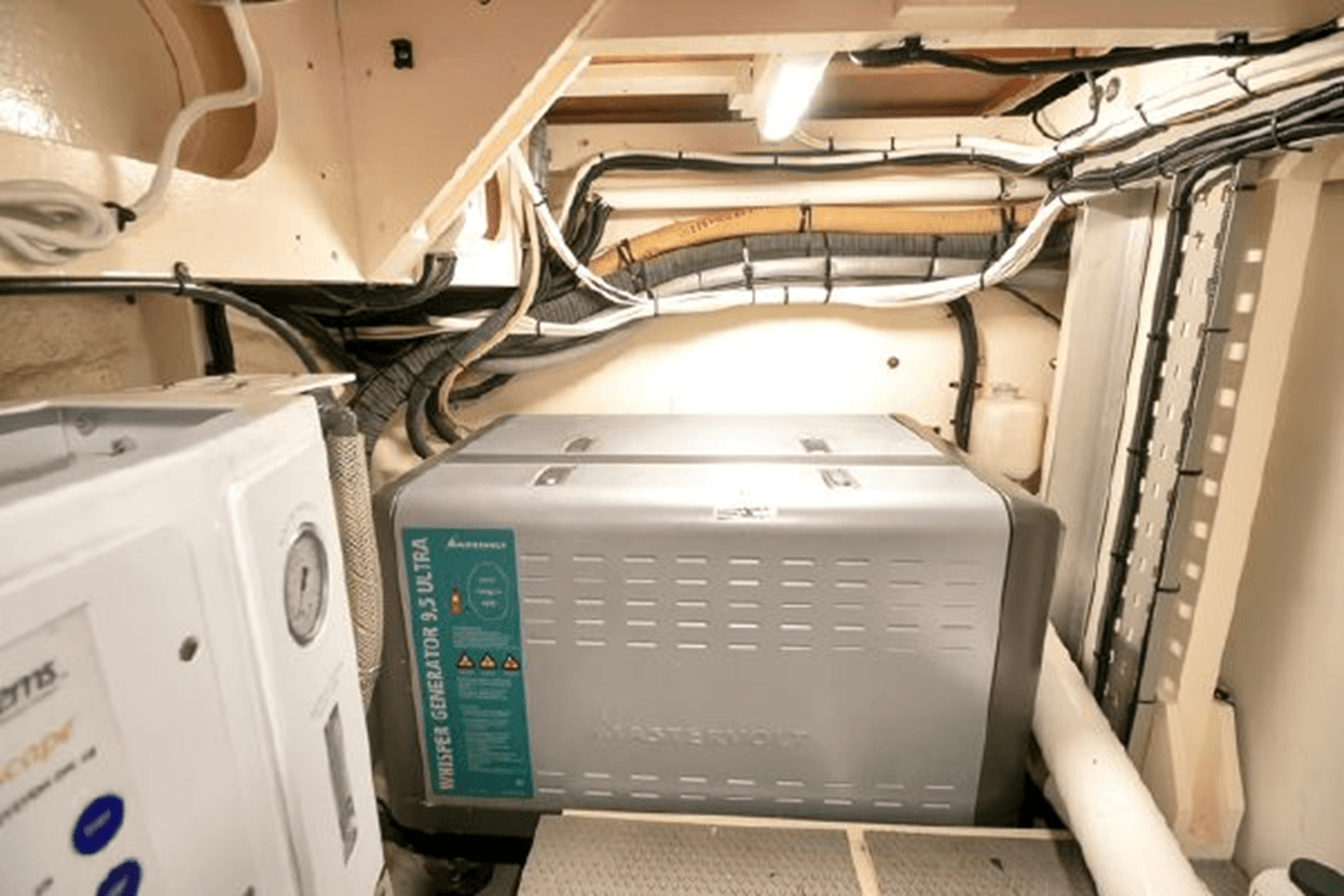
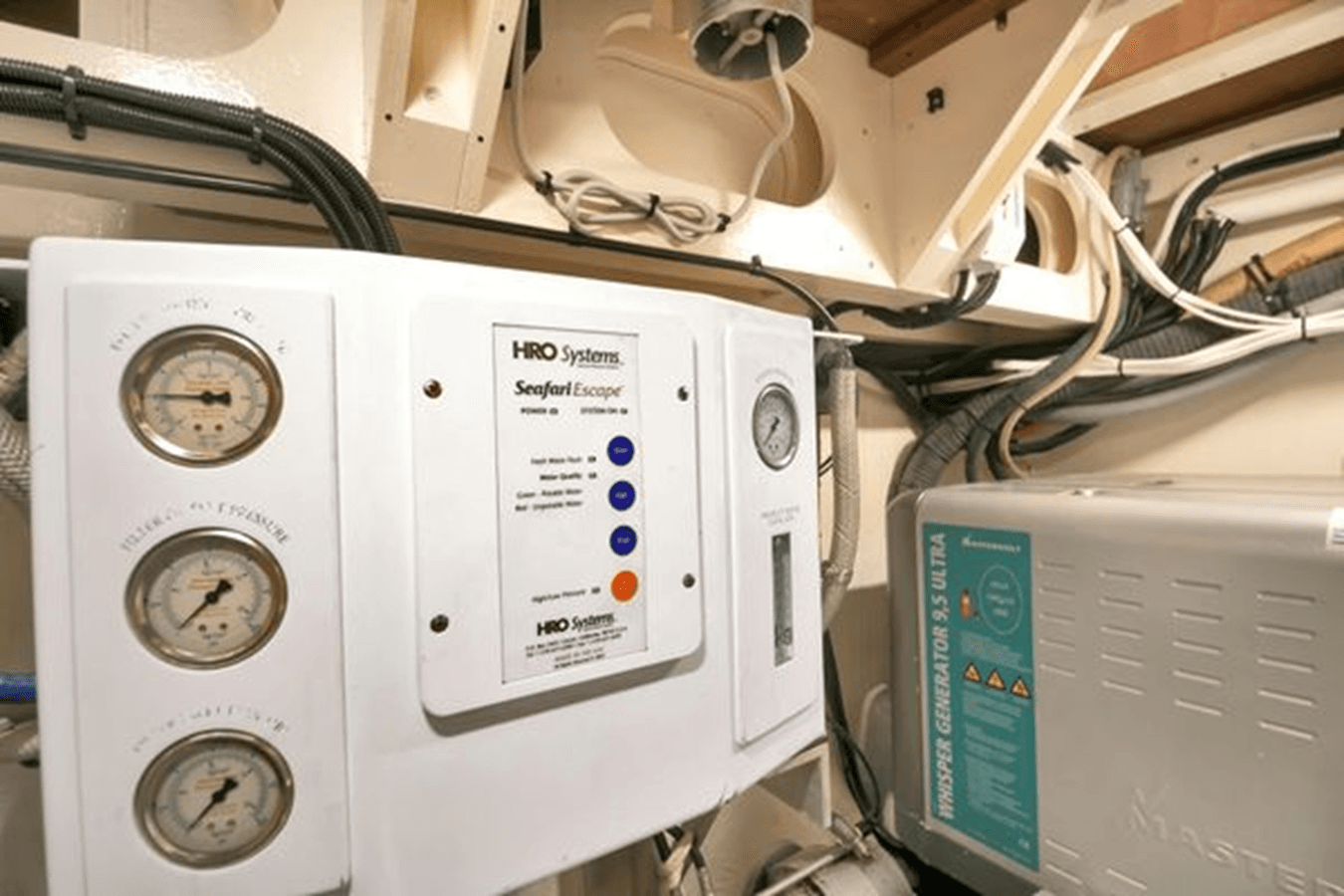
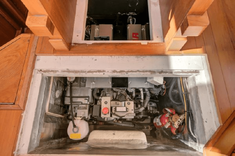
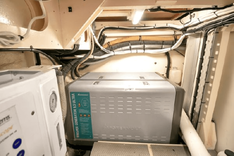
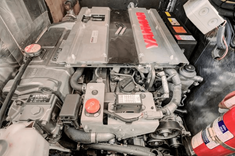
Under the hood, this performance cruiser carries a new one‑hundred‑fifty HP Yanmar 4LV150 installed by Deltaville Boatyard in twenty‑twenty‑two, with about seventy hours, backed by a fifty‑hour Yanmar service in December twenty‑twenty‑two that included oil and filter changes, transmission service, alignment, coupler service, and turbo cleaning. Yanmar electronic throttles and digital panels were fitted at both helms in twenty‑twenty‑two, and a Denso twelve‑volt, one‑hundred‑thirty‑amp alternator was added the same year. A Fireboy fire‑suppression system protects the engine space. Auxiliary power comes from a Mastervolt Whisper nine‑point‑five kW Ultra generator with roughly two‑hundred‑eighty‑one hours and a December twenty‑twenty‑two service. Diesel fuel polishing by Marsh Marine in Charleston, South Carolina in early twenty‑twenty‑three keeps the system clean. Propulsion is via a Max‑Prop three‑blade feathering prop, and a Lewmar autopilot with a twenty‑four‑volt Mamba drive supports the B&G pilots.
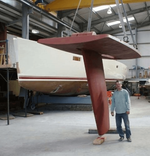
The Southerly variable‑draft swing keel is the signature technology that sets this world‑cruising sailing yacht apart. Twin canted rudders, a skeg‑protected propeller, bow and stern thrusters, and the robust swing keel deliver deep‑draft performance at ten feet six inches (and approximately ten feet nine inches at maximum extension as noted), precise directional stability, shallow‑draft freedom at three feet six inches, and the ability to dry out upright in tidal zones. With the keel raised, the yacht settles on a substantial cast‑iron grounding plate and a centerline skeg that shields the prop and keeps the rudders clear of the bottom. A hydraulic ram—positioned by a push‑button—locks the keel anywhere between fully retracted and fully extended; if it touches an underwater obstacle, the foil simply swings clear without harming the ram. The boat sails efficiently to within about thirty degrees of apparent wind and still noses past the fleet to anchor in just three feet six inches of water.
Proven for more than forty‑five years by over nine hundred owners since nineteen‑seventy‑eight, the Southerly swing keel is a cast‑iron aerofoil fin pivoted at the leading edge with a hydraulic hoist. The pivot bearing sits in a heavy cast‑iron grounding plate that adds fixed ballast, stiffens the keel area transversely, provides the pivot point, and protects the hull bottom. Pivot bosses at the forward end of the keel slot are cast integrally; matching stops at the aft end engage corresponding lugs on the keel to limit downward travel. The grounding plate and swing‑keel assembly are bolted into a molded fiberglass recess that is an integral, locally reinforced part of the hull. A hydraulic ram lifts and lowers the keel via a Spectra rope pennant attached at the trailing edge; the pump can be operated manually or electrically. Aerofoil sections are optimized to generate lift for excellent windward performance while keeping surface area low for minimal light‑air drag.
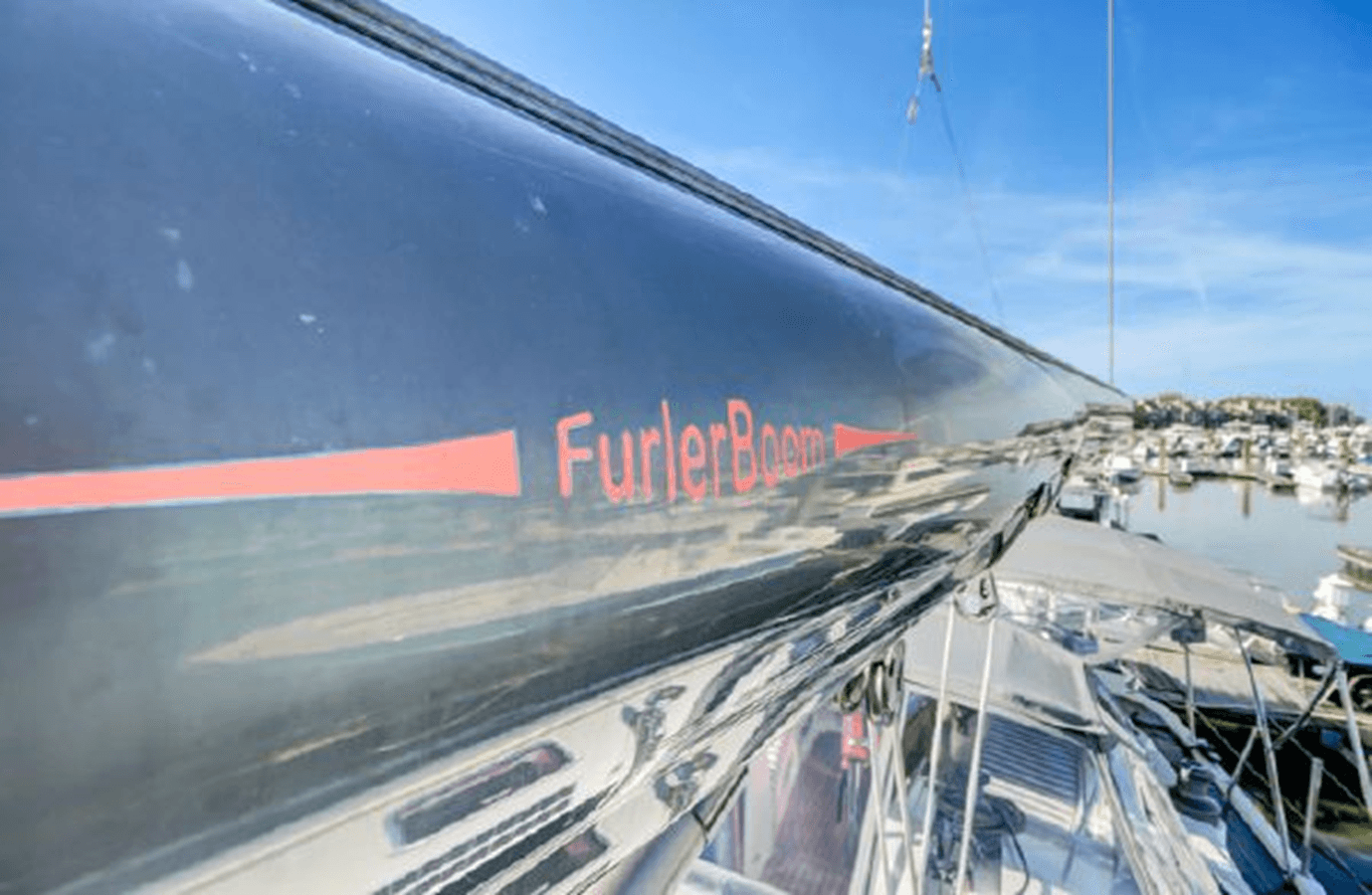
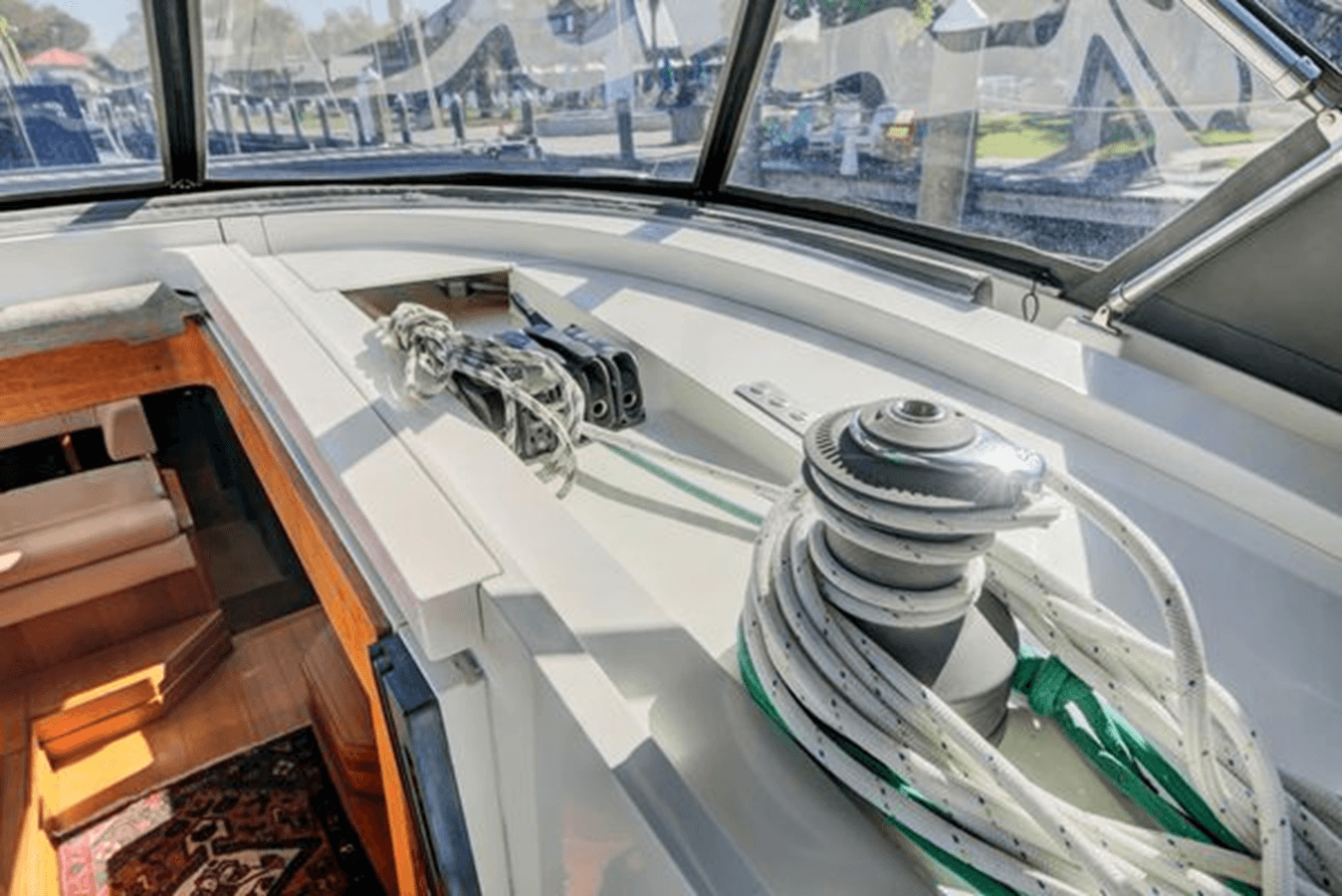
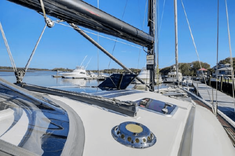
Sail power matches the yacht’s bluewater brief. With more than two thousand square feet of working sail (main and genoa), the Solent double‑headed rig combines an electric in‑boom‑furling mainsail with two electric‑furling headsails, one on the stem and one just aft. The self‑tacking blade jib on the inner stay makes single‑handed short‑tacking simple, while the one‑hundred‑forty‑percent genoa drives the boat to windward in moderate breeze. Offshore, unfurl both and pole out the blade for easy miles downwind; when the air softens, set an asymmetric from the retractable bowsprit. Gear includes a Selden triple‑spreader carbon‑fiber mast with Clearcote finish; a FurlerBoom electric in‑boom furling system removed, repaired, and serviced in twenty‑twenty‑two at Deltaville Boatyard; a North Sails Marathon mainsail serviced in twenty‑twenty‑two; a new main halyard in twenty‑twenty‑two; push‑button mainsail controls for furl and unfurl at the port helm; a Solent double‑headsail arrangement; a North Sails self‑tacking blade jib serviced in late twenty‑twenty‑two on a Furlex 400E electric furler; a North Sails genoa with a renewed canvas cover and twenty‑twenty‑two service on a Furlex 300E electric furler; Nitronic 50 rod standing rigging; and a Selden carbon‑fiber retractable bowsprit that extends hydraulically via a Navtec control in the cockpit. Light‑air and reaching inventory comprises an A3 and an A4 asymmetric with snuffer and sock. Power handling is via Lewmar forty‑eight electric halyard winches port and starboard, a Lewmar fifty‑four electric mainsheet winch and jib‑sheet winch, and Lewmar sixty‑eight two‑speed electric genoa sheet winches; all winches were serviced in December twenty‑twenty‑two. A hydraulic boom vang and backstay are on Navtec, and there is an additional masthead spinnaker halyard plus a standalone manual hydraulic mast‑jack system for carbon‑rig tuning, stepping, and unstepping. Mast steps ease going aloft.
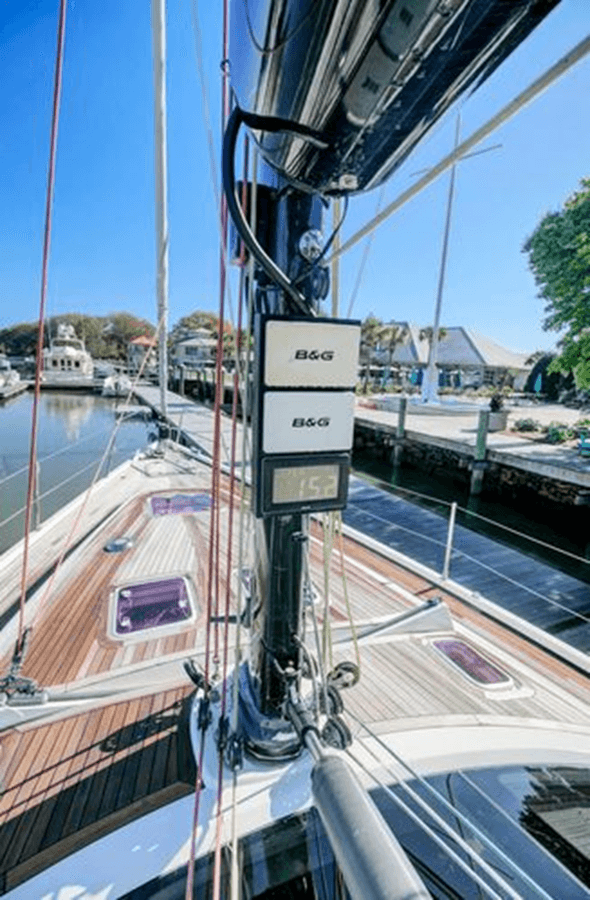
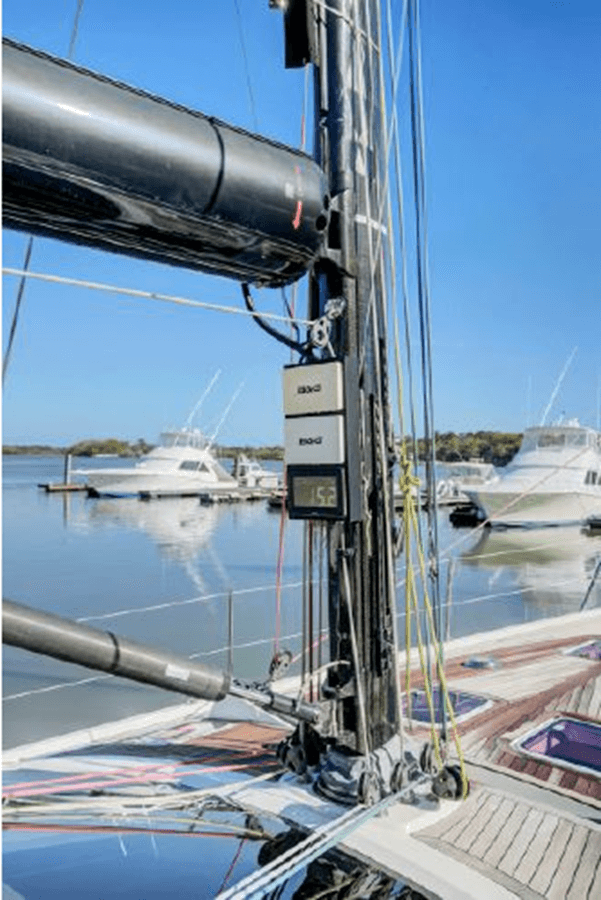
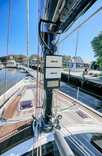
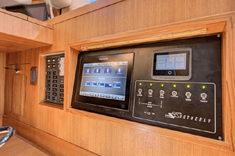
Navigation and electronics are comprehensive for offshore cruising. Both helms carry Yanmar engine control panels and Yanmar electronic throttles from twenty‑twenty‑two, Lewmar bow‑and‑stern thruster controls, and a compass. Autopilot control is duplicated, with a B&G primary control at the starboard helm, a B&G secondary at the port helm, and a B&G autopilot control at the nav. Each helm has a B&G Zeus Z12 display, and the port side adds a B&G H5000 display from twenty‑twenty‑three and an additional B&J Zeus display added in twenty‑twenty‑three. A B&G H3000 multi‑function display is at the starboard helm, with another H3000 at the nav. Three B&G H30000 Sail Pack mast displays are controlled from the starboard helm. A Simrad control feeds a Neovo screen at the nav, and a Raymarine multi‑function vessel control panel sits alongside. Long‑range communications include an Icom IC‑M801E MF/HF SSB transceiver at the nav connected to a digital PC and integrated with Weatherfax software, paired with an Icom SP‑24 speaker. VHF comms are via a Raymarine RAY218E at the nav plus a RayMic external handset and speaker at the helm. AIS covers both Class A and Class B, reprogrammed in twenty‑twenty‑three. A B&G radar integrates with the suite. A Furuno NavNet 3D system adds depth and redundancy with two twelve‑inch color multifunction displays, a twenty‑four‑inch radar digital scanner, GPS antenna, Ethernet hub, and VGA output to the TV in the master cabin. A Pactor modem ties into the digital PC and SSB. LED navigation lights and a twenty‑twenty‑three B&G software update complete the package.
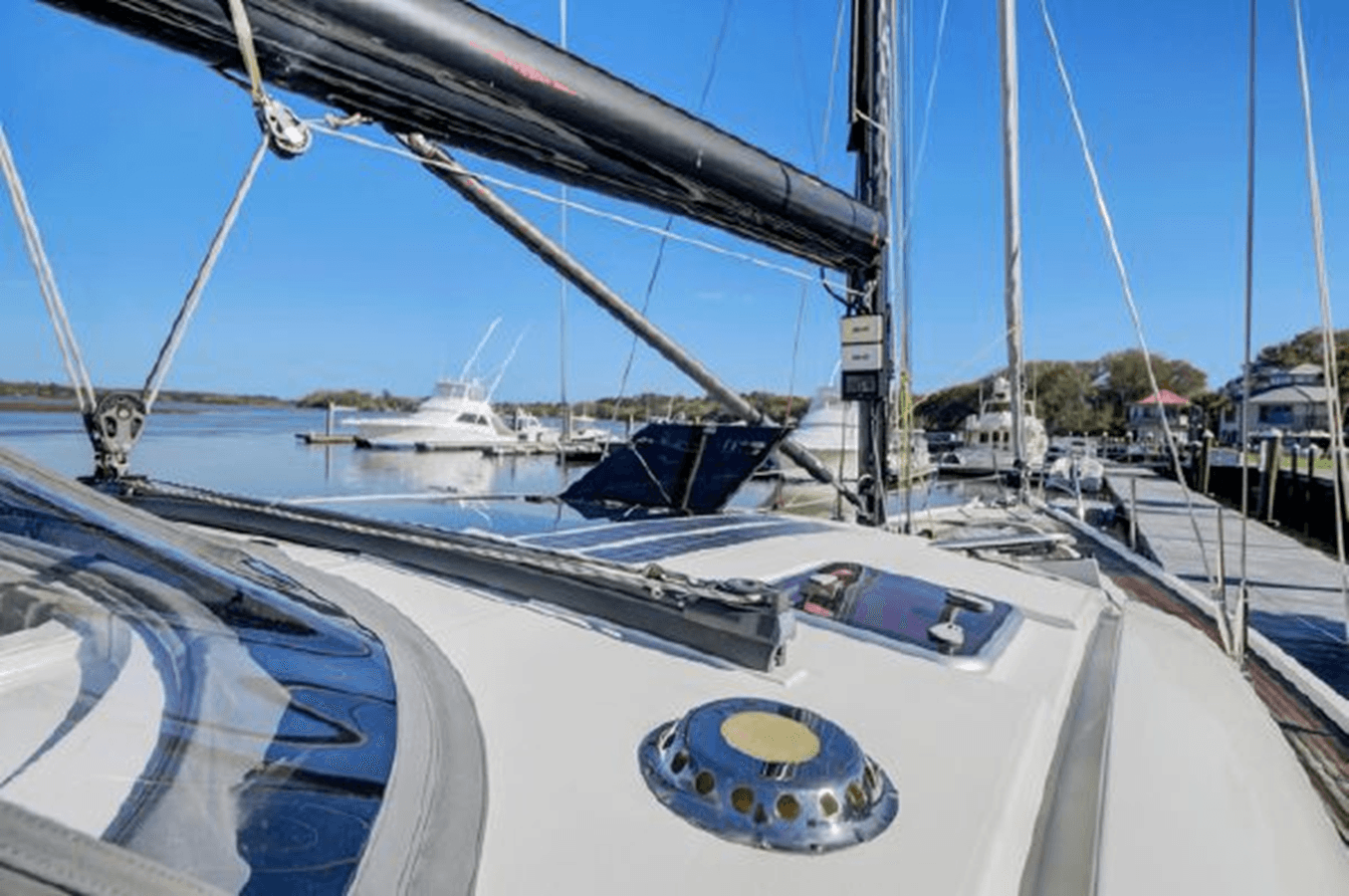
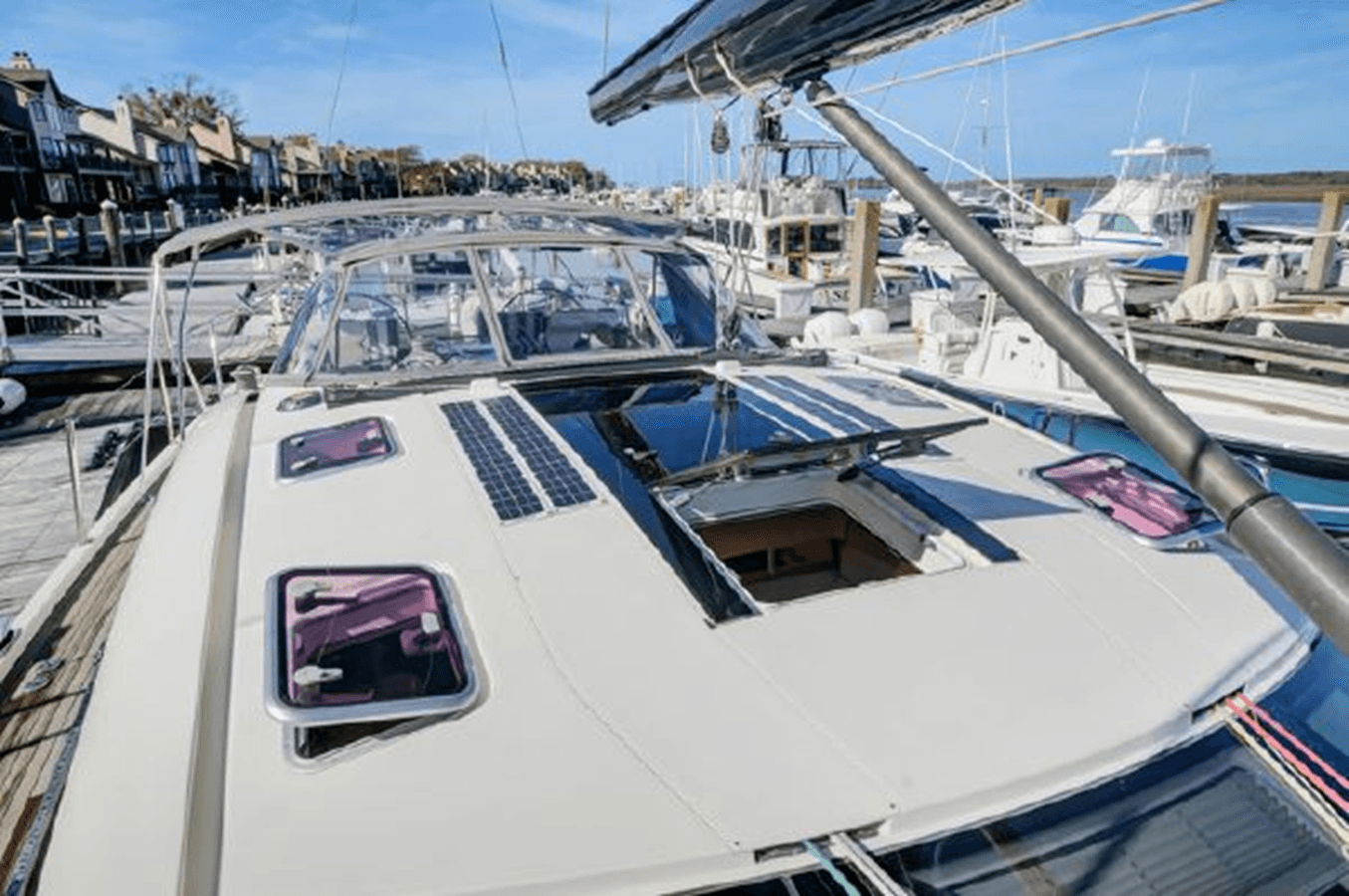
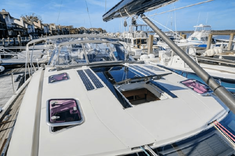
Electrical architecture is robust. A CAN‑bus distribution system runs twenty‑four volts at four‑hundred amp‑hours. Shore power is isolated through a Mastervolt one‑hundred‑ten/ two‑hundred‑twenty‑volt three‑point‑five kW transformer, with a Mastervolt twenty‑four/twelve‑volt DC converter and a Mastervolt energy monitor at the nav. EmpireBus digital switching with a Garmin display at the nav had inoperative components repaired or replaced in twenty‑twenty‑two and twenty‑twenty‑three. Charging sources include the engine alternator, the generator, solar, and shore power. Generation is via the Mastervolt Whisper nine‑point‑five kW Ultra with remote control at the nav. Solar panels are neatly installed on the coachroof. AGM batteries include approximately nine‑hundred amp‑hours for service, two‑hundred amp‑hours for the engine, and a dedicated generator battery. A dedicated twelve‑volt battery system supports ancillary loads. A MASS Combi inverter‑charger 24/4000 120A provides conversion and charging. Shore connections include two thirty‑amp inlets, an additional shore supply with changeover switch, and shore power cables.
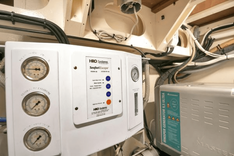
Fresh‑water and plumbing systems back up long‑range plans. A HRO Systems Seafari Escape watermaker produces ninety‑five liters per hour. Hot and cold water feed the heads and galley, and a hot‑and‑cold transom shower in the garage serves swimmers. Deck wash outlets at both bow and stern simplify clean‑up. Grey‑water pumps include a unit replaced in twenty‑twenty‑three. Bilge protection comprises a manual pump and three electric bilge pumps serving the sail locker, port main, and starboard main areas, with a high‑water alarm for safety. The galley washer/dryer and Tecma electric heads complete the domestic system.
On deck, at the helms, and below, the 57RS feels like a proper ocean‑going sailing yacht that a couple can handle—part luxury cruising yacht, part performance cruiser, part swing‑keel expedition sailboat. Built by expert craftspeople at Northshore in Itchenor, West Sussex, and upgraded with the right systems and recent maintenance, Soul Kitchen is ready to carry you farther with confidence. If you seek a variable‑draft deck‑saloon sailing yacht that expands your cruising grounds and your comfort, this 57RS makes the decision easy.

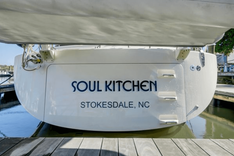
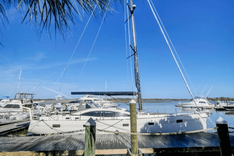
Yacht name «Soul Kitchen» – SOUTHERLYis for sale and located in Charleston, United States
Sail yachts «Soul Kitchen» built by manufacturer SOUTHERLY in 2010— available for sale. Yacht location: United States. If you are looking to buy a yacht «Soul Kitchen» or need additional information on the purchase price of this SOUTHERLY,
please call: +1 (954) 274-4435 USAOnly deal with professionals!

