
 Licensed Yacht BrokersYachts for Sale
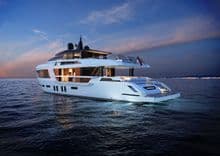
Tribale 95 Crossover - TRIBALE YACHTS FOR SALE












Basic information
- Builder:
- TRIBALE YACHTS
- Category:
- Motor yachts
- Sub Category:
- Expedition Yachts
- Model Year:
- 2025
- Year Built:
- 2025
- Country:
- Italy
Dimensions
- LOA:
- 95' (28.96m)
- LWL:
- 78' (23.88m)
- Beam:
- 24' (7.47m)
- Min Draft:
- 19.68' (6m)
- Max Draft:
- 24.33' (7.42m)
Speed, capacities and weight
- Cruise Speed:
- 19 Kts. (21.86 MPH)
- Max Speed:
- 23.50 Kts. (27.04 MPH)
- Gross Tonnage:
- 210 Pounds
- Water Capacity:
- 422.68 Gallons
- Fuel Capacity:
- 3434.24 Gallons
Accommodations
- Sleeps:
- 7
- Total Heads:
- 6
- Crew Berths:
- 5
Hull and deck information
- Hull Material:
- Fiberglass and Plastic Yachts
- Deck Material:
- Fiberglass Sandwich
- Hull Configuration:
- Fast Displacement Hull
- Hull Color:
- White
- Hull Designer:
- Tribale Yachts
- Exterior Designer:
- Michele Dragoni
- Interior Designer:
- Michele Dragoni
Engine information
- Engines:
- 2
- Manufacturer:
- MAN
- Engine Type:
- Inboard
- Fuel Type:
- Diesel
Overview
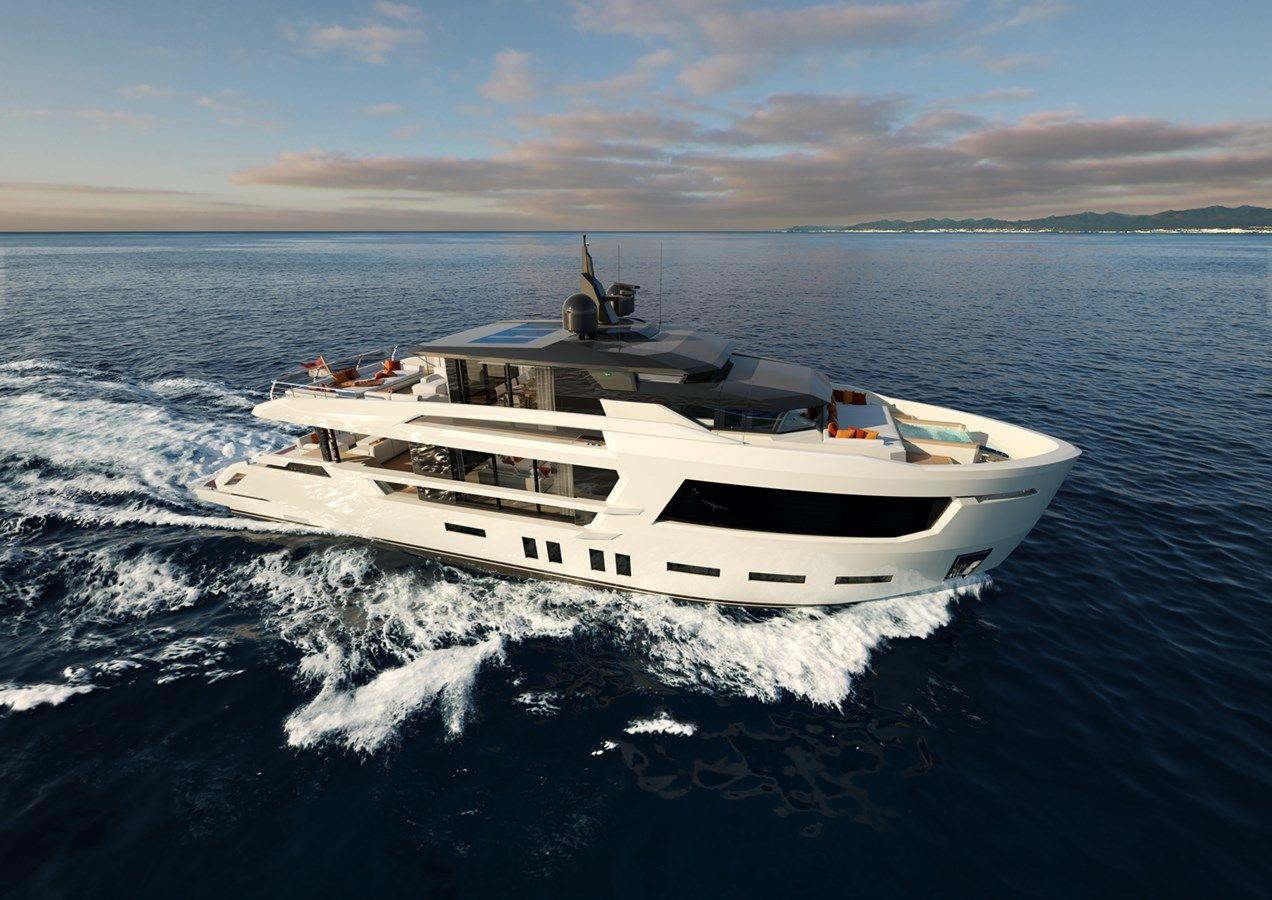
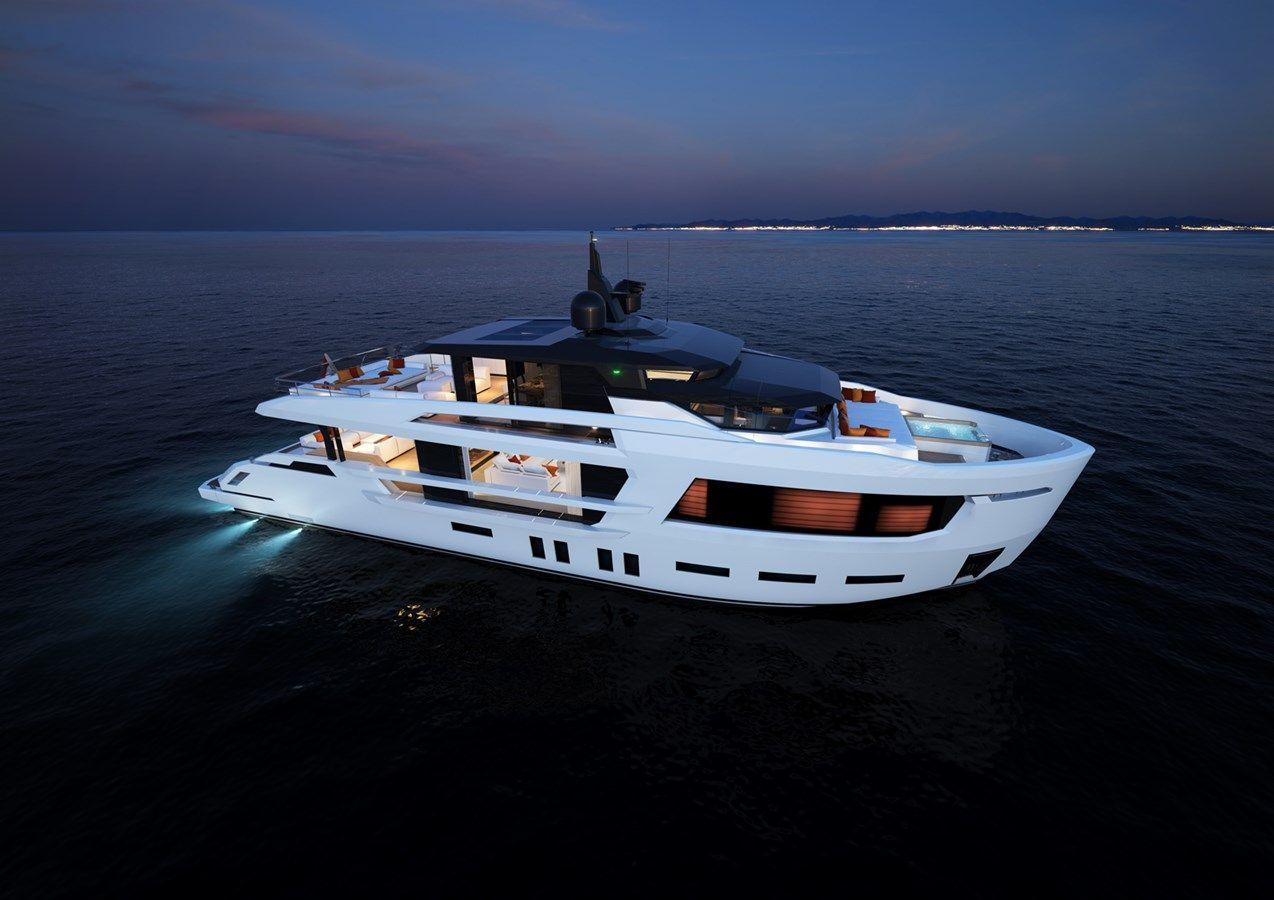
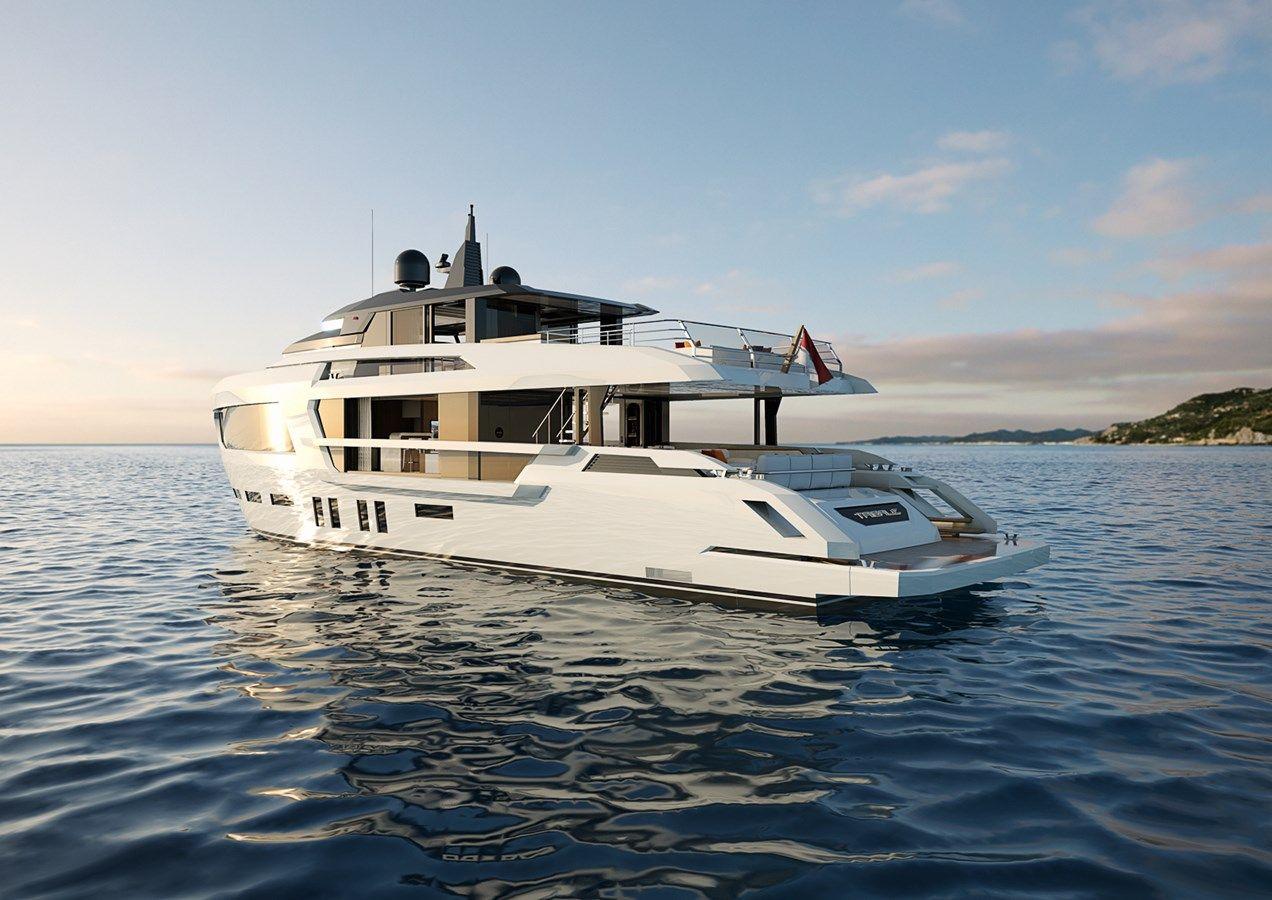
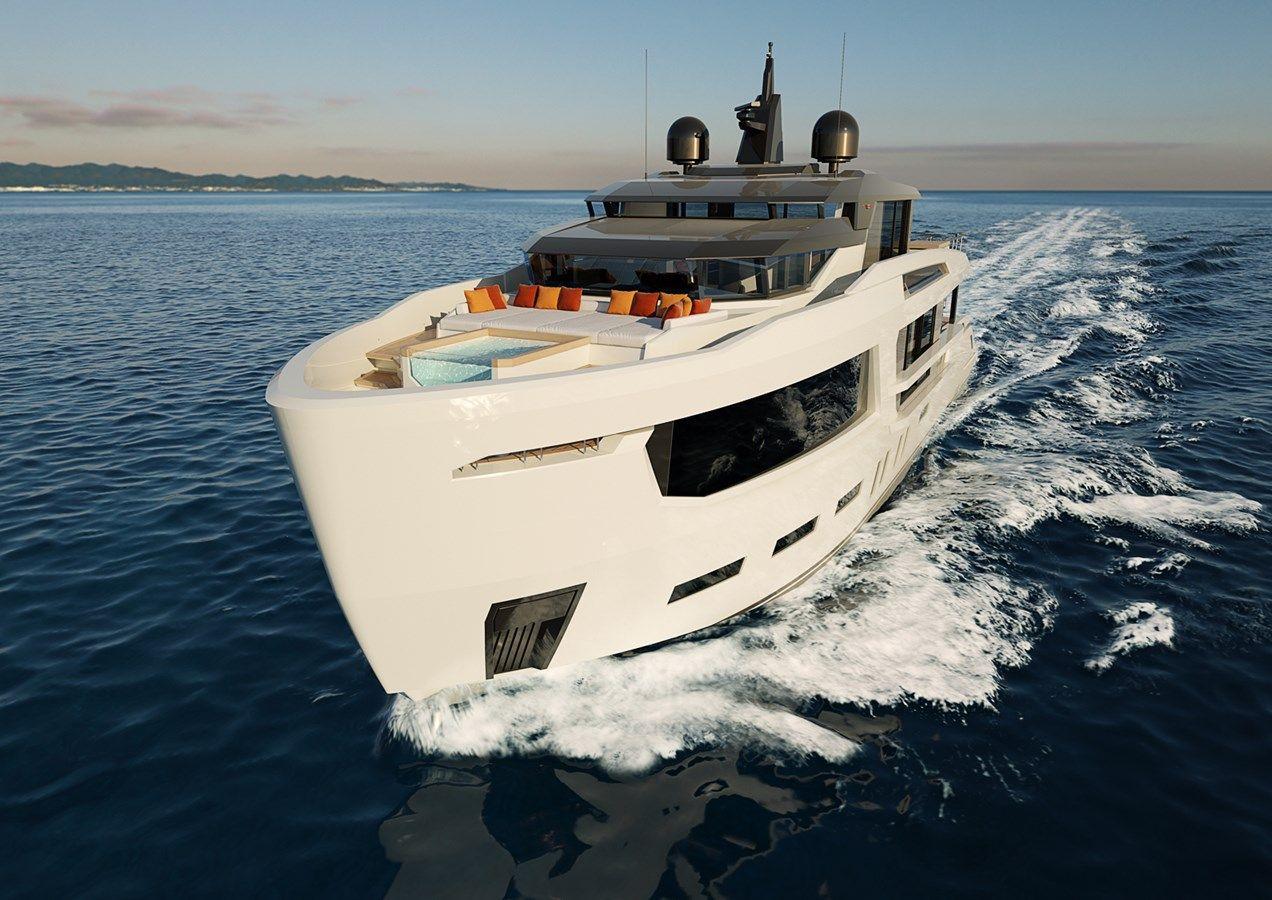
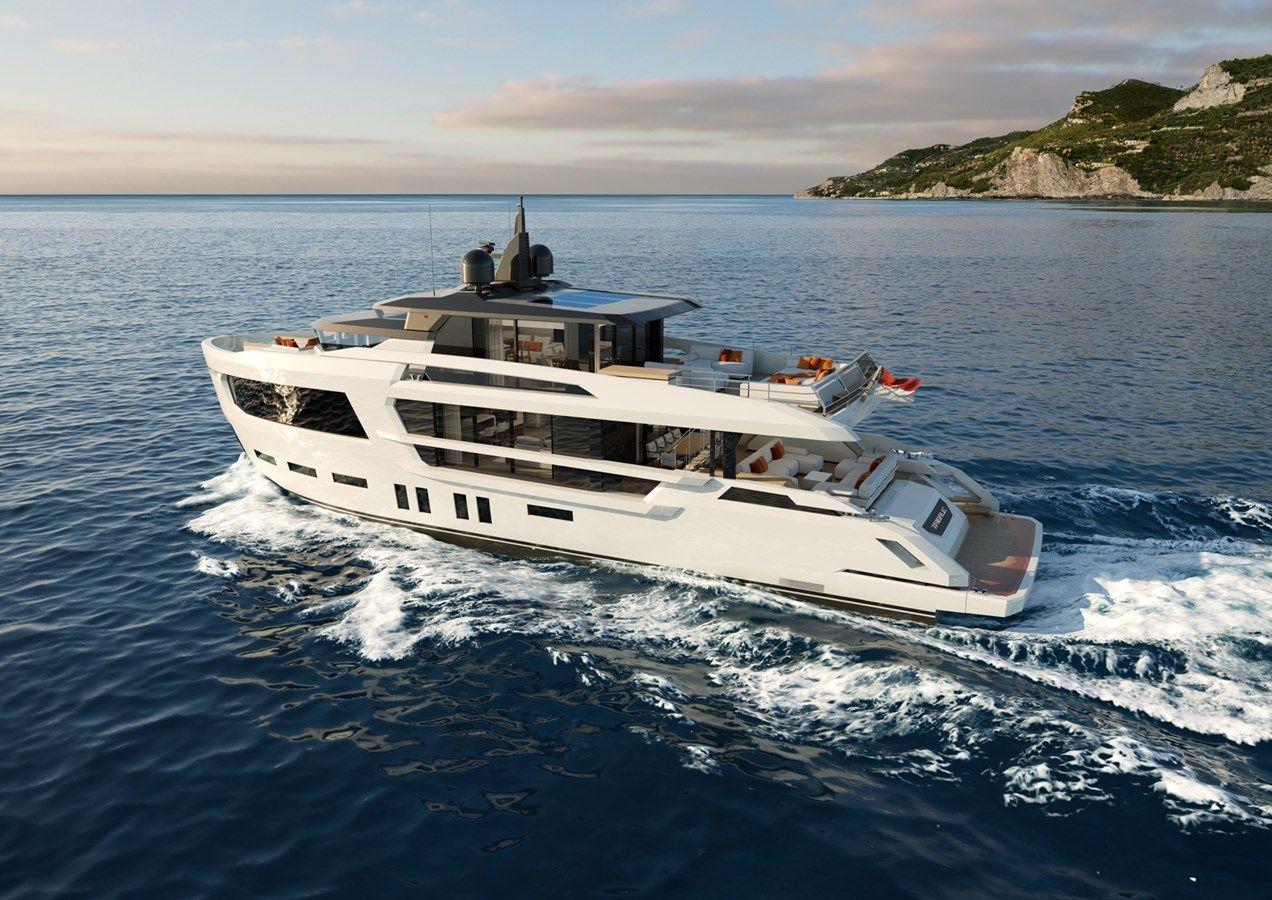
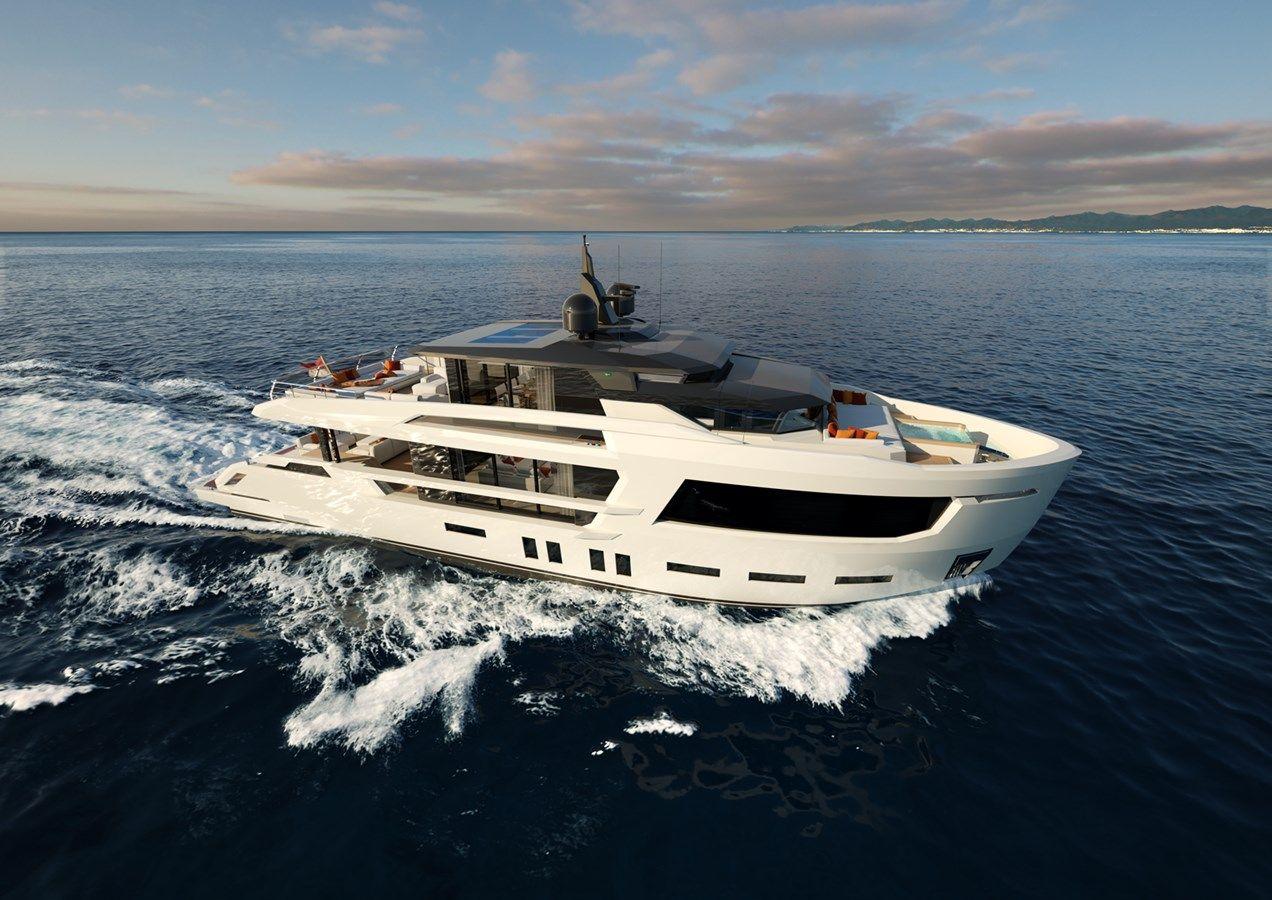
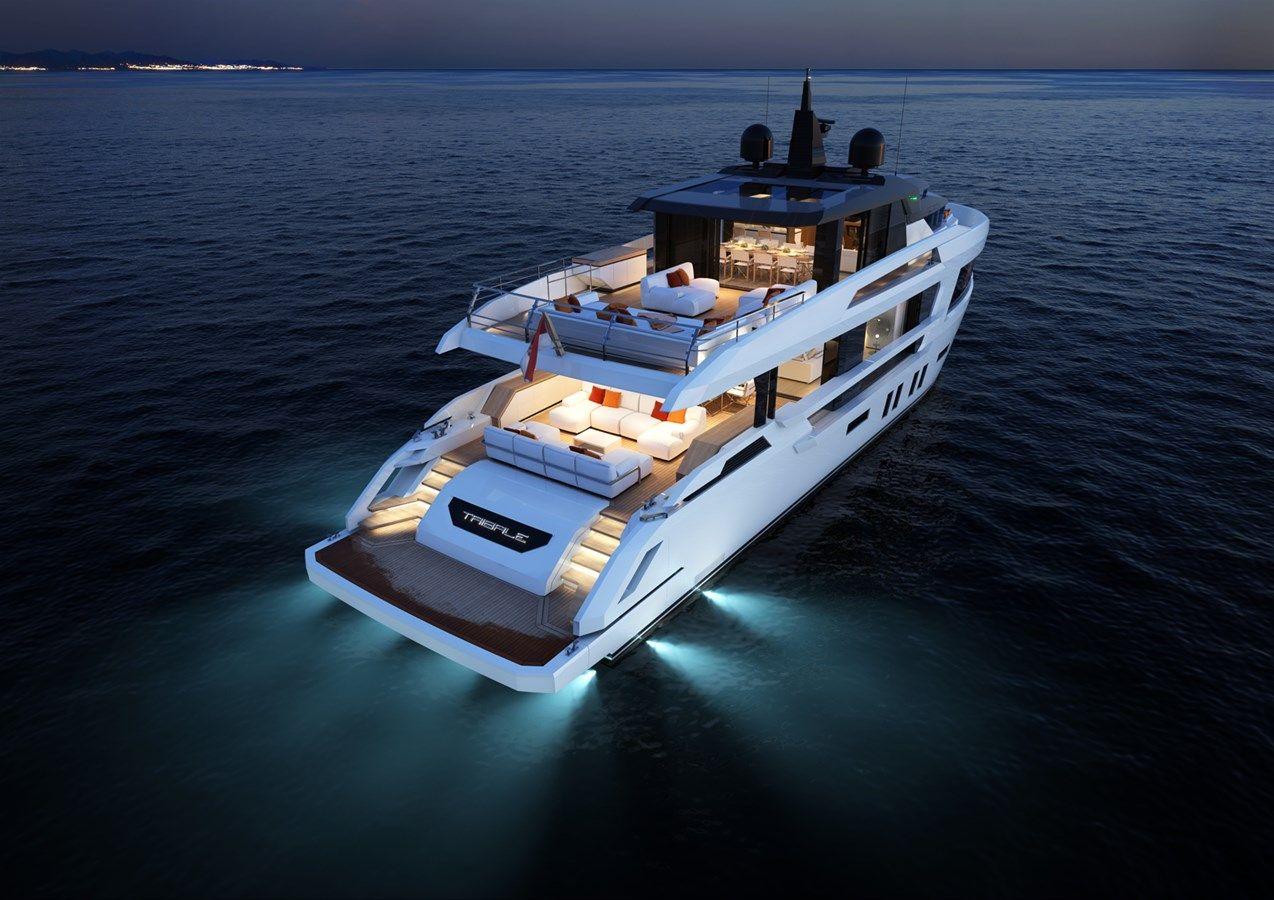
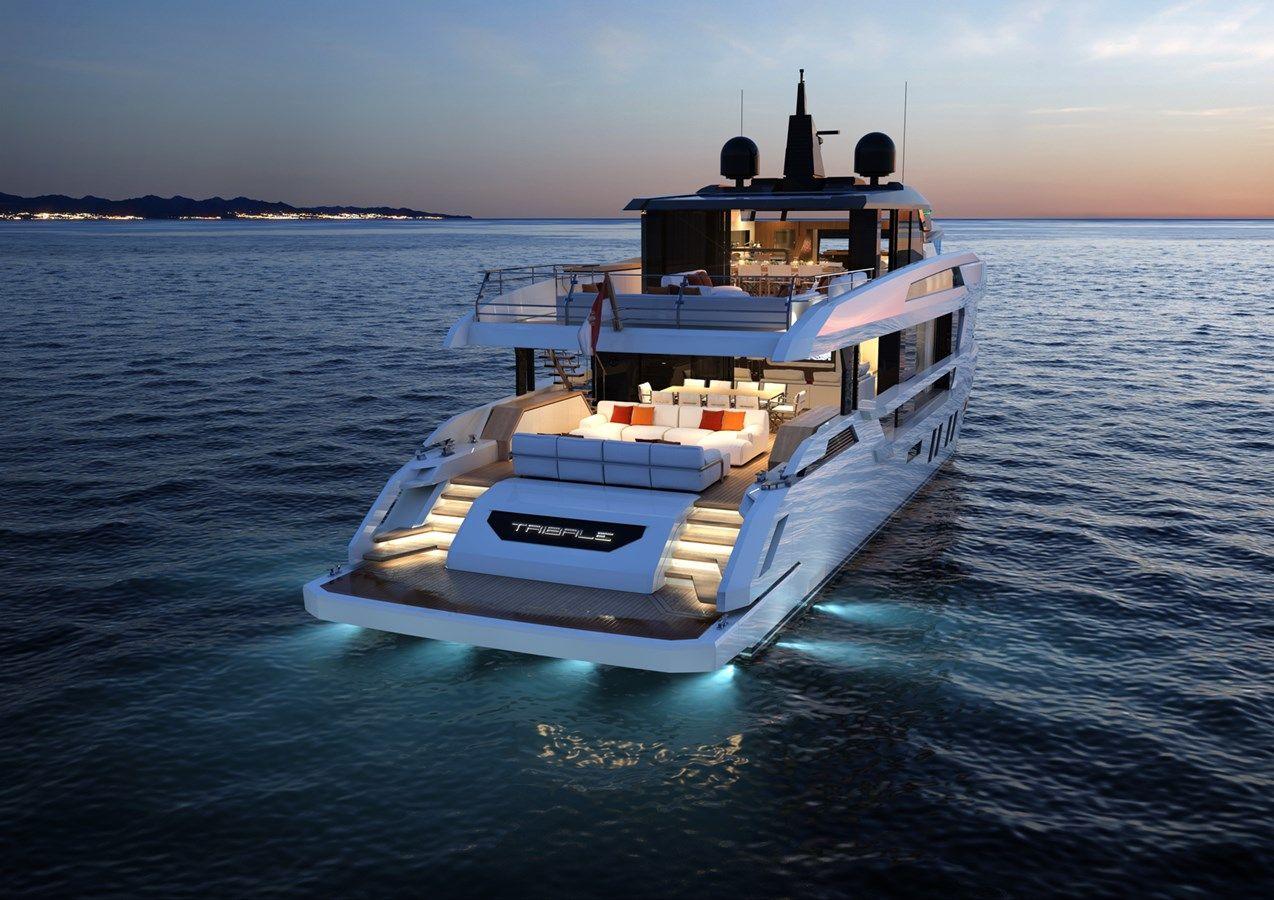
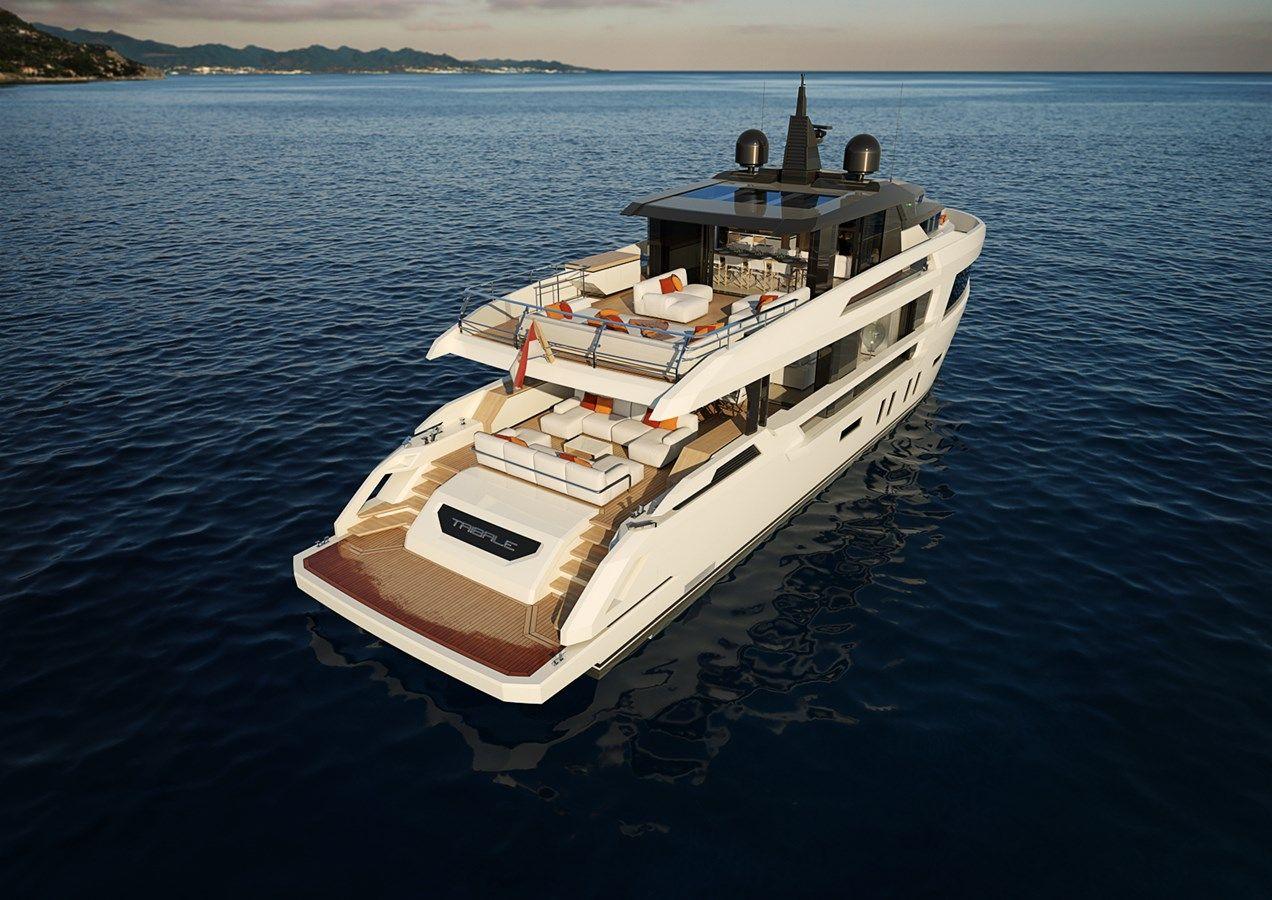
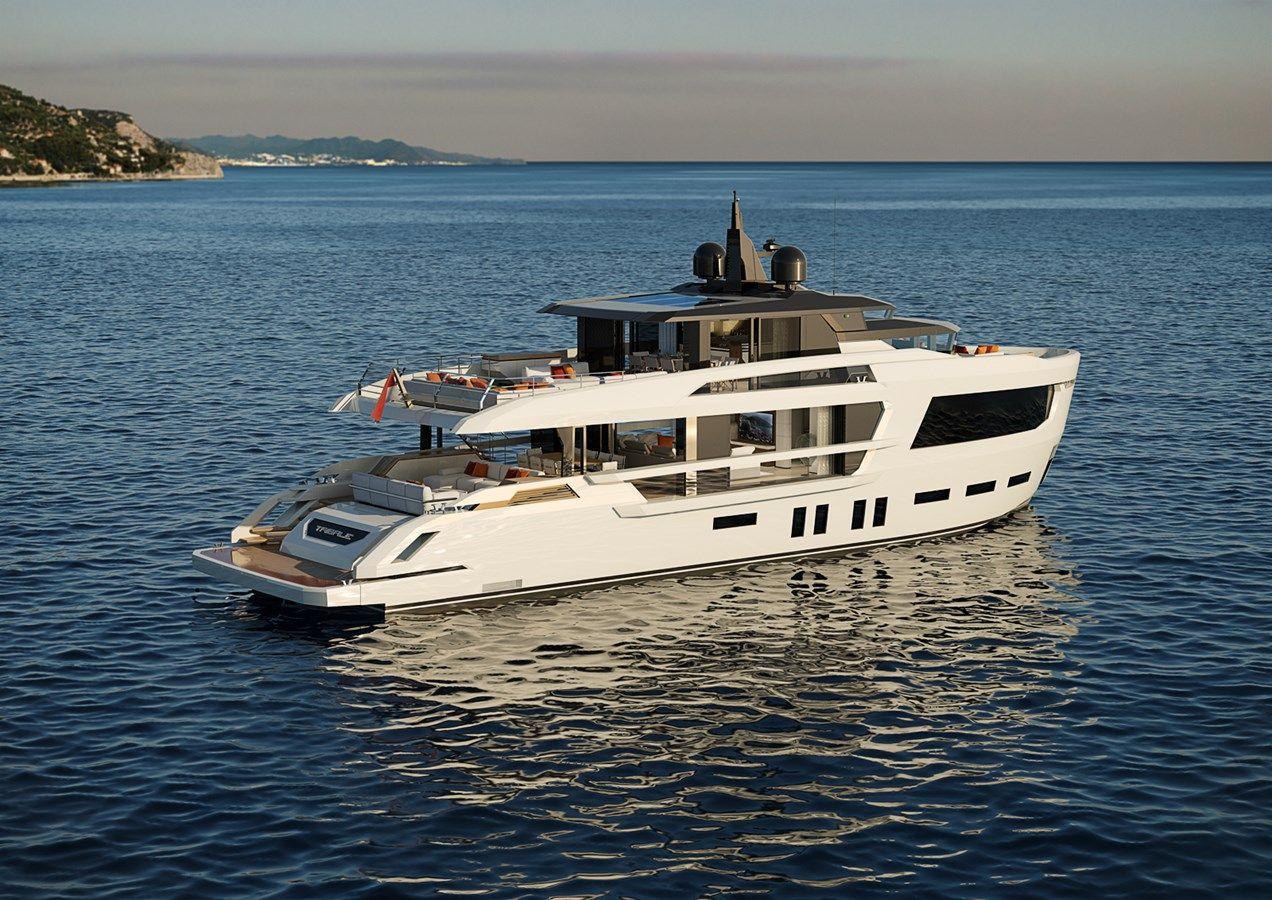
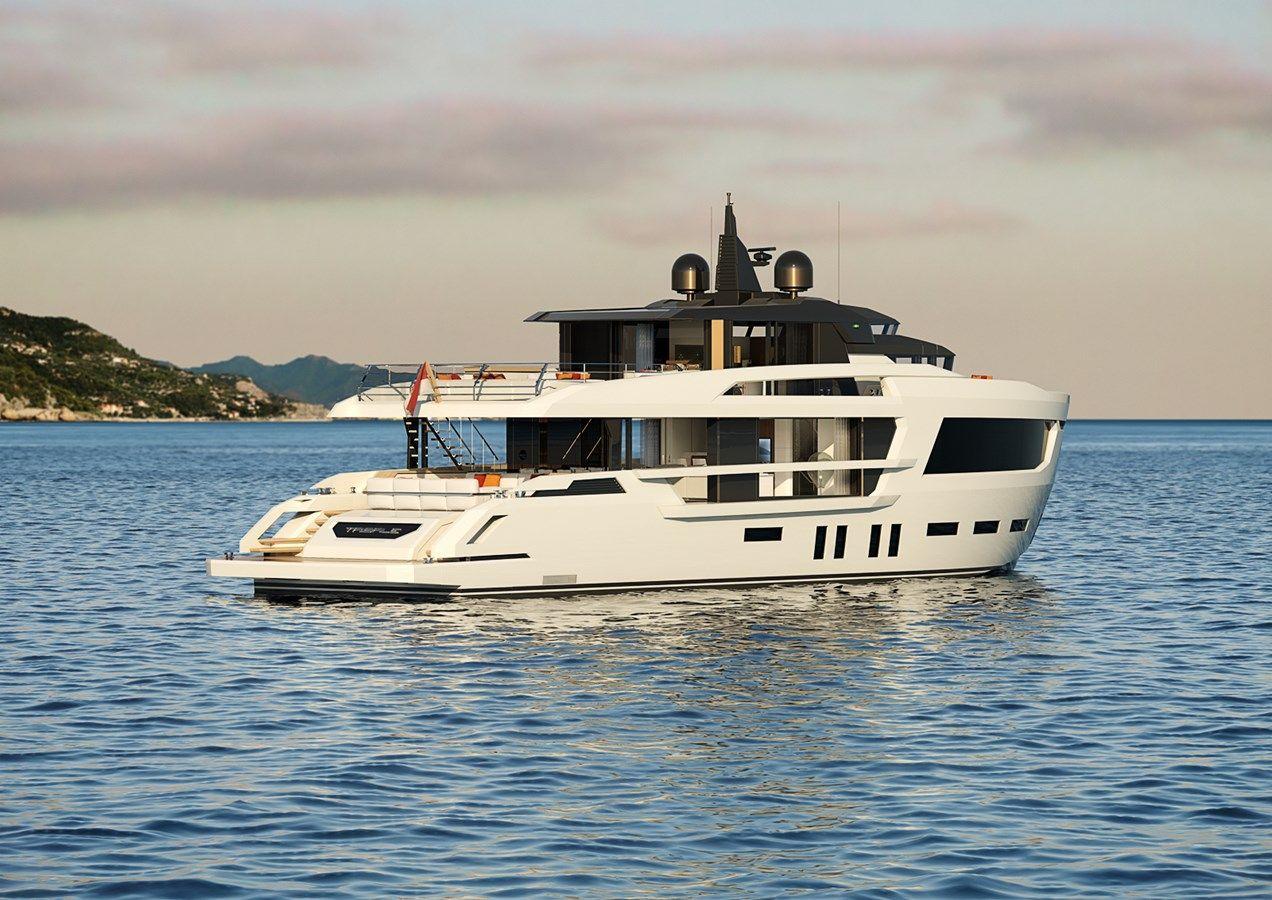
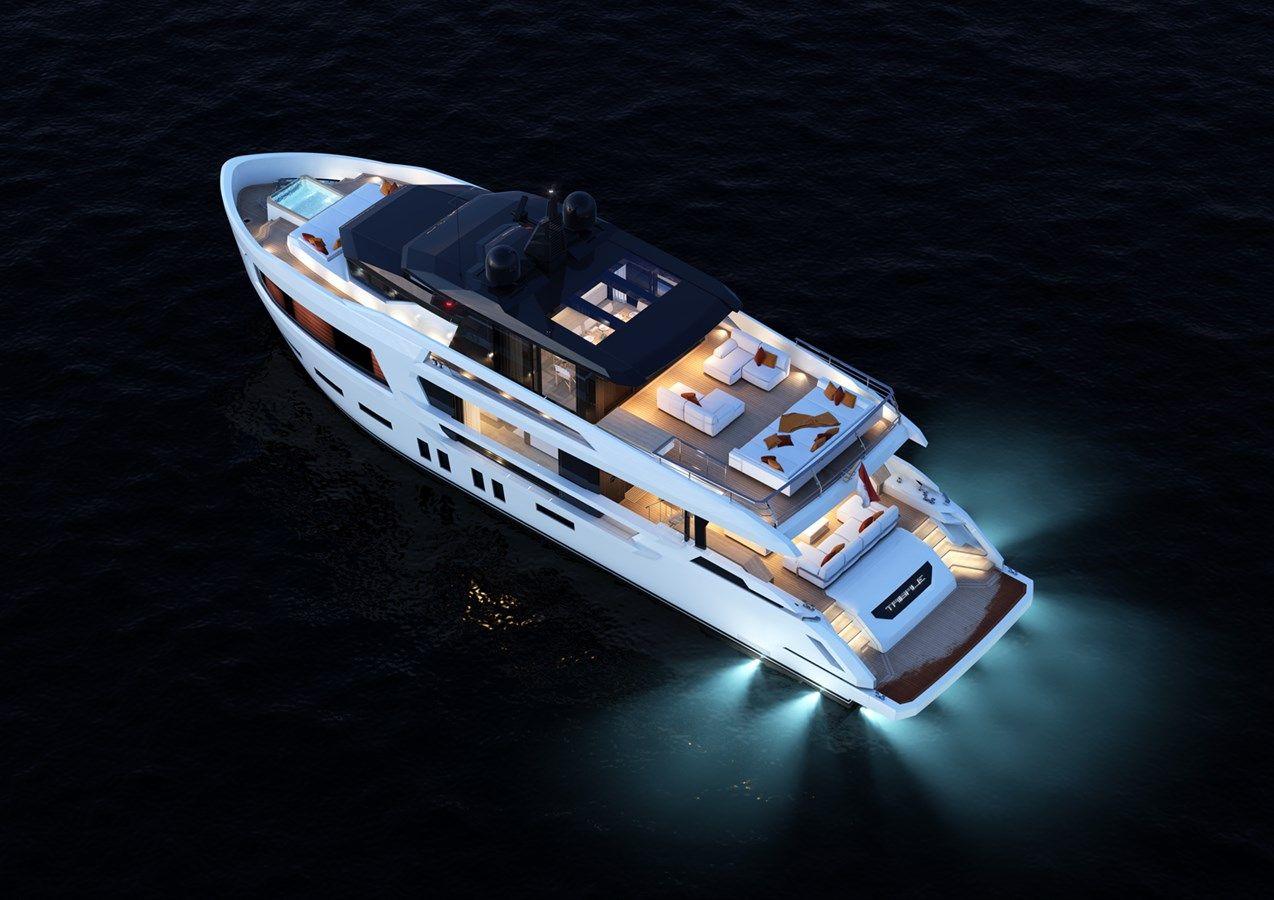
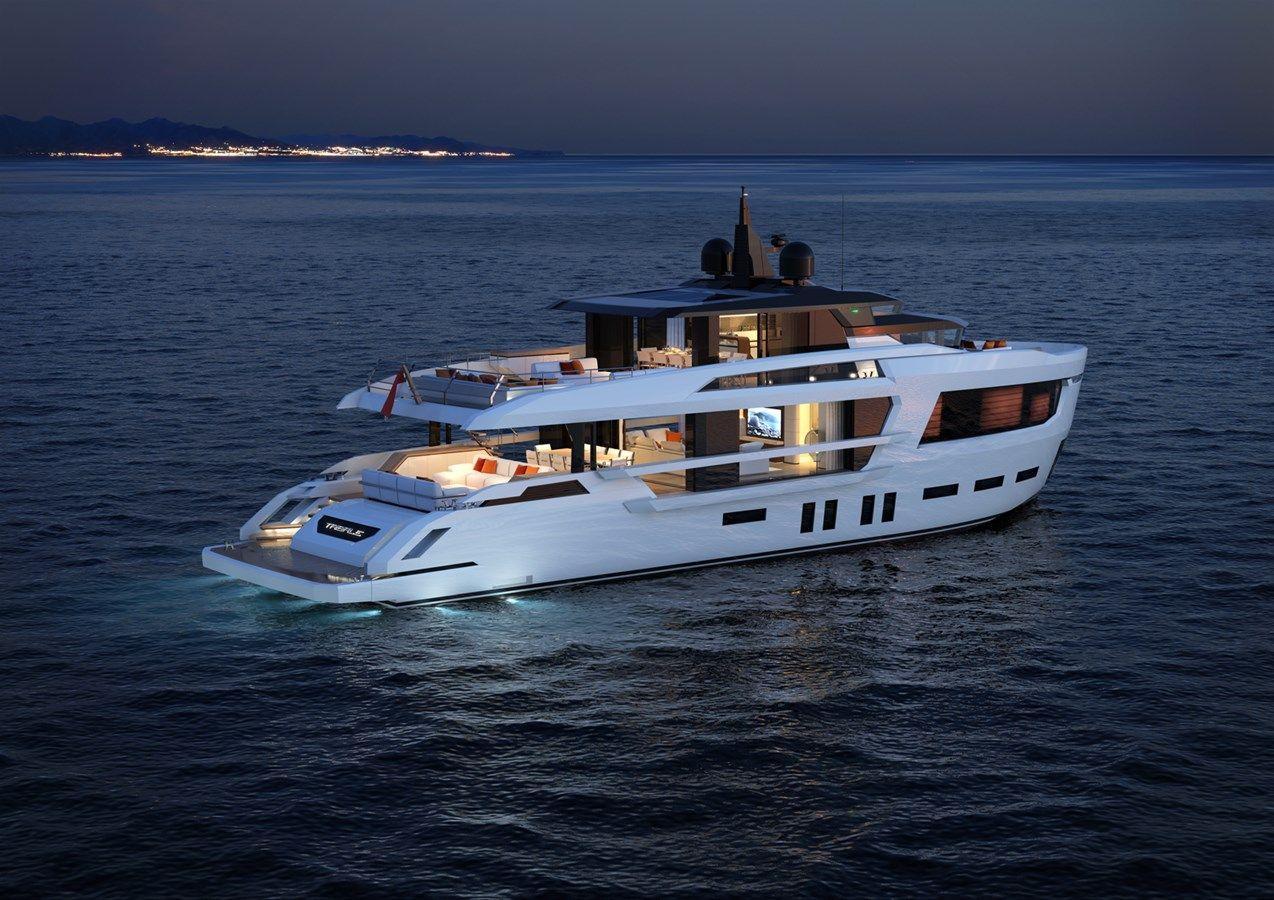
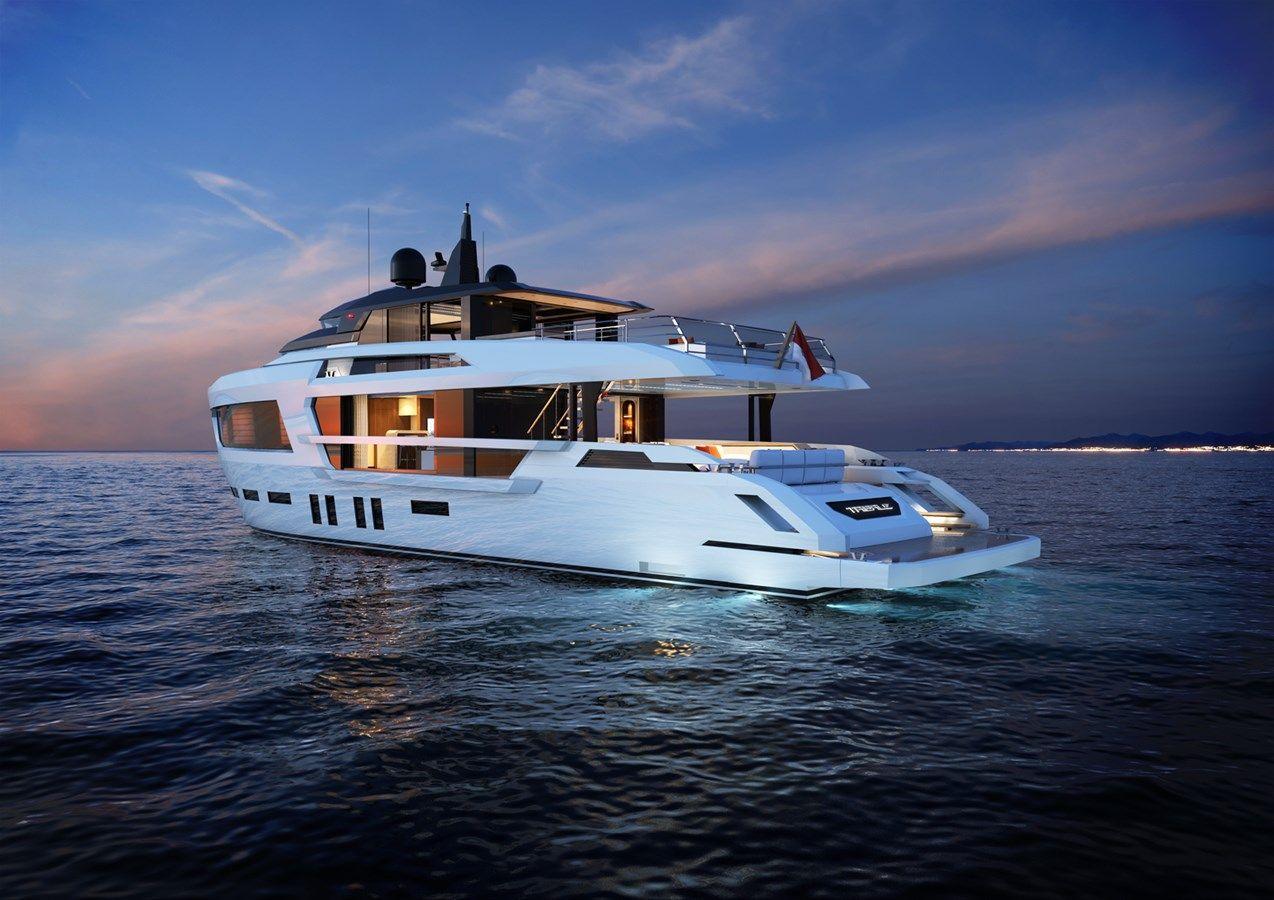
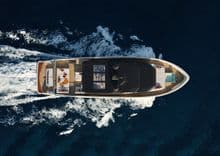
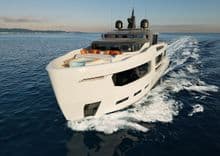
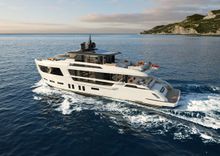
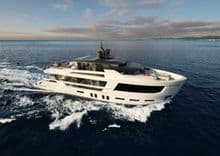
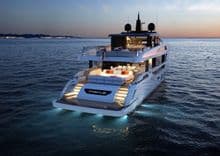
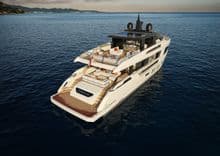
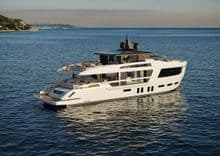
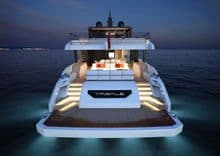
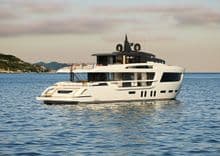
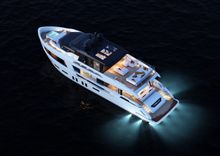
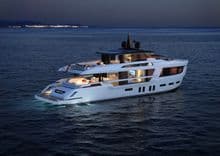
The Tribale 95 is a stunning example of marine artistry, a custom motor yacht crafted in 2025 by the esteemed Tribale Yachts. Spanning an impressive 28.96 meters—approximately 95 feet—this exquisite vessel embodies a perfect fusion of luxury and performance.
Constructed from a carefully selected array of premium materials, the Tribale 95 emerges as a striking architectural marvel on the water. Renowned for their innovative designs and exceptional craftsmanship, Tribale Yachts has meticulously ensured that the yacht’s visual allure is matched by its superior functionality.
What sets the Tribale 95 apart is not merely its impressive length. While this is certainly a significant aspect, the true essence of this motor yacht lies in its harmonious blend of opulence and adaptability. It seamlessly integrates the spaciousness, stability, and extensive amenities typical of larger yachts with the nimbleness and responsiveness of smaller vessels. This unique combination allows guests to relish extended voyages across the open sea as much as quick excursions along the coast.
Designed for indulgence, the Tribale 95 features a wealth of exhilarating amenities within its thoughtfully designed layout. The accommodations include several sophisticated cabins, each crafted to provide guests with an unparalleled sense of comfort and privacy. Every room showcases elegant decor, cutting-edge fittings, and a plethora of amenities, creating a serene environment for relaxation and enjoyment.
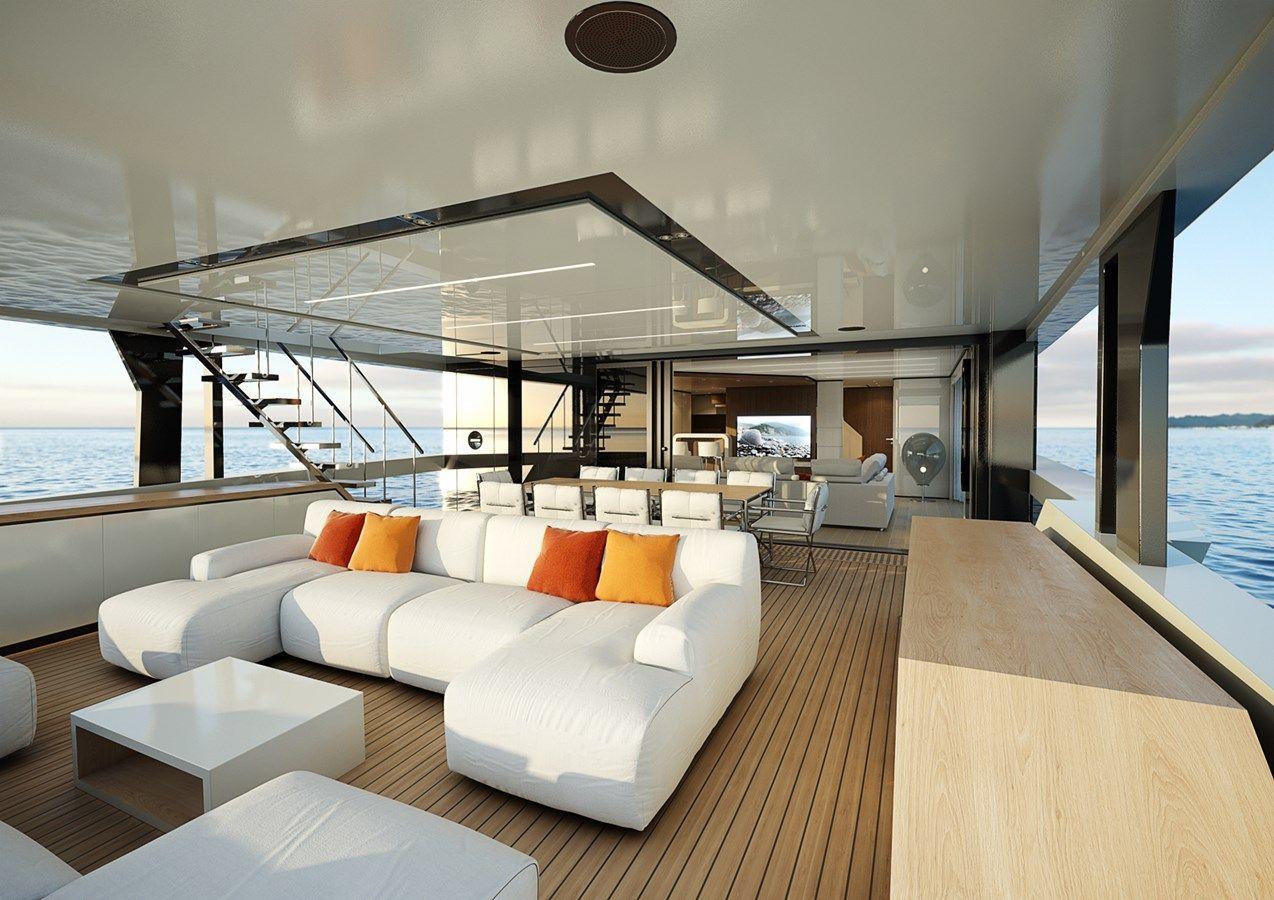
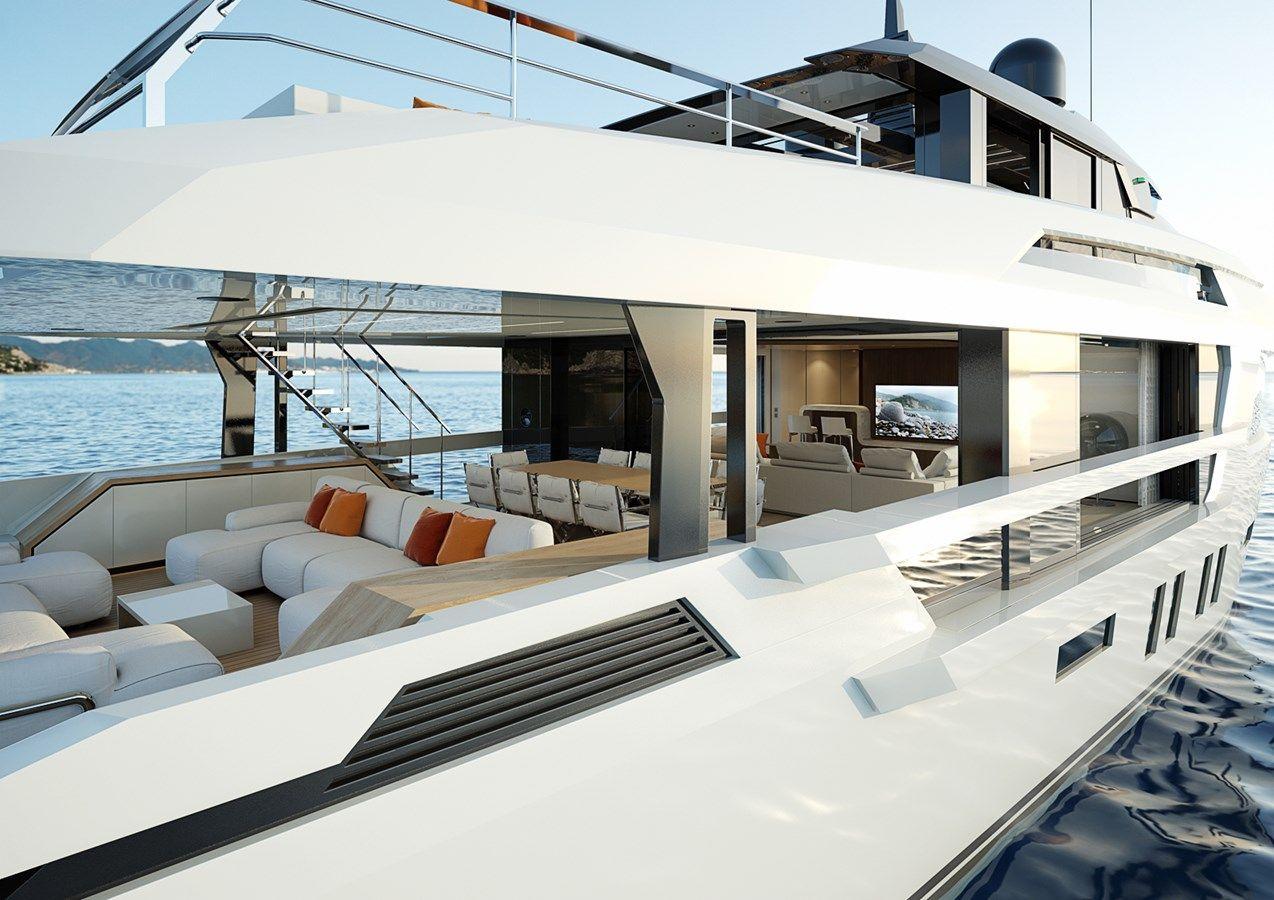
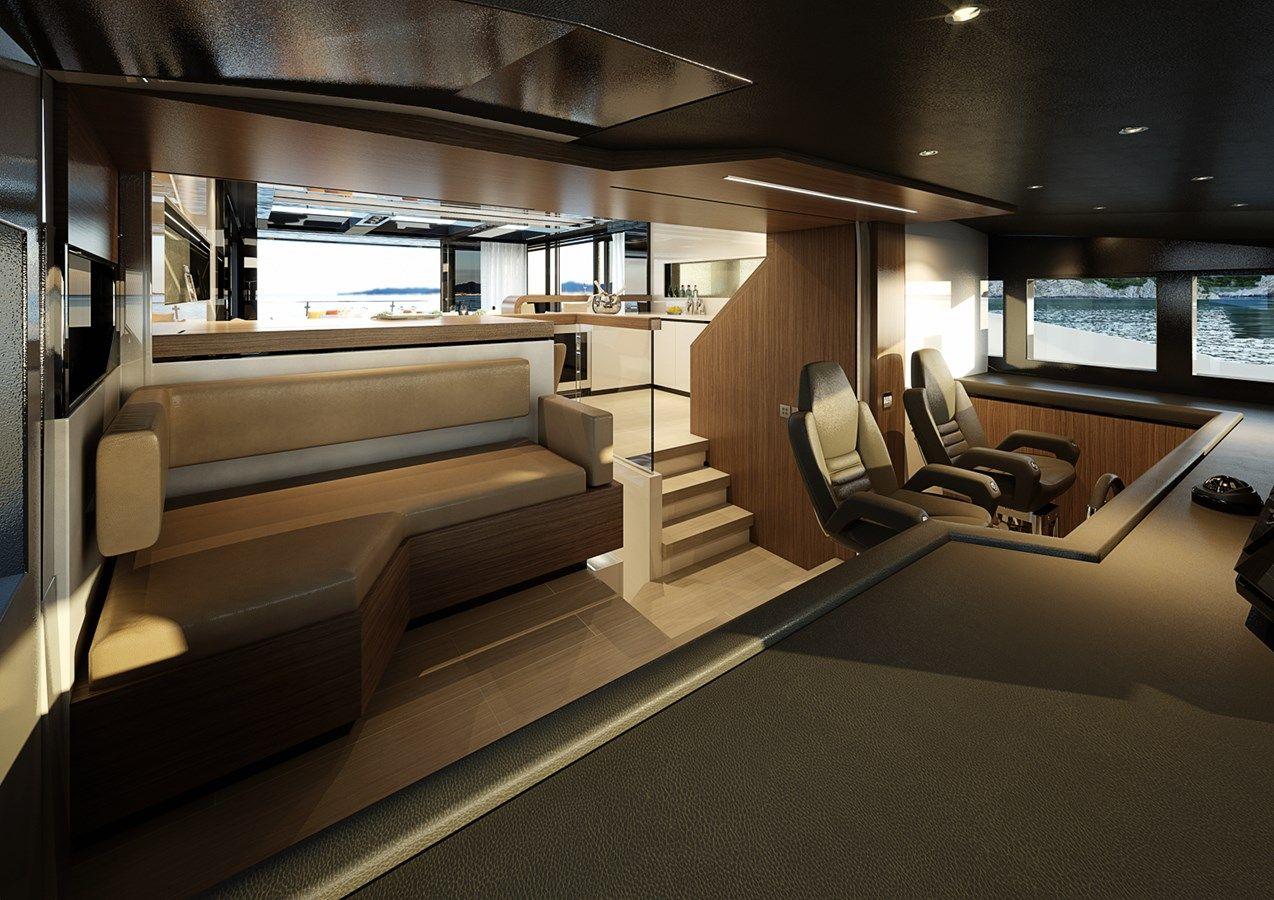
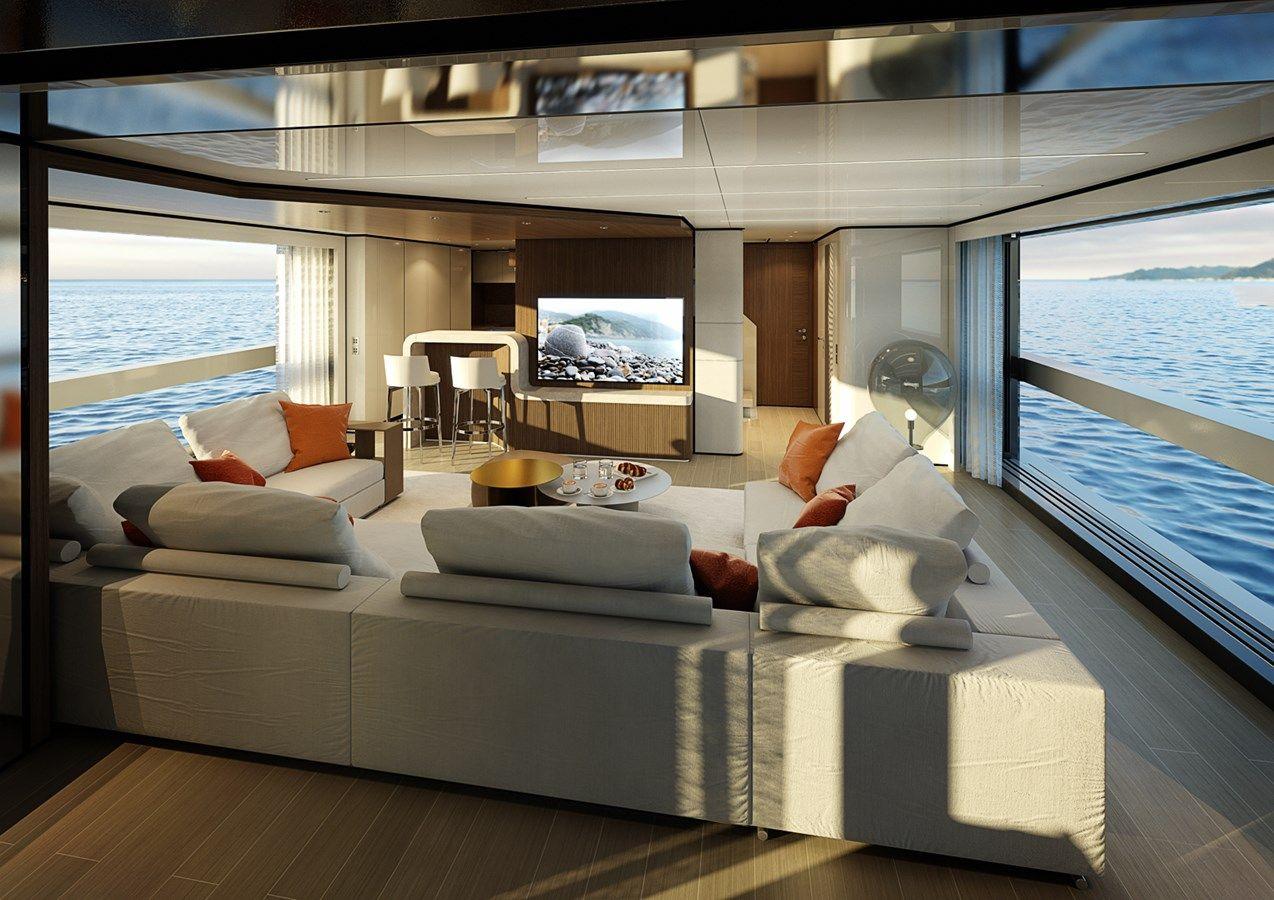
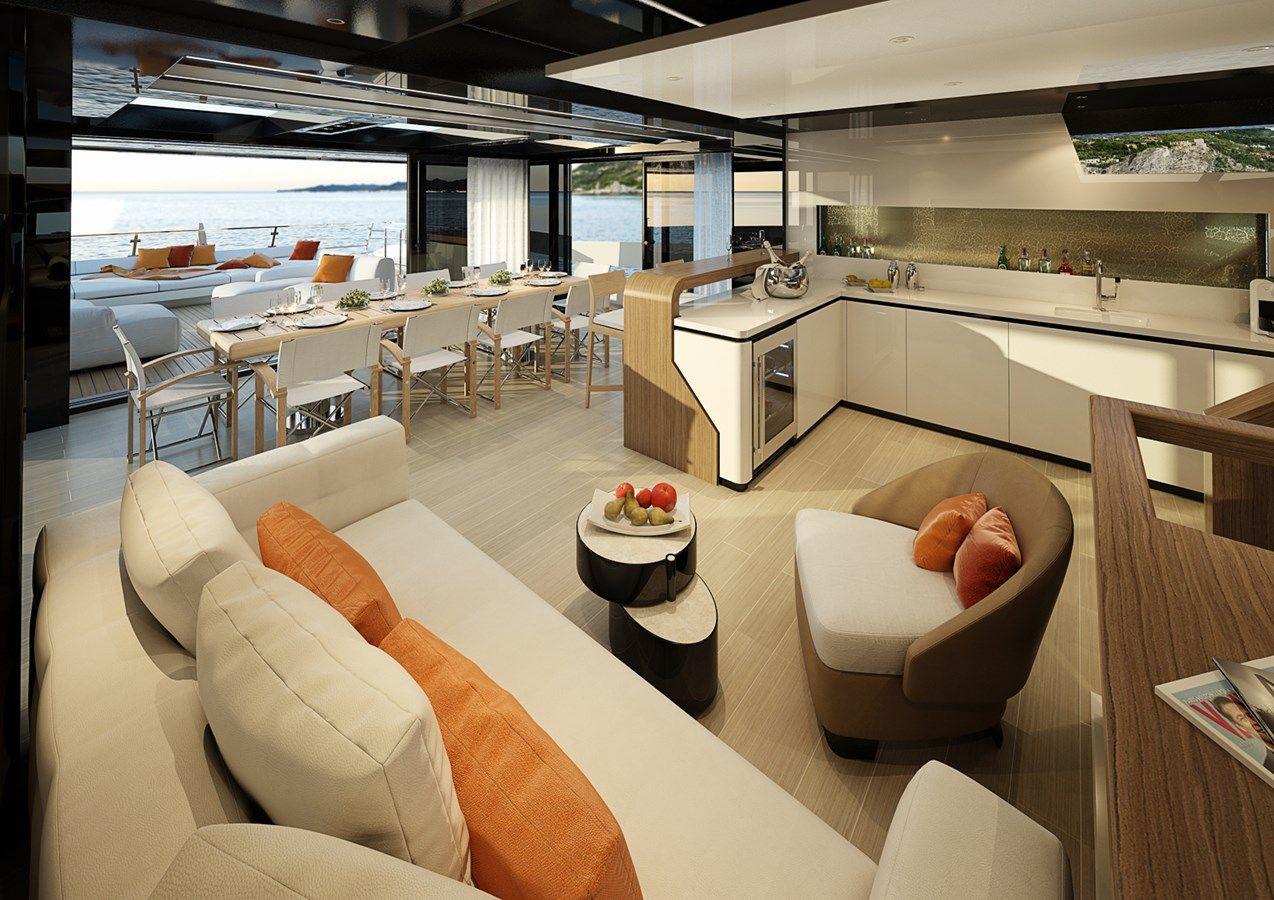
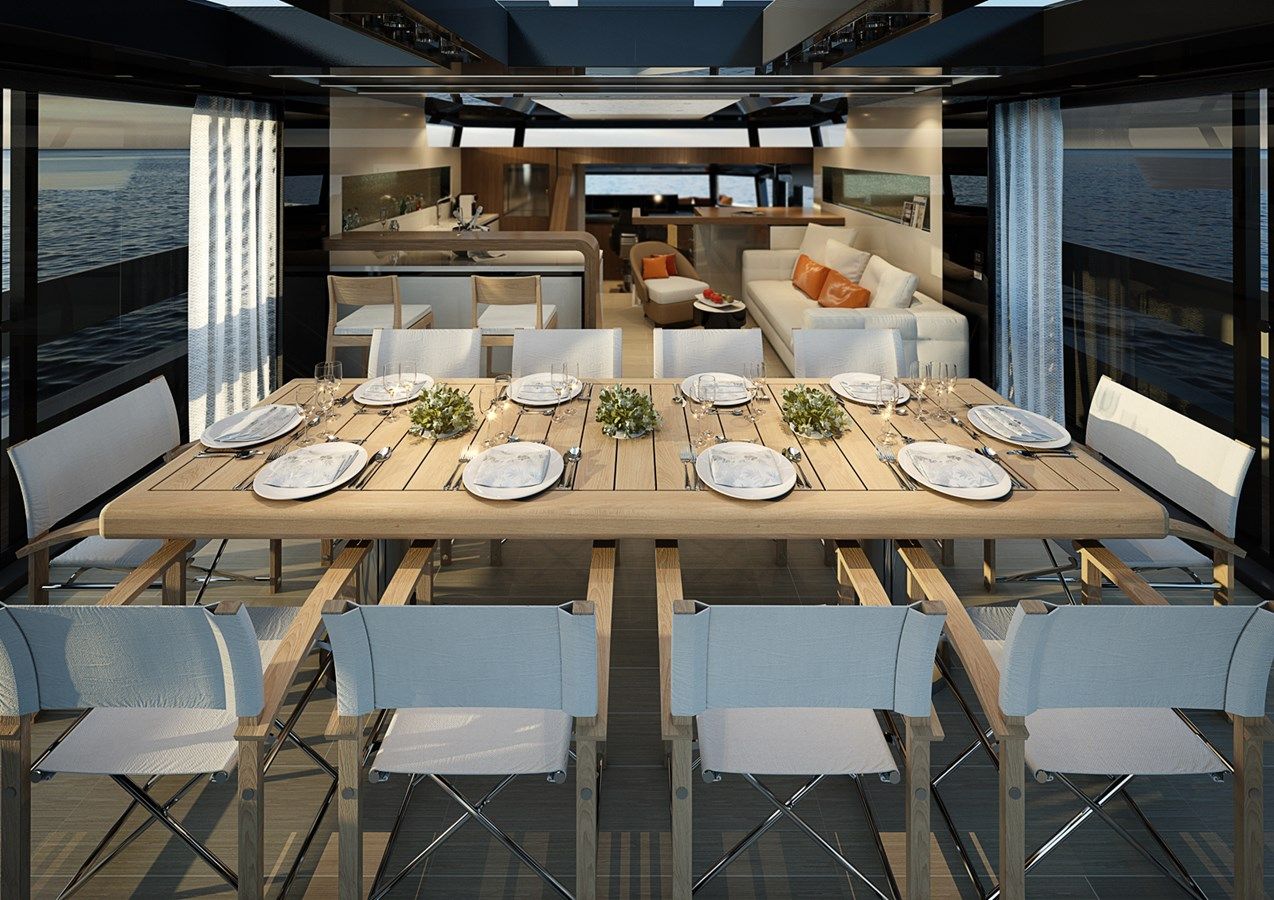
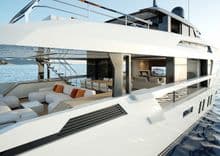
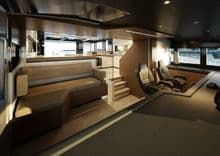
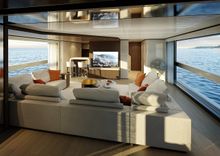
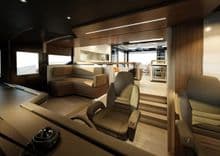
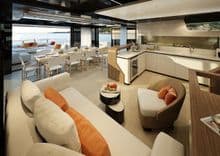
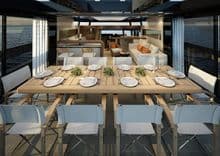
Beyond the luxurious sleeping quarters, this yacht boasts a spacious, beautifully appointed saloon. The interior design harmoniously blends contemporary elements with classic yachting aesthetics, offering a timeless charm and a welcoming space for social interactions. The bar, dining area, and lounge create the perfect backdrop for entertaining guests, hosting business discussions, or enjoying quality time with loved ones during your maritime adventures.
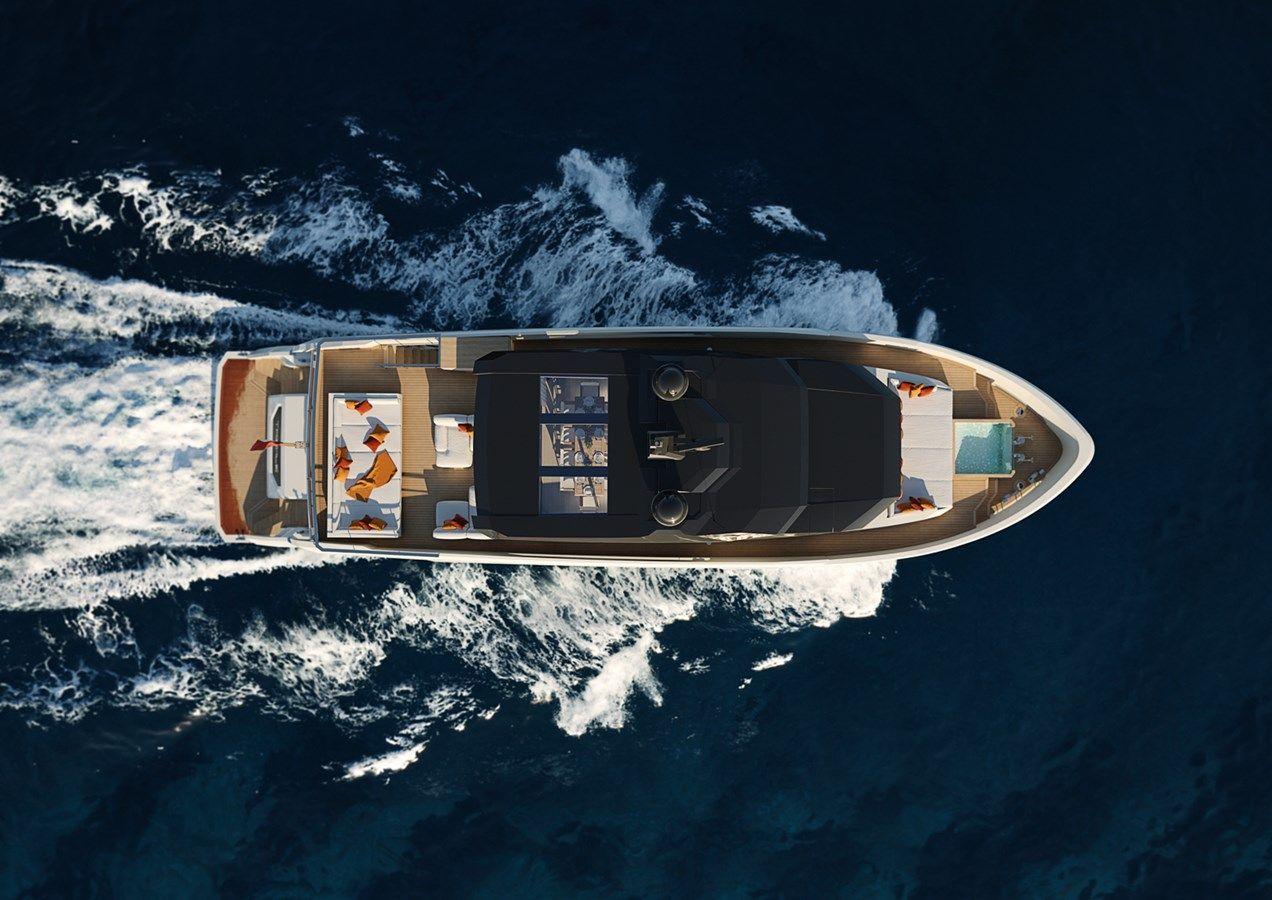
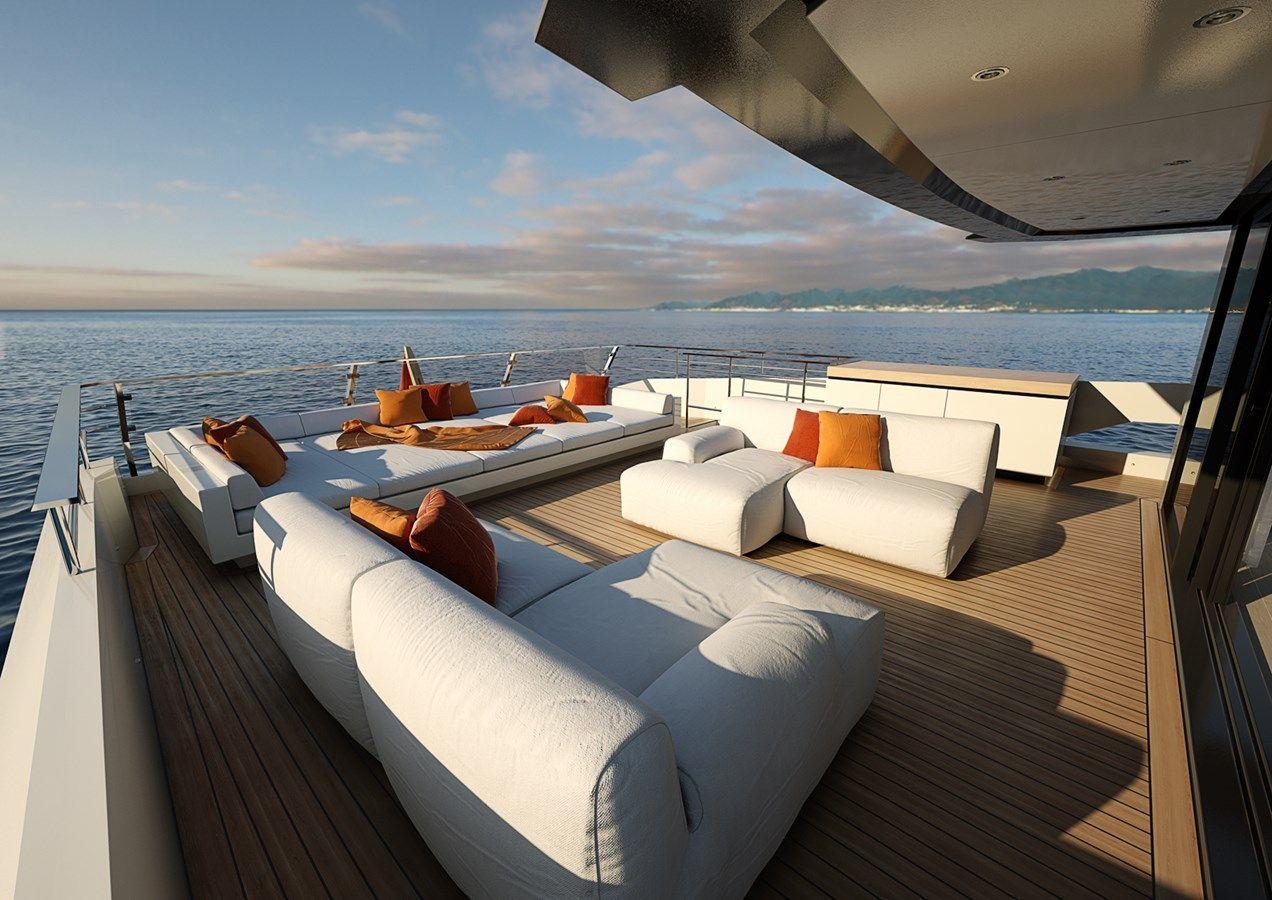
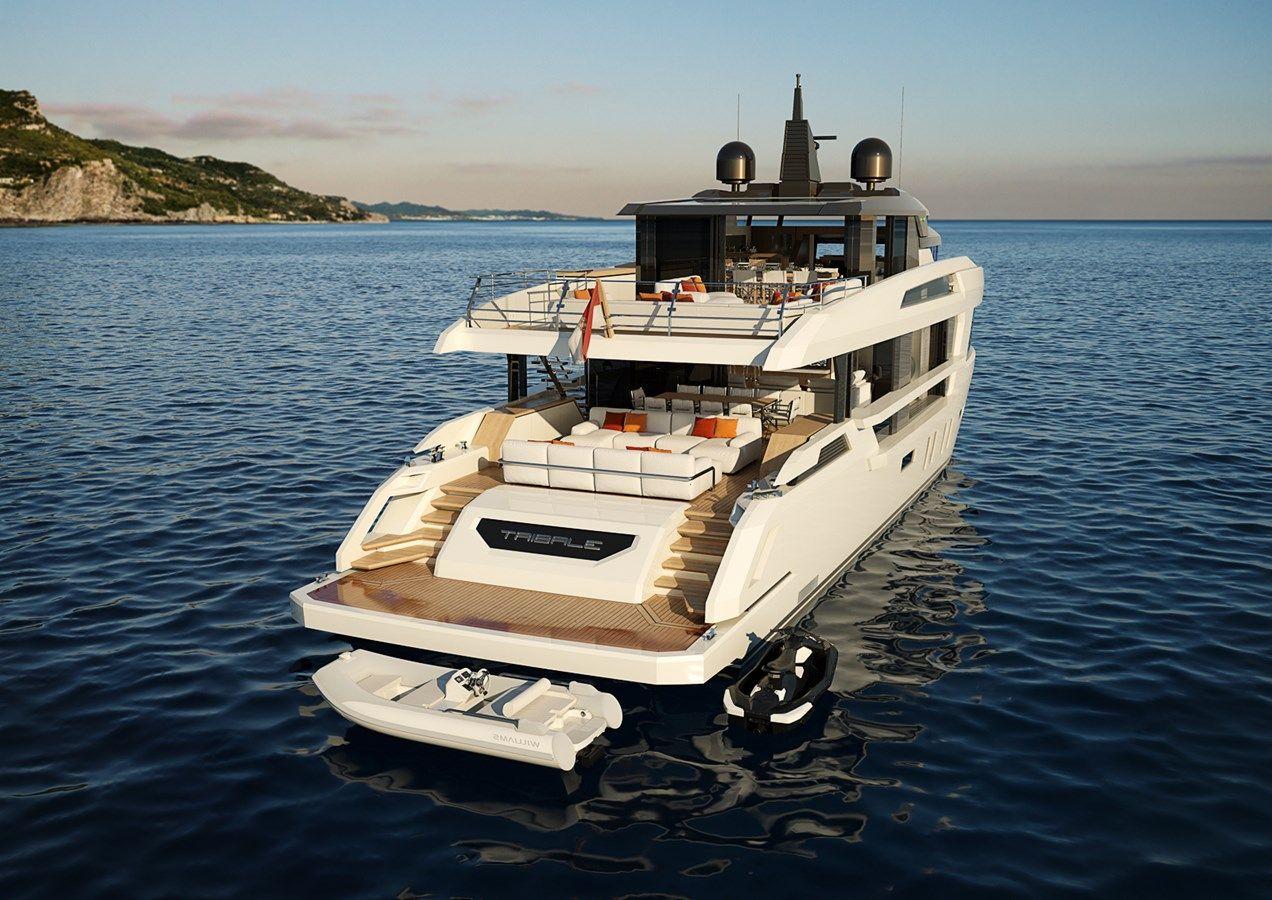
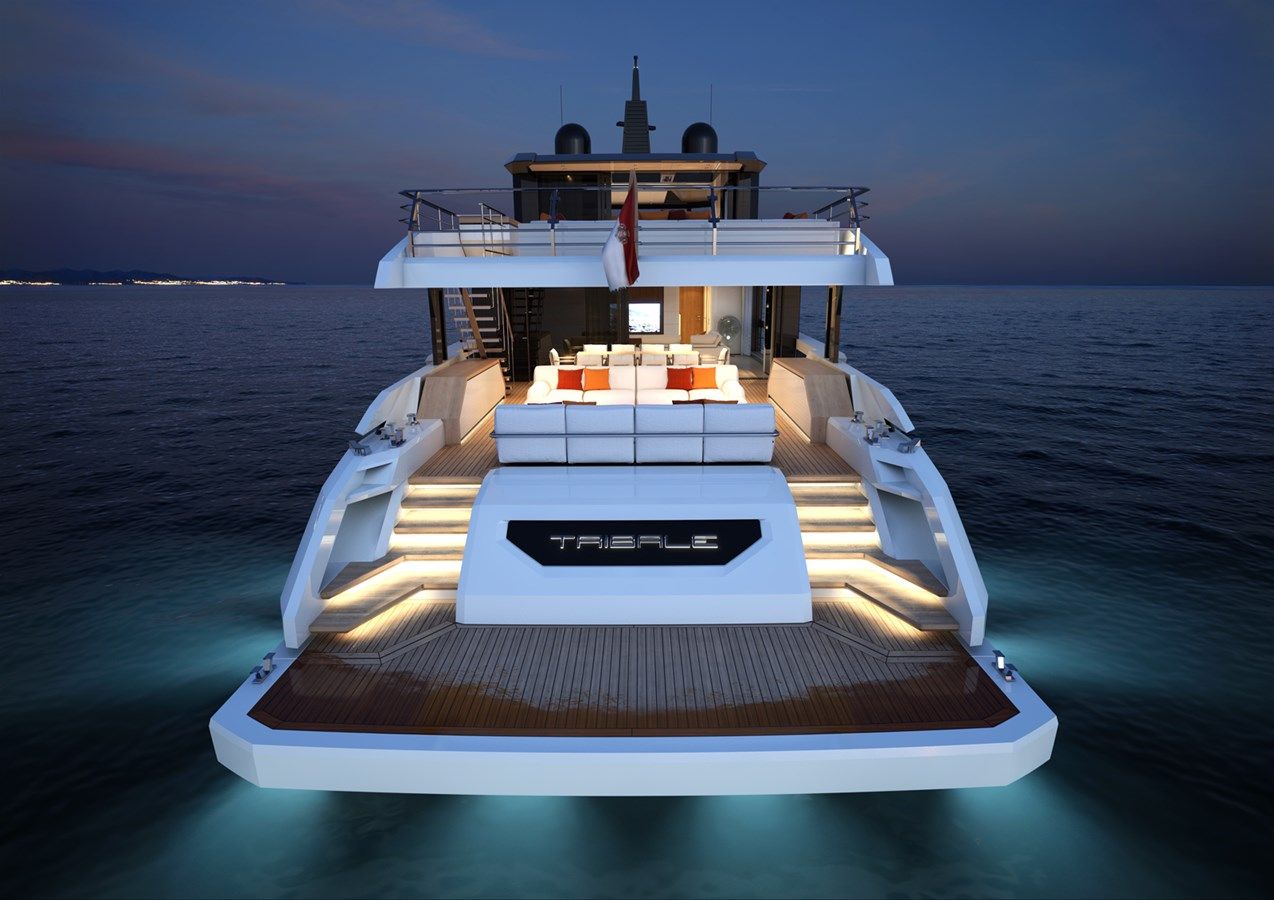
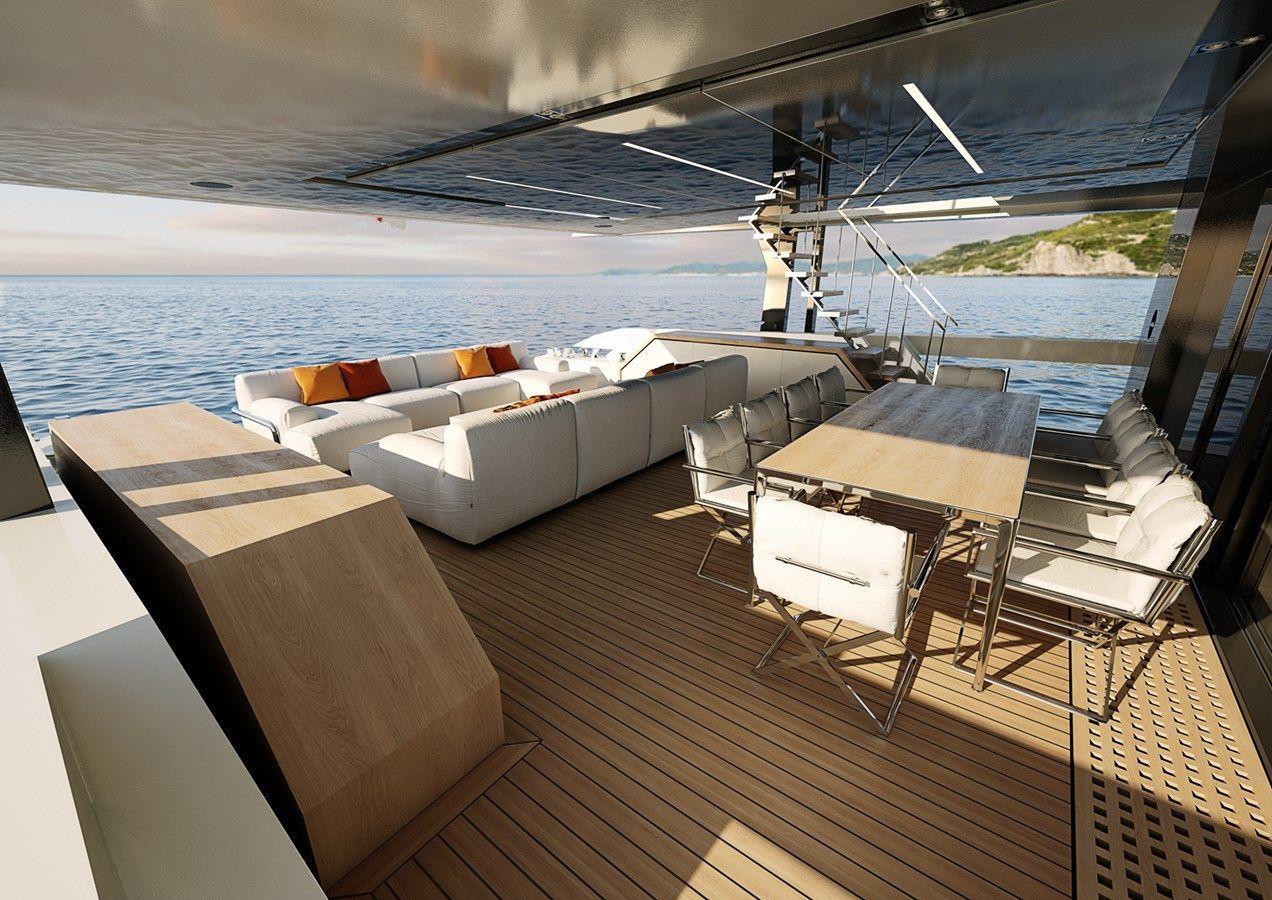
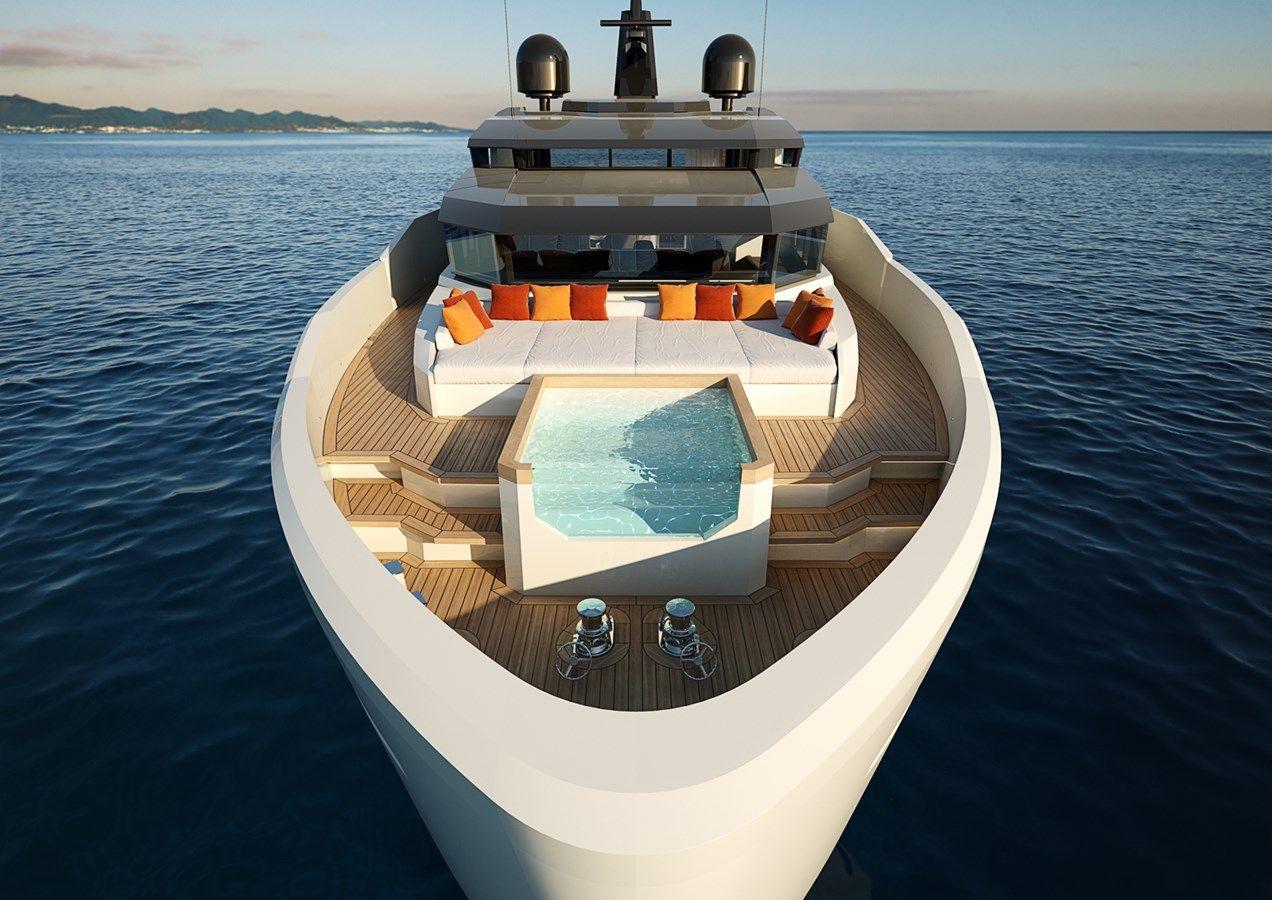
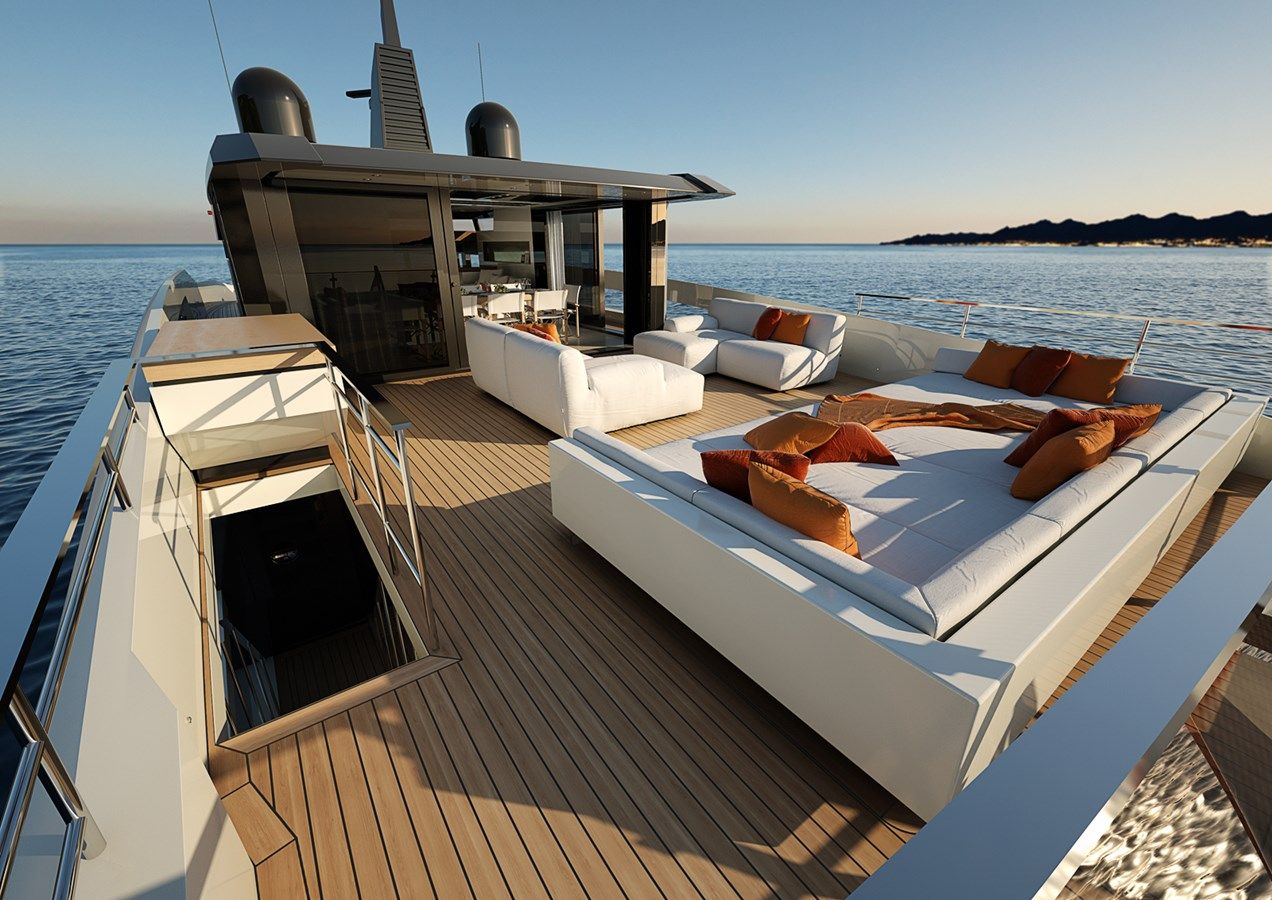
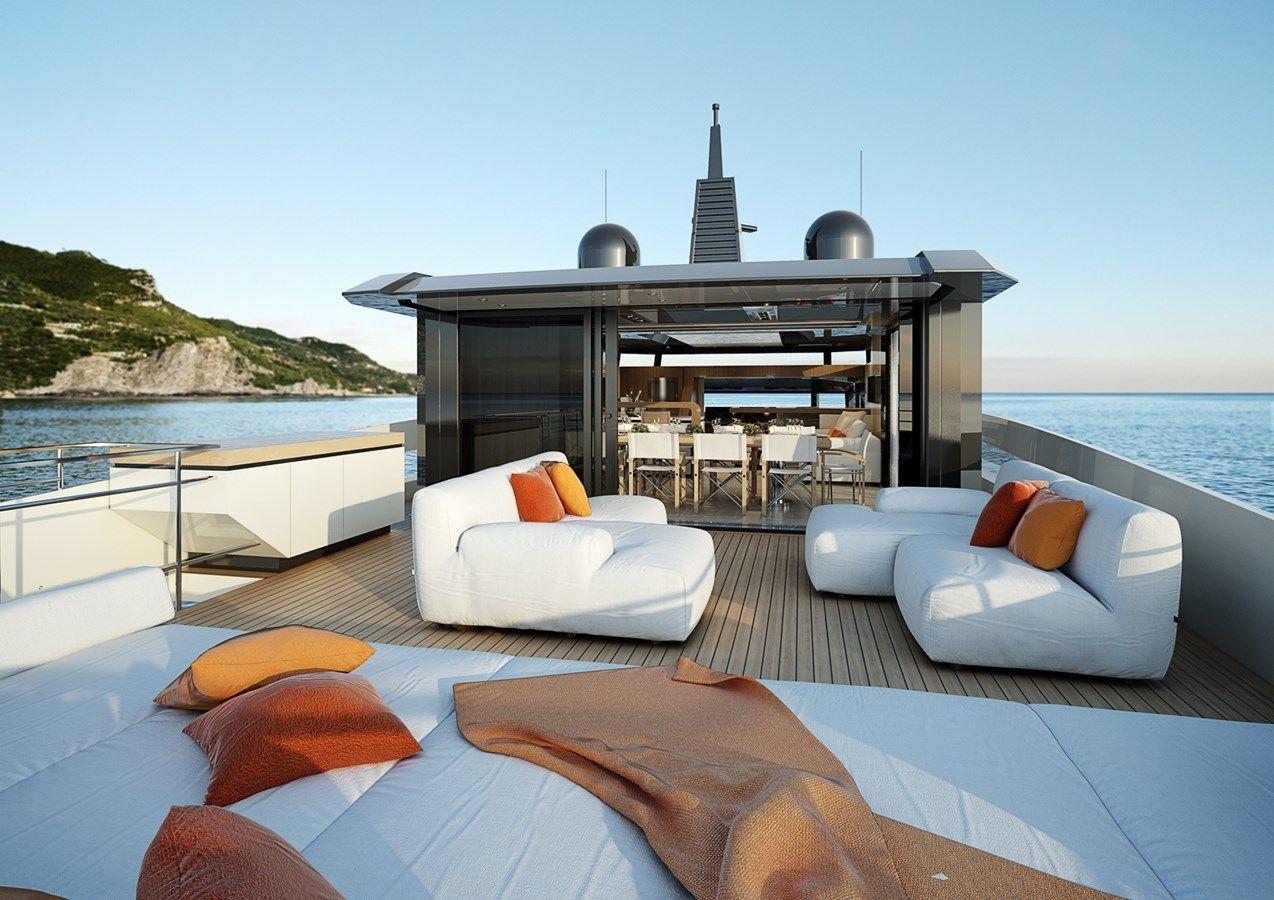
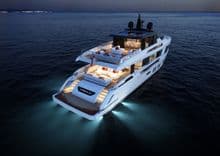
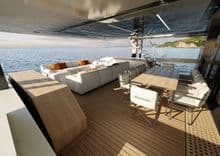
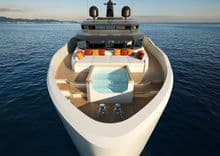
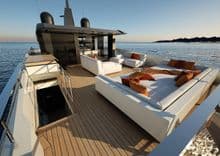
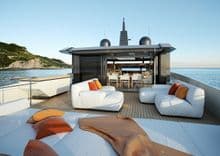
In addition to its lavish interiors, the Tribale 95 offers generous outdoor spaces, complete with designated areas for lounging, dining, and recreation, enhancing the allure of alfresco living. The deck is equipped with an array of high-end features, including sun pads, a hot tub, and an onboard bar, all designed for soaking in the breathtaking ocean views.
Performance-wise, the Tribale 95 is a formidable presence on the water. Fitted with advanced, high-quality engine systems from Tribale Yachts, this vessel boasts remarkable speed capabilities. It maintains a smooth and comfortable cruising pace while also being able to reach exhilarating top speeds when desired. Regardless of the pace, every journey aboard the Tribale 95 is a seamless and enjoyable experience, thanks to cutting-edge navigation systems and top-tier stabilizers that ensure comfort and safety.
A significant focus of the Tribale 95's design is its commitment to modern sustainability. Built to align with current global eco-friendly standards, the yacht incorporates systems and equipment that minimize environmental impact and promote energy efficiency.
Furthermore, the Tribale 95 exemplifies Tribale Yachts' dedication to innovation. This motor yacht is equipped with state-of-the-art technology for navigation, entertainment, and convenience, ensuring that each voyage is a distinctive and luxurious experience.
Ultimately, the enduring allure of the Tribale 95 is a reflection of Tribale Yachts' bold vision and steadfast commitment to excellence. Its remarkable design and stunning presence make it an exceptional choice for discerning yacht enthusiasts and ocean lovers alike.
In summary, the Tribale 95 transcends mere transportation; it represents a hallmark of sophistication, excellence, and affluence. This yacht is a unique testament to fine craftsmanship, epitomizing the zenith of nautical luxury and performance. More than just a vessel, it offers an unparalleled escape into the world of yachting. Explore yacht sales in the current boat location and seize the opportunity to buy a yacht that promises an extraordinary sea-faring experience.
Detailed Description
Technical specifications
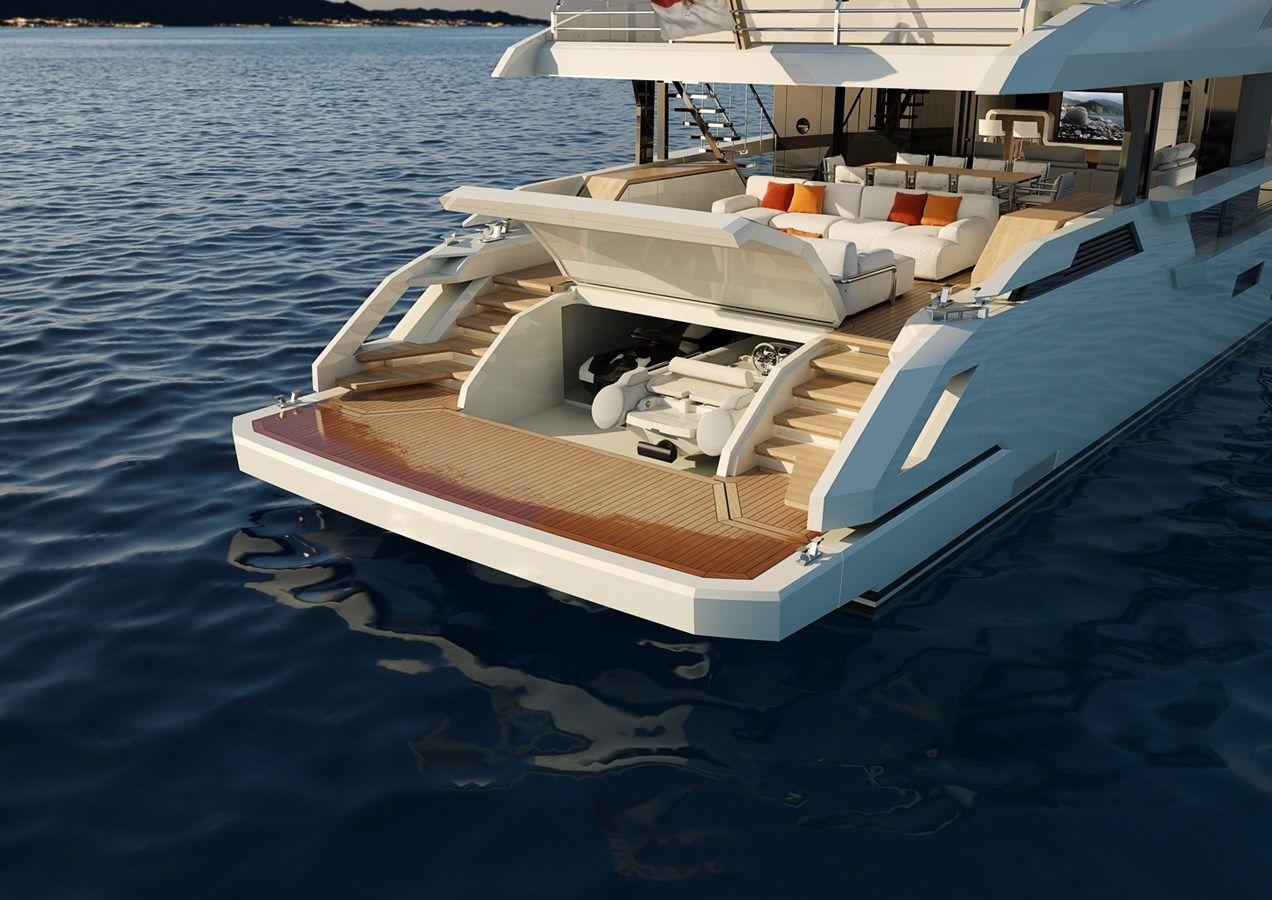
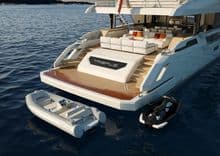
The hull is meticulously built in glass reinforced plastic, with all mechanical and chemical properties of the laminates verified in accordance with CE Rules or Classification Society procedures if appointed. Of monohedral form, it receives an efficient system of longitudinal framing across bottom and sides working in concert with girders, bulkheads and web frames to deliver exemplary transverse rigidity. The bottom is single-skin, the sides are sandwich, and all local reinforcements—fore sections, machinery foundations, shaft brackets, internal casings in accommodation areas, bow thruster tunnel and rudders—are specially engineered. Vinyl ester resin is used for the first coats of the laid-up lamination across the entire hull. Decks, hull sides and superstructure are executed as a closed-cell foam cored sandwich with a primarily transversal structure for superior strength and weight optimization. Two structural GRP bulkheads divide the hull into three watertight compartments; structural bulkheads are in GRP per Classification rules, with compartmenting bulkheads in sandwich with plywood or PVC cores. Structural double-bottom tanks are arranged for fuel oil, fresh water, grey water and black water in line with the capacity plan. Engine foundations are formed by high-density PU-cored longitudinal girders into which a metallic foundation is inserted; these girders run fore and aft to become an integral part of the bottom girder structure. A top-hinged, hydraulically operated transom garage door serves the tender bay. Forward of the watertight collision bulkhead, a capacious chain locker accommodates anchor chains as required by CE or Classification; hawse pipes are in stainless steel AISI 316L with half-round ends in the anchor pockets and at deck level, and the chain washer is fitted. GRP rubstrakes are molded to protect the main deck windows. A GRP roll bar–shaped mast supports antennas and radomes for navigation and communication equipment, together with the masthead anchor lights and ancillary antennas.
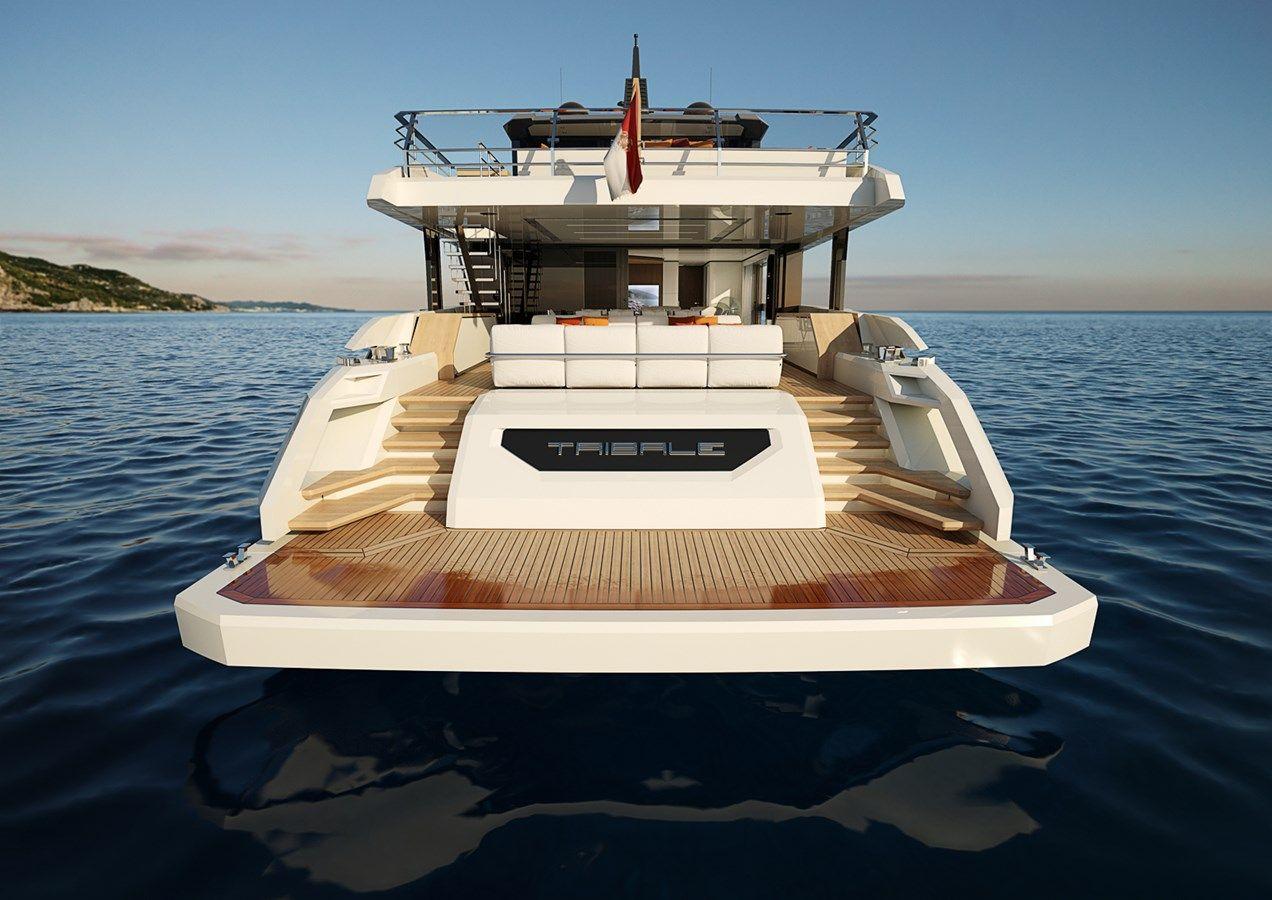
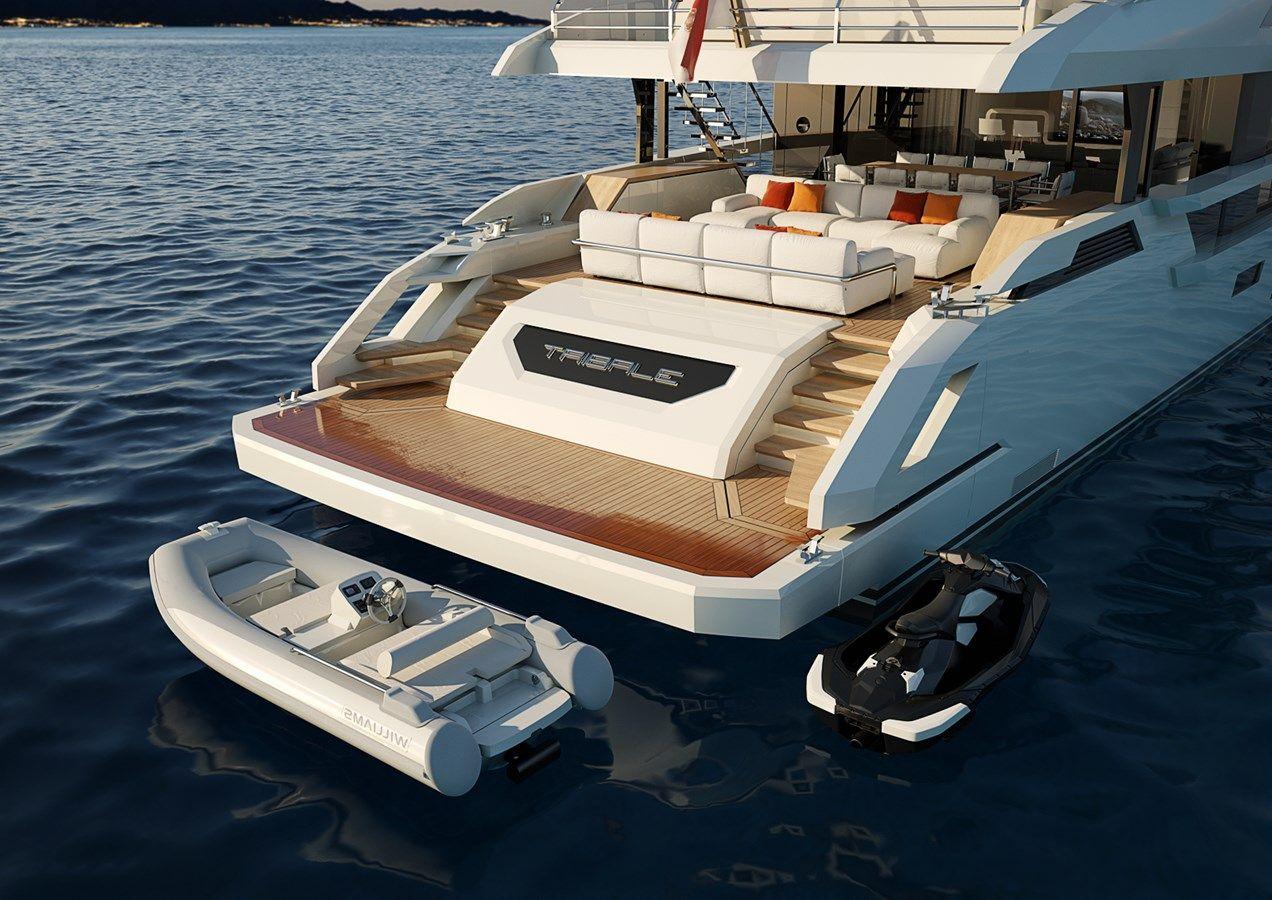
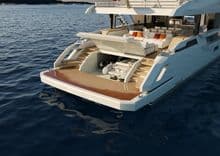
On deck, natural teak graces the main deck and flybridge in a traditional 12 mm finished thickness, laid with king planks and margin boards; planks are glued down with 5 mm seams filled in a black rubber compound. Bulwarks on the main deck and flybridge are in GRP with stainless-steel handrails to the Builder’s standard. Ground tackle is handled by two stainless-steel 400 V electric double-speed windlasses, Maxwell or Italwinch or similar, each with a gypsy for 14 mm anchor chain and vertical shafts operating through a wandering lead. The specification includes two galvanized steel SHHP Posidonia or similar anchors at 135 kg each, each served by 200 m of 14 mm galvanized stud-link chain in full compliance with CE or Classification requirements. Two stainless-steel 400 V electric double-speed capstans, Maxwell or Italwinch or similar, are provided with a bulwark-mounted control panel and a rubber-coated switch at deck level. Mooring hardware counts six bollards in total—two aft, two at the bow and two amidships—and eight fairleads—two aft, four at the bow and two amidships. Lines supplied include 160 m of polyester and polyamide mooring line at 30 mm diameter and 100 m of polyester and polyamide towing line at 30 mm diameter. Portlights and fixed windows, executed in AISI 316 stainless with tempered glazing and removable deadlights, are of non-easy-opening type as shown on the exterior profile. Two aft main deck bulwark gates grant access to the gangway and stern platform, crafted in stainless-steel bars and glass with stainless-steel hinges, dogs and secure hold-open. Exterior closures comprise one automatic tempered-glass sliding door with stainless-steel frame from aft deck to saloon; two automatic lateral tempered-glass sliding doors with stainless-steel frames in the main deck saloon; two automatic lateral tempered-glass sliding doors with stainless-steel frames in the upper deck saloon; one automatic tempered-glass sliding door with stainless-steel frame from aft upper deck to upper saloon; one upper-hinged wing automatic door from wheelhouse to bow deck; one manual door from aft deck to engine room; and one manual emergency exit door from engine room. Positions follow the General Arrangement, and all doors are secured in the open position; makers are Nautilus, Opac, Besenzoni or equivalent, approved by CE or Classification. A tempered-glass windshield crowns the forward wheelhouse bridge. The stern tender garage houses a large upper-hinged hatch and an integrated tender launch/recovery system by Pincraft, Besenzoni or equivalent. Boarding is via a telescopic hydraulic stern gangway with 5 m extension and remote control by Pincraft, Besenzoni, Sanguineti or similar, complete with a doorbell aft at the entry. The yacht’s backlit name and port of registry are fitted on the transom. All windows are dimensioned and positioned per the General Arrangement and Profile with thicknesses to CE or Classification requirements; windows are fixed and not easy openable. Wheelhouse front windows carry wipers with freshwater washing for each. A pneumatic horn by Marco or equivalent is installed, along with two remote-controlled searchlights by Sunshin or equivalent. A transom flagpole and bow jack staff are in painted aluminium or polished stainless steel to the Builder’s standard. Dacron covers are supplied for the flybridge console, wheelhouse windows, outdoor furniture and sunpads, while tender and water toy covers, if any, are supplied by the Owner. Fenders supplied include ten Polyform F6 cylindrical and four Polyform A5 balloon types, with six stainless-steel fender holders with cleats and a service rail on each side of the wide-body area for cleaning operations. Portable fire extinguishers and fire hoses with nozzles are fitted per CE or Classification, and a full set of rescue and safety equipment is supplied accordingly.
Acoustic and vibration comfort are designed in from the start. Main mechanical equipment is installed on resilient mounts; main engines and reduction gears are elastically mounted on extra-rigid foundations; all main pipes are secured on rubber-lined brackets. Generators are elastically mounted and enclosed in supplier-supplied sound shields. Guest cabin floors are supported on elastic frames as floating floors and are underlined with noise insulation; bilges in the bow thruster, engine room and rudder areas are treated with special damping materials, and insulation materials are strategically placed to reduce airborne noise at engine room bulkheads and ceilings. The engine room is comprehensively insulated with special damping materials covering all surfaces; ceiling, sides and bulkheads carry soundproofing and heat insulation, while exhaust pipes are wrapped in ceramic composite and clad in stainless steel. Materials comply with CE or Classification. Throughout accommodations, hull sides receive noise-reduction paint and insulation per CE or Classification. Interior partitions are built of plywood and lightweight foam-fiberglass sandwich panels. Ceiling upper surfaces are coated with noise-reduction paint and covered with insulation. On the lower deck, all floors are floating on rubber, made in foam-fiberglass sandwich, with underlay beneath carpets for additional attenuation.
Systems engineering is comprehensive. Fuel capacity totals 13,000 litres, comprising two fiberglass structural tanks in the double bottom beneath guest cabins totaling 10,000 litres and two light-alloy day tanks located port and starboard forward in the engine room totaling 3,000 litres. All tanks have inspection manholes and vent pipes, with remote level gauges. Amidships fuel inlets port and starboard are recessed in the superstructure, delivering by gravity to the main structural tanks and transferring to the day tanks via two electric pumps or, in emergency, a manual pump. The two electric fuel pumps in the engine room are powered respectively by 380 V AC three-phase 50 Hz and 24 V DC. Main engines and generators draw from the day tanks with return to the day tanks, and fuel polishing includes a twin Separ filter system for each main engine and a single Racor filter for each generator. Emergency cut-off quick-closing valves with remote control outside the engine room are fitted on the day tanks’ diesel supply lines. All fuel transfers are remotely controlled from the wheelhouse with an emergency manual backup in the engine room; all piping is stainless steel. As an option, automatic boat trimming through fuel transfer maintains target trim either fully automatically via a trim sensor that opens/closes valves and starts/stops pumps, or semi-automatically via a crew command panel. The lubricating oil system uses two light-alloy tanks to PE UNI 3575 in the engine room, one clean lube oil tank of approximately 200 litres and one dirty lube oil tank of approximately 120 litres; high-level alarm for dirty and low-level alarm for clean are fitted. Piping is flexible and/or stainless steel, and a 220 V AC 50 Hz pump allows sucking dirty oil from main engines and generators to the dirty tank, filling engines and generators from the clean tank, and pumping dirty oil ashore via a shore connection. The potable water system features one structural fiberglass tank of approximately 1,600 litres with a remote level gauge in the galley, a shore connection with pressure-reducing valve, and two rubber-mounted 220 V AC 50 Hz pressure pumps. Main lines are in PVC or Fusiotherm, with distribution to showers and sinks in Alupex, GF or similar; optional treatment includes a UV filter on pump delivery and/or a silver ion disinfection system at the tank inlet. Hot water is by two 380 V AC 120-litre water heaters with pressure relief valves and a 220 V AC 50 Hz single-phase circulating pump; hot water piping matches cold water and is insulated. Freshwater autonomy is extended by an Idromar MC3J or equivalent reverse-osmosis watermaker complete with gauges, filters and both high- and low-pressure pumps, producing approximately 180 l/h. Black and grey water are handled via a distributed system of compact transfer tanks (Tecma or Jets) collecting discharges from showers, sinks, bidet and toilets and automatically transferring to the structural holding tank by internal pumps. Optionally, black and grey water can be treated to IMO, MED or USCG standards by Hamann, Tecnicomar or similar prior to overboard discharge; a fat trap is optionally provided near the galley for the sink discharge. The galley sink may discharge to tank or directly overboard via a three-way valve. A shore discharge connection with international flange is plumbed from the structural tank. Each transfer tank has an 18-litre capacity with electric level sensor and solenoid valve operating at 24 V. Manifolds and discharges are in high-density polyethylene, with manifolds at DN 50 and discharges at DN 40 or DN 32. The structural tank breathes via a polyethylene DN 65 air vent and a 2'' Matrix-type smell filter or similar. Toilets are Tecma type and bidets are Ideal Standard or similar. Bilge and fire protection include level sensors in each bilge compartment monitored on a Bilge Alarms panel in the wheelhouse. Each watertight compartment has separate bilge suction via a manifold served by a 380 V AC three-phase 50 Hz electric bilge pump, supplemented by a submerged automatic bilge pump in each compartment. The main pump doubles for seawater firefighting and anchor chain washing. Firefighting pipework is in cupronickel with hoses and nozzles per CE or Classification. The engine room is protected by a fixed manual FM200 or similar system approved by CE or Classification, alongside portable extinguishers in guest and technical spaces. The fixed system incorporates a discharge delay up to 30 seconds for personnel evacuation (or per flag), automatic closure of engine room ventilation air inlets, and visual/audible alarms. For commercial use, an optional diesel emergency fire pump on the main deck outside the engine room is supplied with fuel for four hours’ operation.
Climate control is tailored to a design load of approximately 192,000 BTU, based on summer conditions of 38°C ambient at 85% relative humidity with 23°C and 55% RH inside and maximum sea water at 32°C; and winter conditions of 4°C ambient with 20°C and 30% RH inside and minimum sea water at 10°C. The system is a Frigomar or Condaria or equivalent reverse-cycle marine chiller with multiple independent condensing units feeding independent fan coils throughout; each fan coil can be isolated for maintenance without interrupting the rest of the system. Optional mechanical ventilation for commercial rules provides dedicated fresh air changes with one 470 m3/h unit for guests and a separate 250 m3/h unit for crew, while three 610 m3/h exhausters extract air from the bathrooms. Sea water piping is in 90/10 cupronickel, chilled water circulation piping is copper fully insulated with 13 mm anti-condensation rubber, and each fan coil drains to dedicated transfer tanks leading to the structural grey water tank. System pumps are driven by 380 V AC three-phase 50 Hz motors. The chiller employs multiple 48,000 BTU, 3.8 kW compressors served by one self-priming seawater cooling pump and one circulating pump with a CUNI sea water heat exchanger. Approximately twenty 220 V AC single-phase 50 Hz fan coils with three-way valves, individual thermostats and speed control are distributed per the final layout, with a dedicated fan coil for defrosting the front wheelhouse windows.
The electrical and electronics suite is engineered and installed to CE or Classification standards, with equipment selected and located for protection from water, oil, humidity and vibration and arranged for service access. A monitoring system on a 15" touchscreen integrates AC and DC power supply control, navigation lights and searchlight, fuel tank levels and alarms with pump control, potable water levels and alarms with pump control, black and grey water levels and alarms with pump control, engine room blowers control, hatches/doors/portholes alarms, general alarms, fire and smoke alarms, generator power visualization, bilge alarms, horn, wipers and intercom, the optional fuel balancing system, CCTV selection and PTZ control, intercom control, autopilot control, trim tabs position visualization, instrument lights dimming and air conditioning status visualization. Winglet sub-panels provide engine controls, steering takeover, rudder position, bow thruster command, engine RPM display, horn command, trim tabs control, searchlight command and winch control. Main power and lighting are 400 V AC 50 Hz three-phase with three insulated conductors, while emergency lighting, alarms and communications are 24 V DC with insulated two-wire circuits. AC power is supplied by two diesel generator sets of 50 kW each at 50 Hz or by shore connection at 400 V three-phase 50 Hz, 63 A. The twin generators include water separators and deliver automatic paralleling and seamless transfer between ship and shore; maker Onan or Kholer at 50 kW and 50 Hz, three-phase, 1,500 RPM, full-load continuous rating and 24 V DC starting. Electrical motors are, where possible, 400 V AC three-phase 50 Hz, with others 220 V AC single-phase 50 Hz as necessary; all are resiliently mounted and ventilated. All wires are labelled at terminations, watertight bulkhead penetrations preserve watertight integrity, AC distribution sub-panels are located to minimize wire runs and weight, ground-fault circuits are included as necessary, and equipment carries engraved nameplates. The main switchboard in the engine room is built in light alloy, with hinged front panels and quick-release locks for access, ventilation grilles either side and a physical separation of high-voltage and 24 V sections. Lighting is comprehensive inside and out to the Builder’s standard, with Cantalupi, BCM, Metalstyle, Palagi or equivalent fittings; exterior lights are waterproof and mounted overhead on superstructure ceilings and at foot level. Normal lighting is 220 V AC with 24 V DC emergency lighting that automatically engages upon AC failure; all circuits are breaker-protected. Switches are Bticino, Vimar or similar in accommodations and waterproof types in technical and exterior areas. Navigation lights meet COLREG 72 and commercial vessel rules if requested, with acoustic and visible failure alarms at the wheelhouse panel; the full suite includes masthead (white), port (red), starboard (green), stern (white), anchor (white) and NUC (red) lights. Batteries supplied include about 560 Ah for services, about 420 Ah at 24 V for main engine starting in two separate groups, about 420 Ah for emergency loads such as lights and horn, and about 120 Ah at 24 V for generator starting; final capacities are set by the completed electrical balance. Charging is via alternators on each main engine and generator, plus one automatic 24 V 75 A charger for service batteries, two automatic 24 V 25 A chargers for main engine start batteries, and one automatic 24 V 25 A charger for emergency light and alarm batteries. Navigation, communication and control are specified to a Raymarine or equivalent standard, including one 12 kW, 72 nm radar at the wheelhouse with a 6' open array aerial and one 15" monitor; one cartography system with two 15" monitors; one echosounder with dual-frequency transducer; and one SATNAV GPS with LCD display. The log and wind package includes one wind/log/depth system with a solid-state wind sensor, a speed and water temperature sensor and two digital multifunction displays. Autopilot is supplied as one complete system, and a Ritchie magnetic compass is installed. Communications include one Class A VHF at the wheelhouse and an intercom system with two master stations, three speakers (fore, stern, wheelhouse) and one engine room speaker with headset. CCTV is integrated into the monitoring system, with one “320” dome camera in the engine room, one IP66 dome camera with integral motion detector at the stern, one touchscreen for camera selection and one 14" LCD TFT display in the crew mess. Television and entertainment details are provided on request; a domotic system on the main deck manages curtain operations, air conditioning and lighting control and crew call. Reception includes one satellite TV system (Starlink) or equivalent, one Naval MK20 terrestrial TV antenna, one Naval AM/FM VPA 30 and Wi‑Fi coverage for the lower deck and main deck. A comprehensive grounding system of copper strips bonds all motors, metallic pipes and structures, and an adequate number of zinc anodes protect underwater metal fittings from galvanic corrosion.
Propulsion and maneuvering are by two MAN turbocharged, aftercooled four-stroke marine diesel main engines as described in Chapter 003, installed on the dedicated foundations and equipped with liquid coolers, exhaust gas turbines, aftercoolers, oil heat exchangers, fuel and oil filters, expansion tanks, fuel feeding pumps, sea water pumps, PTOs as necessary, control panels, oil pressure gauges and cooling water temperature gauges. Each engine drives a flange-mounted ZF 3055V reduction gear box ensuring outward ship rotation of the propellers. The shaft lines comprise two Marinox 17 stainless steel shafts of about 100 mm diameter with Simplan or equivalent shaft seals, stern tubes and struts in high-quality bronze alloy and water-cooled bearings. Thrust is delivered via two five-blade propellers of about 1,200 mm diameter in Nibral designed by Detra or Rolla. Steering is hydraulic or electric, operating twin rudders by actuators linked to the rudder shafts via a connector rod and integrated with the autopilot; a hydraulically operated emergency steering system approved by Classification provides redundancy. The two semi-compensated airfoil-section rudders are located in the propeller wash and are built in stainless steel, with shafts and connector rod likewise in stainless. Trim is controlled by stainless-steel trim tabs with proper stiffening, hydraulically operated via an electro-hydraulic power pack; alternatively, an intruder system may be installed. Trim tab position gauges are on the wheelhouse console. For close quarters, an electric bow thruster is fitted forward with a fiberglass tunnel of 16" diameter and CuNiAl three-blade propellers, maker ABT or equivalent, complemented by a stern thruster; both are controlled from the wheelhouse console and the flybridge. At rest and underway stabilization is by an electrically driven Zero Speed Stabilizer plant by ABT, CMC or equivalent.
Joinery and interiors are crafted to the Builder’s Interior Design, or, if requested and engaged by the Owner, to an independent designer working within this specification, the defined cost allowances and the Builder’s schedule; upgrades are quoted as extras and late information is deemed a permissible delay affecting delivery accordingly. Layouts match the contractual General Arrangement, and all appliances, TV and stereo equipment, climate and ventilation, lighting, alarms, detectors and panels are harmoniously integrated. Floor finishes include carpet in the Owner’s suite, guest cabins, hallways and stairs per shipyard sample, with parquet in the saloon and dining room; in crew areas, carpet follows the shipyard sample. All carpets carry acoustic underlay and are edge-bound or secured beneath furniture as needed. Marble floors are in the Owner’s bathroom, guest bathrooms and day heads; vinyl or rubber floors are in the galley, pantries, laundry and crew bathrooms; the wheelhouse floor is varnished wood; and shower floors have a drip pan with a varnished teak grating on top. Skirting boards are wood adjacent to carpet, vinyl and wood floors, with marble skirtings to match marble floors. Walls are finished in refined wood species emblematic of the Italian yachting tradition—oak, cherry, Tanganyika, mahogany or equivalent—with select upholstered panels in fabric or leather within cost limits; bathrooms and galley feature lacquered panels, and crew areas use Formica or lacquered finishes. Fixed furniture—cupboards, drawers, consoles, nightstands, washbasin units and desks—follows the General Arrangement and Builder’s standards, built in timber or marine-plywood veneers of the selected woods, with dedicated stowage outfitted with plexiglass retainers for glasses, dishes, cutlery and china. Vanity tops are in marble across all bathrooms and day heads, and the galley worktops are in granite or stainless steel. Loose furniture—chairs, armchairs, tables, stools and sofas—is supplied by the Builder to the General Arrangement and within the shipyard’s cost allowances. Interior doors are double-panel plywood with hold-open stoppers and finishes matching the adjacent walls. Ceilings are lacquered or upholstered in fabric or leather within the cost limits, with lacquered panels in crew areas, galley, bathrooms and day heads. Lighting features elegant LED spotlights inside and out and refined reading lamps by BCM, Metalstyle, Cantalupi or equivalent; switches and sockets are B-Ticino or Vimar Living. Subtle strip LEDs grace window wells and undersides of beds, and wardrobes illuminate automatically with courtesy lights; a dedicated drawing defines every fixture, switch and outlet. All windows and portholes except the wheelhouse windows carry curtains in fabric optionally lined for blackout; electric curtains are in the main saloon and Owner’s cabin. Sanitaryware is by Pozzi Ginori, Ideal Standard, Cesame, Tecma, Jets or equivalent, while taps and accessories are by Ideal Standard, Grohe, Jado or equivalent; accessories include soap and glass holders, towel rails and rings, toilet brush and paper holder, robe hooks and a toilet waste bin, all within cost limits. Hardware is marine-grade with positive closures for cupboards, storage, wardrobes and cabinets, and stoppers for drawers; where appropriate, furniture knobs, anti-roll rods, handrails, door handles and door stoppers are fitted, with makers to the Builder’s standard such as Jado or equivalent. Mattresses are custom spring type with clearance to the frames; pillows and bed covers are supplied for each bed, with bed linens and blankets excluded. Domestic appliances are premium and include two Maytag refrigerator/freezers or equivalent, a Miele five-burner induction cooktop, Miele overhead hood, Miele electric oven, Miele microwave, Miele dishwasher, Miele washer and dryer, one Scotsman ice maker and one refrigerator for the main saloon and one refrigerator for the aft deck. Final refinements include safes in the Owner’s and Captain’s cabins, together with sunbathing mattresses and exterior sofa cushions upholstered in Sunbrella or equivalent exterior-grade fabric.
Specifications
- Accommodations:
- 10 staterooms
- Length:
- 95' (28.96m)
- Beam:
- 24' (7.47m)
- Draft:
- 19.685' (6m)
- Year Built:
- 2025
- Builder:
- TRIBALE YACHTS
- Category:
- Motor yachts
- Engines:
- 2 engines MAN
- Cruise Speed:
- 19 Kts.
- Max Speed:
- 23.5 Kts.
- Location:
- Italy



Yacht name «Tribale 95 Crossover» – TRIBALE YACHTSis for sale and located in Pisa, Italy
Motor yachts «Tribale 95 Crossover» built by manufacturer TRIBALE YACHTS in 2025— available for sale. Yacht location: Italy. If you are looking to buy a yacht «Tribale 95 Crossover» or need additional information on the purchase price of this TRIBALE YACHTS,
please call: +1 (954) 274-4435 USAOnly deal with professionals!