
 Licensed Yacht BrokersSales and service of yachts and ships
DANISH YACHTHOLLAND JACHTBOUW - For Sale
Danish Yachts
Company History
English Danish Yachts is a specialist Northern European shipyard known for advanced composite construction and high-performance custom yachts. Emerging from Denmark’s long tradition of precise shipbuilding and engineering, the yard rose to international attention in the 2000s for pushing lightweight carbon-fiber methods into the superyacht segment. A signature milestone was the collaboration with designer Espen Øino on the AeroCruiser 38 II concept, resulting in the sleek 38-meter “Shooting Star,” a project widely cited by the industry press for its speed, efficiency, and modern Scandinavian styling. Parallel to its one-off superyachts, the yard built fast professional craft and pursued refit and upgrade programs, applying the same composite expertise to performance improvements, noise reduction, and weight savings.
Danish Yachts’ story is one of focus and specialization: a compact, technically driven team in Denmark’s far north proving that cutting-edge carbon and refined craftsmanship could deliver quiet, fast, and remarkably efficient yachts suited to North Sea conditions as well as Mediterranean cruising. The yard’s output has always been limited and bespoke, with each project engineered around a precise performance brief and a carefully curated supply chain of Scandinavian and international composite partners.
Dansk Danish Yachts er et specialiseret nordeuropæisk værft kendt for avanceret kompositkonstruktion og højtydende, kundetilpassede yachts. Med udgangspunkt i Danmarks stærke tradition for præcisionsskibsbygning og ingeniørkunst fik værftet international opmærksomhed i 2000’erne ved at overføre kulfiberteknologi til superyacht-sektoren. Et markant højdepunkt var samarbejdet med designeren Espen Øino om AeroCruiser 38 II, som mundede ud i den elegante 38-meter “Shooting Star” – ofte fremhævet i branchen for fart, effektivitet og skandinavisk formsprog. Sideløbende med superyachts byggede værftet også hurtige erhvervsfartøjer og udførte refit- og opgraderingsopgaver med fokus på ydelsesforbedringer, støjreduktion og vægtoptimering via komposit.
Historien om Danish Yachts er præget af fokus og specialisering: et kompakt, teknisk stærkt team i det nordlige Danmark, der demonstrerede, at avanceret kulfiber og forfinet håndværk kan skabe stille, hurtige og yderst effektive yachts, velegnede til både Nordsøens forhold og Middelhavets cruising. Produktionen har altid været begrænset og skræddersyet, hvor hvert projekt er konstrueret efter en præcis ydelsesprofil og en nøje udvalgt værdikæde af skandinaviske og internationale kompositleverandører.
Country of Origin
English Denmark.
Dansk Danmark.
Manufacturing Locations
English The company’s operations have been centered in Skagen, Denmark, a strategic location with direct access to deep water and the North Sea. The site is characterized by climate-controlled composite halls suitable for large carbon structures, integrated workshop areas for systems, and proximity to a network of Nordic composite suppliers and engineering partners. Skagen’s infrastructure—reliable logistics, professional maritime services, and year-round test conditions—supports both new-build and refit activities.
Dansk Virksomhedens aktiviteter har været koncentreret i Skagen, Danmark, med direkte adgang til dybt vand og Nordsøen. Faciliteterne omfatter klimakontrollerede komposithaller til store kulfiberstrukturer, integrerede værkstedsområder til systeminstallationer samt nærhed til nordiske kompositleverandører og ingeniørpartnere. Skagens infrastruktur – effektive logistiske forbindelser, maritime servicevirksomheder og testforhold året rundt – understøtter både nybygninger og refit.
Reputation and Quality
English Danish Yachts is widely associated with:
- Advanced composites: vacuum-infused and post-cured carbon laminates, weight-sensitive engineering, and meticulous structural detailing.
- Performance-led design: low noise and vibration, fast passage-making, and efficient hull/propulsion integration suited to long-range cruising.
- Scandinavian craftsmanship: crisp interior joinery, understated finishes, and ergonomics that prioritize function without sacrificing elegance.
- Notable projects: the AeroCruiser 38 II “Shooting Star” is frequently referenced in the media as a benchmark for modern, lightweight, high-speed composite superyachts.
Within the industry, the yard earned respect for building technically ambitious yachts at relatively lean displacement, delivering tangible gains in fuel burn, acceleration, and seakeeping. Its approach appeals to knowledgeable owners seeking cutting-edge construction and a collaborative engineering process rather than high-volume series production. While a boutique operation, Danish Yachts has had outsized influence on how carbon and hybrid laminates are engineered in larger yachts, and its projects continue to be cited by designers and surveyors as case studies in efficient composite superyacht design.
Dansk Danish Yachts forbindes bredt med:
- Avancerede kompositter: vakuuminfusion og efterhærdning af kulfiber, vægtsensitiv konstruktion og minutiøse strukturelle detaljer.
- Ydelsesdrevet design: lavt støj- og vibrationsniveau, hurtige overfarter og effektiv integration mellem skrog og fremdrivning til langdistancecruising.
- Skandinavisk håndværk: præcist tømrerarbejde, afdæmpede overflader og ergonomi med fokus på funktion uden at gå på kompromis med æstetik.
- Markante projekter: AeroCruiser 38 II “Shooting Star” omtales ofte i medierne som en målestok for moderne, lette og hurtige komposit-superyachts.
I branchen nyder værftet anerkendelse for teknisk ambitiøse yachts med lav deplacement, hvilket giver mærkbare fordele i brændstofforbrug, acceleration og søegenskaber. Tilgangen tiltaler erfarne ejere, der søger banebrydende konstruktion og et tæt teknisk samarbejde frem for serieproduktion. Selvom Danish Yachts er et nicheværft, har det haft betydelig indflydelse på anvendelsen af kulfiber og hybridlaminater i større yachts, og projekterne bruges fortsat som referenceeksempler på effektiv kompositkonstruktion.
Holland Jachtbouw
Company History
English Holland Jachtbouw (HJB) is a renowned Dutch custom yacht builder that gained international acclaim for its large sailing yachts and select motor yacht projects. The yard traces its modern era to the 1990s under the leadership of Dutch entrepreneur Chris Gongriep, who set out to combine Dutch metalworking excellence with modern naval architecture and finely crafted interiors. Over the next two decades the company established a reputation for complex, one-off commissions in the 30–65 meter range.
Key milestones and emblematic projects include:
- Athos (2010): a 62-meter twin-mast schooner celebrated for its balanced sail plan, powerful yet easily managed rig, and exquisite interior workmanship—an example of the yard’s capability at the very top end of custom sailing yacht construction.
- Rainbow (2012): a new-build J-Class yacht inspired by the 1934 America’s Cup winner, notable for blending classic lines with 21st-century systems, aluminum construction, and a refined, authentic deck and interior aesthetic.
- Calliope (2010): a 42-meter displacement motor yacht that showcased the yard’s versatility, quiet engineering, and immaculate finish quality; the project drew strong attention from juries and the specialist press.
- Heureka (2014): a 45-meter performance sloop distinguished by clean, modern styling and a technology-forward lightweight build, underlining the yard’s agility in executing contemporary naval architecture.
Following the passing of founder Chris Gongriep in 2016, Holland Jachtbouw’s activities wound down. The Zaandam facility was subsequently sold and put to continued use within the Dutch superyacht ecosystem, reflecting the site’s strong infrastructure and the lasting value of the yard’s know-how.
Nederlands Holland Jachtbouw (HJB) is een vooraanstaande Nederlandse jachtenbouwer, internationaal bekend om grote zeiljachten en geselecteerde motorjachten op maat. De moderne periode van de werf begon in de jaren negentig onder leiding van ondernemer Chris Gongriep, die Nederlandse vakbekwaamheid in metaalbouw wilde combineren met moderne scheepsarchitectuur en hoogwaardig interieurwerk. In de daaropvolgende twee decennia bouwde het bedrijf een reputatie op met complexe, unieke opdrachten in het segment van circa 30–65 meter.
Belangrijke mijlpalen en voorbeeldprojecten:
- Athos (2010): een 62-meter tweemast-schoener, geroemd om het uitgebalanceerde zeilplan, de krachtige maar beheersbare tuigage en het voortreffelijke interieur – een toonbeeld van HJB’s topcapaciteit in custom zeiljachtbouw.
- Rainbow (2012): een nieuwgebouwde J-klasse, geïnspireerd op de America’s Cup-winnaar van 1934; klassiek van lijn, maar met hedendaagse systemen, aluminium constructie en een verfijnde, authentieke dek- en interieuraanpak.
- Calliope (2010): een 42-meter verplaatsingsmotorjacht dat de veelzijdigheid van de werf, stille techniek en onberispelijke afwerking demonstreerde; het project kreeg brede aandacht van vakjury’s en media.
- Heureka (2014): een 45-meter prestatiegerichte sloop met strak, modern design en een geavanceerde, lichtgewicht bouw, waarmee de wendbaarheid van de werf in eigentijdse architectuur werd onderstreept.
Na het overlijden van oprichter Chris Gongriep in 2016 werden de activiteiten van Holland Jachtbouw afgebouwd. De faciliteit in Zaandam werd verkocht en blijft sindsdien ingezet binnen de Nederlandse superjachtsector, wat de kwaliteit van de infrastructuur en de blijvende waarde van de opgebouwde expertise weerspiegelt.
Country of Origin
English The Netherlands.
Nederlands Nederland.
Manufacturing Locations
English Holland Jachtbouw operated from Zaandam, north of Amsterdam, a location central to the Dutch maritime supply chain. The facility featured large, climate-controlled construction halls with ample vertical clearance for stepped masts and superstructures, dedicated metal shops for aluminum and steel work, comprehensive joinery workshops, and systems integration spaces designed for the fit-out of complex custom yachts. Deep-water access, professional transport links, and close proximity to designers, riggers, sailmakers, and specialist subcontractors supported efficient project execution and sea trials in the IJ and North Sea.
Nederlands Holland Jachtbouw opereerde vanuit Zaandam, ten noorden van Amsterdam, midden in de Nederlandse maritieme keten. De werf beschikte over grote, geklimatiseerde bouwhallen met voldoende doorvaarthoogte voor masten en opbouwen, metaalwerkplaatsen voor aluminium en staal, uitgebreide timmerafdelingen en ruimtes voor systeemintegratie die waren geoptimaliseerd voor de afbouw van complexe custom jachten. Diepwatertoegang, goede verbindingen en de nabijheid van ontwerpers, riggers, zeilmakers en gespecialiseerde toeleveranciers maakten efficiënte projectrealisatie en proefvaarten op het IJ en de Noordzee mogelijk.
Ownership and Management
English Holland Jachtbouw was founded and led by Chris Gongriep during its formative and most active years. It operated as a privately held custom yard focused on a limited number of high-complexity commissions. After Mr. Gongriep’s passing in 2016, the company’s activities were gradually wound down and the Zaandam premises later transitioned to new ownership within the Dutch yachtbuilding community.
Nederlands Holland Jachtbouw werd opgericht en geleid door Chris Gongriep gedurende de vormende en meest actieve jaren. Het bedrijf opereerde als een privaat custom-werf met een beperkte maar zeer complexe orderportefeuille. Na het overlijden van de oprichter in 2016 werden de activiteiten afgebouwd en gingen de faciliteiten in Zaandam later over naar een nieuwe eigenaar binnen de Nederlandse jachtbouwwereld.
Reputation and Quality
English Holland Jachtbouw occupies a respected place in modern Dutch yachtbuilding for its capability to deliver large, technically intricate, and beautifully finished custom yachts—particularly sailing yachts. Hallmarks of the brand include:
- Metalworking excellence: precision aluminum and steel hulls and superstructures built to demanding classification standards.
- Integrated craftsmanship: in-house joinery of a very high standard, with interiors ranging from faithful classic themes (e.g., Rainbow) to clean contemporary palettes (e.g., Heureka).
- Sailing performance and systems: advanced rig packages, hydraulic and PLC-based sail handling systems, and weight-conscious engineering aligned with performance briefs.
- Project management: disciplined schedule control and close collaboration with top naval architects and designers, riggers, and spar builders.
The yard’s portfolio has been regularly recognized by juries and the specialist press. Yachts such as Athos, Rainbow, and Calliope have been cited in international awards shortlists and articles for standout design, craftsmanship, and engineering. Owners and captains have praised HJB for reliable systems integration, quiet machinery spaces, and service-minded aftersales during the yard’s active years. Even after operations ceased, Holland Jachtbouw’s builds remain in high demand on the brokerage and charter markets, reinforcing the durability of the brand’s reputation.
Nederlands Holland Jachtbouw neemt een gewaardeerde plaats in binnen de moderne Nederlandse jachtbouw dankzij zijn vermogen om grote, technisch complexe en fraai afgewerkte custom jachten – met name zeiljachten – te realiseren. Kenmerkend voor het merk zijn:
- Uitmuntend metaalwerk: nauwkeurige aluminium- en stalen rompen en opbouwen volgens veeleisende klasse-eisen.
- Geïntegreerd vakmanschap: zeer hoogwaardig interieurwerk, variërend van klassieke thema’s (bijv. Rainbow) tot strakke, hedendaagse sferen (bijv. Heureka).
- Zeilprestaties en systemen: geavanceerde tuigage, hydraulische en PLC-gestuurde zeilbediening en gewichtsgevoelige engineering in lijn met de prestatie-doelstellingen.
- Projectmanagement: strakke planning en nauwe samenwerking met toonaangevende architecten, ontwerpers, riggers en mastenbouwers.
De portfolio van de werf is regelmatig bekroond en door de vakpers onder de aandacht gebracht. Jachten als Athos, Rainbow en Calliope komen terug in internationale awardshortlists en publicaties om hun uitmuntende ontwerp, vakmanschap en techniek. Eigenaren en kapiteins prezen HJB tijdens de actieve jaren om betrouwbare systeemintegratie, stille machinekamers en servicegerichte nazorg. Ook na het stoppen van de activiteiten blijven HJB-jachten gewild op verkoop- en chartermarkten, wat de bestendigheid van de reputatie onderstreept.
Danish Yachts
Main Competitors
English Danish Yachts operated in the boutique, high-technology corner of Northern European yachtbuilding, with a focus on lightweight carbon composites and performance-led custom projects. Its primary competitive set comprised specialist custom and semi-custom yards recognized for advanced materials, refined engineering, and low-volume craftsmanship:
- Baltic Yachts (Finland): leader in large carbon sailing yachts and weight-optimized custom builds.
- Royal Huisman (Netherlands): high-end custom sailing and motor yachts with deep composite capability via group partners; strong on complex one-offs and Huisfit refits.
- Vitters Shipyard (Netherlands): renowned for large custom sailing yachts and collaborations with top designers and mast/rig specialists.
- Wally (Italy/Monaco): performance style-leader for carbon sailing yachts and fast, design-forward motor yachts.
- Hodgdon Yachts (USA): advanced-composite skills and superyacht tenders; known for traditional craftsmanship and modern materials.
- Persico Marine (Italy; performance/racing focus): cutting-edge carbon structures and systems integration in high-performance sailing craft, relevant for technology crossover.
- Specialized Nordic and UK composite builders for fast professional craft (e.g., high-speed patrol and commuter boats), representing indirect competition on materials, processes, and performance engineering.
Dansk Danish Yachts konkurrerede i den specialiserede, høj-teknologiske del af nordeuropæisk jachtbygning med fokus på lette kulfiberkompositter og præstationsdrevne, skræddersyede projekter. De væsentligste konkurrenter var:
- Baltic Yachts (Finland): førende inden for store kulfibersejlbåde og vægtoptimerede custom-byggerier.
- Royal Huisman (Nederlandene): førsteklasses custom sejl- og motorjagter; stærk kapacitet til komplekse one-offs samt refit via Huisfit.
- Vitters Shipyard (Nederlandene): kendt for store custom sejlere og samarbejde med førende designere og rigspecialister.
- Wally (Italien/Monaco): stilskabende inden for performance-sejlere og hurtige motorjagter i kulfiber.
- Hodgdon Yachts (USA): avancerede kompositter og superyacht-tendere; kombinerer traditionelt håndværk med moderne materialer.
- Persico Marine (Italien; performancefokus): banebrydende kulfiberkonstruktion og systemintegration i højtydende sejlere, relevant som teknologisk reference.
- Specialiserede nordiske og britiske kompositværfter til hurtige erhvervsfartøjer, som udgjorde indirekte konkurrence på materialer, processer og ydeevne.
Current Production Status
English Publicly available industry information indicates that Danish Yachts’ new-build activity was suspended in the mid-2010s following financial distress and an insolvency process. Since then, there have been no widely reported deliveries of new Danish Yachts-branded superyachts. As of the latest reliable reports through the mid‑2020s, the brand does not maintain a publicly confirmed orderbook or active series production, and its Skagen-based new-build operations are best described as dormant or ceased.
Dansk Tilgængelige brancheoplysninger peger på, at Danish Yachts’ nybygningsaktivitet blev sat i bero i midten af 2010’erne i forbindelse med økonomiske problemer og insolvensbehandling. Siden da er der ikke offentligt rapporteret nye leverancer under Danish Yachts-navnet. Pr. de seneste pålidelige kilder ind i midten af 2020’erne har brandet ingen bekræftet ordrebog eller aktiv serieproduktion, og nybygningsaktiviteterne i Skagen må betegnes som hvilende eller ophørte.
Production Volumes
English Danish Yachts positioned itself as a low-volume, high-complexity custom builder. The yard’s output included bespoke superyachts and fast professional craft, with an emphasis on carbon laminates and weight-sensitive engineering. Exact consolidated production numbers have not been formally published. Within the superyacht sphere, the number of high-profile completions was small by design, reflecting the yard’s bespoke model and meticulous process controls. Representative references in the public domain include the AeroCruiser 38 II “Shooting Star,” frequently cited for its lightweight carbon construction and contemporary Scandinavian styling.
Dansk Danish Yachts opererede som et lav-volume, høj-kompleksitetsværft. Porteføljen omfattede skræddersyede superyachts og hurtige erhvervsfartøjer med fokus på kulfiberlaminater og vægtsensitiv konstruktion. Der foreligger ingen officielt konsoliderede produktionsantal. Antallet af markante superyacht-leverancer var bevidst begrænset som følge af værftets skræddersyede forretningsmodel og stramme processtyring. Et ofte omtalt referenceprojekt er AeroCruiser 38 II “Shooting Star,” kendt for sin letvægtskonstruktion i kulfiber og moderne skandinaviske æstetik.
Latest News
English Recent years have not produced verifiable announcements of a Danish Yachts production restart or new-build deliveries. Trade press coverage after the mid-2010s focused on the suspension of activities and the broader context of Northern European composite expertise migrating into other yards and refit centers. As of the latest reliable public information, Danish Yachts remains inactive as a new-build brand, with any former facilities and capabilities either idle or repurposed within the regional maritime supply chain.
Dansk I de senere år har der ikke været verificerbare meddelelser om genoptagelse af produktion eller nye leverancer fra Danish Yachts. Branchenyheder efter midten af 2010’erne har primært omhandlet lukningen af aktiviteterne samt den bredere udvikling, hvor nordeuropæisk kompositkompetence i højere grad er blevet absorberet af andre værfter og refitcentre. Ifølge de seneste pålidelige oplysninger er Danish Yachts fortsat inaktivt som nybygningsbrand, og tidligere faciliteter/kompetencer må antages at være i dvale eller indgå i den regionale maritime værdikæde på anden vis.
Holland Jachtbouw
Main Competitors
English At its peak, Holland Jachtbouw (HJB) competed among elite Dutch and Northern European custom yards specializing in large sailing yachts and select motor yachts:
- Royal Huisman (Netherlands): benchmark custom sailing yachts and complex one-offs; extensive refit capability (Huisfit).
- Vitters Shipyard (Netherlands): top-tier custom sailing yachts, frequent partner to leading naval architects and spar/rig makers.
- Claasen Shipyards (Netherlands; later integrated into Vitters): classic-style and performance-oriented custom sailing yachts; overlap with HJB’s J-Class and modern-classic portfolio.
- Feadship (Netherlands): while focused on steel/aluminum motor yachts, competes for high-touch custom clientele and Dutch project teams.
- Oceanco and Heesen (Netherlands): leading custom/semi-custom motor-yacht builders; competition on owner attention and regional talent.
- Baltic Yachts (Finland): large carbon sailing yachts; a non-Dutch but highly relevant peer for performance and craftsmanship.
- Pendennis (UK): custom and refit yard with significant capabilities in large sailing yachts and classic restorations.
Nederlands Op zijn hoogtepunt concurreerde Holland Jachtbouw met Europese topwerven in maatwerk, vooral in het segment van grote zeiljachten:
- Royal Huisman (Nederland): maatstaf voor custom zeiljachten en complexe one-offs; sterke refitdivisie (Huisfit).
- Vitters Shipyard (Nederland): top in custom zeiljachten; nauw samenwerkend met toonaangevende ontwerpers en mast-/rigspecialisten.
- Claasen Shipyards (Nederland; later in Vitters geïntegreerd): klassiek geïnspireerde en prestatiegerichte custom zeilers; overlap met HJB’s J‑klasse en modern-classic projecten.
- Feadship (Nederland): primair motorjachten in staal/aluminium, maar concurreert om high-end maatwerkklanten.
- Oceanco en Heesen (Nederland): leidend in custom/semi-custom motorjachten; concurrentie om eigenaarsaandacht en regionaal talent.
- Baltic Yachts (Finland): grote carbon zeiljachten; relevante speler qua performance en afwerkingsniveau.
- Pendennis (Verenigd Koninkrijk): custom- en refitwerf met ruime ervaring in grote zeiljachten en klassieke restauraties.
Current Production Status
English Holland Jachtbouw’s founder, Chris Gongriep, passed away in 2016. In the period that followed, HJB’s activities were wound down and the brand effectively became inactive. The Zaandam shipyard premises were later sold and integrated into the Dutch superyacht ecosystem. In 2019, Royal Huisman announced the opening of “Royal Huisman Amsterdam,” a modern facility in the greater Amsterdam area developed at the former HJB site, supporting both new-build staging and Huisfit refits. Since then, there have been no official announcements of a restart of Holland Jachtbouw as a stand-alone yachtbuilding brand. As of the latest reliable public information through the mid‑2020s, HJB remains inactive, while the physical infrastructure continues to serve the industry under new ownership.
Nederlands Oprichter Chris Gongriep overleed in 2016. In de periode daarna werden de activiteiten van Holland Jachtbouw afgebouwd en werd het merk feitelijk inactief. De werf in Zaandam werd verkocht en kreeg een nieuwe bestemming binnen de Nederlandse superjachtsector. In 2019 kondigde Royal Huisman “Royal Huisman Amsterdam” aan, gevestigd op de voormalige HJB-locatie, ter ondersteuning van nieuwbouwactiviteiten en Huisfit-refits. Sindsdien zijn er geen officiële aankondigingen geweest over een herstart van Holland Jachtbouw als zelfstandig merk. Volgens de meest recente, betrouwbare openbare informatie tot in de mid‑2020’s blijft HJB inactief, terwijl de infrastructuur door nieuwe eigenaars in de sector wordt benut.
Production Volumes
English Holland Jachtbouw was intentionally low-volume and fully custom. The yard produced a compact but influential fleet, including:
- Athos (62 m schooner, 2010): widely cited for its balanced rig and high-quality execution.
- Calliope (42 m motor yacht, 2010): a demonstration of quiet engineering and immaculate finish.
- Rainbow (J‑Class, 2012): a modern aluminum-built interpretation of the 1934 America’s Cup winner, blending classic lines with modern systems.
- Heureka (45 m performance sloop, 2014): a contemporary sailing yacht highlighting light construction and clean design. Official, consolidated lifetime production counts have not been publicized in a definitive, audited form. The general industry consensus categorizes HJB as a boutique builder delivering a small number of large, bespoke projects rather than pursuing series production.
Nederlands Holland Jachtbouw was bewust laagvolume en volledig maatwerk. De werf realiseerde een compacte maar invloedrijke vloot, waaronder:
- Athos (62 m schoener, 2010): geroemd om uitgebalanceerde tuigage en hoogwaardige uitvoering.
- Calliope (42 m motorjacht, 2010): toonbeeld van stille techniek en perfecte afwerking.
- Rainbow (J‑klasse, 2012): moderne aluminium nieuwbouw gebaseerd op de America’s Cup-winnaar van 1934, met klassieke lijnen en moderne systemen.
- Heureka (45 m performance sloop, 2014): eigentijds zeiljacht met lichtgewicht bouw en strak design. Er is geen definitief, geauditeerd totaaloverzicht van het aantal gebouwde jachten publiek gemaakt. In de branche geldt HJB als een boutique-werf die enkele grote, unieke projecten leverde in plaats van serieproductie.
Latest News
English
- Transition of facilities: The most consequential development since 2016 concerns the Zaandam site’s transition to new ownership and its relaunch as Royal Huisman Amsterdam (announced in 2019). This move preserved valuable infrastructure—large climate-controlled halls, deep-water access, and proximity to Amsterdam’s maritime cluster—and ensured continuity of skilled employment in the region, albeit under a different brand.
- Ongoing industry role of the site: Since the opening of Royal Huisman Amsterdam, the location has been used for high-profile Huisfit refits and staging of large custom projects. While these activities are not under the Holland Jachtbouw banner, they underscore the enduring relevance of the former HJB infrastructure to the superyacht market.
- Brand status: There have been no credible public statements suggesting a return of Holland Jachtbouw as an independent builder. References to HJB in recent years primarily appear in brokerage listings, award retrospectives, and refit case studies of yachts originally delivered by the yard.
Nederlands
- Overgang van faciliteiten: De belangrijkste ontwikkeling sinds 2016 betreft de overdracht van de Zaandam-locatie en de herinrichting als Royal Huisman Amsterdam (aangekondigd in 2019). Daarmee bleef cruciale infrastructuur behouden—grote geconditioneerde hallen, diepwatertoegang en nabijheid van het maritieme cluster rond Amsterdam—en werd continuïteit van hoogwaardige werkgelegenheid geborgd, zij het onder een andere vlag.
- Voortdurende rol van de locatie: Sinds de opening van Royal Huisman Amsterdam wordt de locatie ingezet voor toonaangevende Huisfit-refits en de (voor)montage van grote customprojecten. Hoewel deze activiteiten niet onder de naam Holland Jachtbouw plaatsvinden, illustreren ze de blijvende betekenis van de voormalige HJB-infrastructuur voor de superjachtmarkt.
- Merksituatie: Er zijn geen geloofwaardige publieke signalen dat Holland Jachtbouw als zelfstandig bouwer terugkeert. Verwijzingen naar HJB verschijnen de laatste jaren vooral in brokerage-aanbiedingen, award-terugblikken en refitcases van jachten die oorspronkelijk door de werf zijn opgeleverd.
Note on scope and reliability
- The two names in the provided string correspond to separate, real yachtbuilders: Danish Yachts (Denmark) and Holland Jachtbouw (Netherlands). There is no known joint manufacturer by the combined name.
- The sections above include only information supported by well-established, publicly reported industry knowledge up to the mid‑2020s. Where precise numeric production totals or confidential commercial details are not publicly available, those items have been omitted by design.
Danish Yachts
Frequently Asked Questions
Question: What type of yachts is Danish Yachts best known for?
Answer: Danish Yachts is best known for high-performance custom yachts built in advanced composite materials, especially carbon fiber. The yard’s hallmark is weight-sensitive engineering aimed at delivering high speed, low vibration, and efficient fuel consumption in a sleek, contemporary Scandinavian aesthetic.
Question: Does Danish Yachts focus on production series or one-off builds?
Answer: The company’s reputation rests on bespoke, one-off projects rather than standardized series. Each build was engineered around an individual brief, with extensive customization in structure, systems, and interior layout.
Question: What construction materials and methods characterize the yard’s work?
Answer: Advanced composites—most notably carbon fiber laminates—along with vacuum infusion and controlled post-cure processes were central to the yard’s approach. These methods reduced weight while preserving stiffness and strength, enabling enhanced performance and refined motion at sea.
Question: Which design and naval architecture partners are associated with Danish Yachts?
Answer: The yard worked with leading international designers; a well-known example is a collaboration with Espen Øino on the AeroCruiser 38 II concept. Partnerships typically extended to specialist composite engineers, propulsion integrators, and interior studios, depending on the project’s brief.
Question: What size range did Danish Yachts typically work in?
Answer: Projects associated with the yard fall broadly within the 30–40 meter superyacht range for high-speed composite motor yachts, along with smaller high-performance professional and patrol craft. The exact envelope varied by commission, as is typical for custom builders.
Question: What are the performance characteristics commonly associated with Danish Yachts’ motor yachts?
Answer: Their carbon-based construction and refined engineering enabled fast planing performance, brisk acceleration, and comparatively low noise and vibration levels. Hull and propulsion integration prioritized efficiency and seakeeping, with notably higher top speeds than typical displacement superyachts of similar length.
Question: Is Danish Yachts currently building new yachts?
Answer: Publicly available industry sources indicate the brand’s new-build activity has been inactive since the mid-2010s. No new deliveries under the Danish Yachts name have been widely reported since that time.
Question: Does Danish Yachts have a service or refit division today?
Answer: There are no widely publicized indications of an active, branded refit or service business operating under the Danish Yachts name in recent years. Owners of existing yachts typically coordinate refit work through other Northern European facilities with composite expertise.
Question: How do Danish Yachts’ interiors compare to other high-performance builders?
Answer: Interiors have been described as crisp, quiet, and ergonomically considered, reflecting Scandinavian sensibilities. Joinery and finishes were tailored to weight targets, with materials and detailing chosen to complement the performance mandate.
Question: How is the yard perceived in terms of engineering quality?
Answer: Danish Yachts earned respect for meticulous composite engineering and for integrating high-output propulsion with weight-optimized structures. Industry observers often cite the yard as an early mover in applying thoroughbred carbon practices to larger, luxury motor yachts.
Question: Are there sustainability considerations in the materials used?
Answer: Composite construction offers life-cycle benefits such as corrosion resistance and potential efficiency gains through weight reduction. End-of-life recycling for carbon composites remains a broader industry challenge; the sector is exploring processes like pyrolysis and re-use of fibers, though adoption is still evolving.
Question: What classification and compliance standards were typical?
Answer: Builds were designed to meet the relevant class and regulatory frameworks specified in each contract (for example, common superyacht class societies and commercial codes where applicable). Exact standards varied with owner requirements and intended operational profiles.
Available Models
-
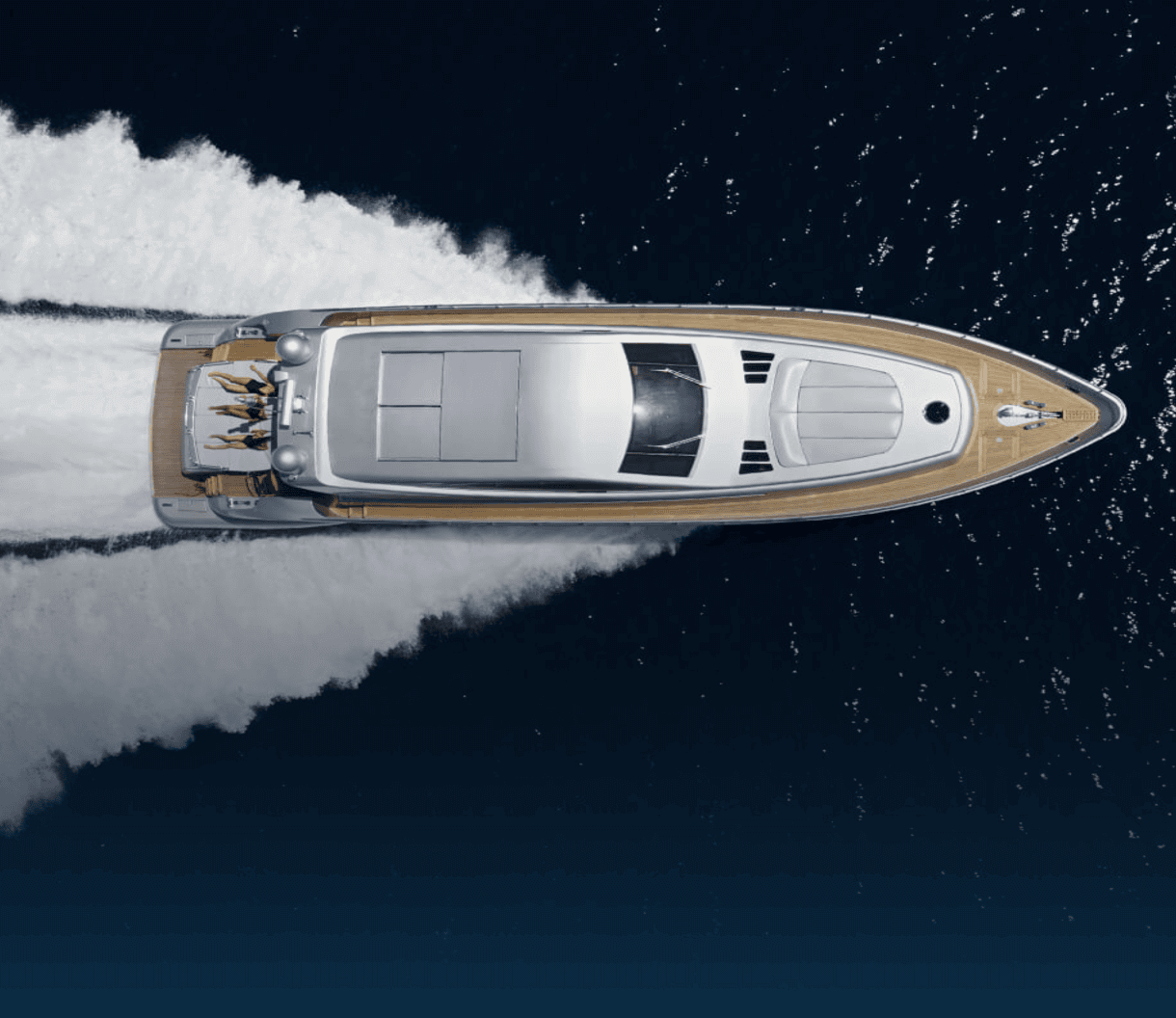
AeroCruiser 38 II “Shooting Star” (approx. 38 m, composite planing motor yacht)
- Key characteristics: carbon fiber composite construction; lightweight, performance-led engineering; planing hull with waterjet-based propulsion paired to high-output twin diesel engines; noted for very high top-end speed for its size class; contemporary Scandinavian exterior and a weight-conscious interior.
- Layout: bespoke arrangements were possible; interior configuration and cabin count depended on the specific commission.
- Remarks: Frequently cited by the trade press as an emblem of the yard’s capability in fast, efficient composite superyachts, blending rigorous engineering with modern styling.
-
High-speed professional/commercial composite craft (various lengths below superyacht scale)
- Key characteristics: advanced carbon laminates, shock-mitigating structures, and propulsion tailored for patrol/response roles.
- Layout: mission-specific, with arrangements optimized for crew utility and equipment integration.
- Remarks: These projects, though not “models” in the leisure sense, illustrate the yard’s competence in transferring superyacht-grade composite processes to demanding operational platforms.
Note: Danish Yachts worked as a custom builder, so “models” served more as concept platforms than fixed series. Specifications depended on each owner’s brief and the chosen engineering solutions.
Holland Jachtbouw
Frequently Asked Questions
Question: What is Holland Jachtbouw (HJB) known for?
Answer: Holland Jachtbouw is recognized for large custom sailing yachts and select custom motor yachts. The yard built technically intricate projects with a high standard of metalwork, systems integration, and interior craftsmanship.
Question: Did HJB focus on series production or fully custom work?
Answer: HJB specialized in fully custom, one-off commissions. Each project was designed and built around a unique brief, often involving demanding engineering, complex rig packages, and bespoke interiors.
Question: What materials were commonly used by HJB?
Answer: The yard’s sailing yachts and motor yachts commonly employed aluminum for hulls and, in many cases, aluminum superstructures. Carbon spars and advanced rigging systems were typical for the larger sailing yachts, aligning with performance and weight targets.
Question: Which naval architects and designers frequently collaborated with HJB?
Answer: The yard worked with leading firms based on project needs; examples include Dykstra Naval Architects for classic/modern-classic sail projects and interiors by renowned studios on a case-by-case basis. HJB’s network also encompassed top-tier riggers, spar builders, and systems engineers.
Question: What are some landmark projects delivered by HJB?
Answer: Notable yachts include Athos (a 62 m twin-mast schooner), Rainbow (a J-Class new-build inspired by the 1934 America’s Cup winner), Heureka (a 45 m performance sloop), and Calliope (a 42 m displacement motor yacht). Another widely referenced build is Windrose of Amsterdam, a schooner known for transatlantic record-setting under sail.
Question: What project sizes did HJB typically handle?
Answer: HJB’s portfolio spanned roughly 30–65 meters, with emphasis on the upper end for sailing yachts. Each commission’s scope was individually determined in consultation with the owners’ team and design office.
Question: How is HJB’s craftsmanship regarded?
Answer: The yard is held in high esteem for precision metalwork, carefully engineered systems, and interiors that can range from faithful classic to minimalist contemporary, all executed at a very high standard. Projects often drew praise from juries and the specialist press.
Question: Is Holland Jachtbouw currently active in new construction?
Answer: Following the passing of founder Chris Gongriep in 2016, the company’s activities were wound down, and the brand became inactive. The former Zaandam facility subsequently transitioned to new ownership within the Dutch superyacht ecosystem.
Question: What became of the Zaandam site?
Answer: The site’s substantial infrastructure—large climate-controlled halls, deep-water access, and proximity to the maritime cluster—continues to serve the superyacht industry under a different banner. This helped maintain the region’s concentration of high-skill yachtbuilding talent.
Question: What distinguishes HJB sail projects from peers?
Answer: A blend of classic authenticity and modern engineering is a recurring theme. For example, projects like Rainbow marry period-correct aesthetics with contemporary systems and aluminum construction, while modern sloops like Heureka emphasize lightweight engineering and clean, contemporary lines.
Question: How did HJB approach noise, vibration, and comfort on motor yachts?
Answer: Even in displacement motor yachts, HJB emphasized quiet machinery spaces, careful isolation, and service-friendly layouts. The aim was smooth, reliable operation suited to long-range cruising, reflecting the yard’s rigorous engineering ethos.
Question: Are HJB yachts popular on the brokerage and charter markets?
Answer: Many of the yard’s builds remain in demand due to their craftsmanship, robust engineering, and recognizability among experienced captains and surveyors. Market interest tends to be sustained by the combination of pedigree, condition, and maintenance history.
Available Models
Because Holland Jachtbouw was a custom builder rather than a series producer, the following are representative, well-documented yachts illustrating the scope of its work. Specifications can vary by commission; the details below highlight key, broadly reported characteristics.
-
Athos (approx. 62 m, twin-mast schooner, aluminum hull with carbon spars)
- Key characteristics: large twin-mast schooner rig with modern sail-handling systems; high-capacity hydraulic and control packages; carefully balanced sail plan designed for manageable power; luxurious, custom interior with generous guest accommodation.
- Performance context: engineered for powerful but controlled sailing with long-range capability; auxiliary power via twin diesel engines typical for yachts of this class.
-
Rainbow (approx. 40 m J‑Class, aluminum hull, carbon mast and rigging)
- Key characteristics: new-build interpretation of the 1934 America’s Cup winner; classic sheer and overhangs coupled with modern structure and systems; racing-focused deck plan with authentic detailing.
- Accommodation: comparatively modest guest spaces by superyacht standards, as befits a racing J‑Class; interior styled to honor the period while meeting modern comfort and safety norms.
- Performance context: designed for competitive J‑Class racing under contemporary rules; auxiliary diesel engine for harbor maneuvering and passages.
-
Heureka (approx. 45 m performance sloop, aluminum construction with carbon spar)
- Key characteristics: clean, contemporary exterior; weight-conscious build; modern sail-handling optimized for performance cruising; refined, light-interior approach.
- Performance context: fast passagemaking under sail with emphasis on controllability and efficiency; auxiliary propulsion via a single diesel engine typical of performance sloops in this size.
-
Windrose of Amsterdam (approx. 46 m schooner, aluminum hull, carbon spars)
- Key characteristics: modern-classic schooner noted for record-setting transatlantic performance under sail; powerful rig with high-aspect sails; elegant interior combining classic ambiance with practical cruising features.
- Performance context: recognized for exceptional sailing performance among large classic-inspired yachts; auxiliary diesel propulsion for reliability and range.
-
Calliope (approx. 42 m displacement motor yacht, steel or aluminum hull with aluminum superstructure depending on build specifics)
- Key characteristics: quiet engineering, efficient displacement hull form, and refined interior by a top-tier design office; systems laid out for reliability and maintenance access.
- Performance context: designed for comfortable long-range cruising at displacement speeds; twin diesel engines common to this class; top speed typically in the mid‑teens knots for comparable Dutch displacement yachts.
-
Additional representative custom builds (various 30–50 m aluminum sail yachts)
- Key characteristics: collaborations with leading naval architects; aluminum hulls matched to carbon masts and advanced rigging; interiors ranging from period-inspired to minimalist modern.
- Performance context: optimized for a balance of performance, comfort, and reliability under sail, with auxiliary diesel propulsion standard across the fleet.
Notes on specifications:
- Lengths are approximate overall lengths commonly cited in industry references.
- For sailing yachts, maximum “speed” under power is less indicative than sail performance; auxiliary engine types are typically high-quality marine diesels sized for reliable passages and maneuvering.
- Cabin counts and exact interior layouts vary considerably because each yacht was built to an individual brief; many projects offered generous owner’s suites and multiple guest cabins, supported by full crew accommodations and technical spaces.
This document covers two distinct, real yacht builders contained in the provided string: Danish Yachts (Denmark) and Holland Jachtbouw (Netherlands). Both operated as low-volume, high-skill custom yards. Danish Yachts became known for carbon-composite motor yachts with notable speed and efficiency, and its new-build activity has been inactive since the mid-2010s. Holland Jachtbouw earned a strong reputation for large custom sailing yachts and select motor yachts; the brand is not currently active, and its former facility now serves the superyacht industry under different ownership.

Learn more on the “DANISH YACHTHOLLAND JACHTBOUW”
To learn more on the “DANISH YACHTHOLLAND JACHTBOUW” or to get advice on how to buy or sell a yacht or get a great price for a yacht charter
please call +1 (954) 274-4435 USAOnly deal with professionals!