
 Licensed Yacht BrokersSales and service of yachts and ships
MCMULLEN & WING - For Sale
McMullen & Wing
Language: English
Company History
McMullen & Wing is a renowned New Zealand custom yacht builder with roots in Auckland dating back to the late 1960s. Established in 1969, the company grew from a partnership of master boatbuilders whose surnames gave the firm its enduring name. From the outset, the yard earned a reputation for robust construction and precision craftsmanship, initially focusing on commercial craft—fishing vessels, pilot boats, and workboats—built in aluminum, steel, and composite materials to meet the demanding conditions of the South Pacific.
By the 1990s the company had evolved decisively into high-end custom yacht construction while maintaining its commercial and refit capabilities. A defining early milestone in this period was the launch of Ultimate Lady in 1998, a large, wave-piercing sportfishing catamaran that showcased the yard’s willingness to adopt innovative hull forms and advanced composite techniques. The project demonstrated the firm’s ability to deliver complex, high-performance craft while maintaining long-range capability and seakeeping—qualities for which New Zealand builders are widely respected.
Another landmark was the 37-meter high-speed motor yacht Ermis², delivered in the mid-2000s. Built with advanced composite engineering and lightweight construction, Ermis² combined triple engines with waterjets for exceptional speed and responsiveness, earning international attention for technical innovation and execution quality.
In 2010, McMullen & Wing launched the 50-meter expedition motor yacht Big Fish, designed for global exploration. With a steel hull and an aluminum superstructure, Big Fish married rugged capability with refined design and introduced a number of lifestyle innovations. The yacht’s successful world cruising program—including extended, high-latitude passages—underlined the yard’s core strengths in reliability, engineering, and finish quality. Big Fish won multiple international awards, further cementing McMullen & Wing’s status among the top custom builders of explorer yachts.
In 2012, a significant fire at the Auckland facility damaged a 50-meter sistership to Big Fish (widely referenced as Star Fish) under construction, ultimately leading to the project’s cancellation. Despite this setback, McMullen & Wing continued to deliver new builds and substantial refits, reinforcing its resilience and commitment to quality.
Today, McMullen & Wing is recognized for custom superyachts and bespoke commercial craft built in steel, aluminum, and advanced composites, together with comprehensive refit and repair services. The company’s work often involves collaboration with leading naval architects and stylists—frequently from New Zealand’s strong design ecosystem as well as internationally—and is characterized by meticulous metalwork, exacting paint standards, and premium joinery.
Country of Origin
New Zealand. The company was founded and maintains its identity and heritage in Auckland, at the heart of the country’s marine industry.
Manufacturing Locations
McMullen & Wing operates from Auckland, New Zealand. The yard is situated on the Tamaki estuary in the greater Auckland area, providing direct water access for launching, sea trials, and after-sales support. The facility comprises large enclosed construction halls, metal fabrication shops, composite lamination areas, a dedicated paint hall, precision machining, and joinery workshops. This vertically integrated setup allows the builder to progress complex custom projects under one roof while drawing on New Zealand’s well-developed marine supply chain for specialized systems, rigging, and equipment.
The location in Auckland places the yard within a dense cluster of naval architects, engineers, surveyors, classification society representatives, and specialist subcontractors. As a result, McMullen & Wing is able to build to leading international standards and class rules while maintaining the agility and efficiency that distinguish New Zealand yards.
Ownership and Management
McMullen & Wing is an independent, privately held New Zealand company. Over the years the firm has been led by experienced marine industry executives and master shipwrights, combining management discipline with hands-on boatbuilding expertise. Leadership during the 2010s included a chief executive role held by Michael Eaglen, reflecting the company’s emphasis on engineering-led decision making and customer-focused project delivery. The company’s governance has consistently prioritized custom quality, safety, and lifecycle support for yachts operating globally.
Reputation and Quality
Within the superyacht community, McMullen & Wing is respected for three defining attributes:
-
Blue-water capability and reliability: Projects such as Big Fish demonstrated the yard’s ability to build expedition yachts capable of ambitious itineraries, including high-latitude voyages. Owners and captains consistently cite robust engineering, thoughtful systems integration, and dependable performance.
-
Materials mastery: The company’s portfolio spans steel and aluminum construction as well as high-performance composites. This range—showcased by diverse references from Ultimate Lady and Ermis² through to modern long-range explorers—reflects deep expertise in structural engineering, weight management, and lifecycle maintenance considerations.
-
Finish and craftsmanship: New Zealand joinery is internationally admired, and McMullen & Wing’s interiors benefit from exacting woodworking, fairing, and paint standards. The yard’s culture emphasizes durability beneath the finish—clean installations, access for service, and meticulous systems layout—so that the yachts are as maintainable as they are beautiful.
Awards and recognition include international prizes for innovation, design, and build quality. Big Fish received multiple accolades, including major awards at the World Superyacht Awards and ShowBoats Design Awards, highlighting the project’s synthesis of explorer functionality and contemporary luxury. Ermis² drew critical notice for advanced composite construction and speed, while Ultimate Lady remains an iconic example of New Zealand ingenuity applied to sportfishing and offshore performance.
The yard builds to leading classification standards (such as Lloyd’s Register or ABS) and commercial and large-yacht codes (such as MCA LY), working closely with surveyors throughout the project. McMullen & Wing’s refit and service team supports yachts post-delivery, offering scheduled yard periods, paint works, mechanical overhauls, and equipment upgrades. The company’s approach favors long-term relationships with owners, captains, and management companies, aligning build decisions with operational realities and lifecycle costs.
In summary, McMullen & Wing combines the hallmark strengths of New Zealand boatbuilding—innovation, seakeeping, and craftsmanship—with a track record in complex custom projects. The yard’s explorers and performance craft are known for their practicality, quality, and readiness for serious cruising.
—
Language: Español
Company History
McMullen & Wing es un astillero neozelandés de yates a medida con sede en Auckland y trayectoria desde 1969. Nació de la asociación de dos maestros constructores cuyos apellidos dieron nombre a la empresa. En sus primeros años, el astillero se especializó en embarcaciones comerciales —pesqueros, prácticos y barcos de trabajo— construidas en aluminio, acero y materiales compuestos, capaces de afrontar con solvencia las condiciones exigentes del Pacífico Sur.
A partir de la década de 1990, la empresa se orientó con decisión hacia los yates de alta gama, sin abandonar su actividad en barcos comerciales y refits. Un hito relevante fue el lanzamiento de Ultimate Lady en 1998, un gran catamarán de pesca deportiva con proa de penetración de ola que evidenció la apertura del astillero a formas de casco innovadoras y técnicas avanzadas en composites. Poco después, el yate de 37 metros Ermis², construido a mediados de los 2000 con ingeniería ligera y propulsión por hidrochorros, obtuvo reconocimiento internacional por su velocidad e innovación técnica.
En 2010, McMullen & Wing botó Big Fish, un yate de exploración de 50 metros con casco de acero y superestructura de aluminio, concebido para circunnavegaciones y travesías de gran alcance. Big Fish realizó cruceros mundiales, incluidas altas latitudes, y recibió múltiples premios internacionales en reconocimiento a su diseño y calidad de construcción.
En 2012, un incendio en las instalaciones de Auckland afectó al casco de la hermana de Big Fish en construcción (conocida como Star Fish), que finalmente fue cancelada. El astillero, no obstante, mantuvo su ritmo con nuevas construcciones y refits de gran entidad, reforzando su resiliencia y prestigio.
Hoy, McMullen & Wing es sinónimo de yates a medida —exploradores, deportivos y proyectos singulares— y de embarcaciones comerciales personalizadas, con un enfoque integral que abarca diseño, ingeniería, construcción y servicio postventa.
Country of Origin
Nueva Zelanda, con base histórica y operativa en Auckland.
Manufacturing Locations
La producción se realiza en Auckland, en el estuario de Tamaki, con acceso directo al agua para botaduras y pruebas de mar. El complejo integra grandes naves de construcción, talleres de metalistería y laminación en composite, cabina de pintura, mecanizado de precisión y carpintería fina. La proximidad al ecosistema náutico neozelandés —diseñadores, ingenierías, proveedores especializados y sociedades de clasificación— permite abordar proyectos complejos a estándares internacionales con la agilidad característica de la industria local.
Ownership and Management
La compañía es privada e independiente. A lo largo de los años ha estado dirigida por ejecutivos con experiencia en ingeniería naval y maestros carpinteros de ribera. En la década de 2010, la dirección ejecutiva incluyó a Michael Eaglen, reflejando el foco de la empresa en la excelencia técnica y la atención al cliente durante todo el ciclo del proyecto.
Reputation and Quality
- Capacidad oceánica: Los yates de McMullen & Wing están pensados para navegación de largo alcance y condiciones exigentes; Big Fish es un ejemplo paradigmático por sus travesías en altas latitudes.
- Dominio de materiales: El astillero maneja con solvencia acero, aluminio y composites avanzados, equilibrando rendimiento, peso y mantenimiento a lo largo de la vida útil del barco.
- Acabados y artesanía: La ebanistería neozelandesa y los rigurosos estándares de pintura y montaje distinguen a la marca.
Big Fish obtuvo premios en los World Superyacht Awards y ShowBoats Design Awards; Ermis² fue reconocido por su construcción avanzada y prestaciones; Ultimate Lady permanece como referencia en pesca deportiva de alto rendimiento. El astillero trabaja bajo normas de clase internacionales y códigos grandes yates, y mantiene un sólido servicio de refit y soporte posventa.
—
Language: Français
Company History
Fondé en 1969 à Auckland, McMullen & Wing s’est imposé comme un chantier néo-zélandais de yachts sur mesure, issu d’un partenariat de maîtres charpentiers navals dont les noms ont donné l’appellation de l’entreprise. Le chantier a d’abord construit des navires commerciaux — bateaux de pêche, de servitude et de pilotage — en aluminium, acier et matériaux composites, avant de s’orienter vers le yachting de luxe dans les années 1990.
Parmi les jalons majeurs figurent Ultimate Lady (1998), grand catamaran de pêche sportive à étrave perce-vague, démonstration de l’expertise du chantier en composites et formes de carène novatrices; Ermis² (milieu des années 2000), yacht de 37 m à propulsion hydrojet et structure composite avancée, salué pour sa vitesse et sa sophistication technique; et Big Fish (2010), yacht d’exploration de 50 m, coque acier et superstructure aluminium, récompensé à l’international et éprouvé sur des itinéraires de haute latitude.
En 2012, un incendie aux installations d’Auckland a endommagé la sœur de Big Fish en construction (Star Fish), entraînant l’annulation du projet. McMullen & Wing a néanmoins poursuivi ses activités de nouvelles constructions et de refits d’envergure, confirmant sa résilience.
Country of Origin
Nouvelle-Zélande (Auckland).
Manufacturing Locations
Le chantier est implanté à Auckland, sur l’estuaire de la Tamaki. Les installations comprennent de grands halls couverts, ateliers de métallerie et de stratification composite, cabine de peinture, usinage de précision et menuiserie. Cette intégration, associée au cluster maritime néo-zélandais (architectes, ingénieurs, fournisseurs, sociétés de classification), permet de livrer des projets complexes aux meilleurs standards internationaux.
Ownership and Management
Entreprise privée indépendante. La direction a, au fil du temps, été assurée par des professionnels de l’ingénierie et de la construction navale. Dans les années 2010, la fonction de directeur général a notamment été occupée par Michael Eaglen, illustrant l’orientation ingénierie et client du chantier.
Reputation and Quality
- Fiabilité hauturière: conception et construction adaptées aux grandes croisières et aux zones exigeantes; Big Fish en est l’illustration.
- Maîtrise multi-matériaux: acier, aluminium et composites avancés selon les besoins de performance et de maintenance.
- Finition et artisanat: menuiserie raffinée, peinture exigeante, intégration des systèmes pensée pour la maintenance.
Big Fish a reçu des distinctions aux World Superyacht Awards et aux ShowBoats Design Awards; Ermis² a été remarqué pour sa construction composite et ses performances; Ultimate Lady reste une référence en pêche sportive à long rayon d’action. Le chantier construit selon les règles de classe internationales et propose des services complets de refit et support.
—
Language: Русский
Company History
McMullen & Wing — незаурядная новозеландская верфь по строительству кастомных яхт, ведущая историю с 1969 года в Окленде. Основана партнёрами-корабелами, чьи фамилии легли в название компании. Первые десятилетия верфь специализировалась на коммерческих судах — рыболовных, лоцманских и рабочих — из алюминия, стали и композитов, рассчитанных на тяжёлые условия южной части Тихого океана.
С 1990‑х компания перешла к строительству суперъяхт, сохранив компетенции в коммерческой сфере и рефитах. Вехи: Ultimate Lady (1998) — крупный катамаран для спортивной рыбалки с инновационной архитектурой корпуса; Ermis² (середина 2000‑х) — 37‑метровая скоростная яхта из продвинутых композитов с водомётами; Big Fish (2010) — 50‑метровый экспедиционный моторный суперъяхт из стали и алюминия, удостоенный международных наград и подтвердивший надёжность верфи на высокоширотных маршрутах.
В 2012 году пожар на площадке Окленда повредил строящийся «систершип» Big Fish (Star Fish), что привело к остановке проекта. Тем не менее, McMullen & Wing сохранила темп и продолжила новые постройки и крупные рефиты, укрепляя позиции на рынке.
Country of Origin
Новая Зеландия (Окленд).
Manufacturing Locations
Производственная база расположена в Окленде, на эстуарии Тамaki, с прямым выходом к воде для спуска и ходовых испытаний. В состав площадки входят большие цеха окончательной сборки, металлообработка, композитное формование, окрасочная камера, механический участок и столярное производство. Близость к развитому морскому кластеру Новой Зеландии обеспечивает доступ к ведущим проектантам, инженерам, поставщикам и инспекторам классификационных обществ.
Ownership and Management
Частная независимая компания. В разные годы управленческие позиции занимали опытные специалисты судостроения и инженеры; в 2010‑е годы роль генерального директора выполнял Майкл Иглен (Michael Eaglen), что отражает инженерно-ориентированный подход верфи и фокус на интересах заказчика.
Reputation and Quality
- Океанская надёжность и дальность: суда McMullen & Wing рассчитаны на продолжительные переходы и суровые условия, чему подтверждением служат походы Big Fish.
- Экспертиза в материалах: сталь, алюминий и высокотехнологичные композиционные материалы — выбор конфигурируется под задачи эксплуатации, массы и обслуживания.
- Качество отделки: новозеландская столярка, строгие стандарты окраски и аккуратная интеграция систем обеспечивают долговечность и удобство сервисного доступа.
Big Fish удостоен наград World Superyacht Awards и ShowBoats Design Awards; Ermis² отмечен за композитную технологичность и скорость; Ultimate Lady — знаковый пример новозеландской инженерии для спортивной рыбалки. Верфь строит по требованиям ведущих классификационных обществ и поддерживает яхты на протяжении всего жизненного цикла (рефит, сервис, модернизация).
—
Language: 中文 (简体)
Company History
McMullen & Wing 是一家总部位于新西兰奥克兰的定制游艇建造企业,成立于1969年。公司最初由两位资深造船师合作创建,并以二人的姓氏命名。早期业务以商业船舶为主,包括渔船、引航船与作业船,材料涵盖铝合金、钢材与复合材料,注重结构强度与可靠性,适应南太平洋的严苛海况。
进入1990年代后,企业逐步转向高端定制游艇,同时保持商船与改装(refit)业务能力。标志性项目包括:1998年的 Ultimate Lady(大型穿浪型运动钓鱼双体船,体现了该厂在复合材料与创新船型上的实力);2000年代中期的 Ermis²(37米高速复合材料机动游艇,采用三机水喷推进,因技术与性能获得国际关注);以及2010年的 Big Fish(50米钢制船体、铝制上层的远航探险型游艇,完成环球与高纬度航行并斩获多项国际大奖)。
2012年,奥克兰厂区发生火灾,影响了在建的 Big Fish 姐妹船(Star Fish),项目最终取消。此后,McMullen & Wing 继续交付新建项目并开展大型改装工程,展现出韧性与持续的工程能力。
Country of Origin
新西兰(奥克兰)。
Manufacturing Locations
公司在奥克兰塔玛基河口(Tamaki Estuary)设有一体化船厂,具备直接下水与海试条件。厂区包含大型封闭建造大厅、金属结构与焊接车间、复合材料铺层与固化区、专用喷涂车间、精密加工以及高端内装木作工坊。依托新西兰成熟的海事产业集群(设计、工程、供应链与船级社),企业能够以高标准交付复杂的定制项目。
Ownership and Management
独立的私人企业。管理层长期由具备工程背景与一线造船经验的专业人士组成。2010年代,公司高管团队中包括首席执行官 Michael Eaglen,体现出工程驱动与客户导向的管理理念。
Reputation and Quality
- 远航与可靠性:McMullen & Wing 的作品强调蓝水能力与系统可靠性,Big Fish 的环球与高纬度航行是典型案例。
- 多材料与结构工程:钢、铝与先进复合材料的综合应用,根据性能、重量与维护需求定制解决方案。
- 工艺与细节:新西兰精湛木作、严格的涂装与管线系统布局为长期维护与使用便利性打下基础。
Big Fish 曾获 World Superyacht Awards 与 ShowBoats Design Awards 等国际奖项;Ermis² 因先进复合结构与高速性能而受到关注;Ultimate Lady 则是新西兰在运动钓鱼与远洋性能领域的代表作之一。公司按主流船级社与大型游艇规范建造,并提供全面的售后、保养与改装服务。
McMullen & Wing
Main Competitors
Because McMullen & Wing (Auckland, New Zealand) is a low-volume, high-skill custom yard that builds in steel, aluminum, and advanced composites and also undertakes comprehensive refits, its competitive set spans several categories: regional peers in New Zealand and Australia, global custom superyacht builders (particularly those with explorer-yacht credibility), specialized composite builders, and refit-focused yards. The list below highlights the entities an owner or project team would realistically compare with McMullen & Wing when scoping a project of roughly 25–55 meters, especially in the expedition and long-range cruising space.
-
Regional custom and refit peers in New Zealand:
- Yachting Developments (Auckland): Noted for high-end composite construction in both sail and motor yachts, and for major refits. Often considered when a brief favors carbon or advanced composites, performance, and exacting interior finish.
- Circa Marine & Industrial (Whangārei): Renowned for rugged aluminum expedition motor yachts and commercial craft. Known internationally for building the FPB (Dashew) series—emphasizing range, practicality, and high-latitude capability—making Circa a natural comparator for owners prioritizing self-reliance and durability.
- Profab Engineering (Manawatū): A go-to in New Zealand for robust custom aluminum vessels, including large private expedition-style yachts and specialized commercial builds. Competes on capability for tough, functional platforms with good finish standards.
- Orams Marine (Auckland) and other NZ refit hubs: While not a new-build competitor, Orams is a strong rival for refit, paint, and service work. Owners deciding where to book a yard period in Auckland will frequently weigh McMullen & Wing against Orams and other regional refit providers.
-
Australian regional alternatives:
- SilverYachts (Perth): Builds large, fast aluminum yachts with a distinctive aesthetic and engineering approach. For all-metal, performance-leaning projects with a contemporary look, SilverYachts is often considered.
- Echo Yachts (Western Australia): Custom superyacht builder with capability in large composite and metal builds. Occasionally appears on the same longlist when the project scope requires unique engineering solutions in the region.
-
Global custom/explorer specialists and metal superyacht yards:
- Cantiere delle Marche (Italy): A leading name in explorer yachts (Darwin Class, Flexplorer). Strong reputation for steel/aluminum expedition platforms from roughly 30 to 50 meters, making CdM one of the most direct competitors to McMullen & Wing on mission profile.
- Damen Yachting/Amels (Netherlands): From SeaXplorer expedition yachts to support vessels and Amels semi-custom lines, Damen offers a complete ecosystem around exploration, logistics, and proven cruising capability.
- Heesen (Netherlands): High-quality aluminum and steel builds, with strengths in fast and semi-displacement yachts and expanding 50m-class series. Considered when owners want European series build efficiency with high-end finish.
- Benetti (Italy): Broad portfolio from semi-custom to full custom steel/aluminum in the 37–60m range. A frequent benchmark for total value, build slot availability, and after-sales network.
- Sanlorenzo (Italy): Notably the 44–52m steel/aluminum ranges (e.g., 44 Alloy, 46Steel, X-Space) appeal to owners seeking refined design, series efficiencies, and strong resale under a global brand.
- Turquoise Yachts, Bilgin, RMK Marine, and Bering (Turkey): Increasingly competitive for custom metal and explorer-style yachts; valued for capacity, modern facilities, and cost-to-finish ratios.
- Pendennis (UK): Custom builds and strong refit/new-build hybrid capability, especially for technically complex or heritage projects. A common comparator when build quality and refit-integration matter.
- Feadship, Lürssen, Abeking & Rasmussen (Netherlands/Germany): These names set the apex standard in full-custom superyachts. While typically operating at larger sizes and budgets, they are part of the same decision landscape for owners prioritizing bespoke engineering and lifetime support.
-
Composite-centric custom and performance builders (overlap by material or project type):
- Baltic Yachts (Finland), Wally (Italy/Monaco; now within Ferretti Group), and select race-yacht/composite specialists. These yards enter consideration when light-weight structures, performance envelopes, and carbon interiors are critical. McMullen & Wing’s own composite experience means it sometimes competes with—or partners alongside—such specialists depending on project scope.
-
Refit and service competitors globally:
- MB92 (Barcelona/La Ciotat), Palumbo Superyachts (various yards including Ancona and Malta), and Pendennis (Falmouth/Palma) are international refit heavyweights. For owners deciding where to route a yacht during South Pacific or world cruises, McMullen & Wing’s Auckland location competes with these facilities on geography, capability, and schedule alignment.
In practical terms, owners considering McMullen & Wing often value New Zealand’s engineering ethos, blue-water practicality, and craftsmanship. They will compare those traits to the series efficiency and immediate slot availability of larger European yards, the cost structure of Turkish builders, and the convenience of regional refit hubs if the scope is service rather than new build.
Current Production Status
McMullen & Wing remains active in Auckland as a custom builder and as a full-service refit and repair yard. The company continues to quote and execute complex projects in steel, aluminum, and advanced composites, drawing on New Zealand’s deep pool of marine engineering talent, specialized subcontractors, and classification society presence. While the yard’s most internationally publicized deliveries—such as the 50-meter expedition yacht Big Fish—are now well known case studies, the production reality of a boutique custom yard is inherently variable: new-build contracts are executed as they are secured, and between larger yachts the facility is sustained by significant refit work, commercial projects, and smaller bespoke builds.
Key characteristics of the current production approach and capability include:
- Focus on one-off, engineering-led projects: McMullen & Wing is set up for bespoke hulls rather than series production. Engineering solutions are tailored to mission profile, whether that is a high-latitude explorer with steel hull and aluminum superstructure, or a high-performance composite yacht where weight and stiffness targets are paramount.
- Comprehensive in-house trades: Metal fabrication, composite lamination, precision machining, dedicated paint environments, and premium joinery are housed on site. This vertical integration is a core strength for quality control, schedule coordination, and lifecycle service.
- Classification and regulatory alignment: Projects are typically built to leading class society and large-yacht code requirements (e.g., Lloyd’s Register, ABS; MCA LY-series codes), with surveyors integrated into project rhythms from early design through sea trials.
- Refit and lifecycle support: Auckland’s position on South Pacific cruising routes makes the yard a logical stop for superyachts heading to or from high-latitude seasons or Pacific itineraries. The company’s refit portfolio includes structural, mechanical, and electrical upgrades, full paint programs, interior refinishing, and systems overhauls aligned with 5- and 10-year survey cycles.
- Commercial and governmental craft: McMullen & Wing maintains capabilities in commercial vessels—workboats, pilot vessels, and other specialized craft—which helps balance workload and retain core skills and staff between superyacht peaks.
Owners evaluating “current production status” should expect a craftsman-driven, project-by-project cadence rather than a fixed-output pipeline. Build slots for large yachts are limited, and planning benefits from early engagement so engineering, procurement, and long-lead systems can be coordinated. The yard’s ongoing activity in refit and service is a healthy indicator of capability continuity, workforce retention, and facility utilization.
Production Volumes
Publicly consolidated production volumes are not disclosed. As a highly bespoke yard, McMullen & Wing’s output does not resemble series builders that deliver multiple near-identical hulls per year. Instead:
- Large new-build cadence is deliberately low: A single significant superyacht project can occupy core resources for 18–36 months, depending on size, complexity, and interior scope.
- Refit throughput provides steady volume: Numerous concurrent refit and service jobs—ranging from paint and survey work to machinery replacements and interior reconfiguration—contribute to continuous yard activity even when a large flagship new build is not nearing launch.
- Material mix influences cycle time: Steel/aluminum expedition builds and advanced composite performance projects demand different tooling, curing, and fairing timelines, with clear consequences for annual unit counts.
For owners and project managers, the takeaway is that “volume” at McMullen & Wing is best measured in complexity handled and quality delivered rather than in hulls per year. Scheduling revolves around securing a build slot for a specific technical brief, with refit capacity planned around those milestones.
Latest News
Recent years in New Zealand’s superyacht sector have been shaped by two macro dynamics that frame McMullen & Wing’s activity:
- The refit wave linked to Auckland’s role as a South Pacific gateway: Following the pandemic-era border restrictions and the subsequent reopening, New Zealand saw a rebound in visiting superyachts. Auckland’s marine cluster—surveyors, systems specialists, paint teams, and yards—benefited as yachts scheduled deferred work. McMullen & Wing, with its established refit capability and in-water access, has remained positioned to capture such projects as traffic through the region normalizes.
- Ongoing demand for explorer functionality: Owner interest in long-range platforms capable of high-latitude or remote cruising has persisted. New Zealand yards, including McMullen & Wing, continue to field inquiries emphasizing autonomy, tender and toy handling, reinforced structure, efficient hull forms at passagemaking speeds, and serviceability. This aligns closely with the company’s track record on expeditionary design and construction.
Public domain reporting on McMullen & Wing’s “headline” new-build launches has been quieter than in the period surrounding Big Fish, but this should be interpreted in the context of a bespoke, opportunity-driven order book rather than as an indicator of dormancy. The firm’s communications consistently emphasize:
- Availability for fully custom new builds in metal and composites;
- Full-scope refit offerings, including major structural and systems work as well as top-tier paint and interior finish;
- Collaboration with leading naval architects and stylists from New Zealand and abroad, matching each project to the optimal design house;
- Commitment to international standards and classification, with yard processes designed to satisfy survey milestones efficiently.
Prospective clients typically receive project-specific updates under NDA during design development and contract negotiation. As with many boutique builders, that confidentiality limits the volume of splashy public news until a client elects to publicize a milestone such as keel laying, launch, or delivery. Nonetheless, the steady drumbeat of refit completions, paint programs, and systems upgrades—often documented privately in owner’s teams or through classification records—signals an active yard.
For owners, captains, and management companies seeking the latest actionable information, the most reliable route remains direct engagement with the yard: confirming current build-slot availability, discussing the technical brief, and arranging a facilities tour to assess fit for purpose. This direct channel also clarifies timetable realities in today’s supply chain environment—lead times for major equipment, classification surveyor scheduling, and paint-cure windows—so that an accurate critical path can be established early.
In summary:
- McMullen & Wing competes credibly with both regional and global custom yards on engineering quality, expedition capability, and craftsmanship.
- Production is ongoing, with a workload balanced between custom new-build opportunities and substantial refit/service projects.
- Published production volumes are not aggregated, consistent with the yard’s bespoke model.
- “Latest news” in the public sphere emphasizes capability and availability rather than frequent launch announcements, reflecting the confidentiality and cadence of high-spec, one-off projects typical of the company’s niche.
McMullen & Wing
Frequently Asked Questions
Question: What types of yachts does McMullen & Wing primarily build?
Answer: The yard focuses on fully custom motor yachts and specialized vessels built in steel, aluminum, and advanced composites. Its hallmark is expedition and long-range cruising yachts (often called “explorer” yachts), alongside technically demanding one-off projects such as high-speed composite craft and large sportfishing catamarans. The team also undertakes substantial refit and conversion work for superyachts and commercial vessels.
Question: What size range does the shipyard typically work in?
Answer: The core superyacht range runs from approximately 25 to 55 meters LOA, with outliers depending on mission profile. The yard’s history includes a 50-meter expedition yacht in steel/aluminum, a 37-meter high-speed composite yacht, and a roughly 27–28-meter wave-piercing sportfishing catamaran—illustrating its breadth across materials and performance envelopes.
Question: Does the company maintain a series “model line,” or is everything one-off?
Answer: McMullen & Wing is a bespoke builder. It does not maintain a fixed catalog in the sense of semi-custom series or repeat hulls. Each project is engineered to a brief—exploration capability, speed targets, draft constraints, tender handling, ice reinforcement, and interior program. Past builds can be used as reference points, but new yachts are genuinely custom.
Question: What materials does McMullen & Wing use, and why?
Answer: For exploration yachts that prioritize range, durability, and serviceability, the yard typically pairs a steel hull with an aluminum superstructure. For performance-oriented projects—where weight, stiffness, and dynamic response matter—advanced composites (carbon, glass, or hybrid laminates) are used. Aluminum monohulls and workboats are common where corrosion resistance, weight, and reparability are balanced against structural demands.
Question: How capable are their explorer yachts for high-latitude or remote cruising?
Answer: The yard’s best-known expedition yacht completed extensive world cruising, including challenging, high-latitude itineraries. Hallmarks include robust scantlings, generous tankage, efficient hull forms for passagemaking, protected deck arrangements for tenders and gear, redundant systems, and thoughtful service access. Many builds incorporate enhanced cold-weather insulation, de-icing considerations for deck equipment, and structural reinforcement appropriate to the intended cruising grounds. Formal ice-class is project-specific and based on client brief and classification society requirements.
Question: Which designers and naval architects does the yard collaborate with?
Answer: McMullen & Wing collaborates with a mix of New Zealand and international studios. The selection depends on owner preference and mission profile. References include partnerships with internationally recognized naval architects and stylists on explorer yachts, high-speed composites, and innovative catamaran forms. The yard’s engineering team coordinates closely with the chosen design office to align structure, systems, and interior with classification and performance goals.
Question: What classification and regulatory standards are typical?
Answer: Builds are commonly aligned with major classification societies (for example, Lloyd’s Register or ABS) and large-yacht codes (such as the MCA LY series). Compliance encompasses structural and stability standards, fire protection, lifesaving appliances, machinery and electrical systems, and noise/vibration criteria. Surveyors are engaged from early stages through sea trials to verify conformity and to expedite certification.
Question: What is a realistic timeline for a custom yacht?
Answer: For a 35–50 meter fully custom yacht, concept-to-delivery can span roughly 24–36 months, depending on design maturity, material choice, interior complexity, and the supply chain for major equipment. Composite high-speed projects can compress or extend that timeline based on tooling and cure schedules. Steel/aluminum explorers with intricate systems and expedition outfitting often require extensive planning and commissioning phases.
Question: How does the yard approach noise and vibration control?
Answer: A multi-layered approach combines resilient machinery mountings, floating floors, damping treatments within the structure, optimized propeller and gear selection, and meticulous isolation details around HVAC and hotel systems. Early-stage predictive analysis (finite element and acoustic modeling) informs structural and systems design, while commissioning measurements validate the targets.
Question: What about paint quality and corrosion management?
Answer: For steel hulls, surface preparation, fairing, and a carefully sequenced coatings system protect against corrosion and ensure fair finishes. Aluminum superstructures receive tailored treatments, and composite structures are finished to superyacht standards with appropriate primers and topcoats. Detailing at penetrations, stainless interfaces, and dissimilar-metal joints is engineered to mitigate galvanic risk.
Question: Does McMullen & Wing also build commercial craft?
Answer: Yes. The yard’s roots include pilot boats, workboats, and specialized commercial vessels. This cross-pollination supports superyacht reliability by keeping heavy-duty fabrication, systems engineering, and lifecycle-service know-how current and practical.
Question: What propulsion options are available?
Answer: Common configurations include twin conventional diesel engines with shaft lines and propellers for explorers, optimized for fuel efficiency and range. High-speed yachts may use waterjets, sometimes in triple installations, to enable low draft, exceptional maneuverability, and very high top speeds. Hybrid and alternative-energy integrations are assessed case by case, balancing mission duration, hotel loads, and recharge logistics.
Question: Can the yard incorporate hybrid propulsion or advanced energy management?
Answer: Hybrid systems, energy-recovery technologies, and advanced power management can be integrated when they align with the owner’s operational profile. Trade-offs include weight, complexity, and maintenance regime versus gains in emissions, redundancy, and hotel-service flexibility. The yard’s engineering team coordinates with specialist suppliers and classification surveyors on such installations.
Question: What refit capabilities are typical?
Answer: Full-scope refits include structural modifications, machinery replacements, electronics and navigation upgrades, major paint campaigns, interior refurbishments, and class/survey work for 5- and 10-year cycles. The facility’s in-water access and trades under one roof enable complex parallel workflows, reducing time out of service.
Question: What distinguishes the yard’s interiors and joinery?
Answer: New Zealand joinery has a strong global reputation. Interiors blend precise carpentry with durable, serviceable detailing—removable panels for access, consistent tolerances, and integrated systems routing. The focus is on longevity and maintenance practicality without compromising aesthetic refinement.
Question: How does the yard manage risk on complex builds?
Answer: Risk is mitigated through progressive engineering validation, early procurement of long-lead items, mockups (including critical interior spaces), scheduled classification hold points, and iterative owner/captain reviews. Technical change control processes and earned-value schedule tracking help keep scope and cost aligned with milestones.
Question: What lessons came from past major projects and setbacks?
Answer: High-profile builds demonstrated the yard’s strengths in long-range reliability and innovative engineering. A facility fire over a decade ago that affected a large yacht under construction led to renewed emphasis on risk management, fire protection protocols, and continuity planning. The yard continued to deliver new construction and refits thereafter, underscoring operational resilience.
Question: What performance expectations are realistic for an explorer yacht of ~50 meters?
Answer: Typical figures include a top speed in the mid-teens (knots), efficient cruising around 10–12 knots, and transoceanic range—often several thousand nautical miles depending on tankage and displacement. Hull efficiency, appendages, and propeller selection are tuned to the owner’s range/speed trade-off.
Question: What about high-speed composites—how fast is practical at 35–40 meters?
Answer: With lightweight composite structures, optimized laminates, and waterjet propulsion powered by high-output diesels, top speeds above 50 knots are feasible in this size range, subject to sea state, load, and configuration. Careful attention to weight control, vibration, and steering dynamics is essential for comfort and structural longevity at such speeds.
Question: Are wave-piercing catamarans within scope?
Answer: Yes. The yard has delivered a large wave-piercing sportfishing catamaran in advanced composites. Benefits include reduced motions in head seas, efficient running at offshore speeds, and generous deck space for fishing operations and tenders. Structural engineering and laminates are tuned for the high slamming loads typical of fast multihulls.
Question: How are tenders, toys, and expedition gear handled?
Answer: Explorer platforms often feature heavy-duty cranes, large foredeck or aft working decks, protected launch and recovery zones, and storage integrated into the superstructure. Deck fittings, davits, and chocks are engineered to withstand dynamic loads and repetitive cycles in a seaway.
Question: What crew-centric features are emphasized?
Answer: Service routes, technical spaces, and stores are laid out for efficient operations: segregated crew circulation, centralized machinery spaces with proper access, dedicated workshops, and adequate cold/dry storage for long-range provisioning. Ergonomics in the wheelhouse, galley, and crew cabins support safe, sustained operations.
Question: How does the yard support sustainability goals?
Answer: Approaches include efficient hull forms, selective use of lightweight materials, advanced coatings to reduce fouling and drag, optimized HVAC with heat recovery where applicable, LED and power-management strategies, and the option to integrate hybrid or alternative-energy systems. Sustainable timber sourcing and low-VOC finishes are considered in interior build.
Question: What is the typical process for initiating a new build?
Answer: Projects usually begin with a concept brief, followed by feasibility and preliminary naval architecture. A structured specification is developed alongside a general arrangement and key performance targets. Once engineering pathways and major equipment are defined, a build slot is confirmed and long-lead procurement begins. Regular design reviews and mockups help de-risk interior and systems execution.
Question: Can the shipyard accommodate unique exploration features like science labs or submersible handling?
Answer: Yes, when these features are included in the brief. The yard has experience integrating specialized handling gear, reinforced decks, mission-specific spaces, and upgraded hotel and electrical systems to support scientific, photographic, or expeditionary operations.
Question: What after-delivery support can owners expect?
Answer: Support typically includes warranty service as per contract, planned maintenance periods, paint and systems refreshes, and survey-driven work scopes. The yard’s lifecycle approach emphasizes documentation, spare parts strategies, and remote technical support through the captain and management team.
Question: How are interiors protected during refit or completion?
Answer: Strict environmental controls (temperature, humidity), dust management, and protective wrapping are standard. Sequencing avoids contamination of finished spaces, and QA checkpoints verify finish quality after each trade completes work in a given zone.
Question: Does the yard accept partial builds or conversions?
Answer: On a case-by-case basis. Conversions and partial completions are evaluated for structural feasibility, regulatory compliance, and the cost-benefit versus a clean-sheet build.
Question: What is the yard’s approach to documentation and digital deliverables?
Answer: Comprehensive as-built documentation, system schematics, class certificates, maintenance schedules, and digital models (where applicable) are provided to support operation, maintenance, and future upgrades.
Question: How are suppliers and equipment chosen?
Answer: Selection is based on mission profile, global serviceability, class compliance, and lifecycle value. Preference is given to equipment with proven reliability in similar duty cycles and with robust international service networks.
Question: What distinguishes New Zealand craftsmanship in this context?
Answer: A combination of practical engineering, seamanlike detailing, and premium finishes. Yachts are built to endure demanding sea conditions, with serviceability designed in, and interiors that balance elegance with durability.
Available Models
As a custom builder, McMullen & Wing does not maintain a fixed catalog of “models.” Instead, the yard delivers one-off yachts tailored to each owner. The examples below are representative past builds that illustrate typical characteristics; they are not current production models, but they provide useful benchmarks for scope, size, and performance.
- “Big Fish” (Explorer Motor Yacht, delivered 2010; representative of ~50 m steel/aluminum explorers)
- Length overall: approximately 49.7–50 m
- Construction: steel hull, aluminum superstructure; long-range, expedition-oriented scantlings
- Accommodation: typically around 10–11 guests in 5 cabins; dedicated crew quarters sized for professional operations
- Propulsion: twin diesel engines on shafts, optimized for efficient passagemaking and reliability
- Maximum speed: mid-teens (knots), with economical cruising in the 10–12 knot range
- Range: transoceanic capability, commonly cited in the several-thousand-nautical-mile class at displacement speeds
- Distinguishing features: protected working decks and tender handling, robust systems redundancy, thoughtful high-latitude detailing, and interior/exterior design by a leading naval architecture studio known for explorer yachts
- “Ermis²” (High-Speed Composite Motor Yacht, mid-2000s; representative of 35–40 m high-performance builds)
- Length overall: approximately 37 m
- Construction: advanced composites (lightweight laminates engineered for stiffness and strength)
- Accommodation: tailored to project; layouts in this category typically support owner’s party and crew scaled to a performance mission
- Propulsion: high-output triple diesel engines paired with waterjets (a configuration selected for speed, maneuverability, and low draft)
- Maximum speed: documented at very high performance levels for the size class (in excess of 50 knots in representative trials)
- Distinguishing features: rigorous weight control, extensive vibration and structural dynamics analysis, and fine-tuned steering/handling at high speed
- “Ultimate Lady” (Wave-Piercing Sportfishing Catamaran, late 1990s; representative of large offshore multihull fishers)
- Length overall: roughly 27–28 m (about 90 ft)
- Construction: advanced composite catamaran with wave-piercing bows
- Accommodation: sportfishing-oriented layout with generous deck space; guest capacity tailored for offshore campaigns
- Propulsion: twin diesel engines; catamaran hulls engineered for efficiency and seakeeping in offshore conditions
- Maximum speed: generally in the 30+ knot range, optimized for offshore runs and fishing operations
- Distinguishing features: exceptional deck utility for fishing gear and tenders, efficient ride in head seas, and long-range operational capability for remote locations
- Custom Aluminum and Steel Workboat/Pilot Vessel Programs (various years; representative commercial portfolio)
- Length overall: varies by mission (commonly 15–30 m, with outliers)
- Construction: aluminum for weight and corrosion resistance, or steel where duty cycle and robustness dictate
- Accommodation: crew spaces optimized for operational shifts and safety
- Propulsion: twin diesels, sometimes with waterjets for shallow draft and maneuverability
- Maximum speed: tuned to mission profile—pilot boats often target brisk transit speeds with strong seakeeping
- Distinguishing features: commercial-grade systems, ruggedized structure, and service-centric layout—skills that translate directly to expedition yacht robustness
- Conceptual Custom Explorer (indicative scope based on the yard’s track record; not a stocked model)
- Length overall: 44–52 m
- Construction: steel hull with aluminum superstructure; reinforced structural nodes in way of cranes, tender bays, and mission equipment
- Accommodation: 10–12 guests in 5–6 cabins, plus crew of 9–12 depending on service model
- Propulsion: twin medium-speed diesels on shafts; optional PTO/PTI hybridization depending on brief
- Maximum speed: typically 14–16 knots, optimized for efficient long-range cruising at 10–12 knots
- Range: designed for transoceanic passages, with endurance sized for remote operations
- Distinguishing features: protected tenders with heavy-duty davits, versatile aft deck for toys or mission gear, and serviceable systems with redundancy for remote cruising
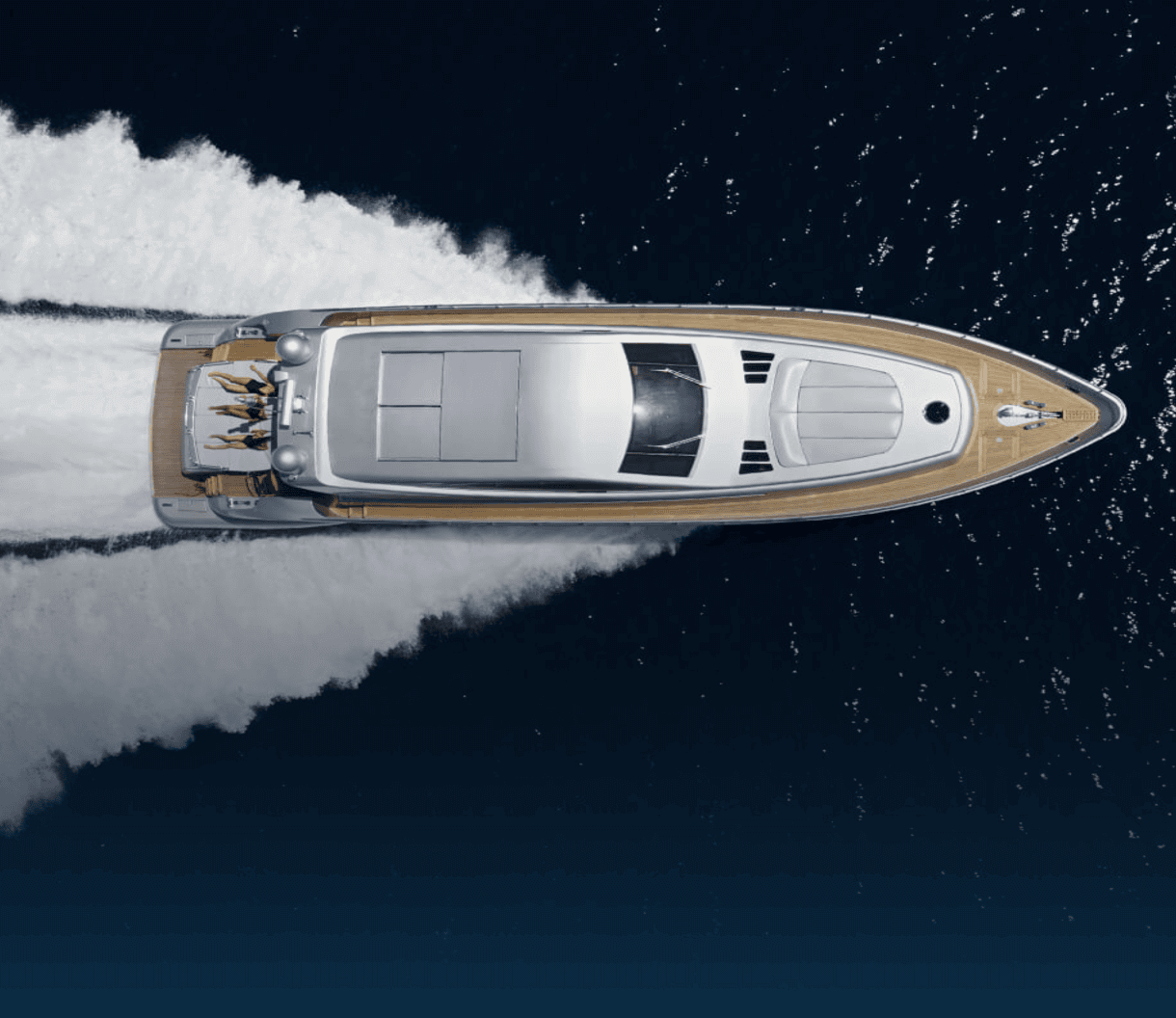
- Conceptual High-Performance Composite Yacht (indicative scope; not a stocked model)
- Length overall: 32–40 m
- Construction: advanced composite laminates with an emphasis on weight reduction and stiffness
- Accommodation: bespoke layouts for owner’s party of 6–8 guests and appropriate crew levels
- Propulsion: twin or triple high-output diesels with waterjets; alternative arrangements evaluated based on draft and speed targets
- Maximum speed: project-dependent; 35–45 knots common for performance briefs, with potential for higher where hull form and power permit
- Distinguishing features: precise structural engineering, high-spec steering and ride control, and interiors designed to remain quiet and robust at speed
Important note on availability and specifications: Because McMullen & Wing builds to order, the yachts listed above are references, not current “for sale” models. Key characteristics such as length, number of cabins, maximum speed, and engine type are determined collaboratively for each new project during the concept and specification phases. Past projects demonstrate the yard’s capabilities across explorer, high-speed composite, and multihull categories; however, every future yacht will have dimensions, systems, and performance tailored to its own brief and classification plan.
For an owner or project team considering a new build or a refit, the practical approach is to use these references to frame the mission profile—range and endurance targets, operating areas, tender and toy inventory, speed requirements, interior volume and cabin count—and then translate those requirements into a bespoke specification. That process ensures the final yacht is engineered precisely for its intended use, leveraging the shipyard’s strengths in metalwork, composites, and integrated systems to deliver a robust, quiet, and easily serviceable vessel with the desired performance envelope.

Learn more on the “MCMULLEN & WING”
To learn more on the “MCMULLEN & WING” or to get advice on how to buy or sell a yacht or get a great price for a yacht charter
please call +1 (954) 274-4435 USAOnly deal with professionals!