
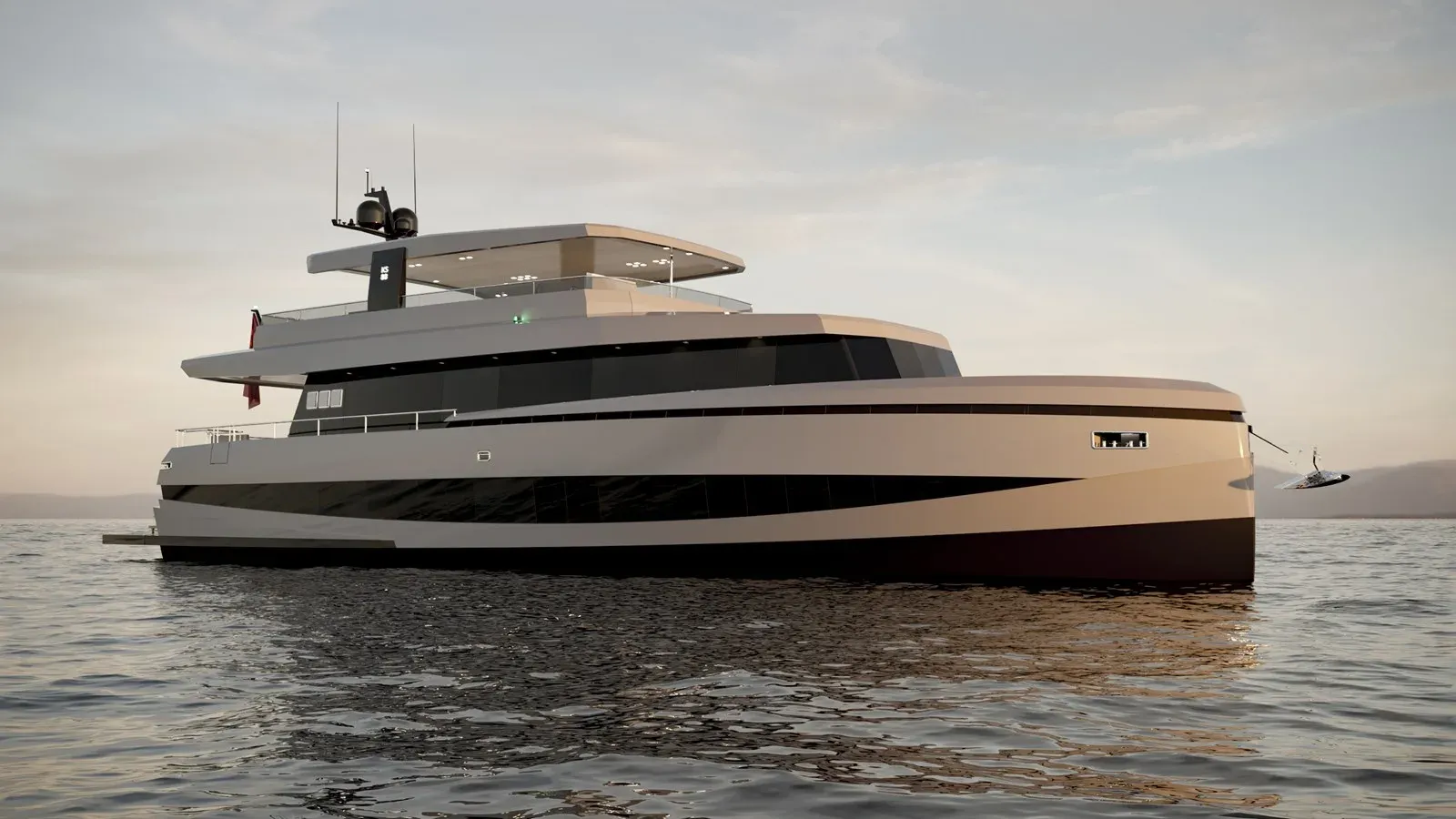
 Licensed Yacht BrokersSales and service of yachts and ships
N/A - For Sale
Kingship Marine
Company History
Kingship Marine emerged in the early 2000s as one of the first yacht builders in mainland China dedicated exclusively to constructing steel and aluminum superyachts for the international market. The company was founded and led by industry veteran Roger Liang, a prominent figure from a family with deep shipbuilding roots in the region. From the outset, Kingship’s vision was clear: combine European superyacht design and classification standards with the manufacturing scale and craft resources available in southern China, and in doing so, deliver oceangoing motor yachts with reliable engineering, generous volume, and competitive value.
A key early strategic choice was to focus on full-displacement and semi-displacement motor yachts—vessels intended for long-range cruising, comfort at sea, and operational efficiency rather than pure speed. This focus aligned Kingship with Dutch and Italian naval architecture traditions, and the yard began collaborating with renowned European design houses to shape hull forms, engineering, and general arrangements tailored to global taste. Partnerships with Dutch studio Vripack and other European naval architects were part of this trajectory, helping the brand gain rapid credibility with experienced owners and professional captains.
From the earliest launches, Kingship pursued internationally recognized classification and flag compliance, building to the requirements of major class societies and the MCA Large Yacht Code for commercial charter. This disciplined approach—third-party surveys, rigorous documentation, and material traceability—was essential for convincing a global client base that a Chinese-built superyacht could meet the same standards of safety, reliability, and finish as vessels from the traditional European yards. Kingship’s first deliveries introduced a recognizable brand language: steel hulls for strength and seakeeping, aluminum superstructures to control vertical weight and improve stability, and interior arrangements designed for comfortable, quiet passages.
As the company matured, it used major international boat shows, especially in Europe and Asia, to present not only completed yachts but also forward-looking concepts. Among the most widely discussed was a mid-40-metre eco-conscious project known as “Green Voyager,” which aimed to integrate efficient hull design, advanced systems optimization, and eco-notated class objectives to reduce environmental impact. Whether or not a concept ultimately reached delivery, this public commitment to sustainability underscored Kingship’s willingness to push beyond conventional build-to-print manufacturing and invest in R&D that addressed fuel economy, emissions, and onboard energy management—issues that increasingly matter to owners, charter clients, and regulatory bodies alike.
Over time, Kingship refined its production methodology to blend in-house capabilities with a curated network of specialized subcontractors. Steel fabrication, aluminum superstructure assembly, machinery installation, and piping were handled under strict yard supervision, while finishing trades—particularly high-end joinery—were managed through a combination of internal teams and long-standing partners in the Pearl River Delta, a region famed for skilled furniture and millwork craftsmanship. Owners found this model attractive: it offered the design pedigree and build formality associated with European production together with the scale and efficiency possible in Guangdong’s industrial ecosystem.
The yard’s portfolio expanded through the 90- to 140-foot range, with a concentration in the 30- to 40-metre segment where steel displacement yachts provide optimal comfort, autonomy, and interior volume. Notable Kingship deliveries have chartered in Mediterranean and Caribbean waters, reinforcing the brand’s credentials under the scrutiny of professional crews, surveyors, and the worldwide charter market. The company’s narrative is, at heart, the story of a bridge: between East and West, between long-range practicality and refined living spaces, and between a rising Asian manufacturing base and the exacting benchmarks of the superyacht world.
Country of Origin
China (People’s Republic of China). Kingship Marine’s corporate origins and brand identity are firmly tied to the Chinese shipbuilding landscape, and specifically to southern China’s Pearl River Delta, one of the country’s most advanced maritime industrial corridors. The company’s early strategy involved pairing this regional strength with European design and classification expertise to serve a global superyacht clientele.
Manufacturing Locations
Kingship Marine’s principal production base is in Guangdong Province within the Pearl River Delta, a short passage from open water in the South China Sea. Positioning its shipyard in this maritime hub provides several strategic advantages:
- Direct water access for launching and sea trials, enabling efficient commissioning cycles, class surveys, and extended endurance runs in conditions that simulate real-world passages.
- A deep regional supply chain that supports heavy fabrication, precision machining, coatings, electrical systems, HVAC, and luxury joinery—allowing the yard to source components and craftsmanship locally while maintaining strict quality control.
- Proximity to Hong Kong and Macau, facilitating logistics, client visits, third-party inspections, and easy access for European and North American industry partners flying into Asia.
The yard’s facilities have been configured to handle steel hull fabrication and aluminum superstructure assembly under cover, an arrangement that is essential for maintaining weld quality, minimizing contamination during fairing and painting, and scheduling outfitting operations independent of weather. Gantry cranes, plate-working machinery, and cutting/rolling equipment support primary construction tasks. Dedicated zones for mechanical and electrical integration are coordinated with well-defined cable, pipe, and systems routings established during the engineering phase, reducing rework and enhancing serviceability for the life of the yacht.
Finishing and interiors are treated as a distinct discipline. Kingship typically coordinates a blend of in-house fit-out and specialized millwork partners known for producing high-tolerance joinery, veneers, and stonework. This hybrid approach ensures both consistency of installation and the bespoke detail demanded in the superyacht sector. Custom interiors can be executed to a designer’s specification with careful attention to noise and vibration isolation, weight management, and materials certification for class and flag compliance.
The location also enables efficient integration of Western equipment—Caterpillar or MTU main engines, class-approved generators, stabilized fin or gyro systems, navigation and communication suites—as well as European-sourced deck gear and hardware. Because the yard builds to international classification, material traceability and approved vendor lists are embedded in the procurement process, and class surveyors regularly audit these practices alongside NDT of structural welds, pressure tests, and systems commissioning.
Ownership and Management
Kingship Marine is a privately held company founded and led by Roger Liang. Liang’s background in shipbuilding and his leadership within a family long associated with yacht and commercial vessel construction in the region heavily influenced Kingship’s ethos: a belief that Chinese industry, organized around international standards and guided by experienced project management, could produce superyachts capable of standing alongside established European peers.
Under Liang’s ownership, Kingship emphasized a management model that blends international and local expertise. European naval architects and exterior/interior designers are commonly engaged from concept stage, while in-house engineering and project managers convert those designs into production-ready documentation aligned with classification rules. The company’s project management framework places strong weight on stage-gate reviews, factory acceptance testing (FAT), and class hold-point inspections—habits drawn from commercial shipbuilding and widely appreciated by captains and technical managers on the owner’s side.
While individual management roles may evolve with projects and market conditions, the constant is a leadership stance focused on methodical engineering, third-party oversight, and a collaborative relationship with designers, surveyors, and owners’ representatives. This management philosophy is a defining feature of the brand and a principal reason for its acceptance in mature yachting markets.
Reputation and Quality
Within the superyacht community, Kingship Marine is recognized as a pioneer among Chinese builders for steel and aluminum yachts, particularly in the 30- to 40-metre class. The yard’s reputation rests on several pillars:
-
Classification and compliance: From the beginning, Kingship chose to build under the supervision of major classification societies and to MCA Large Yacht Code standards when appropriate. This yields yachts that satisfy the stringent safety, stability, and structural integrity requirements expected by commercial charter operations and exacting private owners alike. For technical stakeholders, this emphasis on class compliance inspires confidence in structure, machinery, and safety systems.
-
European design partnerships: Collaborations with experienced European naval architects—most notably Dutch studio Vripack—have been central to Kingship’s product DNA. These partnerships help ensure efficient hull forms, properly engineered weight distribution, and deck layouts that reflect decades of operational feedback from captains and crew. The result is a lineage of yachts that feel familiar to Western crews and surveyors and that integrate naturally with standard operating procedures for passage-making and charter service.
-
Steel/aluminum expertise and long-range capability: Kingship’s core competency is building robust steel hulls married to aluminum superstructures—a combination prized for seaworthiness, durability, and interior volume. Many Kingship yachts have been optimized for transoceanic range at displacement speeds, with noise and vibration mitigation strategies implemented at the design and fit-out stages. Owners and charter clients experience this in the form of comfortable passages, stable motion, and quiet accommodations that allow true liveaboard cruising.
-
Value proposition: By leveraging the industrial capacity of the Pearl River Delta and integrating high-end Western equipment and design, Kingship has historically offered a compelling value proposition. While these yachts are built to rigorous standards and incorporate premium systems, the overall cost structure can be competitive with equivalent European builds. For owners evaluating steel displacement yachts in the 30- to 40-metre range, this equation—value without sacrificing classification or quality—has been a decisive factor.
-
Visible presence in trade media and at major shows: Kingship yachts and design concepts have been covered by leading industry publications and presented at international boat shows. Concepts like an eco-forward “Green Voyager” project, designed to target advanced environmental notations and lower energy footprints, underscored the yard’s interest in innovation beyond traditional build programs. The company’s presence at shows provided opportunities for direct comparison against long-established brands and for third-party verification of fit and finish.
-
Charter track record: A number of Kingship builds have appeared on reputable charter fleets operating in the Mediterranean and Caribbean. For a shipyard, charter exposure is a high-stakes proving ground; vessels are subject to continuous use under professional crews, with exacting expectations for reliability, hotel services, and safety. Positive charter service reinforces confidence among brokers and prospective owners who rely on operational feedback more than glossy brochures.
-
Quality systems and after-sales support: Internally, Kingship’s quality assurance emphasizes progressive inspections, robust documentation, and full-lifecycle serviceability. Systems are laid out with an eye to access and maintenance, and spare-parts strategies typically align with globally supported brands. Post-delivery support—ranging from warranty response to refit coordination—has been an important piece of the brand’s reputation, especially for yachts that roam far from their home yard.
Awards and recognitions have likewise supported Kingship’s profile within Asia’s yachting community. Industry press and regional award programs have highlighted the yard’s role in elevating the standard of Chinese-built superyachts and its contribution to the broader maturation of yacht building in the region. While accolades ebb and flow with market cycles and model releases, what has endured is industry acknowledgment of Kingship as a serious, class-compliant builder with a genuine long-range cruising ethos.
Ultimately, Kingship Marine’s quality is best understood through the lens of how its yachts are used. These are boats built for owners who prioritize passage-making, comfort at sea, and robust engineering. The yard’s steel-and-aluminum formula, its reliance on recognized class oversight, and its integration of European naval architecture deliver yachts that feel familiar to experienced captains and technical managers. In an industry that rewards consistent execution over time, Kingship’s commitment to method, to classification, and to genuine oceangoing capability has earned it a durable place in the conversation whenever buyers consider displacement yachts in the 30- to 40-metre range.
In summary, Kingship Marine stands as a case study in how a Chinese shipyard can meet—and in important respects embrace—European superyacht standards without losing the advantages of its home region’s manufacturing ecosystem. Through disciplined project management, thoughtful partnerships, and a clear product focus, the company has built a reputation for delivering capable, classed motor yachts that are equally at home on an Atlantic crossing, a Mediterranean charter itinerary, or a private family cruise across the Pacific.
Main Competitors
Within the superyacht and explorer-yacht marketplace, Kingship Marine is/has been most commonly benchmarked against builders that specialize in steel or steel/aluminum full‑displacement motor yachts in the 30–50 meter range, along with select high‑volume composite brands in Asia that compete on price, customization options, and delivery times. The following list identifies the brands most frequently cross‑shopped by clients considering a Kingship‑class yacht, highlighting how each competes on design approach, build materials, price positioning, and owner experience.
-
Horizon Yachts (Taiwan)
- Why they compete: Horizon is one of Asia’s best‑known yacht builders with strong global dealer networks and after‑sales support. While Horizon is widely associated with high‑end composite builds (and innovations like their FD series), it also develops long‑range, expedition‑style platforms that appeal to owners who might otherwise want a steel displacement yacht.
- Notable differentiators: High internal quality control, consistent fit‑and‑finish, broad customization within series platforms, strong engineering support, and reliable delivery schedules.
- Buyer profile overlap: Owners looking for Asian build value, Western‑grade engineering and interior execution, and predictable ownership experience.
-
Cheoy Lee (Hong Kong/China)
- Why they compete: A legacy builder with over a century of shipbuilding heritage and a diversified portfolio across commercial and luxury vessels. Cheoy Lee has experience in steel, aluminum, and advanced composites, giving it versatility across custom and semi‑custom programs.
- Notable differentiators: Proven commercial shipyard DNA adapted to yachts, robust systems engineering, and a reputation for building tough, ocean‑capable platforms.
- Buyer profile overlap: Pragmatic owners seeking a durable yacht with dependable systems and Asia‑based build efficiencies.
-
Heysea Yachts (Zhuhai, China)
- Why they compete: Heysea has rapidly grown its footprint in the 70–140 ft composite segment, becoming one of China’s most visible private yacht builders with exports to Europe, Australia, and the Americas.
- Notable differentiators: Aggressive price‑to‑spec ratio, short lead times on semi‑custom models, and modern styling that appeals to first‑time and step‑up owners.
- Buyer profile overlap: Value‑conscious buyers comparing Asian builds, especially those open to composite alternatives to steel displacement yachts.
-
IAG Yachts (Zhuhai, China)
- Why they compete: IAG targets the 100–140 ft luxury segment with Italian‑influenced styling and composite construction, positioning itself as an alternative to entry‑level European superyachts at a lower price point.
- Notable differentiators: Contemporary design language, customization within established platforms, and competitive pricing.
- Buyer profile overlap: Style‑driven owners evaluating Asia‑built superyachts with Mediterranean aesthetics.
-
Pride Mega Yachts (Yantai, China)
- Why they compete: Operates at the larger end of the spectrum (50 m+), with steel/aluminum capability and experience executing complex custom projects.
- Notable differentiators: True “mega‑yacht” scale competencies and access to heavy industrial infrastructure from a large commercial shipbuilding backdrop.
- Buyer profile overlap: Owners who start by exploring 40–50 m steel yachts in Asia and are open to scaling up to larger, fully custom platforms.
-
Benetti (Italy)
- Why they compete: A global leader in steel/aluminum superyachts from 34 to 100+ meters, with strong semi‑custom lines (e.g., B.NOW) and fully custom capabilities.
- Notable differentiators: Brand prestige, global service network, refined interior craftsmanship, and strong resale performance.
- Buyer profile overlap: Owners weighing the trade‑off between European heritage and price/value of Asian builds, particularly in the 34–50 m segment.
-
Sanlorenzo (Italy) – Steel/Alloy range
- Why they compete: Highly regarded for modern design and bespoke interiors, with steel and aluminum offerings that overlap the 40–60 m niche.
- Notable differentiators: Tailor‑made interior design, minimalist aesthetics, and a curated owner experience.
- Buyer profile overlap: Design‑forward clients who might initially consider a steel displacement yacht in Asia but are tempted by Italian minimalism and brand cachet.
-
Heesen Yachts (Netherlands)
- Why they compete: Known for aluminum semi‑displacement yachts and steel full‑displacement builds in the 40–60 m range; strong on performance engineering and weight management.
- Notable differentiators: Northern European craftsmanship, advanced hydrodynamics, meticulous project management, and efficient engineering.
- Buyer profile overlap: Owners prioritizing engineering pedigree and Northern European quality who are also comparing overall cost structures and delivery certainty.
-
Moonen Yachts (Netherlands)
- Why they compete: Boutique builder of steel displacement yachts typically in the 30–40 m range, directly overlapping the niche many Kingship prospects target.
- Notable differentiators: Quiet, vibration‑controlled cruising, excellent paint/cabinetry standards, and intimate yard‑to‑owner relationships.
- Buyer profile overlap: Clients focused on long‑range comfort, refined detailing, and a Northern European build tradition at a scale similar to Kingship’s sweet spot.
-
Cantiere delle Marche (CDM, Italy)
- Why they compete: A leader in steel explorer yachts (Darwin, Nauta Air, Flexplorer series), with robust engineering for long‑range autonomy.
- Notable differentiators: Expedition‑grade hulls, generous tankage, heavy‑duty systems, and practical layouts for extended cruising with crew.
- Buyer profile overlap: Expedition‑minded owners who value redundancy, stowage, and seaworthiness for off‑the‑beaten‑path itineraries.
-
Rosetti Superyachts (Italy)
- Why they compete: Spin‑off from a major commercial shipyard group, focusing on steel explorers and support vessels in the 35–50 m range.
- Notable differentiators: Commercial‑grade engineering applied to luxury yachts, flexible platform concepts, and customization.
- Buyer profile overlap: Owners seeking the reliability and serviceability of commercial DNA without sacrificing comfort and finish.
-
Bering Yachts (Turkey/USA)
- Why they compete: Specializes in steel expedition yachts from ~20 to 45+ meters with an emphasis on range, efficiency, and live‑aboard practicality.
- Notable differentiators: Efficient full‑displacement hulls, oceangoing autonomy, and value‑driven pricing for steel builds.
- Buyer profile overlap: Practical, exploration‑oriented clients favoring ruggedness and simplicity over glitz.
-
Numarine (Turkey) – XP series
- Why they compete: The XP line blends modern styling with true expedition credentials; in the larger sizes, steel hulls with composite superstructures deliver range and volume.
- Notable differentiators: Contemporary, angular design; high interior volume for LOA; competitive cost of ownership.
- Buyer profile overlap: Owners who want explorer aesthetics and range without sacrificing modern styling cues.
-
Lynx Yachts (Netherlands)
- Why they compete: Builder of steel yachts and support vessels with a strong focus on utility, deck space, and custom tender/toy handling—at sizes overlapping Kingship’s historic range.
- Notable differentiators: Practical layouts for active lifestyles, beach clubs and multifunctional decks, and high‑quality Dutch engineering.
- Buyer profile overlap: Adventure‑focused owners with significant tender/garage requirements and a preference for Northern European craftsmanship.
-
Damen Yachting (Netherlands) – SeaXplorer and Yacht Support
- Why they compete: At a larger and more industrialized scale, Damen’s SeaXplorer series and Yacht Support vessels set the benchmark for true expedition and support concepts.
- Notable differentiators: Proven commercial backbone, ice‑class and high‑latitude capability, and turnkey logistics support worldwide.
- Buyer profile overlap: Owners who start in the 40–50 m explorer segment but want advanced expedition features, polar options, or dedicated support vessels.
-
Additional cross‑shop influences
- Ferretti Group (Custom Line, CRN): CRN’s steel/aluminum builds and Custom Line’s large composite yachts often appear in early shortlists for buyers torn between steel displacement and high‑volume composite solutions.
- Sunseeker and Azimut Grande: While planing and composite, these brands occasionally compete for buyers who ultimately choose range and displacement comfort over speed once mission profiles are clarified.
- Westport (USA): High‑quality composite semi‑custom yachts with standardized platforms and efficient build processes; buyers compare the total cost of ownership versus steel alternatives.
How these competitors map to common Kingship‑class buying decisions:
-
Mission profile and hull material
- If the brief prioritizes transoceanic range, low‑speed efficiency, seakeeping, and autonomy, steel/full‑displacement specialists like CDM, Moonen, Bering, and Rosetti become the focus.
- If the owner values volume, modern styling, and lower maintenance (accepting composite over steel), Horizon, Heysea, and IAG offer compelling alternatives in Asia.
-
Build culture and project management
- Northern European yards (Moonen, Heesen, Damen/Amels, Lynx) emphasize rigorous project controls, engineering depth, and time‑tested supplier ecosystems. This often translates into premium pricing but predictable quality and robust resale.
- Asian builders (Horizon, Cheoy Lee, Heysea, IAG, Pride Mega Yachts) typically compete on value, customization, and deliveries tailored to specific owner requests, with quality levels that have steadily risen over the last decade.
-
Design language and interiors
- Italian yards (Benetti, Sanlorenzo, CDM, Rosetti) excel in contemporary exterior styling and bespoke interiors, often partnering with top design houses to deliver a curated aesthetic and luxury experience.
- Dutch yards (Moonen, Heesen, Lynx, Damen) combine restrained elegance with engineering‑led design, prioritizing noise/vibration control, systems redundancy, and maintenance accessibility.
-
Price, delivery, and lifecycle costs
- Composite semi‑custom platforms (Horizon, Heysea, IAG) tend to offer shorter lead times and attractive initial pricing, though mission capability (range, payload, impact resistance) differs from steel.
- Steel explorer specialists (CDM, Bering, Rosetti, Moonen) can carry a higher initial cost but deliver long‑range capability, stability at sea, and robust long‑term serviceability.
-
Classification, compliance, and charter potential
- Buyers planning to charter will often benchmark MCA LY compliance, class options (Lloyd’s, RINA, ABS), and crew ergonomic standards across shortlists that include Benetti, Sanlorenzo, Heesen, and selected Asian builders.
- Refit‑friendliness and access to global service networks weigh heavily in favor of brands with established after‑sales infrastructures and deep supplier relationships.
-
Resale dynamics
- Northern European and top‑tier Italian brands tend to command stronger resale values due to brand equity and global recognition.
- Asian brands increasingly demonstrate solid residuals when well‑specified, classed, and professionally maintained, particularly those with strong export footprints and service support.
Practical comparison checklist for a Kingship‑class evaluation:
-
Naval architecture and hull form
- Compare tank tests or CFD credentials, range at displacement speeds, and seakeeping predictions for your intended routes (seasonal weather, current patterns, and anchorage conditions).
-
Machinery and systems integration
- Evaluate main engine selection (commercial vs. yacht duty), gensets, hydraulic systems, stabilization (zero‑speed fins or gyros), HVAC capacity, and electrical architecture redundancy.
-
Structural methodology and coatings
- For steel/aluminum: scrutinize scantlings, welding protocols, fairing procedures, and paint specifications (including surface preparation standards and environmental controls during application).
-
Weight control and noise/vibration
- Request a weight estimate book, target sound levels in key spaces, and the builder’s isolation/decoupling strategy.
-
Classification and documentation
- Ensure clarity on class society scope, statutory compliance (MCA LY, MLC for crewed operations), and full as‑built documentation for future service and resale.
-
Yard capacity and subcontractor ecosystem
- Confirm the yard’s current supplier base, critical path scheduling, and dedicated project management resources.
Putting it together:
- Owners focused on genuine expedition capability, steel construction, and long‑range autonomy will naturally benchmark Kingship‑class offerings against CDM, Bering, Rosetti, and Moonen.
- Buyers open to modern composite alternatives with strong value and shorter lead times will compare Horizon, Heysea, and IAG—especially when the mission is coastal cruising with occasional passages rather than year‑round ocean crossings.
- Those seeking European brand prestige, refined interiors, and robust resale typically place Benetti, Sanlorenzo, Heesen, and selected Dutch yards at the top of the list, accepting higher acquisition cost for the benefits of heritage, process maturity, and global support.
In practice, informed clients will build a shortlist that spans at least one Asian value leader, one Italian explorer specialist, and one Dutch boutique steel yard, then run a rigorous, apples‑to‑apples technical and commercial comparison: same LOA and GT, same class/compliance scope, like‑for‑like specifications (stabilizers, tenders, AV/IT, galley/crew equipment), identical interior quality benchmarks, and a detailed delivery and warranty framework. This approach reveals the true differences in capability, lifecycle cost, and owner experience—making it far easier to determine where a Kingship‑class yacht sits in the competitive landscape for your specific mission.
Frequently Asked Questions
Question: Who is Kingship Marine?
Answer: Kingship Marine is an Asian superyacht builder recognized for constructing steel and aluminum expedition-style motor yachts in the 26–45 meter range. Established in the 2000s and based in Southern China’s Pearl River Delta, the yard set out to combine European naval architecture and classification standards with disciplined, value-driven manufacturing. Kingship Marine became known for full-displacement, long-range cruisers designed to cross oceans in comfort, meeting international class and safety codes. The company has collaborated with leading design studios such as Vripack (naval architecture and exterior styling), Axis Group Yacht Design led by Horacio Bozzo (exterior design and efficiency), and a range of interior designers on a project-by-project basis. Their delivered vessels and concepts emphasize range, reliability, seakeeping, and practical luxury suitable for both private use and charter compliance.
Question: What types of yachts does Kingship Marine specialize in?
Answer: The yard focuses on full-displacement expedition and explorer yachts built with steel hulls and aluminum superstructures. Typical lengths are from roughly 85 feet (26 m) to around 42–44 meters. These yachts prioritize:
- Ocean-crossing range at economical speeds
- Seakeeping and redundancy
- Robust engineering suitable for remote cruising
- Comfortable, quiet interiors with practical, owner-driven layouts
While individual yachts are either custom or semi-custom, they share a common design DNA: steel for strength and dependability below the waterline, aluminum for weight savings above, and systems engineering aligned to recognized class and flag requirements.
Question: How does Kingship Marine approach naval architecture and design partnerships?
Answer: Kingship Marine’s strategy has been to outsource naval architecture and exterior design to proven European studios, then execute the build with its in-house engineering and production teams. Collaborations have included:
- Vripack: Well-known for explorer-yacht design, stability analysis, and practical layouts suited to crewed long-range operation.
- Axis Group Yacht Design (Horacio Bozzo): Efficiency-led exteriors, distinctive profiles, and balanced proportions, including the signature lines seen on larger Kingship projects.
- Various interior designers selected to match the owner’s taste, offering a spectrum from contemporary minimalism to warm, expedition-chic aesthetics.
This model yields yachts that blend classic explorer strength with modern comfort and contemporary styling.
Question: What construction materials and methods are typically used?
Answer: Kingship Marine builds steel hulls—commonly marine-grade high-tensile steels such as AH36—and aluminum superstructures in alloy grades like 5083. Key points of the build process include:
- Welding procedures and QA/QC aligned with class-approved standards
- Grit blasting and multi-stage epoxy primer systems to control corrosion
- Structural fire protection, thermal and acoustic insulation within the accommodation envelope
- Fairing and topcoat systems using established marine coatings brands for long-term durability and finish
The emphasis is on structural integrity and longevity, with particular attention to fatigue resistance and ease of maintenance for world cruising.
Question: What classification and compliance standards are typical for Kingship yachts?
Answer: Kingship Marine builds to internationally recognized standards. Past projects have been constructed to class (for example, Lloyd’s Register) and in accordance with relevant MCA LY codes for commercial compliance, when specified by the owner. This approach supports safe manning, proper equipment standards, and charter readiness in multiple jurisdictions. Many yachts also adhere to standards covering stability, firefighting, lifesaving appliances, and environmental systems applicable to their size and service.
Question: What propulsion and systems are usually specified?
Answer: Most Kingship Marine expedition yachts use twin diesel main engines from globally supported brands such as Caterpillar, paired with robust reduction gears and shaft lines. Stabilization (e.g., fins) is typically included for comfort at sea and at anchor. Gensets from well-known manufacturers, bow and stern thrusters, and comprehensive fuel-polishing and filtration systems are common. Systems are selected with worldwide service in mind—simple, proven, and easy to maintain, with thoughtful access for engineers and crew.
Question: How fast do Kingship Marine yachts go, and what ranges are typical?
Answer: As full-displacement explorer yachts, Kingship builds prioritize endurance over top speed. Typical maximum speeds range from about 12 to 14 knots depending on the model and power. Long-range cruising at 9–11 knots is common, with ranges designed to span transoceanic passages—often several thousand nautical miles at economical speed, subject to the specific hull and tankage.
Question: What distinguishes Kingship Marine’s approach to interior layouts?
Answer: Interiors are crafted for liveaboard comfort on long itineraries. Notable features include:
- Flexible guest arrangements (often 4–5 cabins) to accommodate families or charter parties
- Practical crew quarters and service routes designed for discreet operation
- Durable yet refined finishes that balance luxury with expedition practicality
- Generous storage for provisions, spares, and adventure gear
Owners typically work with a chosen interior designer to tailor materials, joinery, lighting, and furnishings to their style—contemporary, classic, or a hybrid.
Question: How does Kingship Marine address noise and vibration?
Answer: Noise and vibration control is a cornerstone of the brand’s cruising ethos. Common measures include:
- Resiliently mounted machinery and isolation mounts
- Floating floors and acoustic bulkheads in accommodation spaces
- Carefully engineered exhaust routing and lagging
- Precision shaft alignment and propeller selection for low-cavitation operation
These measures contribute to restful cabins on passage and quiet communal spaces at anchor.
Question: What is the yard’s reputation for engineering access and maintainability?
Answer: Engineering is laid out with serviceability in mind. Engine rooms generally offer:
- Logical equipment grouping and labeled systems
- Broad access for daily checks and major overhauls
- Dedicated workbenches and storage for spares
- Clearly mapped fuel, lube oil, and freshwater systems
This philosophy supports lower lifetime operating costs and reliable operation far from shore.
Question: Are Kingship Marine yachts suitable for charter?
Answer: Many Kingship builds are conceived from the outset with commercial compliance in mind—adequate safety gear, coding, and well-resolved service circulation. Their robust systems and practical deck layouts also suit charter operations in remote cruising areas. Owners interested in charter typically request MCA-compliant specifications and interior arrangements optimized for guest turnover and efficient hotel services.
Question: What is the typical delivery timeline?
Answer: For a new steel-and-aluminum displacement yacht in the 30–40 meter range, a realistic window is often 24–36 months from contract to delivery, depending on customization level, classification needs, and supplier lead times. Extensive customization or novel technologies (for example, hybrid propulsion) can extend the schedule.
Question: How does Kingship Marine approach sustainability?
Answer: While steel displacement hulls inherently prioritize efficiency at moderate speeds, Kingship Marine has also been involved with low-emission concepts and energy-saving measures. Design strategies may include optimized hull forms for reduced resistance, efficient hotel loads (LED lighting, variable-speed pumps), superior insulation, and thoughtful waste and water management. Notably, Kingship has explored hybrid and “green” projects with designers focused on minimizing environmental footprint without compromising capability.
Question: What deck and tender arrangements are typical for these explorer yachts?
Answer: Expect generous exterior deck spaces with practical, heavy-duty cranes for tenders and toys, flexible aft deck zones for RIBs, fishing, or diving operations, and foredeck areas engineered for ground tackle robust enough to anchor in remote locations. Sun and observation decks are usually incorporated, with shaded lounging areas and alfresco dining.
Question: How are safety and redundancy implemented?
Answer: Expedition yachts from Kingship Marine tend to feature:
- Dual main engines with independent feeds and filtration
- Multiple electrical generation sources and battery banks for robust hotel support
- Fire suppression in machinery spaces and portable firefighting throughout
- Segregated watertight compartments, bilge zones, and alarms
- Class-approved navigation and communication suites for extended voyages
These elements reflect the builder’s emphasis on predictable, repeatable safety margins offshore.
Question: What’s the experience like under way on a Kingship Marine explorer yacht?
Answer: Owners and crew typically report steady motion, low structural noise, and predictable handling. Displacement hulls paired with stabilization reduce rolling, and large fuel reserves support long, uninterrupted passages at efficient speeds. The on-board experience is oriented to exploration: panoramic lounges, protected walkaround decks, and abundant storage for toys and provisions.
Question: Does Kingship Marine support after-sales and refit?
Answer: As with most serious expedition-yacht builders, lifecycle support typically includes documentation, commissioning assistance, crew familiarization, and coordination on warranty matters. Refit and upgrade work—especially on the yard’s own builds—often benefits from the original engineering data and drawings, making system upgrades and interior refreshes more straightforward.
Question: What sets Kingship Marine apart in the market?
Answer: Three attributes stand out:
- Specialization in steel/aluminum explorer yachts built to class and charter codes
- Longstanding partnerships with respected European designers and naval architects
- A design/build philosophy centered on reliability, practicality, and range, with competitive value in the 26–44 m segment
For owners prioritizing ocean-crossing capability and understated, functional luxury, Kingship’s portfolio is compelling.
Question: Are there notable delivered yachts from Kingship Marine?
Answer: Yes. Among the most widely cited is the 33.6 m Christina G, designed with Vripack, a steel-and-aluminum displacement yacht recognized for her charter-friendly layout and ocean-going range. At the larger end, the 42 m Star—styled by Horacio Bozzo—illustrates the yard’s capacity for modern, glass-rich superstructure design atop a robust steel platform. These builds underscore Kingship Marine’s dual emphasis on technical credibility and contemporary styling.
Question: How customizable are Kingship Marine yachts?
Answer: Very. Owners typically start from a proven naval-architecture platform and tailor the superstructure styling, interior arrangement, finishes, and systems fit. This approach reduces technical risk while still enabling a highly personalized result, whether for family voyaging, global charter work, or expedition use with specialized gear.
Question: What owner profiles tend to choose Kingship Marine?
Answer: Owners who:
- Value long-range autonomy and class-level safety
- Favor robust, low-drama engineering they can service worldwide
- Prefer practical deck spaces and storage over purely decorative features
- Want a quiet, comfortable platform for extended seasonal cruising
Charter-oriented clients also appreciate that many Kingship designs map well to regulatory requirements and service workflows.
Question: What is the typical crew and guest configuration?
Answer: Many Kingship yachts in the 30–40 m bracket offer five guest cabins (often including a main-deck owner’s suite) for up to 10 guests, with crew complements of 5–7 depending on mission profile and charter intentions. The yard’s explorer ethos is evident in the proportionally generous crew areas, laundry and galley capacity, and cold storage—important for remote operations.
Question: How do these yachts hold value over time?
Answer: While resale depends on market conditions and individual maintenance histories, steel displacement explorers with class pedigree, reputable design partners, and practical layouts tend to retain interest. Buyers often seek proven range, robust engineering, and class/compliance documentation—areas that align with Kingship Marine’s build philosophy.
Question: What electronics and navigation packages are typical?
Answer: Integrated bridges with class-appropriate radar, ECDIS or ECS, AIS, GMDSS-compliant communications for the vessel’s category, and robust autopilot and monitoring systems are standard. Redundancy is a theme—backup navigation systems, separate power feeds, and clear segregation of critical circuits contribute to reliability at sea.
Question: What’s the build culture like?
Answer: Methodical and standards-driven. The production ethos emphasizes weld quality, fairing discipline, systems access, and class documentation. The aesthetic outcome is contemporary but purposeful—trim, cabinetry, and lighting tailored to the owner, layered atop a hull engineered first for safety and capability.
Question: Are there common owner upgrades or custom options?
Answer: Popular options include zero-speed stabilizers, hybrid hotel loads with battery support, upgraded tenders and cranes, specialized dive or fishing gear storage, passarelles and swim platforms optimized for water access, and active emissions and noise-reduction packages for sensitive cruising grounds.
Question: What is the best use case for a Kingship Marine yacht?
Answer: Ocean passages, high-latitude summers balanced with tropical winters, and multi-week itineraries where autonomy, storage, and comfortable motion matter more than sprint speed. They are equally at home on a Mediterranean charter schedule or a private circumnavigation.
Available Models
-
Kingship 110 (example: Christina G)
Length: Approximately 33.6 m (110 ft)
Number of cabins: Typically 5 guest cabins (up to 10 guests), plus crew accommodations
Maximum speed: About 12–13 knots (full displacement)
Engine type: Twin Caterpillar diesel engines (commonly C18 series), shaft drive
Notes: Steel hull with aluminum superstructure, Vripack naval architecture, designed for transoceanic range and charter-friendly operation with class and coding as specified. -
Kingship 42M (example: Star)
Length: Approximately 42 m (138 ft)
Number of cabins: Typically 5 guest cabins (around 10 guests), with generous crew spaces suited to long-range service
Maximum speed: Around 14 knots, optimized for efficient cruising speeds near 10–12 knots
Engine type: Twin Caterpillar diesel engines (commonly C32 series), shaft drive
Notes: Full-displacement steel hull, Axis Group Yacht Design (Horacio Bozzo) exterior, contemporary superstructure glazing, engineered for long-range, low-vibration cruising under class. -
Kingship 85–90 (semi-custom explorer)
Length: Approximately 26–27 m (85–90 ft)
Number of cabins: Typically 4 guest cabins (up to 8 guests), plus crew
Maximum speed: Around 12 knots, with emphasis on economical long-range passage-making
Engine type: Twin Caterpillar diesel engines (model as specified per build), shaft drive
Notes: Steel/aluminum construction scaled to owner-operated or small-crew operation, expedition styling and storage with a focus on autonomy and serviceability. Specifications vary by hull and owner customization.
Specifications above reflect representative configurations from delivered projects in each size bracket; individual yachts may differ according to class, flag, and owner customization. For a specific hull’s certified particulars—including exact engines, tankage, and performance—refer to the vessel’s technical file and class documentation.
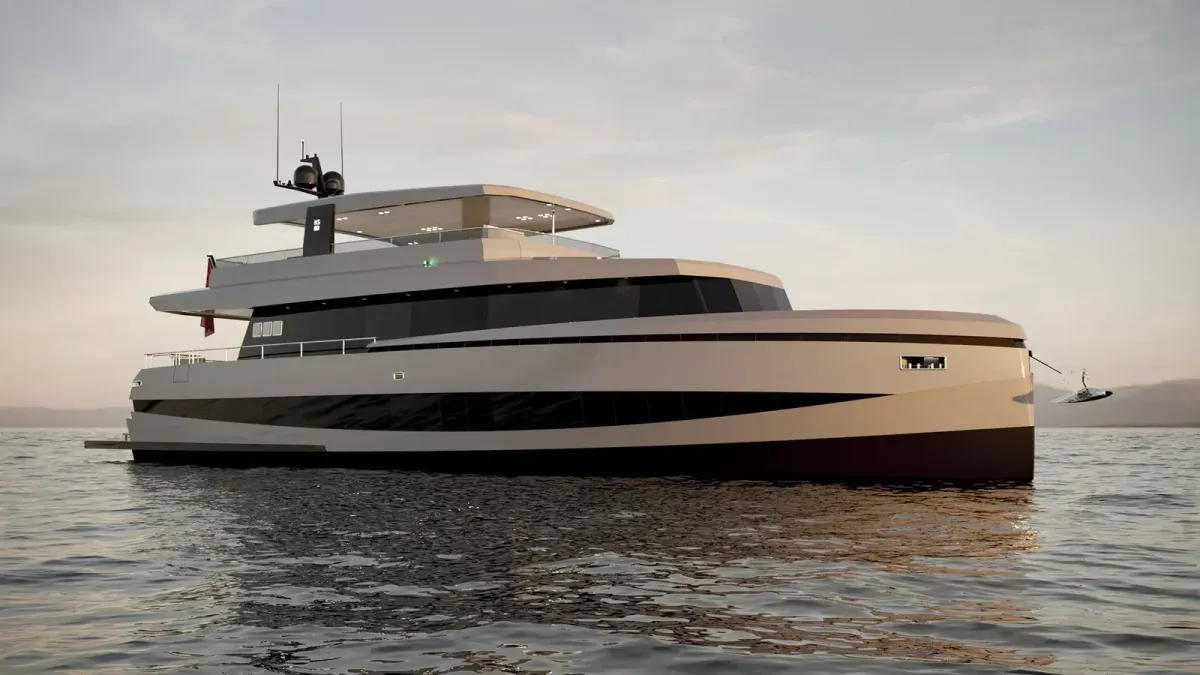

Learn more on the “N/A”
To learn more on the “N/A” or to get advice on how to buy or sell a yacht or get a great price for a yacht charter
please call +1 (954) 274-4435 USAOnly deal with professionals!