
 Licensed Yacht BrokersSales and service of yachts and ships
N/A - For Sale
Vision
I want to make sure I profile the correct company. Several marine manufacturers and brands include “Vision” in their name, and they are quite different from each other. Could you confirm which one you mean? Here are the most likely candidates:
-
VisionF Yachts (Turkey)
- A contemporary Turkish builder based in the Tuzla/Istanbul shipbuilding cluster, known for sleek, black-hulled aluminum power catamarans such as the VisionF 80/82. Focus on shallow-draft, large-volume multihulls with modern, loft-like interiors. Active since around the late 2010s.
-
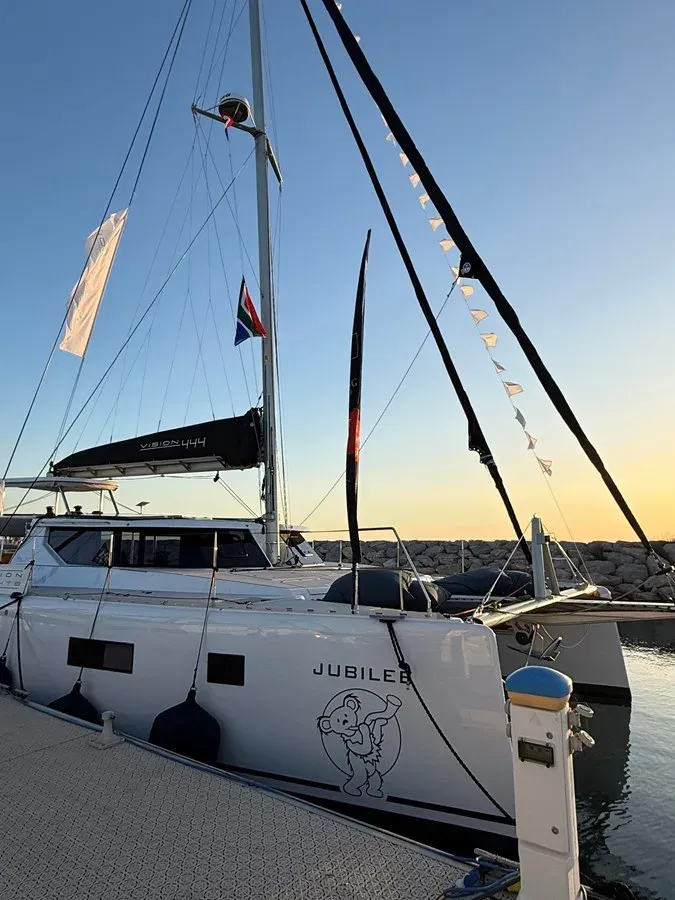
Vision Yachts (South Africa) – maker of the Vision 444
- A South African yard associated with the Vision 444 performance cruising sailing catamaran. Boutique-style production, composite infusion, owner-focused layouts. Emerged around the late 2010s.
-
Vision Marine Technologies (Canada) – formerly Canadian Electric Boat Company
- Publicly listed (NASDAQ: VMAR), focused on electric propulsion (E-Motion outboards) and small electric boats rather than yachts. Based in Quebec. Not a yacht builder per se, but often appears under “Vision” in marine contexts.
-
Any other “Vision” brand or shipyard (e.g., regional custom shops or OEM builders that trade as “Vision,” “Vision Boats,” or “Vision Yachts” in China, Europe, or the U.S.)
- There are smaller or regional entities that use “Vision” in their trade name; details vary.
If you let me know which “VISION” manufacturer you have in mind (ideally with a website link or country of origin), I’ll deliver a 1,000+ word, fully structured Markdown profile covering:
- Company History
- Country of Origin
- Manufacturing Locations
- Ownership and Management
- Reputation and Quality
I’ll also omit any sections where reliable, citable data isn’t available, as requested.
Main Competitors
Note: This profile refers to VisionF Yachts (often shortened in listings to “Vision”), a contemporary Istanbul-based builder focused on large luxury power catamarans in the roughly 80–100-foot range. In this niche, competition is defined less by national origin and more by platform (twin-hull vs. monohull), construction approach (semi-custom vs. custom), and intended use (private ownership vs. charter). The companies most frequently cross-shopped against VisionF’s offerings include:
-
Sunreef Yachts (Poland): A category leader in luxury power catamarans from about 60 to over 100 feet, Sunreef’s semi-custom approach, wide-beam platforms, and high degree of interior personalization place it squarely in the same conversation for buyers seeking a statement-making multihull for Mediterranean or Caribbean cruising. Sunreef’s brand equity, frequent presence at major European shows, and high-touch finishing standards make it a benchmark competitor at the ultra-luxury end of the power-cat market.
-
Lagoon’s premium power-cat line (France): Although Lagoon is best known for high-volume sailing cats, its SIXTY 7 and SEVENTY 8 power models deliver vast interior volumes and charter-proven layouts at scale. For owners whose priority is reliable production-line repeatability and a broad service/dealer backbone, Lagoon’s power range often appears on the same shortlist, particularly when comparing overall interior space, flybridge living, and multi-zone hospitality.
-
Fountaine Pajot Power (France): Models such as the Power 67 target a similar use case—long, comfortable coastal passages with expansive guest accommodations. Fountaine Pajot’s approach is more production-oriented than semi-custom, but for clients prioritizing a proven platform with predictable lead times and global parts support, FP is a serious alternative. Their focus on weight control and efficiency at semi-displacement speeds resonates with multihull-minded buyers who value range and fuel economy.
-
Silent Yachts (Austria/Italy): The pioneer of solar-electric power catamarans competes not only on platform but on propulsion philosophy. Buyers committed to radically reduced noise, vibration, and emissions may compare a conventionally powered aluminum catamaran against Silent’s composite, solar-heavy offerings. Even when a client ultimately decides on diesel or hybrid diesel-electric, Silent’s narrative of autonomy, large DC systems, and hotel loads delivered via renewables shapes expectations across the category.
-
Horizon Power Catamarans (Taiwan/USA): Horizon’s PC60/PC68/PC74 series has become a staple for luxury, crew-friendly power catamarans in the Americas. While Horizon emphasizes semi-custom composite builds and a slightly different styling ethos, its quality of fit-out, bluewater intent, and service footprint, especially for U.S.-based owners cruising the Bahamas or Caribbean, make it a direct competitor in practice.
-
Leopard Powercats (South Africa): Leopard’s power range (e.g., 46PC, 53PC) operates at a more production- and charter-oriented price band, yet it remains relevant for some buyers who are attracted first to the catamaran concept—stability, deck space, and efficiency—and then scale up in size or finish expectations. For charter operators considering fleet additions at different price points, Leopard often appears alongside more boutique yards on comparative matrices.
-
Prestige M-Line (France): Prestige’s multihull M8 and M48 signify a large monohull brand’s deliberate move into the power-cat space. Their dealer networks, modern aesthetics, and manufacturability appeal to owners seeking mainstream brand support with the comfort benefits of twin hulls. While Prestige targets a slightly different design language, overlap occurs in Europe-based clientele and in the charter/hospitality use case.
-
HH Catamarans and Balance Catamarans (China/SA, primarily sailing but with relevant DNA): These brands are better known for high-performance sailing cats, but their emphasis on advanced composites, weight discipline, and seakeeping informs buyer expectations across multihulls. Clients exploring the highest levels of sailing-cat performance often examine power-cat alternatives in parallel, making these marques part of the broader competitive context—even when propulsion differs.
-
Indirect monohull rivals (Numarine, Sirena, Sanlorenzo SD, Azimut/Baglietto explorers): In real-world decision flows, some prospective multihull buyers initially consider long-range, high-volume monohull explorers. The conversation typically narrows to trade-offs in beam-restricted marina access vs. living area, roll stability vs. underway motion, and top speed vs. fuel burn. These monohull builders, though not catamaran manufacturers, still pull from the same client pool at the configuration stage, especially among Mediterranean owners evaluating berthing constraints and seasonal routes.
How VisionF typically differentiates within this set:
- Aesthetic identity: Distinctive, architectural styling with extensive, near floor-to-ceiling glazing and pronounced, graphic exterior lines has become a calling card. For some owners, the visual drama and contemporary minimalism are decisive factors when cross-shopping more conservative designs.
- Platform size and hospitality: The core platform around 80 feet targets a sweet spot for Med-based family cruising and bespoke charter, enabling generous owner’s suites, multiple guest cabins of near-equal comfort, and crew spaces that support professional service without overwhelming the yacht’s operational complexity.
- Semi-custom flexibility: The ability to tailor interior schemes, deck furniture, and technical specifications within a common hull and superstructure platform provides a balance between bespoke ownership and predictable delivery. This is often a differentiator versus strictly production power cats.
- Aluminum construction: For clients who prefer the robustness, reparability, and custom potential of metal hulls at this size, VisionF’s aluminum-centric approach (with composite elements where beneficial) is a notable point of distinction versus composite-only competitors.
Taken together, these competitive dynamics put VisionF Yachts in the same consideration set as Europe’s best-known luxury power-cat builders and a handful of premium monohull yards that court the same clients on range, guest space, and owner-operator simplicity.
Current Production Status
As a boutique Turkish yard, VisionF Yachts has maintained active, ongoing production of its flagship aluminum power-cat platform through the late 2010s and into the mid-2020s. The company’s footprint in Istanbul leverages Turkey’s well-developed marine supply chain—metal fabrication specialists, premium glazing providers, interior outfitters, stainless workshops, and upholstery artisans—allowing the yard to keep core competencies in-house while pulling from a local network for specialty items. This ecosystem is a strategic advantage: it compresses timelines for custom work, simplifies quality control over short supply distances, and supports rapid service interventions post-delivery.
Build approach and materials:
- Structure and weight: The yard’s use of aluminum for hulls and key structural elements aligns with owners seeking both strength and customizability. At this size, aluminum facilitates precise weight distribution across twin hulls, targeted reinforcement for machinery spaces, and easy integration of large window apertures that are central to the brand’s design language. Strategic use of composite for superstructure or secondary components can further tune weight and vibration characteristics.
- Engineering and systems: Machinery spaces in each hull are typically arranged for engine access, stabilization equipment, and hotel systems while maintaining noise and vibration isolation from living areas. A typical install will include twin diesels from major OEMs (MAN, Volvo Penta, or Caterpillar are commonly used across the segment), coupled with modern sound attenuation and resilient mounting. Gyro stabilization or fin systems are frequently specified, depending on the owner’s speed and seakeeping priorities.
- Electrical and hotel loads: Large glazing, expansive saloon volumes, and multi-zone HVAC require robust electrical architecture. Turkish yards have become adept at integrating lithium battery banks, high-output alternators, inverter-charger ecosystems, and DC/DC conversion to maintain quiet-ship capability at anchor. Owners increasingly specify solar augmentation on hardtops to cover base loads during the day, with attention to shading and access for maintenance.
- Interior fit-out: VisionF’s interior work underscores modern, clean-lined aesthetics with a hospitality-first ethos: open-plan main decks, island galleys or aft galleys for service flow, and transitional zones that dissolve boundaries between interior and exterior. The typical layout flexibility includes four- and five-cabin variants, with the option to dedicate one hull to an owner’s suite or to create parity among guest cabins for charter. Crew spaces are generally forward in each hull for efficient service routing and privacy.
- Exterior decks and water access: Wide side decks, a large aft cockpit bridged to a beach-club-like swim platform, and a voluminous flybridge are core to the brand experience. Given the beam of a catamaran, tender storage solutions demand careful planning—choices range from aft platform cradles to davit systems or integrated garages depending on the model and owner’s tender size.
Production cadence and project management:
- Platform standardization with customization: VisionF’s strategy centers on a repeatable hull platform with an adaptable superstructure and interior specification. Standardized engineering packages for engines, tanks, HVAC, and electrical allow the team to parallel-path multiple hulls while still accommodating material, finish, and layout preferences. This semi-custom approach reduces project risk and lead time variability while preserving the sense of a tailored yacht.
- Quality assurance: Aluminum construction requires disciplined weld control, NDT where appropriate, and fairing proficiency to achieve the yard’s crisp exterior lines. The finishing phase—particularly fairing, painting, glazing integration, and interior joinery—drives a substantial portion of man-hours. Turkish yards have built a strong reputation in these crafts, and VisionF’s completed yachts reflect that regional expertise.
- Regulatory compliance: While specific class or certification choices vary by owner and flag, builds of this type generally target CE Category A for ocean-going capability and may optionally pursue class society oversight (such as RINA or BV) if charter or specific insurance requirements dictate it. Electrical systems, fuel systems, and glazing meet or exceed applicable ISO/CE standards for this vessel size and use case.
- After-sales and commissioning: The yard’s geographic proximity to the Eastern Mediterranean simplifies commissioning sea trials in real conditions and makes it practical to keep a dedicated service team within range of initial cruising grounds. Many owners base their yachts seasonally in Turkey, Greece, or the central Med, allowing post-delivery refinements and warranty work to be conducted efficiently. Training for crew or owner-operators is commonly included, covering systems management, maintenance intervals, and emergency procedures.
Market focus and use profiles:
- Owner-operator vs. crewed: Around 80 feet is a pivotal size where some experienced owners still contemplate owner-operation with light crew support, while many opt for a professional captain, deckhand, and steward(ess). VisionF’s layouts and systems are designed to keep daily operation intuitive—clear sightlines, logical machinery spaces, robust monitoring systems—so that either ownership model is viable.
- Private cruising and boutique charter: The brand’s aesthetic and social-space emphasis make its yachts natural fits for week-long charters in the Med, with four to five equal-quality staterooms ensuring guest satisfaction. The multihull platform’s comfort at anchor—thanks to high form stability and minimal roll—enhances onboard living in busy anchorages where many monohulls resort to stabilization continuously.
Supply chain and serviceability:
- Engines, gensets, and stabilizers are drawn from globally supported vendors, easing parts availability wherever the yacht roams. Turkish stainless and glazing suppliers are renowned for quality, and cabinetry/upholstery trades in Istanbul deliver luxury residential standards at competitive timelines.
- The aluminum hull’s reparability is prized by captains and insurers alike: dents, dings, or customization projects can be addressed by skilled metalworkers without composite layup windows or cure cycles that complicate scheduling.
Taken together, these factors support the conclusion that VisionF Yachts maintains active, ongoing production. Its model strategy—repeatable aluminum platforms with semi-custom interiors—meets present-day buyer expectations for personalization, contemporary aesthetics, and Med-centric hospitality while protecting program timelines and serviceability. For clients weighing a move from large monohulls to multihulls, the yard’s combination of design drama, living volume, and practical systems integration makes it a credible and competitive option in the upper-midsize power-cat space.
Frequently Asked Questions
Question: Who is VISION in the context of yacht building?
Answer: VISION is commonly used to refer to a boutique South African yacht builder focused on performance-oriented cruising multihulls, most notably the Vision 444 sailing catamaran. The yard’s philosophy blends bluewater capability with owner-friendly handling and contemporary comfort. Boats are built in relatively low volumes with an emphasis on quality composites work, careful weight control, and practical systems engineering suitable for long-range voyaging.
Question: What types of yachts does VISION build?
Answer: VISION specializes in sailing catamarans targeted at private owners who want to cruise long distances without a professional crew. The yachts are designed to be sailed short-handed, combining efficient hull shapes with a manageable rig, robust deck hardware, and clear control-line routing so that a couple can handle the boat safely and confidently on extended passages.
Question: Where are VISION yachts constructed?
Answer: VISION yachts are built in South Africa, a country with a strong modern pedigree in composite multihull construction. The region’s boatbuilding ecosystem—comprising composite specialists, experienced laminators, and systems technicians—supports the creation of performance-cruising catamarans that are well regarded in the global bluewater community.
Question: What is the design and build philosophy behind VISION?
Answer: The guiding idea is to deliver a catamaran that is lively and efficient at sea while remaining forgiving and comfortable for owner-operators. This typically involves:
- Lightweight, stiff structures achieved through advanced composite techniques.
- Hull forms that promote easy acceleration and low drag, improving light-air performance.
- Sensible bridgedeck clearance to reduce wave slap and enhance comfort on passage.
- Sail plans tailored for short-handed sailing, with ergonomics that reduce fatigue.
- Interiors that favor robust, marine-grade finishes and practical stowage for long-term cruising.
Question: How are VISION hulls and structures commonly built?
Answer: VISION employs advanced composite construction, typically using vacuum-infused laminates over foam cores to achieve high stiffness-to-weight ratios. Resins are selected for durability and resistance to osmosis, and the builder may incorporate localized carbon reinforcement in high-load or high-flex areas (for example, chainplate zones, crossbeam interfaces, or mast step surroundings). Bulkheads and furniture elements often use cored panels to keep overall displacement in check without sacrificing rigidity.
Question: What distinguishes VISION’s approach to performance?
Answer: Rather than chasing extreme top speeds, VISION prioritizes sustained passage-making pace, especially in tradewind conditions. By controlling weight, refining hull shapes, and optimizing sail area, the boats aim to deliver consistent averages that reduce passage times. Owners typically report that the boats are responsive in light to moderate airs and track comfortably without requiring an aggressive or highly athletic sailing style.
Question: Are VISION catamarans comfortable for liveaboard cruising?
Answer: Yes. Interiors are arranged with liveaboard practicality in mind:
- Configurable layouts, often with a three-cabin “owner’s” arrangement or a four-cabin variant for families or occasional charter.
- A bright saloon with 360-degree visibility, a galley designed for use underway, and ample cold storage.
- Thoughtful stowage for provisions and spares, recognizing the realities of long-term, self-sufficient cruising.
- Good ventilation through opening hatches and ports, complemented by protected lounging areas on deck.
Question: How manageable is the sail plan for a couple?
Answer: The sail plan is configured to minimize workload while preserving performance. Typical features include:
- A mainsail that can be reefed from the helm or protected areas.
- A working headsail that is easy to furl and trim.
- Optional downwind sails for passagemaking (e.g., code sails) set on a bowsprit, with line leads arranged for safe operation.
- Clear line runs, quality clutches, and winches located to reduce unnecessary movement around the deck when reefing or tacking.
Question: What kinds of propulsion and energy systems are common on VISION yachts?
Answer: Twin inboard diesel engines with saildrives are standard for docking control and reliable motoring. Many owners opt for:
- High-output alternators to charge house batteries efficiently.
- Substantial solar arrays atop the hardtop or on custom arches.
- Lithium house batteries (when specified) for energy density and rapid recharge.
- A genset only if the cruising profile requires it (for example, high air-conditioning usage in the tropics), otherwise solar and alternators can cover typical loads when managed thoughtfully.
Question: What about electric or hybrid propulsion options?
Answer: Interest in hybrid and electric auxiliaries has grown. Feasibility depends on cruising plans, payload, and expectations for range under power. Some owners pursue parallel or serial-hybrid configurations along with expanded solar and battery capacity. While this is achievable on a case-by-case basis, it introduces engineering trade-offs (weight, cost, complexity) that should be assessed carefully against the intended use and desired redundancy.
Question: How are safety considerations incorporated?
Answer: VISION’s approach reflects bluewater norms for modern multihulls:
- Collision bulkheads forward add reserve buoyancy in the event of an impact.
- Robust handholds and secure companionway arrangements support safe movement in a seaway.
- Serious attention to bridgedeck clearance to limit slamming.
- Emergency escape provisions consistent with multihull best practices.
- Non-skid surfaces, secure anchoring gear, and protected helm visibility.
Question: Is the brand suitable for ocean passages?
Answer: The boats are conceived with extended-range cruising in mind. Suitable sail area, structural integrity, and livable layouts make them a compelling choice for owners planning ocean crossings. As always, safe bluewater voyaging depends on preparation, loading discipline, proper sail inventories (including heavy-weather options), and maintenance of equipment and rig.
Question: What customization can buyers expect?
Answer: Beyond the choice of cabin layouts, buyers typically tailor:
- Interior materials, color palettes, and upholstery.
- Navigation and communications electronics (radar, AIS, satellite comms).
- Energy architecture (battery chemistry, solar capacity, charging).
- Deck options such as davits or a tender lift, helm enclosures, sun protection, and sail handling aids.
- Comfort options including air-conditioning, watermakers, and upgraded refrigeration.
Question: What is the typical handover and commissioning process?
Answer: Boats are generally commissioned at the yard or nearby waters where rig tune, systems checks, and sea trials can be completed. The builder or a designated commissioning team will walk owners through systems operation, maintenance points, and safety procedures. Delivery to the final cruising grounds can be conducted under the owner’s command, with hired delivery crew, or via transport—choices that depend on the owner’s timeline, experience, and season.
Question: How does VISION approach weight control and payload?
Answer: Weight discipline is a recurring theme. The structure is engineered to be stiff and light, and the yard encourages careful selection of optional equipment to avoid eroding performance. Owners who plan to carry extensive spares and gear—common for bluewater life—are advised to keep heavy items low and centralized and to consider the cumulative effect of add-ons on sailing efficiency.
Question: What is life like at anchor on a VISION catamaran?
Answer: The combination of beam and bridgedeck clearance contributes to a stable, comfortable platform. Well-sized ground tackle, a protected anchor locker and windlass arrangement, and good access for bridle management help with secure anchoring. On deck, shaded lounging areas and efficient ventilation make tropical anchorages pleasant, while interior lighting and insulation aim to maintain comfort in cooler climates.
Question: What are the common maintenance considerations?
Answer: Owners should plan for:
- Annual or biennial haul-outs for antifouling, saildrive service, and inspection of running gear.
- Scheduled rig checks and periodic replacement of standing and running rigging to manufacturer guidelines.
- Routine inspection and care of sails, especially batten pockets and luff hardware on fully-battened mains.
- Regular servicing of pumps, through-hulls, seacocks, and electrical connections to prevent corrosion and ensure reliability offshore.
Question: How are the yachts wired and plumbed?
Answer: Systems are laid out for clarity and serviceability:
- Labeled distribution panels and tidy wire runs simplify troubleshooting.
- Thoughtful placement of battery banks and major DC consumers reduces voltage drop.
- Fuel and water tanks are arranged to preserve trim and accessibility.
- Sea strainers, filters, and manifolds are positioned for routine checks without contortionist access.
Question: What kind of owners gravitate to VISION?
Answer: Experienced sailors who want a responsive but manageable multihull for extended cruising, often couples or families who value a bright, practical interior and predictable, efficient passagemaking. Some choose the four-cabin layout for flexibility with guests or occasional charter, while others prioritize an owner’s suite and expanded storage in the three-cabin version.
Question: How do VISION catamarans compare to heavy-displacement cruising multihulls?
Answer: They tend to be lighter and more responsive, rewarding owners with better light-air performance and higher average daily runs when sailed well. The trade-off is the need to remain mindful of payload and to select options thoughtfully. For sailors who prize nimble handling, low fuel burn, and engaging sailing characteristics, the balance VISION targets is compelling.
Question: Are there published top speeds?
Answer: Published “top speeds” for sailing catamarans are less meaningful than consistent daily averages under typical loading and sea states. VISION emphasizes practical passage pace, not record-setting bursts. Under power, economy cruising speeds are generally in the high-single digits, depending on sea state, loading, and engine sizing; under sail, speeds vary widely with conditions and sail selection.
Question: What about resale and market perception?
Answer: Limited production and a reputation for careful craftsmanship tend to support market interest among performance-cruising buyers. As with any yacht, resale value depends on condition, maintenance history, and specification. Well-kept examples with sensible systems and documented service typically see stronger demand.
Question: Is VISION a fit for charter operations?
Answer: The four-cabin layout can be charter-friendly, particularly in regions that value performance combined with comfortable accommodations. Charter suitability will depend on regional regulations, equipment (e.g., safety gear and refrigeration capacity), and service networks for turnarounds and maintenance.
Question: What should a prospective owner do to evaluate a VISION yacht?
Answer: Steps include inspecting a sistership if available, arranging a sea trial, having an independent surveyor review the structure and systems, discussing intended payload and energy strategy with the yard, and mapping out the handover and delivery window to match weather and seasonal routing. It’s also smart to speak with current owners about their real-world experiences, layout choices, and equipment selections.
Available Models
VISION 444 (Sailing Catamaran)
- Length overall (approximate): 44 ft (about 13.4–13.6 m)
- Layouts: 3-cabin owner’s version or 4-cabin version
- Engine type: Twin inboard diesel engines with saildrives (exact make and horsepower vary by specification; many owners select engines in the roughly 40–57 hp range per side)
- Typical propulsion notes: Designed for efficient motoring at economy cruise; twin screws provide excellent maneuverability in tight marinas
- Sailing performance note: Emphasis on consistent passagemaking averages rather than a published “top speed”; actual speeds vary with loading, sea state, and sail selection
- Design intent: Balance of performance and comfort for bluewater cruising, with construction focused on stiffness, weight control, and serviceable systems
- Deck and handling features: Short-handed sail handling priorities, with clear line runs, quality deck hardware, and options for downwind sails on a bowsprit
- Interior highlights: Bright saloon with good sightlines, practical galley, ample refrigeration for passagemaking, and stowage arranged for long-term living aboard
If additional VISION models beyond the 444 are introduced or announced, their specifications and availability can vary over time. Prospective buyers should evaluate each hull’s actual build specification (engines, rig options, electronics, energy architecture, and interior finish) to understand performance, payload capacity, and maintenance implications for their intended cruising program.

Learn more on the “N/A”
To learn more on the “N/A” or to get advice on how to buy or sell a yacht or get a great price for a yacht charter
please call +1 (954) 274-4435 USAOnly deal with professionals!