2026 © Shestakov Yacht Sales Inc. All rights reserved. |Term of use
 Licensed Yacht BrokersSales and service of yachts and ships
I want to make sure I profile the correct company. Several marine manufacturers and brands include “Vision” in their name, and they are quite different from each other. Could you confirm which one you mean? Here are the most likely candidates:
VisionF Yachts (Turkey)
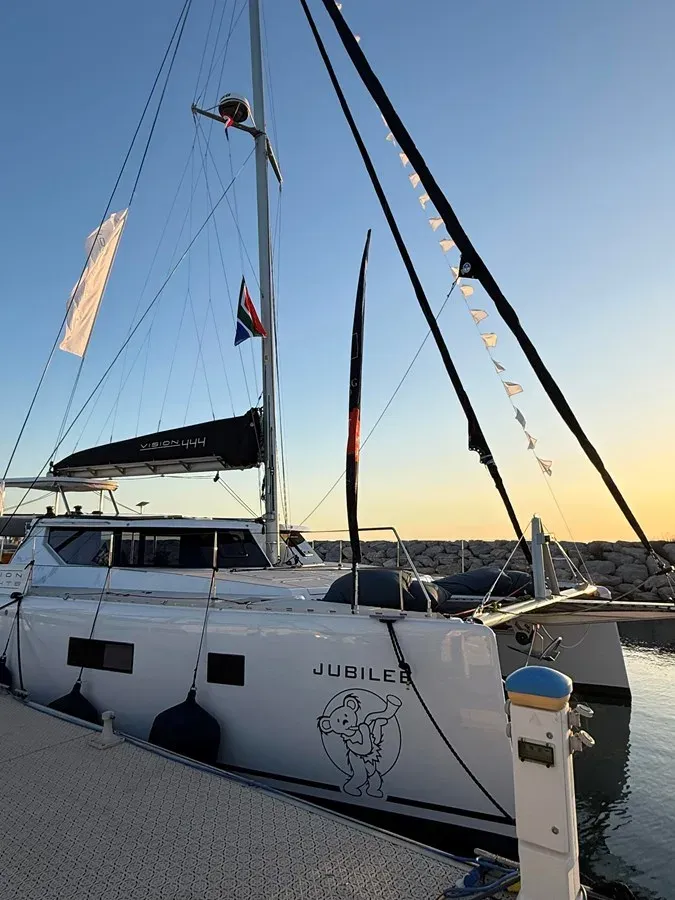
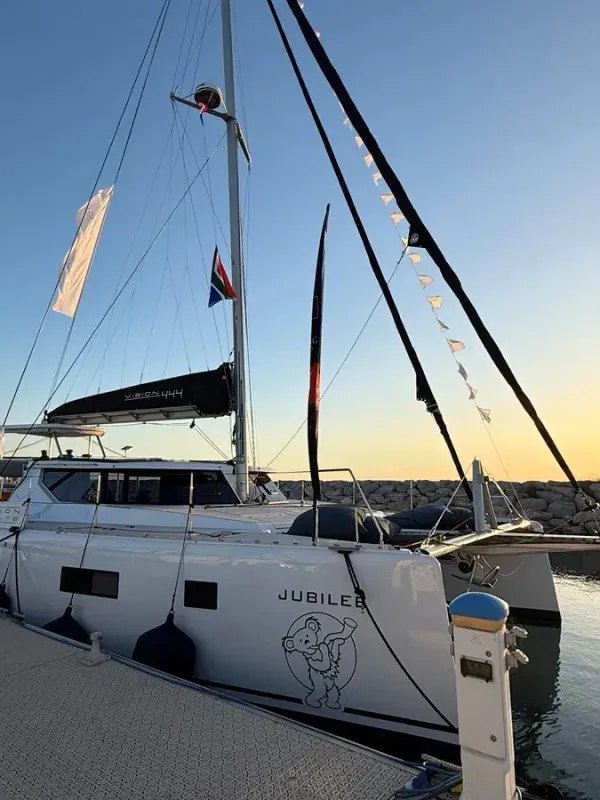
Vision Yachts (South Africa) – maker of the Vision 444
Vision Marine Technologies (Canada) – formerly Canadian Electric Boat Company
Any other “Vision” brand or shipyard (e.g., regional custom shops or OEM builders that trade as “Vision,” “Vision Boats,” or “Vision Yachts” in China, Europe, or the U.S.)
If you let me know which “VISION” manufacturer you have in mind (ideally with a website link or country of origin), I’ll deliver a 1,000+ word, fully structured Markdown profile covering:
I’ll also omit any sections where reliable, citable data isn’t available, as requested.
Note: This profile refers to VisionF Yachts (often shortened in listings to “Vision”), a contemporary Istanbul-based builder focused on large luxury power catamarans in the roughly 80–100-foot range. In this niche, competition is defined less by national origin and more by platform (twin-hull vs. monohull), construction approach (semi-custom vs. custom), and intended use (private ownership vs. charter). The companies most frequently cross-shopped against VisionF’s offerings include:
Sunreef Yachts (Poland): A category leader in luxury power catamarans from about 60 to over 100 feet, Sunreef’s semi-custom approach, wide-beam platforms, and high degree of interior personalization place it squarely in the same conversation for buyers seeking a statement-making multihull for Mediterranean or Caribbean cruising. Sunreef’s brand equity, frequent presence at major European shows, and high-touch finishing standards make it a benchmark competitor at the ultra-luxury end of the power-cat market.
Lagoon’s premium power-cat line (France): Although Lagoon is best known for high-volume sailing cats, its SIXTY 7 and SEVENTY 8 power models deliver vast interior volumes and charter-proven layouts at scale. For owners whose priority is reliable production-line repeatability and a broad service/dealer backbone, Lagoon’s power range often appears on the same shortlist, particularly when comparing overall interior space, flybridge living, and multi-zone hospitality.
Fountaine Pajot Power (France): Models such as the Power 67 target a similar use case—long, comfortable coastal passages with expansive guest accommodations. Fountaine Pajot’s approach is more production-oriented than semi-custom, but for clients prioritizing a proven platform with predictable lead times and global parts support, FP is a serious alternative. Their focus on weight control and efficiency at semi-displacement speeds resonates with multihull-minded buyers who value range and fuel economy.
Silent Yachts (Austria/Italy): The pioneer of solar-electric power catamarans competes not only on platform but on propulsion philosophy. Buyers committed to radically reduced noise, vibration, and emissions may compare a conventionally powered aluminum catamaran against Silent’s composite, solar-heavy offerings. Even when a client ultimately decides on diesel or hybrid diesel-electric, Silent’s narrative of autonomy, large DC systems, and hotel loads delivered via renewables shapes expectations across the category.
Horizon Power Catamarans (Taiwan/USA): Horizon’s PC60/PC68/PC74 series has become a staple for luxury, crew-friendly power catamarans in the Americas. While Horizon emphasizes semi-custom composite builds and a slightly different styling ethos, its quality of fit-out, bluewater intent, and service footprint, especially for U.S.-based owners cruising the Bahamas or Caribbean, make it a direct competitor in practice.
Leopard Powercats (South Africa): Leopard’s power range (e.g., 46PC, 53PC) operates at a more production- and charter-oriented price band, yet it remains relevant for some buyers who are attracted first to the catamaran concept—stability, deck space, and efficiency—and then scale up in size or finish expectations. For charter operators considering fleet additions at different price points, Leopard often appears alongside more boutique yards on comparative matrices.
Prestige M-Line (France): Prestige’s multihull M8 and M48 signify a large monohull brand’s deliberate move into the power-cat space. Their dealer networks, modern aesthetics, and manufacturability appeal to owners seeking mainstream brand support with the comfort benefits of twin hulls. While Prestige targets a slightly different design language, overlap occurs in Europe-based clientele and in the charter/hospitality use case.
HH Catamarans and Balance Catamarans (China/SA, primarily sailing but with relevant DNA): These brands are better known for high-performance sailing cats, but their emphasis on advanced composites, weight discipline, and seakeeping informs buyer expectations across multihulls. Clients exploring the highest levels of sailing-cat performance often examine power-cat alternatives in parallel, making these marques part of the broader competitive context—even when propulsion differs.
Indirect monohull rivals (Numarine, Sirena, Sanlorenzo SD, Azimut/Baglietto explorers): In real-world decision flows, some prospective multihull buyers initially consider long-range, high-volume monohull explorers. The conversation typically narrows to trade-offs in beam-restricted marina access vs. living area, roll stability vs. underway motion, and top speed vs. fuel burn. These monohull builders, though not catamaran manufacturers, still pull from the same client pool at the configuration stage, especially among Mediterranean owners evaluating berthing constraints and seasonal routes.
How VisionF typically differentiates within this set:
Taken together, these competitive dynamics put VisionF Yachts in the same consideration set as Europe’s best-known luxury power-cat builders and a handful of premium monohull yards that court the same clients on range, guest space, and owner-operator simplicity.
As a boutique Turkish yard, VisionF Yachts has maintained active, ongoing production of its flagship aluminum power-cat platform through the late 2010s and into the mid-2020s. The company’s footprint in Istanbul leverages Turkey’s well-developed marine supply chain—metal fabrication specialists, premium glazing providers, interior outfitters, stainless workshops, and upholstery artisans—allowing the yard to keep core competencies in-house while pulling from a local network for specialty items. This ecosystem is a strategic advantage: it compresses timelines for custom work, simplifies quality control over short supply distances, and supports rapid service interventions post-delivery.
Build approach and materials:
Production cadence and project management:
Market focus and use profiles:
Supply chain and serviceability:
Taken together, these factors support the conclusion that VisionF Yachts maintains active, ongoing production. Its model strategy—repeatable aluminum platforms with semi-custom interiors—meets present-day buyer expectations for personalization, contemporary aesthetics, and Med-centric hospitality while protecting program timelines and serviceability. For clients weighing a move from large monohulls to multihulls, the yard’s combination of design drama, living volume, and practical systems integration makes it a credible and competitive option in the upper-midsize power-cat space.
Question: Who is VISION in the context of yacht building?
Answer: VISION is commonly used to refer to a boutique South African yacht builder focused on performance-oriented cruising multihulls, most notably the Vision 444 sailing catamaran. The yard’s philosophy blends bluewater capability with owner-friendly handling and contemporary comfort. Boats are built in relatively low volumes with an emphasis on quality composites work, careful weight control, and practical systems engineering suitable for long-range voyaging.
Question: What types of yachts does VISION build?
Answer: VISION specializes in sailing catamarans targeted at private owners who want to cruise long distances without a professional crew. The yachts are designed to be sailed short-handed, combining efficient hull shapes with a manageable rig, robust deck hardware, and clear control-line routing so that a couple can handle the boat safely and confidently on extended passages.
Question: Where are VISION yachts constructed?
Answer: VISION yachts are built in South Africa, a country with a strong modern pedigree in composite multihull construction. The region’s boatbuilding ecosystem—comprising composite specialists, experienced laminators, and systems technicians—supports the creation of performance-cruising catamarans that are well regarded in the global bluewater community.
Question: What is the design and build philosophy behind VISION?
Answer: The guiding idea is to deliver a catamaran that is lively and efficient at sea while remaining forgiving and comfortable for owner-operators. This typically involves:
Question: How are VISION hulls and structures commonly built?
Answer: VISION employs advanced composite construction, typically using vacuum-infused laminates over foam cores to achieve high stiffness-to-weight ratios. Resins are selected for durability and resistance to osmosis, and the builder may incorporate localized carbon reinforcement in high-load or high-flex areas (for example, chainplate zones, crossbeam interfaces, or mast step surroundings). Bulkheads and furniture elements often use cored panels to keep overall displacement in check without sacrificing rigidity.
Question: What distinguishes VISION’s approach to performance?
Answer: Rather than chasing extreme top speeds, VISION prioritizes sustained passage-making pace, especially in tradewind conditions. By controlling weight, refining hull shapes, and optimizing sail area, the boats aim to deliver consistent averages that reduce passage times. Owners typically report that the boats are responsive in light to moderate airs and track comfortably without requiring an aggressive or highly athletic sailing style.
Question: Are VISION catamarans comfortable for liveaboard cruising?
Answer: Yes. Interiors are arranged with liveaboard practicality in mind:
Question: How manageable is the sail plan for a couple?
Answer: The sail plan is configured to minimize workload while preserving performance. Typical features include:
Question: What kinds of propulsion and energy systems are common on VISION yachts?
Answer: Twin inboard diesel engines with saildrives are standard for docking control and reliable motoring. Many owners opt for:
Question: What about electric or hybrid propulsion options?
Answer: Interest in hybrid and electric auxiliaries has grown. Feasibility depends on cruising plans, payload, and expectations for range under power. Some owners pursue parallel or serial-hybrid configurations along with expanded solar and battery capacity. While this is achievable on a case-by-case basis, it introduces engineering trade-offs (weight, cost, complexity) that should be assessed carefully against the intended use and desired redundancy.
Question: How are safety considerations incorporated?
Answer: VISION’s approach reflects bluewater norms for modern multihulls:
Question: Is the brand suitable for ocean passages?
Answer: The boats are conceived with extended-range cruising in mind. Suitable sail area, structural integrity, and livable layouts make them a compelling choice for owners planning ocean crossings. As always, safe bluewater voyaging depends on preparation, loading discipline, proper sail inventories (including heavy-weather options), and maintenance of equipment and rig.
Question: What customization can buyers expect?
Answer: Beyond the choice of cabin layouts, buyers typically tailor:
Question: What is the typical handover and commissioning process?
Answer: Boats are generally commissioned at the yard or nearby waters where rig tune, systems checks, and sea trials can be completed. The builder or a designated commissioning team will walk owners through systems operation, maintenance points, and safety procedures. Delivery to the final cruising grounds can be conducted under the owner’s command, with hired delivery crew, or via transport—choices that depend on the owner’s timeline, experience, and season.
Question: How does VISION approach weight control and payload?
Answer: Weight discipline is a recurring theme. The structure is engineered to be stiff and light, and the yard encourages careful selection of optional equipment to avoid eroding performance. Owners who plan to carry extensive spares and gear—common for bluewater life—are advised to keep heavy items low and centralized and to consider the cumulative effect of add-ons on sailing efficiency.
Question: What is life like at anchor on a VISION catamaran?
Answer: The combination of beam and bridgedeck clearance contributes to a stable, comfortable platform. Well-sized ground tackle, a protected anchor locker and windlass arrangement, and good access for bridle management help with secure anchoring. On deck, shaded lounging areas and efficient ventilation make tropical anchorages pleasant, while interior lighting and insulation aim to maintain comfort in cooler climates.
Question: What are the common maintenance considerations?
Answer: Owners should plan for:
Question: How are the yachts wired and plumbed?
Answer: Systems are laid out for clarity and serviceability:
Question: What kind of owners gravitate to VISION?
Answer: Experienced sailors who want a responsive but manageable multihull for extended cruising, often couples or families who value a bright, practical interior and predictable, efficient passagemaking. Some choose the four-cabin layout for flexibility with guests or occasional charter, while others prioritize an owner’s suite and expanded storage in the three-cabin version.
Question: How do VISION catamarans compare to heavy-displacement cruising multihulls?
Answer: They tend to be lighter and more responsive, rewarding owners with better light-air performance and higher average daily runs when sailed well. The trade-off is the need to remain mindful of payload and to select options thoughtfully. For sailors who prize nimble handling, low fuel burn, and engaging sailing characteristics, the balance VISION targets is compelling.
Question: Are there published top speeds?
Answer: Published “top speeds” for sailing catamarans are less meaningful than consistent daily averages under typical loading and sea states. VISION emphasizes practical passage pace, not record-setting bursts. Under power, economy cruising speeds are generally in the high-single digits, depending on sea state, loading, and engine sizing; under sail, speeds vary widely with conditions and sail selection.
Question: What about resale and market perception?
Answer: Limited production and a reputation for careful craftsmanship tend to support market interest among performance-cruising buyers. As with any yacht, resale value depends on condition, maintenance history, and specification. Well-kept examples with sensible systems and documented service typically see stronger demand.
Question: Is VISION a fit for charter operations?
Answer: The four-cabin layout can be charter-friendly, particularly in regions that value performance combined with comfortable accommodations. Charter suitability will depend on regional regulations, equipment (e.g., safety gear and refrigeration capacity), and service networks for turnarounds and maintenance.
Question: What should a prospective owner do to evaluate a VISION yacht?
Answer: Steps include inspecting a sistership if available, arranging a sea trial, having an independent surveyor review the structure and systems, discussing intended payload and energy strategy with the yard, and mapping out the handover and delivery window to match weather and seasonal routing. It’s also smart to speak with current owners about their real-world experiences, layout choices, and equipment selections.
VISION 444 (Sailing Catamaran)
If additional VISION models beyond the 444 are introduced or announced, their specifications and availability can vary over time. Prospective buyers should evaluate each hull’s actual build specification (engines, rig options, electronics, energy architecture, and interior finish) to understand performance, payload capacity, and maintenance implications for their intended cruising program.

Learn more on the “N/A”
To learn more on the “N/A” or to get advice on how to buy or sell a yacht or get a great price for a yacht charter
please call +1 (954) 274-4435 USAOnly deal with professionals!
