
 Licensed Yacht BrokersYachts for Sale
CUSTOM BUILT - Available for sale:
Yachts with similar parameters:
Luna - CUSTOM BUILT FOR SALE





















Basic information
- Builder:
- CUSTOM BUILT
- Category:
- Sail yachts
- Sub Category:
- Schooner
- Model Year:
- 1980
- Year Built:
- 1980
- Country:
- United States
Dimensions
- LOA:
- 50' (15.24m)
- Beam:
- 14' (4.39m)
- Min Draft:
- 14.49' (4.42m)
Speed, capacities and weight
- Water Capacity:
- 240 Gallons
- Fuel Capacity:
- 120 Gallons
Accommodations
- Sleeps:
- 2
Hull and deck information
- Hull Material:
- Fiberglass and Plastic Yachts
- Deck Material:
- Fiberglass
- Hull Designer:
- Dick Carter
Engine information
- Engines:
- 1
- Manufacturer:
- Yanmar
- Engine Type:
- Inboard
- Fuel Type:
- Diesel
Overview
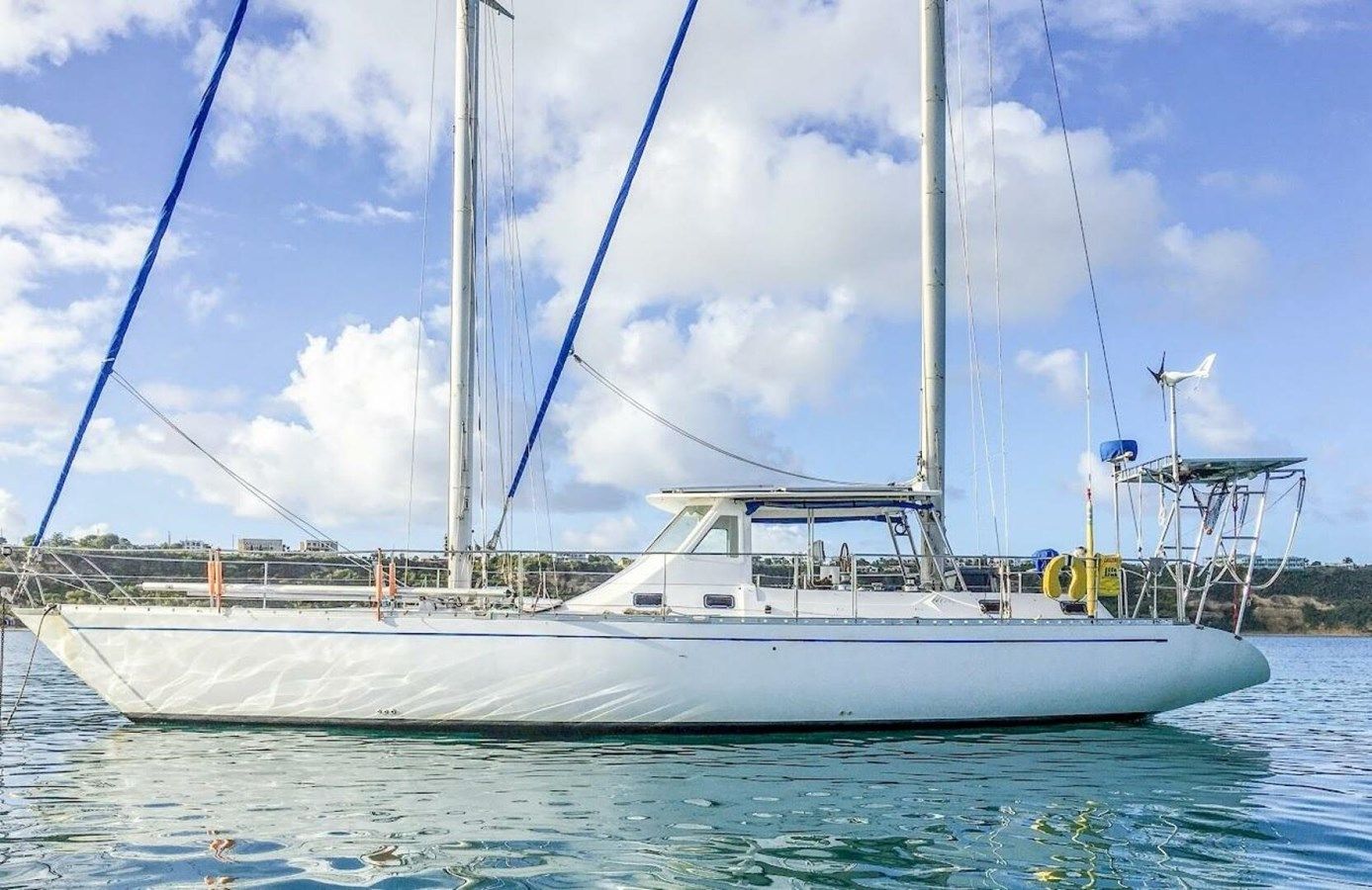
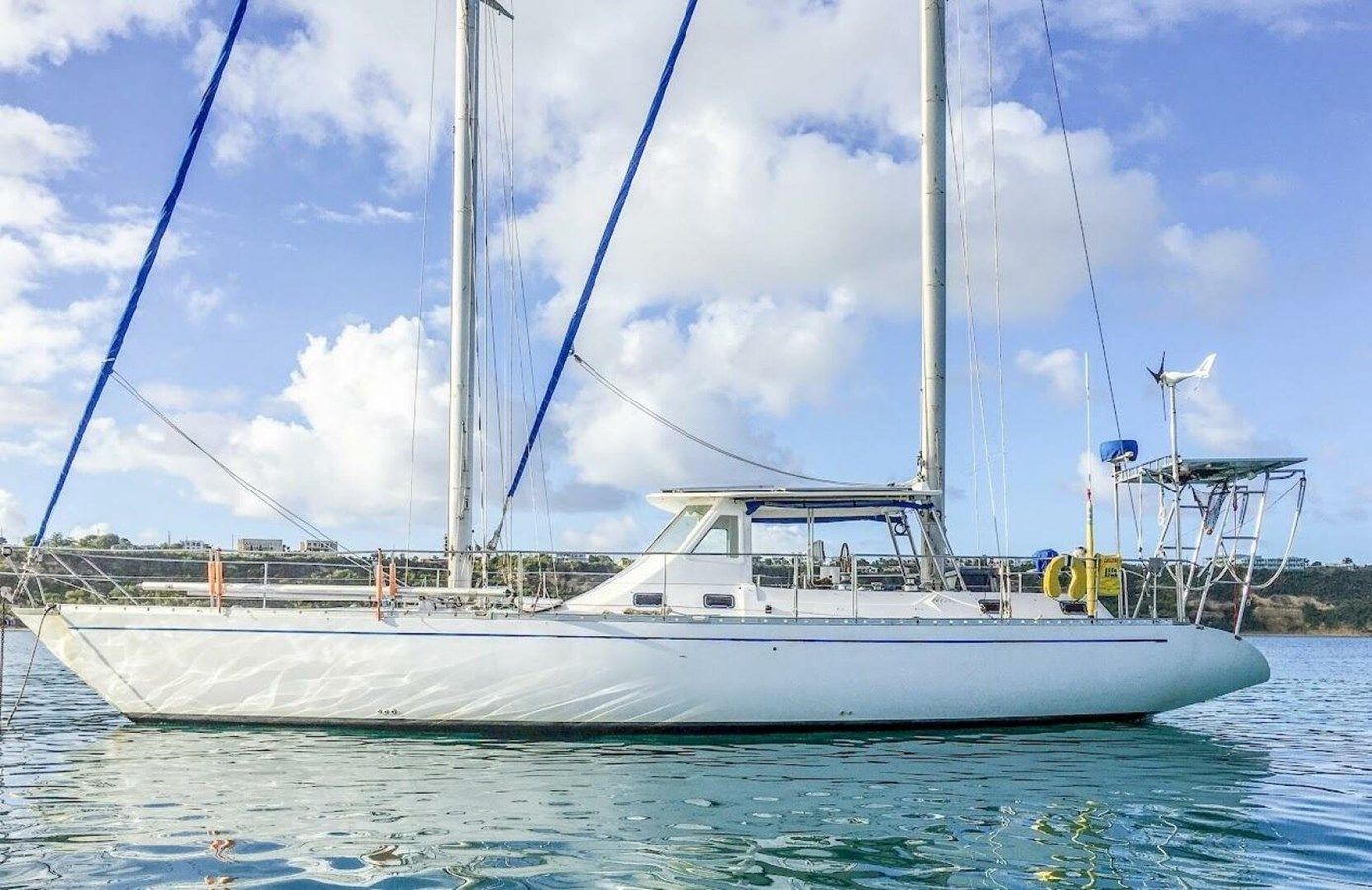
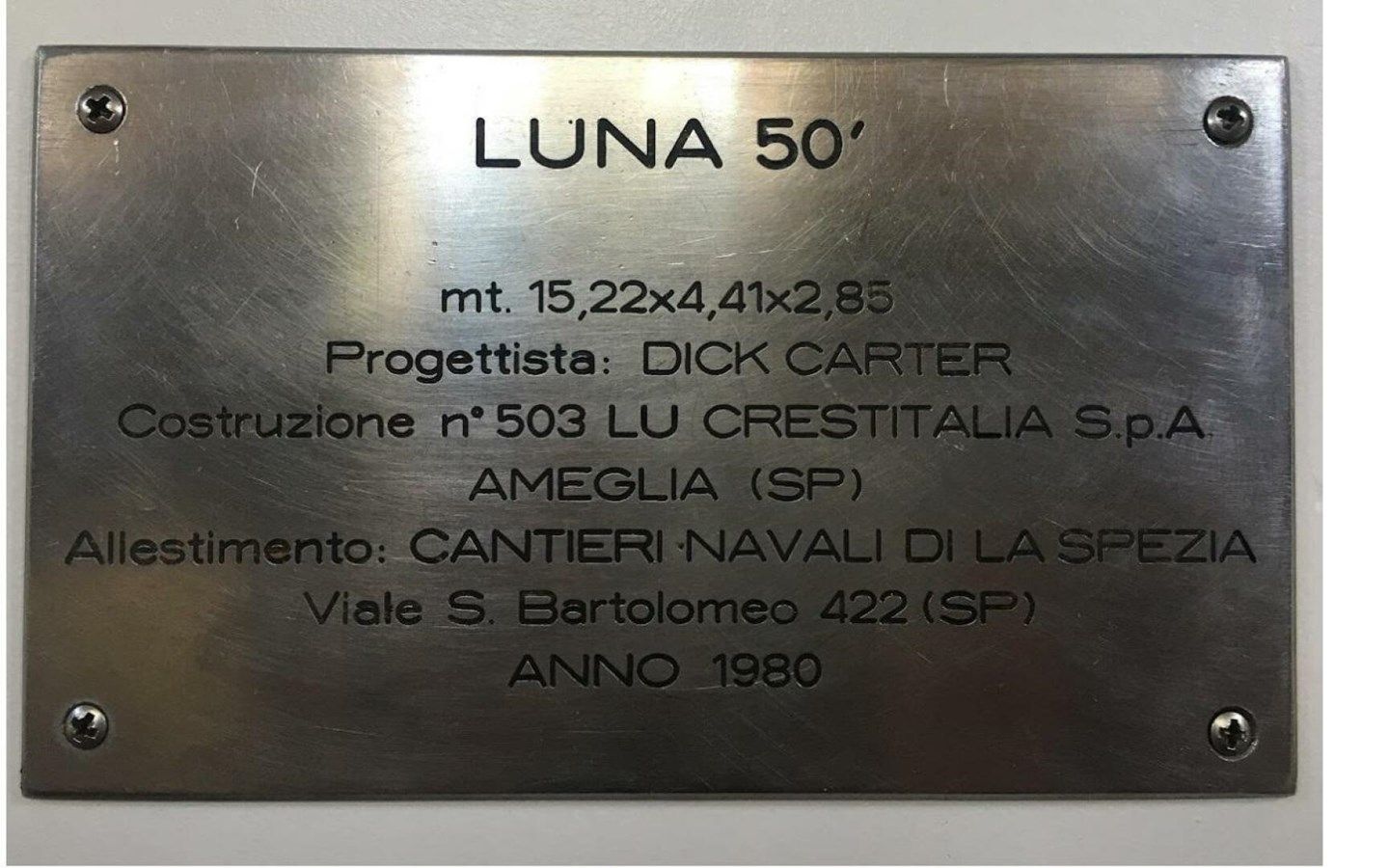
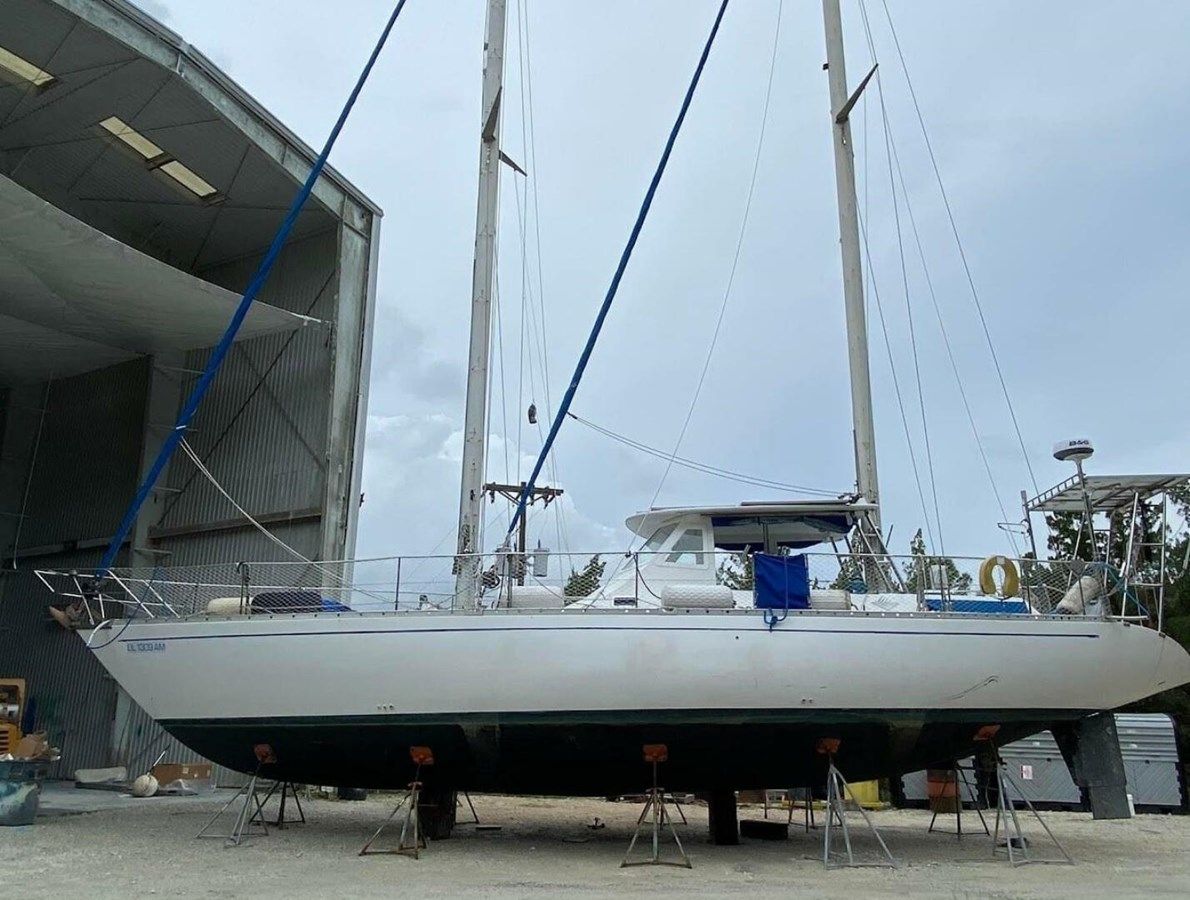
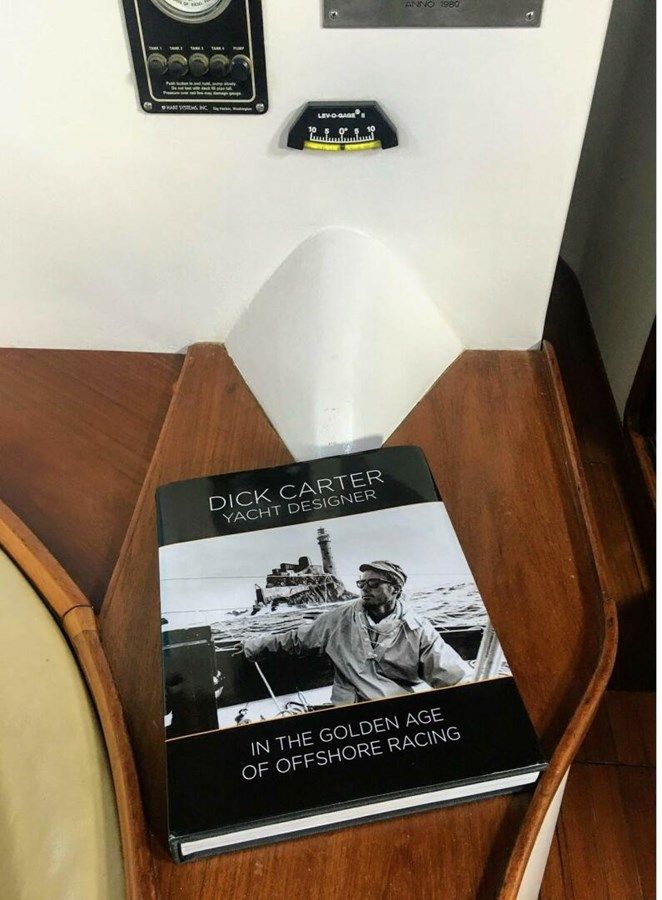
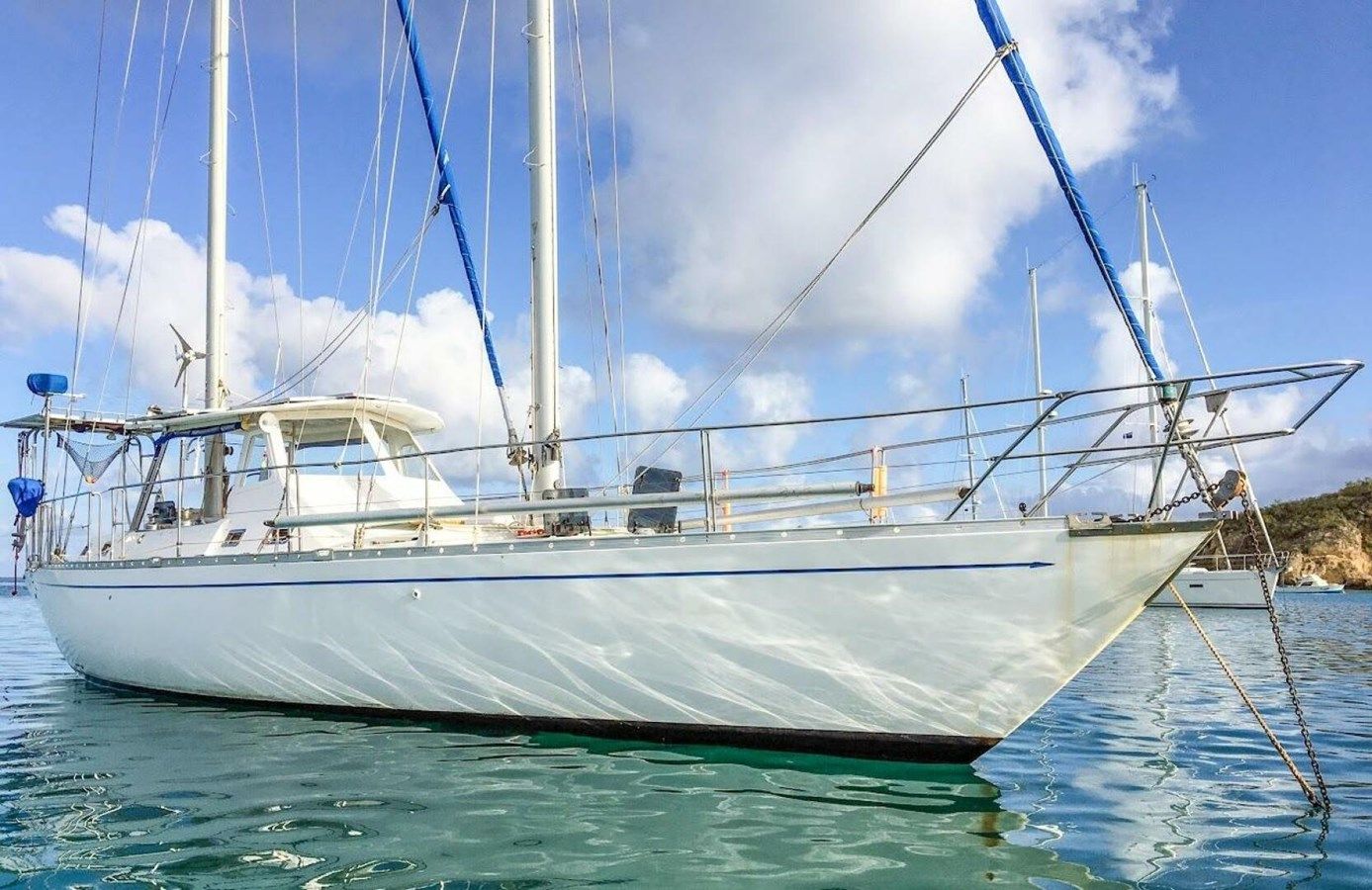
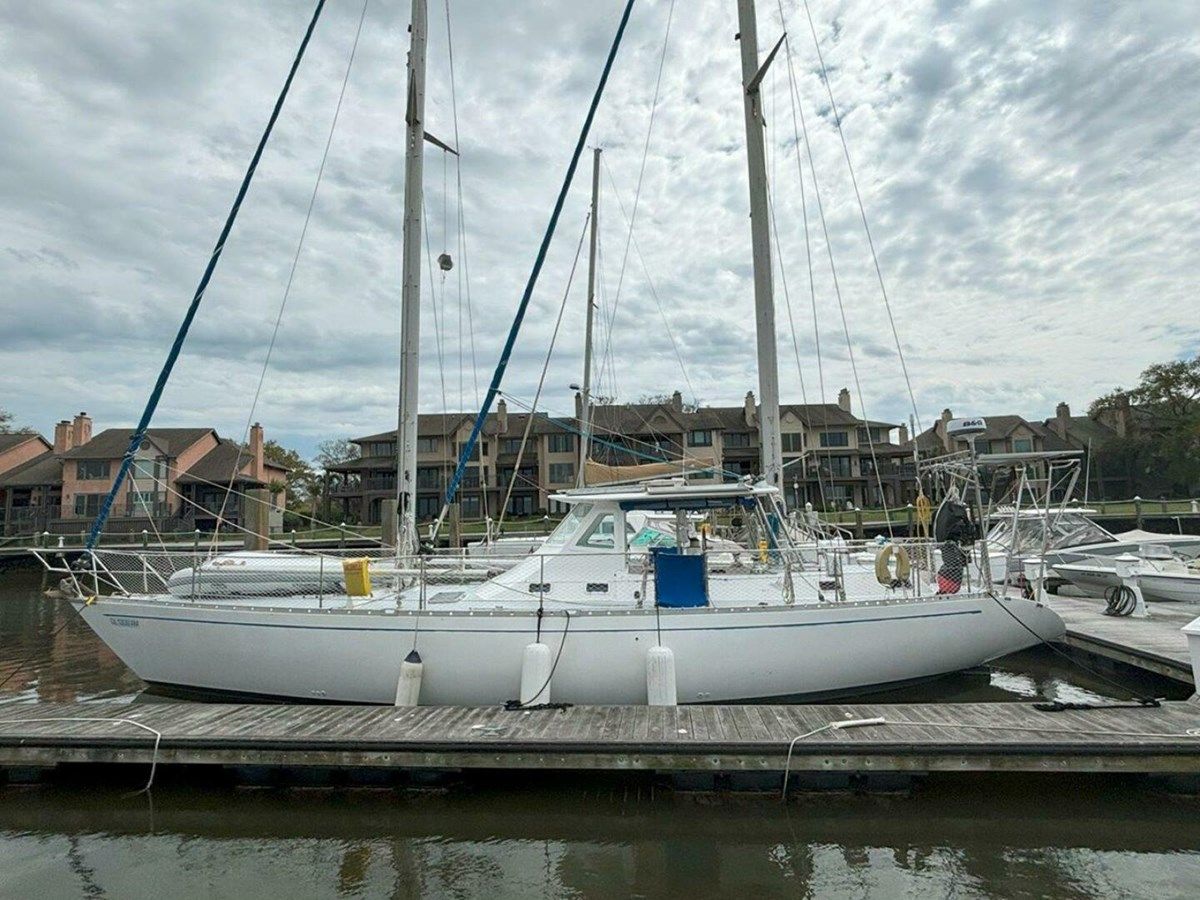
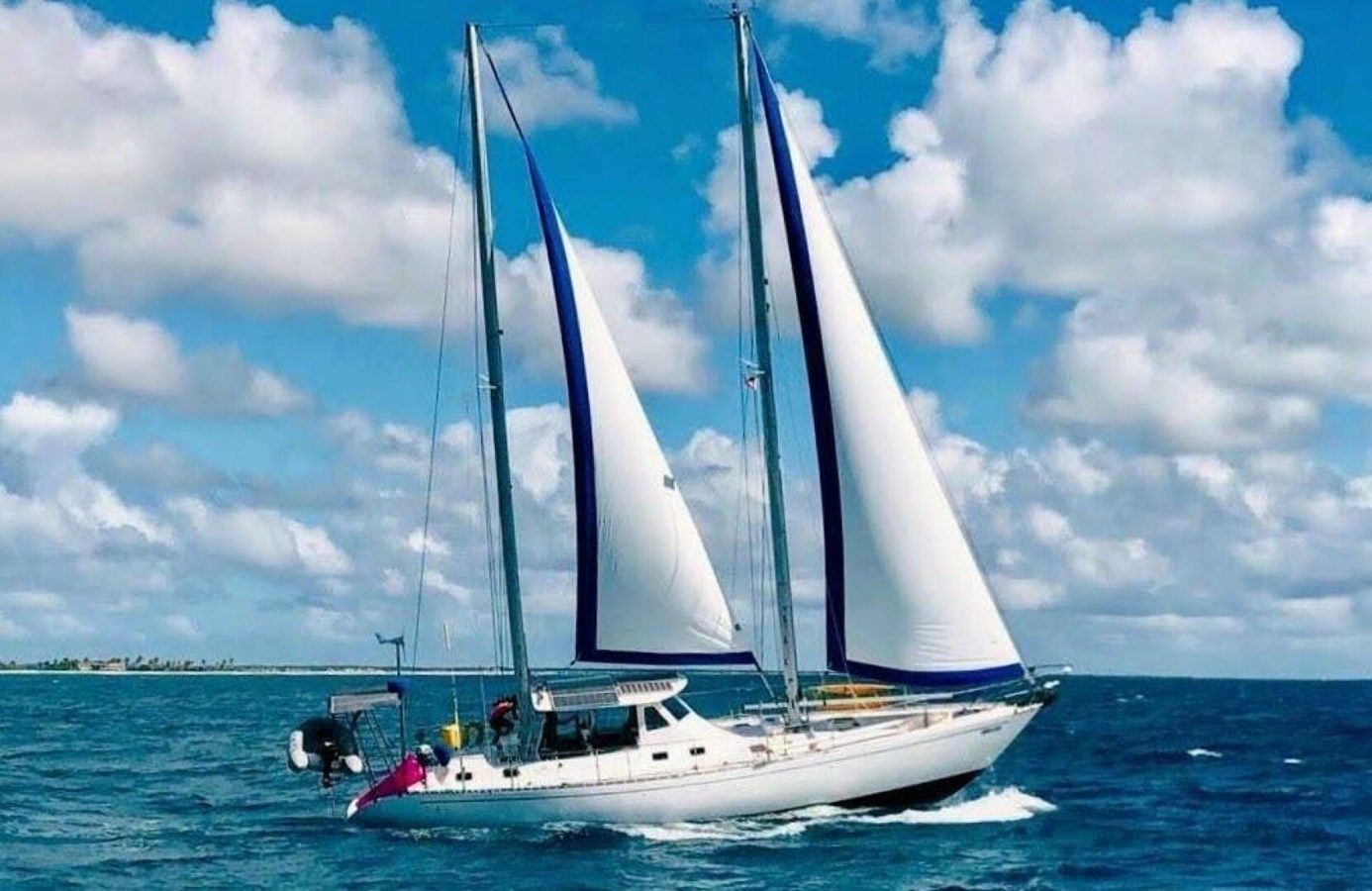
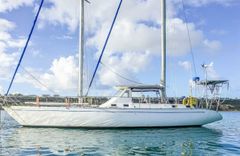
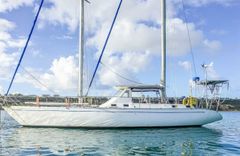
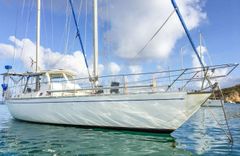
Luna is a center‑cockpit, schooner‑rigged, fifty‑foot fiberglass sailing yacht featuring a variable‑draft swing keel driven by a hydraulic ram. Drawn by famed naval architect Dick Carter (of Southerly lineage) and built to RINA standards by Lu Crestitalia S.p.A. in Ameglia, La Spezia, Italy, she was launched at Cantieri Navali di La Spezia in 1980. Strong and surefooted, she relishes a breeze and carries herself calmly in heavy weather. A proven bluewater cruiser and offshore sailing yacht, she has circumnavigated and spent most of her years roaming the Caribbean.
LUNA, among Dick Carter’s later ocean‑going designs, is a 50’ schooner that introduced forward‑thinking ideas for her era: a “boomless” Luna Rig with furling, self‑tacking headsails on each forestay, paired with a variable‑draft swing keel—an elegant blend of classic schooner character and performance‑cruiser practicality.
Refits in 2005 and 2023 keep her systems and interior current. She accommodates eight in four cabins with two heads—ideal for a cruising yacht or comfortable liveaboard—delivering both privacy and ease for extended passages.
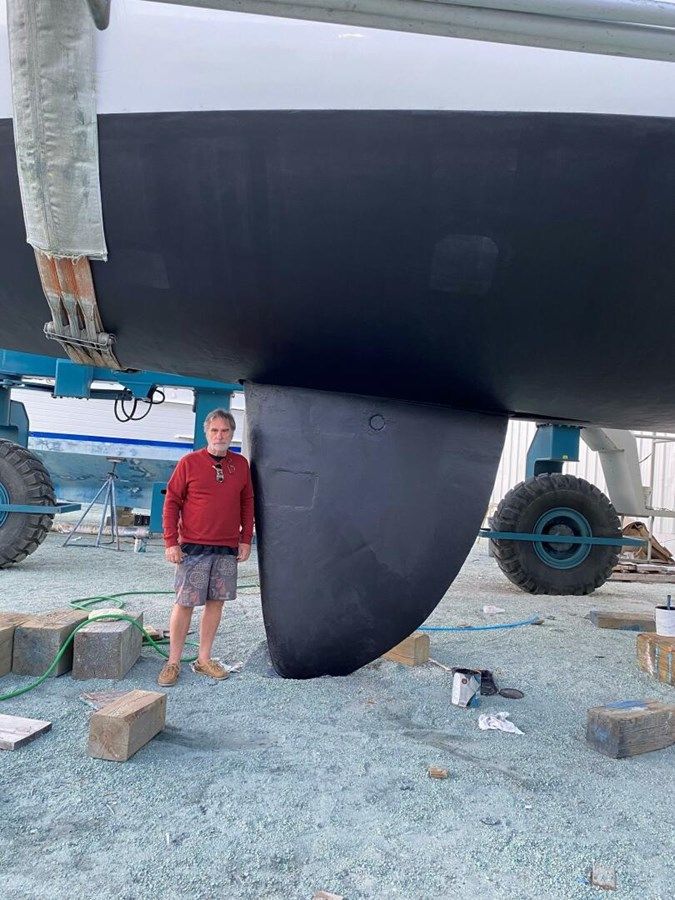
Her lead swing keel provides a powerful 9.5’ (2.85 m) ocean‑going draft for upwind authority and stability, while retracting to just 4.5’ (1.4 m) to slip into shallow anchorages and secluded harbors unreachable to most sailing yachts. The result is a classic center‑cockpit schooner, expedition‑ready and beautifully suited to bluewater adventure and refined coastal exploration. Imagine the horizons she opens.
Detailed Description
Description
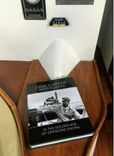
Luna is a center-cockpit, schooner‑rigged, fifty‑foot fiberglass sailboat with a variable‑draft swing keel actuated by a hydraulic ram—solidly built, powerful under sail, and remarkably sure‑footed when the weather turns rough. Designed by Dick Carter—whose hand shaped several Southerly Yachts—and originally constructed to RINA standards by Lu Crestitalia S.p.A. in Ameglia, La Spezia, Italy, she was launched at Cantieri Navali de La Spezia in 1980. She has circumnavigated, spent most of her life in the Caribbean, and retains the poised confidence of an ocean veteran who loves the wind. One of Carter’s later offshore concepts, LUNA showcases the era’s bold innovations: a “boomless” Luna Rig flying a furling, self‑tacking headsail on each forestay, married to a lead variable‑draft swing keel whose hydraulics make depth a choice, not a constraint. Significant updates in 2005 and 2023 keep her systems contemporary and reliable. She sleeps eight in four cabins and features two heads, offering true passagemaking comfort without sacrificing performance. With the keel down, she draws 9.5' (2.85 m) for deep‑keel power and upwind bite; with the keel retracted to just 4.5' (1.4 m), she slips into shallows and hideaways many ocean yachts can only admire from afar. Imagine the possibilities.
Overview
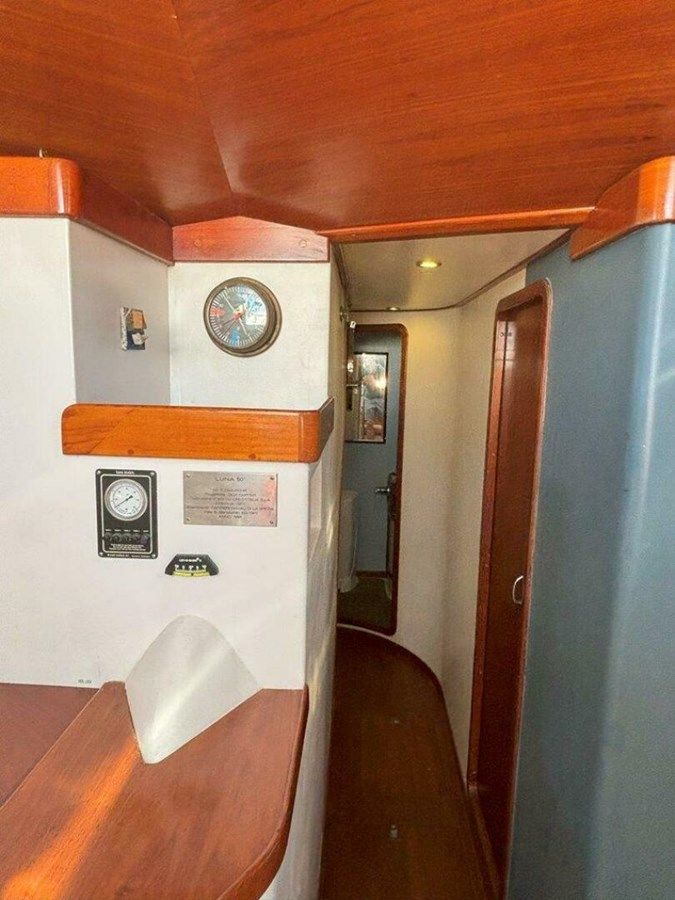
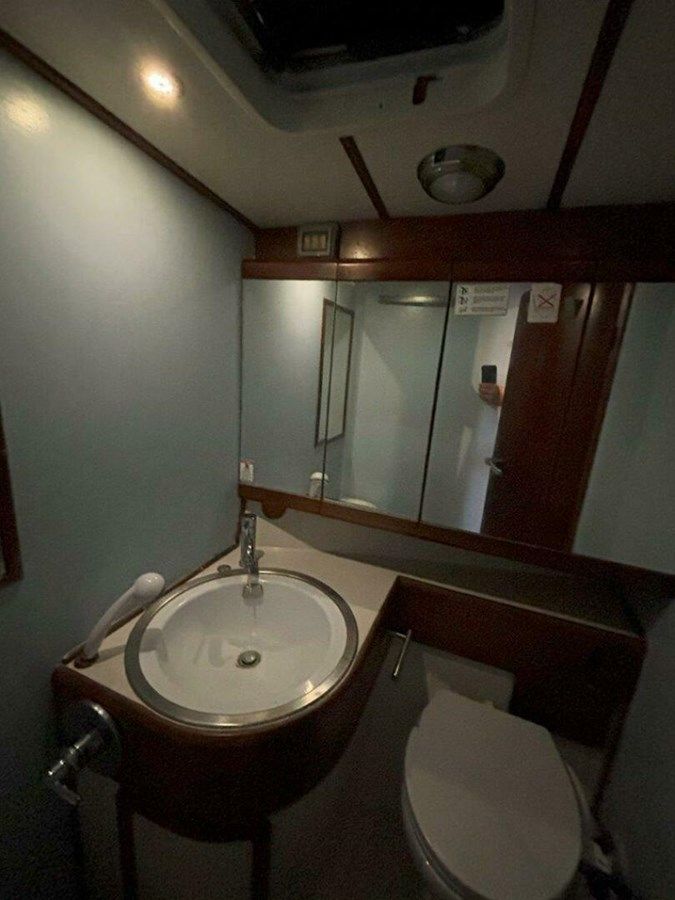
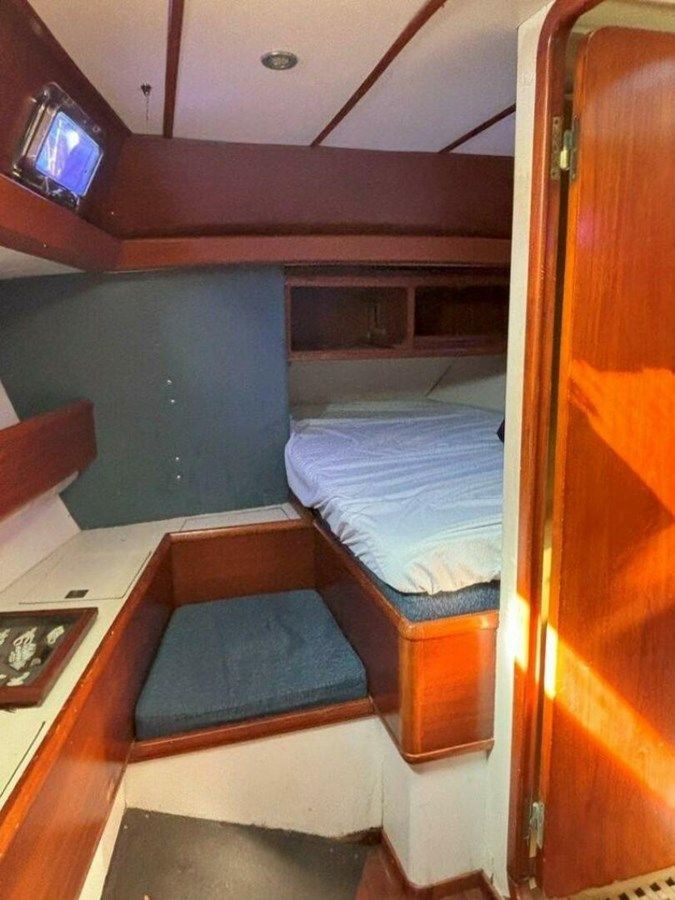
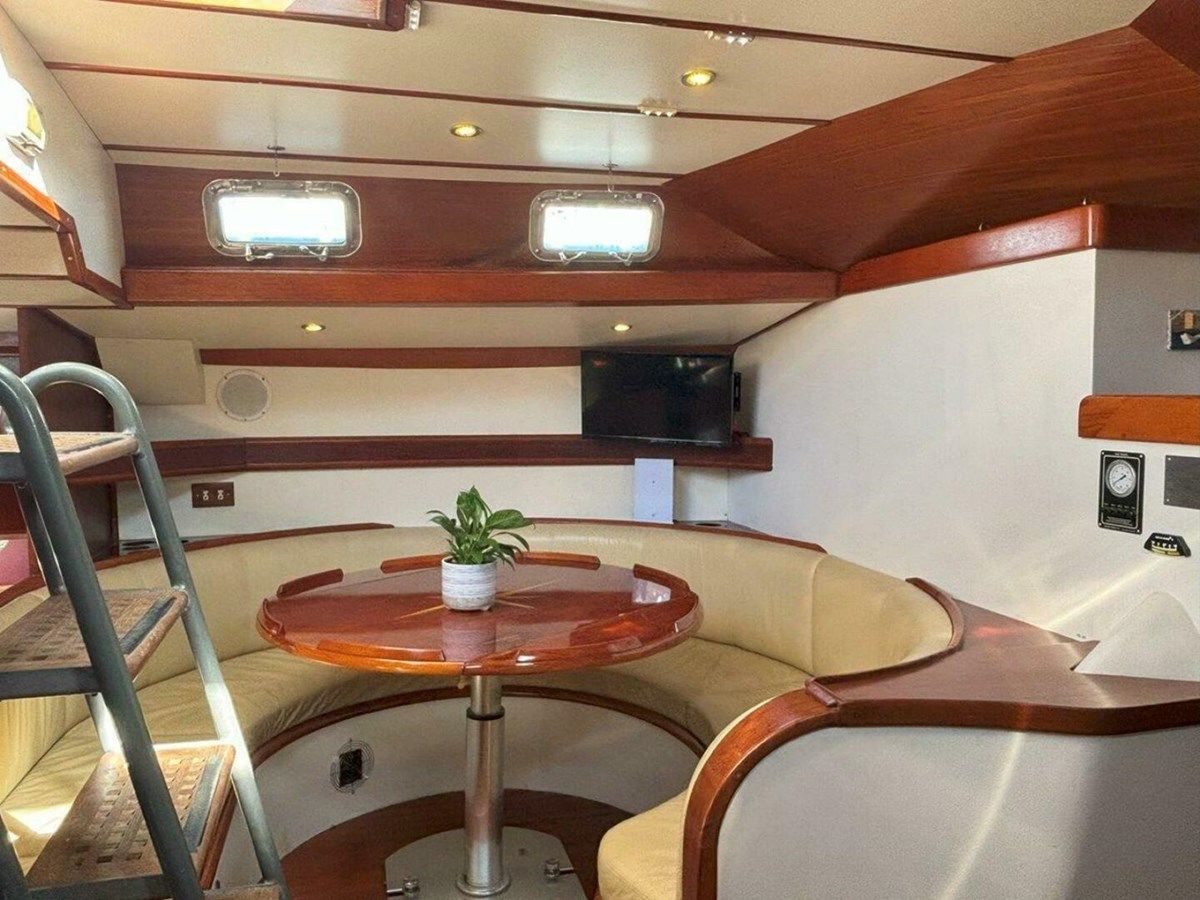
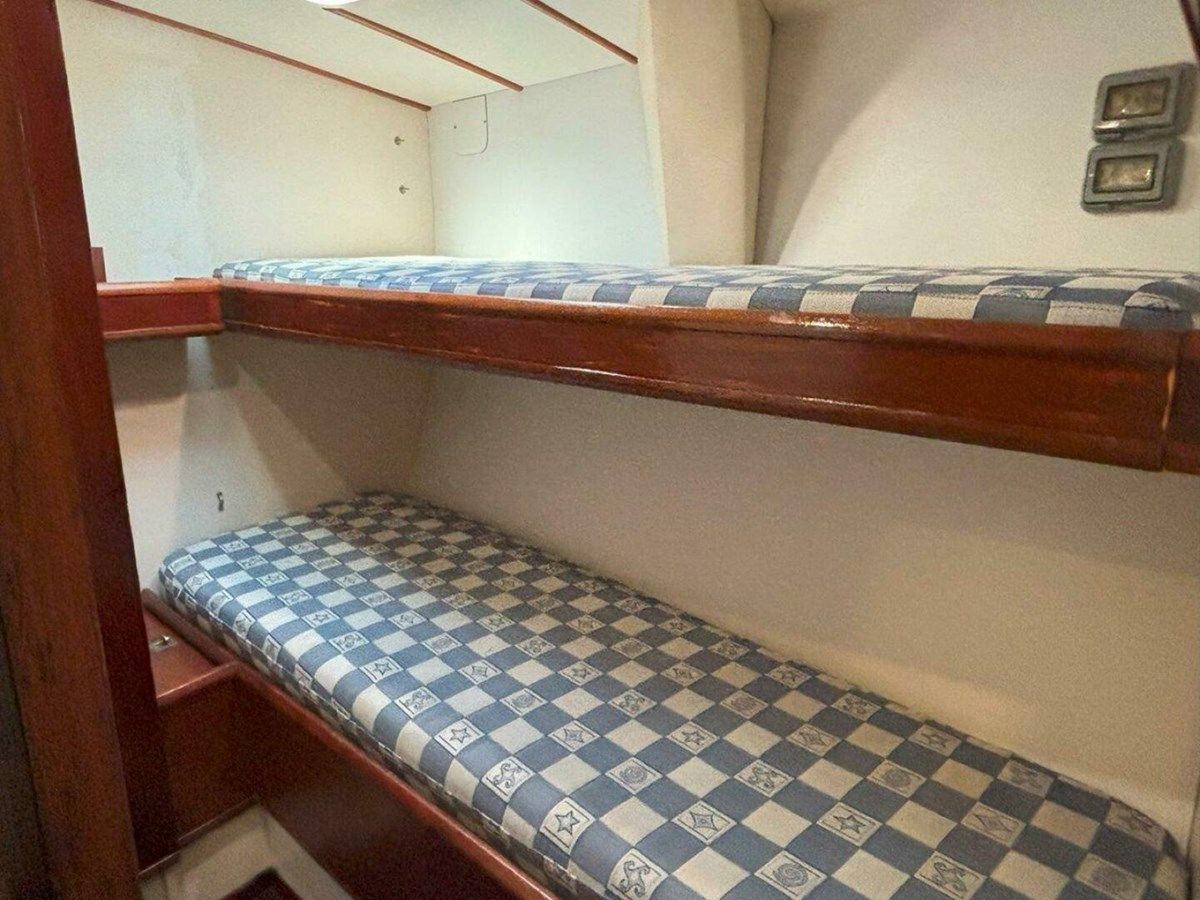
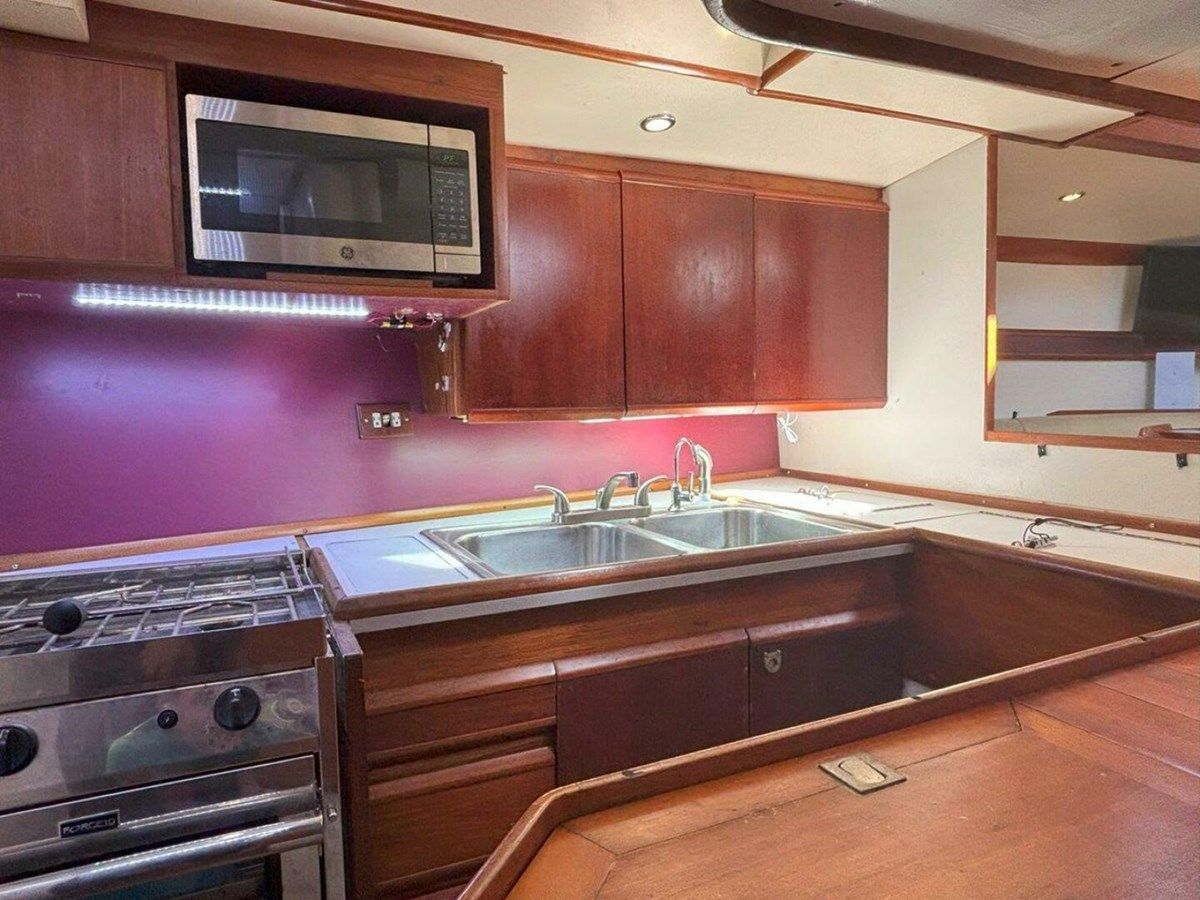
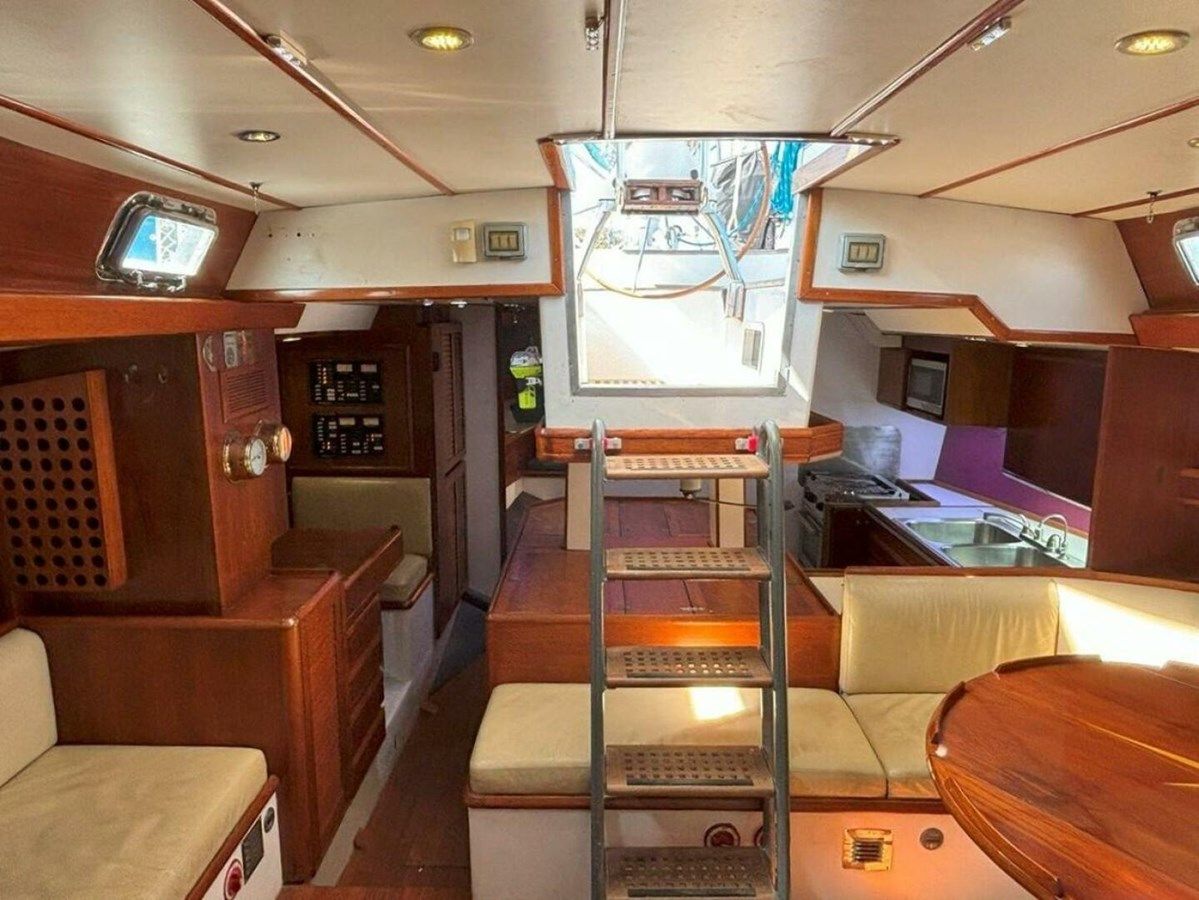
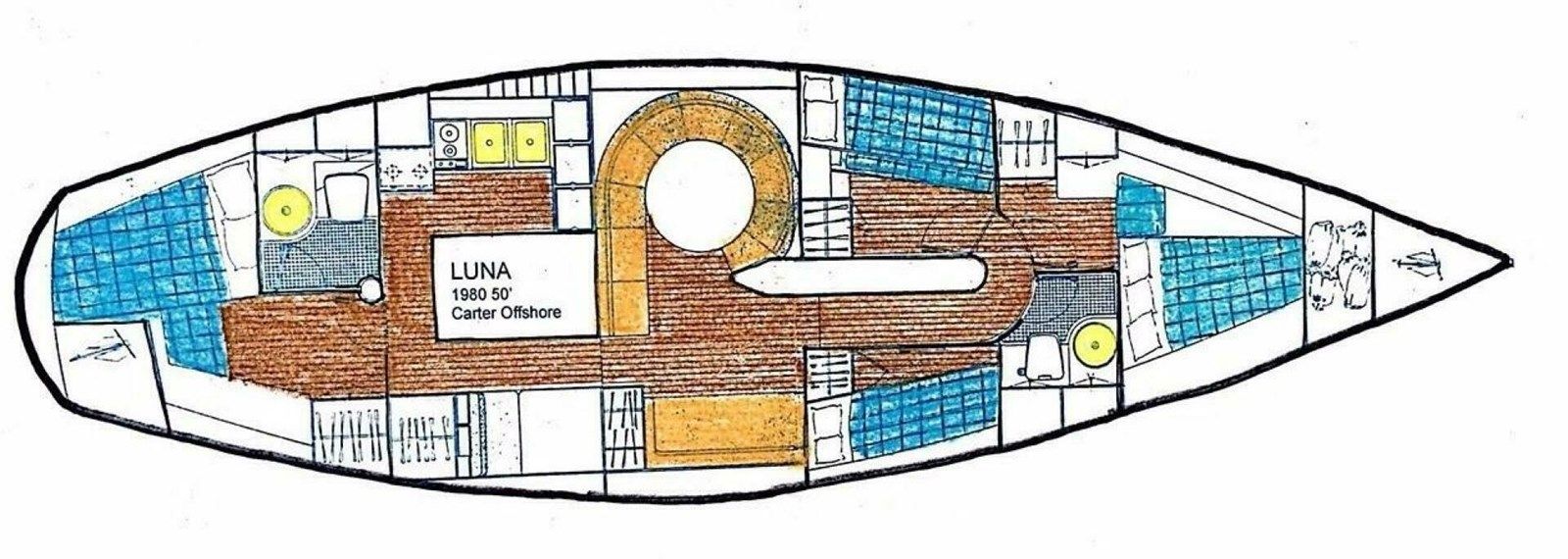
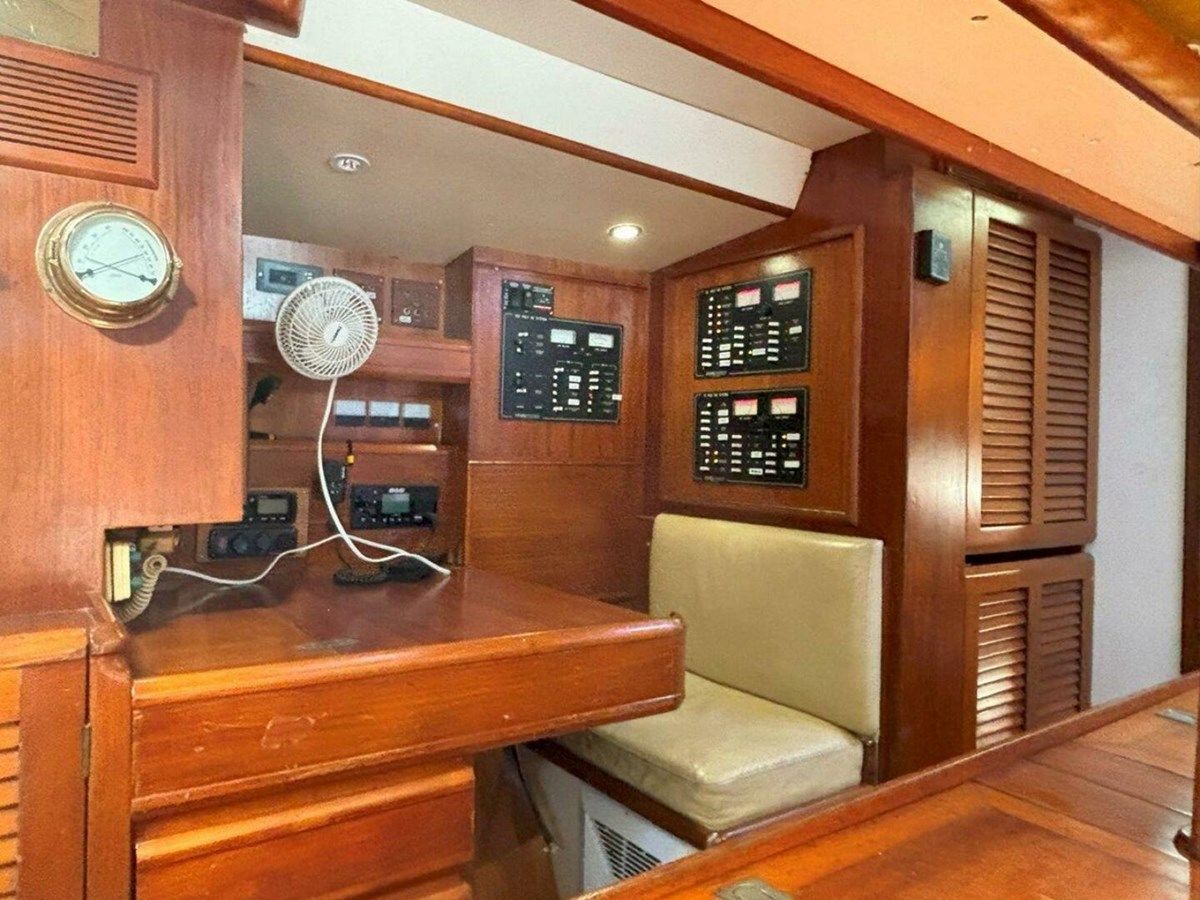
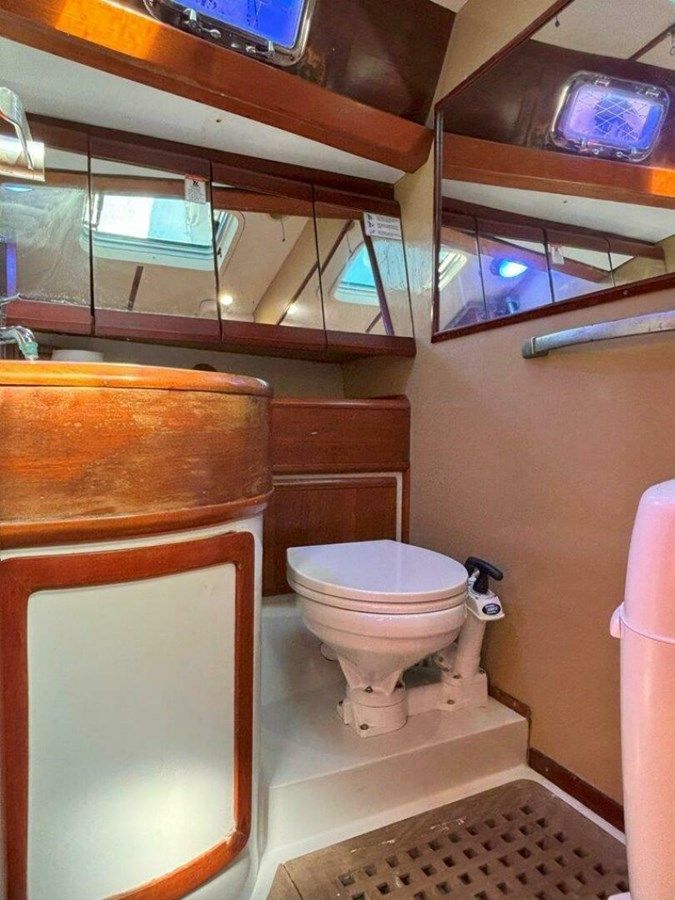
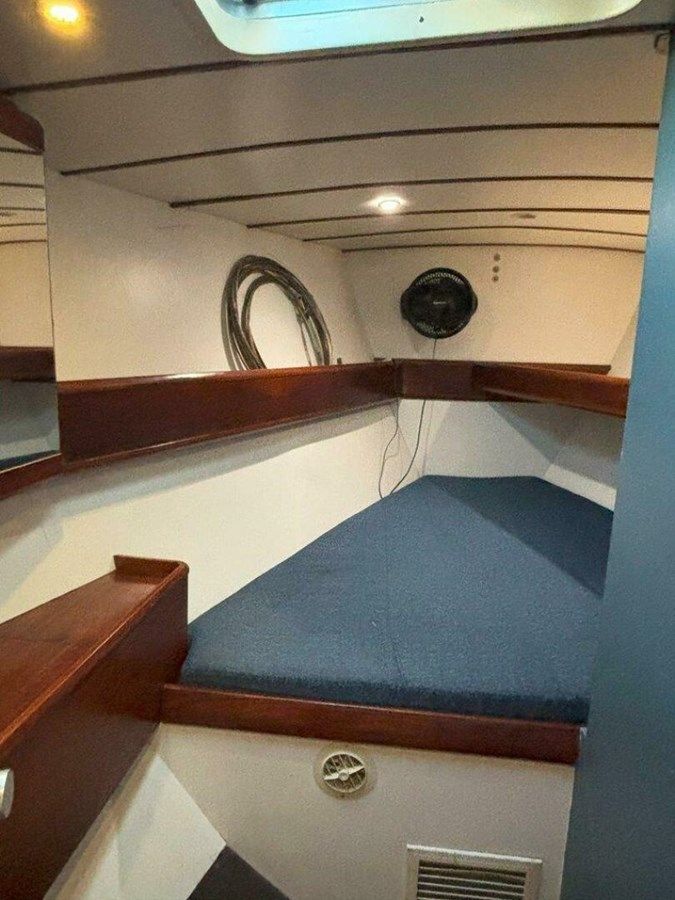
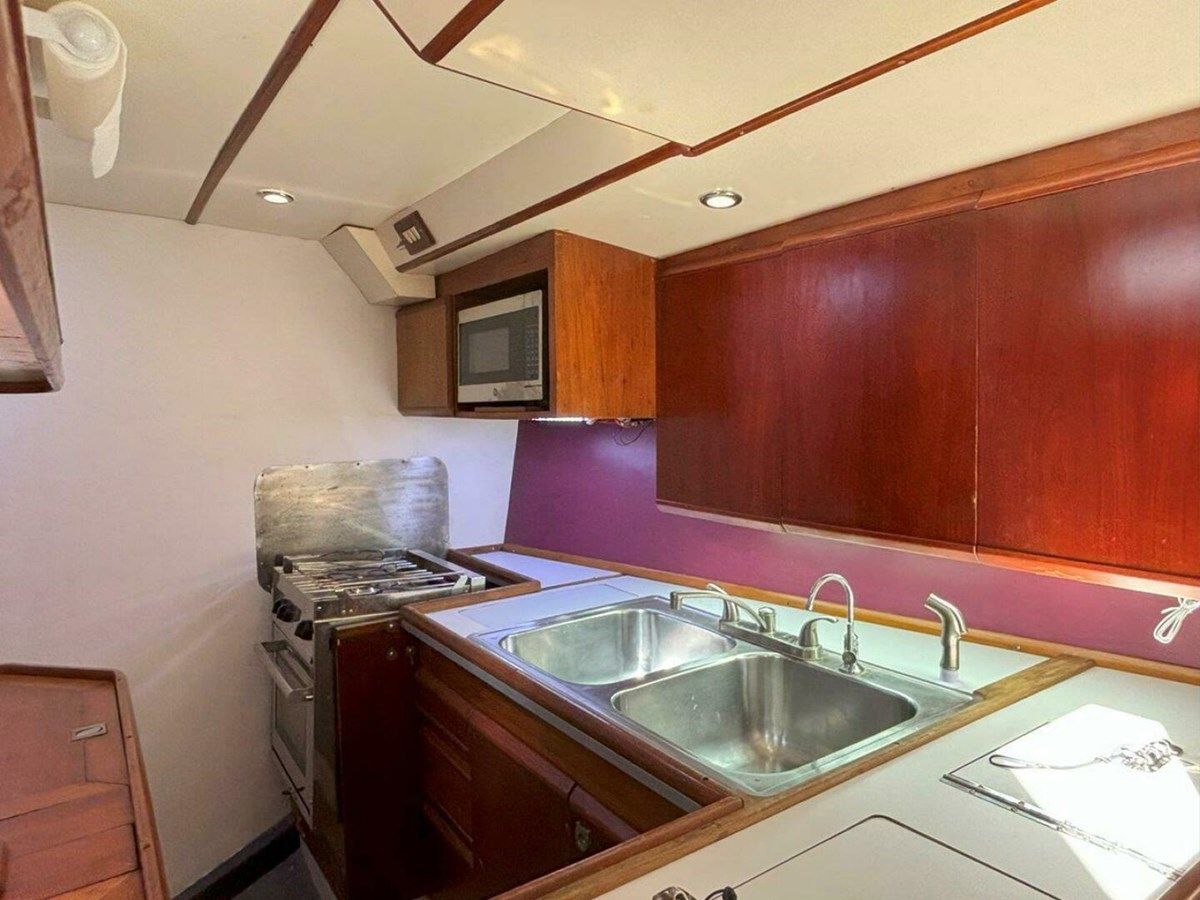
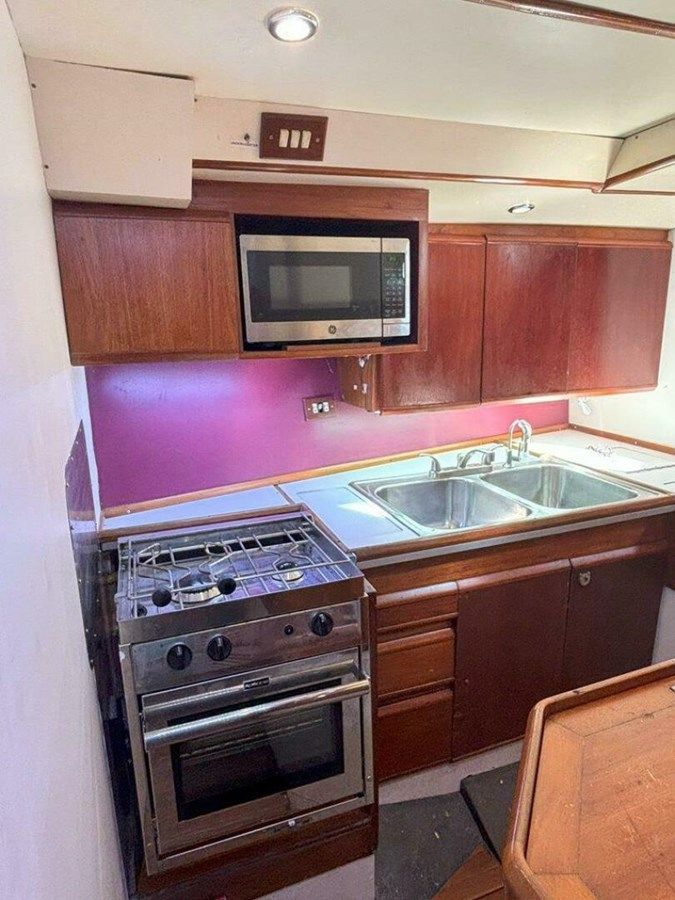
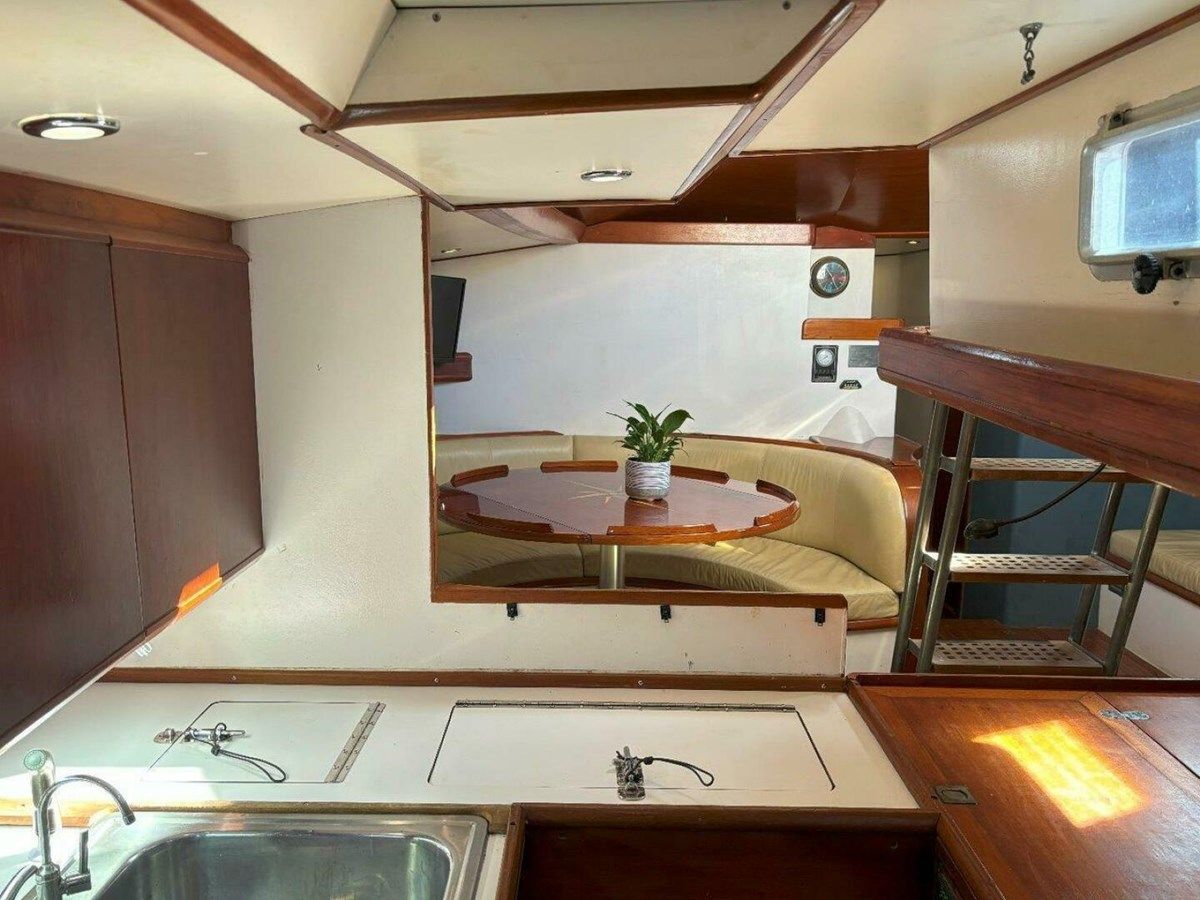
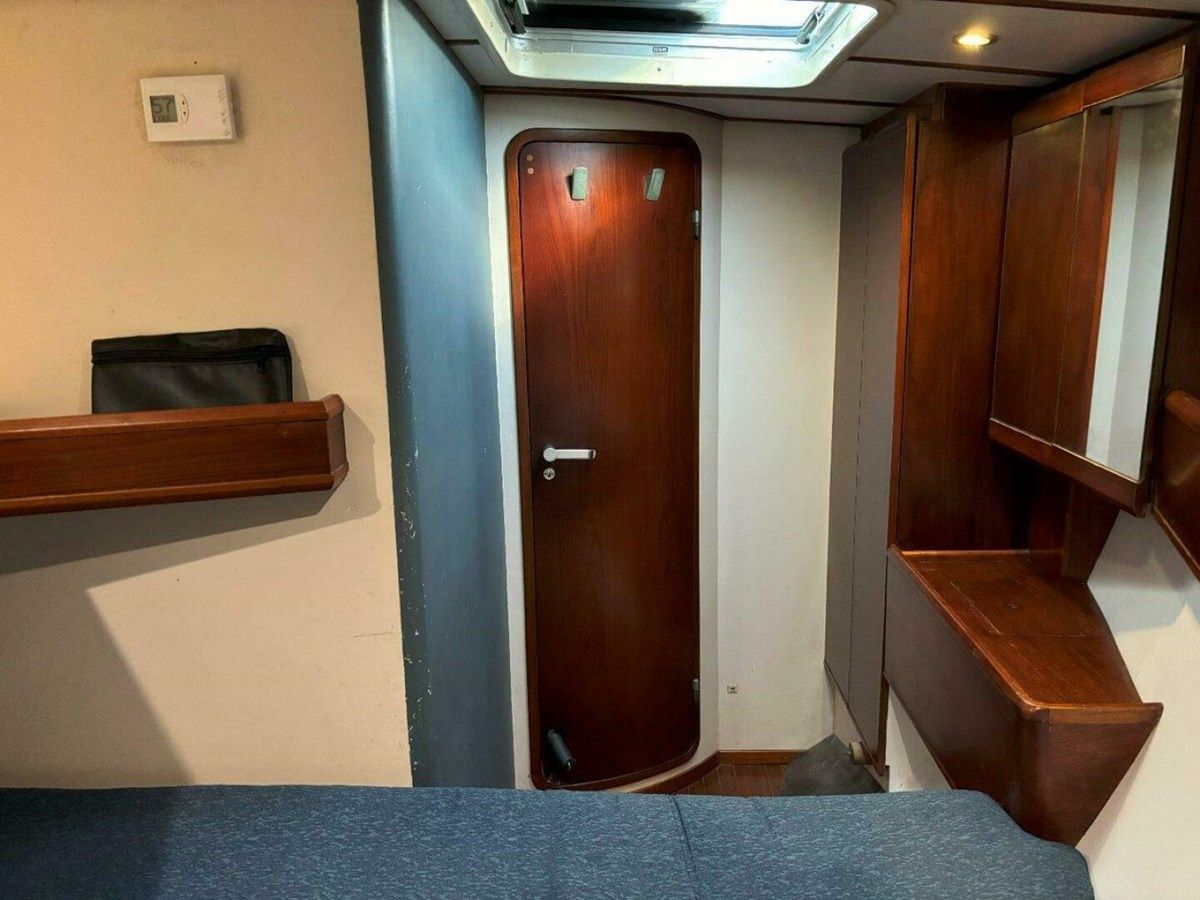
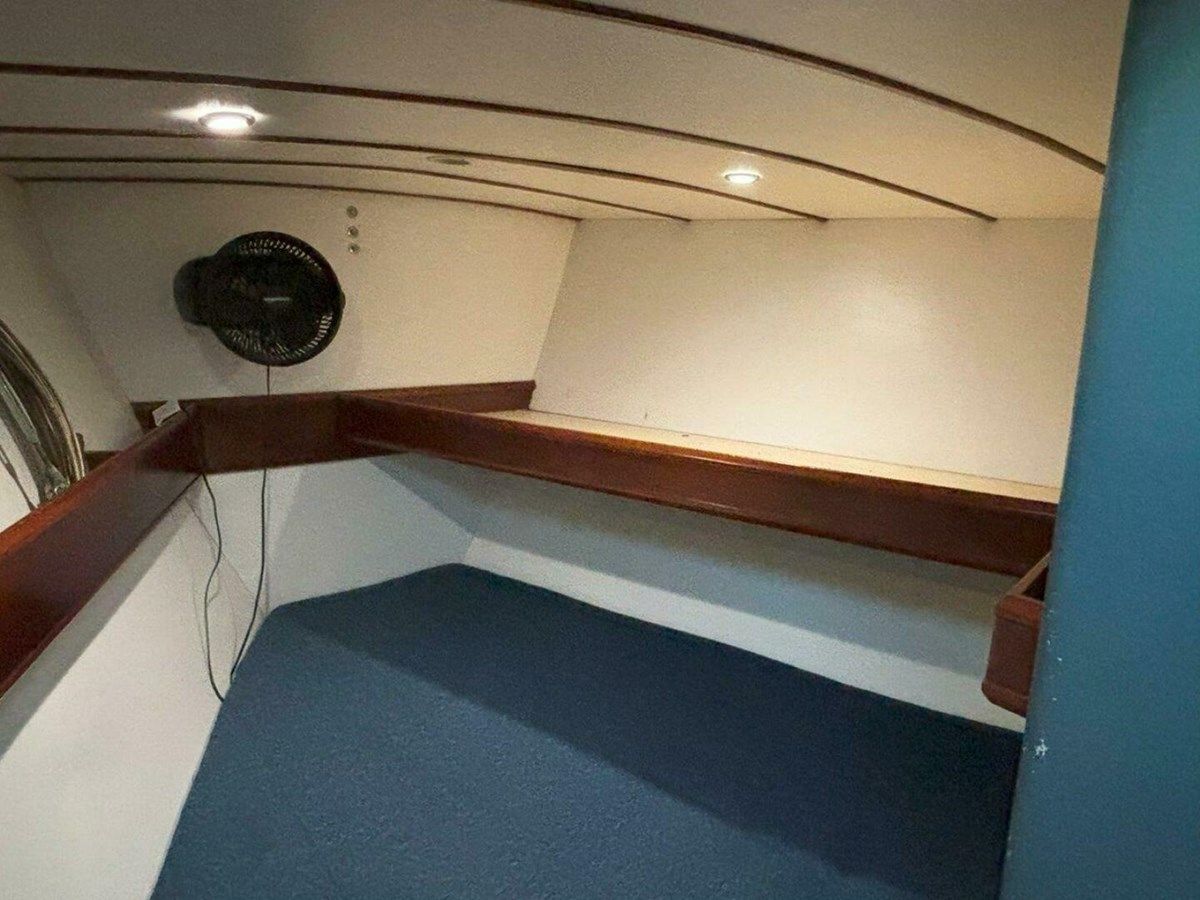
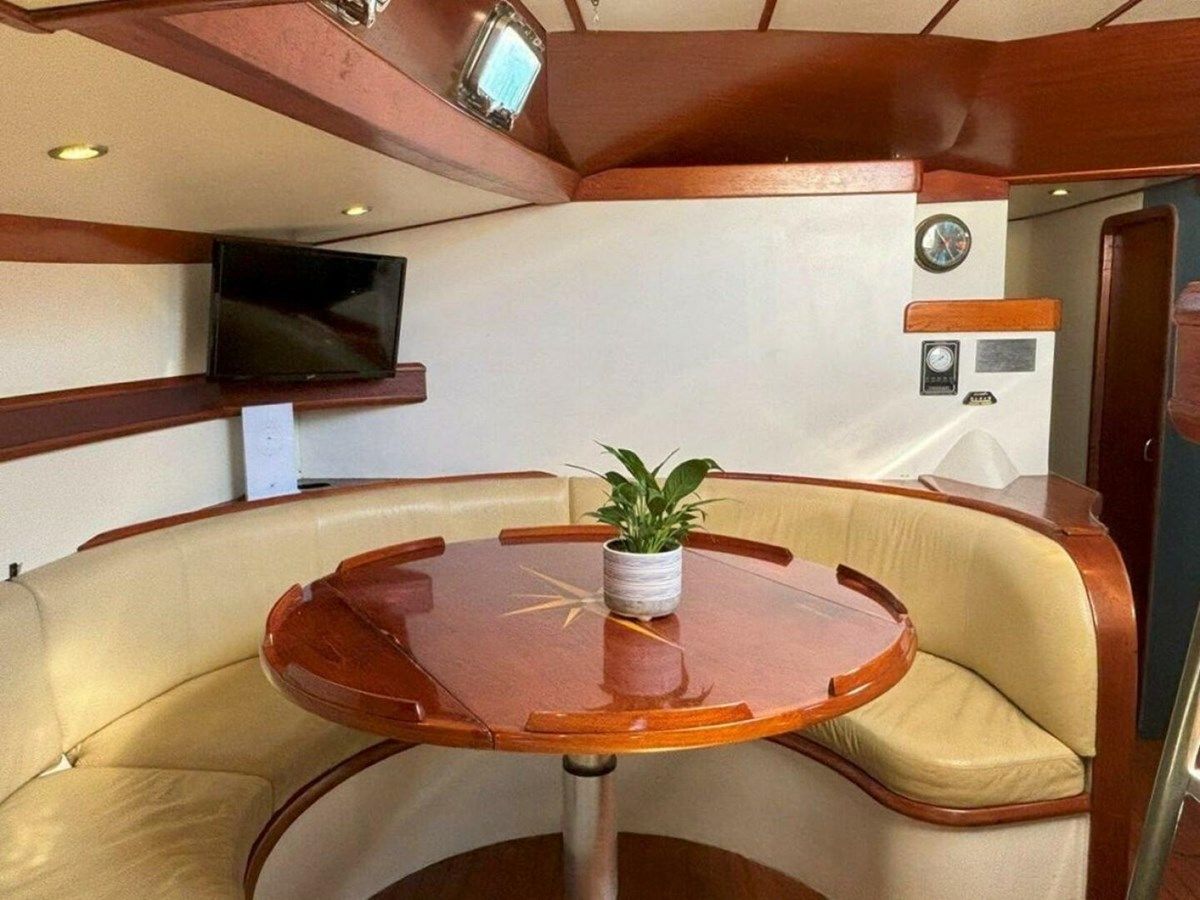
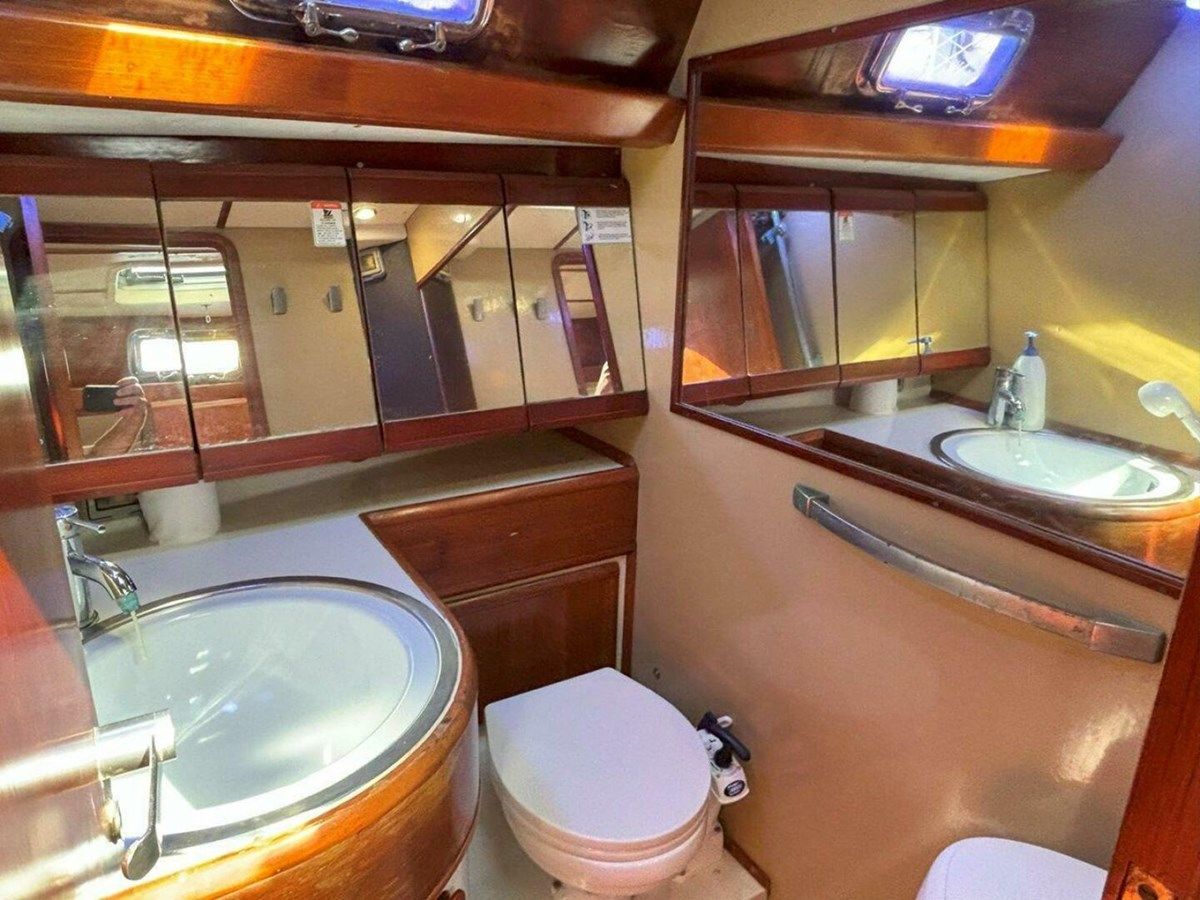
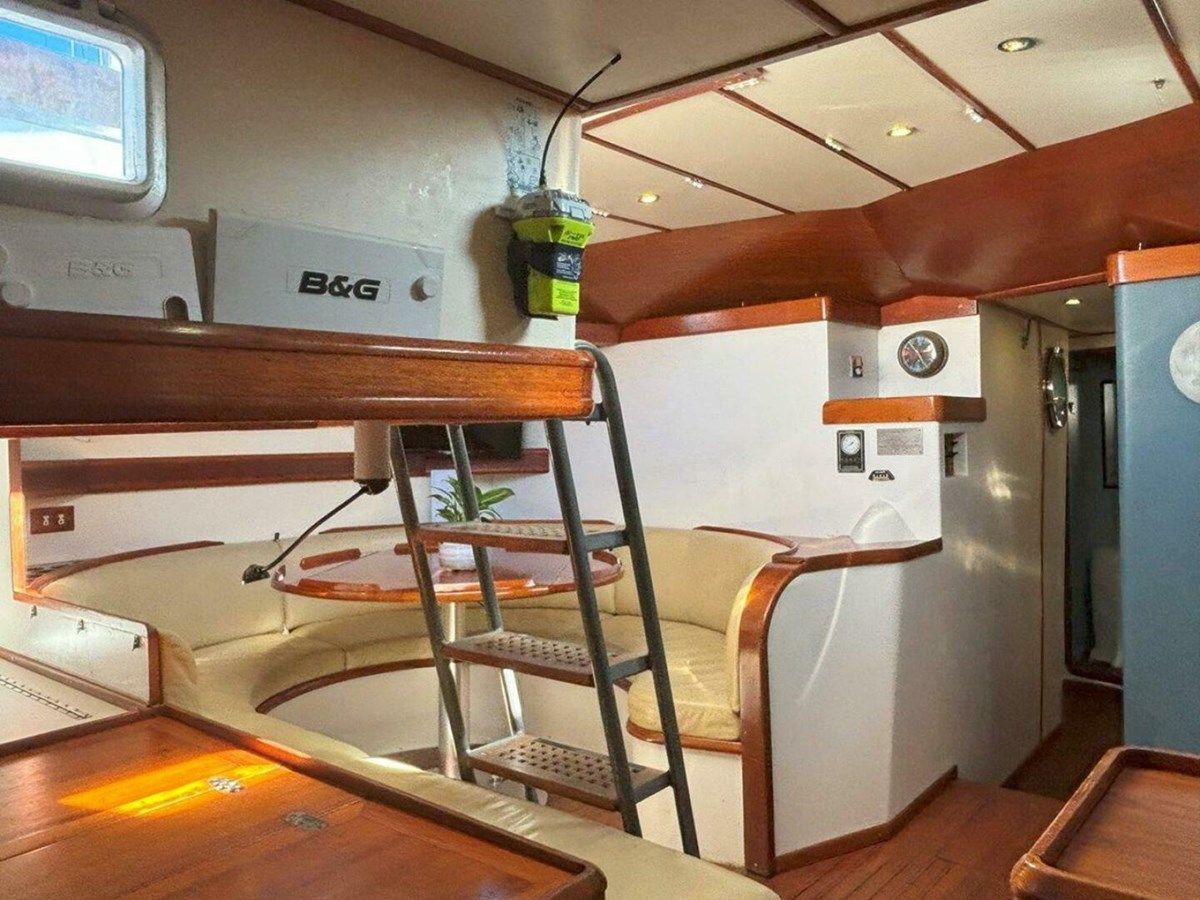
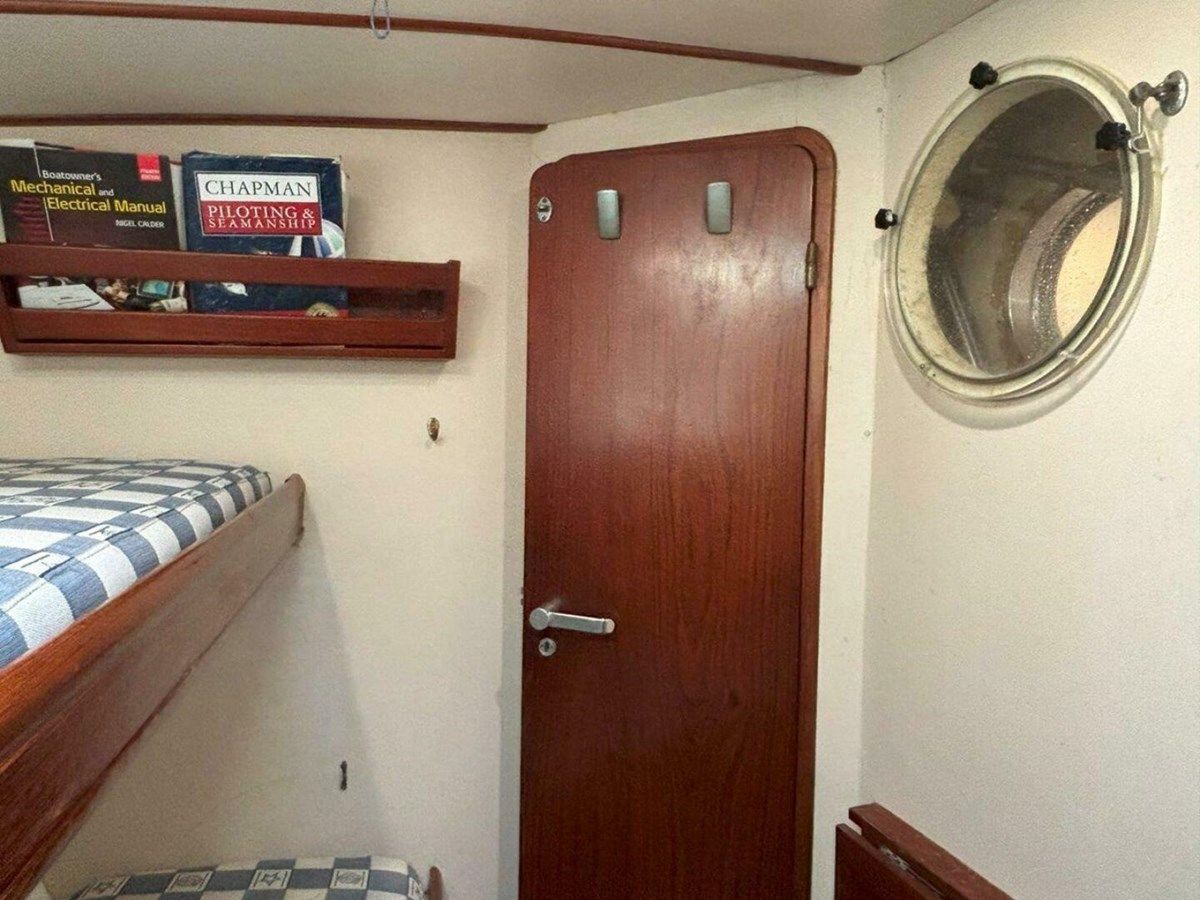
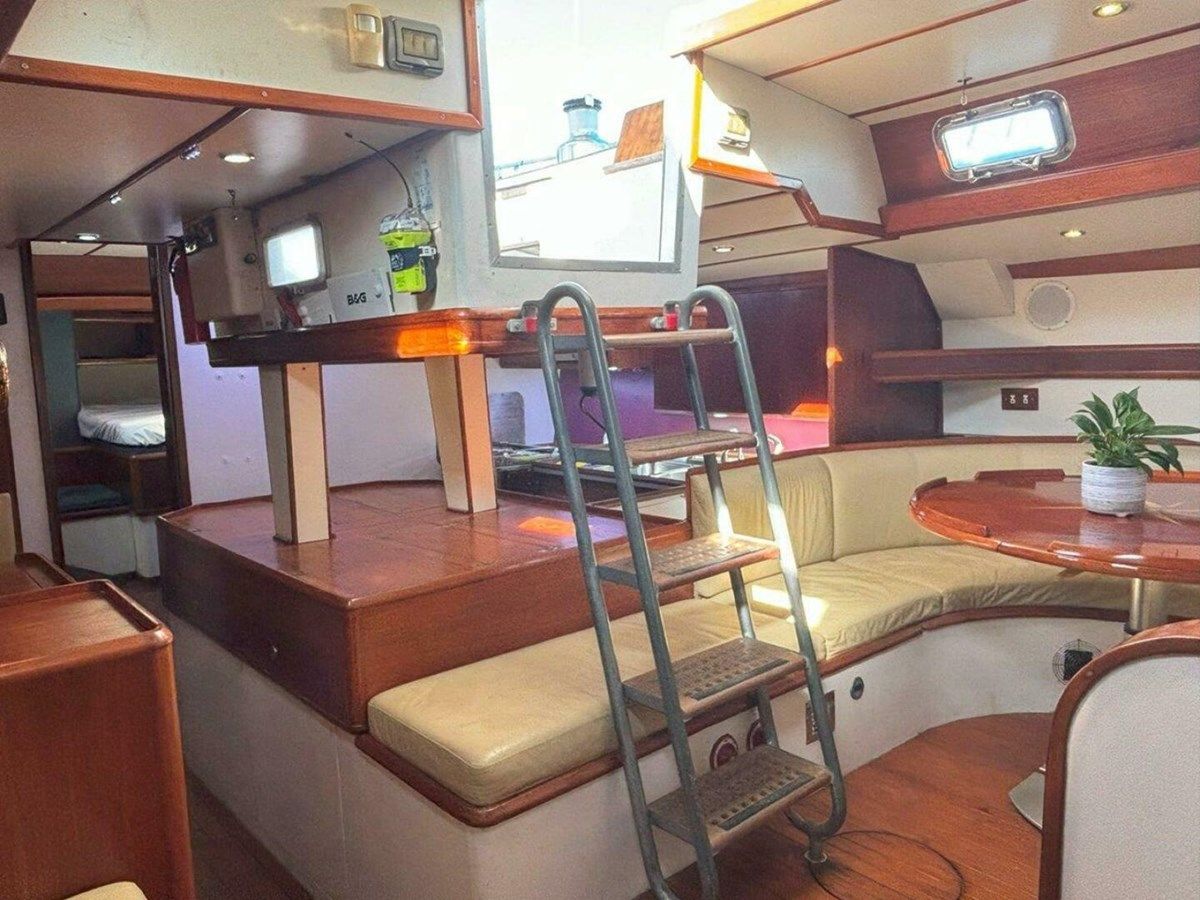
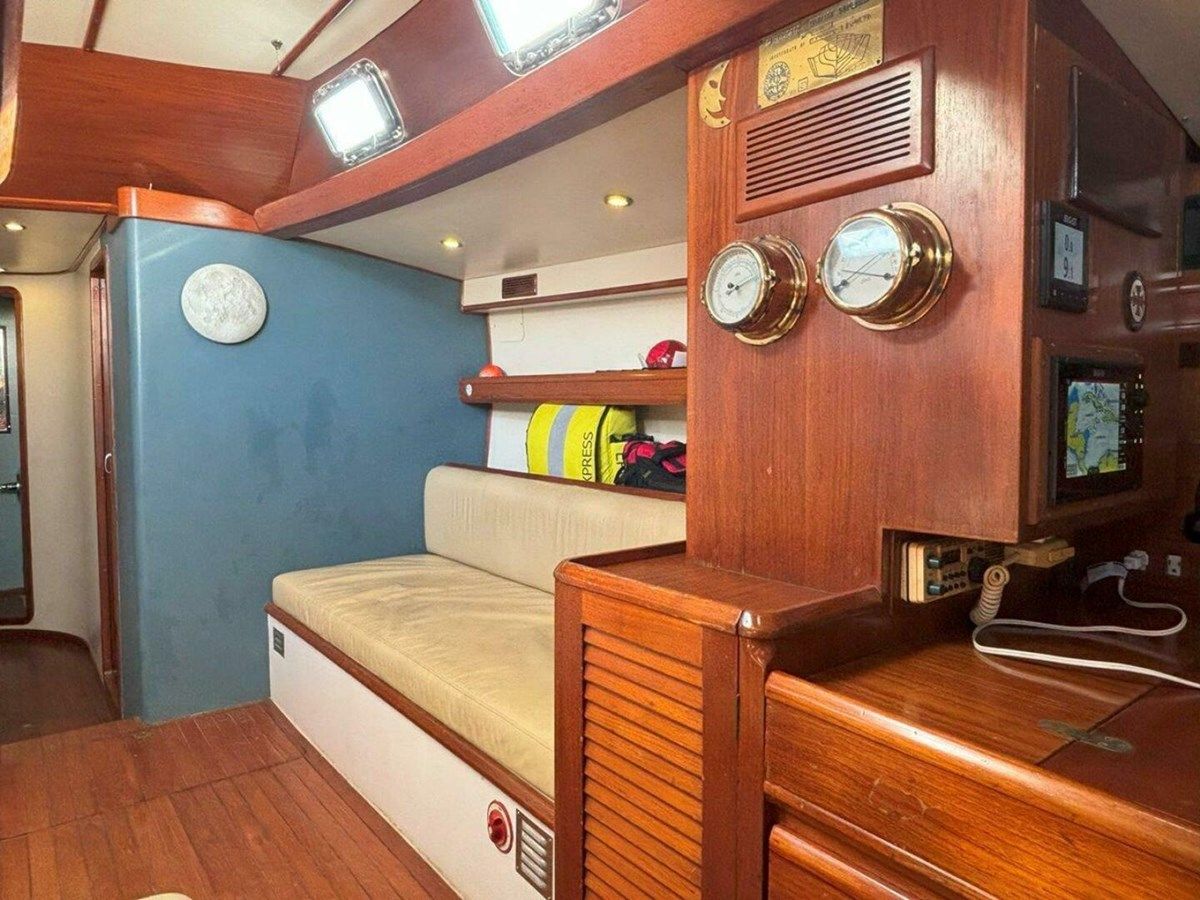
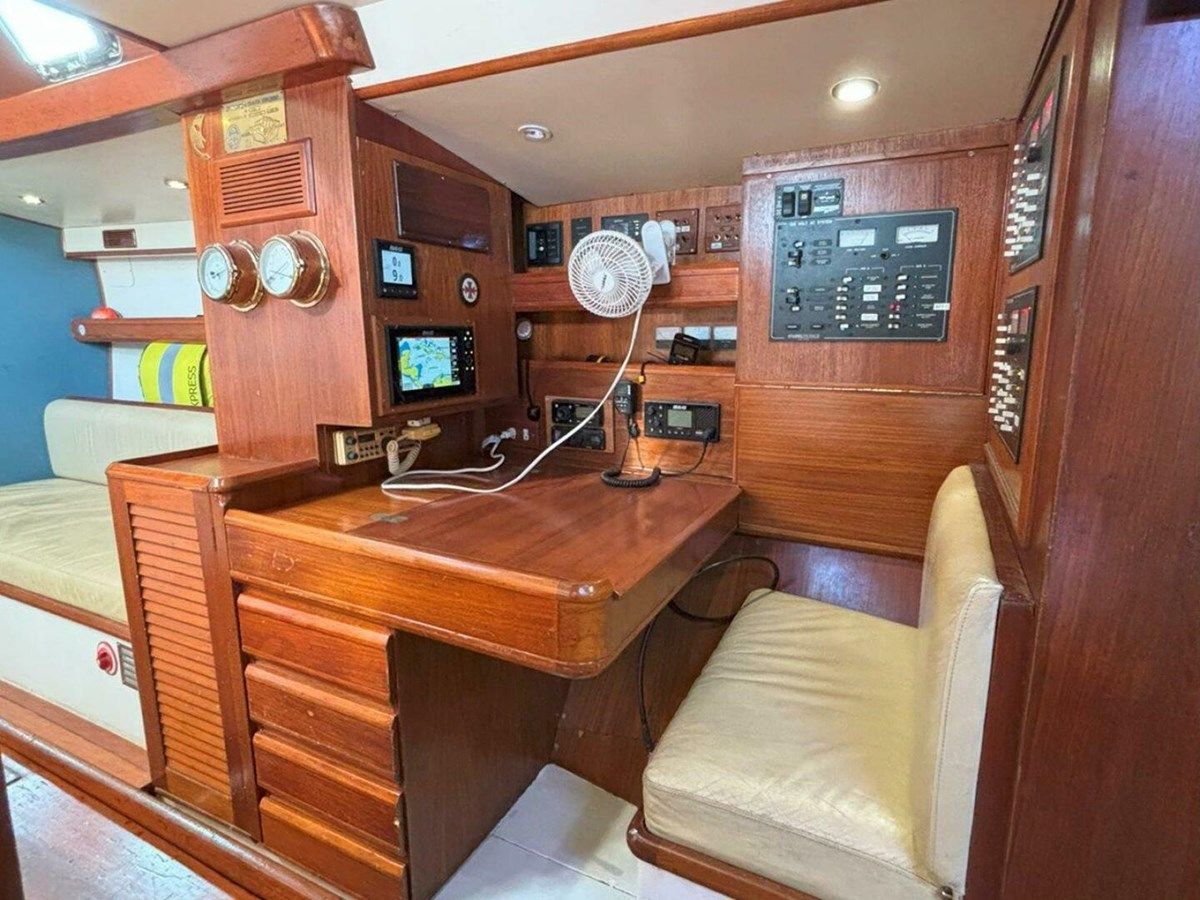
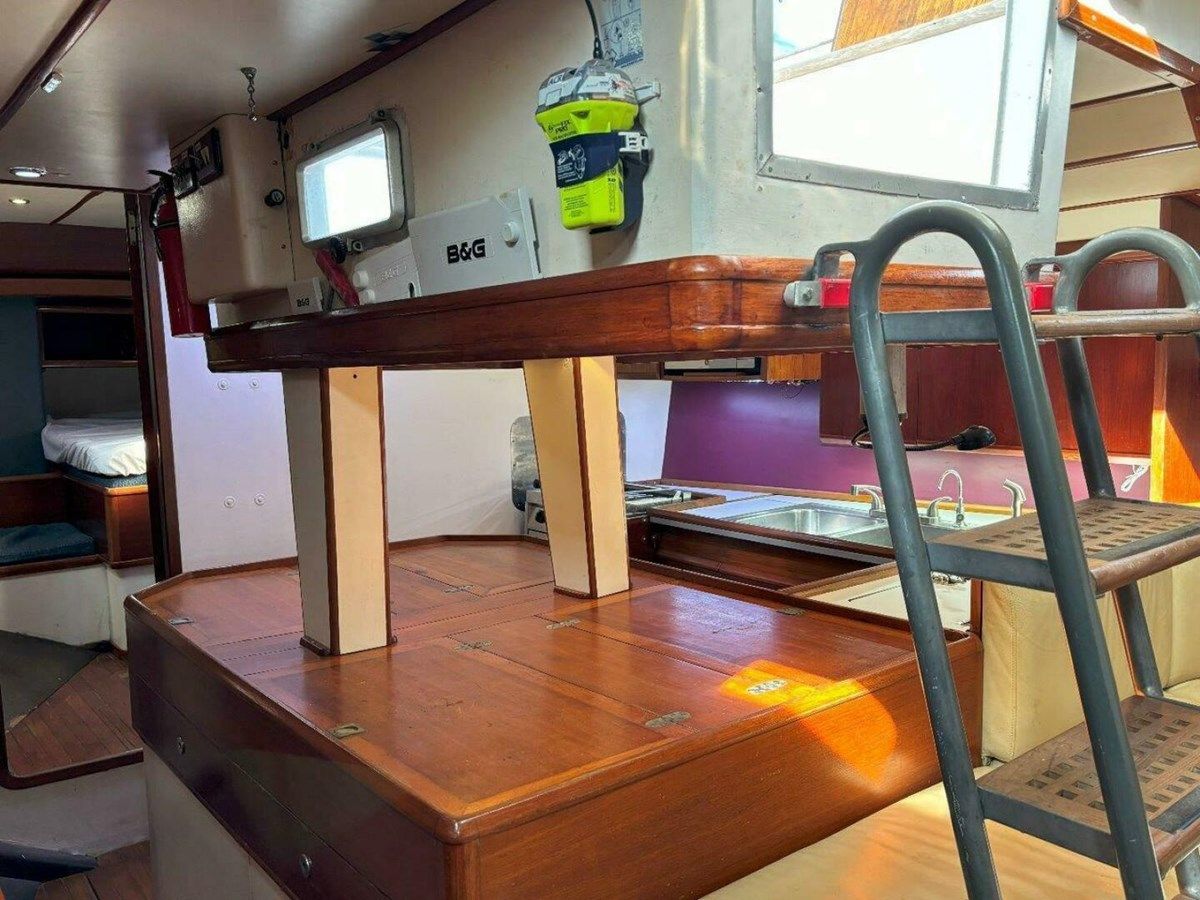
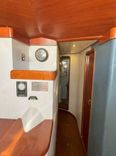
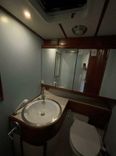
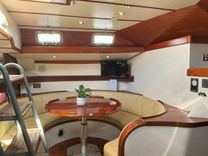
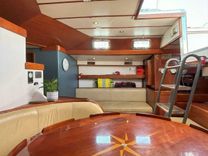
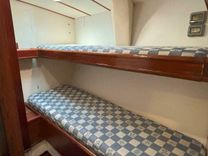
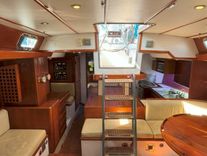
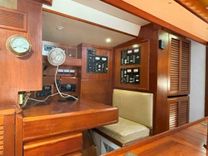
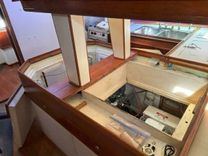
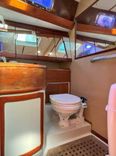
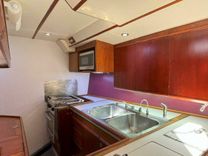
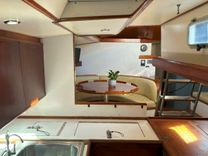
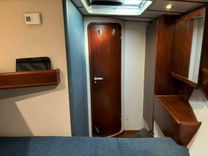
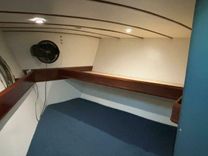
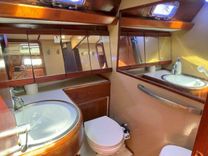
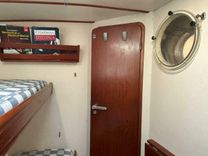
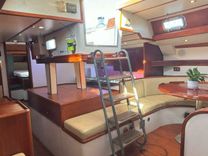
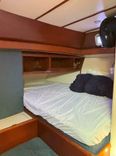
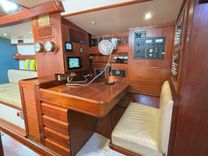
Purpose‑built for blue‑water cruising and living aboard, Luna’s interior flows around a generous salon, a practical galley, a proper nav station, four cabins, and two heads, delivering eight berths with abundant storage. To port in the salon, a large circular table with seating for eight invites long meals and good conversation, while a starboard settee balances the space; just aft to starboard, a well‑appointed chart table anchors the navigation center. Aft of the salon, the galley lies to port, complemented by a centerline island counter with deep storage. The galley is equipped for serious provisioning and easy meal‑making: large drawers and trays, a Force 10 propane stove/oven, double sink, a water‑cooled built‑in six‑cubic‑foot refrigerator (2022), coffee grinder, a microwave (2023), and an ice maker (2023), plus an extra 110‑volt chest freezer thoughtfully positioned in the starboard bunk cabin. Forward of the salon sit the swing‑keel trunk, three cabins, and a shared head. The starboard cabin holds a single berth and is currently used for storage; the forward cabin offers a double V‑berth with an overhead bunk to starboard; and the port cabin provides two bunks (over/under) with a fold‑down desk. The shared head features a new manual‑flush toilet (2023), sink, and a new shower head (2023), with generous lockers throughout. The aft cabin is reached via a starboard walkway abaft the chart table; substantial outboard cabinetry and a double berth to port create a private retreat. Forward of the berth, the en‑suite “wet” head includes a shower and a manual‑flush toilet (2023). Access to the rudder post and hydraulic steering lies neatly below the aft bunk. Finishes elevate the atmosphere: ornate hardwood cabin soles in semi‑gloss, bulkheads, cabinetry, and doors in matte gloss, galley and head countertops in veneer and wood with matte fiddles, vinyl‑wrapped headliners, and built‑in salon furniture upholstered in leather.
Climate and light are as carefully considered as the layout. Two Mermaid reverse‑cycle marine HVAC units (2022) heat and cool the yacht, while stainless‑steel opening ports and aluminum Bomar hatches bathe the interior in natural light and fresh air. Six Bomar aluminum opening deck hatches (2022), stainless‑steel portlights, LED interior lighting, and fans throughout create a bright, quiet, energy‑efficient environment at anchor and underway.
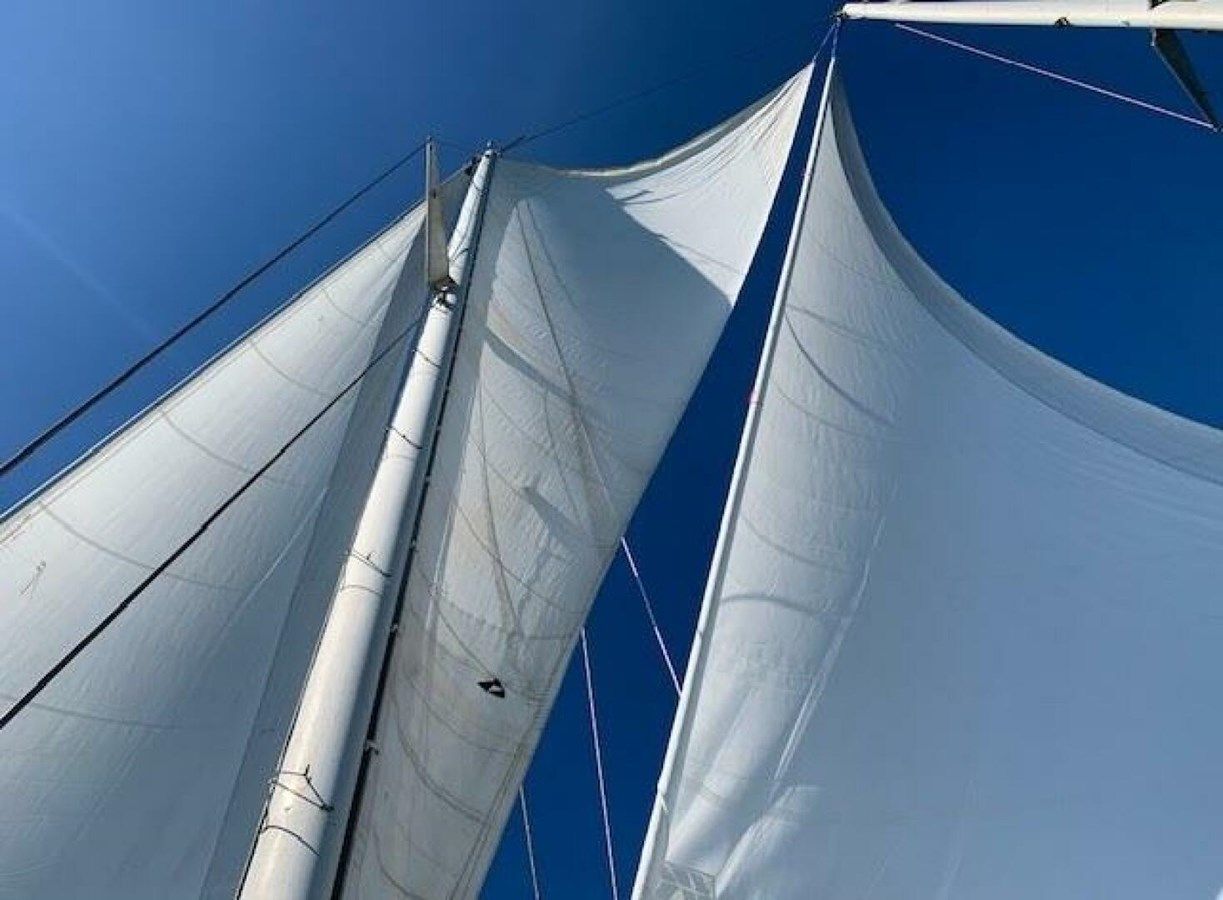
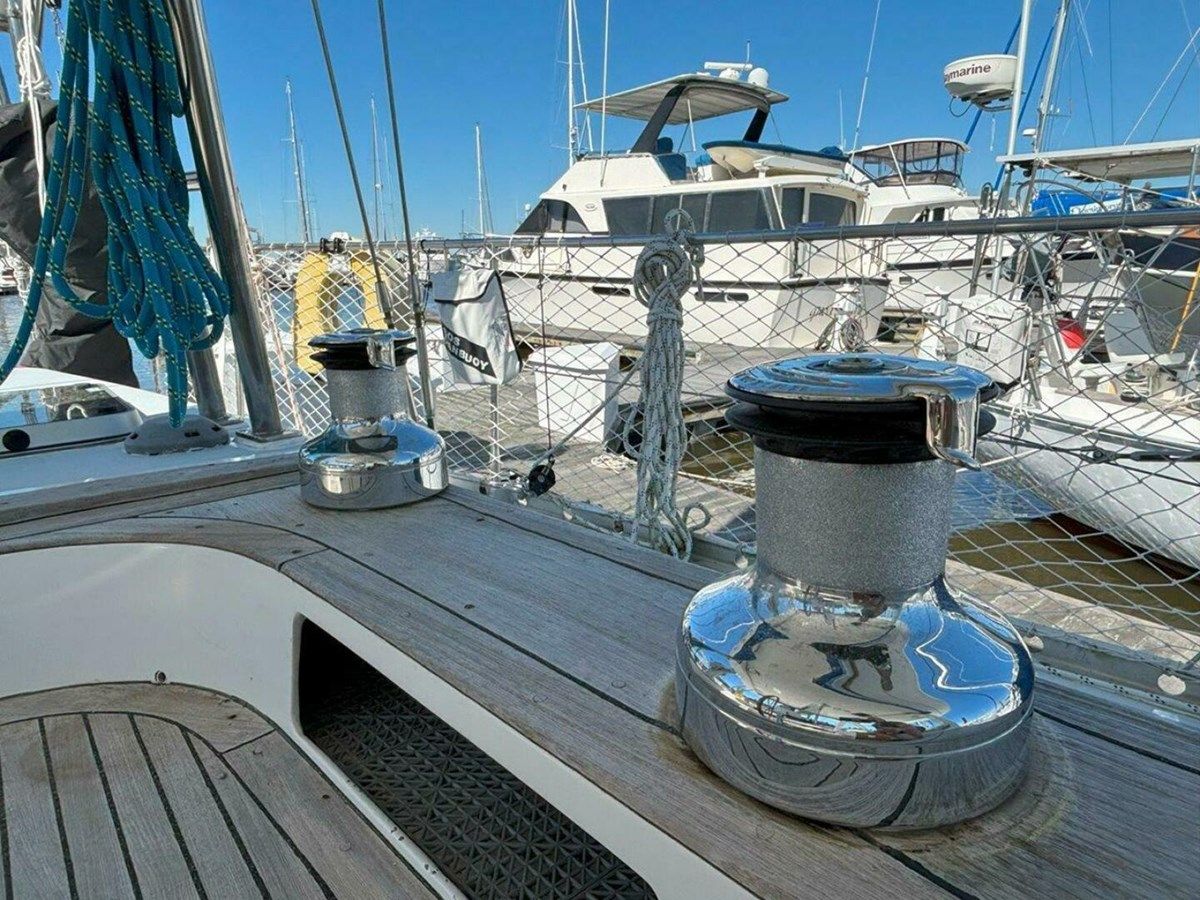
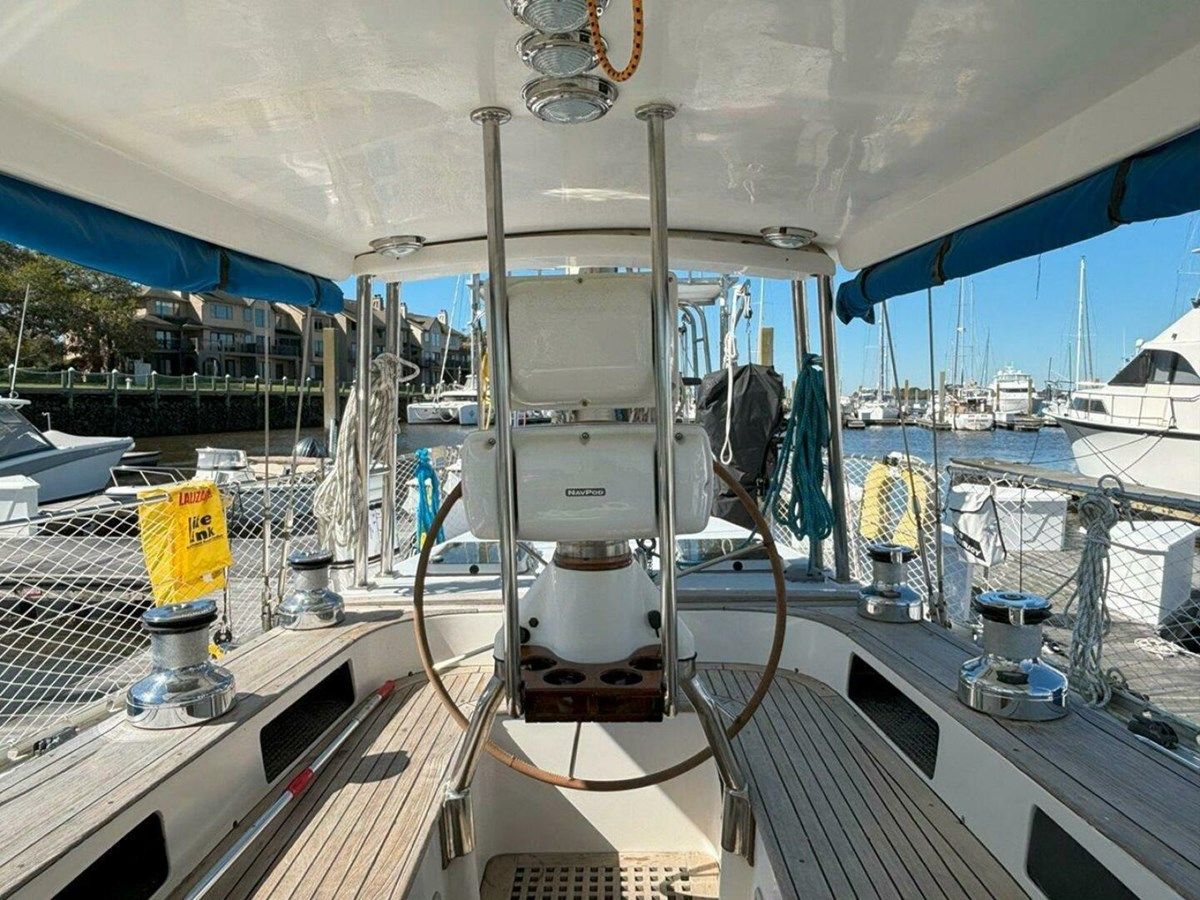
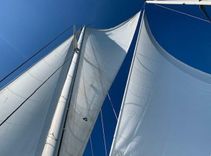
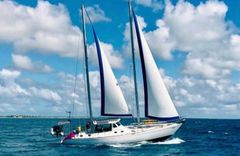
Underway, Luna’s schooner rig is effortless and confidence‑inspiring. She flies two self‑tacking, roller‑furling jibs and a fisherman sail, with no boom to manage; tacking is as simple as turning the wheel, and gybes are civilized, with only a gentle slap of the sails. Her spars are two single‑spreader aluminum deck‑stepped masts; the foremast carries double headstays, and a foremast headsail‑sheet traveler is mounted on the foredeck, while the main mast headsail‑sheet traveler is mounted on the cockpit hard top. Two self‑tacking headsails (2019) are driven by two Furlex roller furlers (2022), and a removable inner forestay plus checkstays broaden the sail plan’s range. A spinnaker‑pole track with two locking cars on the foremast, two spinnaker poles that can be secured to the lifelines, and mast steps add offshore utility. Standing rigging is 1/19 wire with Hi‑Mod terminal ends aloft, secured by closed‑body turnbuckles to stainless‑steel chainplates bolted to substantial fiberglass knees (2005); the chainplates themselves were replaced in 2005. The mastheads are tied together with a triatic using Hi‑Mod fittings, with an adjustable closed‑body turnbuckle at the foremast (2022). Running rigging was renewed in 2023; the masts are pre‑arranged to accept additional lines—topping lifts for the spinnaker poles, extra halyards, and more—while new turning blocks (2023) and control lines led to the cockpit simplify management. Each mast carries a single winch with a clutch. In the cockpit, primary power comes from two Lewmar EVO #65 self‑tailing and two Lewmar EVO #55 self‑tailing winches (2023); on the masts, two Lewmar Ocean #40 winches with clutches equip the foremast, with an additional unit on the main (2023).
The lead variable‑draft swing keel is the heart of Luna’s go‑anywhere spirit. A hydraulic pump and ram control the solid lead foil; both ram and pump were replaced in 2022. Retraction and deployment are driven by a 2023 Hydro drive self‑contained DC power pack with an integral reservoir tank and manual override pump (2023). Visual inspection of the centerboard trunk is possible via an opening port in the midship walkway and a fixed port in the port bunk cabin. Electric controls, mounted at the midship walkway, deliver smooth down, up, and stop operation to full retraction. Keel down, the draft is 9.5' (2.85 m) for ocean‑going power; retracted to only 4.5' (1.4 m), she enters otherwise inaccessible waters—go softly onto a shoal, lift the keel, and simply back away.
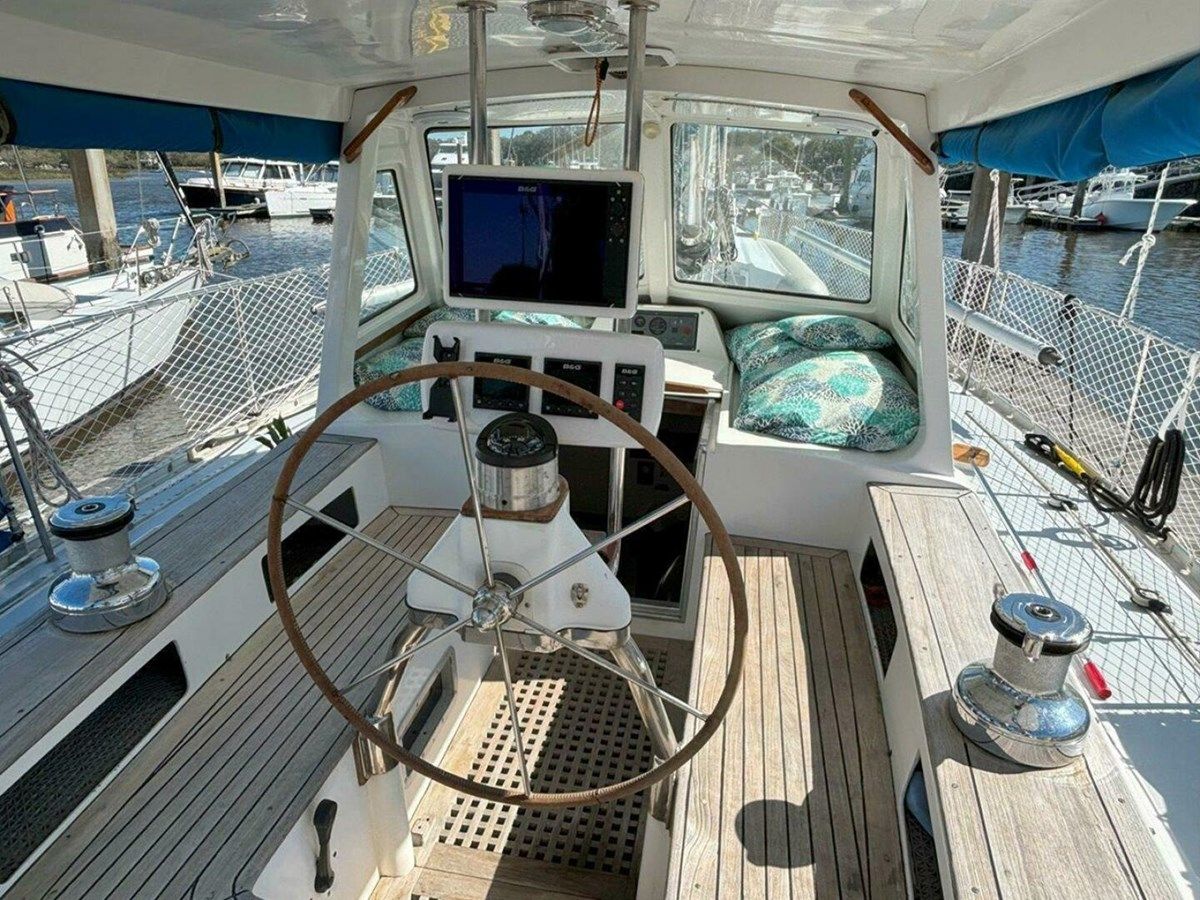
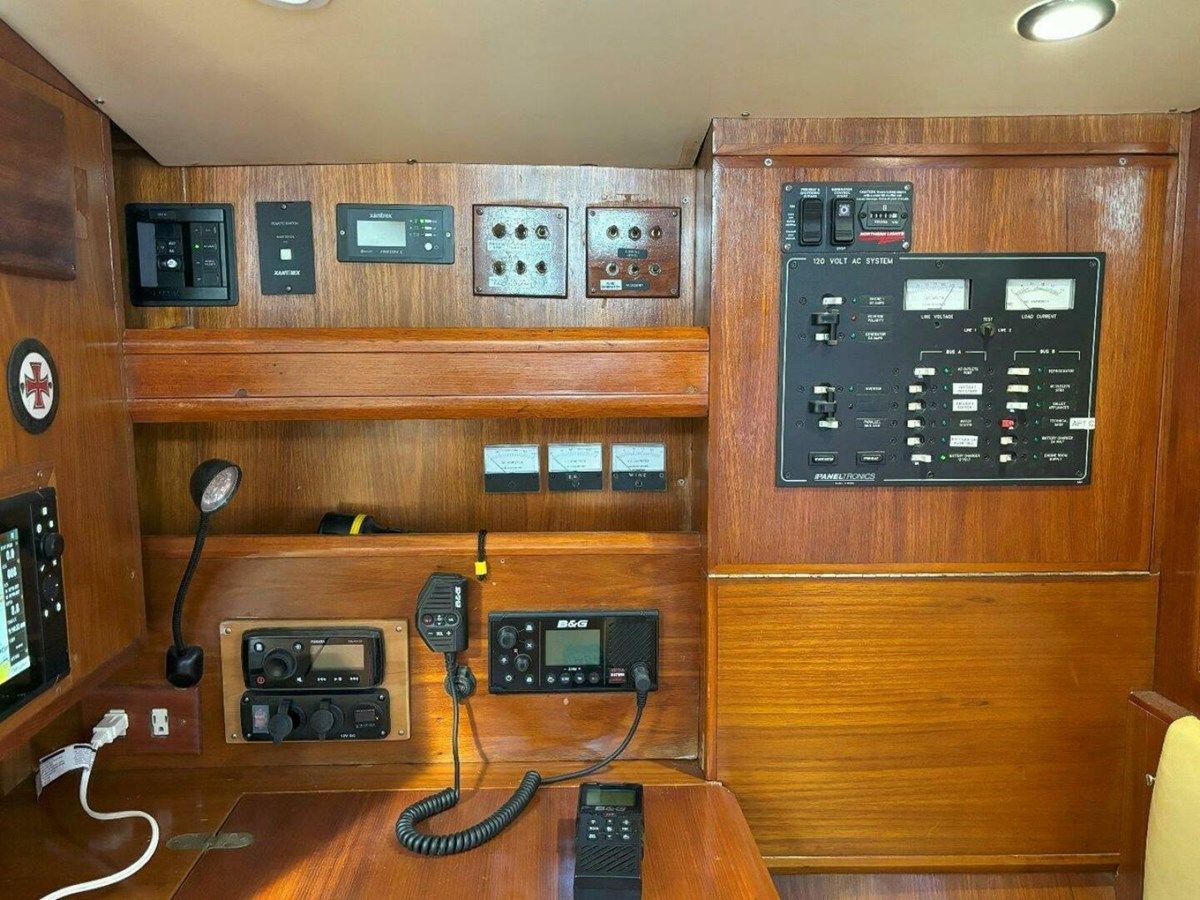
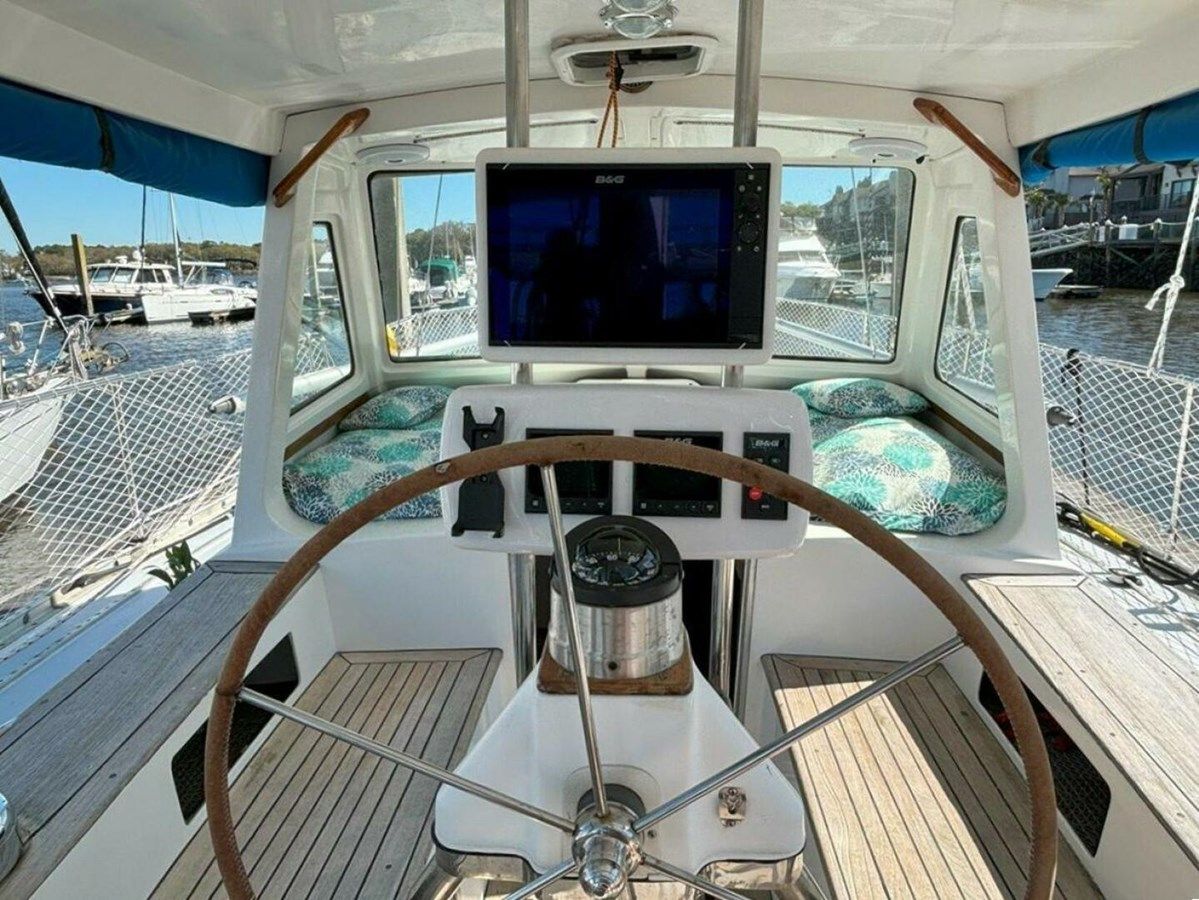
Her navigation and entertainment suite is thoroughly modern. B&G electronics (2023) include an AIS‑enabled VHF antenna on the main mast (2022), an anemometer on the foremast, a B&G Zeus 3S 12" chartplotter at the helm paired with a B&G Radar Halo 20+, and a B&G Zeus 3 9" chartplotter at the nav station. B&G Triton 2 displays serve both helm and nav station, with satellite overlays for Sirius Weather and PredictWind. The system is driven by a B&G NAC‑3 autopilot computer with rudder sensor, a Precision 9 compass, and a B&G Triton 2 autopilot controller. Communications are handled by a B&G V60 VHF with a B&G H60 wireless handset, backed by a B&G ZG100 GPS antenna, B&G NAIS‑500, an AIS transceiver, and a B&G NSPL‑500 antenna splitter. Offshore readiness extends to an Iridium satellite phone (complete kit), satellite internet connection equipment including a STARLINK satellite dish with deck cable for uninterrupted signal, a NavPod GP2040, radar mount, B&G transponders for wind (on the mast) and sea (forward bilge), and a binnacle‑mount magnetic compass at the helm pedestal. For entertainment, a new Fusion AM/FM/Alt Radio with speakers, a smart TV entertainment center on both 12‑volt and 110‑volt circuits, and a Roku channel selector make evenings effortless.
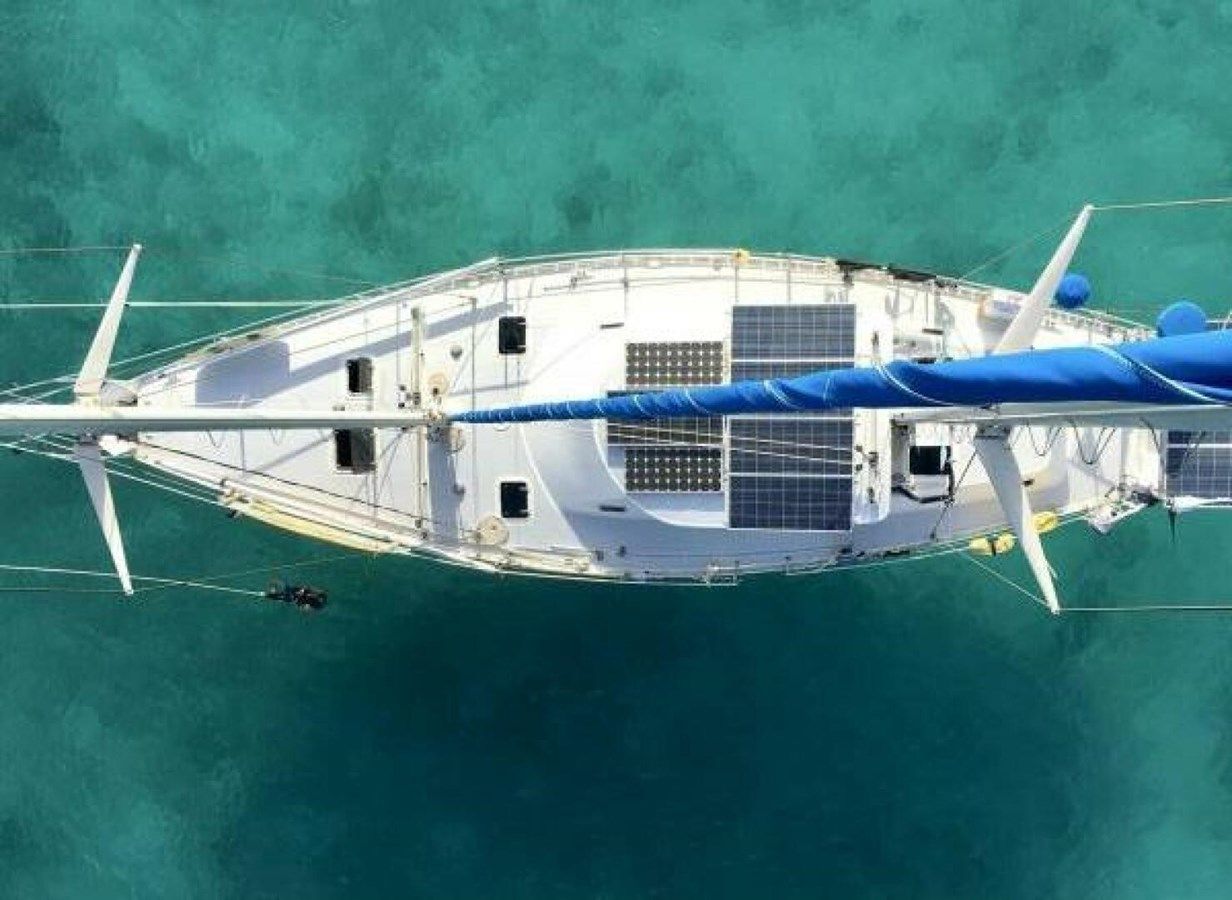
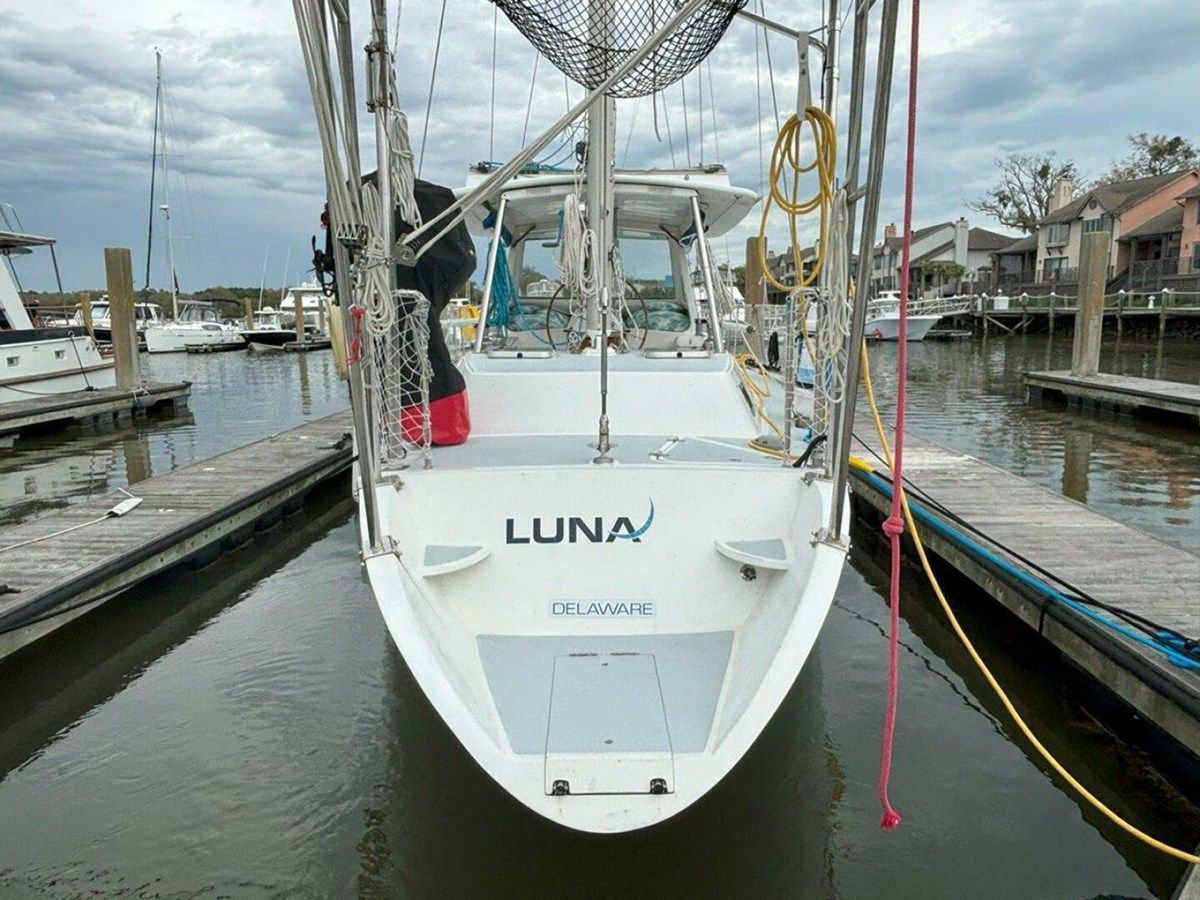
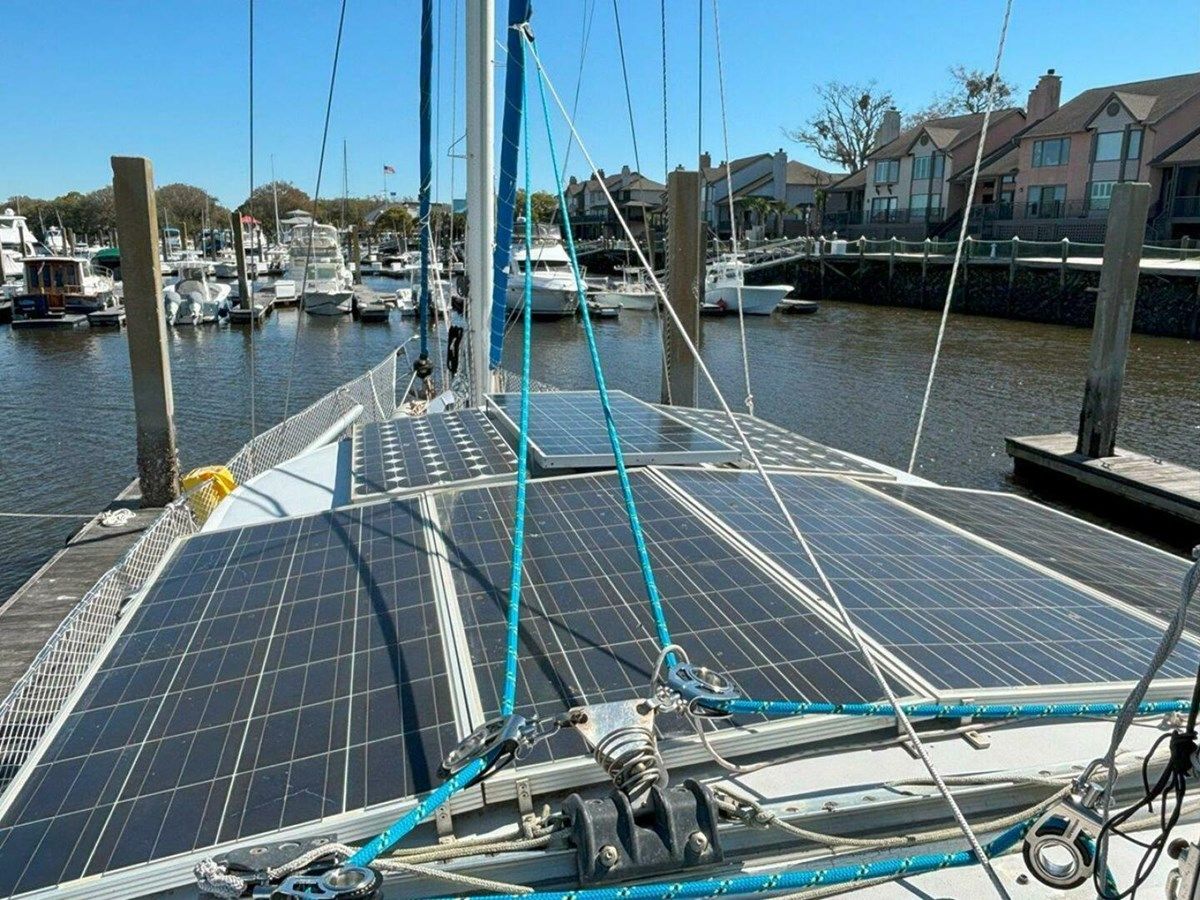
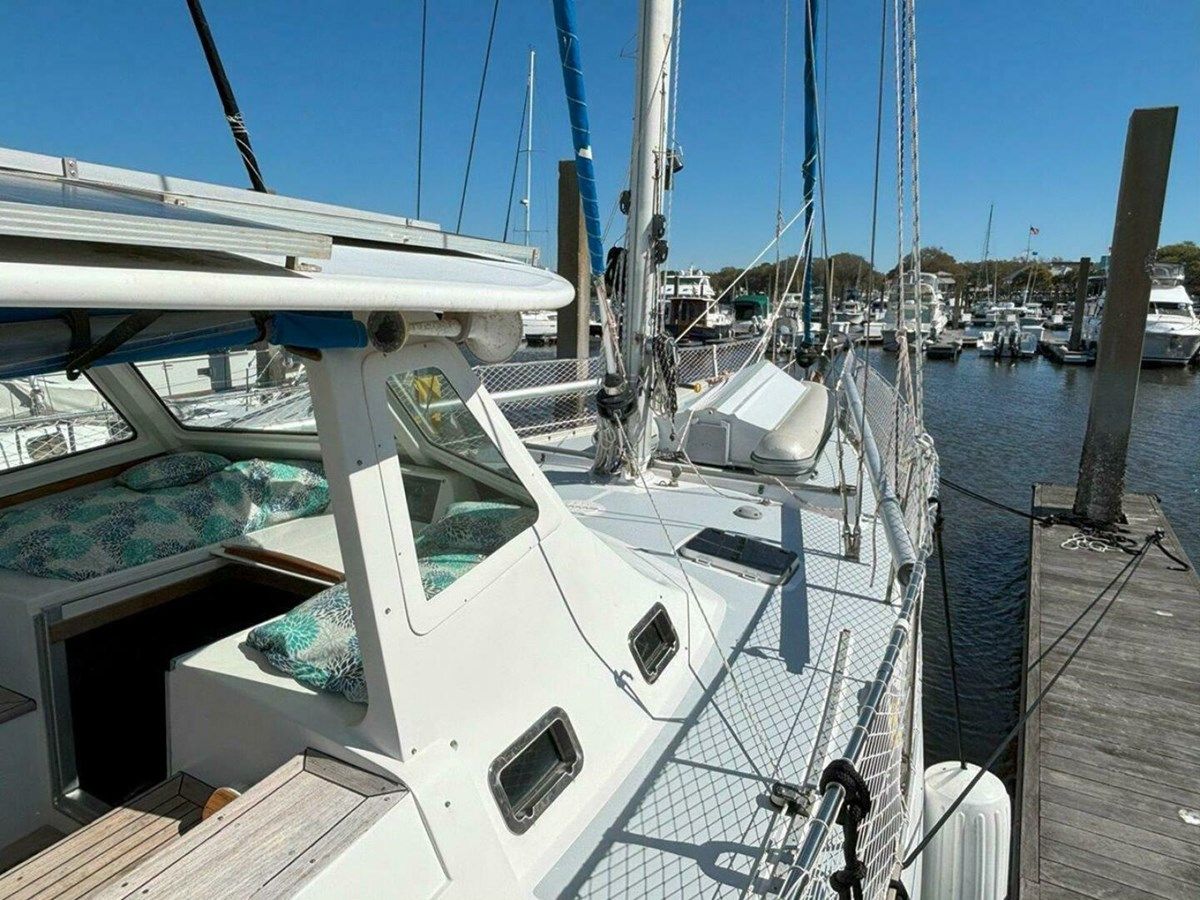
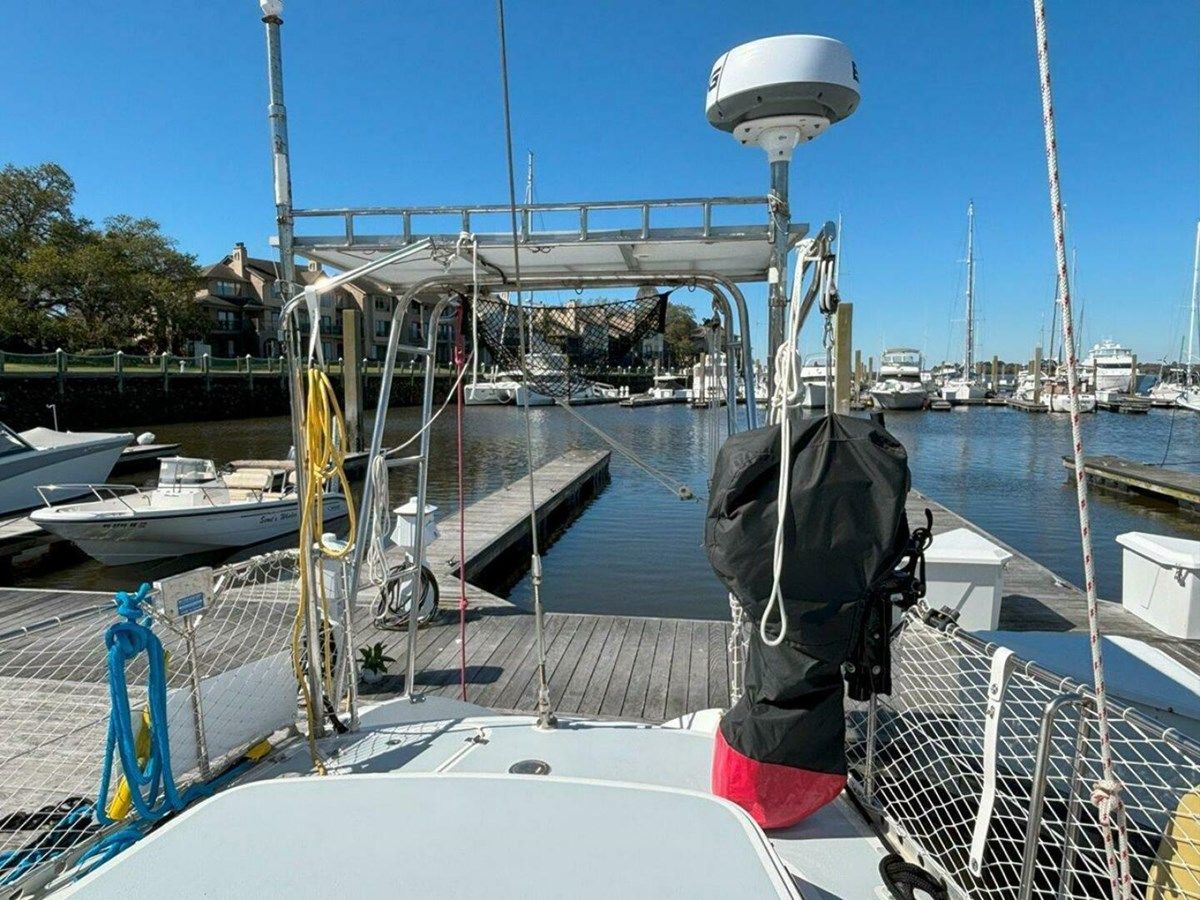
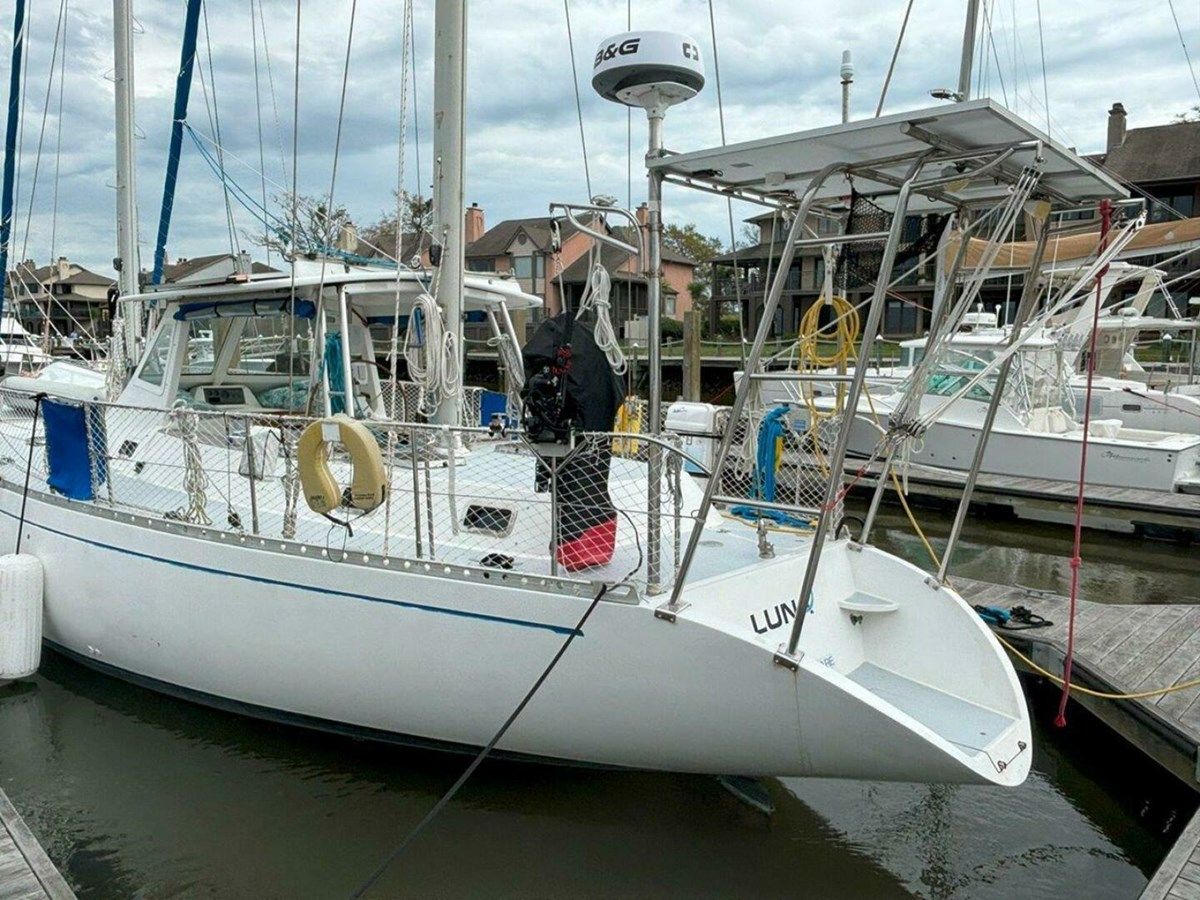
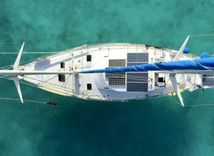
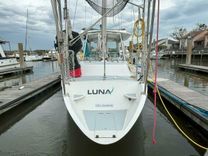
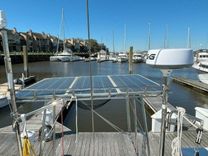
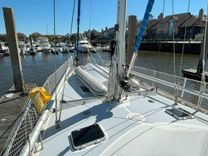
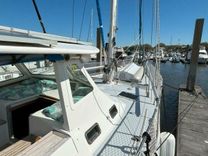
On deck, the original teak was removed in 2005, and the deck received fresh Awlgrip in late 2023 for a crisp, low‑maintenance finish. Six Bomar aluminum Ocean Series opening hatches (2022), stainless‑steel opening ports, an aluminum slotted toe rail, and aluminum deck cleats emphasize purposeful, corrosion‑resistant detailing. A double‑course stainless‑steel bow pulpit with port and starboard running lights leads into double‑course lifelines, with a one‑inch tubular stainless top rail and a wire‑rope lower lifeline supported by stainless stanchions; side boarding gates simplify dockside access. Aft, the stern pulpit integrates into a radar and dinghy‑davit arch with solar panels mounted above (2005). The sugar‑scoop transom, with stainless‑steel swim ladder, delivers effortless water access. Lighting is comprehensive: port and starboard bow running lights, a stern light, deck lights on the main mast, plus foredeck light, steaming light, masthead tricolor, and anchor light on the foremast; a static dissipator crowns the foremast. A vented propane locker aft and an aft storage locker with dedicated vented propane space keep fuels safe, while deck hardware and cabin‑side ports have been rebedded for dry integrity. Tender operations are a pleasure with a 2021 Highfield CL360 MEHLER/PVC RIB (HIN: HFM19070A121) and a 20 HP Tohatsu outboard—the tender and engine are like new with very few hours. Safety cables and locks secure the tender and motor to the dock and to the rail.
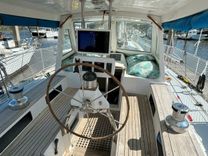
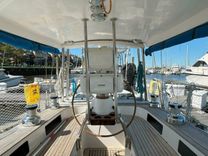
From the helm, the center cockpit is a protected command post. A hard‑top bimini (2005) supports the solar array and the main jib traveler track, while drop‑down canvas curtains with Eisenglass windows roll and stow neatly to port and starboard beneath the hard top. A clean helm pedestal, wheel, and instrument cluster sit before a single‑lever engine shift/throttle mounted at the helm, with comfortable cockpit cushions, a teak cockpit grate, and fixed “spray‑hood” windows completing the refuge.
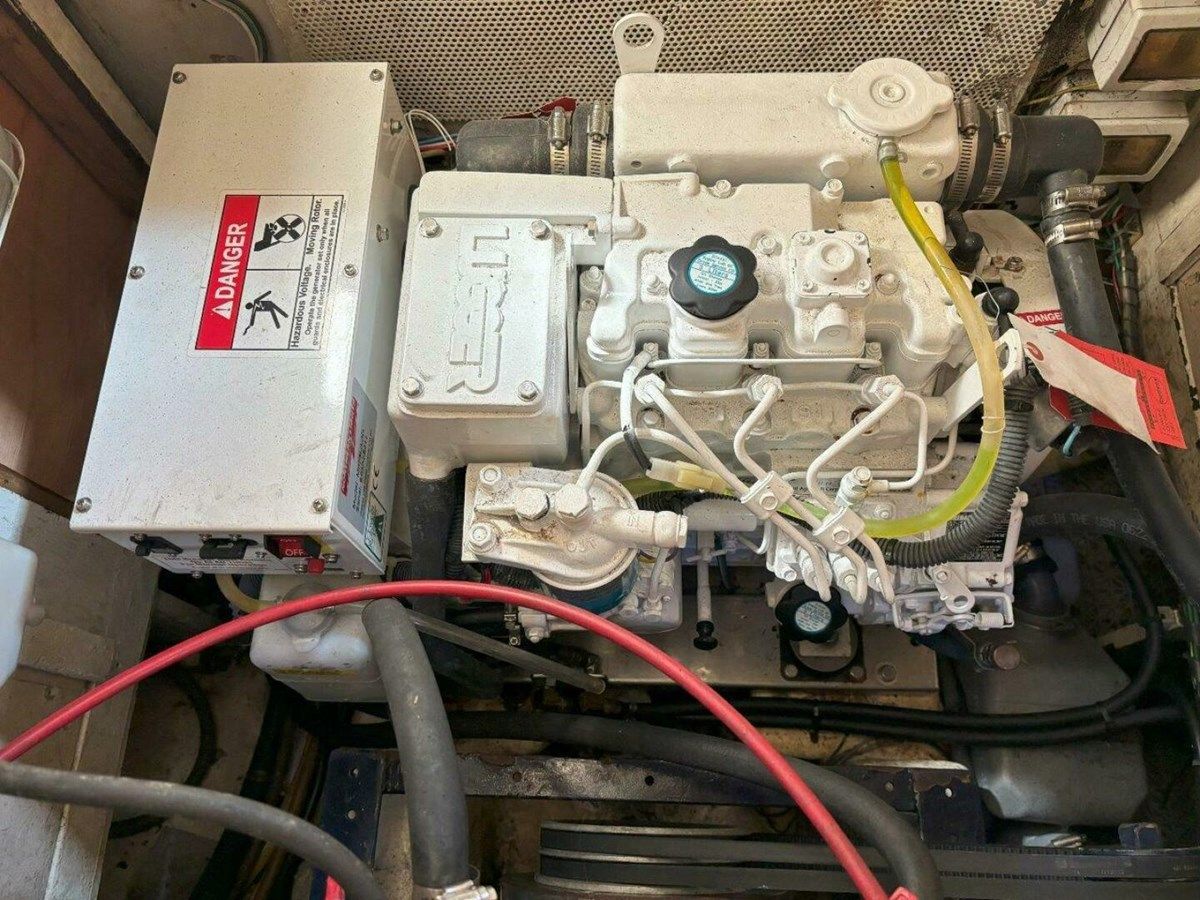
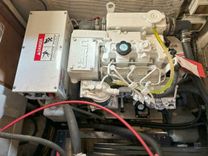
Electrical systems are robust and thoughtfully segregated. A 120‑volt panel, a 24‑volt panel, and a 12‑volt panel manage ship’s power alongside shore‑power connections; the electrical installation and panels were replaced in 2005. Generation and storage are substantial: a 6 kW Northern Lights generator (2022), four 4D lead‑acid house batteries totaling 800 Ah (2023), and two Group 27 batteries for starting, autopilot, and windlass (2023), with house and starting banks secured below the saloon settees. Solar is abundant, with eight panels totaling 1 kW charging the 12‑volt bank, plus two 80‑watt panels wired to charge the 24‑volt bank, governed by a 24‑volt solar charge controller (2023). Charge controllers are mounted at the chart table and in the salon‑settee battery compartment; a 12‑volt Morningstar Tristar TS‑RM‑2 controller manages the 12‑volt array. Inversion and charging include a 1500‑watt Xantrex X‑Power inverter/charger (2023), Xantrex Bluetooth‑monitoring remotes at the chart table, a Xantrex TrueCharge2 40‑amp 12‑volt charger (2023), a ProTech‑4 2425 25‑amp 24‑volt charger (2023), and a Freedom XC Pro Marine 3000 inverter/charger (2023). Engine‑driven power comes from 24‑volt and 12‑volt Balmar alternators with Balmar regulation. LED lighting throughout (2023) keeps consumption low and ambiance high.
Plumbing is equally expedition‑ready. Fuel is carried in a 120‑gallon fiberglass diesel tank, while water lies low and central in two 120‑gallon fiberglass tanks (2005). Domestic pressure is supplied by Jabsco Par Max 4 and a Flojet pump (both 2023), with freshwater lines replaced in 2023. Hot water is provided by a Force 10 six‑gallon heater. The forward head discharges to a fiberglass black‑water holding tank of approximately 30 gallons with both overboard and deck discharge; the aft head discharges directly overboard for offshore use only. A pneumatic “Tank Tender” gauge serves water and fuel tanks (INOP). Sanitation is simple and reliable with two Jabsco Twist ’N’ Lock soft‑close manual pump marine heads (2023). LP gas is secured in a 30‑lb canister housed in a vented aft deck locker (2023).
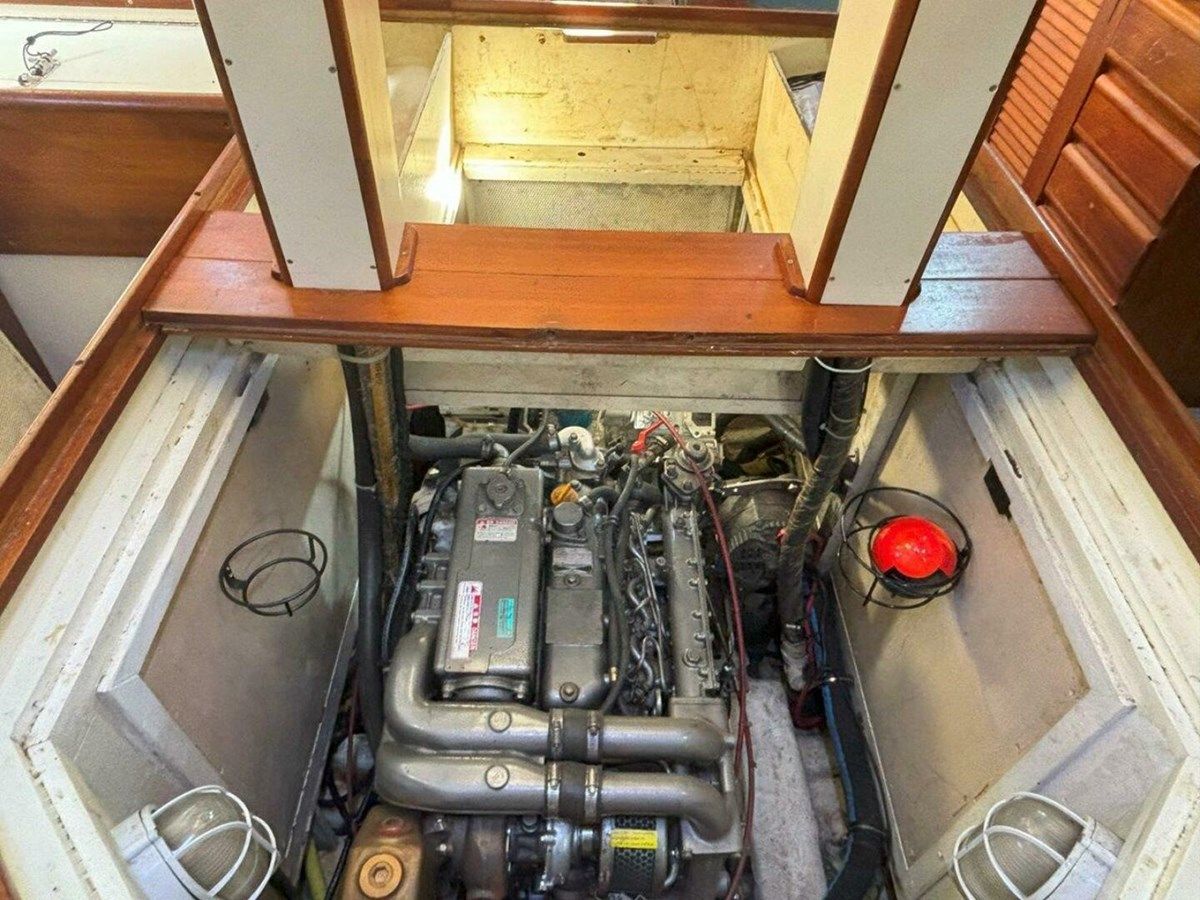
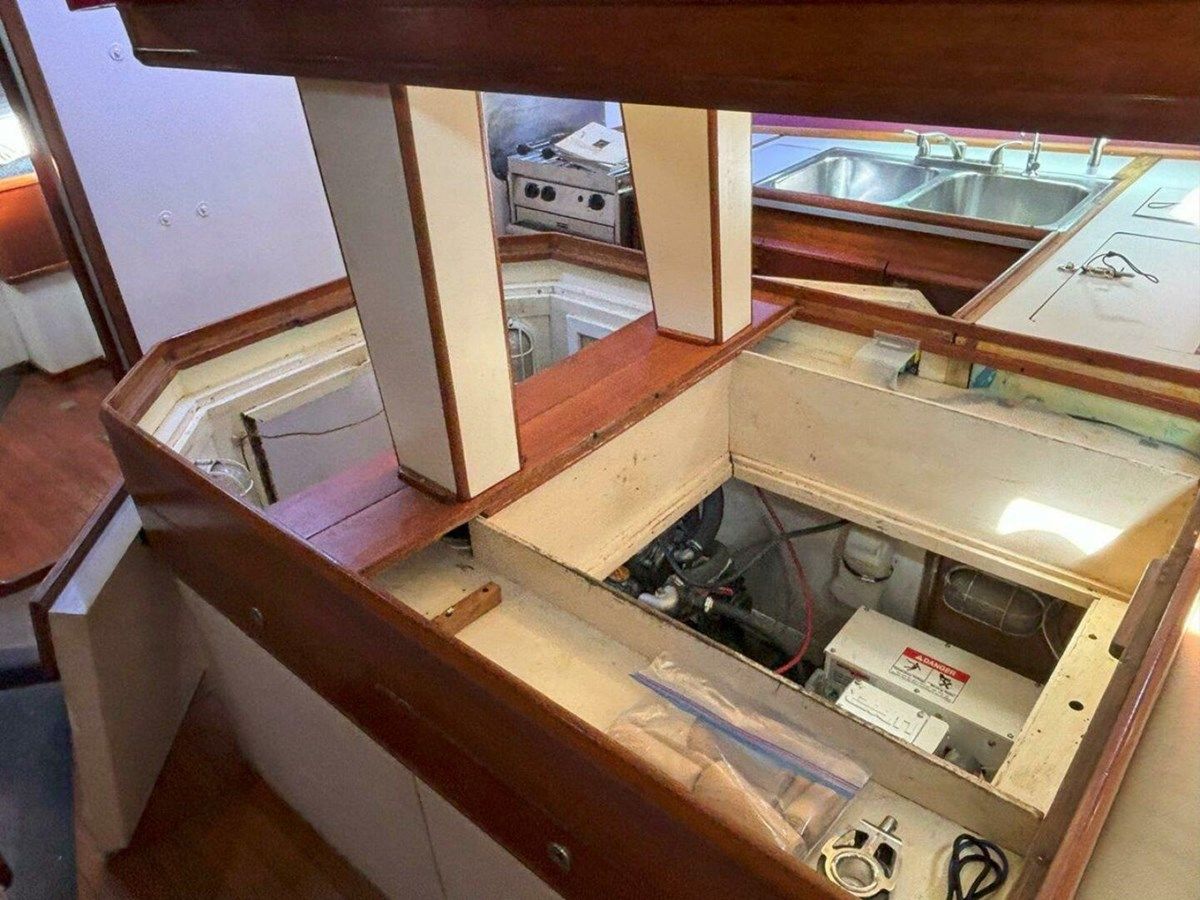
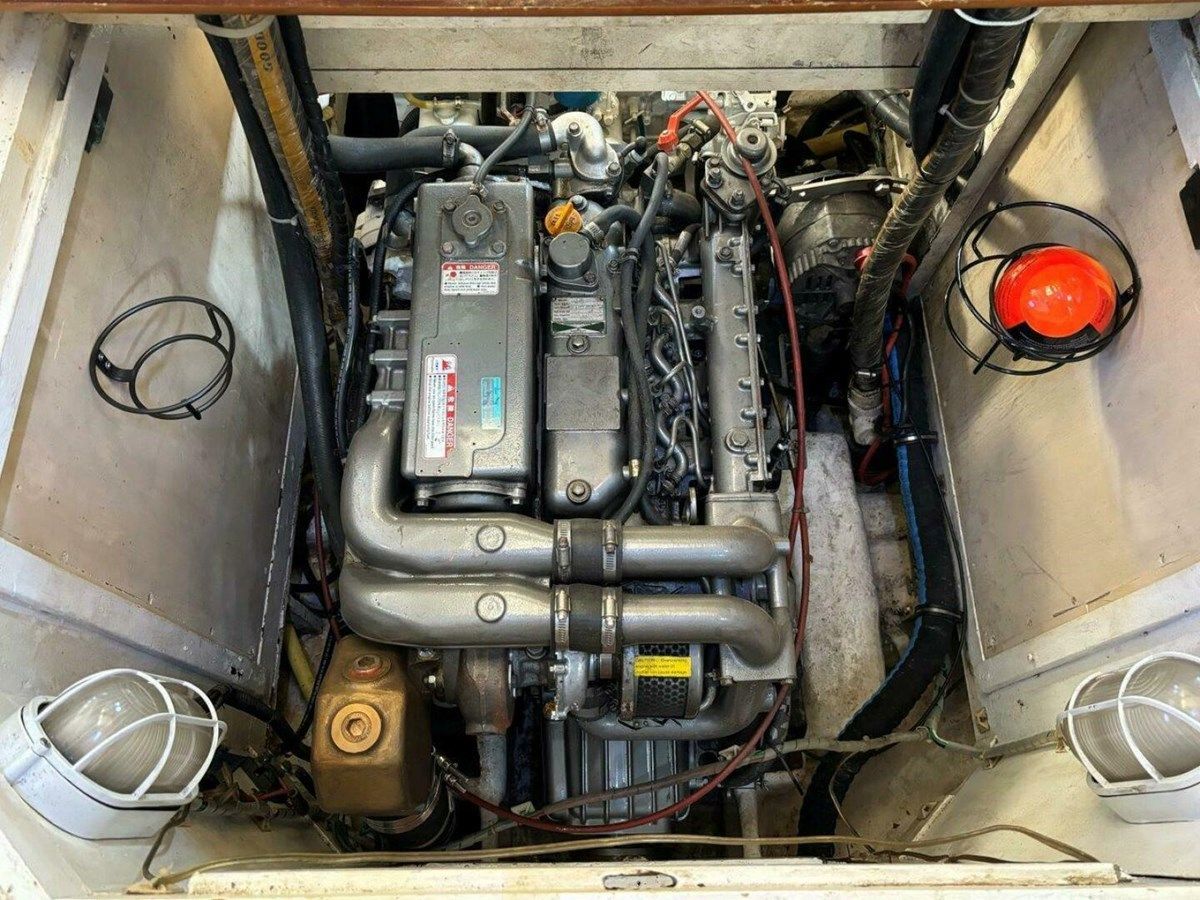
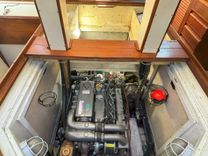
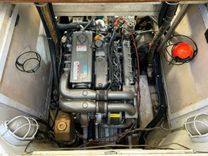
Mechanically, Luna is engineered for access and longevity. Power is a Yanmar 100 HP turbo diesel (4JH3‑HTE), SN E22669, installed in 2005 and showing 2,089 hours. The motor enclosure opens on four sides—three sides and the top—granting exceptional service access; above it, abundant pantry storage and “island‑style” counter space are cleverly integrated. Propulsion feeds through a Kanzaki KBW21 transmission to a one‑and‑a‑half‑inch stainless‑steel shaft (2023) and a three‑blade bronze propeller (2023). Engine control is via a single‑lever helm unit (2023), with engine gauges—oil pressure, water temperature, tachometer, and hour meter with alarms—mounted at the companionway. Charging is by a Balmar 12‑volt alternator plus an additional large‑frame high‑output 24‑volt alternator on a custom frame. The engine compartment opens through side‑panel cabinetry doors below the galley island, with lifting top hatches for extra access; fuel hoses and water‑separating filters are immediately at hand. Auxiliary power comes from a 6 kW Northern Lights M673L3 3g generator, serial 6732‑58411 (2022) with 50 hours. Steering is hydraulic, connected via a stainless‑steel pitman arm to the rudder post located under the aft bunk, with a hydraulic autopilot pump and a B&G feedback sensor mounted to the pitman arm. New hydraulic lines combine flexible runs with swaged fittings at the cylinder and copper lines forward to the helm.
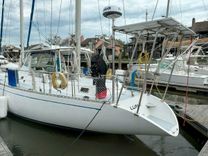
Luna’s construction is classical, stiff, and seakindly. The hand‑laid fiberglass‑reinforced laminate hull carries molded gelcoat topsides; the inward‑turning hull flange bonds a robust hull‑to‑deck joint. Flush weather decks and a raised cabin trunk at the center cockpit are crowned by a hard top and forward fixed windows. Deck surfaces are polyurethane‑painted nonskid in light grey, bordered by clean white paint; all deck hatches are new Bomar aluminum Ocean Series. Structural integrity is delivered by seven bulkheads and partial bulkheads with longitudinal stringers tying bilge to hull‑deck join, all continuously secondary‑bonded with fiberglass tabbing. Interior cabin‑sole framing and integral molded furniture add further rigidity. Below the waterline, a rounded bilge and moderate deadrise flank the swing‑keel trunk for a soft, steady motion. Topside, a mild tumblehome, near‑straight sheer, polyester‑painted white finish, and a navy‑blue sheer stripe give Luna her timeless profile; an aluminum slotted toe rail encircles the deck at the hull‑deck joint, and the transom’s swept counter integrates a sugar scoop with stainless‑steel swim‑ladder stowage. It is quality 1980s fiberglass work, certified by RINA (“Registro Navale Italiano”), solid, rigid, and healthy, executed with high‑grade Italian craftsmanship. The variable‑draft lead swing keel delivers a deep 9.5' draft for powerful upwind performance, then retracts to 4.5' for shoal access. Major refits in 2005 and 2023, a protective center cockpit, accessible, hefty chainplates, and large fiberglass water tanks low in the bilge round out a structure meant for oceans.
Safety gear is comprehensive and offshore‑credible. Ground tackle includes a primary CQR 40‑lb galvanized anchor with stainless swivel and 250 ft of galvanized chain, a secondary #55 Lewmar Delta galvanized anchor with 300 ft of 1/2" nylon rode, and a Lofrans Tigress Model TG014258 horizontal windlass with capstan and chain gypsy. Fire protection comprises four 10‑lb ABC dry‑chemical extinguishers, six AFO throwable fire extinguishers that automatically activate at 320°F (four in the cabins and two in the engine room), two 2‑lb ABC dry‑chemical units at the fore and aft main‑saloon step‑downs, and two fire blankets, with a smoke/CO alarm aboard. Flotation includes numerous Type II adult PFDs, a Type V horseshoe throwable mounted on the rail, and a MOB rescue system with throwable and floating buoy. Distress signaling is covered by handheld red day/night flares. A SeaSafe manual‑deploy six‑person life raft (2019; certification expired) stands ready for service and recertification. Dewatering capacity is strong, with two 12‑volt Rule 1500 GPH bilge pumps on automatic float switches, two Flojet Gulper electric pumps controlled from the chart table, and two manual bilge pumps. A high‑water alarm is located in the engine space (not being tested at this time), and four bilge‑water alarms monitor the bilge spaces. A complete first‑aid kit, an ACR Global Fix Pro 406 MHz GPS EPIRB (UIN: 2DCC8E64B4FFBFF; expiration 02/2025), oil and waste placards at the galley overhead, an emergency tiller, fenders and dock lines, and a ship’s bell—engraved with the boat’s name—complete a safety inventory befitting an ocean yacht.
Specifications
- Accommodations:
- 4 staterooms
- Length:
- 50' (15.24m)
- Beam:
- 14' (4.39m)
- Draft:
- 14.49' (4.4166m)
- Year Built:
- 1980
- Builder:
- CUSTOM BUILT
- Category:
- Sail yachts
- Engines:
- 1 engines Yanmar
- Location:
- United States



Yacht name «Luna» – CUSTOM BUILTis for sale and located in Charleston, United States
Sail yachts «Luna» built by manufacturer CUSTOM BUILT in 1980— available for sale. Yacht location: United States. If you are looking to buy a yacht «Luna» or need additional information on the purchase price of this CUSTOM BUILT,
please call: +1 (954) 274-4435 USAOnly deal with professionals!