
 Licensed Yacht BrokersSales and service of yachts and ships
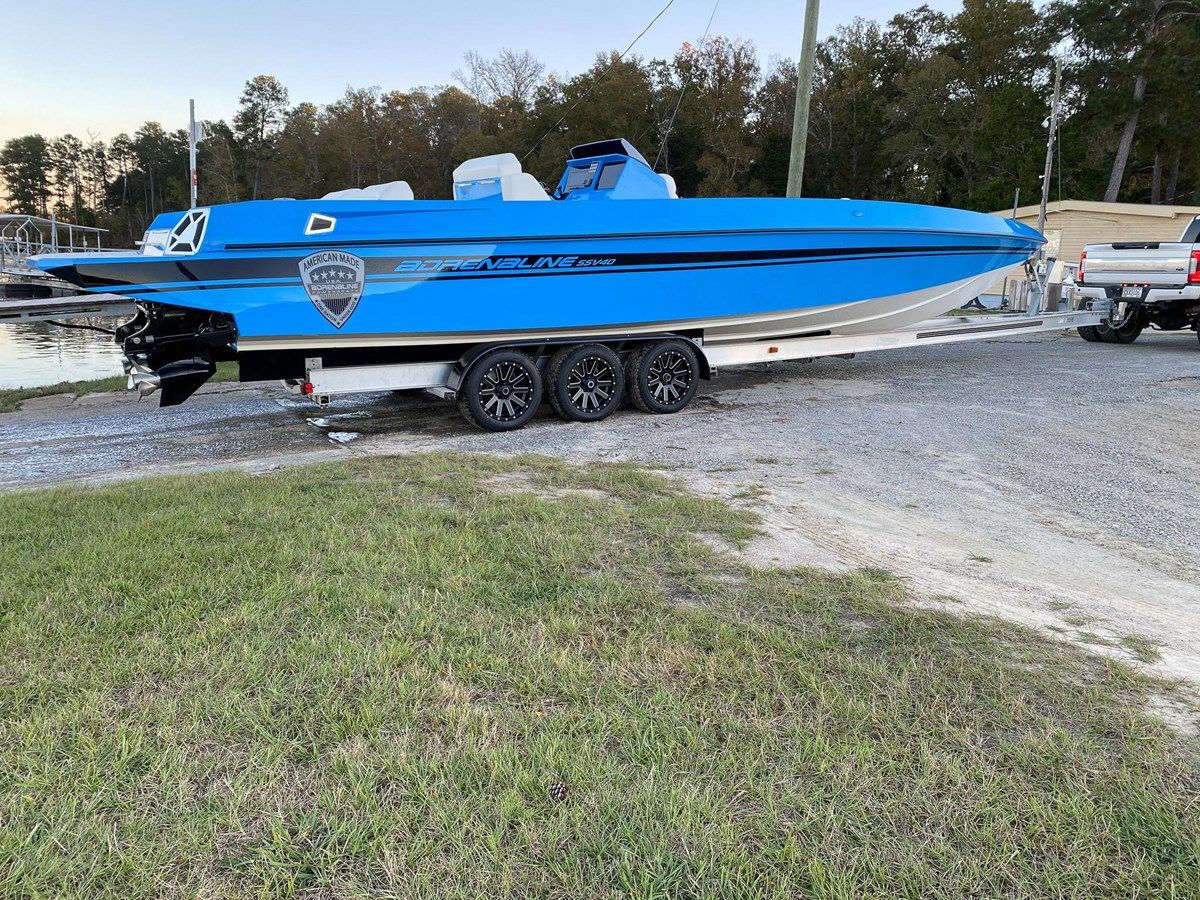
ADRENALINE POWERBOATS INTER INC - For Sale
Adrenaline Powerboats (Adrenaline Powerboats, Inc.)
English
Country of Origin
United States of America.
Manufacturing Locations
Adrenaline Powerboats builds its vessels in the United States at a dedicated production facility designed for low‑volume, high‑precision manufacturing. The operation is set up to support the complete lifecycle of a custom performance build—composites layup, structural bonding, mechanical and electrical rigging, upholstery, and final finishing—so that critical quality controls remain in-house. As a boutique builder, Adrenaline focuses on one‑off and semi‑custom projects rather than mass production, allowing close oversight of fit and finish at each stage.
Construction emphasizes advanced composite practice typical of top‑tier performance manufacturers, including vacuum‑assisted resin infusion, strategic carbon‑fiber and Kevlar reinforcement, closed‑cell foam cores, and epoxy or vinyl‑ester resin systems selected for strength-to-weight and durability. Precision‑cut core kits, robust stringer and bulkhead grids, and careful weight distribution are applied to deliver the stable, high‑speed ride serious offshore owners expect.
Rigging integrates major U.S. and global component partners—most notably Mercury Racing for outboard and sterndrive propulsion—along with premium electronics, digital switching, and marine audio from well‑established suppliers. Final sea trials are conducted in U.S. waters to validate performance, handling, and systems integration before delivery.
Ownership and Management
Adrenaline Powerboats is a privately held American company operating on a founder‑led, hands‑on model. The management approach is deliberately compact, with leadership directly involved in design reviews, lamination strategies, hardware selection, and final sign‑off on each hull. A core team of composites specialists, riggers, electricians, and finish technicians collaborates closely throughout the build, aligning the boat’s specification to each client’s performance goals, running conditions, and aesthetic vision. The result is a workshop culture that prizes accountability, traceable craftsmanship, and personal communication with owners from concept to commissioning.
Reputation and Quality
Within the performance‑boating community, Adrenaline Powerboats is recognized for custom builds that blend speed, structural integrity, and high‑end detailing. The product slate has included offshore‑capable cats and V‑bottoms as well as luxury performance center consoles—each engineered around high power‑to‑weight ratios and predictable manners at speed. Owners seek out Adrenaline for:
- Purpose‑built structures: Stout stringer and bulkhead networks, carefully engineered laminates, and meticulous bonding practices to manage the dynamic loads of high‑speed operation in variable sea states.
- Clean, serviceable rigging: Thoughtful rigging paths, labeled looms, and accessible systems bays that simplify maintenance and upgrades.
- High‑density customization: Helm layouts, seating geometries, deck hardware, storage, and lighting are tailored to use case (offshore runs, sandbar socializing, poker runs, or daily cruising).
- Luxury finishes: Premium upholstery foams and textiles, detailed stitching, fair paintwork, and cohesive color and lighting packages elevate the onboard experience without compromising performance.
- Modern helm integration: Glass bridge displays, integrated engine data, digital switching, and redundant power management provide clarity at speed and intuitive control at the dock.
Adrenaline’s builds are commonly specified with Mercury Racing outboards and/or sterndrives to leverage modern power density, efficiency, and service networks. On‑water manners emphasize crisp throttle response, predictable tracking, and robust torsional stiffness—traits that translate to confidence in rough water and less fatigue over distance. As a boutique shop, the brand’s output is limited, which supports residual values and fosters a close‑knit owner community. The company’s presence at major U.S. boat shows and performance events, along with coverage by enthusiast media, has reinforced its reputation for bespoke quality and striking, contemporary design language.
Español
País de Origen
Estados Unidos de América.
Ubicaciones de Fabricación
Adrenaline Powerboats fabrica sus embarcaciones en Estados Unidos, en una instalación enfocada en producción de bajo volumen y alta precisión. El proceso integra laminación de compuestos, unión estructural, instalación mecánica y eléctrica, tapicería y acabado final, manteniendo el control de calidad dentro de la casa. Como astillero boutique, prioriza proyectos a medida o semi‑custom en lugar de producción en serie.
La construcción aplica prácticas avanzadas de composites propias de la alta gama: infusión de resina asistida por vacío, refuerzos estratégicos de fibra de carbono y Kevlar, núcleos de espuma de celda cerrada y sistemas de resina seleccionados por su resistencia y durabilidad. La distribución de pesos y las redes de cuadernas y mamparos se diseñan para una navegación estable a alta velocidad.
El rigging integra propulsión de Mercury Racing y electrónica premium, con pruebas de mar en aguas estadounidenses para validar rendimiento, maniobrabilidad e integración de sistemas antes de la entrega.
Propiedad y Gestión
La empresa es privada y opera con un modelo de dirección cercano al producto. El equipo directivo participa en el diseño, las estrategias de laminación y la selección de hardware, con un núcleo de técnicos especializados que mantiene una comunicación directa con cada cliente durante todo el proceso de construcción.
Reputación y Calidad
La marca es reconocida en el mundo de las lanchas de alto rendimiento por su nivel de personalización, acabados de lujo y estructuras robustas. Construye catamaranes, V‑bottoms y center consoles de altas prestaciones, con:
- Estructuras optimizadas para altas cargas dinámicas.
- Cableados limpios y accesibles para facilitar servicio.
- Personalización profunda en puestos de mando, asientos y herrajes.
- Acabados de alto nivel en tapicería y pintura.
- Integración moderna de electrónica y motores.
La producción limitada sostiene el valor residual y una comunidad de propietarios cercana, con visibilidad en ferias y eventos de rendimiento en EE. UU.
Français
Pays d’Origine
États‑Unis d’Amérique.
Sites de Production
Adrenaline Powerboats construit aux États‑Unis dans une unité dédiée aux fabrications sur mesure et en petites séries. Le site couvre la stratification des composites, l’assemblage structurel, le câblage et la mécanique, la sellerie et les finitions, afin de préserver une maîtrise complète de la qualité.
Les méthodes employées reflètent le standard haut de gamme du secteur: infusion de résine sous vide, renforts en fibre de carbone et Kevlar, âmes en mousse à cellules fermées, et résines choisies pour leur rapport résistance/poids. Les essais en mer aux États‑Unis valident performance et intégration des systèmes.
Propriété et Direction
Société américaine privée à direction opérationnelle, où les responsables suivent chaque coque de la conception à la mise à l’eau. Une équipe resserrée de spécialistes composites, électriciens et gréeurs assure une exécution cohérente et personnalisée selon le cahier des charges du propriétaire.
Réputation et Qualité
Appréciée pour ses constructions sur mesure et ses finitions soignées, la marque se distingue sur les catamarans, V‑bottoms et center consoles orientés performance:
- Structures dimensionnées pour la haute vitesse en mer formée.
- Gréement clair et accessible pour l’entretien.
- Personnalisation poussée du poste de pilotage et des aménagements.
- Sellerie et peintures premium.
- Intégration électronique et motorisation Mercury Racing.
La production limitée soutient l’exclusivité et la valeur de revente, renforcée par une présence régulière aux salons et événements de performance.
Deutsch
Herkunftsland
Vereinigte Staaten von Amerika.
Fertigungsstandorte
Adrenaline Powerboats fertigt in den USA in einer auf Kleinserien und Individualbau ausgerichteten Anlage. Der gesamte Ablauf—Composite‑Laminierung, strukturelles Verkleben, mechanische/elektrische Installation, Polsterarbeiten und Finish—bleibt im Haus, um konsequente Qualität sicherzustellen.
Zum Einsatz kommen fortgeschrittene Verbundtechniken der Spitzenklasse: Vakuum‑Infusion, gezielte Carbon‑ und Kevlar‑Verstärkungen, geschlossenzelliger Schaulkern sowie Harzsysteme mit hohem Festigkeits‑Gewichts‑Verhältnis. Probefahrten in US‑Gewässern verifizieren Performance und Systemintegration.
Eigentum und Management
Privat geführtes US‑Unternehmen mit stark praxisnaher Leitung. Ein kompaktes Team aus Composite‑Spezialisten, Riggern und Elektrikern begleitet jedes Projekt eng und kundenorientiert von der Spezifikation bis zur Übergabe.
Ruf und Qualität
Die Marke gilt in der Performance‑Szene als Adresse für maßgefertigte Boote mit hoher Fertigungsqualität:
- Strukturelle Auslegung für hohe Geschwindigkeiten und Seegang.
- Aufgeräumte, servicfreundliche Installation.
- Tiefgreifende Individualisierung von Cockpit, Layout und Hardware.
- Hochwertige Polster und Lackierung.
- Moderne Integration von Elektronik und Mercury Racing‑Antrieben.
Die geringe Stückzahl fördert Exklusivität, Werthaltigkeit und eine engagierte Eigner‑Community.
Italiano
Paese di Origine
Stati Uniti d’America.
Sedi di Produzione
Adrenaline Powerboats costruisce negli Stati Uniti in una struttura dedicata alla produzione su misura e a bassa tiratura. Il ciclo comprende laminazione dei compositi, incollaggi strutturali, impiantistica meccanica/elettrica, selleria e finiture, mantenendo il controllo qualitativo internamente.
Le tecniche impiegate sono quelle tipiche dell’alta gamma: infusione sotto vuoto, rinforzi in fibra di carbonio e Kevlar, anime in schiuma a cellula chiusa e sistemi di resina selezionati per prestazioni e durabilità. Le prove in mare avvengono in acque statunitensi.
Proprietà e Management
Società privata statunitense con gestione direttamente coinvolta nel prodotto. Un team snello di specialisti segue ogni commessa, adattando progetto e allestimenti agli obiettivi di utilizzo e prestazione del cliente.
Reputazione e Qualità
Riconosciuta per costruzioni personalizzate, cura dei dettagli e prestazioni elevate su catamarani, V‑bottom e center console:
- Strutture dimensionate per velocità e mare formato.
- Impiantistica ordinata e facilmente manutenibile.
- Alta personalizzazione di plancia, sedute e coperta.
- Selleria e vernici di livello premium.
- Integrazione elettronica moderna e motorizzazioni Mercury Racing.
La produzione limitata sostiene esclusività e valore nel tempo, con presenza nei principali saloni e eventi di performance negli USA.
Русский
Страна происхождения
Соединенные Штаты Америки.
Производственные площадки
Adrenaline Powerboats строит катера в США на специализированной площадке, ориентированной на штучное и мелкосерийное производство. Все ключевые этапы—композитная ламинация, силовые склейки, монтаж механики и электрики, обивка и финиш—выполняются внутри компании для полного контроля качества.
Применяются современные композитные технологии высокого уровня: вакуумная инфузия, целевые усиления углеволокном и кевларом, пенные сердечники с закрытыми порами и смолы с оптимальным соотношением прочности и массы. Ходовые испытания в водах США подтверждают заявленные характеристики и корректную интеграцию систем.
Собственность и управление
Частная американская компания с «кустарно‑ремесленным» (boutique) подходом. Небольшая команда специалистов и руководство лично сопровождают проект от согласования спецификации до сдачи заказчику.
Репутация и качество
Бренд известен в среде любителей скоростных катеров индивидуальным подходом, высокой культурой производства и премиальными отделками:
- Прочные силовые наборы для высоких скоростей и волнения.
- Аккуратная и обслуживаемая разводка систем.
- Глубокая кастомизация поста управления и планировок.
- Премиальная обивка и окраска.
- Современная электроника и моторы Mercury Racing.
Небольшие тиражи поддерживают эксклюзивность, остаточную стоимость и формируют активное сообщество владельцев.
中文(简体)
原产国
美利坚合众国(美国)。
生产地点
Adrenaline Powerboats 在美国本土建造船艇,工厂面向小批量与定制化生产,涵盖复合材料铺层、结构粘接、机电安装、内饰与涂装等关键环节,以确保全过程质量控制。作为精品化造船商,项目以定制或半定制为主,而非大规模流水线。
工艺上采用高端性能船厂常见的复合材料技术:真空辅助树脂灌注、碳纤维/凯夫拉局部加强、闭孔泡沫芯材,以及兼顾强度与耐久性的树脂体系。所有成品在美国水域进行海试,验证整艇性能与系统集成。
所有权与管理
公司为美国私人持有,管理层深度参与产品与工艺决策。小而精的核心团队协作紧密,与客户保持直接沟通,将设计与装配精确匹配预期用途与性能目标。
声誉与品质
在高性能动力艇领域,Adrenaline 以高度定制、精湛工艺与豪华细节著称,产品覆盖离岸型双体、V 形底以及高性能中心控制台:
- 结构设计注重高速与恶劣海况的可靠性与稳定性。
- 机电布置整洁、易维护,并便于今后升级。
- 驾驶台、人机工程、甲板五金与照明等均可深度定制。
- 高端内饰与涂装营造豪华质感。
- 现代化航电集成与 Mercury Racing 动力搭配。
受益于限量生产,品牌的稀缺性、残值与用户社群黏性较强,并在美国重要船展与性能活动中具备能见度。
Adrenaline Powerboats
Main Competitors
Adrenaline Powerboats operates in the niche of high-performance, small‑series American boatbuilding, with products and projects that typically appeal to buyers of offshore catamarans and V‑bottoms as well as luxury performance center consoles. The competitive set spans heritage performance names, boutique custom builders, and premium center‑console specialists. The brands below are widely recognized by owners to be cross‑shopped alternatives depending on whether the priority is poker‑run speed, offshore range and seakeeping, luxury finishes, or fishing versatility with sport-boat acceleration.
-
Marine Technology Inc. (MTI): A benchmark U.S. builder in performance catamarans and luxury performance center consoles. MTI’s catalog typically includes carbon‑intensive, high‑speed cats designed for poker runs and offshore, alongside large center consoles that emphasize speed, styling, and customization. Buyers who view Adrenaline typically also inspect MTI’s latest cat or CC offerings because both brands pair premium fit‑and‑finish with big‑horsepower Mercury Racing propulsion, glass-bridge electronics, and bespoke upholstery.
-
Mystic Powerboats: Known for blending offshore speed with luxury details, Mystic offers both performance cats and refined center consoles. Its approach to ergonomics, upholstery, paint, and systems integration resonates with clients who want a “turn‑key” luxury performance dayboat capable of high speeds. Mystic’s presence in the same events and owner communities places it squarely in Adrenaline’s consideration set.
-
Nor‑Tech High Performance Boats: Nor‑Tech’s line of performance center consoles and sport boats competes directly for customers who want speed without sacrificing comfort. The brand’s reputation for robust rigging, long‑range capability, and custom layouts mirrors many of the priorities of Adrenaline’s clientele. Cross‑shopping between Nor‑Tech’s center consoles and Adrenaline’s projects is common where owners weigh top‑end speed, cruising manners, and dayboat amenities.
-
Cigarette Racing: With a storied offshore heritage, Cigarette today focuses heavily on luxury performance center consoles and V‑bottoms with striking design language. The brand’s emphasis on premium materials, meticulous paint, and high‑touch interiors makes it a frequent comparison for buyers looking at Adrenaline for its bespoke character and showpiece finishes.
-
Fountain Powerboats: Fountain combines a long legacy of go‑fast performance with modern center consoles and V‑bottoms. While Fountain’s volume and model matrix are broader, the performance ethos—efficiency, speed, and seakeeping—overlaps with Adrenaline’s core audience. For buyers balancing cost, resale, and performance metrics, Fountain sits alongside Adrenaline as a realistic alternative.
-
Donzi Marine: Donzi’s classic performance identity continues to draw enthusiasts who value heritage V‑bottom DNA with contemporary systems. In the mid‑size performance segment, Donzi is often evaluated by owners who are also considering a custom or semi‑custom Adrenaline build emphasizing speed and traditional offshore styling cues.
-
Outerlimits Powerboats: A boutique builder of high‑end V‑bottoms and cats, known for advanced composites and serious offshore capability. Outerlimits competes for clients who prioritize bespoke construction, low production numbers, and top‑tier lamination. The overlap with Adrenaline is strongest among buyers who want a deeply customized, hand‑built performance piece.
-
Skater Powerboats (Douglas Marine): Skater’s cats are a reference point for speed and rough‑water ability. Although Skater’s focus is squarely on high‑performance cats rather than center consoles, performance‑centric buyers comparing a custom cat project will often weigh Skater against Adrenaline when the intended use is poker runs and speed events.
-
DCB Performance Boats: West‑coast performance cats and V‑bottoms with an emphasis on lake and river performance and pristine presentation. DCB competes on the basis of extreme customization, paintwork, and high power‑to‑weight configurations. Cross‑shopping arises where buyers want a boutique builder that will tailor ergonomics and finishes to the owner’s exact brief—an area where Adrenaline also excels.
-
Sunsation Boats: Known for performance‑oriented center consoles and sport boats that maintain a balance between speed and comfort. Sunsation often competes at price points and sizes that appeal to Adrenaline clients looking for strong performance, thoughtful rigging, and premium but pragmatic appointments.
-
Statement Marine: Boutique center‑console and performance‑oriented dayboat builder with a focus on bold design and luxury interiors. Statement’s visual identity and custom approach put it in the same conversation as Adrenaline for owners who want a standout, made‑to‑order boat with strong acceleration and offshore credibility.
-
Midnight Express: A luxury performance center‑console specialist with models known for speed, volume, and upscale finishes. Midnight Express is often cross‑shopped by Adrenaline prospects prioritizing a blend of day‑boating luxury, high cruising speeds, and dramatic styling.
-
Deep Impact Boats: A brand with strong recognition among performance‑minded center‑console buyers, pairing aggressive styling with speed‑focused setups. Deep Impact’s custom approach, upholstery, and electronics packages are a natural comparison point to Adrenaline’s semi‑custom ethos.
-
Blackwater Boats: Large, heavy‑duty center consoles with high horsepower and long‑range capability. Although more fish‑forward than some performance dayboats, Blackwater’s speed capability and premium build draw some of the same customers who might evaluate an Adrenaline for offshore comfort and cruising pace.
-
HCB Yachts: Focused on the upper end of the center‑console market (very large platforms with high luxury content). While HCB’s mission is more luxury day‑yachting with fishing capability than pure “go‑fast,” there is buyer overlap among owners prioritizing size, amenities, and multi‑outboard performance who still want to cruise at elevated speeds.
-
Intrepid Powerboats: A highly customizable builder of center consoles and sport yachts. Intrepid’s reputation for owner‑driven configurations, meticulous rigging, and refined finishes puts it on the same shortlists for clients valuing bespoke layout and systems integration—hallmarks of Adrenaline’s approach.
-
Invincible, Valhalla (by Viking), Scout: These brands are primarily positioned as premium fishing center consoles, but at certain sizes and with multi‑outboard packages they deliver high cruising speeds and strong offshore manners. Performance‑oriented dayboaters who are fishing occasionally or want tournament‑grade hulls sometimes consider these alongside a more bespoke Adrenaline build.
-
Technohull (Greece): A performance‑RIB and super‑console specialist with a growing North American footprint. Buyers prioritizing ultra‑high speed and lightweight composite construction occasionally cross‑shop Technohull’s rigid‑inflatable and hard‑sided offerings with performance dayboats from boutique U.S. builders like Adrenaline.
In short, Adrenaline competes less on mass production and more on bespoke execution: advanced composite structures, carefully balanced weight distribution, high‑density customization, premium rigging and electronics, and the owner’s ability to influence ergonomics and aesthetic direction. Within that niche, it is compared most frequently to MTI, Mystic, Nor‑Tech, Cigarette, Outerlimits, Skater, DCB, and several luxury performance center‑console specialists (Midnight Express, Statement, Deep Impact), with broader cross‑shopping extending to Fountain, Donzi, Sunsation, Intrepid, Blackwater, and select premium fish‑forward brands.
Current Production Status
Adrenaline Powerboats is best characterized as an active, boutique American builder focusing on low‑volume, high‑specification projects. Rather than mass‑producing standardized models, the company concentrates on one‑off or semi‑custom builds, typically centered on performance‑forward center consoles and, depending on client demand, sport cats or V‑bottom projects. This approach allows each hull to be engineered and outfitted to the owner’s intended use—poker runs, high‑speed dayboating, offshore cruising, sandbar socializing, or mixed‑use with occasional fishing—while maintaining tight control over weight, structure, and systems integration.
The production rhythm is intentionally limited to preserve quality. Build slots are generally scheduled to keep lamination, structural bonding, rigging, and finishing under the direct supervision of a compact, specialist team. This “slow is smooth, smooth is fast” philosophy is standard among top‑tier custom shops: it yields consistent hull weight targets, repeatable fit‑and‑finish, and predictable on‑water behavior across individually specified boats. It also means lead times can fluctuate based on the complexity of each specification, the sequencing of composite work, paint and upholstery timelines, and the delivery windows for premium components.
Propulsion packages trend toward the latest high‑output outboards and/or sterndrives from established performance suppliers, paired with digital throttle and shift, integrated power steering, and electronic engine monitoring. Owners typically specify multi‑engine outboard arrays to balance top‑end speed, hole shot, range, and serviceability; the rigging is laid out for cleanliness, access, and future upgrades. Electrical systems are built around modern digital switching and breaker protection with clearly labeled looms and service loops. Electronics suites use glass‑bridge multifunction displays, integrated radar and sonar where applicable, high‑output audio, and night‑running aids, all mounted to bespoke helm panels and seating geometries that match the owner’s ergonomics.
Composite construction is a cornerstone of current production practice. Vacuum‑assisted resin infusion, strategic use of carbon fiber and Kevlar reinforcements, and closed‑cell foam cores are applied where they deliver tangible gains in stiffness‑to‑weight and impact resistance. Structural grids—stringers, bulkheads, knees—are engineered to handle the torsional loads and repeated slamming associated with high‑speed offshore operation. The lamination schedule is tuned to the boat’s intended power and loading, and care is taken to control resin ratios and bond integrity to maintain both performance and longevity.
Finish work remains a signature area in which boutique builders differentiate themselves, and Adrenaline aligns with this ethos. Upholstery typically features multi‑density foams, durable marine textiles with UV and mildew resistance, detailed stitching, and colorways coordinated with exterior paint and lighting. Deck hardware, powder‑coated or anodized metals, and custom machined components are selected for both aesthetics and durability. Attention to serviceability—hinge angles, latch access, drainage paths, and gasket placement—supports the practical realities of ownership at speed and in saltwater.
Before delivery, factory sea trials are conducted to confirm that the setup—propeller selection, engine calibration within manufacturer guidelines, engine height/jack plate tuning, and trim function—delivers the expected acceleration, mid‑range efficiency, and top‑end behavior. System checks verify charging, fuel supply, ventilation, bilge and livewell performance (where fitted), electronics integration, and redundancy. Owners are typically involved in acceptance runs to finalize details and ensure familiarity with control logic and maintenance intervals.
Sales and service are commonly handled via direct relationships with the builder, supported by the propulsion manufacturer’s service network for engine maintenance. This model suits the semi‑custom nature of the builds: communication remains unfiltered, changes are captured promptly, and post‑delivery support can reference the exact as‑built documentation produced during construction. Owners benefit from a clear paper trail on laminates, hardware, wiring, and programming—documentation that also supports future resale.
In terms of market presence, current production is aligned with the preferences of a knowledgeable owner community that values exclusivity, craftsmanship, and speed. Output is kept intentionally modest to safeguard quality control and brand equity, and the product roadmap tends to evolve with leaps in propulsion technology (e.g., new outboard platforms with higher power density), advancements in composite materials, and owner feedback on ergonomics and deck utility. The result is a steady cadence of bespoke builds rather than seasonal model‑year overhauls.
This mode of production has several implications for prospective buyers:
- Availability is governed by build slots rather than dealer inventory. Buyers planning around events or seasonal use should engage early to secure timing.
- Specification work is a collaborative process; decisions on hull color, upholstery, electronics, power, and deck hardware are phased to match the production sequence.
- Sea‑trial feedback is integrated before final sign‑off, ensuring the delivered boat meets the performance and usability targets agreed at contract.
For owners seeking a distinctive, high‑performance dayboat or offshore‑capable center console with custom finishes and systems, the company’s ongoing, small‑batch production provides a path to a truly individualized outcome while maintaining rigorous standards across composites, rigging, and finish.
Frequently Asked Questions
Question:What kind of boats does Adrenaline Powerboats build?
Answer:Adrenaline Powerboats focuses on high-performance, custom and semi-custom projects. Typical outputs include offshore‑capable center consoles designed for elevated cruising speeds, as well as performance V‑bottoms and, in certain cases, sport catamarans. The common thread is an emphasis on advanced composite construction, precise weight management, and meticulous rigging to support reliable high‑speed operation with premium fit and finish.
Question:Where are these boats built?
Answer:The boats are built in the United States in a facility geared for small‑batch, high‑precision work. The production environment is arranged to keep critical processes in‑house—composites lamination, structural bonding, rigging, upholstery, and final finish—so quality can be tightly controlled at each stage.
Question:What materials and methods are used in construction?
Answer:Construction centers on advanced composites. You can expect vacuum‑assisted resin infusion, closed‑cell foam cores, and strategically placed carbon fiber or aramid (Kevlar) reinforcements where they deliver tangible performance or durability benefits. The lamination schedule, stringer and bulkhead grid, and bond strategy are engineered to handle torsional loads and repeated slamming at speed, especially in offshore conditions.
Question:What types of engines are commonly specified?
Answer:Most builds are specified with high‑output, modern outboards in twin, triple, quad, or even higher counts depending on hull size and desired performance. Some projects employ performance sterndrives. Rigging typically includes digital throttle and shift, power steering integration, and engine data streaming to multifunction displays.
Question:How fast are these boats?
Answer:Performance varies with hull form, length, power, load, and sea state. The brand’s niche is “luxury performance”—boats that can sustain high cruising speeds with stable handling. Precise top‑end numbers are build‑specific. For responsible evaluation, owners focus on repeatable cruise speeds in real‑world conditions and the hull’s composure in the seas they actually run.
Question:What distinguishes the ride quality?
Answer:Ride quality comes from a combination of stiff, lightweight structures, an optimized running surface, and careful weight placement. A robust grid of stringers and bulkheads, strong transom architecture for multi‑engine loads, and attention to center of gravity help maintain predictable handling. On center consoles, hulls are engineered for tracking, trim response, and “quiet” running characteristics—reduced rattles and flex—at speed.
Question:How customizable are these boats?
Answer:Highly customizable. Owners typically influence helm ergonomics, seating layouts, upholstery details, electronics suites, lighting, audio, deck hardware, and storage solutions. Color and finish work are also tailored, often with multi‑tone or intricate paint schemes coordinated to interior textiles and lighting plans.
Question:What electronics and helm layout options are typical?
Answer:Glass‑bridge multifunction displays are standard fare, integrated with engine data, sonar and radar as needed, and digital switching. Helm panels are often custom‑machined or fabricated to fit preferred screen sizes and switchgear. Seating geometry—bolsters, leaning posts, shock‑mitigation options—can be tuned to driver dimensions and use case.
Question:Are these center consoles suitable for offshore conditions?
Answer:Yes. The boats are engineered for offshore runs where owners value high average speeds in mixed seas. Structural stiffness, efficient deadrise profiles, and controlled weight distribution help maintain ride quality. That said, prudent operation—matching speed to conditions—is essential in any offshore environment.
Question:Do they build catamarans or only monohulls?
Answer:The brand’s core output centers on performance‑oriented center consoles and V‑bottoms, with catamarans appearing depending on demand and program. The choice between a cat and a V‑bottom is typically dictated by the owner’s preferred running grounds and handling preferences.
Question:What is the approach to noise and vibration control?
Answer:A stiff, well‑bonded structure minimizes flex and associated noise. Rigging paths are planned to avoid chafe and rattles, wiring looms are secured and labeled, and hardware is bedded carefully. Upholstery and deck components are fitted to reduce buzz and creak at speed.
Question:How does the builder handle fuel system design and range?
Answer:Fuel systems are laid out with properly vented, secured tanks, balanced pickup placement, and filtration appropriate for high‑output propulsion. Range depends on tankage, cruise speed, sea state, and load. Owners typically select fuel capacity and power packages that balance desired speeds with practical legs for their waters.
Question:What about safety and redundancy?
Answer:Builds emphasize redundancy appropriate to high‑performance offshore use: multiple bilge zones and pumps, protected electrical distribution, robust battery management, and clearly labeled shutoffs. Hardware choices and mounting reinforcement reflect the loads encountered at speed.
Question:Is there a cabin on these boats?
Answer:On performance center consoles, cabins—if present—tend to be compact, most often within the console, with a marine head and sometimes a berth. The focus remains on open‑deck utility, seating, and storage. Larger or specialized builds can incorporate more elaborate interiors based on owner specification.
Question:How serviceable are the systems?
Answer:Service access is a priority. You’ll see labeled looms, tidy rigging, organized breaker and bus layouts, access panels for pumps and filters, and removable components designed for maintenance without dismantling large sections of the boat. This is a hallmark of premium small‑batch builders.
Question:What is the typical build process?
Answer:The process generally follows: specification and design review; composite layup and infusion; structural bonding; fairing and priming; mechanical and electrical rigging; upholstery and interior fitout; systems commissioning; sea trials; and owner acceptance. Because builds are bespoke, sequencing is planned to dovetail long‑lead items like paint, custom machining, and electronics.
Question:How long does it take to build one?
Answer:Timelines depend on complexity and the production queue. Boutique builders pace work to preserve quality. Complex paint, upholstery, and electronics packages, or highly customized structural elements, can extend schedules. Owners typically secure a build slot and then refine specifications in phases aligned with the production plan.
Question:What influences hull choice—V‑bottom versus catamaran—if both are available?
Answer:V‑bottoms are favored for their predictable manners across varied conditions and ease of docking; catamarans are prized for efficiency and speed in certain sea states and for their unique ride characteristics. The decision hinges on typical wave patterns, usage (poker runs, long offshore legs, coastal cruising), and personal handling preferences.
Question:How are paint and finishes handled?
Answer:Exterior finishes often involve multi‑stage paint systems with extensive fairing and blocking to achieve a high‑gloss, distortion‑free surface. Graphics can be simple and elegant or highly complex. Interior finishes leverage marine‑grade textiles with UV resistance, mildew protection, and contrasting stitch patterns for a bespoke look.
Question:What kind of warranties or after‑sales support are typical?
Answer:As with most boutique builders, structural coverage and systems support are documented at delivery, and engine coverage follows the propulsion manufacturer’s program. After‑sales support is anchored in detailed as‑built documentation—wiring maps, hardware lists, laminate schedules—so service remains straightforward and traceable throughout ownership.
Question:How are boats tested before delivery?
Answer:Factory sea trials validate acceleration, midrange, and top‑end behavior; confirm prop and engine height selection; and verify systems (bilge, fuel, electrical, electronics, and steering). Any adjustments to trim programming, tab behavior, or engine calibration within manufacturer parameters occur prior to handover. Owner acceptance runs help familiarize the operator with the specific setup.
Question:What should buyers consider when spec’ing power?
Answer:Start with intended use and sea state. Then balance engine count against desired cruise speed, top‑end goals, range, noise, and service logistics. Prop selection, jack plate strategy (if used), and tab sizing are part of the package. The optimal setup is the one that delivers sustained, safe speed in your typical conditions with headroom for load and weather.
Question:Are these boats suitable for fishing as well as day‑boating?
Answer:Many performance center consoles are easily configured for mixed use. Livewells, rod storage, and fish boxes can be incorporated without compromising the platform’s high‑speed DNA. The deck plan usually blends lounge seating with convertible utility spaces so the boat can shift from cruising to casual fishing seamlessly.
Question:How do these boats compare to high‑volume brands?
Answer:The principal difference is density of customization and the level of craftsmanship per hull. Small‑batch output allows for more owner‑influenced ergonomics, heavier hand‑finishing, and meticulous rigging. This affects not only aesthetics but also long‑term serviceability and, often, residual values in niche performance markets.
Question:What is the expected longevity of the structure under high‑speed use?
Answer:Longevity is driven by correct laminate engineering, conservative bonding, quality control during infusion, and thoughtful load paths at engines and hardware. When those fundamentals are executed well—and the boat is run responsibly with proper maintenance—service life can be very long even under demanding cycles.
Question:Do these boats require special maintenance compared to standard center consoles?
Answer:Maintenance is similar in scope but often executed to tighter tolerances: frequent hardware checks, vigilant bonding/sealant inspection (particularly at high‑load fixtures), and careful attention to prop condition and engine calibration. Systems are designed to be accessible so that preventive care is efficient.
Question:How is weight managed during the build?
Answer:Weight targets are established early and verified through layup controls, resin ratio management, and component selection. Structural inserts, core densities, and localized reinforcements are specified to keep the center of gravity where the running surface performs best. Every add‑on—electronics, audio, custom metalwork—is evaluated for impact on balance.
Question:What is the philosophy behind electrical system design?
Answer:Clarity and redundancy. Expect clearly labeled looms, logical harness routing, sealed connectors where appropriate, overcurrent protection sized to load, and separation of critical systems. Digital switching may be used for control elegance, but essential functions are designed for reliability and service access.
Question:Can owners repower in the future?
Answer:Yes, repower planning is part of many builds. Transom structure, bracketry, steering, and fuel delivery are specified with future maintenance and potential upgrades in mind. Documented rigging paths and access points simplify later changes.
Question:How is ergonomics addressed for high‑speed operation?
Answer:Helm visibility, seating support, and control reach are tailored to the primary operator. Details such as bolster height, footrests, wheel dish, throttle angle, and screen sightlines are refined through mock‑ups and feedback. The goal is low workload at speed and precise control in tight quarters.
Question:What certifications or standards are considered?
Answer:Best practices in U.S. premium boatbuilding typically align with recognized industry guidelines for structural integrity, electrical systems, and safety. While specific certifications can vary by build and year, the workmanship reflects contemporary standards for high‑performance offshore craft.
Question:Is “Adrenaline Powerboats Inter Inc” the correct name?
Answer:The brand is commonly known as Adrenaline Powerboats. Public references to the corporate entity most often use a standard “Inc.” suffix. The “Inter” fragment appears to be a misrendering rather than a distinct corporate designation.
Question:What ownership experience can a buyer expect?
Answer:Hands‑on and personalized. Owners typically interact with a compact, expert team that documents every decision, from laminate schedules to hardware selection. Boats are delivered with thorough system explanations, and the combination of custom ergonomics, performance setup, and finish detail yields a vessel that feels purpose‑built for its operator.
Question:How does the builder approach hardware and metalwork?
Answer:Hardware is selected for durability, function at speed, and finish quality—often powder‑coated or anodized. Custom machined components are common, particularly at helm interfaces, seating mechanisms, and mounting brackets where precision contributes to both performance and aesthetics.
Question:What distinguishes the upholstery and interior work?
Answer:Multi‑density foams, UV‑resistant marine textiles, and detailed stitch patterns provide both support and visual cohesion. Cushion geometry is tuned for offshore running—firm enough for support at speed but comfortable at rest—while colorways coordinate with paint and lighting for a cohesive design language.
Question:What kind of testing validates the composite work?
Answer:Beyond sea trials, quality assurance can include laminate coupon checks, resin content controls, adhesion verification, and non‑destructive inspection methods where appropriate. The objective is to ensure the structure meets design targets before and after assembly.
Question:How do these boats handle variable load—passengers, gear, and fuel?
Answer:The running surface and weight distribution are designed with realistic operating envelopes in mind. Trim systems and, where applicable, tabs or interceptors help the boat remain level and efficient across load states. Prop selection and engine height are fine‑tuned so that the setup remains responsive from light to heavy.
Question:Is there provision for night and long‑range operation?
Answer:Yes. Electronics packages can include night‑running aids, radar, and redundant navigation. Lighting plans often combine functional illumination with accent lighting, and battery management is configured to support extended use without compromising critical systems.
Question:What considerations go into selecting a performance center console versus a pure sport boat?
Answer:A center console provides space, protection, and versatility—family cruising, entertaining, casual fishing—while retaining high‑speed capability. A pure sport V‑bottom or catamaran prioritizes ultimate pace and driver engagement, with more specialized deck layouts. Owners typically choose based on mission mix, storage needs, and the feel they want at the helm.
Question:How is quality preserved despite low build volume?
Answer:The production cadence is intentionally measured. Each station—composites, rigging, finish—works within a controlled queue so specialists can document and verify their work. Limited output supports tighter tolerances, individualized oversight, and the traceability expected from premium, small‑batch craft.
Question:What influences resale value in this niche?
Answer:Provenance, documentation, condition, and specification density. Limited production and high craftsmanship can support residual values, especially when the boat’s setup aligns with mainstream preferences in power, electronics, and finish. Regular maintenance and clear records are key.
Question:Are there typical pitfalls new owners should avoid?
Answer:Over‑specifying weighty accessories without accounting for balance; selecting props for peak top‑end at the expense of real‑world cruise; and underestimating the importance of ergonomic mock‑ups. Working through a deliberate spec process ensures the final boat matches actual usage.
Question:How does the builder view sustainability or environmental considerations?
Answer:In the high‑performance context, sustainability is often addressed through efficient hulls, modern engine technology with improved emissions profiles, controlled resin processes that reduce waste, and long‑life structures that minimize replacement cycles. While not a “green” product in the strictest sense, thoughtful engineering can reduce the environmental footprint over the boat’s life.
Question:What is the best way to prepare for a sea trial?
Answer:Bring your likely crew, typical gear load, and an open mind about setup variables. Test in realistic conditions if possible. Pay attention to ergonomics at the helm, sightlines, throttle response, trim behavior, and noise levels at your preferred cruise speeds. Document feedback to refine final adjustments prior to acceptance.
Question:How are deck layouts optimized for both speed and comfort?
Answer:Layouts balance protected seating with open pathways for movement at speed. Handholds are placed where natural, seating is angled for proper bracing, and storage is configured to keep weight low and central. Drainage, latching, and hatch gasketing are scrutinized so the boat stays dry and tight in rough water.
Question:How does the builder ensure consistency across bespoke projects?
Answer:Consistency comes from a stable core: standardized structural philosophies, repeatable infusion practices, documented rigging conventions, and proven hardware sets. Around that core, customization overlays—finish, electronics, layout—are personalized without disrupting fundamental engineering.
Question:What should owners know about insurance and training for high‑performance boats?
Answer:Many insurers look favorably on owners who complete recognized high‑performance handling courses. Even experienced captains benefit from orientation specific to a new boat’s power, balance, and control logic. Thoughtful training shortens the learning curve and promotes safer, more enjoyable operation.
Question:Does the brand participate in events or owner gatherings?
Answer:High‑performance builders and their owners commonly appear at poker runs, shows, and group cruises. Participation varies year to year. These events provide real‑world opportunities to compare setups, share best practices, and refine future specifications.
Question:How is documentation handled at delivery?
Answer:Expect a thorough as‑built package: wiring diagrams, breaker and fuse assignments, hardware inventories, engine rigging notes, and care guides for finishes and upholstery. This documentation supports efficient maintenance and future upgrades throughout the boat’s life.
Available Models
Information on specific current models, their exact lengths, cabin counts, maximum speeds, and engine configurations is not provided here because this builder’s output is highly bespoke and model availability can change based on ongoing projects and owner‑driven specifications.



Learn more on the “ADRENALINE POWERBOATS INTER INC”
To learn more on the “ADRENALINE POWERBOATS INTER INC” or to get advice on how to buy or sell a yacht or get a great price for a yacht charter
please call +1 (954) 274-4435 USAOnly deal with professionals!