
 Licensed Yacht BrokersSales and service of yachts and ships
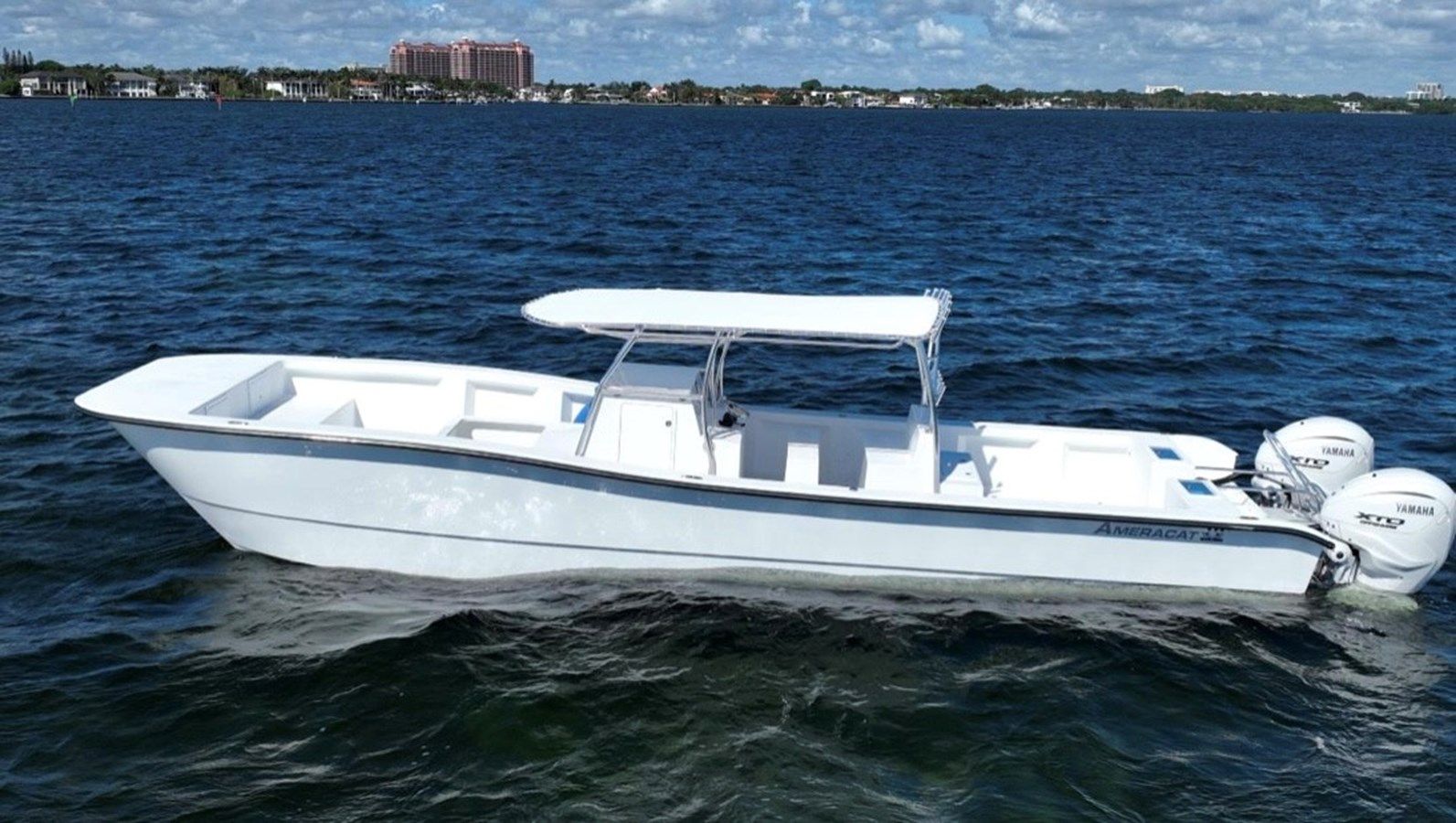
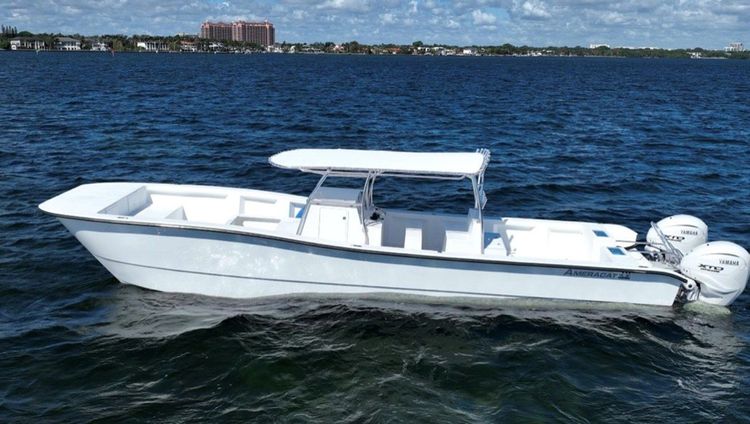
AMERACAT - For Sale
Country of Origin
-
English: AmeraCat is an American boatbuilder. The brand’s roots and customer base are closely tied to the offshore angling community in the United States, particularly in the Southeast. Its boats are conceived and engineered for U.S. waters and usage patterns—running the Atlantic, Gulf of Mexico, and nearshore fisheries—reflecting American design preferences for open, self‑bailing decks, rugged hardware, and efficient outboard power on twin-hull platforms.
-
Español: AmeraCat es un constructor de embarcaciones estadounidense. La marca está estrechamente vinculada a la comunidad de pesca deportiva en alta mar de Estados Unidos, especialmente en el sureste. Sus embarcaciones se diseñan para las condiciones y regulaciones de aguas estadounidenses, priorizando cubiertas abiertas y autovaciante, herrajes robustos y propulsión fuera borda eficiente sobre cascos gemelos.
-
Français: AmeraCat est un constructeur de bateaux américain. La marque s’adresse principalement aux pêcheurs hauturiers des États‑Unis, en particulier dans le Sud‑Est. Les modèles sont pensés pour les conditions locales (Atlantique, Golfe du Mexique) avec des ponts ouverts autovideurs, une quincaillerie robuste et une motorisation hors‑bord efficiente sur des coques catamaran.
-
Deutsch: AmeraCat ist ein US-amerikanischer Bootshersteller. Die Marke ist eng mit der Offshore-Anglerszene in den Vereinigten Staaten verbunden, besonders im Südosten. Entwickelt für amerikanische Reviere (Atlantik, Golf von Mexiko), setzen die Modelle auf offene, selbstlenzende Decks, robuste Beschläge und effiziente Außenborder auf Doppelrumpf-Basis.
-
Italiano: AmeraCat è un cantiere statunitense. Il brand è legato alla comunità della pesca d’altura negli USA, specialmente nel Sud‑Est. Le imbarcazioni sono progettate per le acque americane, con ponti aperti autosvuotanti, componentistica robusta e motorizzazioni fuoribordo efficienti su scafi a doppio scafo.
-
Português: A AmeraCat é um estaleiro norte‑americano. A marca tem forte ligação com a comunidade de pesca offshore dos EUA, sobretudo no Sudeste. Os barcos são concebidos para as condições dos EUA, com conveses abertos autodesaguantes, ferragens robustas e motorização fora de borda eficiente em cascos de catamarã.
-
Русский: AmeraCat — американская судостроительная компания. Бренд ориентирован на офшорную рыбалку в США, особенно на юго‑востоке страны. Катамараны проектируются для местных условий (Атлантика, Мексиканский залив) с открытыми самоосушающимися палубами, прочной фурнитурой и эффективными подвесными моторами на двухкорпусной платформе.
-
中文(简体): AmeraCat 是一家美国船艇制造商。其品牌与美国离岸钓鱼群体联系紧密,尤其在东南部地区。船型面向美国海域(大西洋与墨西哥湾),强调开放自排水甲板、坚固五金,以及在双体船平台上搭配高效舷外机的设计。
-
العربية: أميراكات هي شركة أمريكية لبناء القوارب. ترتبط العلامة بمجتمع صيد الأسماك البحري في الولايات المتحدة، خصوصاً جنوب شرق البلاد. تُصمَّم القوارب لبيئات أمريكا، مع أسطح مفتوحة ذات تصريف ذاتي وتجهيزات متينة ومحركات خارجية فعّالة على هياكل ثنائية (كاتاماران).
Manufacturing Locations
-
English: AmeraCat builds its boats in the United States, with production based in Florida. The company follows a hands‑on, small‑batch approach typical of boutique American builders, keeping lamination, rigging, and finish work in‑house for tighter quality control. Being in Florida places the yard near major marine suppliers and allows ready access to varied sea states on the Atlantic and inlets for sea trials and product refinement. Boats are typically delivered directly from the factory or via select partners, and many units are outfitted to order with owner‑specified layouts, fishing packages, and electronics. This factory‑centric model supports customization and consistent fit‑and‑finish while keeping feedback loops between builders and owners short.
-
Español: AmeraCat fabrica en Estados Unidos, con producción en Florida. Emplea un método artesanal en lotes pequeños, manteniendo laminación, instalación y acabados dentro del astillero para un mayor control de calidad. La ubicación en Florida facilita el acceso a proveedores náuticos y a diversas condiciones de mar en el Atlántico para pruebas. Las entregas suelen hacerse directamente desde fábrica o mediante socios seleccionados, con amplias posibilidades de personalización (distribución, paquetes de pesca, electrónica).
-
Français: AmeraCat produit ses bateaux aux États‑Unis, en Floride. La construction se fait en petites séries, avec la stratification, le montage et les finitions réalisés en interne afin d’assurer le contrôle qualité. La proximité d’un important écosystème nautique et d’eaux variées pour les essais (Atlantique, passes) favorise le développement produit. Les livraisons se font directement depuis l’usine ou via partenaires, avec de nombreuses options de personnalisation.
-
Deutsch: Gefertigt wird in den USA, mit Schwerpunkt Florida. AmeraCat arbeitet in kleinen Serien und hält Laminierung, Ausrüstung und Finish im eigenen Haus, um die Qualitätskontrolle zu sichern. Der Standort in Florida bietet Nähe zu Zulieferern und zu anspruchsvollen Testrevieren am Atlantik. Auslieferungen erfolgen ab Werk oder über ausgewählte Partner; viele Boote werden kundenspezifisch ausgerüstet.
-
Italiano: La produzione avviene negli Stati Uniti, in Florida. AmeraCat adotta un approccio “in‑house” a lotti contenuti: laminazione, allestimento e finitura sono gestiti internamente per garantire il controllo qualità. La posizione in Florida consente accesso a fornitori e a condizioni di mare varie per i collaudi. Le barche vengono spesso consegnate direttamente dal cantiere, con ampia possibilità di personalizzazione.
-
Português: A produção é realizada nos EUA, com base na Flórida. A AmeraCat trabalha em séries reduzidas, mantendo laminação, instalação e acabamento internamente para assegurar a qualidade. A localização facilita fornecedores e testes de mar no Atlântico. As entregas são feitas diretamente do estaleiro ou por parceiros, com customização conforme o cliente.
-
Русский: Производство расположено в США, во Флориде. AmeraCat использует мелкосерийный, «ручной» подход: ламинирование, оснастка и отделка выполняются внутри верфи для контроля качества. Флорида обеспечивает доступ к поставщикам и разнообразным условиям для ходовых испытаний. Поставки осуществляются с завода или через избранных партнеров; доступна индивидуальная комплектация.
-
中文(简体): 生产位于美国佛罗里达。AmeraCat 采用小批量、车间式工艺,层压、配装与整饰多在厂内完成,以强化质量控制。佛罗里达的区位优势带来完善的供应链与便捷海试条件。船只通常由工厂直交或通过精选合作伙伴交付,可按客户需求进行个性化配置。
-
العربية: يجري التصنيع في الولايات المتحدة، وتحديداً بولاية فلوريدا. تعتمد AmeraCat نهج الإنتاج محدود الدفعات مع تنفيذ عمليات التصفيح والتجهيز والتشطيب داخل المصنع لضمان الجودة. يمكّنها موقع فلوريدا من الوصول إلى المورّدين وإجراء تجارب بحرية ملائمة. التسليم غالباً مباشرة من المصنع مع خيارات تخصيص واسعة.
Reputation and Quality
-
English: Within the offshore center‑console catamaran niche, AmeraCat is viewed as a specialist brand focused on practical fishability, stability, and efficiency rather than luxury excess. Owners and captains often point to the ride characteristics typical of well‑designed power cats—reduced bow rise, level running attitude, and a softer entry in short chop—as reasons they choose the brand for long days offshore. AmeraCat models such as the 27 Gen II and larger offshore variants have developed a following among private anglers, guides, and charter operators who value deck space, cockpit depth, and economical twin‑outboard performance. Construction follows modern composite practices common to serious offshore platforms, with attention to structural stiffness and clean rigging so that systems remain accessible after years of hard use. The brand emphasizes straightforward layouts that are easy to wash down, rig, and maintain, which resonates with buyers who prize reliability over superfluous features.
While AmeraCat is not a mass‑market nameplate, the smaller production scale allows for consistent fit‑and‑finish and owner‑driven customization. The company’s reputation is reinforced through word‑of‑mouth in tight‑knit fishing communities, repeat purchases by existing owners, and regular visibility at ramps, tournaments, and charter docks along the U.S. East and Gulf coasts. Publicized design awards are not a major part of the company’s profile; instead, recognition tends to come from owner reviews, on‑water demonstrations, and coverage by fishing and boating media focused on the outboard‑cat segment. In the resale market, demand is supported by the enduring appeal of stable, fuel‑efficient cat hulls in regions with year‑round boating.
-
Español: En el nicho de los catamaranes “center console” para alta mar, AmeraCat se percibe como una marca especialista enfocada en pescabilidad, estabilidad y eficiencia, más que en el lujo. Los propietarios destacan las virtudes típicas de un buen catamarán a motor: menor levantamiento de proa, actitud de navegación nivelada y entrada más suave en mar rizado. Modelos como el 27 Gen II y variantes mayores han ganado seguidores entre pescadores privados y chárter por su amplio espacio en cubierta, bañeras profundas y eficiencia con dos fuera bordas. La construcción recurre a compuestos modernos y a una instalación ordenada y accesible, pensada para años de uso intensivo. La marca favorece distribuciones sencillas, fáciles de lavar y mantener.
Aunque no es un fabricante de gran volumen, el tamaño contenido favorece acabados consistentes y personalización. Su reputación se nutre del boca‑a‑boca, de clientes que repiten y de su presencia en torneos y rampas del Atlántico y del Golfo. No destaca por premios mediáticos, sino por valoraciones de usuarios y pruebas en el agua. En reventa, la demanda se sustenta en la popularidad de los cascos estables y eficientes en regiones con navegación todo el año.
-
Français: Dans le segment des catamarans “center console” hauturiers, AmeraCat est perçue comme une marque spécialiste privilégiant la pêche, la stabilité et l’efficacité plutôt que l’ostentation. Les propriétaires apprécient la tenue de mer propre aux bons catamarans à moteur: assiette plus à plat, entrée douce dans le clapot et efficacité énergétique. Des modèles comme le 27 Gen II et des variantes plus grandes séduisent pêcheurs privés et professionnels (guides/charters) grâce à l’espace de pont, la profondeur du cockpit et l’économie des doubles hors‑bord. La construction suit les pratiques composites modernes, avec soin apporté à la rigidité structurelle et à l’accessibilité des systèmes. Les aménagements restent sobres et faciles à entretenir.
Marque de production limitée, AmeraCat mise sur la constance des finitions et la personnalisation. Sa réputation repose sur le bouche‑à‑oreille, les achats répétés et la visibilité sur la côte Est et le Golfe. Peu d’importance aux prix médiatiques; la reconnaissance vient plutôt des essais, des retours d’utilisateurs et de la presse halieutique/nautique. La valeur à la revente bénéficie de l’attrait constant des coques stables et économes.
-
Deutsch: Im Offshore‑“Center‑Console”-Segment der Katamarane gilt AmeraCat als Spezialist mit Fokus auf Praxistauglichkeit, Stabilität und Effizienz statt Luxus. Eigner loben die typischen Fahreigenschaften guter Power‑Cats: geringe Nicktendenz, waagerechte Lage und weiches Einsetzen in kurzen Wellen. Modelle wie der 27 Gen II und größere Varianten haben bei Anglern und Charterbetrieben Anhänger gewonnen – dank großer Decksfläche, tiefer Cockpits und sparsamer Doppel‑Außenborder. Gebaut wird nach modernen Verbundmethoden mit Augenmerk auf Steifigkeit und sauber verlegte, zugängliche Systeme. Die Layouts bleiben zweckmäßig und pflegeleicht.
Als Kleinserienhersteller setzt AmeraCat auf konstante Verarbeitung und kundenseitige Konfiguration. Der Ruf speist sich aus Mundpropaganda, Wiederkäufen und Präsenz an Ostküsten‑ und Golf‑Rampen. Medienpreise spielen eine untergeordnete Rolle; wichtiger sind Praxistests und Besitzerfeedback. Auf dem Gebrauchtmarkt hilft die anhaltende Nachfrage nach stabilen, sparsamen Kat‑Rümpfen.
-
Italiano: Nel segmento dei catamarani “center console” d’altura, AmeraCat è considerata un marchio specialista orientato a pescabilità, stabilità ed efficienza più che al lusso. Gli armatori citano le doti tipiche dei power‑cat ben progettati: barca più piatta in accelerazione, ingresso morbido sull’onda corta ed economia di esercizio. Modelli come il 27 Gen II e versioni maggiori sono apprezzati da pescatori privati e charter per gli spazi, la profondità del pozzetto e la motorizzazione fuoribordo doppia efficiente. La costruzione impiega compositi moderni e un’installazione ordinata e accessibile. I layout sono essenziali e facili da mantenere.
Non essendo un marchio di grande serie, punta su finiture consistenti e personalizzazione. La reputazione deriva dal passaparola, da clienti fidelizzati e dalla visibilità lungo le coste dell’Atlantico e del Golfo. Non spiccano premi ufficiali; il riconoscimento arriva da test in mare e recensioni degli utenti. In rivendita, l’interesse resta buono grazie all’appeal dei catamarani stabili ed efficienti.
-
Português: No nicho de catamarãs “center console” offshore, a AmeraCat é vista como especialista em pescabilidade, estabilidade e eficiência, mais do que luxo. Proprietários destacam características típicas de bons power‑cats: pouca elevação de proa, navegação nivelada e entrada suave em ondulação curta. Modelos como o 27 Gen II e versões maiores conquistaram pescadores e operadoras de charter pelo espaço de convés, cockpit profundo e economia com dois fora de borda. A construção segue práticas modernas de compósitos, com atenção à rigidez e à acessibilidade dos sistemas. Layouts são diretos e fáceis de manter.
Por ser de baixa escala, a marca entrega acabamento consistente e personalização. A reputação vem do boca a boca, de clientes recorrentes e da presença em torneios e rampas do Atlântico e do Golfo. Prêmios formais não são o foco; o reconhecimento vem de testes e avaliações de usuários. No mercado de usados, a procura é sustentada pelo apelo de cascos estáveis e econômicos.
-
Русский: В нише катамаранных лодок с центральной консолью AmeraCat воспринимается как узкоспециализированный бренд, делающий ставку на практичность, стабильность и экономичность, а не на излишнюю роскошь. Владельцы отмечают типичные плюсы хорошего пауэр‑катамарана: минимальный задирание носа, ровный ход и мягкое врезание в короткую волну. Модели вроде 27 Gen II и более крупные варианты востребованы у частных рыбаков и чартеров благодаря просторной палубе, глубокому кокпиту и экономичным спаренным подвесным моторам. Конструкция основана на современных композитах с упором на жесткость и аккуратную, доступную разводку систем. Планировки просты и удобны в обслуживании.
Как производитель небольших серий, AmeraCat обеспечивает стабильное качество отделки и индивидуальные комплектации. Репутация поддерживается сарафанным радио, повторными покупками и заметностью на восточном и побережье Мексиканского залива. Широкоразрекламированные награды для бренда не характерны; признание приходит через отзывы владельцев и тесты на воде. На вторичном рынке спрос поддерживает интерес к стабильным и экономичным катамаранам.
-
中文(简体): 在近海/远近海“中心操控台”双体钓鱼艇细分市场,AmeraCat 被视为专注实用性的品牌,更强调可钓性、稳定性与效率,而非奢华配置。船主普遍认可优质动力双体的航行特性:抬头小、姿态平稳、短浪中入水更柔和。诸如 27 Gen II 等型号在私营钓手与包船运营者中较受欢迎,因其充裕甲板空间、较深座舱以及双舷外机的经济性。建造采用现代复合材料工艺,并注重结构刚性与整洁可维护的管线布置;布局直接、易清洗与保养。
作为小批量品牌,AmeraCat 倾向稳定做工与按需定制。其口碑主要来自渔圈口碑、老客户复购,以及在美国东海岸与墨西哥湾码头、赛事中的能见度。公开的大型设计奖项并非其核心;更多认可源自媒体测评与用户实测。二手市场的需求由对稳定、省油双体船型的持续偏好所支撑。
-
العربية: في فئة قوارب الصيد ثنائية الهيكل ذات المقصورة المركزية، تُعد AmeraCat علامة متخصصة تركّز على قابلية الصيد والاستقرار والكفاءة أكثر من الرفاهية. يثني المالكون على خصائص القوارب ثنائية الهيكل الجيدة: ارتفاع مقدمة أقل، وضعية متوازنة، ودخول أكثر سلاسة في الموج القصير. نماذج مثل 27 Gen II وغيرها تحظى بشعبية لدى الصيادين والرحلات البحرية التجارية لما توفره من مساحة سطح عمل وعمق قمرة واستهلاك اقتصادي مع محركين خارجيين. يعتمد البناء على ممارسات حديثة للمواد المركّبة مع اهتمام بالصلابة والوصول السهل للأنظمة، وتأتي المخططات بسيطة وسهلة الصيانة.
كونها منتجاً محدود الدُفع، تحافظ AmeraCat على مستوى تشطيب متسق وتتيح التخصيص. سمعتها مبنية على التزكية الشفهية، وعمليات الشراء المتكررة، وحضورها في السواحل الشرقية وساحل الخليج. لا تشتهر بجوائز إعلامية كبيرة؛ الاعتراف يأتي من مراجعات المالكين وتجارب البحر. وفي سوق المستعمل، يدعم الطلب استمرار التفضيل للهياكل المستقرة والاقتصادية.
Main Competitors
AmeraCat competes in the outboard-powered, center-console power-catamaran niche oriented toward offshore and near-offshore fishing in the United States. The following brands are the most frequently cross-shopped or cited alternatives by anglers and buyers evaluating a 24–40+ foot twin-hull platform. Each competitor has distinct strengths in design philosophy, scale, or distribution, and together they define the landscape in which AmeraCat positions its models.
-
World Cat:
- One of the best-known names in the power-cat space, with a broad U.S. dealer network and model range that spans family-friendly dual consoles to hardcore center consoles, including larger flagships in the 40-foot class.
- Strengths include nationwide visibility, established aftersales support through dealers, and a reputation built over decades that appeals to buyers seeking a mainstream, well-supported cat brand.
- Compared to a boutique builder, World Cat emphasizes standardized options and network-backed service; shoppers weigh this against the customization and factory-direct intimacy of a small builder.
-
Twin Vee:
- A high-volume American producer focused on value-forward offshore catamarans in the 24–40-foot class. Models are common on U.S. coasts and noted for straightforward fishability and efficient twin-outboard setups.
- Twin Vee’s breadth of production and pricing ladders make it a frequent comparator for buyers who prioritize cost of ownership and dealer/regional availability.
- In contrast, AmeraCat’s small-batch approach appeals to owners who want a more individualized build process.
-
Invincible (Catamaran Series):
- A premium performance brand whose catamarans (e.g., 33, 35, 37, 40, and 46-foot classes) were developed in collaboration with Morrelli & Melvin, a renowned multihull design firm.
- Invincible cats emphasize speed, long-range capability, and tournament-grade fit-out, often with sophisticated helm ergonomics and high-output power packages.
- Invincible’s scale and price point place it among the “aspirational” choices; AmeraCat competes on practical fishability and a simpler value proposition.
-
Freeman Boatworks:
- A benchmark name in the high-performance offshore cat category, known for large, fast, and offshore-capable center consoles (e.g., in the mid-30s to upper-40s).
- Freeman’s reputation for ride quality and offshore efficiency, combined with limited production, has created strong demand and brand cachet.
- Buyers comparing AmeraCat and Freeman tend to be focused on ride in rough water, cockpit utility, and cost vs. wait time. Freeman is often a longer wait and higher spend; AmeraCat offers a more accessible, purpose-driven package.
-
Caymas (CT Series):
- The Caymas CT (Catamaran) series brings the brand’s bass and saltwater pedigree into the catamaran arena, notably with the 34 CT and 40 CT.
- These boats combine big-water capability with modern angling layouts, typically positioned at a premium but competitive price for their size and features.
- Caymas’ growing dealer network and brand momentum make it a common comparison for buyers wanting a newer, high-visibility cat platform.
-
Calcutta Boats:
- A respected semi-custom builder with a loyal following, known for efficient, practical offshore cats like the Calcutta 263, along with larger, long-range designs.
- Calcutta’s smaller-volume, hands-on approach and “fisherman-first” layouts overlap closely with AmeraCat’s value proposition.
- Buyers choosing between these two often focus on cockpit ergonomics, rigging access, weight distribution, and the ride personality of each hull.
-
Renaissance Prowler:
- Builder of performance-oriented, semi-custom cats (e.g., Prowler 31, 35) designed for speed, range, and offshore efficiency.
- Prowler emphasizes lightweight construction and serious fishing capability; it appeals to owners who want a custom feel without the extreme price and wait times of some ultra-premium brands.
- Cross-shoppers often compare fuel burn data, deadrise/tunnel design, and the ease of rigging and maintenance.
-
Insetta Boatworks:
- Known for innovative high-performance cats, including the 35 IFC (a hydrofoil-assisted design). Insetta leverages performance DNA to achieve improved efficiency and handling at speed.
- Buyers drawn to technical innovation and distinctive ride characteristics often include Insetta on their shortlist.
- For AmeraCat shoppers, Insetta represents a more technology-forward interpretation of the catamaran concept, while AmeraCat leans into robust simplicity and straightforward fishability.
-
Sea Cat (revived brand):
- A builder offering mid-size cats oriented to practical fishing in the 26–28-foot class. These boats are often praised for value and utility.
- Sea Cat competes directly with AmeraCat’s smaller offshore models where draft, trailerability, and operating costs are key.
-
Aquila (Molokai Series):
- While Aquila is widely known for cruising power cats, the Molokai series (e.g., 28, 32) targets offshore anglers with center-console platforms adapted to U.S. fisheries.
- Aquila’s global footprint and dealer backing appeal to buyers wanting a brand with international manufacturing depth and broad service access.
How AmeraCat is commonly differentiated within this set:
- Purpose-built simplicity: AmeraCat boats are typically specified for hard fishing and ease of maintenance—self-bailing, open decks, rugged hardware, and clean rigging. This contrasts with some high-luxury competitors that layer on plush features not essential to fishing-focused owners.
- Small-batch flexibility: Factory-level input on layouts, livewells, rod storage, and electronics is often a deciding factor for buyers who know exactly how they want to fish the boat. In a world of standardized build slots, this ability to tailor the fit-out has real value.
- Offshore stability and efficiency: Cat buyers usually arrive with clear expectations—level running attitude, softer landing in short chop, and good fuel economy at cruise speeds. AmeraCat’s following is built around meeting those core catamaran advantages without excessive complexity or cost creep.
- Value vs. performance spectrum: From Twin Vee and Sea Cat (value) to Invincible and Freeman (premium/performance), AmeraCat tends to occupy a middle ground—serious fishing capability and solid construction without the ultra-premium pricing or long waits associated with halo brands.
Prospective owners often sea-trial across this field, comparing:
- Ride in quartering and head seas;
- Deck ergonomics and fishability (livewell placement, gunnel height, tackle stowage, and fish box capacity);
- Serviceability (access to bilge, pumps, wiring chases, batteries, and seacocks);
- Fuel burn at common cruising bands with twin outboards in the 200–400 hp per side range;
- Build execution (laminate quality, structural stiffness, finish consistency).
In that apples-to-apples evaluation, AmeraCat’s reputation is anchored by its straightforward, tough builds for anglers who prioritize function and reliability. It wins buyers who prefer a no-nonsense cat tailored to their fishing style over a feature-laden boat aimed at crossover family luxury. That positioning has helped the brand maintain a steady presence even as the competitive set expanded in recent years with several big-name entries into the cat space.
Current Production Status
AmeraCat is actively building boats in the United States with production based in Florida. The company operates as a boutique, small-batch manufacturer, which typically means:
- Limited annual build slots relative to mass-market brands;
- Direct interaction between the factory and the buyer or a small circle of sales partners;
- A focus on in-house control over critical processes such as lamination, rigging, and finish work to keep quality consistent and feedback loops short.
Operational posture and market focus:
- Ongoing production: AmeraCat continues to produce offshore-oriented center-console power catamarans tailored for saltwater anglers who run the Atlantic seaboard and Gulf of Mexico, as well as nearshore fisheries that benefit from the catamaran’s stable platform.
- Made-to-order ethos: While there may be occasional inventory boats, the brand’s rhythm leans toward ordering a hull and specifying options—livewell capacity, leaning-post design, T-top configuration, tower or second station, fish boxes and maceration, and electronics packages from major suppliers. This approach supports thoughtful layouts optimized for trolling spreads, kite fishing, or bottom fishing as the owner prefers.
- Power choices: Outboard pairings are commonly specified from leading engine manufacturers (for example, Yamaha, Mercury, or Suzuki), allowing buyers to align with their preferred service network and performance targets. Prop selection, power rating, and fuel capacity are matched to the program—long runs to the edge, fast rides home in afternoon chop, or mixed-use with family.
- Construction emphasis: Consistent with serious offshore platforms in this size class, AmeraCat emphasizes composite construction and structural integrity. Owners typically cite solid feel, clean rigging routes, and access to systems as practical strengths that matter after years of washing down, trailering, and fishing.
- Sea-trialing and refinement: Florida-based testing grounds provide varied sea states for proving runs and owner handovers. This helps the factory validate ride, trim, and water-management details (scuppers, drains, and deck camber) that are critical to daily fishability.
Customer experience and aftersales considerations:
- Communication and scheduling: As with most small-batch builders, schedules are set by hull slots, supplier timelines, and engine availability. Lead times can stretch during periods of elevated demand or supply bottlenecks. Many owners appreciate regular updates during layup, rigging, and commissioning stages.
- Custom rigging and electronics: The brand routinely outfits boats with owner-specified electronics ecosystems—multi-function displays, radar, sonar modules, transducers selected for local bottom conditions, and networked systems for engines and tanks. Factory installation ensures neat cable runs and serviceability, reducing time and cost later.
- Trailerability and regional mobility: Much of AmeraCat’s appeal lies in owning a serious offshore platform that remains practical to tow, store, and maintain. For many anglers in the Southeast and Gulf states, towing to seasonal fisheries and tournaments is integral to how the boat is used, and AmeraCat’s models cater to that routine.
- Service and warranty: Owners typically rely on a mix of factory guidance and local marine technicians, with the outboard OEM network handling engine-specific service. This hybrid service model is common among boutique American cat builders and gives owners flexibility in how they maintain their boats close to home.
Position in the current market cycle:
- Robust demand for offshore cats: The broader U.S. market has experienced sustained interest in outboard-powered catamarans thanks to their stability and efficiency. This trend supports AmeraCat’s continuing production cadence.
- Competitive pressure and differentiation: With several large brands expanding cat offerings, AmeraCat’s path forward centers on maintaining the fish-first design ethos, honest performance, and sensible pricing relative to ultra-premium competitors. Buyers gravitating toward AmeraCat often come from mono-hulls seeking a more level ride in chop or from larger, costlier cats seeking a simpler, easier-to-maintain platform.
Why ongoing production status matters to prospective owners:
- Parts and support continuity: Active production signals that molds, parts, and vendor relationships are current—reassuring for long-term ownership.
- Resale value: Visibility of boats at ramps, tournaments, and in online communities supports resale demand, a key consideration for anglers who may step up or change programs in a few seasons.
- Iterative improvement: Continuous building allows incremental refinements—hardware upgrades, livewell plumbing tweaks, hatch geometry, and wiring standards—that accumulate into noticeable year-over-year product improvements.
In summary, AmeraCat remains an active, Florida-based, small-batch builder focused on offshore-capable, center-console power catamarans. The brand’s production model emphasizes one-on-one specification, clean rigging, and practical, durable layouts aimed squarely at anglers. It competes successfully by delivering the core attributes cat buyers seek—stability, efficient twin-outboard performance, and a soft ride in short chop—without burdening owners with unnecessary complexity or luxury overhead. For customers who value direct factory engagement, tailored fishability, and the straightforward ownership experience of a boutique American yard, AmeraCat’s ongoing production status continues to make it a compelling choice.
Frequently Asked Questions
Question:What type of boats does AmeraCat build?
Answer:AmeraCat builds outboard-powered, twin-hull (catamaran) center-console sportfishing boats engineered for offshore and near-offshore use. These boats are designed around fishability, stability at rest, efficient cruising, and robust, easy-to-clean working decks rather than luxury cruising features. The layouts typically emphasize open space, livewells, insulated fish boxes, secure rod storage, and straightforward, serviceable rigging.
Question:What are the advantages of a power catamaran compared with a monohull for offshore fishing?
Answer:The core advantages are stability, ride quality, and efficiency. A well-designed catamaran maintains a level running attitude with less bow rise on acceleration and tends to “slice” through short, steep chop with a softer entry than many monohulls of similar length. At rest, the wide footprint reduces roll, which is valuable for bottom fishing, kite fishing, and live-bait work. Efficiency benefits are often seen at common cruising speeds due to reduced wetted surface in each sponson and the ability to run smaller, efficient props on twin outboards. Many anglers also favor the redundancy of twin-hull/twin-engine setups for offshore runs.
Question:How are AmeraCat boats typically constructed?
Answer:Construction reflects modern composite practices appropriate to serious offshore use. Hulls and decks are laminated using fiberglass reinforcements and resin systems chosen for durability and resistance to marine environments. Structural stiffness is achieved through integrated longitudinal and transverse members, bulkheads, and a bonded deck-to-hull joint. Critical attachments (T-tops, hardtops, leaning posts, cleats) are through-bolted and properly bedded to handle pounding and heavy loads. Decks are self-bailing, with careful attention to scupper sizing and drain routing so the cockpit clears water efficiently during washdowns and in rough conditions. Non-skid surfaces and robust hardware are chosen for long-term service in saltwater.
Question:What kinds of water and use-cases are these boats designed to handle?
Answer:The designs target offshore and near-offshore saltwater fishing. Typical use-cases include running inlets, making long-day trips to reefs and offshore grounds, trolling, kite fishing, bottom fishing, and mixed-use days that might include diving or family sandbar stops. The catamaran hull form is especially helpful in short-period seas, afternoon wind chop, or quartering conditions, and many owners value the stable platform when multiple anglers are working lines around the cockpit.
Question:What engine configurations are common on AmeraCat models?
Answer:Boats are commonly rigged with twin outboards from major engine manufacturers. Power selection is matched to the model, target performance, and owner preference. The dual-engine configuration provides redundancy offshore and allows fine-tuning of cruise speeds, fuel burn, and load-carrying capability. Engine integration with modern digital controls, steering systems, and multi-function engine displays is typical, making the helm ergonomics clean and intuitive.
Question:How do these boats handle fuel economy and range?
Answer:Fuel economy depends on the specific model, power, propeller selection, load, and sea state. In general, well-executed offshore cats exhibit good efficiency in the midrange, where many anglers like to cruise. The ability to run level and efficiently on twin outboards helps owners stretch range to distant grounds without carrying excessive fuel. Real-world results are influenced by how the boat is rigged (towers, heavy T-tops, additional batteries, and gear), so sea trials and careful prop selection are essential to optimize performance for the owner’s program.
Question:Are AmeraCat boats trailerable?
Answer:Many AmeraCat boats are built with trailerability in mind, which is a significant part of their appeal for anglers who travel to seasonal fisheries and tournaments. That said, beam and height will determine how practical trailer operations are in a given jurisdiction. In numerous U.S. states, widths beyond 8 ft 6 in (2.59 m) require an over-width permit; some models and trailer setups may fall into that category. Owners typically use robust aluminum trailers with adequate axle capacity, brakes, and guides designed for catamaran bunks. Ramp etiquette and familiarity with cat-specific loading nuances are important for efficient launch and retrieval.
Question:What is the cockpit and deck layout philosophy?
Answer:The emphasis is on a clean, self-bailing work deck that is easy to hose down and maintain. Deep, secure cockpits, generous gunnel height, and practical coaming bolster placements help during long fights with fish. Livewells are usually positioned for optimal flow and bait health, with fast-fill plumbing and well-planned drain systems. Insulated fish boxes, sometimes macerated, are integrated for efficient icing and cleanup. Under-gunnel racks, multiple rod holders (including gunwale and rocket launchers), and provision for downriggers or outriggers reflect a fish-first mindset.
Question:How are systems and wiring typically executed?
Answer:Rigging is planned for serviceability. This includes labeled wiring, protected runs, tidy battery placement with accessible shutoffs, sensible bilge layouts, and straightforward access panels for pumps, seacocks (where fitted), and filters. The goal is to ensure that the owner or technician can reach and maintain systems without major disassembly, an important consideration for boats that see frequent washdowns and long fishing days.
Question:Are these boats suitable for family cruising in addition to fishing?
Answer:Yes, within the constraints of a center-console platform. Many owners use their boats for family outings, watersports, and sandbar days thanks to the stable platform and abundant deck space. Seating modules, forward lounges, and shade options are often included or available. Larger consoles may accommodate a head compartment, adding comfort for mixed-use outings. However, these are not cabin cruisers; the design remains focused on open-deck fishability over enclosed accommodations.
Question:Do AmeraCat models include cabins?
Answer:Center-console fishing cats in this class generally do not feature separate sleeping cabins. Instead, you’ll typically find a spacious console that can house a marine head and storage. On some larger center-console catamarans in the broader market, a small berth or extended head compartment may be present, but the AmeraCat ethos emphasizes fishing utility and an open deck rather than enclosed staterooms.
Question:What electronics packages are commonly installed?
Answer:Owners often specify multi-function displays, radar, autopilot, VHF with AIS options, and advanced sonar modules with transducers chosen for local fishing (bottom detail, wrecks, pelagic targets). Networked systems integrate engine data, fuel readings, and waypoint management. Robust power distribution, NMEA networking, and neat helm layouts enhance readability and serviceability offshore.
Question:How does the catamaran hull affect handling in different sea states?
Answer:In head seas, the twin sponsons help reduce pounding by presenting fine entries to the oncoming chop. In beam seas, transverse stability can be higher than on similar-length monohulls, giving a steadier platform for anglers. In quartering seas, trim adjustments and speed management are important to maintain a comfortable trajectory; experienced operators learn to use engine trim, tabs (if fitted), and throttle finesse to keep the ride level and dry. Because the hull runs flatter, sightlines from the helm often improve, especially during acceleration and at planing speeds.
Question:What about safety and redundancy offshore?
Answer:Twin outboards provide propulsion redundancy, which many offshore anglers value. Multiple bilge compartments, dedicated pumps, and high-water alarms are common best practices in this category. Non-skid decking, aggressive handhold placement, raised toe rails in strategic zones, and deep cockpits help keep crew secure. Electrical systems typically incorporate properly sized fusing and breakers, along with clearly labeled battery switches and distribution panels to simplify troubleshooting.
Question:How intensive is maintenance for these boats?
Answer:Routine maintenance is straightforward if done consistently. Rinse with fresh water after each saltwater outing, periodically deep-clean nonskid, and keep up with wax or ceramic protection on topsides and console. Inspect and service livewell pumps, washdown pumps, and macerators seasonally. Protect wiring connections with appropriate dielectric products and replace sacrificial anodes as needed. Outboard engines follow manufacturer service intervals (oil, filters, gear lube, water pumps). The simplicity of open-deck layouts makes routine maintenance efficient.
Question:What fishing techniques do these layouts support well?
Answer:The stable platform and large cockpit suit bottom fishing, trolling (coastal and offshore), live-bait slow-trolling or drifting, and kite fishing. Anglers value the space to manage spreads, fight fish around the boat, and access insulated boxes for icing down catch. Forward casting space can be set up for sight-fishing where appropriate, and the open deck is convenient for divers gearing up.
Question:Are towers or second stations feasible?
Answer:Many center-console fishing cats in this size range are outfitted with hardtops that can accept upper stations or spotting platforms, depending on structural design and weight planning. On any given model, considerations include weight aloft, windage, wiring runs, and ladder access. The structural attachment points and reinforcement within the hardtop and console frame are critical to ensure long-term durability when adding elevated stations.
Question:How does load affect performance and handling?
Answer:Load has a significant impact on any offshore boat. Fuel, ice, water, crew, tackle, and safety gear influence hole-shot, trim, and fuel burn. Catamarans tend to be sensitive to fore-and-aft and side-to-side weight distribution; careful placement of heavy items (batteries, coolers, extra fuel), balanced livewells, and stowing tackle evenly can keep the boat level and predictable. Prop selection should be revisited if the typical operating load changes substantially.
Question:What should owners know about scuppers and deck drainage on cats?
Answer:Self-bailing systems on offshore cats are engineered to move water quickly out of the cockpit while minimizing backflow. Proper scupper sizing, check valves where appropriate, and correct deck camber help keep the deck dry. Periodic inspection and cleaning of scuppers and drains are essential, especially in environments with sea grass, bait scales, and sand that can clog openings. Keeping these pathways clear is central to safe, dry operations.
Question:What is the typical helm ergonomics on these boats?
Answer:Expect a standing/sit-leaning posture with a sturdy leaning post, footrests, and clear sightlines over the bow thanks to the cat’s level running attitude. A well-executed helm provides space for large-format displays, engine screens, radio stacks, and switches positioned logically. Weather protection typically comes from a windscreen and hardtop, with additional enclosure options for foul weather.
Question:What onboard comforts are common despite the fishing-first design?
Answer:In addition to a head in the console (where space permits), features may include freshwater washdown, forward seating modules with backrests, coaming bolsters, and removable cockpit jump seats. Shade solutions range from extended hardtops to aft sunshades. For long days offshore, owners often add cooler-based seating, additional cup/rod combos, and EVA decking in select areas for comfort without compromising washdown simplicity.
Question:How do owners tailor electronics and rigging for specific fisheries?
Answer:Choices reflect target species and techniques. Bottom and reef anglers may prioritize high-powered CHIRP modules and through-hull transducers, while pelagic anglers value wide-screen charting, radar for bird and weather detection, and robust autopilot for long trolling runs. Network integration of engines, fuel management, and livewell monitoring simplifies helm workflow. On the rigging side, owners add kite-rod holders, downriggers, plug-in teaser reels, or additional livewell capacity as their programs demand.
Question:Is there anything unique about running a catamaran through inlets?
Answer:Inlets can be turbulent and confused, with steep standing waves and cross-currents. The catamaran’s twin sponsons often maintain directional stability and reduce bow rise, giving the operator good visibility. As with any boat, prudent throttle work, timing the sets, and respecting local conditions are critical. Many experienced operators appreciate the predictable, level posture under acceleration when punching through short, steep inlet chop.
Question:How do these boats manage spray and dryness of ride?
Answer:Tunnel shape, outer chine geometry, and spray rail design determine how cleanly water is deflected away from the deck and occupants. A well-designed offshore cat will throw water outboard and down, helping maintain a dry ride at a range of headings. Trim adjustments and speed selection play a role; it’s normal for owners to learn a “sweet spot” where the hull is quiet, efficient, and dry under prevailing conditions.
Question:What should prospective owners prioritize when sea-trialing?
Answer:Evaluate ride and handling in multiple headings (head, beam, quartering), assess helm visibility at displacement and planing speeds, verify bilge and deck drainage behavior during sharp turns and deceleration, and review access to systems (batteries, pumps, wiring chases). Test livewell fills and drains, inspect hatch seals and gutters, and confirm that ergonomics at the helm and in the cockpit match your fishing style. For performance, focus on realistic cruising bands with the gear and crew weight you’ll actually carry.
Question:Are there enclosed pilothouse options?
Answer:The brand’s focus is center-console layouts rather than enclosed pilothouse or cabin designs. Weather protection typically comes from the hardtop and optional enclosure panels. Anglers seeking full pilothouse cats usually look to different design families; AmeraCat’s emphasis is on open, quick-to-clean, fishing-first decks.
Question:Do these boats suit spearfishing and diving?
Answer:Yes. The stable platform and open transom arrangements make gearing up straightforward. Many owners add dive ladders, tank racks, and designated stowage for fins and masks. The self-bailing deck simplifies post-dive cleanup, and the cat’s level attitude helps when moving around with gear.
Question:What materials are used for hardware and fittings?
Answer:Offshore-duty stainless steel (for cleats, hinges, latches, and fasteners), anodized or powder-coated aluminum (for T-top structures), marine-grade wiring and connectors, and UV-stable polymers for hatches and trim are common. Non-skid deck finishes and gasketed hatch gutters are chosen to stand up to repeated washdowns, UV exposure, and heavy foot traffic common to serious fishing programs.
Question:How does redundancy extend beyond engines?
Answer:Beyond twin engines, many offshore-oriented cats incorporate multiple batteries with isolation and cross-connect capacity, dual bilge pumps in key compartments, and backup manual pumps. Some owners install dual transducers, redundant GPS antennas, and independent VHF radios to maintain situational awareness if one system fails. Clear labeling and access to circuits make on-water troubleshooting more manageable.
Question:What about noise and vibration?
Answer:The catamaran hull’s separation of sponsons can change how sound transmits compared with a monohull. Properly mounted outboards, balanced props, and sound rigging practices minimize vibration. The level running attitude often reduces hull slamming in chop, which contributes to a quieter experience at practical cruising speeds.
Question:How do owners store these boats off-season?
Answer:Common strategies include lift storage, high-and-dry rack facilities, or trailer storage with proper support at bunk and keel points designed for catamarans. Off-season tasks include fuel stabilization, freshwater flushing of engines, battery maintenance, thorough cleaning, and covering to protect from UV and debris. For trailer storage, attention to tire load ratings, brake maintenance, and corrosion control is essential.
Question:Are there typical upgrades owners make after delivery?
Answer:Yes. Popular upgrades include additional rod holders, upgraded leaning posts with integrated tackle storage, enhanced livewell pumps and plumbing, underwater lighting, expanded battery banks for electronics, and refined electronics packages (second MFD, higher-power sonar modules). Many owners also add soft decking treatments in key standing zones to reduce fatigue while retaining washdown ease.
Question:Do AmeraCat boats hold value on the secondary market?
Answer:In general, offshore-capable power catamarans have seen sustained demand in many U.S. regions because of their ride and efficiency. Resale strength often correlates with clean rigging, documented maintenance, and configurations that match mainstream fishing preferences. The simplicity and fish-first focus tend to appeal to a broad base of serious anglers.
Question:What is the typical learning curve for operators new to cats?
Answer:Most operators adapt quickly. You’ll notice a flatter attitude underway and a different feel in turns; throttle synchronization and minor trim adjustments keep the boat happy across conditions. Docking with twin outboards is intuitive, and the wide stance can make low-speed maneuvering feel controlled. A short period of practice is usually enough for a monohull-experienced captain to become comfortable.
Question:Are there considerations for installing downriggers and outriggers on a cat?
Answer:Yes. Reinforced mounting points, backing plates, and clean cable/rope routing are key. On the T-top or hardtop, loads from outriggers must be transferred into the structure properly. On the gunwales, ensure backing and access panels allow secure installation and future service. Balance matters—placing heavy gear symmetrically helps maintain trim.
Question:How does a catamaran handle following seas?
Answer:With appropriate speed and trim management, a cat tracks predictably. Operators often trim engines to keep the bow confident and avoid excessive bow-steer. The hulls’ buoyancy distribution and skeg/gearcase influence tracking; practice and respect for conditions are essential, just as with any offshore boat.
Question:What’s the general philosophy behind the brand’s layouts and finish?
Answer:Practicality first: open, self-bailing decks; rugged hardware; accessible systems; and thoughtfully placed fishing utilities. The fit-and-finish aim for durability offshore and straightforward cleaning, aligning with the needs of anglers who spend serious time on the water.
Available Models
- AmeraCat 27 Gen II
- Length: Approximately 27 feet (about 8.2 meters).
- Configuration: Center-console, twin-hull (power catamaran) with open, self-bailing deck.
- Number of cabins: None (typical of center-console offshore fishing boats). A head compartment may be fitted within the console depending on configuration.
- Engine type: Twin outboard engines, with power selection based on desired performance and load profile.
- Intended use: Offshore and near-offshore fishing; optimized for stability at rest, efficient cruising in the midrange, and practical deck ergonomics for anglers.
- Performance notes: Actual top speed and cruising figures vary with engine choice, prop selection, sea state, and load. Catamarans in this class are commonly optimized to run level and efficiently at practical fishing speeds rather than to chase headline maximums.
- Fishability features (typical for the model class): Livewells with robust aeration, insulated fish boxes, ample rod holders, under-gunnel storage, raw/freshwater washdowns, and non-skid working decks. Tower or second-station options may be accommodated depending on structural reinforcement and owner preference.
- Serviceability: Clean rigging runs, accessible bilge spaces, labeled wiring, and thoughtfully placed access panels to pumps and valves, aimed at simplifying routine maintenance in a saltwater environment.
If additional models are available at times, they typically follow the same design philosophy: center-console power catamarans emphasizing fishability, stable footing, efficient twin-outboard propulsion, and straightforward maintenance. Characteristics such as number of cabins remain consistent with the open-deck, center-console ethos; any enclosed spaces are generally limited to the console for a head and storage rather than separate staterooms. Performance envelopes scale with length and power, but the brand’s hallmark is the balanced, level-running ride rather than luxury accommodation or complex interior systems.
Guidance for evaluating a specific AmeraCat model configuration:
- Length and beam: Consider where you operate (inlets, offshore runs, storage constraints) and whether oversize trailering permits may be necessary. A broader footprint increases stability and working space but affects trailering logistics.
- Power and prop selection: Match engines to the program—long-range reef runs, high-speed pelagic chases, or mixed-use with family. Propellers should be selected for real-world loads, not just light-ship trials.
- Livewell capacity and placement: Confirm that livewell size, flow rates, and drain design suit your bait species and techniques. Top-hinged lids with secure latches and rounded corners improve bait health and usability.
- Deck ergonomics: Evaluate gunnel height, toe rails, coaming bolster placement, and rod holder orientation for your fishing style. Ensure you can manage both casting and trolling spreads comfortably.
- Electronics: Choose sonar and transducer styles for your local bottom and target species, and ensure displays are large enough for split-screen use (chart/sonar/radar) without clutter.
- Systems access: Verify that pumps, batteries, and wiring are accessible for maintenance, and that hatch gutters, seals, and drains are executed to keep compartments dry.
- Weight management: Plan for coolers, dive gear, extra batteries, and tackle. Cats respond best to balanced loads; stow heavy items low and centered where possible.
Taken together, this approach to model evaluation underscores the brand’s identity: purpose-built offshore catamarans that prioritize a stable working platform, efficient twin-outboard propulsion, and rugged, easily maintained systems. For anglers who value time on the water over ornate interiors, AmeraCat’s offerings—exemplified by the 27 Gen II—deliver the core attributes that make power cats so effective offshore.

Learn more on the “AMERACAT”
To learn more on the “AMERACAT” or to get advice on how to buy or sell a yacht or get a great price for a yacht charter
please call +1 (954) 274-4435 USAOnly deal with professionals!