 Licensed Yacht BrokersSales and service of yachts and ships
Artisan Boatworks is a respected American wooden-boat builder and restorer known for creating new classics and preserving historic small yachts. Founded in the early 2000s by boatbuilder and sailor Alec Brainerd in Rockport, Maine, the yard set out with a clear mission: to build new wooden boats with the beauty, balance, and character of early twentieth‑century designs while leveraging reliable modern methods for durability, serviceability, and safety.
From its inception, Artisan Boatworks focused on the intimate scale where craftsmanship is most visible—daysailers, one‑design racers, and small yachts that reward precise joinery, fair hulls, and elegant rig details. The company quickly became a go‑to yard for faithful new constructions inspired by classic American designers such as Nathanael G. Herreshoff and B. B. Crowninshield. These include well‑known one‑designs and daysailers in the 12–25 foot range—types like the Herreshoff 12½‑foot, Watch Hill 15, Buzzards Bay 15, and Dark Harbor daysailers—that continue to delight owners for their timeless lines and sparkling performance.
A hallmark of the yard’s approach is the careful reconciliation of tradition and technology. Artisan Boatworks draws from original plans preserved in maritime archives and class associations, then, where appropriate, refines scantlings and joinery to suit cold‑molded or glued‑lapstrake construction, epoxy encapsulation, and modern coatings. The result is a boat that is convincingly authentic in appearance and sailing feel, yet easier to maintain and more dimensionally stable than many period originals. This philosophy has supported the revival and growth of several classic classes and one‑design fleets in New England and beyond.
As the company matured, it expanded around three complementary activities: new construction, restoration and refit, and year‑round service and storage. The yard has rebuilt and conserved notable wooden boats from multiple eras, undertaken sympathetic upgrades where owners request them (for example, discreet auxiliary power, modern wiring, or updated sail handling), and supported active racing fleets with spring commissioning, rig tuning, and mid‑season maintenance. The brokerage arm of Artisan Boatworks curates listings and placements for classic wooden boats, ensuring that significant hulls remain in good stewardship and that first‑time owners receive guidance on selection and care. Over the years, Artisan Boatworks has launched new boats to private owners, yacht clubs, and family fleets throughout the United States and occasionally overseas, becoming part of the lively summer sailing culture of Maine and the greater New England coast.
United States of America. The company was founded and developed in the state of Maine, a long‑standing center of North American wooden‑boat craftsmanship.
Artisan Boatworks operates from Rockport, Maine, within the Penobscot Bay region. Its facilities include a wood shop for hull and joinery work, dedicated finishing spaces for paint and varnish, and rigging and spar areas suited to the production and maintenance of traditional and modern rigs. The yard also provides indoor storage and seasonal service for a substantial fleet of wooden daysailers and small yachts, with sea trials and client handovers typically conducted on nearby waters.
While Rockport is the company’s home base and sole production center, the yard supports clients throughout New England and can coordinate transport to owners across North America and abroad. This single‑site model enables close quality control, continuity of craftsmanship, and efficient communication between design review, shop floor, and finishing teams.
Artisan Boatworks is privately owned and led by its founder, Alec Brainerd, whose background blends hands‑on wooden‑boat building with extensive practical sailing. Under his direction, the company maintains a workshop culture centered on traditional skills—planking, lofting, spar making, bronze hardware fitting—complemented by the disciplined application of modern adhesives, laminations, and coatings. The shop is staffed by experienced shipwrights, joiners, finishers, and riggers who work in small teams, allowing each new build or restoration to receive sustained attention from start to finish.
Recruitment and training emphasize mentorship: seasoned craftspeople pass techniques to younger builders, supporting continuity in methods and an eye for detail that is consistent from hull to hull. The brokerage and customer service functions are integrated with the shop, so owners work with a single team for consultation, specification, construction or restoration, and long‑term maintenance planning.
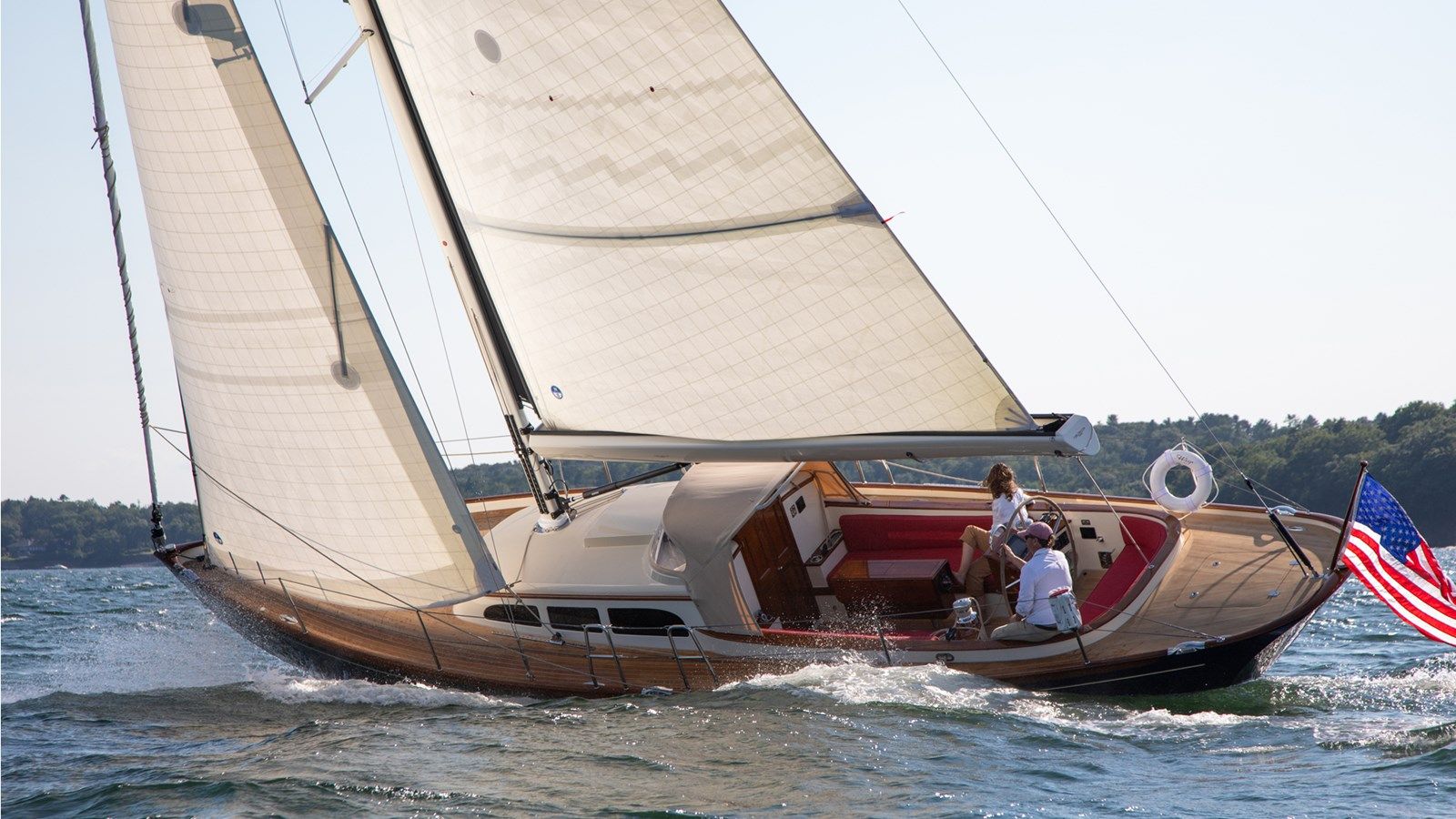
Within the classic‑yacht community, Artisan Boatworks has developed a reputation for meticulous workmanship, faithful aesthetics, and boats that feel “right” under sail. Owners and sailors consistently note the fair hull forms, accurate sheer lines, and refined brightwork that characterize the yard’s output. The company’s boats are widely regarded for balancing period‑correct detailing—such as bronze hardware, well‑proportioned coamings, laid decks, and traditional spar tapers—with practical updates that improve reliability and reduce maintenance.
Quality at Artisan Boatworks is expressed through materials, methods, and documentation:
Artisan Boatworks’ projects have been regularly featured in regional and international boating publications that cover traditional craft, including WoodenBoat, Classic Boat, and Maine Boats, Homes & Harbors. The yard’s boats are frequent participants at classic regattas and boat shows in New England, where their finish quality and thoughtful engineering are visible up close. Beyond craftsmanship, the company contributes to the broader wooden‑boat ecosystem by collaborating with class associations and archives to keep historical lines in active production, and by training the next generation of shipwrights in Maine’s enduring boatbuilding tradition.
The net result is a brand perceived as both guardian and innovator: respectful of heritage, practical about maintenance, and enthusiastic about getting owners sailing. Whether launching a new Herreshoff‑inspired daysailer, completing a museum‑grade restoration, or preparing a small fleet for a busy summer calendar, Artisan Boatworks is known for delivering boats that are beautiful, serviceable, and a pleasure to sail.
Artisan Boatworks est un chantier naval américain spécialisé dans la construction et la restauration de bateaux en bois classiques. Fondé au début des années 2000 par le constructeur naval et marin Alec Brainerd à Rockport, dans le Maine, le chantier s’est donné pour objectif d’allier l’esthétique des yachts du début du XXe siècle avec des procédés modernes fiables afin d’offrir des bateaux à la fois authentiques et durables. Le cœur de métier du chantier concerne les day‑boats, les séries monotypes et les petits yachts où la précision de la charpente, l’équilibre des formes et la qualité des finitions font toute la différence.
Artisan Boatworks s’est rapidement fait connaître pour ses constructions neuves fidèles à l’esprit des grands designers américains comme Nathanael G. Herreshoff. Les modèles typiques incluent des monotypes et day‑boats entre 12 et 25 pieds, réputés pour la pureté de leurs lignes et leur plaisir à la voile. Le chantier s’appuie sur des plans historiques conservés dans des archives maritimes, qu’il adapte lorsque nécessaire au collage moderne, au contreplaqué moulé et aux revêtements époxy, tout en conservant l’apparence et le comportement sous voiles des originaux.
Au fil du temps, l’entreprise a développé trois pôles complémentaires: constructions neuves, restauration/réparations et services annuels (stockage, entretien, mise en main). Le service de courtage du chantier aide également les propriétaires à acheter ou céder des bateaux classiques sélectionnés, favorisant une transmission soignée des unités remarquables et un accompagnement des nouveaux propriétaires.
États‑Unis d’Amérique (Maine).
Le chantier opère à Rockport, dans le Maine (région de Penobscot Bay). Les installations comprennent un atelier de charpente, des zones dédiées aux finitions peinture/vernissage, ainsi que des espaces pour le gréement et la fabrication des espars. Le chantier assure également l’hivernage et l’entretien d’une flotte de day‑boats et de petits yachts, avec les essais en mer réalisés à proximité.
Artisan Boatworks est dirigé par son fondateur, Alec Brainerd. L’équipe rassemble des charpentiers de marine, menuisiers, finisseurs et gréeurs expérimentés, organisés en petites unités de production pour garantir une attention continue à chaque projet. La transmission des savoir‑faire traditionnels et l’encadrement des jeunes artisans sont au cœur de la culture d’atelier.
La réputation d’Artisan Boatworks repose sur une exécution soignée, des détails fidèles et des bateaux plaisants à naviguer. Les matériaux sont sélectionnés en fonction de leur usage (cèdre, acajou, chêne blanc, épicéa de Sitka), complétés par des colles et revêtements modernes, et par une visserie en bronze. Les méthodes privilégient le moulage à froid et le collage moderne pour limiter les mouvements du bois, tandis que les restaurations respectent la construction originelle lorsque l’authenticité prime. Les réalisations sont régulièrement présentées dans la presse nautique spécialisée et visibles lors d’événements classiques en Nouvelle‑Angleterre.
Artisan Boatworks es un astillero estadounidense dedicado a la construcción y restauración de embarcaciones clásicas de madera. Fundado a comienzos de la década de 2000 por el maestro carpintero de ribera y regatista Alec Brainerd en Rockport (Maine), el astillero nació con una idea clara: recrear y mantener la elegancia de los diseños históricos, combinándola con técnicas modernas que mejoran la resistencia, la estabilidad dimensional y la facilidad de mantenimiento.
Desde sus primeros proyectos, el astillero se ha centrado en veleros de pequeño porte: day‑sailers, clases monotipo y pequeños yates donde la carpintería, el ajuste de líneas y la calidad del barniz son determinantes. Utilizando planos originales y documentación de archivo, Artisan Boatworks construye nuevas unidades inspiradas en diseños estadounidenses emblemáticos, afinando los escantillones y los métodos de unión para aprovechar el laminado en frío, el encapado con epoxi y los acabados contemporáneos, sin perder el “alma” de las embarcaciones clásicas.
Con el tiempo, el negocio se ha estructurado en tres áreas: obra nueva, restauración y servicios integrales (almacenaje invernal, mantenimiento, puesta a punto). El área de corretaje acompaña a los propietarios en la compra/venta de barcos clásicos, asegurando buenas prácticas de custodia y asesoramiento a armadores noveles.
Estados Unidos de América (Maine).
Las instalaciones se encuentran en Rockport, Maine, en la región de Penobscot Bay. El astillero dispone de taller de carpintería, zonas de pintura y barniz, espacios para jarcia y fabricación de mástiles, además de hangares para invernaje. Las pruebas de mar y entregas suelen realizarse en aguas locales, y el astillero coordina transporte para clientes en otras regiones o países.
La empresa es de propiedad privada y está dirigida por su fundador, Alec Brainerd. El equipo, formado por carpinteros de ribera, ebanistas, barnizadores y jarcia, trabaja en grupos reducidos para mantener un alto nivel de detalle en cada fase. La formación de nuevos artesanos y la continuidad de técnicas tradicionales son elementos clave de la cultura de taller.
Artisan Boatworks goza de prestigio entre los aficionados a los clásicos por la fidelidad estética, la mano de obra minuciosa y la grata sensación de navegación de sus barcos. La selección de maderas adecuadas (cedro, caoba, roble blanco, pícea de Sitka), el uso de epoxis y herrajes de bronce y la adopción de construcción laminada en frío reducen el mantenimiento y mejoran la rigidez estructural. Sus proyectos han sido destacados en publicaciones especializadas y participan habitualmente en encuentros y regatas de clásicos en Nueva Inglaterra.
Artisan Boatworks ist eine renommierte US‑Werft für klassische Holzboote. Gegründet wurde sie Anfang der 2000er Jahre von Bootsbauer und Segler Alec Brainerd in Rockport (Maine). Ziel der Werft ist es, den Charme und die Linienführung historischer Entwürfe mit zeitgemäßen Bauweisen zu verbinden, sodass Boote entstehen, die authentisch aussehen, hervorragend segeln und zugleich langlebig und wartungsfreundlich sind.
Der Schwerpunkt liegt auf kleinen Yachten und One‑Design‑Klassen—genau in dem Größenbereich, in dem feine Handarbeit, faires Spantbild und saubere Beschläge am deutlichsten sichtbar werden. Unter Verwendung historischer Risse aus Archiven baut die Werft neue Boote nach klassischen Vorbildern und passt, wo sinnvoll, Spantenstärken und Verbindungen an moderne Klebetechniken (Kaltformbau, Epoxid) an.
Mit den Jahren hat Artisan Boatworks drei Standbeine entwickelt: Neubau, Restaurierung/Refit und ganzjährige Betreuung (Einlagerung, Pflege, Frühjahrsüberholung). Eine eigene Brokerage unterstützt Eigner beim Kauf oder Verkauf klassischer Boote und sorgt dafür, dass wertvolle Rümpfe in gute Hände kommen.
Vereinigte Staaten von Amerika (Bundesstaat Maine).
Die Produktion befindet sich in Rockport, Maine, unweit der Penobscot Bay. Die Anlagen umfassen Holzbau‑Werkstatt, Lack- und Farbräume sowie Bereiche für Rigg und Sparbau; außerdem stehen Hallen für die Wintereinlagerung zur Verfügung. Probefahrten und Übergaben finden auf den umliegenden Gewässern statt; Transporte zu Eignern in anderen Regionen werden koordiniert.
Eigentümer und Geschäftsführer ist der Gründer Alec Brainerd. In der Werkstatt arbeiten erfahrene Schiffszimmerer, Schreiner, Lackierer und Rigger in kleinen Teams. Ausbildung, Sicherheit und die Weitergabe traditioneller Methoden sind zentrale Elemente der Firmenkultur.
Artisan Boatworks wird in der klassischen Szene für präzises Handwerk, stimmige Proportionen und seglerische Qualitäten geschätzt. Ausgewählte Hölzer (z. B. Zeder, Mahagoni, Weiß‑Eiche, Sitka‑Fichte), Bronze‑Beschläge und moderne Harzsysteme bilden die Grundlage; Kaltform‑Bauweise und Epoxid‑Verklebungen minimieren Holzbewegung und Instandhaltungsaufwand. Projekte der Werft erscheinen regelmäßig in einschlägigen Fachzeitschriften und sind auf Veranstaltungen in Neuengland präsent.
Artisan Boatworks è un cantiere statunitense specializzato nella costruzione e nel restauro di barche classiche in legno. Fondato nei primi anni 2000 dal maestro d’ascia e velista Alec Brainerd a Rockport, Maine, il cantiere unisce l’eleganza dei progetti storici con tecniche moderne, così da ottenere barche autentiche nello stile, piacevoli alla vela e più semplici da mantenere.
Sin dall’inizio l’attenzione si è concentrata su day‑sailer, classi monotipo e piccoli yacht, dove qualità di carpenteria, linee d’acqua corrette e finiture di alto livello sono fondamentali. Partendo da piani originali conservati negli archivi, il cantiere realizza nuove costruzioni ispirate ai grandi designer americani, adattando quando opportuno gli scafi a costruzione a freddo, incollaggi strutturali ed epossidici e cicli di verniciatura contemporanei.
Oggi Artisan Boatworks opera su tre fronti: nuove costruzioni, restauro/refit e servizi annuali (ricovero invernale, manutenzione, preparazione stagionale). Il servizio di brokeraggio affianca gli armatori nell’acquisto e nella vendita di barche classiche selezionate, con particolare attenzione alla continuità della buona custodia.
Stati Uniti d’America (Maine).
Le attività produttive si svolgono a Rockport, nel Maine, nell’area della Penobscot Bay. Il cantiere dispone di officina di carpenteria, reparti dedicati a verniciatura e pittura, aree per rigging e costruzione degli alberi, oltre a spazi coperti per lo stoccaggio invernale. Le prove in mare e le consegne si effettuano nelle acque locali; è possibile organizzare il trasporto verso altre regioni o all’estero.
La proprietà e la guida dell’azienda fanno capo al fondatore, Alec Brainerd. La squadra è composta da carpentieri, falegnami, finitori e rigger esperti, con una forte cultura di mentoring che tramanda tecniche tradizionali alle nuove generazioni.
Nella comunità degli yacht classici, Artisan Boatworks è apprezzata per la cura del dettaglio, la fedeltà estetica e le ottime doti veliche delle sue barche. La selezione dei materiali (cedro, mogano, quercia bianca, abete Sitka), l’uso di resine epossidiche e di ferramenta in bronzo, insieme alla costruzione laminata a freddo, riducono l’assorbimento di manutenzione e aumentano la stabilità strutturale. I progetti del cantiere compaiono regolarmente su riviste specializzate e sono presenti a eventi dedicati alle barche d’epoca in New England.
Artisan Boatworks operates in a specialized slice of the boatbuilding world: new construction and restoration of classic wooden daysailers and small yachts, especially designs inspired by early- to mid-20th-century American naval architects. Within that niche, competition is defined less by mass production and more by reputation, craftsmanship, and the ability to deliver faithful, serviceable classics. The following companies are widely regarded as Artisan Boatworks’ principal competitors or close peers, either because they build similarly sized wooden sailboats, reproduce or support historic one-design classes, or because they attract the same clientele for restorations, storage, and seasonal care.
Brooklin Boat Yard (Brooklin, Maine) Often cited among the most accomplished wooden boatyards in North America, Brooklin Boat Yard (BBY) specializes in high-end cold‑molded sail and power yachts as well as major restorations. While many BBY projects are larger than the typical Artisan Boatworks daysailer, both yards attract owners who value wooden construction, fair lines, and exacting finishes. BBY’s reputation for meticulous engineering and its in-house design capability (including work derived from Joel White’s legacy) make it a competitor for clients considering a bespoke wooden boat from 25 feet upward or a museum-grade restoration.
Rockport Marine (Rockport, Maine) Situated in the same town as Artisan Boatworks, Rockport Marine is known for custom wooden yachts, significant restorations, and refits of historically important vessels. The shop’s range includes traditional plank-on-frame work and modern wood-epoxy construction. Because Rockport Marine handles both sophisticated refits and new builds in the classic idiom, owners evaluating a broader or larger project may compare it alongside Artisan Boatworks—especially when a project migrates beyond the 12–25 foot daysailer segment into medium-size yachts.
French & Webb (Belfast, Maine) French & Webb focuses on custom wooden construction, restoration, and premium finishing, including growing experience with electric or hybrid auxiliary systems. Their project mix and aesthetic orientation—wooden craft with traditional lines and modern reliability—overlap with the sensibilities of clients who are drawn to Artisan Boatworks. For owners contemplating a wooden daysailer with discreet modern systems or a high-standard restoration, French & Webb is an alternative.
Gannon & Benjamin Marine Railway (Vineyard Haven, Massachusetts) Based on Martha’s Vineyard, Gannon & Benjamin is dedicated to designing, building, and restoring wooden boats using traditional methods. The firm’s ethos and clientele align closely with the classic sailing culture that also sustains Artisan Boatworks. While Gannon & Benjamin often undertakes bespoke new builds and larger restorations, owners shopping for top-tier authenticity and craftsmanship may weigh the two yards, particularly for purely traditional plank-on-frame work.
Arey’s Pond Boat Yard (Orleans, Massachusetts) Arey’s Pond is synonymous with Cape Cod catboats—traditional, beamy, single-sail craft that appeal to the same audience that prizes heritage aesthetics and shoal-water versatility. Though the catboat market is a distinct design lineage, Arey’s Pond competes directly for owners seeking a small, premium wooden (or wood-epoxy) daysailer built in New England with first-class joinery, varnish, and rigging support.
Beetle Inc. (Wareham, Massachusetts) Builder of the iconic wooden Beetle Cat, Beetle Inc. serves a thriving one-design fleet. The Beetle Cat is smaller than many Artisan Boatworks projects, but the two companies occupy adjacent territory: faithful reproductions of historic wooden designs, bronze hardware, and careful finish work. For families, junior sailors, and yacht clubs, a new Beetle Cat competes with other classic small-craft choices, including Herreshoff-inspired daysailers.
Cape Cod Shipbuilding (Wareham, Massachusetts) Cape Cod Shipbuilding builds fiberglass versions of several classic classes (e.g., the Bull’s Eye and fiberglass interpretations of the Herreshoff 12½ lineage, Wianno Senior, Shields). While not a wooden-boat builder, CCS’s offerings target the same aesthetic and sailing experience with lower maintenance, sometimes competing directly with owners considering a new wooden 12½‑type or 15‑foot one-design from Artisan Boatworks.
Classic Boat Shop (Bernard, Maine) Classic Boat Shop is known for the Pisces 21, a wood-epoxy interpretation of the Herreshoff 12½ idea scaled to a slightly larger platform. For a buyer considering a premium New England daysailer with classic lines, the Pisces 21 competes directly with Herreshoff-inspired new builds and restorations offered by Artisan Boatworks.
Hylan & Brown Boatbuilders (Brooklin, Maine) Hylan & Brown builds and restores traditional wooden boats, including smaller sailing craft that appeal to the same clientele. Their catalog and custom work embrace glued-lapstrake and cold‑molded methods similar to those employed on many contemporary wooden reproductions, placing them in the same competitive landscape for small classic sailboats.
Ballentine’s Boat Shop (Cataumet, Massachusetts) Ballentine’s is deeply involved with classic one-designs and daysailers—restoring, maintaining, and supporting fleets in southern New England. The shop’s focus on Herreshoff-class stewardship and its reputation for high-quality traditional work make it a meaningful alternative for owners prioritizing restoration quality, class compliance, and long-term fleet care.
Van Dam Custom Boats (Boyne City, Michigan) Van Dam builds extraordinary wood-epoxy custom boats—more often high-performance powerboats, but also notable sailboats. While geography and typical project types differ, Van Dam competes for clients who want the absolute pinnacle of wooden craftsmanship, machining, and finishing—an overlapping, discerning customer base.
International comparables and “adjacent” competitors Beyond New England, a few international builders (e.g., Spirit Yachts in the UK with wood-epoxy “modern classics,” or Swallow Yachts with wood-epoxy daysailers) sometimes compete for the same aesthetic brief and owner profile, especially when a buyer is open to import and composite/wood hybrids. Though these firms work at different scales and specifications, the buyer’s decision matrix—classic lines, wooden feel, and modern maintenance profile—can align with what Artisan Boatworks offers.
How Artisan Boatworks differentiates:
For classic‑boat buyers making comparisons, the decision often comes down to intended use (racing within a specific one-design class versus versatile daysailing), preferred construction approach (traditional plank-on-frame versus modern cold‑molded/epoxy), maintenance appetite, and the degree of historical fidelity desired. Artisan Boatworks’ reputation is strongest where authenticity of look and feel is paramount but long-term serviceability with modern adhesives and coatings is welcome.
As of the most recent publicly available information through late 2024, Artisan Boatworks is an active yard operating from Rockport, Maine. Its business model blends three ongoing lines of work that together characterize its production status:
Operational cadence and capacity considerations:
Market positioning and demand dynamics:
Business continuity indicators:
In practical terms for a prospective owner today, all signs point to Artisan Boatworks continuing to accept commissions, schedule restorations, and provide storage/service from its Rockport facility. Lead times will vary based on the scope of work and the season; prospective clients typically begin conversations months (and for new builds, often a year or more) in advance of desired delivery to align on specifications, materials, and finish dates.
Owners considering a new wooden daysailer or the restoration of a classic small yacht will find that Artisan Boatworks’ current production framework is optimized for high‑touch, craft‑intensive projects, where the yard’s blend of historic fidelity and modern reliability can be fully expressed on the water.
Question:What kinds of boats does Artisan Boatworks specialize in?
Answer:The yard is best known for building and restoring small classic sailing yachts and daysailers in wood, typically in the 12–30 foot range overall, with many projects centered on historic American one-designs and knockabouts. Think Herreshoff-inspired 12½‑footers, 15‑foot LWL one-designs, and Dark Harbor‑type daysailers with long overhangs and lean waterlines. The emphasis is on boats that display fine craftsmanship—fair hulls, elegant sheerlines, bronze hardware, and brightwork—and that sail with the lively, balanced feel associated with classic designs.
Question:Do they produce series boats or build to order?
Answer:Builds are typically to order rather than mass-produced. The yard works from archival plans or class drawings and then executes a custom specification for each owner—finish schedule, hardware patterns, rig details, and any discreet modern conveniences. Several designs are “canonical” in their portfolio and are repeated regularly, but each hull is treated as a bespoke project.
Question:Are their reproductions class compliant and historically faithful?
Answer:Yes, fidelity to the original design intent is a core value. When a build is intended for a particular one-design fleet, scantlings, sail plans, and hardware placement are aligned with the relevant class rules. Where no active class stipulates details, the yard uses original plans and period documentation as the baseline and adds carefully considered updates (such as adhesive systems and coatings) that do not alter the visual grammar or sailing character.
Question:What construction methods are used—traditional plank-on-frame or modern wood-epoxy?
Answer:Both are used, depending on project goals. For many new builds, the yard favors cold‑molded or glued‑lapstrake wood‑epoxy construction for dimensional stability, stiffness, and reduced maintenance. For historically significant restorations, traditional plank‑on‑frame work is performed when authenticity demands it. In either case, the visible finish and detailing (seams, rivets where appropriate, bronze hardware, spar tapers) support a classic presentation.
Question:Which woods and materials are common in their projects?
Answer:Typical species include white oak for backbone and floors, cedar or mahogany for planking and interior joinery (depending on the design), and Sitka spruce for spars. Marine epoxies and modern bedding compounds are used strategically, and hardware is often bronze to match period practice and resist corrosion. Coating systems are chosen with an eye toward UV stability and service intervals suitable for active seasonal use.
Question:Do these boats have engines?
Answer:Classic daysailers in this size range are primarily sail-driven and often carry no inboard engine. However, many owners opt for discreet auxiliary solutions such as a removable electric outboard on a transom or well mount, or a compact electric pod that can be hidden when not in use. Such choices are specified to preserve the boat’s lines and quiet, vibration‑free character.
Question:How demanding is maintenance on a modern wood-epoxy classic?
Answer:Maintenance is predictable when managed professionally. Wood‑epoxy hulls minimize seasonal movement, which stabilizes paint and varnish systems. Expect an annual spring commissioning routine (bottom prep, paint, and touch‑up varnish cycles) and periodic full varnish re‑coats driven by UV exposure and usage. Traditional plank‑on‑frame boats require a bit more vigilance, but with proper storage and care, both construction types deliver long service life and excellent cosmetics.
Question:What storage conditions are recommended?
Answer:Controlled indoor storage is preferred for wooden craft. Stable temperature and humidity reduce checking and movement and allow coatings to last longer. Many owners follow a rhythm of fall haul‑out and inspection, off‑season maintenance and refinishing, and spring launch with rig stepping and sea trials.
Question:Are these boats raced competitively or mainly for day sailing?
Answer:Both. Many of the designs commonly built and restored—12½‑footers, 15‑foot LWL knockabouts, and Dark Harbor classes—support active or reviving racing fleets in several regions. Others are enjoyed primarily as elegant, stable daysailers for family sailing and harbor cruising. Where fleets exist, new builds can be configured to race under class rules.
Question:How “custom” can a specification be without losing authenticity?
Answer:There is room for personalization—coaming geometry, choice of brightwork versus paint in select areas, spar finish, deck hardware patterns within period vocabulary, and subtle updates to sail handling. If a boat is destined for an active class, the envelope for customization is narrower; if it’s a standalone daysailer, there is more freedom so long as changes respect the design’s proportions and balance.
Question:What rigs are typical—gaff or Bermuda?
Answer:It depends on the design and the fleet. The 12½‑foot tradition is commonly gaff‑rigged, though some related classes have Bermuda (Marconi) variants. The 15‑foot LWL one‑designs and Dark Harbor‑type boats are most often Bermuda sloops today. For restorations, the original rig plan is followed unless the owning fleet specifies otherwise.
Question:What are realistic performance expectations?
Answer:Performance is best described as crisp, smooth, and confidence‑inspiring, with excellent balance and high joy-per-knot rather than raw speed. Maximum speeds under sail align closely with displacement hull speed: for a 12½‑foot LWL boat, roughly 4.7 knots; for a 15‑foot LWL boat, around 5.2 knots; for a 17½‑foot LWL boat, around 5.6 knots; and for a 20‑foot LWL boat, on the order of 6 knots. Acceleration is gentle, motion is seakindly for the size, and tracking is excellent.
Question:Are there cabin accommodations?
Answer:Most boats in this niche are open-cockpit daysailers with generous cockpit space and minimal or no below‑deck accommodation. Some designs (for example, the longer Dark Harbor‑type) can include a small cuddy or stowage space forward, but full standing‑headroom cabins are not typical in this segment.
Question:What safety and modern systems can be integrated unobtrusively?
Answer:Common upgrades include automatic or semi‑automatic bilge pumping, modern wiring with discreet LED navigation lights, compact battery systems for pumps and lights, and electrified auxiliary propulsion. All are implemented to be as invisible as practical, preserving the boat’s classic appearance.
Question:What’s the typical timeline for a new build?
Answer:Timelines vary with the size and complexity of the boat and the seasonality of the shop schedule. A small daysailer build measured in the low‑to‑mid 20‑foot range commonly runs several months from lofting to launch, with lead time affected by current workload and material logistics. Restorations range from short off‑season refits to multi‑season conservation projects.
Question:How do these wooden classics compare with fiberglass “heritage” boats?
Answer:Fiberglass interpretations of classic designs offer lower cosmetic maintenance, but they rarely match the tactile and visual richness of a wooden build. A well‑executed wood‑epoxy classic rewards the owner with a livelier helm, quieter motion, and timeless detailing—at the cost of accepting a disciplined varnish and paint routine.
Question:What about resale and stewardship?
Answer:Quality wooden classics tend to hold value when maintained carefully and supported by proper documentation. Because many builds and restorations are tied to active one-design communities, there is a knowledgeable pool of future owners who appreciate authentic specification and good cosmetic condition.
Question:Is it feasible to trailer these boats?
Answer:Smaller models (e.g., 12½‑type) are eminently trailerable with an appropriate vehicle and a properly set up cradle or trailer. The longer 15‑foot LWL and 17½‑foot LWL boats can also be trailered, but owners often prefer seasonal storage and local launching. Dark Harbor‑type boats at the larger end of the range typically move by professional transporters.
Question:What distinguishes the yard’s finish work?
Answer:Attention to fairing, consistency of plank lines, precise coaming geometry, clean hardware bedding, and disciplined varnish cycles are hallmarks. Spars receive proportionally correct tapers and consistent brightwork. The result is a visual coherence that reads “classic” even to the untrained eye.
Question:Are there options for sustainable material choices?
Answer:Many wooden‑boat yards actively seek responsibly harvested timber, efficient resin systems, and durable coatings that extend service intervals. Owners can discuss species substitutions where appropriate and finishes that balance environmental considerations with longevity and aesthetics.
Question:Can a new build be optimized for family sailing rather than racing?
Answer:Absolutely. Layout and hardware can be specified for easy reefing, reliable self‑tacking jibs in some designs, non‑skid patterns balanced with brightwork, and seat geometry that keeps crews comfortable during long afternoons under sail. The philosophy is to fit the boat to the owner’s intended use while keeping the design’s soul intact.
[Continue the list of questions and answers as needed.]
Note: Artisan Boatworks is a custom wooden‑boat builder rather than a mass‑production brand. “Models” below describe canonical designs they are known to build faithfully or restore regularly. Characteristics are typical for their respective classes; individual specifications may vary slightly depending on the chosen plan set, class rules, and owner preferences.
Herreshoff 12½‑Type Daysailer
15‑Foot LWL One‑Design (Buzzards Bay 15 / Watch Hill 15 lineage)
Dark Harbor 17½‑Type Daysailer
Dark Harbor 20‑Type Daysailer
Classic Catboat (15–17 ft range)
Custom Glued‑Lapstrake Daysailer (18–22 ft)
Heritage Dinghy and Tenders (10–14 ft)
Performance, handling, and configuration across the portfolio:
Why these “models” are compelling today:
In summary, Artisan Boatworks’ “Available Models” are best understood as a curated set of classic small‑yacht designs—newly built to order or restored to a high standard—rather than a fixed catalog. Owners typically begin by choosing a design family (12½‑type, 15‑foot LWL one‑design, Dark Harbor 17½, Dark Harbor 20, a traditional catboat, or a custom glued‑lapstrake daysailer), then work through rig, finish, and hardware options to match intended use. The result is a wooden classic that looks right, sails beautifully, and can be maintained predictably with professional care, season after season.

Learn more on the “ARTISAN BOATWORKS”
To learn more on the “ARTISAN BOATWORKS” or to get advice on how to buy or sell a yacht or get a great price for a yacht charter
please call +1 (954) 274-4435 USAOnly deal with professionals!
