
 Licensed Yacht BrokersSales and service of yachts and ships
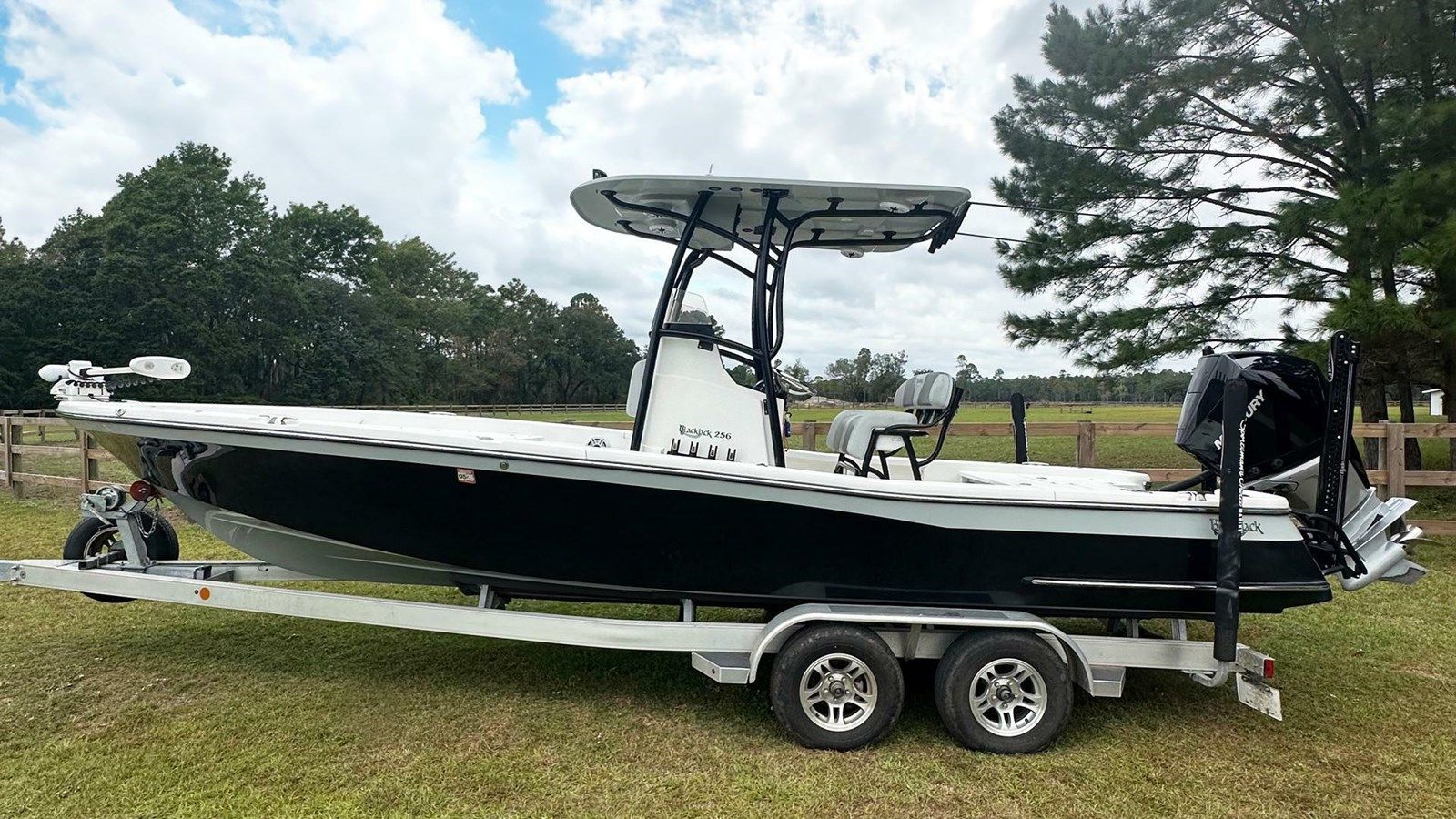
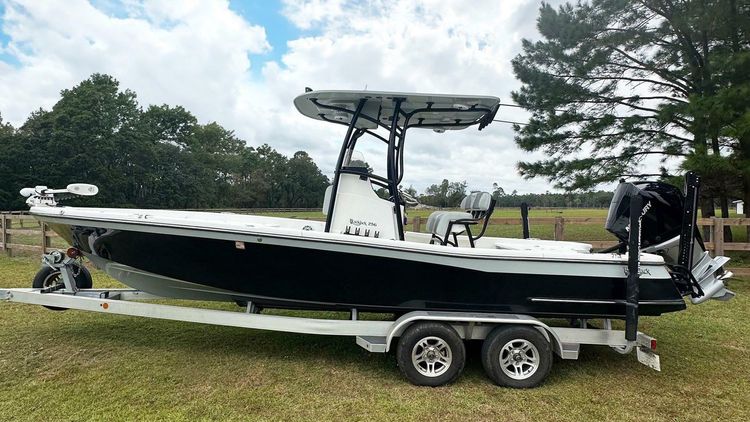
BLACKJACK - For Sale
English — BlackJack Boats
Country of Origin
United States. BlackJack is recognized as an American brand rooted in the coastal boating culture of the U.S. South and Gulf Coast, where inshore and nearshore angling traditions have shaped the design priorities of modern bay boats. The brand identity, dealer presence, and owner community are closely aligned with American standards of construction, outfitting, and service.
Reputation and Quality
BlackJack Boats is widely regarded among anglers and coastal boaters for producing premium bay boats that emphasize a blend of fishability, comfort, and refined finish. Within the category, the brand is associated with:
- Clean, high-quality gelcoat and detailed rigging.
- Dry, confident running characteristics with a hull form suited to choppy bays and inlets.
- Ample casting space fore and aft, large livewells, and efficient deck layouts that reflect real-world fishing needs.
- A level of fit-and-finish and hardware selection that positions the product as an upscale offering in the bay-boat segment.
Performance and ride are frequent talking points among owners. BlackJack hulls are typically optimized for fast hole shot, predictable tracking at speed, and good lateral stability at rest, enabling anglers to fish comfortably on the bow or stern platforms. The design brief tends to balance shallow draft for inshore access with enough freeboard and flare to handle the slop that often develops in open bays or on a wind-against-tide day at a coastal inlet.
Fishability is a core trait. You’ll find wide, uncluttered casting decks; recessed hardware to minimize snags; smart rod storage under the gunwales; and livewell systems sized for real bait demands (pilchards, mullet, shrimp, croaker) with plumbing designed to keep bait healthy during long days. Tackle organization, cooler integration, and helm ergonomics are treated as essential rather than add-on considerations, which is part of why many tournament and charter anglers keep the brand on their shortlist.
Build quality is another pillar of the brand’s reputation. Owners and technicians often point to details like:
- Substantial stringer and deck support systems that result in a solid, quiet ride.
- Thoughtful electrical rigging with labeled wiring and protected runs for easier serviceability.
- Through-bolted hardware in high-load areas, sturdy latches and hinges, and robust anodized aluminum work for leaning posts and T-tops.
- Composites usage tailored to reduce rot concerns and maintain structural integrity over years of hard use.
From a user-experience perspective, BlackJack models tend to be straightforward to own and operate. Helm layouts favor clear sight lines to instrumentation, tidy switch panels, and modern electronics integration. Families appreciate convertible seating, backrests that deploy when needed without intruding on deck space, and upholstery that stands up to sun, salt, and frequent cleanings. The result is a boat that can run a dawn-to-dusk fishing mission but also host a casual sandbar afternoon without compromise.
In terms of value, the brand’s position is upper-tier within the bay-boat spectrum. Buyers choose BlackJack for craftsmanship, ride quality, and pride of ownership more than for rock-bottom price. That positioning typically translates into respectable resale strength, provided boats are maintained and documented. The dealer network in coastal markets contributes to that value by providing rigging expertise, warranty support, and pre-delivery preparation tailored to how these boats are actually used (e.g., trolling-motor installations with on-board charging, dual Power-Poles, jack plates, and electronics packages suited to local waters).
Owner communities and regional events also reinforce the brand’s profile. While specifics vary by market, you frequently see BlackJack representation at inshore tournaments, local club events, and brand days at dealers. That visibility has helped the boats become a familiar presence on the Texas–Louisiana–Mississippi–Alabama–Florida coasts and in many Southeastern markets where a bay boat can serve double duty in nearshore applications.
Safety and reliability are part of the perceived quality. Standard and optional equipment is commonly chosen with real-world redundancy in mind—dual batteries and switches, high-capacity bilge pumps, non-skid that remains grippy when wet, and secure grab points around the helm and cockpit. The hulls are engineered to keep spray down, which not only improves comfort but can reduce fatigue for the helm and crew on windy days.
Finally, customization and rigging flexibility are part of what gives the brand staying power. Buyers can tailor boats with:
- Trolling-motor provisions and lithium-ready charging solutions.
- Jack plates for shallow-water performance tuning.
- Shallow-water anchors, leaning post variants, and helm seating choices.
- Electronics packages scaled from essential to tournament-ready.
- Livewell upgrades and plumbing tweaks to match regional bait and target species.
All of this supports a reputation that balances premium craftsmanship with practical fishability. In short, BlackJack Boats has carved out a space where performance on the water, durability under hard use, and refined finishes meet. For anglers and families who spend serious time inshore and nearshore—and who want a boat that looks as sharp as it fishes—the brand is a well-regarded option in the American bay-boat landscape.
Español — BlackJack Boats
País de origen
Estados Unidos. BlackJack es una marca estadounidense con raíces en la cultura náutica de la Costa del Golfo y el sudeste del país, donde la pesca costera e inshore define las prioridades de diseño para las bay boats modernas.
Reputación y calidad
BlackJack Boats goza de una sólida reputación entre pescadores y navegantes costeros por construir bay boats de alta gama que equilibran pescabilidad, comodidad y acabados refinados. Se destacan por:
- Acabados de gelcoat limpios y un rigging ordenado.
- Navegación seca y segura gracias a cascos optimizados para bahías e inlets.
- Amplias plataformas de pesca, viveros generosos y cubiertas organizadas para el uso real.
- Selección de herrajes y tapicería de nivel superior, con atención a la durabilidad y el detalle.
El rendimiento suele remarcarse por su salida rápida, estabilidad lateral en reposo y comportamiento predecible a velocidad. La marca busca calado reducido para pescar en aguas someras, sin renunciar a suficiente francobordo y flare en proa para afrontar el oleaje típico de bahías abiertas. La pescabilidad se refuerza con cubiertas despejadas, herrajes empotrados, almacenamiento para cañas bajo las bordas y viveros bien diseñados para mantener el cebo vivo durante toda la jornada.
En construcción, BlackJack prioriza estructuras sólidas, cableado protegido y etiquetado para facilitar el mantenimiento, herrajes atornillados en zonas de carga y el uso de compuestos que minimizan problemas de pudrición. La ergonomía del puesto de mando, asientos convertibles y textiles resistentes a la intemperie facilitan su doble uso: pesca intensa y salidas familiares.
En cuanto al valor, la marca se posiciona en el segmento premium de bay boats, con buena retención en reventa cuando se mantiene el equipo en buen estado. La red de distribuidores en zonas costeras apoya con instalación de accesorios (motores eléctricos, anclas de poca profundidad, jack plates) y paquetes electrónicos adecuados a las aguas locales. Comunidades de propietarios y presencia en torneos regionales fortalecen su imagen, especialmente en el Golfo y el sureste estadounidense.
La seguridad se atiende con soluciones prácticas: sistemas eléctricos redundantes, bombas de achique de alta capacidad, superficies antideslizantes eficaces y puntos de agarre bien ubicados. La marca también ofrece posibilidades de personalización para adaptar el barco a especies, cebos y estilos de pesca locales. En conjunto, BlackJack destaca por combinar artesanía, rendimiento y funcionalidad real para el pescador costero moderno.
Français — BlackJack Boats
Pays d’origine
États‑Unis. BlackJack s’inscrit dans la tradition américaine des bay boats, fortement influencée par les pratiques de pêche côtière du Sud et de la côte du Golfe.
Réputation et qualité
BlackJack Boats est perçue comme une marque haut de gamme du segment des bay boats. Les points clefs cités par les utilisateurs incluent:
- Finitions soignées (gelcoat, sellerie, montage).
- Coque offrant une navigation sèche et rassurante dans le clapot.
- Ponts avant et arrière spacieux, vifs bien dimensionnés, rangements adaptés aux cannes et au matériel.
- Choix d’équipements et d’accastillage robustes, pensés pour un usage intensif en milieu salin.
La conception privilégie un tirant d’eau faible pour accéder aux zones peu profondes, tout en conservant suffisamment de protection à l’avant pour faire face au clapot de baie. La stabilité au mouillage et le comportement prévisible à vitesse de croisière facilitent la pêche à l’avant comme à l’arrière. Les schémas électriques soignés, la boulonnerie en zones de charge et l’emploi de matériaux composites s’alignent avec les attentes d’un produit premium.
Côté usage, les postes de pilotage sont clairs, compatibles avec l’intégration d’électronique moderne, et l’ergonomie des sièges permet d’alterner entre sorties pêche et balades familiales. La valeur de revente est généralement bonne, soutenue par des réseaux de concessionnaires côtiers capables de configurer les bateaux selon les pratiques locales (moteurs électriques, ancrages peu profonds, jack plates, électronique adaptée).
La communauté d’utilisateurs, la présence dans certains événements de pêche inshore et la réputation de fiabilité contribuent à l’image de marque. En synthèse, BlackJack associe une construction sérieuse, des aménagements réellement orientés pêche et une finition élégante, trois qualités recherchées par les plaisanciers côtiers exigeants.
Deutsch — BlackJack Boats
Herkunftsland
Vereinigte Staaten. Die Marke ist fest in der US‑Küstenbootkultur verankert, insbesondere entlang der Golfküste, wo flachgehende Bay Boats traditionell stark gefragt sind.
Ruf und Qualität
BlackJack gilt im Bay‑Boat‑Segment als hochwertige Option für Angler und Familien. Charakteristisch sind:
- Sorgfältige Verarbeitung von Rumpf, Gelcoat und Verkabelung.
- Trockener, vertrauenerweckender Lauf bei Kabbelwelle in Buchten und Mündungsbereichen.
- Großzügige Casting‑Decks, praxisgerechte Stauraumlösungen und effizient ausgelegte Lebendfischbehälter.
- Hochwertige Beschläge, robuste Polster und durchdachte Ergonomie am Steuerstand.
Die Rümpfe sind auf schnellen Antritt, Spurtreue und Stabilität im Stillstand ausgelegt. Das Zusammenspiel aus geringem Tiefgang und ausreichendem Freibord macht die Boote sowohl für Flachwasser als auch für offene, windige Buchten tauglich. In der elektrischen und mechanischen Installation achtet die Marke auf Servicefreundlichkeit und Dauerhaltbarkeit, was langfristig die Besitzkosten stabil hält.
Wertstabilität und Marktwahrnehmung profitieren von einer engagierten Händlerlandschaft in Küstenregionen. Diese sorgt für fachgerechte Vorkonfiguration, etwa mit Bugmotor, Flachwasserankern, Jack Plate und passender Elektronik. BlackJack spricht Käufer an, die Premium‑Verarbeitung und echte Praxistauglichkeit einem reinen Preisvorteil vorziehen. Das Ergebnis ist ein Boot, das sowohl den fordernden Angeltag als auch den Familienausflug souverän meistert.
Italiano — BlackJack Boats
Paese di origine
Stati Uniti. Il marchio nasce e si sviluppa nella cultura nautica costiera americana, con particolare attenzione alla pesca in lagune, baie e tratti litoranei del Golfo.
Reputazione e qualità
BlackJack Boats è considerato un riferimento premium tra le bay boat grazie a:
- Finiture curate e rigging pulito.
- Carene che offrono navigazione asciutta e sicura con mare corto.
- Piani di coperta pensati per la pesca: ampie aree di lancio, vasche del vivo capienti, spazi ordinati per canne e attrezzatura.
- Componentistica robusta e soluzioni ergonomiche adatte sia alla pesca intensiva sia all’uso familiare.
L’attenzione alla qualità costruttiva si riflette in strutture solide, cablaggi ordinati e protetti, ferramenta imbullonata in zone critiche e impiego di compositi per ridurre la manutenzione nel lungo periodo. La personalizzazione (motori elettrici, jack plate, ancore da bassi fondali, elettronica) consente di adattare l’imbarcazione alle esigenze locali e alle specie target. In termini di valore, la marca mantiene una buona reputazione di rivendibilità grazie a rete vendita competente e impostazione premium.
Português — BlackJack Boats
País de origem
Estados Unidos. A identidade da marca está ligada ao estilo de navegação costeira do Sul e do Golfo dos EUA, onde as bay boats são amplamente utilizadas.
Reputação e qualidade
A BlackJack é vista como uma escolha de alto padrão no segmento de bay boats. Pontos fortes:
- Acabamento refinado de casco e gelcoat, com instalação elétrica organizada.
- Navegação seca e estável em mares curtos de baías e estuários.
- Plataformas amplas de arremesso, viveiros eficientes e layout funcional para pesca.
- Materiais e ferragens duráveis, com foco na longevidade em ambiente salino.
Os modelos privilegiam calado raso sem abrir mão de proteção na proa, permitindo uso versátil entre áreas rasas e trechos de maior exposição. A rede de concessionários costeiros e a possibilidade de configuração sob medida (motor elétrico de proa, âncoras de pouca profundidade, jack plate, eletrônica) reforçam a proposta premium e a boa percepção de valor no mercado.
中文 — BlackJack Boats
发源国家
美国。BlackJack 源于美国南部与墨西哥湾沿岸的海钓文化,品牌定位与当地的近岸、浅水使用场景高度契合。
品牌声誉与质量
在湾钓船细分市场中,BlackJack 以做工精细、适钓性强、兼顾家用而受到认可。其典型特征包括:
- 优良的外观涂层与整齐的电气走线。
- 在近岸风浪中保持干爽、可控的航行品质。
- 宽阔的前后钓台、大容积活鱼舱、贴合实操的甲板动线与收纳。
- 选材扎实、五金可靠,耐晒耐盐,便于长期保养。
船体设计兼顾浅吃水与足够的首部防浪性能,既能进入浅滩洄湾,也能在常见的海湾短浪中稳定航行。经销商网络熟悉本地化加装(艏侧电动马达、浅水锚、升降尾板、电子设备整合等),帮助用户按目标鱼种与水域习惯进行定制。总体而言,BlackJack 将精细工艺与真实可用性结合,适合注重品质与体验的近岸海钓与家庭休闲用户。
Main Competitors
BlackJack operates in the premium bay-boat segment—typically single-outboard, shallow-draft center consoles ranging from roughly 22 to 26 feet, designed to run skinny water yet remain capable in open bays, tidal inlets, and nearshore conditions. In that competitive landscape, buyers typically cross-shop BlackJack with brands known for high-quality fit-and-finish, solid fishing ergonomics, and a dry, predictable ride. The most frequent competitors include:
-
Pathfinder (Maverick Boat Group): Pathfinder’s 2200/2400/2600 series widely define the category for many anglers in Florida and along the Gulf Coast. Pathfinder’s deep dealer network, consistent layouts for live bait fishing, and broad option sets often put them on the same shortlist as BlackJack for owners seeking premium fishability with family-friendly touches.
-
Yellowfin: Known for performance and top-tier finish, Yellowfin’s bay models (notably the 24 and 26) are common alternatives for buyers seeking a high-end build with strong resale, large casting decks, and a reputation for running well in a variety of bay and nearshore conditions.
-
Contender (25 Bay): The Contender 25 Bay is a performance-oriented benchmark in the 25-foot class. Buyers comparing ride, speed, and tournament-grade rigging often evaluate BlackJack against the Contender’s proven hull and competitive tournament pedigree.
-
Caymas (26 HB family): Caymas entered the bay segment with high visibility and the backing of seasoned leadership. The 26 HB targets anglers who want a hybrid layout (bay/nearshore crossover) with upscale finish and modern ergonomics. It is a frequent competitor to BlackJack’s larger offerings.
-
Everglades (243/253): Everglades’ bay/hybrid layouts, with strong emphasis on construction robustness and premium detailing, put them in the same consideration set for buyers who prioritize quality, safety-minded design, and refined finish.
-
Robalo (Cayman series): Robalo’s Cayman line competes on value, features, and broad dealer coverage. For some buyers, Robalo offers a strong price-to-feature proposition while still delivering solid fishability; this cross-shopping is common in the 22–26-foot range.
-
Blue Wave (PureBay series): Blue Wave is widely distributed across Texas and the Gulf states. The PureBay series typically appeals to anglers focused on live-bait capacity, roomy decks, and shallow-water performance, making them a practical alternative to BlackJack.
-
Sportsman (Masters series): Sportsman’s Masters 247/267 compete via comprehensive standard features, updated helm ergonomics, and strong dealer networks. Buyers weighing practicality and equipment levels often compare these directly with BlackJack.
-
Sea Pro (248/259 Bay): Sea Pro’s modern bay boats have become a go-to option for a combination of value and contemporary layout. Their presence across coastal dealers puts them in many head-to-head comparisons with BlackJack.
-
Skeeter (SX series): A long-standing player in inshore and nearshore fishing boats, Skeeter’s SX 240 and related models are often cross-shopped for their fish-first layouts, performance, and wide availability through established dealers.
-
Ranger Bay, NauticStar, Tidewater, Sea Hunt (BX series), and others: These builders cover a range from value-oriented to near-premium, depending on model and options. They are prevalent in Gulf and Southeast markets and often compete for the same customer—an inshore-focused angler who still needs occasional nearshore capability and family comfort.
-
Regional shallow-water specialists (Majek, Shallow Sport, Shoalwater, Dargel, among others): In Texas and parts of the Gulf, extremely shallow-draft sled and cat-hull designs compete for anglers prioritizing minimal draft and maximum deck space. While these boats serve a slightly different niche, buyers sometimes weigh the tradeoffs between that extreme shallow-water performance and the more generalist bay-boat versatility of brands like BlackJack.
How BlackJack fits within these competitors:
- Positioning: BlackJack is typically considered premium among bay boats, with an emphasis on clean rigging, high-quality finish, and thoughtful fishability. In terms of perceived brand status and detailing, BlackJack tends to be compared with Pathfinder, Yellowfin, Contender, and Caymas, while also competing credibly against well-equipped offerings from Sportsman, Blue Wave, and Sea Pro.
- Use case: BlackJack targets anglers who split time between shallow flats, open bays, and occasional nearshore runs. The boats are designed to stay dry in a chop, maintain lateral stability at rest for casting, and provide ample livewell and tackle management—key considerations for live-bait fisheries common in the Gulf and Southeast.
- Dealer and ownership experience: The brand’s presence in coastal markets and its reputation for solid hulls and tidy, serviceable rigging are part of the purchase decision, especially for anglers who value a quiet, rattle-free ride and clean electrical/mechanical execution. This places BlackJack in a similar user-experience discussion as Pathfinder and Yellowfin, where quality of execution is as important as the spec sheet.
When evaluating competitors, prospective buyers typically weigh:
- Hull performance and ride quality in short, steep bay chop.
- Draft and jack-plate compatibility for shallow-water access.
- Livewell capacity and plumbing reliability for sensitive bait.
- Deck ergonomics (casting deck size, snag-free hardware, toe-kick clearances).
- Electrical rigging quality and ease of service.
- Fit-and-finish, hardware durability, upholstery longevity.
- Factory options and dealer rigging capability (trolling motors, shallow-water anchors, electronics).
- Price, dealer support, and resale strength.
BlackJack’s competitive signature is that it leans into premium craftsmanship and practical fishability rather than chasing the absolute lowest price or the most radical design features. For owners who prioritize a refined build that stands up to frequent, real-world inshore use, BlackJack’s core strengths align tightly with how bay boats are actually fished on the Gulf and Southeastern coasts.
Current Production Status
BlackJack is in ongoing production. The brand is produced by K2 Marine, the company associated with the Kenner family, whose history in bay-boat design is well known in the inshore segment. K2 Marine builds BlackJack as the premium line and also markets Frontier as a sister brand aimed at delivering value-focused bay boats. Production for BlackJack continues to be oriented toward the needs of coastal anglers in the Gulf and Southeast, with dealer networks in those regions actively taking orders and displaying current model-year boats.
In practice, “ongoing production” is evidenced by:
- Active dealership ordering and stocking in key coastal markets.
- Consistent availability of current model-year boats configured with contemporary electronics, trolling motors, shallow-water anchors, and jack plates, as common for inshore rigging.
- Continued manufacturer and dealer participation in seasonal boat shows and demo events where BlackJack models are presented to prospective owners.
While each production year may bring incremental refinements—such as upholstery updates, hardware selections, or option-package adjustments—the defining traits remain: clean gelcoat work, solid structural execution, and angler-driven layouts. Buyers typically choose between engine brands offered by dealers in their region (commonly Yamaha or Mercury in this class), with rigging optimized to local fisheries (for example, a bow-mount trolling motor and charger suite for live bait or sight-fishing, and one or two shallow-water anchors for pinning the boat quietly on flats or shorelines).
The production approach emphasizes durability and serviceability. Owners and technicians frequently note attention to detail in wiring runs, labeling, access to pumps and plumbing, and robust hardware in high-load areas. These factors contribute to the brand’s reputation for a quiet ride (fewer rattles, well-secured components) and for boats that remain tight over years of use—a strong selling point for anglers who fish often and in varied conditions.
From a customer-experience perspective, ongoing production is matched by continued aftersales support through the dealer network. Warranty processing, parts availability, and service guidance typically flow through dealers with direct relationships to the factory—an essential piece of the ownership puzzle in saltwater environments, where fast, knowledgeable support can be as important as the initial purchase.
Production Volumes
[Section intentionally omitted. The company is privately held and does not publicly disclose reliable production volume figures. Where data is not publicly available or verifiable, it is not included.]
Latest News
In the absence of widely reported corporate announcements or structural changes, the most relevant “latest news” for BlackJack centers on steady operations and product continuity. As of the most recent model years, the brand continues to be actively built and retailed by its established dealer base, with model-year boats appearing in inventory and at regional shows throughout the Gulf and Southeast. This pattern suggests stable production, ongoing demand among inshore and nearshore anglers, and a predictable ownership pathway for prospective buyers who prefer proven platforms and refined finishes over headline-grabbing redesigns.
A few practical observations about the current landscape surrounding BlackJack (and how owners experience the brand today) include:
- Dealer activity: Coastal dealers continue to list current model-year BlackJack boats, offer sea trials or demo days seasonally, and provide turnkey rigging (trolling motors, lithium-ready charging solutions when requested, shallow-water anchors, and custom electronics packages). This ongoing dealer engagement is the day-to-day “news” that matters to most buyers—boats are being built, rigged, and delivered with support that reflects local fishery needs.
- Incremental updates: Like many premium bay-boat builders, BlackJack’s updates have historically leaned incremental rather than radical—refinements to seating ergonomics, livewell plumbing details, hardware choices, or color/finish selections. While not headline-worthy, these iterative improvements are often appreciated by owners who value reliability, service access, and consistent layouts.
- Market conditions: After the pandemic-era surge and subsequent normalization in the marine industry, product availability and lead times across many builders have gradually stabilized. For buyers evaluating a BlackJack today, this typically translates into clearer delivery timelines and more transparent optioning through dealers, compared with the volatility seen in prior years.
- Pre-owned market: Bay boats with recognized quality and strong regional followings tend to hold value, and BlackJack is often cited in that context by dealers and owners. While used-boat pricing fluctuates with macro conditions, the brand’s reputation for craftsmanship and clean rigging supports ongoing interest in well-kept, documented examples.
It is also worth noting that the category itself continues to evolve. Competitors routinely introduce features that migrate quickly across the segment—enhanced helm layouts that better integrate large MFDs, improved non-skid formulations, more robust charging architectures for bow-mount trolling systems, and upholstery materials engineered for UV and salt resistance. BlackJack’s relevance in this environment is reinforced by the brand’s alignment with practical, angler-forward design and a finish standard that keeps the boats competitive in showroom and resale comparisons alike.
For prospective owners seeking the most up-to-date specifics—such as current option packages, colorways, minor layout revisions, or factory/dealer lead times—the most reliable “latest news” channel is the official brand website and authorized dealers. Those channels reflect current production status and local inventory, and they can confirm any model-year changes as they occur. In short, while there has been no widely reported, singular news event redefining the brand, the ongoing story is one of steady production, active retail presence, and a continued focus on premium craftsmanship in the bay-boat segment.
Frequently Asked Questions
Question: What type of boats does BlackJack build? Answer: BlackJack focuses on premium bay boats—open, center-console fiberglass boats designed primarily for inshore and nearshore saltwater fishing. These craft emphasize a shallow draft for accessing flats and marshes while maintaining enough freeboard, hull flare, and deadrise to run open bays and tidal inlets comfortably. The layouts prioritize large fore and aft casting decks, generous livewell capacity for live-bait fisheries, and tidy, serviceable rigging suitable for anglers who spend long days on the water.
Question: What waters are BlackJack boats best suited for? Answer: They are optimized for coastal bays, estuaries, backwaters, and nearshore runs on fair-weather days. Their hulls are meant to keep spray down in short, steep bay chop and remain stable at rest for casting. While they can make occasional forays just outside inlets when conditions permit, they are not offshore center consoles and are not intended for long runs in heavy bluewater.
Question: How would you describe the ride and handling? Answer: The typical BlackJack ride is dry and composed for its size class, with predictable tracking at speed and reassuring lateral stability at rest. Owners often highlight quick hole shot, good bow rise control with proper trim and jack plate use, and secure footing on non-skid decks. The hulls are tuned to perform with a single outboard and to balance shallow-water draft with enough deadrise to soften bay chop.
Question: What construction methods and materials are commonly used? Answer: BlackJack bay boats are built with composite fiberglass construction, supported by substantial stringer systems and robust deck support. The emphasis is on a quiet, rattle-free structure, clean gelcoat work, and thoughtful rigging. Hardware in high-load areas is typically through-bolted, wiring runs are organized and protected, and pumps, batteries, and plumbing are installed with service access in mind. The approach aims to deliver long-term durability in a saltwater environment with minimal squeaks and flex.
Question: Are BlackJack boats family-friendly or purely fishing-focused? Answer: They are fish-first but carefully configured to handle family time. Many builds incorporate convertible seating at the stern, removable or fold-out backrests on forward seating, and insulated storage that can double as coolers. The open, uncluttered decks also make it easy to move around safely with kids aboard. The result is a platform that can handle an early-morning live-bait mission and then pivot to a sandbar afternoon without major reconfiguration.
Question: What are typical power options? Answer: BlackJack bay boats are generally configured with a single gasoline outboard. The specific engine brand and horsepower vary by model year and owner preference. In this category, engines are commonly paired with hydraulic jack plates to fine-tune draft and performance in shallow water and to achieve efficient cruising and top speed in deeper water.
Question: How fast do they typically run, and what about fuel economy? Answer: Actual performance depends on engine selection, propeller, load, and conditions. As a general reference, the 22-foot-class model can often achieve top speeds in the mid-40s to low-50s mph with appropriate power, while the 25–26-foot-class model may reach the 50–60 mph range with a suitably matched single outboard. Cruising fuel economy in bay boats of this type is often optimized in the midrange rpm band; prudent throttle management, proper trim, and smart load distribution have a noticeable impact on efficiency.
Question: Are these boats good for live-bait fishing? Answer: Yes. Live-bait fisheries are a core design driver. You’ll commonly find large, well-plumbed livewells—often both aft and forward depending on configuration—designed to keep pilchards, mullet, pogies, croaker, shrimp, or pinfish healthy all day. Plumbing typically emphasizes reliable water flow, aeration, and ease of service for pumps and fittings.
Question: What fishing features come standard or are commonly found? Answer: Layouts usually include wide casting platforms fore and aft; recessed or low-profile hardware to reduce snags; rod storage under the gunwales; elevated, non-skid decks; a leaning post with integrated storage; and a helm set up for modern electronics. Many builds also incorporate insulated fish boxes or coolers, toe-kick space for comfortable bracing, and abundant dry storage for tackle and safety gear.
Question: Can I equip a BlackJack with a trolling motor and shallow-water anchors? Answer: Absolutely. Bow-mount trolling motors are a near-universal addition for inshore applications, often paired with on-board charging systems suitable for 24V or 36V setups. Shallow-water anchors mounted at the transom—single or dual—are common and help keep the boat quietly positioned on flats, along shorelines, or near structure without deploying a traditional anchor.
Question: What electronics integration is typical? Answer: Helm layouts are designed to accept modern multi-function displays, reliable VHF communications, NMEA/engine data integration, and sonar technologies suited to inshore and nearshore work. Transducers are often selected for high-resolution shallow-water performance, with side-scan and down-scan capabilities becoming increasingly common. Owners typically choose an electronics suite that balances clarity in skinny water with useful mapping and tide/current information.
Question: How does BlackJack compare in fit-and-finish and rigging quality? Answer: The brand’s reputation leans toward premium craftsmanship within the bay-boat segment. Hallmarks include clean gelcoat, tidy and labeled wiring, robust fasteners and hinges, and careful hardware installation to reduce rattles and maintenance issues over time. The attention to service access—bilge access, livewell pumps, battery compartments—reflects an understanding of real-world ownership and long-term upkeep in a saltwater environment.
Question: What routine maintenance is recommended for these boats? Answer: Best practices for any premium bay boat apply: freshwater rinse and soap wash after every use; corrosion inhibitors on exposed metal; periodic inspection of bilge pumps, livewell pumps, and plumbing; testing and maintaining batteries and charging systems; checking the jack plate and steering for proper operation; and regular engine service to manufacturer intervals. Non-skid and upholstery benefit from UV protectants suited to marine materials. Keeping detailed maintenance records supports both reliability and long-term resale value.
Question: Are BlackJack boats easy to trailer and store? Answer: Yes. They are designed to be readily trailerable with suitable tow vehicles. Proper trailer selection—aluminum or galvanized for saltwater exposure, with adequate weight rating and bunk or roller setup—is essential. For storage, a well-fitted cover, careful attention to ventilation, and battery maintenance are key. Many owners choose dry-stack or covered storage to limit UV exposure and reduce washing time.
Question: What draft can an owner expect? Answer: Draft varies by model, engine weight, load, and whether a jack plate is fitted and used effectively. As a general category, bay boats in the 22–26-foot range are designed for shallow operation relative to deeper-V offshore hulls. Practical on-water draft management—such as trimming the motor, distributing weight thoughtfully, and using the jack plate—often yields noticeably improved access to skinny water.
Question: Are these boats suitable for offshore fishing? Answer: They are primarily inshore and nearshore platforms. On calm days, some owners venture just outside inlets or work nearshore reefs and beaches. However, for regular offshore use in open ocean conditions, a deeper-V offshore center console with more fuel, freeboard, and offshore-specific safety systems would be more appropriate. BlackJack’s strengths are best realized in bays, estuaries, tidal zones, and along protected coastlines.
Question: What about seating, shade, and comfort for non-anglers? Answer: Layouts commonly accommodate a forward lounge or casting area that can be outfitted with backrests, along with folding stern seating that opens up when not fishing. Many owners add a T-top or a factory-style hard or soft top for shade, with integrated handholds around the helm for safety. Upholstery and cushions are typically selected for UV and salt resistance.
Question: Do these boats hold value well? Answer: Within the bay-boat category, BlackJack models are often cited for strong fit-and-finish and clean rigging, characteristics that tend to support pre-owned demand when a boat is well maintained and documented. Market conditions, region, engine hours, electronics, and overall care will ultimately determine individual resale outcomes, but the brand’s premium positioning generally supports solid resale interest.
Question: Can a BlackJack be re-powered later in its life? Answer: Yes. Re-powering is common in the bay-boat segment. Boats designed with clean rigging paths, accessible wiring, and robust transoms make the process more straightforward. When re-powering, propeller selection, engine weight, and compatibility with existing steering and controls should be reviewed so the performance envelope remains balanced.
Question: What safety considerations are built into the design? Answer: Safety begins with predictable handling, stable decks, and effective non-skid. Grab points near the helm and in key boarding areas are important, as are adequate bilge pump capacities and well-maintained electrical systems. Owners should equip boats with appropriate PFDs, signaling devices, fire extinguishers, and updated charts. Safe operation also includes understanding local tides and weather, especially when working shallow flats or crossing open bays.
Question: How customizable are the boats? Answer: Customization is a core part of bay-boat ownership. Common options include different leaning post configurations, livewell enhancements, helm seating variations, integrated coolers, multiple color and upholstery combinations, and extensive electronics packages. Rigging for specific fisheries—like sight-casting for redfish versus live-baiting for snook or speckled trout—often dictates decisions about trolling motor thrust, anchor configurations, and deck accessories.
Question: What distinguishes BlackJack’s design ethos from other bay boats? Answer: The brand’s identity leans into refined construction and a “quiet” build: clean gelcoat, tight hull and deck fit, minimal rattles, and service-friendly systems. Decks are laid out to maximize true casting space while keeping walkways clear, hatches secure, and hardware out of the way. The boats aim to deliver the premium touch points anglers notice day after day—reliable livewells, labeled wiring, sturdy hinges and latches, and helm ergonomics that make long runs less tiring.
Question: How do owners typically outfit a new boat for inshore use? Answer: A representative setup includes a bow-mount trolling motor with an on-board charger and dedicated battery bank; a hydraulic jack plate; one or two shallow-water anchors; a multifunction display with charting and side-scan; VHF with AIS receive capability; and a quality audio system for family days. Many owners also add underwater or deck task lighting, a raw-water washdown, and upgraded seating or bolster configurations.
Question: Are there considerations for cold-weather or rougher climates? Answer: Owners operating in cooler seasons or windier bays often install full-height console windshields, wind-blocking wings or curtains around the helm, and select non-skid and upholstery materials suitable for a wider temperature range. Extra attention to bilge pump performance, battery health, and corrosion prevention becomes even more important when operating in challenging, variable conditions.
Question: How should I think about weight distribution and load management? Answer: Keeping the boat balanced improves ride, fuel economy, and hole shot. Heavier items should be stowed low and near the centerline where possible; trolling motor batteries should be secured in ventilated, accessible locations; and anglers should adjust livewell usage and cooler placement to maintain trim. Proper propeller selection and jack plate settings further fine-tune performance once load distribution is dialed in.
Question: What distinguishes the forward and aft casting areas? Answer: The forward deck usually offers the most expansive casting space, ideal for sight-fishing and working shorelines with a trolling motor. The aft deck often integrates livewells and fold-away seating; it’s designed for quick transitions between fishing and cruising. Hardware is recessed or positioned to avoid line snags, and toe-kicks along the console help with bracing while casting or running.
Question: Do these boats accommodate fly fishing? Answer: Yes. The clean deck layouts, elevated casting platforms, and minimized snag points support fly anglers. Many owners specify additional rod storage and prefer muted or anti-glare deck colors to reduce visual fatigue and glare during sight-fishing.
Question: What kind of owner benefits most from a BlackJack? Answer: Anglers who regularly fish Gulf and Southeastern coastal waters, want shallow access without sacrificing open-bay manners, and appreciate premium fit-and-finish—along with clean, serviceable rigging—will find the lineup well aligned with their needs. Families who share time on board value the convertible seating and straightforward, uncluttered deck plans.
Question: Is production current? Answer: Yes. The lineup continues to be built and delivered through established coastal channels, with model-year updates focused on incremental refinements to ergonomics, materials, and rigging practices common to modern bay boats.
Question: What about warranties or service programs? Answer: Specific program terms vary by build year and region. Regardless of program details, best practice is to follow recommended maintenance intervals closely and document service. Good record-keeping supports reliability and long-term value.
Question: Are there common upgrades owners select after delivery? Answer: Owners frequently add lithium-compatible charging solutions for trolling systems, upgraded transducers for improved shallow-water imaging, enhanced lighting packages, and additional rod holders or deck organization accessories. These upgrades are often tailored to target species and local fishing styles.
Question: How do upholstery and deck materials hold up over time? Answer: Premium marine upholstery and non-skid formulations used in bay boats are designed for high UV and salt exposure. Routine freshwater rinsing, periodic deep cleaning with appropriate cleaners, and application of UV protectants extend longevity. Stains should be addressed promptly; abrasive tools should be avoided on non-skid to preserve traction without degrading the surface.
Question: What safety gear is essential for inshore and nearshore use? Answer: A properly sized PFD for each person, throwable flotation, signaling devices (horn/whistle, visual signals), VHF radio, a first-aid kit, fire extinguishers, and updated navigation charts or electronic cartography are baseline items. For shallow-water fishing, a push pole, a compact tool kit, spare fuses, and a prop wrench can be useful. Always monitor weather and tide forecasts closely.
Question: How do these boats fare in terms of noise and vibration? Answer: A well-constructed bay boat with secure hatch latches, quality hardware, and tight rigging runs quietly compared with looser builds. Attention to wire routing, hose supports, and fastener torque helps prevent rattles and vibrations that can distract anglers or spook fish in shallow water.
Question: What is the typical learning curve for new owners? Answer: Most boaters with basic center-console experience adapt quickly. Familiarity with jack plate operation, trim, and trolling motor use greatly enhances shallow-water performance and comfort in chop. Practice docking with wind and tide, learn optimal trim and plate settings at various speeds, and rehearse launching and trailering routines to build confidence.
Question: Do these boats come with rod storage solutions? Answer: Yes. Under-gunwale racks, vertical rod holders at the console and leaning post, and optional forward rod lockers are common. The goal is to keep rods secure and snag-free during runs while allowing quick access when the bite turns on.
Question: What’s the best way to plan a day that mixes fishing and family time? Answer: Configure the bow for active fishing during the early bite with the trolling motor and casting platforms clear; later, deploy cushions and backrests, re-stow rods, and convert livewells into general storage if not required. Bringing a soft cooler, sun protection, and a shade solution ensures the crew stays comfortable through midday.
Question: How should I approach prop selection? Answer: Prop choice depends on engine, intended load, and local waters. Many owners prioritize quick planing and midrange efficiency; others chase higher top speeds. Testing with a knowledgeable prop specialist, noting rpm at wide-open throttle, and measuring time to plane under typical load conditions will guide the final selection.
Question: Are there considerations for corrosion prevention? Answer: In saltwater service, rinse thoroughly after each trip, apply dielectric grease to electrical connections where appropriate, verify sacrificial anodes are in good condition, and inspect stainless hardware periodically. Regularly lubricate hinges and latches and check steering and jack plate hardware.
Question: How do I keep the livewells performing optimally? Answer: Clean strainers and screens, flush plumbing lines, verify pump operation before each trip, and balance aeration with temperature control to match bait sensitivity. Avoid overcrowding and monitor water exchange rates during hot months.
Question: What distinguishes the helm ergonomics? Answer: The helm is typically arranged for clear sight lines to instruments and water ahead, with wheel, throttle, and trim positioned to reduce fatigue. Switch panels are laid out logically, and space is provided for large MFDs. Grab rails and footrests improve comfort and control during long runs.
Question: What if I regularly fish at night or pre-dawn? Answer: Many owners add dimmable deck lighting, red task lights to preserve night vision, and additional spot or flood lighting to aid loading and docking. Electronics brightness should be adjustable to limit glare on the windscreen at night.
Question: How adaptable are these boats to different fisheries? Answer: Highly. From throwing soft plastics along grass lines to slow-trolling live bait in channels or sight-casting on shallow flats, the deck plans and rigging flexibility accommodate multiple styles. Owners often maintain a selection of rod and tackle setups at the ready, stowed cleanly and organized to transition quickly as conditions change.
Available Models
BlackJack 224
- Length overall: Approximately 22 ft 4 in (6.8 m)
- Number of cabins: 0 (open center-console bay boat)
- Maximum speed: Commonly mid-40s to low-50s mph, depending on engine selection, propeller, load, and conditions
- Engine type: Single gasoline outboard
- Notes: The 224 is the classic inshore/nearshore all-rounder in the lineup, balancing shallow draft access with enough freeboard and bow flare to keep the ride dry in typical bay chop. It emphasizes large fore and aft casting decks, practical livewell capacity, and clean, serviceable rigging suitable for anglers who fish frequently and value tidy systems.
BlackJack 256
- Length overall: Approximately 25 ft 6 in (7.8 m)
- Number of cabins: 0 (open center-console bay boat)
- Maximum speed: Commonly in the 50–60 mph range with an appropriately matched single outboard and balanced load; actual performance varies by setup
- Engine type: Single gasoline outboard
- Notes: The 256 is a larger platform built for anglers who split time between shallow zones and open bays or nearshore conditions. The extra length and beam translate into more casting space, additional storage, and higher livewell capacity potential. The hull is tuned for speed and a composed ride, with common rigging that includes a hydraulic jack plate, dual shallow-water anchors, and a trolling motor system sized for wind and current.
Important model context
- Configurations and options: Both models can be outfitted with various seating packages, leaning post designs, T-top or alternative shade solutions, and a wide range of electronics. Trolling motor thrust (24V or 36V), on-board charging, and transducer selection are often tailored to local fisheries and personal preferences.
- Performance variability: Top speeds and cruising efficiency vary with engine brand and horsepower, propeller pitch and material, load distribution, fuel and water onboard, sea state, and operator technique. Owners commonly tune jack plate height and trim to match conditions, especially when transitioning from shallow flats to wind-chopped open water.
- Fishability and storage: Each model emphasizes ample casting room, snag-minimized hardware, organized rod storage, and livewell systems that favor live-bait longevity. Hatches typically feature secure latching and gasketed lids for a quieter ride and better protection of gear.
- Safety and ergonomics: Elevated non-skid, strategically placed handholds, and clear helm sight lines are standard design priorities. The boats support the installation of safety electronics and carry the equipment needed to meet coastal regulations.
If you are evaluating which size best suits your use, consider:
- Fishing environment: The 224 excels in tighter marsh systems and shallow flats while retaining good open-bay manners; the 256 provides extra deck space, more storage, and a more planted ride in wind-driven chop.
- Crew size and gear: Larger crews and extensive gear sets benefit from the 256’s additional volume. Smaller crews focused on agility and extremely shallow access often favor the 224.
- Towing and storage: The 224 is lighter and easier to tow and store, while the 256 requires more consideration of tow vehicle capacity and storage dimensions. Both remain well within “trailer boat” practical ranges for experienced owners.
Combined, the models cover the core needs of serious inshore and nearshore anglers who also want a refined, family-capable platform. They bring together performance, thoughtful fishability, and premium execution in a form factor that’s proven across Gulf and Southeastern coastal waters.

Learn more on the “BLACKJACK”
To learn more on the “BLACKJACK” or to get advice on how to buy or sell a yacht or get a great price for a yacht charter
please call +1 (954) 274-4435 USAOnly deal with professionals!