 Licensed Yacht BrokersSales and service of yachts and ships
Bruckmann Yachts (legally Bruckmann Manufacturing Ltd.) is a boutique Canadian yacht builder recognized for custom and semi-custom sail and power yachts that combine classic aesthetics with modern composite construction. The company’s roots trace to master boatbuilder Erich Bruckmann, a German-born Canadian craftsman who rose to prominence in the 1960s and 1970s leading the Custom Division at C&C Yachts. That period helped define North American composite yachtbuilding and established Bruckmann’s reputation for meticulous engineering, flawless joinery, and one-off craftsmanship.
Building on that legacy, Bruckmann Manufacturing emerged as an independent shop dedicated to low-volume, high-quality projects—typically one or two boats at a time—where owner involvement and fine detail are central to the process. Over the decades, the yard has produced a steady stream of bespoke yachts and small production runs, often in the mid-30- to 50-foot range, including handsome daysailers and performance cruising designs. A hallmark of the brand is the long-standing collaboration with noted naval architects, especially Mark Ellis Design, whose work is closely aligned with Bruckmann’s philosophy of timeless profiles, purposeful simplicity on deck, and seaworthy, easily driven hulls. Bruckmann has also worked with other prestigious studios, including Sparkman & Stephens, on select custom and semi-custom projects.
While the portfolio evolves with client demand, certain consistent themes define the marque: traditional sheerlines paired with modern underbodies; quiet, vibration-free rides that come from thoughtful structures and isolation; and interiors executed with furniture-grade joinery and hand-finished veneers. The Daysailer series, for example, illustrates how Bruckmann blends elegance and performance for owner-operators who value a rewarding helm and graceful presentation as much as reliability and ease of use.
Canada.
Bruckmann Yachts builds from its facility in the Greater Toronto Area, specifically in Mississauga, Ontario, on the western shore of Lake Ontario. The location places the yard within a deep ecosystem of marine suppliers and highly skilled trades, with direct access to Great Lakes waters for commissioning and sea trials and straightforward logistics for delivery to owners throughout North America. Concentrating production in a single, integrated facility allows tight control over lamination, joinery, systems installation, and finish, and supports the shop’s hallmark “one boat at a time” approach.
Among experienced sailors and surveyors, Bruckmann is widely regarded as a craftsman’s yard: small, selective, and intensely focused on build quality. The company’s reputation rests on several pillars:
Design partnerships and engineering discipline: Bruckmann’s long relationships with first-tier naval architects (notably Mark Ellis Design, and collaborations with firms such as Sparkman & Stephens) bring balanced hull forms, sensible rigs, and efficient deck layouts. Engineering choices emphasize stiffness without unnecessary weight, gentle motions underway, and predictable handling for short-handed crews.
Composite construction done right: Hulls and decks are typically cored composite structures, laid up with careful control of fiber orientation and resin content. Structural grids, bulkheads, and joinery are integrated to distribute loads and limit creaks and flexing. The yard is known for immaculate fairing and paint work, which not only look superb but also protect the laminate over decades of service.
Joinery and interiors: Bruckmann’s woodwork is a signature. Interiors feature matched veneers, robust fiddles, precise locker geometry, and thoughtful ergonomics at sea. Hand-finished cabinetry, durable fiddled edges, and substantial sea berths reflect a seamanlike ethos—quietly luxurious rather than ostentatious.
System installation and serviceability: Systems are routed logically with labeled runs and generous access. This attention to serviceability is valued by owner-operators and professional captains alike, reducing maintenance time and cost over the boat’s life.
Semi-custom flexibility: A defining strength is the ability to tailor layouts, spars, deck hardware, and interior finishes to an owner’s program—daysailing elegance, performance coastal cruising, or offshore passages—without compromising engineering fundamentals. That approach yields boats that fit their owners’ usage patterns from day one.
Enduring value and owner satisfaction: Though produced in limited numbers, Bruckmann yachts tend to have long service lives, and resale values benefit from the brand’s reputation for craftsmanship and conservative, enduring style. Many boats remain in the hands of knowledgeable second and third owners, a practical testament to the build quality.
In sum, Bruckmann Yachts occupies a respected niche among North American custom and semi-custom yards. The brand is known for delivering understated beauty, seakindly performance, and durable execution—qualities that appeal to connoisseurs who prioritize how a boat is built as much as how it looks at the dock.
Bruckmann Yachts (Bruckmann Manufacturing Ltd.) est un chantier canadien spécialisé dans la construction de yachts sur mesure et semi‑sur‑mesure, alliant lignes classiques et technologies composites modernes. Ses origines remontent au maître charpentier de marine Erich Bruckmann, figure marquante des années 1960–1970 lorsqu’il dirigeait la division « Custom » de C&C Yachts, période qui a façonné la construction en composite en Amérique du Nord et scellé la réputation d’exigence et de précision de Bruckmann.
Devenu atelier indépendant, Bruckmann Manufacturing s’est concentré sur des séries très limitées — un ou deux bateaux à la fois — où l’implication du propriétaire, l’ingénierie soignée et la finition haut de gamme priment. Au fil des décennies, le chantier a livré des projets uniques et de petites séries, souvent entre 34 et 50 pieds, dont des daysailers élégants et des croiseurs performants. Les collaborations durables avec des architectes de premier plan, notamment Mark Ellis Design (et, sur certains projets, Sparkman & Stephens), s’accordent avec la philosophie du chantier: silhouettes intemporelles, ponts clairs et marins, carènes efficaces et faciles à mener.
Canada.
Bruckmann Yachts opère depuis Mississauga, en Ontario (région du Grand Toronto), sur la rive ouest du lac Ontario. Cette implantation offre un accès direct aux eaux des Grands Lacs pour les essais, un tissu dense de sous‑traitants et de savoir‑faire, ainsi qu’une logistique fluide vers le reste de l’Amérique du Nord. La production intégrée sur un site unique permet un contrôle étroit du composite, de la menuiserie, des systèmes et des finitions — clé de la démarche « un bateau à la fois ».
Bruckmann jouit d’une réputation de chantier d’artisans: taille maîtrisée, sélection rigoureuse des projets, et obsession de la qualité.
Bruckmann s’impose ainsi comme une référence nord‑américaine pour qui recherche sobriété élégante, comportement marin et exécution durable.
Bruckmann Yachts (Bruckmann Manufacturing Ltd.) es un astillero canadiense de nicho dedicado a yates a medida y semipersonalizados que combinan estética clásica con construcción compuesta moderna. Sus raíces proceden del maestro constructor Erich Bruckmann, figura clave en la división «Custom» de C&C Yachts en las décadas de 1960–1970, etapa que contribuyó de forma decisiva al desarrollo del composite en Norteamérica y cimentó una cultura de ingeniería rigurosa y acabados impecables.
Como taller independiente, Bruckmann se centra en series muy limitadas y proyectos uno‑a‑uno, con alta implicación del armador. A lo largo de los años ha entregado embarcaciones de 34–50 pies —incluidos elegantes daysailers y cruceros de altas prestaciones— desarrolladas en estrecha colaboración con despachos de arquitectura naval como Mark Ellis Design (y, en proyectos selectos, Sparkman & Stephens).
Canadá.
El astillero opera en Mississauga, Ontario (Área Metropolitana de Toronto), a orillas del lago Ontario. Esta ubicación facilita el acceso a las pruebas en los Grandes Lagos, la cercanía a una cadena de suministros especializada y la entrega eficiente a clientes de toda Norteamérica. Centralizar la producción en una sola planta permite un control estricto de laminación, carpintería, instalación de sistemas y acabados.
Bruckmann es considerado un astillero de artesanos: volumen reducido, selección cuidadosa de proyectos y atención minuciosa al detalle.
El resultado es un sello apreciado por navegantes exigentes que buscan belleza discreta, prestaciones marineras y fiabilidad duradera.
Bruckmann Yachts (Bruckmann Manufacturing Ltd.) ist eine kanadische Manufaktur für maß- und halbmaßgeschneiderte Yachten, die klassische Linien mit moderner Verbundbauweise vereint. Der Ursprung liegt beim Bootsbaumeister Erich Bruckmann, der in den 1960er/70er‑Jahren die Custom‑Abteilung von C&C Yachts prägte und damit Maßstäbe für den nordamerikanischen GFK‑Yachtbau setzte.
Als unabhängige Werft konzentriert sich Bruckmann auf Kleinserien und Einzelbauten, bei denen die enge Zusammenarbeit mit dem Eigner im Mittelpunkt steht. Über die Jahre entstanden zahlreiche Projekte im Bereich 34–50 Fuß — elegante Daysailer und leistungsfähige Fahrtenyachten — häufig in Kooperation mit renommierten Konstrukteuren wie Mark Ellis Design (sowie, bei ausgewählten Projekten, Sparkman & Stephens).
Kanada.
Die Fertigung befindet sich in Mississauga, Ontario (Großraum Toronto), am Westufer des Ontariosees. Der Standort bietet Zugang zu den Great Lakes für Probefahrten, Nähe zu spezialisierten Zulieferern und effiziente Logistik in ganz Nordamerika. Die Bündelung aller Arbeiten in einem integrierten Betrieb ermöglicht strenge Qualitätskontrolle bei Laminat, Innenausbau, Systeminstallation und Lackierung.
Bruckmann gilt als Handwerkswerft: klein, selektiv und kompromisslos in der Ausführung.
Damit positioniert sich Bruckmann als geschätzte Adresse für Eigner, die dezente Eleganz, Seegangsfreundlichkeit und Dauerhaltbarkeit verlangen.
Bruckmann Yachts (Bruckmann Manufacturing Ltd.) è un cantiere canadese di nicchia, specializzato in yacht su misura e semi‑custom che coniugano linee classiche e costruzione in composito all’avanguardia. Le sue origini risalgono al maestro d’ascia Erich Bruckmann, protagonista negli anni ’60–’70 alla guida della divisione Custom di C&C Yachts, periodo che ha segnato il consolidamento del composito nel diporto nordamericano.
Divenuta realtà indipendente, la manifattura Bruckmann ha scelto volumi ridotti e massima cura esecutiva, con progetti sviluppati uno alla volta in stretta sinergia con l’armatore. Nel tempo ha realizzato numerosi modelli tra 34 e 50 piedi — raffinati daysailer e cruiser performanti — spesso in collaborazione con studi nautici di primo piano come Mark Ellis Design (e, su progetti selezionati, Sparkman & Stephens).
Canada.
Il cantiere opera a Mississauga, Ontario (area metropolitana di Toronto), sulla sponda occidentale del lago Ontario. La posizione garantisce accesso diretto ai Grandi Laghi per varo e prove, vicinanza a una filiera specializzata e una logistica agevole verso tutto il Nord America. La concentrazione della produzione in un’unica struttura consente controllo stretto su laminazione, falegnameria, impiantistica e finiture.
Bruckmann è considerato un cantiere artigianale: dimensioni contenute, selezione attenta dei progetti e ossessione per la qualità.
Bruckmann è quindi un riferimento per chi desidera eleganza sobria, comportamento marino e affidabilità duratura.
Bruckmann Yachts (Bruckmann Manufacturing Ltd.) — канадская бутик‑верфь, создающая индивидуальные и полузаказные яхты с классическими линиями и современной композитной конструкцией. Истоки бренда связаны с мастером‑корабелом Эрихом Брукманном, возглавлявшим в 1960–1970‑е годы кастом‑подразделение C&C Yachts и существенно повлиявшим на развитие композитного яхтостроения в Северной Америке.
Став независимым производством, Bruckmann сосредоточилась на штучных проектах и малых партиях — «по одной лодке за раз» — с глубоким вовлечением владельца и высочайшими стандартами инженерии и отделки. За десятилетия верфь реализовала ряд проектов в диапазоне 34–50 футов, включая изящные дейсейлеры и ходкие крейсерские яхты, часто в сотрудничестве с ведущими бюро, в первую очередь Mark Ellis Design (а также, на отдельных проектах, Sparkman & Stephens).
Канада.
Основная площадка расположена в Миссиссоге (Онтарио), в агломерации Большого Торонто, на западном берегу озера Онтарио. Локация обеспечивает доступ к акватории Великих озёр для испытаний, близость к специализированным поставщикам и удобную логистику по всей Северной Америке. Концентрация всех операций в одном комплексе усиливает контроль качества ламинации, столярных работ, монтажа систем и финишной отделки.
Bruckmann известна как «ремесленная» верфь: небольшие объёмы, тщательный отбор проектов и безупречное исполнение.
В итоге Bruckmann Yachts заняла прочную нишу среди североамериканских кастом‑верфей, предлагая сдержанную элегантность, морские качества и долговечность исполнения.
Bruckmann Yachts (Bruckmann Manufacturing Ltd., Mississauga, Ontario, Canada) operates in a niche where craftsmanship, semi-custom flexibility, and low-volume production define the competitive set. Its closest competitors are not high-volume production brands, but rather boutique or premium yards that deliver classically styled, high-quality sail and Down East–influenced powerboats. The following groupings reflect where Bruckmann most often competes for clients:
Custom and semi-custom sailboat yards (North America)
Premium daysailers and classic-inspired sailboats (International)
Down East–style and semi-custom powerboats
Canadian and regional peers
In short, Bruckmann’s competitive landscape centers on yards whose reputations rest on craftsmanship, customization, and classic aesthetics rather than mass production. Prospective owners often cross-shop based on build philosophy, how much design flexibility they can exercise, the intimacy of the owner–yard relationship, and after-delivery support.
Bruckmann Manufacturing operates as a low-volume, order-driven builder. The company’s model has long emphasized one-off or small-series construction, which means “production” occurs in direct response to confirmed commissions rather than to stock. Within this approach:
Because Bruckmann’s output is not oriented to speculative inventory, the measure of “current production” is best understood as the presence of live commissions in the shop and the acceptance of new orders. Within the latest publicly available information, Bruckmann continues to build on a commission basis from its Ontario facility, maintaining the small-team, high-touch process for which it is known. Prospective owners typically engage the yard early—often before a final design is locked—to coordinate engineering decisions, interior schemes, deck ergonomics, and systems packages that reflect the owner’s program.
This order-based production philosophy confers several practical benefits:
In effect, the “status” of production at Bruckmann is less a matter of how many hulls are being laid up at once and more a reflection of the yard’s ongoing ability to accept, engineer, and deliver carefully built yachts to order.
Bruckmann’s business model prioritizes craftsmanship and customization over numerical throughput, and the company does not routinely publish unit counts. Unlike production builders who report series volumes by model year, a boutique yard’s cadence is highly sensitive to project scope, custom content, and owner-selected options. Consequently, reliable, year-by-year production data are not widely available in the public domain.
What can be assessed with confidence is the structural logic behind low-volume output:
For prospective clients evaluating availability and timing, the practical takeaway is to engage the yard early. Build slots are finite, and the calendar is often anchored by existing commissions. Without committing to numbers that are not publicly disclosed, it is accurate to say Bruckmann’s volumes are intentionally low, with the emphasis placed squarely on outcome quality, seakindly performance, and enduring fit and finish rather than on speed to market.
No widely reported, verifiable public announcements specific to Bruckmann Manufacturing Ltd. (e.g., changes in ownership, large-scale strategic shifts, or major model overhauls) have been circulated in mainstream marine-industry press in the most recent period accessible via public sources. The company traditionally maintains a low media profile; product launches and deliveries are typically communicated directly with owners and through selective word-of-mouth or project-focused features rather than frequent press campaigns. As with many boutique builders, the most reliable way to confirm current initiatives, build slots, or specific ongoing projects is direct contact with the yard.
Question:[Question 1] What distinguishes Bruckmann from high-volume yacht builders?
Answer:Bruckmann focuses on low-volume, high-craftsmanship builds rather than mass production. Each yacht is built to order, often one project at a time, allowing deep owner involvement, meticulous engineering, and furniture-grade interior joinery. This approach places emphasis on longevity, serviceability, and timeless styling rather than rapid throughput or aggressive model-year cycles.
Question:[Question 2] Are Bruckmann yachts custom or semi-custom?
Answer:Both. Many projects start from a proven hull and deck concept—particularly in the Daysailer and Down East–style power series—then evolve semi-custom or fully custom through owner-selected layouts, systems, materials, and finishes. The yard’s workflow is designed to adapt scantlings, deck ergonomics, and interior schemes to the owner’s program without compromising structural integrity.
Question:[Question 3] What design partners are commonly associated with Bruckmann?
Answer:Bruckmann is closely linked to naval architect Mark Ellis for both sail and power designs—an alignment that reflects shared priorities such as elegant proportions, practical deck plans, and easily driven hulls. The yard has also executed select custom projects in collaboration with other renowned studios, including Sparkman & Stephens.
Question:[Question 4] What construction methods are typical?
Answer:Modern composite construction with cored laminates is standard. Hulls and decks are engineered for stiffness and light weight, typically using a structural core with carefully oriented fabrics and controlled resin content. Bulkheads, furniture, and structural grids are integrated to distribute loads and minimize flexing and noise. Fairing and linear polyurethane finishes are executed to a high standard, balancing longevity and appearance.
Question:[Question 5] Are Bruckmann sailboats suitable for short-handed operation?
Answer:Yes. The design brief generally emphasizes simple, efficient sail handling for owner-operators. Common options include self-tacking jibs, in-boom or in-mast furling, below-deck furlers for headsails, powered primaries located within easy reach of the helm, and clean, low-friction deck layouts. Sightlines, control ergonomics, and balanced helm feel are prioritized.
Question:[Question 6] What characterizes the Bruckmann Daysailer approach?
Answer:The Daysailer concept blends classic sheerlines and understated elegance with a modern underbody. Interiors are typically refined but intentionally simple—more “quiet luxury” than heavy cruising fit-out—emphasizing an open saloon, proper sea berths or settees, a compact galley module, and an enclosed head. The on-deck experience is optimized for effortless afternoon sailing and spirited performance with minimal crew.
Question:[Question 7] What defines the Bruckmann Down East–style powerboats?
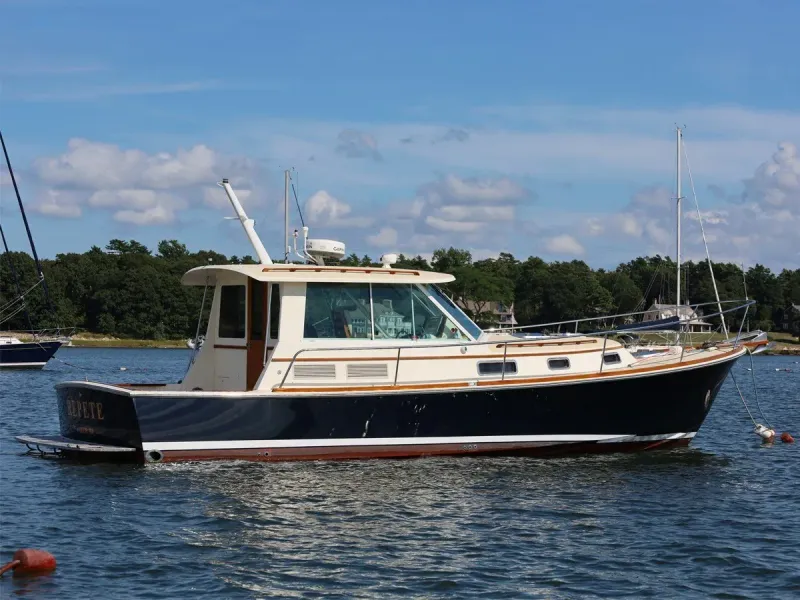
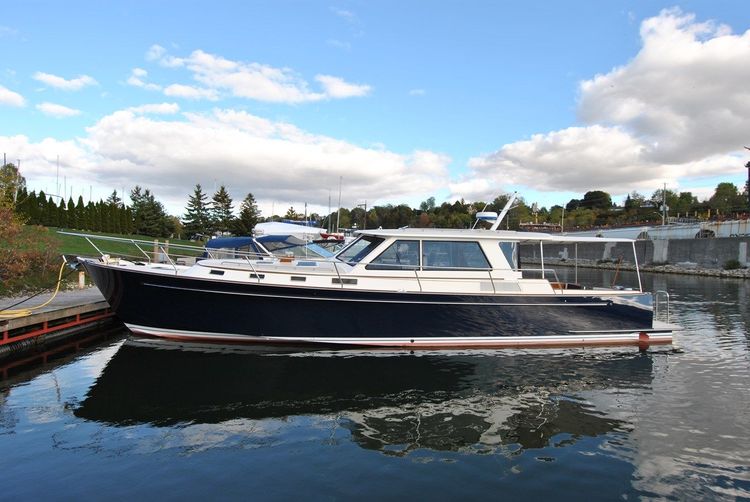
Answer:Down East models (exemplified by the Abaco line) pair traditional express-cruiser styling with robust composite structures and seakindly hulls. Expect secure side decks, a protected helm with excellent visibility, a quiet ride thanks to careful isolation and insulation, and interiors with premium joinery. Systems layouts are owner-centric: accessible, logically routed, and labeled to simplify maintenance.
Question:[Question 8] How are systems installed and documented?
Answer:Systems are laid out for clarity and serviceability. Wiring harnesses and plumbing runs follow clean, labeled paths with generous access. Typical deliverables include as-built schematics, equipment lists, and operating instructions, which make future troubleshooting and upgrades straightforward for surveyors and technicians.
Question:[Question 9] What are typical propulsion choices for sail and power models?
Answer:Sailboats are usually fitted with an inboard diesel auxiliary sized for relaxed cruising speeds and dependable torque in adverse conditions. Powerboats are commonly twin inboard diesel installations on straight shafts, selected for durability and predictable handling. Exact engine models and ratings vary by project and owner preference.
Question:[Question 10] What performance can owners expect under power?
Answer:For sailing models around 40–42 feet, auxiliary propulsion typically yields 7–8 knots under power, depending on propeller, displacement, and sea state. For a 40-foot Down East–style cruiser, cruise speeds in the mid-20s (knots) with top speeds approaching or exceeding 30 knots are achievable with appropriate power packages and loading. Actual numbers depend on final specification and conditions.
Question:[Question 11] How does the yard address vibration, noise, and thermal control?
Answer:Attention is paid to machinery isolation (flexible mounts, alignment, and exhaust systems), thoughtful structural continuity to avoid “oil-canning,” and selective use of sound-deadening materials around machinery spaces and living areas. Thermal considerations—such as insulation behind cabinetry and proper HVAC integration—are addressed during the design phase to ensure comfort in a range of climates.
Question:[Question 12] What standards or best practices guide the builds?
Answer:While each project is unique, engineering and systems decisions are typically aligned with widely recognized marine standards for safety and reliability. The construction ethos emphasizes conservative scantlings where prudent, robust hardware backing, secure sea rails and handholds, and sensible redundancy for critical systems in keeping with the intended service.
Question:[Question 13] How is the interior joinery executed?
Answer:Interiors feature carefully matched veneers, solid-wood trims where loads concentrate, durable countertop and sole materials, and seamanlike fiddles. Cabinetry geometry is designed for use underway: positive-latch lockers, rounded edges where sensible, and berth dimensions that suit real-world rest at sea. Finishes are selected for long-term appearance and maintainability rather than transient showroom gloss alone.
Question:[Question 14] What is the typical project timeline?
Answer:Timelines vary with complexity, material selections, and equipment lead times. A semi-custom build around 40 feet can span roughly a year or more from contract to delivery, with highly customized projects requiring additional time. The schedule is paced to preserve craftsmanship and integrate owner reviews at logical milestones.
Question:[Question 15] How are design changes handled once a project begins?
Answer:Because boats are built to order, design evolution is expected. Changes are assessed for engineering impact, weight and balance, systems routing, and schedule implications. The process is collaborative and transparent so that owners can prioritize upgrades or revisions with full awareness of trade-offs.
Question:[Question 16] Are these yachts bluewater capable?
Answer:Many Bruckmann sailboats and powerboats are engineered for robust coastal cruising and, where specified, offshore use. For sailing yachts, righting moments, rig loads, and structural reinforcements can be tailored to the intended service. For powerboats, range, tankage, and seakeeping features are matched to the program. The exact rating depends on the final design brief and scantling decisions.
Question:[Question 17] What’s the approach to deck hardware and ergonomics?
Answer:Deck plans strive for tidy leads, minimal friction, and intuitive reach to critical controls. Primary and secondary winches, clutches, and travelers are placed to suit short-handed operation. Non-skid textures, secure handholds, deep cockpit coamings, and practical companionways are hallmarks of the on-deck ergonomics.
Question:[Question 18] How is weight management handled in semi-custom interiors?
Answer:Weight is tracked through the specification and build phases, with cabinetry, soles, and systems placement evaluated against target displacement and trim. Lightweight cores may be used in non-structural furniture panels, while high-load zones get solid or reinforced substrates. The result is a yacht that feels solid while preserving lively performance and fuel efficiency.
Question:[Question 19] What about electrical architectures and energy storage?
Answer:Typical installations include 12V or 24V DC house and engine circuits with AC shore power and inverter/charger solutions. Battery chemistry (AGM, gel, or lithium) is chosen based on owner priorities for weight, cycle life, and charging profile. Circuit protection, bus bar architecture, and monitoring are specified for clarity and resilience.
Question:[Question 20] How do Bruckmann yachts hold value on the secondary market?
Answer:The brand’s conservative styling, durable construction, and reputation for quality tend to support strong resale interest among knowledgeable buyers. Yachts that retain their maintenance schedules, documentation, and original engineering discipline typically experience steady demand in the brokerage arena.
Question:[Question 21] Are there typical sail plans and performance features on the Daysailer models?
Answer:A fractional sloop plan with a moderate aspect mainsail is common, often supplemented by a self-tacking jib for upwind work and an optional code sail for reaching. Sail-handling systems are selected to minimize line clutter while making reefing and furling straightforward for a small crew.
Question:[Question 22] What options exist for helm and navigation systems on power models?
Answer:Owners typically specify integrated helm suites with modern multi-function displays, stabilized radars where desired, AIS, autopilot, and night-vision aids as appropriate. Ergonomic helm seating, clear sightlines, and effective defog/defrost systems are prioritized for confidence at speed.
Question:[Question 23] How is fuel and water tankage integrated?
Answer:Tanks are typically custom-fit to the hull to optimize center of gravity and service access. Materials and baffling are chosen for longevity, cleanliness, and slosh control. Sound-deadening and vibration-damping measures are applied where tankage interfaces with living spaces.
Question:[Question 24] What maintenance philosophy underpins systems layout?
Answer:Access trumps concealment. Filters, strainers, seacocks, pumps, and service points are placed for direct reach, with clear labeling and drip containment where sensible. The goal is to reduce time-on-task for routine service and to support straightforward troubleshooting over decades of use.
Question:[Question 25] How are finishes selected for exterior longevity?
Answer:Coating systems are specified to match the intended service life and exposure: high-build primers for fairing stability, long-chain polyurethane topcoats for UV resistance and gloss retention, and careful substrate preparation to slow print-through. Brightwork is thoughtfully protected or minimized to suit owner appetite for varnish upkeep.
Below are representative models and programs associated with the builder. Because these yachts are semi-custom or custom, the following characteristics should be understood as typical configurations rather than rigid, one-size-fits-all specifications.
Bruckmann Daysailer 42 (sail)
Bruckmann Abaco 40 (power)
Custom Sail Projects (approx. 35–50 feet)
Custom Power Projects (approx. 36–50 feet)
Guidance for interpreting these outlines:
In sum, whether the brief leans toward a refined daysailer that rewards every helm input or a Down East–inspired cruiser designed for fast, comfortable passages, the available offerings share a consistent philosophy: blend classic aesthetics with modern composites; pursue performance through efficiency rather than brute force; and execute interiors and systems with the kind of care that stands up to decades of use.

Learn more on the “BRUCKMANN”
To learn more on the “BRUCKMANN” or to get advice on how to buy or sell a yacht or get a great price for a yacht charter
please call +1 (954) 274-4435 USAOnly deal with professionals!
