 Licensed Yacht BrokersSales and service of yachts and ships
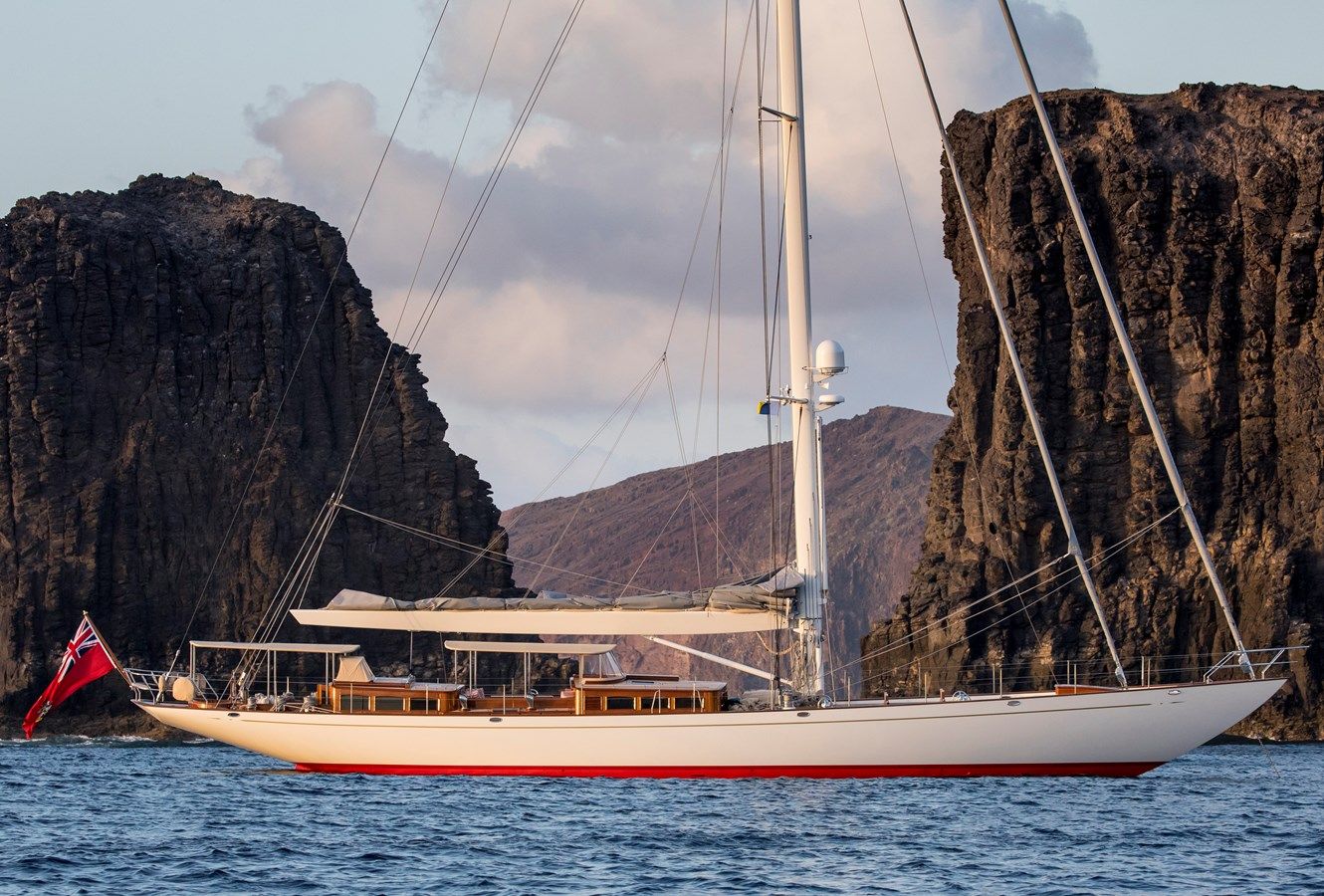
Claasen Shipyards, also known as Claasen Jachtbouw, is a Dutch custom yacht builder renowned for crafting elegant, performance-oriented sailing yachts with a timeless, classic aesthetic. From its early years, the yard established a strong reputation for marrying traditional yachtbuilding craftsmanship with modern naval architecture and technology. Across the 1990s and 2000s, Claasen became particularly associated with the “modern classic” genre, working closely with leading Dutch naval architects and stylists to deliver yachts that look traditional above the waterline yet benefit from contemporary hull forms, advanced sail-handling systems, high-performance rigs, and refined lightweight construction.
A defining aspect of Claasen’s history is its long-standing collaboration with Hoek Design Naval Architects. Together, they realized numerous yachts in the Truly Classic series as well as bespoke one-offs. Signature projects such as the J-Class Lionheart (launched in 2010), the 35-meter performance sloop Firefly (launched in 2011), and the Truly Classic 127 Atalante (launched in 2015) helped cement the brand’s international profile. These yachts combined competitive performance with exquisite detailing, and they are frequently seen at prestigious regattas and classic yacht events around the world.
Claasen’s yachts reflect a distinctive philosophy: respect for classic lines and sailing heritage, executed with exacting Dutch craftsmanship and supported by advanced engineering. The yard consistently delivered premium metalwork, fine joinery, meticulous systems integration, and seaworthy layouts. Owners who sought a boutique, hands-on building experience—often tailored to personal cruising and racing objectives—found in Claasen a partner able to translate a vision into a highly individualized yacht.
In the mid-2010s, Claasen Shipyards’ trajectory entered a new phase when it integrated with Vitters Shipyard, another world-class Dutch sailing yacht specialist. The integration brought together complementary capabilities: Claasen’s modern-classic DNA and artisanal build culture with Vitters’ substantial resources, large-yacht processes, and global service network. Under this combined umbrella, the Claasen heritage continued to inform projects focused on elegance, performance, and craftsmanship, while benefiting from Vitters’ project management frameworks, engineering depth, and after-sales support.
Throughout its history, Claasen-built yachts have compiled strong competitive showings and earned critical acclaim. Lionheart has been a prominent force in the J-Class circuit, and Atalante earned major superyacht awards—testimony to the yard’s ability to deliver yachts that not only turn heads at anchor but also excel under sail. While the company’s portfolio is largely centered on high-end sailing yachts from roughly 18 to 40-plus meters, Claasen has been especially celebrated for aluminum construction, sophisticated classic interiors, and exceptionally high-quality fit and finish.
The Netherlands.
Claasen Shipyards’ principal facility and finishing yard have been in the Netherlands, historically centered in the greater Amsterdam region (Zaandam area). The company’s approach to construction leverages the strengths of the Dutch yachtbuilding ecosystem: specialist suppliers, metal fabricators, rig and spar experts, and interior joinery artisans—often located within close proximity. This collaborative network contributes to efficient workflows, high quality control, and reliable delivery schedules.
For select projects, Claasen has worked with experienced Dutch partners for aluminum hull fabrication and specialty components before bringing the structures into its own facilities for outfitting, joinery, systems, and final commissioning. This model—common among top-tier Dutch builders—helps ensure each build benefits from best-in-class expertise at every stage.
After integration with Vitters Shipyard, Claasen’s projects have had access to Vitters’ resources and infrastructure in the Netherlands as well. This alignment enables flexible allocation of engineering and production tasks across facilities, while maintaining the design language and craftsmanship standards for which Claasen is known.
Claasen Shipyards became part of Vitters Shipyard in the mid-2010s. This integration brought Claasen under the broader Vitters family, known globally for building large, custom sailing yachts. The arrangement preserves Claasen’s hallmark emphasis on modern classics and artisanal quality while benefiting from Vitters’ organizational depth, engineering capacity, and worldwide service capabilities. Under this structure, Claasen-branded projects continue to be supported by Dutch yachtbuilding talent, rigorous project management, and a strong commitment to owner service from concept through lifetime maintenance.
Claasen Shipyards enjoys a sterling reputation among experienced owners, captains, and naval architects. The brand is frequently cited for:
In use, Claasen-built yachts are known for quiet, well-insulated interiors; logical, service-friendly systems layouts; and hardware integration that supports both shorthanded cruising and spirited racing. Deck ergonomics are carefully considered, with winch placement, line runs, and helm sightlines optimized for safety and ease of handling. Underway, owners and captains frequently cite a rewarding helm feel and a favorable balance between stiffness, comfort, and speed.
From a lifecycle perspective, Claasen places strong emphasis on reliability, maintainability, and after-sales support. The integration with Vitters enhances these strengths by offering a deeper engineering bench and global service coordination—benefits that are particularly valued by owners who cruise extensively and participate in international regattas.
Claasen Shipyards’ legacy is thus defined by a clear design identity, meticulous build quality, and yachts that are as satisfying to sail as they are to behold. Within the competitive Dutch superyacht landscape, the name stands for boutique attention to detail, a passion for classic aesthetics, and a performance ethos that translates heritage into real-world sailing pleasure.
Claasen Shipyards, ook bekend als Claasen Jachtbouw, is een Nederlandse jachtbouwer gespecialiseerd in op maat gemaakte, modern-klassieke zeiljachten. Vanaf het begin bouwde de werf een reputatie op voor het combineren van traditioneel vakmanschap met hedendaagse techniek. In nauwe samenwerking met vooraanstaande ontwerpers—met name Hoek Design—realiseerde Claasen talloze Truly Classic-jachten en unieke one-offs, waaronder de J-Class Lionheart (2010), de 35m performance sloe Firefly (2011) en de Truly Classic 127 Atalante (2015).
Nederland.
De hoofdactiviteiten vonden en vinden plaats in Nederland, historisch geconcentreerd rond Zaandam (regio Amsterdam). Claasen werkt samen met gespecialiseerde Nederlandse toeleveranciers voor onder meer aluminium casco’s, masten en tuigage, waarna afbouw, interieur en inbedrijfstelling op de eigen faciliteiten plaatsvinden. Sinds de integratie met Vitters heeft Claasen tevens toegang tot aanvullende infrastructuur binnen Nederland.
Claasen is in het midden van de jaren 2010 onderdeel geworden van Vitters Shipyard. Deze integratie bewaart Claasen’s modern-klassieke signatuur en ambachtelijke kwaliteit, met de extra slagkracht van Vitters op het gebied van engineering, projectbeheersing en service.
Claasen staat bekend om modern-klassieke esthetiek, hoogwaardig Nederlands vakmanschap, zeilprestaties en bekroonde projecten (waaronder Atalante). De werf levert stille, verfijnde interieurs, doordachte systemen en ergonomische deklay-outs, ondersteund door een sterk netwerk van Nederlandse specialisten en uitstekende aftersales.
Claasen Shipyards (Claasen Jachtbouw) est un constructeur néerlandais de voiliers sur mesure, réputé pour ses yachts « modern-classic ». Sa collaboration de longue date avec Hoek Design a donné naissance à des unités emblématiques telles que Lionheart (J-Class, 2010), Firefly (35 m, 2011) et Atalante (Truly Classic 127, 2015), alliant lignes intemporelles et technologies contemporaines.
Pays-Bas.
Les opérations principales se déroulent aux Pays-Bas, historiquement autour de Zaandam (région d’Amsterdam), en s’appuyant sur un réseau néerlandais d’excellence pour la fabrication des coques en aluminium, l’accastillage, le gréement et la menuiserie. L’intégration avec Vitters permet de mobiliser des ressources et des infrastructures complémentaires aux Pays-Bas.
Au milieu des années 2010, Claasen a été intégré à Vitters Shipyard. Cette évolution préserve l’ADN modern-classic de Claasen tout en bénéficiant de la puissance organisationnelle et du support mondial de Vitters.
La marque est reconnue pour son artisanat, ses finitions haut de gamme, ses intérieurs raffinés et ses performances sous voiles. Les récompenses internationales (dont celles obtenues par Atalante) confirment la qualité d’exécution. L’approche collaborative avec des partenaires néerlandais de premier plan garantit régularité, fiabilité et haut niveau de détail.
Claasen Shipyards (Claasen Jachtbouw) ist eine niederländische Werft für maßgeschneiderte, modern-klassische Segelyachten. In enger Zusammenarbeit mit Hoek Design entstanden prägende Projekte wie die J-Class Lionheart (2010), die 35-m-Sloop Firefly (2011) und die Truly Classic 127 Atalante (2015).
Niederlande.
Der Hauptsitz und die Ausrüstung befinden sich in den Niederlanden, historisch im Raum Zaandam (Großraum Amsterdam). Claasen nutzt das niederländische Netzwerk aus Spezialbetrieben—u. a. für Aluminiumrümpfe, Rigg und Interieur—und profitiert seit der Integration mit Vitters von zusätzlichen Kapazitäten.
Mitte der 2010er Jahre wurde Claasen Teil der Vitters Shipyard. Die Integration verbindet Claasens modern-klassische Identität mit der Engineering- und Servicekompetenz von Vitters.
Claasen genießt einen exzellenten Ruf für Handwerkskunst, hochwertige Oberflächen, durchdachte Systeme und Segelleistung. Internationale Auszeichnungen—unter anderem für Atalante—unterstreichen den Qualitätsanspruch der Werft.
Claasen Shipyards (Claasen Jachtbouw) es un astillero neerlandés especializado en veleros a medida de estilo clásico-moderno. Su colaboración con Hoek Design ha producido yates emblemáticos como Lionheart (clase J, 2010), Firefly (35 m, 2011) y Atalante (Truly Classic 127, 2015).
Países Bajos.
Las operaciones principales se realizan en los Países Bajos, históricamente en la zona de Zaandam (región de Ámsterdam), aprovechando una cadena de suministro neerlandesa de alto nivel para cascos de aluminio, jarcia, herrajes y carpintería. Tras la integración con Vitters, Claasen dispone de recursos e infraestructura adicionales en el país.
A mediados de la década de 2010, Claasen pasó a formar parte de Vitters Shipyard, preservando su identidad clásico-moderna y sumando la capacidad de ingeniería, gestión y servicio de Vitters.
La marca es reconocida por su artesanía, acabados de alto nivel y rendimiento a vela. Atalante obtuvo premios internacionales, reforzando la reputación de calidad de Claasen. La coordinación con socios neerlandeses garantiza plazos fiables y un alto estándar de detalle.
Claasen Shipyards (Claasen Jachtbouw) — нидерландская верфь, специализирующаяся на индивидуальных парусных яхтах в стиле «modern classic». Долгое сотрудничество с Hoek Design привело к созданию знаковых проектов: J-класс Lionheart (2010), 35-метровая Firefly (2011) и Truly Classic 127 Atalante (2015).
Нидерланды.
Основные производственные и достроечные операции осуществляются в Нидерландах, исторически в районе Заандам (регион Амстердама). Верфь опирается на развитую местную сеть поставщиков и подрядчиков (алюминиевые корпуса, рангоут, интерьеры), а после интеграции с Vitters получила доступ к дополнительным мощностям.
В середине 2010-х Claasen стала частью Vitters Shipyard. Это сохранило уникальную «классическую» ДНК бренда и добавило масштаб инженерной поддержки и послепродажного сервиса Vitters.
Claasen известна качеством отделки, скрупулезной интеграцией систем и реальными ходовыми качествами. Яхта Atalante отмечена международными наградами, а Lionheart успешно выступает на регатах J-класса—все это подтверждает высокий уровень верфи.
Claasen Shipyards(亦称 Claasen Jachtbouw)是一家荷兰定制帆船游艇制造商,以“现代经典”风格著称。该船厂长期与 Hoek Design 合作,打造了多艘具有代表性的游艇,如 J-Class「Lionheart」(2010 年)、35 米高性能单桅帆船「Firefly」(2011 年)以及 Truly Classic 127「Atalante」(2015 年),在优雅外观与现代技术之间取得平衡。
荷兰。
Claasen 的主要建造与完工基地位于荷兰(历史上以赞丹/阿姆斯特丹地区为中心)。其建造体系充分利用荷兰完善的产业配套,包括铝合金船体制造、桅杆索具、甲板硬件与精密室内木作。并入 Vitters Shipyard 后,Claasen 项目可获得更多本土工程与服务资源的支持。
2010 年代中期,Claasen 并入 Vitters Shipyard。整合后,Claasen 继续专注于现代经典路线与精湛工艺,同时受益于 Vitters 在工程能力、项目管理与全球服务方面的优势。
Claasen 以细腻的荷兰工艺、出色的金属与木作质量、安静舒适的内部环境以及优异的航行性能而闻名。Atalante 曾获国际重大奖项,Lionheart 在 J-Class 赛场表现强劲,进一步巩固了其在高端定制帆船领域的口碑。
Claasen Shipyards (also known as Claasen Jachtbouw) occupies a distinctive niche at the top end of the custom sailing-yacht market, especially in the “modern classic” segment. Its closest competitive set includes European (and particularly Dutch) builders known for one-off or limited-series sailing superyachts with high craftsmanship, aluminum construction, and carbon rigs. While there is significant overlap among these builders in terms of client base and project scale, each has a different emphasis. The principal competitors and comparables include:
Royal Huisman (Netherlands)
Baltic Yachts (Finland)
Nautor Swan (Swan Custom and Maxi segments; Finland/Italy)
Southern Wind (South Africa/Italy)
Spirit Yachts (United Kingdom)
Pendennis (United Kingdom)
Jongert (Netherlands; historical/periodic activity)
Holland Jachtbouw (Netherlands; historical)
Wally (Italy/Monaco; now part of Ferretti Group)
Important context:
In practice, Claasen’s “modern classic” DNA—which blends refined, traditional lines with contemporary naval architecture—means its most direct competition tends to be builders comfortable with classic aesthetics, first-rate aluminum work, and elite interior joinery. As a result, Dutch and Northern European yards with reputations for meticulous metalwork and complex custom interiors are especially relevant comparators for Claasen’s historical and ongoing market position.
Claasen Shipyards was integrated into Vitters Shipyard in the mid‑2010s. Since then, Claasen’s expertise, personnel, and facilities have operated within the Vitters organization. The practical implications of this structure are:
Continuity of capability
New-build positioning
Refit and after-sales
Market stance
In short, production is ongoing within the Vitters organization, with Claasen’s heritage manifest in modern-classic design execution, detailed interiors, and the support of the existing fleet. The combined entity provides a stable platform for both selective new builds and comprehensive refit/maintenance work associated with Claasen-origin yachts.
As a bespoke Dutch yacht builder, Claasen historically worked at boutique volumes—typically one or two complex projects in build at any given time—rather than serial production. The following high-level points frame the nature of Claasen’s output:
Custom focus
Size and typology
Craftsmanship intensity
Project cadence
There is no single, authoritative public tally of Claasen’s lifetime unit count. What is clear is that the yard’s reputation was built not on volume but on the visible quality and competitive success of its headline yachts, combined with the consistent execution of its Truly Classic and custom one‑offs. Following integration with Vitters, that low‑volume, high‑touch philosophy continues to underpin the way modern‑classic projects and refits are approached within the group.
While Claasen is now part of Vitters Shipyard, several significant developments and milestones remain relevant to owners, captains, and brokers considering the brand’s heritage and present-day support environment:
Integration with Vitters Shipyard (mid‑2010s)
Award recognition for recent‑era builds
Competitive pedigree on the regatta circuit
Ongoing fleet support and refit activity
Market positioning and owner interest
Sustainability and systems evolution
Taken together, these developments show a brand that—though now operating within a larger organization—retains a clear identity and a living fleet that continues to be raced, cruised, and carefully maintained. For prospective owners attracted to modern-classic yachts with Dutch pedigree, the Claasen story today is one of continuity: the same devotion to craftsmanship and sailing performance, delivered within a mature engineering and service framework that can support complex custom projects and long-term ownership alike.
Question: What type of yachts does Claasen Shipyards build? Answer: Claasen Shipyards (Claasen Jachtbouw) is best known for custom, modern-classic sailing yachts. The yard’s hallmark is combining elegant, timeless lines with advanced naval architecture, aluminum construction, and carbon spars. Many projects were realized in close collaboration with leading Dutch designers of classic-inspired sailing yachts.
Question: Are Claasen yachts fully custom or semi-custom? Answer: They are primarily fully custom or based on proven design families that are then extensively customized. Owners typically tailor hull configuration details, interior layouts, sail-handling systems, and stylistic elements to suit cruising ambitions and, in many cases, regatta participation.
Question: What materials does Claasen favor for hulls and decks? Answer: Aluminum is the typical hull and deck material for larger Claasen sailing yachts, selected for its strength-to-weight ratio, reparability, and longevity. Teak is commonly used for deck finishes. Superstructures may be aluminum or composite depending on the project, and spars are typically carbon for performance and weight reduction aloft.
Question: Which naval architects has Claasen worked with? Answer: The yard has a long track record with Dutch modern-classic specialists, particularly designers renowned for Truly Classic series and custom classics. Claasen also worked with specialists for performance-oriented one-offs and meticulous, race-informed detailing.
Question: What sizes does Claasen typically build? Answer: Historically, the sweet spot has been approximately 18–40+ meters LOA for sailing yachts, including both cruising-focused modern classics and regatta-competitive designs. Notable projects extend into larger sizes where classic proportion sets remain central.
Question: Are Claasen yachts competitive on the regatta circuit? Answer: Yes. Claasen-built yachts have proven highly competitive, with standout examples performing in J-Class racing and superyacht regattas. Their performance credibility stems from careful weight control, efficient hull and foil packages, optimized rigs, and modern sail-handling gear hidden within classic aesthetics.
Question: How does the shipyard approach interior design and craftsmanship? Answer: Interiors are bespoke, often featuring hand-selected hardwoods, fine veneers, and artisanal joinery. The yard is known for excellent fit and finish, quiet cabins with robust insulation, and layouts that blend classic ambiance with discrete integration of modern systems, lighting, and climate control.
Question: What sail-handling systems are typical? Answer: Although the deck styling is classic, systems are modern: carbon spars, efficient furlers (headsails and sometimes in-boom or in-boom-like solutions), powerful hydraulics for winches and sail controls, and meticulously planned line runs. Shorthanded sailing remains a design priority on many builds despite their size.
Question: Which classification and regulatory frameworks can Claasen build to? Answer: Builds have been completed to recognized class and flag requirements appropriate for superyachts, with surveyor oversight and compliance where specified by the owner. Typical frameworks include relevant class society notations, large-yacht codes for commercial compliance where desired, and Category A ocean sailing criteria.
Question: What is the typical build timeline? Answer: Depending on LOA and complexity, 18–36 months from contract to delivery is a common range for a custom modern-classic sailing yacht. This encompasses design development, engineering, hull and superstructure fabrication, systems installation, interior construction, outfitting, commissioning, and sea trials.
Question: Where are Claasen yachts built and outfitted? Answer: Construction and outfitting have historically been carried out in the Netherlands, taking advantage of a dense ecosystem of Dutch specialists for hull fabrication, rigging, systems, and interior craftsmanship. This cluster is a core reason for the consistency and quality associated with the yard.
Question: Does Claasen undertake refit and maintenance? Answer: Yes. The existing Claasen fleet is actively supported for refits, upgrades, and lifecycle maintenance within the Dutch superyacht ecosystem. Typical refits include paint and varnish renewal, teak deck replacement, interior refreshes, systems modernization, and rig/sail package updates oriented toward both cruising and racing performance.
Question: What drives the quietness and comfort onboard? Answer: Claasen emphasizes acoustic and vibration isolation, careful machinery installation on resilient mountings, balanced ventilation and HVAC ducting, and mass-law-driven construction strategies. The result is low noise levels underway and at anchor, even in yachts that are notably light for their size.
Question: Are hybrid or alternative propulsion options possible? Answer: As a custom builder with sophisticated engineering partners, Claasen-origin projects can be configured with hybrid-assist systems, larger battery banks for silent running at anchor, and advanced energy management. The suitability of such systems is assessed case-by-case with attention to displacement, mission profile, and owner priorities.
Question: What kind of engineering depth underpins a Claasen build? Answer: Detailed mechanical, electrical, hydraulic, and structural engineering supports each project. Finite element analysis for rig and structural components, weight studies, stability calculations, and CFD-informed design work are typical for performance-oriented yachts. Systems are documented thoroughly to facilitate service and future upgrades.
Question: How does the yard ensure fairness and paint quality on aluminum yachts? Answer: Fairing on aluminum is both an art and a science. The process involves systematic substrate preparation, primer systems optimized for aluminum, controlled fairing in climate-stable environments, and rigorous QA checkpoints before topcoat application. The result is a fair, glossy hull that withstands scrutiny under sunlight.
Question: What rig configurations are common? Answer: Most Claasen sailing yachts are sloops, occasionally with a classic cutter headsail arrangement. Rigs are carbon for weight savings and performance, with careful attention to mast bend characteristics, headstay sag control, and reliable furling where specified. Standing rigging is often high-modulus, selected to balance longevity with performance.
Question: Can Claasen yachts be tailored for bluewater family cruising? Answer: Absolutely. Many layouts emphasize an owner’s suite plus two to four guest cabins, generous storage, sea berths for passages, robust tankage, and protective cockpit and deckhouse arrangements. Systems redundancy and service access are engineered to support long-range cruising with minimal hassle.
Question: Do Claasen yachts hold their value? Answer: Market performance varies by overall condition, pedigree, and refit history, but Claasen-built yachts have historically maintained strong appeal due to their recognizable modern-classic aesthetics, Dutch craftsmanship, and competitive sailing capabilities. Regular maintenance and documented upgrades materially support resale outcomes.
Question: What is the approach to safety and redundancy? Answer: Safety is engineered into structure, rig, and systems from the outset: watertight compartmentation as required, properly protected fuel systems, fire detection and suppression, robust emergency bilge capacity, and thoughtful DC/AC electrical separation. Backup navigation systems and redundancy in critical pumps and hydraulics are commonly specified.
Question: How are owners and crew supported after delivery? Answer: Owners and captains benefit from documentation, training during commissioning, and access to experienced Dutch specialists for ongoing service, warranty matters, seasonal work, and regatta preparation. Lifecycle support emphasizes preventive maintenance and performance optimization as rigs and sails evolve.
Question: Are Claasen yachts suitable for charter? Answer: Many are, depending on their compliance and layout. Classic ambiance, comfortable guest accommodations, and lively sailing performance can make them attractive charter platforms in regions where modern-classic yachts are in demand. Compliance with large-yacht codes and crew accommodation standards is assessed during design if charter is a goal.
Question: How sustainable are these builds? Answer: Sustainability considerations include durable structures for long service life, efficient propulsion and hotel loads, advanced coatings, low-VOC interior finishes where possible, LED lighting, and opportunities for hybridization or shore-power integration. The Dutch supply chain has been proactive in adopting improved materials and processes.
Question: What differentiates Claasen in the modern-classic niche? Answer: A combination of authentic classic styling, precision Dutch metalwork, refined joinery, and true performance on the racecourse. The aim is not merely to look classic but to sail fast, safely, and enjoyably, with systems and ergonomics that make large, elegant yachts genuinely usable by experienced cruising families and racing crews alike.
Question: What is the philosophy behind deck ergonomics? Answer: Sightlines from the helm, safe movement at heel, logical winch placement, and clutter-free line runs are paramount. Although deck plans present as traditional, they mask careful optimization for shorthanded and full-crew modes, with powered assistance chosen to reduce loads without compromising feel.
Question: How are tenders and water toys integrated without disrupting classic lines? Answer: Solutions include concealed tender wells, side- or stern-launch arrangements, removable chocks, and dedicated storage under flush hatches. The design goal is to keep decks clean and maintain the yacht’s sheer and proportion while ensuring practical deployment and recovery.
Question: What kind of documentation comes with a Claasen yacht? Answer: Comprehensive as-built documentation typically covers systems schematics, equipment lists and manuals, weight reports, stability data, maintenance schedules, and paint system specifications. This documentation is essential for efficient service and future refits.
Question: How are sea trials conducted? Answer: After dock trials and harbor checks, sea trials verify propulsion performance, sailing behavior, rig tuning ranges, hydraulic reliability, noise/vibration targets, and systems integration. Trials are iterative, often followed by fine-tuning to achieve agreed performance and comfort benchmarks.
Question: Can owners participate actively during the build? Answer: Yes. Owner involvement—through design reviews, mockups, interior material approvals, and milestone visits—is welcomed and structured. Clear gateways help maintain schedule and quality while allowing meaningful personalization.
Question: What is the typical electrical architecture? Answer: Yachts combine 24V DC for critical systems with AC distribution sized for hotel loads, supported by one or two gensets. Increasingly, larger lithium or high-capacity AGM banks, invert/charge systems, and shore-power converters enable quiet, efficient operation and compatibility across cruising regions.
Question: How adaptable are these yachts for both cruising and racing? Answer: Many builds are dual-purpose from inception: variable sail inventories, removable or concealed sail-handling aids, adjustable deck hardware, and interior arrangements that remain comfortable yet weight-conscious. This flexibility allows seamless transitions between family cruising and competitive regattas.
Question: What are common maintenance intervals for rigs and sails? Answer: Standing rigging inspections are typically annual, with comprehensive surveys every 3–5 years depending on materials and usage. Sails are serviced seasonally if raced actively, while hydraulics, winches, and furlers follow documented service intervals aligned with hours and cycles.
Question: How are weight targets monitored? Answer: Strict weight control is embedded in design and production. Regular weighings of subassemblies, material tracking, and a final lightship inclining confirm that the yacht meets stability, performance, and comfort goals.
Question: How is owner privacy and aesthetic coherence maintained during systems upgrades? Answer: Systems routes are planned for accessibility without intruding on the aesthetic core. Upgrades are executed with minimal visual impact, preserving the yacht’s classical interior language while introducing newer technologies behind panels and in machinery spaces.
Question: What crew complements are typical? Answer: Crew numbers depend on LOA and mission profile. For yachts around 27–30 m, 3–4 crew is common; for 35–40 m, 5–7 crew may be appropriate, particularly if charter or racing support is envisioned. Crew cabins and service corridors are designed for efficient operations and guest privacy.
Question: Can these yachts handle high-latitude or expedition-style sailing? Answer: With appropriate specification—from insulation and heating strategies to tankage, storm sails, and deck protection—modern-classic platforms can handle a wide range of environments. Owners considering such missions typically integrate redundancy and protection measures early in the design phase.
Question: How are spare parts and consumables managed? Answer: Builds favor premium, widely supported components. Spares packages are defined at delivery, with documented part numbers and maintenance intervals. Over time, refits can rationalize legacy components to contemporary equivalents for serviceability and reliability.
Question: What is the approach to anchoring and ground tackle? Answer: Ground tackle is sized conservatively, often with concealed or classic-appropriate anchor handling integrated into the bow arrangements. Windlasses and chain lockers are specified for bluewater reliability, with backup or manual options discussed for redundancy.
Question: How does the yard treat glazing and deckhouses in classic designs? Answer: Glazing respects classic proportioning with modern structural and thermal performance. Deckhouses and doghouses are styled traditionally but executed with precise joinery and integration of defogging, blinds, and discreet lighting.
Question: What distinguishes Claasen’s aluminum work? Answer: Accurate plate development, clean welds, and careful structural detailing produce fair, stiff hulls and decks. The yard’s ecosystem of Dutch metal specialists contributes to consistent, repeatable quality in structures that remain serviceable and quiet for decades.
Question: What role does testing play before handover? Answer: Beyond sea trials, factory acceptance tests for major systems (electrical, hydraulics, HVAC, electronics) are conducted in controlled conditions, followed by in-situ commissioning. Measured outcomes are compared to design targets to validate compliance before formal handover.
Note on format: Claasen Shipyards is a custom builder rather than a catalog manufacturer. What follows is a representative selection of Claasen-built yachts and design archetypes that illustrate the range and character of the yard’s work. Specifications can vary by project and are provided here in indicative terms to convey typical characteristics rather than rigid, uniform data.
Truly Classic 127 “Atalante” (representative project)
35 m Performance Sloop “Firefly” (representative project)
J-Class “Lionheart” (representative project)
Truly Classic 90 “Heartbeat” (representative project)
Modern-Classic 23–26 m Sloops (multiple builds across the “Truly Classic” family)
Key characteristics across the Claasen portfolio:
Because each Claasen yacht is bespoke, exact specifications—such as cabin count, engine power, and target speeds—are defined during the design and engineering phase to align with the owner’s mission. The unifying thread is a commitment to the modern-classic idiom: timeless exterior lines supported by contemporary naval architecture, clean systems engineering, and handcrafted interiors that age gracefully.
As the Claasen fleet continues to cruise and race worldwide, these representative models demonstrate why the brand is synonymous with elegance that truly sails. They also illustrate a consistent approach to quality: fair aluminum structures, carbon spar packages tuned for performance and control, intelligently powered sail-handling systems, and interiors that remain quiet, durable, and inviting long after launch. For prospective owners and enthusiasts studying the segment, Claasen’s portfolio serves as a benchmark for how classic beauty and modern capability can coexist without compromise.

Learn more on the “CLAASEN SHIPYARDS”
To learn more on the “CLAASEN SHIPYARDS” or to get advice on how to buy or sell a yacht or get a great price for a yacht charter
please call +1 (954) 274-4435 USAOnly deal with professionals!
