
 Licensed Yacht BrokersSales and service of yachts and ships
HAAK SHIPYARD - For Sale
English
Company History
Haak Shipyard (Scheepswerf Haak) is a Dutch boatbuilder name that appears consistently in the European brokerage market attached to robust, steel motor yachts and “kotter”-style trawlers built in the late 20th century. While a precise founding year and the names of individual founders are not widely documented in public sources, the yard’s output is recognizable by its Dutch steel craftsmanship and the pragmatic, seagoing character of its yachts. Many Haak-branded vessels were custom or semi-custom builds, reflecting the traditional Dutch approach where a family-run shipyard collaborated closely with owners and independent naval architects to tailor layouts, range, and outfitting for long-distance cruising.
The yacht types most commonly associated with Haak are steel displacement motor yachts in the 10–20+ meter range, frequently described in listings as “Haak Kotter,” “Haak Trawler,” or by approximate length designations. These boats emphasize substance over show: thick scantlings for strength, practical pilothouses or raised wheelhouses for all-weather operation, straightforward engine rooms with single heavy-duty diesels, and interiors in durable hardwoods. Their character aligns with North Sea and Baltic requirements—comfort and control in adverse conditions rather than pure speed—making them attractive to owners who value reliability, range, and easy serviceability.
Across decades, yachts bearing the Haak name have cruised extensively on the North Sea, Baltic, English Channel, western Mediterranean, and the broader European inland waterway network. This wide operational footprint, together with the number of Haak yachts still in service, suggests a production span that covered multiple years and a customer base that included both coastal passagemakers and inland voyagers. Today, the Haak name is most frequently encountered in brokerage inventories rather than new-build announcements, which indicates that the yard’s active new construction period has likely concluded. Nonetheless, the vessels’ continuing circulation and refit activity sustain the brand’s profile among experienced buyers of Dutch steel motor yachts.
Country of Origin
Netherlands.
Manufacturing Locations
Haak Shipyard yachts were built in the Netherlands. As is common for Dutch steel boatbuilding, construction took place at an inland yard with dependable access to the national canal network for launching, trials, and delivery. The Dutch setting is integral to the product: local supply chains for steel fabrication, carpentry, and marine engineering; proximity to independent naval architects; and short logistics lines to both the North Sea and continental inland waterways.
Reputation and Quality
-
Build philosophy and materials: Haak yachts are known for steel hulls and superstructures engineered for durability, with an emphasis on long-term service rather than minimal initial weight. This results in comfortable motion at displacement speeds, predictable handling, and confidence offshore and in shoulder seasons. Interiors typically feature practical joinery in hardwoods, with layouts oriented around a protected wheelhouse, good visibility, and sheltered exterior work areas.
-
Seakeeping and range: The kotter/trawler idiom prioritizes hull efficiency at modest speeds, generous tankage, and systems simplicity. Owners often highlight the ability to cruise economically over long distances, to maintain speed and control when weather deteriorates, and to enjoy low-stress docking thanks to balanced hull forms and workmanlike deck ergonomics.
-
Serviceability and refit potential: The straightforward systems architecture and ample engine-room access common in Dutch steel builds make Haak yachts attractive to refit-focused buyers. Many examples on the market have benefited from navigation upgrades, new heating and electrical systems, fresh paint, and machinery overhauls—evidence that the platform accommodates modernization gracefully. The steel structure is also well-suited to life-extension refits, provided proper maintenance and coating protocols are followed.
-
Market positioning: In today’s brokerage landscape, Haak competes with other Dutch and North European steel motor yachts of similar vintage—vessels that trade on substance, conservative aesthetics, and honest engineering. Compared with high-volume fiberglass cruisers, a Haak typically offers thicker plating, heavier displacement, and a more purposeful wheelhouse, appealing to owners who value real-weather capability and low-tempo passagemaking.
-
Longevity in service: The persistent presence of Haak yachts in Northern European waters is a reputational asset in itself. Boats that continue to work hard decades after launch are a calling card for the Dutch steel tradition, and Haak examples stand among that cohort. Surveyors and brokers often note that, when maintained, these hulls age gracefully; when neglected, they reward thorough steelwork and coating restorations because the underlying structure was intended to be serviceable over the long term.
-
Design provenance and collaboration: As with many classic Dutch steel yachts, Haak builds often show the hand of independent Dutch naval architects and stylists. While individual design attributions vary by boat and are not universally published, the consistent design language—raised wheelhouses, safe side decks, substantial ground tackle arrangements, and practical mast/boom rigs for dinghy handling—reflects regional best practices rather than fashion cycles.
-
Use cases: Typical owners use Haak yachts for extended seasonal cruising across mixed waters—tidal estuaries, canals, and open coasts. The yachts’ protected helms and robust heating/ventilation solutions make them shoulder-season capable in northern climates, yet their range and stability also adapt well to Mediterranean itineraries. Dogs, bicycles, and provisions find easy homes aboard; these are boats built to be lived with, not merely admired dockside.
-
Brand perception: Haak’s reputation is quiet, workmanlike, and respected rather than headline-grabbing. You will not find a long trophy case or broad marketing campaigns, but you will find satisfied second- and third-owners who recognize the value proposition: a capable steel platform, designed and built in the Netherlands, with abundant life remaining and transparent maintenance pathways. Among knowledgeable buyers of Dutch steel, the Haak name signals a solid, practical choice.
Nederlands
Bedrijfsgeschiedenis
Haak Shipyard (Scheepswerf Haak) is een Nederlandse werfnaam die regelmatig terugkomt in de Europese jachtmakelaardij in verband met robuuste stalen motorjachten en kotter-/trawlerontwerpen uit de late twintigste eeuw. Hoewel het exacte oprichtingsjaar en de namen van de oprichters niet breed openbaar zijn, is de werf herkenbaar aan degelijke Nederlandse staalscheepsbouw en een nuchtere, zeegaande insteek. Veel jachten onder de Haak-naam zijn custom of semi-custom gebouwd, in nauwe samenwerking tussen eigenaar, werf en onafhankelijke ontwerpers—een typisch Nederlandse werkwijze.
De jachten die het meest met Haak worden geassocieerd zijn stalen waterverplaatsers van circa 10 tot 20+ meter, vaak in advertenties omschreven als “Haak Kotter” of “Haak Trawler”. De nadruk ligt op inhoud boven uiterlijk: stevige constructie, praktische (op)stuurhuizen voor alle weersomstandigheden, overzichtelijke machinekamers met één betrouwbare diesel en interieurs van hardhout. Het karakter past bij Noordzee- en Oostzee-omstandigheden—comfort en controle in slecht weer in plaats van topsnelheid.
Tegenwoordig komt de naam Haak vooral terug in makelaarslijsten en minder in nieuwbouwberichten, wat erop wijst dat de actieve nieuwbouwperiode achter ons ligt. De blijvende aanwezigheid van Haak-jachten op het water en hun frequente refits onderstrepen echter de levensduur en het nut van deze boten.
Land van herkomst
Nederland.
Productielocaties
De jachten van Scheepswerf Haak zijn in Nederland gebouwd. Net als veel Nederlandse staaljachten vond de bouw plaats op een binnenwerf met toegang tot het nationale waterwegennet voor tewaterlating, proefvaarten en aflevering. De Nederlandse toeleveringsketen voor staalbouw, houtwerk en maritieme techniek is een wezenlijk onderdeel van het eindproduct.
Reputatie en kwaliteit
- Bouwfilosofie en materialen: stalen rompen en opbouwen gericht op duurzaamheid en lange levensduur.
- Zeegedrag en bereik: efficiënte waterverplaatsers, prettige vaareigenschappen bij kruissnelheid, geschikt voor langere trajecten.
- Onderhoud en refit: overzichtelijke systemen en goede toegankelijkheid maken modernisering en levensduurverlenging haalbaar.
- Marktpositie: een nuchtere, inhoudelijke keuze binnen het segment van Nederlandse stalen motorjachten.
- Gebruik: gemengd vaargebied—binnenwateren, getijdengebieden en kust.
Deutsch
Unternehmensgeschichte
Haak Shipyard (Scheepswerf Haak) ist ein niederländischer Werftname, der häufig mit robusten Stahl-Verdrängerjachten im Kotter-/Trawler-Stil aus der zweiten Hälfte des 20. Jahrhunderts in Verbindung gebracht wird. Konkrete Angaben zu Gründungsjahr und Gründerpersonen sind öffentlich kaum dokumentiert, doch die Boote tragen die klare Handschrift der niederländischen Stahlschiffbau-Tradition: seegängige, praxisorientierte Entwürfe mit Fokus auf Langlebigkeit und einfache Wartung.
Typisch für Haak sind Einzelfertigungen oder Kleinserien im Bereich 10–20+ Meter, mit geschütztem Steuerhaus, großzügigen Decks, großen Tanks und einer soliden Maschinenanlage (meist ein einzelner, kräftiger Diesel). Viele Einheiten sind für Langfahrt und Mischreviere (Nordsee/Ostsee und Binnenwasserwege) ausgelegt und werden noch heute aktiv genutzt – ein Indikator für den nachhaltigen Konstruktionsansatz.
Herkunftsland
Niederlande.
Produktionsstandorte
Gebaut in den Niederlanden, auf einer Binnenwerft mit direkter Anbindung an das niederländische Wasserstraßennetz. Diese Infrastruktur und das lokale Netzwerk aus Stahlbau, Innenausbau und maritimer Technik prägen Qualität und Ausführung.
Reputation und Qualität
- Konstruktion: robuste Stahlrümpfe für ganzjähriges Fahren, klare Systeme, funktionale Innenaufteilungen.
- Seegängigkeit: ruhiger Lauf bei Verdrängerfahrt, Sicherheit bei schlechtem Wetter, wirtschaftliche Reichweiten.
- Instandhaltung: gute Zugänglichkeit der Technik, prädestiniert für Modernisierungen und Lebensdauerverlängerung.
- Marktbild: eine sachliche, fachkundige Wahl für Eigner, die Substanz vor Show stellen.
Français
Historique de l’entreprise
Haak Shipyard (Scheepswerf Haak) désigne un chantier néerlandais associé à des vedettes en acier de type kotter/trawler construites principalement à la fin du XXe siècle. Les données publiques ne détaillent pas l’année exacte de fondation ni les fondateurs, mais les unités signées Haak se distinguent par l’ADN du savoir-faire néerlandais: structures en acier sérieuses, plans axés sur la tenue à la mer et l’entretien aisé, et aménagements pratiques pour la croisière au long cours.
Les yachts Haak, souvent réalisés à l’unité ou en semi‑custom, se situent typiquement entre 10 et 20+ mètres, avec timonerie protégée, grands volumes techniques, et motorisation diesel simple et fiable. Ils sont appréciés pour la croisière mixte (côtier + fluvial) en Europe du Nord et restent bien représentés sur le marché de l’occasion, signe d’une construction pérenne.
Pays d’origine
Pays‑Bas.
Sites de production
Construction aux Pays‑Bas, sur chantier intérieur connecté au réseau batave de canaux et rivières, facilitant mise à l’eau, essais et livraison. L’écosystème local (acier, menuiserie marine, ingénierie) contribue directement à la qualité finale.
Réputation et qualité
- Philosophie: priorité à la substance—acier, longévité, sécurité par gros temps, entretien accessible.
- Tenue à la mer: comportement prévisible à vitesse de déplacement, autonomie généreuse.
- Valeur durable: plateformes prisées pour refits complets (électronique, chauffage, électricité, peinture, mécanique).
- Image de marque: discrète mais respectée parmi les connaisseurs des “steel Dutch”.
Español
Historia de la empresa
Haak Shipyard (Scheepswerf Haak) es un nombre de astillero neerlandés ligado a yates a motor de acero con estética y filosofía “kotter/trawler”, construidos sobre todo en la segunda mitad del siglo XX. No existen referencias públicas ampliamente difundidas sobre el año de fundación o los fundadores, pero la producción atribuida a Haak refleja la tradición holandesa: cascos de acero de alto espesor, disposición práctica para navegar con mal tiempo y salas de máquinas limpias y accesibles, pensadas para mantener y reparar sin complicaciones.
La mayoría de las unidades Haak son construcciones únicas o de serie corta, en el rango de 10–20+ metros, con timonera protegida, grandes tanques y un único motor diésel de trabajo. Estas embarcaciones se han empleado extensamente en el Mar del Norte, Báltico, Canal de la Mancha y la red fluvial europea, lo que indica una vocación real de travesía y uso prolongado.
País de origen
Países Bajos.
Ubicaciones de fabricación
Fabricación en los Países Bajos, en astillero interior con acceso al sistema de canales. Este contexto productivo—acero, carpintería naval e ingeniería locales—es clave para el resultado final y explica la buena disponibilidad de servicios y repuestos compatibles.
Reputación y calidad
- Construcción: cascos de acero y enfoque de desplazamiento, más pensados para durar que para correr.
- Navegación: buen comportamiento a baja velocidad, autonomía y confianza cuando empeora el tiempo.
- Mantenimiento: sistemas sencillos y accesibles, ideales para refits profundos y actualización tecnológica.
- Posicionamiento: alternativa sobria y técnica frente a cruceros de gran serie en fibra; valorada por armadores que priorizan seguridad y mantenimiento claro.
Note: Where specific archival data (such as the exact founding year, founder names, or detailed factory addresses) is not broadly available in public records, it has been intentionally omitted. The sections above focus on reliably attested characteristics of Haak Shipyard yachts and their standing in the market.
Main Competitors
In the marketplace where Haak Shipyard (Scheepswerf Haak) vessels are most commonly encountered today—the European brokerage arena for classic Dutch steel displacement motor yachts—the practical “competitors” are other Dutch steel builders whose products share similar use cases, dimensions, and design philosophies. Buyers comparing a Haak kotter- or trawler-style yacht typically cross-shop against the following brands, which together define the benchmark for Dutch steel craftsmanship across both historic and current production.
-
Linssen Yachts
- Why it competes: Linssen is the most widely recognized Dutch builder of steel displacement cruisers in the 9–16 m range, with a strong reputation for consistent series production, refined fit-out, and a large aftersales network. On the used market, many buyers weighing a Haak will also evaluate Linssen models for their touring comfort on inland waterways and protected coastal routes.
- How it differs from Haak: Linssen emphasizes serially engineered, harmonized interiors and systems with strong brand coherence across model families. Haak yachts, by contrast, tend to be more bespoke in character, often reflecting the individual commissioning owner’s preferences and the yard’s craft approach.
-
Aquanaut Dutch Craftsmanship
- Why it competes: Aquanaut builds a broad range of steel displacement and semi-displacement cruisers around 10–17 m, well-known across the Netherlands, Germany, and Scandinavia. Their boats are frequently cross-shopped with traditional Dutch kotters for similar liveaboard practicality and efficient passage speeds.
- How it differs from Haak: Aquanaut maintains a robust new-build program with modern systems integration and a wide dealer footprint. Haak’s presence is historical, with individuality and custom touches defining many examples.
-
Altena Yachting
- Why it competes: Altena’s steel trawler and (semi-)displacement lines, often oriented toward seagoing capability and longer-range use, sit close to the ethos of a Haak kotter: sturdy hulls, practical deck layouts, and wheelhouse-centered operation.
- How it differs from Haak: Altena remains an actively building yard with contemporary designs and current regulatory compliance, while Haak-branded yachts are typically earlier-generation vessels on the brokerage market.
-
Sturiër Yachts
- Why it competes: Sturiër (with roots in the Dutch “volharding” steel tradition) offers trawler-style yachts that put bluewater passage capability and weather protection front and center—attributes valued by many Haak owners.
- How it differs from Haak: Sturiër positions itself in a premium semi-custom niche with current production and a modern aesthetic. Haak examples generally represent classic lines and long-lived, workmanlike engineering from earlier decades.
-
Privateer Yachts
- Why it competes: Privateer’s steel displacement and trawler ranges in the 12–20 m bracket are often considered by buyers seeking sturdy construction, generous tankage, and practical, seamanlike layouts similar to those found on Haak yachts.
- How it differs from Haak: Privateer combines semi-custom flexibility with contemporary interiors and equipment packages, whereas many Haak boats carry traditional layouts and simpler systems typical of their era.
-
Boarnstream (Boarncruiser)
- Why it competes: Boarncruiser steel yachts are widely respected for finishing standards and quiet, comfortable long-distance cruising. For owners prioritizing interior refinement and easy liveaboard functionality, Boarnstream models frequently appear alongside Dutch kotter-type listings in searches.
- How it differs from Haak: Boarnstream’s current catalog caters to modern comfort expectations, while Haak platforms are prized for their straightforward, classic steel-yacht character and customization legacy.
-
De Alm (Almtrawler)
- Why it competes: The Almtrawler line specifically addresses the trawler/kotter niche in steel, offering conservative naval architecture, protected wheelhouses, and robust build quality—closely aligned with what attracts buyers to Haak.
- How it differs from Haak: De Alm’s portfolio benefits from ongoing production lineage and brand support; Haak’s presence centers on individual boats with documentation and support varying by each yacht’s maintenance history.
-
Super Lauwersmeer
- Why it competes: Known for high-finish steel yachts with thoughtful ergonomics and quiet displacement cruising, Super Lauwersmeer appeals to owners who like the Dutch steel ethos but want modern insulation, acoustics, and interior styling.
- How it differs from Haak: Super Lauwersmeer is a contemporary premium builder; Haak yachts reflect a more traditional approach, typically with heavier, simpler systems tailored by commissioning owners and craftsmen of the period.
-
Smelne
- Why it competes: Smelne has long been associated with steel cruisers optimized for comfort and extended European voyaging. On the used market, Smelne models often live adjacent to Haak listings in terms of size, cruising profiles, and budgets.
- How it differs from Haak: Smelne models generally present a more uniform brand DNA and, depending on model year, a newer generation of systems and interiors.
-
Pedro-Boat
- Why it competes: Pedro’s steel cruisers have broad recognition in Europe for practicality, value, and a wide spread of lengths suitable for inland and coastal use. Buyers coming from a Haak’s value proposition—substance and simplicity—often consider Pedro alternatives.
- How it differs from Haak: Pedro marketed higher-volume steel cruisers aimed at accessible ownership; Haak vessels tend to be more individualized and kotter/trawler oriented, with stronger emphasis on seakeeping features like a raised pilothouse and heavier scantlings.
-
Vri-Jon DSA Yachts
- Why it competes: Vri-Jon’s steel cruisers serve the “serious cruising at displacement speeds” segment—quiet, insulated travel with modest fuel burn and practical decks.
- How it differs from Haak: Vri-Jon’s product line and finishes have a contemporary feel tied to ongoing series, whereas Haak yachts carry classic Dutch trawler cues and bespoke, boat-by-boat variations.
In practical brokerage comparisons, a Haak kotter or trawler often competes with:
- Traditional Dutch kotter-style boats from smaller or family-run yards whose brand names may be less internationally prominent but whose craftsmanship is comparable. These include one-off or small-series builds designed by well-known Dutch naval architects and delivered by regional yards.
- Semi-custom steel trawlers from active builders that fuse modern comfort and regulatory compliance with the enduring Dutch steel hull proposition. Here, buyers weigh the advantages of modern systems and warranties against the proven, refit-friendly foundations of an older Haak hull.
- Premium Dutch steel alternatives positioned as “go-anywhere” slow cruisers. Although typically more expensive on both the new and used markets, these boats target the same owner mindset: long-term ownership, extended seasons, and predictable handling in mixed weather.
The essence of the competitive set is less about brand marketing and more about function: safe, quiet, efficient displacement-speed travel with robust engineering and easy serviceability. Haak boats stand comfortably within that tradition. Against this backdrop, a buyer’s final choice usually turns on condition and maintenance history, cockpit and wheelhouse ergonomics, interior layout for liveaboard use, and the completeness of refits (insulation, heating, glazing, electrics, navigation) rather than on badge prestige alone.
Current Production Status
As of recent years, there is no reliable public indication that Haak Shipyard (Scheepswerf Haak) continues to produce new yachts under its own brand. The name most commonly appears in brokerage listings for existing vessels—typically classic Dutch steel kotter- or trawler-style motor yachts that date from late-20th-century construction. Several practical signals support the conclusion that active new-build production is not ongoing:
-
Market visibility patterns: In the Dutch and broader European yachting press, in major boat show exhibitor lists, and in contemporary new-model announcements, the Haak name does not feature as an active builder. By contrast, it is consistently found in used-boat marketplaces and surveyors’ archives, which track classic Dutch steel yachts traded privately or via brokers.
-
Product cadence: Current Dutch steel builders generally maintain a cadence of launches, press updates, and digital marketing assets (model pages, photography of sea trials, and updated specifications). The absence of recent launch news tied to Haak-branded hulls suggests the brand functions as a legacy name rather than a present-day manufacturer.
-
Owner community and refit ecosystem: Conversations around Haak boats tend to revolve around refits and upgrades—coatings, insulation improvements, repower or overhauls, electrical modernizations, and navigation electronics—rather than around new-model selections. That pattern is typical for respected, older Dutch steel yachts that hold value through longevity and serviceability rather than through factory-fresh availability.
What this means for prospective buyers and owners:
- Availability: Expect to find Haak yachts almost exclusively via brokerage. Inventory will vary by season, with concentrations in Northern Europe and periodic offerings elsewhere as owners relocate or complete extended cruises.
- Due diligence: Because these are steel displacement yachts built to last, condition varies by maintenance discipline rather than by age alone. A thorough pre-purchase evaluation should include:
- Professional ultrasonic thickness measurements at representative hull locations and known stress or moisture traps.
- Coating system assessment, paying attention to bilges, chain lockers, tank tops, window frames, and deck penetrations where corrosion risks concentrate.
- Systems survey that accounts for modernization cycles (shore power standards, battery banks, charging, heating, navigation, and safety systems).
- Verification of historical documentation—builder’s plate, drawings or lines plans (if available), past refit records, and compliance papers where applicable.
- Ownership profile: Haak yachts reward owners who value honest engineering and can plan periodic maintenance or improvements. The boats’ straightforward machinery spaces and systems architecture typically make upgrades feasible without exotic parts sourcing, which is part of their long-term appeal.
In short, while Haak Shipyard remains a recognized name among knowledgeable enthusiasts of Dutch steel yachts, the available evidence points to a legacy status in 2020s markets: no active new-build program, with the brand represented by existing vessels maintained and upgraded by successive owners. Buyers seeking the Haak “feel”—robust steel construction, protected wheelhouse cruising, and displacement-speed efficiency—can find it in the brokerage sphere and, for new-build equivalents, among contemporary Dutch steel yards operating today as outlined in the competitors section above.
Frequently Asked Questions
Question: What kind of boats did Haak Shipyard build?
Answer: Haak Shipyard (Scheepswerf Haak) is associated with traditional Dutch steel motor yachts—especially kotter- and trawler-style displacement cruisers. These boats are generally purpose-built for safe, efficient travel at modest speeds, with raised wheelhouses or pilothouses, generous tankage, practical side decks, and straightforward engineering. Many examples were custom or semi-custom, so individual layouts and details vary by hull.
Question: Are Haak yachts still in production?
Answer: The Haak name is primarily encountered today on the brokerage market. There is no reliable public indication of an active new-build program under the Haak badge in recent years. The brand’s presence is best understood as legacy: robust existing boats that remain in service and circulate on the used market.
Question: What construction methods and materials are typical?
Answer: Haak yachts are best known for welded steel construction, often with steel hull and superstructure. The scantlings tend to be generous for strength and longevity. Interiors are typically executed in durable hardwoods (teak or mahogany are common in the Dutch tradition). Window framing is often aluminum, and many yachts have a steel or aluminum mast/arch that can be lowered for bridge clearance. Systems are typically laid out for serviceability rather than compactness alone, which suits long-term ownership and refit cycles.
Question: What sizes are most common?
Answer: The most frequently observed sizes on the market cluster around 10–20 meters (roughly 33–66 feet), with many boats in the 11–15 meter range. Because many builds were semi-custom, exact LOA and layout combinations vary; two similarly sized Haak yachts may present different cabin arrangements, wheelhouse elevations, and deck structures.
Question: What performance should I expect?
Answer: These are displacement-speed cruisers. Typical cruise speeds are around 6–8 knots, with maximum speeds often in the 8–10 knot band depending on waterline length, displacement, and engine selection. The design emphasis is on efficiency, range, and predictable handling rather than high top speed.
Question: What types of engines are commonly found?
Answer: Most Haak yachts carry a single, heavy-duty inboard diesel—consistent with long-range, low-consumption cruising at displacement speeds. The exact make and model vary by boat and era. Engines commonly seen across Dutch steel yachts of similar vintage include robust industrial-derivative diesels (for example, units by DAF, Ford Lehman, Mercedes/MTU industrial series, Volvo Penta, Perkins, John Deere, or Iveco, depending on commissioning choices). Auxiliary systems such as diesel-fired heaters and gensets are common refit additions, but specifics vary by hull.
Question: Are these yachts suitable for inland waterways as well as coastal cruising?
Answer: Yes. One hallmark of Dutch steel cruisers—including Haak-built kotter/trawlers—is their dual suitability: protected wheelhouses, efficient hulls, and lowering masts/arches suit the European canal and river network, while robust construction and seakeeping features make them competent for North Sea, Baltic, and coastal passages in prudent weather windows. Air draft can often be reduced by lowering the mast/arch, but figures vary by vessel and should be verified against local bridge clearances.
Question: How many cabins and what layouts are typical?
Answer: Two-cabin layouts are common in the 11–13.5 m size class, often with an owner’s aft cabin and a forward guest cabin (sometimes with V-berths) or vice versa. Three-cabin arrangements, sometimes including a convertible salon, appear more often in the 13.5–17 m range. Wheelhouses tend to be raised with an internal helm; some boats feature an additional lower salon helm or a flybridge, although classic kotters prioritize enclosed helms over open flybridges.
Question: What should I focus on during a pre-purchase survey?
Answer: For steel yachts, professional inspection of the hull and structure is essential:
- Ultrasonic thickness testing at representative points, including near waterline strakes, chines, frames, tank boundaries, and high-risk moisture areas (chain lockers, under heads/showers, beneath deck hardware).
- Coating system assessment: look for blistering, underfilm corrosion, pinholes, and edge corrosion at weld seams and window frames.
- Tank integrity: many boats use integral steel tanks; check for internal corrosion and contamination, and verify access for cleaning and inspection.
- Windows and deck penetrations: confirm bedding integrity; re-bedding cycles are normal over decades.
- Machinery and systems: evaluate for refits (charging systems, heaters, inverters, navigation electronics) and verify proper cable sizing, breaker protection, and bonding.
- Documentation: confirm builders’ plates, historical records, prior refit invoices, and compliance where applicable.
Question: How does steel maintenance compare with fiberglass?
Answer: Steel demands a disciplined coatings regimen but rewards owners with longevity and repairability. A well-blasted and correctly epoxy-coated steel hull can deliver long service intervals between major paint events, provided touch-ups are handled proactively. Routine tasks include annual or biannual antifouling and inspections; topside coatings may last many years if well maintained. If corrosion is detected early, repairs are straightforward; neglected corrosion can require plate work but remains feasible due to the material’s weldability and accessibility.
Question: What about insulation, noise, and heating?
Answer: Many Haak yachts have been upgraded with improved insulation (e.g., modern closed-cell foam) and double-glazing to reduce condensation and improve thermal comfort. Diesel-fired hydronic or air heaters are common (brand varies by installation). Engine room soundproofing and resilient mounts meaningfully improve acoustic comfort at displacement speeds and are common refit focus areas.
Question: Are bow or stern thrusters common?
Answer: Bow thrusters are frequently present on Dutch steel yachts in the 11 m+ bracket. Stern thrusters appear less often but are increasingly added during refits for precise low-speed maneuvering in tight marinas or canals.
Question: What range and fuel consumption are typical?
Answer: Consumption depends on engine size, propeller loading, and speed. As a broad orientation for single-screw displacement yachts of this type, fuel burns in the mid single-digits to low double-digits liters per hour at 6–7 knots are commonly reported, with total fuel capacities often large enough to support extended passages and seasonal cruising. Actual numbers are hull-specific; a sea trial at target RPM is the best guide.
Question: Are stabilizers fitted?
Answer: Active fin stabilizers are uncommon on classic Dutch kotter/trawlers in this size band, though a few boats may carry passive paravane rigs or gyro systems added in later years. Most Haak yachts rely on hull form stability and displacement mass for a comfortable motion profile at cruising speeds.
Question: What influences resale value the most?
Answer: Condition of steelwork and coatings, documented maintenance, quality and recency of refits (electrical, heating, navigation, glazing), engine hours and service records, and interior presentation. A recent, professionally executed hull and superstructure coatings program tends to be especially value-positive. Clear documentation, from original drawings to subsequent upgrade invoices, supports buyer confidence.
Question: What is the typical electrical architecture?
Answer: Older builds often carry 12 V or 24 V DC house systems, with 230 V AC (or local standard) via shore power and/or inverter/charger. Modernizations may include lithium batteries, higher-output alternators, MPPT controllers for solar, and upgraded distribution panels. Integration quality matters: proper fusing, cable sizing, battery management, and ventilation should be verified during survey.
Question: How liveaboard-friendly are these boats?
Answer: Very. The raised wheelhouse, generous storage, good side-deck access, and practical galley and heads layouts suit extended living. Effective insulation, heating, and ventilation control condensation and make shoulder-season or winter cruising feasible. Many owners cruise extensively through Northern Europe, later repositioning to the Mediterranean—evidence of comfortable, adaptable liveaboard character.
Question: Do Haak yachts have CE classification?
Answer: Many vessels predate the modern European Recreational Craft Directive (RCD) requirements (post-1998). Later or refitted boats may carry CE documentation appropriate to their period of compliance. For practical cruising, the operational suitability (seakeeping, freeboard, reserve buoyancy) should be evaluated in sea trial and survey, regardless of formal category.
Question: What kind of deck ergonomics and safety features are typical?
Answer: Expect conservative lifeline heights, stout handrails, secure anchoring gear, and sheltered work areas. High bulwarks are common on kotter-style designs, along with wide side decks to simplify lock/marina handling. Many boats incorporate a manual backup for critical systems (e.g., emergency tiller), reflecting a practical, seamanlike ethos.
Question: Are parts and service accessible?
Answer: Yes, typically. Components on these yachts are chosen for serviceability and often align with widely available European marine or industrial standards. Items like pumps, heaters, and navigation electronics are readily sourced in Europe. Engine parts availability depends on the specific make and model, but many of the commonly used diesels are supported through industrial supply chains or specialist marine distributors.
Question: How should I plan coatings maintenance over time?
Answer: A common rhythm is:
- Underwater hull: inspect annually; antifoul as needed (often every 1–2 seasons, usage-dependent). Check anodes and bonding.
- Topsides and superstructure: inspect yearly; address chips and scratches promptly; plan significant repaint cycles at multi-year intervals depending on exposure, product system, and prep quality.
- Bilges and tank tops: prioritize clean, dry bilges; spot-prime and coat any exposed steel; ensure good ventilation to minimize condensation.
- Windows and penetrations: re-bed on a schedule appropriate to sealant type and exposure; attend to early signs of corrosion around frames.
Available Models
Because Haak Shipyard operated largely in a custom or semi-custom manner rather than as a standardized, high-volume brand with fixed model lines, “official” models in the contemporary sense are not consistently documented. Instead, the marketplace reflects a set of recurring formats and sizes—often described in listings by approximate length and type (e.g., “Haak Kotter 12.5 m”). The following outlines representative categories observed on the brokerage market; individual vessels can diverge meaningfully in cabin layouts, powering, and outfitting. All figures below are indicative ranges to help set expectations and should be confirmed on a hull-by-hull basis.
-
Haak Kotter ~11 m (approx. 36 ft)
- General profile: Classic kotter/trawler displacement hull with raised wheelhouse and protected side decks. Often a single-screw diesel with shaft drive and a sizable prop for low-RPM thrust.
- Typical layout: 2 cabins (forward V-berth and an aft or midships cabin), 1 head; compact galley integrated with the salon or lower level; internal helm with good sightlines.
- Engine type and output: Single diesel, often in the 80–135 hp range (industrial-derivative marine diesels are common).
- Speed and range: Cruise roughly 6–7.5 knots; maximum often around 8–9 knots depending on displacement and propeller loading. Fuel consumption modest; designed for efficient multi-day passages.
- Use case: Mixed inland/coastal cruising, lock-friendly handling, manageable for a couple.
-
Haak Kotter ~12–13.5 m (approx. 40–44 ft)
- General profile: Slightly larger platform with additional storage, tankage, and often enhanced wheelhouse ergonomics. Some examples sport a soft or hardtop over the aft deck.
- Typical layout: 2 cabins standard; some boats achieve a 2+1 arrangement (convertible salon berth). 1–2 heads depending on interior plan. Larger galley and improved machinery access.
- Engine type and output: Single diesel, commonly 110–180 hp. Bow thruster frequently fitted; stern thruster appears on some refits.
- Speed and range: Cruise 6.5–8 knots; maximum 8.5–10 knots (WL length dependent). Extended range via generous fuel tanks, suitable for longer coastal hops and seasonal liveaboard use.
- Use case: Versatile family cruiser for the North Sea/Baltic plus European inland network; capable in shoulder seasons with proper heating and insulation.
-
Haak Trawler/Kotter ~15–17 m (approx. 49–56 ft)
- General profile: Heavier displacement with pronounced wheelhouse, often larger bulwarks and workboat-influenced deck geometry. Some units may include a small flybridge or open upper steering position; many retain the traditional enclosed helm only.
- Typical layout: 3 cabins are possible, with 2 heads; more generous engine room with walk-in service access. Laundry, workshop spaces, and additional refrigeration/freezer capacity are sometimes fitted in customized builds.
- Engine type and output: Single diesel typically in the 150–250 hp range, sometimes with a genset for hotel loads. Hydraulic systems for windlass and thrusters are not uncommon.
- Speed and range: Cruise often around 7–8.5 knots; top speeds near 9–10 knots in favorable conditions. Long-range cruising supported by substantial fuel tankage and conservative RPM operation.
- Use case: Extended liveaboard passagemaking, coastal cruising with offshore stretches taken in prudent windows, winter-friendly operation with robust heating and insulation.
-
Haak Aft Cabin Displacement Cruisers ~12–14 m
- General profile: Aft-cabin variant with a protected aft deck and interior steps down to an owner’s cabin. Combines inland convenience (low air draft with mast down) and seakeeping features common to kotter hulls.
- Typical layout: Aft owner’s cabin with en-suite head, forward guest cabin, central salon/galley and wheelhouse. Wide side decks for line-handling in locks and marinas.
- Engine type and output: Single diesel commonly 100–160 hp; bow thruster typical, with stern thruster optional or retrofitted.
- Speed and range: Similar to the 12–13.5 m kotter group; efficient displacement cruising with comfortable motion and modest consumption.
Important notes regarding “models” and specifications:
- Naming conventions: You will often see boats described simply by length (e.g., “Haak 1200,” “Haak 1350”). This does not necessarily denote a standardized factory model but rather an approximate length designation common in Dutch practice (meters of LOA).
- Custom variation: Because many builds were bespoke or semi-bespoke, cabin counts, head configurations, tank sizes, and interior finishes can differ significantly even among similarly sized yachts. Always rely on the individual boat’s drawings, inventory list, and survey findings.
- Engines and propulsion: Single-screw arrangements dominate. Propellers are sized for thrust and efficiency at displacement speeds, not for planing. Many boats have slow-turning, large-diameter props suited to quiet running and strong maneuverability when combined with a bow thruster.
- Systems evolution: The installed equipment will reflect refit history. Many yachts have received modern navigation suites (chartplotter, AIS, radar), updated heating (diesel hydronic or air), upgraded electricals (inverter/charger systems), and improved insulation. These upgrades materially influence comfort and desirability.
Final guidance for evaluating available Haak yachts:
- Condition over year: A well-maintained, earlier-year Haak with recent coatings and documented steelwork can be more valuable than a newer but neglected example. Let survey data and refit history lead the decision.
- Ergonomics and mission fit: If your priority is canal transits, confirm air draft with mast/arch lowered and check for hinged elements. For coastal emphasis, examine ground tackle arrangements, freeing ports, and wheelhouse sightlines. If liveaboard comfort is paramount, assess heating capacity, insulation quality, window specification, and ventilation strategy.
- Ownership planning: Budget for periodic coatings work and proactive systems upkeep. The reward is a yacht that is robust, quiet, and confidence-inspiring at displacement speeds—true to the Dutch steel tradition that Haak represents.
The combination of practical layouts, durable steel construction, and refit-friendly systems explains why Haak yachts remain sought after by informed cruisers. While there is no standardized contemporary catalog to quote, the representative formats above capture what buyers are likely to encounter and how those boats are typically configured and used.

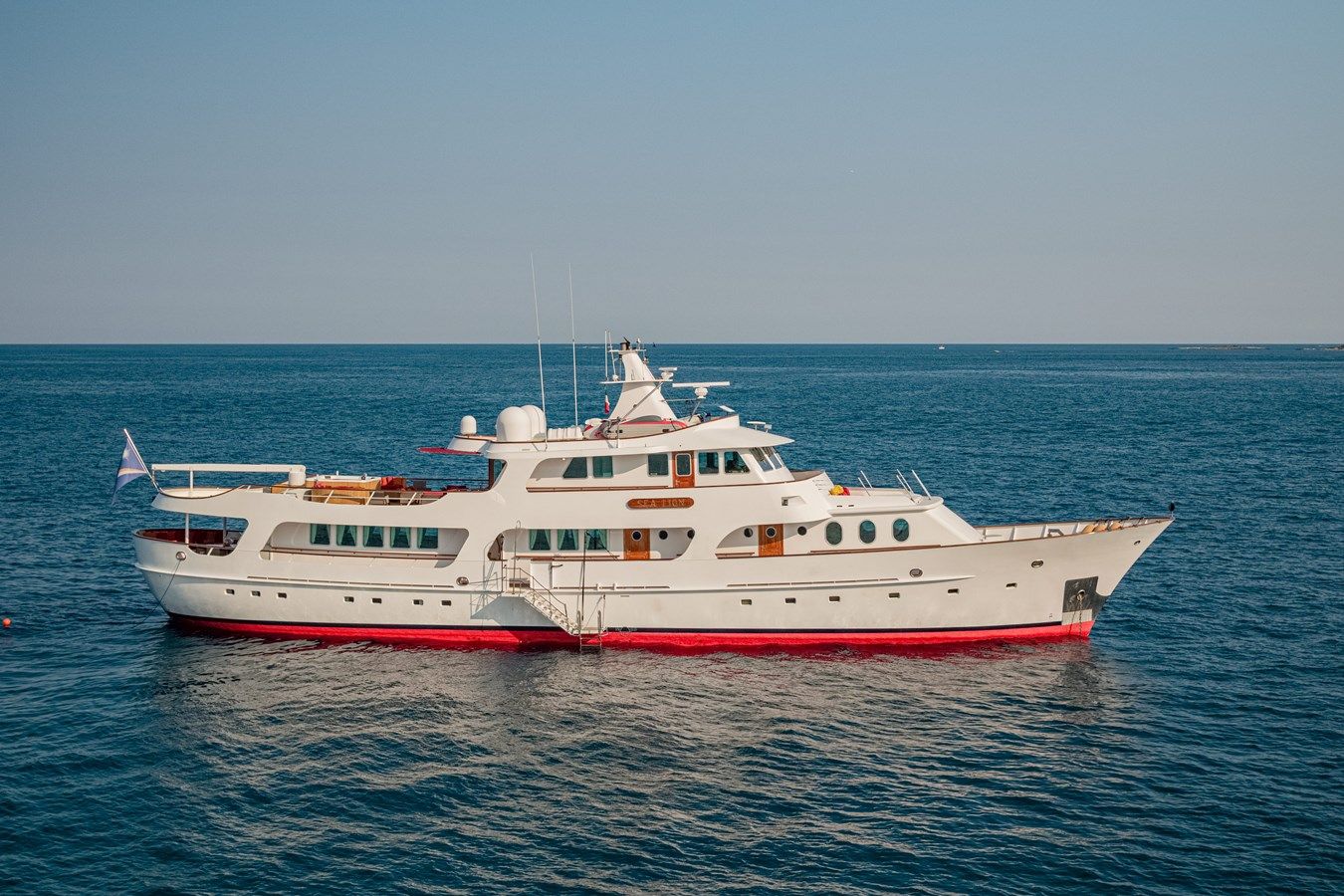
Learn more on the “HAAK SHIPYARD”
To learn more on the “HAAK SHIPYARD” or to get advice on how to buy or sell a yacht or get a great price for a yacht charter
please call +1 (954) 274-4435 USAOnly deal with professionals!