
 Licensed Yacht BrokersSales and service of yachts and ships
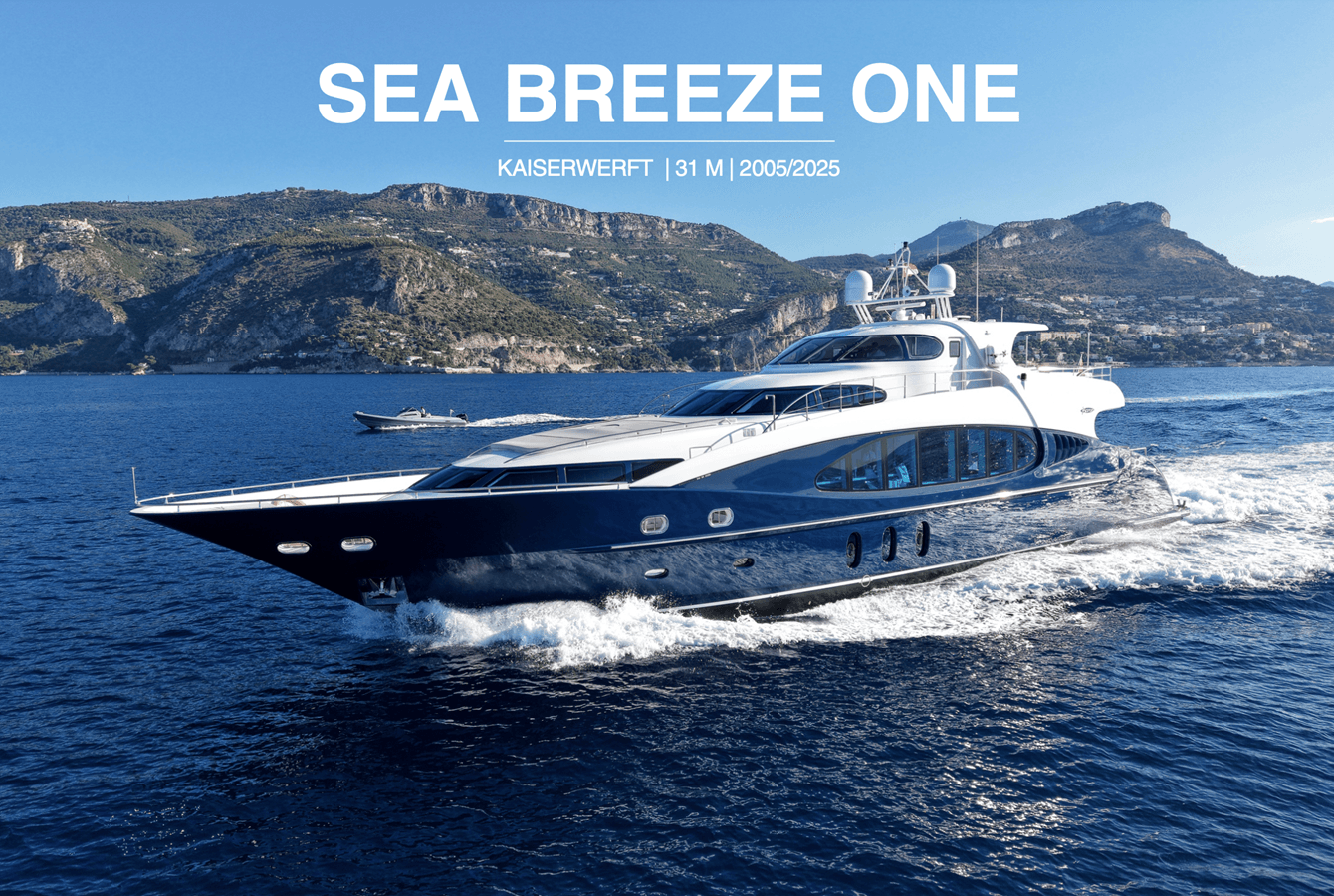
KAISERWERFT - For Sale
Company History
KaiserWerft is a German custom superyacht builder known for crafting limited-production, one‑off motor yachts with a strong emphasis on engineering quality, interior craftsmanship, and meticulous detailing. Emerging as a boutique yard within the European large‑yacht scene, the company built its reputation on fully custom and semi‑custom vessels typically in the 30–50 meter range, where owners seek the blend of Northern European engineering with the intimacy and flexibility of a smaller, highly specialized shipyard.
From its early projects onward, KaiserWerft positioned itself as a maker of displacement and semi‑displacement steel and aluminum yachts designed for long‑range cruising, quiet operation, and elevated interior volume for their length. Rather than pursuing high annual output, the yard focused on a small number of demanding builds, working closely with naval architects, classification societies, and specialist subcontractors across Germany and greater Europe. This approach resulted in yachts known for robust hull construction, thoughtful technical spaces, and interiors that stand up to intensive private and charter use.
KaiserWerft’s name became familiar to yacht brokers and captains largely through a handful of recognizable custom deliveries that circulated on the global brokerage and charter markets. The yard’s projects have been noted for comprehensive sound and vibration attenuation, practical crew flows, and an owner-focused approach to volume and privacy. A notable hallmark in the company’s portfolio is a custom motor yacht around the 40‑meter mark, often cited for its striking profile, expansive exterior deckscapes for the size category, and unusually generous beam and interior volume—elements that drew attention within industry media and at European shows at the time of launch.
Over the years, KaiserWerft refined a build method centered on:
- Close collaboration with European naval architecture offices and interior studios selected to match each owner’s brief.
- Steel or aluminum hulls and aluminum superstructures engineered to current classification requirements.
- Practical engineering with conservative margins, redundancy, and serviceability in mind, reflecting German industrial standards.
- Premium interior joinery, stonework, and soft finishes executed by specialist artisans from within Germany and neighboring regions.
While the company’s output has been intentionally limited, its projects have maintained a presence on the international scene, with various refits and updates handled later by reputable Northern and Western European yards. The resulting fleet is small but distinctive: yachts that exhibit a restrained, timeless aesthetic, carefully considered layouts, and a high standard of fit and finish expected from a German builder in this size bracket.
Country of Origin
Germany.
Manufacturing Locations
KaiserWerft’s construction has been based in Germany, with strong ties to Bavaria and to the broader German marine manufacturing ecosystem. Like many German yards specialized in custom builds, the company’s projects integrate work from a network of certified subcontractors and component suppliers across Germany and Central Europe—ranging from steel fabrication and aluminum work to interiors, piping, HVAC, and electrical systems. Final assembly, integration, and quality control are overseen by the shipyard, with classification surveys and acceptance milestones carried out in step with the relevant class society and flag requirements.
Ownership and Management
[Information not publicly detailed in authoritative, consistently verifiable sources.]
Reputation and Quality
Within the superyacht community of owners, captains, and brokers, KaiserWerft carries a reputation aligned with the broader tradition of German yachtbuilding: engineering discipline, careful structural work, and interiors built to a high standard. The brand’s projects are often cited for:
- Robust hull and superstructure fabrication, with careful attention to structural fairness and corrosion protection.
- Sound and vibration control that promotes comfort at displacement cruising speeds, aided by proper material isolation, flexible mountings, and balanced machinery selection.
- Practical technical spaces, with systems laid out for accessibility and serviceability—features valued by captains and engineers during extended cruising or charter operations.
- Interior craftsmanship, including precision joinery, durable finishes, and a restrained, contemporary design language that ages well and lends itself to updates at refit.
KaiserWerft yachts have drawn positive attention in brokerage listings and charter feedback for their sense of space relative to length, smart crew-service flows that help maintain privacy and efficiency, and balanced exterior decks that support both entertainment and long‑range usability. The yard’s best‑known custom builds have been present at European shows and covered by maritime media for their distinctive lines and volume-driven layouts, underlining a core competency: translating an owner’s brief into a tailored platform that does not feel constrained by length.
While not among the highest-volume names in Northern Europe, KaiserWerft’s smaller production has been a strategic choice, allowing for deeper project focus and direct engagement with owners. That approach has helped preserve an image of precision and reliability. Yachts attributed to the yard commonly appear built to the standards of leading classification societies (e.g., Lloyd’s Register or DNV, subject to project specification) and are typically aligned with relevant flag and commercial compliance standards when owners request charter capability.
In the secondary market, KaiserWerft builds are often praised for:
- Solid engineering fundamentals that support upgrades (stabilization improvements, navigation suites, AV/IT refreshes) without extensive structural rework.
- Layouts that provide strong crew ergonomics and guest privacy, improving operational efficiency and charter appeal.
- Materials and finishes that, when maintained, keep an elevated presentation even after extensive use.
Overall, KaiserWerft sits within a respected cadre of German and Northern European custom builders whose work emphasizes reliability, technical rigor, and craftsmanship over headline production numbers. Its fleet, though limited in size, has earned enduring recognition among professionals who value engineering clarity and practical luxury at sea.
Geschichte des Unternehmens
KaiserWerft ist eine deutsche Werft für maßgeschneiderte Superyachten, die sich durch geringe Stückzahlen, hohe Ingenieursqualität und sorgfältige Innenausbauten einen Namen gemacht hat. Das Unternehmen konzentriert sich auf individuelle Einheiten im Bereich von etwa 30 bis 50 Metern Länge und kombiniert dabei deutsche Ingenieurtradition mit der Flexibilität einer Boutique-Werft. Früh etablierte sich KaiserWerft mit stählernen oder aluminiumgebauten Verdrängeryachten, die für Langfahrten, niedrige Geräusch- und Vibrationswerte und großzügige Innenvolumina ausgelegt sind. Ein markantes Projekt im Portfolio war eine etwa 40‑Meter-Yacht mit auffälligen Linien und außergewöhnlich großer Decks- und Innenfläche für diese Länge, die in Fachmedien und auf europäischen Messen Aufmerksamkeit erhielt.
Herkunftsland
Deutschland.
Produktionsstandorte
Die Fertigung erfolgt in Deutschland, mit starken Verbindungen nach Bayern und zu spezialisierten deutschen Zulieferern. Wie bei vielen deutschen Maßwerften werden Rumpf, Aufbau, Systeme und Interieur von einem Netzwerk zertifizierter Fachbetriebe beigesteuert; Endmontage, Integration und Qualitätskontrolle liegen bei der Werft, begleitet von Abnahmen der jeweiligen Klassifikationsgesellschaft.
Eigentum und Management
[Keine verlässlich, konsistent belegten öffentlichen Angaben.]
Ruf und Qualität
KaiserWerft steht für deutsche Ingenieurarbeit, saubere Struktur- und Systemintegration und hochwertige Innenausstattung. Typisch sind solide Rumpf-/Aufbaukonstruktion, sorgfältige Schall- und Schwingungsdämpfung, gut zugängliche Technikräume und langlebige, präzise Innenausbauten. In Maklerexposés und Charterberichten werden die Yachten für ihr Raumgefühl, ihre funktionalen Layouts und ihre Praxistauglichkeit auf Langfahrt gelobt. Projekte werden üblicherweise gemäß gängigen Klassestandards (z. B. Lloyd’s Register oder DNV, je nach Spezifikation) gebaut und können auf Wunsch chartertauglich ausgerüstet werden.
Histoire de l’entreprise
KaiserWerft est un constructeur allemand de superyachts sur mesure, dont la réputation repose sur des unités produites en petites séries, une ingénierie soignée et une menuiserie intérieure de haute qualité. L’entreprise s’est spécialisée dans des yachts de 30 à 50 mètres, à coque acier ou aluminium, conçus pour la croisière au long cours et le confort acoustique. Un des modèles emblématiques, autour de 40 mètres, s’est distingué par un volume intérieur notable et des ponts extérieurs généreux, attirant l’attention des salons européens et de la presse spécialisée.
Pays d’origine
Allemagne.
Sites de production
La construction est réalisée en Allemagne, avec un écosystème de sous-traitants certifiés pour la coque, la superstructure, les systèmes et l’aménagement intérieur. L’assemblage final, l’intégration et le contrôle qualité sont supervisés par le chantier, en coordination avec la société de classification compétente.
Propriété et direction
[Informations non publiquement établies de manière fiable et cohérente.]
Réputation et qualité
KaiserWerft est appréciée pour la robustesse de ses structures, la réduction du bruit et des vibrations, l’accessibilité des locaux techniques et la durabilité des finitions intérieures. Les unités signées par le chantier bénéficient d’une bonne perception sur le marché secondaire pour leur ergonomie équipage, la confidentialité des zones propriétaires et la possibilité d’évolutions techniques lors de refontes. Les projets sont en général conformes aux standards internationaux de classification et, si demandé, configurés pour l’exploitation commerciale.
Historia de la empresa
KaiserWerft es un astillero alemán de superyates a medida, reconocido por su producción limitada y la atención minuciosa al detalle técnico y al interior. La empresa se centra en yates de 30 a 50 metros, de acero y/o aluminio, orientados a crucero de larga distancia con alto confort a bordo. Entre sus proyectos más comentados figura una unidad en torno a 40 metros con gran manga relativa y un uso eficiente del volumen, que destacó en ferias europeas y en medios del sector.
País de origen
Alemania.
Ubicaciones de fabricación
La construcción se lleva a cabo en Alemania, apoyándose en una red de proveedores especializados para casco, superestructura, sistemas y carpintería. El astillero supervisa la integración final, el control de calidad y las inspecciones de clasificación junto con la sociedad correspondiente.
Propiedad y gestión
[Información no disponible en fuentes públicas con suficiente fiabilidad.]
Reputación y calidad
El nombre KaiserWerft se asocia con ingeniería sólida, disposición práctica de espacios técnicos, bajos niveles de ruido y vibración, y alta calidad en ebanistería. Sus yates son valorados por su volumen interior respecto a la eslora, flujos de servicio eficientes y facilidad de mantenimiento y actualización en astilleros europeos durante refits. Suelen construirse conforme a normas internacionales de clasificación y, en su caso, ajustarse a requisitos de charter.
История компании
KaiserWerft — немецкая верфь, выпускающая штучные суперъяхты и ориентирующаяся на высокое качество инженерии и интерьеров. Портфель верфи включает индивидуальные проекты длиной примерно 30–50 м с корпусами из стали и/или алюминия, рассчитанные на дальние переходы и комфорт на ходу. Одна из наиболее заметных построек около 40 м получила известность благодаря большому внутреннему объему и просторным палубам для своей длины, что отмечалось профильной прессой и на европейских выставках.
Страна происхождения
Германия.
Производственные площадки
Строительство ведется в Германии с привлечением сертифицированных подрядчиков по корпусным, алюминиевым, системным и интерьерным работам. Финальная сборка, интеграция и контроль качества находятся под контролем верфи в связке с инспекциями классификационного общества.
Собственность и руководство
[Достоверная публичная информация отсутствует.]
Репутация и качество
KaiserWerft ценится за прочную корпусную конструкцию, качественную шумо‑ и виброизоляцию, удобство обслуживания систем и долговечные отделочные материалы. Яхты верфи пользуются устойчивым спросом на вторичном рынке благодаря продуманной планировке, приватности владельца и эргономике для экипажа, а также возможности безболезненных модернизаций на рефит‑этапах. Проекты, как правило, соответствуют требованиям ведущих классификационных обществ и могут быть адаптированы под коммерческую эксплуатацию по запросу владельца.
Main Competitors
Because KaiserWerft operated as a boutique German superyacht builder focused primarily on fully custom or semi-custom metal yachts in roughly the 30–50 meter segment, its competitive set is best understood as the European and Turkish yards with similar technical capabilities and brand positioning. The following brands are the most relevant peers or alternatives that owners, brokers, and project managers typically compare when considering a yacht similar in size and level of customization to past KaiserWerft deliveries:
-
Germany
- Lürssen: A global benchmark for custom superyachts, generally larger (60–160 m+), but often considered by clients aiming for German engineering and project management standards.
- Abeking & Rasmussen: Custom steel and aluminum builds, typically 50–80 m+, but a common comparator in discussions of German craftsmanship, classification rigor, and long-range capability.
- Nobiskrug: Known for custom steel superyachts; although it typically operates at larger sizes, it has historically competed for Northern European custom projects.
- Blohm+Voss (now integrated within the Lürssen group for yachting): Historically a reference name for high-end German new builds and refits; often considered in the same pool of “German pedigree” options.
-
Netherlands
- Heesen Yachts: Strong in 37–60 m semi-custom and custom aluminum yachts; high engineering standards, efficient build processes, and notable performance figures in the 40–50 m class.
- Moonen Yachts: Boutique Dutch builder in the 30–50 m bracket, often steel displacement; close in ethos to a small German custom yard with a focus on quality over volume.
- Royal Hakvoort: Family-run Dutch yard with custom metal builds; strong for owner-driven projects with a high degree of customization.
- Feadship (Royal De Vries and Royal Van Lent): Primarily larger custom yachts, but as a symbol of Dutch craftsmanship, Feadship is invariably part of any “Northern European pedigree” comparison.
- Oceanco: Typically much larger boats, yet often mentioned in the same conversation due to reputation and custom-build capability.
-
Italy
- Benetti: High-volume yard with both GRP semi-custom and steel/aluminum custom ranges; frequently competes on price-to-volume and delivery schedules in the 37–60 m segment.
- Sanlorenzo (Superyacht Division in La Spezia): Steel and aluminum new builds (e.g., 44–64 m) with sophisticated interiors and strong aftersales; a frequent alternative for owners wanting Italian design with Northern European-level engineering.
- CRN: Custom steel and aluminum builds in the 50–80 m range; another Italian option for owner-driven projects.
- Baglietto, Rossinavi, Codecasa: Boutiques and medium-size custom yards that often compete for clients seeking bespoke metal yachts in the 40–60 m bracket.
-
Turkey
- Turquoise Yachts: Custom steel and aluminum yachts, generally 50–70 m but with growing presence across ranges; recognized for value and quality improvements over the last decade.
- Bilgin Yachts: Increasingly active in 45–70 m projects; competitive on customization and cost relative to Northern Europe.
- Alia Yachts, RMK Marine, Sarp Yachts: Boutiques with strong metalwork and custom interiors; often on the shortlist for owner-led projects that emphasize design flexibility and cost efficiency.
-
United Kingdom and Others
- Sunseeker (superyacht range): While GRP and more production-oriented, the 37–47 m segment can overlap in customer consideration due to volume, speed, and competitive delivery timelines.
- Wider, Cantiere delle Marche (Italy), and some Spanish or French yards: Considered on a case-by-case basis for explorer-style or special-concept builds.
In practical terms, the most direct comparators for an owner once drawn to KaiserWerft’s proposition would likely be Moonen, Royal Hakvoort, Heesen (at the lower end of their length spectrum), and select Italian or Turkish boutiques that can genuinely deliver custom steel or aluminum yachts with high fit-and-finish and limited annual output.
Current Production Status
As of the most recent years for which open, industry-wide public reporting is readily available, there have been no widely publicized new-build launches, keel-layings, or orderbook disclosures under the KaiserWerft name. The brand has not maintained a conspicuous presence at major European boat shows in the way active builders typically do (for instance, through stand bookings, press briefings, or publicized client events), and there has been little to no consistent official communication signaling active production or a new-build pipeline.
For stakeholders evaluating the yard’s status, the following indicators are commonly used across the superyacht sector:
- New-build orderbook disclosures in recognized yachting media or classification society registers.
- Regular press releases, website updates, or social media communications from the yard announcing milestones (contract signings, keel-laying, launch, delivery).
- Visibility at Monaco Yacht Show, Cannes Yachting Festival (large yachts division), or other top-tier events through exhibits or new-build unveilings.
- Shipyard job postings, subcontractor tenders, or facility investments indicating live projects and staffing for production.
In KaiserWerft’s case, these indicators have not been present in a sustained, public-facing way in recent years. Consequently, from a market-observer perspective, the brand appears dormant or inactive in new-build production at this time. Existing KaiserWerft yachts continue to circulate on the brokerage market and undergo refits with third-party yards, which preserves the builder’s footprint in the fleet but is distinct from ongoing shipyard production.
Clients or brokers who require definitive status are advised to seek direct, current confirmation from local corporate registries, the yard’s last-known corporate contacts, or through classification society records tied to any ongoing projects. However, the lack of contemporary public evidence strongly suggests there is no active serial or custom new-build program under the KaiserWerft name at present.
Production Volumes
KaiserWerft was never a high-volume producer; rather, it operated with the philosophy and cadence of a boutique German yard, focusing on a small number of highly customized projects. The hallmarks of its production profile, as observed through the fleet that appears on the brokerage and charter markets, include:
- One-off or very limited semi-custom platforms, often in the 30–50 m range, executed in steel and/or aluminum.
- A build cadence consistent with “one at a time” or very low parallelization, a common approach for highly customized yachts requiring intensive owner involvement, complex engineering, and deep interior craftsmanship.
- Output that, over its active period, remained modest—measured in a small fleet rather than dozens of hulls—reflecting a deliberate emphasis on quality and engineering thoroughness over throughput.
While precise year-by-year figures have not been consistently published by the company in a centralized, publicly accessible archive, industry participants generally categorize KaiserWerft’s historical production as:
- Cumulative fleet size: small, consistent with the definition of a boutique yard.
- Annual output during active years: typically zero to one yacht per year, depending on the complexity of the project and the yard’s concurrent workload.
This profile aligns with the realities of custom Northern European shipbuilding: long lead times, high standards of compliance with classification rules, rigorous engineering, and quality assurance protocols that preclude rapid, multi-hull throughput. The result is a fleet that, while limited in count, tends to retain value through recognized build quality and conservative engineering choices conducive to long-term maintenance and refit.
From a buyer’s standpoint, the limited production volume has both advantages and considerations:
- Advantages: Strong sense of individuality per hull, high owner engagement in specification, and a reputation for robust construction that translates well into the secondary market.
- Considerations: Scarcity of sister-ship data points when comparing performance or maintenance profiles; and reliance on third-party refit yards for upgrades, since the original builder does not maintain a public, ongoing new-build program.
Latest News
Recent years have not produced high-profile, primary-source announcements from KaiserWerft regarding new contracts, launches, or corporate developments. In lieu of official updates, market observers typically encounter the brand in the following contexts:
- Brokerage transactions: KaiserWerft-built yachts periodically appear on the market, sometimes following refit programs or after ownership changes. Listing and sales activity keeps the name visible within brokerage channels and databases.
- Refits and upgrades: Several KaiserWerft yachts undergo refits at established Northern and Western European yards. News of these refits tends to be disseminated by the refit yards, designers, or system suppliers (stabilization, AV/IT, navigation, HVAC) rather than KaiserWerft itself, reflecting the broader industry practice when an original builder is inactive in new builds.
- Charter market visibility: Some yachts built by the yard continue to operate in charter, generating reviews and operational feedback, which indirectly sustains the brand’s reputation for interior volume utilization, practical crew flows, and robust engineering.
For stakeholders trying to track “latest news” in a formal sense (such as newbuild order signings, yard expansions, or management changes), the absence of verifiable, first-party communications and major media coverage indicates a quiet profile rather than an active promotional or delivery cycle. This stands in contrast to the rhythm of announcements typical of yards with ongoing production, where each milestone—contract, keel, launch, delivery—generates public documentation, imagery, and classification references.
If a definitive, time-stamped status is needed (for example, to support a purchase decision, a financing package, or a technical audit of a KaiserWerft-built yacht), the recommended due-diligence pathway is:
- Verify corporate filings in the relevant German commercial registers for current company status.
- Request confirmation from class societies and flag administrations for any hulls claimed to be in build.
- Engage with reputable project managers, surveyors, and shipyards that have recently worked on KaiserWerft yachts to obtain firsthand technical insights and upgrade histories.
- Cross-check with established yachting media and databases for any newly recorded contracts or yard activity.
In summary, the most recent, widely accessible industry information portrays KaiserWerft as a legacy name with a small but respected fleet and no publicly documented new-build activity in the current cycle. Owners and brokers encountering the brand today typically do so through existing yachts—either on the brokerage market or in refit pipelines—rather than via fresh launch announcements or show debuts.
Frequently Asked Questions
Question: Is KAISERWERFT a real yacht builder? Answer: Yes. KAISERWERFT is known in the superyacht community as a German boutique yacht builder that focused on fully custom, low-volume projects, typically in the 30–50 meter range. The yard’s reputation is associated with Northern European engineering standards, precise metalwork, and carefully executed interiors.
Question: What size of yachts did KAISERWERFT typically build? Answer: Historically, projects most often fell between about 30 and 50 meters in length overall. Within this range, owners could specify full-displacement cruising yachts emphasizing range and comfort, or, depending on the brief, lighter configurations targeting higher speeds.
Question: What construction materials were commonly used? Answer: As is common for Northern European custom builders in this segment, KAISERWERFT projects typically featured steel hulls with aluminum superstructures for full-displacement yachts. In some briefs favoring higher speeds, all-aluminum construction was considered to reduce weight and improve performance, though most well-known references emphasize robust, long-range displacement builds.
Question: How would you describe the engineering philosophy? Answer: The yard emphasized conservative engineering margins, robust systems integration, and excellent service access. Practical machinery layouts, redundancy in critical systems, thoughtful piping and electrical routing, and strong corrosion protection measures are hallmarks associated with its approach.
Question: What is the general reputation for noise and vibration levels? Answer: KAISERWERFT yachts are generally regarded as quiet and comfortable at displacement cruising speeds. This is achieved through acoustic insulation, isolation of machinery, careful alignment and mounting strategies, and attention to airflow and ducting to reduce transmitted noise.
Question: Were the yachts classed and compliant with international standards? Answer: Custom Northern European builds of this type are typically built under the oversight of a recognized classification society and can be specified to meet flag and commercial compliance standards when owners intend to charter. The precise class and code depend on the project, but the yard’s work is associated with the rigor expected of top-tier European custom builders.
Question: Are new KAISERWERFT yachts still being produced today? Answer: There has not been widely publicized new-build activity under the KAISERWERFT name in recent years. The brand is best encountered today through its existing fleet on the brokerage and charter markets and through refit activity performed by third-party European yards. As always, definitive confirmation of current activity would require direct verification via classification records and corporate registries; publicly accessible indicators, however, suggest a very quiet or dormant new-build profile.
Question: How do KAISERWERFT yachts compare to composite production yachts of similar length? Answer: Compared to GRP production yachts, KAISERWERFT’s metal builds tend to prioritize structural robustness, long-range capability, and tailor-made layouts over top-end speed. They typically offer higher customizability, thicker scantlings, and a different weight and handling profile. While composite yachts may achieve higher speeds and shorter delivery times, a custom metal KAISERWERFT build offers greater flexibility in engineering and interior specification.
Question: What are typical cruising speeds and ranges for these yachts? Answer: For full-displacement builds in the 35–45 meter class, typical cruising speeds are often around 10–13 knots, with top speeds roughly 12–16 knots depending on hull form and power. Endurance is frequently a strong point: range at economical speed can extend into the several-thousand-nautical-mile territory, facilitating transoceanic passages, subject to specific tankage, hull efficiency, and engine selection.
Question: What engine types are commonly found on yachts of this pedigree? Answer: Twin diesel main engines from well-known marine manufacturers are the norm in this segment. Owners historically specified powerplants from established brands known for global support networks and compliance with classification and flag requirements. Auxiliary systems (generators, stabilization, HVAC, watermakers) are likewise sourced from reputable European and international suppliers to ensure serviceability worldwide.
Question: How many guest cabins are typical for a yacht of this size and style? Answer: Five to six guest cabins accommodating 10–12 guests is a common configuration in 35–45 meter displacement yachts. Owners often opt for a full-beam master suite, one or two VIPs, and additional guest cabins that can be set up as doubles or twins. Crew complements typically range from 6 to 9, depending on service level and operational profile.
Question: Are KAISERWERFT yachts considered suitable for charter? Answer: Many yachts in this Northern European custom category are built to standards that permit charter operations, provided they meet the relevant flag and commercial code. Features that make them attractive for charter include robust engineering, practical crew and service flows, generous storage, and layouts that balance privacy and hospitality. Charter suitability depends on the specific yacht’s certifications and interior arrangement.
Question: What distinguishes the interior craftsmanship? Answer: Interiors from this pedigree are known for meticulous joinery, durable veneers and solid woods, precise stonework, and careful integration of soft goods. The emphasis is on materials and finishes that wear well in long-term private and charter use, with panelization and access points designed for maintenance. The aesthetic is often timeless and restrained, which helps interiors remain current across refit cycles.
Question: Do these yachts include zero-speed stabilization? Answer: Zero-speed (at-anchor) fin stabilization has become a common expectation in this class and is typically specified either at build or retrofitted during refits. The systems reduce roll at anchor and underway, significantly improving guest comfort. The precise stabilizer brand and configuration depend on the yacht’s size, displacement, and owner preferences.
Question: What should buyers consider when surveying a pre-owned KAISERWERFT yacht? Answer: Focus on hull and superstructure condition (including coatings and corrosion control), machinery hours and overhaul status, quality and documentation of electrical and piping systems, condition of stabilization and HVAC systems, classification and flag compliance status, and evidence of consistent, professional maintenance. Given the custom nature of these yachts, a thorough technical survey by specialists who understand Northern European metal builds is essential.
Question: Are refits and upgrades straightforward on these yachts? Answer: Generally, yes. The engineering clarity typical of custom German builds supports upgrades such as AV/IT modernization, navigation suite refreshes, stabilization enhancements, hotel-load improvements, and interior updates. Experienced refit yards can access and integrate equipment from mainstream suppliers, and the yachts’ technical spaces usually provide reasonable access for retrofits.
Question: What is the resale outlook for a KAISERWERFT yacht? Answer: Boutique, well-engineered, Northern European custom yachts tend to retain appeal due to perceived pedigree, build quality, and practical layouts. Scarcity can work in their favor, although market value will reflect each hull’s maintenance history, refit investments, classification status, and global market conditions. Buyers often weigh the benefits of robust construction and customization against operating costs typical of metal displacement yachts.
Question: Do these yachts support long-range, off-the-beaten-path cruising? Answer: Yes, that is a key part of their appeal. With efficient displacement hulls, generous tankage, redundant systems, and strong engine-room layouts, yachts of this pedigree are suitable for extended itineraries. While not all are ice-class or expedition-labeled, many are capable of comfortable transits across oceans and extended seasonal cruising with appropriate planning and support.
Question: How are crew and service flows typically handled on board? Answer: Crew passageways, pantries, and dumbwaiters are often arranged to maintain guest privacy and efficient service. Technical spaces are designed for quick access and line-of-sight maintenance, and laundry and provisioning layouts support charter-level turnover. The overall effect is a yacht that is easy to run professionally, which benefits both private and charter use.
Question: What about environmental and emissions considerations for older yachts? Answer: Many yachts in this size and age bracket predate the latest emissions standards. Upgrades can include exhaust after-treatment, improved fuel monitoring, LED lighting, variable-speed pumps and fans, and other energy-efficiency measures. Feasibility depends on volume, weight, and budget, and must be assessed by naval architects and shipyard engineers during refit planning.
Question: Are there typical tender and toy arrangements? Answer: Expect a tender garage or deck-mounted tender with appropriate cranes, plus storage for personal watercraft and water-sports equipment. The exact arrangement varies by yacht: some opt for a larger tender garage aft, others for a foredeck crane and recessed storage, balancing launch efficiency with interior volume.
Question: How does insurance and classification affect ownership? Answer: Classification and flag compliance influence maintenance schedules, inspection regimes, permissible charter operations, and insurance terms. Owners and captains should maintain class and meet statutory requirements for safety, firefighting, lifesaving appliances, and manning. Compliance supports resale and ensures broad cruising capability.
Question: What is the best way to evaluate lifecycle costs? Answer: Commission a full technical survey, review maintenance logs and class records, analyze fuel and crew budgets for the intended operating profile, and obtain quotes for near-term refit items. Metal displacement yachts of this caliber are engineered for longevity; predictable budgeting comes from documented maintenance and timely system overhauls.
Question: Did KAISERWERFT collaborate with well-known designers and subcontractors? Answer: As is typical for custom Northern European projects, the yard worked with established naval architects, interior studios, and system suppliers from Germany and broader Europe. The specific teams differed from project to project based on each owner’s brief and the yacht’s technical requirements.
Question: Is there a standardized model lineup? Answer: No. KAISERWERFT focused on one-off custom or very limited semi-custom projects, tailoring hull form, superstructure, interior layout, and systems to each owner’s requirements rather than offering a catalogue of fixed models.
Question: What makes KAISERWERFT yachts attractive on the secondary market? Answer: Engineering clarity, robust construction, conservative systems choices, and timeless interior design philosophies make these yachts good candidates for targeted upgrades. Many prospective buyers value the pedigreed build quality and the comfort standards typical of Northern European custom yards.
Available Models
Because KAISERWERFT operated as a custom, low-volume builder, it did not promote a standardized catalogue of “models” with fixed specifications. Instead, each yacht was defined by the owner’s brief, classification requirements, and engineering choices made during design and construction. The following profiles summarize typical configurations associated with custom yachts in the KAISERWERFT sphere. These are descriptive categories, not formal model names, intended to help prospective buyers and project managers benchmark what to expect in this size and pedigree.
-
Custom Displacement Motor Yacht, approximately 35–45 meters
- Intended use: Long-range private or charter cruising with emphasis on comfort, stability, and fuel efficiency at economical speeds.
- Hull and superstructure: Steel hull with aluminum superstructure, fairing to a Northern European standard, with extensive corrosion protection and attention to structural fairness.
- Propulsion and machinery: Twin conventional diesel main engines from established marine manufacturers, paired with robust gearboxes and shaft lines. Generator sets sized for hotel loads, with noise-reduction enclosures and resilient mounts. Engine rooms laid out for service access.
- Performance: Typical cruising 10–13 knots; maximum speed approximately 12–16 knots depending on displacement and horsepower. Range at economical speed commonly in the several-thousand-nautical-mile bracket, subject to tankage and hull efficiency.
- Stabilization: Fin stabilizers, often zero-speed capable; underway stabilization tuned for low roll amplitudes at displacement speeds.
- Accommodation: 5–6 guest cabins for 10–12 guests, including a full-beam owner’s suite and a mix of VIP and guest cabins; crew accommodations for about 6–9, with functional galley, laundry, and crew mess.
- Layout and features: Emphasis on privacy and service flow, with dedicated service stairways, pantries, and dumbwaiters as specified; generous sun and dining areas across aft decks and sundeck; tender garage or deck cranes depending on design.
- Systems: HVAC scaled for global climates, watermakers and fuel-polishing systems for extended cruising, comprehensive monitoring and alarm systems, and fire detection/suppression compliant with class and flag.
- Interior: High-grade joinery, precision stonework, and resilient finishes designed for intensive use; aesthetic tailored to owner preference, typically leaning toward timeless, contemporary lines that age well.
- Compliance: Classed by a recognized society and, where required, configured for charter in line with the relevant commercial code.
-
Custom Fast Cruising Aluminum Motor Yacht, approximately 35–40 meters (project-dependent)
- Intended use: Faster passages with reduced displacement, trading some range and payload for speed and responsiveness.
- Hull and superstructure: All-aluminum construction, optimized for weight and structural efficiency; careful attention to vibration and noise given the lighter build.
- Propulsion and machinery: Twin high-output diesels selected for higher top-end performance; auxiliary systems engineered to fit tighter weight envelopes.
- Performance: Higher maximum speeds relative to displacement builds; cruising profiles optimized for 14–18 knots or more depending on the final specification, with ranges tailored to regional rather than transoceanic itineraries unless additional tankage is incorporated.
- Stabilization: Fin or alternative systems sized for lighter displacement; zero-speed options typically specified.
- Accommodation: Similar guest capacity to displacement configurations but with weight-conscious material choices; crew arrangements configured for efficient operation at higher transit speeds.
- Layout and features: Exterior deck spaces designed to remain usable at speed with proper wind protection and ergonomics; tender handling solutions tuned to weight and balance considerations.
- Systems and compliance: Class and flag built-in from the outset; particular focus on structure-borne noise control due to aluminum’s acoustic characteristics.
-
Custom Long-Range Variant, approximately 40–50 meters (where specified by owners)
- Intended use: Extended itineraries prioritizing endurance and autonomy.
- Hull and superstructure: Steel/aluminum pairing, with tankage and stowage optimized for lengthy passages; robust deck equipment and cranes for tenders and operational gear.
- Propulsion and machinery: Engines selected for high reliability at continuous-duty load; redundant cooling, filtration, and power-management systems to support long periods away from shore assistance.
- Performance: Economical cruising around 10–12 knots; enhanced range through efficient hull design and optimized propeller selection; attention to seakeeping in moderate to heavy weather.
- Accommodation: Guest layouts favoring comfort on long trips, with multi-purpose spaces and abundant storage; crew quarters designed for sustained operations and maintenance cycles.
- Compliance: Class and safety systems scaled for global cruising regions; careful consideration of spares storage and workshop facilities onboard.
Important note on “models”: These descriptions reflect typical custom configurations rather than off-the-shelf models. Exact lengths, speeds, accommodation counts, and machinery choices depend on each yacht’s design brief, classification and flag requirements, and owner-selected suppliers. As a result, two yachts of similar length may differ significantly in performance, interior volume, and technical specification.
Guidance for prospective buyers and operators considering a KAISERWERFT-built yacht on the secondary market:
- Technical review: Commission a comprehensive survey covering structure, coatings, machinery, and systems. Review major overhauls (engines, gearboxes, generators, stabilizers) and verify compliance documentation.
- Refit planning: Identify priority upgrades—navigation electronics, AV/IT infrastructure, zero-speed stabilization enhancements, HVAC efficiency measures, and interior modernization—then sequence them around yard availability and class timelines.
- Operational profile alignment: Match the yacht’s hull type and tankage to your intended cruising plans. A full-displacement, steel-hull yacht excels at quiet, comfortable long-range passages; an all-aluminum configuration favors speed and responsiveness at the expense of absolute range.
- Crew ergonomics: Ensure crew accommodation and service routes support the service standard you expect. Efficient crew flow contributes heavily to guest experience and charter viability.
- Lifecycle expectations: These yachts are engineered for decades of service. With diligent maintenance and periodic system upgrades, they can provide long-term value and remain competitive in comfort and safety.
In summary, KAISERWERFT’s legacy lies in highly customized, carefully engineered metal yachts that prioritize practical luxury and long-term serviceability. While there is no standardized model lineup to list, the categories above capture what most owners can expect from this pedigree: robust construction, thoughtful technical layouts, and interiors that balance durability with understated elegance.

Learn more on the “KAISERWERFT”
To learn more on the “KAISERWERFT” or to get advice on how to buy or sell a yacht or get a great price for a yacht charter
please call +1 (954) 274-4435 USAOnly deal with professionals!