
 Licensed Yacht BrokersSales and service of yachts and ships
N/A - For Sale
Kingfisher
Company History
Within the world of production cruising sailboats, the “Kingfisher” name is most commonly associated with a British marque that emerged during the rapid expansion of glass‑reinforced plastic (GRP) yacht building in the United Kingdom in the late 1960s and 1970s. While specific corporate records about its early legal formation and the identities of original founders are not widely published in accessible sources, the historical outline of the brand and its boats is well known among sailors, brokers, and yard professionals who work with classic British production yachts.
Kingfisher’s appearance on the market coincided with a pivotal shift in recreational boating: mass‑market GRP construction made family cruising yachts more affordable, more durable, and easier to maintain than the wooden boats they replaced. The brand carved out a niche with sturdy, straightforward coastal cruisers that prioritized interior volume, everyday practicality, and the ability to live comfortably aboard at anchor or on a drying mooring—capabilities that mattered enormously in tidal waters and estuaries around the British Isles.
A defining theme of the Kingfisher line was the adoption of twin bilge keels on many models, a configuration that let owners take the ground upright at low tide, access economical drying moorings, and explore shoal‑draft harbors that were off‑limits to deeper fin‑keelers. In that era, these virtues were compelling for first‑time yacht owners and families upgrading from dayboats or small weekenders. The boats were generally masthead sloops with conservative sail plans and longish keels or skeg‑hung rudders—choices that emphasized predictability, directional stability, and ease of handling over outright speed.
Across the model range, Kingfisher offered compact cruisers in the 20‑ to 30‑foot class. Models best remembered today include the Kingfisher 20 and 20+ (variants intended to maximize usable interior space in a small envelope), the mid‑sized Kingfisher 26 for couples and small families seeking more cruising range and a separate heads compartment, and the larger Kingfisher 30 and 30‑series boats, which delivered proper standing headroom, a workable galley, and the kind of storage needed for multi‑week coastal cruising. While exact launch dates for each model can vary by source, the bulk of the range is associated with the late 1960s through the 1970s.
As the 1970s drew to a close, shifting market dynamics reshaped the British yacht industry. Economic headwinds, rising manufacturing costs, the oil shocks of the decade, and intensifying competition from other UK builders (and, increasingly, continental European yards) pressured many mid‑sized marques. In that consolidation, Kingfisher—like a number of other respected but smaller British brands—eventually ceased production. Even so, the boats endured. Their thick GRP laminates, simple systems, and bilge‑keel practicality helped many examples survive in active use long after the brand’s manufacturing life ended, and they remain a fixture of the secondhand market in the UK and beyond.
Today, the Kingfisher story is kept alive by owner communities and the boats themselves. You will still find Kingfisher yachts cruising the Solent, pottering along the West Country, threading the channels of the East Coast, and making traditional cross‑Channel hops to Brittany and Normandy. Their continued presence speaks to the soundness of the original design brief: manageable, family‑friendly cruising yachts built for real‑world, tidal‑water sailing rather than trophy hunting.
In summary, while fine‑grained corporate details about the inception and closure of the company are not broadly documented, the Kingfisher marque holds an established place in British yacht‑building history as a practical, value‑oriented line of GRP coastal cruisers from the classic era of mass production.
Country of Origin
United Kingdom.
Reputation and Quality
Within the trade, Kingfisher yachts are regarded as honest, capable cruisers—boats that put usable space, seakindliness, and all‑weather practicality ahead of flash or fashion. Several characteristics underpin this reputation:
-
Conservative, confidence‑inspiring design: Kingfisher hulls tend to be moderate in form, with displacement appropriate for comfortable motion and ample load‑carrying. The rigs are traditionally proportioned masthead sloops, manageable by one or two competent sailors. These boats are not optimized for racing circuits; instead, they emphasize steady tracking, easy heaving‑to, and predictable handling in a blow—qualities that owners value for coastal passages and family sailing.
-
Twin bilge keels and shoal capability: Many Kingfisher models were offered with bilge keels as standard. In British waters—riddled with drying harbors, bar‑crossings, and significant tidal ranges—this is not a compromise but a design brief. The ability to take the ground upright broadens cruising horizons, reduces marina dependence, and makes maintenance more economical. While bilge keels introduce some performance penalties to windward compared with fin‑keel contemporaries, Kingfisher owners usually accept that trade for the practical wins: access, economy, and versatility.
-
Robust GRP construction: Boats from this era often feature heavy, solid‑laminate hulls. That heft enhances durability and damping in a seaway. Decks are typically GRP with localized reinforcement, and the structural grid is uncomplicated—stringers, floors, and bulkheads bonded in a manner that is straightforward for surveyors to interpret and for competent yards to repair. This simplicity pays dividends decades on: issues, when they arise, are rarely exotic and can be handled by ordinary craftsmen without boutique materials or esoteric methods.
-
Workable interiors with family‑cruising priorities: Even on the smaller Kingfishers, designers sought standing or near‑standing headroom, genuine sea‑berths, and serviceable galleys. On the 26‑ and 30‑footers, you can typically expect a separate heads compartment, a sensible saloon layout, and enough stowage to support multi‑day trips. The aesthetic is classic 1970s British: robust joinery, marine ply with hardwood trim, and fittings chosen for longevity rather than show. Compared with some sleeker contemporaries, the freeboard and coachroof can appear utilitarian—but that geometry is exactly what provides volume, light, and comfort at rest.
-
Everyday maintainability: System complexity is low by modern standards. Many 20‑foot models were originally outboard‑powered or carried small inboard diesels; the larger boats commonly used compact single‑cylinder or twin‑cylinder diesels from mainstream manufacturers of the time. Electrical systems, fuel, and water installations are typically simple enough that refits can be staged gradually by an attentive owner with yard support as needed. This is a significant reason why so many Kingfishers have remained serviceable: they invite stewardship rather than deter it.
Performance and handling expectations are broadly consistent across the range. To windward in a chop, a bilge‑keel Kingfisher will not match a modern fin‑keeler on elapsed time; there is more wetted surface and less foil efficiency. Trim and sail choice matter: well‑cut sails, a tidy bottom, and keeping displacement under control will repay owners noticeably. Off the wind, and in a moderate sea, these boats make easy, confidence‑building miles with low helm loads and a comfortable gait. Their manners when reefed—docile, with a steady groove—are among the reasons they remain attractive to single‑handers and couples.
Surveyors and brokers familiar with the marque often point to a common set of age‑related considerations, largely reflecting the era rather than any brand‑specific flaw:
-
Keel attachments and bilge keel bolts should be inspected methodically on any older bilge‑keel yacht, Kingfishers included. The goal is to verify corrosion status, bedding integrity, and the condition of surrounding laminate and floors.
-
Standing rigging on classic production boats is often on a time‑expired schedule unless documented as renewed. Replacement to modern standards is a sensible safety and reliability upgrade.
-
Original windows and deck hardware can show bedding fatigue. Re‑bedding or replacement with contemporary sealants, along with sensible load‑spreading washers or backing plates, improves longevity and watertightness.
-
Osmosis (hull blistering) may be encountered on any older GRP yacht. The notably thick layups used in this era can actually make structural remediation more straightforward where needed, and many examples remain blister‑free—inspection is case by case.
-
Electrical systems evolved over decades of ownership. A tidy rewire with modern protection, clearly labeled distribution, and corrosion‑resistant terminations is a high‑value refit item that pays back in reliability and resale presentation.
In terms of market position, Kingfisher yachts typically present strong value on the pre‑owned market. They are rarely the most expensive examples of their size class, but well‑kept boats command steady interest because they deliver the core cruising brief at a sensible price: a seaworthy platform, genuine accommodation, and the shoal‑draft freedom to explore harbors and estuaries that define much of the British and near‑continental coastline. For owners who prioritize practical cruising over fashion, this equation remains compelling.
The brand’s reputation also benefits from a vibrant grassroots culture. Because thousands of British production cruisers from the 1960s–1970s remain afloat, there is a deep bench of yard experience and peer knowledge. Informal owner groups, classic boat forums, and local clubs continue to share fit‑out ideas, sail plans, and refit notes specific to Kingfisher models. That living knowledge base helps sustain the fleet: when questions arise—about chainplate access, for example, or optimizing a bilge‑keel antifoul schedule—there is usually someone who has been there before.
While the Kingfisher marque is not typically linked with high‑profile racing laurels or international design awards, its achievement is arguably more enduring: thousands of safe, satisfying family miles accumulated across the Solent, the Bristol Channel, the East Coast rivers, the Irish Sea, and cross‑Channel tracks to northern France. Boats that continue to do the job decades after launch have passed a stringent, real‑world test—one measured not by podium finishes but by owners returning from weekends and holidays with the quiet sense that their yacht is a trustworthy partner.
A note on naming helps avoid confusion: “Kingfisher” in sailing has also been the name of prominent raceboats and sponsorships unrelated to this UK production marque. Most famously, Ellen MacArthur’s IMOCA 60 was named Kingfisher after her sponsor, the British retail group. That raceboat has no manufacturing connection to the classic Kingfisher production cruisers discussed here. In the powerboat world, “KingFisher” is a well‑known Canadian builder of aluminum fishing boats—again, a separate entity with a different product category and heritage. Within yacht brokerage and classic‑boat circles, however, “Kingfisher” used without qualifiers generally denotes the British GRP cruising sailboats of the 1960s–1970s.
In short, Kingfisher’s standing in the industry rests on a clear and enduring value proposition: sturdy GRP coastal cruisers, thoughtfully arranged for real living aboard, with shoal‑draft capability that opens up more of the map. That formula, executed with sensible engineering and an eye for owner maintenance, is why these yachts continue to change hands, receive careful refits, and carry crews to favorite anchorages season after season.
Main Competitors
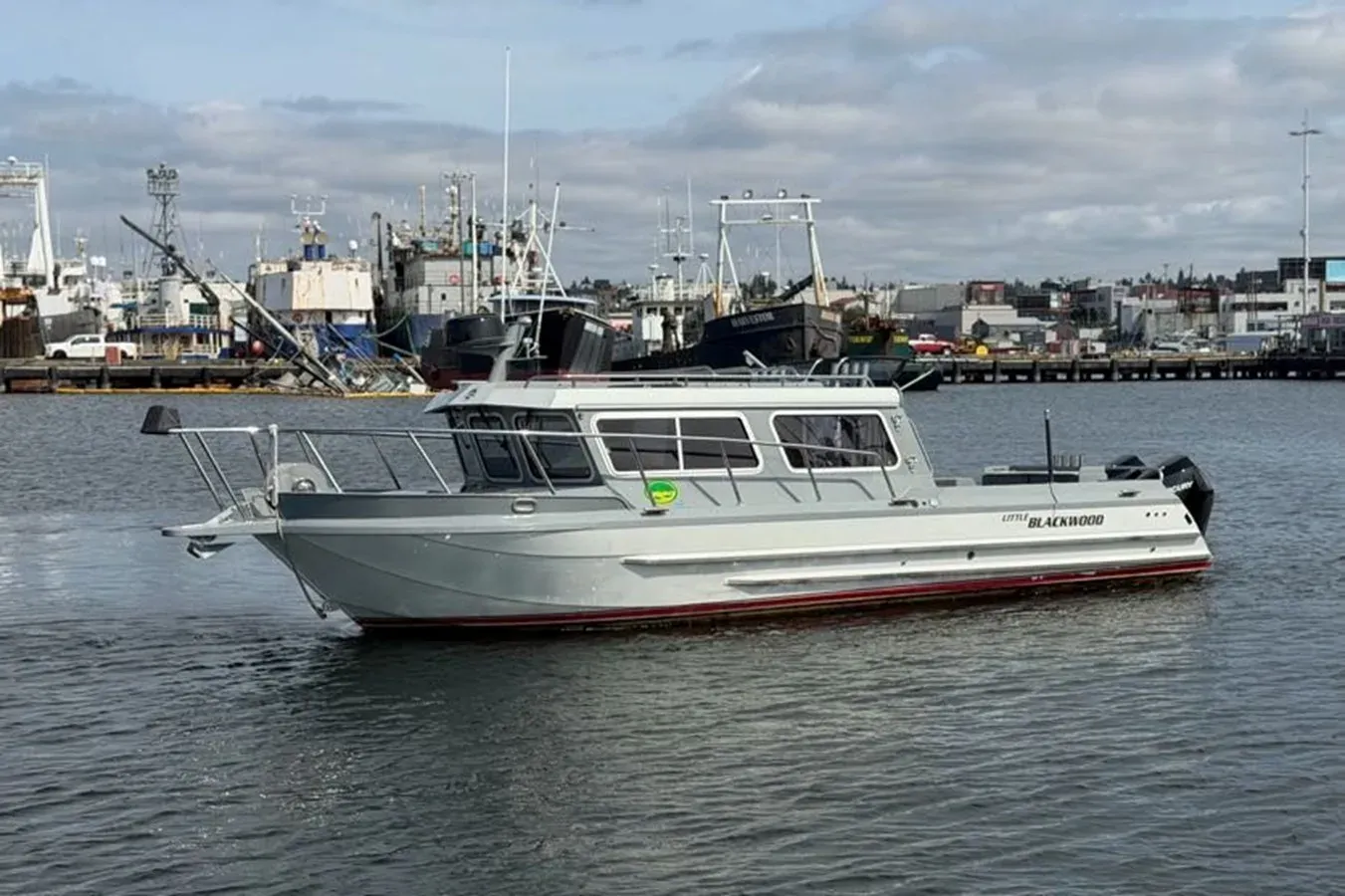
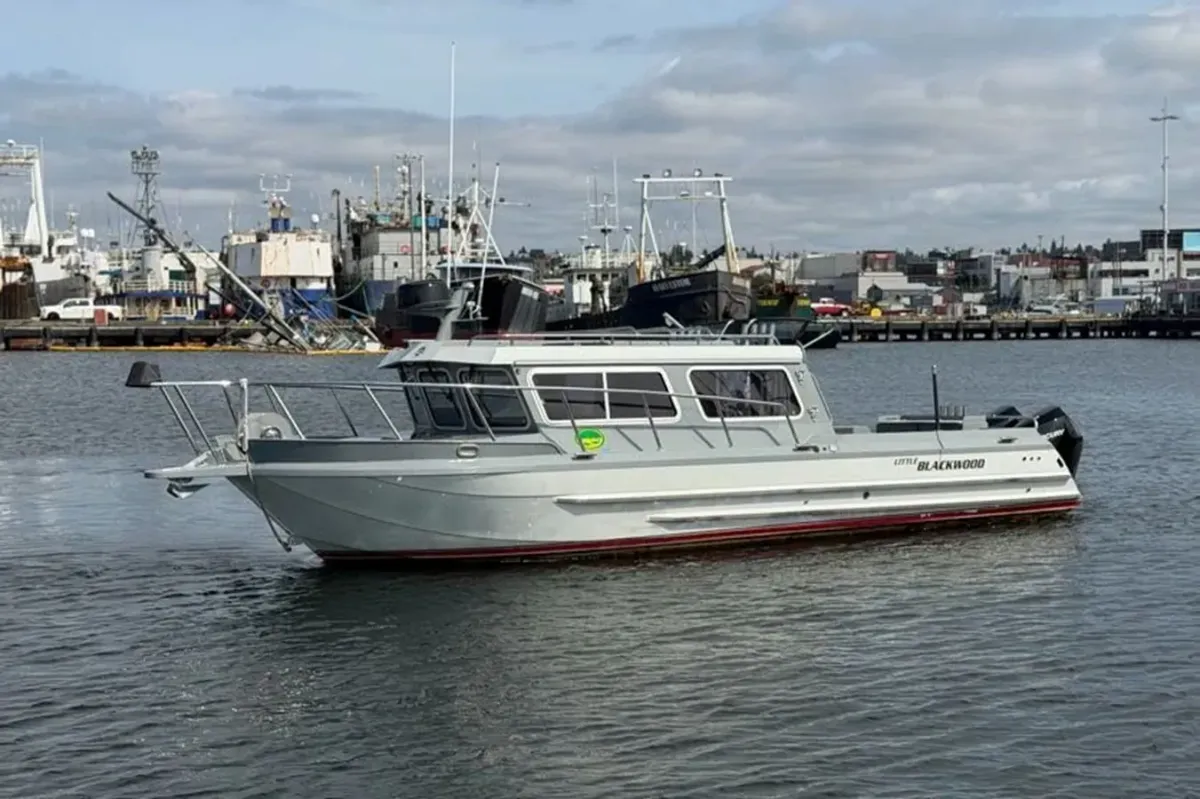
In the North American market, KINGFISHER (KingFisher Boats of Vernon, British Columbia, Canada) competes primarily in the heavy‑gauge welded‑aluminum segment. Buyers in this category are typically looking for rugged, trailerable boats that can handle rough coastal runs, large inland lakes, and shallow rivers, often with an emphasis on fishing, hunting, and expedition‑style use rather than luxury fit‑out. The main competitive landscape can be grouped into three overlapping clusters:
-
Heavy‑gauge offshore and coastal aluminum builders
- Hewescraft (Washington, USA) — A long‑established yard focused on durable, value‑forward coastal and nearshore fishing boats, commonly cross‑shopped against KingFisher in Alaska, British Columbia, and the U.S. Pacific Northwest.
- North River Boats (Oregon, USA) — Known for robust construction and a wide spread of workboat and recreational models. In the pilothouse and offshore wheelhouse space, North River models commonly compete for the same customers who favor aluminum over fiberglass.
- Duckworth Boats (Washington, USA) — A well‑respected brand in the Columbia River and coastal markets with deep‑V and offshore‑capable platforms; it draws many of the same salmon/halibut and tuna anglers who evaluate KingFisher’s Offshore and Coastal lines.
- Weldcraft (Washington, USA) — Similar product focus in welded aluminum with offshore and big‑lake boats that target buyers who want the strength and toughness of plate aluminum, enclosed helms, and fishing‑centric layouts.
- Thunder Jet (Washington, USA) — Offers both river and coastal models in heavy‑gauge aluminum; a frequent comparison for customers weighing performance, cockpit space, and price against KingFisher.
- Raider Boats (Washington, USA) — Emphasizes utilitarian function and strong structure in the Pacific Northwest, with wheelhouse and open models that overlap substantially with KingFisher’s customer base.
- Silver Streak Boats (British Columbia, Canada) — Competes directly in the coastal BC market with welded‑aluminum hardtops and cabin boats; buyers often compare ride quality, welding detail, and cabin ergonomics across these brands.
-
River‑jet and shallow‑water specialists
- Many of the above builders—North River, Duckworth, Weldcraft, and Thunder Jet—also field river‑jet models similar to KingFisher’s River Jet series. In these segments, buyers compare hull pressings, delta pads, intake protection, and hole‑shot and handling in swift, shallow rivers.
- Regionally focused brands in Western Canada and the U.S. Interior that concentrate on jet inboards and outboard‑jet packages also appear in the same dealer showrooms and boat shows. Customers cross‑shop details like bottom thickness, chine design, intake guard systems, and trailer fit.
-
Fiberglass pilothouse and sportfishing alternatives (indirect competitors)
- Although aluminum buyers typically begin their search with metal boat brands, they often test fiberglass benchmarks like Parker, Grady‑White, Defiance, Sea Sport, and similar pilothouse/coastal models. The comparison usually comes down to maintenance profile (aluminum vs. gelcoat), weight and towing, cockpit utility, and the resilience of welded structure for rough‑water work. This means that in practical showrooms and on brokerage lots, KingFisher’s Offshore and Coastal buyers may cross‑shop select fiberglass boats at similar lengths and price points.
How KingFisher positions itself against this field:
- Emphasizes heavy‑gauge, welded aluminum construction across a broad model range that spans river‑jet, multi‑species lake boats, and offshore pilothouse designs, allowing the brand to retain customers as they move between fishing environments.
- Promotes a robust dealer and service network concentrated in Western Canada, Alaska, and the Pacific Northwest, with growing representation in the Great Lakes and interior U.S. regions.
- Highlights utility‑driven design—large self‑bailing cockpits on offshore models, integrated fish storage, easy‑clean decks, tall coamings, and straightforward electrical and systems layouts—features prized by anglers and charter operators who log heavy annual hours.
- Markets its branded Pre‑Flex hull approach (pre‑formed structural elements aimed at stiffness and ride comfort) to distinguish hull engineering from flat‑plate or purely formed alternatives.
For clients specifically seeking larger, more yacht‑like aluminum pilothouse cruisers with extended accommodations, custom builders such as EagleCraft (Campbell River, BC) or select commercial‑grade yards offering recreational finishes may also be evaluated. This is a smaller niche, but it demonstrates the breadth of the space KingFisher touches: from fishing‑first cabin boats to more cruising‑capable aluminum designs.
Current Production Status
Production for KINGFISHER is ongoing. The company builds heavy‑gauge welded aluminum boats at its manufacturing campus in Vernon, British Columbia, Canada, and supports an active dealer network throughout Canada and the United States. The lineup covers several distinct families that address the breadth of North American fishing and adventure‑boating environments:
-
Offshore and coastal pilothouse/wheelhouse boats
- Aimed at saltwater anglers and big‑water lake users who run long distances in changeable conditions. These models generally feature a forward cabin or enclosed helm, generous self‑bailing cockpits, high freeboard, integrated fish boxes, and options for sleeping quarters, a compact galley, and an enclosed head.
- Common power configurations include twin outboards with kicker motors for trolling flexibility. Aluminum construction keeps weight lower than equivalent‑length fiberglass cabins, aiding trailerability with light‑duty or mid‑duty trucks and improving fuel efficiency.
- The boats are conceived for the rigors of the Pacific Northwest and Alaska—cold, wet, and often rough—so owners typically specify diesel cabin heat, robust wipers and defogging, and high‑output electronics for navigation and fishing.
-
Multi‑species and lake boats
- These models target walleye, pike, bass, and trout fisheries on larger inland lakes and reservoirs. Layouts focus on casting decks, livewells, rod storage, high‑performance hulls for chop on big lakes, and wind‑resistant hull and windshield designs that keep crews comfortable over long days.
- Power is typically a single outboard, with the bow rigged for trolling motors and shallow‑water anchors, supported by modern electronics integration.
-
River‑jet boats
- Engineered for shallow, fast rivers—think stones and shoals, the Columbia watershed, and Canadian interior rivers—these hulls combine tough bottom plating, pressings to stiffen and protect impact zones, and intakes designed to shed debris and avoid cavitation.
- With inboard jets or outboard‑jet setups, river models demand precise hull geometry for planing in inches of water and maintaining grip in current, a hallmark of the brand’s Western Canadian heritage.
Build philosophy and materials:
- Heavy‑gauge welded aluminum is at the core of the brand’s identity. Bottom and side plating in marine‑grade aluminum (commonly 5086/5052 series alloys in this market category) are cut on CNC tables and formed in press brakes to create compound curves and structural pressings. This reduces reliance on internal framing for stiffness, keeps weight under control, and enhances impact resistance.
- Welded structure is continuous and visible—something many KingFisher customers appreciate because it communicates durability and makes inspection straightforward. For many owners running out of remote harbors or up long rivers, weld‑repairability and aluminum’s resistance to gelcoat chipping are major practical advantages over fiberglass.
- The company markets a Pre‑Flex approach in its hull fabrication, where key components are intentionally formed under load prior to assembly, then welded in a way designed to lock in stiffness across the running surface. For the buyer, the perceived benefits are reduced pounding, improved directional stability, and longevity under heavy use.
- On offshore cabin boats, self‑bailing decks, sealed compartments, and integrated fish boxes reflect a saltwater‑first design mentality. Pilothouse models typically accept twin outboards in the 150–300 hp range per side, with a high‑thrust auxiliary for trolling and redundancy.
Rigging and systems:
- KingFisher works with the major outboard suppliers prevalent in North America—commonly Yamaha and Mercury—for main propulsion, with kicker options for anglers. Choice depends on local dealer partnerships and the owner’s preference for electronics ecosystems, joystick options, and service proximity.
- Electrical layouts emphasize serviceability: labeled harnesses, accessible breaker panels, and clean rigging runs so owners and dealers can expand electronics packages (radar, CHIRP sonar, AIS, deck lighting) without re‑wiring the entire boat. This matters for charter skippers and serious anglers who upgrade sensors frequently.
- Heating and de‑fogging are common in enclosed cabins destined for cold, wet climates. Owners often specify diesel‑fired air heaters to keep windows clear and crews comfortable on dawn runs or during winter crabbing seasons.
Fit, finish, and options:
- Interiors on offshore and weekender‑style boats are functional first, with an emphasis on easy‑clean surfaces. Aluminum cabin structures are often powder‑coated or painted for corrosion protection and aesthetics. Vinyl flooring or rubberized deck materials are used for grip and wash‑down speed.
- Where overnighting is intended, a V‑berth forward and convertible dinette create sleeping for small crews, with a compact galley (stove, sink, fridge) and an enclosed head compartment where beam and layout allow. The philosophy remains fish‑forward: the cockpit is generous, and storage is set up for tackle and gear more than for soft furnishings.
- On lake and river boats, seating modules, livewells, and casting decks are configured to match the target species and tactics of the owner’s home water. Trailers are part of the complete package, reflecting the brand’s emphasis on trailerable boating lifestyles.
Markets and dealer network:
- KingFisher is most visible in Western Canada, Alaska, and the U.S. Pacific Northwest—regions where aluminum is often preferred for its toughness and repairability. The brand also has a presence in the Great Lakes and inland states and provinces where large lakes and reservoirs reward deep‑V performance and weather protection.
- The dealer network is central to the ownership experience, handling spec selection, engine brand choice, electronics integration, and post‑sale service. In practice, many buyers work closely with dealers to “option up” hulls for their fisheries—trolling packages, downrigger setups, radar and night‑running aids, and cockpit enclosures for shoulder seasons.
Quality and lifecycle considerations:
- For commercial‑adjacent owners (guides, charter skippers, lodge operators), welded aluminum minimizes downtime. Dings that would require gelcoat or composite repair on fiberglass can often be handled faster on aluminum hulls. This long‑term cost‑of‑ownership profile is a major reason the brand is found in remote fishing lodges and charter fleets.
- Corrosion protection is addressed through proper isolation of dissimilar metals, sacrificial anodes, high‑quality coatings on cabin structures, and attention to hardware bedding. Owners operating in saltwater are advised—as with all aluminum boats—to maintain anode condition and adhere to best practices with shore power and auxiliary systems to avoid stray‑current issues.
Product evolution:
- While model names and trim packages evolve with each model year, the through‑line is consistent: fishability, structural durability, and weather protection. The company routinely updates helm ergonomics, storage solutions, and electronics integration to reflect advances from marine electronics suppliers and outboard manufacturers.
- The lineup breadth—river jet to offshore cabin—allows the brand to meet customers at different stages of their boating life. A buyer may start with a compact lake or river boat and later graduate to an offshore pilothouse platform without leaving the brand ecosystem.
Supply chain and operations context:
- As with most boatbuilders, pandemic‑era supply challenges affected engine availability, electronics lead times, and some materials. The market has since been normalizing, and active production in Vernon continues, with deliveries dependent on dealer allocations and model demand by region.
- The manufacturing footprint in British Columbia is well situated to serve the brand’s core coastal and interior markets, balancing efficient logistics with proximity to the environments where these boats are used and tested.
In summary, KINGFISHER remains in active production, with a product strategy centered on rugged, welded‑aluminum boats that privilege function, safety underway, and the practical realities of hard fishing in cold, rough waters. The brand’s breadth across river, lake, and offshore niches—paired with its dealer‑driven rigging options—keeps it prominent wherever anglers and adventure boaters value durability and straightforward serviceability.
Frequently Asked Questions
Question: Who is Kingfisher in the context of yacht building?
Answer: In yacht building, Kingfisher refers to a British marque best known for sturdy, small to mid-sized fiberglass cruising sailboats produced primarily in the late 1960s and 1970s. These boats are recognizable for their practical, go-anywhere ethos, robust construction, and, most famously, twin (bilge) keels suited to the tidal waters and drying moorings common around the UK and northern Europe. Kingfisher yachts were aimed at family cruising and beginner-to-intermediate sailors who wanted a safe, capable coastal cruiser rather than a high-strung racing design. They are no longer built new; existing examples trade on the pre-owned market and remain appreciated for their simplicity, forgiving handling, and ability to “take the ground” between tides.
Question: What distinguishes Kingfisher yachts from other classics of a similar size?
Answer: Three traits stand out. First, the prevalence of bilge keels—two shallow keels that allow the yacht to stand upright when the tide ebbs—gives owners access to drying harbors and mud berths where deeper fin-keel cruisers cannot safely lie. Second, the structural philosophy leans toward solid, heavy fiberglass laminates, conservative rigs, and straightforward systems that are easy to understand and maintain. Third, the interiors, while modest by modern standards, are cleverly arranged to maximize berths, stowage, and practical cruising features in compact hulls. The result is a yacht that’s reliable, predictable under sail, and well-suited to coastal passages, estuary exploration, and weekend cruising.
Question: Are Kingfisher yachts still in production?
Answer: No. Kingfisher-branded sailing yachts are legacy boats from the classic fiberglass era. You’ll find them through brokers, owners’ associations, and private sellers. Their age often means significant variance in condition and equipment, so a thorough pre-purchase survey is particularly important.
Question: What construction methods and materials were used?
Answer: Hulls are generally solid GRP (glass-reinforced plastic) with heavier layups than you’ll find on many modern production boats of similar size. Decks are molded GRP, often with plywood or other localized reinforcements beneath hardware and high-load areas. Bulkheads and furniture are typically marine plywood with hardwood fiddles and trim, tabbed directly to the hull and deck. Many original boats employed simple aluminum spars, stainless standing rigging, and bronze or DZR seacocks; replacements over time may vary. The result is a refreshingly “honest” construction approach—strong, repairable, and not overly complex.
Question: What is the typical sailing performance?
Answer: Think “seakindly cruisers,” not regatta winners. The boats track well, are forgiving, and remain composed in a chop—a hallmark of moderate displacement and gentle hull forms. Upwind, bilge keels cannot match the pointing ability of a deep fin keel, and tacking angles are typically wider. Off the wind, they are steady and confidence-inspiring. In breeze, reefing early keeps the boat on its lines and the helm neutral. Hull speed depends on waterline length; for the smaller Kingfisher models this is often in the 5–6.5 knots range. In the real world, average passage speeds around 4–5.5 knots are common, depending on model, condition, and sea state.
Question: What rig and keel configurations did Kingfisher offer?
Answer: The standard rig is a simple masthead sloop—single headsail and a manageable main—chosen for reliability and ease of use. Most Kingfishers were built with twin (bilge) keels, which is central to the brand’s identity. The bilge keels lower draft, enable drying out upright, and provide practical self-support when hauled or stored ashore. Some individual boats may differ (repairs, refits, or rare one-off variants), but the overwhelming majority are bilge-keel sloops.
Question: What engines were typically fitted?
Answer: Power options varied by size and era. Smaller models often came with either a small inboard diesel (commonly single-cylinder units in the 6–10 hp range) or an outboard in a well. Larger models tended to carry small two- or three-cylinder inboard diesels in the 10–20 hp range. Over the decades many have been repowered, so you’ll encounter a wide mix—Yanmar, Volvo Penta, Beta, and others. For coastal cruising they deliver ample thrust at efficient, displacement-limited speeds.
Question: What are the interiors like?
Answer: Practical and compact. Expect an open-plan saloon with settee berths, a simple galley (often a two-burner cooker and sink), and a heads compartment—typically forward, near the forepeak V-berth—on the larger models. Storage is integrated beneath berths and along hull sides. Headroom on the smallest Kingfishers is modest; the “plus” versions and 26-foot range improve this with slightly more freeboard and cabin volume. Materials are utilitarian but warm: marine plywood joinery, painted liners, and durable fabrics rather than high-gloss veneers.
Question: Are these yachts suitable for bluewater cruising?
Answer: They are primarily coastal cruisers designed for the conditions and sailing styles of the UK and northern Europe—tidal harbors, short-handed crews, and variable weather. Many owners have undertaken impressive longer passages with careful preparation, but by design they are best matched to coastal and near-offshore routes. If you’re considering extended offshore work, invest in an exhaustive refit, weight management, rigging renewal, and safety gear upgrades, and choose your weather windows with care.
Question: What should buyers watch for on survey?
Answer: Focus on fundamentals:
- Osmosis and laminate moisture: Older GRP can show blistering; severity and previous treatments matter.
- Keel attachments and keel condition: With bilge keels, inspect bolt integrity (if bolt-on), laminate condition (if encapsulated), and any weeping at keel-hull joints. Corrosion on cast-iron keels is common and manageable if caught early.
- Standing rigging age: Many classic boats carry out-of-date rigging; budget for renewal if documentation is unclear or age exceeds recommended service life.
- Deck fittings and cores: Check for moisture or compression around stanchions, chainplates, winch bases, and foredeck hardware.
- Windows and companionway: Leaks are a well-known nuisance on older cruisers; gaskets and sealants age out.
- Engine health: Verify compression, cooling, mounts, fuel system cleanliness, and shaft alignment. A tidy repower can be a major plus; a neglected original may become a project.
- Electrical system: Many classics benefit from modern panels, breakers, and properly sized tinned-copper wiring.
Question: How do Kingfisher yachts compare to peers such as Hurley, Snapdragon, or Macwester?
Answer: They live in the same neighborhood: sturdy, value-oriented, classic GRP cruisers tailored for UK waters, with a bias toward bilge keels and user-friendly rigs. Compared with some peers, Kingfishers often feel a touch more “workboat tough” than “yacht luxe,” which appeals to sailors who prize practicality and honest engineering. Performance is broadly similar—conservative, comfortable, and predictable.
Question: What upgrades bring the biggest benefits?
Answer: Owners commonly report strong returns from:
- Modern sails cut for the boat’s real-world righting moment (including a working jib and a sensibly sized reefing main).
- Efficient reefing systems, low-friction luff cars or mast track, and improved sheet leads.
- Repower or careful engine overhaul, plus a new prop sized for the engine and hull speed.
- LED navigation and interior lighting, upgraded charging (smart alternator regulator, solar), and neat DC distribution.
- Self-tailing primary winches sized for the boat, and serviced deck hardware.
- Keel fairing and antifouling schemes matched to local waters.
- Thoughtful safety and comms: jacklines, proper jackstay attachment points, VHF/AIS, and modern bilge pumping arrangements.
Question: What is the difference between the Kingfisher 20 and the 20+?
Answer: The 20+ is an evolution of the original 20, typically with a modest increase in length and/or volume that translates into slightly better headroom, a touch more stowage, and small improvements in accommodation and trim. Sailing character remains very similar—easy and predictable—with the 20+ generally being the more comfortable choice for taller crew or longer weekends aboard.
Question: Are spares and parts available?
Answer: There is no single-source spares pipeline for a legacy marque, but that’s not a problem with these boats. Most systems—winches, seacocks, heads, rigging, electronics, stoves—are industry-standard items that are easily replaced or upgraded with contemporary equivalents. Custom pieces like windows, hatch lenses, and rudder components can be remade by local specialists using templates from the existing parts.
Question: Can a Kingfisher be trailered?
Answer: The smaller models sometimes move on yard trailers or specialized transporters, but they are generally too heavy and too beamy for routine, owner-towed trailering behind a typical passenger vehicle. Plan on professional haulage for relocations and a stout cradle or stands for storage ashore.
Question: What ownership profile best fits a Kingfisher?
Answer: A sailor who values reliable manners over racy numbers, cruises in tidal waters, appreciates the independence of drying moorings, and enjoys straightforward maintenance. Families and first-time owners often like the confidence these boats inspire; seasoned hands value them as honest, low-stress platforms for coastal adventures.
Question: Any common misconceptions to avoid?
Answer: Don’t equate the twin keels with second-rate capability. While they won’t match a deep fin upwind in flat water, the overall package is coherent: practical draft, seakindly motion, and the freedom to explore harbors that others can’t. When sailed to their strengths—with reefing discipline and well-cut sails—Kingfisher yachts are satisfying, confidence-inspiring cruisers.
Available Models
Below are commonly encountered Kingfisher sailing models on the pre-owned market. Exact specifications vary by build year and owner modifications, and many boats have been repowered or refitted. Lengths and performance figures are approximate and provided for orientation.
-
Kingfisher 20
- Length overall: Approximately 20 feet (about 6.1 m)
- Cabins/berths: Open-plan interior with 3–4 berths; typically considered 1 “cabin” in modern parlance
- Maximum speed: Displacement-hull limited; hull speed roughly 5–5.5 knots (sea state and load dependent)
- Engine type: Originally small inboard diesel (~6–10 hp) or outboard in a well; many have been re-engined or converted
- Notes: The archetypal compact bilge-keel cruiser—simple systems, forgiving handling, and ideal for shoal, tidal waters and weekend cruising.
-
Kingfisher 20+
- Length overall: Slightly greater than the 20, adding a touch of volume and headroom
- Cabins/berths: Open-plan, typically 3–4 berths; improved ergonomics compared with the 20
- Maximum speed: Similar to the 20; hull speed around 5–5.5 knots
- Engine type: As per the 20—either a small inboard diesel or an outboard in a well, depending on build and refit history
- Notes: An evolutionary refinement of the 20, favored for marginally better interior comfort without changing the boat’s core character.
-
Kingfisher 22
- Length overall: Approximately 22 feet (about 6.7 m)
- Cabins/berths: Open-plan saloon plus forepeak V-berth; typically 1 cabin layout with 4 berths total
- Maximum speed: Hull speed in the 5.5–6 knots range under sail; economical motoring a touch slower in head seas
- Engine type: Small inboard diesel (often single-cylinder) or outboard in a well; many have been upgraded to modern diesels in the 8–14 hp bracket
- Notes: Adds a little more waterline and interior volume than the 20/20+. Still a compact cruiser but with noticeably improved comfort and stowage, suitable for slightly longer coastal hops.
-
Kingfisher 26
- Length overall: Approximately 26 feet (about 7.9 m)
- Cabins/berths: Saloon plus a separate forecabin on many examples; commonly counted as 2 cabins with 4–5 berths
- Maximum speed: Hull speed around 6–6.5 knots; maintains good average speeds when sailed conservatively and kept on her feet
- Engine type: Typically an inboard diesel (two- or three-cylinder) in the 10–20 hp range; numerous repower cases with modern small diesels
- Notes: A substantial step up in comfort, stowage, and capability versus the 20–22 footers. The 26 is a capable coastal cruiser with the same bilge-keel practicality, better headroom, and a more complete galley/heads arrangement.
Additional notes on specification ranges:
- Displacement and ballast: As classic GRP cruisers, Kingfishers tend toward moderate-to-heavy displacement for their length, which contributes to their steady motion and forgiving manners.
- Draft: Bilge keels yield shallow drafts compared with fin-keel peers, enhancing access to tidal creeks and drying harbors.
- Rigging: Masthead sloop rigs predominate. Many boats now carry modern furling headsails and updated running rigging to simplify handling.
- Systems: Given the boats’ age, assume a variety of configurations—older units may retain original equipment; others benefit from comprehensive refits with contemporary engines, electrics, plumbing, and safety gear.
Because these models span several decades and have often seen owner-driven upgrades, a prospective buyer should treat published figures as guidelines and confirm particulars on a boat-by-boat basis. That said, the essential Kingfisher formula remains consistent across the range: stout GRP construction, bilge keels for real-world practicality, simple and serviceable systems, and a calm, confidence-building temperament under sail.

Learn more on the “N/A”
To learn more on the “N/A” or to get advice on how to buy or sell a yacht or get a great price for a yacht charter
please call +1 (954) 274-4435 USAOnly deal with professionals!