
 Licensed Yacht BrokersSales and service of yachts and ships
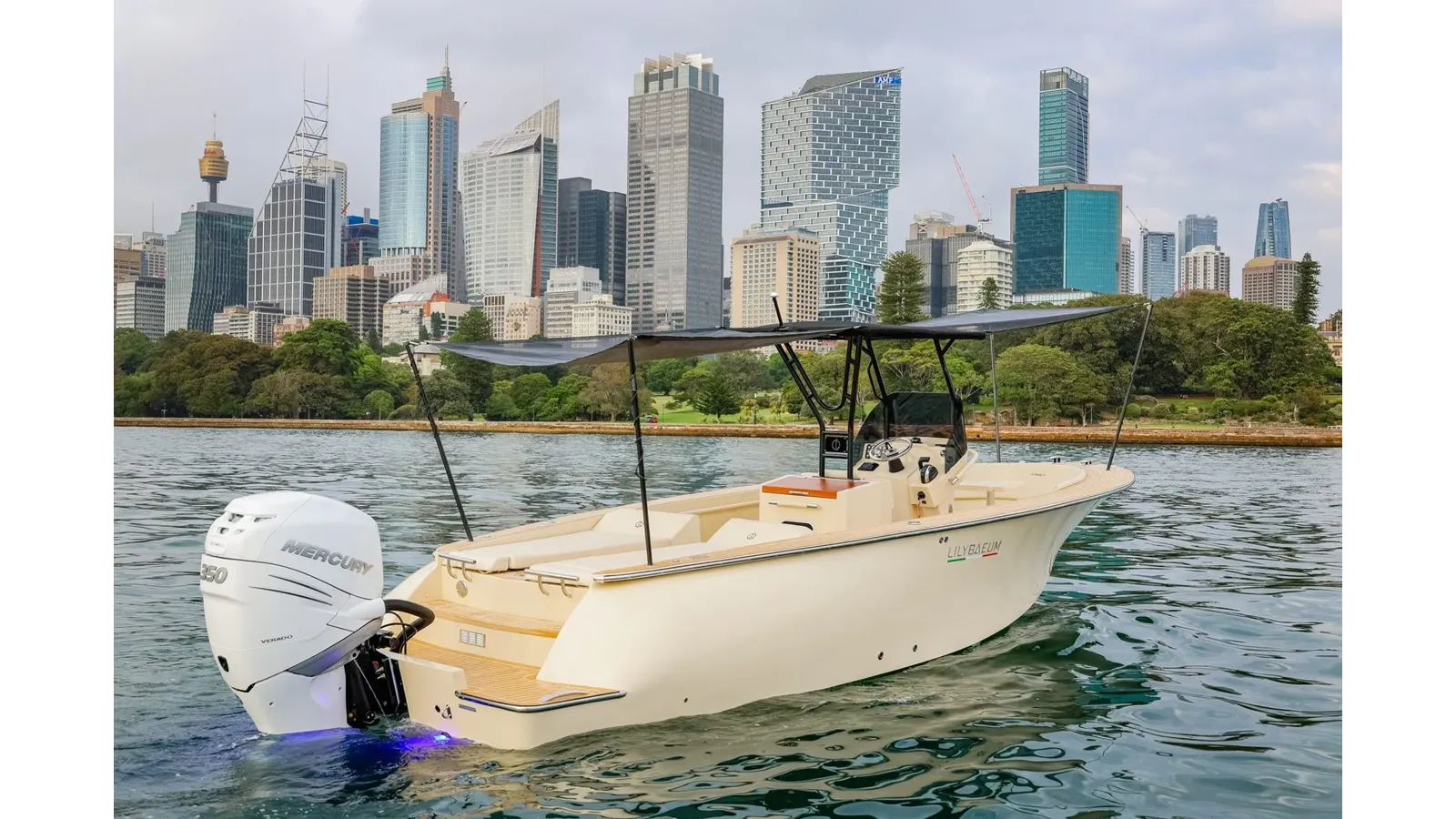
LILYBAEUM YACHT - For Sale
Company History
Lilybaeum Yacht is an Italian boutique boatbuilder that emerged from Sicily’s strong maritime tradition. The shipyard’s name comes from Lilybaeum, the ancient name of present‑day Marsala on the island’s western coast—an area historically associated with shipbuilding and seafaring. With a clear focus on Mediterranean day‑cruising culture, the brand set out to build refined, seaworthy boats that combine contemporary Italian design with the craftsmanship and detailing expected of a premium artisanal yard.
The company’s public visibility grew in the early 2020s with the introduction of its signature model line around 25 feet, aimed at owners who value elegant lines, performance, and a high standard of finish in a compact, manageable package. From early sea trials and demonstrations through to customer deliveries, Lilybaeum Yacht steadily earned attention from enthusiasts and the boating press for the way its boats balance comfort with responsive handling. The early momentum translated into a measured expansion of its order book, with units delivered across Italy and other European markets. As a small, design‑led yard, Lilybaeum Yacht emphasizes limited‑series production, close client interaction, and customization within the model platform to fit varied leisure uses—from day trips and swimming to weekend coastal cruising.
The shipyard’s identity is firmly tied to the Mediterranean lifestyle: outdoor‑oriented layouts, generous lounging areas, and finishes that stand up to frequent seaside use, while maintaining a refined aesthetic. In keeping with the traditions of Italian boatbuilding, the brand pays particular attention to fit, finish, and the tactile quality of materials throughout the helm, seating, and deck areas. Over time, these characteristics have become the hallmarks by which Lilybaeum Yacht is recognized among knowledgeable owners.
Country of Origin
Italy. The shipyard is rooted in Sicily, reflecting the island’s long‑standing naval and boatbuilding heritage.
Manufacturing Locations
Lilybaeum Yacht builds in Sicily, with activities centered around the Marsala area in the Province of Trapani. The geographical connection to the ancient Lilybaeum is not only nominal but practical: western Sicily offers direct access to suitable waters for testing and commissioning, as well as proximity to a network of Italian marine suppliers. The yard couples local craftsmanship with components sourced from established national and European marine specialists. Final assembly, detailing, and sea trials are conducted locally, facilitating hands‑on quality control and allowing customers to interact closely with the production team during key milestones.
Reputation and Quality
Within the niche of premium Mediterranean dayboats, Lilybaeum Yacht has earned a reputation for elegant design, solid build quality, and attentive finishing. Owners and testers consistently highlight the boats’ clean lines, thoughtful ergonomics, and smart use of space in a compact footprint. The brand’s outboard‑powered platforms emphasize simplicity, reliability, and lively performance—an approach that suits day‑cruising in variable coastal conditions and simplifies maintenance for private owners.
Build philosophy:
- Craftsmanship: The yard’s boats are finished with a level of detail expected from small Italian builders—precise joinery, carefully faired fiberglass work, and premium upholstery. Teak decking and trim elements are commonly specified, offering both visual warmth and secure footing.
- Materials and hardware: Lilybaeum Yacht selects marine‑grade stainless steel fittings and reputable European components for steering, electrical systems, and onboard equipment. The result is a cohesive, high‑quality feel across touchpoints—from grab rails and cleats to hinges, latches, and helm instrumentation.
- Layout and comfort: Deck plans prioritize easy movement from bow to stern, with ample sunpads, convertible seating, and protection from spray and sun. Helm ergonomics focus on clear sightlines and intuitive controls to reduce fatigue and increase confidence when running at speed. Storage solutions are integrated to keep gear dry and accessible.
- Performance and handling: The boats are designed to deliver a responsive, predictable ride with the agility expected of modern outboard dayboats. Owners value the combination of quick planing, efficient cruising, and a composed feel in chop—qualities that contribute to an enjoyable, confidence‑inspiring day on the water.
Customer experience:
- Customization: As a small, design‑focused yard, Lilybaeum Yacht accommodates tailored specifications within the model platform—such as upholstery options, deck finishes, electronics packages, and shade solutions—so that each boat reflects the owner’s preferences.
- Transparency: Close communication between the yard and clients is a defining aspect of the ownership experience. Prospective owners are typically encouraged to see boats at the yard or during sea trials, facilitating informed choices on configuration and finishes.
- After‑sales support: The brand works with recognized suppliers and service partners to ensure parts availability and technical support. This helps streamline routine maintenance and upgrades over the life of the boat.
Market presence:
- Segment positioning: Lilybaeum Yacht competes among premium European dayboat builders, where design, finish, and owner experience carry significant weight. The brand appeals to clients seeking boutique craftsmanship over mass production, while still desiring contemporary styling and performance.
- Geographic reach: While Italy remains a core market, interest extends to other Mediterranean countries and select Northern European regions where owners value stylish, practical dayboats for seasonal cruising and social boating. The brand’s scale enables it to maintain quality oversight while gradually building a broader international footprint.
Recognition: Lilybaeum Yacht has been favorably covered by boating media and enthusiast communities for its distinctive Sicilian identity and refined execution in the 7–8‑meter class. While the brand’s focus is not on high volume or a sprawling model lineup, its boats have stood out for the harmony between design, comfort, and on‑water behavior—attributes that underpin a positive reputation in its category.
Storia dell’Azienda (Italiano)
Lilybaeum Yacht è un cantiere boutique italiano nato in Sicilia e ispirato al nome storico di Marsala, Lilybaeum. Fin dall’inizio il progetto ha puntato a interpretare lo stile di vita mediterraneo attraverso dayboat eleganti, ben rifiniti e adatti alla navigazione costiera. La visibilità del marchio è cresciuta all’inizio degli anni 2020 con il lancio della sua linea di riferimento nell’area dei 25 piedi. Le prime prove in mare e le consegne ai clienti hanno confermato l’impostazione del cantiere: barche curate, comode e piacevoli da condurre, con un’attenzione particolare alla qualità percepita.
Paese di Origine (Italiano)
Italia, con radici operative e culturali in Sicilia.
Sedi Produttive (Italiano)
La produzione avviene in Sicilia, nell’area di Marsala (Provincia di Trapani). Qui il cantiere realizza assemblaggio, finiture e collaudi in mare, beneficiando di un ecosistema di fornitori italiani ed europei. La vicinanza ai campi prova e il controllo diretto sulle fasi finali del processo consentono standard qualitativi elevati e un rapporto stretto con i clienti.
Reputazione e Qualità (Italiano)
Lilybaeum Yacht è apprezzato per design raffinato, cura dei dettagli e costruzione solida. Le imbarcazioni presentano lay‑out funzionali con zone prendisole, sedute convertibili e protezioni adeguate; la componentistica è selezionata tra marchi affidabili; le finiture, come il teak, conferiscono stile e praticità. La propulsione fuoribordo favorisce prestazioni brillanti e gestione semplificata. Il profilo artigianale del cantiere si traduce in personalizzazioni su misura e assistenza diretta, qualità che lo distinguono nella fascia premium dei dayboat europei.
Histoire de l’Entreprise (Français)
Lilybaeum Yacht est un chantier italien de taille artisanale, né en Sicile et inspiré par le nom antique de Marsala, Lilybaeum. Sa vocation est de proposer des dayboats méditerranéens alliant style, confort et finitions soignées. Dès le début des années 2020, la marque s’est fait connaître avec un modèle d’environ 25 pieds, conçu pour offrir une navigation agréable, une utilisation conviviale et une esthétique contemporaine.
Pays d’Origine (Français)
Italie, avec un ancrage fort en Sicile.
Sites de Production (Français)
La fabrication et la finition sont réalisées en Sicile, dans la région de Marsala (Province de Trapani). Les essais en mer y sont effectués, avec un contrôle de qualité rapproché et l’appui d’un réseau de fournisseurs italiens et européens. Cette organisation favorise la constance des standards et un dialogue direct avec les propriétaires.
Réputation et Qualité (Français)
Dans le segment des dayboats premium, Lilybaeum Yacht est reconnu pour l’élégance de ses lignes, la qualité de ses matériaux et son ergonomie bien pensée. Les moteurs hors‑bord apportent vivacité et facilité d’entretien. Le chantier, de dimension boutique, propose des options de personnalisation, une finition méticuleuse (bois de teck, inox marin, sellerie soignée) et un comportement marin équilibré, à la hauteur des attentes d’une clientèle exigeante.
Historia de la Empresa (Español)
Lilybaeum Yacht es un astillero boutique italiano con raíces en Sicilia. Su nombre rinde homenaje al antiguo Lilybaeum (actual Marsala). La firma se orienta a dayboats de inspiración mediterránea, combinando diseño italiano contemporáneo, materiales de calidad y una experiencia a bordo centrada en la vida al aire libre. A comienzos de la década de 2020 amplió su visibilidad con un modelo en torno a los 25 pies, bien recibido por su equilibrio entre comodidad, rendimiento y acabados.
País de Origen (Español)
Italia, con fuerte identidad siciliana.
Ubicaciones de Fabricación (Español)
La construcción, el acabado y las pruebas de mar se realizan en Sicilia, en el área de Marsala (Provincia de Trapani). El astillero integra artesanía local con proveedores del sector náutico italiano y europeo, lo que garantiza control de calidad y fiabilidad de componentes, además de facilitar la interacción con los propietarios durante el proceso.
Reputación y Calidad (Español)
La marca goza de prestigio entre los dayboats premium: diseño elegante, distribución práctica y una sensación de solidez general. La propulsión fueraborda facilita el mantenimiento y ofrece prestaciones vivaces. Las cubiertas y la tapicería demuestran atención al detalle; el uso de teca y herrajes de acero inoxidable aporta durabilidad y estética. La personalización y la cercanía con el cliente son rasgos diferenciales de Lilybaeum Yacht en su nicho.
Unternehmensgeschichte (Deutsch)
Lilybaeum Yacht ist eine italienische Manufaktur aus Sizilien. Der Name verweist auf das antike Lilybaeum (heute Marsala). Der Werftfokus liegt auf mediterranen Daybooten mit zeitgemäßem italienischem Design, hoher Verarbeitungsqualität und komfortablen, outdoor‑orientierten Layouts. Anfang der 2020er Jahre erhielt die Marke mit einem rund 25‑Fuß‑Modell größere Aufmerksamkeit und etablierte sich mit einer feinen, kundennahen Fertigungsphilosophie.
Herkunftsland (Deutsch)
Italien, mit regionaler Verwurzelung in Sizilien.
Produktionsstandorte (Deutsch)
Gefertigt wird in Sizilien, im Raum Marsala (Provinz Trapani). Endmontage, Ausstattungsarbeiten und Probefahrten finden vor Ort statt. Die Werft kombiniert lokale Handwerkskompetenz mit etablierten italienischen und europäischen Zulieferern und stellt so gleichbleibende Qualitätsstandards und eine enge Kundenbetreuung sicher.
Ruf und Qualität (Deutsch)
Im Premium‑Segment der Dayboote genießt Lilybaeum Yacht Ansehen für stimmige Linienführung, hochwertige Materialien und durchdachte Ergonomie. Außenborder‑Antriebe sorgen für Dynamik und unkomplizierte Wartung. Sorgfältige Verarbeitung (u. a. Teak‑Optionen, Marine‑Edelstahl, präzise Polsterarbeiten), clevere Stauraumlösungen und ein ausgewogenes Fahrverhalten prägen den Charakter der Boote. Maßgeschneiderte Ausstattungen und direkter Service unterstreichen die Boutique‑Ausrichtung der Werft.
История компании (Русский)
Lilybaeum Yacht — итальянская бутик‑верфь с корнями в Сицилии. Название отсылает к древнему Lilybaeum (современная Марсала). Компания ориентируется на средиземноморскую концепцию dayboat: эстетика, комфорт на открытом воздухе, качественные материалы и тщательная отделка. В начале 2020‑х бренд получил известность благодаря модели около 25 футов, которая привлекла внимание сочетанием удобства планировок, живой динамики и аккуратного исполнения.
Страна происхождения (Русский)
Италия, с сильной сицилийской идентичностью бренда.
Производственные площадки (Русский)
Основные работы ведутся на Сицилии, в районе Марсалы (провинция Трапани). Здесь проходят сборка, отделка и ходовые испытания. Верфь опирается на местные ремесленные традиции и сеть надёжных итальянских и европейских поставщиков, что обеспечивает контроль качества и устойчивость поставок комплектующих.
Репутация и качество (Русский)
В нише премиальных dayboat Lilybaeum Yacht ценят за элегантный дизайн, продуманную эргономику и аккуратную отделку. Внешние подвесные моторы обеспечивают бодрые ходовые качества и простоту обслуживания. Широко используются морская нержавеющая сталь, качественная фурнитура и опции тиковых настилов. Индивидуальные настройки по желанию владельца, внимательное отношение к деталям и стабильная мореходность сформировали позитивную репутацию бренда среди взыскательных покупателей.
Main Competitors
Lilybaeum Yacht operates in the premium European dayboat niche, typically around the 7–9 meter (circa 23–30 feet) segment, where refined design, high-quality finish, and enjoyable, sporty handling matter as much as pure speed. Its closest competitors are small to mid-sized builders that emphasize Mediterranean layouts, luxury materials, and personalized specifications rather than mass-market volume. Competitors can be grouped into several clusters:
-
Italian boutique and style-led dayboats:
- Invictus Yacht (including the Capoforte line): Known for sophisticated Italian styling, rich upholstery, and attention to detail in compact sizes. Capoforte targets the sub-8-meter sweet spot with a lifestyle focus.
- Sessa Marine (Key Largo series): A long-standing brand with a reputation for sporty open boats and sundeck layouts. Key Largo models in the mid-20-foot bracket are common cross-shopped options.
- Ranieri International: Offers both rigid-hull dayboats and RIBs with strong value and abundant configurations. The “Next” and “Sport” series compete on function and Italian aesthetics.
- Rio Yachts (Daytona series in the smaller sizes): A heritage brand that evolved toward contemporary open layouts; the Daytona line brings a social, sun-lounger approach similar to many Mediterranean dayboats.
- Capelli (non-RIB line): While renowned for RIBs, Capelli also produces rigid-hull leisure boats around this size, attracting owners focused on easy day cruising with Italian flair.
- Joker Boat and other premium Italian RIB specialists (e.g., SACS): For some buyers, a high-end RIB addresses the same use-case as a rigid dayboat—quick coastal trips, beach runs, and socializing—with different advantages in weight and deck versatility.
-
Central European design-led builders:
- Frauscher (Austria): Premium finish and sculptural lines; well known for glamorous lake and coastal dayboats. Although often pricier, Frauscher’s aura and craftsmanship resonate with the same clientele that appreciates boutique Italian builds.
- Greenline (for small open variants) and other specialized European brands: While Greenline is better known for hybrid cruisers, certain small open offerings in Europe sometimes cross paths with style-led dayboats in buyer comparisons.
-
Nordic adventure-dayboat brands (performance and practicality):
- Axopar (25/28): Finnish design that prioritizes efficiency, modular layouts, and adventure styling; often selected by owners who want more utilitarian ergonomics and choppy-sea capability without sacrificing fun.
- Nimbus (T8 and related): Swedish builder associated with refined Scandinavian design, secure handling, and pragmatic deck plans. Buyers compare Nimbus with Italian dayboats when prioritizing engineering and use in mixed sea states.
- Windy (SR28 CC and similar): A premium Norwegian brand with sporty handling and high build standards; Windy’s open boats are known for seaworthiness and superb driver ergonomics.
-
Mass-market European dayboats with wide availability:
- Beneteau (Flyer series): A mainstay of the European dayboat market, offering varied deck plans (Sundeck, Spacedeck) and broad dealer support. Typically more volume-oriented but frequently cross-shopped for value, resale, and service networks.
- Jeanneau (Cap Camarat series): Similar to the Flyer range in positioning and breadth; focuses on versatility and practicality, with many models sitting directly in the 7–9 meter band.
- Quicksilver (Open/Sundeck/Weekender): Part of a larger corporate ecosystem with strong availability and competitive pricing; usually less bespoke, more standardized than boutique Italian builders.
- Parker, Ranieri (again), and other European manufacturers in the segment: Known for robust offerings that trade a bit of exclusivity for accessible pricing and widespread dealer support.
-
Sport-luxury and step-up competitors:
- Pardo Yachts (entry models) and Itama (smaller classics) are generally larger and more expensive, yet they attract design-sensitive owners who might otherwise consider an upscale 25–28-foot open. They serve as aspirational benchmarks for styling, layout elegance, and brand cachet.
- Fjord (entry sizes) and similar Northern European luxury dayboats: Larger on average, but comparable in ethos—high-end outdoor living with bold design statements.
Key competitive differentiators in this field include:
- Aesthetics and identity: Italian builders, Lilybaeum included, prioritize sophisticated lines and premium materials. Scandinavian brands emphasize functional elegance. Mass-market options focus on clean, contemporary looks but sacrifice some custom detailing.
- Finish and craftsmanship: Boutique yards typically deliver higher perceived quality—softer upholstery, tighter joinery, meticulous hardware selection—than mass-production rivals.
- Layout philosophy: Mediterranean dayboats center on open-air social spaces, large sunpads, and seamless movement from bow to stern. Nordic brands may prioritize sheltered helm options and gear stowage for more variable climates.
- Handling and performance: In this size, single or twin outboards dominate. Boutique yards often tune hulls for a sporty but composed ride. Axopar/Nimbus/Windy emphasize efficiency and wave-taming, while mass-market boats target balanced, easy handling for a wide user base.
- Ownership experience: Small Italian yards offer closer project interaction, customization, and a more personal relationship; mass-market brands offer broader dealer coverage and standardization, easing service and resale.
Against this backdrop, Lilybaeum Yacht is most often compared to:
- Invictus/Capoforte and Sessa Marine for Italian design, finish, and lifestyle orientation.
- Axopar, Nimbus, and Windy for buyers debating between Mediterranean elegance and Scandinavian practicality in the same length class.
- Beneteau Flyer and Jeanneau Cap Camarat for value-driven shoppers who weigh boutique craftsmanship against dealer network scale and cost of ownership.
For many buyers, the decision narrows based on how much they value bespoke finishes and brand individuality versus the convenience of mass-market ecosystems. Lilybaeum’s appeal lies in its artisanal approach, polished detailing, and a distinctly Mediterranean character that stands out in marinas along the Italian coastline and beyond.
Current Production Status
Lilybaeum Yacht is an active, small-batch Italian builder with operations anchored in western Sicily. The company focuses on refined Mediterranean dayboats with open layouts and premium finishing, and it continues to produce limited-series boats tailored to individual owner preferences rather than pursuing high-volume output.
Key attributes of the current production posture include:
- Limited-series, customization-oriented builds: Production is organized around short runs in which specifications are adapted to owner preferences—colorways, upholstery, teak options, shade systems, and electronics packages. This approach places Lilybaeum within the “boutique” segment of European boatbuilding.
- Outboard-powered platforms: In line with the broader market for 7–9 meter dayboats, Lilybaeum’s models emphasize outboard propulsion from major OEMs. This supports lively performance, straightforward maintenance, and flexibility in matching power to usage patterns (leisure cruising, watersports, or brisk coastal runs).
- Localized assembly and sea trials in Sicily: The yard leverages its coastal location for commissioning and testing, helping ensure consistent quality control and allowing prospective owners to experience boats on the water during configuration or handover stages. Western Sicily’s conditions provide a practical environment to validate handling, ergonomics, and onboard systems.
- High-touch customer interaction: A hallmark of Lilybaeum’s process is the personal interface between the build team and the client. Owners typically receive guidance on configuring layouts, materials, and equipment to fit their specific cruising style—day trips to nearby islands, swimming and sunbathing, or more extended coastal hops with minimal gear.
- Supplier ecosystem and quality focus: As with many Italian premium dayboat builders, Lilybaeum pairs in-house craftsmanship with a curated set of European marine components. The objective is cohesive quality across all touchpoints—deck hardware, helm controls, seating ergonomics, and finishing—so the experience aligns with the expectations of a premium artisanal brand.
- European market orientation with growing reach: While Italy remains the home market, boats from this niche often find owners across the Mediterranean and select Northern European regions. In practice, this means Lilybaeum balances an Italian core clientele with international inquiries drawn by the brand’s style, perceived quality, and the appeal of a low-volume builder identity.
Operationally, the yard’s approach is consistent with maintaining ongoing production rather than seasonal or sporadic activity. The nature of boutique manufacturing means lead times and delivery schedules are carefully managed to align quality control with customer deadlines. Sea trials, commissioning, and owner handovers are integral parts of the process and typically happen near the production base, which simplifies both quality verification and owner education.
Why this production model resonates with buyers:
- It preserves craftsmanship: Fewer boats built with closer oversight can yield superior finish and tighter tolerances—qualities that are immediately visible in upholstery, stitching, teak alignment, gelcoat fairness, and the crispness of installation work.
- It enables tailored ergonomics: Owners can prioritize sun-lounging space, dinette flexibility, swim platform design, or shade coverage based on their preferred use of the boat, making each unit a closer fit to lifestyle needs.
- It supports transparent commissioning: On-site trials and inspections let the yard verify performance and systems integration under real conditions, reducing post-delivery adjustments and enhancing owner confidence.
From a service perspective, Lilybaeum’s boutique scale encourages direct communication with the shipyard or its selected partners. This helps with post-delivery questions, upgrades, and periodic maintenance planning. For buyers who plan to keep the boat in Mediterranean waters, proximity to the yard can be advantageous during the first season of ownership when minor tweaks and optimizations are common.
In comparison with mass-production rivals, Lilybaeum’s ongoing production emphasizes:
- Consistency of finish over sheer output: Quality control is a central pillar, with repeated checks through lamination, assembly, upholstery, and final fit-out.
- A cohesive aesthetic: The yard aims for a recognizable visual language—clean lines, inviting textures, and a polished yet not ostentatious presentation that reads distinctly Italian.
- Seamless dayboat functionality: Deck layouts are optimized for social use—circulation, sunbathing, swimming, alfresco meals—reflecting the brand’s Sicilian roots and Mediterranean boating culture.
Given the nature of the segment, it is typical for a brand like Lilybaeum to present boats at key European shows or regional in-water events to meet prospective clients and facilitate sea trials. This show-and-trial rhythm complements the ongoing build calendar, helping the yard pace production with the sales pipeline and maintain the personal, consultative experience that many owners expect from a boutique builder.
Overall, the current state can be summarized as active, artisanal, and quality-focused. Lilybaeum Yacht continues to build on its Mediterranean identity, producing refined open dayboats in limited series, with a process designed to deliver personalized specifications, careful assembly, and reassuring on-water behavior—all under the direct oversight that defines a small, design-led Italian shipyard.
Frequently Asked Questions
Question:What kind of boats does Lilybaeum Yacht specialize in?
Answer:Lilybaeum Yacht focuses on premium Mediterranean-style dayboats in the mid‑20s foot range. These boats prioritize open‑air living, generous lounging spaces, easy fore‑aft movement, and refined detailing. The hallmark is an elegant, contemporary Italian aesthetic married to practical layouts and responsive handling suitable for coastal day cruising, swimming, and social boating.
Question:Where are Lilybaeum boats built?
Answer:Production is Italian, based in Sicily. The brand’s identity is closely tied to western Sicily’s maritime culture, with commissioning and sea trials carried out in local waters. This regional connection informs the boats’ layout priorities, seakeeping, and overall “Mediterranean day out” ethos.
Question:What construction materials and techniques are used?
Answer:The boats are built with marine‑grade composite (fiberglass/GRP) structures using high‑quality resins and reinforcements appropriate for small offshore craft. Stainless steel fittings and durable deck hardware are standard, while teak or synthetic teak decking and premium upholstery are commonly specified to provide both comfort and a refined visual signature. The emphasis is on careful lamination, clean gelcoat work, and meticulous fit‑out.
Question:What distinguishes Lilybaeum from mass‑market brands?
Answer:Scale and focus. Lilybaeum operates as a boutique builder, producing limited series rather than high volumes. That allows for closer quality control, more time on finishing details, and client‑driven customization of colors, upholstery, deck furniture, and electronics. Owners value the brand’s individual identity and the tactile quality of the boats’ materials and trim.
Question:What type of propulsion do these boats use?
Answer:Outboard engines are the norm, selected for their combination of performance, serviceability, and flexible power matching. In the 25‑foot class, a single high‑output outboard is typical, with power choices tailored to desired cruising speeds and load profiles. This propulsion approach also simplifies maintenance and winterization compared with inboard systems in the same size bracket.
Question:How fast do these boats typically go?
Answer:Performance depends on the specific engine and load. In this class, with a strong single outboard, a well‑set‑up dayboat can achieve cruising speeds in the mid‑20s to low‑30s knots, with top speeds that can reach into the 40‑plus‑knot range when higher horsepower is specified, sea state permits, and the boat is lightly loaded. The hull forms are tuned for quick planing and composed behavior in moderate chop.
Question:Are Lilybaeum’s layouts family‑friendly?
Answer:Yes. The design brief targets social, family‑oriented use in fair weather. Expect wide, sunpad‑forward decks, convertible seating aft, safe circulation with handholds, swim platforms with ladders for easy re‑boarding, and shaded areas via biminis or a T‑top, depending on configuration. Storage is integrated for lines, fenders, picnic equipment, and water toys.
Question:Do these boats include a cabin or a head compartment?
Answer:The core platform is an open dayboat. While it does not center on traditional cabin cruising, some configurations provide a compact compartment in the console that can be outfitted as a changing space or equipped with a marine WC. Overnighting is not the primary mission, but owners sometimes create casual rest areas using filler cushions.
Question:How does the brand approach seakeeping and hull design?
Answer:The hulls are conceived to balance agility with comfort. A relatively deep forefoot and careful weight distribution help soften impact at speed, while beam and chines contribute to stability at rest—useful when guests are swimming or congregating on one side. The goal is confident handling during coastal hops and a dry, predictable ride in typical Mediterranean conditions.
Question:Is trailering feasible for a 25‑foot Lilybaeum?
Answer:Many 25‑foot dayboats can be trailered within common European width limits, especially when beam is kept around the conventional threshold for road regulations. Practical trailering depends on the specific configuration, the tow vehicle’s capacity, and local laws. Owners often choose dry‑stack storage or a berth; trailering remains a viable option for those who prefer seasonal mobility and land storage.
Question:What customization options are commonly requested?
Answer:Owners frequently personalize hull and upholstery colorways, specify teak or synthetic alternatives, choose between bimini or T‑top shading, tailor electronics (navigation displays, audio, connectivity), and define deck furniture details like table mechanisms, backrest adjustments, and sunpad conversions. Lighting packages and underwater lights are also popular.
Question:What about maintenance routines for an outboard dayboat of this type?
Answer:Routine care includes freshwater rinsing after use, upholstery cleaning and protection, periodic teak maintenance (if fitted), and vigilant cover management to keep UV exposure in check. Engine maintenance follows the outboard manufacturer’s schedule (hours/yearly), with fuel system and prop checks at regular intervals. Bottom maintenance (antifouling, anodes, hull cleaning) is required for boats that remain in the water.
Question:How is fuel economy and range typically characterized?
Answer:In this size and weight class, modern outboards are efficient at planing cruise speeds. Expect the best economy in the 20–30‑knot band, with range influenced by tank size, loading, sea state, and prop selection. Many owners plan day itineraries around this cruising envelope to balance comfort, speed, and fuel burn.
Question:What safety features and standards should owners expect?
Answer:Boats of this category are built to European recreational craft standards, with category certification matched to their design scope. Safety equipment typically includes automatic bilge pumps, navigation lights, appropriate guardrails/handholds, fire extinguishers, and clearly marked shutoffs. Installation of VHF, GPS/plotter, and appropriate personal safety gear is recommended per local regulations.
Question:How does the brand handle after‑sales care?
Answer:Boutique builders typically maintain close communication with owners and coordinate service through trusted marine professionals. Engines are supported by their respective OEM networks, while routine hull and systems care is handled by skilled local yards or technicians. Documentation at handover usually includes systems schematics and maintenance guidance to keep both hull and equipment in good order.
Question:What is the ideal owner profile for a Lilybaeum dayboat?
Answer:Someone who values refined Italian design, enjoys social boating, and prefers quality of materials and finishing over sheer size. Typical owners cruise for a day, anchor off beaches, swim, entertain a small group, and appreciate a boat that looks elegant at the dock yet feels lively and secure underway.
Question:How does the deck layout support social use?
Answer:The bow commonly features a large sunpad area, while the aft cockpit transforms between seating and open lounging. A convertible table allows quick transitions from dining to sunbathing. Swim platforms and a ladder promote water access. The helm is arranged for clear sightlines and comfortable seated or standing control, with companion seating nearby to keep the driver engaged with the group.
Question:Can the boats handle light weather changes?
Answer:Yes—within the craft’s category and size. A protective windshield, optional T‑top, and side curtains (where fitted) provide shelter. The hull is designed to run comfortably through moderate chop at the right speed and trim. Sensible route planning and weather checks remain essential for a small open boat.
Question:What aspects of quality are most noticeable onboard?
Answer:Owners tend to notice the crispness of gelcoat, fairing, and paintwork; the alignment and sturdiness of hinges, latches, and rails; the density and stitching of upholstery; and the clean integration of electronics and lighting. Details like teak margin boards, thoughtful grab‑rail placement, and well‑damped locker lids make a strong impression.
Question:How do Lilybaeum boats compare with Scandinavian or mass‑market rivals?
Answer:Scandinavian designs often emphasize modular practicality and all‑weather versatility; mass‑market models excel in dealer coverage and value. Lilybaeum’s sweet spot is boutique Italian character and finish—the look, feel, and craftsmanship that appeal to owners seeking something more individual than a mainstream alternative, but still straightforward to own and operate.
Question:Is there room to stow watersports gear and safety equipment?
Answer:Yes. Under‑seat lockers, bow storage, and compartments within the console accommodate fenders, lines, lifejackets, snorkel sets, and small tow toys. Storage planning is part of the configuration process, making it easier to keep decks tidy and quickly deploy essential gear.
Question:What electrical and electronics configurations are typical?
Answer:A 12‑V DC system with appropriate battery capacity, main switches, and breakers supports navigation, lighting, pumps, and entertainment. Multifunction displays, depth/speed sensors, audio systems, and cockpit/underwater lighting are commonly specified. Many owners also add USB/12‑V outlets at strategic points for devices.
Question:Are these boats suitable as yacht tenders or chase boats?
Answer:Yes. The combination of high‑quality finish, swift outboard performance, and easy boarding/swimming features makes them attractive as large‑yacht tenders for guest transfers and leisure runs. The open layout and elegant styling complement mothership operations where aesthetics and practicality both matter.
Question:What is the expected onboard capacity for guests?
Answer:In this 25‑foot class, day cruising with 6–8 guests is a practical real‑world scenario, with seating layouts and load limits defined by the boat’s certification and configuration. The deck plan is optimized for comfortable circulation and seating rather than maximum headcount.
Question:How does the helm support confident driving?
Answer:Ergonomics and visibility are central: adjustable seating/leaning posts, a sturdy footrest, well‑placed throttles, and clear instrument sightlines. Trim control is straightforward, and power steering on higher‑output engines contributes to precision handling during docking and at speed.
Question:What seasonal care is advised for Mediterranean use?
Answer:During peak season, regular rinsing and UV protection matter most; in the off‑season, owners should plan for engine winterization (if applicable), battery maintenance, and a thorough inspection of hull, hardware, seals, and caulking. Canvas and cushions benefit from dry, ventilated storage.
Question:Do Lilybaeum boats have a “signature look”?
Answer:Yes. Expect clean, assertive lines; a sculpted sheer; and a purposeful yet elegant stance at rest. The visual language leans toward minimalist sophistication—balanced proportions, tidy hardware, and carefully curated textures and colors.
Available Models
Below are the principal model offerings and configurations commonly associated with Lilybaeum Yacht. Characteristics such as length, speed, and capacities are representative for this class and may vary with engine choice, options, and local regulations.
- Levanzo 25
- Type and mission: Premium open Mediterranean dayboat centered on outdoor living, fast day cruising, and elegant social spaces. Suited to coastal routes, island hopping, and tender duties for larger yachts.
- Length: Approximately 25 feet (circa 7–8 meters overall). The hull is proportioned for stable, predictable handling while preserving sleek lines and good weight distribution.
- Beam and proportions: Designed for secure footing and circulation, with beam sized to balance trailering practicality (where allowed) and cockpit volume. Side decks and handholds focus on safe movement fore to aft.
- Number of cabins: 0. This is an open boat; however, a compact console compartment can be configured as a changing space or fitted with a marine WC, depending on owner preference and market.
- Deck layout: Large forward sunpad; convertible aft cockpit that transitions between dinette and lounging; helm with double or bolster seating; integrated swim platforms and ladder; strategically placed grab rails; optional wetbar or refreshment module.
- Seating and capacity: Day use for a small group—typically 6–8 guests—arranged for comfortable socializing and dining at anchor. Seating ergonomics emphasize backrest support and easy reconfiguration between transit and at‑anchor modes.
- Engine type: Single outboard engine. Power selection is typically in the 200–300 hp range, chosen to match performance expectations, load profiles, and local conditions. Hydraulic or power‑assisted steering and electronic controls are commonly paired with these engines.
- Maximum speed: With higher horsepower options and favorable conditions, top speeds can extend into the 40‑plus‑knot bracket. Owners often cruise in the mid‑20s to low‑30s knots to balance comfort, fuel economy, and range.
- Hull and structure: Composite GRP hull optimized for quick planing and a composed ride in moderate chop. Chines, strakes, and the spray‑shedding geometry contribute to a drier run. Structural laminates are engineered for strength with weight efficiency appropriate to the size and mission.
- Protection and shade: Configurable with a bimini or a fixed T‑top. The T‑top option delivers sturdier handholds and better sun protection without compromising the open‑air feel; a bimini maximizes openness and keeps weight down.
- Materials and finish: Marine‑grade stainless hardware; premium upholstery with careful stitching; optional teak or synthetic teak for decking and trim; cohesive colorways for hull, upholstery, and console elements. Fit‑and‑finish is a core part of the model’s appeal.
- Electronics: Typical installations include a multifunction display for navigation, depth/speed transducers, a quality audio system, LED courtesy and underwater lighting options, and well‑organized switchgear with clear labeling.
- Storage: Under‑seat lockers, bow stowage, and console compartments accommodate lines, fenders, safety equipment, and personal gear. Dedicated anchor storage and practical access to service points help day‑to‑day usability.
- Practical features: Removable or folding tables; convertible backrests for fore‑ or aft‑facing seating; swim ladder and grab handles for water access; optional freshwater shower; thoughtfully placed cupholders and USB/12‑V outlets.
- Use cases: Day trips to anchorages and beaches; family swimming and picnicking; coastal sightseeing; occasional light watersports such as towing a small inflatables or wake‑toys within engine limits; guest transfers as a tender for larger yachts.
- Owner profile: Enthusiasts who want boutique Italian styling and craftsmanship in a manageable, easily handled platform. It’s a boat that looks striking at the dock yet is simple to launch, run, and maintain.
Levanzo 25 Configurations (commonly seen)
- Open with bimini: Maximizes openness and keeps overall weight and center of gravity low. Ideal for pure sun‑lounging and fair‑weather cruising.
- T‑top: Adds integrated shade, a sturdy grab structure around the helm area, and an assertive visual presence. Preferred by owners who spend longer hours underway or value a fixed shade solution.
- Enhanced comfort pack: Often includes upgraded upholstery foams and fabrics, sunpad extensions, cockpit table mechanisms, and extended lighting packages.
- Entertaining pack: Wetbar or refreshment module, enhanced audio, additional refrigeration capacity, and expanded table options.
- Adventure pack: Reinforced fendering, additional handholds, shore‑power/battery enhancements, and electronics tuned for longer coastal hops.
Why the Levanzo 25 stands out in its class
- Proportions and elegance: The balance between sheerline, bow volume, and cockpit openness creates a silhouette that reads as distinctly Italian—refined without being fragile.
- Harmonized ergonomics: Standing or seated helm control feels natural, with a clear view of the bow; guests remain engaged with the driver thanks to companion seating and the flow of the cockpit.
- Finishing priorities: Tactile surfaces, precise joinery of trim pieces, and the overall cohesion of materials are given outsized attention for a boat in this size band.
- Practical Mediterranean focus: The forward sunpad and aft lounge arrangements mirror how owners actually spend time onboard—sun, swim, lunch, and relaxed cruising.
Owner considerations for specification
- Engine and prop selection: Matching horsepower to typical loading (number of guests, gear, fuel) yields better planing characteristics and fuel economy. Propeller pitch and type influence hole‑shot and cruise efficiency.
- Shade and enclosure strategy: In sunny climates, a T‑top or robust bimini with quality fabric pays dividends in comfort and reduces UV wear on interior surfaces.
- Deck protection: Choosing teak versus synthetic decking involves tradeoffs in aesthetics, maintenance, traction when wet, and thermal behavior under intense sun.
- Electronics integration: Deciding on screen size and sensor suite early helps with clean helm layouts and future upgrades. Pre‑wiring for accessories can simplify later changes.
- Storage planning: Assigning lockers for lines, fenders, and safety gear avoids clutter. Consider dedicated stowage for snorkeling sets, picnic equipment, and beach awnings if those are core to your usage.
Operational snapshot (day in the life)
- Pre‑departure checks: Battery switches, bilge pump test, navigation lights (as needed), engine warm‑up, and safety gear count.
- Underway: Trim adjustments for sea state; guests seated with handholds available; keep beverages and gear in secure holders to avoid cockpit clutter.
- At anchor: Deploy anchor with appropriate scope; convert cockpit to lounge/dining; use swim ladder and shower; monitor battery use with audio and lighting.
- Return and wash‑down: Rinse hull, deck, engine exterior; check scuppers; dry cushions and covers; quick inspection for wear points on lines and fenders.
In summary, the Levanzo 25 encapsulates the brand’s ethos: a stylish, high‑quality open dayboat that feels premium without being impractical, tuned for the way people actually spend a summer’s day on the water. Owners choose it for its blend of form and function—elegant lines, thoughtful ergonomics, and an on‑water demeanor that remains friendly and predictable while still delivering the thrill and immediacy of outboard performance.

Learn more on the “LILYBAEUM YACHT”
To learn more on the “LILYBAEUM YACHT” or to get advice on how to buy or sell a yacht or get a great price for a yacht charter
please call +1 (954) 274-4435 USAOnly deal with professionals!