
 Licensed Yacht BrokersSales and service of yachts and ships
RELEASE BOAT WORKS - For Sale
Release Boatworks
Company History
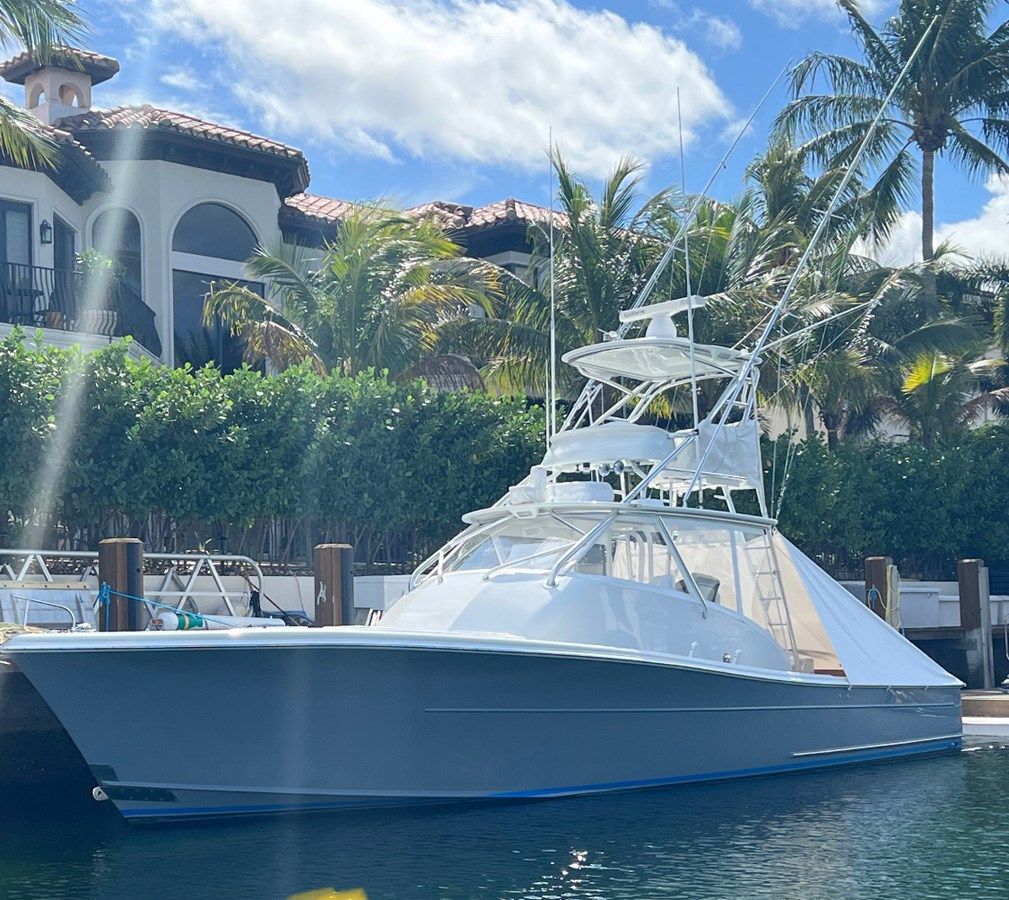
Release Boatworks is an American builder of custom and semi-custom offshore sportfishing boats known for walkaround and express layouts. The brand emerged with a clear mission: to blend the fishability and safety of true 360-degree decks with the speed, efficiency, and refined finish expected of high-end sportfishing yachts. From its earliest projects, Release Boatworks focused on hulls in the mid-30s to 60-foot range and quickly became associated with distinctive, Carolina-inspired lines—fine entries, generous bow flare, and elegant tumblehome—combined with modern composite construction and meticulous fit-and-finish.
The company’s development has tracked a larger movement in the offshore angling community: the resurgence of the walkaround platform for serious tournament fishing and family cruising. Early models helped re-popularize this format by showing that a well-executed walkaround could deliver serious advantages at the rail without sacrificing engine access, cabin space, or speed. Over time, Release Boatworks expanded its offerings to include multiple walkaround lengths as well as express and convertible-inspired configurations, continuing to refine ergonomics, helm visibility, livewell systems, and rigging efficiency based on feedback from captains and crews.
A hallmark of Release Boatworks’ build philosophy is its focus on weight management, structural integrity, and serviceability. The company typically marries cold-molded and cored-composite techniques with vacuum-assisted resin systems, selecting materials to achieve stiffness-to-weight targets appropriate for offshore duty. Interiors balance durable, marine-grade practicality with the warm, hand-finished character expected in custom yachts. The brand’s evolution has been iterative and performance-driven: sea trial data, owner input, and tournament experience have guided changes in running surfaces, spray control, fuel capacity, and systems layout.
As the product line matured, Release Boatworks solidified its reputation as a boutique builder—small enough to customize heavily for each client, yet structured enough to deliver repeatable quality and consistent performance. The boats are frequently spec’d by anglers who prioritize fishability and safety in crowded cockpits or around big fish, and by owners who demand long-term maintainability, clean systems runs, and high resale desirability. The company’s project cadence, show presence, and delivery into key fishing markets reflect its steady growth within a demanding niche.
Country of Origin
United States of America
Manufacturing Locations
United States of America
Reputation and Quality
Release Boatworks occupies a respected niche in the American custom sportfishing sector. Its boats are best known for:
- Purpose-built fishability: Walkaround decks that offer 360-degree access for hooking, fighting, and releasing fish safely and efficiently, with minimal obstructions and intelligently placed rails and toe-kicks.
- Seakeeping and efficiency: Hulls shaped for offshore versatility, combining sharp forward entries to mitigate head seas, variable deadrise for balance between ride and stability, and flare designed to keep the decks dry when running and drifting.
- Thoughtful ergonomics: Helm stations laid out for visibility and control; mezzanine seating designed for comfort during long runs and superior sightlines into the spread; and cockpit arrangements that keep gaffs, tag sticks, and rigs at the ready without clutter.
- Construction discipline: Use of wood/epoxy cold-molded techniques and/or advanced composites, with vacuum-assisted processes and selective reinforcement materials to produce stiff, quiet structures and predictable running attitudes. The approach aims at a strong strength-to-weight ratio, translating to quicker acceleration, lower planing speeds, and improved fuel economy for a given horsepower.
- Systems and serviceability: Clean wiring and plumbing runs, labeled circuits, accessible manifolds, well-ventilated machinery spaces, and rigging provisions for modern electronics packages and redundant systems—features valued by captains and owner-operators alike.
- Finish and craftsmanship: Hand-faired exteriors, carefully matched veneers, and durable marine coatings that withstand harsh saltwater environments. The brand’s interior joinery and exterior detailing typically reflect the standards expected in custom sportfishing yachts.
- Owner collaboration: A build process that encourages input on layout, tackle storage, livewell capacity and placement, tower and helm preferences, and electronics integration—resulting in boats that feel optimized from delivery day.
In the tournament and hardcore offshore community, Release Boatworks is often associated with practical refinements that arise from real-world fishing. This shows up in details like livewell geometry and flow design for bait health; deck and scupper configuration to move water off quickly; insulated fish boxes engineered for capacity and drainage; transom doors sized and braced for both tournament catches and swim access; and fuel system planning that balances range, trim, and service accessibility.
Performance reputation is enhanced by the brand’s weight-conscious builds and efficient running surfaces. Owners typically choose diesel inboard power for reliability and range; the boats are often noted for comfortable cruise speeds, stable trolling behavior, and responsive handling around docks and structure. The combination of structure-borne noise reduction, careful engine isolation, and smart exhaust routing produces a quieter ride—something crews appreciate on long travel days.
From a quality perspective, Release Boatworks aligns itself with the boutique, high-craft end of the market rather than mass production. While that leads to longer lead times, it also supports higher customization, closer QC checkpoints, and a direct relationship between the yard and the owner. The brand’s presence at major U.S. boat shows and participation by owners and crews in established East Coast and Gulf tournaments further reinforce recognition and credibility in the sportfishing community.
Long-term ownership considerations are also part of the company’s value proposition. Release Boatworks emphasizes:
- Materials and coatings suited to UV, heat, and salt exposure.
- Accessible chase tubes and service corridors for future electronics and system upgrades.
- Structural layouts that accept tower installations and auxiliary equipment without compromising balance or sightlines.
- Resale potential aided by recognizable lines, desirable layouts (especially the walkaround), and the brand’s reputation among experienced anglers.
The result is a brand identity that combines traditional custom-boat artistry with modern performance and systems thinking. For owners who prioritize safety at the rail, all-day fishability, and refined, service-friendly builds, Release Boatworks is widely regarded as a serious, proven choice within the custom sportfishing arena.
Release Boatworks (Español)
Historia de la empresa
Release Boatworks es un constructor estadounidense de embarcaciones de pesca deportiva personalizadas y semipersonalizadas, reconocido por sus diseños walkaround y express. La marca nació con una meta clara: unir la seguridad y la operatividad de una cubierta 360 grados con la velocidad, eficiencia y acabados de un yate de pesca de alta gama. Desde sus primeros proyectos—generalmente entre los 30 y 60 pies—la firma se asoció con líneas inspiradas en el estilo “Carolina” (proas finas, gran flare y suaves tumblehome), combinadas con construcción compuesta moderna y un meticuloso nivel de acabado.
A medida que la marca evolucionó, consolidó su enfoque en la plataforma walkaround para pesca seria y uso familiar. Con el tiempo amplió su oferta a varias esloras y configuraciones, perfeccionando ergonomía, visibilidad en la timonera, sistemas de viveros y eficiencia de aparejos a partir de la experiencia de capitanes y tripulaciones. Su filosofía de construcción prioriza el control de peso, la integridad estructural y la capacidad de mantenimiento, integrando técnicas de madera/epoxi y compuestos con resinas asistidas por vacío.
País de origen
Estados Unidos de América
Ubicaciones de fabricación
Estados Unidos de América
Reputación y calidad
La reputación de Release Boatworks se basa en:
- Altísima pescabilidad con cubiertas walkaround 360 grados.
- Casco eficiente y equilibrado para navegación en mar abierto.
- Ergonomía cuidada en timoneras y zonas de pesca.
- Construcción compuesta con procesos de vacío y refuerzos selectivos.
- Sistemas accesibles y etiquetados, pensados para el mantenimiento.
- Acabados artesanales con maderas y recubrimientos marinos de alta durabilidad.
- Proceso de personalización cercano al propietario.
Entre pescadores de alto nivel y torneos, se valora la atención a los detalles prácticos: viveros con flujo optimizado, escorrentía y drenajes bien resueltos, cajas de pescado aisladas, puertas de popa robustas, planificación de combustible para autonomía y trim. El resultado es una embarcación silenciosa, eficiente y cómoda, con buen valor de reventa y soporte a lo largo del ciclo de vida del barco.
Release Boatworks (Français)
Historique de l’entreprise
Release Boatworks est un chantier naval américain spécialisé dans les bateaux de pêche sportive sur mesure et semi-custom, particulièrement en configurations walkaround et express. L’objectif initial a été d’offrir une circulation périphérique sécurisante tout en conservant les performances, l’efficacité et le niveau de finition d’un yacht haut de gamme. Les carènes s’inspirent du style “Carolina” (entrées fines, fort flare, tumblehome élégant) et s’allient à des composites modernes et à une finition artisanale.
Pays d’origine
États-Unis d’Amérique
Sites de production
États-Unis d’Amérique
Réputation et qualité
La marque jouit d’une excellente image pour:
- Pêche 360° grâce aux ponts walkaround.
- Carènes efficaces et marines pour le large.
- Ergonomie du poste de pilotage et du cockpit.
- Construction composite avec procédés sous vide.
- Systèmes propres et accessibles favorisant la maintenance.
- Finitions soignées et menuiseries marines.
- Grande personnalisation en lien direct avec le chantier.
Les bateaux sont appréciés pour leur silence structurel, leur tenue à la mer, leur stabilité au mouillage et leur aptitude aux tournois, tout en préservant le confort et la simplicité d’entretien.
Release Boatworks (Italiano)
Storia dell’azienda
Release Boatworks è un cantiere statunitense specializzato in imbarcazioni da pesca d’altura custom e semi-custom, noto per i layout walkaround ed express. Fin dall’inizio ha unito sicurezza a bordo e circolazione perimetrale totale con prestazioni ed efficienza tipiche dei grandi sportfisher. Le linee ispirate alla tradizione “Carolina” si combinano con tecniche compositive moderne e finiture artigianali di alto livello.
Paese di origine
Stati Uniti d’America
Sedi di produzione
Stati Uniti d’America
Reputazione e qualità
Il marchio è apprezzato per:
- Pescabilità a 360° grazie al ponte walkaround.
- Carene efficienti e bilanciate per l’oceano.
- Ergonomia del pozzetto e della plancia.
- Costruzione in composito con processi assistiti dal vuoto.
- Impiantistica ordinata e facilmente ispezionabile.
- Finiture pregiate e durabilità in ambiente marino.
- Processo di personalizzazione a stretto contatto con l’armatore.
Ne risulta un prodotto boutique, orientato alla funzionalità reale in pesca, con valori di navigazione, comfort e rivendibilità molto solidi.
Release Boatworks (Deutsch)
Unternehmensgeschichte
Release Boatworks ist ein US-amerikanischer Hersteller von maßgeschneiderten und semi-custom Offshore-Sportfischerbooten, bekannt für Walkaround- und Express-Layouts. Ziel war es von Beginn an, sichere 360-Grad-Bewegungsfreiheit an Deck mit hoher Leistung, Effizienz und exzellenter Verarbeitung zu verbinden. Die Formen folgen klassischen Carolina-Linien, umgesetzt mit modernen Verbundwerkstoffen und handwerklicher Perfektion.
Herkunftsland
Vereinigte Staaten von Amerika
Produktionsstandorte
Vereinigte Staaten von Amerika
Ruf und Qualität
Die Marke steht für:
- Maximale Fischbarkeit mit 360°-Walkaround-Deck.
- Effiziente, seegängige Rümpfe für den Offshore-Betrieb.
- Ergonomische Steuerstände und funktionale Cockpits.
- Verbundbau mit Vakuumprozessen und gezielten Verstärkungen.
- Aufgeräumte, gut zugängliche Systeme für Wartung und Nachrüstungen.
- Hochwertige Oberflächen und langlebige maritime Ausrüstung.
- Enge Zusammenarbeit mit Eignern für maßgeschneiderte Lösungen.
Eigentümer schätzen Laufruhe, Kraftstoffeffizienz, Handling und Werterhalt, insbesondere im harten Turnierumfeld.
Release Boatworks (Русский)
История компании
Release Boatworks — американская верфь, специализирующаяся на индивидуальной и полуиндивидуальной постройке морских катеров для спортивной рыбалки, в том числе в формате walkaround и express. С самого начала компания стремилась объединить безопасность и удобство полного обхода палубы с высокой скоростью, эффективностью и премиальным уровнем отделки. Корпуса сочетают элементы «каролинской» школы с современными композитными технологиями и ручной доводкой.
Страна происхождения
Соединённые Штаты Америки
Производственные площадки
Соединённые Штаты Америки
Репутация и качество
Release Boatworks ценят за:
- Удобство ловли по периметру палубы (360° walkaround).
- Эффективные, мореходные корпуса для океана.
- Эргономику поста управления и кокпита.
- Композитную постройку с вакуумными процессами.
- Доступность систем для обслуживания и модернизации.
- Высокое качество отделки и долговечные материалы.
- Индивидуальную настройку проекта под владельца.
Лодки известны тихим ходом, устойчивостью, продуманной компоновкой и высокой ликвидностью на вторичном рынке, что особенно важно для опытных рыбаков и капитанов.
Release Boatworks (中文)
公司历史
Release Boatworks 是一家美国的运动钓鱼艇定制与半定制制造商,擅长 walkaround 与 express 布局。品牌自创立以来,始终以“360° 安全天然钓场 + 高性能与高效率 + 精细工艺”为目标,将具有“卡罗来纳风格”的优雅线条与现代复合材料工艺相结合,并通过严谨的重量与结构控制实现良好的海况适应能力与巡航经济性。
原产国
美利坚合众国
生产地点
美利坚合众国
品牌声誉与品质
Release Boatworks 在离岸钓鱼领域享有良好口碑,主要体现在:
- 360° walkaround 甲板,钓鱼安全与效率兼顾。
- 兼具效率与舒适的船体设计,适应多样海况。
- 人机工效友好的驾驶台与飞桥/座椅布局。
- 采用真空辅助树脂工艺与精选加强材料的复合结构或木材/环氧冷模成型。
- 系统布置清晰、标识明确,便于维护与后期升级。
- 内外装工艺精致,耐候材料与涂层适合长期海上环境。
- 高度个性化定制流程,与船东保持密切沟通。
这些特性使其在严苛的锦标赛与长航场景中表现稳定,同时保持良好的转售价值和全生命周期可维护性,满足资深船东与船长的专业需求。
Main Competitors
Release Boatworks operates in the boutique, high-performance sportfishing segment, with a product philosophy centered on custom and semi-custom walkaround and express platforms designed for offshore angling. Its principal competitors fall into four overlapping groups: custom Carolina-style builders, classic South Florida custom houses, boutique walkaround specialists, and semi-custom production brands offering open/express models that appeal to similar buyers.
-
Custom Carolina-style builders (North Carolina and Mid-Atlantic)
- Jarrett Bay Boatworks (NC): A leading custom yard known for cold-molded construction and refined offshore convertibles, as well as highly capable express builds. While Jarrett Bay is best known for flybridge convertibles, clients who value bespoke engineering, fishability, and the Carolina aesthetic often cross-shop Jarrett Bay with Release Boatworks.
- Bayliss Boatworks (NC): Ultra-high-end custom builder with extreme attention to detail, low-volume output, and top-tier tournament pedigree. While Bayliss primarily focuses on large convertibles, the buyer demographic and emphasis on craftsmanship, efficiency, and seakeeping make them a relevant benchmark for quality and execution.
- Spencer Yachts (NC): Renowned for fast, efficient custom convertibles and express boats. Spencer’s lean, high-performance ethos and strong following in the tournament circuit attract many of the same anglers who admire Release’s walkaround versatility.
- Winter Custom Yachts (NC): A particularly relevant competitor due to its deep experience with express and walkaround builds in the 30- to 60-foot range. Winter’s design language, ergonomics, and weight-conscious composite practices resonate strongly with buyers considering Release Boatworks.
- Ritchie Howell (NC): Boutique custom builder known for finely executed sportfishers and a hands-on approach typical of the custom Carolina school. For buyers focused on bespoke details and a close builder-owner relationship, Howell is a valid alternative.
- F&S Boatworks (DE): Known for fast, efficient hulls with distinctive spray rails and a strong portfolio of express and flybridge builds. F&S’s reputation for craftsmanship and performance competes for the same discerning custom clientele.
-
Classic South Florida custom houses
- Michael Rybovich & Sons (FL): Among the most prestigious names in custom sportfish, with impeccable fit-and-finish and heritage. While the typical Rybovich buyer often leans toward flybridge convertibles, the yard’s stature and build quality make it an aspirational comparison for any boutique builder, including Release Boatworks.
- Merritt Boat & Engine Works (FL): An iconic brand associated with refined, large convertibles and world-class craftsmanship. Buyers considering a lifetime boat may look at Merritt as a benchmark for full-custom execution and support.
- Garlington Landeweer (FL): Specializes in exquisite express and convertible sportfishermen with a classic Palm Beach aesthetic. For anglers who want express configurations with a luxurious finish, Garlington represents an alternative to the Release Boatworks approach.
-
Boutique walkaround and express specialists
- Gamefisherman (FL): A direct and notable competitor, with deep expertise in walkaround and express boats designed explicitly for hardcore offshore angling. Like Release, Gamefisherman’s boats are admired for 360-degree fishability, thoughtful systems, and a focus on owner-operator usability.
- L&H Boats (FL): Known for smaller walkaround sportfishers that punch above their size class in capability and finish. For owners prioritizing the safety and versatility of a walkaround in a more compact footprint, L&H often appears on the same shortlists.
- Maverick Yachts Costa Rica: Builds cold-molded custom boats, including walkarounds, with a strong reputation among tournament anglers in Central America and the U.S. While production location and build philosophy differ, the on-the-rail performance emphasis overlaps with Release’s audience.
-
Semi-custom production and premium series competitors
- Viking Yachts (NJ): Viking’s Open, Sport Tower, and Billfish lines (e.g., 38–54 feet) bring production efficiency, strong dealer support, and proven performance. Buyers who want the accessibility and network of a major builder while capturing much of the open-cockpit, fish-first ethos may weigh Viking against Release Boatworks. In the broader Viking ecosystem, the Valhalla center consoles sometimes become cross-shop alternatives for owners debating an inboard walkaround versus a large, fast outboard platform with similar fishing mission.
- Hatteras Yachts (NC): The GT45X and similar express offerings have historically targeted the same offshore angler who values a robust platform, service access, and brand support. Prospective owners evaluating express layouts with strong offshore credentials often compare Hatteras to boutique custom solutions.
- Bertram Yachts (FL): Bertram’s modernized lineup—combining heritage with contemporary systems—attracts anglers drawn to rugged offshore capability with a production backbone. While Bertram’s portfolio shifts over time, their express/fish-focused models frequently intersect with Release Boatworks’ audience.
- Cabo Yachts (revived by Hatteras in recent years): The Cabo 41 and other express concepts have historically appealed to owner-operators who want fish-first layouts, solid construction, and a support network. Where available, Cabo provides a semi-custom feel with production reliability.
How competitors stack up against Release Boatworks
- Fishability and deck access: Release Boatworks is best known for serious walkaround decks that facilitate safe, efficient 360-degree rail work—hooking, leadering, tagging, and releasing fish. Competitors such as Gamefisherman, Winter Custom Yachts, and Maverick CR are particularly strong in this same walkaround/express domain. Larger convertible specialists (Jarrett Bay, Bayliss, Spencer, Rybovich, Merritt) are rarer in true walkaround configurations but match or exceed the brand in finish, speed, or stature depending on the model.
- Customization depth: Boutique custom houses (Release, Winter, Gamefisherman, F&S, Howell) excel at tailoring layout, systems, and build details to the owner. Production brands (Viking, Hatteras, Bertram) counter with manufacturing repeatability, a dealer/service network, and often quicker delivery, at the trade-off of less granular customization.
- Build philosophy and materials: Release Boatworks emphasizes advanced composites and weight discipline typical of high-end custom builders. Carolina and Florida competitors in the custom realm share a similar ethos, with nuanced differences in lamination schedules, cold-molded techniques, foam/core selection, and vacuum-assisted resin processes.
- Ownership experience: Custom buyers often seek close collaboration with the yard, with more time invested up front and during the build. Production brands often provide easier access to parts, standardized systems documentation, and broader service networks. The choice is frequently about the degree of personalization versus the convenience of a larger brand ecosystem.
- Resale and recognition: Large custom names (Bayliss, Jarrett Bay, Spencer, Rybovich, Merritt) often set benchmark resale expectations in their tiers. Release Boatworks competes by offering highly fishable, efficient designs that seasoned anglers recognize and value on the brokerage market—particularly for buyers specifically seeking the walkaround configuration.
In practice, a Release Boatworks prospect will commonly cross-shop:
- Gamefisherman and Winter Custom Yachts for like-kind walkaround/express builds.
- F&S, Spencer, and select projects from other custom builders for express alternatives.
- Viking Open/Billfish and Hatteras express for semi-custom production solutions with strong networks.
- Maverick Yachts CR when considering a cold-molded walkaround built abroad but actively fished in U.S. waters.
This competitor landscape is dynamic; model introductions, material choices, and propulsion trends (e.g., joystick inboards, pods, integrated stabilization) evolve quickly. Still, the core comparison points—fishability at the rail, seakeeping, weight and efficiency, customization depth, and long-term serviceability—remain stable across the brands named above.
Current Production Status
Release Boatworks operates as a boutique, build-to-order American sportfishing builder. That positioning has several implications for its production status and how prospective clients should evaluate availability:
- Build-to-order cadence: Unlike high-throughput production lines, custom and semi-custom yards like Release Boatworks typically schedule a limited number of concurrent hulls. Each project progresses through design finalization, materials procurement, lamination/structure, systems rigging, fairing/paint, and commissioning with significant owner input at key milestones. The consequence is a naturally low-volume, high-attention build environment in which schedule and resource allocation center on a handful of active projects rather than dozens of identical hulls.
- Model families and customization: Release Boatworks is strongly associated with walkaround and express configurations in the mid-size sportfish range. Within those envelopes, owners commonly tailor helm layouts, livewell systems, mezzanine seating, tackle storage, fuel capacity planning, and machinery spaces to their fishery and operating style. This customization inherently influences the yard’s workflow and slot availability at any given time.
- Materials and process planning: The yard’s emphasis on weight control and structural integrity, using advanced composites (and, where prescribed, cold-molded techniques), requires careful sequencing of lamination, vacuum processes, and cure schedules. These practices are consistent with boutique custom production and encourage measured, deliberate throughput rather than speed-centric output. While this does not disclose whether a given hull is currently on the floor, it accurately reflects the production rhythm that prospective buyers can expect.
- Vendor and systems coordination: As is common in custom sportfish projects, Release Boatworks coordinates closely with engine suppliers, electronics integrators, tower and hardtop specialists, and interior outfitters. That integration promotes clean systems installation and serviceability, and it also means production tempo is influenced by vendor lead times and the owner’s specification decisions. This interdependency is typical of the custom sportfishing sector and helps explain why production status is best confirmed directly with the builder at the time of inquiry.
- Commissioning and sea trials: In keeping with custom-yard practice, acceptance trials, performance validation, and final punch lists are an integral part of Release Boatworks’ delivery profile. While not a statement of how many boats are on the floor today, it clarifies that “production” extends beyond hull completion to a thorough verification phase that ensures the boat leaves the yard dialed for its fishery.
- How to assess current status: Because schedules and slot availability change with demand and in-progress projects, the most reliable way to determine current production status is by contacting the builder or its authorized representatives directly. Prospective owners typically discuss desired length, layout (walkaround or express), propulsion preferences, stabilization, tower and helm arrangements, range targets, and electronics suites. The yard can then communicate the next available slot, expected build duration based on the chosen specification, and any model-specific updates.
From a buyer’s perspective, “production status” with a custom builder like Release Boatworks is less about a fixed, publicly posted build count and more about:
- Confirming whether a slot is available within a timeframe that aligns with the owner’s goals.
- Understanding the level of customization the yard recommends for the intended fishery and crew style.
- Establishing the vendor timelines for engines, stabilization, electronics, and towers that can influence overall delivery.
- Planning for after-delivery support, including warranty structure, maintenance windows, and potential future upgrades (chase tubes for new electronics, battery capacity planning for modern DC loads, and so on).
For anglers who prioritize 360-degree fishability, safe movement on deck, and a refined, service-friendly build, Release Boatworks remains a relevant option in the custom sportfishing landscape. Its production profile—close collaboration, deliberate craftsmanship, and a focus on practical offshore performance—fits the expectations of owners who value a purpose-built boat over a mass-produced platform.
Frequently Asked Questions
Question: What kind of boats does Release Boatworks specialize in? Answer: Release Boatworks focuses on custom and semi-custom offshore sportfishing boats, especially walkaround and express configurations in the mid-size range. The hallmark of their approach is 360-degree fishability, clean systems installation, and weight-conscious construction that yields strong performance, comfortable ride quality, and long-term serviceability.
Question: What is the advantage of a walkaround layout for offshore fishing? Answer: A true walkaround allows crew to move safely and efficiently along the full perimeter of the boat, which is invaluable when leadering, tagging, or releasing fish, operating kites or pitch baits, and managing lines in crowded spreads. It reduces cockpit congestion, improves safety around big fish, and enables better angler positioning regardless of wind or drift. For many crews, a well-executed walkaround strikes the best balance between hardcore fishability and day-to-day usability with family and guests.
Question: How does an express layout compare to a walkaround in this segment? Answer: An express trades 360-degree deck access for a larger, often more protected helm deck, with mezzanine seating and a big, open cockpit aft. It typically offers more enclosed helm comfort, better sightlines from a central position, and often a bit more cabin volume in a given length. For crews that prioritize extended runs, all-weather helm protection, and social space without a flybridge, an express is a compelling option.
Question: What construction methods are commonly used by Release Boatworks? Answer: Builds emphasize advanced composites and weight control. Depending on the project, this may include vacuum-assisted laminating, foam-cored structures, strategic carbon or E-glass reinforcement, and resin systems tailored to stiffness, durability, and noise mitigation. In select custom applications, cold-molded wood/epoxy techniques may be integrated to achieve specific strength-to-weight targets and a desirable acoustic signature. The unifying goal is a stiff, quiet platform with predictable running attitudes and efficient performance.
Question: What propulsion configurations are typical? Answer: Twin diesel inboards with straight shafts are common in this class for reliability, balance, and serviceability offshore. Some owners may opt for modern joystick solutions via thrusters or compatible drivetrains to enhance low-speed handling. Pod propulsion has been adopted in parts of the sportfishing market, but many offshore anglers continue to favor shaft-driven systems for simplicity and durability.
Question: How fast do these boats typically run? Answer: Performance depends heavily on length, displacement, propulsion, and owner specification. As a generalized, non-model-specific guideline for well-executed custom walkaround and express builds in the 35–55-foot range with twin diesels, comfortable cruise speeds often fall between the upper-20s and mid-30s knots, with top speeds typically in the mid-30s to low-40s knots. Real numbers vary by hull, power, load, and sea state.
Question: What kind of range can owners expect? Answer: Range is a function of fuel capacity, loading, sea conditions, and cruising speed. Custom sportfishing builds in this segment often plan fuel to support long day-runs and tournament duty, with efficient cruise settings for covering ground between canyons or island grounds. Owners typically consult the builder on tankage that balances range with center-of-gravity considerations and target trim.
Question: Are gyrostabilizers commonly fitted? Answer: Yes. Gyro stabilization is now a frequent specification for serious offshore anglers who value reduced roll at drift and improved comfort underway. Integration is planned early to ensure structural support, access, and serviceability without compromising balance or layout.
Question: What distinguishes Release Boatworks from mass-production sportfishing brands? Answer: Customization depth, weight discipline, systems serviceability, and hands-on craft are the primary differentiators. Rather than building many identical hulls, a boutique yard focuses on a small number of boats with owner-specific layouts, tackle storage, livewell geometry, tower preferences, and electronics integration. Wiring looms, chase tubes, and machinery access are planned to simplify maintenance and upgrades. The result is a boat optimized for the owner’s fishery and operating style.
Question: How are livewells and fish boxes typically engineered? Answer: Livewell design emphasizes water quality and bait health—smooth interior geometry, controlled turnover rates, and adequate flow with minimal aeration trauma. Fish boxes are usually insulated with attention to drainage, pumping, and cleanout, often with macerators or overboard discharge as appropriate to the intended grounds and local regulations. The cockpit deck and scupper strategy are planned to move water off deck quickly during washdowns or heavy weather.
Question: What kind of helm ergonomics and visibility can be expected? Answer: Express and walkaround helms are typically designed for clear sightlines forward and aft into the spread. Owners often specify seating, bolster heights, and console layouts that suit their stature and typical crew number. Placement of multifunction displays, engine controls, and switching aims for single-operator efficiency while allowing a navigator or crew to assist during complex maneuvers.
Question: How many cabins are possible in these sizes? Answer: It depends on length and layout priorities. Many mid-40-foot express or walkaround builds can accommodate a forward stateroom plus an additional berth or convertible settee. Smaller boats often prioritize open salon spaces and storage, while larger boats can incorporate enclosed heads with separate showers, compact galleys, and additional berths for extended trips.
Question: What is the typical build timeline? Answer: Custom and semi-custom projects are inherently schedule-sensitive to owner specification, materials, vendor lead times, and the degree of bespoke joinery. As a broad, non-binding guideline in this category, timelines can range from roughly a year to well over that for larger or highly customized boats. Milestones include design/spec finalization, hull and deck construction, systems and machinery installation, fairing/paint, interior fit-out, rigging, and commissioning/sea trials.
Question: Are there standards or best practices followed for systems and safety? Answer: While specifics vary by project, reputable U.S. builders in this sector generally align with American Boat and Yacht Council (ABYC) guidelines and U.S. Coast Guard requirements. Expect attention to ABYC-informed electrical systems, fuel and ventilation standards, labeled circuits, proper bonding/grounding, and well-secured battery installations. Machinery spaces typically facilitate ventilation, isolation, and access for inspection.
Question: How is noise and vibration managed? Answer: Strategies include smart isolation of engines and generators, careful exhaust routing, strategic use of core materials and laminates to damp transmission paths, and secure yet serviceable mounting for pumps and accessories. A quieter, lower-vibration platform reduces crew fatigue and improves communication, especially on long offshore runs.
Question: What about corrosion protection and longevity? Answer: Builds in this class typically emphasize robust coatings, proper anode strategy, and thoughtful material pairings to reduce galvanic risk. Through-hulls, seacocks, and raw-water circuits are spec’d with service access in mind. Owners are advised to follow scheduled inspections of bonding systems and metal hardware, particularly when the boat is berthed in marinas with mixed electrical environments.
Question: How does Release Boatworks approach serviceability and future upgrades? Answer: A strong priority is placed on clean, accessible systems runs—chase tubes for electronics, well-labeled wiring, thoughtful manifold layouts, and space to add or replace components such as pumps, chargers, and inverters. The aim is to simplify both routine maintenance and inevitable technology upgrades over the boat’s life.
Question: Is joystick docking available? Answer: Many modern installations can incorporate joystick functionality via thrusters and compatible control systems, which can simplify docking in tight quarters. The feasibility depends on the chosen propulsion, available hardware, and the owner’s preferences during the spec phase.
Question: Can these boats fish multiple styles effectively (trolling, live baiting, deep dropping)? Answer: Yes. Walkaround and express platforms are planned for versatility: robust rod storage, rigging stations at ergonomic heights, gaff/tag-stick stowage, transom doors for safe fish handling, and livewell solutions for bait-intensive techniques. Hardpoints for outriggers and kite reels, plus deck and mezzanine ergonomics, enable rapid transitions between methods.
Question: Are towers common on these builds? Answer: Many owners specify a full tower or a marlin tower, with careful attention to weight, windage, and visibility. The tower is integrated with the boat’s weight and balance plan to preserve performance and sightlines. Controls and displays are often duplicated with human factors in mind for extended time aloft.
Question: What electrical architecture is typical? Answer: A DC backbone sized for modern loads—pumps, electronics, lighting—supplemented by AC systems for galley and comfort equipment is common. Builders in this category typically plan generator placement for access and cooling, and specify charging solutions that support the hotel loads encountered in modern fishing and cruising.
Question: How customizable are interiors? Answer: Owners can usually choose finishes, fabrics, veneers, and layout elements to suit their priorities—sleeping capacity, dedicated rod storage, compact galley appliances, and durable surfaces for easy clean-up. The guiding principle is balancing comfort with weight, maintenance, and offshore practicality.
Question: What factors influence resale value? Answer: Recognizable lines, proven fishability, weight-conscious builds, and impeccable systems documentation tend to support strong resale. Popular power options with robust service networks, well-maintained finishes, and thoughtful upgrades (stabilization, modern electronics) also help. In the custom market, boats that retain balance, access, and a timeless aesthetic typically fare best over time.
Question: How does Release Boatworks handle fuel system planning? Answer: Custom projects commonly optimize tank placement for center-of-gravity management and running trim while accommodating range targets. Manifold design, filtration access, and inspection porting are planned for both performance and maintenance. Owners often collaborate on fuel capacity in light of intended grounds and trip profiles.
Question: What should a prospective owner prepare before a specification meeting? Answer: A clear mission profile (dayboat vs. longer-range), typical crew size, fisheries targeted (trolling, live bait, deep drop), preferred helm and mezzanine arrangements, stabilization preference, tower requirements, electronics suite expectations, and power choices. Defining must-haves versus nice-to-haves helps align the build with budget, weight targets, and delivery timing.
Question: How are sea trials and commissioning conducted? Answer: Commissioning typically includes dockside systems verification, calibration of electronics, and sea trials to confirm RPM-to-speed curves, trim and list behavior, turning characteristics, and target cruise performance. Punch lists are addressed before final handover to ensure the boat meets the agreed specification and performance envelope.
Question: Is there a difference between Release Boatworks and similarly named center-console brands? Answer: Yes. “Release Boatworks” refers to a custom/s semi-custom offshore sportfishing builder focused on walkaround and express designs. There is a separate center-console brand with a similar name, but it operates in a different segment with different production methods and product focus. Prospective buyers should be mindful of the distinction to ensure they are evaluating the right type of boat.
Question: What onboard comfort systems are common? Answer: Air conditioning in the cabin and often at the helm (depending on layout and enclosure), robust refrigeration for bait and catch handling, freshwater systems designed for efficient washdowns, and lighting packages tailored to night operation. Sound attenuation and vibration control further contribute to overall comfort during long fishing days.
Question: How is weight management addressed throughout the build? Answer: Weight targets inform material selections from the earliest design steps. Structural members, core densities, laminates, and outfitting choices are evaluated to maintain the desired strength-to-weight ratio. Finishes and equipment are balanced against performance goals, range, and seakeeping expectations.
Question: What are typical maintenance considerations for this class? Answer: Routine engine and generator service according to manufacturer intervals; periodic inspection of shaft seals, rudder bearings, and running gear; maintenance of livewell pumps and valves; electronics software updates; and stewardship of coatings and caulks. Attention to bonding systems, anodes, and through-hull hardware is critical for corrosion control.
Question: Are there specific safety features emphasized for offshore use? Answer: Expect robust scuppers and drainage, grab rails in logical run paths, non-skid textures tuned for wet decks, thoughtfully located fire suppression, and well-organized emergency gear stations. Helm visibility and control placement are planned to minimize cognitive load in challenging conditions.
Question: How do owners typically configure tackle and storage? Answer: Custom drawers and lockers for terminal tackle, leader spools, and tools; under-gunwale rod storage; coffin-box or in-deck insulated storage; and provisions for kite gear. Efficient stowage reduces clutter and speeds rig changes in tournament settings.
Question: How does the yard balance modern tech with serviceability? Answer: While integration of advanced electronics and stabilization is common, the systems layout aims to preserve access to components, maintain logical separation of high- and low-voltage circuits, and leave space for future additions. Documentation and labeling practices support a clean maintenance experience over time.
Question: What environmental practices are relevant to these builds? Answer: Composites selection, resin handling, and ventilation are managed according to best practices; modern engines meet current emissions standards; and waste management systems are specified according to regulatory requirements. Many owners also pursue efficient cruise strategies to reduce fuel burn without compromising mission capability.
[Continue the list of questions and answers as needed.]
Available Models
Information about specific, current model designations and their detailed specifications is not provided here. In the custom and semi-custom sportfishing segment, lineups evolve and are heavily tailored to owner requirements, which can change layout, propulsion, and accommodations within a given length class. To ensure accuracy, prospective buyers typically evaluate a boat based on mission profile, target length and beam, desired layout (walkaround or express), propulsion options, stabilization preferences, and range goals rather than on a fixed catalog of mass-produced models.

Learn more on the “RELEASE BOAT WORKS”
To learn more on the “RELEASE BOAT WORKS” or to get advice on how to buy or sell a yacht or get a great price for a yacht charter
please call +1 (954) 274-4435 USAOnly deal with professionals!