2026 © Shestakov Yacht Sales Inc. All rights reserved. |Term of use
 Licensed Yacht BrokersSales and service of yachts and ships
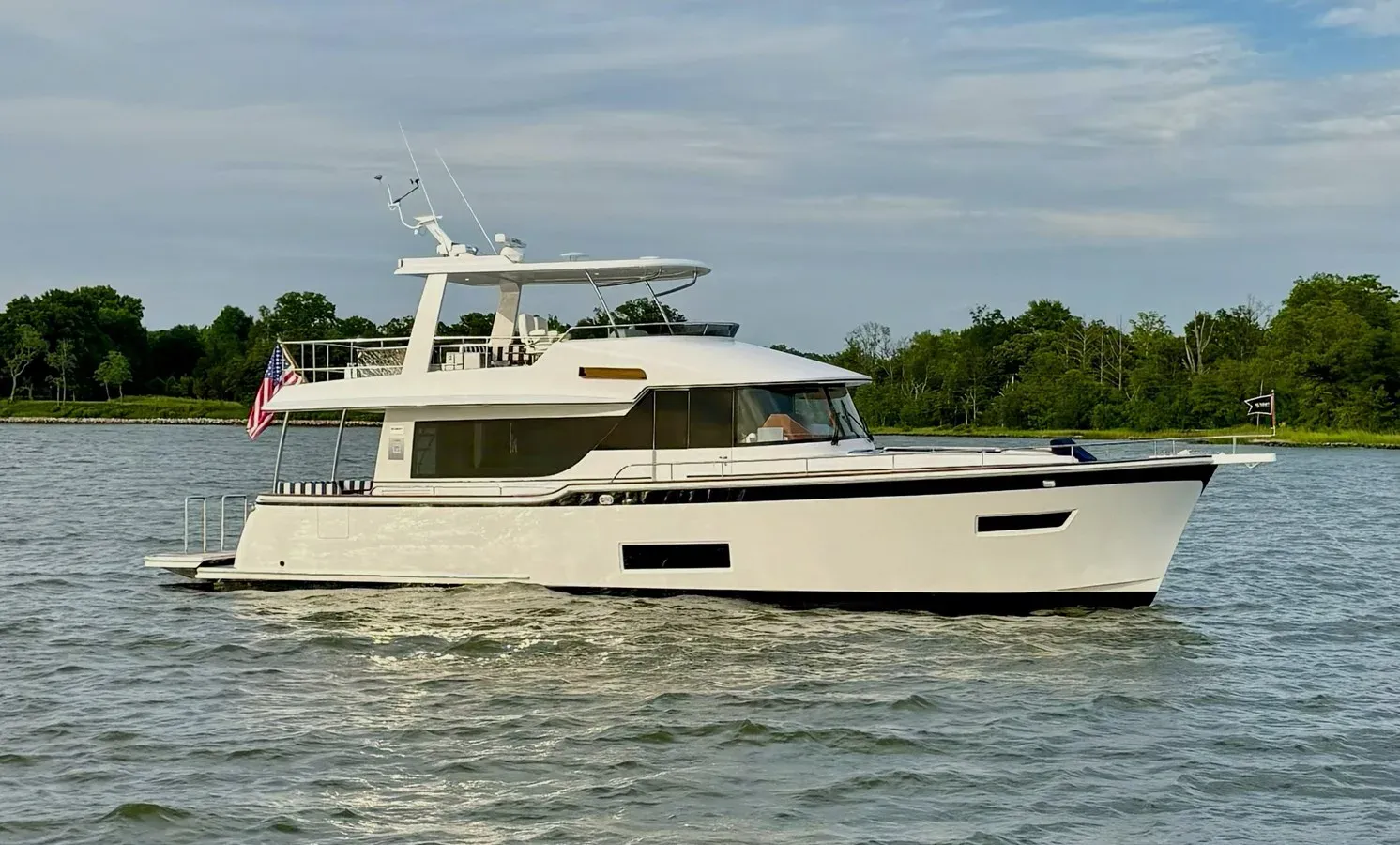
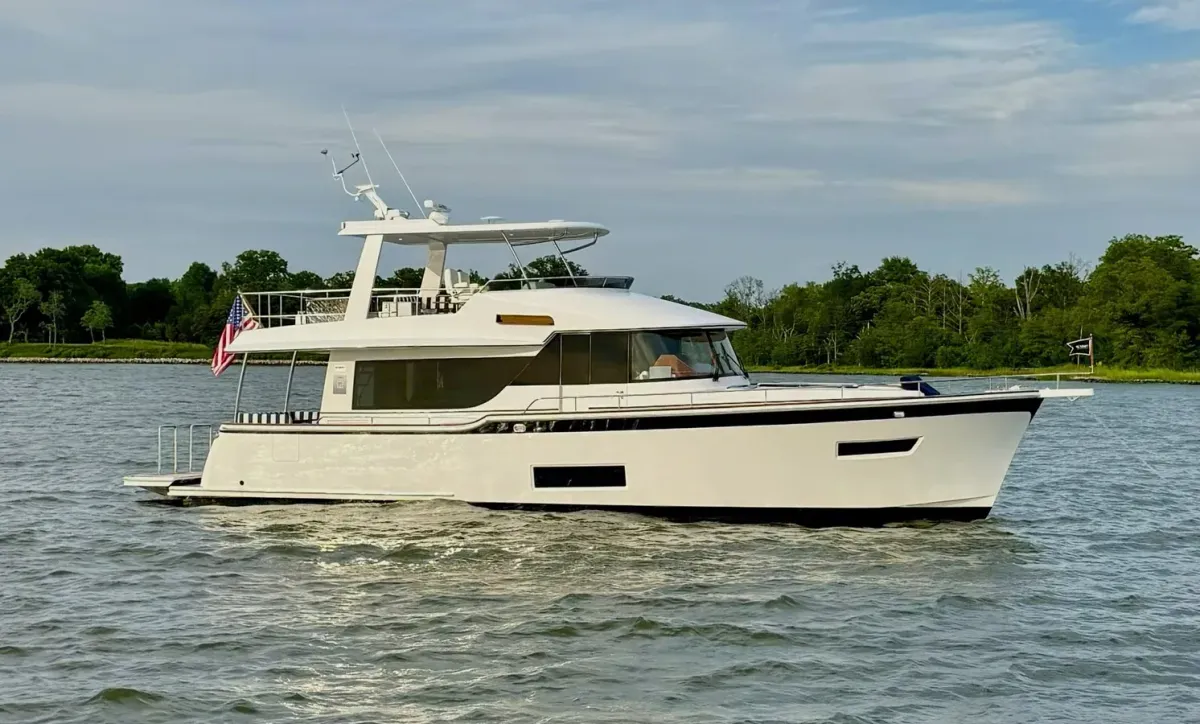
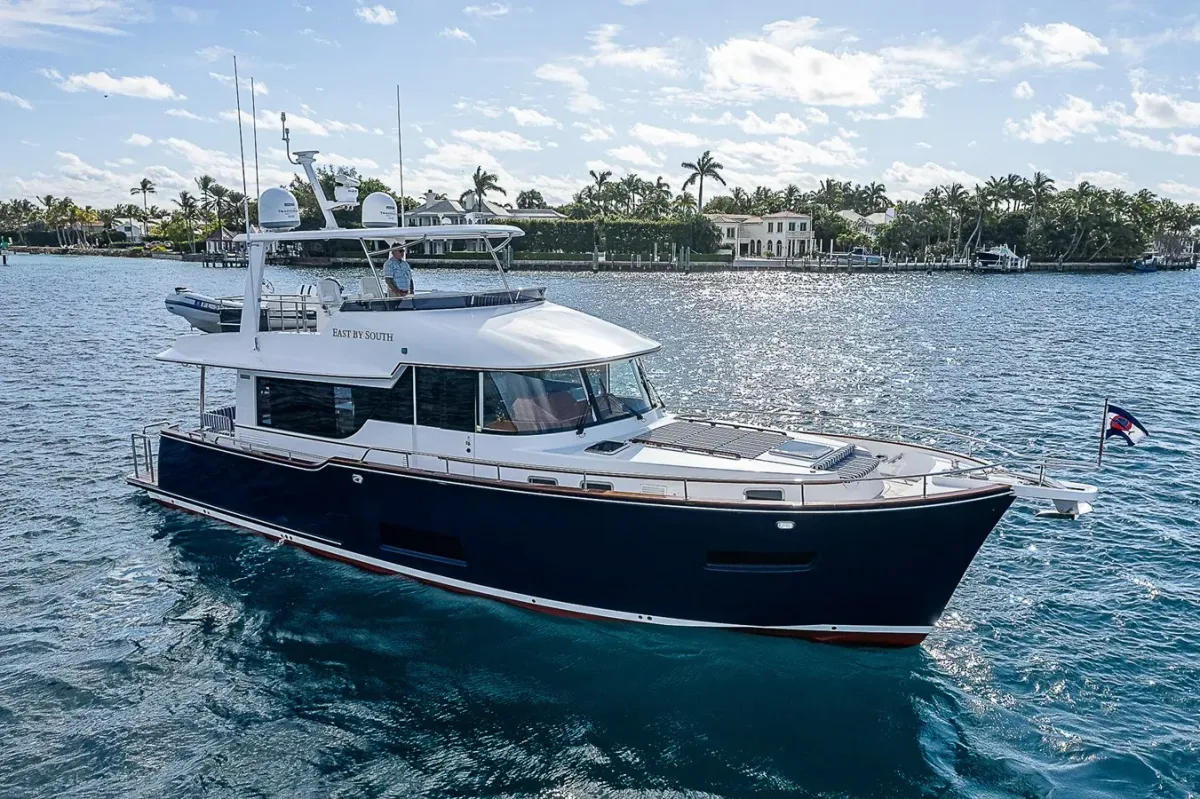
Summit (often styled as Summit Motoryachts) is a contemporary motoryacht brand created as a sister line to the long-established Kadey-Krogen Yachts. The strategic intent behind Summit was clear from the outset: to blend the time-tested, bluewater ethos and craftsmanship of Kadey-Krogen with the speed, handling, and modern living spaces expected of a premium planing motoryacht. While Kadey-Krogen made its name building full-displacement trawlers renowned for ocean-crossing range and seakindliness, Summit was conceived to serve experienced cruisers who desired higher cruising speeds without sacrificing quality, efficiency, or thoughtful systems engineering.
Kadey-Krogen Yachts itself traces its origins to 1976, when the company was founded by Art Kadey and the late naval architect Jim Krogen. Over decades, Kadey-Krogen established a strong reputation for robust construction, conservative naval architecture focused on safety and motion comfort, and interiors crafted for long-term liveaboard use. As customer bases evolved—especially among owner-operators who had spent time in displacement trawlers and were now looking for more speed—Kadey-Krogen recognized a gap it could fill with a performance-oriented line that still embodied its bluewater DNA. Thus, in the late 2010s, Summit was launched as the performance complement to the traditional trawler line.
From its inception, Summit partnered with Michael Peters Yacht Design (MPYD), one of the world’s leading naval architecture firms in high-performance and cruising powerboats. MPYD’s mandate was to deliver a hull form that would run cleanly and efficiently at a range of speeds—from comfortable semi-planing cruise to true planing performance—while preserving the seakeeping and predictable handling demanded by seasoned cruisers. This collaboration underpinned Summit’s first model, the Summit 54 Motoryacht, which was introduced toward the end of the 2010s and quickly became a touchstone for the brand’s identity: a performance cruising yacht crafted to a high standard, engineered for owner operation, and laid out for extended time aboard.
The broader vision for Summit included expanding the model range to address different owner profiles and cruising styles within the 50-to-70-foot segment. The brand’s early development roadmap focused on refining the 50s range and preparing larger models to carry the same ethos forward. From day one, Summit leveraged Kadey-Krogen’s deep experience with long-range systems integration, quiet machinery spaces, redundant installations, and thoughtful service access—qualities that matter enormously to experienced owners and that are sometimes overshadowed in the market by purely stylistic concerns. The result was a brand narrative centered not only on speed and contemporary styling, but also on reliability, sea manners, and practical liveability born from decades of real-world passagemaking knowledge.
Another formative characteristic of Summit’s history is its build partnership in Asia. Like many of the finest American, European, and Australian yacht brands in the 45-to-80-foot range, Kadey-Krogen and Summit rely on top-tier Taiwanese craftsmanship. This has been an essential part of the company’s manufacturing DNA for decades and allowed Summit to bring to market a motoryacht whose fit-and-finish, resin-infusion work, and joinery detail compete squarely with—and often surpass—global peers. By pairing MPYD’s hydrodynamics with this proven build pedigree, Summit established itself as a serious, owner-focused option for those stepping up from high-end express cruisers or transitioning from displacement trawlers to something faster.
As the brand matured, it emphasized design elements that resonate with couples cruising and families: single-level salon/galley living zones that connect to the cockpit; robust helm ergonomics with sightlines tailored to owner-operators; guest accommodations that do not compromise storage and mechanical serviceability; and a level of systems specification—stabilization, active ride control, bow and stern assist, integrated nav/monitoring—that reduces fatigue and expands the comfort envelope in a wide range of conditions. All of this, combined with careful weight management and a restrained approach to topside mass and glazing, reflects Summit’s guiding principle: practical performance built on seakeeping discipline.
Today, Summit stands as a modern complement to a venerable American yacht house. It delivers the performance and contemporary aesthetic many owners want, while carrying forward the marine engineering rigor and build quality that made Kadey-Krogen a respected name among serious cruising clients.
United States. Summit was established by Kadey-Krogen Yachts, an American company with headquarters and sales/service operations in the U.S. The brand’s design, product management, and customer support are rooted in the American yachting market, while production is carried out through long-standing international partnerships that are common at the premium end of yacht manufacturing.
Summit motoryachts are built in Taiwan, leveraging the region’s elite network of yacht builders and component suppliers. Taiwan—especially the Kaohsiung area—has been a global center of excellence for yacht construction for decades, known for:
For Summit, Taiwan’s build ecosystem provides the material discipline and craftsmanship necessary to execute a performance hull form to its full potential: correct weight distribution, structural integrity, consistent fiberglass/resin ratios, and top-grade finish throughout the interior. Hulls and decks are typically resin-infused with foam or composite coring where appropriate to achieve strength and stiffness without unnecessary weight. Attention to print-through, fairing, and noise/vibration attenuation is emphasized so that the yacht feels solid and quiet at a range of speeds.
After hull and superstructure completion, assembly, and finishing in Taiwan, yachts are shipped for commissioning. Final commissioning, electronics calibration, sea trials, and owner orientation typically occur in the United States, coordinated through Kadey-Krogen/Summit’s North American network. This includes East Coast facilities and, when applicable, West Coast partners for owners based in the Pacific Northwest. The combination of Taiwan build quality and U.S.-based commissioning/after-sales support is a proven model that balances craftsmanship, efficiency, and owner convenience.
Summit is a brand wholly owned by Kadey-Krogen Yachts, a privately held American company founded in 1976 by Art Kadey and naval architect Jim Krogen. The Summit line was created to extend Kadey-Krogen’s product portfolio from full-displacement trawlers into the performance motoryacht segment, while maintaining the parent company’s core commitments to seaworthiness, robust engineering, and long-term support.
As a privately held enterprise, Kadey-Krogen does not routinely publish detailed shareholding information. Operationally, the Summit brand is integrated into Kadey-Krogen’s broader leadership, engineering, and customer-service structures. Naval architecture and hull development for Summit models are executed in partnership with Michael Peters Yacht Design, while interior design, systems integration, and quality assurance are carried out with Kadey-Krogen’s in-house teams and its established build partners in Taiwan. This blend of external naval-architecture excellence and internal product stewardship ensures that Summit models meet the expectations of serious cruisers who value both performance and substance.
Summit’s reputation rests on three pillars: prudent performance, craftsmanship, and real-world cruisability. While many modern motoryachts emphasize sheer speed or dramatic styling, Summit prioritizes a balanced envelope—confident hull dynamics, efficient cruising ranges, low operator workload, and livable spaces designed for time aboard.
Naval Architecture and Seakeeping: Designed with Michael Peters Yacht Design, Summit hulls seek predictable handling in a variety of sea states, efficient planing and semi-planing performance, and a forgiving ride. The design brief emphasizes bow and buttock geometry, chine placement, and center of gravity control to deliver a hull that can be trimmed properly as conditions change. Owners report that the helm feels settled and precise, with ride comfort maintained even as speeds vary with sea state.
Structure and Composites: Summit builds benefit from Taiwan’s high-level composite expertise. Hulls and decks are resin-infused for consistency and strength, with carefully planned coring and reinforcement in high-load areas. Structural grids are engineered to distribute stresses and dampen vibration, while barrier coats and vinylester-rich outer laminates are employed to resist osmotic blistering. The result is a platform that feels solid underfoot and stays quiet across the boat’s speed range.
Systems Engineering: True to Kadey-Krogen’s heritage, Summit yachts feature clean machinery spaces with thoughtful access to filters, strainers, pumps, and electrical distribution. The brand is attentive to redundancy in critical systems (such as dual fuel filters and crossovers), labeling and schematics, and proper ventilation and sound attenuation in the engine room. These details pay dividends in owner confidence, lower fatigue on long passages, and straightforward serviceability whether at a home marina or while cruising in remote regions.
Stabilization and Ride Control: Summit specifies stabilization and modern ride-control options appropriate to owner-operator yachts in the 50-to-60-foot class. Gyro stabilization and/or active interceptor systems can significantly improve comfort at speed and at anchor, reduce roll angles, and keep the yacht on an even keel in quartering seas. Joystick-assist and thruster packages simplify low-speed maneuvering, elevating confidence for couples cruising and those transitioning from smaller boats.
Interior Craftsmanship and Ergonomics: Interiors are executed to a high standard consistent with Taiwan’s best yards: matched-grain joinery, durable finishes, and thoughtful lighting plans. Summit layouts typically emphasize a single-level salon and galley that connects directly to the cockpit, creating a social and practical heart of the boat. Helm stations provide excellent sightlines and sensible access to nav suites and breakers. Staterooms balance comfort with abundant storage and service runs, avoiding the temptation to over-densify accommodations at the expense of access and weight.
Owner-Operator Focus: While capable of accommodating a captain if desired, Summit models are designed foremost for owner operation. Systems are chosen for reliability and ease of use, documentation is robust, and the handling characteristics are tuned for predictable docking and comfortable passagemaking without a large crew. For many experienced trawler owners stepping into higher speeds, this is a crucial differentiator.
After-Sales Support: A key element of Summit’s reputation is the support structure behind it. Owners benefit from Kadey-Krogen’s established service ethos, documentation standards, and commissioning processes. The company maintains long-standing relationships with equipment vendors and service yards, which aids in parts availability, technical support, and warranty resolution. This continuity is especially valuable for cruising owners who prioritize uptime and predictable maintenance.
Market Positioning and Perception: In the premium 50-to-70-foot motoryacht space, Summit is viewed as an American-designed, Taiwan-built alternative that delivers tangible value in engineering depth, construction quality, and real cruising functionality. Rather than chasing extremes of styling or headline speeds, the brand focuses on the attributes that matter over years of ownership: a fair and strong hull; smart, serviceable systems; interiors that hold up to use; and a sea-kind ride that encourages owners to go farther. Media coverage and owner feedback frequently highlight the boats’ quiet running, solid feel, and confidence-inspiring manners—hallmarks typically associated with more conservative bluewater designs but here realized in a modern, faster package.
While awards lists can be transient, Summit’s more enduring achievement is carving out a niche among discerning owner-operators who value substance and execution as much as aesthetics. The brand’s partnership with a top-tier naval architecture firm, its use of elite Taiwanese build talent, and its connection to Kadey-Krogen’s cruising heritage combine to produce motoryachts that feel deliberately engineered rather than merely styled. For buyers who want a performance-oriented yacht that still wears a mariner’s soul, Summit has established a credible and respected presence.
Summit MotorYachts (the contemporary, fast-cruising brand developed by Kadey-Krogen Yachts) sits in a competitive arena that blends high-quality construction, premium joinery, and semi-planing/planing performance in the 50- to 70-foot range. While each builder has its own identity, buyers who are evaluating a Summit are typically cross-shopping the following brands and models due to comparable size, use case, and positioning:
Grand Banks
Palm Beach Motor Yachts
Sabre Yachts
Back Cove Yachts
Riviera and Maritimo (Australia)
Princess, Sunseeker, and Absolute (selected models)
Fleming Yachts
Prestige and Galeon (select flybridge models)
What unites these competitors is their focus on premium cruising experiences for owner-operators—comfortable, fast enough to make weather windows and itineraries work, and finished to a standard that supports extended time aboard. Summit’s unique value proposition is its blend of Kadey-Krogen’s bluewater ethos with a genuinely modern, Michael Peters–designed performance hull form and contemporary styling, all delivered in limited-series, boutique production.
Summit MotorYachts is an active, boutique-scale brand within the Kadey-Krogen family, created to complement Kadey-Krogen’s full-displacement trawler heritage with a line of faster, semi-planing/planing cruisers. The brand was developed to serve experienced cruisers who appreciate Kadey-Krogen’s reputation for seaworthiness and systems discipline, yet want to shorten passages and run at higher average speeds than a traditional trawler allows.
Key points that define Summit’s current production posture:
Brand governance and design pedigree
Build location and craftsmanship
Product positioning and layouts
Performance and systems philosophy
Sales, commissioning, and after-sales
Supply chain and scheduling
In short, Summit MotorYachts is actively building and delivering yachts in small numbers, focusing on careful customization, high build quality, and a performance profile that differentiates it from Kadey-Krogen’s displacement trawlers while retaining the parent company’s seaworthy DNA and service ethos.
The most consequential developments around Summit MotorYachts center on its formation, strategic design partnerships, and ongoing refinement of its mid-50-foot-class flagship:
Brand creation to complement Kadey-Krogen’s trawlers
Collaboration with Michael Peters Yacht Design
Taiwan build partner continuity
Debut and continued visibility at major U.S. boat shows
Incremental refinement and options evolution
Range development ambitions
Taken together, the brand’s recent history is one of deliberate, quality-first growth: Summit entered the market with a clearly defined mission—to offer a Kadey-Krogen–level ownership experience at significantly higher cruising speeds—then backed that promise with an A-list naval architect, a proven build partner, and steady presence at the boat shows where its core clientele shops. The newsworthy thread is consistency: Summit continues to refine its flagship, deliver boats on a limited-series basis, and nurture a product roadmap aligned with the real-world cruising patterns of North American owner-operators.
While the fast-cruising field is crowded with attractive alternatives, Summit’s most meaningful “news” is its staying power and adherence to a concept that resonates with seasoned cruisers: modern performance, premium build quality out of Taiwan, and the long-view customer support of Kadey-Krogen. For many buyers, that combination is precisely the point—speed and style, yes, but anchored by a builder whose roots are in serious, seakindly cruising.
Question: Who is Summit as a yacht manufacturer, and what defines its approach to design and construction? Answer: Summit is known for building contemporary cruising motoryachts that emphasize efficiency, seakeeping, and owner-operator usability. The brand’s ethos blends the comfort and volume of a cruising yacht with the responsive handling and performance of a modern planing or semi-planing hull. Summit’s boats are typically engineered to deliver confident control in a range of coastal and offshore conditions, while remaining straightforward to maintain. Build practices usually include composite structures with carefully managed weight, robust structural grids, and thoughtful systems engineering intended to support both spirited weekend runs and extended seasonal cruising.
Question: What kind of hull forms and running surfaces are typical of Summit yachts? Answer: Summit hulls are generally optimized for efficient planing at moderate-to-high cruising speeds, with fine forward entries for a softer ride in head seas, and harder aft chines for lift, efficiency, and spray control. You will commonly find lifting strakes that help with faster time-to-plane and flatter running attitudes. The overall intent is to reduce drag, preserve fuel burn at cruise, and maintain predictable behavior in a wide range of sea states. These hulls are commonly paired with precisely tuned engine and propeller packages or pods (where offered) to ensure crisp throttle response and precise slow-speed handling.
Question: How do Summit yachts perform in rough weather and diverse sea states? Answer: While every yacht’s behavior depends on displacement, weight distribution, and loading, Summit’s approach prioritizes a hull that tracks true, resists excessive bow rise, and sheds spray effectively. The fine bow entry helps soften impact in chop; the relatively moderate aft deadrise and pronounced chines contribute to roll damping and stability. The boats are designed to be driven actively—using trim tabs or automatically managed tabs where equipped—to keep the running angle level and visibility high. In practice, many owners use these boats for coastal passages where conditions can change quickly, and the hull form is well matched to those realities.
Question: Are Summit yachts suitable for owner-operators? Answer: Yes, Summit’s layouts and systems are generally conceived for owner-operator use. Typical features include excellent helm sightlines, intuitive ergonomics, quick access to critical breakers and switches, and machinery spaces with clear service pathways. Docking assist technologies—such as joystick control integrated with pods or thrusters—are often available, reducing stress in tight marinas. Deck arrangements usually emphasize safe movement with handholds, raised bulwarks or high rails, and well-placed cleats and fairleads. The net effect is a boat that one or two people can confidently run without a professional crew.
Question: What propulsion configurations are commonly found on Summit yachts? Answer: Summit yachts frequently feature twin diesel inboards, often with conventional shaft drives, and on certain models or eras, pod-drive options may be offered. The choice depends on owner priorities: shaft drives are prized for simplicity and widespread service familiarity; pods are valued for enhanced maneuverability, joystick docking, and in some configurations, improved efficiency at certain speeds. Regardless of drive type, Summit pairs propulsion with thoughtful engine-room design to support easy access to filters, strainers, and common service points.
Question: What cruising speeds and fuel economy can an owner reasonably expect? Answer: Exact numbers vary by model, power option, loading, and sea state. However, the Summit design brief typically targets efficient cruise speeds in the fast-cruising band that many owner-operators prefer for coastal runs. The boats are engineered so that you can throttle back to moderate speeds for range and comfort when seas build, and then run higher speeds in settled weather. Prospective buyers should evaluate sea-trial data for the specific hull, as propeller pitch, engine selection, and options (such as a gyro stabilizer) can materially affect performance and fuel burn.
Question: How are Summit interiors laid out for long weekends and multi-week cruises? Answer: Interior plans usually focus on maximizing natural light, sightlines, and social flow between the salon, galley, and aft deck. Many layouts emphasize a single-level salon/galley environment with minimal steps, plus a lower accommodation deck that can feature an owner’s stateroom and one or two guest cabins. Storage is a priority—expect deep galley cabinets, under-settee stowage, and thoughtfully partitioned hanging lockers and drawers. The joinery typically uses marine-grade hardwoods and veneers, selected for durability and a refined presentation that stands up to repeated, real-world use.
Question: What distinguishes Summit’s approach to noise, vibration, and ride comfort? Answer: Summit designs generally incorporate multiple strategies: resilient engine mounts, balanced running gear, acoustic insulation in the engine room, and attention to structural stiffness so resonance is minimized. Hull geometry is tuned to mitigate pounding at realistic cruising speeds, and careful weight management reduces unnecessary mass that can amplify impact loads. The end result is a ride that feels composed and less fatiguing—especially important for owner-operators who may spend several hours behind the helm.
Question: What systems and electrical architecture are typical? Answer: Expect a modern, integrated systems approach: a DC backbone with robust bus bars, AC distribution for shore power and generator feeds, and increasingly, smart inverter/charger solutions that allow quiet shipboard life at anchor. Many boats are built around an NMEA 2000 electronics network so navigation, engine data, tank levels, and alarms can be viewed through multifunction displays. Digital switching may be included or optional, and battery banks are sized for realistic overnighting without constant generator use. As always, exact specifications vary by model and options list.
Question: What safety and compliance standards do these yachts typically meet? Answer: Summit yachts are generally built to widely recognized marine standards such as ABYC and ISO guidelines, and many are eligible for CE certification in applicable categories. Expect proper engine-room fire suppression, well-labeled and serviceable fuel/filter systems, seacocks of marine-grade materials, and grounding/bonding for corrosion-control integrity. Deck safety features often include high rails, aggressive non-skid, and positive-latching doors and hatches.
Question: How customizable are Summit yachts? Answer: Summit typically offers a curated menu of options—propulsion packages, stabilization (e.g., gyros or fins, where available), electronics suites, interior décor choices, and occasionally layout adjustments within the constraints of the tooling. The brand’s philosophy tends to be “custom within reason”—aiming to keep quality and schedule under control while giving buyers meaningful personalization where it matters most: comfort, operations, and style.
Question: What’s the brand’s stance on stabilization? Answer: Many owners of fast-cruising yachts choose to add a gyro or fin stabilizer to improve comfort at displacement speeds and at anchor. Summit supports this trend by engineering adequate space, structure, and power for popular stabilization solutions. Because these yachts can run at higher speeds, some owners prefer to reserve stabilization for slow-speed and anchorage comfort rather than use it continuously at speed. The “right” choice depends on your typical cruising profile.
Question: How does Summit handle maintenance access and long-term serviceability? Answer: Thoughtful service access is a hallmark of serious cruising design. Summit machinery spaces typically prioritize clear access to the front and outboard sides of engines; filters, strainers, seacocks, and sea chests are placed for quick inspection and service; and wiring runs are labeled and supported. Companionway dimensions, removable panels, and soft patches are usually considered early in the design so major equipment can be removed or upgraded without structural surgery.
Question: What features ease docking and close-quarters maneuvering? Answer: Expect joystick control when paired with pod drives, or integrated bow and stern thrusters with conventional shafts; proportional thrusters are often specified for fine control. Wide side decks, well-placed spring cleats, large fender storage, and robust fairleads support reliable line handling. Many helms include a side door or a nearby opening window for direct communication with crew on deck, reducing the time to go from helm to cleat and improving overall situational awareness.
Question: What deck and tender-handling solutions are common? Answer: A hydraulic swim platform is a popular option for tender launch and recovery and doubles as a water-level “beach.” On certain models, you may also find foredeck cradle provisions or davits depending on owner preference. Lockers for lines and fenders, shore-power cord handling, and freshwater washdowns at strategic points are common. The aim is to make day-to-day tasks simple and safe, even with a small crew.
Question: Does Summit integrate modern nav/bridge technology? Answer: Yes. Most packages center on a pair of large multifunction displays with radar overlay, AIS, autopilot, depth, and engine data. Dedicated cameras for engine room and aft-deck views are common. Digital switching (if fitted) can simplify lighting and system control from the helm or a tablet. Care is taken to limit glare, preserve clear sightlines, and ensure that manual overrides are accessible for critical functions.
Question: What is Summit’s approach to materials and construction durability? Answer: Composite construction typically employs high-quality resins and core materials to achieve a balance of stiffness, strength, and weight control. Structural grids, proper laminate schedules, and secondary bonding practices are used to distribute loads from engines, tanks, and seaways. Through-hulls and fittings are specified in proven marine-grade materials, and deck hardware is selected to withstand repetitive, real-world loads. The finish work targets long-term serviceability—fasteners you can reach, panels you can remove, and systems you can trace and troubleshoot.
Question: How does Summit handle heating, cooling, and ventilation? Answer: Air conditioning is commonly specified for salon and accommodations, with zoned control. Opening windows, overhead hatches, and cockpit doors support natural airflow in temperate climates. Engine-room ventilation focuses on adequate intake and exhaust flow to maintain power and limit heat soak. Defogging/wiper systems, windshield tint choices, and UV protections are often part of the detail spec to maintain clear visibility and interior comfort.
Question: Is there a focus on sustainability or efficiency beyond fuel economy? Answer: While the primary sustainability gains in a fast-cruising yacht come from efficient hulls and propulsion, Summit’s philosophy often includes waste management considerations, LED lighting, energy-efficient appliances, and inverter-backed hotel loads to reduce generator hours. Attention to long-lived materials and maintainable systems also contributes to sustainability by extending useful lifespan and minimizing premature component replacement.
Question: How do Summit yachts compare with pure trawler-style cruisers? Answer: Compared with full-displacement trawlers, Summit’s fast-cruising designs trade some ultimate range and ultra-low-speed fuel economy for significantly higher cruise and top speeds. This benefits owners who want to cover more miles in a weather window or who enjoy spirited day runs. Ride quality is engineered to be comfortable at realistic planing speeds, and interior volumes aim to remain competitive—even as the hull is optimized for performance rather than maximum displacement.
Question: And how do they compare with sport motoryachts focused purely on speed? Answer: Summit leans more toward versatile cruising than outright top-end speed. The goal is a balanced package that keeps handling crisp and cabins livable, with generous tankage, storage, and service access. Many pure sport designs push for top speed at the expense of range and storage; Summit’s target buyer often values a broader operating envelope, predictable fuel burn at cruise, and a layout that supports extended time aboard.
Question: What is the typical ownership experience like—maintenance, upgrades, and learning curve? Answer: Owner-operators report a fast learning curve thanks to intuitive systems, readable labeling, and ergonomic helm layouts. Routine maintenance is designed to be straightforward—daily checks are quick, and scheduled service points are accessible. Many electrical and electronic upgrades integrate cleanly due to the NMEA 2000 backbone and clear wire ways. For major systems such as stabilization or watermakers, the boats are typically pre-engineered to accept popular brands without complex retrofits.
Question: What should buyers focus on during a sea trial of a Summit yacht? Answer: Key checks include time-to-plane, running angle and visibility at various trims, throttle response and tracking in turns, slow-speed maneuverability in and out of slips, and noise/vibration throughout the cabin. Evaluate sightlines day and night, helm ergonomics seated and standing, and ease of line handling. Inspect service access in the engine room—can you reach strainers, filters, impellers, belts, and seacocks without contortion? Confirm that electronics are logically arranged and that alarms and alerts are visible and audible.
Question: What is the brand’s posture on redundancy and safety underway? Answer: Expect dual fuel filters (with changeover valves), redundant bilge pumps, and properly fused electrical circuits. Critical navigation and propulsion data is usually displayed on multiple screens or has backup pathways. In the engine room, fire suppression systems are standard or strongly recommended, and common spares storage is often planned into the layout. The overall philosophy is to prevent single-point failures from ending a cruise.
Question: How well do Summit yachts support life at anchor? Answer: With inverter-backed AC loads, appropriately sized battery banks, and ample refrigeration, owners can anchor comfortably without running the generator continuously. Many boats feature robust ground tackle—windlasses, chain lockers with washdown, and well-sized anchors—plus dinghy handling systems that make exploring easy. Shading solutions, cockpit seating, and swim platforms contribute to a comfortable “base camp” afloat.
Question: What about resale and long-term value retention? Answer: Resale depends on maintenance history, hours, equipment, and the broader market. Summit’s focus on balanced performance, owner-operator usability, and high-quality construction typically supports strong long-term appeal. Boats with well-documented service records, modern electronics, and popular options (such as stabilization and upgraded navigation) tend to command better attention on the brokerage market.
Question: Are training and handover practices friendly to new owners transitioning up in size? Answer: Summit boats are commonly delivered with detailed orientations that cover systems, handling, docking, and routine maintenance. Because the ergonomics and systems are designed for clarity, new owners often gain confidence quickly. Supplemental instruction from qualified captains is widely recommended—especially if you are stepping up to your largest boat to date.
Question: What are common upgrade paths owners consider after their first season? Answer: Frequent upgrades include additional solar or battery capacity for longer quiet periods at anchor, electronics software enhancements or second-station controls, gyro stabilization (if not originally specified), satellite communications for offshore data, and comfort items such as soft goods and acoustic treatments tailored to the owner’s preferences. Because the base boats are engineered with service access in mind, these upgrades can usually be completed cleanly.
Question: How should a buyer evaluate a pre-owned Summit? Answer: Start with a professional survey that includes hull and deck moisture readings and a thorough machinery inspection. Review oil analysis for engines and generator. Examine service records for cooling system maintenance, alignment checks, and any pod or thruster service history. Test all electronics and network components, and confirm inverter/charger health and battery age. Inspect ground tackle and safety gear for condition and compliance. A sea trial should verify expected acceleration, trim behavior, and reasonable noise/vibration levels.
Question: What distinguishes Summit’s fit-and-finish when you look closely? Answer: Beyond the obvious joinery and upholstery, the hallmarks are behind the scenes: clean, supported wire runs with chafe protection; labeled circuits; accessible valves with drip pans and sightlines; sound deadening in the right places; and fair, well-bonded fiberglass work. Hardware is bedded correctly, fasteners are sealed, and hatches and doors latch positively—details that matter for a yacht that will actually be used, not just displayed.
Question: Does Summit offer features that extend the cruising season? Answer: Yes. Owners commonly specify robust HVAC, heated towel rails or demisters in some climates, upgraded insulation in selected zones, and enclosure options for cockpits or flybridges (where applicable). Good defog/wiper systems and lighting packages round out safe operations during shoulder seasons or early/late hours.
Question: What is the brand’s philosophy on tankage and weight distribution? Answer: Summit balances adequate fuel and water capacity for ambitious itineraries with weight control to preserve performance. Tanks are positioned to keep the center of gravity low and centered, reducing pitch and roll tendencies and maintaining proper trim across loading conditions. Access to tank tops and fittings is prioritized to simplify inspection and maintenance over the life of the boat.
Question: Are there typical warranties or after-sales support practices? Answer: While terms vary by model and vintage, it is common in this category to see multi-year structural hull warranties and separate coverage for engines and major components per their manufacturers. After-sales support generally includes parts assistance, technical guidance, and coordination with service providers. Documented maintenance per manufacturer intervals is key to preserving coverage and long-term reliability.
Question: What buyer profile finds Summit the best fit? Answer: Summit appeals to cruisers who want the ability to run efficiently at higher speeds when conditions and schedules allow, without sacrificing the comfort and practicality needed for extended time aboard. If you prioritize owner-operator simplicity, balanced performance, and a modern, light-filled interior that supports real cruising life, Summit’s approach is likely to resonate.
Reliable, up-to-date, model-specific specifications (lengths, cabin counts, maximum speeds, and engine types) are not available for publication here at this time. Prospective buyers should reference current, model-specific documentation and verified sea-trial data when evaluating a particular Summit yacht.

Learn more on the “N/A”
To learn more on the “N/A” or to get advice on how to buy or sell a yacht or get a great price for a yacht charter
please call +1 (954) 274-4435 USAOnly deal with professionals!
