
 Licensed Yacht BrokersSales and service of yachts and ships
THORNYCROFT - For Sale
THORNYCROFT (John I. Thornycroft & Co.)
Company History
John I. Thornycroft & Co., widely known simply as “Thornycroft,” was a pioneering British shipbuilding firm founded in 1864 by John Isaac Thornycroft (1843–1928) on the River Thames at Chiswick, London. The company began by constructing small steam launches and quickly built a reputation for technical ingenuity, speed, and robust engineering. By the 1870s–1880s, Thornycroft had become a leading builder of fast craft—particularly torpedo boats—supplying both the Royal Navy and export customers. This early specialization in high-performance vessels laid the foundation for decades of innovation in hull design, propulsion, and lightweight structures.
An especially influential contribution was the development of the Thornycroft water-tube boiler, adopted in numerous early Royal Navy destroyers around the turn of the 20th century. This boiler design supported higher power-to-weight ratios and improved operational performance—key attributes for the fast, agile craft favored by the company’s clients. Alongside its naval programs, Thornycroft also built private steam yachts and, later, motor yachts, applying hydrodynamic insights gleaned from advanced testing and practical fleet experience.
As naval orders grew, the firm relocated its principal shipbuilding capacity in 1904 to Woolston, Southampton, while retaining capabilities for smaller craft and experimental work. Throughout World War I, Thornycroft produced a wide variety of high-speed vessels, including coastal motor boats (CMBs), and expanded into specialized sites such as the Hampton Launch Works at Platt’s Eyot on the Thames to meet wartime demand. The interwar period saw continued diversification into patrol craft, launches, and bespoke private yachts, while the company sustained its research-led culture—an area in which Blanche Thornycroft (1873–1957), a member of the founding family and a respected naval architect/engineer, played an important role through systematic model testing and analysis.
World War II again reaffirmed Thornycroft’s strategic importance, with substantial output of fast attack craft, motor torpedo boats, and naval support vessels. Post-war, the company continued to innovate in fast craft and lightweight structures and maintained a presence in the custom and semi-custom yacht segment, often leveraging military-grade technologies to deliver reliability, seakeeping, and speed.
In 1966, John I. Thornycroft & Co. merged with Vosper & Company of Portsmouth to form Vosper Thornycroft Ltd. (VT), uniting two of the United Kingdom’s strongest pedigrees in fast craft and naval shipbuilding. Under the Vosper Thornycroft banner, the company delivered a range of naval vessels, patrol boats, and specialized craft, while also undertaking refit and support work. The Woolston yard in Southampton remained a symbolic and practical center for this lineage until its closure in 2003 as VT reshaped its operations.
The corporate evolution continued when Vosper Thornycroft became VT Group; in 2010 the UK operations of VT Group were acquired by Babcock International. As a result, Thornycroft’s shipbuilding legacy now sits within Babcock’s marine and technology activities. Although the Thornycroft name is no longer active as an independent yacht or shipbuilder, its heritage—encompassing early steam yachts, naval destroyers, torpedo boats, and later motor yachts—remains one of the most influential in British maritime history.
Country of Origin
- United Kingdom (founded in Chiswick, London, England).
Manufacturing Locations
- Chiswick, London (from 1864): Original yard on the Thames, where the firm built small steam launches, fast boats, and conducted experimental and prototype work. The site became synonymous with high-speed hull research and early torpedo craft development.
- Woolston, Southampton (from 1904): Main yard after expansion; large slipways and workshops supported the construction of destroyers, patrol craft, fast boats, and bespoke yachts. Woolston became the center of Thornycroft’s heavy shipbuilding and remained vital through two world wars and into the late 20th century.
- Hampton Launch Works, Platt’s Eyot (from World War I): A dedicated facility on the Thames developed to meet wartime demand for coastal motor boats and other small, fast naval craft. This site supported specialized small-boat production and testing.
- Additional small-craft and support facilities were utilized over the decades in the Thames and Solent regions as the company adapted to wartime and peacetime requirements.
Ownership and Management
- Founder: John Isaac Thornycroft (1843–1928), a leading engineer and naval architect who was recognized for his technical contributions and elected a Fellow of the Royal Society.
- Key family contributors: Sir John Edward Thornycroft (son), a prominent designer of fast craft and destroyers; Blanche Thornycroft (daughter), a noted engineer and model-testing specialist whose hydrodynamic work underpinned many of the firm’s performance advances.
- 1966: Merger with Vosper & Company to form Vosper Thornycroft Ltd. (VT), combining two British leaders in fast naval craft.
- 2003: Woolston yard closed as VT restructured its shipbuilding footprint.
- 2010: VT Group’s UK operations were acquired by Babcock International Group. Today, Thornycroft survives as a historic brand lineage within Babcock’s marine business. There is no separate, independent Thornycroft yacht-building entity operating under that name.
Reputation and Quality
Thornycroft’s reputation is anchored in innovation, speed, and dependable engineering. From the 19th century onward, the company systematically pushed the boundaries of hull efficiency and propulsion, earning Admiralty contracts and international export orders for torpedo boats, destroyers, and other fast craft. The Thornycroft water-tube boiler was emblematic of the company’s approach: a practical, high-performance solution that set benchmarks for early destroyers and high-power vessels.
In yacht building, Thornycroft leveraged naval-grade methods to produce steam yachts and, later, motor yachts known for reliability, robust construction, and refined performance. The same hydrodynamic research that delivered fast naval craft was applied to private vessels, contributing to better seakeeping, reduced resistance, and balanced handling. Thornycroft yachts were custom or semi-custom projects often tailored to owners who valued technical excellence and understated craftsmanship.
The company’s enduring influence rests on several pillars:
- Technical leadership in fast craft design, spanning torpedo boats, destroyers, and coastal motor boats.
- Early adoption and development of advanced boilers, lightweight structures, and optimized hull forms.
- A rigorous experimental culture, including extensive model testing that informed production designs.
- A legacy of naval and governmental trust, demonstrated by sustained orders across multiple conflicts and peacetime programs.
- Transfer of military-grade standards to private yachts, resulting in vessels with long service lives and high owner satisfaction.
While the Thornycroft brand no longer operates independently, its design DNA and engineering standards have resonated through Vosper Thornycroft and into the broader UK naval industrial base now led by Babcock International. For yacht historians and connoisseurs, a Thornycroft-built yacht or launch remains a coveted artifact—valued not just for craftsmanship, but for its place in the evolution of modern fast boat and yacht design.
THORNYCROFT (John I. Thornycroft & Co.) — Français
Historique de l’entreprise
Fondée en 1864 par John Isaac Thornycroft à Chiswick (Londres), John I. Thornycroft & Co. s’est imposée comme l’un des pionniers britanniques des navires rapides. D’abord spécialisée dans les petites vedettes à vapeur, l’entreprise s’est rapidement illustrée par la conception de torpilleurs pour la Royal Navy et l’export, avant de diversifier sa production vers les yachts à vapeur puis les yachts à moteur. L’introduction de la chaudière à tubes d’eau “Thornycroft” au tournant du XXe siècle a contribué à propulser les destroyers de la Royal Navy à des performances inédites. En 1904, la société a transféré la majorité de ses capacités à Woolston (Southampton), tout en conservant un savoir-faire expérimental sur la Tamise. Elle a considérablement accru sa production pendant les deux guerres mondiales, notamment via son site de Platt’s Eyot (Hampton Launch Works). En 1966, elle a fusionné avec Vosper pour former Vosper Thornycroft (VT). Les activités historiques de Thornycroft ont ensuite été intégrées à Babcock International en 2010, via l’acquisition des opérations britanniques de VT Group.
Pays d’origine
- Royaume-Uni (Chiswick, Londres, Angleterre).
Sites de production
- Chiswick (Londres) : chantier d’origine et centre d’expérimentation.
- Woolston (Southampton) : principal chantier à partir de 1904 pour destroyers, patrouilleurs, vedettes rapides et yachts.
- Platt’s Eyot (Hampton Launch Works) : site spécialisé pour les petites unités rapides, notamment durant la Première Guerre mondiale.
Propriété et direction
- Fondateur : John Isaac Thornycroft.
- Fusion en 1966 avec Vosper pour former Vosper Thornycroft (VT).
- Intégration en 2010 dans Babcock International (héritage industriel et technologique).
- La marque Thornycroft n’opère plus comme constructeur indépendant.
Réputation et qualité
Renommée pour l’innovation, la vitesse et la fiabilité, l’entreprise a marqué l’histoire des navires rapides (torpilleurs, destroyers, vedettes) et a appliqué ces standards aux yachts privés. Les unités Thornycroft se distinguent par leur robustesse, leurs performances et une culture d’essais hydrodynamiques rigoureuse.
THORNYCROFT (John I. Thornycroft & Co.) — Español
Historia de la empresa
John I. Thornycroft & Co. fue fundada en 1864 por John Isaac Thornycroft en Chiswick (Londres). Comenzó fabricando pequeñas embarcaciones a vapor y pronto ganó prestigio con torpederos de alta velocidad para la Royal Navy y clientes internacionales. La caldera de tubos de agua “Thornycroft” elevó el rendimiento de los primeros destructores. En 1904, la principal actividad se trasladó a Woolston (Southampton). Durante las dos guerras mundiales, la empresa produjo un gran volumen de lanchas rápidas y embarcaciones militares, incluyendo el sitio de Hampton Launch Works en Platt’s Eyot. En 1966, se fusionó con Vosper para crear Vosper Thornycroft (VT). En 2010, las operaciones del Reino Unido de VT Group fueron adquiridas por Babcock International, integrando el legado de Thornycroft en la estructura de Babcock.
País de origen
- Reino Unido (Chiswick, Londres, Inglaterra).
Ubicaciones de fabricación
- Chiswick (Londres): astillero original y centro de I+D.
- Woolston (Southampton): astillero principal desde 1904 para destructores, patrulleras, lanchas rápidas y yates.
- Platt’s Eyot: instalaciones para lanchas motoras costeras y pequeñas embarcaciones rápidas, especialmente en la Primera Guerra Mundial.
Propiedad y gestión
- Fundador: John Isaac Thornycroft.
- 1966: fusión con Vosper (Vosper Thornycroft).
- 2010: integración en Babcock International (a través de la adquisición de VT Group en el Reino Unido).
- Thornycroft ya no opera como marca constructora independiente.
Reputación y calidad
Reconocida por innovación, velocidad y fiabilidad, la firma trasladó su experiencia en embarcaciones militares de alta velocidad al ámbito de los yates privados, con diseños robustos y un fuerte enfoque en pruebas hidrodinámicas y eficiencia.
THORNYCROFT (John I. Thornycroft & Co.) — Deutsch
Unternehmensgeschichte
Gegründet 1864 von John Isaac Thornycroft in Chiswick (London), etablierte sich John I. Thornycroft & Co. als führender britischer Spezialist für schnelle Boote. Vom Dampfboot über Torpedoboote und Zerstörer bis hin zu privaten Motor- und Dampfyachten zeichnete sich das Unternehmen durch Ingenieurskunst und Versuchswesen aus. Die Thornycroft-Wasserrohrkessel prägten frühe Zerstörer erheblich. 1904 erfolgte die Verlagerung der Hauptproduktion nach Woolston (Southampton). In beiden Weltkriegen lieferte Thornycroft umfangreiche Stückzahlen schneller Militärfahrzeuge, u. a. über das Hampton Launch Works auf Platt’s Eyot. 1966 fusionierte das Unternehmen mit Vosper zu Vosper Thornycroft (VT). 2010 wurden die britischen Aktivitäten von VT Group von Babcock International übernommen, wo das Thornycroft-Erbe heute fortgeführt wird.
Herkunftsland
- Vereinigtes Königreich (Chiswick, London, England).
Produktionsstandorte
- Chiswick (London): Ursprungswerft und Versuchszentrum.
- Woolston (Southampton): Hauptwerft ab 1904 für Zerstörer, Patrouillenboote, Schnellboote und Yachten.
- Platt’s Eyot: Spezialisierte Fertigung für kleine, schnelle Boote insbesondere im Ersten Weltkrieg.
Eigentum und Management
- Gründer: John Isaac Thornycroft.
- 1966: Fusion mit Vosper (Vosper Thornycroft).
- 2010: Integration in Babcock International.
- Keine eigenständige Thornycroft-Werft mehr im heutigen Markt.
Ansehen und Qualität
Thornycroft steht für Geschwindigkeit, technische Innovation und robuste Konstruktion. Die Erfahrungen aus dem militärischen Schnellbootbau beeinflussten die Qualität und Leistungsfähigkeit der privaten Yachten maßgeblich.
THORNYCROFT (John I. Thornycroft & Co.) — Italiano
Storia dell’azienda
Fondata nel 1864 da John Isaac Thornycroft a Chiswick (Londra), John I. Thornycroft & Co. divenne presto un punto di riferimento nel settore delle imbarcazioni veloci: dai battelli a vapore ai torpediniere, ai cacciatorpediniere e agli yacht. La caldaia a tubi d’acqua “Thornycroft” contribuì ad alzare gli standard prestazionali dei primi cacciatorpediniere britannici. Nel 1904 l’azienda trasferì la principale capacità produttiva a Woolston (Southampton). Durante entrambe le guerre mondiali, Thornycroft costruì numerose unità veloci, supportata anche dal sito di Platt’s Eyot. Nel 1966 si fuse con Vosper, creando Vosper Thornycroft (VT). Nel 2010 l’eredità industriale di Thornycroft è confluita in Babcock International attraverso l’acquisizione delle attività UK di VT Group.
Paese d’origine
- Regno Unito (Chiswick, Londra, Inghilterra).
Sedi produttive
- Chiswick (Londra): cantiere originario e centro sperimentale.
- Woolston (Southampton): cantiere principale dal 1904 per cacciatorpediniere, pattugliatori, imbarcazioni veloci e yacht.
- Platt’s Eyot: sito specializzato per piccole unità veloci, in particolare durante la Prima Guerra Mondiale.
Proprietà e gestione
- Fondatore: John Isaac Thornycroft.
- 1966: fusione con Vosper (Vosper Thornycroft).
- 2010: integrazione in Babcock International.
- Il marchio Thornycroft non opera più come costruttore indipendente.
Reputazione e qualità
Marchio sinonimo di innovazione, prestazioni e ingegneria di alto livello, Thornycroft ha trasferito ai yacht privati gli standard del settore militare: carene efficienti, costruzioni robuste e affidabilità nel tempo.
THORNYCROFT (John I. Thornycroft & Co.) — Русский
История компании
Компания John I. Thornycroft & Co. основана в 1864 году Джоном Айзеком Торникрофтом в Чизике (Лондон). Сначала строились малые паровые суда, затем — скоростные торпедные катера для Королевского флота и экспортных заказчиков. Важным вкладом стала водотрубная «котельная система Торникрофта», обеспечившая высокую мощность ранних эсминцев. В 1904 году основное производство было перенесено в Вулстон (Саутгемптон). В период обеих мировых войн компания выпускала широкий спектр скоростных судов, включая Coastal Motor Boats на площадке Platt’s Eyot. В 1966 году состоялось слияние с Vosper (Vosper Thornycroft, VT). В 2010 году британские активы VT Group были приобретены Babcock International, где сегодня находится наследие Thornycroft.
Страна происхождения
- Великобритания (Чизик, Лондон, Англия).
Производственные площадки
- Чизик (Лондон): исходная верфь и центр экспериментальных работ.
- Вулстон (Саутгемптон): основная верфь с 1904 года для эсминцев, патрульных и скоростных катеров и яхт.
- Platt’s Eyot: специализированный участок для малых скоростных судов, особенно в годы Первой мировой войны.
Собственность и управление
- Основатель: Джон Айзек Торникрофт.
- 1966: слияние с Vosper (Vosper Thornycroft).
- 2010: интеграция в Babcock International.
- Торникрофт не существует как независимый производитель сегодня.
Репутация и качество
Thornycroft ассоциируется с инновациями, скоростью и надежной инженерией. Опыт в военном судостроении высокого класса был перенесен на частные яхты, обеспечив им долговечность, мореходность и высокие эксплуатационные характеристики.
THORNYCROFT (John I. Thornycroft & Co.) — 中文
公司历史
John I. Thornycroft & Co.(简称“Thornycroft”)由约翰·艾萨克·索尼克罗夫特于1864年在伦敦奇西克创立。公司最初建造小型蒸汽艇,随后凭借高速鱼雷艇、驱逐舰等军用高速船舶声名鹊起,并逐步涉足私人蒸汽游艇与机动游艇。其研发的“索尼克罗夫特水管锅炉”在20世纪初广泛应用于英国海军早期驱逐舰,显著提升了功率重量比与可靠性。1904年,公司将主要造船产能迁至南安普敦的伍尔斯顿。两次世界大战期间,Thornycroft大量生产高速军用艇,并在泰晤士河的Platt’s Eyot(Hampton Launch Works)扩充小艇产线。1966年,企业与Vosper合并为Vosper Thornycroft(VT);2010年,VT集团英国业务被Babcock International收购,Thornycroft的造船传承自此纳入Babcock海事板块。
原产国
- 英国(英格兰伦敦奇西克)。
制造地点
- 伦敦奇西克:公司起源及早期实验研发中心。
- 南安普敦伍尔斯顿:自1904年起的主要船厂,建造驱逐舰、巡逻艇、高速艇及定制游艇。
- Platt’s Eyot:一战时期用于小型高速艇(如沿海机动艇)生产的专用场地。
所有权与管理
- 创始人:约翰·艾萨克·索尼克罗夫特。
- 1966年:与Vosper合并(Vosper Thornycroft)。
- 2010年:并入Babcock International(通过收购VT集团英国业务)。
- 目前不再以“Thornycroft”名义独立运营造船或游艇建造。
声誉与质量
Thornycroft以技术创新、高速性能与可靠工程著称。其在军用高速艇与驱逐舰领域形成的严格设计与测试标准,延伸至私人游艇,带来更优的航行品质、耐用性与海况适应性。尽管品牌已不再独立存在,其技术传统仍深刻影响着英国海事工业与高性能游艇设计的演进。
Main Competitors
Because THORNYCROFT (formally John I. Thornycroft & Co.) operated for more than a century and evolved from a builder of small steam launches into a premier designer of fast naval craft and bespoke private yachts, its competitive set changed over time. The following overview reflects the principal competitors across its main eras and product lines, with emphasis on yards and brands most relevant to high-performance craft and yacht building.
-
Late 19th to early 20th century (steam launches, fast boats, destroyers, steam yachts):
- Yarrow & Company (London/Glasgow): A close technical rival in early torpedo boats and destroyers; likewise renowned for advanced boilers and lightweight, high-power installations. Yarrow frequently competed for Admiralty orders, placing it in direct competition with Thornycroft on performance-critical naval contracts.
- J. Samuel White (Cowes, Isle of Wight): A prolific south-coast shipbuilder active in destroyers, patrol craft, and private yachts. White often contended for similar naval programs and also serviced private clients seeking quality British yacht construction.
- Fairfield Shipbuilding & Engineering (Govan) and John Brown & Company (Clydebank): Major Clydeside firms that, while larger and more oriented toward capital ships and liners, did compete on select fast naval contracts and bespoke projects where engineering sophistication and schedule were paramount.
- Vickers (Barrow-in-Furness) and Cammell Laird (Birkenhead): Heavy industrial builders involved in naval construction who occasionally overlapped with the destroyer and fast-craft space. Their scale and resources made them formidable competitors whenever programmes expanded to include multiple yards.
- Palmers (Jarrow) and Scotts (Greenock): Well-established Scottish and northern English yards that, at times, bid for Admiralty work in similar vessel categories.
-
Early to mid-20th century (motor torpedo boats, coastal motor boats, fast patrol craft, and private motor yachts):
- Vosper (Portsmouth): Perhaps the most direct competitor in high-speed small craft prior to the 1966 merger that created Vosper Thornycroft. Vosper pioneered fast patrol boats and MTBs, vying with Thornycroft for export and domestic naval orders; their eventual combination unified two British leaders in fast craft.
- British Power Boat Company (Hythe): Known for very fast wartime boats (MTBs/MGBs) under designer Hubert Scott-Paine; a peer in the small high-performance craft segment during the interwar and WWII periods.
- Fairey Marine (Hamble): The marine arm of the Fairey aviation group, with strong expertise in lightweight structures and planing hulls. Though widely recognized for production runabouts and racing craft, Fairey also competed in the patrol/fast craft niche and influenced performance-yacht thinking.
- J. Samuel White (continuing) and smaller specialist yards on the Solent and Thames: Thornycroft frequently competed with other south-coast builders and Thames yards for governmental and private contracts requiring speed and refined engineering.
-
International competitors (naval fast craft and performance yachts):
- Lürssen (Germany): A long-standing global benchmark in fast attack craft and, later, high-end large yachts. Lürssen’s naval boats and postwar high-performance hulls often set standards in speed, efficiency, and build quality, placing them squarely among Thornycroft’s most serious international peers.
- Baglietto (Italy): Famous for MAS boats and fast naval craft, and later for performance-oriented yachts. Baglietto’s Mediterranean design culture and high-speed innovation paralleled Thornycroft’s focus on lightweight, agile craft.
- ELCO and Higgins (United States): Leaders in WWII PT boat production and high-speed small craft. While separated by geography and wartime procurement frameworks, their products occupied similar performance niches and informed the global state of the art.
-
Luxury yacht competitors (for Thornycroft’s steam and early motor yachts):
- Camper & Nicholsons (Gosport/Portsmouth): One of the oldest names in yacht building, supplying bespoke yachts that competed for the same high-end clientele as Thornycroft’s private commissions.
- William Fife & Sons (Fairlie): A legendary yacht designer-builder, most famous for sailing yachts, yet relevant to the same clientele who prized craftsmanship and performance on the water.
- Select Scottish and English yards (e.g., Yarrow, John Brown) that occasionally produced aristocratic or governmental yachts with high prestige.
This clustering highlights how Thornycroft’s competitive landscape was defined less by a single rival than by a group of regional and international specialists in fast hulls, advanced propulsion, and bespoke yacht craftsmanship. In the latter half of the 20th century, the competitive line blurred as the company merged into Vosper Thornycroft and the UK naval-industrial base consolidated further.
Current Production Status
-
Brand status: Thornycroft does not currently operate as an independent yacht or shipbuilder. The historical company, John I. Thornycroft & Co., merged with Vosper in 1966 to form Vosper Thornycroft (VT). Over subsequent decades, the UK naval shipbuilding sector underwent significant consolidation and restructuring.
-
Facilities and closures: The iconic Woolston (Southampton) yard, which had become the principal Thornycroft shipbuilding site after 1904, was closed in 2003 during VT’s restructuring. This marked the end of continuous shipbuilding at the historic Thornycroft site.
-
Corporate transitions after the merger:
- 2008: VT Group combined its surface shipbuilding operations with BAE Systems to create the joint venture BVT Surface Fleet. This entity consolidated much of the UK’s surface warship design and construction capability.
- 2009: BAE Systems acquired VT Group’s stake in the joint venture, and BVT Surface Fleet became BAE Systems Surface Ships (later part of BAE Systems Maritime). Consequently, the shipbuilding lineage associated with Vosper Thornycroft’s naval output—and by extension elements of the Thornycroft heritage—resides within BAE Systems’ maritime business.
- 2010: Babcock International acquired VT Group’s remaining UK operations (predominantly support services, training, and engineering). Babcock remains a major UK marine and defense-services provider. However, the principal surface-ship construction capability traceable to the VT/Thornycroft line was already absorbed into BAE Systems the year before.
-
What this means for yacht building: There is no current series or custom yacht production under the Thornycroft name. The brand exists as an important historical reference in British yacht and fast-craft design rather than as an active builder. Enthusiasts may encounter surviving Thornycroft-built launches or yachts on registers of classic craft or in museum contexts, but new-build yachts are not being delivered with a Thornycroft builder’s plate.
-
Where the know-how went: The technology culture that Thornycroft helped nurture—fast hulls, rigorous model testing, innovative boiler/propulsion integration—was carried forward in UK naval programs via the VT-to-BAE Systems path, and elements of the service/support ethos continued under Babcock’s marine and defense services. For today’s yacht owners, this matters mainly in the historical sense: Thornycroft’s ideas shaped practices that later influenced both naval and high-performance leisure craft, yet there is no direct, contemporary Thornycroft yacht production one can order today.
In practical terms, anyone seeking a modern boat with the “Thornycroft spirit” would look instead to contemporary builders specializing in fast patrol boats, custom performance yachts, or heritage restorations, as the brand itself is dormant.
Latest News
Because Thornycroft is no longer an independent builder, “latest news” tends to concern:
- Corporate legacy developments within the UK naval-industrial base (e.g., the consolidation steps that followed the Vosper Thornycroft era).
- The fate of historic facilities tied to Thornycroft.
- Archival, museum, or heritage-preservation activity involving Thornycroft designs, drawings, and surviving craft.
Material developments relevant to Thornycroft’s legacy include:
- Woolston yard redevelopment: After the closure of the Woolston yard in 2003, the site underwent multi-year regeneration. The waterfront area is now known as Centenary Quay, a mixed-use residential and commercial development in Southampton. This transformation marked the formal end of heavy shipbuilding on the historic Thornycroft ground, while also ensuring the site’s long-term urban use. For those tracing the Thornycroft story, it is notable that the physical landscape has been repurposed, and interpretive materials sometimes acknowledge the shipyard heritage.
- Industry consolidation outcomes: The joint venture BVT Surface Fleet was formed in 2008 and succeeded by BAE Systems Surface Ships in 2009. While not “news” in the sense of recent headlines, these changes remain the latest major corporate events in the Thornycroft lineage that affect where its shipbuilding DNA resides. Today, BAE Systems’ UK maritime businesses carry forward many of the surface-ship design and production capabilities that once paralleled the Vosper Thornycroft portfolio.
- Heritage facilities on the Thames: Thornycroft’s wartime small-craft production included the Hampton Launch Works on Platt’s Eyot. The island has drawn periodic attention from historians and preservationists because of its First World War-era structures and its role in early fast-boat production. Recent years have also seen public interest in conserving or interpreting the remaining historic fabric associated with those activities, evidence of the sustained cultural value attached to Thornycroft’s small-craft legacy.
- Archives and research interest: The engineering notebooks and model-test records linked to Blanche Thornycroft—an important figure in the company’s hydrodynamic research—remain a touchstone for scholars and enthusiasts of early 20th-century naval architecture. Archival institutions and maritime museums periodically feature or digitize materials related to the Thornycroft family’s contributions. While headline-grabbing “news” is uncommon, continuing cataloguing, digitization, and exhibitions signal steady scholarly engagement with Thornycroft’s role in the evolution of fast craft and early naval destroyers.
- Classic craft community: Various classic boat organizations and registries occasionally spotlight Thornycroft-built launches or yachts that surface for restoration, sale, or exhibition. Such mentions are significant for owners and historians because they help document surviving examples, provenance, and technical details. The appearance of a restored Thornycroft launch at a festival or in a museum collection tends to be the kind of “news” contemporary observers will find, rather than announcements of new builds or corporate initiatives.
What is not appearing in current news:
- There are no credible reports of a reactivation of the Thornycroft brand as an independent yachtbuilder.
- There are no recurring production updates tied to new Thornycroft craft.
- There is no dedicated Thornycroft management team issuing product roadmaps or corporate statements, because the brand no longer trades as a standalone entity.
Why this context matters to yacht buyers and historians:
- Provenance and valuation: For owners, brokers, and restorers, the Thornycroft name carries considerable heritage value. News about archives, restorations, or site commemorations can influence awareness and documentation quality, which, in turn, affects provenance research and stewardship of surviving craft.
- Technology lineage: Although the brand is dormant, its technological legacy informs how we understand the development path from steam launches to fast destroyers, and eventually into modern planing and semi-planing hulls found in both naval and high-performance leisure sectors. Articles and exhibits that revisit Thornycroft’s experimental methods (such as early tank testing and systematic model work) are relevant “updates” insofar as they refine our understanding of best practices that underpin today’s performance yachts.
In sum, the latest significant developments concerning THORNYCROFT are best described as heritage and legacy events—redevelopment of historic sites, consolidation of its former industrial capabilities into larger UK defense primes, and ongoing historical research—rather than the product announcements or yard milestones one might expect from an active yachtbuilder. For a yacht-focused audience, this means that the Thornycroft story is central to the roots of fast craft and the transfer of naval engineering into private yachts, but not a source of contemporary new-build activity or competitive product releases.
Frequently Asked Questions
Question: Is THORNYCROFT a real yacht builder? Answer: Yes. THORNYCROFT, formally John I. Thornycroft & Co., was a pioneering British shipbuilder founded in 1864. The firm became renowned for fast craft, including torpedo boats, destroyers, coastal motor boats, and bespoke private steam and motor yachts. Over time, THORNYCROFT merged into what later became Vosper Thornycroft (VT), and the historical lineage now sits within larger UK marine and defense groups. As a standalone yachtbuilder, the THORNYCROFT brand is no longer active, but its heritage is foundational in British high-speed craft and early performance yacht development.
Question: Is THORNYCROFT still building yachts today? Answer: No. THORNYCROFT does not operate as an independent yachtbuilder today. John I. Thornycroft & Co. merged with Vosper in 1966 (forming Vosper Thornycroft). Subsequent industry consolidation transferred much of the surface shipbuilding capability into other entities, and the iconic Woolston yard in Southampton—central to THORNYCROFT’s later production—closed in 2003. While the company’s influence persists through the UK’s naval-industrial base, there is no current THORNYCROFT-branded yacht production.
Question: What types of vessels did THORNYCROFT build during its active years? Answer: The portfolio evolved over more than a century. In the late 19th century, the yard produced small steam launches and increased in scale to steam yachts and cutting-edge torpedo boats. By the early 20th century, it was a leading designer and builder of fast naval craft, including destroyers and coastal motor boats. Alongside naval programs, the company built bespoke private yachts and launches, leveraging its research culture to deliver efficient, reliable hulls. In the interwar and post-war years, THORNYCROFT remained prominent in small, fast craft for government and export, while still turning out custom civilian vessels.
Question: Where were THORNYCROFT boats built? Answer: The firm began on the River Thames at Chiswick (London), where it honed small craft and experimental work. As its order book grew, THORNYCROFT shifted major capacity to Woolston (Southampton) from 1904, enabling construction of larger and more complex vessels, including destroyers and bespoke yachts. During World War I, it also operated the Hampton Launch Works at Platt’s Eyot (on the Thames) to meet demand for small, fast boats. These locations—Chiswick, Woolston, and Platt’s Eyot—form the backbone of THORNYCROFT’s production geography and heritage.
Question: How can I verify if a classic yacht or launch was built by THORNYCROFT? Answer: Start with the vessel’s documentation and physical identifiers. Look for a builder’s plate, yard number, or original drawings. Historical registries, class society records (e.g., where applicable), and period sales or delivery documents may corroborate provenance. Research archives and museum collections can be invaluable, especially those holding design drawings or model-test records associated with the Thornycroft family. Because many private yachts were custom or semi-custom builds, minor variations in dimensions, interiors, and machinery are common; the yard number and delivery date are often the most reliable anchors for identification.
Question: Did THORNYCROFT build only military vessels? Answer: No. Although the firm was famous for fast naval craft, it also built private steam yachts, motor yachts, and a great many launches. The crossover in technology—especially hull-form optimization, weight control, and propulsion integration—benefited civilian owners who sought speed, reliability, and efficient hydrodynamics in their private vessels.
Question: What sets THORNYCROFT designs apart in terms of performance? Answer: THORNYCROFT cultivated a research-driven approach. The company’s use of systematic model testing and rigorous hydrodynamic evaluation translated into refined hull forms with fine entries, careful weight distribution, and efficient propulsion integration. Early on, the yard’s water-tube boiler expertise let it achieve higher power-to-weight ratios in steam vessels. Later, with internal combustion engines, the firm continued to push fast planing and semi-planing designs for small craft, which informed both military and civilian builds.
Question: What materials and construction methods were common in THORNYCROFT yachts and launches? Answer: Materials mirrored the period. Smaller 19th-century launches and many early 20th-century private yachts were typically timber-built (often carvel planking over frames), with high craftsmanship in joinery. Larger craft and specific mission profiles could involve steel hulls or steel/wood composites. Detailing was practical and engineered for serviceability. As speeds increased, attention to structural lightness and stiffness was paramount, with scantlings tuned to minimize weight while maintaining durability.
Question: Are THORNYCROFT yachts collectible today? Answer: Yes. Surviving THORNYCROFT yachts and launches are valued by collectors, restorers, and maritime museums for their historical significance and engineering quality. Value depends on originality, provenance, condition, and completeness of documentation. Restorations that respect original materials and machinery (where safe and feasible) are particularly prized, though thoughtful modernizations for safety and reliability are common.
Question: If I own a THORNYCROFT yacht, how should I approach restoration? Answer: Begin with documentation: gather all available drawings, photographs, and service records. Commission a structural survey by specialists familiar with timber or early steel construction, depending on your hull. Plan carefully around the propulsion system—steam plants require specialized knowledge, and early petrol/diesel installations may need modernization for safety and practicality. Sourcing exact legacy parts can be challenging; many owners adopt sympathetic updates while preserving visible historic elements. Engage shipwrights experienced with period joinery and, for steam boats, engineers who understand boiler and engine restoration protocols specific to heritage craft.
Question: Did THORNYCROFT make engines as well? Answer: THORNYCROFT produced a range of marine engines over time, including steam machinery and, later, internal combustion powerplants for various small craft. It is also worth noting that the Thornycroft name appears in the history of vehicles and commercial engines. When researching a boat’s provenance, distinguish between a vessel built by John I. Thornycroft & Co. and a vessel fitted with a Thornycroft-branded engine but constructed by a different yard.
Question: What is the relationship between THORNYCROFT and Vosper Thornycroft? Answer: In 1966, John I. Thornycroft & Co. merged with Vosper to become Vosper Thornycroft (VT). The merged entity continued naval programs and specialized craft, but over time the UK shipbuilding landscape consolidated further. The original THORNYCROFT brand ceased to exist as an independent builder, though its influence persisted within the merged and successor organizations.
Question: Where can I find technical drawings or archival information? Answer: Maritime archives, museums, and national collections often hold design drawings, photographs, and test records associated with THORNYCROFT. These institutions may maintain catalogs of yard numbers, model-test data, and delivery records. Researchers typically combine archival sources with period registries and private collections to reconstruct a vessel’s full history.
Question: What speeds were typical for THORNYCROFT’s small fast craft? Answer: Performance varied with era and mission. Steam launches commonly operated around high single-digit to low-teen knots. Early motor yachts might achieve low- to mid-20-knot figures depending on displacement and power. Purpose-built fast naval craft, such as coastal motor boats, were engineered for much higher speeds—well upwards of 30 knots—using lightweight construction and high-specific-output engines appropriate to their time.
Question: What safety considerations apply to operating a historic THORNYCROFT yacht? Answer: Owners should ensure compliance with contemporary safety standards without compromising historical integrity. Essential considerations include fuel system modernization (if relevant), up-to-date electrical protection, reliable bilge and firefighting systems, and appropriate crew training for steam or early IC powerplants. Regular surveys and careful maintenance of structural fastenings, frames, and plating (where applicable) are critical to safe operation.
Question: Does THORNYCROFT have a current model lineup? Answer: No. There is no active production lineup under the THORNYCROFT name today. Surviving THORNYCROFT vessels are historic and are typically encountered as classic launches, yachts, or ex-service boats maintained by private owners, restorers, or museums.
Question: Can I still buy a “new” THORNYCROFT yacht? Answer: No. New-build THORNYCROFT yachts are not available because the brand is dormant as a builder. Collectors source existing historic examples and either conserve them in original condition or undertake restorations. For those seeking the THORNYCROFT spirit in a contemporary vessel, the best analogues lie with modern builders of fast custom launches or performance-oriented yachts, while recognizing that these are tributes in philosophy rather than direct continuations of the brand.
Question: How did the research culture at THORNYCROFT influence modern yachts? Answer: THORNYCROFT’s habit of systematic model testing and empirical iteration fostered a design ethos centered on low resistance, balanced running trim, and efficient propulsion. That approach reverberates in today’s performance-focused yacht design, where careful weight management, hull-form refinement, and integrated propulsion are still the pillars of real-world speed and seakeeping.
Question: Are there telltale design cues of a THORNYCROFT launch or yacht? Answer: Beyond the builder’s plate and yard number, connoisseurs sometimes note the combination of fine entries, fair buttocks for efficient running, and pragmatic engineering solutions that emphasize serviceability. Interiors often balance understated craftsmanship with functional layouts. However, because many builds were custom or small-batch, it is better to rely on documentation rather than stylistic inference alone.
Question: How does provenance affect the value of a THORNYCROFT yacht? Answer: Strong provenance—clear yard number, original specifications, builder’s documentation, photographic evidence, and continuous ownership records—can substantially increase historical and monetary value. Provenance helps owners plan restorations that respect original design intent and, in some cases, qualifies a vessel for heritage grants or curated exhibition opportunities.
Question: What’s the best way to approach performance upgrades on a historic THORNYCROFT? Answer: Upgrades should be reversible and sympathetic to the original design. Avoid altering fundamental hull geometry. Propulsion changes ought to respect weight distribution and shaft alignment. For steam vessels, safety upgrades to boiler fittings and controls are essential; for motor yachts, modern fuel, exhaust, and electrical standards can be implemented without erasing period character. Document every change to maintain a coherent historical record.
Question: Did THORNYCROFT collaborate with other firms or institutions? Answer: Yes. Collaboration with the Admiralty and technical communities was integral to the company’s progress. Its merger with Vosper united two centers of excellence in fast craft. Throughout its history, the firm’s vessels, engines, and components often intersected with partner suppliers and specialized yards, a normal pattern for complex craft in both naval and civilian spheres.
Question: Are parts and materials for THORNYCROFT restorations still obtainable? Answer: While exact original components can be rare, equivalents are generally available. Timber and fastenings can be sourced to traditional specifications; custom machining can reproduce critical metalwork. For steam vessels, boiler work requires certified professionals; for early internal-combustion powerplants, sympathetic modern replacements or carefully rebuilt period engines are typical solutions. The key is aligning material choices with safety and authenticity goals.
Question: Is there a difference between a boat “by THORNYCROFT” and a boat “with a Thornycroft engine”? Answer: Absolutely. A “THORNYCROFT-built” vessel refers to hull and overall construction by John I. Thornycroft & Co. A boat “with a Thornycroft engine” may have been built elsewhere and merely fitted with a Thornycroft powerplant. For provenance and valuation, this distinction matters; it affects documentation pathways and the historical narrative of the boat.
Question: How should owners document and preserve a THORNYCROFT’s history? Answer: Maintain an organized archive that includes any original drawings, yard correspondence, registry entries, survey reports, refit logs, and photographs. Record materials and methods used in restorations, and keep copies of engineering analyses or tank-test summaries if available. This documentation supports insurance, valuation, and curatorial opportunities, and helps future custodians continue responsible stewardship.
Question: How do THORNYCROFT’s facilities figure into a vessel’s story? Answer: Knowing whether a craft was built at Chiswick, Woolston, or the Hampton Launch Works helps anchor its era, construction methods, and likely design influences. For example, Chiswick often correlates with earlier, smaller experimental craft and refined launches; Woolston with more substantial builds, including destroyers and custom yachts; and Platt’s Eyot with small fast craft built under wartime pressure.
Question: What performance expectations are realistic for a restored THORNYCROFT yacht today? Answer: Expectations should reflect original design intent and present-day configuration. A restored steam launch is best appreciated for smoothness, character, and moderate speeds, not outright velocity. Early motor yachts, if sympathetically re-engined and weight-managed, can deliver lively semi-planing performance. Ex-service fast craft can be quick, but restoration choices, displacement creep, and safety upgrades often moderate headline speeds.
Question: Does THORNYCROFT have a modern dealer or service network? Answer: No. Since THORNYCROFT is not an active brand, there is no official dealer or service network. Owners rely on specialist shipwrights, marine engineers, heritage boiler experts (where applicable), and classic-yacht yards for ongoing care.
Question: What should I look for when surveying a THORNYCROFT steel-hulled vessel? Answer: Focus on plate thickness, corrosion at frames and stringers, bilge condition, and integrity around hull penetrations. Inspect rivet or weld lines (depending on era) and any structural modifications made during previous refits. Ultrasound thickness readings can guide a repair plan. For wooden yachts, pay close attention to fastener corrosion, frame heels, keelsons, garboards, and deck-to-hull interfaces.
Question: Are there known design records connected to specific Thornycroft family members? Answer: Yes. The Thornycroft family played active roles in design and testing. Notably, Blanche Thornycroft contributed to systematic model testing and performance analysis, work that underpinned many of the firm’s high-speed designs and remains an important chapter in the history of naval architecture.
Question: How do I balance authenticity and usability in a THORNYCROFT restoration? Answer: Begin with a preservation plan that sets clear priorities. Decide which elements must remain original (e.g., hull lines, key joinery, visible machinery) and where discreet modernization is acceptable (e.g., safety systems, electrical distribution, navigation equipment). Aim for reversibility so future custodians can return the vessel to an earlier state if desired.
Question: What insurance and regulatory considerations apply to historic THORNYCROFT yachts? Answer: Requirements vary by jurisdiction and intended use. Classic vessels may qualify for heritage categories with specific survey regimes. Be prepared for stricter scrutiny of boilers (if steam-powered), fuel systems, and stability documentation. Work with underwriters and surveyors familiar with historic craft; accurate documentation and transparent maintenance histories help streamline approvals.
Question: Why is THORNYCROFT’s legacy important to today’s yacht owners? Answer: THORNYCROFT pioneered practices that remain central to high-performance yacht design: careful hull-form development, disciplined weight control, and integrated propulsion solutions. For owners and enthusiasts, a THORNYCROFT vessel represents not only craftsmanship and history but also the lineage of ideas that shaped modern fast yachts.
Available Models
There is no current THORNYCROFT production lineup. Historically, the company built largely to order—custom and small-batch vessels tailored to mission and owner requirements—so “model names” in the contemporary sense did not define its offerings. Specifications varied across decades, technologies, and intended roles. For orientation only, the following categories summarize typical characteristics observed across documented Thornycroft-built craft. These are descriptive ranges rather than a current sales list.
-
Steam launches (late 19th to early 20th century)
- Typical length: approximately 8–18 meters, depending on service (riverine, coastal, or tender roles).
- Layout: Often open or semi-enclosed with a small cuddy or canopy; some variants included a compact saloon or heads.
- Propulsion: Coal- or oil-fired boiler powering a single or twin reciprocating steam engine, optimized for smooth operation and reliability.
- Performance: Generally around 8–14 knots, prioritizing efficiency and endurance over speed.
- Notes: Celebrated for refined engineering and smooth running, these launches often served as tenders, inspection craft, or pleasure boats, showcasing workmanship and early hydrodynamic insight.
-
Private steam yachts (late 19th to early 20th century)
- Typical length: approximately 20–45 meters, with wide variation based on owner brief and cruising range.
- Cabins: Commonly 3–6 guest cabins plus crew accommodation in larger examples; layouts were custom.
- Propulsion: Water-tube or fire-tube boilers with compound or triple-expansion engines; Thornycroft’s water-tube expertise supported favorable power-to-weight ratios.
- Performance: Generally 10–15 knots; focus on comfortable passage-making and reliable machinery.
- Notes: These yachts blended naval-grade engineering with tasteful interiors, often commissioned by owners who valued technical elegance and discreet luxury.
-
Early motor yachts and fast launches (interwar era)
- Typical length: approximately 9–20 meters.
- Cabins: 1–3 cabins depending on size; compact galleys and heads were common; deckhouses provided sheltered steering positions. 0 Propulsion: Early petrol engines evolved toward diesels as reliability and safety improved; engine selection depended on intended speed and cruising profile.
- Performance: Roughly 12–25 knots, with semi-planing or planing hulls in faster variants.
- Notes: Designs reflected lessons learned from naval small-craft programs, emphasizing weight control, efficient hull forms, and practical layouts.
-
Coastal motor boats and fast service craft (wartime, small fast boats)
- Typical length: approximately 12–18 meters.
- Accommodation: Spartan, crew-oriented arrangements with minimal amenities; not designed as private yachts.
- Propulsion: High-specific-output petrol engines (and later diesels in certain roles), selected for speed in operational scenarios.
- Performance: Often 30 knots and above; some significantly higher depending on period and fit.
- Notes: These boats are historically significant and sometimes encountered today as preserved or converted craft. Their original mission profiles and construction make them distinct from pleasure yachts, but they deeply influenced high-speed yacht design.
-
Post-war patrol and special-purpose craft (select builds and refits)
- Typical length: approximately 15–30 meters.
- Accommodation: Crew-focused layouts; any yacht conversions typically required major interior reconfiguration.
- Propulsion: Predominantly diesel, aiming for a balance of range, reliability, and high cruise speeds.
- Performance: Commonly 30–40 knots for fast patrol profiles; performance depends on displacement and fit.
- Notes: While primarily governmental, these platforms helped disseminate fast-boat technology into civilian high-performance craft via design practices and component suppliers.
-
River and harbor launches, tenders, and utility boats (various periods)
- Typical length: approximately 6–12 meters.
- Accommodation: Minimal; often open or with a small cuddy; some bespoke commuter or inspection craft had refined deckhouses.
- Propulsion: Steam in earlier examples; later petrol or diesel as mission needs evolved.
- Performance: Typically 7–12 knots; designed for dependable daily service with efficient hulls.
- Notes: These practical boats, though modest, exemplified THORNYCROFT’s ethos: functional engineering, careful weight distribution, and clean, fair hull lines.
Important context for readers:
- Customization over catalogs: THORNYCROFT’s yacht work leaned heavily toward one-off or small-series construction, optimized for an owner’s brief or a governmental specification. As a result, “models” had less marketing-driven identity than one sees in modern production yacht ranges.
- Documentation is key: For any historic THORNYCROFT vessel, verify particulars—length overall, beam, draft, cabin count, engine type, and performance—against period documentation and surviving yard records. Over time, many boats have been re-engined, reconfigured, or refitted, making present-day specifications differ from original.
- Safety and practicality today: Owners of historic THORNYCROFT yachts often incorporate discreet upgrades to meet contemporary safety expectations, from fuel systems to electrical protection and lifesaving apparatus, while preserving historically visible elements like helm fittings, joinery, and machinery housings.
Because THORNYCROFT does not maintain a modern product catalog, the list above is not a sales offer but a structured overview of the kinds of vessels historically associated with the builder and the typical ranges of their characteristics. For buyers, sellers, and custodians, the most reliable approach remains a vessel-specific investigation: establish provenance, compare current configuration to original drawings or specifications, and set expectations around performance, maintenance, and safety accordingly.
In summary, THORNYCROFT’s “available models” today are best understood as surviving examples across several historic categories. Their appeal lies in a combination of technical heritage, design integrity, and the direct lineage they represent from early hydrodynamic research to the performance practices still at the heart of modern yacht design.
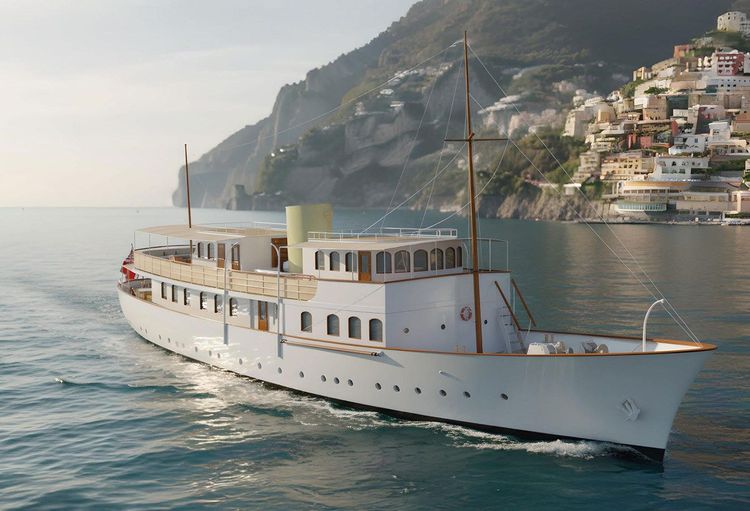

Learn more on the “THORNYCROFT”
To learn more on the “THORNYCROFT” or to get advice on how to buy or sell a yacht or get a great price for a yacht charter
please call +1 (954) 274-4435 USAOnly deal with professionals!