
 Licensed Yacht BrokersSales and service of yachts and ships
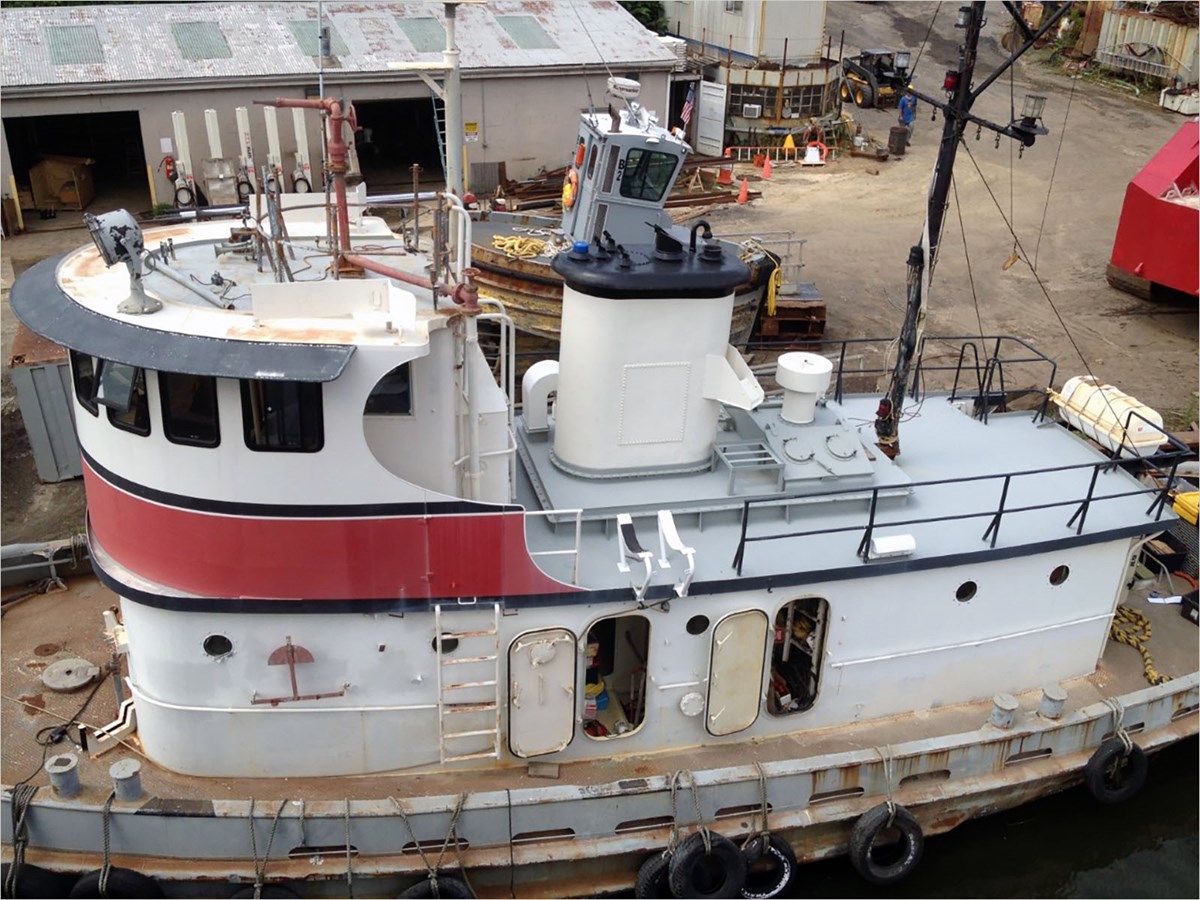
The Design #3004, US Army Leavenworth Iron ST TugbyTUGis a purpose-builtmotor yachtwith asteel hull, notable for robust construction and substantial tankage. Presented by Andrey Shestakov and Shestakov Yacht Sales.
Selecting a Design #3004, US Army Leavenworth Iron ST Tug
- Size and volume: 65 ft (19.81 m) LOA and 19 ft (5.94 m) beam.
- Draft: 24.606 ft (7.5 m) max draft.
- Construction: steel hullwith a steel deck.
- Propulsion: 1 x Lugger, Inboard, Diesel.
- Capacities: 5,844 gal fuel and 900 gal water.
- Amenities: 2 heads.
- Classification: a motor yacht.
Features of the Model
- Built by TUGwith asteel hulland steel deck material.
- Single Lugger inboard diesel for straightforward propulsion.
- Large onboard tankage: 5,844 gal fuel and 900 gal water.
- Practical layout fundamentals with 2 heads.
- Clear category placement as a motor yacht.
Technical Specifications
- LOA: 65 ft (19.81 m)
- Beam: 19 ft (5.94 m)
- Max Draft: 24.606 ft (7.5 m)
- Hull: steel hull
- Deck Material: Steel
- Engines: 1 x Lugger
- Engine Type: Inboard
- Fuel Type: Diesel
- Heads: 2
- Water Capacity: 900 gal
- Fuel Capacity: 5,844 gal
Pricing and Ordering
For current pricing, availability, and to arrange an inspection of the Design #3004, US Army Leavenworth Iron ST Tug, contact Andrey Shestakov at Shestakov Yacht Sales. Our team will provide complete guidance on acquisition, logistics, and documentation.
Questions and Answers
Q: What type of yacht is the Design #3004, US Army Leavenworth Iron ST Tug? A: It is amotor yachtwith asteel hullbuilt byTUG.
Q: What are the principal dimensions of the yacht? A: The LOAis 65 ft (19.81 m), thebeamis 19 ft (5.94 m), and themax draftis 24.606 ft (7.5 m).
Q: What powers this model? A: Propulsion is via 1 x Luggerinboarddieselengine (Manufacturer: Lugger; Type: Inboard; Fuel: Diesel).
Q: What are the tank capacities? A: Fuel capacityis 5,844 gal andwater capacityis 900 gal.
Q: What are the construction materials? A: The hullissteeland thedeckis steel, aligning it with a rugged build profile.
Owner Experience Review
Owners and captains familiar with Design #3004, US Army Leavenworth Iron ST TugfromTUGdescribe a purpose-built 65’ steel harbor tug with 600 HP roots, created for ship‑assist and towing rather than speed. On the water it behaves like the heavy displacement workboat it is: stable, predictable, and exceptionally controllable at slow speeds. Light, free‑running figures in the low double digits are realistic (about 13–14 knots light; practical cruise more often 10–12 knots depending on engine and prop), and acceleration feels deliberate compared with modern yachts. Performance on individual boats varies significantly where repowers and propeller tuning have been undertaken, with some examples noted around 800 bhp.
In civilian hands many hulls have been converted for live‑aboard or port‑work roles, and owners highlight that comfort depends entirely on the refit. Original crew spaces were utilitarian and some boats lacked an inside passage to the wheelhouse; successful conversions commonly add interior stairs, widen the wheelhouse, and reconfigure the layout—master stateroom and head forward, then a large galley and a saloon. After a thoughtful rebuild the volume is generous, but unrestored examples need substantial interior work to meet modern expectations.
Maintenance is a central ownership theme. Many boats carried White/Atlas‑Imperial 8‑cylinder diesels around 600 bhp with shrinking factory support, so re‑engining and systems upgrades are common and can be costly; performance and responsiveness vary widely with repower choices and propeller tuning. Military technical manuals and NSN listings help with identification of certain parts, yet much of the work remains heavy, time‑consuming shipyard effort—repower, shaft and packing, fuel systems, blasting/painting, and corrosion control. Broker notes even show projects where the engine room was cleaned and painted with new machinery set in place but not yet connected, which is a fair snapshot of the scope. Properly completed, examples should be capable of USCG approval for commercial service.
Pros and Cons
- Heavy steel hull and stable ride suited to ship‑assist and towing duties.
- Excellent low‑speed maneuverability and control for close‑quarters work.
- Strong platform for live‑aboard refits, with potential for USCG‑approved commercial service after completion.
- Modest top speed in the low double digits and sluggish acceleration versus modern yachts.
- Many boats require costly re‑engining due to aging original 600 bhp diesels.
- Unrestored examples demand extensive interior/systems work and ongoing corrosion control.
Comparison with Other Models
| Model | LOA | Beam | Draft | Speed (Cruising/Max) | Gross Tonnage |
|---|---|---|---|---|---|
| Design #3004, US Army Leavenworth Iron ST Tug | 65' 0" (19.81 m) | 19' 0" (5.94 m) | 24' 7" (7.50 m) | - | - |


Learn more on the “TUG - Design #3004, US Army Leavenworth Iron ST Tug”
To learn more on the “TUG - Design #3004, US Army Leavenworth Iron ST Tug” or to get advice on how to buy or sell a yacht or get a great price for a yacht charter
please call +1 (954) 274-4435 USAOnly deal with professionals!