
 Licensed Yacht BrokersSales and service of yachts and ships
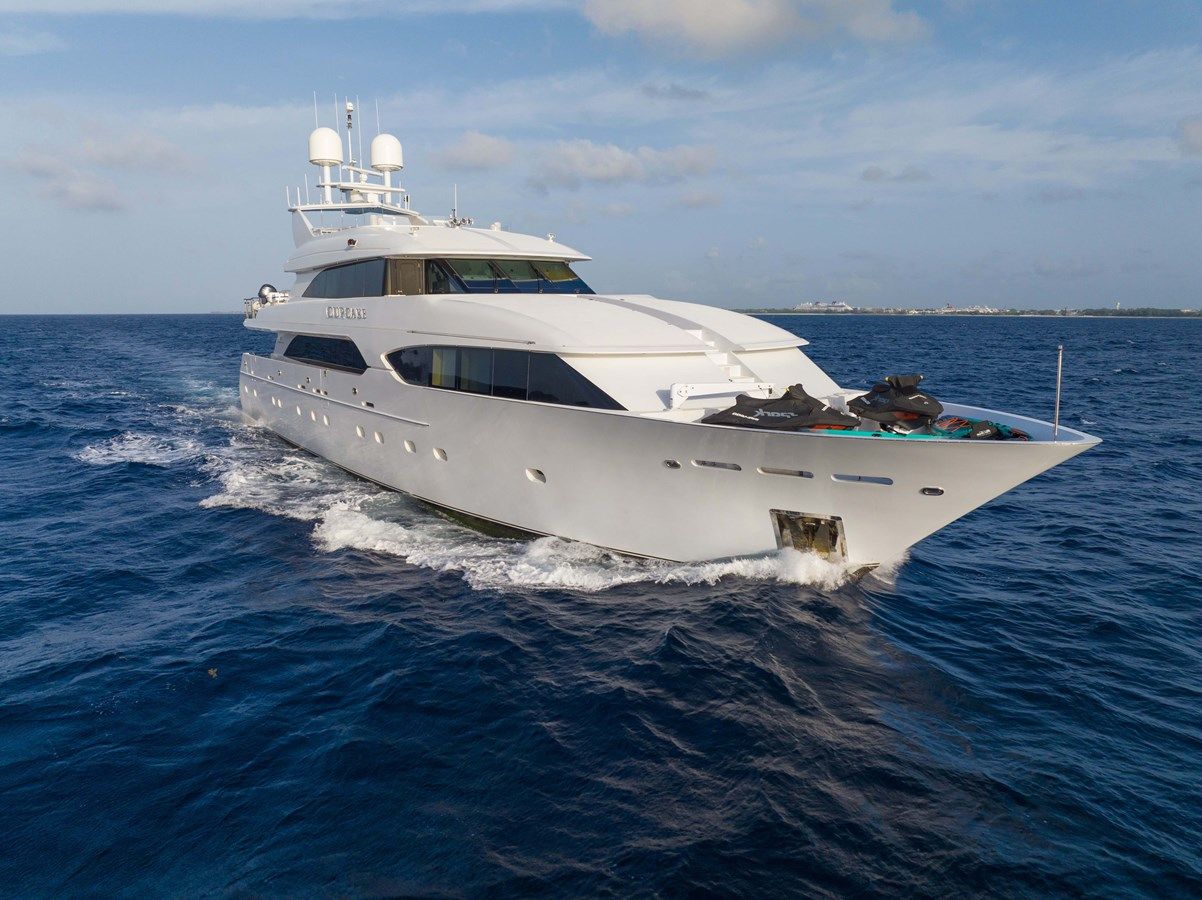
WESTSHIP - For Sale
WESTSHIP (Westship World Yachts)
[English]
Company History
Westship, often referred to as Westship World Yachts, was an American builder of luxury composite motor yachts active primarily from the mid-1990s through the mid-2000s. The brand emerged during a dynamic period for the U.S. yacht industry, when advances in fiberglass-reinforced plastic (FRP) construction enabled builders to deliver larger, faster, and more customizable yachts with shorter lead times than traditional steel and aluminum yards. Westship concentrated on semi-custom series in the 100–145 ft range, with popular raised-pilothouse models around 103–108 ft and tri-deck yachts around 130–132 ft and above. Clients were able to tailor interior layouts, finishes, and systems while leveraging proven hull platforms.
At its height, Westship delivered multiple sisterships whose enduring popularity on the brokerage and charter markets has helped maintain the marque’s reputation. The yard’s focus on practical American engineering, generous volumes for their length, and family-friendly layouts made Westship a compelling alternative to contemporaries in the U.S. and Europe. By the late 2000s, new-build activity had wound down, and the company is widely regarded as inactive today. Nevertheless, the fleet continues to operate worldwide, supported by the robust refit ecosystem across Florida and the broader U.S. East Coast.
Country of Origin
United States of America.
Manufacturing Locations
Westship’s primary production was based in Florida, with the core build activity centered on the Tampa area on the U.S. Gulf Coast. Florida’s extensive maritime supply chain, skilled composite labor pool, and proximity to major refit hubs like Fort Lauderdale supported the brand’s semi-custom business model. Fit-out and specialist subcontracting were commonly handled within the state, which remains a key service and refit base for existing Westship yachts.
Ownership and Management
Westship operated as a privately held American company. Specific founder details, principal ownership names, and full management rosters were not broadly publicized. The brand is generally considered dormant or inactive in terms of new construction, with continuing support for existing vessels handled through independent service yards and the aftermarket parts and refit network in Florida and beyond.
Reputation and Quality
Westship earned a reputation for solid American craftsmanship in composite yacht building. The yard’s FRP builds, typically with cored laminates for weight savings and stiffness, were known for practical engineering, good access to systems, and layouts optimized for owner-operator comfort or small professional crews. Many Westship yachts offered shallow to moderate draft, suiting cruising grounds like Florida and the Bahamas. Owners and captains often praise their reliable running characteristics, sensible machinery spaces, and the ease of finding service expertise domestically.
While not associated with headline-grabbing design awards, the marque is respected for value retention and longevity. A significant number of Westship yachts have undergone refits that modernize interiors, update navigation suites, and renew mechanical systems—testament to a platform that supports long service life. Options to meet relevant class and regulatory standards were offered to suit owner preferences and charter intentions. Taken together, the brand’s legacy is that of a capable U.S. composite builder whose yachts continue to be appreciated for their straightforward, seaworthy design and enduring practicality.
[Español]
Company History
Westship (Westship World Yachts) fue un astillero estadounidense de yates de lujo en material compuesto, activo principalmente desde mediados de los años 1990 hasta mediados de los 2000. Surgió en una etapa de expansión del sector náutico en Estados Unidos, cuando la construcción en plástico reforzado con fibra de vidrio (FRP) permitió crear yates más grandes, rápidos y personalizables con plazos de entrega más cortos. Westship se especializó en series semipersonalizadas entre 100 y 145 pies, destacando modelos raised-pilothouse en torno a 103–108 pies y tri-deck alrededor de 130–132 pies y superiores. Los clientes podían adaptar interiores y sistemas sobre cascos ya probados.
Con el tiempo, la marca construyó varios sisterships que hoy mantienen su atractivo en el mercado de corretaje y charter. El enfoque en ingeniería práctica, buenos volúmenes y distribuciones familiares convirtió a Westship en una alternativa sólida a otros constructores de EE. UU. y Europa. Hacia finales de los 2000, la actividad de nuevos proyectos disminuyó y la empresa se considera inactiva en la actualidad. Aun así, su flota permanece operativa a nivel mundial gracias al fuerte ecosistema de mantenimiento y refit en Florida.
Country of Origin
Estados Unidos de América.
Manufacturing Locations
La producción principal se realizó en Florida, con el núcleo de construcción en el área de Tampa. La cadena de suministro marítima local y la proximidad a centros de refit como Fort Lauderdale respaldaron el modelo semipersonalizado de la marca.
Ownership and Management
La empresa fue privada; no se difundieron ampliamente nombres de fundadores o directivos. La marca se considera actualmente inactiva en construcción nueva.
Reputation and Quality
Westship se ganó la reputación de ofrecer construcción compuesta fiable, ingeniería sensata y calados adecuados para Florida y las Bahamas. Muchos yates han sido modernizados con refits, confirmando la durabilidad de su plataforma. Aunque no se asocia con premios destacados, el mercado aprecia su valor, navegabilidad y facilidad de mantenimiento.
[Français]
Company History
Westship (Westship World Yachts) était un constructeur américain de yachts de luxe en composite, principalement actif du milieu des années 1990 au milieu des années 2000. Profitant des progrès du FRP, la marque proposait des séries semi-custom de 100 à 145 pieds, notamment des modèles raised-pilothouse de 103–108 pieds et des tri-decks autour de 130–132 pieds. Les propriétaires pouvaient personnaliser aménagements et finitions sur des plateformes éprouvées.
Avec plusieurs sisterships livrés, la flotte Westship conserve une présence marquée sur les marchés de courtage et de charter. Vers la fin des années 2000, les nouvelles constructions ont cessé et la marque est aujourd’hui considérée comme inactive, tandis que ses yachts demeurent soutenus par le réseau de maintenance floridien.
Country of Origin
États-Unis d’Amérique.
Manufacturing Locations
Production principalement en Floride, au cœur de la région de Tampa, avec sous-traitance et finitions réalisées dans l’État, bénéficiant de la proximité de Fort Lauderdale.
Ownership and Management
Société privée; les informations détaillées sur la fondation et la direction n’ont pas été largement publiées. Marque réputée inactive à ce jour.
Reputation and Quality
Westship jouit d’une réputation de construction composite robuste, d’une ingénierie pragmatique et de volumes généreux. Les unités se prêtent bien aux refits, prolongeant leur durée de vie. Sans être particulièrement primée, la marque est estimée pour la fiabilité, la facilité d’entretien et la valeur sur le marché.
[Deutsch]
Company History
Westship (Westship World Yachts) war ein US-amerikanischer Hersteller von Luxus-Motoryachten aus Verbundwerkstoffen und vor allem von Mitte der 1990er bis Mitte der 2000er Jahre aktiv. Das Unternehmen konzentrierte sich auf semi-custom Serien zwischen 100 und 145 Fuß, darunter beliebte Raised-Pilothouse-Modelle (103–108 Fuß) und Tri-Deck-Yachten (ca. 130–132 Fuß). Kunden konnten Layouts und Ausstattungen auf der Basis bewährter Rumpfplattformen anpassen.
Gegen Ende der 2000er Jahre stellte Westship den Neubau ein und gilt heute als inaktiv. Zahlreiche Yachten sind jedoch weiterhin weltweit im Einsatz und werden regelmäßig in Florida überholt und modernisiert.
Country of Origin
Vereinigte Staaten von Amerika.
Manufacturing Locations
Hauptfertigung in Florida, Schwerpunkt im Raum Tampa; das dichte Netzwerk aus Zulieferern und Refit-Betrieben in Fort Lauderdale unterstützte die Projekte.
Ownership and Management
Privat geführtes Unternehmen; detaillierte Informationen zu Gründern und Management wurden nicht breit veröffentlicht. Neubauaktivitäten gelten als eingestellt.
Reputation and Quality
Westship ist für solide FRP-Bauweise, praxisnahe Technik und sinnvolle Grundrisse bekannt. Der Werterhalt gilt als gut; viele Einheiten wurden refittet und bleiben gefragt, insbesondere wegen einfacher Wartung und alltagstauglicher Systeme.
[Italiano]
Company History
Westship (Westship World Yachts) è stato un cantiere statunitense attivo soprattutto tra la metà degli anni ’90 e la metà degli anni 2000, specializzato in yacht a motore in composito. Il portafoglio includeva serie semi-custom da 100 a 145 piedi, con modelli raised-pilothouse di circa 103–108 piedi e tri-deck intorno a 130–132 piedi. Gli armatori potevano personalizzare interni, impianti e finiture partendo da scafi collaudati.
Le consegne di più sistership hanno consolidato la presenza del marchio nel mercato del charter e dell’usato. Con la fine degli anni 2000, il cantiere ha sostanzialmente cessato le nuove costruzioni, mentre la flotta continua a beneficiare dell’ampia rete di refit in Florida.
Country of Origin
Stati Uniti d’America.
Manufacturing Locations
Produzione principale in Florida, nell’area di Tampa, con ampia filiera locale e vicinanza ai centri di refit di Fort Lauderdale.
Ownership and Management
Società privata; non sono pubblicamente disponibili dettagli completi su fondatori e management. Il marchio è generalmente considerato non attivo in termini di nuovi progetti.
Reputation and Quality
Westship è apprezzato per costruzione in FRP robusta, impiantistica razionale e peschiere/immersioni adatte a crociere in Florida e Bahamas. Buona reputazione per affidabilità e facilità di manutenzione; numerose unità hanno ricevuto refit che ne prolungano il ciclo di vita.
[Русский]
Company History
Westship (Westship World Yachts) — американский производитель люксовых мотояхт из композитов, активно работавший примерно с середины 1990‑х до середины 2000‑х годов. Верфь предлагала полусерийные проекты длиной 100–145 футов, включая популярные raised‑pilothouse около 103–108 футов и трипалубные яхты порядка 130–132 футов. Владельцы могли настраивать планировки, отделку и оборудование на базе проверенных корпусов.
К концу 2000‑х новых закладок практически не осталось, и бренд считают неактивным. Тем не менее флот Westship широко эксплуатируется и проходит модернизации на сильном сервисном рынке Флориды.
Country of Origin
Соединённые Штаты Америки.
Manufacturing Locations
Основное производство находилось во Флориде, в районе Тампы, с привлечением локальной сети субподрядчиков и близостью к центрам рефита в Форт‑Лодердейле.
Ownership and Management
Частная компания; сведения о создателях и топ‑менеджменте публично ограничены. Новое строительство фактически прекращено.
Reputation and Quality
Westship известен надёжной композитной конструкцией, продуманной инженерией и удобными для эксплуатации планировками. Яхты марки часто модернизируют, что подтверждает ресурс платформы. На рынке ценятся за обслуживаемость, мореходность и соотношение цена/качество.
[中文(简体)]
Company History
Westship(Westship World Yachts)是美国的豪华复合材料机动游艇建造商,主要活跃于20世纪90年代中后期至21世纪初。其核心产品是100–145英尺的半定制系列,包括约103–108英尺的升高驾驶台(raised‑pilothouse)型号以及约130–132英尺的三层甲板(tri‑deck)游艇。客户可在成熟船型基础上定制内部布局与系统。
到2000年代后期,新造项目基本停滞,该品牌被普遍视为处于非活跃状态。不过,许多Westship游艇仍在全球运营,并在佛罗里达完善的维修与改造网络中获得持续支持。
Country of Origin
美利坚合众国。
Manufacturing Locations
主要制造基地位于佛罗里达州坦帕地区,依托当地成熟的海事供应链与靠近劳德代尔堡等翻修中心的区位优势开展建造与装配。
Ownership and Management
为私人控股企业;创始人与管理层的详细公开信息有限。目前基本不开展新造业务,既有船只主要由独立服务船厂与零部件供应网络提供支持。
Reputation and Quality
Westship以扎实的FRP复合结构、务实的工程设计和适合家庭巡航的空间布局而闻名。其船型通常吃水较浅,适合佛罗里达/巴哈马水域。尽管并非以大奖著称,但在经纪与租赁市场具备良好口碑与保值性,且易于维护与升级。
[العربية]
Company History
وِستشِب (Westship World Yachts) هي علامة أمريكية لبناء يخوت بمحركات من المواد المركّبة، نشطت أساساً بين منتصف التسعينيات ومنتصف العقد الأول من الألفية. ركزت على برامج شبه مخصصة بطول 100–145 قدماً، بما في ذلك نماذج raised‑pilothouse حوالي 103–108 أقدام ويخوت ثلاثية الأسطح بحدود 130–132 قدماً. يتيح النهج شبه المخصص للمالكين تخصيص التصميمات الداخلية والأنظمة على منصات بدن مجرّبة.
بحلول أواخر العقد الأول من الألفية، توقفت تقريباً مشاريع البناء الجديدة ويُنظر إلى العلامة اليوم على أنها غير نشطة، مع استمرار أسطولها في العمل عالمياً مدعوماً بشبكات الصيانة والتحديث في فلوريدا.
Country of Origin
الولايات المتحدة الأمريكية.
Manufacturing Locations
تمركزت عمليات البناء في فلوريدا، لا سيما في منطقة تامبا، مع الاستفادة من سلاسل التوريد البحرية المحلية وقربها من مراكز الإصلاح والتجديد في فورت لودرديل.
Ownership and Management
شركة خاصة؛ لم يتم نشر تفاصيل موسّعة وموثوقة عن المؤسسين والإدارة بشكل علني. لا توجد حالياً عمليات بناء جديدة مع استمرار دعم ما بعد البيع عبر أحواض مستقلة.
Reputation and Quality
تتمتع Westship بسمعة جودة بنية مركّبة متينة، وهندسة عملية، ومساحات داخلية مدروسة تسهّل التشغيل والصيانة. على الرغم من عدم ارتباطها بجوائز كبرى، فإن يخوتها مطلوبة في سوق البيع والتأجير لما تقدمه من قيمة طويلة الأمد وقابلية عالية للصيانة والتحديث.
Main Competitors
Westship, also known in the market as Westship World Yachts, competed in the semi-custom luxury motor yacht segment, primarily in the 100–145 ft (approximately 30–44 m) range, with composite (FRP) construction and American-centric systems and engineering. Within that arena, the brand’s closest competitors historically—and the builders a prospective Westship buyer or owner would most likely cross-shop—have included the following:
-
Westport Yachts (USA): Arguably the most direct and enduring competitor in North American composite yacht building. Westport’s long-running series, such as the 112, 130, and later larger models, matched Westship on material choice (FRP), semi-custom approach, and owner expectations for reliability, volume, and speed. Westport’s production-line discipline, proven platforms, and strong after-sales ecosystem made it the yard most frequently considered alongside Westship for U.S.-based buyers seeking composite yachts of similar size.
-
Hatteras Yachts (USA): Known for robust construction and seakeeping, Hatteras produced models in the 90–100+ ft range that overlapped with the lower end of Westship’s portfolio. Though Hatteras is often associated with sportfishing and enclosed-bridge motoryachts, its larger motor yachts were direct alternatives for owners who valued American build quality, serviceability, and strong dealer support.
-
Lazzara Yachts (USA): A Tampa-based brand during the same era, Lazzara offered composite semi-custom motor yachts from roughly 76–116 ft. While some models were smaller than Westship’s core tri-deck offerings, Lazzara’s larger yachts (notably into the 100+ ft class) competed for the same U.S. clientele, emphasizing innovative layouts, family-friendly living, and shallow drafts suited to Florida and the Bahamas.
-
Hargrave Custom Yachts (USA/Taiwan supply chain): Hargrave’s business model combined U.S. naval architecture and interior design with construction at established Asian composite yards. Sizes commonly spanned 90–120+ ft, squarely in Westship’s orbit. Buyers cross-shopped Hargrave for its high degree of customization and value, paired with U.S.-centric engineering sensibilities.
-
Cheoy Lee (Hong Kong/China): Cheoy Lee’s production—spanning FRP and sometimes aluminum/steel—directly overlaps the 95–150 ft segment. The yard’s composite offerings (e.g., Bravo and Global series over the years) placed it on many of the same shortlists as Westship, particularly for owners comparing semi-custom Asian builds with U.S. builds at similar lengths.
-
Horizon Yachts (Taiwan): Horizon’s broad composite portfolio, including 90–130+ ft series, offered an alternative to American semi-custom brands. Known for quality laminates, flexible interior programs, and steadily modernizing design language, Horizon regularly competes for the same client profile seeking semi-custom composite yachts.
-
Ocean Alexander (Taiwan/USA): With strong presence in North America and an expanding lineup in the 100–120+ ft range, Ocean Alexander is a common comparator for buyers evaluating semi-custom composite yachts with contemporary styling, reliable mechanical packages, and robust dealer/service coverage in the U.S.
-
Broward Marine (USA; aluminum): While Broward typically built in aluminum rather than FRP, many U.S.-based clients considered Broward and Westship in parallel, particularly around 100–130 ft. Buyers weighing material advantages (aluminum vs composite) often evaluated these brands side-by-side, focusing on interior volume, speed, and serviceability.
-
Burger Boat Company (USA; aluminum/steel): Burger’s custom and semi-custom aluminum yachts provide an alternative to composite builds in the 100+ ft class. For owners prioritizing classic American craftsmanship and full-custom metalwork, Burger presented another path, competing more on design freedom and pedigree than on production cadence.
-
Christensen Shipyards (USA; composite): Christensen traditionally targeted the upper end of the composite market (often 150+ ft), yet it has overlapped at times with Westship’s larger tri-deck ambitions. Clients wanting large FRP yachts from U.S. builders frequently included Christensen in their research, especially when considering future upsize potential from a 120–130 ft platform.
-
Trinity Yachts (USA; aluminum): Trinity focused on larger custom aluminum yachts (often 150–200 ft), but in the premium U.S. market, Trinity’s reputation and product philosophy often placed it on the radar of owners evaluating American shipyards for high-speed, shallow-draft cruising in the Gulf, Florida, and the Bahamas.
-
Intermarine (Savannah, USA; now defunct): During Westship’s active years, Intermarine’s composite yachts (including popular 118–145 ft models) were frequently cross-shopped. Intermarine’s closure left a residual fleet that, like Westship’s, remains active on the brokerage market, making it a noteworthy historical comparator.
-
European alternatives: For many Westship prospects, European brands formed the wider competitive set. Benetti (Italy) in the 120–140 ft composite/GRP “Classic” ranges, Ferretti Group’s Custom Line (Italy) in the 100–120 ft bracket, and Sanlorenzo (Italy) in the same span often appeared in shortlists. Owners weighing U.S. build culture and systems familiarity against European design and styling often compared Westship with Benetti’s Classic series or Custom Line’s larger models.
In practical purchase journeys—especially on the brokerage market—Westship vessels are frequently evaluated against Westport’s 112 and 130, Hargrave’s 100–120 ft customs, Cheoy Lee and Horizon offerings in the 95–130 ft bracket, and Ocean Alexander’s 100+ ft models. Where an owner prioritizes U.S.-centric systems, straightforward maintenance, a semi-custom heritage, and shallow-draft cruising, the closest day-to-day competitors tend to be Westport, Hargrave, and Lazzara historically, with Horizon, Ocean Alexander, and Cheoy Lee as strong international composite alternatives.
Current Production Status
Westship is widely regarded as inactive in terms of new-build yacht production. The brand achieved its prominence in the late 1990s and early-to-mid 2000s, delivering a cohort of FRP motor yachts in the 100–145 ft class with semi-custom interiors and practical American engineering. Over subsequent years, visible new-build activity diminished and then effectively ceased. Today, the Westship name predominantly appears in the context of:
- Brokerage listings of existing Westship yachts (notably 103–108 ft raised-pilothouse models and 120–130+ ft tri-deck models).
- Refit, maintenance, and modernization projects undertaken at independent service yards, particularly in Florida and along the U.S. East Coast.
- Owner forums, charter listings, and captain communities discussing performance, upgrades, and systems on existing vessels.
There have been no widely reported, credible industry announcements or trade press releases indicating a restart of series production under the Westship brand in recent years. Owners and buyers should therefore treat Westship as a legacy U.S. composite builder whose fleet remains serviceable and active worldwide, but for which new construction is not currently on the market.
This status has practical implications:
-
Warranty and OEM support: With no active production line or publicized in-house support structure, after-sales needs are typically handled by third-party specialists, independent yards, and component OEMs (engines, generators, HVAC, navigation, etc.). The U.S. marine supply chain is well-equipped for these boats, which is one reason Westship yachts remain viable on the brokerage market.
-
Refit and modernization potential: A significant number of Westship yachts have been refitted to current standards—think updated nav/comm suites, zero-speed stabilization retrofits where applicable, mechanical renewals, and contemporary interior refreshes. Systems layout and machinery access on these platforms generally lend themselves to upgrades, which has prolonged their appeal.
-
Insurance, class, and compliance: Many Westship yachts were designed and built to meet relevant class or regulatory frameworks as specified by original owners. Buyers considering charter or international cruising often commission surveys and compliance checks to ensure the vessel aligns with current requirements. This is standard practice for legacy builds and is well-supported by U.S. surveyors and class societies.
The broader context behind Westship’s dormancy mirrors industry trends observed in the late-2000s downturn and the consolidation of North American yacht building. Several U.S. yards reduced or halted new builds during that period, while a few—most notably Westport—maintained momentum through standardized platforms and steady demand. Against that backdrop, Westship’s identity today is best understood through its existing fleet rather than as a currently producing yard.
Production Volumes
[Section intentionally omitted due to lack of reliably published, comprehensive production figures specific to the brand. Although multiple sisterships exist and the fleet is well represented on the brokerage market, precise total hull counts by model and year are not publicly standardized.]
Latest News
Recent years have not produced authoritative public announcements of renewed new-build operations under the Westship name. The brand is commonly referenced by:
-
Brokerage market activity: Listings and sales of 1990s–2000s Westship yachts continue to surface regularly, reflecting steady secondary-market demand for U.S.-built composite yachts with practical layouts and shallow to moderate draft. Brokers frequently highlight refit history, updated equipment, and cruising records, which are key value drivers for legacy yachts.
-
Refit headlines and yard updates: Trade and yachting media periodically mention Westship units undergoing substantial refits—interior redesigns, systems overhauls, stabilization upgrades, paint and exterior refreshes, and machinery renewals. These stories typically center on individual vessels rather than corporate news, underscoring that the brand’s current presence is fleet-oriented.
-
Charter market visibility: Certain Westship tri-deck and raised-pilothouse models remain visible on the charter circuit. While charter availability fluctuates and is vessel-specific, their continued presence confirms that many hulls are actively operated and professionally maintained. This ongoing operational profile contributes to the brand’s lasting reputation for functional engineering and livability.
-
Clarifications in the marketplace: Because the name “Westship” is phonetically similar to “Westport,” industry participants sometimes emphasize the distinction between the two. Westport remains an active U.S. builder with contemporary series and an industrialized production model, whereas Westship is referenced primarily as a legacy marque with a brokerage-and-refit footprint. Maintaining this distinction helps buyers and newcomers navigate model histories and technical expectations accurately.
In sum, the latest “news” surrounding Westship is not corporate in nature but market-driven: continued trading of existing hulls, ongoing refits that keep vessels current, and stable owner interest in American-built composite platforms of this vintage. For prospective buyers, the practical takeaway is that Westship yachts can offer strong value when survey results are favorable and refit scope aligns with modern standards. For current owners, a deep bench of independent yards, technicians, and OEM suppliers in Florida and along the U.S. East Coast supports long-term operation. There is no credible indication at present of a relaunch of the brand’s new-build operations, and market participants treat Westship accordingly—as a respected name from a particularly dynamic era in U.S. composite yacht building, with a fleet that continues to cruise under the stewardship of knowledgeable captains, crews, and refit teams.
Frequently Asked Questions
Question: What kind of yachts did Westship build? Answer: Westship specialized in semi-custom composite motor yachts, primarily in the 100–145 ft range, with the most visible delivered yachts clustered around two families: raised-pilothouse (RPH) models near 103–108 ft and tri-deck motor yachts around 130–132 ft. The boats emphasized practical American engineering, generous interior volume for their length, and shallow-to-moderate drafts suitable for Florida–Bahamas cruising.
Question: Is Westship still building new yachts? Answer: Westship is widely regarded as inactive with respect to new-build production. The brand’s most active years were in the mid-1990s through the mid-2000s. Today, the name is encountered primarily in relation to existing yachts on the brokerage and charter markets and in refit projects carried out by independent service yards.
Question: What construction materials did Westship use? Answer: Westship built in fiberglass-reinforced plastic (FRP), typically using cored composite laminates to achieve stiffness with weight savings. This approach allowed the yard to produce relatively light yet robust hulls and superstructures that supported respectable speeds and efficient cruising compared to similarly sized metal yachts.
Question: What are typical cruising and top speeds for Westship yachts? Answer: Performance varies by model and engine package, but many raised-pilothouse yachts in the 103–108 ft bracket commonly cruise in the mid-teens to high-teens knots, with top speeds often in the high teens or low 20-knot range. The larger 130–132 ft tri-deck yachts generally cruise in the low to mid-teens and can approach or slightly exceed 18–20 knots at top speed, depending on power and load.
Question: Which engines are commonly found on Westship yachts? Answer: Engine packages vary by hull, but the fleet commonly features twin high-horsepower diesels such as MTU 12V/16V 2000 series or Caterpillar 3412/3512 series. These engines are well-known in the sector, with extensive parts and service networks available through independent providers.
Question: What is the typical fuel capacity and range? Answer: Capacities and range are hull-specific, but as a general orientation, Westship yachts in the 100–130+ ft class often carry substantial fuel volumes appropriate to their size, enabling coastal and near-oceanic passages. At economical displacement speeds (around 10–12 knots), ranges commonly extend into four-figure nautical miles. Prospective operators should consult original specifications and current stability and fuel-consumption data for the specific hull, as refits can materially change range.
Question: How many cabins do Westship yachts usually have? Answer: Layouts are semi-custom and vary by build, but a typical 103–108 ft raised-pilothouse yacht might offer four or five guest cabins (often including a full-beam master), plus crew accommodations for four to six. In the 130–132 ft tri-deck class, five or six guest cabins are common, with crew spaces sized for professional operation—often six to eight crew depending on the interior plan and service requirements.
Question: Are Westship yachts good for shallow-water cruising? Answer: Many Westship yachts were configured with shallow-to-moderate draft, making them attractive for Florida, the Keys, and the Bahamas. Actual draft depends on size, load, stabilizer configuration, and propulsion package, but the brand’s composite construction and American cruising focus often resulted in drafts that facilitate island and coastal itineraries.
Question: How do Westship yachts handle stabilization? Answer: Stabilization depends on the specific hull and refit history. Many were delivered with fin stabilizers suitable for underway damping. A number of yachts have been refitted with modern systems, including zero-speed stabilization, to improve comfort at anchor. Survey and sea-trial evidence should guide expectations for a particular vessel.
Question: What is the reputation of Westship in terms of build quality and maintenance? Answer: Westship earned a reputation for robust composite construction, straightforward systems access, and pragmatic engineering. Owners and captains often note that mechanical spaces are sensible to work in and that the U.S. supply chain supports ongoing maintenance well. Many yachts have undergone refits that brought navigation suites, interiors, and systems up to modern standards.
Question: Are Westship yachts suitable for charter? Answer: Many Westship yachts have served or currently serve in charter, especially in the tri-deck sizes where guest capacity, deck separation, and crew accommodations align with charter operations. Compliance with regional regulations, safety equipment, and class/flag requirements must be verified for each hull. The fleet’s semi-custom nature means layouts differ; suitability should be evaluated case by case.
Question: What is the difference between Westship raised-pilothouse and tri-deck models? Answer: Raised-pilothouse models around 103–108 ft typically combine an open flybridge with a raised helm and comparatively lower overall profile, delivering efficient handling and family-friendly living. Tri-deck models at 130–132 ft introduce a full upper deck, offering increased separation between guest and crew areas, expanded interior volume, formal and casual dining options across decks, and larger galleys and utility spaces for professional service.
Question: What time period were most Westship yachts built? Answer: The brand’s most active period was the mid-1990s through the mid-2000s. Many yachts on the market today date from this era, with a substantial portion having been updated via refits.
Question: What should a buyer focus on during a pre-purchase survey of a Westship? Answer: Key focuses include: the condition of the composite structure (hull, superstructure, decks), moisture readings in cored areas, the integrity of hardpoints and penetrations, machinery hours and overhaul history, generators and electrical systems, HVAC and hotel loads, stabilization systems (including seals, bearings, and control electronics), steering and thrusters, navigation electronics, and the status of class and flag compliance where relevant. Interiors should be evaluated both for cosmetic condition and for systems routing behind joinerwork to ensure service access.
Question: How adaptable are Westship yachts to modern upgrades? Answer: Quite adaptable. The engineering style typically leaves sensible access to major systems, making it feasible to retrofit modern navigation suites, entertainment systems, LED lighting, lithium or advanced energy-storage solutions (subject to naval architecture approval), and newer stabilization or joystick-assist packages. Structural considerations and weight distribution must be evaluated for major upgrades.
Question: What crew complement is typical? Answer: For a 103–108 ft raised-pilothouse yacht, crews of four to six are typical, depending on the service level desired. For a 130–132 ft tri-deck, six to eight crew is common, sometimes more depending on charter profile, guest capacity, and service expectations.
Question: How do Westship yachts compare with other U.S.-built composite yachts of similar size? Answer: They compare favorably in terms of practical engineering, generous interior volume, and serviceability. While each yard has its own design language and production methods, Westship yachts are broadly appreciated for straightforward operation and for being compatible with the deep bench of U.S. marine technicians and suppliers.
Question: What are common refit items on Westship yachts of this vintage? Answer: Typical refit scopes include: complete paint jobs; teak deck renewal; AV/IT modernization; navigation electronics upgrades; stabilization refits; engine and generator overhauls; HVAC system renewal; gray/black water system updates; lighting updates; galley equipment modernization; and soft-goods and interior redesigns. Some projects add transom extensions or platform modifications—these must be engineered carefully to maintain trim and performance.
Question: Are there known design themes or layouts that repeat across the fleet? Answer: Yes. Many raised-pilothouse hulls repeat familiar arrangements: full-beam master, VIP forward or below, two to three guest cabins amidships, and crew forward or aft depending on the model. Tri-decks often carry a main-deck owner’s suite or a full-beam master below with multiple guest cabins and more formal guest/crew separation across three levels, including sky lounge configurations.
Question: How is noise and vibration control on these yachts? Answer: Noise and vibration control is largely a product of machinery isolation, alignment, propeller condition, exhaust treatment, and the quality of soft-mounting throughout the boat. Many owners have improved acoustic comfort through refits that include upgraded insulation, exhaust silencers, resilient mounts, and precision running gear work. Survey findings will be specific to each hull.
Question: Are spare parts and service readily available? Answer: For major components—engines, generators, controls, stabilization, electrical switchgear—parts and service are typically accessible through established OEM networks and independent yards. For builder-specific trim or custom joinery, bespoke craftsmanship may be required, which is common for semi-custom yachts of this era.
Question: What kind of tenders and toys can these yachts carry? Answer: On raised-pilothouse models, the flybridge usually carries a tender and sometimes PWCs via a davit. Tri-deck models often support larger tenders on the upper deck or foredeck (depending on layout), with garages uncommon but not unheard of. Exact capacity depends on structural allowances and deck arrangements.
Question: Are Westship yachts classed or built to particular standards? Answer: Some were built to meet class or flag requirements as specified by original owners, while others were constructed to high yacht standards without formal class. Documentation for each hull should be reviewed to confirm compliance history, especially if charter or commercial registration is contemplated.
Question: What distinguishes Westship’s engineering approach? Answer: The yachts commonly reflect an American systems philosophy: clear labeling, logical routing, generous service access, and widely supported OEM components. This approach simplifies maintenance and supports longevity through successive ownerships.
Question: How do Westship yachts perform in moderate seas? Answer: Reports from captains and owners typically describe predictable handling and comfortable motion for their class, particularly with properly tuned stabilization and balanced loading. As with all planing and semi-planing composite yachts in this size range, speed, trim, and sea state drive comfort; careful throttle management and stabilization settings optimize ride quality.
Question: What about resale and long-term value? Answer: Values depend on condition, refit recency, machinery hours, and documented maintenance history. Well-cared-for examples with modernized systems and fresh cosmetics tend to hold interest on the secondary market, reflecting the underlying strength of the platforms and the ongoing support ecosystem.
Question: Do Westship yachts typically feature modern electronics? Answer: Original equipment will now be considered legacy on many hulls, but numerous yachts have been refit with contemporary radar, chartplotter/MFD suites, AIS, advanced autopilots, and integrated monitoring systems. The semi-custom nature makes it straightforward to tailor electronics to owner preferences.
Question: What are common interior design styles on Westship yachts? Answer: Interiors vary widely due to semi-custom delivery. Many early examples favored warm American cherry or mahogany joinery with classic styling; numerous refits have introduced light, contemporary palettes, new stonework, and open-plan concepts while retaining underlying service access and structural integrity.
Question: Are there any recurring maintenance considerations? Answer: As with many composite yachts of this era, ongoing vigilance around deck fittings and penetrations is advisable to manage moisture ingress in cored structures. Regular inspection of stabilizer systems, shaft alignment, rudder bearings, and through-hulls is standard. Electrical distribution and HVAC systems benefit from modernization as components age.
Question: Can these yachts transit longer passages safely? Answer: With appropriate preparation, competent crew, and weather planning, many owners undertake substantial coastal and near-oceanic passages. Fuel management, redundancy, and proactive maintenance underpin reliability for longer runs. For transoceanic ambitions, professional assessments of range, spares inventory, and weather windows are essential.
Question: How does the semi-custom heritage impact operations today? Answer: It yields benefits and responsibilities. Owners enjoy layouts tailored for livability and service, but documentation and system specifics vary by hull. Good record-keeping and detailed surveys ensure that future upgrades integrate smoothly with the existing architecture.
Available Models
Note: The brand is best understood by its historical model families rather than as an active catalog. The ranges and characteristics below reflect patterns observed across delivered yachts, with recognition that each hull can diverge due to semi-custom specifications and subsequent refits.
-
103–108 ft Raised-Pilothouse Series Key characteristics:
- Length overall: Typically falls between about 103 and 108 ft, with variations attributable to platform extensions, pulpit design, or unique build choices.
- Layout: Frequently four to five guest cabins, often including a full-beam master. Crew quarters commonly accommodate four to six.
- Propulsion: Twin high-output diesels such as MTU 12V/16V 2000 series or Caterpillar 3412 variants, configured for planing or semi-planing performance.
- Speed profile: Economical cruise in the low to mid-teens; fast cruise approaching the high teens; top speed often in the high teens to low 20-knot range depending on power and load.
- Draft: Usually shallow to moderate for the size class, supporting Florida–Bahamas itineraries.
- Design highlights: Raised pilothouse for efficient helm visibility, open flybridge with tender stowage via davit, family-friendly main-deck salon and galley arrangements, and machinery spaces designed for practical access.
-
130–132 ft Tri-Deck Series Key characteristics:
- Length overall: Typically around 130 to 132 ft for delivered tri-deck examples.
- Layout: Five or six guest cabins are common, alongside expanded crew accommodations that support professional operation. Tri-deck configuration often yields a sky lounge, multiple al fresco dining zones, and better guest/crew separation.
- Propulsion: Twin diesels in the Caterpillar 3512 or MTU 16V 2000 class are typical for this size segment, with systems engineered for reliable long-range coastal cruising at displacement speeds and capable semi-planing performance when required.
- Speed profile: Economical cruising usually in the low teens; capable of high-teens and in some cases around 20 knots at top speed with the right power-to-weight ratio and propeller setup.
- Draft: Moderate, with careful weight management during refits preserving the balance between comfort, speed, and access to shallower waters.
- Design highlights: Expanded internal volume translating to larger salons, formal dining, country kitchens or service-forward galleys depending on brief, dedicated captain’s and officer cabins, and increased cold and dry storage for extended cruising or charter.
-
Variants and Customization Notes
- LOA variations: Some yachts present small differences in overall length due to custom transom designs, platform extensions, or other refit-era modifications.
- Interior customization: Because these yachts were delivered semi-custom, interior styles, materials, and cabin counts vary. Many now feature refit interiors aligned with contemporary preferences—light woods, stone accents, and upgraded lighting.
- Systems evolution: Notable modernization trends include zero-speed stabilizer retrofits, digital switching or improved monitoring systems, updated helm electronics, and energy-efficiency improvements such as LED conversions and revised HVAC zoning.
- Auxiliary craft: RPH models typically carry a tender on the flybridge; tri-decks may carry larger tenders or multiple PWCs on the upper deck, with davit capacity matched to the chosen craft.
-
Engineering and Access Considerations (across both series)
- Machinery spaces: Often cited for straightforward access to main engines, generators, stabilizer gear, fuel manifolds, and primary electrical panels.
- Serviceability: Use of widely supported OEM components simplifies part sourcing and technical support through independent specialists.
- Weight management: For any modernization that adds mass (stabilizers, larger tenders, battery banks), naval architecture review is recommended to maintain proper trim and seakeeping.
- Compliance: Some yachts were built or later upgraded to meet class or charter regulations as required by their owners; documentation review is important for buyers planning commercial use.
-
Operational Profiles (typical for the fleet)
- Family cruising: The raised-pilothouse series is frequently chosen for owner-operator or light-crew operation, weeklong coastal trips, and Bahamas hopping.
- Charter and extended itineraries: Tri-deck models excel for professionally crewed programs with multiple guest cabins, serving both private cruising and charter demands with ample storage and service pathways.
Because Westship yachts are semi-custom, the best understanding of any “model” rests on the individual hull’s original specifications and subsequent refit history. That said, the two series above capture the core of what the brand produced during its peak years: robust American composite yachts, engineered for practical service, with layouts capable of evolving through successive refits. Buyers and operators often prioritize these platforms for their balanced combination of livability, performance, and maintainability, all underpinned by a supply chain and technical talent base that continues to support the fleet today.
For prospective buyers evaluating specific Westship yachts, key differentiators typically include:
- Engine package and documented overhaul status.
- Stabilization type and vintage (including whether zero-speed capability has been added).
- Electrical distribution and monitoring systems, especially if upgraded to contemporary standards.
- Paint age and condition, as this materially impacts near-term maintenance budgets.
- Evidence of structural integrity and moisture management in cored areas.
- Interior refit level, both for aesthetics and for behind-the-scenes service access.
For current owners, the same factors guide long-term planning. By sequencing refits to prioritize safety-critical systems and major value drivers—paint, machinery reliability, stabilization, and electronics—owners can preserve comfort and retain market appeal. Across both raised-pilothouse and tri-deck examples, the underlying engineering ethos of straightforward access and widely supported systems continues to be a defining strength of Westship’s historical output.

Learn more on the “WESTSHIP”
To learn more on the “WESTSHIP” or to get advice on how to buy or sell a yacht or get a great price for a yacht charter
please call +1 (954) 274-4435 USAOnly deal with professionals!