
 Licensed Yacht BrokersSales and service of yachts and ships
WHITICAR - For Sale
Whiticar Boat Works (Whiticar) — English
Company History
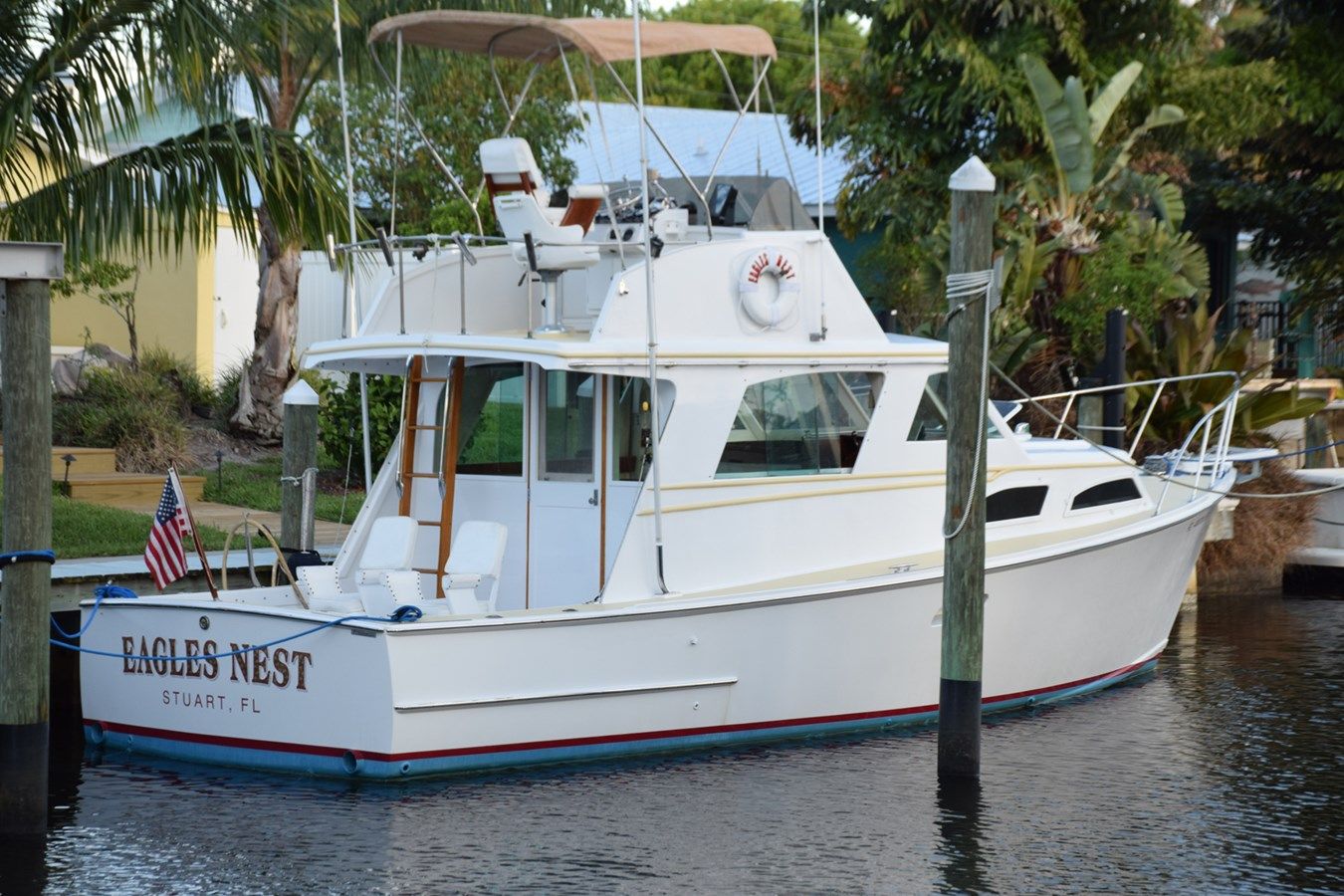
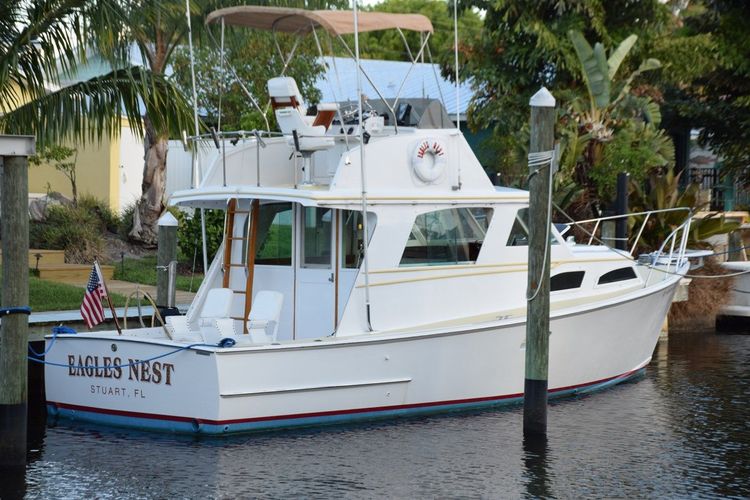
Whiticar Boat Works, commonly referred to simply as “Whiticar,” is a storied American custom boatbuilder rooted in Stuart and Port Salerno, Florida. Its origins lie in the immediate post–World War II period, when renowned charter captain and craftsman Curtis “Curt” Whiticar (1911–2017) began building and maintaining sportfishing boats designed for the demanding conditions of Florida’s Treasure Coast and the nearby Gulf Stream. From the late 1940s through the latter decades of the 20th century, Whiticar became synonymous with hand-built wooden sportfishermen that combined functional fishing layouts with refined lines and exceptional seaworthiness.
From the outset, Whiticar’s philosophy was to build each boat to the customer’s needs rather than to any cataloged model. The shop’s output was intentionally limited, ensuring meticulous attention to structure, weight distribution, and joinery. Early Whiticars were typically plank-on-frame wooden constructions, often with mahogany planking over robust frames and thoroughly glassed or painted for longevity. The boats’ hallmark traits—generous bow flare to shed spray, a fine entry, balanced aft sections, and graceful tumblehome—delivered a dry, predictable ride and outstanding efficiency. These boats became favorites of professional captains and serious anglers who demanded both performance offshore and elegance at the dock.
As composites proliferated and boating tastes evolved, Whiticar’s emphasis gradually expanded from new construction to major refit, service, and maintenance for both classic and contemporary yachts. The name grew to represent not only iconic custom builds of the mid-century but also trusted yard capabilities in carpentry, paint, mechanical systems, and full fishing conversions. By the turn of the 21st century, few—if any—new Whiticar builds were being commissioned, yet the company’s legacy remained vivid: a significant number of Whiticar sportfishermen continue to fish actively, many having undergone comprehensive restorations or repowers that preserved the brand’s DNA while updating systems and propulsion.
Across decades, Whiticar’s craftsmanship helped define what many enthusiasts call the “Stuart style” of Florida custom sportfish design—an aesthetic and performance standard recognized alongside other notable Florida custom houses. Today, Whiticar’s name is invoked with respect wherever classic custom sportfishermen are discussed, and its boats remain prized for their blend of tradition, function, and artisanal quality.
Country of Origin
United States of America.
Manufacturing Locations
Whiticar’s boatbuilding heritage is firmly anchored in Martin County on Florida’s east coast:
- Original new-build activity centered in the Manatee Pocket area of Port Salerno (adjacent to Stuart), a historic hub for sportfishing and boatbuilding.
- Over time, the firm operated service and refit facilities in the greater Stuart/Port Salerno area, supporting both Whiticar-built vessels and a broad array of other yachts.
All Whiticar custom boats were built in the Stuart–Port Salerno region. The company did not rely on overseas mass production; its reputation rests on local, small-batch craftsmanship and hands-on quality control.
Ownership and Management
For most of its existence, Whiticar Boat Works was a family-run enterprise founded by Curtis “Curt” Whiticar and carried forward by members of the Whiticar family. Leadership and day-to-day management reflected a generational continuity common to Florida’s classic custom boatbuilders, with deep ties to the local captain and angling communities. Publicly documented details about current ownership of the brand are limited; Whiticar is best understood today through the legacy of its historic builds and its decades of service activity in Martin County.
Reputation and Quality
Within the world of custom sportfishing yachts, Whiticar enjoys a reputation for elegant, purposeful design and exacting craftsmanship. Several aspects define this standing:
- Ride and seakeeping: Whiticars are admired for their ability to run clean and dry in the confused seas often encountered off Florida’s Treasure Coast. The boats’ flare, entry, and balance were proven daily by professional captains who ran long and hard to the Gulf Stream.
- Craftsmanship: Traditional wooden construction, carefully faired surfaces, and finely executed interiors characterize the brand. Even after decades, many Whiticars display tight joinery and fair lines that attest to the original build quality.
- Enduring value: A noteworthy share of the Whiticar fleet remains active, many boats having been restored or sympathetically modernized. These vessels retain a loyal following, and well-kept examples are sought by knowledgeable anglers and collectors.
- Cultural impact: Whiticar is frequently referenced in discussions of classic Florida custom sportfish lineage. The brand’s boats have been featured over the years in sportfishing and yachting publications, and are recognized by enthusiasts as emblematic of the Stuart tradition of bespoke, captain-driven design.
While Whiticar’s new-build cadence slowed markedly in the modern era, the name endures as a benchmark for a particular kind of hand-built American sportfisher—one that marries fishability, grace, and durability in a way few production boats can match.
Whiticar Boat Works (Whiticar) — Español
Historia de la empresa
Whiticar Boat Works, conocida sencillamente como “Whiticar”, es un histórico astillero estadounidense de embarcaciones a medida con raíces en Stuart y Port Salerno, Florida. Sus orígenes se remontan a la posguerra, cuando el célebre capitán de charter y artesano Curtis “Curt” Whiticar (1911–2017) comenzó a construir y mantener barcos de pesca deportiva adaptados a las exigentes condiciones de la Costa del Tesoro y la Corriente del Golfo. Desde finales de la década de 1940, Whiticar se identificó con sportfishers de madera construidos a mano que combinaban distribuciones de pesca funcionales con líneas refinadas y notable navegabilidad.
Desde el principio, la filosofía de Whiticar fue construir cada barco según las necesidades del cliente, sin modelos de catálogo. El volumen de producción fue deliberadamente reducido para garantizar la máxima atención a la estructura, la distribución de pesos y la carpintería fina. Sus rasgos distintivos—amplio flare en proa para desviar el rocío, entrada fina, secciones equilibradas y elegante tumblehome—proporcionaban una navegación seca, predecible y eficiente. Los barcos se convirtieron en favoritos de capitanes profesionales y pescadores serios.
Con la expansión de los materiales compuestos, Whiticar amplió su enfoque desde la construcción nueva hacia grandes refit, servicio y mantenimiento. La marca pasó a representar no solo construcciones icónicas del siglo XX, sino también capacidades de astillero de confianza en carpintería, pintura, mecánica y conversiones de pesca. Aunque en el siglo XXI los nuevos encargos fueron escasos, muchos Whiticar siguen activos y han sido restaurados con sensibilidad para conservar su esencia.
País de origen
Estados Unidos de América.
Ubicaciones de fabricación
- Construcción original en el área de Manatee Pocket de Port Salerno (junto a Stuart), un núcleo histórico de la pesca deportiva y la construcción naval.
- Operación de instalaciones de servicio y refit en la zona de Stuart/Port Salerno para embarcaciones Whiticar y otras marcas.
Todos los Whiticar se construyeron localmente en la región de Stuart–Port Salerno, sin producción masiva en el extranjero.
Propiedad y gestión
Durante la mayor parte de su historia, Whiticar Boat Works fue una empresa familiar fundada por Curtis “Curt” Whiticar y continuada por miembros de la familia Whiticar. Los detalles públicos sobre la propiedad actual son limitados; hoy la marca se entiende mejor por su legado de construcciones históricas y décadas de actividad de servicio en el condado de Martin.
Reputación y calidad
Whiticar goza de prestigio por su diseño elegante y su artesanía exigente.
- Navegación: reconocidos por correr secos y equilibrados en mares complicados frente a Florida.
- Artesanía: construcción tradicional en madera e interiores bien ejecutados.
- Valor perdurable: numerosos Whiticar siguen en servicio, restaurados o modernizados.
- Impacto cultural: citada a menudo junto a otros astilleros personalizados de Florida y presente en publicaciones especializadas.
Whiticar Boat Works (Whiticar) — Français
Histoire de l’entreprise
Whiticar Boat Works, ou simplement “Whiticar”, est un constructeur américain emblématique de bateaux sur mesure, né à Stuart et Port Salerno, en Floride. Juste après la Seconde Guerre mondiale, le capitaine de pêche charter et artisan Curtis “Curt” Whiticar (1911–2017) a lancé la construction et l’entretien de sportfishers conçus pour la Côte du Trésor et le Gulf Stream. Dès la fin des années 1940, Whiticar s’est distingué par des bateaux de pêche en bois, réalisés à la main, alliant fonctionnalité, élégance des lignes et excellentes qualités marines.
La philosophie de Whiticar consistait à bâtir chaque unité pour un propriétaire précis. La production, volontairement limitée, garantissait une attention méticuleuse à la structure, au centrage des masses et à la menuiserie. Les caractéristiques clés—forte tonture et flare de l’étrave, entrée fine, sections arrière équilibrées et tumblehome harmonieux—assuraient une navigation sèche et efficace. Ces bateaux ont conquis capitaines professionnels et pêcheurs passionnés.
Avec l’essor des composites, Whiticar a accru ses activités de refit, d’entretien et de maintenance lourde. La marque incarne ainsi à la fois les constructions iconiques du milieu du XXe siècle et un savoir-faire d’atelier en menuiserie, peinture, mécanique et conversions de pêche. Bien que les nouvelles constructions se soient raréfiées à l’ère moderne, un grand nombre de Whiticar naviguent encore après des restaurations respectueuses de leur ADN.
Pays d’origine
États-Unis d’Amérique.
Lieux de fabrication
- Chantier historique dans la zone de Manatee Pocket à Port Salerno (près de Stuart), haut lieu de la pêche sportive et de la construction navale.
- Activités d’entretien et de refit dans la région de Stuart/Port Salerno pour des Whiticar et d’autres yachts.
Tous les Whiticar ont été construits localement dans la région de Stuart–Port Salerno, sans production de masse à l’étranger.
Propriété et direction
Pendant la majeure partie de son histoire, Whiticar Boat Works a été une entreprise familiale fondée par Curtis “Curt” Whiticar, transmise et gérée par des membres de la famille. Les informations publiques actuelles sur la propriété sont limitées; la marque est avant tout reconnue pour l’héritage de ses constructions et pour ses décennies d’activité de chantier dans le comté de Martin.
Réputation et qualité
La réputation de Whiticar repose sur un design élégant, une construction exigeante et d’excellentes qualités marines.
- Comportement: navigation sèche, prévisible et efficace en mer formée.
- Finition: menuiserie traditionnelle raffinée et intérieurs soignés.
- Pérennité: de nombreux Whiticar sont conservés et modernisés.
- Influence: souvent citée aux côtés d’autres chantiers personnalisés de Floride et mise en avant dans la presse spécialisée.
Whiticar Boat Works (Whiticar) — Italiano
Storia dell’azienda
Whiticar Boat Works, nota semplicemente come “Whiticar”, è un cantiere americano di imbarcazioni su misura con sede storica a Stuart e Port Salerno, in Florida. Nel secondo dopoguerra, il capitano di charter e maestro d’ascia Curtis “Curt” Whiticar (1911–2017) iniziò a costruire e mantenere sportfisher progettati per le condizioni impegnative della Treasure Coast e della Corrente del Golfo. Dalla fine degli anni ’40, Whiticar è sinonimo di barche in legno costruite a mano, con linee eleganti, layout funzionali e notevoli doti marine.
La filosofia Whiticar è sempre stata quella del “custom puro”: ogni barca è unica e realizzata sulle esigenze del proprietario. La produzione limitata ha permesso grande cura nella struttura, nel bilanciamento dei pesi e nella falegnameria. I tratti distintivi—flare pronunciato a prua, entrata fine, poppa equilibrata e tumblehome aggraziato—offrono una navigazione asciutta ed efficiente. Queste imbarcazioni sono state scelte da capitani professionisti e pescatori esigenti.
Con l’affermarsi dei materiali compositi, il cantiere ha esteso l’attività a refit importanti, assistenza e manutenzione. Oggi il nome Whiticar richiama sia le costruzioni iconiche del Novecento sia un solido know-how di cantiere in falegnameria, verniciatura, meccanica e conversioni da pesca. Sebbene le nuove costruzioni si siano rarefatte, numerosi Whiticar sono stati restaurati e continuano a navigare.
Paese di origine
Stati Uniti d’America.
Sedi produttive
- Costruzione storica nell’area di Manatee Pocket a Port Salerno (adiacente a Stuart), polo della pesca sportiva e della cantieristica.
- Strutture di servizio e refit nell’area di Stuart/Port Salerno per imbarcazioni Whiticar e di altri marchi.
Tutte le barche Whiticar sono state costruite localmente nella regione di Stuart–Port Salerno, senza produzione in serie all’estero.
Proprietà e gestione
Per gran parte della sua storia, Whiticar Boat Works è stata un’azienda a conduzione familiare fondata da Curtis “Curt” Whiticar e portata avanti dai membri della famiglia. Le informazioni pubbliche sull’assetto proprietario attuale sono limitate; il marchio è definito soprattutto dal suo patrimonio di costruzioni storiche e dai decenni di attività di cantiere nella contea di Martin.
Reputazione e qualità
Whiticar è apprezzata per design elegante, costruzione accurata e ottime qualità marine.
- Tenuta di mare: corsa asciutta e prevedibile anche con mare formato.
- Artigianalità: costruzione tradizionale in legno e finiture eccellenti.
- Valore nel tempo: molte unità sono state restaurate o ammodernate.
- Influenza: spesso citata accanto ad altri cantieri custom della Florida e presente sulle riviste di settore.
Whiticar Boat Works (Whiticar) — Deutsch
Unternehmensgeschichte
Whiticar Boat Works, kurz “Whiticar”, ist eine traditionsreiche amerikanische Manufaktur für individuelle Sportfischerboote mit Wurzeln in Stuart und Port Salerno, Florida. Unmittelbar nach dem Zweiten Weltkrieg begann der Charterkapitän und Bootsbauer Curtis “Curt” Whiticar (1911–2017), Boote zu bauen und zu warten, die speziell für die Treasure Coast und den Golfstrom ausgelegt waren. Seit Ende der 1940er Jahre steht Whiticar für handgefertigte Holzboote mit funktionalem Layout, eleganten Linien und hervorragenden Seeeigenschaften.
Jedes Boot wurde als Einzelstück nach Kundenwunsch gebaut. Die bewusst geringe Stückzahl sicherte höchste Sorgfalt bei Struktur, Gewichtstrimm und Tischlerarbeiten. Typische Merkmale—starker Bugflare, feine Eintrittslinie, ausgewogene Achtersektionen und elegantes Tumblehome—sorgen für trockene, effiziente und berechenbare Fahreigenschaften. Diese Boote wurden von Profikapitänen ebenso wie von ambitionierten Anglern geschätzt.
Mit der Verbreitung von Verbundwerkstoffen verlagerte sich der Schwerpunkt zunehmend auf Refit, Service und Instandhaltung. Der Name Whiticar steht daher sowohl für ikonische Neubauten des 20. Jahrhunderts als auch für verlässliche Werftkompetenz in Holzarbeiten, Lack, Mechanik und Fishing-Conversions. Obwohl Neubauten seltener wurden, sind viele Whiticar-Boote dank sorgfältiger Restaurierungen weiterhin aktiv.
Herkunftsland
Vereinigte Staaten von Amerika.
Produktionsstandorte
- Historische Neubauten im Bereich Manatee Pocket in Port Salerno (bei Stuart), einem Zentrum des Sportfischens und des Bootsbaus.
- Service- und Refit-Standorte im Großraum Stuart/Port Salerno für Whiticar- und andere Yachten.
Alle Whiticar-Boote wurden lokal in der Region Stuart–Port Salerno gebaut; es gab keine Massenfertigung im Ausland.
Eigentum und Management
Whiticar Boat Works war über weite Strecken ein familiengeführtes Unternehmen, gegründet von Curtis “Curt” Whiticar und über Generationen weitergeführt. Öffentliche, aktuelle Eigentumsangaben sind begrenzt; die Marke definiert sich heute vor allem über ihr historisches Portfolio und die langjährige Werfttätigkeit im Martin County.
Ruf und Qualität
Whiticar genießt hohes Ansehen für elegantes Design, präzise Handarbeit und sehr gute Seegängigkeit.
- Fahreigenschaften: trocken, effizient, vertrauenerweckend.
- Verarbeitung: traditionelle Holzbauweise, hochwertige Innenausbauten.
- Werthaltigkeit: viele Boote bleiben durch Restaurierungen im Einsatz.
- Bedeutung: häufig im Kontext klassischer Florida-Custom-Werften genannt und in Fachmagazinen präsentiert.
Whiticar Boat Works (Whiticar) — Русский
История компании
Whiticar Boat Works, или просто «Whiticar», — легендарная американская мануфактура по строительству кастомных лодок, возникшая в городах Стюарт и Порт-Салерно (штат Флорида). Сразу после Второй мировой войны капитан чартерного флота и мастер-корабел Кёртис «Кёрт» Уитикар (1911–2017) начал строить и обслуживать лодки для спортивной рыбалки, рассчитанные на суровые условия побережья Treasure Coast и течения Гольфстрим. С конца 1940-х годов Whiticar стала синонимом ручной деревянной постройки, функциональных рыболовных планировок и благородных линий корпуса.
Каждое судно создавалось индивидуально под владельца, а малые объёмы обеспечивали тщательнейшее внимание к конструкции, развесовке и столярным работам. Характерные черты—выраженный развал носовой части (flare), тонкая носовая часть, сбалансированная корма и элегантный «tumblehome»—обеспечивали сухой и предсказуемый ход, высокую эффективность. Эти лодки получили признание профессиональных капитанов и опытных рыболовов.
С распространением композитов фокус сместился к капитальным рефитам, сервису и техобслуживанию. Имя Whiticar означает не только культовые корпуса середины XX века, но и надёжные верфенные компетенции: столярка, окраска, механика, рыболовные конверсии. Хотя новых построек стало меньше, многие суда Whiticar прошли бережную реставрацию и активно эксплуатируются до сих пор.
Страна происхождения
Соединённые Штаты Америки.
Производственные площадки
- Исторические постройки — в акватории Manatee Pocket района Порт-Салерно (рядом со Стюартом), традиционном центре спортивной рыбалки и судостроения.
- Сервис и рефит — на площадках в районе Стюарт/Порт-Салерно, для лодок Whiticar и других брендов.
Все лодки Whiticar строились локально в регионе Стюарт–Порт-Салерно; массового зарубежного производства не было.
Собственность и управление
На протяжении большей части истории Whiticar Boat Works была семейным предприятием, основанным Кёртисом «Кёртом» Уитикаром и продолженным следующими поколениями семьи. Публично доступных сведений о текущей структуре владения немного; бренд сегодня ассоциируется прежде всего с наследием кастомных построек и многолетней верфенной деятельностью в округе Мартин.
Репутация и качество
Whiticar ценится за изящный дизайн, тщательную ручную работу и выдающиеся ходовые качества.
- Поведение на воде: сухой, устойчивый и экономичный ход.
- Отделка: традиционная деревянная конструкция и высокое качество интерьеров.
- Долговечность: многие суда сохранены и модернизированы.
- Влияние: часто упоминается рядом с другими флоридскими кастомными верфями; представлены в профильных изданиях.
Whiticar Boat Works (Whiticar) — 中文
公司历史
Whiticar Boat Works(简称“Whiticar”)是美国著名的定制钓鱼游艇建造商,起源于佛罗里达州的斯图尔特(Stuart)与波特萨莱诺(Port Salerno)。二战结束后不久,包船船长兼工匠 Curtis “Curt” Whiticar(1911–2017)开始建造并维护专为佛罗里达宝藏海岸与湾流海域而设计的运动型钓鱼船。自20世纪40年代末起,Whiticar 以手工打造的木质运动渔船著称,兼具实用的钓鱼布局、优雅的外形与出众的耐海性。
Whiticar 始终坚持“纯定制”理念:每一条船都依据船东需求打造,年产量有限,以确保对结构、重量分配与木作细节的极致把控。其典型特征包括:充沛的艏部外飘以有效挡浪、细长的入水线、均衡的艉部与优美的艉围弧度(tumblehome),由此带来干爽、可预见且高效的航行体验。Whiticar 一直深受职业船长与严肃钓鱼者青睐。
随着复合材料的普及,Whiticar 的重心逐步由新船建造扩展至大型改装(refit)、保养与维修。该品牌不仅代表20世纪中期的经典定制作品,也代表可靠的船厂能力:木作、涂装、机电与钓鱼功能改造。进入当代后,新增造数量大幅减少,但大量 Whiticar 仍活跃于海上,许多船只通过精心修复与动力更新,既保留传统风格,又契合现代使用需求。
原产国
美利坚合众国。
制造地点
- 早期新造主要位于波特萨莱诺的 Manatee Pocket 水域(毗邻斯图尔特),该地区是运动钓鱼与造船的历史重镇。
- 其后在斯图尔特/波特萨莱诺区域形成服务与改装能力,为 Whiticar 船以及其它品牌游艇提供支持。
Whiticar 的所有定制船均在斯图尔特—波特萨莱诺本地建造,并非海外批量生产,完全依赖本地小批量的精工手作与严格质控。
所有权与管理
Whiticar Boat Works 在很长时间内是一家家族经营企业,由创始人 Curtis “Curt” Whiticar 创建,并由家族成员延续与管理。关于品牌当下所有权的公开信息有限;今天人们更多通过其历史定制船与多年在马丁县的船厂服务来理解 Whiticar 的意义。
声誉与品质
在定制运动钓鱼船领域,Whiticar 以优雅线条、严谨工艺与卓越耐海性广受推崇。
- 航行品质:在宝藏海岸常见的复杂海况中,保持干爽、稳定与高效。
- 工艺水准:传统木质结构、精致内装与细腻整形。
- 保值与传承:大量船只经修复后继续服役,深受内行收藏家与资深钓鱼人追捧。
- 影响力:常与佛罗里达其它定制名厂并列,被专业媒体与爱好者视为“斯图尔特风格”运动渔船的代表之一。
Main Competitors
Whiticar Boat Works occupies a highly specific niche: custom, captain-driven Florida sportfishing boats built in very small numbers with a strong emphasis on seakeeping, fishability, and elegant lines. In this niche, “competitors” historically were less about head-to-head mass-market rivalry and more about a constellation of similarly respected custom houses and, to a lesser extent, top-tier production builders. The following brands are most frequently discussed by knowledgeable owners, captains, and brokers in the same breath as Whiticar when evaluating alternatives, refits, or comparable pedigrees.
-
Rybovich: Perhaps the most recognizable Florida custom sportfish name, Rybovich shares with Whiticar a legacy of bespoke construction, iconic styling, and a bluewater ethos proven by professional captains. Rybovich boats often command premium resale values and are direct comparables in the “classic Florida custom” conversation.
-
Merritt: Another pillar of the custom sportfish world, Merritt is revered for meticulous craftsmanship, consistent performance, and a lineage of boats that have influenced the entire category. Like Whiticar, Merritt boats are tightly associated with owner-captain input and decades of tournament-proven credibility.
-
Jim Smith: Noted for fast, light, and efficient custom boats with a focus on offshore performance. Jim Smith’s reputation for speed and refined custom execution positions it as a meaningful comparator for buyers weighing classic Florida DNA and modern performance.
-
Garlington: Garlington’s semi-custom and custom offerings are appreciated for their balance of fit-and-finish, sea-kindliness, and performance. In terms of aesthetic and use case (serious offshore fishing with refined presentation), Garlington appears frequently on the same shortlist.
-
American Custom Yachts (ACY): Based in the same regional ecosystem (Stuart/Martin County), ACY is associated with high-end custom builds and major refits. For Whiticar owners contemplating substantial modernization, ACY is often a relevant yard in the local network.
-
Gamefisherman and L&H Boats: These Florida builders are known for smaller-to-mid-size custom or semi-custom fishing boats emphasizing classic lines and fish-first layouts—appealing to many who admire Whiticar’s purposeful simplicity and seaworthy shapes.
-
Tribute: Another boutique custom name with a focus on performance and craftsmanship; also part of the South Florida custom heritage that prospective Whiticar buyers and owners often evaluate.
Beyond Florida, several East Coast custom builders are part of the same competitive “frame of reference,” especially for customers comparing ride characteristics, custom carpentry, and tournament track records:
-
North Carolina custom builders: Bayliss, Spencer, Jarrett Bay, Paul Mann (legacy), Scarborough, and similar shops prioritize high-performance cold-molded construction, custom interiors, and serious fishing capability. They are not Florida-style per se, but they are direct alternatives for owners focused on bespoke quality and offshore range.
-
Mid-Atlantic custom builders: F&S (Delaware) is a notable example with a performance-forward approach and refined finishing.
While not “custom” in the Whiticar sense, the leading production brands are de facto competitors because they dominate the wider sportfish marketplace and show up as alternatives on brokerage searches:
-
Viking Yachts and Hatteras Yachts: These are the two most prominent production sportfish builders with global footprints. Buyers who love Whiticar’s heritage may still compare refitted Whiticars against late-model Viking or Hatteras convertibles in terms of value, reliability, and availability.
-
Bertram (and historically Cabo): Bertram’s deep-V heritage and offshore credibility put its models on the consideration list for anglers who prioritize seakeeping and brand identity.
In summary, Whiticar’s main “competitors” are the classic Florida custom houses (Rybovich, Merritt, Jim Smith, Garlington, Tribute, ACY, Gamefisherman, L&H) and, in broader cross-shopping, the North Carolina custom cluster (Bayliss, Spencer, Jarrett Bay, Scarborough, etc.). On the production side, Viking, Hatteras, and Bertram form the backdrop against which many buyers weigh the merits of a restored classic versus a newer series-built platform.
Current Production Status
Whiticar Boat Works is best understood today as a legacy custom brand whose identity and value are carried by its existing fleet and by the Stuart/Port Salerno boatbuilding culture that nurtured it. The company’s historical strength was one-off, hand-built wooden (and later, wood/composite) sportfishermen crafted in extremely limited numbers. Over time, as composites, large-scale production, and evolving owner expectations transformed the market, Whiticar’s center of gravity shifted from new construction to service, major refit, and maintenance.
As of the most recently available public information, there is no evidence of an active, serial new-build program under the Whiticar marque. Commissioned new Whiticar hulls—if any—have been rare for many years, and the brand’s presence in the market is primarily through:
-
The continued operation and upkeep of existing Whiticar boats, many of which undergo periodic refits, repowers, and interior updates to align with modern standards while preserving their classic lines.
-
The regional ecosystem in Martin County (Stuart/Port Salerno), where specialty yards, craftspeople, and vendors remain familiar with Whiticar construction methods and design philosophy. This ecosystem supports Whiticar owners with bespoke carpentry, systems modernization, paint/finish work, and fishing-specific modifications.
-
Brokerage and private-owner transactions, through which classic Whiticars find new stewards who value traditional craftsmanship and the brand’s historical significance.
In practical terms, a buyer seeking a “new” Whiticar will typically look to the brokerage market for an existing hull suitable for a restomod/refit rather than placing an order for a factory-fresh build. The Whiticar name remains respected and visible, but mainly in the context of legacy vessels and restoration culture rather than ongoing series production.
Production Volumes
Authoritative, consolidated public records specifying the total number of Whiticar boats built are limited. That said, several qualitative points reliably characterize Whiticar’s output:
-
Ultra-low volume by design: Whiticar’s boats were crafted to order, one at a time, with long build cycles and intensive owner-captain collaboration. This inherently limited annual throughput to a small handful of boats at most, and in many years new construction would have been measured in ones rather than tens.
-
Decades-long span with changing materials: Early builds were traditionally planked wooden boats with robust frames and meticulous fairing, while later practices incorporated glass sheathing or hybrid wood/composite techniques consistent with the period. Regardless of material evolution, production remained bespoke and small-scale.
-
Fleet size measured in dozens, not hundreds: While exact counts vary by source and are not formally aggregated, Whiticar’s total legacy fleet is widely understood to be in the “dozens,” reflecting artisanal output over many decades rather than any mass-production profile.
-
Typical size ranges: Whiticar boats most frequently encountered on the market tend to be in the roughly 30- to 50-something-foot range (with outliers). This aligns with the brand’s identity as serious offshore fishing platforms sized for owner-operators or captain-led programs rather than megayacht-scale projects.
For clients and historians, the key takeaway on volumes is qualitative: Whiticar’s scarcity is intrinsic to its appeal. Each boat carries the fingerprints of hand craftsmanship and an owner-specific brief, which is why surviving examples are often refurbished rather than replaced.
Latest News
Recent, widely publicized “corporate” news about new Whiticar series or major factory expansions has not been evident in the public domain. Instead, the Whiticar story in recent years is primarily told through three lenses: legacy, restorations/refits, and community recognition.
-
Legacy and remembrance: The brand’s founder and guiding spirit, Curtis “Curt” Whiticar (1911–2017), lived to 106 and was celebrated locally and within the sportfishing community for his contributions as a captain, designer, and craftsman. This legacy context remains a focal point in articles, owner forums, and regional histories of Florida sportfishing culture.
-
Restorations and repowers: A steady stream of owner-driven projects continues to surface in listings, dock talk, and regional yard portfolios. These projects typically involve:
- Structural refreshes and carpentry to maintain hull fairness and integrity.
- Modernization of propulsion (e.g., replacing older diesels with cleaner, more efficient units), often improving range, reliability, and serviceability.
- Electrical and systems overhauls, including modern breaker panels, NMEA 2000 networking, upgraded chargers/inverters, and LED lighting.
- Electronics updates—radar, sounders, chirp transducers, plotters, and integrated helm suites—to bring classic hulls in line with contemporary angling tactics.
- Cosmetic refinements: paint, brightwork, non-skid, and interior refurbishments that retain Whiticar’s understated elegance while improving livability.
-
Brokerage and market visibility: Classic Whiticars appear periodically on brokerage markets, often commanding interest from knowledgeable buyers who understand what a “Stuart-style” custom sportfisher represents. Desirability tends to correlate with the thoroughness of prior refits, documentation of maintenance history, and the faithfulness of updates to original design intent.
-
Regional maritime culture: In and around Stuart/Port Salerno, Whiticar remains part of local nautical heritage. Although the modern market is dominated by larger production fleets, Whiticar’s influence is still visible in the lines favored by regional custom builders and in the practices of craftsmen who cut their teeth maintaining these boats.
-
Practical implications for owners today:
- Parts and service: Because Whiticar boats are bespoke, documentation packages vary by hull. Competent yards in South Florida—especially those experienced with classic custom sportfishers—can support structural, mechanical, and cosmetic needs. Owners typically rely on a combination of yard expertise and owner-supplied records.
- Value preservation: Well-restored Whiticars with modern systems and tasteful updates tend to hold their appeal within a specialized buyer community. While they may not match the immediate market liquidity of late-model production convertibles, their uniqueness and provenance can support strong value when presented correctly.
- Use case evolution: Many owners employ refitted Whiticars for a mix of offshore fishing, dayboating, and light cruising. Layouts are often adapted to contemporary use—adding modern refrigeration, air conditioning improvements, genset upgrades, and ergonomic helm enhancements—without compromising the original fish-first ethos.
When viewed collectively, the “latest news” about Whiticar is less about corporate announcements and more about enduring relevance. The boats continue to fish and cruise; they are restored and improved; they appear in listings, dockside conversations, and regional events; and they serve as rolling ambassadors of a Florida boatbuilding tradition that prized ride quality, elegant simplicity, and human-scale craftsmanship.
If your objective is to buy, restore, or sell a Whiticar today, the most consequential “news” is project-specific: the availability of a sound hull, the selection of a capable yard familiar with classic custom construction, and the sourcing of modern systems that complement rather than overshadow the boat’s original character. In that sense, Whiticar’s story is ongoing—not as a line of factory-fresh hulls, but as a living heritage maintained one careful refit at a time.
Frequently Asked Questions
Question: What is Whiticar and how is it regarded in the sportfishing world? Answer: Whiticar Boat Works is a legacy American custom builder from the Stuart/Port Salerno area of Florida, best known for hand-built, one-off sportfishing boats created from the late 1940s onward. Among captains and anglers, Whiticar is associated with clean, purposeful lines, notable bow flare, efficient entries, and seakindly hulls that run dry and predictable in the steep, confused seas often found off Florida’s Treasure Coast. The brand is part of the classic “Stuart-style” lineage and is respected for craftsmanship and fish-first design rather than high-volume production.
Question: Are new Whiticar boats still being built today? Answer: In recent years, Whiticar has been known primarily as a legacy custom brand rather than an active serial new-build operation. Most activity around the name involves the continued use, refit, and careful restoration of existing Whiticar boats. Owners and captains who want a “new” Whiticar experience typically seek a suitable legacy hull and undertake a comprehensive refit tailored to modern systems, propulsion, and fishability.
Question: What construction methods were used on Whiticar boats? Answer: Historically, Whiticar boats were built in very small numbers using traditional wooden plank-on-frame techniques, with meticulous fairing and finish work. Over time, practices evolved to include selective glass sheathing and wood/composite hybrids typical of later-era custom builders. The emphasis remained on hand craftsmanship, structural integrity, balanced weight distribution, and practical layouts optimised for offshore fishing.
Question: What are the hallmark design traits of a Whiticar? Answer: A Whiticar is often recognized by its generous bow flare to knock down spray, a fine forward entry for a smooth ride into chop, balanced aft sections that promote predictable handling, and a tasteful tumblehome that visually lightens the stern. These elements combine to create a boat that runs dry and tracks calmly, with a timeless profile that stands out at the dock without unnecessary ornamentation.
Question: What sizes did Whiticar typically build? Answer: The most commonly encountered Whiticar boats are roughly in the 30- to 55-foot range. Express and walkaround layouts are more common at the smaller end, while convertible (flybridge) configurations predominate around the mid-40s and beyond. Because each boat was custom built, dimensions and features vary from one hull to another.
Question: What layouts were favored by Whiticar owners? Answer: Two broad families are typical:
- Express/walkaround: A large, open cockpit optimised for fishing, a lower cabin with a berth (or V-berth), compact galley, and enclosed head. Sometimes a single stateroom plus convertible berths in the salon/cuddy.
- Convertible (flybridge): A larger salon with galley up or down, one to three staterooms depending on length, an enclosed head (often two on larger boats), and a generous cockpit with mezzanine seating in later refits. The flybridge provides excellent visibility and a secure command post for offshore runs.
Question: What engines are commonly found in Whiticar boats? Answer: Original builds frequently used period-correct twin diesels of moderate horsepower, typical of the era (for example, naturally aspirated or lightly turbocharged units). Over time, many Whiticars have been repowered with modern diesels from well-known manufacturers to improve reliability, efficiency, and serviceability. Engine selection and installation quality vary by hull and refit scope.
Question: What performance can I expect from a Whiticar? Answer: Performance depends on length, displacement, and power. Classic examples with original or lightly updated power might cruise in the mid-20-knot range and top out in the high 20s to low 30s (knots). Well-executed repowers on mid-40-foot convertibles can deliver cruises around the upper 20s to low 30s with top speeds into the mid-30s, subject to weight, propeller selection, and sea state. The signature trait is less about outright top speed and more about a dry, comfortable ride that lets a crew travel farther with less fatigue.
Question: How do Whiticar boats compare to production sportfishers? Answer: Production boats deliver standardized layouts, ready availability, and broad dealer support. Whiticar offers the opposite: bespoke craftsmanship, unique character, and a classic handling “feel.” A well-preserved or properly refit Whiticar can match or exceed the ride quality of many production models in similar conditions, though systems commonality and parts standardization may be less straightforward because each boat is a one-off.
Question: How do Whiticar boats compare to other custom builders? Answer: Within Florida’s classic custom circle, Whiticar sits alongside names praised for artisanal execution and fishability. Compared with North Carolina custom boats—often cold-molded and tilted toward higher speeds—Whiticar’s aesthetic is distinctly Florida with pronounced bow flare and elegant tumblehome. Either path offers strong ride quality; the choice comes down to personal preference in styling, layout, and how much modern performance you prioritize versus classic DNA.
Question: What should I look for in a pre-purchase survey of a classic Whiticar? Answer: A thorough survey is essential. Items often prioritized include:
- Structural: Condition of frames, planking, and any laminated or cold-molded sections; check for fastener corrosion, working seams, localized delamination, and moisture content.
- Engine beds and stringers: Evaluate for bonding, compression, and past repair integrity; verify shaft alignment and strut condition.
- Tanks and systems: Inspect fuel tanks (material, corrosion, baffles), exhaust runs, seacocks, and bonding/grounding systems for corrosion or outdated components.
- Electrical: Assess panel condition, wiring practices, proper circuit protection, and grounding; some legacy wiring benefits from full modernization to current standards.
- Decks and superstructure: Look for core issues where applicable, signs of water intrusion around hardware, and stress cracking.
- Documentation: Build records and refit invoices help verify what was done, when, and by whom.
Question: Are Whiticar boats good candidates for refit? Answer: Yes. Their classic lines and sound design make them attractive for “restomod” projects that preserve pedigree while modernizing systems. Successful refits typically include updated propulsion, new fuel and electrical systems, modern electronics, refreshed paint/brightwork, and ergonomic improvements in the cockpit and helm, often with minimal weight penalty.
Question: What are common refit upgrades on a Whiticar? Answer: Owners frequently pursue:
- Repower with modern diesels and new running gear components (shafts, props, couplings as needed).
- Electrical overhaul with current standards, including new breakers, bus bars, charging systems, and monitoring.
- Integrated electronics suites with modern radar, CHIRP sounders, plotters, and autopilots.
- Cockpit reconfiguration for livewells, insulated fish boxes, mezzanine seating, tackle centers, and improved washdown systems.
- Interior updates—lightweight cabinetry, improved ventilation/air-conditioning, modern galley appliances within a classic aesthetic.
- Structural preservation: new fasteners where warranted, selective plank/laminate replacement, and improved coatings.
Question: What maintenance considerations are unique to wooden or wood/composite customs like Whiticar? Answer: Preventive care is crucial. Key practices include vigilant sealing of fastener penetrations, maintaining topside coatings, keeping bilges dry and clean, monitoring hardware bedding, and promptly addressing any signs of electrolysis or galvanic activity. For long-term health, periodic professional inspections of structural members and hidden spaces are invaluable.
Question: How many cabins do Whiticar boats usually have? Answer: Express and walkaround styles commonly offer a single stateroom (plus convertible berths) and one head. Convertibles around the mid-40-foot range typically provide two staterooms and one head (sometimes two). Larger examples in the 50–55-foot range can arrange two or three staterooms with one or two heads, depending on owner preferences at the time of build or refit.
Question: Are Whiticar boats tournament-capable by modern standards? Answer: Yes, provided the boat is well maintained and appropriately updated. Many Whiticars have been outfitted with contemporary towers, outriggers, live-bait systems, and cockpit ergonomics that match current tactics. Their predictable ride and efficient offshore running make them effective platforms for both live-baiting and trolling.
Question: What distinguishes the “feel” of a Whiticar at the helm? Answer: The combination of fine entry, pronounced flare, and balanced aft sections typically yields a boat that rises softly into head seas, sheds spray effectively, and tracks steadily on quartering seas. Captains often describe them as confidence-inspiring, with a sense of connection between wheel, throttle, and hull response that reflects the builder’s attention to weight distribution and structure.
Question: What fuel and water capacities are typical? Answer: As custom builds, capacities vary by hull and period. Rough guidance: fuel tanks in the few-hundred-gallon to roughly 1,000-gallon range depending on length and mission; water in the ballpark of 80 to 200 gallons. Refit projects sometimes replace or reconfigure tanks to optimize range and balance or to align with new engines’ fuel burn characteristics.
Question: Is there an owner community and technical know-how available for Whiticar boats? Answer: While each hull is unique, Whiticars are well known in the South Florida sportfishing ecosystem. Many marine professionals—carpenters, finishers, mechanics, and electronics specialists—are familiar with the construction norms of classic Florida custom boats. Technical knowledge is transmitted through experienced yards, surveyors, and captains who have worked on these vessels for decades.
Question: What kind of resale market do Whiticar boats have? Answer: Whiticars occupy a specialist segment. Clean, sympathetically refit examples with thorough documentation are sought by enthusiasts who prioritize ride quality, craftsmanship, and heritage. Market liquidity may be narrower than for late-model production boats, but pedigree and condition can support strong interest among informed buyers.
Question: What safety and compliance considerations should be checked on a legacy Whiticar? Answer: In addition to general safety gear and regulatory requirements, confirm up-to-date fuel systems (USCG-compliant components), proper exhaust insulation and routing, reliable fire suppression in the machinery space, modern bilge pumping capacity with alarms, and sound electrical bonding. Refits are opportunities to standardize and label systems for clarity and safety.
Question: Can Whiticar boats be optimized for family cruising as well as fishing? Answer: Yes. Many owners add modern air-conditioning, upgraded refrigeration, refined sleeping arrangements, and better soundproofing to expand the boat’s mission beyond tournament days. The goal is to achieve comfort and convenience without sacrificing the practical, open work areas that make these boats fish so well.
Question: Do Whiticar boats have any recognizable interior style? Answer: Interiors emphasize function with warm, classic joinery. Expect straightforward galleys, durable soles, and practical storage. Refits may introduce lighter finishes and contemporary materials to brighten the spaces, but the overall tone remains understated and purpose-driven.
Question: What are signs of a thoughtful Whiticar refit? Answer: Look for coherent systems integration (electrical and electronics planned as a whole, not piecewise), consistent finish quality from the forepeak to the lazarette, weight-conscious choices in materials, and updates that respect original proportions. A well-documented refit plan with photos and invoices is a strong positive indicator.
Question: How do weather and storage impact the longevity of a Whiticar? Answer: As with any wooden or wood/composite custom yacht, covered storage, dehumidification, and timely maintenance of coatings significantly extend service life. Boats kept clean and dry, with vigilant attention to hardware bedding and bilge moisture control, age gracefully and retain structural integrity.
Question: What range can a Whiticar achieve? Answer: Range is a function of fuel capacity, engine selection, propeller efficiency, hull cleanliness, and sea state. Mid-40-foot convertibles with moderate power and clean running surfaces can often plan day trips to and from offshore grounds comfortably, with multi-day range achievable when tankage and provisioning are planned for the mission.
Question: Is a tower common on Whiticar boats? Answer: Many examples, especially convertibles, feature a tower or marlin tower to enhance visibility while sight-fishing or searching for rips and color changes offshore. Tower design and weight distribution should be factored into handling and performance, especially on smaller hulls.
Question: What fishing amenities are typical? Answer: Expect large, uncluttered cockpits; insulated fish boxes; livewells (built-in or deck-mounted, often improved during refits); gaff and rod storage; washdowns; transom doors; and hard-wearing, non-skid surfaces. Mezzanine seating appears on many refitted boats, adding comfort and tackle management options.
Question: What is the best way to preserve the classic aesthetic during modernization? Answer: Use period-appropriate trim details, maintain the sheerline and house geometry, choose neutral paint schemes, and integrate modern tech cleanly—hidden wire runs, flush electronics, and minimal visual clutter. The aim is a boat that looks timeless yet functions with contemporary reliability.
Available Models
Because Whiticar was a bespoke, one-off custom builder rather than a catalog manufacturer, there is no fixed lineup of “models” in the conventional sense. Each hull was commissioned for a specific owner and built to a unique brief, so specifications vary boat by boat. That said, most Whiticars fall into a few recognizable archetypes. The indicative configurations below are not official models; they summarize typical ranges observed across the fleet and in well-documented refits. Actual figures depend on individual hull design, displacement, refit scope, and engine selection.
-
Classic 36–38 Express Sportfisher (Archetype)
- Length overall: approximately 36–38 ft
- Layout: Open cockpit, lower forward berth or V-berth, compact galley, enclosed head
- Cabins/berths: 1 stateroom (plus convertible berths as needed)
- Engine type: Twin inboard diesels
- Typical power: Moderate-horsepower diesels per engine, appropriate to era; many have been repowered with modern 300–450 hp-class diesels each
- Performance: Approximate cruise in the low-to-mid 20-knot range for legacy power; with repower, mid-20s to around 30 knots; top speed often high 20s to low 30s depending on weight and propeller selection
- Notes: Favored for fast, efficient dayboat fishing; easy access to the action with a weather-protected helm and straightforward systems
-
40–42 Express/Walkaround (Archetype)
- Length overall: approximately 40–42 ft
- Layout: Enlarged cockpit with livewell/fish box options, improved helm ergonomics, belowdecks V-berth or island berth, galley, enclosed head with shower
- Cabins/berths: 1 stateroom plus convertible salon/cuddy berths
- Engine type: Twin inboard diesels
- Typical power: Repowers in the 400–600 hp per engine range are common for performance-oriented upgrades
- Performance: Indicative cruise mid-to-upper 20s; top speeds around low-to-mid 30s, varying with refit and load
- Notes: Suits owner-operators seeking a balance of range, comfort, and fishability without moving to a full convertible
-
43–46 Convertible (Flybridge) (Archetype)
- Length overall: approximately 43–46 ft
- Layout: Salon with galley up or down; one or two heads; two staterooms are common; large cockpit with tackle storage, mezzanine seating in many refits; tower frequently fitted
- Cabins/berths: Typically 2 staterooms, sometimes plus a crew or over/under arrangement depending on the original brief
- Engine type: Twin inboard diesels
- Typical power: Classic installations often replaced with modern 500–800 hp per engine diesels in comprehensive refits
- Performance: Indicative cruise high 20s to low 30s with efficient setups; top speeds into the low/mid-30s depending on weight and sea state
- Notes: A quintessential offshore package for serious anglers, with the seakeeping and deck space to fish bluewater confidently
-
50–55 Convertible (Flybridge) (Archetype)
- Length overall: approximately 50–55 ft
- Layout: Larger salon, two or three staterooms, one or two heads, expansive cockpit with mezzanine, tower; ample tankage for extended runs
- Cabins/berths: 2–3 staterooms, optimized for multi-day trips and larger crews
- Engine type: Twin inboard diesels
- Typical power: Modern repowers can range broadly; 800–1200 hp per engine class appears on some high-performance refits
- Performance: Cruise commonly upper 20s to around low 30s when well set up; top speeds can reach mid-30s in favorable cases
- Notes: Combines classic lines with the accommodations and payload for extended offshore programs
Key characteristics and considerations across these archetypes:
- Hull form: A fine entry and robust bow flare contribute to dryness and comfort. Balanced aft sections promote stability when trolling and predictable manners in following or quartering seas.
- Engine choices: Twin diesels are the norm. Legacy boats may carry period engines; many have been repowered to improve reliability, parts availability, and emissions. Shaft lines, propellers, and gear ratios should be matched to hull loading and desired cruise speed.
- Systems: Electrical and fuel systems on legacy builds benefit greatly from modernization to current standards. Clean wiring, properly sized breakers, and improved bonding/grounding reduce downtime offshore.
- Fishing features: Livewells, insulated fish boxes, plentiful rod holders, rigging stations, and washdowns are common. Mezzanine seating added in refits enhances comfort and tackle management.
- Interior: Practical, seamanlike layouts with classic wood joinery. Refits often lighten materials and optimize storage without disrupting weight balance.
Because Whiticar built to order, the most reliable way to characterize a specific boat is by its hull history and refit documentation rather than by a model label. Prospective owners should weigh intended mission (dayboat vs. extended trips), preferred layout (express vs. convertible), and target performance envelope when evaluating a Whiticar. With thoughtful refit planning, these classic Florida customs can deliver modern usability while retaining the timeless ride and aesthetics that made the name enduring.

Learn more on the “WHITICAR”
To learn more on the “WHITICAR” or to get advice on how to buy or sell a yacht or get a great price for a yacht charter
please call +1 (954) 274-4435 USAOnly deal with professionals!