
 Licensed Yacht BrokersSales and service of yachts and ships
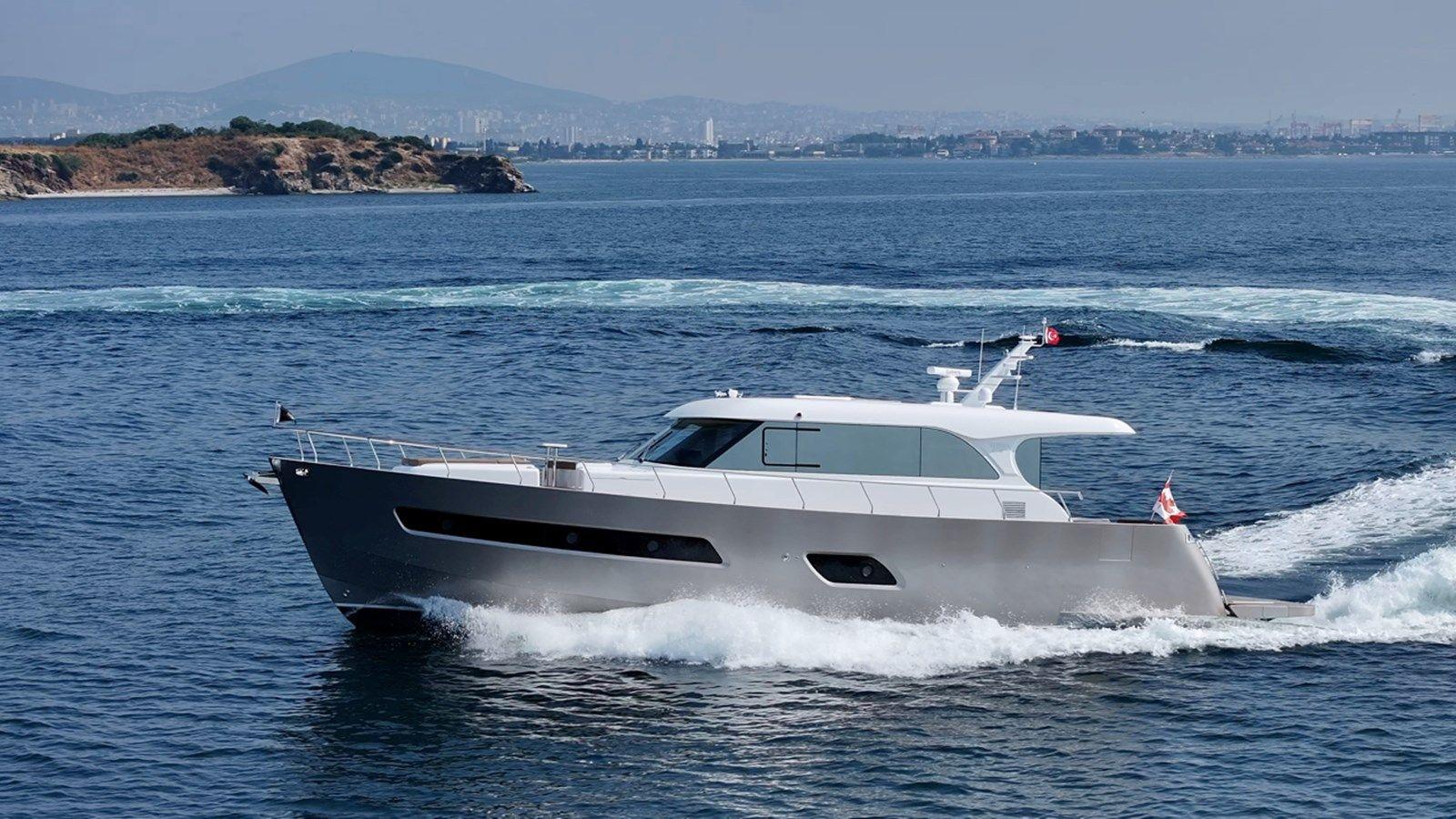
ALTIMA - For Sale
Altima Yachts
Company History
-
English: Altima Yachts (often styled simply as “Altima”) is recognized in North America for its focus on comfortable, owner-friendly pilothouse and flybridge motor yachts designed for extended coastal and near‑offshore cruising. Emerging on the market around the turn of the 21st century, the brand gained visibility in the 2000s and 2010s with a portfolio that typically ranged from the mid‑40‑foot class up to the low‑70‑foot range. Altima’s design language emphasized practical seakeeping, long‑range efficiency at moderate speeds, and generous interior volume—features that made the boats appealing to experienced cruising couples and families seeking liveaboard capability without stepping into the complexity of full‑crew superyachts.
A hallmark of the marque is the classic pilothouse profile with a Portuguese bridge, wide side decks, and a substantial foredeck, paired with an open, social main salon and galley area. Many models were conceived with semi‑custom options, allowing owners to influence interior layouts, cabinetry, and systems selections to match regional cruising styles (from the Pacific Northwest to the U.S. East Coast and the Bahamas/Caribbean). Over time, Altima expanded and refined its lineup to include sedan/flybridge configurations and pilothouse yachts, often noted by model designations in the 48–74 ft bracket, aimed squarely at the long‑range, owner‑operator segment.
In the marketplace, Altima positioned itself as a high‑value alternative to some long‑established pilothouse brands. The boats were typically specified with proven, widely supported mechanical systems—diesel mains from well‑known manufacturers, reputable generators, bow/stern thrusters, and stabilizer options—to simplify maintenance and enhance long‑distance confidence. This product philosophy, together with the semi‑custom approach and a careful balance of price to specification, helped the brand earn a following among knowledgeable cruisers who valued space, range, and practicality over high‑speed performance.
Although details of corporate milestones, individual founders, and year‑by‑year developments are not universally documented in public sources, the brand is widely associated with robust coastal‑cruising motor yachts, an emphasis on owner operation, and a presence at major North American boat shows during its active years. Many Altima models found their way into brokerage markets throughout the United States and Canada, reflecting continued interest in the category and in the marque’s blend of comfort, seaworthiness, and approachable systems.
-
Español: Altima Yachts (a menudo “Altima”) es conocida en Norteamérica por su enfoque en yates de motor tipo pilothouse y flybridge, pensados para travesías costeras prolongadas y navegación cercana a mar abierto. La marca ganó visibilidad en los años 2000 y 2010 con modelos que iban aproximadamente desde los 40 y tantos pies hasta poco más de 70 pies. Su lenguaje de diseño se centra en la navegabilidad práctica, la eficiencia a velocidades moderadas y un volumen interior generoso, cualidades apreciadas por parejas y familias con experiencia que buscan vivir a bordo sin la complejidad de un superyate con tripulación.
Entre sus rasgos distintivos figuran el perfil clásico de pilothouse con puente portugués, pasavantes amplios y una proa sustancial, combinados con un salón principal abierto y una cocina social. Muchos modelos ofrecían opciones semicustom para adaptar distribución, carpintería y sistemas a los estilos de crucero regionales. Con el tiempo, Altima amplió y refinó su gama con configuraciones sedán/flybridge y pilothouse, generalmente entre 48 y 74 pies, dirigidas a propietarios‑operadores de largo alcance.
En el mercado, Altima se posicionó como una alternativa de alto valor frente a marcas de pilothouse más consolidadas, equipando sus barcos con sistemas mecánicos sobradamente probados y de soporte global. Esta filosofía de producto y su enfoque semicustom le valieron una clientela fiel que prioriza espacio, autonomía y practicidad por encima de la velocidad punta.
-
Français: Altima Yachts (“Altima”) s’est fait un nom en Amérique du Nord grâce à des yachts à pilotage intérieur (pilothouse) et flybridge, conçus pour la croisière côtière au long cours. La marque s’est distinguée dans les années 2000–2010 avec des modèles généralement compris entre 45 et un peu plus de 70 pieds. Les signatures de conception incluent une carène efficace à vitesse modérée, un grand volume intérieur et un profil de timonerie avec passerelle portugaise et passavants sécurisés, privilégiant le confort et l’autonomie pour un équipage propriétaire.
Les modèles proposaient souvent des configurations semi‑personnalisables (aménagements, menuiseries, choix techniques), afin de répondre aux usages régionaux. Altima s’est positionnée comme une offre à forte valeur ajoutée face à des références historiques du segment pilothouse, tout en misant sur des équipements fiables et largement supportés.
-
Deutsch: Altima Yachts („Altima“) ist in Nordamerika für pilothouse‑ und Flybridge‑Motoryachten bekannt, die für ausgedehnte Küstenfahrten ausgelegt sind. Besonders in den 2000er und 2010er Jahren reichte das Portfolio typischerweise von Mitte 40 Fuß bis in den Bereich über 70 Fuß. Charakteristisch sind effiziente Rumpfformen für moderate Reisegeschwindigkeiten, großzügige Volumina und das klassische Pilothouse‑Profil mit portugiesischer Brücke und breiten Gangborden. Halb‑Custom‑Optionen ermöglichten individuelle Grundrisse und Systemausstattungen.
Auf dem Markt positionierte sich Altima als wertorientierte Alternative zu etablierten Pilothouse‑Marken und setzte auf bewährte, weltweit betreute Antriebssysteme und Ausrüstung.
-
Italiano: Altima Yachts (“Altima”) è conosciuta in Nord America per le sue motoryacht pilothouse e flybridge destinate alla crociera costiera a lungo raggio. La gamma, particolarmente presente negli anni 2000–2010, spaziava dai circa 45 ai 70 e più piedi. Elementi tipici: profilo pilothouse con ponte portoghese, passavanti ampi, volumi interni generosi, efficienza alle andature di crociera. Le opzioni semi‑custom hanno consentito configurazioni su misura per proprietari‑conduttori.
Il posizionamento è quello di un’alternativa dal forte rapporto qualità/prezzo rispetto ai marchi storici del segmento, con componentistica affidabile e ampiamente supportata.
-
Русский: Altima Yachts («Altima») — североамериканский бренд моторных яхт формата pilothouse и flybridge, ориентированных на длительные прибрежные переходы. Наибольшую известность бренд получил в 2000‑х–2010‑х годах с линейкой примерно от 45 до 70+ футов. Ключевые черты: классический профиль пилхауса с португальским мостиком, широкие проходы, большой внутренний объём, эффективность на умеренных ходах и ориентация на владельца‑оператора. Часто предлагались полуиндивидуальные варианты планировок и оснащения.
На рынке Altima рассматривали как рациональную альтернативу признанным брендам, с упором на проверенные системы и сервисопригодность.
-
中文: Altima Yachts(常简称“Altima”)以面向北美市场的舵楼式(pilothouse)与飞桥型巡航动力游艇闻名,定位长期近海航行与居住舒适度。其在2000—2010年代较为活跃,产品大多介于45至70多英尺。典型特征包括:带葡萄牙桥的经典舵楼外形、宽阔侧甲板、宽敞内舱、在中等航速下强调续航效率,并提供半定制化布局与设备选项,方便船东根据区域航行需求进行调整。品牌以“高性价比、可靠系统、便于维护”的理念吸引经验丰富的长航船东。
Country of Origin
- English: United States
- Español: Estados Unidos
- Français: États‑Unis
- Deutsch: Vereinigte Staaten
- Italiano: Stati Uniti
- Русский: Соединённые Штаты
- 中文: 美国
Manufacturing Locations
-
English: Publicly available brokerage listings and owner reports commonly associate Altima Yachts with contract construction in Asia, with commissioning typically carried out in North America. Specific partnering yards have varied by model and production period, reflecting a broader industry practice in the pilothouse/motoryacht segment. This approach allowed Altima to combine experienced composite craftsmanship with semi‑custom flexibility and competitive pricing, while ensuring that final fit‑out and after‑sales support aligned with North American cruising expectations.
Typical build practices for the category include hand‑laid fiberglass hulls (often solid below the waterline), cored decks and superstructures for weight control, and systems integration geared toward ease of service—traits that align with Altima’s positioning as a long‑range, owner‑operated cruiser.
-
Español: Fuentes públicas (anuncios de corretaje y reseñas de propietarios) asocian con frecuencia a Altima Yachts con construcción por contrato en Asia, y puesta a punto/comisionamiento en Norteamérica. Los astilleros colaboradores habrían variado según modelo y periodo de producción. Esta fórmula combina mano de obra experimentada en compuestos, flexibilidad semicustom y precios competitivos, con un ajuste final y soporte posventa adaptados al mercado norteamericano.
-
Français: Les annonces publiques et retours d’armateurs associent généralement Altima à une construction sous contrat en Asie, suivie d’une mise en service en Amérique du Nord. Les partenaires industriels auraient varié selon les modèles et périodes, dans la lignée des pratiques courantes du segment.
-
Deutsch: Öffentlich zugängliche Quellen (Maklerexposés, Eignerberichte) verorten Altima häufig bei Auftragsfertigungen in Asien; die Endausrüstung/Indienststellung erfolgte in der Regel in Nordamerika. Partnerwerften variierten je nach Modell und Bauzeitraum.
-
Italiano: Secondo fonti pubbliche (listing di broker e testimonianze di armatori), Altima ha adottato frequentemente la costruzione conto terzi in Asia, con commissioning finale in Nord America. Le collaborazioni sarebbero variate in base al modello e al periodo.
-
Русский: По открытым источникам (листинги брокеров, отзывы владельцев), яхты Altima нередко строились по контракту в Азии, а ввод в эксплуатацию выполнялся в Северной Америке. Конкретные партнёрские верфи различались в зависимости от модели и периода.
-
中文: 根据公开经纪信息与船东反馈,Altima 常采用亚洲代工建造,并在北美完成交付调试;合作船厂因型号与时期而异。这与同类舵楼/动力巡航艇的行业模式一致。
Reputation and Quality
-
English: Within the long‑range cruising community, Altima Yachts has been regarded as a value‑driven choice that blends seaworthiness, space, and practical systems. Key aspects frequently noted by owners and brokers include:
- Cruising ethos: Optimized for displacement and semi‑planing regimes, with comfortable economy at typical long‑range speeds rather than an emphasis on maximum top‑end performance.
- Layouts for living: Full‑beam or near full‑beam owners’ accommodations (depending on model), generous headroom, and abundant storage catering to seasonal or year‑round cruising. The pilothouse often serves as a second social hub with excellent visibility and direct deck access via side doors.
- Deck safety and ergonomics: Portuguese bridge and wide walkarounds for secure movement in a seaway; substantial handholds and high bulwarks; thoughtful separation of guest areas and working deck spaces.
- Systems and serviceability: Use of widely supported engines and auxiliary equipment, with good access to machinery spaces for maintenance. Stabilization, thrusters, and upgraded electrical systems were commonly specified or available, aligning the boats with the expectations of experienced owner‑operators.
- Semi‑custom flexibility: Ability to tailor joinery, galley orientation, stateroom arrangements, and equipment packages for different climates and use cases, from Pacific Northwest passages to Bahamas island‑hopping.
- Fit and finish: Warm, yacht‑grade joinery and practical materials selected for longevity and easy upkeep. While positioned below the very highest‑priced luxury marques, Altima aimed to deliver robust construction and a refined interior feel that stand up well in daily cruising.
In resale markets, Altima models often compare favorably on livability per foot and range per gallon, attracting buyers who prioritize real‑world cruising over dockside showmanship. The brand’s reputation is rooted less in headline‑grabbing speed records or avant‑garde styling and more in the quiet confidence of miles covered comfortably and efficiently.
-
Español: En la comunidad de crucero de largo alcance, Altima se valora como una opción de gran relación valor‑prestaciones que combina navegabilidad, espacio y sistemas prácticos. Aspectos destacados por propietarios y corredores:
- Filosofía de crucero: Optimización para regímenes de desplazamiento y semi‑planeo, priorizando economía y confort en velocidad de travesía.
- Habitabilidad: Camarotes principales amplios, buena altura interior y gran capacidad de estiba, con pilothouse utilizable como segundo espacio social.
- Seguridad en cubierta: Puente portugués, pasavantes anchos, altos francobordos y pasamanos bien ubicados.
- Sistemas: Motores y equipos con soporte global, buenos accesos a máquinas, estabilizadores y propulsores habituales.
- Flexibilidad semicustom: Ajuste de ebanistería, distribución y equipos a climas y usos específicos.
- Acabados: Carpintería cálida y materiales duraderos, con posicionamiento por debajo del ultra‑lujo pero con construcción sólida.
En el mercado de ocasión, los modelos Altima destacan por habitabilidad y autonomía, atrayendo a compradores que priorizan el crucero real frente a la velocidad máxima.
-
Français: Dans le milieu de la grande croisière, Altima jouit d’une image axée sur la valeur d’usage: tenue à la mer, volumes généreux et systèmes pragmatiques.
- Esprit de croisière: efficacité en régime de déplacement/semi‑déjaugeage, confort à vitesse de croisière.
- Habitabilité: aménagements spacieux, rangements abondants, timonerie conviviale.
- Sécurité de pont: passerelle portugaise, passavants larges, mains courantes et pavois protecteurs.
- Systèmes: motorisations et équipements reconnus, accès aisés aux machines, options de stabilisation et propulseurs.
- Semi‑custom: personnalisation des plans et du niveau d’équipement.
- Finition: menuiseries soignées et matériaux choisis pour la longévité.
En revente, les Altima séduisent par l’espace par pied et l’autonomie, ciblant les croisiéristes pragmatiques.
-
Deutsch: In der Langfahrt‑Szene gilt Altima als wertorientierte Wahl mit ausgewogener Seetüchtigkeit, Raumangebot und wartungsfreundlichen Systemen.
- Reiseprofil: effizient bei Verdränger‑/Halbgleitfahrt.
- Innenraum: großzügige Eignerbereiche, viel Stauraum, Pilothouse als zweiter Aufenthaltsort.
- Deckssicherheit: portugiesische Brücke, breite Gangborde, hohe Sülls.
- Technik: bewährte Antriebe, gute Zugänglichkeit, häufig Stabilisierung/Thruster.
- Semi‑Custom: flexible Grundrisse/Materialien.
- Verarbeitung: solide Holzausbauten, langlebige Materialien, Fokus auf Alltagstauglichkeit.
Im Brokerage‑Markt punkten Altima‑Modelle mit Wohnkomfort und Reichweite je Liter.
-
Italiano: Nella crociera a lungo raggio, Altima è apprezzata per il rapporto valore/qualità: tenuta di mare, spazi e impiantistica razionale.
- Profilo di crociera: efficienza a velocità di regime.
- Abitabilità: cabine ampie, stivaggi generosi, pilothouse fruibile.
- Sicurezza in coperta: ponte portoghese, camminamenti larghi, alto bordo libero.
- Impianti: componenti diffusi e manutenibili; stabilizzatori/propulsori diffusi.
- Semi‑custom: personalizzazione di layout e finiture.
- Finiture: falegnameria curata e materiali durevoli.
Sul mercato dell’usato, l’attrattiva è la vivibilità per piede e l’autonomia.
-
Русский: В сообществе дальних круизёров Altima ценят за «практичную ценность»: мореходность, объём и удобство обслуживания систем.
- Профиль хода: эффективность на водоизмещающих/полуглиссирующих режимах.
- Обитаемость: просторные каюты, много хранения, пилотхаус как вторая зона отдыха.
- Безопасность палубы: португальский мостик, широкие проходы, высокие фальшборта.
- Техника: широко поддерживаемые двигатели/оборудование, доступ к механизмам, опции стабилизации и подруливающих устройств.
- Полукастом: вариативность планировок и отделки.
- Отделка: добротная столярка, долговечные материалы.
На вторичном рынке Altima привлекает сочетанием жилого пространства и дальности хода.
-
中文: 在长航巡航圈层中,Altima 以“务实价值”著称:稳健适航、宽敞空间、易维护系统。
- 巡航取向:重在排水/半滑行工况下的舒适与经济性。
- 居住性:主舱宽敞、储物充裕,舵楼常作为第二社交空间。
- 甲板安全:葡萄牙桥、宽侧甲板、高舷墙与良好扶手布置。
- 系统与维护:采用全球支持度高的主机与辅机,机舱可达性良好,常配稳定器与艏艉侧推。
- 半定制:布局、木作与设备可按用途与海区调整。
- 做工:温润的游艇级木作与耐用材质,更重视长期巡航中的可靠与实用。
在二手市场,Altima 以单位尺⼨的居住性与续航表现受到青睐。
Main Competitors
Altima Yachts occupies (and, on the brokerage market, continues to represent) a niche centered on owner-operated pilothouse and flybridge motor yachts designed for extended coastal and near-offshore cruising, typically between the mid-40s and low-70-foot range. The competitive set is best understood by mission profile: seaworthy, economical at moderate speeds, comfortable for couples or families on long itineraries, and supported by widely available service networks. Within this space, the following brands are the most relevant comparators for buyers cross-shopping Altima models:
-
Fleming Yachts
- Why it competes: Fleming sits at the upper end of the same long-range, owner-operator pilothouse category (e.g., Fleming 55/65/78). The brand is known for conservative, purposeful design, Portuguese bridges, wide walkarounds, and meticulous engineering, all focused on comfortable, reliable miles under way rather than show-boat flash. Buyers drawn to Altima’s practical, liveaboard-friendly ethos often consider Fleming as a benchmark for execution and longevity, albeit at a higher price tier.
-
Ocean Alexander (legacy pilothouse and classic series in the 50–70 ft band)
- Why it competes: Ocean Alexander has offered numerous models over the decades that target similar use cases—semi-displacement cruising, substantial interior volume, strong resale support in North America, and dependable systems. While OA’s current portfolio has moved larger and more contemporary, many shoppers comparing brokerage Altimas will evaluate similar-vintage Ocean Alexander pilothouse and classic sedans for layout, craftsmanship, and support ecosystems.
-
Offshore Yachts
- Why it competes: Offshore’s “stabilized, soft-riding” reputation stems from semi-displacement hulls, seakindly manners, and walkaround safety. Like Altima, Offshore leans into practical, owner-friendly layouts, Portuguese bridges, and efficient cruising speeds. The brand has a strong following among West Coast and Pacific Northwest cruisers, which overlaps with Altima’s core audience.
-
Outer Reef Yachts
- Why it competes: Outer Reef builds semi-custom long-range cruisers with robust structures, thoughtful systems access, and long-distance capability. The brand’s emphasis on owner operation, conservative styling, and extensive options for personalization aligns closely with the attributes Altima buyers typically value. Outer Reef generally operates in a higher price/finish bracket, but mission overlap is clear.
-
Hampton Yachts and Endurance by Hampton
- Why they compete: Hampton and its Endurance line speak to the same buyer profile: semi-displacement designs focused on range, comfort, and smart ergonomics for owner-operators. Layouts frequently echo the pilothouse + flybridge formula with wide side decks and generous salon/galley spaces. Cross-shoppers often weigh Hampton/Endurance against Altima for value, finish level, and availability.
-
Grand Banks (including Aleutian and more recent semi-displacement offerings)
- Why it competes: Historically, the Aleutian series and later semi-displacement GB models target refined long-range cruising with an emphasis on craftsmanship and efficiency. Many Grand Banks buyers consider Altima when prioritizing value per foot and generous interior volumes, especially on the brokerage market.
-
Marlow Yachts
- Why it competes: Marlow’s semi-displacement, long-legged cruisers focus on range, easy maintenance access, and high-end joinery. The brand competes on mission profile and owner-operator appeal. Marlow typically prices above Altima’s traditional positioning, but buyers making a holistic evaluation of capability and systems engineering often compare the two.
-
Selene (Jet-Tern) and Kadey-Krogen (displacement trawlers)
- Why they compete: While these are true displacement brands (more speed-limited), they attract the same “miles over marina” clientele who prioritize autonomy, redundancy, and liveaboard comfort. A buyer who values Altima’s Portuguese bridge, safe walkarounds, and systems simplicity often also investigates Selene and Kadey-Krogen, deciding between semi-displacement flexibility (Altima) and pure displacement efficiency/stability (Selene/Krogen).
-
Nordhavn
- Why it competes: Nordhavn is a byword for ocean-capable displacement cruisers. Although heavier and slower than typical Altima semi-displacement profiles, Nordhavn’s appeal to serious passage-makers with an owner-operator mindset places it on many of the same shortlists, especially in the 50–70 ft range.
-
Symbol, Navigator/Californian, Grand Alaskan, and DeFever (primarily on the brokerage market)
- Why they compete: These legacy marques, variously active or dormant, provide alternative pathways to similar mission profiles—practical layouts, long-range coastal cruising, and owner-friendly systems—often at attractive price points in the pre-owned market. Prospective Altima buyers frequently cross-reference these models for comparative value, layout nuances, and hull form behavior.
-
European semi-displacement and “long-range” crossovers (Sirena Yachts, Azimut Magellano series, Beneteau Swift Trawler in larger sizes)
- Why they compete: Although stylistically more contemporary and often faster, these European offerings market cruising efficiency, extended autonomy options, and comfort over distance. For buyers balancing modern aesthetic with practical range and low-to-mid-teens cruise speeds, these lines sometimes substitute for or sit alongside Altima on the comparison sheet.
How they compare in practice:
- Mission alignment: Safe deck ergonomics, pilothouse visibility and access, stabilized cruising, economical ranges at moderate speeds, and layouts tailored to living aboard rather than day-boating.
- Ownership model: Most of these brands cater to experienced couples or families who intend to operate without full-time crew, emphasizing serviceability and system redundancy.
- Build philosophy: Hand-laid fiberglass construction, cored superstructures, conservative engineering margins, and equipment selections made for global service support rather than boutique exclusivity.
- Price and finish: Fleming, Outer Reef, and Marlow typically occupy a higher price/finish tier; Offshore, Hampton/Endurance, and certain Ocean Alexander models provide a middle-to-upper tier; Altima traditionally positioned as a strong value alternative with semi-custom flexibility.
- Geography and support: Strong dealer and service networks in North America and the Pacific Rim matter greatly for this segment. Brands with established support pipelines can command premiums; buyers of Altima boats have historically benefitted from the use of mainstream engines and auxiliaries with wide service availability.
For a prospective buyer, the most illuminating head-to-head comparisons typically involve layout flow (salon/galley up vs. down, master amidships vs. forward), engine package and access, stabilization and thruster capability, tankage and range at desired cruise, and day-to-day deck safety (bulwark height, handrail placement, side-deck width). In these dimensions, Altima’s traditional strengths—owner-operator practicality, generous interior volumes, and efficient semi-displacement performance—put it squarely in competition with the brands above.
Current Production Status
Publicly observable indicators in the North American yacht market suggest that Altima’s presence today is concentrated primarily in the brokerage arena rather than in widely marketed, ongoing series production of new boats. Over the past several years, the following patterns have characterized the brand’s visibility:
-
Brokerage-dominant inventory footprint:
- The majority of Altima listings encountered by buyers and brokers are pre-owned yachts spanning the core 48–74 ft bracket. This is consistent with a mature fleet that retains appeal among long-range coastal cruisers, especially in the Pacific Northwest, West Coast, and U.S. East Coast corridors.
- Active brokerage circulation indicates enduring demand for the Altima formula—pilothouse protection, safe walkarounds, and long-range efficiency—particularly among owner-operators stepping up from production sedans or down from crewed superyachts.
-
Limited public evidence of continuous new-build programs:
- In the specialty yacht world, ongoing production is typically signaled by factory or brand websites with current model pages, announced build slots, regular hull deliveries, and appearances at major boat shows (Miami, Fort Lauderdale, Seattle, Newport, Cannes for international exposure).
- For Altima, public-facing channels in recent years have shown little in the way of new-model launches, published line updates, or a robust dealer pipeline offering factory-fresh inventory. While one-off projects or quiet, special-order activity are always possible in boutique segments, there has not been broad, trade-press-visible confirmation of sustained, series production.
-
Context from the broader pilothouse/semi-displacement segment:
- The category has experienced cyclical surges and contractions over two decades, shaped by macroeconomic shifts (e.g., the global financial crisis around 2008–2009, pandemic-era supply-demand imbalances, and subsequent normalization). Several niche brands have paused, restructured, or focused on aftersales and brokerage during transitional periods.
- Contract construction models—common among North American brands that build in Asia—can rapidly scale up or wind down depending on order books and yard allocations. In the absence of consistent new-hull announcements, it is typical for such brands to maintain a market presence through the installed base and owner communities even if factory series production is dormant.
-
What prospective buyers should do to verify status:
- Engage a reputable broker with experience in pilothouse and long-range cruisers to check for any current production runs, revival efforts, or unsold new inventory. Brokers often have first-hand knowledge of niche or regional initiatives that do not register widely online.
- Look for verifiable signals of fresh production: current model specifications with revision dates, third-party sea trials in trade journals within the last 12–24 months, confirmed hull numbers under construction with photographic documentation, and scheduled exhibit slots at major shows backed by the builder or authorized dealers.
- If a new build is represented, request detailed, dated specifications, a builder’s certificate, and clarity on the hull’s place of build, warranty coverage, commissioning process, and aftersales support. In this segment, clarity on yard partnership, QA processes, and component sourcing is essential to protect buyer interests.
-
Practical implications for owners and shoppers:
- Service and parts: Altima’s historical use of mainstream engines and auxiliaries works in owners’ favor regardless of current production scale, as service support is typically available through global OEM networks. This keeps long-term ownership viable, especially for cruisers prioritizing reliability over novelty.
- Resale dynamics: The brand’s reputation for livability per foot and practical systems often yields competitive brokerage interest. Well-kept examples with stabilizers, upgraded electrical systems, and modernized electronics tend to sell more readily, particularly in regions with active long-range cruising communities.
- Survey focus areas: As with any semi-displacement pilothouse cruiser, shoppers should commission comprehensive surveys addressing hull laminate moisture levels, deck/superstructure core integrity around hardware penetrations, exhaust and fuel system condition, and the operational state of stabilization, thrusters, and hydraulic gear. Documented maintenance and thoughtful refits can significantly enhance brokerage value.
-
Bottom line on the present-day picture:
- Based on commonly referenced public channels in the mid-2020s—brokerage listings, show rosters, and the absence of widely reported new-model activity—Altima appears to have a limited or dormant new-build footprint at this time, with most market engagement occurring through the existing fleet. If and when a formal production restart or new model program is publicly announced and substantiated by verifiable deliveries, that would alter the current assessment. Until then, the prudent posture for buyers is to treat Altima primarily as a strong brokerage-market marque, prized for practical design, generous interior layouts, and efficient semi-displacement cruising, rather than as a brand with actively promoted, serial new builds.
This status assessment does not preclude the possibility of discreet, special-order projects or regional initiatives. However, without reliable, up-to-date, and publicly verifiable data confirming regular production slots, dealer pipelines, and current factory specifications, it is most accurate for market participants to approach Altima today through the lens of its established fleet—and to leverage experienced brokers and surveyors to secure the best examples of a design ethos that remains highly relevant to real-world cruising.
Frequently Asked Questions
Question:What type of yachts is Altima best known for?
Answer:Altima is best known for owner-operated pilothouse and flybridge motor yachts in the mid-40s to low-70-foot range. The designs emphasize safe walkaround decks, a Portuguese bridge, generous interior volume, and efficient, semi-displacement running at comfortable, moderate cruising speeds.
Question:Are Altima yachts suitable for long-range coastal cruising?
Answer:Yes. The typical Altima profile—semi-displacement hulls, protected pilothouse, ample tankage, and thoughtful systems—lends itself to extended coastal passages and near-offshore itineraries. Many boats are equipped with stabilization, long-range fuel capacity relative to size, and layouts prioritized for living aboard on multi-week trips.
Question:Are these yachts intended for owner-operators or crewed operation?
Answer:They are designed primarily for owner-operators. Key ergonomics include pilothouse side doors for direct deck access, wide side decks with sturdy handholds, practical engine-room access, and bow/stern thrusters for confident docking. On larger models (around 68–74 feet), provisions may exist for a small crew or for a “bonus” cabin that can double as storage, office, or utility space.
Question:What hull construction materials are typical?
Answer:Hand-laid fiberglass (GRP) is typical, with solid laminate below the waterline and cored structures (such as decks and superstructures) used for weight control and stiffness. The lamination schedule, core materials, and resin systems vary by model and production period, but the overall approach reflects mainstream best practices for semi-displacement cruising yachts.
Question:Do Altima yachts commonly have stabilizers?
Answer:Stabilization has been a frequent specification or option. Many boats on the market feature fin stabilizers, and some have been retrofitted with modern gyro systems. Actual equipment varies by hull and build year, so prospective buyers should confirm system type, model, and service status during inspections and sea trials.
Question:What are typical cruising and top speeds?
Answer:At “economy” long-range settings, many Altima yachts are run around 8–10 knots to maximize range and comfort. A faster cruise often falls in the mid-teens (approximately 14–17 knots), depending on model and engine package. Top speeds in semi-displacement configurations are commonly in the high teens to very low 20s. Actual performance depends on displacement, propeller selection, sea state, cleanliness of running gear, and engine power.
Question:What engines are commonly found on Altima yachts?
Answer:Twin inboard diesel engines are standard, with examples over the years using well-supported brands commonly seen in North American cruising fleets. Specific pairings vary by model and era, but typical power bands range roughly from 400–600 hp per side on sub-50-foot boats up to 1,000+ hp per side on larger (68–74 ft) yachts. Confirm exact engine make, model, and hours on a per-boat basis.
Question:Are these boats considered efficient?
Answer:Within the semi-displacement pilothouse category, Altima yachts are oriented toward efficiency at moderate speeds. The hull forms and weight distribution are designed for economical long-range travel below maximum speed, providing favorable miles-per-gallon for the size class when run sensibly.
Question:What deck safety features are characteristic?
Answer:Typical features include a Portuguese bridge, high bulwarks, ample handholds, guardrails, and wide walkarounds. These details support safe movement in a seaway, especially valuable for shorthanded operation and in regions with tidal currents or frequent weather transitions.
Question:What interior layouts are common?
Answer:Many models offer a main-deck salon with a social galley (often “galley-up”) and a raised pilothouse with settee seating, providing excellent sightlines. Below, two to four staterooms are common depending on size, often including an owner’s suite that is full-beam or near full-beam in the midships area on larger models. Heads with separate shower stalls, dedicated laundry spaces, and abundant storage are frequently seen.
Question:Is customization typical?
Answer:A semi-custom ethos is common in this segment. Over the years, owners have specified variations in cabinetry species and finish, galley arrangement, stateroom count, equipment packages, and electronics suites. As a result, two hulls of the same nominal model may differ meaningfully in details and options.
Question:How is engine-room access and serviceability?
Answer:A core design goal is serviceability for owner-operators. Expect thoughtful access points to filters, strainers, seacocks, and major service items, plus dedicated lighting and sound attenuation. Larger models may provide stand-up or near-stand-up engine rooms, while mid-size models focus on logical systems layout.
Question:What electrical systems are typical?
Answer:Expect DC house systems (12/24V depending on model) and AC distribution suitable for North American shore power norms. Generators are commonly fitted for house loads, and many yachts have inverter/charger systems to support quiet anchoring. Retrofits, such as lithium house banks or expanded inverter capacity, are increasingly common and should be professionally engineered.
Question:Are heating and air conditioning standard?
Answer:Climate control is standard on most yachts of this class. Systems can be direct expansion or chiller-based on larger boats. In cold-water regions, diesel-fired hydronic heating or additional electric heating elements may be present as original equipment or as a retrofit.
Question:What navigation electronics are typically installed?
Answer:Installations vary by era and owner preference. Multi-function displays, radar, AIS, depth/speed sensors, autopilots, and VHF radios are common. Many legacy systems have been upgraded with modern networked electronics and redundancy for long-range cruising.
Question:How are tenders typically handled?
Answer:Most pilothouse/flybridge configurations include a boat deck aft of the flybridge with a davit for tender launch and recovery. Some yachts also carry a tender on a wide swim platform, occasionally with a hydraulic lift. Safe tender stowage and launch procedures are key for shorthanded crews.
Question:What is the typical draft and air draft?
Answer:Draft is moderate for the class—generally suitable for coastal and ICW-style cruising in many regions. Air draft depends on hardtop, mast, and antenna configurations. For bridge clearance planning, always measure the specific yacht in its current configuration and consider whether masts can be hinged or removed.
Question:Are bow and stern thrusters common?
Answer:Yes. Bow thrusters are common across the range, and many larger or later-model yachts also feature stern thrusters. These aids, combined with pilothouse side doors and strong sightlines, make docking more manageable for short-handed crews.
Question:How do Altima yachts compare to true displacement trawlers?
Answer:Altima’s semi-displacement approach provides flexibility to cruise efficiently in the 8–10 knot range while retaining the ability to accelerate into the mid-teens when conditions or schedules demand. True displacement trawlers are typically more speed-limited but may offer exceptional efficiency and motion at low speeds. The choice often hinges on desired cruising speed and mission profile.
Question:Are these yachts quiet and comfortable underway?
Answer:Sound attenuation and vibration control are integral to the category. Expect soft-mounted engines, insulated bulkheads, and attention to exhaust routing. As always, results vary by hull condition, propeller tuning, and maintenance; sea trials are essential to evaluate noise and motion.
Question:What survey items deserve special attention on older examples?
Answer:Standard due diligence includes: laminate moisture checks; inspection of cored areas around hardware penetrations; evaluation of stabilizer seals and hydraulics (if fitted); fuel system integrity; exhaust lagging and heat shielding; generator and inverter function; and the condition of through-hulls, bonding, and galvanic protection. Documentation of scheduled services enhances value and confidence.
Question:Is long-distance autonomy realistic?
Answer:Many boats in the 56–74-foot range carry substantial fuel and water, enabling multi-day passages and extended anchoring. At conservative speeds, ranges of several hundred to over a thousand nautical miles can be possible, depending on tankage, loading, sea conditions, and engine calibration. Always plan with actual fuel burn data for the specific boat.
Question:What interior wood and finish styles are typical?
Answer:Warm yacht-grade joinery—often in teak or comparable hardwoods—has been common, with satin finishes favored for a timeless look and reduced glare. Stone or solid-surface counters, durable flooring in working areas, and carpet or engineered wood in living spaces are frequently seen.
Question:Are washer/dryer installations common?
Answer:Yes. Many layouts include a dedicated laundry center or stacked units in a companionway or utility space, reflecting the boats’ orientation toward living aboard and longer itineraries.
Question:Do larger models provide a separate crew space?
Answer:On some larger pilothouse models, a small aft crew cabin or utility room can be present, often accessible from the cockpit or transom. Owners may repurpose these areas for storage, workshop functions, or additional refrigeration/freezer capacity.
Question:What refits add the most utility or resale appeal?
Answer:Desirable upgrades include modern stabilization systems, up-to-date electronics networks (with redundant navigation), refreshed soft goods and lighting, energy systems optimization (larger alternators, inverter-charger integration, or professionally engineered lithium house banks), and enhancements to tender handling. Meticulous records for main engines, transmissions, and generators are highly valued.
Question:Are there considerations for cold- or warm-weather cruising?
Answer:For cold climates, check for efficient heating, double-defog ventilation at the pilothouse, and enclosure options for the flybridge. For warm climates, shading, high-capacity air conditioning, and ventilation strategies (opening windows/doors, screened hatches) matter. Many boats feature hardtops and enclosure systems tailored to the intended cruising grounds.
Question:What’s the best way to assess handling in confined waters?
Answer:A sea trial that includes close-quarters maneuvers is ideal. Evaluate lateral control with thrusters, prop walk, visibility from both the pilothouse and flybridge helm, and line handling from the side decks. Owner-operator ergonomics are a design priority on these yachts.
Question:Is there anything to know about fuel types or alternative propulsion?
Answer:These yachts are conventionally powered by twin diesel inboards. Alternative propulsion systems have not been a typical focus in this class and era. Diesel’s energy density and service infrastructure make it the default for long-range motor cruising.
Question:How does storage capacity support long trips?
Answer:Generous tankage and dry storage—under-sole lockers, full-height pantries, utility rooms—allow provisioning for weeks. The pilothouse settee and salon often double as living/dining spaces, freeing staterooms from daily-use traffic and preserving them for rest and storage.
Question:Do these yachts suit shallow-water cruising?
Answer:Many models have moderate drafts compatible with common coastal routes. Nevertheless, always verify the exact draft for the specific yacht, consider loading differences, and plan conservatively in shallow or shifting-bottom areas.
Question:What distinguishes Altima’s ergonomics on deck?
Answer:Consistency: protected side decks, good handhold placement, sensible step heights, and practical line-handling stations. The Portuguese bridge often shields the pilothouse and foredeck operations, reducing fatigue and exposure during passages.
Question:How do I evaluate ventilation and visibility in the pilothouse?
Answer:Look for direct side-door access, opening windows (where fitted), wiper/washer coverage, demisting capability, and seated/standing visibility. A pilothouse designed for long watches should minimize glare, provide easy reach to navigation controls, and allow quick access to the side decks.
Question:What about noise control at anchor?
Answer:Generator sound levels depend on installation and insulation. Many owners optimize with sound shields, exhaust waterlocks, and strategic load management. Increasingly, augmented battery capacity and larger inverters are used to minimize generator runtime at anchor, provided loads and safety protocols are managed correctly.
Question:Are flybridge enclosures common?
Answer:Yes. Hardtops with full or partial enclosures are typical, enabling the flybridge to function as an all-season space in many climates. This also extends living area and allows duplicate helm controls to be used more comfortably in adverse weather or strong sun.
Question:What anchors and ground tackle are typical?
Answer:Robust windlasses, chain rodes, and bow roller assemblies are the norm for this size class. Many yachts carry a primary anchor sized for dependable holding in varied bottoms and a secondary anchor for special conditions. Confirm windlass service history and chain/rode condition.
Question:What’s the general ownership profile for these yachts?
Answer:Experienced cruising couples and families who value comfort underway, practical systems, and autonomy gravitate to this category. The boats are often used for seasonal migrations, regional expeditions, and extended-stay living aboard.
Available Models
Note: Altima’s visibility today is strongest in the brokerage market. The models below are representative of configurations commonly encountered. Because many boats were specified semi-custom, actual dimensions, layouts, and performance vary by hull and build year. The key characteristics provided are typical ranges observed in publicly documented examples and owner reports rather than a single, fixed factory specification.
-
Altima 48/50 Sedan or Flybridge
- Length: Approximately 48–50 ft LOA
- Typical layout: 2–3 cabins with 1–2 heads; salon/galley-up arrangement; lower helm in some builds; flybridge helm on FB variants
- Engine type: Twin inboard diesels; commonly in the 400–600 hp per side range for this size class
- Maximum speed: Generally high teens to around 20+ knots depending on power and load
- Notes: A versatile coastal cruiser combining a social main deck with protected side decks; popular with owner-operators stepping up from smaller sedans who want safe walkarounds and a raised helm option.
-
Altima 56/58 Pilothouse
- Length: Approximately 56–58 ft LOA
- Typical layout: 3 cabins and 2 heads are common; raised pilothouse with settee and side doors; flybridge over the pilothouse; aft cockpit suited to fishing, line handling, or lounging
- Engine type: Twin inboard diesels typically in the 600–800 hp per side range
- Maximum speed: Often around 18–21 knots at WOT, with economical long-range cruising closer to 9–10 knots
- Notes: A hallmark pilothouse platform in this size band, balancing liveaboard comfort with manageable systems. Stabilizers are frequently fitted or added later.
-
Altima 61/62/63 Pilothouse
- Length: Approximately 61–63 ft LOA
- Typical layout: 3–4 cabins; some builds include a small utility/crew space aft; expansive salon/galley-up with good sightlines and abundant storage; full- or near-full-beam owner’s suite in many hulls
- Engine type: Twin inboard diesels typically in the 700–1,000 hp per side range
- Maximum speed: Commonly high teens to low 20s; comfortable fast cruise in the mid-teens; economical cruise around 8–10 knots for range
- Notes: A sweet spot for serious coastal and near-offshore itineraries. Often chosen for mixed-use missions—long passages, extended anchoring, and seasonal migrations—thanks to tankage, storage, and stable ride characteristics.
-
Altima 68 Pilothouse
- Length: Approximately 67–69 ft LOA
- Typical layout: 3–4 staterooms plus a compact crew or utility area; generous galley and salon with multiple seating zones; large boat deck for tender and gear
- Engine type: Twin inboard diesels generally around 1,000–1,150 hp per side (varies by build)
- Maximum speed: Typically around the 19–22 knot mark, with efficient long-range operation at lower speeds
- Notes: Moves into mini-expedition territory for owner-operators who want more stores, more autonomy, and enhanced sea-kindliness in a longer hull. Systems access and redundancy often step up at this size.
-
Altima 74 Pilothouse
- Length: Approximately 73–75 ft LOA
- Typical layout: 4 staterooms plus crew/utility space; day head in some layouts; expansive flybridge with hardtop and enclosure options; formal pilothouse with settee and dual side doors
- Engine type: Twin inboard diesels typically in the 1,100–1,360 hp per side range (varies by build and year)
- Maximum speed: Often near the low 20-knot range, with comfortable fast cruise in the mid/high teens and long-range cruise in single-digit to low-teens speeds for efficiency
- Notes: A flagship-scale platform for extended family cruising or occasional crewed operation, while retaining the brand’s focus on practical systems and safe deck ergonomics.
General characteristics across the range:
- Cabins and accommodations: From 2–3 cabins in the 48/50 class to 4 plus crew on the 74, layouts reflect liveaboard priorities—storage, headroom, and separate social zones.
- Performance profile: Semi-displacement running encourages efficient long-range passages at 8–10 knots, while reserving the option for mid-teens fast cruising and high-teens/low-20s top speeds where power and sea state allow.
- Engines: Twin inboard diesels from widely supported OEMs; service access and parts availability are a significant ownership advantage for long-distance operators.
- Systems: Stabilizers (fin or gyro) are frequent; bow/stern thrusters are common; robust electrical generation and inverter capacity support comfortable life at anchor; HVAC is standard for all-season cruising.
- Deck and handling: Portuguese bridges, wide side decks, and strong bulwarks underscore a safety-first approach ideal for shorthanded operation. Pilothouse doors streamline line handling and anchor operations, and flybridge stations give excellent visibility for docking and piloting.
Because many Altima yachts were specified semi-custom, prospective owners should verify the exact configuration of any individual hull: stateroom count and arrangement, galley orientation, helm station equipment, tankage, stabilization type, tender handling setup, electrical architecture, and refit history. A detailed survey, sea trial, and systems review remain the best route to matching an Altima yacht’s capabilities to specific cruising goals, whether that’s high-comfort coastal loops, ambitious regional expeditions, or extended seasonal living aboard.

Learn more on the “ALTIMA”
To learn more on the “ALTIMA” or to get advice on how to buy or sell a yacht or get a great price for a yacht charter
please call +1 (954) 274-4435 USAOnly deal with professionals!