
 Licensed Yacht BrokersSales and service of yachts and ships
SAFEHAVEN MARINE LTD - For Sale
Company History
Safehaven Marine Ltd is an Irish boatbuilder best known for designing and constructing high-performance pilot boats, patrol craft, and search-and-rescue vessels engineered for extreme seakeeping. The company was founded in 1996 by Frank Kowalski, a hands-on designer and seaman whose philosophy has been to prove boats at sea, not only on paper. From its earliest years, Safehaven set out to build commercial craft that could reliably launch and recover in heavy weather, work in open ocean swell, and keep crews safe when conditions are at their worst.
Throughout the late 1990s and early 2000s, Safehaven Marine developed its Interceptor series—robust, foam-cored composite vessels optimized for pilotage and fast response duties. As the Interceptor designs evolved, the company refined deep-V and wave-piercing bow geometries, hull strakes, and spray control features to reduce slamming and improve dryness on deck. By systematically trialing and documenting performance in heavy Atlantic seas off the south coast of Ireland, the brand built an international reputation for real-world capability. Videos of Safehaven boats deliberately running in storms—punching through breaking surf or performing controlled broaches—brought widespread attention and underscored the builder’s focus on genuine seakeeping rather than purely catalog performance.
Through continuous R&D, Safehaven expanded its portfolio to include models tailored to pilot transfer, fast patrol and interdiction, offshore wind support, and rescue operations. The builder is especially associated with self-righting capability on many of its designs, achieved through careful stability engineering, buoyancy distribution, and superstructure geometry. The brand’s Barracuda and Interceptor series have been delivered to port authorities, coast guards, naval and para-naval operators across multiple regions.
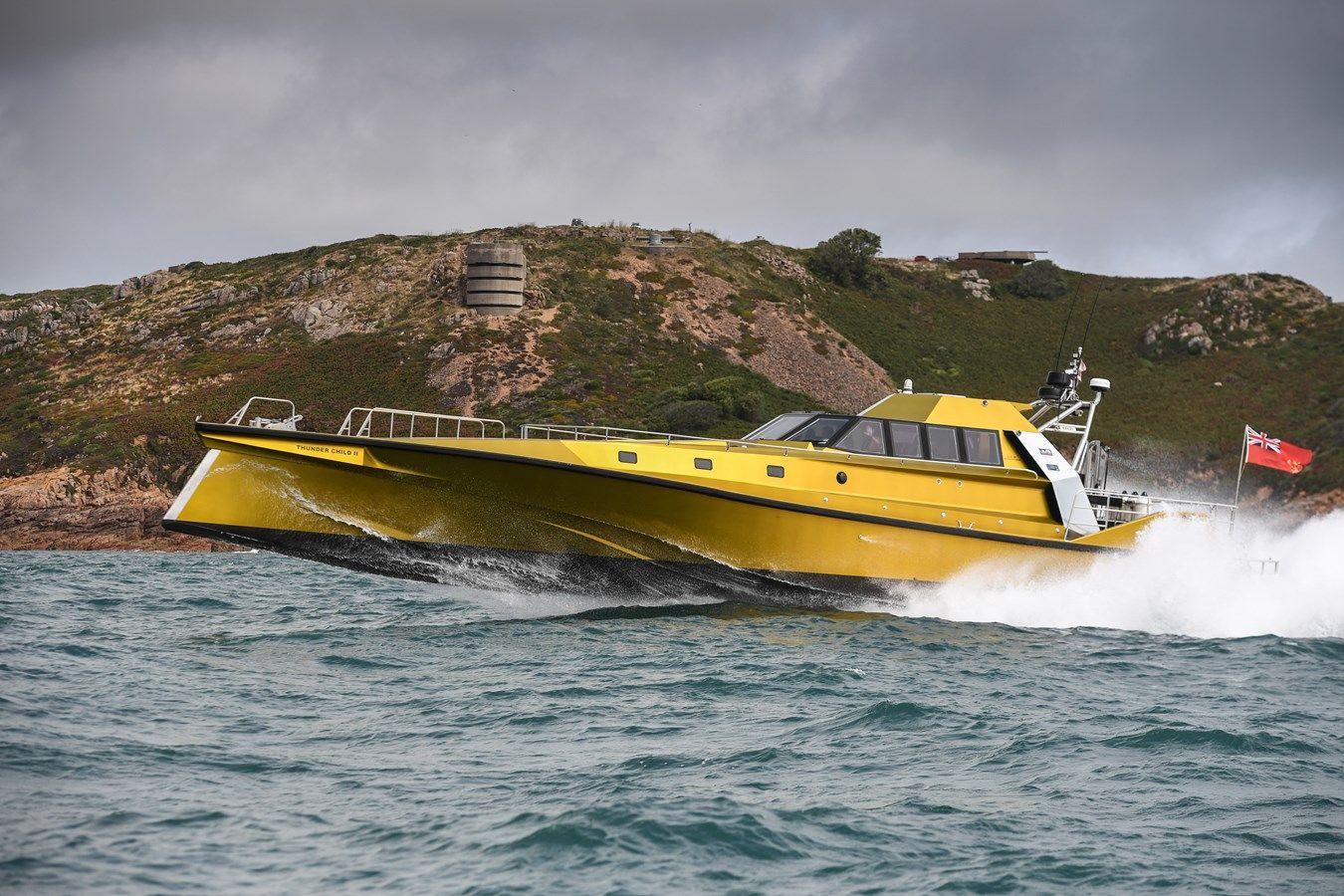
Over the years, Safehaven Marine has also undertaken high-visibility demonstration programs and endurance voyages using its own development craft, such as the Thunder Child series, to validate long-range speed, fuel efficiency, and survivability. These programs, alongside rigorous capsize tests and filmed rough-weather trials, have cemented the company’s identity as a specialist in boats that must work every day, regardless of seas or season. Today, Safehaven Marine continues to operate as a design-led, specialist builder with a global client list and a product line recognized for ruggedness, crew safety, and predictable handling in difficult conditions.
Country of Origin
Safehaven Marine Ltd was founded and is headquartered in Ireland. Ireland’s Atlantic coastline and the challenging conditions of the Celtic Sea and approaches to the English Channel provide an ideal proving ground for the company’s ethos: build boats that perform reliably in real weather. This maritime environment has shaped Safehaven’s design language and rigorous testing culture, which prioritize seakeeping, structural integrity, and operational safety.
Manufacturing Locations
Safehaven Marine’s primary base of operations is in County Cork on Ireland’s south coast, with direct access to Cork Harbour and the open Atlantic for sea trials. The company’s facilities encompass composite fabrication, fit-out, and systems integration under one roof, enabling tight control over quality and schedule. Boats are built using advanced composite construction—typically foam-cored laminates with vinylester resins and carefully engineered reinforcements—to balance strength, stiffness, and weight. Vacuum infusion or controlled hand lay-up methods are applied depending on hull size and mission requirements.
The proximity of the factory to deep water is central to Safehaven’s development cycle. New designs and customer builds undergo progressive sea trials that include calm-water speed and maneuver testing, followed by open-water trials in swell and, when appropriate, in storm conditions. This real-sea validation extends to capsize and self-righting demonstrations on eligible models, a hallmark of the brand’s approach. Systems are installed and commissioned on site, with final outfitting—including shock-mitigating seating, pilot transfer arrangements, thermal and acoustic insulation, and electronics integration—completed before handover.
The company’s location also facilitates close collaboration with Irish and international classification and regulatory bodies when required, and it supports client acceptance testing in representative sea states. This end-to-end manufacturing and proving setup is a defining characteristic of Safehaven Marine and directly informs the reliability and reputation of its boats.
Ownership and Management
Safehaven Marine Ltd is a privately held Irish company. It was founded by Frank Kowalski, who is widely recognized as the driving force behind the brand’s design ethos and rigorous test culture. Kowalski has long served as Managing Director and lead designer, blending practical sea experience with technical engineering to evolve the Interceptor, Barracuda, and high-speed XSV platforms. Under his leadership, Safehaven maintains a compact, specialist team of composite technicians, marine engineers, naval-architecture professionals, and sea-trial crew. The company operates with the agility of an owner-led yard, allowing it to tailor builds closely to mission profiles and operator feedback while keeping decision cycles short. As a privately owned enterprise, Safehaven’s focus remains squarely on technical excellence and operational reliability rather than volume production.
Reputation and Quality
Within the commercial small-craft sector, Safehaven Marine has earned a reputation for rugged construction, thoughtful ergonomics for professional crews, and predictable handling in harsh conditions. Many of its vessels are specified for daily pilotage in exposed approaches, where consistent seakeeping and safe crew transfer are paramount. Hull structures are engineered for repeated slamming loads; wheelhouses emphasize visibility, noise reduction, and thermal comfort; and onboard systems are selected for durability and ease of maintenance. The company’s willingness to publish unvarnished sea-trial footage—running in breaking surf, taking green water over the bow, and conducting controlled capsize and self-righting tests—has been widely cited in the maritime press and by operators as evidence of design integrity.
Safehaven’s Interceptor series—available in multiple lengths—has become a staple choice for port authorities and pilot organizations that require reliable performance over long service lives. The Barracuda and XSV platforms extend that approach to fast patrol and interdiction roles, where speed must be matched by stability, predictability, and crew safety. Across its range, Safehaven emphasizes correctly engineered centers of gravity, buoyancy distribution, and structural reinforcement around impact zones (keel, forefoot, and spray rails). Systems integration is similarly pragmatic, with robust electrical architecture, redundant bilge and fire systems where applicable, and carefully laid-out engine rooms that support quick inspections underway.
The brand’s quality philosophy is inseparable from its testing culture. By proving designs in Atlantic conditions adjacent to its factory, Safehaven closes the loop between design intent, build execution, and operational feedback. This has led to incremental refinements in hull geometries, damping characteristics, and deck/superstructure ergonomics across successive builds. The result is a product family known less for showroom sheen and more for day-in, day-out reliability when conditions deteriorate. For professional operators—and private owners who seek commercial-grade capability—that reputation is the foundation of Safehaven Marine’s standing in the industry.
Histoire de l’entreprise (Français)
Safehaven Marine Ltd est un chantier naval irlandais fondé en 1996 par Frank Kowalski. L’entreprise s’est spécialisée dans les bateaux de pilotage, les patrouilleurs rapides et les unités de sauvetage, conçus pour opérer en mer agitée. Sa philosophie repose sur des essais intensifs en conditions réelles au large de la côte sud de l’Irlande, y compris des démonstrations de redressement après chavirement sur de nombreux modèles. Les séries Interceptor et Barracuda illustrent cette approche, avec des carènes optimisées pour la tenue à la mer, des structures composites robustes et une ergonomie adaptée aux équipages professionnels. Basée dans le comté de Cork, à proximité du port de Cork et de l’Atlantique, Safehaven gère la conception, la fabrication et les essais en mer sur un même site, garantissant contrôle qualité et réactivité. Entreprise privée dirigée par son fondateur, Safehaven jouit d’une réputation solide auprès des autorités portuaires, gardes-côtes et opérateurs para-militaires pour la fiabilité et la sécurité de ses bateaux.
Pays d’origine (Français)
Irlande. L’environnement maritime exigeant de la côte atlantique irlandaise a façonné la culture d’essais et la priorité donnée à la sécurité opérationnelle chez Safehaven Marine.
Sites de production (Français)
Dans le comté de Cork (Irlande), avec accès direct au port de Cork et à l’Atlantique pour les essais en mer. Fabrication composite, intégration des systèmes et aménagement réalisés en interne.
Direction et propriété (Français)
Propriété privée. Fondateur et dirigeant: Frank Kowalski, également concepteur principal et responsable de la culture d’essais en mer.
Réputation et qualité (Français)
Réputée pour sa tenue à la mer, ses structures robustes et ses essais en conditions réelles, la marque est une référence pour les services de pilotage et de patrouille recherchant une fiabilité éprouvée.
Historia de la empresa (Español)
Safehaven Marine Ltd es un astillero irlandés fundado en 1996 por Frank Kowalski. Especialista en lanchas de práctico, patrulleras rápidas y embarcaciones de búsqueda y rescate, la firma se distingue por probar sus barcos en mar abierto frente a la costa sur de Irlanda, incluidos ensayos de vuelco controlado y autoadrizamiento en numerosos modelos. Las gamas Interceptor y Barracuda combinan cascos de V profunda con construcción compuesta de alta resistencia y ergonomía pensada para tripulaciones profesionales. Con sede en el condado de Cork y acceso directo al puerto de Cork y al Atlántico para pruebas, Safehaven integra diseño, fabricación y validación en un solo entorno. La empresa es privada y está dirigida por su fundador, con una reputación consolidada entre autoridades portuarias, guardacostas y operadores de seguridad por la fiabilidad y seguridad de sus embarcaciones.
País de origen (Español)
Irlanda. Las exigentes condiciones del Atlántico han moldeado la cultura de pruebas y la prioridad por la navegabilidad en Safehaven.
Ubicaciones de fabricación (Español)
Instalaciones en el condado de Cork, con fabricación en compuestos, integración de sistemas y pruebas de mar en el puerto de Cork y el Atlántico cercano.
Propiedad y gestión (Español)
Empresa privada. Fundador y director gerente: Frank Kowalski.
Reputación y calidad (Español)
Alta reputación por navegabilidad, robustez y pruebas transparentes en mar abierto; elegida por servicios de prácticos y patrulla que requieren fiabilidad diaria.
Unternehmensgeschichte (Deutsch)
Safehaven Marine Ltd ist eine irische Werft, die 1996 von Frank Kowalski gegründet wurde. Das Unternehmen baut vor allem Lotsenboote, schnelle Patrouillenfahrzeuge und SAR-Einheiten, die für raue Bedingungen ausgelegt sind. Ein Markenzeichen ist die umfangreiche Erprobung in der Atlantikdünung vor der Südküste Irlands, bis hin zu dokumentierten Kenter- und Selbstaufrichttests bei geeigneten Modellen. Die Interceptor- und Barracuda-Baureihen vereinen tief-V-Rümpfe, widerstandsfähige Verbundkonstruktionen und arbeitsgerechte Ergonomie. Der Standort im County Cork mit direktem Zugang zum Hafen von Cork ermöglicht eine lückenlose Qualitätskette von der Konstruktion über den Bau bis zu Seeerprobungen. Safehaven ist privat geführt; Firmengründer Frank Kowalski fungiert als Managing Director und Chefkonstrukteur. In der Branche gilt die Marke als Synonym für robuste Bauweise, vorhersagbares Handling und verlässliche Einsatzfähigkeit bei schlechtem Wetter.
Herkunftsland (Deutsch)
Irland. Die anspruchsvollen Bedingungen des Nordatlantiks prägen Safehavens Fokus auf Seegängigkeit und Sicherheit.
Produktionsstandorte (Deutsch)
County Cork, Irland: Verbundfertigung, Ausrüstung und Seeerprobung in unmittelbarer Nähe zum offenen Atlantik.
Eigentum und Management (Deutsch)
Privatunternehmen. Gründer und Geschäftsführer: Frank Kowalski.
Reputation und Qualität (Deutsch)
Ausgezeichnetes Ansehen für Sturmseetüchtigkeit, strukturelle Robustheit und praxisnahe Tests; breite Akzeptanz bei Lotsendiensten und Behörden.
История компании (Русский)
Safehaven Marine Ltd — ирландская верфь, основанная в 1996 году Фрэнком Ковальски. Компания специализируется на лоцманских катерах, скоростных патрульных судах и спасательных судах, рассчитанных на работу в тяжёлых условиях. Отличительная черта — реальные испытания в Атлантике у побережья графства Корк, включая демонстрации самовосстановления после контролируемого опрокидывания у соответствующих моделей. Серии Interceptor и Barracuda сочетают глубоководные корпуса, прочную композитную конструкцию и эргономику для профессиональных экипажей. Частная компания, управляемая основателем, имеет прочную репутацию надёжности среди портовых властей и силовых структур.
Страна происхождения (Русский)
Ирландия.
Производственные площадки (Русский)
Графство Корк, с прямым доступом к гавани Корка и открытому Атлантике для ходовых испытаний.
Собственность и управление (Русский)
Частная компания. Основатель и управляющий директор — Фрэнк Ковальски.
Репутация и качество (Русский)
Сильная репутация благодаря штормовой мореходности, прочности корпуса и прозрачным испытаниям в реальных условиях.
Main Competitors
Safehaven Marine Ltd operates in a specialized segment of the commercial small-craft arena—primarily pilot boats, fast patrol/interdiction platforms, and search-and-rescue (SAR) craft optimized for heavy-weather operations. As such, its competitive set spans a mix of European, American, and Asia-Pacific builders with established track records in professional workboats. The following companies are among the main competitors Safehaven typically encounters in tenders and procurement programs for pilotage and government/para-naval duties:
-
Damen Shipyards (Netherlands)
- Why they compete: Damen is one of the world’s largest workboat builders and a benchmark in standardized series production. Its Stan Pilot series has a global footprint, and Damen’s scale, lifecycle support, and financing options make it a frequent bidder on pilot and patrol projects.
- Relevance to Safehaven’s space: Broad portfolio of aluminum pilot vessels, fast patrol craft, and interceptors, coupled with worldwide service infrastructure. Damen’s emphasis on standardized designs contrasts with Safehaven’s highly bespoke, design-led builds—but both compete where ports seek proven, heavy-weather pilot boats.
-
Goodchild Marine Services (United Kingdom)
- Why they compete: A leading UK yard for pilot craft, well known for building Pantocarene-designed ORC pilot boats widely adopted around the British Isles.
- Relevance: Goodchild and Safehaven often attract the same operator profiles—port authorities and pilot organizations that prioritize seakeeping, efficient boarding ergonomics, and through-life support in North Sea and English Channel conditions.
-
Gladding-Hearn Shipbuilding, Duclos Corporation (United States)
- Why they compete: The premier U.S. builder of pilot boats, long associated with C. Raymond Hunt deep-V designs. Many American pilot associations operate Gladding-Hearn boats.
- Relevance: In markets where U.S. operators consider international options, Safehaven’s deep-V composite approach competes technically with Hunt-design aluminum or steel alternatives, especially for high sea-state pilotage.
-
Baltic Workboats (Estonia)
- Why they compete: A well-regarded Baltic/Nordic builder of aluminum pilot boats and patrol craft, known for robust cold-weather capability and modern industrial production.
- Relevance: Competes for tenders across Northern Europe and beyond; offers aluminum monohulls and multihulls in sizes overlapping Safehaven’s Interceptor range.
-
Fassmer (Germany)
- Why they compete: A major German yard with a strong heritage in SAR vessels, patrol craft, and specialized workboats for government and institutional clients.
- Relevance: Where mission profiles emphasize survivability, crew safety, and compliance with stringent rules, Fassmer’s offerings cross-shop against Safehaven’s self-righting-capable models.
-
Rodman Polyships (Spain)
- Why they compete: Large Spanish builder with a broad catalog of patrol, SAR, and professional workboats in composites and aluminum; frequent supplier to Iberian and international operators.
- Relevance: Overlapping sizes and mission sets (pilotage, patrol, SAR) mean Rodman and Safehaven often appear on the same shortlists across Southern Europe, North Africa, and Latin America.
-
Metal Shark (United States)
- Why they compete: Prominent U.S. aluminum builder serving military, law-enforcement, and commercial operators. Offers pilot boat variants alongside patrol/interceptor craft.
- Relevance: In fast-response and interdiction roles, Metal Shark’s rugged aluminum platforms compete with Safehaven’s Barracuda and XSV concepts; in pilotage, they compete where operators favor aluminum construction and domestic (U.S.) sourcing.
-
Cheoy Lee Shipyards (Hong Kong/China)
- Why they compete: Historic builder with decades of experience delivering pilot boats and harbor craft internationally.
- Relevance: Where buyers require established references and cost-competitive series builds, Cheoy Lee competes with Safehaven on pilot vessels and small commercial craft.
-
Tuco Marine (Denmark)
- Why they compete: Builder of the ProZero series, focusing on lightweight composite (including carbon) workboats for pilotage, SAR, and service roles, with strong Arctic/Nordic credibility.
- Relevance: Competes on efficiency, weight savings, and crew-safety ergonomics in cold and rough-water environments similar to Safehaven’s proving grounds.
-
Kewatec (Finland)
- Why they compete: Specialist in aluminum professional craft for the Nordic market, including pilot boats designed for icy waters and harsh sea states.
- Relevance: Competes in Northern Europe where ice reinforcement, heated decks, and winterization are required—attributes that also resonate with Safehaven’s heavy-weather brand.
-
OCEA (France)
- Why they compete: French builder of aluminum patrol craft with a strong export presence to governmental agencies worldwide.
- Relevance: In fast patrol and coastal security roles, OCEA’s aluminum solutions often appear alongside Safehaven’s composite Barracuda and XSV offerings.
-
Rafnar (Iceland)
- Why they compete: Known for the ÖK Hull form and seakeeping claims in RIB and hard-boat patrol/rescue craft.
- Relevance: Where operators emphasize slamming reduction and crew safety in breaking seas, Rafnar competes directly on the heavy-weather narrative that also defines Safehaven.
-
Hart Marine (Australia)
- Why they compete: Australian builder licensed to produce ORC pilot boats for the Australia–New Zealand region.
- Relevance: In Asia-Pacific pilot tenders, Hart Marine’s ORC lineup competes with Safehaven’s Interceptor series on transfer safety, deck ergonomics, and predictable handling.
-
Hike Metal (Canada)
- Why they compete: Experienced Great Lakes/North American builder of pilot, patrol, and SAR craft in aluminum and steel.
- Relevance: Competes regionally in North America where local content, proven cold-weather performance, and established service networks are decisive.
How Safehaven differentiates within this competitive field:
- Seakeeping proven at sea: Safehaven’s brand is closely tied to real-world heavy-weather trials on the exposed Atlantic approaches of Ireland, including documented controlled capsize and self-righting demonstrations on applicable models. This evidence-based approach to performance is a core differentiator in a market where many vessels are judged on paper or in mild conditions.
- Composite construction with structural focus: While numerous competitors build primarily in aluminum, Safehaven emphasizes advanced composite construction for strength-to-weight, corrosion resistance, and damping of vibration and noise—attributes that professional crews value during long pilotage cycles in rough water.
- Deep-V and wave-piercing design DNA: The company has iterated its hull geometries (deep-V with refined forefoot and spray control; wave-piercing bow forms on select high-speed designs) over decades of sea trials. This consistent, design-led evolution targets reduced slamming loads, softer re-entries, and dry decks—critical for pilot transfer safety.
- Self-righting options and safety engineering: Many Safehaven models are designed or configurable for self-righting, a feature that resonates with SAR units, naval/para-naval operators, and pilot organizations facing breaking-bar conditions at harbor entrances.
- Bespoke fit-out and operator-centric ergonomics: Instead of standardizing aggressively, Safehaven typically tailors layouts—boarding platforms, handholds and rails, fendering arrangements, shock-mitigating seating, thermal/acoustic insulation, visibility optimization—to the exact mission profile and sea state regime of each client. This customization appeals to operators who prize human-factor details in tough weather.
Taken together, these attributes position Safehaven as a direct competitor to large industrial groups (e.g., Damen, Fassmer, OCEA) on technical merit, and to specialist pilot-boat yards (e.g., Goodchild, Gladding-Hearn, Hart Marine, Tuco, Kewatec, Baltic Workboats) on seakeeping, safety features, and build philosophy. In patrol and interdiction niches, Safehaven’s Barracuda and XSV platforms are cross-shopped against Metal Shark, OCEA, and Rafnar, among others. The competitive outcome in any given tender typically turns on the operator’s preferred hull material (composite vs. aluminum), the required sea-state envelope, self-righting specification, local service ecosystem, and life-cycle cost modeling.
Current Production Status
Safehaven Marine Ltd is an active, continuing boatbuilder. The company operates from Ireland’s south coast (County Cork), where it designs, builds, outfits, and sea-trials professional craft with direct access to open Atlantic waters. Production is ongoing across the company’s core product families, which are configured and outfitted to order for port authorities, pilot organizations, coast guards, navies and para-naval services, and specialist operators. Key attributes of its current production posture include:
-
Ongoing builds in the Interceptor pilot-boat family:
- The Interceptor series remains the heart of Safehaven’s pilotage offering. These deep-V composite monohulls are specified for reliable, repeatable transfer operations in exposed approaches and bar harbors. Contemporary builds emphasize:
- Structural reinforcement for repeated slamming and torsional loads.
- Deck and superstructure ergonomics that protect crews from green water and spray.
- Pilot transfer systems optimized for local practice: recessed foredecks, high-friction step areas, robust rails and handholds, and specialized fendering and shoulders suited to coming alongside large commercial ships.
- Wheelhouse arrangements that prioritize 360-degree visibility, reduced noise levels, and thermal comfort, with shock-mitigating seating and well-managed HVAC and demisting systems.
- Propulsion options typically centered on twin diesels with shaft drives or, on select missions, waterjets—each paired to the operator’s speed, redundancy, and maneuvering requirements.
- Optional self-righting capability where specified by the mission risk profile and operational doctrine.
- The Interceptor series remains the heart of Safehaven’s pilotage offering. These deep-V composite monohulls are specified for reliable, repeatable transfer operations in exposed approaches and bar harbors. Contemporary builds emphasize:
-
Active production of fast patrol and interdiction craft (Barracuda and other high-speed platforms):
- Safehaven’s patrol/interceptor builds are configured for coastal security, fisheries enforcement, and rapid response. Current projects emphasize:
- High-speed hull forms with stable tracking in quartering and beam seas.
- Shock mitigation and crew protection during high-speed transits in short, steep chop.
- Mission-configurable decks for boarding parties, weapons foundations where permitted, and reinforced towing/bollard arrangements for interdiction or assistance.
- Waterjet or surface-piercing propulsors where shallow-water access and high maneuverability are prioritized; conventional shafts where simplicity and global serviceability lead.
- Signature safety elements carried over from pilot craft—strong sightlines, protected side decks, and resilient fendering—suited to repeated alongside maneuvers.
- Safehaven’s patrol/interceptor builds are configured for coastal security, fisheries enforcement, and rapid response. Current projects emphasize:
-
Continued development and demonstration of high-speed, heavy-weather concepts (e.g., XSV platforms):
- Safehaven’s development craft, notably the “Thunder Child” lineage, have been used to validate high-speed seakeeping, range, and survivability. While these boats often serve as demonstrators, the design language and engineering lessons flow into production patrol and SAR configurations. This R&D-to-production pipeline underpins ongoing refinements in weight distribution, longitudinal stiffness, fuel-system robustness, and sea-state handling.
-
End-to-end build and validation on Ireland’s Atlantic frontage:
- A defining aspect of Safehaven’s current operations is that fabrication, fit-out, systems integration, and sea trials occur in one geographic cluster with immediate access to deep water. Boats are proven not just in calm-water acceptance tests but also in representative swell and, when appropriate, in storms—closing the loop between design, construction, and operational verification before handover.
- Where required by contract, builds are executed to the relevant flag, code, or classification standards. This can include compliance with national pilot boat codes, workboat codes, and (when specified) alignment with rules from classification societies such as Lloyd’s Register, DNV, or Bureau Veritas.
-
Customization and lifecycle support aligned to professional operators:
- Current production emphasizes tailored solutions: electronics suites (radar/plotter/ARPA/WAIS integration), redundant bilge/fire systems, thermal and acoustic insulation packages, crew seating and harness solutions, and boarding aids specific to each harbor’s sea-state regime.
- After-delivery support—spares provisioning, remote diagnostics where fitted, and training/acceptance trials—is integrated into the build program, reflecting the company’s focus on keeping professional crews productive and safe in demanding conditions.
-
Market activity across multiple regions:
- While Safehaven is Irish and conducts much of its development locally, ongoing deliveries and refits are undertaken for clients in Europe, the Middle East, and other international markets. The company’s combination of heavy-weather credibility and tailored fit-out positions it well in geographies where exposed pilotage or coastal security operations are routine.
In practical terms, Safehaven’s “current production status” can be summarized as steady, project-based output with overlapping builds in pilotage, patrol/interdiction, and SAR configurations. Rather than mass production, the company pursues an engineered-to-order model, adapting its proven hull families to the precise demands of each client—boarding practices, typical sea states, speed envelopes, endurance profiles, and regulatory frameworks. This approach enables Safehaven to sustain a high level of technical control and quality assurance across its craft. It also ensures that lessons learned in the company’s hallmark Atlantic trials are directly and continuously incorporated into the boats leaving the factory today.
The result for operators is a fleet philosophy centered on operational predictability in bad weather, structural durability over long service lives, and human-centered design that reduces fatigue and risk during the most critical maneuvers—coming alongside, boarding, and breaking away in swell and wind. In a market defined by mission-critical reliability more than by showroom gloss, Safehaven’s ongoing production reflects a consistent commitment to real-sea performance and crew safety, which remains the company’s competitive identity.
Frequently Asked Questions
Question: What type of vessels does Safehaven Marine Ltd specialize in? Answer: Safehaven Marine Ltd specializes in professional-grade craft designed for operation in heavy weather, including pilot boats, fast patrol/interceptor vessels, and search-and-rescue (SAR) platforms. The company’s designs are characterized by deep-V hulls, robust composite construction, and seakeeping features engineered for exposed sea states, making them suitable for daily port pilotage and coastal security roles.
Question: What is distinctive about the company’s design and testing philosophy? Answer: A defining trait is the emphasis on proving boats in real conditions. Prototypes and production hulls are sea-trialed in open Atlantic swell and, when appropriate, in strong wind and breaking seas. This practice informs hull geometry, structure, and ergonomics. Many models undergo controlled capsize and self-righting demonstrations where specified. The approach prioritizes predictable handling, crew safety, and structural endurance over long service lives.
Question: Which construction materials are used? Answer: Safehaven focuses on advanced composite construction using foam-cored laminates with high-quality resins and reinforcements. This yields a stiff, strong, and corrosion-free structure with favorable fatigue characteristics under repeated slamming. Composites also contribute to lower noise and vibration levels in the wheelhouse—key to reducing crew fatigue during long pilotage cycles.
Question: Are the boats self-righting? Answer: Many models can be specified with self-righting capability, depending on mission and operator requirements. Self-righting results from the combination of hull stability, carefully managed centers of gravity, and buoyant superstructures with sealed volumes. Air intake closures and system arrangements are engineered so that propulsion and electrical systems can survive inversion events within the design envelope, allowing the vessel to recover orientation rapidly.
Question: What propulsion configurations are typical? Answer: Twin inboard diesel engines are standard across most builds, paired with conventional shaft drives on pilot boats or waterjets/surface-piercing drives on fast-interdiction variants. The choice depends on required top speed, maneuvering style, fuel efficiency, and local maintenance preferences. Engines from widely supported manufacturers are commonly selected to match client service ecosystems.
Question: How fast do Safehaven boats go? Answer: Performance varies by model and fit-out. Pilot boats in the Interceptor series commonly reach top speeds around 28–35 knots, optimized for reliable handling in rough water rather than pure peak speed. Fast patrol/interceptor variants (e.g., Barracuda or XSV-based designs) can reach higher top-end speeds when specified with jets or surface drives, exceeding 40 knots in suitable configurations. Cruise speeds are typically selected to minimize slamming loads and preserve crew comfort.
Question: Do these vessels meet classification or code requirements? Answer: Builds are configured to comply with the operator’s regulatory framework, which may include national workboat/pilot boat codes and, when specified, alignment with recognized classification society rules. Structural design, stability documentation, and safety systems integration are tailored to the tender or flag-state requirements.
Question: What are the key safety features for pilotage and SAR work? Answer: Safety is engineered into deck ergonomics and wheelhouse layouts. Features include robust fendering systems and shoulders for repeated alongside maneuvers, high-friction boarding areas, grab-rail logic optimized for wet decks, sheltered side decks, anti-slam seating where specified, excellent all-round visibility, redundant bilge pumping, fire suppression solutions where applicable, and thermal/acoustic insulation packages that help maintain alertness. Many models offer self-righting capability and carefully tested watertight integrity at doors and hatches.
Question: How are crew comfort and ergonomics addressed? Answer: Wheelhouses are designed for low noise and vibration with high-quality glazing and demisting, ample sightlines to bow and quarters, and clear access to side decks. Seating positions are arranged to reduce fatigue and enhance communication during critical maneuvers. Below the wheelhouse, many models include a forward cabin with berths, a galley module on some builds, and a dedicated heads compartment, enabling long duty cycles with proper rest and hygiene.
Question: What maintenance considerations are built into the design? Answer: Engine rooms are laid out for clear access to filters, strainers, and service points. Electrical installations emphasize robust cable routing and labeling. Composite structures eliminate routine corrosion issues associated with metal hulls in saltwater. Fender systems, rub rails, and sacrificial elements are specified for quick replacement. Where jets are fitted, service access and strainers are designed for rapid clearing in debris-prone waters.
Question: Can the vessels be customized for unique missions? Answer: Yes. While core hull platforms are standardized within each series, Safehaven builds are typically engineered-to-order. Operators can specify boarding arrangements, electronics and sensor packages, propulsion type, seating, storage for gear, stretcher provisions for SAR roles, thermal packages for cold climates, and other mission-critical items, resulting in a boat tuned to the operator’s sea states, transfer methods, and endurance profiles.
Question: What is the typical range and fuel capacity? Answer: Ranges are adjusted to mission profiles. As a broad indication, pilot boats in the 11–15 m range often carry enough fuel for 300–500 nautical miles at moderate cruise, depending on displacement, engine selection, and sea state. Patrol and interceptor configurations can be optimized for higher sprint speeds or extended endurance, with fuel capacity scaled accordingly.
Question: Are aluminum builds offered? Answer: The manufacturer’s core competency is advanced composite construction for strength-to-weight and acoustic advantages. The majority of delivered pilot and patrol craft are composite. Where projects demand alternative materials, availability and approach would be determined by the specific tender’s requirements.
Question: How do Safehaven hulls handle heavy weather? Answer: Their deep-V geometries feature fine entries and controlled spray management to reduce slamming and keep decks drier. The balance of deadrise, strakes, and weight distribution is tuned to maintain tracking in quartering seas and limit broaching tendencies, while providing recoverable heel characteristics in beam seas. For operators, the practical outcome is predictable behavior around large ships and in bar conditions.
Question: What boarding solutions are typical for pilot transfer? Answer: Common solutions include recessed foredecks or sheltered side decks with carefully positioned handholds, molded-in anti-skid, and heavy-duty fendering optimized for contact with a ship’s side. Step heights, gate placements, and lifeline arrangements reflect local pilotage practices. Visibility from the helm to the boarding zone is a design priority.
Question: Do these vessels support modern navigation and situational awareness suites? Answer: Yes. Typical integrations include IMO-compliant radar, GNSS/GPS and plotter systems, AIS, ARPA-capable radar, thermal imaging or low-light cameras as needed, and resilient communications suites. Electrical architectures support redundancy commensurate with the risk profile of the operation.
Question: What differentiates the Interceptor series from patrol/interceptor variants? Answer: The Interceptor series is optimized for pilotage and predictable everyday rough-weather operations with emphasis on transfer safety and crew comfort. Barracuda and XSV-based variants aim at higher transit speeds and interdiction capabilities, with deck plans configured for boarding teams, equipment stowage, and in some cases provisions for mounting mission-specific hardware.
Question: Are there accommodations for extended missions? Answer: Many builds provide a forward cabin with 2–4 berths, a compact galley module, and a heads compartment. On larger hulls, additional rest spaces and storage can be incorporated. Patrol and SAR boats often prioritize rapid egress, medical spaces, and shock mitigation over traditional “yacht-like” accommodation.
Question: How is lifecycle supported? Answer: Boats are designed for long service lives in a commercial environment. Structural robustness, careful systems integration, and widely supported engine selections help ensure maintainability. Spare part strategies and operator training can be integrated into the delivery program so crews can uphold readiness in demanding sea states.
Question: What typical certifications or tests accompany delivery? Answer: Depending on the contract, deliveries can include stability documentation, self-righting verification for eligible models, acceptance sea trials in representative sea states, and performance validation on speed, maneuverability, and stopping distances. Documentation aligns with the relevant workboat or pilot boat codes set by the operator’s jurisdiction.
Question: Are these vessels suitable for private owners? Answer: While the brand is focused on professional operators, private owners occasionally select these platforms for their heavy-weather capability and commercial-grade systems. Configurations for private use tend to emphasize noise reduction, comfort seating, and simplified deck gear while retaining the core seakeeping DNA.
Question: How do the boats address crew fatigue? Answer: Noise and vibration mitigation in composite structures, shock-mitigating seating where specified, logical handholds, warm/dry wheelhouse environments, and clear sightlines all contribute to reduced fatigue. The philosophy is that a boat that runs softly, keeps decks dry, and minimizes jolts helps crews make safer, more accurate decisions.
Question: Is ice reinforcement available for cold regions? Answer: For operators in Nordic or sub-Arctic waters, winterization packages can include enhanced heating, window demisting, ice-reinforced fendering, and material selections capable of withstanding low temperatures. The exact level of ice capability is determined per project and local operating rules.
Question: What is the brand’s stance on sustainability? Answer: Sustainability is addressed through efficient hulls that reduce fuel burn at operational speeds, careful material selection for long life, and propulsion choices tailored to local fuel and emissions strategies. Integration with newer engine technologies and digital monitoring supports prudent fuel management across missions.
Question: How are wheelhouse ergonomics handled for pilotage? Answer: The helm is set up for excellent forward and quarter visibility, with controls at arm’s reach and clear access to side decks. Seating arrangements are configured so pilots can observe approach vectors without obstruction, and communications equipment is positioned for quick coordination during boarding and breakaway.
Question: What distinguishes Safehaven’s heavy-weather reputation? Answer: The reputation is built on a culture of empirical testing in real seas, repeated over many years, and on operational feedback from professional users. Structural decisions, hull refinements, and layout improvements flow from this continual loop of trial, analysis, and incremental evolution.
Available Models
Note: The following outlines representative models and typical characteristics. Because these craft are engineered-to-order for professional operators, final specifications (dimensions, speeds, accommodation, and machinery) vary by contract and mission profile.
-
Interceptor 38 (Pilot Boat)
- Length overall: Approximately 11.6–12.0 m (around 38–39 ft)
- Beam: Approximately 3.6–3.8 m
- Typical displacement: Dependent on fit-out; optimized for pilotage duties
- Propulsion: Twin inboard diesel engines on conventional shafts
- Power: Commonly in the 350–425 hp per engine range
- Maximum speed: Typically around 28–32 knots, subject to load and sea state
- Cruise speed: Approximately 22–26 knots in operational conditions
- Fuel capacity: Often around 800–1,200 liters, scaled per mission
- Crew and seating: Wheelhouse seating for 4–6 crew/pilots depending on layout
- Accommodation: Forward cabin with 2 berths (or bench seating), heads compartment; compact galley module on some builds
- Notable features: Deep-V hull for soft re-entries, robust fendering for repeated alongside maneuvers, recessed foredeck options for safe transfer, optional self-righting configuration
-
Interceptor 42 (Pilot Boat)
- Length overall: Approximately 12.8–13.5 m (about 42–44 ft, depending on superstructure)
- Beam: Approximately 4.0–4.3 m
- Propulsion: Twin inboard diesel engines on shafts; waterjets optional on specific tenders
- Power: Often 450–550 hp per engine
- Maximum speed: Typically 30–35 knots when lightly loaded and correctly propped
- Cruise speed: 24–28 knots in work conditions
- Fuel capacity: Commonly 1,200–1,800 liters, mission dependent
- Crew and seating: Wheelhouse for 6–10, depending on pilot seating configuration
- Accommodation: Forward cabin with 2–4 berths, heads compartment; equipment stowage for lines and gear
- Notable features: Proven in exposed pilotage, excellent all-round visibility, heavy-duty fender shoulders, strong handhold logic; optional self-righting capability and enhanced thermal/acoustic packages
-
Interceptor 48 (Pilot Boat)
- Length overall: Approximately 14.7–15.5 m (about 48–51 ft depending on arrangement)
- Beam: Approximately 4.5–4.8 m
- Propulsion: Twin inboard diesel engines on shafts; jets possible by specification
- Power: Typically 500–650 hp per engine
- Maximum speed: Around 28–32 knots depending on displacement, prop selection, and sea state
- Cruise speed: Approximately 24–27 knots
- Fuel capacity: Often 1,800–2,500 liters, tuned to endurance requirements
- Crew and seating: Wheelhouse typically arranged for 8–12 personnel with shock mitigation seats where required
- Accommodation: Generous forward cabin for rest between transfers, with heads; additional storage for heavy-weather gear
- Notable features: High freeboard and spray control for dry decks, rugged structure for repeated slamming loads, optimized pilot transfer ergonomics, optional self-righting and advanced electronics integration for complex traffic approaches
-
Barracuda 42 (Fast Patrol/Interceptor)
- Length overall: Approximately 12.5–13.5 m
- Beam: Approximately 3.8–4.2 m
- Propulsion: Twin inboard diesels with waterjets or surface-piercing drives for high-speed interdiction
- Power: Commonly 500–650 hp per engine, selected for sprint performance and acceleration
- Maximum speed: Frequently exceeds 40 knots in suitable configurations
- Cruise speed: 28–35 knots depending on sea state and payload
- Fuel capacity: Sized for coastal patrol profiles; typically 1,200–1,800 liters
- Crew and seating: Shock-mitigating seats for 4–8; helm optimized for high-speed situational awareness
- Accommodation: Forward or mid-cabin space for rest or mission storage; heads compartment; provisions for stretcher or boarding kit as specified
- Notable features: High-speed stability with predictable tracking, reinforced towing points, deck plans for interdiction/boarding, and configuration options for thermal cameras and specialized communications
-
XSV 17 “Thunder Child”-class (High-Speed Demonstrator/Patrol Derivatives)
- Length overall: Approximately 17 m (about 56 ft)
- Beam: Approximately 4.0–4.5 m (varies with superstructure)
- Propulsion: High-output twin inboard diesels paired with surface-piercing drives or jets, depending on the variant
- Power: High total installed power to support sustained high-speed running in sea states beyond typical leisure envelopes
- Maximum speed: In demonstration configurations, top speeds reported above 50 knots subject to loading, seas, and drive selection
- Cruise speed: High 30s to low 40s knots where sea state allows, with throttle management for comfort and range
- Fuel capacity: Substantial, supporting long, fast transits and offshore operations
- Crew and seating: Shock-mitigating seating for high-speed operations; helm set for long-range visibility
- Accommodation: Spartan but functional, focused on endurance and mission equipment; heads compartment and rest spaces as specified
- Notable features: Wave-piercing bow geometry and longitudinal stiffness tuned for heavy-weather speed; platform used to validate seakeeping principles later embodied in patrol/SAR derivatives
-
Wildcat 53 (Survey/Utility Catamaran) — representative of the builder’s multihull workboat experience
- Length overall: Approximately 16 m (about 53 ft)
- Beam: Broad working beam typical of survey cats; exact width dependent on mission arrangement
- Propulsion: Twin inboard diesel engines on shafts or jets, selected for low-vibration survey speeds and station-keeping agility
- Maximum speed: Typically 18–25 knots, prioritizing efficiency and platform stability over peak speed
- Cruise speed: Low to mid-teens for survey line work; higher for transits when conditions allow
- Fuel capacity: Sized for multi-day missions with continuous hotel loads
- Crew and seating: Wheelhouse configured for survey consoles and crew seating; ample deck space for gear
- Accommodation: Cabins to support multi-day missions, including berths, galley, and heads; dedicated technical spaces for sensors and data systems
- Notable features: Stable multihull platform with low roll accelerations, extensive deck area for handling sensors and deployables, and acoustic considerations for survey payloads
Additional configuration notes across the range:
- Self-righting: Available on many monohull models when specified, achieved through buoyant superstructure geometry, sealed volumes, and stability margins engineered into the design. Acceptance testing can include capsize trials where contractually required.
- Electronics and integration: Navigation suites tailored to operator standards; options for thermal imaging, night vision, and digital comms for patrol/SAR roles; pilotage packages tuned for traffic-dense approaches.
- Human factors: Wheelhouses designed for clear sightlines to boarding zones, low noise and vibration, efficient demisting, and ergonomic communications. Shock-mitigating seating is available for high-speed and long-duration missions.
- Structures and finishing: Foam-cored composite laminates for strength and stiffness; attention to structural continuity at impact and slamming zones; durable, easy-to-maintain interior finishes suitable for commercial duty cycles.
In summary, Safehaven Marine Ltd’s available models share a unifying emphasis on heavy-weather capability, predictable handling, and professional ergonomics. The Interceptor series anchors pilotage missions across a spread of lengths, the Barracuda and XSV-based platforms address high-speed patrol and interdiction requirements, and multihull survey/utility craft demonstrate breadth in mission-ready design. Across the portfolio, the throughline is a pragmatic engineering approach validated by rigorous sea trials and operator feedback, producing boats that are less about headline showroom features and more about real-world reliability, safety, and crew performance in challenging conditions.
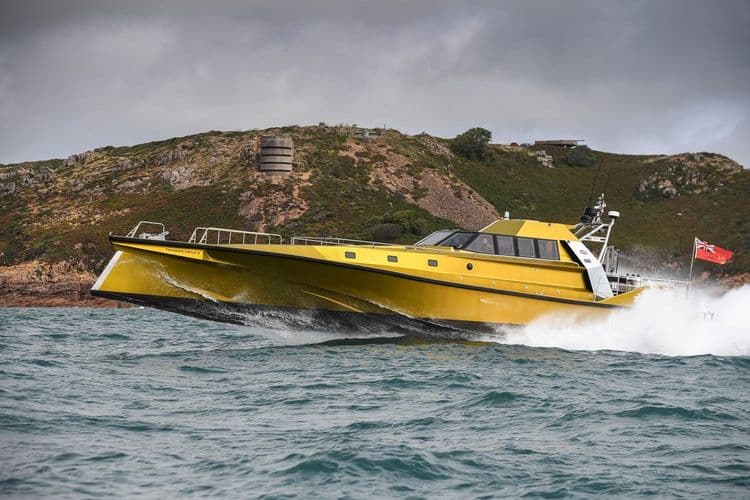

Learn more on the “SAFEHAVEN MARINE LTD”
To learn more on the “SAFEHAVEN MARINE LTD” or to get advice on how to buy or sell a yacht or get a great price for a yacht charter
please call +1 (954) 274-4435 USAOnly deal with professionals!