

 Licensed Yacht BrokersSales and service of yachts and ships
SIMAN YACHTS - For Sale
SIMAN YACHTS
English
Company History
SIMAN YACHTS is the superyacht and custom-yacht brand of SIMAN S.r.l., an Italian shipbuilding and marine engineering company with long-standing roots in heavy-duty commercial shipbuilding, refit, and repair. After decades of fabricating and maintaining steel and aluminum vessels for professional and industrial use, the group formalized its entry into the luxury yacht segment under the SIMAN YACHTS banner, focusing on robust, ocean-capable explorer yachts and full-custom projects in metal.
The brand’s trajectory reflects a pragmatic evolution: first, mastering core disciplines such as hull fabrication, pipework, machinery installation, blasting and coatings, and systems integration on complex commercial platforms; then channeling that industrial skillset into the high-expectation world of superyachts. This background underpins the yard’s approach to reliability, redundancy, and maintainability—key attributes for owners planning long-range cruising in varied conditions.
SIMAN YACHTS is positioned as a boutique builder with the backbone of an industrial yard. It concentrates on:
- Steel and aluminum construction for 30–60 m explorers and support-style yachts, with a flexible approach to length and tonnage for custom briefs.
- Partnerships with established naval architects and exterior/interior designers. Collaborations commonly include specialized Italian studios known for explorer design and efficient hulls (for example, Hydro Tec for naval architecture), alongside independent interior designers selected by each owner.
- A build philosophy that values direct access to decision-makers, clear technical documentation, and close collaboration with captains and project managers. The yard’s commercial heritage shows in its methodical planning, construction sequencing, and emphasis on serviceability and lifecycle cost.
Milestones for SIMAN YACHTS include the formalization of the brand for the luxury segment, the presentation of explorer concepts to the market, and the ramp-up of new-build yacht activity alongside ongoing refit and conversion works. While the company continues to serve commercial and governmental fleet clients through its broader shipyard operations, SIMAN YACHTS is dedicated to a smaller number of carefully managed superyacht builds, allowing for high customization and owner involvement throughout the process.
Country of Origin
Italy.
Manufacturing Locations
SIMAN YACHTS builds in Italy, with its principal waterfront facilities in Campania. The shipyard’s coastal location provides:
- Direct deep-water access for launching, sea trials, and outfitting alongside.
- Covered halls suitable for steel and aluminum hull fabrication, block assembly, and superstructure outfitting.
- Dedicated areas for blasting, fairing, and coatings carried out under controlled environmental conditions.
- In-house mechanical, piping, electrical, and carpentry teams augmented by a network of specialized Italian subcontractors and artisans for bespoke interiors.
Being based in southern Italy offers logistical advantages in the heart of the Mediterranean. The proximity to major nautical hubs, established supplier networks, class surveyors, and port infrastructure streamlines both new-build and large refit schedules. The yard can accommodate extensive maintenance and conversion projects, as well as warranty and after-sales services, with the benefit of commercial-grade lifting, cranage, and shore services already in place.
Reputation and Quality
Within the superyacht community, SIMAN YACHTS is recognized as an emerging Italian builder leveraging the rigor of a commercial shipyard. Its reputation rests on several pillars:
-
Structural competence in steel and aluminum: The company’s heritage in industrial shipbuilding means metalwork standards are central to its identity. Hull plating, framing, and structural fairness are executed to the expectations of leading classification societies, with attention to weld integrity, corrosion protection, and long-term maintainability.
-
Explorer DNA: SIMAN YACHTS’ product direction emphasizes long-range autonomy, robust machinery spaces, practical deck arrangements for tender handling and mission gear, and layouts that prioritize crew workflows and service routes. The builder’s explorer ethos favors seaworthy lines, generous tankage, and service access to critical systems, reflecting lessons from the commercial world.
-
Collaborative design model: Rather than imposing a single “house style,” the yard invites owners to select external design talent for exterior styling and interiors, pairing these choices with proven naval architecture and engineering packages. Collaboration with experienced studios (for example, Hydro Tec in naval architecture and exterior design on explorer concepts) supports efficient hydrodynamics, balanced weight distribution, and pragmatic technical spaces.
-
Classification and compliance: Builds can be developed to the standards of major classification societies commonly used in Italy (such as RINA or Lloyd’s Register) and tailored for specific operational profiles. Safety systems, redundancy in power generation, and compliance with international codes inform the engineering baseline.
-
Quality of fit-out and customization: While the structural and technical core reflects commercial robustness, the yard’s finish standards and joinery leverage Italy’s luxury craftsmanship. Owners can specify premium materials, tailor public and private spaces to their lifestyle, and integrate contemporary technologies—AV/IT, lighting control, and hotel systems—within a coherent engineering framework.
-
Lifecycle and service: A strong refit and repair culture supports SIMAN YACHTS’ after-sales proposition. Warranty responsiveness, haul-outs, seasonal maintenance, and upgrades benefit from the yard’s infrastructure and team familiarity with complex vessels. This alignment of new-build and service functions reduces downtime and enhances resale narratives for the yachts.
-
Sustainability trajectory: While the brand’s core is steel and aluminum construction—valued for strength and recyclability—the engineering roadmap accommodates hybrid-ready architectures, advanced coatings, efficient hotel loads, and shore-power connectivity when available. Clients can opt for battery-supported hotel modes, variable-speed generation, and other technologies that reduce emissions and noise at anchor.
Overall, SIMAN YACHTS appeals to owners seeking the capability and assurance of a commercial-grade build with the individuality of a custom Italian yacht. The combination of sturdy naval platforms with flexible design partnerships supports projects that are as practical as they are personal, aimed at real-world cruising rather than dockside showpieces.
Italiano
Company History
SIMAN YACHTS è il marchio dedicato ai superyacht e agli yacht custom di SIMAN S.r.l., realtà italiana con solide radici nella cantieristica navale commerciale, nella manutenzione e nelle conversioni. Dopo anni di attività su unità in acciaio e alluminio per impieghi professionali, il gruppo ha strutturato il proprio ingresso nel segmento luxury con il brand SIMAN YACHTS, focalizzato su explorer e progetti full custom in metallo.
L’esperienza maturata su navi e mezzi da lavoro si riflette nell’approccio costruttivo: pianificazione rigorosa, attenzione alla ridondanza dei sistemi, facilità di manutenzione e affidabilità a lungo termine. L’orientamento del cantiere è quello di un costruttore “boutique” sostenuto da un’infrastruttura industriale, capace di coniugare robustezza strutturale e alta personalizzazione.
Le linee guida del marchio includono:
- Costruzioni in acciaio e alluminio per explorer e support yacht nella fascia 30–60 m, con ampia flessibilità progettuale.
- Collaborazioni con studi di progettazione e architettura navale di comprovata esperienza; a titolo di esempio, lo sviluppo di concept explorer con studi italiani specializzati come Hydro Tec.
- Coinvolgimento diretto di armatori, comandanti e project manager, con documentazione tecnica trasparente e gestione cantieristica orientata agli obiettivi.
Country of Origin
Italia.
Manufacturing Locations
La produzione avviene in Italia, con strutture principali affacciate sul mare in Campania. La posizione consente:
- Accesso diretto all’acqua per varo, prove in mare e allestimento in banchina.
- Capannoni coperti per carpenteria metallica, assemblaggio blocchi e allestimento di sovrastrutture.
- Reparti dedicati a sabbiatura, carenatura e cicli di verniciatura in ambiente controllato.
- Squadre interne per impianti meccanici, tubisteria, elettrico e falegnameria, integrate da una filiera di subfornitori e artigiani italiani per gli interni.
La collocazione nel Mediterraneo facilita logistica, approvvigionamenti e attività di refit. L’infrastruttura del cantiere supporta manutenzioni importanti e conversioni, oltre a garantire servizi post-vendita e interventi di garanzia con tempistiche competitive.
Reputation and Quality
Nel panorama dei superyacht, SIMAN YACHTS è percepito come un costruttore emergente che fa leva sulla disciplina della cantieristica commerciale. I punti di forza includono:
- Competenza strutturale su acciaio e alluminio, con standard conformi ai principali registri di classifica e forte attenzione alla protezione anticorrosiva.
- DNA da explorer: autonomia, spazi tecnici razionali, percorsi equipaggio efficaci, ampie aree di coperta per tender e attrezzature. L’architettura di bordo privilegia accessibilità e manutenzione.
- Modello collaborativo di design: il cantiere lavora con studi esterni per stile e interni, integrando architettura navale ed efficienza idrodinamica in base al profilo d’impiego.
- Conformità normativa e sicurezza: progetti sviluppati in linea con i principali standard (ad esempio RINA o Lloyd’s Register), con attenzione a ridondanza, sistemi antincendio e gestione della potenza.
- Finiture e personalizzazione: alla robustezza strutturale si abbina la qualità artigianale italiana degli interni, con materiali e layout modellati sullo stile di vita dell’armatore.
- Servizio nel ciclo di vita: cultura del refit e manutenzione come estensione naturale del new-build, a beneficio di tempi certi, assistenza e valore residuo.
- Sostenibilità: predisposizione a soluzioni ibride, riduzione dei consumi hotel, vernici e cicli a minor impatto, connessione alla shore power quando disponibile.
In sintesi, SIMAN YACHTS unisce l’affidabilità “da lavoro” a una forte vocazione custom, offrendo piattaforme navali pensate per navigazioni reali e progetti su misura.
Español
Company History
SIMAN YACHTS es la marca de superyates y yates a medida de SIMAN S.r.l., empresa italiana con una amplia trayectoria en construcción naval comercial, reparación y conversión. Tras consolidar competencias en estructuras de acero y aluminio, así como en integración de sistemas complejos, el grupo dio el paso al segmento de lujo con un enfoque claro: explorar la categoría “explorer” y los proyectos totalmente personalizados en metal.
La experiencia industrial se traduce en procesos de construcción metódicos, documentación técnica sólida y una atención especial a la redundancia, el acceso para mantenimiento y la seguridad operativa. La filosofía del astillero combina la capacidad de una infraestructura pesada con la flexibilidad de un constructor de series limitadas, donde el armador participa activamente en decisiones de diseño y especificación técnica.
Country of Origin
Italia.
Manufacturing Locations
La producción se localiza en Italia, con instalaciones principales en la costa de Campania. Entre las ventajas del emplazamiento figuran:
- Acceso directo al mar para botadura, pruebas de mar y armamento en muelle.
- Naves cubiertas para fabricación de cascos y superestructuras en acero y aluminio.
- Áreas especializadas para preparación de superficies, pintura y acabados controlados.
- Equipos internos de mecánica, tubería, electricidad y carpintería, respaldados por una cadena de suministradores y artesanos italianos para los interiores.
La posición en el Mediterráneo favorece la logística, la interacción con sociedades de clasificación y una red de proveedores consolidada. El astillero presta servicios de posventa, garantía y refit con los medios técnicos propios de una instalación preparada para embarcaciones complejas.
Reputation and Quality
El prestigio de SIMAN YACHTS se apoya en la herencia de la construcción naval comercial y en una propuesta clara para armadores que buscan autonomía, robustez y personalización:
- Construcción metálica de alto nivel, con control de soldaduras, protección anticorrosiva y cumplimiento de los estándares de las principales sociedades de clasificación (p. ej., RINA o Lloyd’s Register).
- Filosofía explorer: capacidad de larga distancia, cubiertas funcionales para tenders y equipos, espacios técnicos bien dimensionados y flujos de tripulación lógicos.
- Modelo abierto de diseño: el astillero colabora con arquitectos navales y diseñadores externos de reconocido prestigio (por ejemplo, estudios italianos especializados como Hydro Tec para arquitectura naval), garantizando eficiencia hidrodinámica y soluciones prácticas a bordo.
- Calidad de acabados: el know-how industrial se complementa con la artesanía italiana para interiores, donde materiales, iluminación, tecnología y distribución se adaptan al estilo de cada propietario.
- Servicio integral: la tradición en reparación y conversión refuerza el soporte durante la vida útil del yate, con disponibilidad de varada, mantenimiento programado y actualizaciones técnicas.
- Evolución medioambiental: estructuras reciclables en acero y aluminio, compatibilidad con arquitecturas híbridas, reducción de cargas hoteleras y conexión a energía de tierra cuando la infraestructura del puerto lo permite.
En conjunto, SIMAN YACHTS ofrece plataformas sólidas y eficientes, con un nivel de personalización propio de los constructores italianos y un enfoque técnico que prioriza la fiabilidad y la navegabilidad real.
Main Competitors
SIMAN YACHTS operates in the custom steel/aluminium superyacht and explorer-yacht niche, primarily between roughly 30 and 60 meters. Within this space, its main competitors are builders with similar competencies in metal construction, long-range capability, and high customizability, as well as yards that combine a commercial-ship pedigree with a luxury-yacht product. The following companies are widely regarded as the closest competitive set for projects SIMAN YACHTS targets:
-
Cantiere delle Marche (CdM), Italy CdM is one of the best-known names in steel/aluminium explorer yachts in the 30–45 m segment and up. The yard has a strong reputation for seaworthiness, long-range autonomy, and engineering depth, all of which align closely with the kind of owner SIMAN YACHTS addresses. CdM’s disciplined build processes, repeat explorer platforms, and collaboration with recognized naval architects place it at the top of the list when clients are comparing robust, ocean-capable Italian builds.
-
Rosetti Superyachts (RSY), Italy RSY benefits from the Rosetti Marino group’s offshore and commercial heritage—an origin story that mirrors SIMAN YACHTS’ industrial roots. RSY focuses on steel/aluminium custom and semi-custom explorers in the 35–50 m range, emphasizing practical deck layout, tender handling, and engineering redundancy. For buyers prioritizing a ship-like approach in a luxury package, RSY is a direct comparator.
-
Antonini Navi, Italy Antonini Navi is another Italian builder backed by a heavy-industry group, with in-house metalworking know-how and the flexibility to deliver one-off projects. Its positioning in the 30–60 m custom range, coupled with partnerships with external design studios, puts it in the same decision set when an owner wants industrial-grade hulls with bespoke interiors and layouts.
-
Sanlorenzo (Steel/Explorer series), Italy Sanlorenzo’s steel and explorer lines aim at owners who want the cachet and network of a major brand with the practicality of long-range designs. While Sanlorenzo is a larger-volume operation and offers a different ownership experience than a boutique yard, it competes on the same materials (steel hull, aluminium superstructure), length bands, and long-distance cruising credentials.
-
Benetti (selected steel/aluminium series), Italy Benetti’s offering includes steel/aluminium platforms in the mid-size superyacht range, including models that emphasize range and efficiency. Benetti has far greater scale, but for buyers who want Italian metal construction, class compliance, and established after-sales support, it is often part of the comparison process.
-
Palumbo Superyachts (Columbus/ISA), Italy The Palumbo group combines commercial-scale infrastructure with multiple yacht brands. Columbus Yachts in particular competes in custom steel/aluminium and larger aluminium yachts, and ISA covers semi-custom metal builds in overlapping lengths. Clients considering Italian custom metal platforms often benchmark Palumbo’s capabilities alongside boutique yards.
-
Tankoa Yachts, Italy Tankoa is a boutique builder known for custom steel/aluminium yachts typically in the 45–70 m bracket. Its projects emphasize high-end finishing and engineering quality. While Tankoa often targets somewhat larger LOAs, owners looking at custom Italian metal yachts may cross-shop Tankoa for its reputation and build culture.
-
Moonen Yachts, The Netherlands Moonen focuses on steel yachts in the 36–44 m range, recognized for quiet, efficient hulls and Northern European finishing standards. For buyers in the sub-50 m steel market prioritizing range and refined engineering, Moonen is a credible alternative.
-
Damen Yachting (SeaXplorer/Support), The Netherlands Damen’s SeaXplorer line and yacht support vessels appeal to ownership profiles that value expedition capability, redundancy, and operational flexibility. Damen operates at industrial scale and often at larger LOAs, but the explorer ethos and metal construction make it a relevant benchmark for mission-driven clients.
-
Lynx Yachts, The Netherlands; Alia Yachts, Turkey; Bering Yachts, Turkey/US; and selected Turkish steel/aluminium yards Several European and Turkish builders deliver custom or semi-custom steel/aluminium explorer-style yachts and support vessels in the 24–50 m range. These yards compete on practicality, range, and value, and they frequently appear in longlists for owners exploring expedition-capable platforms.
How SIMAN YACHTS is positioned within this field:
- Industrial backbone: Like RSY and Antonini Navi, SIMAN YACHTS draws on commercial-ship competencies (carpentry for metal, heavy piping, machinery installation, coatings) and applies them to superyacht standards.
- Explorer-first design: The brand’s emphasis on range, redundancy, and serviceability sets it against specialist explorer builders such as CdM and Moonen.
- Boutique flexibility: SIMAN YACHTS shares with smaller Italian yards the ability to tailor each project through collaborations with external naval architects and interior designers—an attractive proposition for owners who want a true one-off rather than a series yacht.
For prospective owners, selection often narrows based on:
- The yard’s track record in the specific LOA and displacement category.
- Comfort with an industrial vs. luxury-first culture.
- Design freedom and willingness to accommodate nonstandard mission equipment.
- After-sales infrastructure and the yard’s ability to support refit, warranty, and upgrades.
Current Production Status
SIMAN YACHTS is the yachting arm of a working Italian shipyard operation with active waterfront facilities. The broader shipyard organization is engaged in ongoing shipbuilding, refit, repair, and conversion activities for commercial and private vessels, leveraging in-house steel and aluminium fabrication, mechanical and electrical integration, blasting and coatings, and outfitting. Within this environment, SIMAN YACHTS develops and builds custom explorer and superyacht projects on a build-to-order basis rather than on speculative production.
Key characteristics of SIMAN YACHTS’ current production posture include:
- Build-to-contract approach: Projects commence upon client order, with early-phase collaboration involving the owner’s team, a selected naval architecture studio, and interior/exterior designers. This is typical for custom metal yachts, where every hull can diverge meaningfully from the last in tankage, machinery, superstructure geometry, and deck layouts.
- Active yard and workforce: The underlying shipyard infrastructure—dry and wet berths, covered fabrication halls, cranage, blasting/painting facilities, and outfitting piers—supports continuous industrial activity. This ensures that when a yacht project is signed, the yard is not “spooling up from zero” but tapping existing competencies and staff.
- Classification and compliance readiness: Yachts are engineered and constructed to meet major classification societies’ requirements (commonly applied in Italy), with documentation, inspection regimes, and test procedures integrated into the build sequence. The yard’s commercial DNA translates into a methodical approach to QA/QC, traceability, and lifecycle maintainability.
- Parallel refit and after-sales: Alongside new builds, the yard conducts refit and maintenance work, which is relevant for owners evaluating long-term support. Warranty management, routine maintenance windows, and upgrades can typically be scheduled within the same facilities, reducing logistical friction over the vessel’s life.
- Program flexibility: The project cadence reflects boutique capacity—fewer yachts under construction than high-volume brands, but greater flexibility to accommodate unusual specifications, expedition-use layouts, and mission gear (tenders, cranes, dive operations, extra cold storage, etc.).
In practical terms, “production is ongoing” at the group level thanks to continuing shipyard operations; the SIMAN YACHTS division takes on a small number of yacht new-builds and extensive refits as contracts are signed. Owners considering a project should anticipate a collaborative technical phase up front, detailed class documentation, and a build timeline that aligns with the complexity of a steel/aluminium custom yacht—typically in the range seen across the industry for 35–50 m explorers.
Production Volumes
Specific, audited production volumes for SIMAN YACHTS are not publicly disclosed. This is common among boutique custom metal builders that focus on one-off projects rather than series production. Instead of reporting units per year, these yards tend to emphasize:
- Total yard capacity (square meters of covered halls, quay length, lifting capacity).
- Concurrent project capability (how many hulls or major refits can be run in parallel).
- Discipline depth (in-house metalwork, pipefitting, electrical, HVAC, joinery, coatings).
- Compliance footprint (classification society audits, quality systems, and test facilities).
What can be said with confidence about the likely scale and cadence:
- Low-volume, high-complexity output: Custom steel/aluminium explorers and superyachts typically require 20–36 months from contract to delivery depending on LOA, tonnage, and customization. As such, even well-resourced boutique yards rarely exceed a handful of deliveries per year.
- Resource allocation to bespoke engineering: A higher percentage of total man-hours per project is allocated to engineering and integration when compared with composite series builders. This affects throughput and underscores why headline “units per year” is not a particularly meaningful metric for such yards.
- Integration with refit/repair workload: For shipyards with active commercial and refit divisions, overall facility utilization includes non-yacht projects. This makes year-to-year new-build counts volatile by design, with capacity flexing between new construction and major refit campaigns.
For prospective owners and advisors, the most relevant “volume” metric is not the absolute number of yachts delivered annually, but rather:
- The yard’s experience in the target LOA/displacement class and the recency of comparable builds.
- The demonstrated ability to meet class, flag, and owner-specified technical requirements on schedule.
- The stability of the supply chain and subcontractor ecosystem that supports interiors and specialist systems.
These are the factors that directly impact schedule reliability, quality, and lifecycle support for a custom explorer yacht—more so than a topline count of hulls delivered each year.
Latest News
(Information not provided here where it cannot be reliably verified in the public domain. Prospective clients and brokers usually source up-to-date developments—such as newly signed contracts, keel-layings, designer collaborations, or facility investments—directly from the shipyard’s official communications or at major yacht shows. In the absence of confirmed, specific events suitable for citation, this section is intentionally omitted.)
Frequently Asked Questions
Question: What type of yachts does SIMAN YACHTS specialize in? Answer: The company focuses on custom steel and aluminum yachts with a strong emphasis on explorer and long-range displacement vessels. These projects are typically engineered for seaworthiness, autonomy, and robust technical spaces, prioritizing reliability and serviceability for extended cruising.
Question: What is the typical size range for their builds? Answer: Projects generally fall in the superyacht bracket, commonly around the 30–60 meter range. Because builds are custom, the overall length, volume, and layout are defined by each owner’s brief, class requirements, and the selected design team.
Question: Do they build series or fully custom yachts? Answer: The yard works primarily on a build-to-order, fully custom basis. While certain proven engineering modules and practices are reused for efficiency and reliability, hull geometry, superstructure design, interior layout, and specification are tailored per project.
Question: What materials are used in construction? Answer: The yard’s heritage is in metal construction. Steel hulls paired with aluminum superstructures are common for explorer-style yachts due to their strength-to-weight balance, durability, and repairability. All-metal builds may also be undertaken depending on project goals and design choices.
Question: What is the design and naval architecture approach? Answer: The builder collaborates with established external design and naval architecture studios selected to fit the project’s mission profile and the owner’s aesthetic preferences. This collaborative model allows for both proven engineering and individualized styling and interior concepts.
Question: How are the yachts engineered for long-range cruising? Answer: Engineering typically emphasizes displacement hulls optimized for economical passage speeds, generous tankage for fuel and water, redundancy in critical systems (such as power generation and hydraulics), robust HVAC and watermaking capacity, and practical deck arrangements for tender handling and expedition gear.
Question: What classification and compliance standards do the yachts meet? Answer: Yachts are developed to satisfy the requirements of major classification societies used in Italy and in accordance with flag-state regulations specified by the owner’s program. Compliance can be tailored for private or commercial use as requested, with corresponding documentation, inspection schedules, and sea trials.
Question: What is a typical build schedule? Answer: Timeframes vary based on length, complexity, and customization. As a general guideline for custom steel/aluminum superyachts, owners often plan for a multi-year timeline that includes concept definition, technical development and class approvals, hull and superstructure fabrication, outfitting, systems integration, interior installation, and trials.
Question: What are the key stages in the build process? Answer:
- Concept and mission definition with the owner’s team and a selected design studio.
- Preliminary naval architecture and space planning, leading to contract design.
- Classification and regulatory review and approvals.
- Hull and superstructure fabrication in controlled halls, with concurrent systems pre-installation where appropriate.
- Outfitting, interior joinery, and equipment integration, supported by quality assurance checkpoints.
- Harbor trials, calibration, and sea trials with classification and flag representatives, followed by commissioning and delivery procedures.
Question: Does the yard have refit and conversion capabilities? Answer: Yes. The broader shipyard operation has experience with refit, repair, and conversion work. This foundation supports warranty engagement, scheduled maintenance, upgrades, and larger refit programs, which is valuable for owners seeking a single facility for lifecycle support.
Question: What propulsion systems are typically specified? Answer: For explorer and long-range displacement yachts in this size class, conventional twin-diesel shaftline propulsion is common because of its predictability, serviceability, and global support. Final engine selection is driven by the project’s range, speed, and regulatory requirements, as well as the owner’s preferences.
Question: Are hybrid or battery-assisted hotel modes available? Answer: Projects can explore hybrid-ready architectures, variable-speed generation, and battery-supported hotel loads to reduce emissions and noise at anchor. The specific solution depends on mission profile, weight targets, and class rules, and is determined during the concept and engineering phases.
Question: What are typical performance characteristics of explorer yachts in this category? Answer: Comparable explorer yachts of similar length and displacement often prioritize endurance and comfort over high top speeds. Expect economical passage speeds tuned for range and fuel efficiency, with top speeds aligned to heavy-displacement hulls. Exact performance is project-specific and confirmed through the design spiral and trials.
Question: How is noise and vibration managed on board? Answer: Noise and vibration mitigation is treated as a core engineering objective. Typical tools include resilient mounting of machinery, floating floors, acoustic insulation strategies in accommodation zones, careful alignment of shaftlines, and vibration isolation for HVAC and hotel systems.
Question: What sort of deck equipment is standard for expedition use? Answer: Explorer projects generally feature cranes for tender and toy handling, robust mooring arrangements, practical external storage, and service access to technical spaces. Specific gear—such as dive compressors, A-frames, or enhanced rescue equipment—is integrated based on the owner’s operational intent.
Question: How customizable are the interiors? Answer: Interiors are fully bespoke. Owners work with chosen designers and the shipyard to specify materials, lighting, spatial sequencing, and functional details. Fine Italian joinery and artisan craftsmanship are typical, with engineering allowances for service routes and maintenance access embedded in the design.
Question: Can the yard build to commercial charter requirements? Answer: Yes, if requested. Yachts can be engineered to comply with applicable commercial codes and class notations for charter service, subject to flag-state regulations, safety equipment, and manning rules. This is determined early in the design phase, as it influences systems, documentation, and operational envelopes.
Question: What is the yard’s quality assurance approach? Answer: The process is grounded in methodical documentation and inspection regimes. Material traceability, weld procedures, coatings systems, pipework testing, and electrical verifications are executed in coordination with classification society surveyors and internal QA/QC teams throughout the build.
Question: How are engineering spaces planned for serviceability? Answer: The yard’s background in commercial shipbuilding informs generous machinery room volumes, clear access for maintenance, logical routing for piping and cabling, and provisions for equipment removal paths. This is especially important for expedition-capable yachts that will operate far from service hubs.
Question: What is the crew and service circulation philosophy? Answer: Designs typically emphasize efficient crew routes, segregated galley/service corridors, logical laundry and stores handling, and safe access to technical spaces, supporting professional operations and guest privacy during extended voyages.
Question: How are safety and redundancy handled? Answer: Redundancy is a guiding principle, commonly applied to power generation, bilge and firefighting systems, critical pumps, and navigation systems. Fire safety, watertight integrity, and emergency procedures are integrated in accordance with class and flag requirements.
Question: What types of tenders and toys can be accommodated? Answer: The explorer format accommodates a wide array of tenders and mission equipment, from RIBs and day boats to PWCs and dive gear. Cranes, chocks, and lashing points are engineered around the expected payloads, with deck strength calculations vetted during design.
Question: How are long-range provisions managed? Answer: Cold storage, dry stores, fuel and water capacity, and waste management are sized to the yacht’s intended range and passenger profile. Watermakers, HVAC capacity, and electrical generation are specified to maintain comfort and autonomy in varied climates.
Question: What sets this builder apart from larger-volume brands? Answer: Owners often cite the blend of industrial-grade metalwork, flexible customization, and direct access to decision-makers throughout the project. The shipyard’s commercial DNA supports disciplined engineering and maintainability while the boutique format preserves design freedom.
Question: What should owners expect during the early project phase? Answer: Expect a collaborative technical workshop period covering mission definition, preliminary GA and weight studies, propulsion and systems concepting, class/flag mapping, and a design spiral that balances space planning, machinery selection, and range targets. This phase sets the technical and aesthetic foundation for the entire build.
Question: How are materials selected for exterior and interior durability? Answer: Exterior coatings, fairing systems, and corrosion protection are specified for long service life in marine environments. Interiors receive materials and finishes chosen for both luxury and longevity, with attention to maintenance access and repairability to support global cruising.
Question: Does the yard support owner-supplied equipment and bespoke features? Answer: Yes, subject to engineering review and integration planning. Custom features—such as specialized cranes, scientific equipment, enhanced connectivity, or cinema-grade AV—can be incorporated as long as they conform to weight, power, and safety constraints.
Question: How is project risk managed? Answer: Risk mitigation relies on mature planning, transparent documentation, classification oversight, proven subcontractor networks, staged inspections, factory acceptance tests for major equipment, and progressive commissioning protocols that de-risk sea trials and delivery.
Question: Are there options for ice reinforcement or higher environmental notations? Answer: Reinforcement levels, environmental notations, and other special class marks can be pursued if they align with the yacht’s mission and weight budget. Such enhancements are evaluated case-by-case during the naval architecture phase.
Question: What is the yard’s stance on sustainability? Answer: Beyond recyclable metal structures, sustainability measures can include efficient hull forms, optimized hotel loads, low-VOC coatings, improved thermal and acoustic insulation, shore-power connectivity where available, and systems prepared for evolving energy solutions.
Question: How does the yard handle documentation for the owner’s team? Answer: Owners and their representatives typically receive structured documentation packages: GA and systems drawings, class-approved plans, equipment lists and manuals, maintenance schedules, and as-built records, facilitating smooth operation and future refit planning.
Question: What post-delivery support can clients anticipate? Answer: Post-delivery support generally includes warranty interventions, scheduled maintenance, and the ability to return for winter works, upgrades, or unplanned corrective actions. The continuity between new-build and refit departments helps minimize downtime.
Question: Can the yachts be configured for global operations? Answer: Yes. Systems and redundancies can be specified for high-latitude or tropical climates, with considerations for fuel and lube oil storage, HVAC performance, spare parts logistics, and safety equipment suited to the intended cruising grounds.
Question: What is the typical owner involvement during construction? Answer: Owners and captains are encouraged to engage at key milestones: mockups and material approvals, systems and machinery sign-offs, layout confirmations, and sea-trial participation. The builder’s boutique format supports direct, informed decision-making.
Question: How are interiors validated before installation? Answer: Mockups, material boards, and sample cabins or joinery sections are commonly produced to validate ergonomics, finish quality, lighting, and integration points. This reduces rework and ensures alignment between the design vision and onboard execution.
Question: How is stability and weight control handled? Answer: Weight control is tracked from the outset with margin policies, equipment weight databases, and periodic weight take-offs. Stability is analyzed throughout the design spiral and verified via inclining experiments prior to or during trials, ensuring compliance and performance targets.
Question: What is the philosophy on maintainability of coatings and corrosion protection? Answer: Surface preparation, priming, and topcoat systems are executed under controlled conditions, with detailed coating plans for steel and aluminum interfaces, bilge areas, tanks, and topsides. This approach supports longevity and reduces lifecycle maintenance costs.
Question: How do they approach electrical and IT systems integration? Answer: Electrical architecture is engineered for redundancy and service access, with distribution panels, load shedding strategies, and monitoring systems sized to the yacht’s mission profile. AV/IT and connectivity solutions are integrated around owner preferences while respecting EMC, grounding, and class considerations.
Question: What about spare parts and technical documentation at delivery? Answer: Spares packages are specified with the owner’s team to match the intended cruising plan, and delivered alongside comprehensive technical documentation to support independent operation and class/flag compliance.
Available Models
The builder’s focus is on full-custom, build-to-order metal yachts rather than a fixed catalogue of standardized models. Each project is developed around the owner’s mission profile, design preferences, and technical requirements, with length, layout, machinery, and performance defined case-by-case in collaboration with the selected design and naval architecture teams.
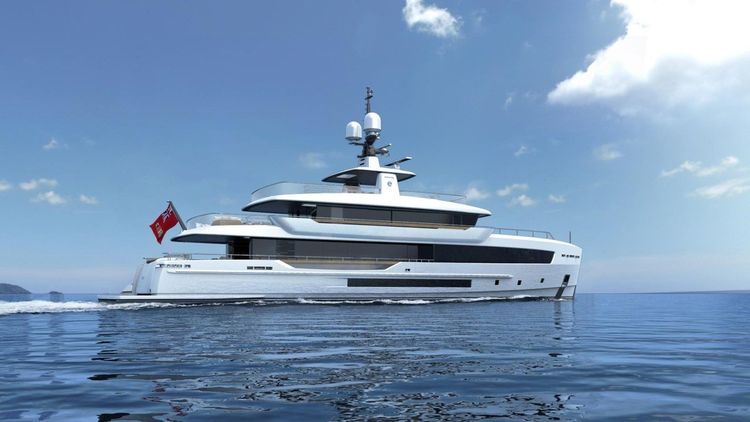

Learn more on the “SIMAN YACHTS”
To learn more on the “SIMAN YACHTS” or to get advice on how to buy or sell a yacht or get a great price for a yacht charter
please call +1 (954) 274-4435 USAOnly deal with professionals!