
 Licensed Yacht BrokersSales and service of yachts and ships
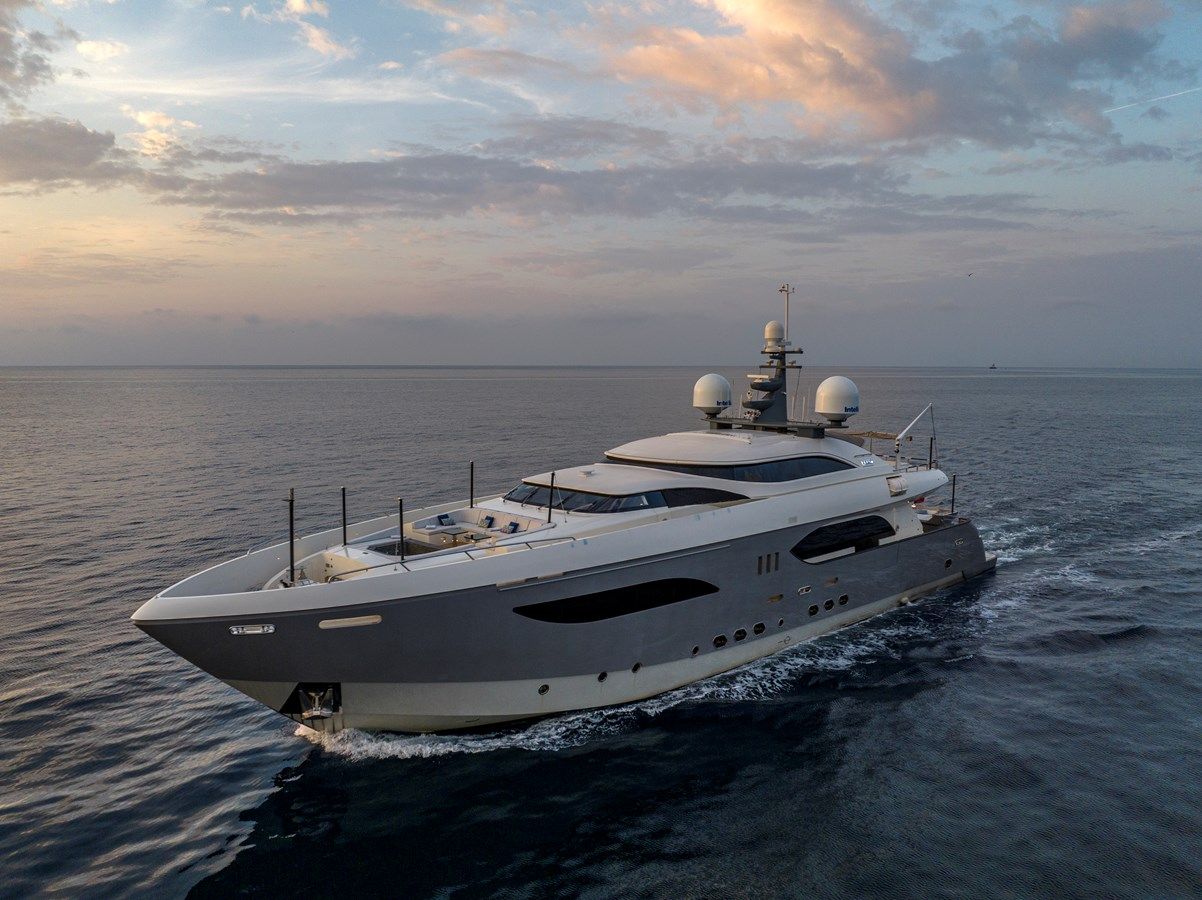
TAMSEN YACHTS - For Sale
Company History
TAMSEN YACHTS is a German superyacht builder that emerged in the 2000s in Rostock on the Baltic Sea. The brand gained recognition for a limited series of semi-custom steel-and-aluminium motor yachts in the 40–41-metre class, often referred to as the Tamsen 41m series. These yachts drew attention for their robust Northern European engineering, contemporary exterior styling, and bespoke interior fit-out tailored to each client.
From the outset, the builder aligned itself with German shipbuilding traditions: meticulous planning, disciplined project management, and a strong emphasis on classification compliance and safety at sea. The company’s early projects were built to the standards of leading classification societies and flag administrations, and they showcased Germany’s tightly integrated supplier network for precision metalwork, systems engineering, and high-end interior carpentry.
While TAMSEN YACHTS operated as a boutique yard with a small number of new builds, its output left a distinct signature in the 40-metre segment. Several sisterships were launched in close succession, demonstrating a mature platform approach: a proven hull and engineering backbone, with custom layouts and interior design packages adapted to individual owners. Among these, a 41-metre yacht widely cited in the market helped solidify the builder’s reputation for quiet technical spaces, thoughtful crew circulation, and expansive guest areas for a yacht of its length.
Over time, the broader industrial base in Rostock has supported not only new-builds but also refit and service. The Tamsen name is also associated in the region with maritime service and repair capabilities, which gave the yacht projects access to experienced tradespeople, large covered halls, and efficient Baltic Sea logistics for trials and delivery. This ecosystem helped TAMSEN YACHTS execute detailed metal fabrication, system installation, and joinery work under controlled conditions.
In the superyacht market, TAMSEN YACHTS is often characterized as a specialized, low-volume builder that prioritized solid engineering and individualized interiors over high production numbers. Its projects are appreciated by owners seeking German build quality, practical sea-keeping, and a tailored aesthetic—attributes that continue to be associated with the brand’s name in brokerage listings and refit discussions.
Country of Origin
Germany.
Manufacturing Locations
TAMSEN YACHTS is associated with Rostock/Warnemünde on Germany’s Baltic coast. The locale offers direct deepwater access for launching and sea trials, proximity to the Kiel Canal for transit to the North Sea and beyond, and a highly developed maritime supply chain.
Key characteristics of the manufacturing environment that have supported TAMSEN YACHTS projects include:
- Climate-controlled construction halls suitable for steel and aluminium work, allowing precision fabrication and fairing in stable conditions year-round.
- On-site or nearby workshops for piping, electrical systems, HVAC, and hydraulics, enabling efficient parallel workstreams and rigorous system integration.
- Dedicated joinery and interior finishing capacity—either in-house or with long-standing German subcontractors—providing fine cabinetry, veneers, stonework, and soft furnishings to superyacht standards.
- Nearby dry-docking, cranage, and launch systems capable of handling yachts in the 40-metre class, with access for outfitters, surveyors, and classification inspectors.
- Baltic Sea proving grounds for noise, vibration, and sea-keeping trials in a range of conditions, facilitating the fine-tuning of comfort and performance.
This Northern European industrial ecosystem remains one of the brand’s strengths, allowing projects to benefit from specialist suppliers within a short logistical radius, strict quality control culture, and experienced maritime labour across mechanical, electrical, and carpentry trades.
Reputation and Quality
Within the yachting community, TAMSEN YACHTS is recognized for German-influenced engineering, careful systems integration, and custom interiors that often punch above their length in usable volume. Key elements of the brand’s reputation include:
-
Engineering fundamentals: The 40–41-metre class platform emphasized robust steel hulls with aluminium superstructures, a conservative and maintainable machinery layout, and careful weight management. Attention to isolation, mounting, and routing has been noted for yielding good noise and vibration characteristics underway and at anchor.
-
Classification and compliance: Builds were executed to leading class standards and flag requirements, reflecting the builder’s disciplined documentation, traceability, and testing regimen—hallmarks of German shipbuilding culture.
-
Interior craftsmanship: Owners could specify distinctive materials and layouts, taking advantage of German and broader Northern European joinery talent. The result has been yachts that feel bespoke, with refined detailing, efficient storage solutions, and durable finishes intended for long-term service.
-
Practical layouts: Recurrent praise focuses on crew workflow, technical access, and guest privacy. Circulation paths, service pantries, and machinery access are designed to facilitate professional operations and ease of maintenance, enhancing reliability and owner enjoyment.
-
Baltic Sea build advantages: The ability to conduct trials in a variety of sea states, combined with close collaboration among local vendors, surveyors, and classification representatives, supports high-quality outcomes and thorough commissioning before delivery.
-
Longevity and serviceability: The brand’s limited-series approach favoured proven solutions and made future maintenance straightforward. This is reflected in pre-owned market commentary, where the ease of surveying systems and the clarity of documentation are often appreciated by buyers and captains.
Taken together, these factors place TAMSEN YACHTS within the cadre of boutique German builders that prioritize engineering integrity, thoughtful living spaces, and tailored finishes. Although the company’s new-build volume has been deliberately limited, the yachts associated with the marque have built a track record for robust construction and refined interiors that continue to attract attention on the brokerage market.
Unternehmensgeschichte (Deutsch)
TAMSEN YACHTS ist eine deutsche Superyacht-Werft, die in den 2000er Jahren in Rostock an der Ostsee auftrat. Bekannt wurde die Marke durch eine kleine Serie halbkundenspezifischer Stahl-/Aluminium-Motoryachten im Bereich von 40–41 Metern Länge. Diese Schiffe kombinierten robuste norddeutsche Ingenieurskunst mit zeitgemäßem Exterieur-Design und individuell ausgeführten Innenausbauten.
Von Beginn an orientierte sich das Unternehmen an den Traditionen des deutschen Schiffbaus: präzise Planung, diszipliniertes Projektmanagement und ein starker Fokus auf Klassifikations- und Sicherheitsanforderungen. Die frühen Projekte wurden unter Aufsicht führender Klassifikationsgesellschaften gebaut und nutzten das dichte Zuliefernetzwerk der Region für Metallbau, Systemtechnik und hochwertigen Innenausbau.
Als bewusst kleinvolumiger Hersteller legte TAMSEN YACHTS den Schwerpunkt auf technische Substanz und maßgeschneiderte Interieurs anstelle hoher Stückzahlen. Mehrere Schwester-schiffe der 41-Meter-Klasse dokumentieren den Plattformansatz der Werft: ein bewährter Rumpf mit solider Technik, gepaart mit individuellen Grundrissen und Materialwelten nach Eignerwunsch. Dazu zählen auch Yachten, die in der Fachpresse wegen leiser Technikräume, durchdachter Crew-Wegeführung und großzügiger Gäste-Bereiche Beachtung fanden.
Rostock/Warnemünde bietet hierfür ideale Rahmenbedingungen: überdachte Hallen, erfahrene Fachbetriebe, kurze Wege zu Klassifikationsgutachtern und direkte Wasserlage für Probefahrten. Diese maritime Infrastruktur trug maßgeblich zur Qualität und Zuverlässigkeit der TAMSEN-Yachten bei.
Herkunftsland (Deutsch)
Deutschland.
Produktionsstandorte (Deutsch)
Die Werft ist mit Rostock/Warnemünde an der Ostseeküste verbunden. Wichtige Standortvorteile:
- Klimatisierte Fertigungshallen für Stahl- und Aluminiumarbeiten.
- Nahegelegene Werkstätten für Rohr-, Elektro-, Klima- und Hydrauliksysteme.
- Hochwertiger Innenausbau in enger Zusammenarbeit mit spezialisierten Tischlereien.
- Hebe- und Dockkapazitäten für Yachten der 40-Meter-Klasse sowie direkte Wasseranbindung.
- Erprobung auf der Ostsee zur Feinabstimmung von Komfort, Geräusch- und Vibrationswerten.
Reputation und Qualität (Deutsch)
TAMSEN YACHTS steht in der Branche für deutsche Ingenieurspräzision, saubere Systemintegration und wertige, kundenspezifische Innenräume. Besondere Stärken:
- Solide Plattformen mit Stahlrumpf/Aluminiumaufbau und wartungsfreundlicher Maschinenanlage.
- Konsequente Klassifikations- und Flaggenkonformität.
- Handwerklich anspruchsvoller Innenausbau und individuell gestaltete Grundrisse.
- Praxisgerechte Wegeführung für Crew und Service bei hoher Gäste-Privatsphäre.
- Gründliche Inbetriebnahme und Probefahrten in unterschiedlichen Ostsee-Bedingungen.
- Langfristige Nutzungs- und Servicefreundlichkeit, was sich im Gebrauchtmarkt positiv niederschlägt.
Histoire de l’entreprise (Français)
TAMSEN YACHTS est un constructeur allemand de superyachts apparu dans les années 2000 à Rostock, sur la mer Baltique. La marque s’est fait connaître grâce à une petite série de yachts à moteur semi-custom en acier et aluminium autour de 40–41 mètres, appréciés pour leur ingénierie nord-européenne, leurs lignes contemporaines et leurs aménagements intérieurs sur mesure.
Dès l’origine, le chantier a mis l’accent sur la rigueur technique, la documentation de classe et la sécurité. Les programmes se sont appuyés sur un réseau régional dense de sous-traitants spécialisés, permettant une fabrication métallique précise, une intégration de systèmes exigeante et un menuisage haut de gamme.
En tant que chantier de niche, TAMSEN YACHTS a privilégié la qualité de construction et la personnalisation plutôt que le volume. Plusieurs sisterships de 41 m témoignent d’une approche « plateforme »: architecture navale et ingénierie éprouvées, plan général et décoration adaptés à chaque propriétaire. Ces unités sont souvent citées pour la discrétion acoustique, la circulation efficace de l’équipage et l’optimisation des espaces invités.
L’écosystème industriel de Rostock/Warnemünde—avec ses halls couverts, ses moyens de mise à l’eau et ses routes maritimes directes—constitue un atout pour les essais en mer, la validation des performances et la livraison.
Pays d’origine (Français)
Allemagne.
Sites de fabrication (Français)
Rostock/Warnemünde (côte baltique) est le centre de production associé à TAMSEN YACHTS:
- Halls climatisés propices au travail de l’acier et de l’aluminium.
- Ateliers proches pour la tuyauterie, l’électricité, la CVC et l’hydraulique.
- Menuiserie d’intérieur haut de gamme avec des partenaires allemands expérimentés.
- Accès direct à l’eau pour la mise à l’eau et les essais en mer.
- Proximité du canal de Kiel, facilitant le transit vers la mer du Nord.
Réputation et qualité (Français)
La marque est réputée pour:
- Une base technique solide (coque acier/superstructure aluminium) et une intégration soignée des systèmes.
- Le respect des standards de classification et de sécurité.
- Des intérieurs sur mesure, durables et ergonomiques.
- Des plans de circulation pratiques pour l’équipage, gage de fiabilité et de confort.
- Des essais complets en Baltique favorisant une mise au point soignée avant livraison. Ces atouts ont valu à TAMSEN YACHTS une image de constructeur boutique allemand, sérieux et orienté client.
Historia de la compañía (Español)
TAMSEN YACHTS es un astillero alemán de superyates que surgió en la década de 2000 en Rostock, a orillas del mar Báltico. La marca ganó visibilidad con una serie limitada de yates a motor semi-custom de 40–41 metros en acero y aluminio, valorados por su ingeniería alemana, su estilo exterior contemporáneo y sus interiores personalizados.
Desde el comienzo, el astillero se alineó con la tradición naval alemana: planificación meticulosa, control documental y cumplimiento de normas de clase. El acceso a proveedores especializados de la región permitió una fabricación metálica precisa, integración avanzada de sistemas y ebanistería de alto nivel.
Como constructor de bajo volumen, TAMSEN YACHTS priorizó la solidez técnica y la personalización frente a la producción masiva. Varias unidades hermanas de 41 m demuestran un enfoque de plataforma probada con adaptación del diseño interior según el armador. Estas embarcaciones son reconocidas por su confort acústico, circulación de tripulación eficiente y espacios de invitados bien aprovechados.
La localización en Rostock/Warnemünde—con naves cubiertas, medios de botadura y acceso directo al Báltico—favorece pruebas exhaustivas, ajustando rendimiento y confort antes de la entrega.
País de origen (Español)
Alemania.
Ubicaciones de fabricación (Español)
Rostock/Warnemünde (costa del Báltico):
- Naves climatizadas para trabajos de acero y aluminio durante todo el año.
- Talleres cercanos para tuberías, electricidad, HVAC e hidráulica.
- Capacidades de ebanistería e interiorismo de estándar superyate.
- Acceso directo al agua para botadura y pruebas de mar.
- Ventaja logística con el canal de Kiel para traslados.
Reputación y calidad (Español)
La marca es apreciada por:
- Fundamentos de ingeniería robustos (casco de acero/superestructura de aluminio) y sistemas bien integrados.
- Cumplimiento estricto de normativas de clase y seguridad.
- Interiores a medida, duraderos y ergonómicos.
- Distribución práctica para la tripulación y mantenimiento accesible.
- Puesta en servicio rigurosa con pruebas en el Báltico. Este conjunto de atributos posiciona a TAMSEN YACHTS como un constructor boutique alemán centrado en calidad y personalización.
Storia dell’azienda (Italiano)
TAMSEN YACHTS è un cantiere tedesco di superyacht affermatosi negli anni 2000 a Rostock, sul Mar Baltico. Il marchio è noto per una limitata serie di motor yacht semi-custom in acciaio e alluminio di circa 40–41 metri, apprezzati per l’ingegneria tedesca, lo stile contemporaneo e gli interni su misura.
Fin dall’inizio, il cantiere ha puntato su pianificazione rigorosa, tracciabilità documentale e conformità alle norme di classifica. L’accesso a una filiera locale altamente specializzata ha consentito lavorazioni metalliche precise, integrazione impiantistica di livello e falegnameria di pregio.
Con una produzione volutamente contenuta, TAMSEN YACHTS ha privilegiato qualità costruttiva e personalizzazione. Le unità sorelle di 41 m testimoniano un approccio a piattaforma collaudata con layout e materiali adattati al singolo armatore. Le soluzioni per il comfort acustico, i percorsi equipaggio e l’efficienza degli spazi ospiti sono frequentemente elogiate.
La posizione a Rostock/Warnemünde, con capannoni coperti e accesso diretto al mare, rende possibili prove in mare complete e una messa a punto accurata prima della consegna.
Paese d’origine (Italiano)
Germania.
Siti produttivi (Italiano)
Rostock/Warnemünde (costa baltica):
- Capannoni climatizzati per lavorazioni in acciaio/alluminio.
- Officine per piping, impianti elettrici, HVAC e idraulica.
- Falegnameria d’interni con standard superyacht.
- Accesso diretto all’acqua per varo e sea trial.
- Collegamento strategico con il Canale di Kiel.
Reputazione e qualità (Italiano)
Punti di forza riconosciuti:
- Piattaforme tecniche solide (scafi in acciaio, sovrastrutture in alluminio) e integrazione impiantistica curata.
- Rigorosa conformità a classi e bandiere.
- Interni su misura e finiture durature.
- Layout funzionali per operatività dell’equipaggio e manutenzione.
- Commissioning approfondito con prove nel Baltico. Tutto ciò colloca TAMSEN YACHTS tra i cantieri boutique tedeschi votati alla qualità e all’attenzione al cliente.
История компании (Русский)
TAMSEN YACHTS — немецкий производитель суперъяхт, появившийся в 2000‑е годы в Ростоке (Балтийское море). Бренд известен небольшой серией полукастомных моторных яхт из стали и алюминия длиной около 40–41 м. Проекты выделяются немецкой инженерией, современным внешним обликом и индивидуальными интерьерами.
С самого начала верфь делала ставку на чёткое планирование, документацию по требованиям классификационных обществ и безопасность. Сильная региональная кооперация обеспечила высокоточный металлоконструктив, качественную интеграцию систем и столярные работы класса «суперъяхта».
Как нишевой строитель, TAMSEN YACHTS ориентировалась на техническую надёжность и персонализацию, а не на объёмы. Несколько «систершипов» 41 м демонстрируют платформенный подход: проверенная архитектура корпуса и машинного отделения плюс индивидуальные планировки и отделка. Отмечаются низкий уровень шума и вибраций, удобная логистика экипажа и рациональные гостевые зоны.
Расположение в Ростоке/Варнемюнде даёт прямой выход к воде, развитую инфраструктуру спуска на воду и испытаний, а также близость к Кильскому каналу — всё это способствует тщательной доводке перед передачей владельцу.
Страна происхождения (Русский)
Германия.
Производственные площадки (Русский)
Росток/Варнемюнде (Балтийское побережье):
- Закрытые климатизированные цеха для стали и алюминия.
- Рядом — мастерские по трубопроводам, электрике, HVAC и гидравлике.
- Высококлассная внутренняя отделка силами немецких подрядчиков.
- Прямой доступ к акватории для спуска и ходовых испытаний.
- Удобная логистика через Кильский канал.
Репутация и качество (Русский)
Основные достоинства:
- Фундаментальная инженерия (стальной корпус/алюминиевая надстройка), грамотная интеграция систем.
- Строгое соответствие требованиям класса и флага.
- Индивидуальные интерьеры с долговечными материалами.
- Практичная компоновка для эффективной работы экипажа.
- Глубокая программа испытаний в Балтике. Эти качества формируют образ TAMSEN YACHTS как «бутик»-верфи с немецким качеством, надёжностью и клиентоориентированным подходом.
Main Competitors
In the market segment where TAMSEN YACHTS became known—custom and semi-custom motor yachts around 37–45 meters with steel hulls and aluminum superstructures—the brand competed against a compact but sophisticated set of Northern European, Mediterranean, and Turkish builders. Buyers evaluating a TAMSEN 41m-series yacht would typically cross-shop the following categories of shipyards:
-
Netherlands (semi-custom focus in the 40m class)
- Heesen Yachts: A leading Dutch builder known for high-performance aluminum yachts and well-developed semi-custom platforms in the 40–50m range. While many Heesen models are all-aluminum and emphasize speed, the Dutch yard competes directly on engineering quality, craftsmanship, and delivery certainty. For clients placing a premium on technical integration, quiet operation, and proven platforms, Heesen sits firmly in the same consideration set.
- Moonen Yachts: Recognized for robust steel displacement yachts below 50m. Moonen’s approach to boutique-scale production, strong project management, and Northern European quality places it close to TAMSEN YACHTS in ethos. Many Moonen builds emphasize sea-keeping, long-range capability, and refined interiors—key decision factors for Tamsen’s clientele.
- Royal Hakvoort Shipyard: Although frequently delivering yachts above 45m, Hakvoort’s reputation for bespoke steel and aluminum projects overlaps with the technical expectations of a Tamsen buyer. For clients open to moving slightly up in size for added volume and range, Hakvoort is a natural comparator.
-
Germany (large-yacht traditions influencing buyer expectations)
- Abeking & Rasmussen; Lürssen; Nobiskrug: These names are most commonly associated with substantially larger superyachts; nevertheless, their presence shapes buyer expectations about “German build” standards: documentation rigor, class compliance, system reliability, and engineering detail. For a buyer wedded to German build culture, these brands often form the halo benchmarks even if the eventual purchase sits in the 40–45m bracket.
-
Italy (semi-custom composite and steel/aluminum in the 35–50m band)
- Benetti: The Classic/Displacement lines in the 37–44m range have been perennial cross-shop options. Benetti competes on brand recognition, a deep semi-custom catalog, and lifecycle services. Clients who prioritize decor customization within a proven platform often evaluate Benetti against Northern European options.
- Sanlorenzo: With steel/aluminum and large composite offerings around 40–50m, Sanlorenzo’s modern design language, interior flexibility, and strong after-sales imprint make it a frequent alternative for Tamsen’s target buyer.
- CRN and Baglietto: Both Italian builders compete primarily in larger sizes but have products and histories that dip into the 40–45m class. Buyers seeking Italian styling combined with steel or aluminum construction may consider them.
-
Turkey (value-forward steel/aluminum builds with strong craft traditions)
- Turquoise Yachts (formerly Proteksan–Turquoise): A respected yard with a track record in 40–50m steel/aluminum yachts. Turquoise competes on value relative to Northern Europe while delivering increasingly polished fit and finish.
- Mengi Yay; Bilgin Yachts: Both have matured impressively over the last decade, offering custom and semi-custom steel/aluminum yachts in the 35–50m range. Owners drawn to expansive interior volumes, competitive delivery timelines, and strong craftsmanship often weigh these yards against Northern European builders.
- Numarine (upper composite range) and other Turkish yards may enter the comparison when buyers consider composite alternatives or look to stretch budget for greater LOA and volume.
-
France, Spain, Northern Europe (boutique builders and refit-heavy yards)
- Builders such as Bloemsma Van Breemen (Netherlands, now integrated into broader Dutch yachtbuilding ecosystems) and certain French yards historically offered bespoke projects in the 40–45m range. While some of these yards are no longer active as stand-alone new-build brands, their legacy and the availability of experienced subcontractor clusters keep them in buyers’ conversations as custom alternatives.
- Refit-oriented German and Dutch facilities can also act as “competitors” indirectly when a buyer decides to acquire a pre-owned 40m Northern European yacht and invest in a comprehensive rebuild rather than commission a new-build. In this scenario, high-end refit yards in Germany and the Netherlands vie for the same budget that might otherwise fund a new 40m.
How these competitors overlap with TAMSEN YACHTS:
- Technical culture: Northern European yards (Dutch and German) align most closely with Tamsen’s emphasis on disciplined engineering and documentation. Clients valuing robust steel hulls, quiet machinery, and meticulous systems integration often compare Tamsen-built yachts directly with Moonen and select Heesen platforms.
- Customization and interiors: Italian yards compete strongly on design flair and interior personalisation within semi-custom frameworks, offering a broader “catalogue” approach and strong designer partnerships.
- Value and volume: Turkish shipyards frequently provide strong value propositions with high interior volumes at a given LOA and increasingly refined finishing, making them compelling competitors for owners balancing budget and quality.
- Lifecycle services: The best-resourced yards differentiate on after-sales, class renewals, and refit support—areas where Dutch and Italian builders with large fleets have significant weight. Tamsen-built yachts, meanwhile, benefit from Germany’s dense maritime ecosystem for service and refit, even when the original new-build brand is quiet or dormant.
Current Production Status
Based on publicly available industry information through 2024–2025, there is no clear evidence that new-build superyacht production is currently ongoing under the TAMSEN YACHTS marque. The brand gained market recognition in the late 2000s for a run of approximately 40–41m steel-and-aluminum displacement yachts built in Rostock/Warnemünde, Germany. In recent years, however, there have been no widely reported major showings at leading yacht shows under the “Tamsen Yachts” banner, no announcements of fresh keel-lays or deliveries, and no active new-build portfolio publicly marketed by the brand across mainstream yacht media.
It is important to distinguish between:
- The TAMSEN YACHTS badge used for superyacht new-builds, and
- The broader Tamsen presence in Rostock’s maritime sector, where service, refit, or commercial/military support work has been conducted under related corporate names over different periods.
From the vantage point of a buyer, captain, or broker assessing the German 40m-class market today, TAMSEN YACHTS appears to be inactive in terms of publishing a current orderbook or offering a defined semi-custom line for immediate sale. Prospective clients looking for a “German-built” new yacht in the 40–45m range therefore typically migrate toward Dutch alternatives, Italian semi-custom steel/aluminum lines, or the increasingly capable Turkish custom yards. Meanwhile, the existing Tamsen-built yachts in service continue to circulate on the brokerage market and undergo periodic refits at Northern European yards, a sign that the platform has ongoing supporter communities in technical and operational circles.
Practical implications for owners and captains:
- Technical support: Although a new-build program is not visible, owners can generally secure technical support through Germany’s maritime ecosystem: independent naval architects, class surveyors, electrical and HVAC specialists, and high-end joinery shops remain active in the Rostock region and across the country.
- Refit path: If an owner’s goal is a yacht with “German build DNA” around 40m, a sensible path is acquiring a well-kept Tamsen-built sistership and investing in a targeted refit—especially in machinery modernization, hotel load management, and interior refresh—executed by German or Dutch refit yards familiar with class renewals and documentation.
- New-build alternatives: For clients committed to commissioning a fresh 40–45m displacement yacht today, the practical route is to engage semi-custom programs in the Netherlands or Italy, or to select a custom steel/aluminum project in Turkey with a project manager who can codify Northern European process discipline during the build.
In summary, while the TAMSEN YACHTS name retains recognition and respect in brokerage and refit conversations, there is no validated, publicly visible new-build production under that marque at this time.
Production Volumes
No reliable, comprehensive, and up-to-date public dataset exists that enumerates total lifetime production volumes for TAMSEN YACHTS with precision. Market commentary typically references a very small number of sisterships in the 40–41m class from the late 2000s, but without a formal, verifiable count published by the builder, classification societies, or an official registry collated specifically under the Tamsen Yachts brand. Given the absence of definitive figures, it is more responsible to refrain from citing a number.
For buyers and researchers who need a working inventory:
- The most practical method is to cross-check brokerage databases, classification records, and flag registries for 40–41m steel/aluminum displacement yachts attributed to Tamsen in Rostock/Warnemünde, built circa late 2000s to early 2010s.
- Captains’ organizations and surveyors with Northern European portfolios can often identify sistership relationships by hull structure, machinery layout, and documentation packages even when yachts have changed names.
This approach yields a functional, case-by-case understanding of the fleet without implying a total production number that cannot be independently verified.
Latest News
There have been no widely reported, verifiable new-build announcements or major corporate relaunch statements under the TAMSEN YACHTS marque in recent years. Instead, the brand’s presence in industry discourse tends to surface in three contexts:
-
Brokerage activity: Pre-owned Tamsen-built yachts around 40–41m appear periodically on the market. Listings often emphasize the hallmarks associated with German build practices: quiet machinery spaces, disciplined systems routing, and solid steel hull fundamentals. While individual transaction details are private, these listings serve as informal reminders that a small but persistent fleet is active.
-
Refit and maintenance: Northern European refit yards, including facilities in Germany and the Netherlands, periodically document or reference refit programs on Tamsen-built yachts. Typical scopes include machinery overhauls, electrical and HVAC modernizations, navcom upgrades, class survey work, and interior refreshes. The consistency of this activity suggests that the yachts remain viable long-term assets with supportable systems and readily serviceable technical spaces.
-
Industry memory and platform continuity: Designers, engineers, and project managers who contributed to the original 40–41m series still circulate in the European superyacht workforce. Their institutional memory, drawings, and system maps are often accessible through professional networks, easing the path for owners seeking technical information or planning a refit. This continuity is one reason Tamsen-built yachts can be kept current through methodical updates, even in the absence of an active new-build yard under the same marque.
What observers can—and cannot—conclude from public information:
- It can be concluded that TAMSEN YACHTS is not presently visible as an active new-build brand marketing a defined series or disclosing an orderbook. There is no recent pattern of participation in headline yacht shows under the Tamsen Yachts name, no steady cadence of press releases, and no newly delivered hulls attributed to the marque in public registries commonly cited by the industry.
- It should not be concluded, however, that the underlying ecosystem has vanished. Germany retains a dense network of maritime suppliers, classification professionals, and refit facilities that can support the lifecycle of the existing Tamsen fleet. Owners of these yachts continue to find pragmatic pathways to keep them compliant, comfortable, and competitive on the charter and private markets.
For prospective clients and industry professionals, the most practical “latest step” is to determine whether the objective is:
- A new build in the 40–45m range: In which case the current market offers strong alternatives in the Netherlands, Italy, and Turkey, each with distinct value propositions. Careful comparison of steel/aluminum platforms, machinery options, noise and vibration targets, and interior volumes will narrow the field.
- A pre-owned Tamsen with refit: In which case due diligence should include a class surveyor’s metallurgical inspection of the steel hull, a vibration and noise profile, electrical load analysis relative to hotel demands, and a modernization plan for navigation and connectivity. When executed in Northern European refit halls, such programs can deliver results aligned with original build standards.
In the absence of breaking corporate news from TAMSEN YACHTS itself, these practical observations are the most reliable guideposts. They reflect the brand’s current reality: quiet on the new-build front, present in the secondary market and refit cycles, and supported by the enduring strength of Germany’s maritime supply chain.
Frequently Asked Questions
Question: Who is TAMSEN YACHTS?
Answer: TAMSEN YACHTS is a German superyacht builder best known for a boutique run of steel-and-aluminium motor yachts around 40–41 meters in length, primarily delivered in the late 2000s. The yard’s reputation is closely tied to German shipbuilding standards: disciplined engineering, rigorous documentation for class, conservative and serviceable machinery layouts, and custom interior craftsmanship. Although not a high-volume producer, the brand is well recognized in brokerage and refit circles for quiet-running, practical yachts with bespoke interiors.
Question: Are they currently producing new yachts?
Answer: In recent years, there has been no widely reported public evidence of a new-build program actively marketed under the TAMSEN YACHTS name. The brand is primarily encountered through existing 40–41m yachts in operation, sales listings, and refit projects. Owners continue to maintain and upgrade these hulls, often using Northern European refit facilities with deep experience in class surveys and systems modernization.
Question: What construction materials and methods characterize TAMSEN YACHTS builds?
Answer: The hallmark platform is a steel hull combined with an aluminium superstructure. This arrangement offers robust sea-keeping and structural longevity, paired with weight savings aloft to assist stability and fuel economy. Fabrication typically includes well-faired plating, carefully planned structural members, and meticulous insulation and damping to control noise and vibration.
Question: What classification and regulatory frameworks were typical for these yachts?
Answer: Yachts from this builder were generally constructed to the standards of leading classification societies and built to comply with relevant flag and safety codes of their era (e.g., MCA Large Yacht Code where applicable). Exact class society and notation can vary by hull, but the documentation culture is consistent with German shipbuilding practice: traceability, testing, and thorough commissioning records.
Question: What range and performance profile can an owner expect from a typical TAMSEN 41m yacht?
Answer: As a displacement-type yacht around 40–41m with steel hull, typical operation centers on efficient cruising rather than high speed. Many comparable yachts in this size and construction category operate with twin medium-speed diesels, achieving an economical cruising speed in the 10–13 knot range, a top speed in the low-to-mid-teens, and an ocean-capable range often quoted in the low-thousands of nautical miles at reduced speeds. Exact figures depend on engine selection, propeller pitch, tankage, and refit history.
Question: Which engine brands were commonly used?
Answer: While specific engine models differ by hull and build specification, yachts in this German 40–41m cohort frequently feature twin Caterpillar or MTU engines. Selections typically prioritize reliability, global service networks, and comfortable acoustic signatures over extreme power density.
Question: How many guest and crew can these yachts accommodate?
Answer: A common layout is five guest cabins for approximately 10–12 guests, often with an owner’s suite on the main deck and four guest staterooms on the lower deck. Crew complements of 6–8 are typical for professional operation, including captain, engineers, deck crew, and interior staff. Layouts vary by hull thanks to the semi-custom ethos of the yard.
Question: What is notable about the interior design and finish?
Answer: Interiors are generally bespoke, reflecting the owner’s materials, décor, and functional preferences. Expect precise joinery, careful integration of stone and veneer, practical storage, and service pantries positioned to support discreet crew movement. The fit-out is known for understated refinement and durability suitable for long-term service.
Question: How is noise and vibration controlled?
Answer: The brand’s platform approach emphasized acoustic insulation, resilient equipment mounts, balanced shaft lines, and routing discipline for piping and ducting. These measures contribute to comfortable sound and vibration levels at cruise and at anchor—one of the frequent compliments paid to the yachts by operators and guests.
Question: What stabilisation systems are typical?
Answer: Yachts of this era and size commonly employ fin stabilizers for underway comfort, with many units upgraded or originally specified with zero-speed functionality to reduce roll at anchor. The exact brand and control architecture vary by build and subsequent refit choices.
Question: What is the typical tender and toy arrangement?
Answer: A transom garage or integrated storage bays are usual, sized for a primary tender in the 5–6m class plus personal watercraft and gear. Launch-and-recovery systems depend on the specific design; some solutions use cranes from upper decks, others integrate side or stern launch mechanisms. Swim platforms facilitate water access.
Question: How serviceable are the machinery spaces?
Answer: Engine rooms in this platform class are known for orderly arrangement, good access to valving and filters, and logical cable trays and piping runs. Clear service corridors and removable panels are common, all aimed at easing routine maintenance and survey inspections.
Question: What are common refit and modernization themes?
Answer: Upgrades usually focus on electrical power management (new gensets or load-sharing logic), HVAC modernization and control, navigation/communications package refresh, entertainment systems, lighting (LED retrofits), stabilizer control updates, and hotel services such as watermakers and freshwater treatment. Paint, fairing, and teak deck renewals are also common in lifecycle refits.
Question: Are these yachts suitable for charter under modern codes?
Answer: Many units were built with class and safety frameworks that can be adapted for charter compliance, subject to current flag and code requirements. A competent management company or surveyor will evaluate lifesaving appliances, firefighting, watertight integrity, crew cabins, and documentation to align with the latest standards.
Question: What about fuel consumption expectations?
Answer: For displacement steel/aluminium yachts around 40–41m, owners typically plan in broad ranges: a few hundred liters per hour at economical cruise for both main engines combined, with additional load for generators depending on hotel demands. Real-world consumption is sensitive to displacement, sea state, stabilizer usage, and hull condition. Sea-trial data and engine load curves provide the most reliable figures for a given yacht.
Question: Which electrical standards and shore-power configurations are typical?
Answer: Northern European builds of this size commonly support three-phase shore connections and can be equipped with frequency converters for global operation. Expect compatibility with common marina supplies in both 50 Hz and 60 Hz regions, subject to the yacht’s specific power-conversion equipment.
Question: What coatings and corrosion-protection approaches are used?
Answer: Steel hulls typically rely on a multi-layer epoxy coating system complemented by cathodic protection (sacrificial anodes or ICCP). Aluminium superstructures require careful isolation from dissimilar metals and dedicated coating systems. During refits, meticulous surface preparation and controlled application conditions are essential to long-term coating performance.
Question: How resilient are these yachts for extended cruising?
Answer: The displacement hull form, robust tankage, and systems redundancy usually support extended regional cruising. Weather routing, preventative maintenance, and proactive spares strategies make transits practical. Many owners use these yachts for seasonal movements across the Mediterranean and Northern European waters, with occasional passages further afield depending on crew experience and vessel preparation.
Question: How do these yachts compare in interior volume to others in the same length?
Answer: The platform is frequently praised for efficient use of volume, with generous owner and guest spaces relative to many peers at similar LOA. Intelligent circulation and service areas help preserve guest privacy while maintaining strong crew operability. Exact gross tonnage varies by hull and fit-out.
Question: What should a buyer focus on during pre-purchase surveys?
Answer: Key priorities include ultrasonic thickness measurements of the steel hull, inspection of bilge coatings, evidence of proper isolation between steel and aluminium structures, shaft alignment and bearing condition, stabilizer systems, HVAC performance, electrical load analysis, and a thorough review of class and maintenance documentation. A sea trial should include vibration and noise profiling at multiple RPM bands.
Question: Is it feasible to add modern hybrid or battery systems during refit?
Answer: In principle, yes. Space and weight studies, thermal management, and class approval are the gating factors. Many owners instead opt for improved power management and high-efficiency hotel loads, which deliver meaningful gains in comfort and noise reduction with modest complexity compared to full hybridization.
Question: Are crew areas adequate for professional operation?
Answer: Crew areas are generally laid out with practicality in mind, offering good access to workspaces and discreet service routes. Mess, laundry, and storage functions are optimized for multi-week itineraries, supporting reliable hotel operations and guest service.
Question: Do these yachts retain value?
Answer: Values are driven by condition, documentation, refit history, and market sentiment. The “German build” perception and boutique nature can support residuals if the yacht is well kept, technically current, and presented with transparent maintenance records. As always, liquidity depends on broader market conditions and buyer preferences.
Question: What is a sensible maintenance cadence for classed yachts of this type?
Answer: Expect annual and intermediate surveys, with a five-year special survey cycle typical for classed vessels. Budgeting for periodic dry-docking, antifouling, anode renewal, valve service, and shaftline inspections is essential. Systems with finite service intervals (e.g., stabilizers, watermakers, load banks) should be tracked through a maintenance management system.
Question: What interior refresh cycles make sense?
Answer: Soft goods often benefit from a 5–8 year refresh. Major décor revisions and layout changes are best synchronized with technical yard periods to minimize downtime and exploit shared logistics such as scaffolding, dust control, and trades availability.
Question: Can these yachts meet contemporary connectivity expectations?
Answer: Yes. VSAT/HTS and 4G/5G solutions can be integrated with modern network controllers, enabling seamless switching and bandwidth management. Refit programs also commonly add enterprise-grade Wi‑Fi and content distribution systems that rival shoreside experiences.
Question: What are typical crew-to-guest service ratios?
Answer: For 10–12 guests, a crew of 6–8 yields professional coverage across deck, engineering, interior, and galley, with watchkeeping and maintenance routines sustained during extended cruising. Charter operations may up-staff for peak-service itineraries.
Question: Are there common design hallmarks?
Answer: Expect contemporary Northern European exterior lines, a balanced sheer, generous sundeck spaces, and substantial glazing for main and upper decks. Inside, the aesthetic varies by owner, but layouts usually favor a main-deck owner’s suite, coherent guest-cabin clusters, and efficient technical corridors.
Question: What is the outlook for long-term parts and technical support?
Answer: Because core machinery and systems come from global OEMs and widely supported marine suppliers, parts and service are achievable through established networks. Germany and the Netherlands, in particular, offer deep vendor ecosystems for electrical, mechanical, HVAC, and carpentry work, which supports lifecycle longevity.
Question: Do these yachts typically feature beach clubs?
Answer: On many builds from the late 2000s, the transom area is configured more as a garage and swim platform rather than a dedicated “beach club” as defined on newer designs. That said, refits can transform the aft area with modular furniture, lighting, and deployable shade systems to create a beach‑style environment at anchor.
Question: What distinguishes TAMSEN YACHTS from volume builders?
Answer: A boutique philosophy—limited production, individualized interiors, and a disciplined engineering baseline—results in yachts that feel personal, robust, and serviceable. They are conceived less as catalogue products and more as tailored platforms with a strong technical backbone.
Question: What due diligence should a prospective owner perform on documentation?
Answer: Obtain class certificates and survey reports, machinery service records, wiring and piping schematics, stability booklets, weight reports, equipment lists, and refit invoices. Cross-check serials and maintenance logs against OEM recommendations and verify any upgrades or modifications with as-built drawings where available.
Question: How adaptable are these yachts to different cruising regions?
Answer: With appropriate spares, provisioning, and routing, they can cruise comfortably across the Mediterranean, Northern Europe, and trans-ocean passages as planned operations. Shore-power conversion and climate-control tuning ensure comfort from cool Baltic summers to warmer Mediterranean and Caribbean seasons, provided the yacht is set up accordingly.
Question: Are there known limitations?
Answer: As with any steel displacement yacht of this era and size, top speed is modest, and meticulous coatings and corrosion management are vital for hull longevity. System modernization may be desirable to align with contemporary comfort, connectivity, and environmental expectations.
Question: What owner profiles tend to choose these yachts?
Answer: Owners who value engineering clarity, quiet operation, practical layouts, and the tactile appeal of bespoke interiors often find this platform compelling. It attracts those comfortable with a measured, craft-led product rather than a mass-market model lineup.
Question: What is a prudent crewing and maintenance philosophy?
Answer: Employ a technically minded captain and engineer, maintain a preventative maintenance program with clear task cycles, lean on class survey calendars, and schedule refits with reputable Northern European yards that understand steel/aluminium superstructures and the documentation standards expected for classed vessels.
Available Models
TAMSEN YACHTS did not maintain a wide public catalogue of distinct series across many size brackets. Instead, the builder became known for a limited semi-custom platform commonly referred to in the market as the “Tamsen 41m” (or “41m series”). While exact specifications vary by hull due to owner customization and incremental engineering changes, the following profile describes the core characteristics of that platform:
- Model: Tamsen 41m (Semi-Custom Series)
Length overall (typical): Approximately 40–41 meters
Construction: Steel hull with aluminium superstructure (displacement)
Beam and tonnage: Vary by hull due to customization; expect a generous beam for the length and a gross tonnage aligned with a full-displacement 40–41m yacht
Propulsion: Twin diesel engines from established OEMs (commonly MTU or Caterpillar for this class and era)
Performance: Economical cruise typically in the 10–13 knot range; maximum speed generally in the low-to-mid-teens, subject to engine selection, propellers, and displacement
Range: Long-range capability for bluewater itineraries; often cited in the low-thousands of nautical miles at reduced speed (exact range depends on tankage and loading)
Stabilization: Fin stabilizers, with many installations featuring zero-speed capability
Power generation: Twin gensets sized for superyacht hotel loads, often with load-sharing; shore-power conversion for international operation may be fitted or added in refit
Guest accommodation: Often five cabins for 10–12 guests; owner’s suite frequently on the main deck, with multiple en-suite guest staterooms on the lower deck
Crew accommodation: Typically 6–8 crew, including captain, engineer, deckhands, and interior staff
Interior: Fully bespoke fit-out with Northern European joinery and material craftsmanship; owners typically selected veneers, stones, textiles, and lighting concepts to taste
Exterior living: Expansive sundeck for a 41m; al-fresco dining areas on main and upper decks; swim platform aft
Tender and toys: Transom garage or designated storage spaces for a primary tender (around 5–6m) plus personal watercraft, with dedicated launch-and-recovery solutions
Systems integration: Emphasis on maintainability and clean routing in machinery spaces; conservative, service-friendly layouts designed to minimize operational downtime
Classification and compliance: Built to leading class society standards and flag requirements of the period; actual notations vary by hull
Notes on variability within the 41m series:
- Interiors: No two yachts are identical; each reflects owner preferences in layout (e.g., master cabin configuration, VIP positioning, crew traffic flow), finishes, and furniture.
- Machinery: Engine model choices and auxiliary systems can differ; some yachts have undergone refits that include new gensets, upgraded stabilization controls, and modernized HVAC.
- Electrical: Shore-power flexibility and frequency conversion can be original or refit additions; onboard distribution and automation systems may have been updated over time.
- Exterior features: Rail heights, sunshade systems, deck furniture arrangements, and tender handling solutions often differ to suit the owner’s intended use profile.
Guidance for prospective owners evaluating the Tamsen 41m platform:
- Seek hull-specific technical data: Confirm the exact engine types, gearbox ratios, shaftline details, prop pitch, stabilizer brand/model, tank capacities, and electrical single-line diagrams.
- Validate class documentation: Obtain current or most recent class status, survey findings, and safety equipment certifications.
- Compare layouts: Because interior plans vary, assess crew flow, service pantries, dumbwaiter locations if fitted, and guest privacy in the context of your operational model (private, charter, or mixed).
- Plan for modernization: Budget for navigation electronics, connectivity, audio-visual, lighting, and HVAC upgrades if not recently refurbished; these deliver substantial daily-life improvements aboard.
While the 41m series is the recognized signature of TAMSEN YACHTS, the brand’s low-volume approach and high degree of customization mean that each yacht should be assessed on its own merits. Prospective buyers benefit from detailed surveys, performance sea trials, and a comprehensive engineering review aligned with the intended cruising plans and service model.

Learn more on the “TAMSEN YACHTS”
To learn more on the “TAMSEN YACHTS” or to get advice on how to buy or sell a yacht or get a great price for a yacht charter
please call +1 (954) 274-4435 USAOnly deal with professionals!