
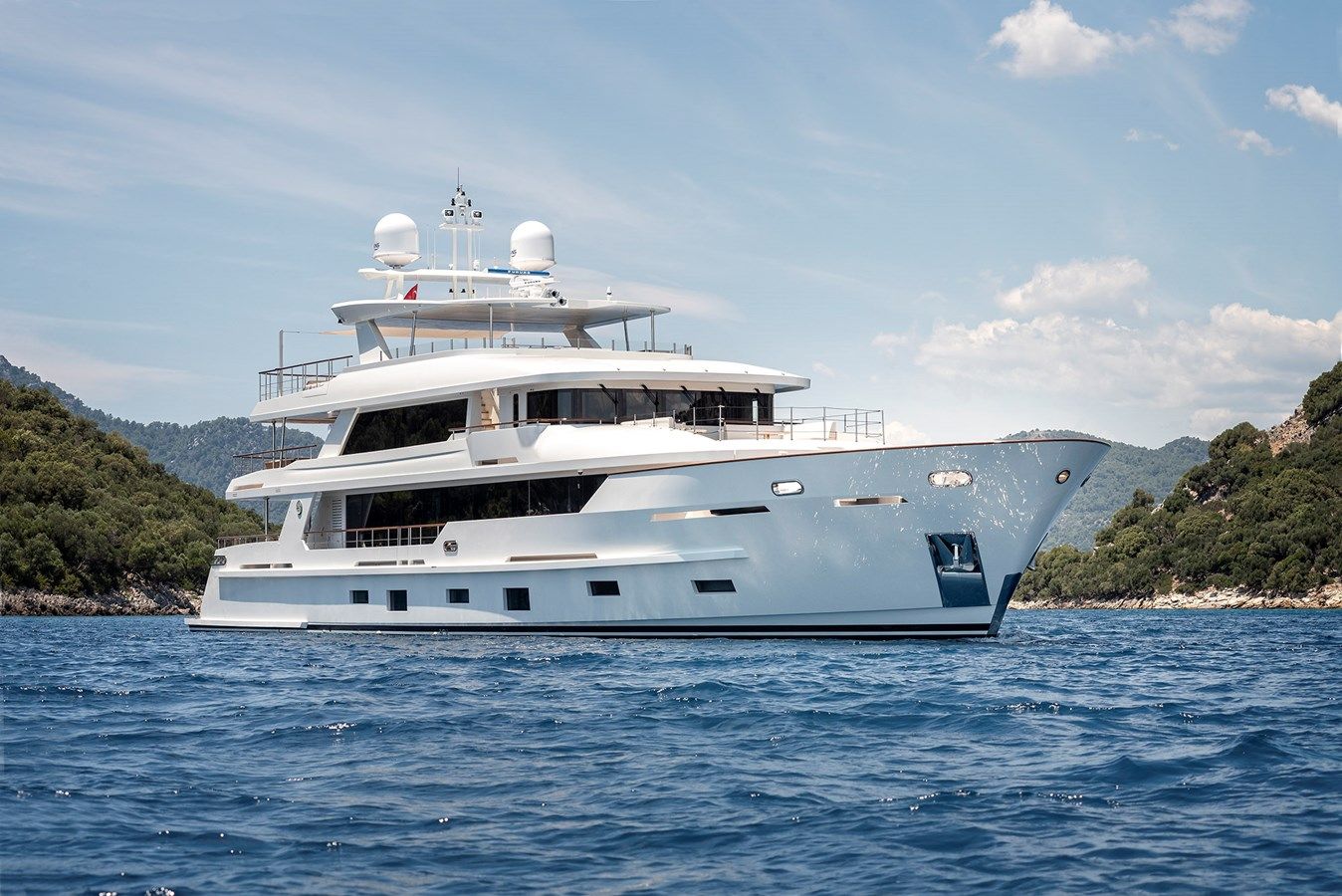
 Licensed Yacht BrokersSales and service of yachts and ships
YILDIZ SHIPYARD - For Sale
Yildiz Shipyard
Company History
Yildiz Shipyard is a Turkish shipbuilding and yacht-construction company recognized for its work in custom steel and aluminum vessels and for comprehensive refit projects. Rooted in Istanbul’s vibrant maritime ecosystem, the shipyard grew alongside the rapid expansion of the Tuzla shipbuilding cluster, which evolved into one of the Mediterranean’s most dynamic hubs for superyacht construction and marine engineering. Over the decades, Yildiz Shipyard has combined traditional craftsmanship with modern production methods, channeling Turkey’s strong metalworking heritage into contemporary yachtbuilding standards.
From its early activity in commercial ship construction and repair, the yard progressively developed specialized competencies for the yachting market—expanding its offering from robust hull fabrication to turnkey superyacht builds with advanced systems integration and high-spec interiors. This evolution was supported by the yard’s access to a deep supply chain of specialized subcontractors, marine equipment suppliers, and skilled artisans located in the greater Istanbul region. As demand for steel and aluminum expedition-style yachts and long-range cruisers increased, Yildiz Shipyard established itself as a capable partner for owners and design studios seeking custom solutions and competitive lead times.
The shipyard’s trajectory has emphasized flexibility: it builds new custom projects, undertakes substantial conversions, and executes major refits on yachts and workboats. Its technical teams are familiar with the standards of leading classification societies, the requirements of international flag administrations, and the expectations of experienced captains and surveyors. This broad technical base has helped the shipyard deliver projects for a global client base and adapt to evolving technologies in propulsion, emissions management, and onboard comfort.
Country of Origin
Turkey. Yildiz Shipyard was founded and developed in Istanbul, an historic maritime center at the crossroads of Europe and Asia. The Turkish yachtbuilding sector is widely regarded for combining value, engineering depth, and artisanal finishing across a broad range of vessel sizes.
Manufacturing Locations
Yildiz Shipyard operates in the Tuzla district of Istanbul—the country’s principal industrial zone for ship and yacht construction. Tuzla houses a dense network of yards, outfitters, and technical service companies, enabling efficient project logistics from steel cutting and hull assembly to painting, carpentry, systems integration, and commissioning.
Key characteristics of the facility include:
- Enclosed construction halls suitable for steel and aluminum fabrication and for controlled-environment finishing.
- Quays and outfitting berths that allow parallel workstreams, sea trials, and efficient handover procedures.
- Access to heavy-lift capability and specialized subcontractors for piping, HVAC, electrical systems, and interior joinery.
- Proximity to classification society offices, surveyors, and marine equipment distributors, streamlining approvals and supply.
This integrated ecosystem supports both new-build programs and complex refits, with the ability to accommodate multi-vessel workflows and seasonal peaks.
Reputation and Quality
Within the international yacht community, Yildiz Shipyard is associated with solid engineering, practical build solutions, and a collaborative approach with designers, naval architects, and owner’s teams. The shipyard’s reputation rests on several pillars:
- Engineering Competence: The yard’s heritage in steel and aluminum work translates to robust hull structures and a methodical approach to systems layout, maintenance access, and long-term serviceability.
- Standards and Compliance: Projects are developed to the requirements of leading classification societies and built to the expectations of major flag administrations and yacht codes. This ensures consistency in safety, structural integrity, and machinery installation.
- Value and Timelines: Turkish yards are known for competitive cost-to-quality ratios. Yildiz Shipyard leverages the Tuzla cluster’s supply-chain density to control schedules and maintain momentum across fabrication, outfitting, and commissioning phases.
- Craftsmanship: Interior finishing draws on a regional tradition of woodwork and bespoke metal detailing, with the flexibility to execute modern minimalist or classic luxurious styles according to the designer’s brief.
- Refit Capabilities: Alongside new builds, the shipyard is equipped to undertake large-scale refits and conversions, including structural modifications, machinery upgrades, paint and fairing programs, and complete interior renewals—often to tight seasonal windows.
Owners, captains, and project managers frequently note the advantages of building in an ecosystem where naval architecture, class approvals, suppliers, and specialist trades are geographically concentrated. Yildiz Shipyard aligns with this model, bringing together dependable engineering practice, adaptable production, and attentive after-sales support that recognizes the realities of global yacht operation.
Yildiz Tersanesi (Türkçe)
Şirket Tarihçesi
Yildiz Tersanesi, çelik ve alüminyum gövdeli özel yapım tekneler ile kapsamlı refit projelerinde uzmanlaşmış, İstanbul merkezli bir Türk gemi ve yat inşa kuruluşudur. Tuzla gemi inşa bölgesinin büyümesiyle eşzamanlı olarak gelişen tersane, Türkiye’nin güçlü metal işleme geleneğini modern yat inşa standartlarıyla birleştirerek sektörde kendine sağlam bir yer edinmiştir.
İlk yıllarında ticari gemi inşası ve onarım faaliyetleri yürüten tersane, zamanla yat piyasasına odaklanmış; sağlam gövde imalatından anahtar teslim süperyat projelerine, ileri sistem entegrasyonuna ve yüksek standartlı iç mekân uygulamalarına kadar hizmet yelpazesini genişletmiştir. İstanbul’un geniş tedarik zinciri, uzman taşeron ağı ve nitelikli iş gücü; çelik ve alüminyum keşif tipi yatlar ile uzun menzilli gezi teknelerine yönelik artan talebi karşılamasında önemli rol oynamıştır.
Yildiz Tersanesi, esnek üretim modeliyle yeni inşa, büyük dönüşüm ve kapsamlı refit projelerini yürütebilmektedir. Teknik ekipler; klas kuruluşları, bayrak idareleri ve deneyimli kaptan/sörvey beklentilerine hâkimdir. Bu yaklaşım; küresel müşteri portföyüne hitap etmeyi ve tahrik, emisyon, konfor gibi alanlardaki teknolojik dönüşümlere uyum sağlamayı kolaylaştırmaktadır.
Menşe Ülke
Türkiye. Yildiz Tersanesi, Avrupa ile Asya’nın kesişim noktasındaki köklü denizcilik merkezi İstanbul’da kurulmuş ve gelişmiştir. Türk yat inşa sektörü, farklı boyut aralıklarında değer-odaklı mühendislik ve el işçiliğiyle tanınır.
Üretim Lokasyonları
Yildiz Tersanesi, İstanbul’un Tuzla bölgesinde faaliyet göstermektedir. Tuzla; çok sayıda tersane, donatımcı ve teknik servis sağlayıcısını barındıran, Türkiye’nin başlıca gemi/yat inşa sanayi merkezidir.
Tesisin öne çıkan özellikleri:
- Çelik ve alüminyum imalatına ve kontrollü ortam finisajına uygun kapalı üretim holleri
- Paralel iş akışlarına, deneme seyrine ve verimli teslim süreçlerine olanak tanıyan rıhtım ve donatım iskeleleri
- Borulama, HVAC, elektrik ve iç mobilya gibi alanlarda uzman taşeronlara ve ağır kaldırma imkânlarına erişim
- Klas kuruluşları, sörvey ve ekipman tedarikçilerine yakınlık sayesinde onay ve tedarik süreçlerinin hızlanması
Bu entegre yapı; yeni inşa programlarıyla birlikte karmaşık refit ve dönüşüm projelerinin, çoklu tekne yönetimiyle ve yoğun sezonlarda dahi yürütülmesine olanak sağlar.
İtibar ve Kalite
Uluslararası yat camiasında Yildiz Tersanesi; sağlam mühendislik, pratik üretim çözümleri ve tasarımcılar, deniz mühendisleri ile armatör ekipleriyle işbirlikçi yaklaşımıyla bilinir.
- Mühendislik Yetkinliği: Çelik ve alüminyum gövdelerdeki köklü tecrübe; bakım erişimi, sistem yerleşimi ve uzun dönem servis kabiliyetine odaklı yapım kültürüne dönüşmüştür.
- Standartlar ve Uyum: Projeler, önde gelen klas kuruluşları ve bayrak idarelerinin gerekliliklerine uygun geliştirilir; güvenlik, yapısal bütünlük ve makine kurulumlarında tutarlılık sağlanır.
- Değer ve Takvim: Tuzla ekosisteminin yoğun tedarik altyapısı, maliyet/kalite dengesini ve üretim takvimlerinin yönetimini güçlendirir.
- El İşçiliği: İç mekân uygulamalarında bölgesel mobilya ve metal işçiliği geleneği ile modern/klasik tasarım dillerinde esnek üretim yeteneği öne çıkar.
- Refit Kabiliyeti: Yeni inşanın yanı sıra yapısal değişiklikler, makine modernizasyonu, boya/fairing ve komple iç yenilemeler içeren büyük ölçekli refit projeleri yürütülür.
Chantier Naval Yildiz (Français)
Histoire de l’entreprise
Yildiz Shipyard est un chantier naval turc basé à Istanbul, spécialisé dans les nouvelles constructions en acier et aluminium ainsi que dans les refontes majeures. Sa croissance s’est inscrite dans le développement de la zone navale de Tuzla, devenue un pôle incontournable pour la construction de superyachts et l’ingénierie marine en Méditerranée. En s’appuyant sur un réseau dense de sous-traitants et d’artisans, le chantier a progressivement élargi son offre, passant de la fabrication de coques robustes à des projets clé en main intégrant systèmes avancés et aménagements haut de gamme.
Pays d’origine
Turquie. La société s’est développée à Istanbul, ville historique de la navigation et carrefour entre l’Europe et l’Asie.
Sites de production
Le chantier opère principalement à Tuzla (Istanbul), zone industrielle dédiée à la construction et à la réparation navales. Les atouts clés comprennent des halls fermés pour la fabrication et la finition, des quais de montage pour des flux de travail parallèles, et une proximité avec les sociétés de classification, les inspecteurs et les fournisseurs maritimes.
Réputation et qualité
Yildiz Shipyard jouit d’une réputation d’ingénierie fiable, de solutions pragmatiques et d’une coopération étroite avec architectes navals et équipes de maîtrise d’ouvrage. Les constructions répondent aux exigences des principales sociétés de classification et des administrations de pavillon, offrant une combinaison recherchée de qualité, de délai et de valeur, ainsi qu’une exécution soignée des intérieurs.
Astillero Yildiz (Español)
Historia de la empresa
Yildiz Shipyard es un astillero turco con sede en Estambul, reconocido por la construcción a medida de yates de acero y aluminio y por proyectos de refit de gran alcance. Creció con la expansión del clúster naval de Tuzla, apoyándose en una cadena de suministro local muy desarrollada y en oficios especializados para ofrecer proyectos llave en mano.
País de origen
Turquía. Estambul, con su tradición marítima, ha sido el entorno natural para el desarrollo del astillero.
Ubicaciones de fabricación
El astillero opera en Tuzla (Estambul), principal zona industrial de Turquía para la construcción y reparación naval. Dispone de naves cerradas, muelles de armamento y acceso a elevación pesada y subcontratistas especializados, lo que permite flujos de trabajo en paralelo y entregas eficientes.
Reputación y calidad
En la industria, Yildiz Shipyard es apreciado por su ingeniería sólida, cumplimiento de normas internacionales y acabados artesanales. Su propuesta de valor combina calidad, plazos competitivos y capacidad para afrontar tanto nuevas construcciones como refits complejos bajo supervisión de sociedades de clasificación.
Верфь Yildiz (Русский)
История компании
Yildiz Shipyard — турецкая судостроительная верфь в Стамбуле, специализирующаяся на индивидуальном строительстве стальных и алюминиевых яхт, а также на крупных проектах рефита и конверсии. Развитие верфи шло параллельно росту судостроительного кластера Тузлы, что обеспечило доступ к широкой сети поставщиков, подрядчиков и морских специалистов.
Страна происхождения
Турция. Верфь сформировалась в Стамбуле, одном из исторических центров судоходства.
Производственные площадки
Основная производственная база расположена в районе Тузла (Стамбул). В наличии закрытые цеха для корпусных работ и отделки, достроечные причалы, а также близость к обществам классификации, инспекторам и поставщикам, что ускоряет согласования и логистику.
Репутация и качество
Yildiz Shipyard известна надежной инженерией, практичными производственными решениями и кооперацией с международными проектными бюро. Проекты выполняются в соответствии с требованиями ведущих классификационных обществ и флагов, сочетая качество, сроки и привлекательную стоимость, а также демонстрируя высокий уровень ремесленного исполнения интерьеров.
حوض بناء السفن يلدز (العربية)
تاريخ الشركة
يُعد Yildiz Shipyard حوض بناء سفن تركي مقره إسطنبول، متخصصاً في بناء اليخوت المصنوعة من الفولاذ والألمنيوم حسب الطلب، إضافة إلى مشاريع إعادة التأهيل الشاملة. تطور الحوض مع نمو تجمع صناعة السفن في توزلا، مستفيداً من شبكة توريد محلية كثيفة وحرفيين مهرة لتقديم مشاريع متكاملة من التصميم حتى التسليم.
بلد المنشأ
تركيا. نشأ الحوض وتطور في إسطنبول، مركز بحري عريق عند ملتقى أوروبا وآسيا.
مواقع التصنيع
تتم العمليات الأساسية في منطقة توزلا (إسطنبول)، المركز الصناعي الرئيسي في تركيا لبناء وإصلاح السفن واليخوت. تشمل القدرات قاعات تصنيع مغلقة لأعمال الفولاذ والألمنيوم والتشطيبات، أرصفة للتجهيز والاختبارات البحرية، وإمكانية الوصول إلى الرفع الثقيل وموردي الأنظمة والتجهيزات البحرية.
السمعة والجودة
يحظى Yildiz Shipyard بسمعة طيبة من حيث الهندسة الموثوقة، والالتزام بالمعايير الدولية، والحرفية في التشطيبات الداخلية. يجمع الحوض بين الجودة والقيمة والالتزام بالجداول الزمنية، ويتميز بالقدرة على تنفيذ مشاريع بناء جديدة وإعادة تأهيل معقدة بما يتوافق مع متطلبات هيئات التصنيف ولوائح الأعلام الدولية.
Yildiz Shipyard
Main Competitors
In the Turkish and broader Mediterranean yachtbuilding landscape, Yildiz Shipyard’s closest competitors are the shipyards that specialize in custom steel and aluminum construction and/or large-scale refit work. These peers compete on engineering depth, craftsmanship, delivery schedules, and value. The following categories and examples reflect the brands that yacht owners, project managers, and brokers often cross-shop against a yard like Yildiz:
-
Turkish custom steel/aluminum superyacht builders
- Turquoise Yachts (Istanbul/Kocaeli, Turkey): A flagship Turkish brand known for 50–90m superyachts in steel and aluminum. Competitively strong in complex engineering, large project management, and high-spec interiors, Turquoise frequently appears on the same longlist when owners consider building in Turkey.
- RMK Marine (Tuzla, Istanbul, Turkey): A multifaceted shipyard with a track record in custom superyachts, explorers, and sailing yachts, alongside commercial programs. Its engineering culture, adherence to classification requirements, and ability to manage bespoke projects overlap with owner expectations for steel/aluminum custom builds.
- Mengi Yay Yachts (Tuzla, Istanbul, Turkey): A recognized name for 30–50m-plus motor yachts in steel and aluminum and for select composite builds. Mengi Yay competes on craftsmanship, customization, and schedule control in the Tuzla ecosystem—an overlap with the project profile typical of Yildiz Shipyard.
- AES Yachts (Tuzla, Istanbul, Turkey): Focused on fully custom superyachts, primarily in steel and aluminum, AES competes in the same technical space and draws on the same Tuzla supply chain of specialized subcontractors, classification surveyors, and marine systems providers.
- Bilgin Yachts (Istanbul, Turkey): Known for sleek, high-performance steel/aluminum superyachts often in the 50–80m range, Bilgin targets an owner profile that sometimes evaluates Turkish custom yards broadly before refining shortlists according to design language and delivery slots.
- Alia Yachts (Antalya, Turkey): Distinguished by high-finish aluminum and composite superyachts, Alia’s reputation for detailed interior joinery, exacting metalwork, and custom flexibility positions it among alternative Turkish builders when owners weigh design, materials, and budget.
- Sarp Yachts (Antalya, Turkey): Active in steel/aluminum and composite segments, Sarp offers a value proposition and custom capability that align with the considerations of owners looking at Turkish shipyards for semi-custom or fully custom solutions.
- Ark Yacht (Bodrum, Turkey): While Bodrum is historically strong in wood and classic styling, Ark also undertakes steel and aluminum projects and has experience with large custom builds and refits. Owners pursuing classic lines or expedition concepts sometimes cross-reference Bodrum-area solutions with Tuzla builders.
-
Turkish refit and conversion competitors
- KRM Yacht Refit & Repair (Istanbul, Turkey): A dedicated refit facility known for major refits encompassing paint, interior renewal, machinery upgrades, and class surveys. For owners emphasizing refit program execution in Istanbul, KRM is a frequent comparator.
- Antalya Free Zone refit ecosystem (Antalya, Turkey): The Antalya Free Zone hosts multiple builders and service specialists with strong refit capabilities. While brand names vary by project type and size, the zone as a whole competes for winter yard periods, paint campaigns, and deep interior refurbishments—work that a yard like Yildiz also undertakes.
- Tuzla independent service network (Istanbul, Turkey): Beyond the named yards, Tuzla’s cluster includes independent paint sheds, metal shops, electrical and HVAC specialists, and interior carpentry ateliers. For refit scopes that can be integrated under a yard’s management or orchestrated through a general contractor model, this network provides alternative pathways that indirectly compete with full-yard refit offerings.
-
International builders and refit yards cross-shopped by owners
- Italy: Benetti, Sanlorenzo, Rossinavi, Baglietto, and Cantiere delle Marche (CDM). Owners interested in explorer-style or long-range yachts often compare Turkish custom steel/aluminum projects against CDM; those seeking high-volume or semi-custom lines may compare against Benetti and Sanlorenzo. For one-off aluminum performance yachts, Rossinavi and Baglietto appear on some shortlists.
- Netherlands: Heesen (aluminum performance yachts) and Damen Yachting/Amels (displacement and limited-edition series plus support vessels). These Dutch players compete at the high end of engineering and finish; they are benchmarks for some owners who then evaluate value alternatives in Turkey.
- Spain and France: Refit hubs like STP Palma (Spain) and La Ciotat Shipyards (France) are considered for mid-season or winter refits; they can indirectly compete with Turkish yards like Yildiz for paint, class work, and interior refits, depending on owners’ cruising itineraries and VAT/logistics considerations.
This competitive set reflects how owners typically frame decisions: by desired LOA, materials (steel/aluminum vs. composite), interior standard, engineering complexity, available design partners, and total cost of ownership. Yildiz Shipyard is most commonly compared with Turkish custom steel/aluminum builders for new construction and with Istanbul/Antalya refit specialists for refit and conversion projects.
Current Production Status
Yildiz Shipyard operates within Istanbul’s Tuzla district, Turkey’s primary ship and yacht construction hub. The Tuzla ecosystem provides a concentration of skills and suppliers that supports ongoing production across newbuilds, conversions, and refits. While individual project details vary by contract, market conditions in recent years have supported steady activity for Turkish yards—particularly in steel and aluminum custom yachts between roughly 30 and 60 meters, as well as in comprehensive refits of similar-size vessels.
Key characteristics of Yildiz Shipyard’s current operating context include:
-
Continuous workflow in a cluster environment
- Access to specialized subcontractors for piping, electrical systems, HVAC, insulation, paint/fairing, and interior joinery allows the yard to run parallel workstreams. Even when a yard’s own halls are fully utilized, the Tuzla cluster enables staging and outfitting through cooperative scheduling, keeping timelines viable.
- Classification society presence (e.g., ABS, Lloyd’s Register, RINA, Bureau Veritas) in Istanbul facilitates plan approvals, material certifications, welding procedure qualification, and progressive inspections without extended travel times for surveyors—an operational advantage for ongoing builds and refits.
-
Mix of project types
- Custom newbuilds in steel and aluminum: Owners looking for robust displacement hulls or explorer-style profiles often commission in Turkey to capture value and custom flexibility. On such projects, the shipyard typically partners with independent naval architects and exterior/interior design studios selected by the owner’s team. Work proceeds from steel cutting and keel laying to hull assembly, fairing/painting, machinery installation, systems integration, interior outfit, dock trials, and sea trials.
- Major refits and conversions: The yard’s metalworking experience translates naturally into structural modifications (lengthening, transom extensions, hardtop additions, swim platform redesigns), machinery overhauls (main engines, generators, shafts, stabilizers), and interior reconfigurations. Paint and fairing programs—often the most time-consuming refit element—are managed in controlled environments to meet superyacht gloss and fairness standards.
- Commercial and workboat crossover: Tuzla yards traditionally balance yacht construction with commercial vessels and workboats. That heritage supports schedule resilience; steelworkers, pipefitters, and electricians experienced in commercial standards adapt effectively to yacht tolerances and finish expectations. This crossover underpins the yard’s ability to maintain production cadence through varying market cycles.
-
Process and quality assurance embedded in production
- Specification and contract stage: Owners’ representatives and project managers work with the yard to define the specification, deliverables, class notations, and testing regime. Turkish yards like Yildiz are accustomed to transparent change-order management, with material selections (e.g., grades of steel/aluminum, machinery brands, joinery veneers) aligned early to stabilize the procurement timeline.
- Supervision and documentation: Regular factory acceptance tests (FATs) at supplier facilities, welding traceability documentation, paint system DFT (dry film thickness) records, and HVAC balancing reports are incorporated into the as-built dossier. This documentation culture eases class surveys and flag-state compliance at delivery.
- Commissioning and trials: Dock trials focus on systems integration and redundancy checks (electrical load tests, hydraulic systems, alarms/monitoring), followed by sea trials for speed, maneuvering, noise/vibration baselining, stabilizer performance, and emergency procedures. Owners’ teams typically participate, and any punch list items are tracked to closure before redelivery or handover.
-
Workforce and supplier continuity
- Istanbul’s talent base includes long-tenured welders, pipefitters, electricians, carpenters, and finishers who move across Tuzla programs as demand dictates. A shipyard like Yildiz benefits from this labor pool, adding capacity for peak periods and retaining core teams for critical-path tasks.
- Suppliers for engines, generators, switchboards, navigation/communication, stabilizers, glazing, and deck equipment maintain local representation in Istanbul, which shortens lead times for service interventions during build and refit. The same applies to premium paint systems and fairing compounds, which are widely supported in Tuzla.
-
Environmental and regulatory compliance shaping ongoing work
- Emissions and exhaust aftertreatment: Newbuilds that operate in emission control areas (ECAs) and meet current regulatory frameworks often require integration space for SCR (selective catalytic reduction) units and urea tanks to achieve Tier III compliance where applicable. The yard accommodates these requirements in the early design stage to preserve interior volume and service access.
- Noise and vibration targets: For comfort under way and at anchor, Turkish builders have increasingly focused on resilient mounting strategies, floating floors, acoustic treatments, and computational flow analysis for HVAC—practices that are now common in the build and refit of yachts in the 30–60m range. A yard like Yildiz aligns with these expectations to remain competitive.
- Materials and coatings stewardship: Paint rooms and controlled-environment spraying procedures, along with waste management protocols, are standard across professional Tuzla yards. This supports consistent finish quality and adherence to environmental and worker safety standards.
-
Schedule management and seasonal patterns
- Refits typically cluster in the Northern Hemisphere winter months (after Med cruising), with scope definitions and long-lead procurement starting in late summer/early autumn. Istanbul’s geographic position and air connectivity enable crews and owner’s teams to oversee works while keeping logistics manageable.
- Newbuilds follow multi-year schedules with defined stage gates (design freeze, steel cutting, hull turning, launch, trials). Turkish yards often compete with European builders by offering shorter delivery windows for comparable scope—enabled by supplier proximity and efficient project phasing within the Tuzla cluster.
Overall, the production posture at Yildiz Shipyard reflects the strengths of the Istanbul shipbuilding ecosystem: steady access to skilled labor, robust metalworking and systems integration capacity, and an established framework for class/flag compliance. This enables the yard to remain active across both custom newbuilds and significant refit programs, with workflows and partnerships that are consistent with owner expectations in the mid-size superyacht segment.
Frequently Asked Questions
Question:What types of yachts does Yildiz Shipyard typically build?
Answer:The yard’s core competence is in custom-built steel and aluminum motor yachts, often in the displacement and long-range “explorer” categories. Projects are usually one-off designs developed with independent naval architects and interior designers. In addition to new builds, the yard undertakes substantial refit and conversion projects on yachts of comparable size.
Question:What is the usual size range for projects?
Answer:Typical custom builds fall between roughly 30 and 60 meters in length. Refit projects may extend beyond this envelope depending on scope and logistics, but most of the yard’s sweet spot is within the mid-size superyacht segment where steel and aluminum are preferred for their durability and flexibility.
Question:Does the shipyard work to classification society standards?
Answer:Yes. New builds and major refits are normally executed under the oversight of recognized classification societies and in accordance with applicable flag-state requirements. Documentation, material traceability, welding procedures, and testing regimes are integrated into the project plan to support class and flag compliance.
Question:Which hull materials are most common?
Answer:Steel for the hull and aluminum for the superstructure is a very common combination in the yard’s segment. Full aluminum builds are also feasible for owners targeting reduced weight and higher speeds. The choice depends on the mission profile, desired top speed, and interior volume targets.
Question:Can the shipyard build explorer-style yachts for long-range cruising?
Answer:Yes. Many owners consult Turkish custom yards for explorer and expedition-style yachts due to the region’s strong metalworking base and cost-to-quality balance. Long-range tankage, efficient hull forms, robust machinery layouts, and practical service access are typical priorities for such programs.
Question:How customizable are designs and interiors?
Answer:Projects are highly customizable. Owners typically appoint an external naval architecture studio and an interior designer to work alongside the shipyard. From general arrangement and exterior styling to joinery veneers, stone selections, lighting, and soft goods, the final specification reflects the owner’s vision and operational requirements.
Question:What is a realistic build timeline for a 35–50 m custom steel/aluminum yacht?
Answer:Timelines vary by complexity and supply chain, but a common planning window from contract to delivery is on the order of 24–36 months for a highly customized 35–50 m yacht. More complex systems, unique materials, and design iterations can extend that schedule, while well-defined, proven platforms may compress it.
Question:Does the yard undertake major refits and conversions?
Answer:Yes. Refit capabilities include structural modifications (extensions, hardtops, transom redesign), machinery overhauls, stabilization upgrades, electrical and HVAC reconfigurations, interior refits, and full paint and fairing campaigns. Work is executed with class and flag requirements in mind, with thorough documentation to support surveys.
Question:What standards are observed for paint and fairing quality?
Answer:Superyacht-level finishing is the benchmark. Surface preparation, fairing application, and controlled-environment spraying are used to achieve gloss, orange-peel control, and fairness criteria consistent with premium superyacht expectations. Detailed dry film thickness and environmental condition records are typically maintained.
Question:How are noise and vibration addressed?
Answer:Acoustic comfort is approached through resilient machinery mounting, flexible couplings, floating floors, targeted insulation, and careful structural detailing. During commissioning, noise and vibration baselines are measured at various speeds and in different spaces to validate design targets and inform final tuning.
Question:What propulsion options are supported?
Answer:Conventional twin-diesel shaft lines remain the most common for displacement yachts in the 30–60 m range. Depending on the project, options may include diesel-electric hybrid configurations and alternative propulsor arrangements (e.g., azimuthing thrusters) where the design brief prioritizes maneuverability, redundancy, or hotel-mode efficiency.
Question:Can Tier III and emissions-control requirements be integrated?
Answer:Yes. Projects that need to operate in stricter emissions regimes can accommodate selective catalytic reduction (SCR) systems and urea tanks, provided this is planned early in the design to safeguard service access and interior volume. Integration planning includes ventilation, heat management, and structural foundations.
Question:How does the yard manage systems integration and redundancy?
Answer:Complex systems—electrical distribution, hydraulics, HVAC, fuel management, and automation—are engineered for accessibility, maintainability, and redundancy. Factory acceptance tests (FATs) for major components are standard practice, along with robust commissioning procedures and comprehensive as-built documentation.
Question:What is the role of an owner’s representative during construction?
Answer:Owners generally appoint a representative or project manager to oversee specification development, approvals, and on-site inspections. This representative coordinates design inputs, monitors schedule milestones, validates quality benchmarks, and manages change orders, acting as the owner’s single point of control throughout the build.
Question:How are change orders handled?
Answer:A formal change process documents scope, technical implications, schedule impact, and cost delta before approval. By consolidating changes at logical stage gates—e.g., prior to steel cutting, before systems closure, and pre-finishing—projects maintain better control of timelines and avoid rework.
Question:What interior craftsmanship can owners expect?
Answer:Interiors reflect a combination of advanced joinery, precision metalwork, premium veneers, engineered stones, and meticulous finishing. Whether the brief is minimalist and contemporary or richly classic, the production teams are accustomed to delivering tight tolerances, consistent grain and color matching, and integrated lighting and AV details.
Question:Are crew areas and service routes prioritized in the design?
Answer:Yes. Efficient crew circulation, proximity to technical spaces, well-designed pantries and laundries, and thoughtful garbage management are treated as fundamental to operational reliability. Service voids and removable panels are planned to simplify maintenance and reduce downtime.
Question:What is the typical process from steel cutting to delivery?
Answer:After design freeze and material approvals, the sequence generally runs steel/aluminum cutting, block assembly, hull/superstructure integration, blasting and priming, fairing and paint, machinery installation, systems cabling and piping, interior joinery installation, dock trials, sea trials, and final acceptance with class and flag.
Question:How are sea trials conducted?
Answer:Sea trials verify maneuvering, speed, range estimates, stabilization, alarm/monitoring functions, noise/vibration levels, and emergency drills. Data collected during trials is compared against contract specifications and class requirements. A punch list is created and closed prior to formal handover.
Question:What documentation is delivered with the yacht?
Answer:The as-built package typically includes class certificates, stability booklets, manuals for all systems, wiring and piping schematics, paint and insulation reports, FAT records, and maintenance recommendations. This repository facilitates flag compliance and smooths future refit or warranty interventions.
Question:Does the yard support hybrid hotel loads and quiet anchorage operation?
Answer:Many projects now incorporate energy management strategies such as large battery banks for peak shaving, variable-speed generators, and efficient HVAC zoning. These measures reduce generator runtime at anchor, improving comfort and lowering emissions and noise.
Question:How are suppliers and major equipment selected?
Answer:Selection is driven by performance requirements, class approvals, service network reach, and integration compatibility. Engines, generators, switchgear, stabilizers, glazing, and deck equipment are sourced from established manufacturers with documented reliability and service support within the yacht’s expected cruising regions.
Question:What refit scheduling patterns are common?
Answer:Large refits often concentrate in the Northern Hemisphere winter when yachts pause Mediterranean or other seasonal cruising. Planning commences months in advance to secure paint facilities, long-lead equipment, and surveyor availability, ensuring a predictable yard period and timely redelivery.
Question:How is quality control maintained during busy periods?
Answer:Quality control is reinforced by stage-gate inspections, cross-functional reviews, welder and painter qualifications, and documented checklists for trades. The surrounding cluster of specialized subcontractors and surveyors also enables reinforcement of critical-path tasks without compromising standards.
Question:Can the yard accommodate owner-supplied loose furniture, art, and tenders?
Answer:Yes, provided integration details—weights, tie-downs, power requirements, fire loads, and stowage—are agreed early. Early coordination ensures compliance with class and fire-safety rules while preserving the aesthetic intent of the design team and owner.
Question:What about spare parts and lifecycle support?
Answer:At delivery, a recommended spares list and maintenance schedule is typically provided. The shipyard and its supplier ecosystem can assist with replenishment and service coordination during the yacht’s operational life, with documentation ensuring compatibility and traceability.
Question:Are sustainability considerations integrated into material choices?
Answer:Where feasible, low-VOC coatings, certified woods, energy-efficient glazing, and advanced insulation materials are specified. Weight-optimized structures and efficient hull forms also contribute to lower fuel burn and reduced environmental footprint over the vessel’s service life.
Question:How are safety and redundancy engineered?
Answer:Fire detection and suppression systems, watertight subdivision, redundant pumps and critical circuits, and clear emergency egress routes are designed and tested to meet applicable yacht codes and class rules. Training for crew on these systems is normally included during handover.
Question:What distinguishes the yard’s cluster-based production environment?
Answer:Operating within an established shipbuilding cluster brings proximity to surveyors, specialized trades, and marine equipment distributors. This concentration supports schedule reliability, rapid problem-solving, and consistent quality across hull construction, systems integration, and finishing.
Question:How does the shipyard handle interior mockups and prototyping?
Answer:High-impact spaces—owner’s suite, guest cabins, crew areas, and galleys—often benefit from mockups or sample boards. Early prototyping validates ergonomics, material compatibility, lighting, and acoustic treatments, preventing downstream rework and aligning expectations.
Question:Are there limitations on maximum beam, draft, or air draft?
Answer:Practical constraints are governed by the design brief, construction halls, and launching and trials logistics. Early dialogue with naval architects ensures the vessel’s principal dimensions align with facility capabilities and intended cruising grounds (including canal and marina constraints).
Question:How are owner privacy and security considerations addressed?
Answer:Discreet routing of crew circulation, secure storage, CCTV and access control options, and IT network segmentation are planned early. Onboard systems are designed for reliability and ease of monitoring, with cyber-resilience measures considered where appropriate.
Question:What approach is taken to HVAC and interior climate?
Answer:Zoning strategies, variable-speed fans, and thoughtful duct routing deliver stable temperatures and low noise. Material selections consider condensation control and thermal bridging, which is especially important in steel/aluminum structures operating across varied climates.
Question:Does the yard provide training for crew at delivery?
Answer:Yes, a handover period typically includes onboard familiarization with machinery, electrical systems, safety equipment, and maintenance routines. This ensures the crew can operate and maintain the yacht confidently from day one.
Question:How is integration with owner’s IT/AV systems handled?
Answer:The yard coordinates with appointed AV/IT integrators to ensure cabling infrastructure, equipment racks, cooling, power conditioning, and network topology are aligned with the final specification. Early definition of user interfaces and control systems avoids retrofit challenges late in the build.
Question:What is the philosophy regarding maintenance access?
Answer:Serviceability is a design priority. Access panels, removable ceilings, and strategically located hatches are planned to allow routine maintenance without unnecessary dismantling of finished interiors, which reduces future downtime and preserves finish quality.
Question:How are tenders and toys integrated?
Answer:Davit sizing, garage clearances, chocking, fuel provisions, and ventilation are engineered from the outset. For larger tenders or submersibles, structural considerations and launch/retrieval geometry are validated during the design phase to ensure safe, repeatable operations.
Question:Can the shipyard assist with regulatory changes post-delivery?
Answer:When regulations evolve or an owner’s cruising plans change, the yard and its suppliers can support modifications—such as equipment upgrades or additional compliance documentation—coordinated with class and flag to keep the yacht current and mission-ready.
Available Models
Yildiz Shipyard focuses on fully custom and semi-custom projects rather than a fixed, catalog-style model range. As a result, each yacht is engineered around an individual owner’s brief in partnership with independent naval architects and designers. The information below presents typical project archetypes—illustrative configurations that reflect common requests and proven engineering solutions in the yard’s operating segment. Exact specifications, layouts, and performance figures vary by design and selected equipment.
-
30–40 m Steel Displacement Explorer
- Length: approximately 30–40 meters LOA
- Material: steel hull with aluminum superstructure
- Cabins: typically 4–5 guest cabins plus separate crew accommodations
- Maximum speed: around 12–15 knots depending on displacement and propulsion choices
- Range: long-range cruising emphasis with substantial tankage for transoceanic passages
- Engine type: twin diesel engines on conventional shafts; optional PTO/PTI arrangements for hotel efficiency
- Notable features: robust seakeeping, generous storage for tenders and toys, ample technical spaces for service access, and redundancy-focused systems.
-
40–50 m Expedition Yacht
- Length: approximately 40–50 meters LOA
- Material: steel/aluminum combination or full steel depending on design priorities
- Cabins: typically 5–6 guest cabins with enhanced owner’s deck or full-beam master suite
- Maximum speed: around 13–16 knots, optimized for comfort and range
- Engine type: twin diesel engines, with optional hybrid assist for silent or low-load anchor operations
- Notable features: extended foredeck or aft working deck for heavy tenders, RIBs, and specialty equipment; reinforced cranes/davits; upgraded stabilization for passage-making comfort.
-
50–60 m Steel Displacement Superyacht
- Length: approximately 50–60 meters LOA
- Material: steel hull with aluminum superstructure
- Cabins: 6–7 guest cabins plus substantial crew and service areas to support extended itineraries and charter-style operations
- Maximum speed: around 14–17 knots depending on weight, hull form, and machinery selection
- Engine type: twin diesel prime movers, with space provision for Tier III SCR systems where required
- Notable features: large beach club and wellness areas, elevator options, advanced AV/IT infrastructure, and extensive sound and vibration mitigation.
-
30–45 m Fast Aluminum Motor Yacht
- Length: approximately 30–45 meters LOA
- Material: full aluminum for reduced weight and higher speed potential
- Cabins: typically 4–5 guest cabins, with layouts oriented toward open-plan saloons and generous exterior decks
- Maximum speed: approximately 18–24 knots depending on hull form and engine selection
- Engine type: twin high-output diesels on shafts or waterjets, tailored to the design brief
- Notable features: emphasis on contemporary styling, expansive glazing, and lightweight interior fit-out to maintain performance while preserving comfort.
-
Refit and Conversion Profiles (indicative)
- Scope: structural extensions (swim platforms, transom terraces), superstructure modifications (hardtops, sun deck enlargements), full paint and fairing programs, interior reconfigurations, and machinery upgrades
- Targets: improved comfort (stabilizers, HVAC zoning), quieter operation (vibration isolation, floating floors), and efficiency (propulsion optimization, energy management)
- Outcomes: updated aesthetics and systems to current standards, extended service life, and enhanced charter or private use value.
Across these archetypes, propulsion and systems can be tailored:
- Conventional twin-shaft arrangements are the default for reliability and global serviceability.
- Hybrid solutions may include battery-assisted hotel loads, diesel-electric propulsion in selected power bands, and energy management for low-noise anchoring.
- Stabilization packages can be specified for both underway and zero-speed performance, matched to hull form and displacement.
- Electrical architecture can be configured with redundancy in mind, including segregated switchboards, UPS support for critical systems, and smart load management.
Interior and deck planning is similarly flexible:
- Owners can opt for owner’s deck suites, main-deck VIPs, or symmetrical lower-deck guest layouts depending on mission profile.
- Beach clubs, wellness spaces, and fold-down sea terraces are common requests, integrated with watertight integrity and structural reinforcement.
- Galley and service areas are arranged to suit private or charter operations, with dedicated crew routes and staging spaces to preserve guest privacy.
Performance targets are set collaboratively during the design phase:
- Speed and range trade-offs are established based on hull form, displacement, and power density.
- Tankage planning accounts for long passages, hotel loads, and stabilization energy needs.
- Weight management protocols—material selections, equipment choices, and interior build methods—are applied to safeguard performance and seakeeping.
These archetypes are meant to guide early-stage expectations. Actual specifications are finalized through naval architecture, engineering, and supplier selections tailored to each commission. Because the shipyard operates in a custom-oriented environment, owners benefit from the ability to shape every aspect of the yacht—from propulsion philosophy and machinery branding to interior materials and exterior deck features—while adhering to recognized class and flag standards.

Learn more on the “YILDIZ SHIPYARD”
To learn more on the “YILDIZ SHIPYARD” or to get advice on how to buy or sell a yacht or get a great price for a yacht charter
please call +1 (954) 274-4435 USAOnly deal with professionals!