
 Licensed Yacht BrokersSales and service of yachts and ships
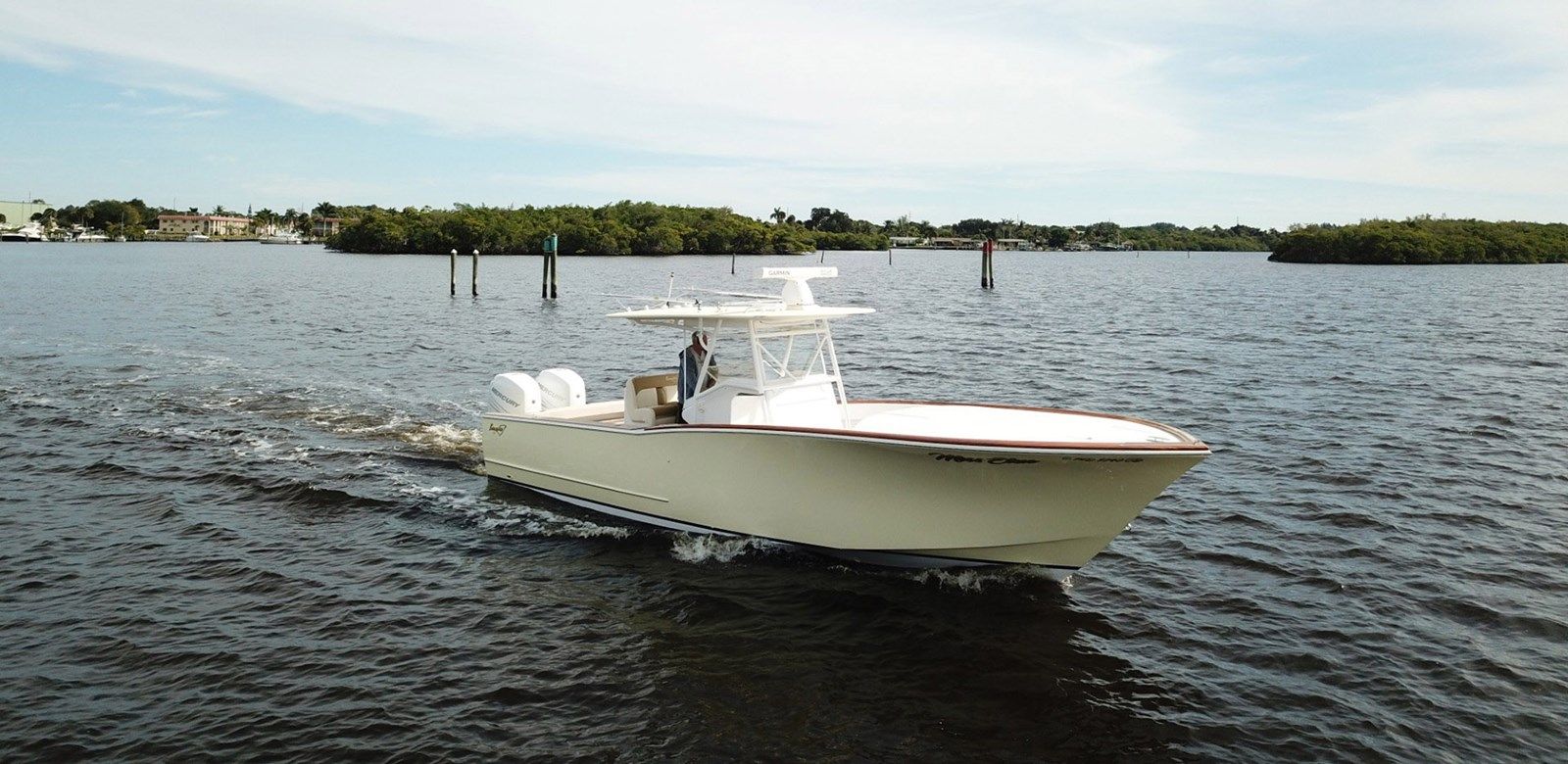
BONADEO BOATWORKS - For Sale
Company History
English: Bonadeo Boatworks is a boutique American yacht builder known for creating fully custom, cold‑molded center consoles and walkaround sportfishing boats with yacht‑level fit and finish. Based in Stuart, Florida, the company emerged from the Treasure Coast’s deep craft tradition in custom sportfish building, where small teams of master builders refine each hull by hand rather than relying on mass production. From its inception, the yard set out to blend classic wood‑epoxy construction with modern composites and rigging, producing lightweight, strong, and exceptionally quiet boats optimized for both hardcore offshore fishing and refined family day boating.
The Bonadeo approach revolves around one‑off, owner‑specific design. Each project begins with a detailed client brief that establishes mission profile, desired range and speed, target displacement, livewell and fishbox capacities, seating plan, and electronics strategy. The builder then translates that brief into hull geometry and construction schedules suited to the intended use—whether a tournament‑ready center console with triple or quad outboards, a walkaround with protected forward seating, or a hybrid layout that balances family comfort with open‑water capability.
Construction typically employs cold‑molded wood‑epoxy techniques, using carefully selected marine hardwoods and plywood veneers laminated with modern epoxy resins. Vacuum bagging, strategic carbon and glass reinforcement, and meticulous weight management yield a hull that is stiff, quiet, and responsive, with an especially pleasing ride in a range of sea states. The result is a distinctive combination of classic craft and contemporary performance: crisp spray control, clean running angles, strong fuel efficiency for the size, and the kind of low‑frequency hush that serious anglers and family passengers appreciate during long days offshore.
Over time, Bonadeo Boatworks has become synonymous with immaculate detailing—flush deck hardware, symmetrical wiring and rigging, fair hulls, and deep, durable topcoat finishes. Interior and exterior joinery are executed to a standard more often associated with large custom sportfishermen, yet in a nimble platform that can be trailered, owner‑captained, and maintained with relative ease. The yard’s builds have appeared at high‑end sportfishing events and in enthusiast circles where discerning owners prioritize individuality, craft authenticity, and long‑term serviceability.
Spanish: Bonadeo Boatworks es un astillero boutique estadounidense reconocido por la construcción totalmente personalizada de center consoles y walkarounds de pesca deportiva con un nivel de acabado propio de yates. Con sede en Stuart, Florida, la empresa nace de la tradición artesanal de la Treasure Coast, donde pequeños equipos de maestros constructores dan forma a cada casco a mano en lugar de depender de la producción en serie. Desde sus inicios, el astillero ha buscado combinar la construcción clásica madera‑epoxi con compuestos modernos y una electrónica de última generación, creando embarcaciones ligeras, resistentes y muy silenciosas, óptimas tanto para la pesca en alta mar como para salidas familiares.
El enfoque de Bonadeo se basa en un diseño a medida, proyecto por proyecto. Cada construcción comienza con un brief detallado del cliente que define el uso principal, velocidad y autonomía deseadas, desplazamiento objetivo, capacidades de viveros y cajas de pescado, plan de asientos y estrategia de electrónica. A partir de ello, el astillero desarrolla la geometría del casco y el plan de laminación adecuados—ya sea para un center console de competición con triples o cuádruples fueraborda, un walkaround con asientos protegidos a proa, o un híbrido que equilibra el confort familiar con la capacidad en mar abierto.
La construcción suele emplear técnicas de madera‑epoxi laminada “en frío”, utilizando maderas marinas y chapas cuidadosamente seleccionadas, unidas con resinas epoxi modernas. El vacío, los refuerzos estratégicos de fibra y carbono, y el control estricto del peso dan lugar a cascos rígidos, silenciosos y muy reactivos, con una navegación especialmente agradable. El resultado es la unión de artesanía clásica y prestaciones contemporáneas: control de rociada preciso, ángulos de navegación limpios, eficiencia de combustible notable para su tamaño y un nivel de silencio que aprecian tanto pescadores exigentes como familias.
Con el tiempo, Bonadeo Boatworks se ha convertido en sinónimo de detalle impecable: herrajes enrasados, cableado y rigging simétricos, cascos perfectamente “fair”, y acabados de pintura profundos y duraderos. La carpintería interior y exterior se ejecuta a un nivel propio de grandes barcos de pesca deportiva personalizados, pero en plataformas ágiles que pueden remolcarse, capitanearse por su propietario y mantenerse con facilidad.
French: Bonadeo Boatworks est un chantier naval boutique américain, réputé pour ses center consoles et walkarounds de pêche sportive entièrement sur mesure, au niveau de finition digne d’un yacht. Implanté à Stuart, en Floride, le chantier s’inscrit dans la tradition artisanale de la Treasure Coast, où de petites équipes façonnent chaque coque à la main. Dès l’origine, l’objectif a été d’unir la construction bois‑époxy traditionnelle aux composites modernes, afin d’obtenir des bateaux légers, solides et particulièrement silencieux, adaptés à la pêche hauturière comme à la plaisance familiale.
L’approche Bonadeo repose sur la personnalisation intégrale. Chaque projet démarre par un cahier des charges détaillé—profil d’utilisation, vitesses et autonomie visées, déplacement cible, capacités des viviers et coffres à poissons, plan d’assises et configuration électronique. Le chantier traduit ensuite ces paramètres en géométrie de coque et en plan de stratification adaptés—qu’il s’agisse d’un center console de compétition à triples ou quadruples hors‑bord, d’un walkaround offrant une zone avant abritée, ou d’un hybride conciliant confort familial et tenue au large.
La construction recourt généralement aux techniques bois‑époxy “cold‑molded”, avec des essences marines et contreplaqués choisis, laminés à la résine époxy, souvent sous vide, et renforcés de fibres de verre et de carbone de façon ciblée. Résultat: une coque rigide, réactive et très feutrée, offrant un comportement souple et une efficacité énergétique notables. Au fil du temps, Bonadeo est devenu synonyme de finitions impeccables—accastillage affleurant, câblage soigné et symétrique, carènes finement poncées, laques profondes et durables—dans des plateformes maniables et adaptées à un armement propriétaire.
Country of Origin
English: United States of America (USA). The brand’s identity is deeply tied to Florida’s custom sportfishing culture.
Spanish: Estados Unidos de América (EE. UU.). La identidad de la marca está estrechamente vinculada a la cultura de la pesca deportiva personalizada de Florida.
French: États‑Unis d’Amérique (USA). L’identité de la marque est intimement liée à la culture floridienne des bateaux de pêche sportive sur mesure.
Manufacturing Locations
English: Bonadeo Boatworks builds in Stuart, Florida, on the state’s Treasure Coast. This location places the shop within an ecosystem of specialist vendors and craftspeople—metal fabricators, tower builders, marine upholsterers, electronics integrators, and paint professionals—who support high‑end custom projects. Proximity to the St. Lucie Inlet and Atlantic Ocean enables efficient sea trials and fine‑tuning in real conditions.
The facility is organized around a hands‑on workflow: a dedicated build floor for hulls and decks; a joinery area for cabinetry, seating modules, and helm pods; and a finishing zone for fairing and topcoats. Working at custom scale allows the team to tailor the lamination schedule, structure, and systems to each commission. This includes integrating livewells, fishboxes with overboard drainage, insulated storage, robust fuel manifolds, and service‑friendly rigging tunnels from the outset, rather than retrofitting those elements later.
By keeping production intentionally limited, the yard maintains strict quality control and predictable timelines for owner walkthroughs, mockups, and milestone approvals. The location also simplifies logistics for customers on the U.S. East Coast and Bahamas, with many owners choosing to fish the nearby Gulf Stream waters after delivery.
Spanish: Bonadeo Boatworks construye en Stuart, Florida, en la Treasure Coast. La ubicación sitúa al astillero dentro de un ecosistema de proveedores especializados—fabricación metálica, torres, tapicería marina, integración de electrónica y pintura—que respalda proyectos de alta gama. La cercanía a la ensenada de St. Lucie y al Atlántico facilita pruebas de mar y ajustes finos en condiciones reales.
La instalación se organiza en torno a un flujo de trabajo artesanal: área de construcción para cascos y cubiertas; zona de carpintería para mobiliario, módulos de asientos y consolas; y sección de acabado para el “fairing” y las capas finales. Trabajar a escala personalizada permite adaptar el plan de laminación, la estructura y los sistemas a cada encargo, integrando desde el diseño viveros, cajas de pescado con desagüe directo, almacenamiento aislado, colectores de combustible robustos y túneles de rigging accesibles.
Al mantener una producción limitada, el astillero asegura control de calidad riguroso y cronogramas predecibles para revisiones del propietario, maquetas y aprobaciones por hitos. La ubicación también simplifica la logística para clientes de la Costa Este de EE. UU. y Bahamas.
French: Bonadeo Boatworks construit à Stuart, en Floride, sur la Treasure Coast. Cet emplacement bénéficie d’un réseau de spécialistes—métallerie, tours, sellerie marine, intégration électronique, peinture—propice aux projets haut de gamme. La proximité de l’océan Atlantique permet des essais en mer efficaces et des réglages en conditions réelles.
Le site est organisé autour d’un processus artisanal: aire de montage pour coques et ponts; atelier de menuiserie pour mobilier, modules d’assises et consoles; zone de finition pour masticage/fairing et vernis/peintures. La production sur commande rend possible l’adaptation précise des stratifiés, de la structure et des systèmes à chaque bateau, en intégrant dès l’origine viviers, caissons réfrigérés, collecteurs de carburant et gaines de câblage faciles d’accès. Une production volontairement limitée garantit un contrôle qualité strict et des jalons clairs pour les validations clients.
Ownership and Management
English: Bonadeo Boatworks operates as a privately held, owner‑operated custom shop. Its leadership maintains direct, day‑to‑day involvement in design decisions, materials selection, and quality control, ensuring that each commission reflects the original brief and the builder’s standards. The compact organizational structure allows clients to work closely with the principals and build team, accelerating feedback cycles and facilitating on‑the‑spot refinements during construction.
Spanish: Bonadeo Boatworks funciona como un taller personalizado de propiedad privada y operado por sus propietarios. La dirección participa diariamente en las decisiones de diseño, selección de materiales y control de calidad, de modo que cada proyecto refleje fielmente el brief del cliente y los estándares del astillero. La estructura compacta permite una comunicación directa con el equipo, lo que acelera los ciclos de retroalimentación y facilita ajustes durante la construcción.
French: Bonadeo Boatworks est une entreprise privée, gérée par ses propriétaires, avec une direction très impliquée au quotidien dans les choix de conception, de matériaux et de qualité. Cette organisation courte favorise un dialogue direct avec les clients et des ajustements rapides tout au long du chantier.
Reputation and Quality
English: Within the sportfishing and high‑performance center console community, Bonadeo Boatworks has earned a reputation for craftsmanship that rivals larger custom sportfish yards while retaining the agility and intimacy of a small shop. Owners consistently cite three pillars of quality:
-
Ride and acoustics: The cold‑molded, epoxy‑sheathed hulls deliver a notable blend of stiffness and damping. In practice, that translates into a smooth, quiet, and controlled experience at cruise, with confident tracking and clean landings in head and quartering seas. The boats are tuned not only for top‑end speed, but for efficient, comfortable mid‑range performance that owners use most of the time.
-
Fit, finish, and systems: Fair hulls and deep, mirror‑like paintwork are paired with invisible fastenings, aligned seams, and carefully radiused edges. Below the surface, the same discipline extends to plumbing, electrical, and rigging. Wiring harnesses are well‑labeled and logically routed; seacocks and strainers are both securely mounted and accessible; fuel and water systems are laid out for reliability and service. All of this improves uptime on long fishing days and simplifies ownership over the lifecycle of the boat.
-
Custom design integrity: Unlike semi‑custom production, a Bonadeo is purpose‑built. Owners can prioritize live bait capacity, deck flushness for stand‑up fishing, family‑friendly bow seating, or a weather‑protected walkaround helm—without compromising the structural and acoustic advantages of the core hull. Hardware selection, helm ergonomics, and electronics integration are orchestrated as a cohesive system rather than piecemeal upgrades.
Performance is typically delivered via modern outboards—ranging from singles on smaller builds to multiple engines on larger hulls—selected for the specific mission and weight targets. Careful engine, propeller, and fuel mapping help achieve both range and responsiveness. The builder’s emphasis on robust structural attachments—transoms, knees, and stringers engineered for outboard loads—contributes to longevity even in heavy offshore use.
The brand’s standing is reinforced by word‑of‑mouth within tight‑knit angling circles, appearances at major boat shows, and coverage by enthusiast media focused on custom fishing craft. While Bonadeo Boatworks keeps production numbers intentionally low—preserving exclusivity—it offers extensive after‑delivery support, including fine‑tuning layouts, adding equipment, and seasonal maintenance coordination through its Stuart base and network of specialists. Many owners report that the commissioning process, including sea trials and iterative setup of livewells, pumps, and helm systems, is a highlight of the ownership experience.
Sustainability and longevity considerations are embedded in the build philosophy. Cold‑molded wood‑epoxy construction allows for exceptional strength‑to‑weight ratios and repairability; localized damage can often be addressed by replacing and re‑laminating wood/epoxy sections rather than large molded parts. Weight efficiency yields fuel savings and reduces operating loads on engines, which can extend service intervals. The yard’s preference for corrosion‑resistant fittings, accessible bilge spaces, and thoughtful drainage paths further protects the structure over time.
In short, Bonadeo Boatworks occupies a distinctive niche: fully custom, deeply crafted, and performance‑focused, with a look and feel that read “yacht” in every detail. Owners choose the brand to obtain a boat that is singular—built around their fishery, their family, and their expectations—and to work directly with a team whose reputation rests on each finished hull.
Spanish: Dentro de la comunidad de pesca deportiva y center consoles de alto rendimiento, Bonadeo Boatworks se ha ganado una reputación por su artesanía, comparable a la de astilleros de mayor tamaño, manteniendo la agilidad de un taller pequeño. Los propietarios destacan tres pilares:
-
Navegación y acústica: Los cascos madera‑epoxi ofrecen una combinación notable de rigidez y amortiguación. En la práctica, se traduce en una experiencia suave, silenciosa y controlada a crucero, con seguimiento firme y aterrizajes limpios con mar de proa o de aleta. El ajuste no solo busca velocidad punta, sino eficiencia y confort en el rango medio.
-
Acabados y sistemas: Carenas “fair” con pinturas profundas tipo espejo, herrajes enrasados y cantos bien trabajados. Bajo cubierta, la misma disciplina se aplica a plomería, eléctrica y rigging: cableados etiquetados y ordenados, grifos de fondo accesibles, sistemas de combustible y agua diseñados para fiabilidad y servicio. Esto mejora el tiempo activo en jornadas largas y simplifica el mantenimiento a lo largo de la vida útil.
-
Integridad del diseño a medida: A diferencia de la producción semipersonalizada, un Bonadeo se construye con un propósito concreto. El propietario puede priorizar capacidad de cebo vivo, cubiertas enrasadas, asientos de proa familiares o un walkaround protegido, sin comprometer las ventajas estructurales y acústicas del casco. La selección de herrajes, ergonomía de la consola e integración electrónica se conciben como un sistema cohesivo.
El rendimiento se entrega con fuerabordas modernos—desde sencillos en esloras menores hasta múltiples motores en cascos mayores—elegidos en función de la misión y objetivos de peso. El mapeo cuidadoso de motores, hélices y combustible ayuda a lograr autonomía y respuesta. Los refuerzos estructurales del espejo de popa, varengas y cuadernas están diseñados para cargas de fueraborda, contribuyendo a la longevidad en uso intensivo.
La reputación de la marca se refuerza mediante recomendaciones entre pescadores, presencia en ferias y cobertura de medios especializados. Aunque la producción es deliberadamente limitada, el soporte post‑entrega es amplio, incluyendo ajustes finos, incorporación de equipos y coordinación de mantenimiento desde Stuart y su red de especialistas. Muchos propietarios señalan que la puesta a punto—con pruebas de mar y ajustes de viveros, bombas y sistemas de la consola—es uno de los momentos clave de la experiencia.
La filosofía de construcción también contempla sostenibilidad y durabilidad: la madera‑epoxi permite altas relaciones resistencia‑peso y reparabilidad; los daños localizados pueden resolverse sustituyendo y re‑laminando secciones, en lugar de reemplazar grandes piezas moldeadas. La eficiencia de peso reduce consumo y cargas de operación, prolongando intervalos de servicio. Preferencias por herrajes resistentes a la corrosión, sentinas accesibles y drenajes bien planificados protegen la estructura con el tiempo.
French: Dans la communauté de la pêche sportive et des center consoles performants, Bonadeo Boatworks s’est forgé une réputation d’excellence artisanale, comparable aux grands chantiers de sportfisher, tout en conservant la réactivité d’un atelier. Trois piliers se dégagent:
-
Comportement et acoustique: Les coques bois‑époxy offrent une combinaison de rigidité et d’amortissement remarquable, pour une navigation souple, silencieuse et maîtrisée à la vitesse de croisière, avec des retombées propres et une tenue rassurante dans diverses allures.
-
Finitions et systèmes: Carènes finement “fairées”, peintures profondes, accastillage affleurant, arêtes adoucies; sous les planchers, plomberie, électricité et câblage sont soignés, identifiés et accessibles. Cette approche améliore la fiabilité sur de longues sorties et simplifie l’entretien à long terme.
-
Personnalisation réelle: Un Bonadeo est construit pour un programme précis. On peut mettre l’accent sur les viviers, les ponts dégagés pour le stand‑up, les assises familiales à l’avant, ou un walkaround abrité, sans renoncer aux atouts structurels et acoustiques. L’ergonomie du poste de pilotage, l’électronique et le choix des équipements forment un ensemble cohérent.
La propulsion repose généralement sur des hors‑bord modernes—unité simple à multiple—sélectionnés selon la mission et le bilan de masse. Les renforts structuraux du tableau arrière et des structures internes sont dimensionnés pour ces charges, gages de longévité au large. La notoriété du chantier s’appuie sur le bouche‑à‑oreille, les salons nautiques et la presse spécialisée. Production volontairement limitée, accompagnement après livraison soutenu: réglages, ajouts d’équipements et coordination de maintenance depuis Stuart.
La construction bois‑époxy favorise aussi la durabilité: excellents rapports résistance‑poids, réparations localisées possibles, efficacité de carburant accrue et charges mécaniques réduites. Le choix d’accessoires résistants à la corrosion, l’accessibilité des fonds et des cheminements de drainage réfléchis protègent la structure dans le temps. En somme, Bonadeo Boatworks occupe une niche singulière: du sur‑mesure, profondément artisanal, orienté performance, avec une esthétique et un niveau de détail véritablement “yachting”.
Main Competitors
Bonadeo Boatworks occupies a distinctive niche at the high end of the center-console and walkaround sportfishing market: fully custom, low-volume, yacht-finish builds executed by a small team in Stuart, Florida. Because of this positioning, its competitive set spans two overlapping groups: (1) boutique custom yards that also build one-off or very limited-run center consoles and walkarounds, often using cold-molded wood/epoxy or advanced composites; and (2) premium semi-custom and production builders that deliver high-performance fiberglass center consoles at scale with extensive option lists. Owners cross-shop across both groups depending on whether they prioritize true one-off craftsmanship or quicker delivery and a broader dealer network.
- Boutique custom and semi-custom sportfish builders (closest fit to Bonadeo’s ethos)
- L&H Boats (Stuart, Florida): Known for custom walkarounds and center consoles with a strong following among serious anglers on the U.S. East Coast and in the Bahamas. Like Bonadeo, L&H focuses on craftsmanship, fishability, and owner-specific layouts, appealing to buyers who want a bespoke boat tailored to their fishery.
- Winter Custom Yachts (North Carolina): Builds cold-molded custom boats including walkarounds and express models with refined joinery and a reputation for soft-riding, efficient hulls. Winter’s design language and finish levels place it on many of the same shortlists as Bonadeo for clients seeking artisanal execution.
- Gamefisherman (South Florida): Specializes in custom sportfishermen, walkarounds, and open boats with tournament-ready layouts and classic lines. While many Gamefisherman builds are larger than typical center consoles, the brand competes for owners who want handcrafted detail and purpose-built fishability.
- Release Boatworks (U.S.): Produces custom and semi-custom sportfish designs, including walkarounds and express boats. The company’s emphasis on fish-first layouts and premium fit/finish makes it a natural comparison point for buyers focused on offshore performance and bespoke rigging.
- Ritchie Howell, F&S, and similar custom builders (Mid-Atlantic/North Carolina/Delaware): Primarily associated with larger custom sportfishermen, some of these yards produce walkarounds and specialty open-deck boats on occasion. The overlap comes from shared buyer values—ride quality, craftsmanship, and individuality—even when models differ in size.
How these builders compete with Bonadeo:
- Craft first: These yards, like Bonadeo, approach each hull as a one-off or very limited-run project, emphasizing cold-molded or advanced composite structures, meticulous fairing and paint, precision wiring/rigging, and ergonomic helm designs.
- Fishability as a design driver: Livewell design, drainage paths, fish box insulation, deck flushness, and service access are not afterthoughts; they’re part of the structural and systems planning from day one.
- Direct collaboration with the owner: Unlike large production brands, these shops welcome deep owner input on deck plans, tower and shade solutions, storage modules, and electronics integration.
- Premium semi-custom and production center-console brands (frequently cross-shopped)
- Yellowfin Yachts: High-performance, tournament-focused center consoles with deep option lists and a strong dealer/support footprint.
- Contender Boats: Renowned for fast, efficient offshore hulls and hard-core fishability; favored by tournament anglers.
- SeaVee Boats: Miami-based builder known for serious fishing layouts, quality construction, and long option menus.
- Invincible Boats: Stepped monohulls and catamarans with a speed/efficiency focus; vast size range and strong brand visibility.
- Valhalla Boatworks (by Viking): Premium, highly finished center consoles with strong factory support and brand cachet from Viking’s legacy.
- HCB (HydraSports Custom): Very large, luxury-forward center consoles built for speed, range, and amenities; often cross-shopped by buyers who want “yacht-level” finishes in a production platform.
- Scout, Jupiter, Regulator, Barker, Blackwater, Front Runner, and Freeman (cats): Each of these brands competes on some combination of performance, finish quality, brand support, and availability. While they lack Bonadeo’s one-off, cold-molded craftsmanship, they meet the market with predictable build slots, dealer networks, and standardized engineering packages.
How these production/semi-custom brands differ from Bonadeo:
- Scalability and delivery: Production builders can often deliver faster and with more predictable timelines.
- Standardization: Even “semi-custom” options are typically constrained by tooling, which keeps costs and lead times under control but limits true one-off layouts.
- Finish vs. individuality: Many are beautifully finished and perform exceptionally, but Bonadeo’s aesthetic, joinery, and rigging are tailored at an artisanal level that most production lines cannot match.
- Ownership experience: Production brands offer dealer/service networks and packaged warranties; Bonadeo offers direct access to the build team and one-to-one support—appealing to owners who value a bespoke relationship.
In practice, a prospective Bonadeo buyer will often look at both categories. The decision typically turns on how much the owner values one-off design and handcrafted detail versus the speed, resale liquidity, and service ecosystems offered by larger brands. Bonadeo prevails when the buyer seeks a singular boat—built around a specific fishery, crew, and style—executed with yacht-caliber aesthetics and systems discipline.
Current Production Status
As a privately held, commission-based custom shop in Stuart, Florida, Bonadeo Boatworks is structured around continuous, project-by-project building rather than batch production. Based on publicly available information leading up to late 2024, the company continued to accept commissions and deliver bespoke center consoles and walkarounds. The shop’s operating model aligns with the broader Florida custom-sportfish tradition: a small, highly skilled team taking on a limited number of hulls, with principals deeply involved in every phase—design consultation, materials selection, lamination schedules, fairing and topcoat work, rigging and systems layout, and owner sea trials.
Key characteristics of Bonadeo’s ongoing production approach:
- One-off design and engineering: Each build begins with an in-depth brief that captures the owner’s target mission (hardcore offshore fishing, family cruising, or a hybrid program), range and speed goals, live-bait priorities, fish box and insulated storage needs, seating and shade concepts, and electronics/radar/sonar strategies. From that brief, the yard finalizes hull geometry, structure, and systems plans tailored to the owner’s waters and usage patterns.
- Cold-molded wood/epoxy construction with modern reinforcement: Bonadeo’s hallmark is a cold-molded hull and deck structure—veneers laminated with epoxy, vacuum-assisted where appropriate, then strategically reinforced with fiberglass and carbon. The result is a lightweight, quiet, and stiff platform. Owners frequently cite the ride quality and reduced vibration/sound as reasons for commissioning a cold-molded boat over a conventional molded hull.
- Yacht-level finish: Fairing, paint, and joinery receive extraordinary attention. Seam alignment, hardware recessing, radiused edges, and bilge cosmetics (e.g., tidy, labeled wiring and thoughtfully mounted seacocks/strainers) are treated as core deliverables, not punch-list items. This contributes to both aesthetics and long-term serviceability.
- Outboard propulsion tailored to mission: Bonadeo integrates contemporary outboards—often in multi-engine configurations on larger builds—matched via propeller selection and fuel mapping to the owner’s range/speed requirements. Transom, stringer, and knee structures are engineered for outboard loads and heavy offshore duty.
- Systems integration and service access: Livewells, pumps, plumbing, and rigging tunnels are incorporated during the design phase to ensure capacity, redundancy, and accessibility. This reduces retrofit work and supports reliability on long offshore days.
- Sea trials and iterative tuning: Proximity to the St. Lucie Inlet and the Atlantic lets the team trial and tune in a range of real-world conditions. Owners typically participate in these trials to refine helm ergonomics, pump sizing, livewell flow, and electronics configurations before final delivery.
Lead times in this segment—across the industry—are measured in many months to more than a year, depending on the scope of customization, paint and fairing cycles, engine availability, and third‑party components. Bonadeo’s limited-throughput model is designed to preserve quality and schedule predictability for active builds rather than expanding volume to meet spikes in demand.
After-delivery support is an integral part of the experience. Because the same team that engineered and installed the systems supports the boat post-delivery, troubleshooting and upgrades are efficient. Owners often return for seasonal work, electronics updates, or layout refinements as their fishing style evolves.
In short, the “current production status” is best described as ongoing, commission-by-commission building with intentionally limited capacity, hands-on leadership, and a focus on premium materials and finish standards—consistent with the brand’s reputation up to late 2024.
Production Volumes
Bonadeo Boatworks does not publicly disclose annual production figures, and as a custom builder it does not operate at the kind of scale commonly reported by production brands. Instead, output is governed by the cadence of commissioned projects and the deliberate pacing required for cold-molded construction, extensive fairing and paintwork, and full custom systems integration.
Context that helps explain the volume profile for a shop like Bonadeo:
- Capacity is craftsmanship-limited, not tooling-limited: Where a production brand’s throughput hinges on the number of molds and lamination bays, a custom yard’s bottlenecks are experienced craftspeople, fairing/painting cycles, and the precision of joinery and rigging. Those steps are time‑intensive and rely on skilled labor that cannot be expanded rapidly without diluting quality.
- Project variability: No two boats are identical. Differences in livewell architecture, deck plumbing, tower/tee-top structures, helm pods, seating modules, and electronics packages introduce variability that lengthens schedules relative to standardized builds.
- Supplier pacing: Outboard engine lead times, electronics availability, custom metal fabrication, and paint curing windows all influence when a build can be finalized, tested, and delivered. Custom yards plan buffers to accommodate these variables without compromising standards.
- Quality-preserving limits: Builders in this niche typically choose to maintain a small, senior team and a finite number of simultaneous projects. That decision protects the brand’s reputation, ensures direct involvement by principals, and keeps rework to a minimum.
For prospective clients, the practical takeaway is that production “volume” is less important than build slots and timeline transparency. Buyers generally secure a slot with a contract and deposit, then collaborate through design reviews and milestone approvals. Most yards in this tier provide frequent progress updates—photos, walkthroughs, and sea-trial reports—so owners can see their boat advance and make informed decisions about small changes while the structure remains accessible.
Although the brand does not release unit counts, the market perceives Bonadeo as intentionally low-volume, emphasizing exclusivity and individualization over scale. That scarcity supports resale desirability among enthusiasts who value cold-molded ride quality, quietness, and the “yacht-joinery” look that sets these boats apart at the dock and on the drift.
Frequently Asked Questions
Question: What types of boats does Bonadeo Boatworks build? Answer: Fully custom, yacht-finish center consoles and walkaround sportfishing boats. The hallmark is cold-molded wood/epoxy construction reinforced with modern composites, resulting in strong, lightweight, and notably quiet hulls. Projects are one-off commissions tailored to each owner’s fishery, crew size, and preferred layout.
Question: What is “cold-molded” construction and why use it? Answer: Cold-molded construction laminates thin wood veneers with high-strength epoxy over a carefully designed form, then sheaths and selectively reinforces the structure with fiberglass and, where appropriate, carbon. Benefits include excellent strength-to-weight, a soft, quiet ride, superior impact resistance, and repairability. The approach also enables refined hull shapes with crisp spray control and efficient running angles.
Question: How “custom” is the process—are there fixed models? Answer: Bonadeo works commission by commission. While there are common size bands and proven geometries, there is no rigid catalog. Owners shape the mission profile (tournament, family, or hybrid), deck plan, livewell strategy, fishbox arrangement, seating, storage modules, T-top/tower solutions, and electronics integrations. The result is a truly one-off boat that reflects the owner’s priorities.
Question: What size range do they typically build? Answer: Most builds fall in the mid-30s to mid-40s feet, with center consoles and walkarounds being the predominant formats. Smaller center consoles can be set up for trailering and nearshore/offshore crossovers; larger walkarounds typically focus on serious bluewater capability with 360-degree fishability and protected forward seating.
Question: What are the advantages of a cold-molded hull versus a conventional molded fiberglass hull? Answer: The primary advantages are ride quality and acoustic damping—many owners describe less drumming and a more “composed” feel in a chop—along with high specific stiffness and the ability to fine-tune hull geometry for the intended mission. Weight can be optimized for the chosen outboards, and localized repairs are straightforward compared to large monolithic molded parts.
Question: What kind of propulsion is used? Answer: Contemporary outboard power. Smaller customs are commonly twin-engine; mid-size center consoles often run triple outboards; large center consoles and walkarounds may adopt triple or quad configurations depending on range, speed, and load targets. Final power is chosen with the owner to balance hole-shot, cruise efficiency, top speed, and weight distribution.
Question: How fast do these boats typically run? Answer: Performance depends on size, power, and load. Well-powered mid-to-large center consoles commonly achieve fast cruising in the 30–40+ knot band and top speeds that can extend into the high-40s to 50+ knots with appropriate power and conditions. Walkarounds with more house structure typically cruise slightly lower, trading marginal peak speed for protection, storage, and fishability.
Question: Do walkarounds include a cabin? Answer: Many custom walkarounds include a compact cuddy with a berth, storage, and a head (toilet); larger builds may add a small galley module and extended stowage. Center consoles typically place a head inside the console and emphasize wide-open deck space.
Question: What is the design and engineering process like? Answer: It begins with a detailed brief: target fisheries, typical crew size, live-bait priorities, fishbox capacities, seating/shade concepts, electronics/sonar/radar, fuel range, and performance goals. The team then sets hull geometry, structure, and systems routing to suit. Throughout the build, owners review drawings, mockups, and progress milestones, culminating in sea trials where final tuning occurs.
Question: How are systems—plumbing, wiring, rigging—handled? Answer: Systems are treated as integral to the structure, not add-ons. Expect logically routed, labeled wiring harnesses; service-friendly rigging tunnels; sturdy mounting for pumps, strainers, and valves; and clean, accessible bilge spaces. Livewell plumbing and redundancy are planned early to ensure reliable flow and quiet operation during long days offshore.
Question: What about finishes and paint? Answer: Fairing and topcoat work receive significant time and care. The result is a deep, durable finish with crisp transitions and fair surfaces. Hardware is recessed where appropriate for clean lines and snag-free fishing. Interior and exterior joinery are executed at yacht standards, with attention to symmetry, radius work, and long-term serviceability.
Question: How does weight management influence the build? Answer: Weight discipline is baked into the lamination schedule and materials selection. Proper weight distribution supports fuel efficiency, predictable running angles, and responsive handling. The builder tunes structure and systems placement—tanks, battery banks, and equipment—to maintain balance across operating conditions.
Question: What is the typical lead time? Answer: Lead time varies with scope and the active queue. In the custom segment, timelines are measured in many months to over a year. Variables include fairing/paint cycles, engine and electronics availability, and the level of bespoke joinery or metalwork. The intent is to preserve quality by pacing each hull carefully rather than expanding throughput.
Question: Are these boats suitable for serious tournament fishing? Answer: Yes. Layouts can be optimized for live bait capacity, insulated fish storage, helm visibility, rod and tackle organization, and rapid service access. Owners often prioritize quiet running and clean wakes at live-bait speeds, efficient mid-range cruise, and robust systems redundancy—traits valued by competitive crews.
Question: How are sea trials handled? Answer: Sea trials are used to validate performance targets and refine details: propeller selection, engine height, livewell flow rates, helm ergonomics, sight lines, and electronics interfacing. The proximity to Atlantic waters (via convenient inlets) allows tuning in conditions similar to the owner’s typical use.
Question: Do these builds support family-friendly features? Answer: Absolutely. Options include protected forward seating, convertible mezzanine seating, shade solutions, freshwater systems, secure handholds, and sound-dampened spaces. The goal is to balance hardcore fishability with comfort, so family and crew can enjoy long outings without fatigue.
Question: Are there considerations for ease of maintenance? Answer: Custom construction enables deliberate access: removable service panels, organized rigging tunnels, and clear circuits. Finish quality extends into areas you do not normally see—bilges and lockers—so technicians can work effectively without collateral damage. This reduces ownership friction and keeps boats fishing.
Question: What about regulatory and standards compliance? Answer: Systems and construction are planned with widely recognized marine best practices and standards in mind, focusing on safety, accessibility, and reliability. Specific certification paths can be tailored to the boat’s intended operating areas and the owner’s preferences.
Question: How do these boats hold value? Answer: Scarcity, ride quality, and craftsmanship underpin resale interest. Enthusiasts who understand cold-molded benefits often seek these builds specifically. As with any custom craft, documentation of the build, maintenance discipline, and thoughtful upgrades influence long-term value.
Question: Are trailers feasible for smaller builds? Answer: Many smaller center consoles are configured for trailering, with attention to weight, beam considerations, and trailer geometry. Owners who plan frequent overland transport can request features that simplify launch/retrieval and support equipment.
Question: Do they offer hybrid programs—fishing and cruising? Answer: Yes. Hybrid layouts are common: live-bait systems and rod storage coexisting with forward lounges, convertible seating, and shaded mezzanine areas. Electronics layouts can blend high-end sonar/radar with comfort-oriented systems like premium audio and integrated lighting scenes.
Question: What materials beyond wood/epoxy are used? Answer: Strategic fiberglass and carbon reinforcements are applied where loads and stiffness requirements justify them—transoms, stringers, bulkheads, and high-stress interfaces. Topside structures and modules are engineered for rigidity without undue weight.
Question: How are fuel range and tankage addressed? Answer: Fuel capacity is set early to align with target range and weight budgets. The yard maps usage profiles (cruise speed, sea state, load) to size tanks and select power/propellers that deliver the desired end-to-end day range with reserve.
Question: Can owners influence helm ergonomics? Answer: Completely. Sight lines, helm pod angles, seating height, footrest geometry, switch placement, and display groupings are iterated with the owner. Night and rough-weather ergonomics—red lighting, glare control, and handhold placement—are part of the conversation.
Question: What about noise and vibration control? Answer: Cold-molded structures inherently damp vibration, and the builder complements this with isolation strategies for pumps, plumbing runs, and deck modules. The intent is a low-fatigue soundscape for long runs and live-bait drifting.
Question: Are towers and hardtops custom-made? Answer: Yes. Metalwork is specified per project—hardtops, half-towers, full towers—with careful attention to stiffness, weight, and harmonics. Mounts and wire chases are integrated early to keep the finish clean and serviceable.
Question: Do these boats come with extensive electronics? Answer: Electronics packages are tailored to the owner’s program, from minimalist coastal sets to full offshore arrays with advanced sonar and radar. The integration emphasizes reliability, clean cable routing, and service access.
Question: How is post-delivery support handled? Answer: The same team that built the boat typically supports it after delivery, which streamlines troubleshooting and upgrades. Owners often return for seasonal maintenance, electronics refreshes, and layout refinements as their fishing style evolves.
Question: Are there special considerations for live bait? Answer: Yes. Livewell design is a recurring focal point: quiet pumps, gentle flow, de-aeration, overflow control, and redundancy. Placement is chosen to reduce aeration from hull motion and to simplify cleaning and service.
Question: What distinguishes the aesthetic? Answer: Fair hulls and deep, durable topcoats; flush-mounted hardware; radiused edges; symmetrical joinery; and a tidy, labeled machinery space. The overall effect reads “yacht” even on open-deck platforms.
Question: What is the biggest constraint on production? Answer: Craftspeople and time. Cold-molded builds and yacht-level finishing require experienced hands and careful pacing through fairing and paint cycles. Throughput is intentionally limited to protect quality.
Available Models
Because the builder works on a fully custom, one-off basis, there is no fixed, public catalog of models in the conventional production sense. Instead, there are recurring size bands and configurations that owners frequently commission. The outlines below reflect common patterns and key characteristics; exact specifications are defined individually with each client.
Custom Center Console (approximately 32–36 ft)
- Core concept: A high-performance open platform optimized for live bait and run-and-gun tactics, with a head inside the console and wide-open fishability bow to stern.
- Length overall: Approximately 32–36 ft, with beam and deadrise tuned to the mission.
- Cabins: None; enclosed head typically inside the console, plus dry storage.
- Engine type: Twin to triple modern outboards, selected for power-to-weight and range targets.
- Typical performance: Fast cruises in the low-to-mid 30-knot range, with top speeds that can extend into the 40s or higher depending on power and load.
- Notable features: Generous livewell capacity with quiet plumbing; insulated fish boxes with direct overboard discharge; recessed hardware; clean, ergonomic helm; service-friendly rigging tunnels; multiple helm seating options and forward lounge modules if desired.
- Use case: Day boating and offshore fishing where speed, agility, and simple maintenance are priorities. Often suitable for trailering depending on final spec.
Custom Center Console (approximately 37–41 ft)
- Core concept: A larger open platform with extended range and load capacity, often commissioned by owners who fish offshore regularly or travel to island chains.
- Length overall: Approximately 37–41 ft.
- Cabins: None; spacious console head with storage. Optional forward seating or convertible mezzanine seating aft for crew comfort.
- Engine type: Triple outboards are common; quad packages considered for certain range and speed objectives.
- Typical performance: Confident cruising in the mid-30s to low-40s knots; top-end potential in the high-40s to 50+ knots with appropriate power and setup.
- Notable features: Expanded fuel capacity; redundant livewell systems; integrated coffin boxes; advanced sonar/radar arrays; reinforced hardtop or tower options; robust transom and stringer engineering for multi-engine loads.
- Use case: Tournament-ready builds and long-distance runs with a balance of fish-first functionality and family comfort.
Custom Walkaround (approximately 36–42 ft)
- Core concept: 360-degree fishability with a protective superstructure and a compact interior, providing shelter without giving up full-deck access.
- Length overall: Approximately 36–42 ft.
- Cabins: Typically a compact cuddy with V-berth or convertible berth, stowage, and an enclosed head; some builds may include a micro-galley module and climate-control provisions.
- Engine type: Twin or triple outboards depending on displacement goals and mission profile.
- Typical performance: Efficient cruise in the high-20s to mid-30s knots; top speeds commonly in the high-30s to 40s+ knots contingent on power, load, and sea state.
- Notable features: Deep walkaround side decks for secure movement; integrated shade; mezzanine-style seating options; high-capacity insulated fish storage; rod and gaff storage engineered into coamings; attention to low spray and a dry ride.
- Use case: Offshore programs that demand protection for crew and electronics, comfortable family days with shade and seating, and the ability to work fish from bow to stern.
Large Custom Walkaround/Sportfish (approximately 42–45+ ft)
- Core concept: A bluewater-capable platform that maintains the open-deck advantages of a walkaround while offering more interior volume and endurance.
- Length overall: Approximately 42–45+ ft, with beam and structure scaled for offshore loads.
- Cabins: Compact cabin with berth(s), enclosed head, and increased storage; climate control is common in this size band.
- Engine type: Triple or quad outboards, chosen for desired cruise speed, range, and redundancy.
- Typical performance: Comfortable cruise typically in the low-to-mid 30s knots, with top speeds that can exceed the 40-knot mark when powered appropriately.
- Notable features: Substantial fuel capacity; heavy-duty tower and top structures; multiple, redundant live-bait systems; advanced power management; extended-range electronics and night-running packages; meticulous sound and vibration mitigation.
- Use case: Owners who prioritize offshore reach, multi-day fishing windows, and the comfort of a protected helm and compact cabin without sacrificing 360-degree fishability.
Shared characteristics across all builds
- Structure and materials: Cold-molded wood/epoxy hulls with fiberglass and selective carbon reinforcements strategically placed for stiffness and durability. Bulkheads, stringers, and transom structures are engineered to handle modern outboard loads.
- Systems discipline: Clean, labeled wiring; accessible plumbing; secure, corrosion-resistant mounting; thoughtful drainage paths; and redundancy for critical systems such as livewells and bilge pumps.
- Finish standards: High-build fairing and premium topcoats; flush hardware; tight joinery lines; and carefully radiused edges. Bilges and service spaces are finished to reflect the same craftsmanship seen topside.
- Ergonomics and safety: Helm sight lines, seating geometry, handhold placement, and deck non-skid patterns are tuned to the owner’s crew and seas. Walkaround side decks prioritize security in rough conditions.
- Commissioning and tuning: Sea trials refine prop selection, engine height, flow rates, and helm ergonomics. Owners are typically involved in fine-tuning to ensure the boat’s final setup matches real-world use.
Notes on specifications and variability
- Number of cabins: Center consoles generally have 0 cabins (head in console), while walkarounds often feature 1 compact cuddy cabin. Larger walkarounds may allow more elaborate interior arrangements, but the ethos remains fish-forward with practical, easily maintained spaces.
- Maximum speed: A function of power, weight, hull geometry, propeller choice, and sea state. The ranges provided above are indicative for this category; the exact figures are established during build planning and sea trials.
- Engine type: Gasoline outboards dominate for weight, serviceability, and performance. Power selection is tailored to range, cruise speed, and payload goals. Structural reinforcements are matched to the chosen engines from the outset.
Why owners choose this path
- Individuality: No two boats are the same; the final product reflects the owner’s fishery, crew routines, and aesthetics.
- Ride and acoustics: The cold-molded approach delivers a ride that many describe as unusually composed and quiet for the size.
- Serviceability: The emphasis on access and clean systems reduces downtime and keeps trips on schedule.
- Longevity: Strength-to-weight efficiency, corrosion-minded hardware choices, and thoughtful drainage protect the boat over years of offshore use.
Practical expectations for prospective owners
- Collaboration: Expect multiple design reviews, mockups, and hands-on decisions about details that production boats predefine.
- Timeline: Quality requires patient pacing through fairing, paint, and rigging; lead times reflect that discipline.
- Sea-state realism: Performance planning accounts for real-world loads and typical seas, not just brochure conditions.
- Future-proofing: Wiring chases, mounting points, and service clearances are planned to accommodate upgrades over time.
In summary, rather than a fixed lineup, the “available models” from this builder are best understood as four custom archetypes—small and mid-size center consoles, mid-size walkarounds, and larger walkaround/sportfish platforms—each executed one at a time with materials and craftsmanship that aim squarely at yacht-level standards. Owners define the mission; the shop engineers a hull, structure, and systems plan to match; and the result is a bespoke, quiet, and capable offshore tool that looks and feels singular from the dock to the bluewater edge.
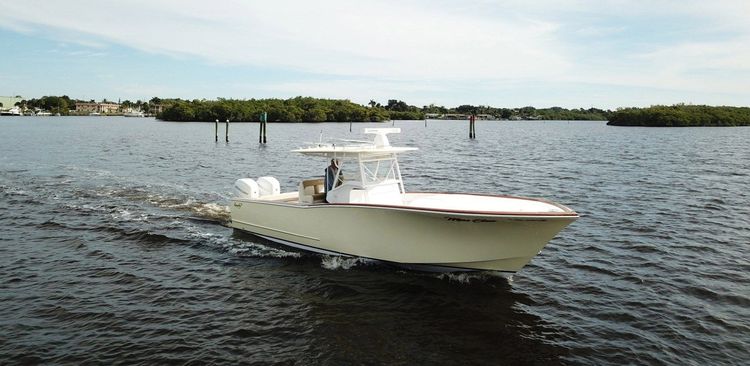
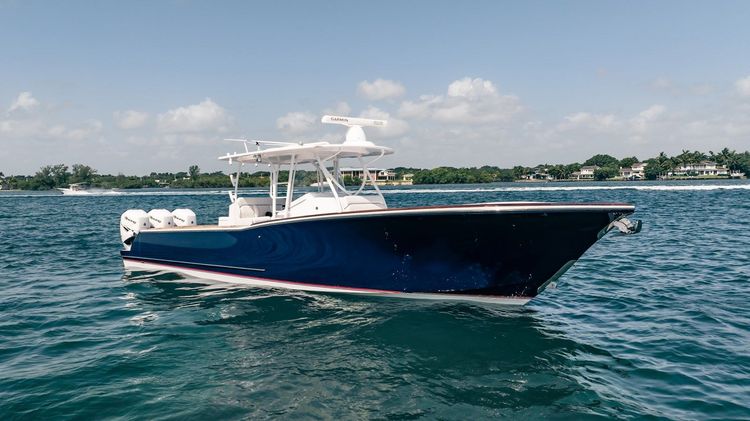

Learn more on the “BONADEO BOATWORKS”
To learn more on the “BONADEO BOATWORKS” or to get advice on how to buy or sell a yacht or get a great price for a yacht charter
please call +1 (954) 274-4435 USAOnly deal with professionals!