 Licensed Yacht BrokersSales and service of yachts and ships
Lagoon Catamarans is a French multihull yacht builder that has become one of the most recognized names in cruising catamarans worldwide. The brand traces its roots to 1984, when it was created within the advanced projects unit of Jeanneau known as Jeanneau Techniques Avancées (JTA). This unit was established to push technical boundaries in offshore racing and high-performance composite construction. The Lagoon label emerged from that environment with a mandate to apply cutting-edge multihull know-how to the growing market for comfortable, seaworthy cruising catamarans.
From the outset, Lagoon partnered with the renowned naval architecture firm VPLP Design (Van Peteghem Lauriot-Prévost). That partnership became a signature of the brand and remains central to Lagoon’s DNA. The earliest production models, notably the Lagoon 55 (launched in the late 1980s) and Lagoon 47, signaled a new direction for liveaboard multihulls—combining the volume and stability of catamarans with improved weight distribution, carefully studied sail plans, and a level of finish aimed squarely at long-distance private owners and premium charter fleets. These early boats quickly found favor among sailors who wanted bluewater capability with the comfort and privacy that only multihulls of that era could deliver.
During the 1990s, Lagoon transitioned from its performance- and prototypes-oriented origins into a full-fledged production brand. This period coincided with strategic consolidations in the French boatbuilding industry. Within a few years, Lagoon became associated with Construction Navale Bordeaux (CNB), the Bordeaux-based large-yacht specialist, under the umbrella of Groupe Beneteau. The integration provided Lagoon with industrial scale, supply-chain power, and quality systems that enabled it to produce larger volumes consistently while preserving the custom-boat ethos that had shaped its early models. By the late 1990s and early 2000s, Lagoon was well established as a leader in cruising catamarans.
The 2000s saw several defining product and design milestones. Among them was the Lagoon 440, a model that introduced a flybridge concept to a wide audience of cruising cat sailors. It set a template for many subsequent Lagoon models and became one of the most visible charter catamarans of its time. Throughout the decade, Lagoon continued modernizing lamination and assembly processes to improve structural consistency, weight control, and finish quality. Resin-infusion techniques, carefully engineered structural grids, and composite bulkheads became hallmarks of Lagoon’s production approach as model sizes increased and customer expectations rose.
In the 2010s, the brand expanded both upward and outward. Larger yachts such as the Lagoon 620 and, later, the Seventy 7 established Lagoon’s credentials in the luxury multihull segment, while continued development of 38- to 46-foot models met robust demand from private owners and charter fleets. Lagoon deepened its collaboration with design partners: VPLP Design continued to lead naval architecture; the celebrated French designer Patrick le Quément contributed to exterior styling; and Nauta Design of Milan took on interior design, known for layouts that maximize natural light, ergonomics, and refined materials.
The 2020s ushered in a new generation focused on improved sailing efficiency, onboard energy management, and sustainability-minded options. Models such as the Lagoon 51 and the contemporary Lagoon 55 reflect this emphasis with features like extensive solar capacity options, optimized rig plans, and weight-conscious construction. Lagoon also began placing greater emphasis on serviceability and digital maintenance support, aligning with Groupe Beneteau’s broader initiatives to enhance lifecycle ownership through dealer networks, training, and connected services.
Over four decades, Lagoon has evolved from an experimental offshoot of a racing lab into a dominant force in leisure catamarans. The constant through this evolution has been a dedication to safe, comfortable, ocean-capable multihulls that retain a distinct, recognizable Lagoon aesthetic and sailing character.
Lagoon Catamarans was founded in France and remains a French brand. Its historical and technical roots are firmly embedded in western France’s boatbuilding heartlands and in Bordeaux, a long-established center for large composite yacht construction.
Lagoon’s production has long been centered in France, leveraging two complementary manufacturing ecosystems within Groupe Beneteau:
Bordeaux, Nouvelle-Aquitaine (Construction Navale Bordeaux – CNB): The Bordeaux facility is historically associated with larger composite yachts and complex builds. It has been the primary site for Lagoon’s largest catamarans, including luxury flagships and models that demand extensive outfitting capacity, large gantries, and deepwater launch access. The site’s capabilities include high-precision composite lamination, assembly of complex systems, and quality-control processes suited to premium large yachts.
Vendée region, Pays de la Loire: Lagoon also utilizes Groupe Beneteau’s industrial footprint in the Vendée, an area that is home to multiple boatbuilding plants, supply-chain partners, and specialized subcontractors. These facilities focus on small- and mid-sized catamarans, where high-volume, high-consistency production is critical. The Vendée’s established network of skilled labor and marine suppliers supports efficient workflows from hull lamination and deck assembly to interior carpentry and systems installation.
This dual-base approach allows Lagoon to balance scale and specialization. Larger models benefit from Bordeaux’s big-yacht know-how and infrastructure, while mainstream sizes take advantage of Vendée’s efficient, repeatable production lines. Across both locations, Lagoon coordinates with a wide European supplier network for components such as rigging, sail handling systems, deck hardware, glazing, and interior materials. The brand’s integrated logistics aim to ensure steady throughput, consistent quality, and reliable lead times for both private owners and fleet customers.
Lagoon is a brand of Groupe Beneteau, one of the world’s largest boatbuilding groups with a portfolio spanning sail and power, monohulls and multihulls, and luxury yachts. Lagoon is managed within the Group’s Boat Division, benefiting from centralized industrial expertise, purchasing power, and corporate functions such as research, quality assurance, and sustainability programs.
Groupe Beneteau is a publicly listed French company (Euronext Paris) with a long-standing family and managerial heritage in marine manufacturing. Its governance structure combines an executive team overseeing daily operations with a board of directors responsible for strategic oversight and long-term planning. Within this framework, Lagoon operates with its own brand leadership and product teams who guide model strategy, innovation, and market positioning.
Key contributors to Lagoon’s product identity include:
At the corporate level, Groupe Beneteau’s leadership has in recent years emphasized operational excellence, digitalization of the customer journey, and a widened sustainability roadmap. Lagoon’s management aligns with these priorities while remaining focused on the nuances of the multihull market—charter requirements, owner-operator preferences, bluewater fit-out options, and the service standards demanded by international cruising.
Lagoon holds a dominant position in the cruising catamaran sector. The brand’s reputation rests on several pillars:
Volume leadership and global presence: Lagoon is frequently cited as one of the world’s largest—often the largest—producers of cruising catamarans by unit volume. Its boats are ubiquitous in the major charter destinations of the Mediterranean, Caribbean, and South Pacific, a visibility that has reinforced consumer confidence and created a large secondary market.
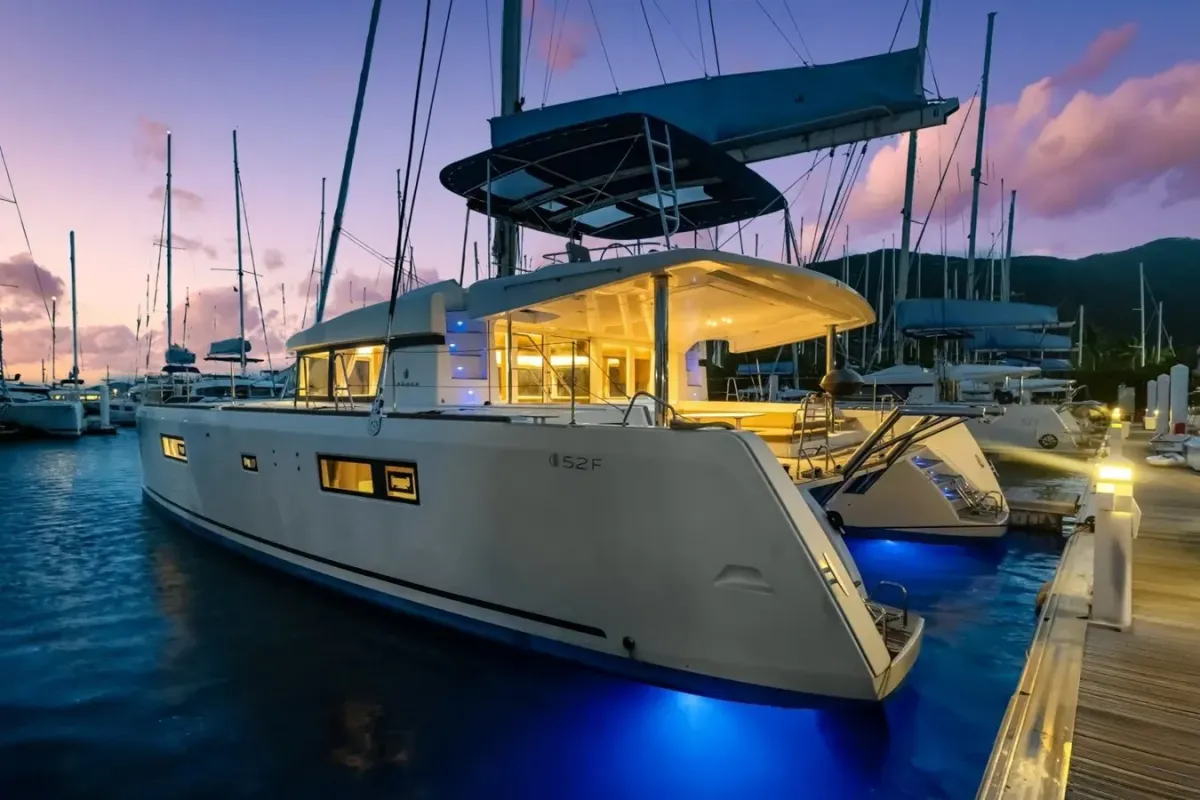
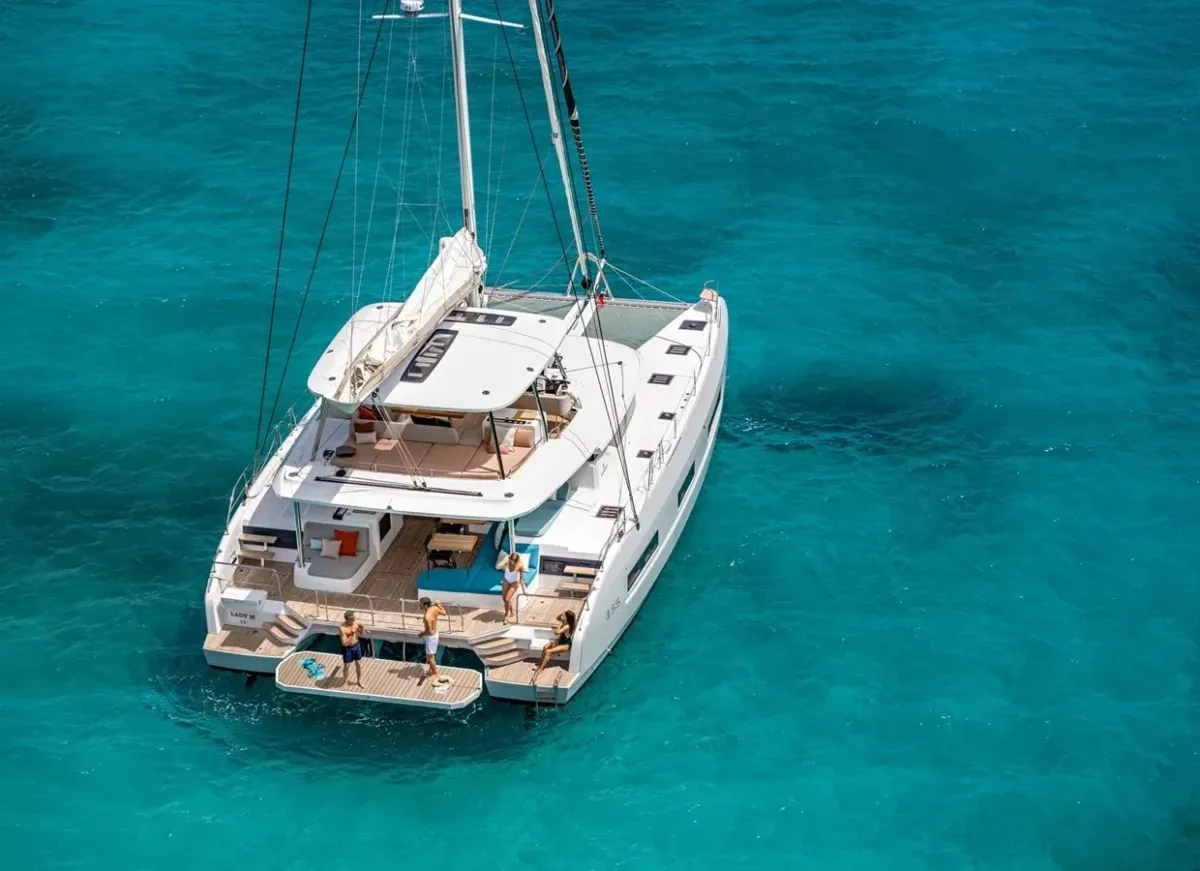
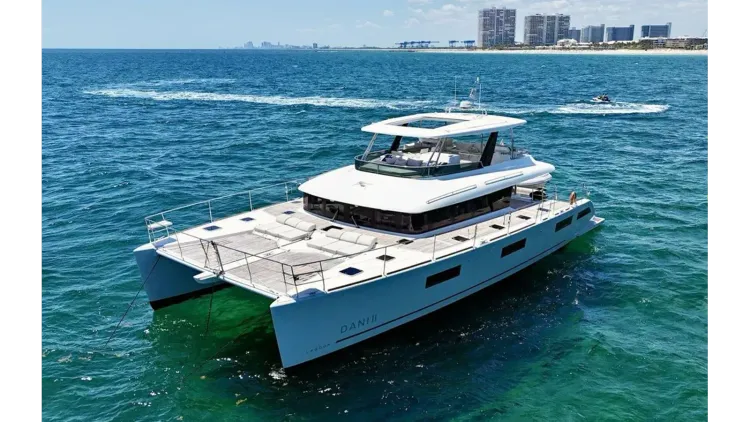
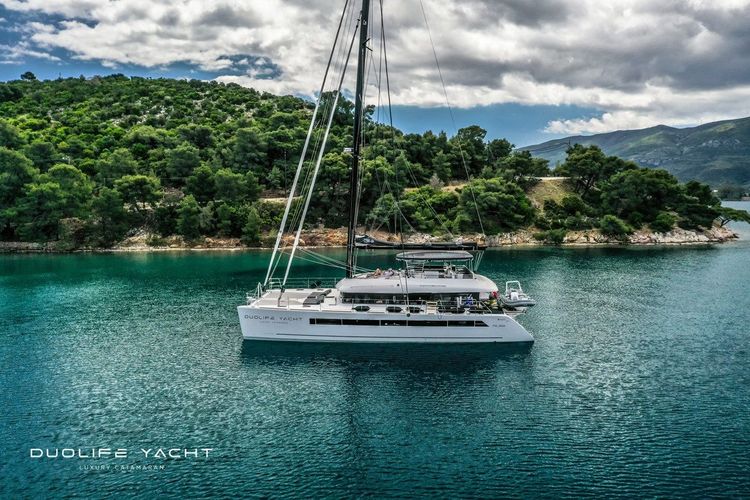
Design consistency and liveability: Lagoon models are known for spacious saloons, wide cockpits, and well-separated owner/guest accommodations. High freeboard, generous bridgedeck clearance, and careful weight management contribute to comfort under way, while large windows and openings deliver exceptional natural light and 360-degree views. On-deck ergonomics favor safe movement, good access to the boom and mast, and clear separation between leisure and work areas.
Industrialized quality with yacht-level detailing: Backed by Groupe Beneteau’s industrial systems, Lagoon blends high-volume reproducibility with premium touches in joinery, soft furnishings, and systems integration. Resin-infusion techniques, structural grids, and composite bulkheads are engineered to ensure stiffness and durability. Electrical and plumbing layouts are designed for accessibility and long-term serviceability—crucial for boats that may operate intensively in charter programs or embark on extended private cruises.
Partnerships that enhance product credibility: The long-standing collaboration with VPLP gives Lagoon access to world-class multihull hydrodynamics and structures expertise. Nauta Design’s interiors and Patrick le Quément’s exterior signatures reinforce a recognizable Lagoon identity that appeals to both first-time cat buyers and experienced multihull sailors.
Strong dealer and service network: Lagoon benefits from Groupe Beneteau’s international distribution and aftersales infrastructure. Authorized dealers provide commissioning, warranty handling, spares, and refit support. For owners planning ocean passages or remote cruising, this network is a key part of Lagoon’s value proposition.
Suitability for charter and private ownership: Lagoon’s layouts and systems are engineered to meet the practicalities of hard-working charter fleets—durable materials, easy-clean surfaces, redundant systems—while still delivering the finish and comfort expected by private owners. This dual suitability has broadened Lagoon’s customer base and helps sustain resale values through a large, liquid pre-owned market.
Recognitions and awards: Over the years, various Lagoon models have received awards and “Boat of the Year” titles or nominations from respected publications and juries in Europe and North America. Models in the mid-size range, notably the Lagoon 42 and subsequent successors, have been especially well regarded for their balance of handling, comfort, and build quality. Larger models have been recognized for luxury, volume optimization, and amenity-rich layouts suited for long-term liveaboard life.
Safety and bluewater credibility: Lagoon catamarans are designed with bluewater capability in mind, typically carrying CE certifications appropriate to offshore use. Redundancy in critical systems, robust structural bonding, well-protected helm positions, and conservative sail plans contribute to safe handling across a range of conditions. While Lagoons are not positioned as ultralight performance cats, their predictable behavior, spacious stowage for safety gear, and easy-to-manage rigs appeal to cruising couples and professional skippers alike.
Continuous improvement and sustainability focus: In recent generations, Lagoon has increased attention to energy management and environmental impact. Options on select models include extensive solar array capacity, high-output alternators, and improved battery banks to support quiet anchoring with reduced generator run-time. Material selections and production methods continue to evolve, guided by Groupe Beneteau’s broader eco-design and manufacturing efficiency initiatives. Waste reduction, VOC management, and lifecycle thinking are steadily shaping how Lagoon conceives and builds its boats.
Owner community and knowledge base: With thousands of Lagoons sailing worldwide, the brand benefits from a vast owner and skipper community. This ecosystem of experience—ranging from technical tips to passagemaking reports—feeds back into product updates and helps new owners shorten their learning curve. The depth of shared knowledge supports confident ownership and easier decision-making about equipment, upgrades, and routing.
It is worth noting the balance Lagoon intentionally strikes. The brand prioritizes comfort, reliability, and broad usability over pure performance metrics. Compared to lighter, more performance-oriented catamarans, Lagoons generally carry more volume and amenities and may be heavier. For many owners—especially families, crews hosting guests, or charter operators—the trade-off is advantageous: generous living spaces, stable motion, and forgiving sailing characteristics. Meanwhile, successive design updates have sought to keep sailing efficiency competitive, with improved sail plans, refined daggerboard-free hull forms on most models, and carefully tuned deck layouts for easier sail handling.
In sum, Lagoon’s reputation is that of a market leader with a mature product line, robust industrial backing, and deep expertise in multihulls. Its yachts are designed to be inviting homes afloat, capable of serious cruising, and supported by a global service network. This blend of design, engineering, and scale has made Lagoon one of the default reference points for anyone considering a modern cruising catamaran.
Lagoon Catamarans operates in the most competitive segment of the yacht industry: production cruising catamarans from roughly 40 to 80 feet, across both sail and power. As the market leader by installed base, Lagoon’s competitive set spans high-volume French builders, South African builders tied closely to major charter fleets, and a number of premium semi-custom yards. The principal competitors are:
Fountaine Pajot (France): The closest like-for-like rival across size, pricing, and market orientation. FP’s sail range (Isla 40, Astréa 42, Elba 45, Tanna 47, Aura 51, Samana 59, Alegria 67) and powercats (MY4.S, MY5, MY6, Power 67) overlap directly with Lagoon’s portfolio. FP places strong emphasis on weight control and efficiency, and has moved assertively with “Smart Electric” hybrid packages. Lagoon and FP tend to compete for the same private owners and charter fleet orders, particularly in the Mediterranean and Caribbean.
Leopard Catamarans by Robertson & Caine (South Africa): A dominant force in the charter-oriented segment, especially via The Moorings and Sunsail. Leopards are known for robust build, ease of operation, and distinctive features such as forward cockpits with direct saloon access on several models. The Leopard 45/50 in particular are frequent head-to-head alternatives to the Lagoon 46/51 in fleet and private purchase decisions. Leopard’s powercats (e.g., Leopard 53 PC) are strong competitors to Lagoon’s Sixty 7 and Seventy 8 power models in certain markets.
Bali Catamarans (Catana Group, France): A fast-growing brand aimed at volume buyers and charter operators. Bali’s signature solid foredeck, forward saloon door, and “garage-style” aft door create a very open-plan living space, a concept Lagoon competes with via expansive flybridges, improved flow between cockpits, and sunpad zones. Bali often competes aggressively on price and perceived space.
Nautitech (Bavaria Group, France): Positioned more toward performance-cruising with twin aft helm stations and lighter displacement than some high-volume rivals. Nautitech competes with Lagoon primarily among private owners who prioritize sailing feel and a lower coachroof profile.
Outremer (France), HH Catamarans (China/International), and Seawind (Australia/Vietnam): Performance-oriented catamaran specialists. While they are not direct volume rivals, they attract experienced sailors who might otherwise consider upper-end Lagoons for bluewater cruising. Lagoon counters with comfort, service network depth, and proven world-cruising capability across thousands of hulls.
Sunreef Yachts and Privilege Marine (Poland/France): Custom and semi-custom luxury catamarans. These brands compete with Lagoon’s top tier—particularly the Seventy 7 and Sixty 5—when owners want high finish levels, long-range voyaging comfort, and bespoke layouts. Lagoon’s advantage at this end remains industrial consistency, a global support footprint via Groupe Beneteau, and value retention due to broad market familiarity.
Aquila (Sino Eagle, China) and other powercat specialists: In the motor-yacht arena, Aquila and Fountaine Pajot Power are often cross-shopped with Lagoon’s Sixty 7 and Seventy 8. Buyers evaluate space planning, fuel burn at displacement speeds, and after-sales support in distant cruising grounds—an area where Lagoon leverages the reach of its dealer and service network.
Across these competitors, Lagoon’s defining differentiators include:
Production at Lagoon Catamarans is ongoing and active across multiple sites in France. Lagoon is part of the Groupe Beneteau Boat Division, benefiting from the group’s purchasing power, common industrial methods, and continuous improvement programs. The brand’s build strategy is typical of high-volume European yards: large composite pieces are resin-infused in closed molds for repeatable structural quality, bulkheads and critical structural elements are bonded and tabbed with close attention to torsional rigidity, and interiors are produced with precision-cut components to ensure consistency and reduce weight where feasible.
Facilities and model segmentation:
Current sailing lineup commonly encountered on the market:
Current power lineup:
Design and engineering approach:
Sales channels and support:
Sustainability and options:
In short, Lagoon’s production is very much active, with steady model updates, a broad sail and power offering, and continued industrial investment leveraged from Groupe Beneteau’s scale.
New model introductions and range evolution:
Ongoing refresh of mid-size icons:
Owner experience, service, and digitalization:
40th anniversary milestones:
Supply chain normalization and delivery outlook:
Sustainability developments and options packages:
Charter market dynamics:
Powercat segment activity:
Awards and show presence:
Training and workforce:
In sum, the latest developments at Lagoon Catamarans underscore a steady, well-resourced evolution of its range: new models that refine comfort and deck circulation; practical sustainability steps focused on energy generation and management; stronger digital support under the Groupe Beneteau umbrella; and continued leadership in the volume catamaran market where charter and private owners both weigh ease of use, serviceability, and resale value heavily.
Question:Who is Lagoon Catamarans?
Answer:Lagoon Catamarans is a French builder specializing exclusively in multihull yachts. Founded in the 1980s and integrated into the wider industrial group that includes CNB (Construction Navale Bordeaux), Lagoon grew from racing-multihull know‑how into the world’s best‑known range of cruising sailing and motor catamarans. The brand is recognized for prioritizing comfort, safe passagemaking, and livability while leveraging leading naval architecture from VPLP (Marc Van Peteghem and Vincent Lauriot-Prévost), refined interior design by Nauta Design, and exterior styling overseen on recent models in collaboration with Patrick le Quément.
Question:What distinguishes Lagoon from other catamaran builders?
Answer:Lagoon’s defining traits are volume and ergonomics without sacrificing predictable handling. Highlights include:
Question:Are Lagoon catamarans suitable for bluewater cruising?
Answer:Yes. Many Lagoons have completed ocean crossings and circumnavigations. Most sailing models carry CE Category A (Ocean) certification when properly equipped. The design brief emphasizes redundancy—twin engines, twin rudders, watertight compartments forward—and a conservative, load‑tolerant hull form that remains comfortable with cruising gear aboard.
Question:How are Lagoon hulls built?
Answer:Lagoon employs resin infusion and vacuum bagging techniques to build composite hulls and decks. Core materials (typically end‑grain balsa or structural foam) are used where appropriate to increase stiffness without excessive weight. A vinylester barrier is commonly used in outer layers to mitigate osmosis risk. Structural bulkheads are bonded and laminated to distribute rig and seaway loads. This industrialized process yields consistent laminate quality and helps control weight.
Question:Who designs Lagoon yachts?
Answer:Hulls and sail plans are led by VPLP, a firm with unmatched multihull pedigree across ocean‑racing and cruising cats. Interiors are by Nauta Design, noted for clean lines, efficient traffic flow, and abundant storage. Exterior styling on current generations reflects collaboration with Patrick le Quément, focusing on cohesive proportions and smart ergonomics.
Question:What sailing performance should an owner expect?
Answer:Lagoon sailing cats are optimized for cruising comfort and ease of handling rather than extreme performance. With square‑top mainsails and efficient jibs, they sail reliably at or above wind speed in light airs on reach angles, typically cruising in the 6–10‑knot range depending on model and conditions, with higher speeds possible off the wind. Under power with standard twin diesels, expect typical cruising speeds near 7–9 knots and modest fuel burn.
Question:Are they easy to handle short‑handed?
Answer:Yes. Control lines are generally led to the helm, many models use self‑tacking or easy‑trim headsails, and electric winches are common. The twin‑engine configuration allows precise low‑speed maneuvering. Good visibility from the raised helm or flybridge and balanced sail plans make day‑to‑day handling approachable for a couple.
Question:How does Lagoon balance interior volume with seakeeping?
Answer:Lagoon’s bridgedeck clearance and carefully shaped tunnel reduce wave slamming, and the hulls incorporate fine entries forward for a softer ride. The superstructure and vertical windows maximize space and light while spreading the weight low and outboard for stability. Fixed mini‑keels add directional stability and protect running gear, an advantage for cruising and grounding resilience.
Question:What safety features are standard?
Answer:Notable safety elements include crash boxes and watertight compartments forward, twin rudders and engines for redundancy, robust handholds throughout, high lifelines, and molded non‑skid. Fuel and electrical systems are engineered with straightforward access for inspection. Most models are delivered with appropriate offshore safety categorization when the required equipment is specified.
Question:What materials and finishes are used inside?
Answer:Interiors emphasize durable lightweight laminates and veneers, engineered flooring, marine‑grade upholstery, and composite or solid‑surface countertops. Nauta’s design language favors neutral palettes, large window modules, and thoughtful lighting to enhance perceived volume. Joinery strives for weight efficiency without sacrificing a clean, residential feel.
Question:Do Lagoon models support sustainable options?
Answer:Many Lagoons can be specified with solar arrays (some models integrate substantial solar capacity over the bimini or hardtop), high‑efficiency refrigeration, lithium battery banks, and smart charging. Owners commonly add wind generation and watermakers for energy autonomy. The builder has a history of exploring hybrid propulsion on select projects and continues to develop energy‑efficient solutions across the range.
Question:How do Lagoon Power Cats differ from the sailing range?
Answer:The SIXTY 7 and SEVENTY 8 are purpose‑built motor catamarans with optimized hull forms for efficient semi‑planing/fast displacement performance. They offer expansive living areas, extended range at displacement speeds, and higher top speeds than sailing cats under power. Interiors are more akin to motor‑yacht standards with extensive customizable lounging, larger galleys, and generous owner’s suites.
Question:Are Lagoons popular in charter fleets?
Answer:Very. Lagoons are ubiquitous in global charter fleets because of their reliable handling, voluminous accommodations, abundant natural light, and adaptable layouts (for example, 4–6 cabins with multiple heads). The brand’s visibility in charter also helps resale by familiarizing buyers with the onboard experience.
Question:What are the maintenance considerations?
Answer:Routine care mirrors best practices for composite multihulls:
Question:Can a Lagoon cross oceans fully loaded with cruising gear?
Answer:Yes, provided you select the appropriate model, load within design limits, and outfit for the intended route (storm sails, redundancy in navigation and power, water and fuel management, etc.). Lagoons are purpose‑built to carry cruising payloads comfortably; many owners successfully complete Atlantic and Pacific passages.
Question:What helm configurations do Lagoons use?
Answer:Depending on model size, Lagoons feature either a raised starboard helm (common on smaller models) or a full flybridge helm with dual access (mid‑to‑large models). Both configurations prioritize visibility, ergonomic sail handling, and social integration with the cockpit or flybridge lounge.
Question:What is the difference between Lagoon’s mid‑range and premium lines?
Answer:The core sailing line (e.g., 40 through 60) balances price, performance, and production efficiency. The premium large sailing cats (SIXTY 5, SEVENTY 7) and power cats (SIXTY 7, SEVENTY 8) move into semi‑custom territory with expanded layout choices, higher‑end finishes, larger tankage, and systems more aligned with superyacht practice.
Question:How customizable are Lagoon interiors?
Answer:Layouts typically include multiple cabin configurations—owner’s versions with a dedicated hull, or charter‑oriented versions with symmetric cabins. Interior color schemes, upholstery, wood finishes, and equipment options (air‑conditioning, genset, electronics, watermakers, tender lifts, etc.) allow owners to tailor the yacht to private or commercial use.
Question:What sails and rig features are standard?
Answer:Modern Lagoons commonly sport a square‑top mainsail for added power with manageable loads, an overlapping genoa or self‑tacking jib depending on model, and options like a code sail for reaching. Rig geometry and deck layout favor short‑handed sailing with line leads to the helm and optional electric winches.
Question:How do Lagoons hold their value?
Answer:Lagoon’s global brand recognition, service infrastructure, and heavy presence in both private and charter markets contribute to strong liquidity on the brokerage market. Properly maintained boats with sought‑after layouts and equipment tend to retain value competitively within the cruising catamaran segment.
Question:What onboard systems are typical?
Answer:Expect twin diesel inboards with shaft or saildrive transmissions on sailing models, comprehensive 12/24V DC and 110/230V AC systems, generous refrigeration (often drawer units), optional air‑conditioning and generator, bow thrusters on larger models, electric freshwater heads, watermakers as options, and robust electronics packages integrating radar, AIS, and multifunction displays.
Question:What should buyers consider when selecting a model?
Answer:Key decision points include:
Question:What is the typical engine type and fuel efficiency?
Answer:Sailing models use twin inboard diesel engines sized by model, emphasizing redundancy and efficient low‑load operation. At displacement cruising speeds (approximately 6–8 knots), they deliver modest fuel consumption compared with monohull motor yachts of similar length. Power cats use larger twin inboard diesels optimized for efficient semi‑planing at higher speeds, with significantly longer range at displacement cruise.
Question:How is weight management handled?
Answer:Lagoon designs target a generous but controlled payload. Structural cores, infused laminates, and careful systems placement keep weight low and centered. Cruisers are advised to remain disciplined with additions, distribute spares evenly, and maintain the manufacturer’s recommended load margin to preserve sailing trim and performance.
Question:Can owners retrofit solar and lithium later?
Answer:Yes. Most models are solar‑ready, and many owners install substantial arrays post‑delivery. Lithium battery conversion is feasible with appropriate battery management systems, alternator protection, and compatible chargers/inverters. Installation quality is crucial—work with specialists familiar with multihull energy systems.
Question:Are Lagoon cats beginner friendly?
Answer:They are among the most popular first multihulls. Predictable handling, excellent low‑speed control from twin engines, and forgiving sail plans make them approachable. A professional handover and a structured training period are strongly recommended, particularly for docking, anchoring, and reefing routines.
Note: The following highlights widely known current models and key characteristics. Dimensions and capabilities can vary with options and production updates. Maximum speeds listed for sailing models refer to approximate top speed under power in typical load and sea state; higher speeds may be achieved under sail in favorable conditions.
Lagoon 40 (Sailing Catamaran)
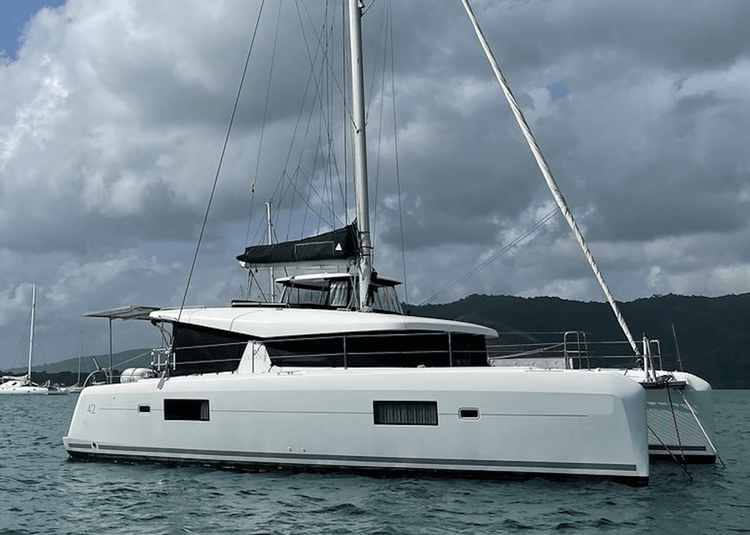
Lagoon 42 (Sailing Catamaran)
Lagoon 46 (Sailing Catamaran)
Lagoon 51 (Sailing Catamaran)
Lagoon 55 (Sailing Catamaran)
Lagoon 60 (Sailing Catamaran)
Lagoon SIXTY 5 (Sailing Catamaran)
Lagoon SEVENTY 7 (Sailing Catamaran)
Lagoon SIXTY 7 (Power Catamaran)
Lagoon SEVENTY 8 (Power Catamaran)
Key model themes and clarifications:
This model overview is representative of Lagoon’s current portfolio and the brand’s design approach. For any given hull, exact figures (equipment lists, tankage, displacement, and engine output) depend on build year and options. However, the core characteristics outlined here—twin inboard diesels, predictable under‑power speeds, generous cabin counts, and substantial interior volume—are the hallmarks that have made Lagoon one of the most recognized names in modern cruising catamarans.
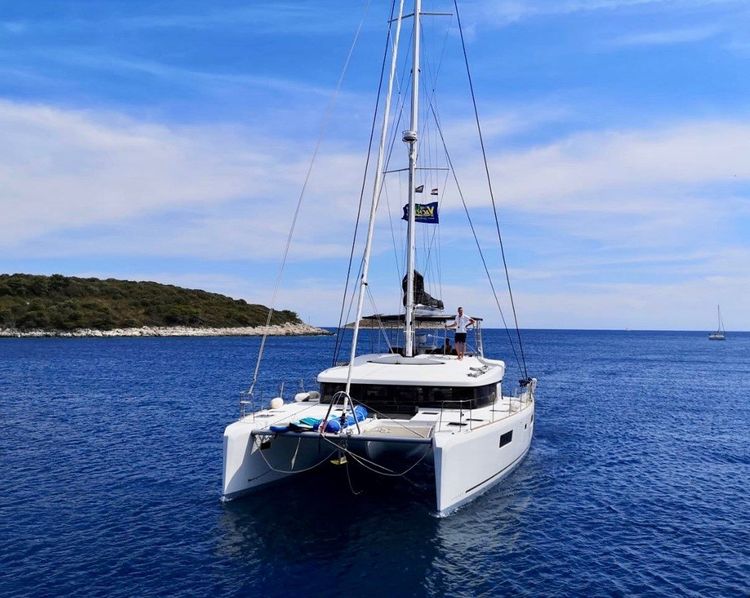

Learn more on the “N/A”
To learn more on the “N/A” or to get advice on how to buy or sell a yacht or get a great price for a yacht charter
please call +1 (954) 274-4435 USAOnly deal with professionals!
