
 Licensed Yacht BrokersSales and service of yachts and ships
INTREPID POWERBOATS INC - For Sale
English
Company History
Intrepid Powerboats, Inc. is a renowned American builder of high‑performance, custom offshore powerboats. Over several decades, the company has earned a reputation for building one‑of‑a‑kind vessels “one at a time,” tailoring each craft to the individual owner’s use case, from serious offshore angling and long‑range cruising to family dayboating and yacht tender service. A hallmark of Intrepid’s history is its early and consistent adoption of advanced composite construction techniques, including vacuum‑assisted lamination and cored structures, to deliver a strong, light, and quiet ride. The brand is widely associated with stepped‑hull performance, meticulous systems installation, and a deep commitment to customization.
As outboard power evolved—especially with the advent of reliable, high‑horsepower four‑strokes—Intrepid expanded its portfolio from smaller center consoles to larger, offshore‑capable platforms in the 30‑ to 50‑foot range, including center consoles, cuddy cabins, walkarounds, and sport yacht models. The company’s model development has been steady and customer‑driven: layouts, storage solutions, livewells, dive doors, seating modules, and helm ergonomics are commonly refined based on feedback from owners, captains, and professional anglers. Intrepid’s design‑build process typically pairs customers with engineering and production teams early on, enabling bespoke features such as custom hardtops, tower configurations, generator and gyro integrations, and specialized electrical and plumbing systems.
Over time, Intrepid has become a fixture at major U.S. boat shows, including Miami and Fort Lauderdale, where it regularly debuts incremental refinements and new models. The company’s evolution reflects a consistent philosophy: build semi‑custom boats with premium materials, exacting fit and finish, and an owner experience centered on collaboration and after‑sale support.
Country of Origin
United States of America.
Manufacturing Locations
Intrepid’s primary manufacturing campus is in Largo, Florida, in the Tampa Bay area. This facility houses the core operations—design, lamination, assembly, rigging, paint/finishing, and quality control—allowing the company to maintain close oversight of every stage of production. In South Florida, Intrepid maintains a customer‑facing presence with a sales and delivery facility commonly referenced as its Dania Beach location, supporting sea trials, deliveries, service coordination, and owner consultation. Concentrating production and customer services within Florida enables efficient communication between engineering, manufacturing, and end users, and provides convenient access to the Atlantic and Gulf test waters.
Ownership and Management
Intrepid Powerboats, Inc. is a privately held company. Publicly available information consistently identifies Ken Clinton as a long‑serving president and the brand’s most visible executive, frequently representing the company in product walk‑throughs, owner events, and industry media. The firm operates with experienced department heads across engineering, lamination, rigging, and customer support, reflecting a culture built around craftspeople with long tenures. Detailed ownership structure and additional executive biographies are not widely disclosed in public sources; however, the management profile emphasizes hands‑on leadership, direct customer interaction, and continual product improvement.
Reputation and Quality
Within the U.S. high‑end center‑console and sport‑yacht segment, Intrepid is synonymous with:
- Customization: Each boat is specified to order, with extensive options for layout, storage, seating, electronics, power, and auxiliary systems. The “one of a kind, one at a time” approach pervades design, rigging, and finish work, producing boats that reflect individual owner preferences.
- Build techniques: Advanced composite construction, including vacuum‑assisted processes and foam‑cored structures, is used to achieve an optimal balance of stiffness, strength, and weight. Systems installations—wiring runs, plumbing, access panels, bonding, and labeling—are executed with serviceability and longevity in mind.
- Performance and ride: Stepped‑hull designs and careful weight distribution contribute to efficient planing, speed, and fuel economy, while maintaining a dry, composed ride in offshore conditions. Boats are commonly powered by twin, triple, or quad outboards from leading engine manufacturers.
- Finish and detailing: Paintwork, gelcoat, fairing, and interior appointments are consistently cited by owners and reviewers for their quality. The company’s in‑house rigging standards and attention to hardware selection, sealing, and corrosion mitigation are part of its premium positioning.
- Owner experience and resale: The intensive spec and build process fosters strong brand loyalty, and used Intrepids often command premium resale values relative to market averages in comparable size and equipment classes. The brand benefits from repeat orders by existing owners and from extensive word‑of‑mouth within fishing, diving, and yacht‑tender communities.
- Industry presence: Intrepid is regularly covered by marine media and demonstrates products at major shows, underlining its ongoing development cycle and alignment with evolving technology such as digital switching, stabilization systems, joystick controls, and next‑generation outboards.
Intrepid’s reputation is anchored not just in top‑end speed or finish, but in the cumulative quality of engineering choices—hull structures, system layouts, ergonomics, and service access—that determine how a boat feels and performs after years of real‑world use. For customers seeking a premium, semi‑custom offshore platform built in the United States with a collaborative specification process, Intrepid Powerboats stands as a benchmark brand.
Español
Company History
Intrepid Powerboats, Inc. es un constructor estadounidense de lanchas offshore de alto rendimiento y fabricación personalizada. A lo largo de décadas, la empresa ha desarrollado una oferta basada en construir “una por una”, adaptando cada embarcación al uso del propietario: pesca en alta mar, crucero de largo alcance, salidas familiares o como tender de superyate. Su trayectoria se caracteriza por el empleo temprano de compuestos avanzados y técnicas de vacío, logrando cascos ligeros, rígidos y silenciosos, además de la adopción de cascos con “step” para mejorar eficiencia y suavidad de navegación.
Con la evolución de los fuerabordas de gran potencia, Intrepid amplió su gama hacia esloras mayores, abarcando centros de consola, cuddy, walkarounds y modelos tipo sport yacht entre 30 y 50 pies. La empresa trabaja estrechamente con los clientes en la fase de especificación, ofreciendo soluciones a medida: configuraciones de hardtop y torres, estabilización, generadores, módulos de asiento, puertas de buceo, y estiba optimizada.
Country of Origin
Estados Unidos.
Manufacturing Locations
La fabricación principal se realiza en Largo, Florida (área de Tampa Bay). Adicionalmente, la marca cuenta con una ubicación de ventas y entregas en Dania Beach (Sur de Florida), donde coordina pruebas de mar, entregas y atención al cliente, facilitando la comunicación entre ingeniería, producción y usuario final.
Ownership and Management
Intrepid Powerboats, Inc. es una empresa privada. Ken Clinton aparece públicamente como su presidente desde hace años y es la cara visible en presentaciones y medios del sector. No se divulgan ampliamente otros detalles de propiedad.
Reputation and Quality
- Personalización integral, con especificaciones a medida en distribución, equipos y motorización.
- Construcción en compuestos avanzados y estándares de instalación orientados a servicio y durabilidad.
- Prestaciones reconocidas por eficiencia, estabilidad y navegación seca en mar abierto.
- Acabados de alto nivel y excelente valor de reventa.
- Presencia constante en los principales salones náuticos de EE. UU. y en medios especializados.
Français
Company History
Intrepid Powerboats, Inc. s’est imposé comme un constructeur américain de bateaux offshore hautes performances, réalisés à la commande. L’entreprise conçoit et fabrique des unités uniques, orientées pêche sportive, croisière côtière/hauturière et usage familial, avec un processus de spécification très collaboratif. L’adoption de matériaux composites avancés et de techniques d’aspiration sous vide permet d’obtenir des coques légères, rigides et silencieuses, fréquemment associées à des carènes à redans (stepped hull) pour optimiser vitesse et rendement.
Country of Origin
États‑Unis.
Manufacturing Locations
Site principal à Largo (Floride). Centre de vente/livraison et relation clients en Floride du Sud (Dania Beach), pour essais en mer, livraisons et coordination du service après‑vente.
Ownership and Management
Entreprise privée; Ken Clinton est reconnu publiquement comme président et principal représentant de la marque.
Reputation and Quality
- Personnalisation poussée, intégrant plans de pont, modules, électronique et motorisations.
- Assemblage et câblage soignés, pensés pour l’accessibilité et la maintenance.
- Carènes performantes et confortables en conditions offshore.
- Finitions premium et forte fidélité des propriétaires.
- Visibilité régulière dans la presse nautique et aux salons de Miami/Fort Lauderdale.
Deutsch
Company History
Intrepid Powerboats, Inc. steht in den USA für individuelle Hochleistungs‑Offshore‑Boote. Jedes Boot wird kundenspezifisch geplant und gefertigt, mit Fokus auf Offshore‑Angeln, Familienausflüge, sportliches Cruisen und den Einsatz als Yacht‑Tender. Die Marke ist bekannt für moderne Verbundbauweisen, Vakuumverfahren und sorgfältig entwickelte, oft gestufte Rümpfe für effiziente und trockene Fahrt.
Country of Origin
Vereinigte Staaten von Amerika.
Manufacturing Locations
Hauptfertigung in Largo, Florida (Raum Tampa Bay). Kundenbetreuung, Übergaben und Probefahrten erfolgen zudem über den Standort Dania Beach in Südflorida.
Ownership and Management
Privat gehaltenes Unternehmen; öffentlich tritt Ken Clinton als langjähriger Präsident und Markenrepräsentant auf.
Reputation and Quality
- Maßgeschneiderte Spezifikationen bis ins Detail.
- Hochwertige Laminierung, sorgfältige Verkabelung/Verrohrung und wartungsfreundliche Zugänglichkeit.
- Leistungsstarke, effiziente Rümpfe mit hervorragender Offshore‑Tauglichkeit.
- Erstklassige Lackierung/Finish und starke Wiederverkaufswerte.
- Kontinuierliche Produktpflege und Präsenz auf führenden US‑Bootsmessen.
Italiano
Company History
Intrepid Powerboats, Inc. è un cantiere statunitense specializzato in barche offshore ad alte prestazioni realizzate su commessa. La filosofia “una alla volta” consente un livello di personalizzazione molto elevato su layout, dotazioni e motorizzazione, rivolto a pesca d’altura, crociera veloce, uscite familiari e uso come tender per superyacht. L’adozione di compositi avanzati, processi in vuoto e carene a step ha caratterizzato l’evoluzione dei modelli verso prestazioni efficienti e comfort in mare formato.
Country of Origin
Stati Uniti d’America.
Manufacturing Locations
Stabilimento principale a Largo, Florida (area Tampa Bay), con centro vendite/consegne e supporto clienti a Dania Beach (Sud Florida) per prove in mare e consegne.
Ownership and Management
Società privata; Ken Clinton è riconosciuto pubblicamente come presidente e volto del marchio.
Reputation and Quality
- Ampia possibilità di personalizzazione e attenzione maniacale ai dettagli.
- Installazioni di impianti eseguite con criteri di servizio e durabilità.
- Navigazione asciutta, stabile ed efficiente in offshore.
- Finiture di livello premium e forte fidelizzazione della clientela.
- Presenza assidua su media e fiere nautiche di riferimento.
Русский
Company History
Intrepid Powerboats, Inc. — американский производитель высокопроизводительных катеров для оффшора, изготавливаемых по индивидуальным спецификациям. Компания известна подходом «по одному уникальному изделию за раз»: заказчик участвует в проектировании компоновки, выборе силовой установки, электроники и вспомогательных систем. Применяются современные композитные технологии (вакуумные процессы, пенопластовые заполнители), что обеспечивает легкость, жесткость и низкий уровень шумов. Конструктивно широко используются реданы (stepped hull) для повышения эффективности и курсовой устойчивости на скорости.
Country of Origin
Соединенные Штаты Америки.
Manufacturing Locations
Основная производственная площадка расположена в Ларго, штат Флорида (регион Тампа‑Бэй). В Южной Флориде (Дания‑Бич) действует центр продаж и выдачи, где проводятся ходовые испытания, передача клиентам и координация сервисной поддержки.
Ownership and Management
Компания частная. Широко известно, что президентом и публичным представителем бренда является Кен Клинтон. Прочая структура владения и менеджмента публично раскрывается ограниченно.
Reputation and Quality
- Максимальная кастомизация под конкретные сценарии эксплуатации: рыбалка в океане, дайвинг, семейный отдых, чартер или работа в качестве тендера.
- Современные композитные технологии и стандарты монтажа, ориентированные на надежность и сервисопригодность.
- Высокие ходовые качества, сухой и мягкий ход на волне, эффективность и дальность.
- Премиальные лакокрасочные покрытия и отделка, стабильный высокий вторичный спрос.
- Регулярное присутствие на ведущих выставках США и в профильных изданиях.
中文(简体)
Company History
Intrepid Powerboats, Inc. 是美国知名的高性能海钓/离岸动力艇制造商,主打按单定制。其产品覆盖中心控制台、艉阀舱(cuddy)、走廊式与运动型游艇等类型,强调与船东的深度沟通,从结构布局到系统配置均可定制。品牌长期采用先进复合材料与真空工艺,使船体轻、强、静,并以阶梯式船体(stepped hull)带来更高效率与更平顺的航行质感。
Country of Origin
美国。
Manufacturing Locations
核心生产位于佛罗里达州拉戈(坦帕湾地区)。在南佛州的达尼亚海滩设有销售/交付与客户服务据点,便于海试、交付与后续支持,实现工程、制造与用户之间的高效沟通。
Ownership and Management
公司为私人持有。公开信息显示,Ken Clinton(肯·克林顿)长期担任公司总裁并代表品牌对外发声。更详细的股权与管理层信息未广泛公开。
Reputation and Quality
- 深度定制:从甲板布局、座椅模块到电子、电力与稳定系统均可按需配置。
- 先进工艺:复合材料与真空成型,注重线路/管路布置、维护通道与防腐细节。
- 航行表现:高效阶梯船体,良好的离岸适航性与燃油经济性,常配装双/三/四台大型舷外机。
- 细节与涂装:精细打磨与喷涂,内饰做工优异,体现高端定位。
- 市场口碑:船东忠诚度高,二手保值性强,在迈阿密、劳德代尔等国际船展长期亮相并获得业界关注。
Main Competitors
Intrepid Powerboats, Inc. occupies a premium niche within the U.S. market for high-performance, outboard-powered center consoles, walkarounds/cuddy cabins, and sport-oriented dayboats that can double as superyacht tenders. The company’s hallmark is semi-custom, “one-of-a-kind, one-at-a-time” builds with meticulous rigging and finish. Its competitive set includes brands that emphasize either similar levels of customization, comparable offshore performance, or a luxury fit-and-finish aimed at discerning private owners and yacht programs. The following groups summarize the most relevant competitors typically cross-shopped by Intrepid buyers:
-
Premium offshore center-console specialists (performance/fish/cruise):
- Yellowfin: Known for fast, dry-running offshore hulls and high-end rigging; strong tournament-credible DNA and frequent cross-shopping by owners wanting top-tier performance in the 36–42+ foot range.
- SeaVee: Miami-based builder with a reputation for serious offshore fishability, clean systems installations, and customizable layouts; frequent alternative for buyers focused on long-range fishing capability.
- Contender: Performance-forward, tournament pedigree; popular for owners seeking speed and no-nonsense fishboat ergonomics in the 30–44-foot class.
- Invincible: High-speed monohulls and increasingly popular catamarans; aggressive offshore range with strong performance and fit/finish, often considered by buyers who prioritize speed and range.
- Regulator Marine: Renowned for robust, deep-V offshore hulls and refined builds; fewer bespoke options than Intrepid but a strong reputation for ride quality and engineering.
- Jupiter Marine: Premium center consoles with solid construction and a loyal owner base; frequently compared for quality and offshore manners.
-
Luxury center-console/dayboat competitors (finish, comfort, and tender suitability):
- Scout Boats (LXF series): Luxury fixtures, fit-and-finish, and contemporary styling; often compared when the owner prioritizes premium aesthetics and social/entertainment features.
- Boston Whaler (Outrage series): Top-tier brand recognition, unsinkable foam-filled construction, and robust dealer support; frequently used as yacht tenders and dayboats with high safety perception.
- Pursuit Boats: Offshore-capable dayboats and center consoles with strong quality control; popular among owners who value a refined factory spec and dealer ecosystem.
- Everglades Boats: Known for RAMCAP construction and rugged, quiet ride; premium finishes and offshore credibility make it a common alternative in the 30–40-foot segment.
- EdgeWater: Foam-filled, single-piece infusion construction and clean rigging standards; a reliable, premium competitor with a safety-first reputation.
- Tiara Yachts (outboard dayboats): High-quality, cruising-oriented outboard models; not pure center-console specialists, but often cross-shopped for premium dayboating and family use.
-
Performance/luxury center consoles (speed and style-forward):
- Midnight Express: South Florida performance icon with large CC models; high speed, luxury appointments, and tender presence in the superyacht community.
- Nor-Tech: Performance pedigree, striking design, and high-horsepower outboard packages; popular among buyers seeking top-end speed and distinct style.
- Cigarette Racing Team (CC line): Ultra-premium, performance-forward offerings; a niche competitor when buyers value brand cachet and extreme performance.
- HCB (HydraSports Custom): Oversized, ultra-luxury CCs (50–65 feet class); cross-shopped at the top end when owners consider quad/quin outboards and yacht-level amenities.
-
Additional contenders in the premium offshore space:
- Valhalla Boatworks (by Viking): High-quality, performance CCs with strong brand support and offshore credibility; often compared by owners with Viking ecosystem ties.
- Formula (super sport crossovers and dayboats): While not a pure CC competitor, Formula’s meticulous build and luxury trim make it relevant for premium dayboat buyers.
- Jupiter, SeaHunter, Blackwater, Deep Impact: Florida-based builders with strong offshore and high-speed credentials that occasionally compete for similar buyers.
-
Catamaran center-console segment (different hull form but increasingly cross-shopped):
- Freeman Boatworks: Benchmark for fast offshore catamarans; often evaluated by owners focused on range, speed, and ride in heavy conditions.
- Invincible (cat series) and World Cat: For buyers considering twin-hull efficiency and stability; though Intrepid does not build catamarans, some customers compare ride dynamics and deck volume before deciding on hull form.
How Intrepid differentiates:
- Semi-custom approach: Intrepid’s “built-to-order” process, with tailored systems, layouts, and finishes, distinguishes it from more standardized production builders.
- Yacht tender expertise: Many Intrepids serve as primary or shadow-boat tenders for large yachts; this tender-savvy culture (including davit/cradle interface, passarelle/dive-door considerations, and crew-serviceability) sets Intrepid apart.
- Systems craftsmanship: Carefully routed wiring, labeling, access for service, advanced composites, and vacuum-assisted construction are frequent decision points for owners comparing premium brands.
- Balanced mission profile: Intrepid blends fish/cruise capability with family comfort and finish; owners wanting one boat to serve multiple roles often favor that versatility.
In practice, Intrepid finalists on a buyer’s shortlist are commonly Yellowfin, Invincible, Regulator, Jupiter, Scout, Boston Whaler, Pursuit, Everglades, Midnight Express, Nor-Tech, HCB, and Valhalla—depending on whether the decision skews more toward fishing performance, luxury/social dayboating, or tender compatibility and custom engineering.
Current Production Status
Production is ongoing. Intrepid Powerboats continues to build boats in Florida with an active model portfolio that spans center consoles, cuddy/walkaround configurations, and sport-oriented outboard yachts suitable for offshore use, family dayboating, and yacht-tender roles.
Key characteristics of current operations:
- Florida-based manufacturing: The company’s principal production campus is in Largo, Florida (Tampa Bay area). Consolidating lamination, assembly, paint/finish, and quality control under one roof supports close oversight and a consistent standard of fit and finish.
- Factory-direct sales and specification: Intrepid is known for selling direct to consumers rather than through a conventional dealer network. This enables early-stage collaboration with engineers and production staff on layout choices, system integrations, and material selections. Owners work through detailed option lists and often develop bespoke solutions (e.g., specialized livewells, dive doors, custom seating modules, tower/top designs, tender-lift interfaces, and custom electrical/plumbing systems).
- Bespoke build schedule: Because each boat is specified to order, production is paced by individual customer builds, not by high-volume batch runs. Lead times are managed through scheduled build slots. The company prioritizes engineering reviews and in-process customer touchpoints, so timelines reflect the complexity of selected options, paint schemes, and integrations (e.g., gyro stabilization, advanced helm electronics, diesel gensets, air-conditioning, lithium house banks, and digital switching).
- Outboard power flexibility: Intrepid rigs with leading outboard platforms from major manufacturers (e.g., Mercury Marine and Yamaha). This flexibility lets owners prioritize desired characteristics—torque curves, service networks, joystick/steering ecosystems, and noise levels—while the yard ensures proper mounting, weight distribution, and systems calibration for the chosen engines.
- Performance composites and systems access: The build method typically includes cored laminates and vacuum-assisted processes to achieve a strong, light, and quiet structure. Intrepid’s hallmark is service-friendly access: labeled wiring harnesses, clean plumbing runs, drip loops, sealed penetrations, and strategically placed access panels that aid long-term maintenance and refit—a critical benefit for yacht programs and private owners operating far from home ports.
- Sea trials, delivery, and support: Intrepid maintains a customer-facing presence in South Florida (Dania Beach area) to support sea trials, deliveries, and coordination of after-sale service. This is important for yacht-tender clients operating from South Florida and the Bahamas, and for private owners conducting handovers near major marine service hubs.
- Continuous model refinement: Rather than wholesale model overhauls each year, Intrepid favors iterative improvements driven by owner feedback and real-world use. This can include helm ergonomics, seating geometry, storage optimization, ride/trim balance, fuel capacity adjustments, and compatibility with evolving technologies (e.g., updated MFD networks, radar/sonar modules, digital throttles/joysticks, stabilization systems, and battery management).
Market posture and demand:
- Intrepid’s order book typically benefits from repeat customers and referrals within fishing, diving, and yacht-tender circles. The brand’s balancing act—offshore capability, luxury appointments, and bespoke engineering—helps maintain steady demand in the 30–50-foot class.
- The broader U.S. market has seen strong interest in larger center consoles and outboard-powered dayboats; Intrepid remains positioned to serve that demand with semi-custom builds for owners who value a collaborative design-and-build journey over purely standardized production.
Overall, the company remains active and visible in Florida, producing semi-custom boats year-round and focusing on direct relationships with owners from concept to delivery and through after-sale support.
Production Volumes
[Section intentionally omitted: the company does not routinely publish reliable, detailed production figures, and third-party estimates vary. In the absence of verifiable data, specific quantities are not stated.]
Latest News
While Intrepid Powerboats tends not to publicize granular operational data, several reliable, public-facing themes and activities continue to characterize the brand’s recent trajectory:
- Ongoing presence at major U.S. boat shows: Intrepid regularly showcases boats at the Miami International Boat Show and the Fort Lauderdale International Boat Show. These venues are where the company typically highlights incremental refinements to layouts, rigging, and options, and where owners and prospective buyers engage directly with engineering and sales staff. The brand’s show strategy emphasizes owner feedback loops and live demonstrations of systems and ergonomics.
- Continued integration of evolving outboard and onboard technologies: As major engine manufacturers release new high-horsepower platforms, Intrepid maintains compatibility and offers rigging packages aligned with customer preference. The company also supports modern helm networks (large-format multifunction displays, advanced sonar/radar, integrated digital switching), joystick control and station-keeping, and optional stabilization (gyro or interceptor-based ride control) for improved comfort and safety offshore.
- Focus on serviceability for yacht-tender roles: Intrepid’s South Florida delivery and customer-care presence continues to facilitate yacht-tender operations—scheduling sea trials near major yards and marinas, coordinating fit-out details for davits/cradles, and streamlining after-sale service. In recent seasons, interest in tender-duty boats with enhanced boarding (side dive doors), robust towing eyes/hardpoints, and specialized fendering has remained strong, and Intrepid highlights its ability to tailor builds for those needs.
- Refinement through owner feedback: Intrepid’s “one at a time” philosophy produces steady, model-by-model refinements rather than splashy, annual overhauls. Recent show cycles and factory communications typically point to improvements in helm ergonomics (sightlines, seating support, switch placement), deck utility (convertible seating, insulated storage, livewell/bait management), and service access (revised electrical panels, labeled looms, improved access hatches). These refinements align with the brand’s reputation for building boats that remain easy to maintain over long ownership cycles.
- Materials and finish emphasis: The company continues to spotlight advanced composite construction and premium finishing practices, including paintwork and gelcoat quality, fairing standards, and hardware selection/sealing intended to resist corrosion. This sustained focus underpins the brand’s reputation for quiet rides and premium aesthetics—features frequently cited by owners and marine media when discussing the longevity and resale strength of Intrepid builds.
- Owner community and repeat business: Intrepid’s communications and presence at events frequently underscore the high proportion of repeat owners and word-of-mouth referrals. While not a “news item” in the press-release sense, this ongoing dynamic is central to the firm’s strategy. It reinforces an operating model that puts engineering access, build transparency, and after-sale support at the core of customer retention.
- Broader industry context: The premium center-console and dayboat market continues to evolve with demands for greater range, higher cruise speeds, and more complex onboard systems—yet with expectations for quiet, low-vibration running and simplified maintenance. Intrepid aligns with this trend by integrating larger fuel capacities where appropriate, optimizing weight distribution for multi-engine rigs, and ensuring systems layouts remain accessible despite the complexity introduced by features like gyro stabilization, air conditioning, generators, and expanded house-electrical loads.
Taken together, the most reliable “latest” picture is one of steady, incremental advancement rather than headline-grabbing structural changes. Intrepid remains an active Florida builder, present at the major U.S. shows, delivering custom-specified boats, and refining systems, ergonomics, and finish in response to owner feedback and the capabilities of new outboard platforms and marine electronics. This consistency, rather than dramatic pivots, is central to how the brand communicates progress and how the market perceives Intrepid’s ongoing development.
Frequently Asked Questions
Question: What type of boats does Intrepid Powerboats, Inc. build? Answer: Intrepid specializes in premium, outboard-powered offshore boats built on a semi-custom basis. Core formats include center consoles for fishing and dayboating, walkaround/cuddy designs with overnight capability, and larger crossover/sport-yacht style platforms that blend serious offshore performance with refined accommodations and social spaces. Many builds are purpose-configured as superyacht tenders, with specific hardware, lifting points, and deck plans tailored to that role.
Question: What is distinctive about Intrepid’s hull design and ride? Answer: Intrepid is closely associated with stepped deep-V hulls designed to reduce wetted surface at speed, improving efficiency and top-end while maintaining a soft, dry ride. The running surfaces are optimized for weight distribution, dynamic stability, and predictable handling in varied sea states. Owners frequently cite quiet operation, composed behavior offshore, and confidence at the helm as standout traits.
Question: How “custom” is an Intrepid compared to typical production boats? Answer: Intrepid’s approach is semi-custom: each boat begins with a proven hull and structural foundation, then is specified one at a time to the buyer’s preferences. Layout elements, seating modules, hardtops/towers, fish and dive features, helm ergonomics, storage, livewells, electrical and plumbing options, as well as paint and upholstery, can be tailored within engineering parameters. This allows the same base model to be optimized for fishing, family cruising, tender duty, or mixed-mission use.
Question: What construction methods and materials are commonly used? Answer: Advanced composite construction with cored laminates and vacuum-assisted processes is a hallmark. The aim is a structure that is strong, light, and quiet, with strategic reinforcement in high-load zones (e.g., engine transom areas, deck hardware foundations, cleats, lifting points). Attention to resin content, core bonding, and structural continuity helps achieve long-term durability and a refined ride quality.
Question: How are onboard systems installed and organized? Answer: Intrepid is known for meticulous systems work: labeled wiring harnesses, drip loops, sealed penetrations, clean plumbing runs, clearly documented bonding, and accessible service panels. The philosophy emphasizes long-term serviceability—critical for owners who rack up hours offshore or operate as tenders where downtime is costly. This approach also aids resale by signaling professional-grade engineering discipline.
Question: What engines are typically specified? Answer: Boats are generally rigged with modern four-stroke outboards from major manufacturers in twin, triple, or quad configurations depending on size and mission. Engine choice is matched to the desired performance envelope, fuel economy goals, and the owner’s preferred service ecosystem. Joystick steering/shift systems and integrated digital helm controls are commonly included.
Question: What performance ranges do owners typically see? Answer: Performance varies with model, engine count, and load, but many Intrepid center consoles and walkarounds are configured to cruise efficiently at planing speeds with top-end performance commonly falling in the 50–70 mph range for appropriately powered setups. Larger, fully outfitted models often emphasize a quiet, fast cruise rather than maximum top speed, balancing comfort and range.
Question: What features support fishing and diving use cases? Answer: Options frequently include pressurized livewells, insulated fish boxes, raw/freshwater washdowns, tackle and rod storage, outriggers, and cockpit rigging stations. Intrepid is also known for its hullside dive door, a feature prized by divers and tender crews for safe boarding from the water. Decks and coamings are configured to allow efficient movement and clear work zones around the cockpit.
Question: What accommodations are available for overnighting? Answer: Walkaround/cuddy and crossover models incorporate enclosed heads with showers, convertible berth arrangements, air conditioning (when specified with appropriate power systems), and compact galley elements for short cruising. While the center consoles emphasize open deck utility, some offer small enclosed spaces for storage or a compact berth within the console.
Question: Is gyro stabilization available? Answer: Many owners specify modern stabilization solutions (such as a gyroscopic unit) on mid-to-large models. Stabilization integration is handled within the engineering plan to ensure proper structural support, weight distribution, and service access.
Question: How does Intrepid approach corrosion prevention and saltwater longevity? Answer: Typical measures include careful material selection, bonding/grounding strategies, isolation for dissimilar metals, sealed hardware penetrations, high-quality coatings, and comprehensive drainage. The rigging standard aims to minimize water intrusion and facilitate inspection and maintenance.
Question: What about electrical and electronics integration? Answer: Boats are commonly specified with large-format multifunction displays, radar/sonar suites, thermal and night-vision options, digital switching, and integrated audio/communication systems. The electrical backbone is organized for clarity and safe expansion, with labeling and access that simplify troubleshooting and upgrades.
Question: Are these boats suitable as yacht tenders? Answer: Yes. Intrepid has extensive tender experience, including provisions for lifting points, reinforced towing eyes, chafe protection, fender systems, removable railings or fittings, and custom stowage solutions. Deck layouts may be modified to accommodate chocks, davits, or specialized gear to interface with a mothership.
Question: What kind of maintenance profile do owners experience? Answer: Maintenance reflects the quality of installation and access. Owners often point to clean runs for wiring and plumbing, labeled panels, and sensible access that make periodic inspections, filter changes, and component replacements straightforward. This is especially valuable for owner-operators and professional crews.
Question: How does the brand balance fishability with family comfort? Answer: The design ethos seeks to serve multiple missions in one platform. Many builds combine robust livewell and tackle systems with convertible seating, sunpads, shade structures, premium upholstery, air-conditioned spaces on cabin-equipped models, and features like boarding/dive doors and swim ladders to satisfy both angling and leisure agendas.
Question: How are fuel capacity and range addressed? Answer: Fuel capacity is engineered for the model’s offshore mission profile. Range depends on displacement, sea state, prop selection, and engine choice; many owners specify generous fuel for long runs to the grounds or island-hopping. Efficient cruise speeds are prioritized to balance time-to-destination with comfort and economy.
Question: What differentiates Intrepid from other premium center-console builders? Answer: The combination of semi-custom engineering, refined systems work, stepped-hull performance, and finish quality is central. Another differentiator is the hands-on specification process, where owners collaborate with engineering and production to shape the final boat around their use case, from helm ergonomics to unique storage, electrical, and plumbing solutions.
Question: How does noise and vibration compare to typical boats in the segment? Answer: The composite schedule, core selection, and attention to lamination and bonding aim to reduce structural-borne noise. Rigging choices, isolation of machinery, and placement of service items further dampen vibration and rattles. Owners commonly report a notably quiet ride relative to expectations in this size and performance class.
Question: Do these boats hold their value? Answer: While resale depends on market conditions, hours, and care, premium construction standards, bespoke features, and brand reputation often support strong demand on the secondary market. Service records, clean rigging, and tasteful customizations typically enhance appeal.
Question: How does Intrepid handle ergonomics for longer runs offshore? Answer: Helm sightlines, seating geometry, footrests, grab rails, and deck heights are refined through iterative updates and owner feedback. Details like switch placement, shade coverage, and airflow are evaluated during sea trials and showings, leading to continuous incremental improvements.
Question: Is there flexibility in tops, towers, and enclosures? Answer: Yes. Owners frequently specify custom hardtops, integrated lighting, outriggers, tower or second-station controls, tempered glass or polycarbonate enclosures, and shade solutions aft. Hardware and structural supports are engineered to handle loads while preserving balance and access.
Question: What about liveaboard or multi-day capability? Answer: Although these are primarily high-performance dayboats and short-cruise platforms, the walkaround/cuddy and larger crossover designs can comfortably support weekends aboard, with air conditioning (if specified), refrigeration, microwaves or cooktops, berths, and ample storage.
Question: Are there common options for cold storage and provisioning? Answer: Convertible insulated compartments, dedicated fridge/freezer drawers, and deck boxes are common. For tender builds or extended fishing days, owners may specify additional cold storage and shore-power interfaces, factoring in electrical load planning.
Question: How are safety and compliance handled? Answer: Builds adhere to applicable standards and guidelines for the class and jurisdiction. Safety features typically include robust non-skid, secure handholds, high freeboard (model dependent), clearly routed fuel and electrical systems, and attention to visibility and deck drainage.
Question: Can the boats be set up for towing behind a mothership? Answer: Yes. Many tenders are outfitted with reinforced bow eyes, towing bridles, and chafe protection; placement of heavy components is considered to promote stable towing behavior. Crews often consult on fendering strategies and quick-access points for lines and hardware.
Question: How does the brand address evolving outboard technology? Answer: The builder continuously adapts rigging options to support new-generation outboards, integrated helm electronics, digital controls, and steering systems. Weight, thrust, and electrical demands are accounted for so the installation complements the boat’s mission and retains serviceability.
Question: Is stabilization, air conditioning, and a generator practical on outboard boats? Answer: On mid-to-large models it is common to see gyro stabilization, air conditioning, and a compact generator or alternative power solutions. Integration focuses on structural support, cooling water supply, ventilation, noise isolation, and service access.
Question: How are paint and finish handled? Answer: Premium coatings, careful fairing, and tight tolerances are part of the brand’s identity. Many owners opt for custom hull colors, metallic accents, and high-end upholstery, with a strong emphasis on UV resistance and corrosion mitigation.
Question: What is the typical ownership experience like? Answer: Owners often cite the collaborative spec process, thorough system labeling and access, steady offshore manners, and premium finish as highlights. Boats are configured around the owner’s routine—whether that means early tournament departures, family sandbar days, yacht-tender duty, or a mix of all three.
Question: Are there trailering considerations for these boats? Answer: Beam and overall weight vary by model and options. Larger models may exceed common trailering width limits and require special permits or transport arrangements. Many owners berth or dry-stack the smaller models and arrange professional transport for larger units.
Question: How do these boats perform as multi-role platforms? Answer: The same hull can be set up for hardcore fishing on Friday, family cruising on Saturday, and tender transfer duty on Sunday. Convertible seating, removable modules, and thoughtful storage allow the boat to change personality with minimal reconfiguration.
Question: What are the most common owner-requested customizations? Answer: Popular choices include helm seating modules, bow seating layouts (sunpad vs. open casting space), outriggers and tower arrangements, additional livewell capacity, upgraded audio, advanced electronics, underwater lighting, custom paint schemes, and specialized tender hardware.
Question: How does the brand incorporate owner feedback into updates? Answer: Iterative refinement is central. Changes often appear as revised ergonomics, improved access hatches, re-routed wiring for clarity, updated latch and hinge solutions, and hardware upgrades that reflect real-world experience from owners and captains.
Question: What is the philosophy on weight management? Answer: Structural efficiency is balanced with stiffness and durability. Batteries, tanks, and major equipment are placed deliberately to keep the boat level and responsive. This contributes to efficient planing, predictable trim, and reduced pounding.
Question: Are there typical sound-damping measures? Answer: Beyond composite schedules and isolating machinery, attention is paid to fastening methods, gasketing, and proper support of panels to eliminate squeaks and rattles that can develop over time in high-speed offshore service.
Question: What distinguishes Intrepid’s approach for yacht crews? Answer: Crews value the service access, labeled systems, and sturdy yet discreet mounting solutions for deck hardware, chocks, and tender gear. The build philosophy recognizes the operational realities of daily crew use, quick turnarounds, and the need for reliable, easily serviced installations.
Question: How does the brand treat livewell and fish box performance? Answer: Consistent flow, minimal aeration, and thoughtful plumbing are prioritized to maintain bait health and to keep fish boxes draining efficiently. Builders and owners frequently collaborate on sizing, location, and pump redundancy.
Question: What comfort features are popular for family use? Answer: Shaded seating areas, convertible sunpads, side-entry/dive doors for easy boarding, freshwater showers, quiet cabins with climate control (on appropriate models), and child-friendly grab rails and step heights are common requests.
Question: How does the builder approach redundancy for offshore runs? Answer: Owners often specify redundancy in pumps, power distribution, and electronics. Multiple MFDs, backup communications, and spare-fuel planning are common, reflecting an offshore, safety-first mindset.
Question: Are there considerations for long-term ownership and refit? Answer: Service-friendly access and clear documentation simplify future refits or electronics upgrades. Many boats undergo mid-life refreshes—paint, upholstery, updated electronics—without invasive structural work thanks to thoughtful original installation.
Question: How does the company position itself within the market? Answer: It sits in the premium, semi-custom segment, focusing on performance, craftsmanship, and tailored owner experience. Buyers commonly cross-shop other high-end offshore brands but gravitate to Intrepid’s combination of ride quality, customization, and systems execution.
Question: What kind of deck hardware and fittings are typical? Answer: Robust, marine-grade metals with proper isolation, through-bolted backing plates where appropriate, and sealed penetrations to prevent moisture intrusion. Hardware placement prioritizes both ergonomics and structural support.
Question: Do these boats handle heavy weather? Answer: While prudent seamanship is paramount, the deep-V and stepped-hull geometry, freeboard, and weight distribution are intended to deliver a composed, dry ride in challenging seas, provided the boat is operated within conditions suitable for its size and configuration.
Question: How is the helm designed for operator comfort on long days? Answer: Adjustable seating/bolstering, footrests, anti-glare surfaces, instrument placement within natural sightlines, and integrated shade help reduce fatigue. Details like windshield geometry and venting contribute to visibility and airflow.
Question: Are there green or efficiency-minded options? Answer: Efficiency is addressed primarily through hull design, weight control, and prop/engine matching. Some owners specify lithium house banks or advanced charging solutions to support electronics and hotel loads with reduced generator runtime.
Question: How adaptable are the boats for different regions? Answer: Builds can be specified for warm-water island cruising, cold-water fishing, or mixed climates. Insulation, enclosure options, heating/cooling, and storage plans are tailored accordingly, as are grounding and corrosion strategies based on local water chemistry.
Question: What is the typical lifespan of upholstery and finishes offshore? Answer: Lifespan depends on usage and care. High-quality marine textiles and coatings are selected for UV and salt resistance, and owners are encouraged to follow maintenance protocols—rinse-downs, periodic sealing, and inspection of caulks and fasteners—to keep finishes looking fresh.
Question: How do owners usually set up electronics for fishing? Answer: Dual MFDs, chirp-capable sonars, high-performance transducers, radar, AIS, thermal imaging, and networked instruments are common. Mounting and wire management prioritize service access and future upgrade paths.
Question: Is swim platform access common with outboards? Answer: Yes. Transom walkthroughs and boarding solutions are configured to accommodate outboards, with integrated ladders and side doors. Safety and ease of reentry from the water receive substantial design attention.
Question: What decking materials are typical? Answer: Molded non-skid is common for durability and grip. Owners sometimes choose foam decking in select zones for comfort; installations consider drainage and cleanability in a saltwater environment.
Question: How is storage optimized? Answer: Deck boxes, under-seat compartments, in-sole lockers, and dedicated stowage for lines, fenders, dive tanks, rods, and safety gear are laid out to maintain clear decks underway. Hinges, latches, and gasketing are selected for quiet, secure operation.
Question: Are there common weak points owners should watch for? Answer: As with any offshore performance boat, proactive maintenance is key: inspect sealants around penetrations, maintain electrical connections, keep bilges dry and clean, follow engine service intervals, and review hardware tension and alignment periodically—especially after long, fast runs in chop.
Question: How do boats handle at the dock? Answer: Joystick systems and bow thrusters (where specified) simplify close-quarters maneuvering. Fendering plans and cleat placement reflect the hull shape and side door locations to make boarding and line handling efficient and safe.
Question: What sort of documentation accompanies a new build? Answer: Owners can expect organized electrical schematics, labeling, component manuals, and guidance on maintenance intervals and recommended procedures, aiding both owner-operators and professional crews.
Question: Can the builder accommodate unique mission equipment? Answer: Yes. From dive compressors and specialized racks to camera masts and tender-lift interfaces, many boats integrate purpose-built equipment, provided engineering and safety standards are met.
Question: How are fuel and water systems protected from contamination? Answer: Filtration, proper venting, and access points for inspection and service are prioritized. Owners often carry spares for filters and arrange inspection schedules suitable for their operating environment.
Question: What differentiates Intrepid’s finish work? Answer: Crisp fairing, clean edges, consistent gaps, and careful hardware installation are signature traits. This translates to a refined appearance that also reduces squeaks, leaks, and corrosion over time.
Question: How are anchors and ground tackle integrated? Answer: Many models incorporate concealed windlass installations, bow rollers or chutes, and protected lockers with drainage. Controls are positioned for safe solo operation, with attention to foredeck footing and handholds.
Question: What is a realistic expectation for delivery lead times? Answer: Lead times vary with demand, model selection, and the complexity of chosen options. Because boats are specified one at a time, scheduling is typically built around individual slots and engineering milestones.
Question: Are there typical choices for shade and weather protection? Answer: Hardtops with integrated lighting are common; owners often add aft sunshades, side curtains, or full enclosures to suit climate and mission. Materials are selected for clarity, durability, and UV resistance.
Question: How do the boats balance weight with add-on options? Answer: The specification process accounts for the cumulative effects of options. The engineering team considers weight creep, center of gravity, and access so that the final boat retains performance goals and serviceability.
Question: How does the brand address owner training and familiarization? Answer: Handover typically includes systems walk-throughs and sea-trial familiarization, allowing owners and crew to understand operation, maintenance, and best practices for safe offshore running.
Question: Are custom interiors possible on cabin models? Answer: Within engineering limits, owners can influence fabrics, layouts, and equipment—berth geometry, storage, lighting, and climate control—tailoring the space for short-stay comfort.
Question: What about towing sports and family activities beyond fishing? Answer: Many owners use these boats for sandbar days, snorkeling, diving, and tow sports in suitable conditions. Deck configurations can include transom seating that converts to open work areas as needed.
Available Models
Note: The builder’s portfolio evolves over time, and individual boats are specified to order. Rather than fixed mass-production trims, Intrepid’s lineup is best understood as families of models that share a hull and core architecture but can be extensively customized. Below are representative families commonly referenced in the market, with indicative characteristics to guide expectations. Exact specifications vary by build, options, and power.
Center Console Family (approx. 30–47 feet)
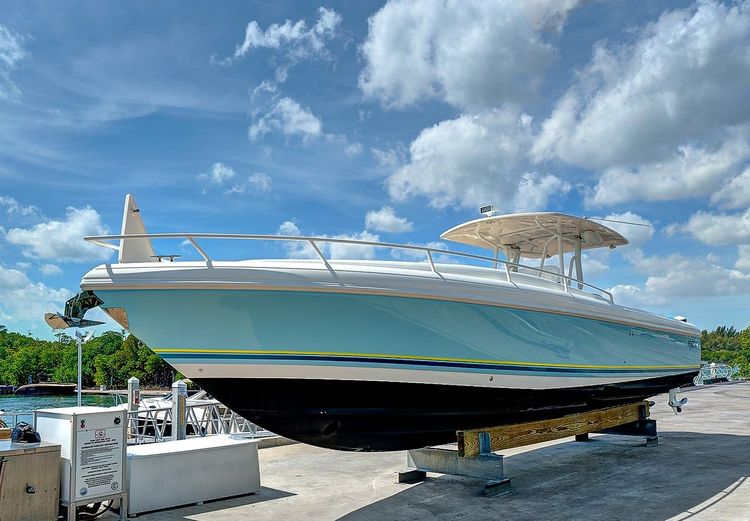
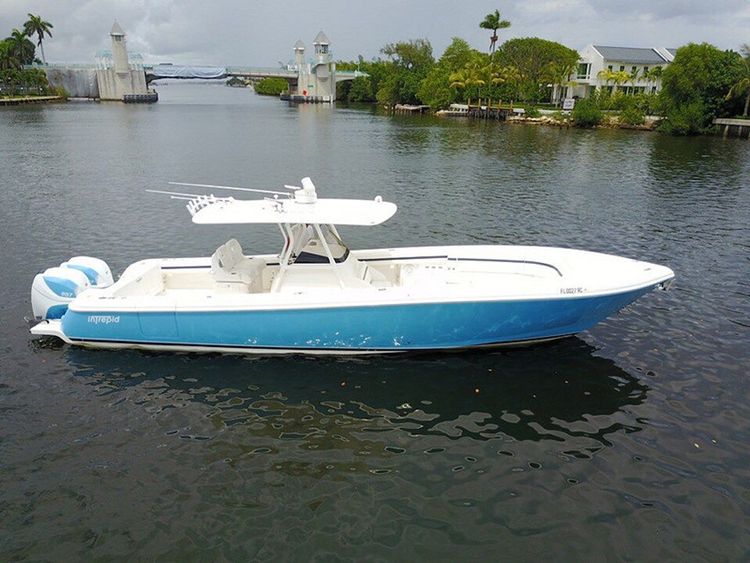
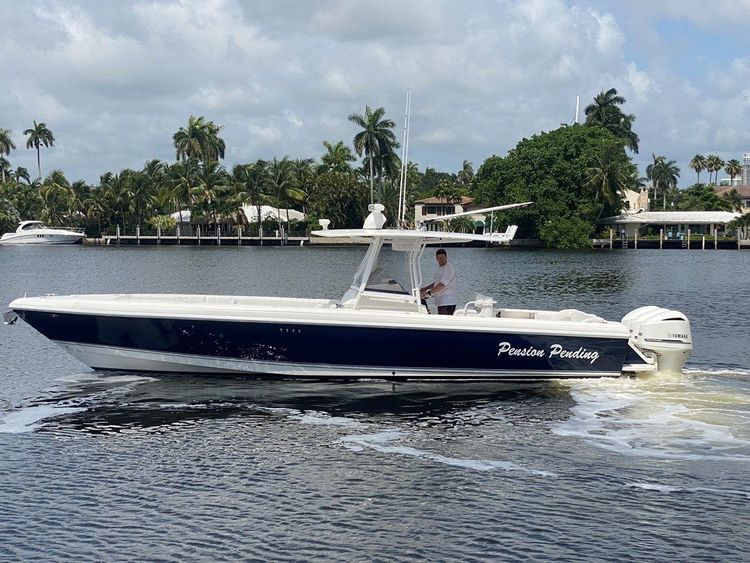
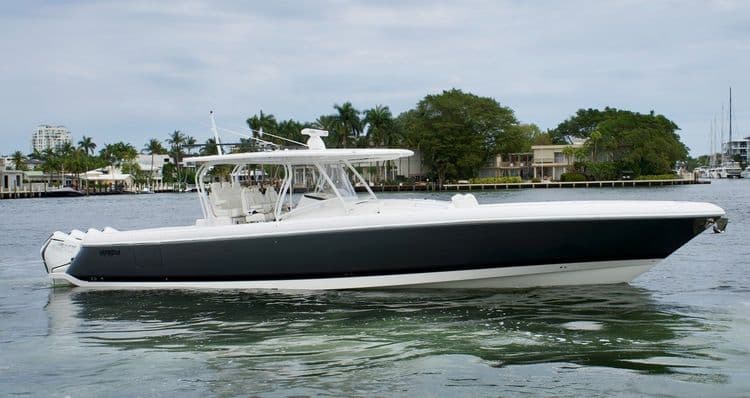
- Mission: Offshore fishing and high-speed dayboating with a focus on a clean, open deck and robust fishability, while retaining premium fit and finish for family use.
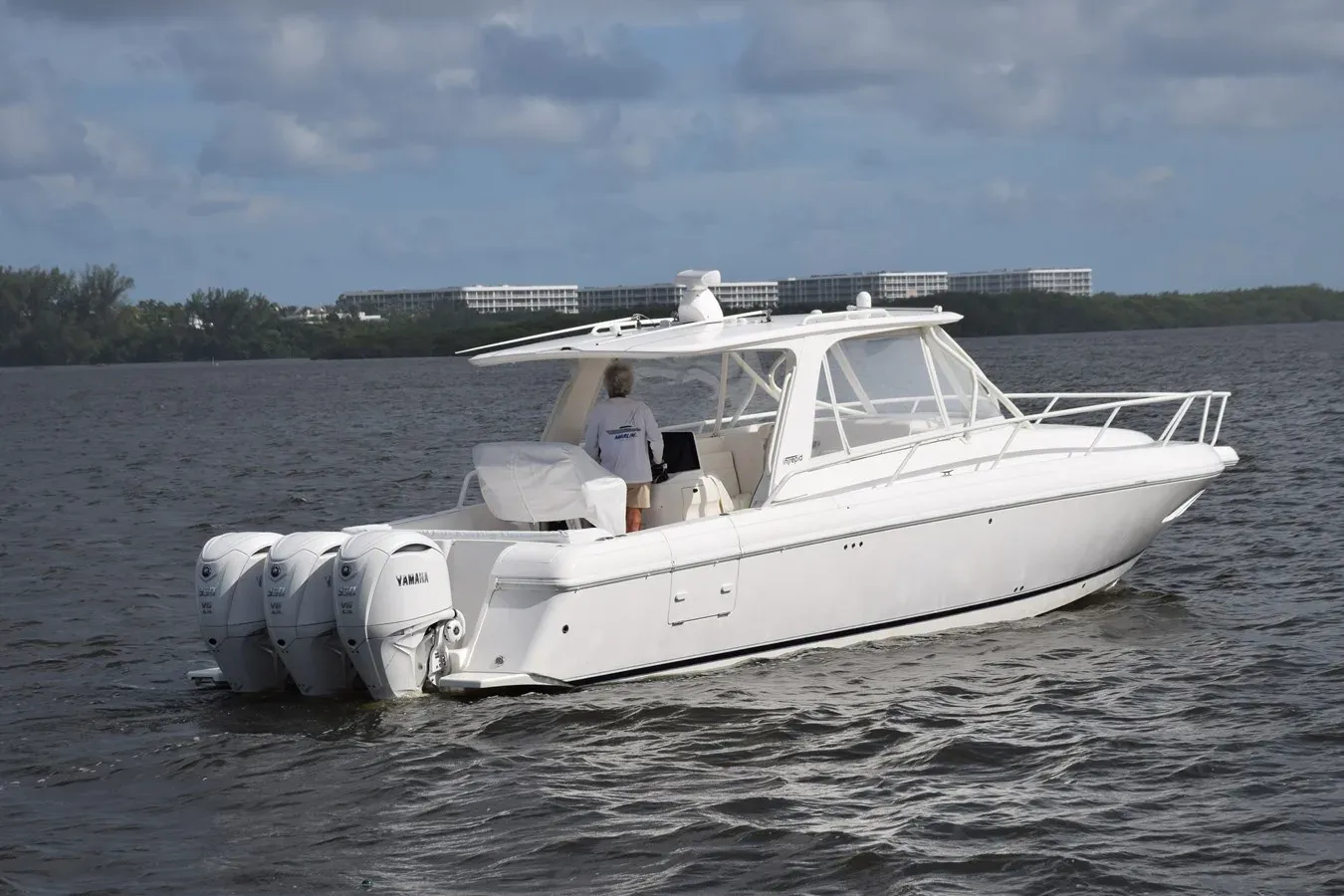
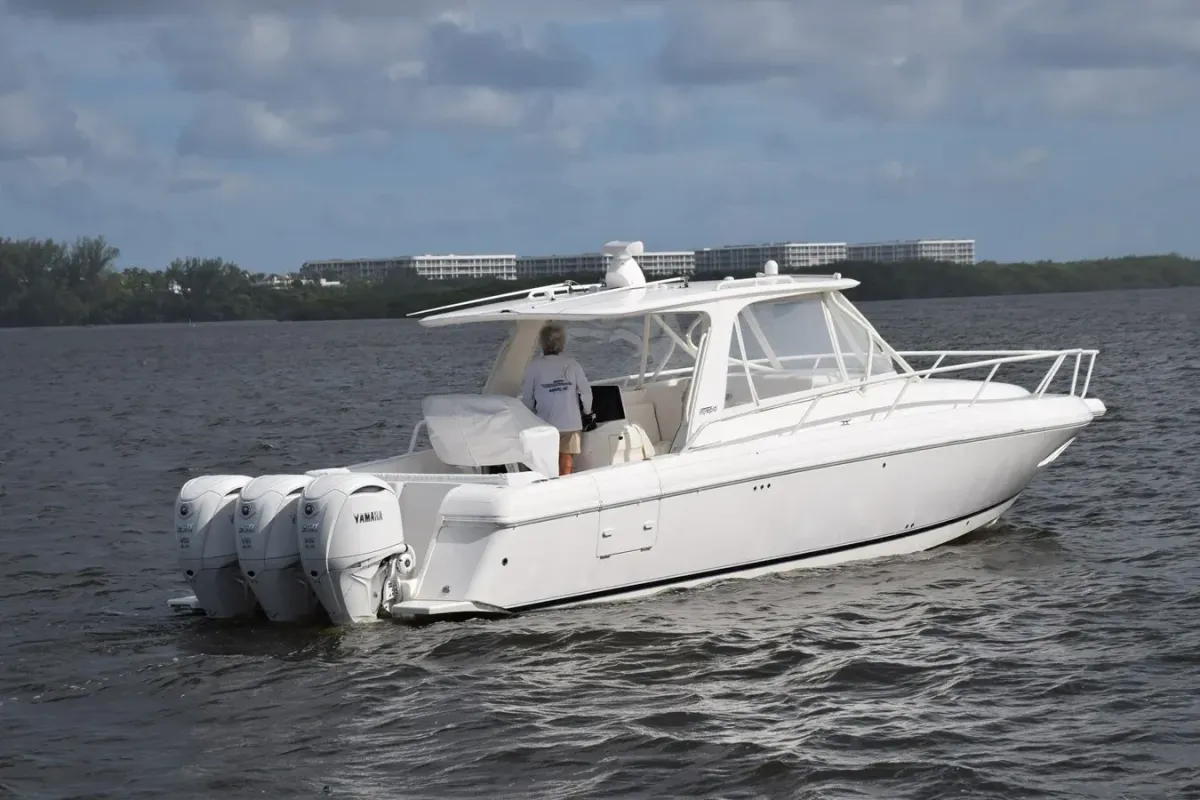
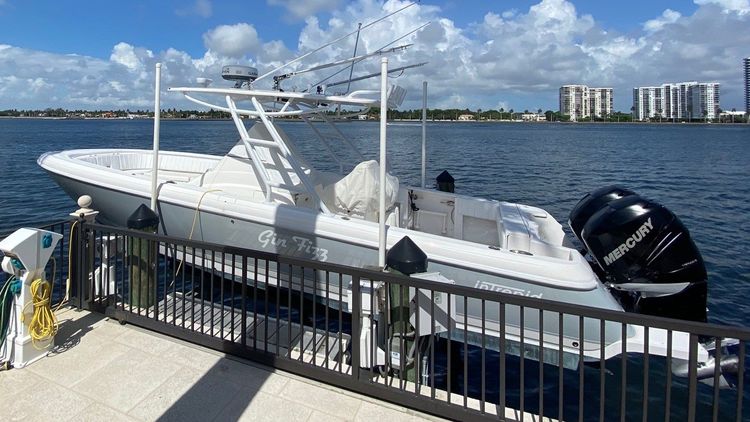
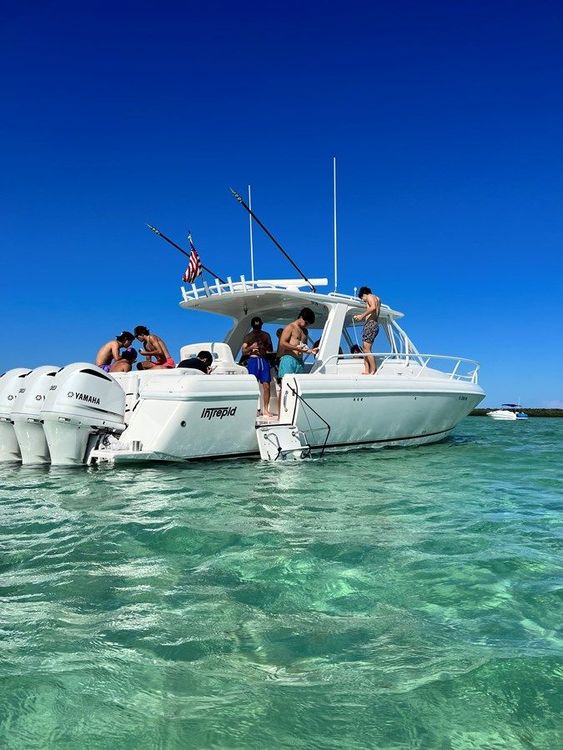
- Layout: Expansive cockpit, forward seating that can be configured for open casting or lounging, large helm with space for dual/triple MFDs, integrated hardtop options, and a signature hullside dive door for boarding and water access.
- Cabins: Typically no dedicated cabin; some models offer a compact enclosed space in the console for a head and gear stowage, and in select cases a small berth.
- Engines: Twin, triple, or quad modern four-stroke outboards, matched to size and mission.
- Performance: Many configurations are capable of top speeds in the 50–70 mph range depending on power, load, and sea state; cruising is focused on efficient planing with a quiet, composed ride.
Examples frequently cited by owners and media:
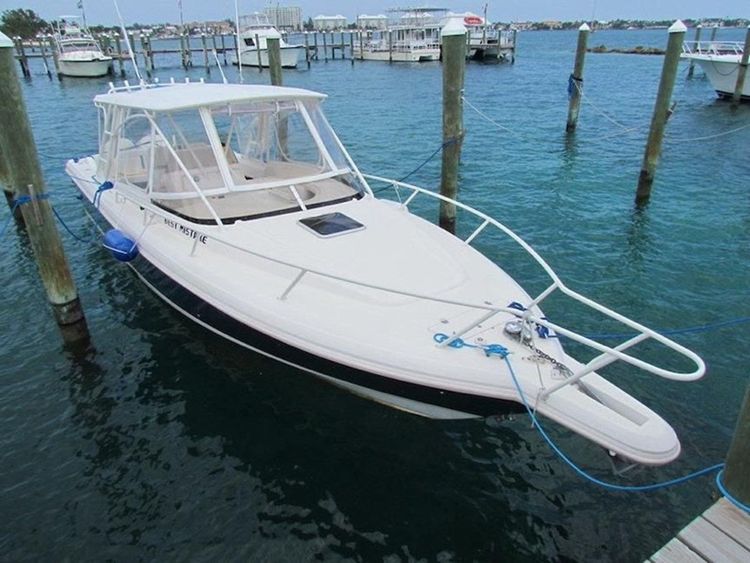
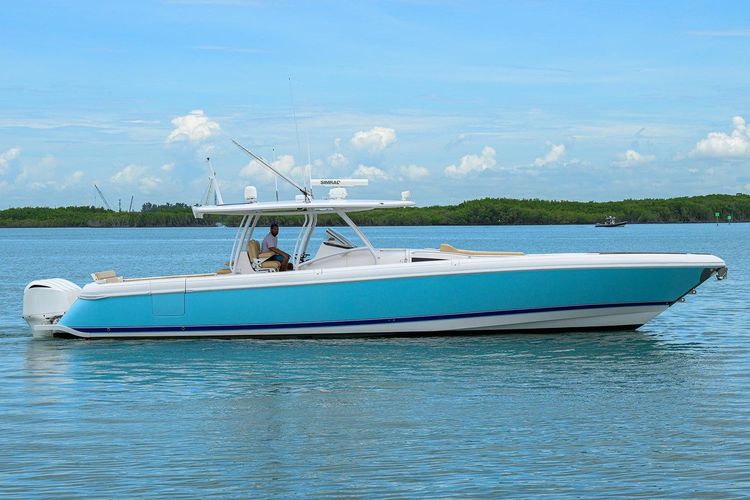
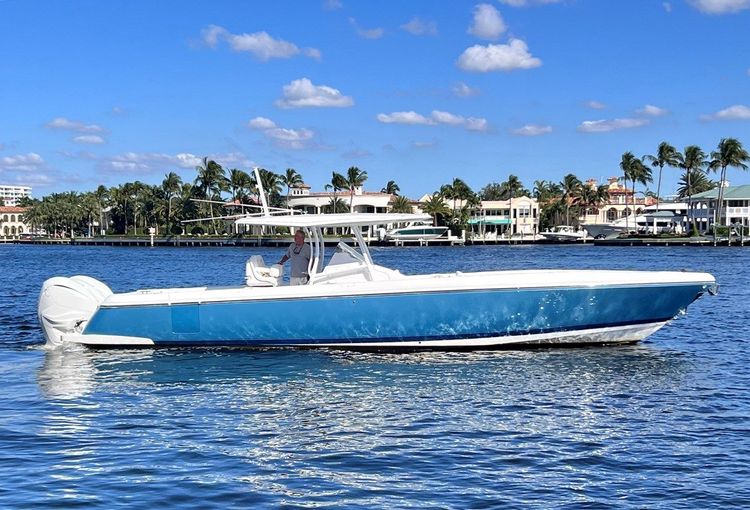
- Around 34–35 ft class (e.g., 345 Nomad): Known for flexible bow arrangements (open fish-forward or more lounge-oriented), available with twin or triple outboards.
- Around 37–38 ft class (e.g., 375 Center Console): Balances offshore range and cockpit volume with family-friendly seating, often seen with triple outboards.
- Around 40–41 ft class: Offers more helm real estate for electronics, larger fish boxes/livewells, and expanded fuel; triple or quad outboards are typical on higher-spec builds.
- Around 47–48 ft class: Flagship-scale center console performance, extended range, ample livewell and storage capacity, and social spaces suitable for large crews or tender transfer operations.
Walkaround/Cuddy Family (often associated with “Valor” lineage; approx. mid-30s to low-40s feet)
- Mission: Combine a serious fishing and adventure platform with a protected helm and a usable cabin for overnighting or weather refuge. Popular among owner-operators and yacht programs that need a multi-day capable tender.
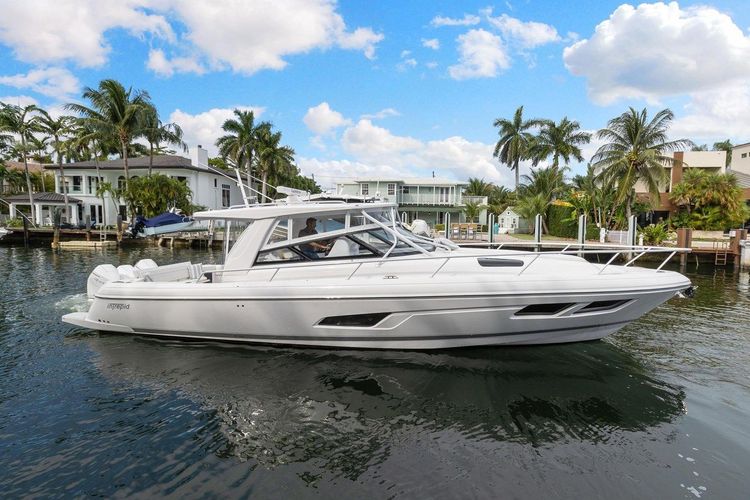
- Layout: Secure side decks for 360-degree fishability, protective windshield/enclosure at the helm, cockpit optimized for angling and gear, and forward cabin space with seating/berth.
- Cabins: Generally one cabin with convertible vee berth or settee, enclosed head with shower, and compact galley elements. Air conditioning and a generator or alternative power source are commonly specified.
- Engines: Typically triple outboards in this size class; some builds use twin high-horsepower or quad configurations depending on weight and mission.
- Performance: Similar to the center consoles in general envelope; many owners configure for a fast, efficient cruise and a top end that can reach into the 50–60+ mph bracket with suitable power.
Examples frequently cited by owners and media:
- Around 34–35 ft class: Combines walkaround fishability with a compact but comfortable cabin suitable for weekend trips.
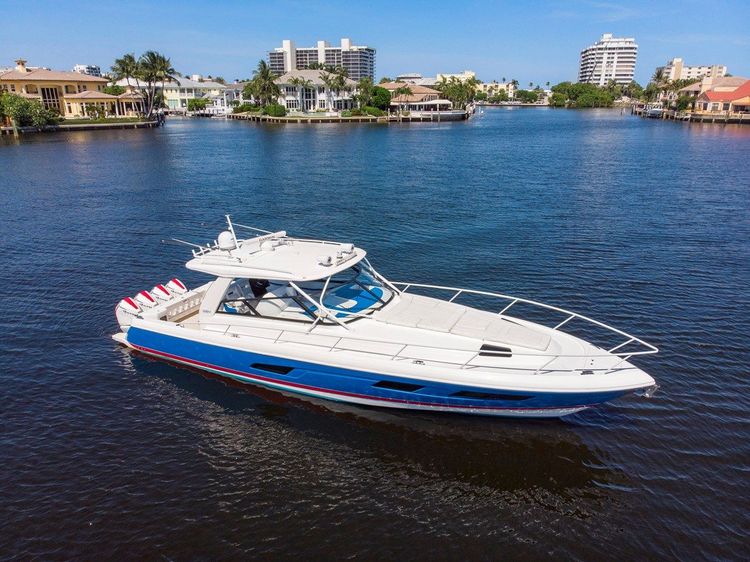
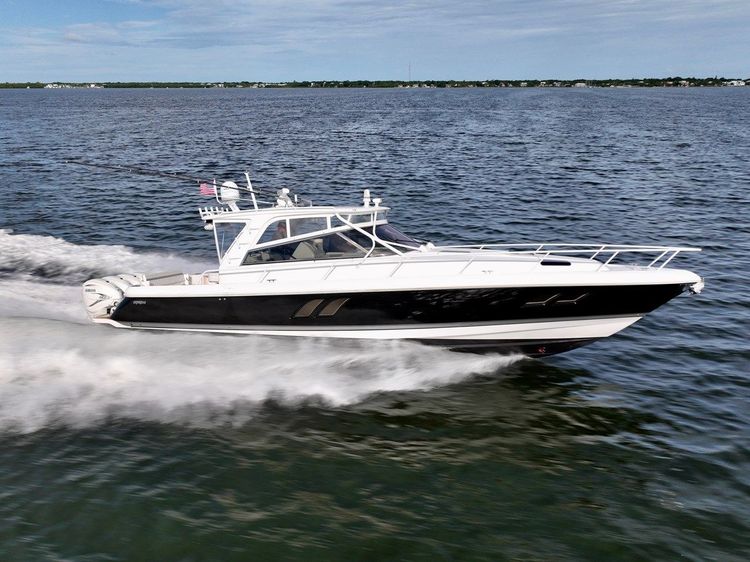
- Around 40–41 ft class (e.g., models historically referenced as “409 Valor”): A popular sweet spot for serious offshore use with meaningful cabin volume and tender-friendly features.
Crossover/Sport Yacht Family (often associated with “Panacea” and larger express-style offerings; approx. 40–48+ feet)
- Mission: Blend the open-deck sociability of a center console with a more substantial cabin and amenities for extended dayboating and weekend cruising, without surrendering offshore performance.
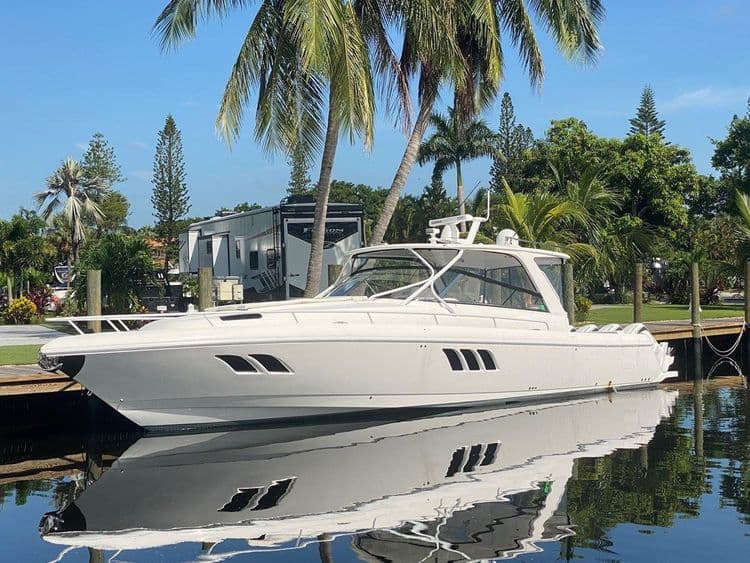
- Layout: Large forward lounge or convertible seating, extended hardtop coverage, generous helm with companion seating, well-finished cabins, and a cockpit that can be tailored for leisure or fishing.
- Cabins: One primary cabin with an enclosed head and shower; some configurations create an additional sleeping area with convertible dinette or mid-berth arrangement.
- Engines: Triple or quad outboards depending on model size and owner preference; installations emphasize low noise and clean service access.
- Performance: Strong cruise speeds with a quiet ride; properly powered builds often achieve top speeds from the high 40s into the 60s mph, depending on load and sea state.
Examples frequently cited by owners and media:
- Around 40–41 ft class (e.g., 407 Panacea): Combines offshore hull performance with a well-appointed interior that supports short cruising stints.
- Around 47–48 ft class (e.g., 475 Panacea): A flagship-scale crossover with substantial deck space, extended range, and a refined interior suited to entertaining and overnighting.
General Notes on Specifications and Configuration
- Length and Beam: Each family includes multiple lengths with beams engineered for offshore stability and cockpit utility. Beam selections influence trailering and berth choices; many owners in the larger classes opt for slips or dry storage rather than routine trailering.
- Tanks and Range: Fuel capacity is matched to mission profile; range is a function of power package, prop selection, sea state, and loading. Many owners prioritize efficient cruise at moderate rpm to extend range while maintaining comfort.
- Comfort and Protection: Options include air-conditioned cabins and, on select builds, helm air conditioning. Weather protection is delivered via hardtops, enclosures, and thoughtfully placed handholds to allow comfortable movement underway.
- Fishing and Utility: Livewells, fish boxes, rod storage, outriggers, and tackle organization can be tailored. Dive functionality is enhanced by the side door, sturdy ladders, and thoughtful gear stowage for tanks and regulators.
- Electronics and Control: Large MFDs, radar, sonar, and integrated digital switching are common. Joystick control systems, autopilot, and station-keeping enhance handling in tight quarters and during fishing operations.
- Stabilization: On larger models, gyro stabilization can be integrated to reduce roll at rest and improve comfort when drift fishing or anchoring.
- Materials and Finish: Premium composites, careful fairing and paintwork, and corrosion-resistant hardware selections contribute to long-term appearance and structural integrity. The builder emphasizes clean rigging and service access to simplify ownership.
Model Availability and Evolution
- Because these boats are built one at a time, model names and lengths can evolve as designs are refined. The underlying philosophy—semi-custom specification on proven hulls with top-tier systems execution—remains consistent. Owners selecting among the families above typically choose the hull size and mission profile first, then tailor the deck plan, systems, and aesthetics to their use case.
Performance and Cabins Summary (indicative)
- Center Consoles (approx. 30–47 ft): Console head; some models offer compact berth space. Twin/triple/quad outboards. Typical top-end potential, depending on power and loading: roughly 50–70 mph.
- Walkaround/Cuddy (approx. mid-30s to low-40s ft): One cabin with enclosed head, convertible berth, and compact galley; air conditioning commonly specified. Twin/triple/quad outboards (triple prevalent). Typical top-end: broadly in the 50–60+ mph range with appropriate power.
- Crossover/Sport Yacht (approx. 40–48+ ft): One primary cabin plus potential convertible/mid-berth depending on layout. Triple/quad outboards. Typical top-end: from high 40s to 60s mph with suitable rigs.
This model overview is designed to reflect how buyers actually shop the range: by choosing a mission-first platform—open center console, overnight-capable walkaround/cuddy, or crossover/sport-yacht style—and then dialing in the details through a collaborative specification process. The result is an offshore-capable, premium-finished boat that feels purpose-built for its owner, whether the priority is tournament fishing, family cruising, tender operations, or an efficient blend of all three.



Learn more on the “INTREPID POWERBOATS INC”
To learn more on the “INTREPID POWERBOATS INC” or to get advice on how to buy or sell a yacht or get a great price for a yacht charter
please call +1 (954) 274-4435 USAOnly deal with professionals!